Chloroephedrine: contaminant of methamphetamine synthesis with
cardiovascular activity
Kurt J. Varner
a,*, Nichole D. Hein
b, Brian A. Ogden
a, Jody R. Arsenault
a,
Karen M. Carter
c, William H. Soine
caDepartment of Pharmacology,Louisiana State Uni6ersity Health Sciences Center,1901Perdido Street,New Orleans,LA70112, USA bKalamazoo College,Kalamazoo,MI 49006,USA
cDepartment of Medicinal Chemistry,Virginia Commonwealth Uni6ersity,Richmond,VA 23298,USA
Received 1 November 2000; received in revised form 8 February 2001; accepted 8 February 2001
Abstract
Chloroephedrine is an intermediate and possible contaminant formed when methamphetamine is manufactured using ephedrine or pseudoephedrine as precursors. The purpose of this study was to determine whether this contaminant has biological activity and might contribute to methamphetamine-induced cardiovascular toxicity. In conscious rats, the (−) and (+) isomers of chloroephedrine (0.1 and 1.0 mg/kg, i.v.) dose-dependently increased mean arterial pressure (MAP) and heart rate (HR). The potency of the pressor effects of (−) and (+)-chloroephedrine was between that of ephedrine and pseudoephedrine. The increases in HR elicited by the four stimulants were similar except that the tachycardia elicited by all doses of ephedrine and pseudoephedrine were preceded by a brief decrease in HR. The i.v. administration of 10 mg/kg of (+) or (−)-chloroephedrine produced biphasic (decrease followed by increase) the MAP and HR responses. Ephedrine and pseudoephedrine did not decrease MAP at any dose tested. The initial decrease in HR elicited by (−)-chloroephedrine was significantly reduced and the hypotensive response abolished by atropine, indicating that these components of the MAP and HR responses resulted from vagal activation. The secondary pressor response elicited by (−)-chloroephedrine was significantly reduced and the tachycardia significantly increased by pretreatment with phentolamine (3 mg/kg, i.v.). The increase in HR was reversed by propranolol. These results indicate that (−) and (+)-chloroephedrine have sympathomimetic properties similar to other known sympathomimetic stimulants. In addition, larger doses of chloroephedrine can activate the vagus nerve. The combination of (+)-methamphetamine and (−)-chloroephedrine did not markedly alter the magnitude of the MAP and HR responses of (+)-methamphetamine alone except at high doses of (−)-chloroephedrine (10 mg/kg). Contamination of illicit methamphetamine with chloroephedrine may have toxic consequences. © 2001 Elsevier Science Ireland Ltd. All rights reserved.
Keywords:Blood pressure; Ephedrine; Heart rate; Illicit synthesis; Pseudoephedrine; Rat
www.elsevier.com/locate/drugalcdep
1. Introduction
The illicit use of methamphetamine has become a major problem in the US and currently ranks among the top 20 drugs in emergency room and autopsy reports. The concentration of methamphetamine in blood and tissue samples in fatalities associated with methamphetamine is highly variable, with levels rang-ing from less than 1 mg/l to over 14 mg/l (Carvey and
Reed, 1970; Kojima et al., 1983; Matoba et al., 1985; Moore et al., 1996). In addition, there does not appear to be a close correlation between the blood levels of methamphetamine or amphetamine and survival (Karch et al., 1999). Often, low levels of amphetamines are thought to be incidental findings, but very low concentrations of methamphetamine (0.7 mg/l) have been observed in patients dying of what is often de-scribed as ‘classic stimulant toxicity’ with agitation, hypertension, tachycardia and hyperthermia (Fukunaga et al., 1987; Moore et al., 1996). Prior to the early 1970s, pharmaceutical grade methamphetamine was readily available. Currently, clandestinely synthesized * Corresponding author. Tel.:+1-504-5684742; fax: +
1-504-5682361.
E-mail address:[email protected] (K.J. Varner).
methamphetamine is used almost exclusively on the ‘street’. Forensic chemists have documented synthetic intermediates and impurities in samples of clandestinely synthesized methamphetamine; however, there is very little information regarding the contribution that these synthetic impurities might make to the pharmacology of clandestinely synthesized methamphetamine.
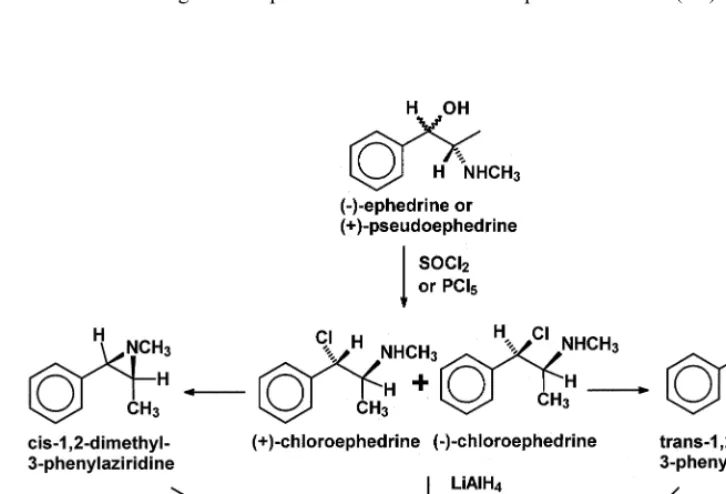
Many methods have been used to synthesize methamphetamine, but the most common current method involves the conversion of (−)-ephedrine or (+)-pseudoephedrine to S- (+)-methamphetamine. Representative synthetic methods are depicted in Fig. 1 (Allen and Kiser, 1987). The common products or intermediates in this synthesis are the beta-halogenated amines. Synthesis from (−)-ephedrine yields almost exclusively the (+) isomer of chloroephedrine. In con-trast, synthesis from (+)-pseudoephedrine yields both the (−) and (+) isomers in a 40:60 ratio (Lekskulchai et al., in press). These compounds have been shown to cyclize tocis- ortrans-1, 2-dimethyl-3-phenylaziridines. These intermediates, including the aziridines, are present in clandestinely synthesized methamphetamine (Allen and Kiser, 1987; Cantrell et al., 1988; Noggle et al., 1986; Skinner, 1990), but no quantitative data is included in those reports. However, in one of the reports the chromatogram of a forensic sample showed that similar amounts of methamphetamine and chloroephedrine were present (Noggle et al., 1986). The lack of reports documenting the presence of
[image:2.612.97.460.417.664.2]chloroephedrine in cases of methamphetamine overdose or fatality may reflect the conversion of the intermedi-ates to ephedrine or pseudoephedrine during extraction and derivatization for analysis by gas chromatography/ mass spectrometry (Lekskulchai et al., in press). Given the ability of (+)-methamphetamine to produce car-diovascular and cardiac toxicity, a critical question that arises is whether these intermediates have biological activity and contribute to the pharmacological or toxi-cological responses elicited by (+)-methamphetamine. Therefore, the purpose of this study was to characterize the cardiovascular responses elicited by beta-chloroamines in conscious rats. The (+)- and (− )-chloroephedrine-HCl salts were chosen for initial investigation due to the chemical stability of the HCl salts and the instability of formulations containing aziridines (Fruton, 1950). We also examined the role of adrenergic and cholinergic systems in the cardiovascu-lar responses elicited by these compounds. For com-parison, the cardiovascular responses elicited by the precursor compounds (−)-ephedrine and (+ )-pseu-doephedrine were also characterized. Pseu)-pseu-doephedrine and ephedrine have long been known to have sympath-omimetic activity in many species including man (Dim-son, 1934; Fristrom et al., 1997; Kitagawa and Saito, 1975; Martin et al., 1970). Finally we examined the MAP and HR responses elicited by (+ )-metham-phetamine with those elicited by combinations of (+ )-methamphetamine and (−)-chloroephedrine.
2. Materials and methods
2.1. Subjects
Experiments were performed on male Sprague – Daw-ley rats (275 – 350 g; Harlan, Indianapolis, IN). All procedures were in accordance with National Institutes of Health guidelines for the care and use of laboratory animals and were approved by the Institutional Animal Care and Use Committee at Louisiana State University Health Sciences Center. During the experiments the rats were housed individually in a room with a 12-hr light/ dark cycle. The rats had unlimited access to food and water. All testing was conducted on animals in their home cages.
2.2. Surgical procedures
To implant chronic cannulae, the rats were anes-thetized using an i.p. injection of methohexital sodium (Brevital 40 – 45 mg/kg). Anesthesia was supplemented (5 – 7 mg/kg, i.v. or i.p.) in response to spontaneous movements or movements in response to tail or foot pinch. Body temperature was maintained at 3791°C using a water-filled heating pad and/or a heat lamp. Polyurethane catheters (Renethane, 0.014 mm, I.D., 0.033 O.D.) were placed in the femoral artery and vein for the recording of arterial pressure (AP) and adminis-tration of drugs, respectively. The free ends of the cannulae were tunneled subcutaneously and exteri-orized between the scapulae. Catheters were filled with heparinized saline (200 U/ml) to prevent clotting. Pul-satile AP and mean arterial pressure (MAP) were recorded using standard techniques (Abrahams et al., 1996). Heart rate (HR) was derived from the AP pulse using a Grass (Quincy, MA) 7P tachygraph. HR, MAP and pulsatile arterial pressure were displayed on a Grass (Quincy, MA) polygraph.
2.3. Experimental procedures
2.3.1. Dose-response relationships for MAP and HR and (+)-chloroephedrine, (−)-chloroephedrine,
(−)-ephedrine and(+)-pseudoephedrine
Two days after implanting the cannulae the rats were divided into four groups containing five – six animals. After connecting the venous and arterial lines to the recording equipment, the animals were allowed 30 min to acclimate to the testing conditions and to achieve stable baseline cardiovascular recordings. Bolus doses of (+)-chloroephedrine (0.1, 1 and 10 mg/kg), (− )-chloroephedrine (0.1, 1.0 and 10 mg/kg), (− )-ephedrine (0.1, 0.5, 1.0 and 5 mg/kg), or (+)-pseudoephedrine (0.5, 1.0, 10 and 50 mg/kg) were administered i.v. over 5-10 s followed by a 10 s saline flush (0.1 ml) and the changes in MAP and HR
recorded. During dose – response testing each group of rats received only one of the stimulants. The 0.1 and 10 mg/kg doses of (−) and (+)-chloroephedrine were administered on the first day. In this and all subsequent dose – response experiments, the minimum inter-dose interval was 5 h. The 1 mg/kg doses of (−) and (+)-chloroephedrine were administered on the morn-ing of the 2nd day. Likewise, the 0.1 and 10 mg/kg doses of (−)-ephedrine were administered on the morning and afternoon of the 1st day, while the 0.5 and 1 mg/kg doses were given on the 2nd day. The 0.5 and 10 mg/kg doses of (+)- pseudoephedrine were adminis-tered on the 1st day, while the 1 and 50 mg/kg doses were administered on the 2nd day.
2.3.2. Role of adrenergic and muscarinic mechanisms in mediating the MAP and HR responses elicited by
(−)-chloroephedrine
Two days after completing the dose – response stud-ies, ten rats from the ephedrine and pseudoephedrine groups were randomly selected and divided into two groups (n=5). After connecting the arterial and venous lines and allowing the MAP and HR to achieve stable baseline values, one group was given an i.v. injection of the mixed alpha-adrenergic antagonist phentolamine (3 mg/kg). In preliminary studies, this dose of phento-lamine completely blocked the pressor response elicited by the administration of phenylephrine (9mg/kg). After the MAP and HR responses elicited by phentolamine had stabilized, (−)- chloroephedrine (10 mg/kg, i.v.) was administered. After the responses to chloroephedrine had stabilized, the mixed beta-adrener-gic antagonist propranolol (1 mg/kg, i.v.) was adminis-tered. In the second group of rats the protocol was repeated except that the muscarinic antagonist atropine (1 mg/kg, i.v.), rather than phentolamine, was adminis-tered prior to injecting (−)-chloroephedrine (10 mg/kg, i.v.). This dose of atropine completely blocked the MAP and HR responses elicited by acetylcholine (6 mg/kg, i.v.).
2.3.3. Cardio6ascular responses elicited by the combined administration of methamphetamine and
(−)-chloroephedrine
)-Table 1
Baseline mean arterial pressure (MAP) and heart rate (HR) in the rats treated with either (−)- ephedrine, (+)-pseudoephedrine, (+ )-chloroephedrine or (−)-chloroephedrine
Treatment group MAP (mmHg) HR (bpm)
(+)-chloroephedrine (n=6) 13192 385910 (−)-chloroephedrine (n=6) 13091 39997
11994a,b
(−)-ephedrine (n=5) 364924 40699 12392
(+)-pseudoephedrine (n=5)
aIndicates that the mean is significantly different from that in the (+)-chloroephedrine group.
bIndicates that the mean is significantly different from that in the (−)-chloroephedrine group.
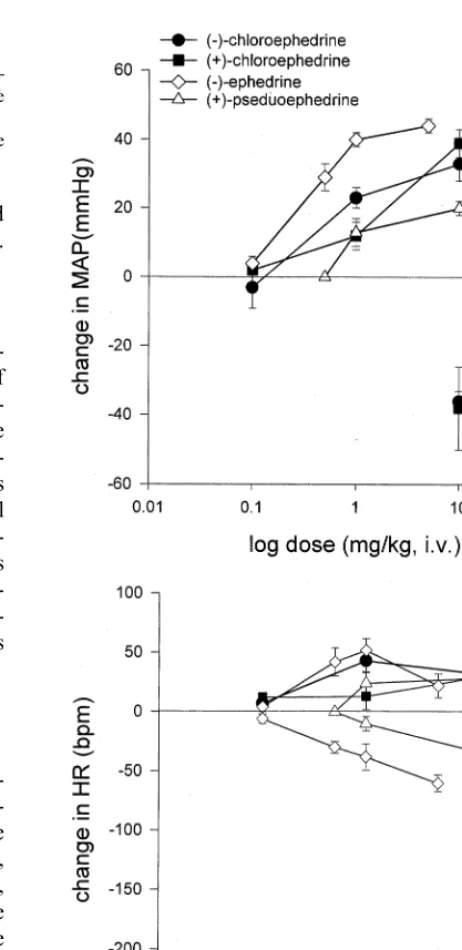
[image:4.612.25.265.77.146.2]studies. Baseline MAP in the group that received (− )-ephedrine was significantly lower than the baseline MAP in the (+) and (−)-chloroephedrine groups (Table 1). Baseline HR was similar in all four groups. Fig. 2 compares the dose-response relationships for MAP and HR and the four stimulants tested. The
Fig. 2. Dose-response relationships for mean arterial pressure (MAP) and heart rate (HR) and (−)-chloroephedrine (n=6), (+ )-chloroephedrine (n=6), (−)-ephedrine (n=5) and (+ )-pseu-doephedrine (n=5) in conscious rats. Top panel shows the magnitude of the peak changes in MAP elicited by i.v. administration of the four drugs. Bottom panel shows the magnitude of the peak changes in HR. When drug administration elicited bidirectional (de-creases followed by in(de-creases) MAP and HR responses, both the peak decrease and peak increase are plotted.
chloroephedrine. Each rat received all three combined doses of methamphetamine and (−)-chloroephedrine.
2.4. Data analysis
The peak changes in HR and MAP elicited by ad-ministration of the four stimulants or combinations of methamphetamine and (−)-chloroephedrine were cal-culated directly from the polygraph records. Baseline MAP and HR in the groups used for the dose – re-sponse studies were compared using one-way analysis of variance (ANOVA). Differences between individual means were compared using the Student – Newman-Kuels method. The peak MAP and HR responses elicited by (−)-chloroephedrine before and after treat-ment with either atropine or phentolamine were com-pared using the Students t-tests. Significance was defined at PB0.05.
2.5. Drugs used
Drugs used were (+)-methamphetamine HCl, at-ropine sulfate, phenylephrine HCl, acetylcholine chlo-ride, propranolol HCl and phentolamine methanesulfonate salt (Sigma Chemical, St. Louis, MO); methohexital sodium (Jones Pharma, St. Louis, MO) and (−)-ephedrine and (+)-pseudoephedrine (Spectrum Quality Products, New Brunswick, NJ). The (−) and (+) isomers of chloroephedrine were synthe-sized as previously reported (Lekskulchai et al, in press) and were ]98% a single diastereomer.
3. Results
3.1. Dose-response relationships for MAP and HR and
(+)-chloroephedrine and (−)-chloroephedrine, (−)
-ephedrine and(+)-pseudoephedrine
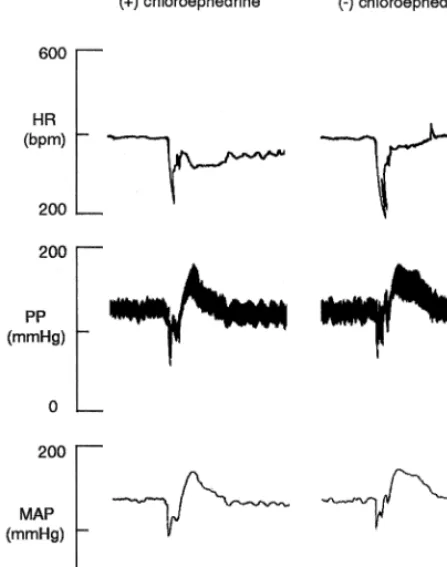
[image:4.612.292.523.125.600.2]Fig. 3. Polygraph records showing typical HR, pulse pressure (PP) and MAP responses elicited by the i.v. administration of 10 mg/kg of (+)-chloroephedrine and (−)-chloroephedrine in conscious rats. Abbreviations are the same as in Fig. 2. Arrow denotes time of drug administration. Horizontal calibration is 1 min.
doses of (−) and (+)-chloroephedrine were larger than those elicited by the highest doses of (− )-ephedrine or (+)-pseudoephedrine.
3.2. Role of adrenergic and muscarinic mechanisms in
mediating the MAP and HR responses elicited by
(−)-chloroephedrine
Fig. 4 shows representative polygraph records of the MAP and HR responses elicited by (− )-chloroephedrine (10 mg/kg) during control and after pretreatment with phentolamine or atropine. These data are summarized in Fig. 5. Pretreatment with phen-tolamine (n=5) did not alter the magnitude of the initial depressor or bradycardic components of the re-sponses to (−)-chloroephedrine (Figs. 4 and 5). How-ever, in the presence of phentolamine the magnitude of the pressor response elicited by (−)-chloroephedrine was significantly decreased (Figs. 4 and 5). The attenu-ated pressor response was followed by a secondary decreased in MAP of – 1797 mmHg below pre-chloroephedrine levels (Fig. 4). Pretreatment with phen-tolamine significantly increased the tachycardic response to (−)-chloroephedrine (Figs. 4 and 5). The peak of the increase in HR coincided with the sec-ondary fall in MAP (Fig. 4). The increase in HR and secondary decrease in MAP elicited by (− )-chloroephedrine in the phentolamine-treated rats were reversed (47992 to 305924 bpm and 6891 to 1179 2 mmHg, respectively) by the administration of propra-nolol (1 mg/kg, i.v.). Pretreatment with atropine significantly reduced the magnitude of the bradycardic response and abolished the depressor response elicited by (−)-chloroephedrine (Figs. 4 and 5). Atropine did not significantly change the magnitude of the tachy-cardic response elicited by (−)-chloroephedrine (Fig. 5).
3.3. Cardio6ascular responses elicited by the combined
administration of (+)-methamphetamine and
(−)-chloroephedrine
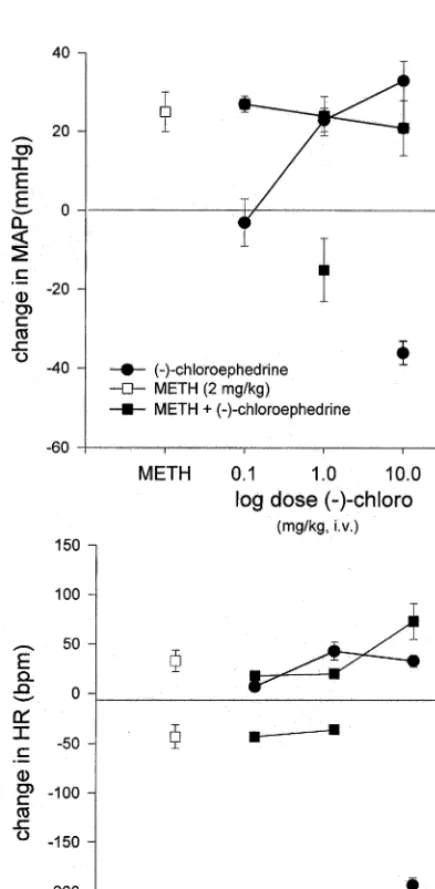
In conscious rats the i.v. administration of metham-phetamine (2 mg/kg) increased MAP and produced a biphasic (decrease then increase) HR response (Fig. 6). The magnitude of the pressor response elicited by 2 mg/kg of (+)-methamphetamine was not altered by the addition of (−)-chloroephedrine (Fig. 6). However, in three of six, rats when 1 mg/kg of (− )-chloroephedrine was combined with methamphetamine the increases in MAP were preceded by depressor re-sponses (Fig. 6). The addition of 0.1 and 1.0 mg/kg of (−)-chloroephedrine did not alter the magnitude of the HR rate responses elicited by (+)-methamphetamine. However, the combination of (+)-methamphetamine with 10 mg/kg of (−)-chloroephedrine elicited an in-MAP responses elicited by both isomers of
crease in HR that was significantly greater than that elicited by either drug alone (Fig. 6). Moreover, the bradycardic responses elicited by the administration of 10 mg/kg of (−)-chloroephedrine or (+ )-metham-phetamine (2 mg/kg) alone were abolished when these drugs were given in combination (Fig. 6).
4. Discussion
The (+) and (−) isomers of chloroephedrine are contaminants that can be produced during the illicit manufacture of (+)-methamphetamine when (+ )-pseudoephedrine or (−)-ephedrine are used as precur-sors. Chloroephedrine has been reported to be present in varying levels in clandestinely synthesized metham-phetamine (Allen and Kiser, 1987; Cantrell et al., 1988; Noggle et al., 1986; Skinner, 1990) and has been ob-served in some forensic samples (Noggle et al., 1986). An anecdotal report suggests that chloroephedrine im-purities can be present in methamphetamine manufac-tured by ‘unscrupulous and/or unskilled’ chemists and that these impurities ‘ruin the finer aspects of the meth high’ (Fester, 1999). The actual amounts of impurities in samples of clandestinely synthesized metham-phetamine have not been reported. This lack of knowl-edge is most likely due to methodological difficulties
encountered in extracting and quantifying the impuri-ties (Lekskulchai et al., in press). Noggle and colleagues (1986) provided chromatographic evidence suggesting that some forensic samples contained equal amounts of methamphetamine and chloroephedrine. Based on our experience with the synthetic pathways used in the clandestine manufacture of methamphetamine, an im-purity content of 0 – 40% or higher is possible, especially if an unskilled chemist manufactures the drug. Since some methamphetamine abusers administer doses as large as 1000 mg (Konuma, 1994), it is possible that 400 mg or greater of chloroephedrine may be con-sumed. Since rats may be less sensitive than humans to the cardiovascular actions of chloroephedrine, our dose – response and combination studies employed doses of chloroephedrine that were similar to- and exceeded potential human doses.
[image:6.612.118.445.370.662.2]To our knowledge, the present data are the first to demonstrate that chloroephedrine can alter cardiovas-cular function/activity in conscious rats. Both isomers of chloroephedrine produce similar dose-dependent in-creases in MAP in conscious rats. The potency of the pressor actions of the (+) and (−) isomers was be-tween that of (−)-ephedrine and (+ )-pseu-doephedrine. Our results in conscious rats confirm earlier reports that (−)-ephedrine is several times more potent than (+)-pseudoephedrine as a pressor agent
Fig. 5. Summary of the peak changes in MAP and HR elicited by the i.v. administration of (−)-chloroephedrine (10 mg/kg, i.v.) in untreated conscious rats (control) and in rats pretreated with either phentolamine (3 mg/kg, i.v.) or atropine (1 mg/kg, i.v.). N=5 in each group. Abbreviations are the same as in Fig. 2. * denotes significant differencePB0.05 between means.
(see Dimson, 1934; Drew et al., 1978). In all cases, the increases in MAP elicited by the isomers of chloroephedrine were accompanied by tachycardia. In contrast, ephedrine and pseudoephedrine produced biphasic HR responses consisting of a brief bradycardia that coincided with the pressor response, followed by tachycardia. Although not tested, it is likely that the bradycardia resulted from pressor-mediated barorecep-tor reflex activation.
It is widely accepted that the sympathomimetic ac-tions of both (−)-ephedrine and (+)-pseudoephedrine involve a drug-mediated release of catecholamines from peripheral sympathetic nerves and a direct agonist ac-tion at peripheral adrenergic receptors (Pentel, 1984). To determine the role of peripheral alpha-adrenergic receptors in mediating the pressor and tachycardic re-sponses elicited by chloroephedrine, we compared the MAP and HR responses elicited by (− )-chloroephedrine before and after complete alpha-adren-ergic receptor blockade using phentolamine. Since the MAP and HR responses elicited by the 10 mg/kg dose of the (−) and (+) isomers were similar, only the (−) isomer was tested in the antagonist studies. Pretreat-ment with phentolamine significantly attenuated the magnitude of the pressor response elicited by 10 mg/kg of (−)-chloroephedrine, indicating that the pressor response resulted from the activation of vascular adren-ergic receptors. Whether chloroephedrine releases cate-cholamines from sympathetic nerve terminals and adrenal gland, or has direct alpha-adrenergic agonist effects remains to be determined. Pretreatment with phentolamine also significantly increased the magnitude of the tachycardic response elicited by (− )-chloroephedrine. The increase in HR coincided with a secondary decrease in MAP, raising the possibility that
the increased tachycardia reflected a decrease in barore-ceptor reflex activity. The reflex-mediated increase in HR should have been enhanced by the blockade of inhibitory presynaptic alpha-2 receptors on cardiac sympathetic neurons. The increase in HR and the sec-ondary hypotension elicited by (−)-chloroephedrine in phentolamine-treated rats were reversed by propra-nolol, indicating the involvement of cardiac and vascu-lar beta-adrenergic receptors, respectively. Whether the beta-adrenergic stimulation arises from the sympathetic nerves, adrenal gland or a direct agonist action of chloroephedrine remains to be determined.
A striking difference between the cardiovascular re-sponses elicited by larger doses of the isomers of chloroephedrine and those elicited by either (− )-ephedrine or (+)-pseudoephedrine were the large, con-current decreases in MAP and HR that preceded the secondary pressor and tachycardic responses. The simultaneous decreases in HR and MAP elicited by these doses of chloroephedrine resemble those produced by activation of the Bezold-Jarisch reflex (Somers and Mark, 1996; Thoren, 1979). This vaso-vagal cardiac reflex is initiated by the chemical or mechanical stimu-lation of cardiac vagal afferents and subsequent activa-tion of cardiac vagal efferents which slow HR, decrease cardiac output and lower AP (Thoren, 1979). The ability of atropine to significantly attenuate the initial decrease in HR and completely abolish the decrease in MAP elicited by 10 mg/kg of (−)-chloroephedrine, indicates that high doses of chloroephedrine produce vagal activation.
1999). Our observation that the isomers of chloroephedrine produce a pattern of HR and MAP responses similar to those elicited by ephedrine raises the possibility that these compounds may also pro-duce cardiovascular toxicity. The isomers of chloroephedrine can also produce vagal activation, which could result in syncope or increase the poten-tial for certain types of cardiac arrhythmia. Since the chloroephedrines and the sympathomimetic stimulants elicited similar MAP and HR responses, the question arises as to whether contamination with the chloroephedrines has the potential to produce additive
or synergistic cardiovascular responses. In preliminary studies (see Fig. 6), the combination of (+ )-metham-phetamine and 10 mg/kg of (−)-chloroephedrine pro-duced a tachycardic response that was significantly larger than that produced by methamphetamine or chloroephedrine alone. This was the only case were there was an additive effect of chloroephedrine and methamphetamine on the MAP or HR responses. While it appears that contamination with chloroephedrine does not markedly alter the magni-tude of the MAP and HR responses elicited by methamphetamine, we cannot rule out the possibility that more complex interactions may be occurring. These complex interactions could affect other types of methamphetamine-related toxicity, such as cardiac toxicity, seizure activity or neurotoxicity. For exam-ple, when methamphetamine and 10 mg/kg of (− )-chloroephedrine were co-administered only an increase in HR was observed. However, administra-tion of the same dose of (−)-chloroephedrine alone produced a large bradycardia (200 bpm). Why the bradycardic response was blocked by the addition of methamphetamine is unclear.
The cardiovascular effects observed after adminis-tration of chloroephedrine may reflect the action of the chloroephedrine or the aziridine intermediate de-pending on the rate of cyclization to the aziridine. Currently, the rate and extent to which this occurs for (+)- and (−)-chloroephedrine under neutral or physiological conditions is unknown. We have found the chloroephedrines to be stable for up to 24 h in aqueous solutions (Lekskulchai et al., in press). The stability of these compounds after oral administration or during pyrolysis remains to be determined. In gen-eral, the principal biological effects of beta-chloroamines and nitrogen mustards are cytotoxicity and irreversible binding to cell receptors. Through alkylation via the aziridine, the beta-chloroamines have been developed into clinically useful drugs (eg. phenoxybenzamine, melphalan) (Henkel et al., 1976) and investigational compounds such as mustard analogs of acetylcholine (Robinson, et al., 1975), or oxotremorine (Ringdahl et al., 1984) that have been used to investigate drug – receptor interactions.
[image:8.612.38.256.207.652.2]These studies have shown that two possible con-taminants of illicit methamphetamine manufacture, (+) and (−) chloroephedrine, have sympath-omimetic properties and elicit a pattern of MAP and HR responses in conscious rats that is similar to that elicited by (−)-ephedrine. In addition, larger doses of these two compounds produce vagal activation. While the biological activity of these compounds in humans has not been evaluated, their potential danger should be investigated further.
Acknowledgements
We would like to thank Ms Lisa Badon for her excellent technical support. This work was supported by a grant (DA 08255) from the National Institute on Drug Abuse.
References
Abrahams, T.P., Cuntapay, M.C., Varner, K.J., 1996. Sympathetic nerve responses elicited by cocaine in anesthetized and conscious rats. Physiol. Behav. 59, 109 – 115.
Allen, T.S., Kiser, W.O., 1987. Methamphetamine from ephedrine: chloroephedrines and aziridines. J. For. Sci. 32, 953 – 962. Cantrell, T.S., John, B., Johnson, L., Allen, A.C., 1988. A study of
impurities found in methamphetamine synthesized from ephedrine. For. Sci. Int. 39, 39 – 53.
Carvey, R.H., Reed, D., 1970. Intravenous amphetamine poisoning: report of three cases. J. For. Sci. Soc. 10, 109 – 112.
Dimson, S.B., 1934. The pressor actions of ephedrine and pseudo-ephedrine in man. In: Hampshire, C.H. (Ed.), Year-Book of Pharmacy. Pharmaceutical Press, London, pp. 23 – 31.
Drew, C.D.M., Knight, G.T., Hughs, D.T.D., Bush, M., 1978. Com-parison of the effects of d-(-)-ephedrine and l-(+ )-pseu-doephedrine on the cardiovascular and respiratory systems in man. Br. J. Clin. Pharm. 6, 221 – 225.
Fester, Uncle, 1999. Secrets of Methamphetamine Manufacture in-cluding Recipes for MDA, Ecstasy, and other Psychedelic Am-phetamines, 5th edn. Loompanics Unlimited, Port Townsend, WA, pp. 114 – 118.
Fristrom, S., Marvola, M., Klinge, E., Halmekoski, J., 1997. Effect of acetyl derivatives of some sympathomimetic amines on the blood pressure of the rat. Acta Pharm. Tox. 40, 247 – 258.
Fruton, J.S., 1950. In: Elderfield, R.C. (Ed.), Ethylenimine in Hetero-cyclic Compounds. John Wiley and Sons, New York, pp. 61 – 67. Fukunaga, T., Mizoi, Y., Adachi, J., Tatsuno, Y., 1987. Metham-phetamine concentrations in blood, urine and organs of fatal cases after abuse. Jap. J. Legal Med. 41, 328 – 334.
Henkel, J.G., Portoghese, P.S., Miller, J.W., Lewis, P., 1976. Synthe-sis and adrenoreceptor blocking action of aziridinium ions derived from phenoxybenzamine and dibenamine. J. Med. Chem. 19, 6 – 10.
Josefson, D., 1996. Herbal stimulant causes US deaths. Br. Med. J. 312, 1378 – 1379.
Karch, S.B., Stephens, B.G., Ho, C.-H., 1999. Methamphetamine-re-lated deaths in San Francisco: demographic, pathologic and toxi-cologic profiles. J. For. Sci. 44, 359 – 368.
Kitagawa, H., Saito, H., 1975. Differences in the effect of ephedrine isomers on blood pressure in rats. Jpn. J. Pharm. 25, 473 – 475. Kojima, T., Une, I., Yashiki, J., 1983. CI-mass fragmentographic
analysis of methamphetamine and amphetamine in human au-topsy tissues after acute methamphetamine poisoning. For. Sci. Int. 21, 253 – 258.
Konuma, K., 1994. Use and abuse of amphetamines in Japan. In: Cho, A.K., Segal, D.S. (Eds.), Amphetamine and its analogs. Academic Press, San Diego, pp. 423 – 424.
Lekskulchai, V., Carter, K., Poklis, A., Soine, W.H. GC/MS analysis of methamphetamine impurities: reactivity of (+)- or (− )-chloroephedrine and cis- or trans-1,2-dimethyl-3-phenyl aziridine. J. Anal. Tox. (in press).
Maritn, W.R., Sloan, J.W., Sapira, J.D., Jasinski, D.R., 1970. Physi-ologic, subjective, and behavioral effects of amphetamine, methamphetamine, ephedrine, phenmetrazine, and methylphenidate in man. Clin. Pharm. Ther. 12, 245 – 258. Matoba, R., Onishi, S., Shikata, I., 1985. Cardiac lesions in cases of
sudden death in methamphetamine abusers. Heart Vessels 1, 298 – 300.
Moore, K.A., Daniel, J.S., Fierro, M., Mozayani, A., Poklis, A., 1996. The detection of a metabolite of (-benzyl-N-methylphenethylamine synthesis in a mixed drug fatality involving methamphetamine. J. For. Sci. 41, 524 – 526.
Noggle, F.T., DeRuiter, J., Clark, C.R., 1986. Liquid chromato-graphic determination of the enantiomeric composition of methamphetamine prepared from ephedrine and pseu-doephedrine. Anal. Chem. 58, 1643 – 1648.
Pentel, P., 1984. Toxicity of over-the-counter stimulants. J. Am. Med. Assoc. 252, 1898 – 1903.
Ringdahl, B., Resul, B., Ehlert, F.J., Jenden, D.J., Dahlbom, R., 1984. The conversion of 2-chloroalkylamine analogues of ox-otremorine to aziridinium ions and their interactions with mus-carinic receptors in the guinea pig ileum. Mol. Pharm. 26, 170 – 179.
Robinson, D.A., Taylor, J.G., Young, J.M., 1975. The irreversible binding of acetylcholine mustard to muscarinic receptors in intes-tinal smooth muscle of the guinea pig. Br. J. Pharm. 53, 363 – 370. Skinner, H.F., 1990. Methamphetamine synthesis via hydriodic acid/
red phosphorous reduction of ephedrine. For. Sci. Int. 48, 123 – 134.
Somers, V.K., Mark, A.L., 1996. The Bezold-Jarisch reflex. In: Robertson, D., Low, P.A., Ploinsly, R.J. (Eds.), Primer on the Autonomic Nervous System. Academic Press, San Diego, pp. 66 – 69.
Theoharides, T.C., 1997. Sudden death of a healthy college student related to ephedrine toxicity from a ma huang-containing drink. J. Clin. Psychopharm. 17, 437 – 439.
Thoren, P., 1979. Role of cardiac vagal c-fibers in cardiovascular control. Rev. Physiol. Biochem. Pharm. 86, 2 – 94.