Cesium Effect: High Chemoselectivity in Direct N-Alkylation of
Amines
Ralph Nicholas Salvatore, Advait S. Nagle, and Kyung Woon Jung*
Department of Chemistry, University of South Florida, 4202 East Fowler Avenue, Tampa, Florida 33620-5250
Received June 25, 2001
A novel method for the mono-N-alkylation of primary amines, diamines, and polyamines was developed using cesium bases in order to prepare secondary amines efficiently. A cesium base not only promoted alkylation of primary amines but also suppressed overalkylations of the produced secondary amines. Various amines, alkyl bromides, and alkyl sulfonates were examined, and the results demonstrated this methodology was highly chemoselective to favor mono-N-alkylation over dialkylation. In particular, use of either sterically demanding substrates or amino acid derivatives afforded the secondary amines exclusively, offering wide applications in peptidomimetic syntheses.
Introduction
Amines and their derivatives are prevalent function-alities in various natural products and unnatural syn-thetic targets. Due to its unique biological properties, the amine moiety has played a central role in chemothera-peutics of numerous diseases.1Polyamines and peptido-mimetics have constituted some of the most popular targets in recent combinatorial approaches in drug development.2In particular, the synthesis of secondary amines has long been of interest because of their poten-tial as robust pharmacophores and as useful synthetic intermediates.3General synthetic methods for the prepa-ration of dialkylamines4have included direct N-alkyla-tion,5 amide reduction,6or the more popular reductive amination protocol.7Although these methods are quite reliable, practical success has been relatively limited
since concomitant overalkylations are a common impedi-ment. To avoid this problem using traditional techniques, the rather expensive amine has been used in large excess, and further purification to remove the starting amine is necessary.8Use of N-protecting groups has been a typical way to avert these shortcomings, although they add lengthy synthetic steps in desired transformations.9 Therefore, considerable interest exists in developing efficient protocols for the construction of carbon-nitrogen bonds.
Previously, we described a highly useful method using cesium hydroxide for the chemoselective N-alkylation of primary amines, which afforded secondary amines pre-dominantly or exclusively.10Primary amines united with various bromides to produce the secondary amines in high yields using powdered dry 4 Å molecular sieves in N,N-dimethylformamide (DMF) (Scheme 1). Observed selectivities between mono- and dialkylations were typi-cally on the order of 9:1, respectively, or higher, which is far superior to existing protocols. This methodology has been successfully employed as demonstrated in Wipf’s asymmetric synthesis of the 1,2,3,4-tetrahydroisoquino-line moiety of the antitumor antibiotic tetrazomine.11In this paper, we elaborate upon in further detail with regards to the scope of the synthetic utility as well as our results toward applications and novel mechanistic concepts.
* To whom correspondence should be addressed. Fax: (813) 974-5326.
(1) (a) Bradshaw, J. S.; Krakowiak, K. E.; Izatt, R. M. Tetrahedron 1992, 48, 4475. (b) For a recent review of the various biological activities of polyamines, see: Blagbrough, I. S.; Carrington, S.; Geall, A. J. Pharm. Sci. 1997, 3, 223. (c) Bergeron, R. J.; Feng, Y.; Weimer, W. R.; McManis, J. S.; Dimova, H.; Porter, C.; Raisler, B.; Phanstiel, O. J. Med. Chem. 1997, 40, 1475.
(2) For polyamine target molecules, see: (a) Kuksa, V.; Buchan, R.; Lin, P. K. T. Synthesis 2000, 1189. (b) Karigiannis, G.; Papaioannou, D. Eur. J. Org. Chem. 2000, 1841. For peptidomimetics, see: (c) Giannis, A.; Kolter, T. Angew. Chem., Int. Ed. Engl. 1993, 32, 1244. (d) Liskamp, R. M. J. Angew. Chem., Int. Ed. Engl. 1994, 33, 305.
(3) Inaf, S. S.; Witiak, D. T. Synthesis 1999, 435.
(4) For a recent overview of various synthetic methods for secondary amines, see: Salvatore, R. N.; Yoon, C. H.; Jung, K. W. Tetrahedron 2001, 57, 7785.
(5) (a) Spialter, L.; Pappalardo, J. A. In The Acyclic Aliphatic Tertiary Amines; The Macmillan Co.: New York, 1965; p 14. (b) O’Meara, J. A.; Gardee, N.; Jung, M.; Ben, R. N.; Durst, T. J. Org. Chem. 1998, 63, 3117. (c) Koh, K.; Ben, R. N.; Durst, T. Tetrahedron Lett. 1993, 34, 4473. (d) Valot, F.; Fache, F.; Jacquot, R.; Spagnol, M.; Lemaire, M. Tetrahedron Lett. 1999, 40, 3689. (e) Suga, K.; Watanabe, S.; Fujita, T.; Pan, T. P. Bull. Chem. Soc. Jpn. 1969, 42, 3606.
(6) Salomaa, S. In The Chemistry of the Carbonyl Group; Patai, S., Ed.; Wiley: New York, 1966; Vol. 1; pp 177-210.
(7) (a) Szardenings, A. K.; Burkoth, T. S.; Look, G. C.; Campbell, D. A. J. Org. Chem. 1996, 61, 6720, and references therein. (b) Pillai, R. B. C. J. Mol. Catal. 1993, 84, 125. (c) Gribble, G. W.; Nutaitis, C. F. Synthesis 1987, 709. (d) Gribble, G. W.; Jasinski, J. M.; Pellicone, J. T.; Panetta, J. A. Synthesis 1978, 766. (e) Marchini, P.; Liso, G.; Reho, A. J. Org. Chem. 1975, 40, 3453. (f) Rische, T.; Kitsos-Rzychon, B.; Eilbracht, P. Tetrahedron Lett. 1998, 54, 2723.
(8) Solomons, G.; Fryhle, C. In Organic Chemistry, 7th Ed., Wiley: New York, 2000; p 957.
(9) (a) Greene, T. W.; Wuts, P. G. M. Protective Groups in Organic Synthesis, 3rd ed.; J. W. Wiley and Sons: New York, 1999; pp 494 -653. (b) Wolman, Y. Protection of the Amino Group. In The Chemistry of the Amino Group; Patai, S., Ed.; Wiley-Interscience: New York, 1968; Vol. 4, p 669. (c) Phanstiel, O., IV; Wang, Q. X.; Powell, D. H.; Ospina, M. P.; Leeson, B. A. J. Org. Chem. 1999, 64, 803. (d) Croce, P. D.; La Rosa, C.; Ritieni, A. J. Chem. Res., Synop. 1988, 346.
(10) Salvatore, R. N.; Nagle, A. S.; Schmidt, S. E.; Jung, K. W. Org. Lett. 1999, 1, 1893.
(11) Wipf, P.; Hopkins, C. R. J. Org. Chem. 2001, 66, 3133. Scheme 1
674 J. Org. Chem. 2002, 67, 674 683
Results and Discussion
Cesium Effect: Various Aspects. At the outset of this work, we began our approach by screening a variety of different bases for efficient mono-N-alkylation condi-tions. Numerous alkali bases were probed including lithium, sodium, potassium, rubidium, and cesium hy-droxide for the efficient coupling of phenethylamine 1 using a slight excess of 1-bromobutane (1.2 equiv) as an initial substrate (Table 1). Of the various alkali hydrox-ides examined, cesium hydroxide was the most successful base (Table 1, entry 6), offering the greatest selectivity in terms of delivering the dialkylamine 2, which in turn also purportedly minimized polyalkylations (e.g., 3). In comparison, other bases gave poor selectivities (Table 1, entries 1-3 and 5), whereas addition of a crown ether improved the yield of the desired secondary amine marginally (Table 1, entry 4). We attribute this high chemoselectivity in favor of the secondary amine as further evidence of the unprecedented “cesium effect”,12 which we have observed in our previous O-alkylation protocols.13 Furthermore, since cesium hydroxide was found to be far superior, other cesium bases were investigated in the hope to improve the selectivity. Much to our disappointment, using 1 equiv of other cesium bases such as cesium carbonate (Table 1, entry 7), cesium bicarbonate (Table 1, entry 8), and cesium fluoride (Table 1, entry 9) gave low conversions, presumably due to decreased basicities and solubilities. In addition, the use of organic bases as additives (e.g., Et3N and DBU) in the presence of cesium hydroxide offered no greater selectiv-ity.
Next, our attention was directed toward solvent effects for efficient cesium hydroxide mediated N-alkylation reactions. When various solvents were examined, anhy-drous DMF was found to be the solvent of choice, whereas other dry polar aprotic solvents including dimethyl sulfoxide (DMSO), 1-methyl-2-pyrrolidinone (NMP), and N,N-dimethylacetamide (DMAC) were found to be com-parable in terms of offering highest yields of 2 (Table 2). However, other solvents including nitromethane, aceto-nitrile, ethanol, ether, acetone, toluene, methylene
chlo-ride, and wet DMF were less suitable since the starting material 1 was recovered predominantly.
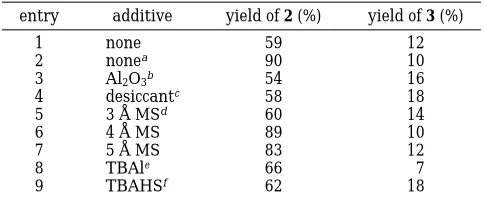
Based on this result, it was found that the inclusion of a drying agent such as activated powdered 4 Å molecular sieves accelerated the alkylation as well as improved the selectivity and yield of the secondary amine.14This result can be attributed to the removal of adventitious water from the reaction media, which presumably can slow the reaction rate and diminish selectivity. Therefore, various drying agents were screened for high conversion and selectivity in favor of the second-ary amine (Table 3). In the absence of a desiccant, butylphenethylamine 2 was still formed in moderate yield (Table 3, entry 1). However, when CsOH was scrupu-lously dried, the yield of the dialkylamine increased dramatically, further implying the need for anhydrous conditions (Table 3, entry 2). Using commercially avail-able CsOH‚H2O, in combination with various additives such as neutral alumina (entry 3) or desiccant (Table 3, entry 4) offered analogous results to entry 1. Also, the use of activated molecular sieves of various pore sizes (3, 4, and 5 Å; Table 3, entries 5-7) proved to be facile and pragmatic. Furthermore, use of onium salts such as tetrabutylammonium iodide (TBAI) (Table 3, entry 8) or tetrabutylammonium hydrogen sulfate (TBAHS) (Table 3, entry 9), which facilitated our etherifications,15was found to exert an opposite effect by retarding the N-alkylations and offering the desired dialkylamine in low yields.
More importantly, since cesium hydroxide was found to have a marked effect on the N-alkylation of primary amines, and also deterred the formation of tertiary amines, it became imperative to subject the secondary amine to a comparative alkylation study. As delineated in Scheme 2, dialkylamine 2 was submitted to our N-alkylation protocol, barely offering the tertiary amine 3 (10%) while most of the starting material 2 was (12) For reviews on the “cesium effect”, see: (a) Ostrowicki, A.;
Vo¨gtle, F. In Topics In Current Chemistry; Weber, E., Vo¨gtle, F., Eds.; Springer-Verlag: Heidelberg, 1992; Vol. 161; p 37. (b) Galli, C. Org. Prep. Proced. Int. 1992, 24, 287 and references therein. (c) Blum, Z. Acta Chem. Scand. 1989, 43, 248.
(13) For our O-alkylations, see: (a) Parrish, J. P.; Dueno, E. E.; Kim, S.-I.; Jung, K. W. Synth. Commun. 2000, 30, 2687. (b) Parrish, J. P.; Sudaresan, B.; Jung, K. W. Synth. Commun. 1999, 29, 4423. (c) Chu, F.; Kim, S.-I.; Dueno, E. E.; Jung, K. W. Tetrahedron Lett. 1999, 40, 1847. (d) Kim, S.-I.; Chu, F.; Dueno, E. E.; Jung, K. W. J. Org. Chem. 1999, 64, 4578.
(14) When molecular sieves were not activated, yields and selectivi-ties diminished. Reactions were sluggish to result in recovery of the starting amine predominantly.
[image:2.612.54.295.51.200.2](15) Dueno, E. E.; Chu, F.; Kim, S.-I.; Jung, K. W. Tetrahedron Lett. 1999, 40, 1843.
Table 1. N-Alkylation of Phenethylamine Using Various Bases
entry base yield of 2 (%) yield of 3 (%) ratio (2/3)
1 LiOH 62 21 3:1
2 NaOH 51 26 2:1
3 KOH 55 29 2:1
4 KOH/18-c-6 75 21 4:1
5 RbOH 65 24 3:1
6 CsOH 89 10 9:1
7 Cs2CO3 30 40 ∼1:1
8 CsHCO3 26 18 ∼1:1
9 CsF 20 19 ∼1:1
Table 2. Use of Various Solvents in Cesium Base-Promoted N-Alkylation of 1
entry solvent yield of 2 (%) yield of 3 (%) ratio (2/3)
1 DMF 89 10 9:1
2 DMSO 70 11 7:1
3 NMP 82 10 8:1
4 DMAC 75 13 6:1
Table 3. Use of Various Additives in CsOH-Promoted N-Alkylation of 1
entry additive yield of 2 (%) yield of 3 (%)
1 none 59 12
2 nonea 90 10
3 Al2O3b 54 16
4 desiccantc 58 18
5 3 Å MSd 60 14
6 4 Å MS 89 10
7 5 Å MS 83 12
8 TBAle 66 7
9 TBAHSf 62 18
aCsOH‚H2O was dried at 120 °C for 24 h.bActivated neutral
alumina (50-200 mesh).cEM Science silica desiccant (6-8 mesh).
dPowdered molecular sieves were activated by drying at 120 °C for 24 h prior to use.eTBAl ) tetrabutylammonium iodide.
[image:2.612.317.559.146.245.2]recovered unreacted in 87% yield after 24 h. On the contrary, in the absence of cesium hydroxide, overalkyl-ation readily proceeded giving rise to the preparoveralkyl-ation of 3 in high yield (72%). This important highlight implied that primary and secondary amines exert opposing reactivities in the presence of cesium hydroxide, suggest-ing that the high chemoselectivity stems from reversal of normally observed alkylation rates. Rationale for enhanced chemoselectivities in N-alkylations is suggested in Scheme 3.
When 4 was stirred in the presence of CsOH‚H2O (1 equiv) in DMF containing activated powdered 4 Å mo-lecular sieves for 30 min, amine-cesium complex 4a could be provided since the cesium ion can behave as a Lewis acid, coordinating to primary amine 4 via a soft acid-soft base interaction (Scheme 3).16In a polar aprotic solvent such as DMF, the cesium ion is weakly coordi-nated to the hydroxide anion, therefore such a proximal effect with the amine seems reasonable.17 Therefore, amine protons in complex 4a should be sufficiently acidic to be abstracted by the hydroxide,18 leading to the formation of cesium amide 4b upon subsequent removal of water using molecular sieves as a desiccant. As demonstrated in our O-alkylations,15such anionic species constitute “naked anions” which enhance anion nucleo-philicities. Thus, amide 4b would react rapidly with the
bromide, generating secondary amine 5. As a conse-quence of inherently stronger basicity, dialkylamines should presumably coordinate to the cesium ion more strongly than the corresponding primary amines, which would lead to the formation of the relatively more stable complex 5a. Owing to the increased sterics of quaternary salt 5a, abstraction of available protons by hydroxide would be minimized, thus inhibiting the alkylation of secondary amines.19Also, stronger coordination exhibited in 5a could help suppress further alkylation by reducing the nucleophilicity of the secondary amine, thereby allowing full consumption of the primary amine 4.20 Experimental evidence demonstrated in Scheme 2 lends further credence in support of our hypothesis. On the basis of this rationale, chemoselectivity in favor of secondary amines would be enhanced by the presence of heteroatoms, which in turn, can increase the coordinating ability of 5a. Examples illustrating this phenomenon are elaborated in more details below. Moreover, steric ele-ments would also augment the chemoselectivity in amine alkylations as well, which is also discussed in depth.
To gain further insight about the role cesium hydroxide plays during the course of the reaction, an experiment was performed under intentionally harsh conditions. A crude mixture of secondary amine 2 and tertiary amine 3, which were subsequently formed using the developed methodology, was treated with excess 1-bromobutane, and the reaction was allowed to proceed overnight at reflux in order to purposely overalkylate 2. Remarkably, dialkylamine 2 was sluggish to undergo transformation to 3 despite its exposure to elevated temperature and excess halide, further providing evidence that these conditions are highly chemoselective in favor of secondary amine formation (Scheme 4). Since cesium hydroxide has convincingly shown to be excellent at diverting tertiary amine formation, a separate experiment was conducted in which the equivalents of base was increased in hopes to improve both the yield and ratio of 2. As expected, the addition of more equivalents of cesium hydroxide (3 equiv) further suppressed tertiary amine formation, however, yields of the secondary amine slightly dimin-ished as well (Scheme 4). Although the details for the exact origin of the reversal in N-alkylation selectivity are not proven yet, our conditions reported herein are strik-ingly efficient, offering universal applications that will be of prime interest to the synthetic community.
Using Various Electrophiles. As delineated in Table 4, primary and secondary bromides were examined and found to be generally applicable to the newly developed techniques. Various bromides were efficiently united with phenethylamine 1, generating the corresponding second-ary amines predominantly or exclusively depending on the nature of the bromide. As depicted in entry 1 (Table (16) (a) Constable, E. C. In Metals and Ligand Reactivity; VCH
Publishers: New York, 1996; p 102. (b) Dehmlow, E. V.; Thieser, R.; Zahalka, H. A.; Sasson, Y. Tetrahedron Lett. 1985, 26, 297. (c) Santhanalakshmi, J.; Raja, T. Bull. Chem. Soc. Jpn. 1997, 70, 2829. (d) Ando, T.; Yamawaki, J. Chem. Lett. 1979, 45. (e) Onaka, M.; Ishikawa, K.; Izumi, Y. Chem. Lett. 1982, 1783. (f) Blum, Z. Acta Chem. Scand. 1989, 43, 248. (g) Soong, L.-L.; Leroi, G. E.; Popov, A. I. J. Solut. Chem. 1989, 18, 561.
(17) Formation of “naked anions” by solvation of cesium ions has been previously postulated and studied extensively: Dijkstra, G.; Kruizinga, W. H.; Kellogg, R. M. J. Org. Chem. 1987, 52, 4230.
(18) For a similar case displaying how N-chelation increases the acidity of amine protons in order to provide a convenient method for regioselective mono-N-alkylation, see: (a) Bar-Haim, G.; Kol, M. Tetrahedron Lett. 1998, 39, 2643. (b) Bar-Haim, G.; Kol, M. J. Org. Chem. 1997, 62, 6682. (c) Bar-Haim, G.; Shach, R.; Kol, M. Chem. Commun. 1997, 229.
(19) For a discussion on steric effects for deprotonation of ammonium salts: Jones, R. A. In Quaternary Ammonium Salts Their Use in Phase-Transfer Catalysis; Academic Press: New York, 2001.
(20) Laplante, C.; Hall, D. G. Org. Lett. 2001, 3, 1487. Scheme 2
Scheme 3
4), 1-bromo-3-phenylpropane 8, an unreactive bromide, underwent substitution easily to provide the desired secondary amine in high yield (85%) after 24 h with accompaniment by the trialkylamine (10%). Activated halides including allyl bromide 9 and benzyl bromide 10 offered similar yields (85%) over short reaction times, and proceeded efficiently with the use of a catalytic amount of cesium hydroxide (Table 4, entries 2 and 3). However, if more than a catalytic amount of cesium hydroxide was used, overalkylation became more prominent due to the highly reactive nature of these electrophiles. Interest-ingly, introduction of sterically hindered substituents such as the isobutyl moiety gave rise to the mono-N-alkylation product exclusively (Table 4, entry 4). As expected, sterically more demanding secondary bromides including 2-bromobutane 12 and isopropyl bromide 13 (Table 4, entries 5 and 6) followed similar suite, deliver-ing the corresponddeliver-ing N-substituted amines as the sole product. As observed under previous conditions, tertiary bromides were resistant to alkylations under these conditions, indicating that introduction of steric elements suppresses overalkylation completely.
In view of these successful results, attention was turned to N-alkylations using various electrophiles to demonstrate substrate versatility. Since alcohols are key synthetic intermediates in numerous syntheses, we decided to perform the procedure using sulfonates. To-sylate (14a) and meTo-sylate (14b) of 3-phenyl-1-propanol were easily prepared by known procedures.21,22 The successful conversion of 14a and 14b into the corre-sponding secondary amines 15a and 15b, respectively, was accomplished by subjecting 1 to the usual N-alkylation conditions. After 22 h, 1 was found to react with the tosylate and mesylate in good yields (Scheme 5). Disappointingly, the triflate analogue proved prob-lematic under these reaction conditions, offering the desired product along with a concomitant mixture of side products. These protocols are however highly chemo-selective, averting common side reactions such as elimi-nation, and background secondary alkylations were minimized (<15%).
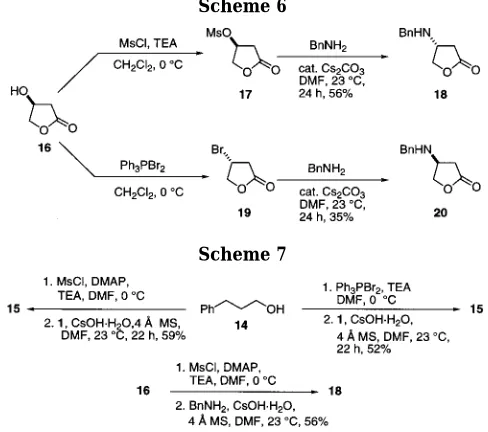
Due to the importance as chiral synthons, chiral alcohols encompassing γ-butyrolactone 16 were also applied to the same sequence to afford the corresponding appropriate leaving groups for the ensuing direct N-alkylation (Scheme 6). Mesylate lactone 17 reacted smoothly with benzylamine using a catalytic amount of cesium carbonate to afford the N-benzylated lactone 18 in good yield. Likewise, bromination of the alcohol functionality using Ph3PBr2 at 0 °C gave rise to 19 followed by gentle treatment with benzylamine using the same reaction conditions, generating the secondary chiral amine 20 in an unoptimized yield (35%) after 24 h. In both examples, upon formation of a Mosher’s amide with 18 or 20, no racemization was observed within our detection limits, offering potential applications toward future drug design and synthesis.
The synthetic scope of this transformation of alcohols directly to secondary amines was further probed by a one-pot mesylation (or bromination) followed by sequential addition of the amine. Using the conditions described above, 3-phenyl-1-propanol 14 was successfully trans-formed into the corresponding bromide or mesylate, respectively. Upon consumption of the starting alcohol (monitored by TLC), phenethylamine (1 equiv) was added along with a catalytic amount of cesium base. In both synthetic sequences, after workup and purification, sec-ondary amine 15 was isolated in acceptable yields, and isolation of intermediates proved unnecessary. Similar trends were noted using the one-pot alkylation of the hydroxy-butyrolactone substrate 16, which also proved to be facile (Scheme 7).
Use of Diverse Amines. Having bestowed high chemoselectivities in the reaction of 1 with various bromides (Table 4), it was next confirmed that the N-alkylation was applicable with the use of a range of different amines, offering similar trends (Table 5). Ben-zylamine 22, a reactive amine, underwent consolidation with lipophilic bromides to offer the secondary amines as the major products (Table 5, entries 1 and 2). Primary alkylamines (Table 5, entry 3), as well as cycloalkyl-amines (Table 5, entries 4-6) subsequently proved pragmatic. Consequently, N-alkylation of more sterically demanding amines smoothly furnished the desired prod-ucts exclusively (Table 5, entries 7-10). Much to our (21) Fieser, L. F.; Fieser, M. In Reagents for Organic Synthesis;
Wiley: New York, 1967; Vol. 1, p 1179.
[image:4.612.315.559.48.264.2](22) Furst, A.; Koller, F. Helv. Chim. Acta 1947, 30, 1454. Table 4. CsOH-Promoted N-Alkylation of Primary
Amine 1 with Various Bromides
Scheme 5
Scheme 6
surprise, reaction of n-octylamine with 1-bromobutane was completely selective in generating the dialkylamine solely.
Synthesis of Peptidomimetics. Since the synthesis of higher order peptidomimetics and artificial biomolecu-lar targets was one of the goals in mind, we decided to subject building blocks 33 and 35 to our developed N-alkylation techniques. After preparation of the respec-tive N,N-dibenzylamino bromides via our previously reported bromination protocol,23these halides were suc-cessfully coupled with 1 under the standard conditions, affording the desired N-alkylated products (34 and 36) (Scheme 8). In each case, the secondary bromide was rearranged to the desired primary form via the corre-sponding aziridinium salt during the N-alkylation with phenethylamine.24 In both entries, no overalkylations were detected. Also, as further evidence the synthesized product 36 was compared to the secondary amine formed via reductive amination (NaCNBH3) using phenethyl-amine and the corresponding aldehyde of phenylalanine and found to be identical.
Given the generally superior performance of this method in terms of yields and selectivities, the feasibility using other amino acid derivatives was explored. As demonstrated in Table 6, N-alkylation of aβ-amino ether (Table 6, entry 1) gave rise to a mixture of secondary and tertiary amines in 84% and 15%, respectively, presum-ably mimicking the aforementioned unhindered amines. Amazingly, the amino alcohols valinol 38 and isoleucinol 39 underwent smooth coupling to afford N-monoalkylated products exclusively due to the synergetic effect of strong coordination to the cesium ion as well as steric demands from side chains. N-alkylations using both an active halide such as 10 and unreactive bromides 33 progressed
smoothly delivering the secondary amines in satisfactory yields, remarkably leaving the alcohol functionality intact (Table 5, entries 2 and 3). Moreover, amino esters such as valine methyl ester were efficiently converted, offering various monoalkylated products with use of three alkyl bromides (Table 5, entries 4-6). Above all, besides exceptional chemoselectivities, racemizations were not detected in any cases during the alkylation of these chiral templates, and complications stemming from hydrolysis or esterification were not observed.25Thus, these devel-oped procedures are mild and efficient because side reactions commonly seen under basic conditions are averted.
Utilizing this methodology, issues of chemoselectivity were next examined by embarking on the synthesis of tripeptide mimics, which possess secondary amines in the skeletal backbone (Scheme 9). The synthesis of higher order peptidomometics such as trimer 44 was facile and expeditious by employing our cesium promoted N-alkyl-ation technique.24As discussed above (Table 6), isoleu-cinol 39 was successfully coupled with amino bromide 33 to generate the corresponding protected dimer in its primary form. After debenzylation via hydrogenolysis, the free amine of dimer 42 was united with protected amino bromide 43 to afford trimer 44 cleanly, proceeding through aziridinium intermediate 45 (vide supra).26As mentioned in the above case, the primary amine reacted selectively leaving both the secondary amine and the
(23) Nagle, A. S.; Salvatore, R. N.; Chong, B. D.; Jung, K. W. Tetrahedron Lett. 2000, 41, 3011.
(24) Salvatore, R. N.; Schmidt, S. E.; Shin, S. I.; Nagle, A. S.; Worrell, J. H.; Jung, K. W. Tetrahedron Lett. 2000, 41, 9705.
[image:5.612.55.544.45.335.2](25) Optical rotations of the synthetic samples were compared with the known literature values. See: Bowman, W. R.; Coghlan, D. R. Tetrahedron 1997, 53, 15787. In addition, side reactions stemming from elimination were not observed within our detection limits in any case. (26)1H NMR,13C NMR, and 2D NMR analysis indicate the product as a single diastereomer.
Table 5. CsOH-Promoted N-Alkylation of Various Amines
entry amine (RNH2) bromide (R’ Br)
time (h)
yield of 5 (%)
yield of 21 (%)
1 BnNH2(22) 1-bromobutane (23) 24 83 10
2 22 1-bromooctane (24) 22 75 13
3 octylamine (25) 8 22 80 10
4 C6H11CH2NH2(26) 8 22 90 10
5 cyclopropylamine (27) 8 18 83 12
6 cyclooctylamine (28) 8 22 75 10
7 1-adamantanamine (29) 8 18 82 0
8 29 (E)-cinnamyl bromide (30) 18 66 0
9 tBuNH
2(31) 8 24 90 0
10 tert-octylamine (32) 10 12 87 0
11 25 23 24 93 0
Scheme 8 Table 6. Chemoselective N-Alkylation of Amino Acid
Derivatives
hydroxyl untouched, which illustrated the diminished reactivities of secondary amines and high chemoselec-tivity. These synthetic sequences may be practical in generating large compound libraries, which can be uti-lized in combinatorial screenings.
Diamines and Polyamines. After substantiating that our cesium-promoted conditions are indeed facile in promoting N- over O-alkylations, we then decided to augment our synthetic efforts toward the monofunction-alization of naturally occurring diamines and polyamines. Two shortcomings typically found in polyamine syntheses via the N-alkylation route are the employment of vulner-able nitrogen masking groups and virtually impossible selective functionalization of these naked biogenic amines.27 Thus, these criteria prompted investigations on an efficient and selective N-alkylation protocol for bare diamines and polyamines.
Encouraged by high selectivities using unsymmetrical diamines, polyamines, and amino alcohols in our pepti-domimetic synthesis, we recognized N-alkylations of other unsymmetrical diamines should be easily acces-sible. As representatively depicted in Table 7, various electrophiles as well as numerous diamines and poly-amines were subjected to the proposed conditions to evaluate efficiency and chemoselectivity. Unsymmetrical diamine, 1,2-diaminopropane 49 also reacted regioselec-tively, alkylating exclusively at the primary carbon,
leaving the amine at the secondary center untouched (Table 7, entry 1). Furthermore, chiral diamineL-lysine
methyl ester 50 was selectively N-benzylated at the primary center, and no racemization was detected (Table 7, entry 2).28
Next, we turned our attention to the N-alkylation of symmetrical diamines. In the presence of a catalytic amount of CsOH (0.5 equiv), ethylenediamine 52 under-went N-tosylation to produce the protected diamine in high yield (Table 7, entry 3). In addition, bromide 8 reacted with symmetrical diamine 54 after 24 h (Table 7, entry 4). Also, NSN 55 underwent N-alkylation with 2-bromoethylamine‚HBr 56 delivering the mono-N-al-kylated product in 73% isolated yield, which is far superior to existing methods for the synthesis of this polyamine target molecule (Table 7, entry 5).29Similarly, polyamines encompassing diethylentriamine 57 (Table 7, entry 6) still proved pragmatic, exhibiting comparable selectivity as the starting diamine in Table 7, entry 4. This example illustrates the diminished reactivity of secondary amines embedded in the middle of alkyl chains, which is reminiscent of the peptidomimetic synthesis of the trimer analogue (cf. Scheme 9). Diamines containing elements of stereochemistry were also found to be compatible using our conditions. For example, a single benzyl unit was delivered to (1R,2R)-(+ )-1,2-diphenyl-1,2-ethanediamine 58 desymmetrizing the di-amine (Table 7, entry 7), and overalkylation was not detected.
Cesium Carbonate as an Alternative. Although our synthetic efforts toward N-alkylation using CsOH proved most effective in terms of substrate compatibility and selectivity for generation of mono-N-alkylated products, it was decided to further expand on the preliminary results discussed in Scheme 6 using cesium carbonate. Coupled with the success of utilizing this base in our carbamations of amines,30 Cs
2CO3 is much easier to handle than its hydroxide counterpart due to its lower hygroscopicity. Therefore, the generality and limitations using this cesium base were next examined. As addressed in Table 8, methylamine‚HCl 59, which releases a very reactive primary amine, united with lipophilic lauryl bromide with the aid of TBAI to produce the surfactant N-methyldodecylamine in excellent yield (Table 8, entry 1). Under these conditions, methylbenzylamine 61 N-benzylated after 5 h in nearly quantitative yields (Table 8, entry 2). Since amine protection is of prime interest in organic synthesis, and for the most part, N-silyl derivatives are known not to provide satisfactory protec-tion for primary amines due to their high sensitivity to moisture, an attempt was made to prepare secondary silylamines utilizing this methodology. With that in mind, benzylamine 22 was N-silylated, producing the TIPS analogue in 50% isolated yield after purification (Table 8, entry 3). Coming full circle, the initial sub-strates probed for this study were examined using 3 equiv of Cs2CO3, but gave a lower yield than CsOH (Table 8,
(27) Fiedler, W. J.; Hesse, M. Helv. Chim. Acta 1993, 76, 1511.
(28) The resulting product was converted back to the starting diamine (lysine methyl ester) by hydrogenolysis, followed by salt formation using dry HCl gas. The optical rotation of the resultant salt was 16.5°, whereas the reported value is 15.6° (c)1.3; H2O). See: Davies, C. E.; Heightman, T. D.; Hermitage, S. A.; Moloney, M. G. Synth. Commun. 1996, 26, 687.
(29) Tuemac, F. U. S. Patent 3,362,996, 1968; Chem. Abstr. 1968, 68, 77738.
(30) Salvatore, R. N.; Shin, S. I.; Nagle, A. S.; Jung, K. W. J. Org. Chem. 2001, 66, 1035.
[image:6.612.54.295.45.382.2]Scheme 9
Table 7. CsOH-Promoted N-Alkylation of Diamines and Polyamines
entry 4). Switching focus, amino acid derivatives includ-ing valine methyl ester 41 and glycine ethyl ester 63 afforded similar yields upon reaction with benzyl bromide (Table 8, entries 5 and 6). It is noteworthy to mention that entry 5 (Table 8) required only a catalytic amount of cesium carbonate to carry out the desired transforma-tion. Finally, an amino acid such as isoleucine 64 was found to undergo double alkylation, namely N-benzyla-tion, along with the anticipated esterification. A cosolvent (10:1 DMF/H2O) was used in order to enhance amino acid solubility (Table 8, entry 7). When CsOH was used for the same transformation, N,N-dibenzylamino esters were generated as the major products, indicating that cesium carbonate plays a complimentary role to cesium hydrox-ide in chemoselective N-alkylations.
Conclusion
In summary, we have established a cesium base-promoted N-alkylation methodology, which is more selec-tive and efficient than other currently known methods. Since these enclosed reactions are fundamental in organic synthesis, our procedures can offer an attractive method for functionalizing alkylamines. High chemoselectivities involved in amine and polyamine alkylations have been clearly demonstrated, and use of protecting groups has been eliminated, offering a broad spectrum of possibili-ties. Various aliphatic amines including diamines and polyamines were compatible with reactive, unreactive, and secondary halides as well as a plethora of other electrophiles such as sulfonates. Furthermore, our pro-cedures discussed herein were superior when compared to known methods since they averted overalkylations, offering mono-N-alkylated products predominantly or exclusively. In addition, these mild reaction conditions (ambient temperatures) and short reaction times enabled labile functionalities to be tolerated. Thus, chiral sub-strates including amino acids and their derivatives, which are easily prone to racemization, were also suc-cessfully transformed under the conditions, offering potential applications in peptidomimetic synthesis. This methodology proves to be a general protocol for the syntheses of various secondary amines, offering a wide variety of applications. Currently, efforts are underway to extend this procedure to the synthesis of aromatic secondary amines.
Experimental Section
General Methods. All experiments were carried out under a nitrogen atmosphere, using glassware, which was oven and/ or flame-dried. Anhydrous N,N-dimethylformamide (99.8%)
was purchased from Aldrich Chemical Co. All starting materi-als were obtained from commercial suppliers and used without further purification unless otherwise noted. Activated 4 Å molecular sieves were acquired from Aldrich Chemical Co. and were activated by heating at 120 °C for 24 h prior to use. Cesium bases were acquired from Acros, Aldrich, or Chemetall, Inc. Proton nuclear magnetic resonance (250 and 360 MHz) spectra and13C (90 MHz) were recorded at room temperature
in CDCl3, unless otherwise stated. All chemical shifts are
reported asδrelative to CHCl3(δH7.26 ppm) or CDCl3(δC
77.0 ppm) as internal standards, respectively, using a Brucker spectrometer. Optical rotations were measured at 25 °C using a Perkin-Elmer 241MC polarimeter set on the sodium D line. Infrared spectra were recorded using a Nicolet Magna FT IR 550 spectrometer and are reported in reciprocal centimeters (cm-1). Elemental analyses were obtained by Atlantic Microlab,
Inc., Norcross, GA.
General Procedure for N-Alkylation. To a suspension containing activated powdered 4 Å molecular sieves (500 mg) in anhydrous DMF (8.3 mL), cesium hydroxide monohydrate (280 mg, 1.7 mmol, 1 equiv) was added, and the mixture was vigorously stirred for 10 min. After 1 (0.21 mL, 1.7 mmol, 1 equiv) was added, the mixture was stirred for an additional 30 min. 1-Bromobutane (0.21 mL, 2.0 mmol, 1.2 equiv) was added to the white suspension, and the reaction was allowed to proceed at room temperature for 20 h. The reaction mixture was filtered to remove undissolved solids and washed several times with ethyl acetate. The filtrate was concentrated, and the residue was taken up in 1 N NaOH, and extracted with ethyl acetate (4×20 mL). The combined organic layers were washed with brine, dried over anhydrous sodium sulfate, filtered, and evaporated. The resulting crude mixture was purified by column chromatography using ethyl acetate -ethanol (9:1 v/v) as the eluting solvent to afford 2 (260 mg, 89%) as a colorless oil. Trialkylamine 3 (40 mg, 10%) was isolated as a pale yellow oil. Dialkylamine 2: IR (film) 3290, 3063, 3027, 2956, 2872, 2815,1496, 1453, 1125, 748 cm-1;1H
NMR (CDCl3)δ0.89 (t, J)7.4 Hz, 3 H), 1.25-1.35 (m, 2 H),
1.36-1.64 (m, 2 H), 1.75 (s, NH), 2.60 (t, J)7.0 Hz, 2 H), 2.49-2.69 (m, 2 H), 2.77-2.92 (m, 2 H), 7.16-7.35 (m, 5 H);
13C NMR (CDCl
3)δ13.78, 20.27, 31.82, 36.13, 49.33, 51.00,
125.88, 128.22, 128.47, 139.86. Trialkylamine 3: IR (film) 3026, 2930, 2871, 2861, 2800, 1453, 1100, 697 cm-1;1H NMR (CDCl
3)
δ0.89-0.98 (m, 6 H), 1.25-1.35 (m, 4 H), 1.40-1.53 (m, 4 H), 2.41-2.51 (m, 4 H), 2.67-2.75 (m, 4 H), 7.12-7.33 (m, 5 H);
13C NMR (CDCl
3)δ14.08, 20.74, 29.29, 33.44, 53.80, 56.11,
125.80, 128.27, 128.69, 140.90.
Dialkylamine 6 (R′)PhCH2CH2CH2): 85% yield; IR (film)
3400, 3120, 3110, 2920, 2850 2800, 1490, 1150, 750 cm-1;1H
NMR (CDCl3)δ1.55 (s, NH), 1.76-1.85 (m, 2 H), 2.59-2.67
(m, 4 H), 2.78-2.93 (m, 4 H), 7.06-7.31 (m, 10 H);13C NMR
(CDCl3) δ 31.17, 32.57, 34.41, 46.32, 48.28, 123.7, 124.01,
126.15, 136.73, 139.20.
Trialkylamine 7 (R′)PhCH2CH2CH2): 10% yield;1H NMR
(CDCl3)δ1.76-1.89 (m, 4 H), 2.56 (t, J)7.1 Hz, 4 H), 2.65
(t, J)7.8 Hz, 4 H), 2.73 (s, 4 H), 7.18-7.31 (m, 15 H);13C
NMR (CDCl3) δ 28.79, 33.39, 33.63, 53.33, 55.87, 125.64,
125.82, 128.23, 128.67, 140.68, 142.28.
(film) 3313, 3077, 3063, 2956, 2924, 2854, 2816,1495, 1453, 918, 749 cm-1;1H NMR (CDCl
3)δ2.07 (s, NH), 2.82-2.91 (m,
4 H), 3.27 (d, J)6.5 Hz, 2 H), 5.13 (m, 2 H), 5.88 (ddt, J) 17, 10.3, 6 Hz, 1 H), 7.18-7.31 (m, 5 H);13C NMR (CDCl
3)δ
36.13, 50.32, 52.11, 116.19, 126.13, 128.25, 136.25, 139.80. Trialkylamine 7 (R, R′)allyl): 15% yield;1H NMR (CDCl
3)δ
2.72-2.80 (m, 4 H), 3.20 (d, J)6.4 Hz, 4 H), 5.16 (m, 4 H), 5.86 (ddt, J)17.1, 10.4, 6 Hz, 2 H), 7.17-7.30 (m, 5 H);13C
NMR (CDCl3)δ 33.11, 55.00, 56.71, 117.55, 125.85, 128.25,
128.64, 135.41, 140.43.
Dialkylamine 6 (R′)Bn): 85% yield; IR (film) 3350, 3026, 2925, 2872, 2815, 1497, 1455, 696 cm-1;1H NMR (CDCl
3)δ
1.87 (s, NH), 2.72-2.92 (m, 4 H), 3.79 (s, 2 H), 7.07-7.49 (m, 10 H);13C NMR (CDCl
3)δ36.10, 50.33, 53.63, 126.10, 126.94,
128.10, 128.33, 128.39, 128.65, 139.80.
Trialkylamine 7 (R′)Bn): 15% yield;1H NMR (CDCl 3)δ
2.59-2.61 (m, 4 H), 3.52 (s, 4 H), 6.94-7.21 (m, 15 H);13C
NMR (CDCl3)δ 33.26, 54.88, 57.98, 125.67, 126.69, 128.03,
128.19, 128.55, 128.66, 128.84, 139.9, 140.0.
Dialkylamine 6 (R′ )CH3CH(CH3)CH2): 74% yield; 1H
NMR (CDCl3)δ0.81 (d, J)6.5 Hz, 6 H), 1.22 (s, NH), 1.60
-1.71 (m, 1 H), 2.36 (d, J)6.7 Hz, 2 H), 2.73-2.79 (m, 4 H), 6.99-7.24 (m, 5 H);13C NMR (CDCl
3)δ20.48, 28.08, 36.22,
51.14, 57.69, 125.90, 128.24, 128.57, 139.98.
CsOH-Promoted N-Alkylation Using Secondary Bro-mides. Activated 4 Å molecular sieves (500 mg) and cesium hydroxide monohydrate (856 mg, 5.1 mmol, 3.0 equiv) were added to a solution of phenethylamine 1 (0.21 mL, 1.7 mmol, 1 equiv) in anhydrous DMF (8.3 mL), and the mixture was stirred for 30 min at room temperature. 2-Bromobutane (0.9 mL, 8.2 mmol, 5.0 equiv) was added in one portion to the white suspension, and the reaction was allowed to proceed for 48 h. The mixture was then filtered and rinsed with ethyl acetate. The filtrate was concentrated, and then the residue was taken up in 1 N NaOH and extracted with ethyl acetate (3×30 mL). The organic layers were washed with water (2×30 mL) and brine (30 mL) and dried over anhydrous sodium sulfate. Concentration of the solvent and purification by flash column chromatography (9:1 EtOAc/EtOH) afforded the desired di-alkylamine 6 (230 mg, 80%) as a clear oil. The tridi-alkylamine 7 was not observed. Dialkylamine 6 (R′)CH(CH3)CH2CH3):
IR (film) 3306, 3084, 3061, 3025, 2931, 2855, 2810, 1495, 1457, 1125, 745 cm-1;1H NMR (CDCl
3)δ0.82 (t, J)7.5 Hz, 3 H),
1.00 (d, J)6.1 Hz, 3 H), 1.24-1.31 (m, 2 H), 2.78-2.89 (m, 5 H), 7.12-7.39 (m, 5 H);13C NMR (CDCl
3)δ10.00, 19.54, 29.28,
35.35, 48.35, 54.21, 125.89, 128.21, 128.45, 139.91.
Dialkylamine 6 (R′ ) CH(CH3)2): 70% yield; 1H NMR
(CDCl3)δ1.09 (d, J)8.2 Hz, 6 H), 1.54 (s, NH), 2.62-2.89
(m, 5 H), 7.21-7.31 (m, 5 H);13C NMR (CDCl
3)δ22.72, 36.37,
48.49, 48.65, 126.03, 128.58, 139.93. Anal. Calcd for C11H17N:
C, 80.93; H, 10.50; N, 8.58. Found: C, 80.72; H, 10.40; N, 8.26. CsOH-Promoted N-Alkylation Using Alkyl Sulfonates (15a). Into a stirred solution of phenethylamine 1 (75 mg, 0.62 mmol, 1 equiv) in anhydrous DMF (4 mL) were added activated 4 Å molecular sieves (500 mg) and cesium hydroxide mono-hydrate (100 mg, 0.62 mmol, 1 equiv). The white mixture was then stirred for 30 min at room temperature. A solution of 3-phenyl-1-propyl tosylate (220 mg, 0.75 mmol, 1.2 equiv) in DMF was added dropwise, and the reaction was allowed to proceed at the same temperature for 22 h. The reaction mixture was then filtered and continually rinsed with ethyl acetate. The filtrate was concentrated, and then the residue was taken up in 1 N NaOH and extracted with ethyl acetate (3×30 mL). The organic layers were washed with water (2× 30 mL) and brine (30 mL) and dried over anhydrous sodium sulfate. The solvent was concentrated in vacuo, and the residue was purified by flash column chromatography (9:1 EtOAc/ EtOH) to afford the desired dialkylamine 6 (74 mg, 50%) as a colorless oil.
Compound 15b. After phenethylamine 1 (0.15 mL, 1.2 mmol, 1 equiv) was dissolved in anhydrous DMF (6 mL), 4 Å activated molecular sieves (500 mg) and powered cesium hydroxide monohydrate (200 mg, 1.2 mmol, 1 equiv) were added consecutively and the suspension was vigorously stirred for 30 min under inert atmosphere. A solution of
3-phenyl-1-propyl mesylate (308 mg, 1.5 mmol, 1.44 equiv) dissolved in DMF was added dropwise, and the reaction was stirred for 22 h at ambient temperature. The mixture was filtered to remove undissolved sieves and inorganic salts and rinsed with ethyl acetate. The filtrate was evaporated, and the residue was taken up in 1 N NaOH and extracted with ethyl acetate (3× 30 mL). The resulting organic layer was washed consecutively with water (2×30 mL) and brine (30 mL) and dried using anhydrous sodium sulfate. Solvent was removed in vacuo, and the residue was subjected to flash column chromatography (9:1 EtOAc/EtOH), affording the desired dialkylamine 15b (173 mg, 60%) as a colorless oil.
Compound 18: 56% yield;1H NMR (CDCl
3)δ1.77 (s, NH),
2.20 (dd, J)7.2, 3.4 Hz, 1 H), 2.50 (dd, J)7.5, 4.5 Hz, 1 H), 3.50-3.55 (m, 1 H), 3.65 (m, 2 H), 3.94 (dd, J)7.5, 3.7 Hz, 1 H), 4.21 (dd, J)7.5, 5.7 Hz, 1 H), 7.15-7.21 (m, 5 H);13C
NMR (CDCl3) δ 35.37, 51.32, 53.46, 73.10, 127.46, 127.69,
128.52, 139.09, 176.09.
General Procedure for One-Pot N-Alkylation Using Cs2CO3.γ-Butyrolactone 16 (0.16 mL, 1.94 mmol, 1 equiv),
was dissolved in dry methylene chloride (10 mL), the mixture was cooled to 0 °C, and dry triethylamine (0.33 mL, 2.2 mmol, 1.2 equiv) was added. Methanesulfonyl chloride (0.17 mL, 2.2 mmol, 1.2 equiv) was added dropwise, and the mixture was warmed to room temperature and allowed to stir for 2 h. Upon consumption of starting material (alcohol), the solvent was evaporated and the crude mixture was taken up in anhydrous DMF (10 mL). Benzylamine (0.21 mL, 1.94 mmol, 1 equiv) was added, followed by a catalytic amount of powered cesium carbonate (50 mg), and the reaction was stirred at room temperature for 24 h. The reaction was quenched with water, and the aqueous phase was extracted with ethyl acetate (4× 20 mL). The combined organic layers were washed with brine, dried over anhydrous sodium sulfate, filtered, and concen-trated in vacuo to give pale yellow oil. The resulting crude mixture was purified by column chromatography using hex-anes/ethyl acetate (1:1 v/v) to afford the dialkylamine 18 (246 mg, 56%) as a pale yellow oil.
Dialkylamine 5 (R)Bn, R′)Bu): 83% yeild;1H NMR
(CDCl3)δ0.91 (t, J)7.4 Hz, 3 H), 1.25-1.35 (m, 2 H), 1.36
-1.52 (m, 4 H), 1.75 (s, NH), 2.62 (t, J)7.0 Hz, 2 H), 3.78 (s, 2 H), 7.23-7.32 (m, 5 H);13C NMR (CDCl
3)δ13.7, 20.5, 34.4,
48.8, 55.0, 29.56, 126.8, 128.1, 128.8, 137.2. Anal. Calcd for C11H17N: C, 80.93; H, 10.50; N, 8.58. Found: C, 79.90; H,
10.39; N, 8.37.
Trialkylamine 21 (R)Bn, R′)Bu): 10% yield;1H NMR
(CDCl3)δ0.96 (t, J)7.4 Hz, 6 H), 1.33-1.39 (m, 4 H), 1.39
(m, 4 H), 2.36 (t, J)7.0 Hz, 4 H), 3.62 (s, 2 H), 7.06-7.14 (m, 5 H);13C NMR (CDCl
3)δ 13.5, 20.8, 32.2, 53.5, 59.7, 127.0,
128.2, 129.0, 136.3.
Dialkylamine 5 (R)Bn, R′)octyl): 75% yield;1H NMR
(CDCl3)δ0.88 (t, J)7.0 Hz, 3 H), 1.26-1.31 (m, 10 H), 1.47
-1.52 (m, 2 H), 2.25 (s, NH), 2.60 (t, J)7.2 Hz, 2 H), 3.77 (s, 2 H), 7.20-7.33 (m, 5 H);13C NMR (CDCl
3)δ14.04, 22.59,
27.25, 29.19, 29.41, 29.56, 31.76, 49.06, 53.61, 127.10, 128.33, 128.40, 139.25.
Trialkylamine 21 (R)Bn, R′)octyl): 13% yield;1H NMR
(CDCl3)δ0.86 (t, J)6.8 Hz, 6 H), 1.25-1.31 (m, 20 H), 1.43
-1.47 (m, 4 H), 2.38 (t, J)7.2 Hz, 4 H), 3.53 (s, 2 H), 7.21 -7.33 (m, 5 H);13C NMR (90 MHz, CDCl
3)δ14.07, 22.65, 27.01,
27.42, 29.32, 29.53, 31.86, 53.79, 58.63, 126.49, 127.95, 128.06, 128.29, 128.74, 140.24.
Dialkylamine 5 (R)octyl, R′)(CH2)3Ph): 80% yield; IR
(film) 3250, 3050, 3025, 3000, 2950, 2850, 2780, 1480, 1110, 750;1H NMR (CDCl
3)δ0.85 (t, J)6.8 Hz, 3 H), 1.20-1.35
(m, 8 H), 1.40-1.50 (m, 2 H), 1.78-1.80 (m, 4 H), 3.50-3.70 (m, 6 H), 7.10-7.28 (m, 5 H);13C NMR (CDCl
3)δ13.96, 22.52,
27.40, 29.29, 29.39, 29.54, 31.62, 33.56, 40.20, 49.06, 53.61, 126.58, 128.15, 128.31, 141.34. Anal. Calcd for C17H29N: C,
82.48; H, 11.81; N, 5.66. Found: C, 81.49; H, 11.66; N, 5.54. Trialkylamine 21 (R)octyl, R′)(CH2)3Ph): 10% yield; 1H NMR (CDCl
3)δ0.90 (t, J)6.9 Hz, 3 H), 1.29 (m, 12 H),
1.90 (t, J)6.4 Hz, 4 H), 2.40-2.49 (m, 6 H), 2.60-2.71 (m, 4 H), 7.16-7.30 (m, 10 H); 13C NMR (CDCl
3) δ 14.04, 22.60,
127.15, 128.33, 128.41, 139.30. Anal. Calcd for C26H39N: C,
83.41; H, 10.75; N, 3.83. Found: C, 83.29; H, 10.39; N, 3.60. Dialkylamine 5 (R )cyclohexylmethyl, R′ )(CH2)3Ph):
90% yield; IR (film) 3320, 3084, 3062, 3025, 2850, 2807,1495, 1457, 1128, 745 cm-1;1H NMR (CDCl
3)δ0.80-0.90 (m, 2 H),
1.18-1.26 (m, 4 H), 1.39-1.51 (m, 1 H), 1.68-1.82 (m, 6 H), 2.40 (d, J)6.8 Hz, 2 H), 2.58-2.65 (m, 4 H), 7.10-7.28 (m, 5 H);13C NMR (CDCl
3)δ24.67, 24.82, 29.72, 29.87, 31.68, 36.10,
47.82, 123.84, 126.32, 126.47, 140.32.
Trialkylamine 21 (R)cyclohexylmethyl, R′)(CH2)3Ph):
10% yield;1H NMR (CDCl
3)δ0.85-0.87 (m, 2 H), 1.23 (m, 4
H), 1.40-1.45 (m, 1 H), 1.73-1.83 (m, 8 H), 2.18 (d, J)3.8 Hz, 2 H), 2.44 (s, 4 H), 2.65 (s, 4 H), 7.18-7.30 (m, 10 H);13C
NMR (CDCl3)δ26.10, 26.80, 28.88, 31.87, 32.79, 33.57, 36.07,
54.10, 61.61, 125.48, 128.26, 128.37, 142.42.
Dialkylamine 5 (R )cyclopropyl, R′ ) (CH2)3Ph): 83%
yield;1H NMR (CDCl
3)δ0.56-0.64 (m, 4 H), 2.03-2.05 (m, 2
H), 2.26-2.31 (m, 1 H), 2.73 (t, J)7.7 Hz, 2 H), 2.88 (t, J) 7.2 Hz, 2 H) 4.35 (s, NH), 7.25-7.38 (m, 5 H);13C NMR (CDCl
3)
δ 4.17, 28.11, 30.29, 32.89, 48.37, 126.03, 128.20, 128.35, 140.31.
Trialkylamine 21 (R)cyclopropyl, R′)(CH2)3Ph): 12%
yield;1H NMR (CDCl
3)δ0.56-0.59 (m, 4 H), 1.80-1.86 (m, 1
H), 1.96 (d, J)2.3 Hz, 4 H), 2.70-2.78 (m, 8 H), 7.09-7.53 (m, 10 H);13C NMR (CDCl
3)δ6.75, 28.51, 33.83, 36.53, 54.89,
125.55, 128.16, 128.25, 142.37.
Dialkylamine 5 (R)cyclooctyl, R)(CH2)3Ph): 75% yield; 1H NMR (CDCl
3)δ1.27-1.86 (m, 17 H), 2.61-2.65 (m, 5 H),
7.17-7.39 (m, 5 H);13C NMR (CDCl
3)δ24.00, 25.61, 27.10,
31.78, 32.52, 33.63, 46.86, 57.78, 125.55, 128.12, 128.17, 141.96.
Trialkylamine 21 (R ) cyclooctyl, R′ )(CH2)3Ph): 10%
yield;1H NMR (CDCl
3)δ1.26-1.89 (m, 22 H), 2.54-2.64 (m,
5 H), 7.21-7.33 (m, 10 H);13C NMR (CDCl
3)δ23.95, 25.57,
27.06, 31.73, 32.48, 33.59, 46.81, 57.74, 125.50, 128.07, 128.13, 141.92.
Dialkylamine 5 (R ) adamantyl, R′ ) (CH2)3Ph): 82%
yield; IR (film) 3350, 3061, 3024, 2910, 2847, 2769, 1497, 1451, 1197, 750 cm-1;1H NMR (CDCl
3)δ1.57-1.72 (m, 15 H), 1.81
-1.90 (m, 2 H), 2.10 (s, NH), 2.62-2.68 (m, 4 H), 7.16-7.30 (m, 5 H);13C NMR (CDCl
3) δ29.29, 29.58, 32.14, 33.83, 36.67,
39.86, 41.99, 42.28, 51.48, 125.83, 128.29, 128.44, 141.86. Dialkylamine 5 (R ) adamantyl, R′ ) cinnamyl): 66% yield; IR (film) 3310, 3050, 3024, 3000, 2910, 2847, 1650, 1448, 968, 691 cm-1;1H NMR (CDCl
3)δ1.58-1.75 (m, 15 H), 2.50
(s, NH), 3.44 (d, J)7.9 Hz, 2 H), 6.35 (dt, J)16.8, 7.4 Hz, 1 H), 6.53 (d, J)16.8 Hz, 1 H), 7.19-7.39 (m, 5 H);13C NMR
(CDCl3) δ 29.42, 36.47, 42.16, 42.88, 51.46, 126.19, 127.21,
128.38, 131.36, 136.99.
Dialkylamine 5 (R)t-Bu, R′)(CH2)3Ph): 90% yield; IR
(film) 3300, 3062, 3026, 2933, 2859, 2824, 2815, 1496, 1453, 1232, 744 cm-1;1H NMR (CDCl
3)δ1.08 (s, 9 H), 1.78-1.83
(m, 2 H), 2.05 (s, NH), 2.56-2.64 (m, 4 H), 7.14-7.25 (m, 5 H); 13C NMR (CDCl
3) δ 28.73, 32.26, 33.63, 41.88, 50.31,
125.53, 128.09, 128.17, 141.92. Anal. Calcd for C13H21N: C,
76.61; H, 10.06; N, 6.32. Found: C, 75.36; H, 10.13; N, 6.38. Dialkylamine 5 (R)tert-octyl, R′)Bn): 87% yield;1H
NMR (CDCl3)δ1.00 (s, 9 H), 1.17 (s, 6 H), 1.45 (s, 2 H), 3.68
(s, 2 H), 7.04-7.30 (m, 5 H);13C NMR (CDCl
3)δ29.04, 31.72,
46.57, 53.01, 54.44, 126.53, 128.07, 128.24, 141.57. Anal. Calcd for C15H25N: C, 81.75; H, 11.49; N, 6.35. Found: C, 81.94; H,
11.44; N, 6.26.
Dialkylamine 5 (R)octyl, R′)Bu): 93% yield;1H NMR
(CDCl3)δ0.86-0.91(m, 6 H), 1.25 (m, 12 H), 1.39 (m, 4 H),
2.35-2.39 (m, 4 H);13C NMR (CDCl
3)δ14.06, 20.77, 22.63,
26.96, 27.63, 29.14, 29.29, 29.57, 31.83, 53.90, 54.21. Anal. Calcd for C12H27N: C, 78.76; H, 14.68; N, 5.56. Found: C,
79.46; H, 14.45; N, 5.72.
Dialkylamine 34: 54% yield;1H NMR (CDCl
3) δ0.87
-0.92 (m, 6 H), 1.17-1.21 (m, 1 H), 1.43-1.47 (m, 1 H), 1.88 (m, 1 H), 2.57 (d, J)8.5 Hz, 2 H), 2.66-2.79 (m, 5 H), 2.8 (s, NH), 2.97-3.46 (AB, JAB)13.4 Hz, 2 H), 3.74-3.78 (AB, JAB )13.7 Hz, 2 H), 7.12-7.41 (m, 15 H);13C NMR (CDCl
3) δ
12.13, 16.43, 29.07, 32.52, 36.48, 47.31, 51.25, 54.36, 60.95, 126.41, 127.03, 128.42, 128.63, 129.09, 140.25, 140.40.
Dialkylamine 36: 45% yield;1H NMR (CDCl
3)δ2.10 (s,
NH), 2.34-2.64 (m, 8 H), 2.92-3.10 (m, 1 H), 3.39 (AB, JAB)
13.4 Hz, 2 H), 3.73 (AB, JAB)13.4 Hz, 2 H), 7.05-7.30 (m, 20
H);13C NMR (CDCl
3)δ34.23, 38.44, 49.66, 51.29, 53.63, 59.46,
124.35, 125.00, 126.99, 128.38, 128.77, 129.05, 139.50. Dialkylamine 5 (R)2-methoxyethyl, R′)(CH2)3Ph): 84%
yield;1H NMR (CDCl
3)δ1.84-1.90 (m, 2 H), 2.63-2.70 (m, 4
H), 2.80 (t, J)5.1 Hz, 2 H), 3.12 (s, NH), 3.34 (s, 3 H), 3.50 (t, J)5.0 Hz, 2 H), 7.12-7.33 (m, 5 H);13C NMR (90 MHz,
CDCl3) δ 30.93, 33.30, 48.79, 48.99, 58.63, 71.17, 125.68,
128.21, 141.66.
Trialkylamine 21 (R)2-methoxyethyl, R′)(CH2)3Ph):
15% yield; IR (film) 3084,3062, 2939, 2861, 2811, 1496, 1453, 1117, 1079, 746 cm-1;1H NMR (CDCl
3)δ1.77-1.85 (m, 4 H),
2.53-2.57 (m, 4 H), 2.63-2.70 (m, 6 H), 3.33 (s, 3 H), 3.40 (t, J)6.2 Hz, 2 H), 7.17-7.37 (m, 10 H);13C NMR (CDCl
3)δ
28.65, 33.57, 53.34, 54.07, 58.67, 71.12, 125.70, 128.17, 128.28, 142.25.
Dialkylamine 5 (R)valine, R′)Bn): 74% yield; IR (film) 3348, 3104, 3072, 3032, 2960, 2868, 1472, 1038, 709 cm-1;1H
NMR (CDCl3)δ0.90 (d, J)6.8 Hz, 3 H), 0.94 (d, J)6.8 Hz,
3 H), 1.84-1.89 (m, 1 H), 2.44-2.45 (m, 3 H), 3.37 (dd, J) 17.0, 7.2 Hz, 1 H), 3.62 (dd, J)17.0, 7.2 Hz, 1 H), 3.72-3.81 (m, 2 H), 7.09-7.31 (m, 5 H);13C NMR (90 MHz, CDCl
3)δ
18.39, 19.55, 28.79, 51.32, 60.35, 63.82, 127.10, 128.12, 128.46. Dialkylamine 5 (R)isoleucine, R′)Ile-NBn2): 52% yield; 1H NMR (CDCl
3)δ0.86-0.93 (m, 12 H), 1.17-1.19 (m, 2 H),
1.41 (m, 1 H), 1.51-1.54 (m, 2 H), 2.15 (s, 2 H), 2.40-2.47 (m, 2 H), 2.70-2.76 (m, 2 H), 3.30 (m, 1 H), 3.44 (AB, JAB)13.5
Hz, 2 H), 3.50-3.53 (m, 1 H), 3.73 (AB, JAB)13.5 Hz, 2 H),
7.23-7.37 (m, 10 H);13C NMR (CDCl
3)δ11.48, 15.92, 16.32,
26.78, 32.77, 46.00, 54.02, 54.48, 58.32, 59.17, 62.84, 127.09, 128.14, 128.95, 139.7.
Dialkylamine 5 (R)valine methyl ester, R′)5-pentenyl): 65% yield; [R]25
D ) -10.0 (lit.25 [R]25D ) -9.9 (c ) 1.8 in
CHCl3)); IR (film) 3355, 3085, 2973, 2933, 1742, 1643, 1472,
1183, 992, 775 cm-1;1H NMR (CDCl
3)δ0.95 (d, J)6.8 Hz, 3
H), 0.96 (d, J)6.8 Hz, 3 H), 1.5-1.64 (m, 2 H), 1.62 (s, 1 H), 1.93 (m, 1 H), 2.13 (m, 2 H), 2.41 (m, 1 H), 2.61 (m, 1 H), 2.95 (d, J)6.1, 1 H), 3.70 (s, 3 H), 4.95 (dd, J)10.2, 1.3 Hz, 1 H), 5.01 (m, 1 H), 5.80 (m, 1 H);13C NMR (CDCl
3)δ18.81, 19.15,
29.33, 31.38, 31.65, 48.12, 51.35, 67.48, 114.30, 138.50, 175.90. Dialkylamine 5 (R)valine methyl ester, R′)allyl): 60% yield;1H NMR (CDCl
3)δ0.90 (d, J)6.8 Hz, 3 H), 0.91 (d, J )6.8 Hz, 3 H), 1.55 (m, NH), 1.83 (m, 1H), 3.02-3.06 (m, 2 H), 3.26 (m, 1 H), 3.65 (s, 3 H), 4.97 (m, 1 H), 5.12 (m, 1 H), 5.80 (ddt, J)17.0, 10.4, 6.0 Hz, 1 H);13C NMR (CDCl
3)δ
18.35, 19.21, 31.34, 50.21, 51.03, 66.05, 115.84, 136.31, 156.03, 175.38.
Dialkylamine 5 (R)valine methyl ester, R′)Bn): 60% yield; [R]25
D) -49.5 (lit.25[R]25D) -50.2 (c)1.0 in MeOH)); 1H NMR (CDCl
3)δ 0.94 (d, J)6.8 Hz, 6 H), 1.77 (s, NH),
1.89-1.94 (m, 1 H), 3.01 (d, J)6.1 Hz, 1 H), 3.58 (AB, JAB)
12.5 Hz, 1 H), 3.71 (s, 3 H), 3.82 (AB, JAB)12.5 Hz, 1 H),
7.23-7.7.3 (m, 5 H).13C NMR (CDCl
3)δ18.54, 19.20, 31.59,
51.26, 52.43, 66.44, 126.86, 128.13, 128.16, 139.97, 175.65. Anal. Calcd for C13H19NO2: C, 70.56; H, 8.65; N, 6.33. Found:
C, 70.23; H, 8.70; N, 6.35.
Dimer 42: 52% yield;1H NMR (CDCl
3)δ0.74-0.86 (m, 12
H), 1.22-1.52 (m, 5 H), 1.73-1.85 (m, 2 H), 2.87-2.93 (m, 2 H), 3.34 (m, 1 H), 3.71-3.73 (m, 1 H), 3.80-3.83 (m, 1 H), 6.88 (br s, 4 H).
Trimer 44: 46% yield;1H NMR (CDCl
3)δ0.70-0.93 (m,
12 H), 1.07 (s, 6 H), 1.29-1.42 (m, 8 H), 2.45-2.51 (m, 1 H), 2.73-2.76 (m, 1 H), 3.19 (s, 3 H), 3.39-3.47 (m, 6 H), 3.86 (AB, J)13.5 Hz, 2 H), 4.00 (AB, J)13.4 Hz, 2 H), 7.08 -7.38 (m, 10 H).
Diamine 48 (R)1,2-diaminopropane, R′)(CH2)3Ph): 77%
yield;1H NMR (D
2O)δ0.96 (m, 3 H), 1.68 (m, 2 H), 2.36-2.45
(m, 6 H), 3.00 (m, 1 H), 7.06-7.17 (m, 5 H);13C NMR (D 2O)
21.49, 32.45, 35.36, 48.05, 50.77, 56.44, 128.28, 130.87, 144.58. Diamine 48 (R)L-lysine methyl ester, R′)Bn): 70% yield;
1H NMR (CHCl
3)δ1.49 (m, 2 H), 1.56 (m, 2 H), 1.58 (m, 2 H),
2.42 (m, 2 H), 3.55 (m, 1 H), 3.60 (s, 2 H), 3.80 (s, 3 H), 7.24 -7.39 (m, 5 H);13C NMR (CHCl
58.23, 60.61, 126.7, 128.1, 139.8, 176.0. The resulting product was converted back to the starting diamine (lysine methyl ester) by hydrogenolysis, followed by salt formation using dry HCl gas. The optical rotation of the resultant salt was 16.5°, whereas the reported value is 15.6° (c)1.3; H2O).28
Diamine 48 (R)ethylenediamine, R′)Ts): 75% yield;1H
NMR (D2O)δ2.41 (s, 3 H), 2.78 (t, J)6.23 Hz, 2 H), 2.97 (t, J)6.23 Hz, 2 H) 7.42 (d, J)7.8 Hz, 2 H), 7.72 (d, J)7.8 Hz, 2 H);13C NMR (D
2O)δ23.04, 42.27, 45.90, 129.07, 132.44.
Diamine 48 (R)1,3 propanediamine, R′)(CH2)3Ph): 65%
yield;1H NMR (D
2O)δ2.00 (m, 4 H), 2.72 (m, 2 H), 3.04 (m,
6 H) 7.29-7.36 (m, 5 H);13C NMR (D
2O) 21.49, 32.45, 35.36,
48.05, 50.77, 56.44, 128.28, 130.87, 144.58.
Diamine 48 (NNSN): 73% yield; 1H NMR (360 MHz,
CDCl3)δ1.46 (br s, 5 H, NH) 2.62 (2 H), 2.67 (2 H), 2.75 (2
H), 2.79 (2 H), 2.81 (t, J)6.1 Hz, 2 H);13C NMR (CDCl 3)
32.1, 36.1, 41.1, 41.6, 48.5, 52.0, 58.23.
Polyamine 48 (R)diethylenetriamine, R′ )(CH2)3Ph):
58% yield;1H NMR (D
2O)δ1.98 (m, 2 H), 2.22-3.05 (m, 12
H), 7.03-7.34 (m, 5 H);13C NMR (D
2O) 29.59, 34.28, 46.57,
49.17, 49.40, 128.9, 130.9, 131.2, 143.1.
Diamine 48 (R)diphenyldiamine, R′)Bn): 79% yield;
1H NMR (D
2O)δ1.75 (m, 1 H), 3.05 (m, 1 H), 4.34 (s, 2 H),
3.04 (m, 6 H) 7.21-7.41 (m, 15 H);13C NMR (D
2O) 52.4, 60.8,
66.1, 126.5, 128.1, 137.2, 142.4.
Dialkylamine 5 (R)Me, R′)lauryl): 86% yield;1H NMR
(CDCl3)δ0.85 (t, J)6.8 Hz, 3 H), 1.25 (m, 23 H), 1.40 (m, 2
H), 2.19 (s, NH), 2.29 (J)7.56 Hz, 2 H);13C NMR (CDCl 3)δ
14.0, 23.1, 27.7, 30.0, 32.0.
N-Alkylation of 61 Using Cs2CO3. Into a stirred solution
ofDL-methylbenzylamine 61 (200 mg, 1.65 mmol, 1 equiv) in anhydrous DMF (8.3 mL) was added powdered cesium carbon-ate (540 mg, 1.65 mmol, 1 equiv). The mixture was stirred at ambient temperature for 30 min. Benzyl bromide (0.24 mL, 2.0 mmol, 1.2 equiv) was added dropwise with efficient stirring, and the reaction was allowed to proceed for 5 h at room temperature. The reaction mixture was then filtered to remove undissolved inorganic salts and continually washed with ethyl acetate. The filtrate was concentrated, and the residue was taken up in 1 N NaOH and extracted with ethyl acetate (3× 30 mL). The organic layer was washed with water (2×30 mL) and brine (30 mL) and dried over anhydrous sodium sulfate. The solvent was concentrated in vacuo, and the residue was purified by flash column chromatography (9:1 EtOAc/EtOH) to afford the desired dialkylamine 5 (340 mg, 97%) as an oil and the trialkylamine 21 (15 mg, 3%). Dialkylamine 5 (R) R-methylbenzyl, R′)Bn):1H NMR (CDCl
3)δ1.33 (d, J)6.5
Hz, 3 H), 1.71 (s, NH), 3.55 (AB, JAB)14.4 Hz, 1 H), 3.62
(AB, JAB)14.4 Hz, 1 H), 3.77 (q, J)6.5 Hz, 1 H), 7.15-7.32
(m, 10 H);13C NMR (90 MHz, CDCl
3) δ24.40, 51.86, 57.41,
126.62, 126.77, 126.86, 128.06, 128.28, 128.39. Trialkylamine 21 (R) R-methylbenzyl, R′)Bn):1H NMR (CDCl
3)δ1.34 (d, J)6.8 Hz, 3 H), 3.37 (AB, JAB)13.8 Hz, 2 H), 3.52 (AB, JAB )13.8 Hz, 2 H), 3.80-3.86 (q, J)6.8 Hz, 1 H) 7.01-7.31 (m,
15 H);13C NMR (CDCl
3)δ13.73, 53.54, 56.13, 126.70, 127.93,
128.00, 128.16, 128.62, 140.42, 142.71.
N-Alkylation of 1 with TIPSCl. Powdered cesium carbon-ate (920 mg, 2.8 mmol, 1.5 equiv) was added to anhydrous DMF (9.5 mL). Benzylamine 22 (0.5 mL, 1.86 mmol, 1 equiv) was injected 10 min later into the turbid solution, which was stirred for an additional 30 min. Triisopropylsilyl chloride (0.40 mL, 2.05 mmol, 1.1 equiv) was added, and the reaction was allowed to proceed at room-temperature overnight. The reac-tion was then filtered to remove undissolved solids and washed with ethyl acetate. The filtrate was washed with water (3× 30 mL), and the organic layer was washed with brine (30 mL) and dried using anhydrous sodium sulfate. Solvent was removed in vacuo, and the residue was purified via flash column chromatography (5:1 hexanes/EtOAc) to yield the desired silyl protected dialkylamine 5 (200 mg, 50%) as a clear yellow oil. Dialkylamine 5 (R)Bn, R′)TIPS): 50% yield;1H
NMR (CDCl3)δ0.89-0.90 (m, 21 H), 2.90 (s, NH), 4.25 (s, 2
H), 7.10-7.25 (m, 5 H);13C NMR (CDCl
3)δ12.23, 17.61, 41.93,
126.81, 126.97, 127.60, 128.54.
Dialkylamine 5 (R)glycine ethyl ester, R′)Bn): 51% yield;1H NMR (CDCl
3)δ1.20 (t, J)12.0 Hz, 3 H), 1.90 (s,
NH), 3.28 (s, 2 H), 3.75 (s, 2 H), 4.09 (q, J)9.6 Hz, 2 H), 7.15-7.35 (m, 5 H).
N-Alkylation of 64 Using Cs2CO3. Cesium carbonate (487
mg, 1.5 mmol, 1 equiv) was dissolved in DMF (8 mL) and distilled water (0.8 mL) (10:1 v/v).L-Isoleucine 64 (196 mg, 1.5 mmol, 1 equiv) was added, and the mixture was stirred for 30 min. By syringe, benzyl bromide (0.36 mL, 3.0 mmol, 2 equiv) was added to the white suspension, and the reaction was allowed to proceed at room temperature for an additional 3.5 h. The mixture was then filtered to remove undissolved solids, and washed several times with ethyl acetate. After the filtrate was concentrated, the residue was purified by column chromatography using hexanes/ethyl acetate (5:1 v/v) to afford amino ester 5 (256 mg, 55%) as a colorless oil. Dialkylamine 5 (R)isoleucine benzyl ester, R′)Bn): 55% yield;1H NMR
(CDCl3)δ0.81-0.96 (m, 6 H), 1.23-1.29 (m, 1 H), 1.60-1.64
(m, 1 H), 1.64-1.78 (m, 1 H), 1.88 (s, NH), 3.20 (d, J)6.2 Hz, 1 H), 3.64 (AB, JAB)12.9 Hz, 1 H), 3.87 (AB, JAB)12.9 Hz,
1 H), 5.22 (s, 2 H), 7.25-7.43 (m, 10 H).
Acknowledgment. Financial support is greatly acknowledged from the American Cancer Society (In-stitutional Grant No. 032) and the National Institutes of Health (Grant No. R01 GM62767).
Supporting Information Available: Copies of the spec-tral data for all the compounds in the schemes and tables. This material is available free of charge via the Internet at http://pubs.acs.org.