2014
CHILDHOOD DEVELOPMENT INITIATIVE
The Tallaght West
Childhood Development Initiative (CDI)
Process Evaluation Thematic Report No. 4:
The Tallaght West
Childhood Development Initiative (CDI)
Process Evaluation Thematic Report No. 4:
CDI as Organisation: Examining the Processes
and Relationships to Support Implementation
This report has been authored by the CDI Process Evaluation Team Child,
Child and Family Research Centre, School of Political Science and Sociology,
NUI Galway
The team comprises:
Dr. John Canavan, Mr. Liam Coen, Ms. Jessica Ozan and Professor Chris Curtin
The Team also owes its gratitude to CFRC internal reviewers for comments on previous drafts of
this report:
Prof. Pat Dolan, Dr. Bernadine Brady, Dr. Noreen Kearns
The authors are responsible for the choice and presentation of views expressed in this report and for opinions expressed herein, which are not necessarily those of UNESCO and do not commit the Organisation.
Any citation of this report should use the following reference:
Canavan, J., Coen, L., Ozan, J. and Curtin, C. (2014) CDI as Organisation: Examining the Processes and Relationships to Support
Implementation. Dublin: Childhood Development Initiative.
Copyright © Childhood Development Initiative, 2014
Childhood Development Initiative Ltd. St. Mark’s Youth and Family Centre Cookstown Lane
Fettercairn Tallaght Dublin 24
Tel: +353 (0)1 494 0030 Fax: +353 (0)1 462 7329 Email: [email protected] Web: www.twcdi.ie
All rights reserved. No part of this publication may be reproduced, stored in a retrieval system, or transmitted, in any form or by any means, electronic, mechanical, photocopying, recording or otherwise, without the prior permission in writing of the copyright holder.
For rights of translation or reproduction, applications should be made to the Strategy and Corporate Services Manager, Childhood Development Initiative Ltd., St. Marks Youth and Family Centre, Cookstown Lane, Fettercairn, Tallaght, Dublin 24, Ireland.
DISCLAIMER
Table of Contents
TABLE OF CONTENTS
iv
LIST OF FIGURES
vi
EXECUTIVE SUMMARY
1
Chapter 1 – Introduction
5
1.1 Background to the Report
6
1.2 CDI as Organisation: Clarifying the Scope of the Evaluation
6
1.3 Methodology
6
1.4 Outline of the Report
8
Chapter 2 – Summary Overview of Key Aspects of Organisational
Processes and Relationships identified in the Literature
9
2.1 Introduction
10
2.2 Postmodern Organisations and Comprehensive Community
Initiatives (CCIs)
10
2.3 Key Messages on Implementing a CCI
10
2.4 Collaboration
11
2.5 Leadership
11
2.5.1 Collaborative Public Management and Integrative Leadership
11
2.5.2 Boundary Spanners
12
2.5.3 Leadership in CCIs
12
2.6 Summary
13
Chapter 3: Presentation of Findings
15
3.1 Introduction
16
3.2 CDI Team
16
3.2.1 Structure and Roles
16
3.2.2 Team Processes
16
3.3 Initiating Programmatic Implementation
20
3.4 CDI Board
21
3.5 Implementation Support Group (ISG)
24
3.6 CDI Team and Governance Connections
25
3.7 CDI, The Atlantic Philanthropies (AP) and the Office of the Minister
for Children and Youth Affairs (OMCYA)
26
3.8 CDI, South Dublin Children’s Services Committee (SDCSC)
and Centre for Effective Services (CES)
27
3.9 Leadership across CDI
28
3.10 Summary
29
Chapter 4: Discussion
31
4.1 Introduction
32
4.2 Processes
32
4.2.1 Team
32
4.2.2 Governance structures
33
4.3 Relationships
34
4.3.2 Working with (Commissioned) Service Providers to
Deliver Quality Services
35
4.4 Leadership
36
4.5 Summary
37
APPENDIX 1: Literature Review
39
APPENDIX 2: Evaluation Plan
47
APPENDIX 3: Table of Data from Previous Reports
50
APPENDIX 4: CDI Subcommittees and Working Groups
56
APPENDIX 5: CDI Governance Chart 2011
58
List of Tables
Table 1: Sample of Staff/Stakeholders across CDI 7
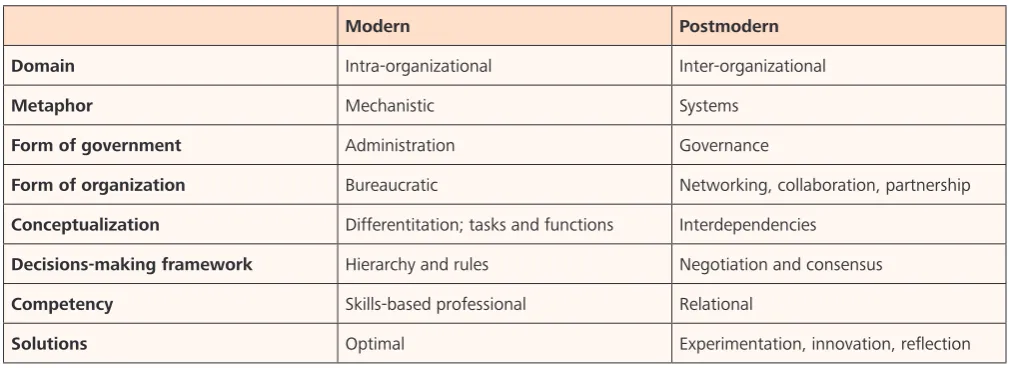
Table 2: Modern and Postmodern Forms of Organisation (Williams, 2002:105) 10
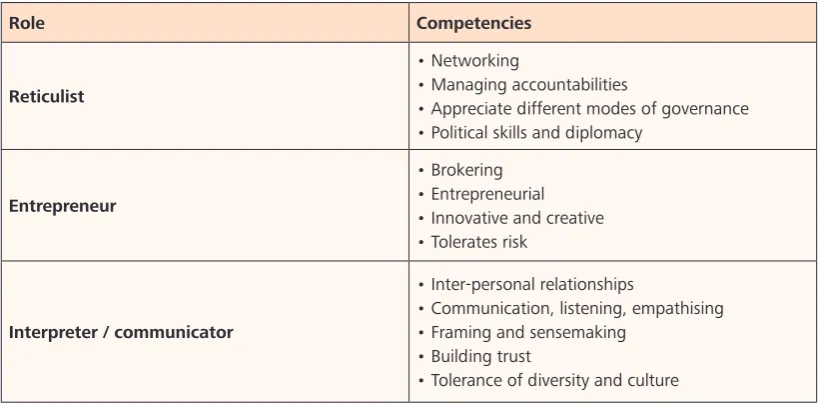
Table 3: Roles and Competencies for Boundary Spanners (Adapted from Williams, 2010) 12
Table 4: Identified Leadership Skills of CDI Team 29
LIST OF FIGURES
1
Executive Summary
BACKGROUND
In 2008 the Child and Family Research Centre (CFRC) was contracted for a three year period by the Tallaght West Childhood Development Initiative (CDI) to undertake a process evaluation of its work. The evaluation consists of five thematic-focussed reports and an overall final report. In addition, in September 2010, the potential for undertaking a small, focussed additional piece of work on Organisation was explored and agreed with CDI. The idea for this report arose out of an observation made by the evaluation team about the amount and type of activities undertaken by CDI to implement its programme of work, and the desire of CDI to have this captured, particular around its organisational practice. An evaluation plan for this standalone piece of work was developed in February 2011 and agreed in April 2011, with full data collection processes agreed in May 2011. The full evaluation proposal and plan is contained in Appendix 2 of this report.
AIMS AND OBJECTIVES
The aim of this evaluation is to document and examine the processes and relationships CDI has utilised to implement its strategy and principles. The objectives are:
• To identify the relationships which CDI established and maintained to begin implementing its strategy;
• To identify the processes which CDI established and maintained to begin implementing its strategy;
• To identify and examine how leadership impacts on processes and relationships in the case of CDI;
• To identify and examine what worked well in establishing both relationships and processes for implementation;
• To identify and examine what difficulties emerged in establishing both relationships and processes for implementation;
• To draw out implications of the CDI organisational process experience for future Comprehensive Community Initiative-style work in Ireland and elsewhere.
DESIGN AND METHODS
This aspect of the process evaluation was designed in conjunction with CDI. A draft evaluation plan for this theme was developed and forwarded to CDI for comment and affirmation. The plan was adjusted on foot of these comments and finalised. A multi-method approach was adopted. A multi-method approach is described as “the mixing of methods by combining two or more qualitative methods in a single research study […] or by using two or more quantitative methods in a single research study” (Hesse-Biber, 2010, p. 3). For this report the following methods were used:
• Literature review identifying factors relating to the implementation of Comprehensive Community Initiatives (CCIs), leadership in CCIs, and characteristics of postmodern organisations;
• Documentary analysis of a range of CDI documents, including team meeting minutes, governance meeting minutes, board reports, and documentation of various CDI working groups. Analysis of various governance meeting attendance data was also undertaken;
• Observations of various CDI meetings, events, working groups, governance meetings, CDI AGMs and public events;
• Interviews with various members of CDI: CEO, team members, governance members, funders. and representatives of the South Dublin Children’s Service Committee.
FINDINGS
A number of overarching findings that reflect the CDI ethos were identified through this research:
At the CDI team level:
• Processes and relationships are positive overall, and aid the implementation of the CDI strategy’s programmatic and cross-cutting activities;
2
Team members have increasingly taken ownership of their responsibilities within a framework of support provided through team capacity building, formal supervision – offering advice, reassurance and the opportunity to reflect on task-orientated activities – and informal professional and personal support from colleagues and friends in the team;
• The team has a focus on establishing and maintaining relationships with a wide variety of organisations in the locality which are both instrumental and also less central to the Initiative’s programme of work.
At the CDI governance level:
• Decision making is based on consensus, with Board meetings serving as an opportunity for CDI to source assistance and advice within the framework of accountability that a board offers;
• Board membership is reflected upon regularly and has been added to overtime as additional skills and needs have required;
• The Implementation Support Group is another opportunity for the CEO to source support from key organisational stakeholders in the locality and is an important driver in rolling out the Initiative and its specific activities.
CDI and other organisations:
• As is defined as a positive characteristic in implementing Comprehensive Community Initiatives, CDI connects with organisations outside its immediate locality to draw on expertise when required and connect with other key stakeholders;
• Its active membership and participation in the South Dublin Children’s Services Committee is a case in point, with the CEO and team members participating in the main committee and sub-groups respectively;
• It is increasingly connecting with, and both sourcing support from and providing support to, the relatively newly established Centre for Effective Services as well.
Leadership in CDI:
• The CEO’s leadership is described as good or excellent by participants, as is the leadership of CDI’s various governance structures;
• Leadership is also diffused throughout the organisation. Many team members reported working across boundaries to implement programmes, itself a form of collaborative leadership.
LIMITATIONS
Considering the specific focus on CDI structures and associated participants, and the primary method deployed being one-to-one interviews, the number of limitations is small. Despite frequent attempts to contact particular members of the ISG sampled, they failed to return the evaluation team’s calls and emails. The evaluation team sampled from the remaining pool of ISG members and conducted interviews with them instead. . It should also be noted that, as the findings of this report are based solely on the examination of one organisation, the conclusions arrived at are context dependent. It is not possible to analytically attribute organisational outcomes to organisational processes described.
SUMMARY AND IMPLICATIONS
Based on this report on the CDI experience to date, a number of key implications for future CCI implementation in Ireland can be identified:
1. The Need for Flexibility across Governance and Team:
CDI has demonstrated the usefulness and necessity of regularly reassessing the required roles and competencies of team members, composition of governance structures, and interactions between structures. This allowed CDI to identify gaps and address them, and stay aligned to the overall aims of the Initiative.
2. Connecting Within and Without:
CDI has demonstrated that it has sought to utilise its own resources and connections with key organisations at a local and national level.
3
3. Building Consensus: Building Trust: Building Quality:
Time, persistence, patience, and communication have been core to the establishment of trust and consensus. Also key to establishing and maintaining relationships were the formal and informal opportunities for organisations to come together, as well as the formal and informal support provided by CDI.
4. Flexible Leadership:
CDI has illustrated that leadership can occur at many levels of an organisation and can take a variety of forms.
6
1.1 Background to the Report
In 2008 the Child and Family Research Centre (CFRC) was contracted for a three year period by the Tallaght West Childhood Development Initiative (CDI) to undertake a process evaluation of its work. The evaluation consists of five thematic-focussed reports and an overall final report. In addition, in September 2010, the potential for undertaking a small, focussed additional piece of work on Organisation was explored and agreed with CDI. The idea for this report arose out of an observation made by the evaluation team about the amount and type of activities undertaken by CDI to implement its programme, and the desire of CDI to have this captured, particular around its organisational practice1. An
evaluation plan for this standalone piece of work was developed in February 2011 and agreed in April 2011, with full data collection processes agreed in May 2011. The full evaluation proposal and plan is contained in Appendix 2. However, for the purposes of this report, the main evaluation objectives are outlined below.
1.2 CDI as Organisation: Clarifying the Scope of the Evaluation
As with all elements of the process evaluation, CFRC undertook a consultation process with CDI to clarify the precise scope of this theme and assess the appropriateness of the proposed evaluation questions. As a result, the following aim and overarching objectives were identified as key to the research for this report. The aim of this evaluation work is:
• To document and examine the processes and relationships CDI has utilised to implement its strategy and principles. The objectives are:
• To identify the relationships which CDI established and maintained to begin implementing its strategy;
• To identify the processes which CDI established and maintained to begin implementing its strategy;
• To identify and examine how leadership impacts on processes and relationships in the case of CDI;
• To identify and examine what worked well in establishing both relationships and processes for implementation;
• To identify and examine what difficulties emerged in establishing both relationships and processes for implementation;
• To draw out implications of the CDI organisational process experience for future Comprehensive Community Initiative-style work in Ireland and elsewhere.
1.3 Methodology
While the process evaluation has adopted a mixed-methods approach for all its previous work, given the nature and specific focus of this report, it adopted what Hesse-Biber (2010, p.3) has called a multi-method approach, described as “the mixing of methods by combining two or more qualitative methods in a single research study […] or by using two or more quantitative methods in a single research study”. Here, a multi-method qualitative approach has been deployed. We address each particular method below:
Literature Review: Establishing and Maintaining Comprehensive Community Initiatives (CCIs)
Building on the literature review undertaken for the first process report, this report seeks to extract key learning from the academic and practice literature regarding the processes and relationships necessary to establish a CCI. For the most part, therefore, the literature search was purposive and built on the review undertaken for report one, with a particular emphasis on implementing CCIs. However, particular research objectives permitted a broader literature search, for example, when searching for material pertaining to leadership. The review seeks to embed CCIs within the burgeoning literature on postmodern organisations (i.e. those organisations which tend to be characterised by collaboration and networking), highlights the importance of leadership and collaboration in achieving the goals the CCI has been set, and extracts the key messages from the CCI literature on implementing complex initiatives developed to tackle complex problems.
1 It should also be noted that each service evaluation team has been asked to capture elements of each CDI programme it is
evaluating. In particular, it is expected that the process aspect of each service evaluation will capture data pertaining to fidelity of programme implementation, implementing Communities of Practice and rolling out manualised programmes. It is beyond the scope of the overall process evaluation to examine in detail these factors as they relate to five individual services.
7
Documentary analysis
Documentary analysis of a range of CDI documents was undertaken. Similar to previous process reports the evaluation team developed, in conjunction with CDI, a hierarchy of documents to examine based on the theme of the report. Specifically, this report is based on:
• Minutes of CDI Board, Implementation Support Group (ISG), and Executive Subcommittee Meetings, and Board Reports;
• Team meeting minutes;
• CDI’s Newsletters;
• CDI’s strategy;
• Documentation of other working groups (e.g. Strategic Working Group, Communication Working Group) and Peter Ryan’s HR Report commissioned by CDI.2
Interviews
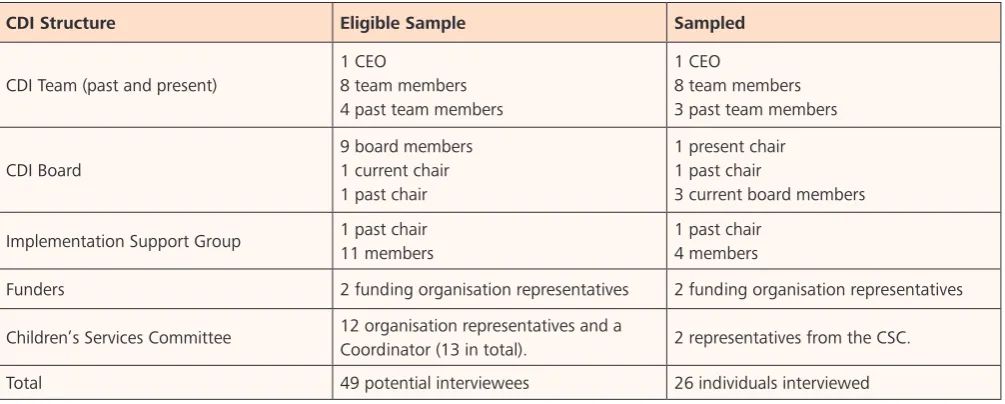
[image:13.595.52.555.356.558.2]As agreed with CDI, the target interviews were predominantly from internal aspects of the organisation. Individual interviews were undertaken with each CDI team member – past and present – and a sample of individuals from across the governance structures was selected and each was invited to participate in the research. Two representatives from the South Dublin Children’s Services Committee were purposively sampled and also invited to participate. Figures relating to the eligible sample, and those sampled and invited to participate, are presented in Table One:
Table 1: Sample of Staff/Stakeholders across CDI
Incorporating Data from Previous Reports
Given the focus on the organisation, and the desire specifically to examine the processes and relationships established and maintained by CDI which it has utilised to progress its work, it was agreed that data arising from the previous evaluation reports would be incorporated into this report. This data is presented in a table in Appendix 3.
Observations
Throughout the period of the evaluation observations of various CDI team meetings, planning days (both in CDI offices and at ‘residential’ trips), governance meetings, funding meetings, training initiatives, workshops, public events, and AGMs were undertaken by members of the evaluation team. Where particular themes were being researched from previous evaluation reports the observation notes were coded according to these themes. Some of these themes have obvious relevance to this report, such as collaboration, or the ways in which some governance structures work. However, for the purpose of this study, some observation notes were re-examined for additional themes emerging from the literature.
2 It should be noted that the process evaluation team did have access to CDI’s team journal, a mechanism for CDI staff to freely
express their opinions in relation to their work. However, in agreement with the team it was not used as a data source. Instead, the journal provided an additional document to explore potential objectives for each report and develop interview schedules for team interviews.
CDI Structure Eligible Sample Sampled
CDI Team (past and present)
1 CEO
8 team members 4 past team members
1 CEO
8 team members 3 past team members
CDI Board
9 board members 1 current chair 1 past chair
1 present chair 1 past chair
3 current board members
Implementation Support Group 1 past chair 11 members
1 past chair 4 members
Funders 2 funding organisation representatives 2 funding organisation representatives
Children’s Services Committee 12 organisation representatives and a
Coordinator (13 in total). 2 representatives from the CSC.
Total 49 potential interviewees 26 individuals interviewed
8
Limitations
Considering the specific focus on CDI structures and associated participants, and the primary method deployed being one-to-one interviews, the number of limitations is small. Despite frequent attempts to contact particular members of the ISG sampled, some failed to return the evaluation team’s calls and emails. The evaluation team sampled from the remaining pool of ISG members and conducted interviews with them instead. It should also be noted that, as the findings of this report are based solely on the examination of one organisation, the conclusions arrived at are context dependent. It is not possible to analytically attribute organisational outcomes to organisational processes described.
Data Analysis
Data analysis was undertaken in a number of different ways. Firstly, all documents were read through so as to allow the team to familiarise themselves with the breadth and content of the data. Following this, each document was re-read and examined for themes pertaining to the objectives of the report. These included membership and participation at meetings, decision making, support/advice on particular issues from participants at meetings, and staff roles at particular events. Observation notes were subjected to the schedule emerging from documentary analysis and from themes emerging from the overarching and supplementary evaluation questions. Regarding interviews, a number of questions specifically relating to processes and relationships – drawn from the evaluation questions - were asked in each interview. The interviews were semi-structured and thus it was more straightforward to thematically group the data emerging from them. Nevertheless, the transcripts were initially sifted to identify common themes across all interviews before they were coded to ensure systematic analysis. Interview data was analysed using the qualitative data management and analysis package Nvivo.
Presentation of Findings
It should be noted that, given the small pool of potential research participants and the report’s audience, quotes are not assigned to specific team or governance members (i.e. team member one, Board Chair and so on) so as to protect the identity of participants. Quotes from the CEO are not anonymised where the CEO is commenting on her own role. Otherwise, all team member quotes are referenced as ‘CDI team’.
1.4 Outline of the Report
Following this Introduction, Chapter Two provides a short summary of the main concepts pertaining to the theme of the report drawn from the literature review. Chapter Three provides an overview of the findings from interviews, observations and documentary analysis regarding CDI’s implementation. Chapter Four discusses the findings and highlights the relevant learning emanating from CDI’s experience for other proposed CCIs.
Chapter 2:
Summary Overview of Key Aspects of
10
2.1 Introduction
As mentioned in the introduction, a review of the literature in relation to organisational processes and relationships was undertaken. This Chapter summarises some of the key points of the review. The full review is presented in Appendix 1.
2.2 Postmodern Organisations and Comprehensive Community Initiatives
(CCIs)
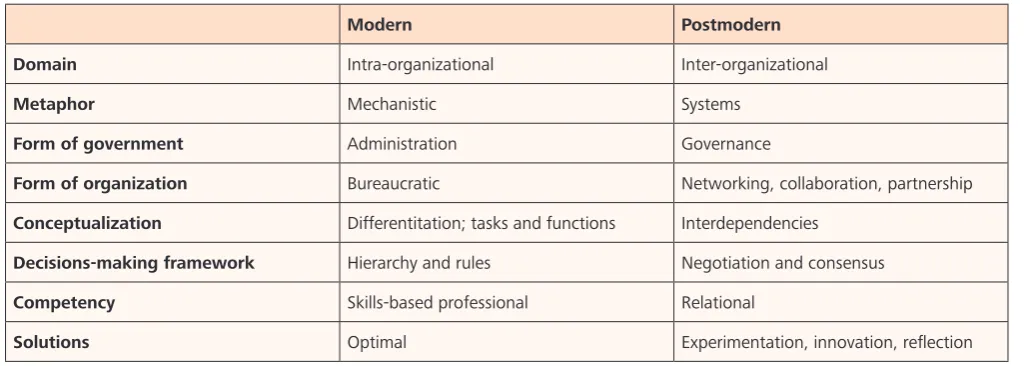
Williams (2002) proposes a framework that makes a distinction between modern and postmodern forms of organisation. He argues that postmodern forms of organisations that are characterised by collaboration, partnership, and networking are suited to tackling “wicked issues”3, and an inclination for innovation, experimentation and risk taking are desirable. In
this model, modern forms of organisation are characterised by notions of rationality, linear thinking, task differentiation and functionalism whereas postmodern forms reflect relationships, interconnections and interdependencies (Williams, 2002). Williams’ framework is consistent with the overall literature. For instance, Crosby and Bryson (2005) use the terms “in charge organisations” and “networked organisations” to describe a similar distinction. Table Two illustrates the main distinctions between modern and post-modern forms of organisation.
[image:16.595.40.553.378.561.2]It can be argued that Comprehensive Community Initiatives (CCIs) represent a postmodern form of organisation. Joined-up solutions, collaboration and integration are key concepts in the CCI literature. CCIs are a concept and method of delivering services to communities which use a holistic approach through recognising that individual, family, and community circumstances are linked.
Table 2: Modern and Postmodern Forms of Organisation (Williams, 2002:105)
2.3 Key Messages on Implementing a CCI
The implementation of a CCI requires an ecological approach that builds on community needs (Jack, 2005). Kubisch (1997; 2005) highlights that CCIs involve a wide range of stakeholders with roles that are different from traditional programmes. For instance, funders do not simply provide the funding, they are often also involved as co-designers of the initiatives. Similarly, residents are not just beneficiaries, they are local leaders and agents of change. These new roles bring new tensions. Two main tensions were identified in the literature (Kubisch, 1997; Perkins, 2002): the process-product
tension comes from the difficult balance between the need to achieve short term outcomes and ensure that capacity is
3 “Wicked issues” is a term used to denote difficult, complex policy problems requiring complex, often inter-departmental or
interagency, policy responses. Originally applied to policy studies by Rittel and Webber in 1973 in their theorising about urban planning, Clarke and Stewart (2000, p.377) identify wicked problems as “those for which there is no obvious or easily found solution. [...] There can be hope that wicked problems will be solved over time, but that requires learning of the nature of the problems and of their causes. They require a capacity to derive and design new approaches for their resolution and to learn of their impact.” In this regard, the notion of a wicked issue, or a complex problem, is particularly suited to CDI as it is an example of a complex community initiative, a multifaceted response to a set of complex multifaceted problems in a locality.
Modern Postmodern Domain Intra-organizational Inter-organizational
Metaphor Mechanistic Systems
Form of government Administration Governance
Form of organization Bureaucratic Networking, collaboration, partnership
Conceptualization Differentitation; tasks and functions Interdependencies
Decisions-making framework Hierarchy and rules Negotiation and consensus
Competency Skills-based professional Relational
11
built and linkages created in the community while the inside-outside tension comes from ensuring that the initiative is driven and owned by the community while recognising that significant change will require resources of many types from outside the community.Perkins (2002: A-4) identifies the following steps as necessary for the successful implementation of CCIs:
• A vision;
• Getting the community involved; Agreeing on outcomes/indicators;
• Collecting data / undertaking research in the community; Publishing the report;
• Analysing implications;
• Developing an agenda for action; Taking action;
• Identifying and supporting what works; and
• Using data to monitor progress and improve services.
Kubisch and colleagues (2010) examined 48 CCIs and identified key messages to improve their implementation. Their recommendations include: clarity about goals, definition of success and theory of change; intentional strategies; comprehensive theory of scale and proportional investments; effective implementation; investment in capacity building; and alignment of capacities and objectives.
2.4 Collaboration
Collaboration is a key component of CCIs. A number of prerequisites for effective collaboration were identified in Report Two of this evaluation (Huxham and Vangen, 2000; Mibourne et al.,2003; Horwarth and Morrison, 2007; Warmington, 2004; Atkinson et al., 2002; CFRC/CAWT, 2008; Sloper, 2004; Worrall-Davies and Cottrell, 2009; CAAB, 2009; Williams, 2010 ). Relationships and leadership are also key aspects of collaboration. Williams (2002; 2010) argues that the current policy discourse focuses too much on the effectiveness and sustainability of structures and mechanisms, and tends to understate and neglect the key contribution of individual actors.
2.5 Leadership
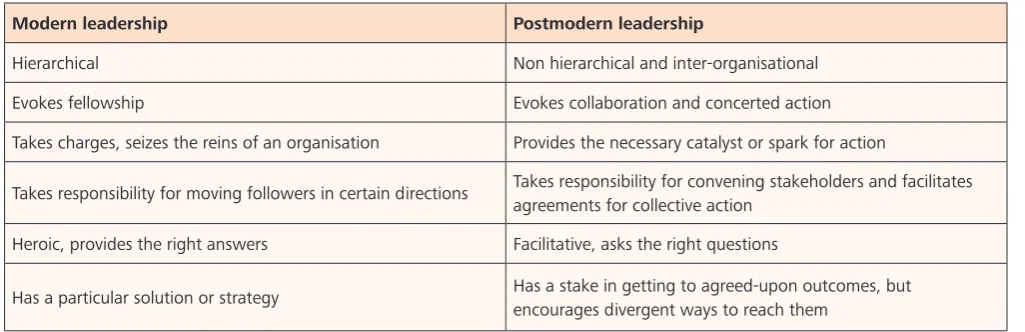
Throughout the literature, leadership is often cited as a prerequisite for an organisation’s success (Atkinson et al., 2005; Brown and White, 2006; Browne et al., 2004; CAAB, 2009; Duggan and Corrigan, 2009; Friedman et al., 2007; Frost, 2005; Horwarth and Morrison, 2007; Hudson et al., 1999; Linden, 2002; Sloper, 2004). Williams and Sullivan (2010:9) highlight that in a collaborative setting leadership “is important to facilitate and design effective structures and decision-making processes to move the agenda forward in pursuit of shared purposes”. Referring to organisations in collaborative settings, Crosby and Bryson (2005: 17) state that: “old notions of leaders who were in charge of situations, organisations, and even nations seemed not to apply”. Two notions of leadership appear relevant to this review: “collaborative public management” and “integrative public leadership”, while the concept of boundary spanning is also important. These are briefly addressed in the final sections below.
2.5.1 Collaborative Public Management and Integrative Leadership
O’Leary and colleagues (2006: 7) propose the following definition of collaborative public management, adapted from the work of Agranoff and McGuire (2003) and Henton et al. (2006): “Collaborative public management is a concept that describes the process of facilitating and operating in multi-organisational arrangements to solve problems that cannot be solved, or easily solved, by single organisations” (O’Leary et al., 2006). The concept of integrative public leadership
examines leadership in collaborative settings and shows strong similarities with collaborative public management. Integrative public leadership is defined as “bringing diverse groups and organisations together in a semi-permanent way, and typically across boundaries, to remedy complex public problems and achieve the common good” (Crosby and Bryson, 2010: 211). Differences between leading a single agency and leading in collaborative settings are detailed in the full literature review in Appendix 1.
12
2.5.2 Boundary Spanners
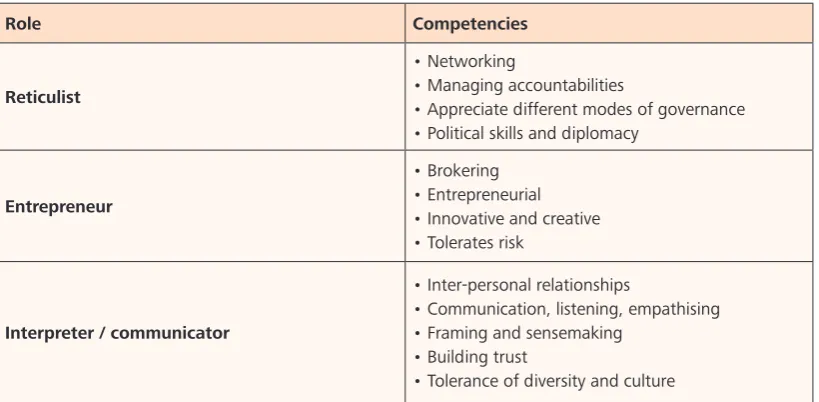
[image:18.595.44.454.284.485.2]Collaborative settings elicit a new type of leadership that requires skills that are different to the ones identified in the classic leadership literature (Ranade and Hudson, 2003; Williams, 2002). Ranade and Hudson (2003: 43) note that in collaborative settings, leadership is more “diffuse and subtle”. Frost (2005) argues that leaders should be able to inspire and support staff through the process of change. The author highlights that “effective leaders will be “boundary spanners” who can work across traditional divides and make the most of the opportunities that are presented” (Frost, 2005:49). Boundary spanners are “actors whose primary job responsibilities involve managing within multi-organisational and multi-sectoral arenas” (Williams, 2010: 2). They are organisational representatives that are “intimately involved in the day-to-day relationship-building activities and operations within the developing partnership (Noble and Jones, 2006: 897). Boundary spanners work across traditional divides and make the most of the opportunities that are presented to develop partnership working (Frost, 2005). Table Three below outlines the different forms of boundary spanners and the characteristics of each:
Table 3: Roles and Competencies for Boundary Spanners (Adapted from Williams, 2010)
2.5.3 Leadership in CCIs
The literature review in report one identified a number of challenges pertaining to CCIs and highlights the necessity for effective leadership (Stagner and Duran, 1997). Kubisch and colleagues (2010) identify a number of leadership skills in the context of CCIs. The authors admit that this set of skills might not exist in a single individual but might appear across all the individuals and organisations involved. They include (Kubisch et al., 2010: 31-32):
• Understanding the complexity of issues and relationships while maintaining a focus on goals;
• Inspiring hope and urgency;
• Using community-level data to analyse and mobilise the community;
• Interacting across technical and sectoral boundaries, as well as across race, class, and cultures;
• Recognising the power bases that can impede change and engaging effectively with them;
• Establishing and maintaining trust with a wide range of stakeholders;
• Being opportunistic and take advantage of new political openings, policy trends, funding streams and economic upswings;
• Being entrepreneurial with regard to funding;
• Being open to learning, creating feedback loops to manage internally and to learn to adapt.
Role Competencies Reticulist
• Networking
• Managing accountabilities
• Appreciate different modes of governance • Political skills and diplomacy
Entrepreneur
• Brokering • Entrepreneurial • Innovative and creative • Tolerates risk
Interpreter / communicator
• Inter-personal relationships
• Communication, listening, empathising • Framing and sensemaking
• Building trust
13
Leadership in collaborative settings such as CCIs requires both continuity and change. Continuity allows for some stability in the partnership. A change of leadership can be disruptive, break momentum and possibly lose some integrity. Nevertheless, fresh leadership can have positive effects through injecting new ideas, fresh energy, and vision (Alexander et al., 2001).2.6 Summary
This chapter has briefly summarised the main points of the literature review undertaken for the evaluation of CDI’s organisational processes and relationships. In particular, it has highlighted the notion of postmodern organisation as a useful concept through which to examine the implementation of the range of activities undertaken by CDI. It has also emphasised the importance of collaboration and leadership in such implementation processes, as well as the factors key in the CCI literature for successful implementation.
Chapter 3:
16
3.1 Introduction
This chapter presents findings from documentary analysis, interviews and observations relating to the workings of CDI. In particular, it focuses on the processes put in place to begin implementing the CDI strategy, and examines the relationships and working processes at and between the levels of team, governance, funders and other stakeholders. Findings relating to the themes of programmatic implementation and leadership are also outlined before a short summary concludes the chapter.
3.2 CDI Team
3.2.1 Structure and Roles
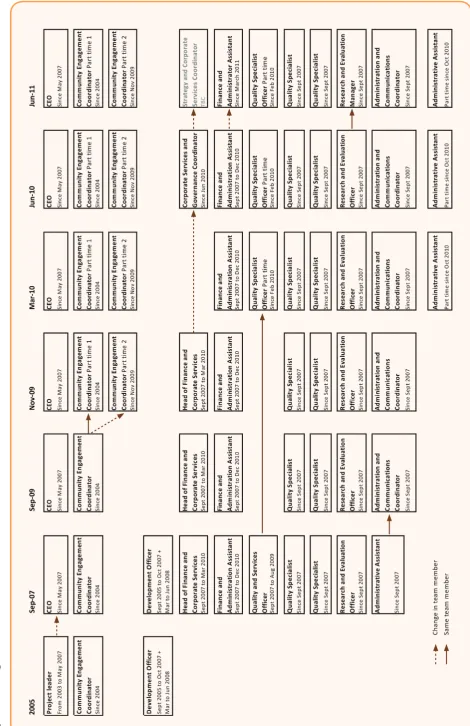
Interview data and documentary analysis reveal that when the process began of putting the CDI staff team in place, three members of the original team were already in place: the Project Leader, a Community Engagement Officer, and a Development Officer. The current CEO was recruited and began working in May 2007. With the then project leader and the support of an HR consultant, the CEO began immediately to examine the roles and responsibilities of staff positions and, while some positions were clearly required, the need for other managerial and administrative support posts was also identified (CDI team member interview). Ultimately, seven other positions were filled by September 2007:
• A Head of Finance and Corporate Services;
• A Finance and Administration Assistant;
• A Quality and Services Officer;
• A Quality Specialist in charge of Mate Tricks (MT) and Doodle Den (DD);
• A Quality Specialist in charge of the Healthy Schools Programme (HS) and Early Childhood Care and Education service (ECCE);
• A Research and Evaluation Officer; and
• An Administrative Assistant.
Some post roles and responsibilities were agreed after the recruitment process (e.g. quality specialists), while changes in other post roles occurred through the early stages of implementation facilitated through reassessment of organisational needs, integration of posts, outsourcing of some functions and staff departures. Additional administrative support was recognised as being required almost immediately while the gap resulting from the departure of Quality and Services Officer was filled on a part time basis, with other staff taking on additional work (CDI team member interview). Interview data reveals that all team members have a clear understanding of their roles and responsibilities. Some confusion around roles was remarked upon by departed staff, however this was very much a minority view. The full breakdown of the alteration of posts is outlined in Figure 1 below.
3.2.2 Team Processes
4Various data sources indicate a number of processes occurring within the CDI team. First among these is the team
meeting. Initially scheduled on a weekly basis (now occurring every month to six weeks), the team meeting is a mechanism
through which staff can update each other on various aspects of professional work, while also using them as an informal opportunity to provide an update on personal issues. Observation notes verify the reported nature of the team meeting, and illustrate an overall sense of conviviality, with some team members using it as an opportunity to share personal stories. An agenda is circulated for the meeting and each issue is discussed amongst the team.5 This was particularly important
in the early stages of implementation when programmes were being developed and rolled out, and connections being made. As one staff member noted:
4 CDI’s principles outlined in A Place for Children: Tallaght West, followed in 2009 by the vision statements, value statements and
compass, are important to consider when discussing CDI as a team. These have all been outlined in the first evaluation report. The CDI compass plays as a role as a reflective tool for staff to periodically (re)focus on the philosophy of CDI and its role in day-to-day work.
5 Team meetings can cover a wide range of topics, including: evaluation, community engagement, working with other organisations,
17
“They were very frequent and we needed that because [...] everything was bedding down and we neededconstantly to check in with each other [about] where we are at: ‘what are you doing? What is on your agenda? Who can we link in with?’ Trying to avoid duplicating things and going to the same people within the same day or week, we were really conscious of avoiding that”
(Team member)
Team meetings provide a focus on programmatic and cross-cutting implementation. Observations of team meetings, and documentary analysis, indicate a process of developing and reviewing quarterly business plans with implementation-orientated actions defined and time-specified. These, together with individual action sheets which staff complete on a monthly basis, provide a regular focus on work and ultimately the implementation of the strategy. Additionally, other mechanisms to enhance team processes were used since 2007. These included reading weeks at the beginning of each calendar year, planning time, the entire team engaging in some of the training initiatives provided by CDI, as well as the use of a reflective tool (the team journal mentioned previously).
Within the broader team setting, while team members mentioned that they can express their opinion and most of them
feel that they are contributing to decisions (again, something which observations of team meetings verify), there was
general recognition that ultimately, some decisions rest with the CEO. This was felt to be particularly so in the early period of implementation when numerous, various decisions needed to be taken. However, as time has progressed, the majority of staff feel that they have been empowered to take decisions themselves, especially regarding their own particular areas of responsibility, while realising at the same time that support is available from supervisors and colleagues should it be required. Yet, there are still issues which will require the input of more staff deemed to be ‘higher up’. For example:
“...[B]ut other stuff, you usually get these emails from [CEO...]about different things to consider and think about and sometimes they are clearly directed, they want things done this way or this needs to happen. [....] [D] epending on what it is but some of the time then it’s open for discussion”
(Team member)
Increasingly, staff members have been given more autonomy and decision making authority over particular aspects of their work. This was a conscious decision taken by the CEO as everyone became more familiar with the work of CDI:
“I think increasingly people have more autonomy; two years ago [...] I absolutely needed and wanted to know everything and everything was run by me. And now that’s not the case and that’s very appropriate [...]. I’ve been very conscious about giving people more responsibility, giving more independence as they have grown into their roles and as we have all come to understand the work better”
(CDI CEO)
Overall, team members report that they feel involved in decision making. They may not always take the decision themselves on particular issues but it is clear that, through discussions at team meetings, they feel involved in the decision making process.
There is a general consensus about team relationships being good and friendly. Staff highlighted that the CEO places a strong emphasis on building relationships amongst team members (e.g. team capacity building/team development days/ planning trips away from the office (also known as ‘residential’)).6 The CEO highlights that, again, this approach to team
building was a conscious one, concerned about the dynamic within the team and how it might affect the work of the Initiative:
6 The evaluation team is also aware that the team worked with a life coach on developing team processes and engagement,
intermittently for approximately two years. The evaluation team was requested not to observe these team meetings.
18
“We had the work with [life coach] as well for a couple of years and again I would place huge value on that way of working which is about thinking about the dynamic within the team, thinking about you know, ‘what’s going on for me when I get defensive?’ Thinking about ‘how can I be more effective within the team?’, that is really important for me and I think it has paid dividends but it was difficult for some members of the team, some people weren’t comfortable with it”
(CDI CEO)
A variety of techniques was used through the team coaching process, including various tools such as the Myer Briggs personality test, change management exercises drawn from Spencer Johnson’s Who Moved My Cheese? and the de Bono Thinking Hats system for group interaction. While some staff did report that the life coach experience was challenging, most team members intimated the positive impact the team development process as a whole has had on their work, and their ability to better understand their colleagues, professionally and personally. For example:
“That actually helped because you get an understanding of how people work and we get to know each other on a different level as well”
(Team member)
Team members highlighted that this engagement results in significant informal support being available from other team members, many of whom also labelled their colleagues as friends. Observations of CDI’s office confirm that team members appear to easily engage with each other on work related topics. While team members report that, in theory, CDI is a hierarchical structure, with a CEO and line managers, there is a general consensus about equality amongst the team, and CDI being “a flat structure” or a “horizontal structure”. Team members mentioned an “open door” policy in relation to consulting the CEO for advice that concurs with observations of CDI’s office.
Line management and supervision has altered somewhat over the period under examination, however this has not
been viewed as problematic. Overall, there is a strong, positive perception of the role supervision plays in the work of the CDI team. Staff report a number of benefits to supervision: primarily, it is perceived as a way to structure work through the completion of action sheets. Other benefits include the opportunity to discuss issues and get a second opinion on choices made. For example:
“Really it provides a context for me to highlight particular issues of my work, probably a lot of the time it’s just to get reassurance that “yeah that’s an ok approach” or “yeah that makes sense” and it is also a kind of method of accountability for me so it helps, [it] structures my work”
(Team member)
19
Figur
e 1: C
hanges to CDI T
eam between 2005 and 2011
C
hapter 3 - Pr
esentation of F
ind
[image:25.595.75.546.52.779.2]20
Staff were asked to identify what challenges they encounter in their work. Numerous team members indicated that time constraints are a challenge in fulfilling their tasks. Some team members indicated that they cannot always attend all the meetings or committees they would like. For instance, CDI has no representative on the local partnership’s Community Development Subcommittee. Furthermore, the CEO’s role involves implementing five manualised programmes and associated work, latterly the Restorative Practice initiative, the Quality Enhancement Programme, managing the evaluations, and improving interagency work. The CEO counted 42 meetings to be attended in a month and queried whether a smaller initiative with less programmes to implement – and thus less related activities - in addition to senior practitioner support within the team on a constant basis, might make things more manageable.
Additionally, staff identified challenges which related to working with other stakeholders in rolling out the programmatic elements of CDI’s work. These will be outlined below.
3.3 Initiating Programmatic Implementation
In addition to establishing elements of the governance structures and recruiting the team, initiating activities relating to all CDI’s programmes was a key part of the early phase. This involved a range of activities7 including examining, and
in some cases changing, elements of each programme, their proposed staff complement, initiating pilot sites for some programmes and engaging with existing service providers, while all the time adhering to the principles of the strategy. The importance of localism was emphasised as an implementation driver: that local, already existing, community-based providers would deliver all the services and that, while ‘outside’ people were brought in to provide training, this was done so as to support local providers (Team member).
In addition to the support provided by the Initiative’s structures, the role of experts in the early implementation phase was also identified as an important factor. Notable here was American expertise on programmatic implementation and fidelity monitoring. Also important was the role of American, UK and Irish expertise regarding evaluation methodologies and their impact on a number of issues, including programme recruitment, dosage adjustment, and randomisation as tendering processes began. The willingness of CDI to own up to a lack of clarity with some providers regarding the evaluation process was highlighted by the CEO as important in keeping people on side:
“I think it is just about how you say it to people: ‘look, I’ve just really messed this up, I’ve never done this before, can you help us to work out how to do this?’ I think people have really appreciated that”
(CDI CEO)
However, numerous challenges were identified in the early stages of the implementation process. Prominent amongst these was engaging with schools.8 While some programmatic changes broadened the potential involvement of
schools in the CDI process (e.g. Mate Tricks being aimed at pupils in senior schools), difficulties in engaging with some schools across all related programmes were identified. Interviews indicated that some principals seemed to comply with programmes as a way to get resources. . A lack of buy-in by schools to the process was also cited by some members, in addition to suspicion some schools had of the process at the beginning. While some tendering processes required schools to be already ‘matched-up’ with a service provider, other programmes required prior engagement with schools before the programme commenced (e.g. Doodle Den programme)9. In particular, the implementation of the Healthy
Schools Programme required persistence, particularly where some schools were sceptical or had other issues presenting at the time, such as whole school evaluations or changes in principals. Additionally, the need to present, clarify and understand differing expectations about engagement were also challenges perceived to be experienced at all levels of CDI – governance, managerial, and implementation (service) (Team members).
7 The second evaluation report on interagency working and service integration in CDI outlines the development aspects of each of
CDI’s services.
8 It should be noted that other organisations were difficult to engage with as well. Many of these difficulties were outlined in the
Working Together and Service Integration report.
9 The Working Together and Service Integration Report outlines the particular arrangements of each programme from initiation to
implementation.
21
Furthermore, attempts to establish relationships with schools at a broader level were slow and frustrating. For instance, CDI was hoping to re-establish a network of principals in Tallaght West. Acknowledging the challenges in engaging school principals, CDI asked the Department of Education to send the invitation. However, most of the principals did not attend the meeting.A funder noted the need to be pragmatic when building relationships and focus on those which are successful. The CEO adopted this attitude towards some school principals after unsuccessful attempts to build relationships:
“I mean sometimes you just have to realise you are just never going to get somebody on board and you just have to let that go and concentrate on the people and organisations that are on board and eventually the kind of reluctant partner will start to get curious and start to take an interest”
(Funder)
Other implementation challenges were also identified by CDI staff10. These included:
• Trying to implement programmes as manuals were being developed, and then implementing the manuals with fidelity;
• Addressing staff concerns (e.g. about an aspect of the programme, future employment);
• Developing and implementing communities of practice (CoPs) and reflective practice approaches;
• Explaining evaluation methodologies;
• Maintaining trust and participation of organisations involved;
• Planning further service rollout after year one without useful evaluation information; and
• Trying to encourage services to take ownership of the programmes.
A number of factors that pertinent to overcoming these challenges were identified and include time; interpersonal skills (i.e. persistence and honesty of endeavour); good communication (i.e. face to face meetings, clear information); regular meetings of governance structures, site visits, addressing individual provider needs when required) and appropriate knowledge and training (e.g. education, and knowledge to link services in with other services to meet needs).
3.4 CDI Board
Documentary analysis and interview data reveal that the CDI Board has three overarching functional areas: governance
and operational development; oversight; and guidance. More specifically, while the entire range of Board functions
have been outlined elsewhere,11 different functions have been to the fore at different times. Initially, its function was to
oversee the hiring of the executive team to support strategy implementation, establish and participate in subcommittees, and assist in service design and programme development. However, as CDI’s work has rolled out and bedded down, a more orthodox role, as defined by board members participating in this research, has emerged. For example:
“I think a board that forms when an organisation is developing does a lot more hands-on stuff but over time that has really developed and the board role now is very much what you would expect of a board: that governance, that oversight”
(Board member)
10 The specifics of some of these challenges were outlined in the Training and Evaluation process evaluation report (e.g. CoPs and
reflective practice approaches) and the Working Together and Service Integration report (e.g. programme development). The process evaluation team would also expect each of these aspects to be explored by the service evaluation teams at each individual service level.
11 The functions of the CDI Board are outlined in the first process evaluation report.
22
Board members highlight the required balance in their role between thinking about the future, keeping in mind that CDI is a 10 year strategy, while discussing current issues. It was also noted that mainstreaming was an element considered by the Board at the early stages. Overall, the Board’s role is perceived by the interviewees as to support the CEO and provide expertise. Concretely, this involves attending meetings alongside the CEO to discuss a variety of topics.
Regarding the oversight and guidance functions, board members are supported in this work through clear communication and information sharing. Each board member receives an information pack – or Board Report - which provides:
• An update on activities and identifies future targets in advance of meetings;
• Overview of CDI programmes and relations with key stakeholders such as the funders, ISG, EAC, and broader interagency relationships;
• Evaluation updates;
• Financial procedures; and
• Other pertinent information relevant at a particular time.
Many interviewees identify this process as aiding the Board in being a ‘working board’, active, engaging and supporting the CEO and team. The Chair and the CEO, prior to each meeting, discuss the agenda and decide on propositions that will be brought to the Board. This is also identified as an important process by Board members. The overall support provided by the Board is acknowledged by the CEO:
“They are all there to help you to do the best job you can do (…) I go into the Board meetings looking forward to them because I know I’ll come out feeling that I’ve been helped”
(CDI CEO)
Board membership has altered since its inception. Initially described as an ‘expert-led’ board, individuals from a variety of sectors have voluntarily participated in the structure. This participation was supported with two rounds of Board and Governance training, in 2007 and 2010. Changes in membership have occurred at a number of stages: in February 2007, the Board was compromised of six members, seven members in September 2007, eight members in November 2007, nine members in October 2009, 11 members in March 2010, and 10 members in June 2011. Three Board members who were involved since the beginning of the meetings resigned in June 2009. They included the Project Leader, who also acted as Board Chair, the Early Childhood Development and Education specialist and the representative from the National Paediatric Hospital (due to other work commitments). However, the latter did not attend Board meetings after April 2008. June 2009 also marked the recruitment of three community representatives onto the Board. Their participation is supported actively by the CEO, or on occasion other CDI staff, who meets with them prior to each meeting to discuss particular aspects of the agenda, accompanying documentation and any particular questions they may wish to raise.
Other members who joined over the period include a financial specialist (AIB bank), in November 2007, a community development specialist (Community Links Programme) in October 2009, an education specialist (Social Personal and Health Education) and a change management specialist (Level 4) in March 2010. One of the community members was not re-elected in June 2011. While membership turnover is a challenge, it is also viewed by most respondents as an opportunity. For example:
“When a member leaves it provides the opportunity to reassess the Board’s needs. I think that would have given us the opportunity to [...] review again; “do we have the right expertise and people with the right connection?””
(Board member)
Attendance levels vary, with members attending between 29% and 100% of the meetings they were invited to. Over time, the two members with the lower attendance level (Health expert with 29% and one of the three community representatives with 33%) ceased being Board members. On average, Board members attended 75% of their meetings, with meetings occurring with 62% of members present, on average. There have been two Board Chairs, with the change occurring in June 2009.
23
At Board meetings, the CEO presents the key points and discussion occurs on issues encountered. Observation of
meetings support interview findings which indicate a convivial, supportive environment where actions are decided. Board members appear at ease to make comments or raise issues and the various skills around the table are very much viewed as a positive. For example:
“We have a lot of experience, a good broad base [...]. It works well because of different levels of experience and people ask very straightforward questions, nobody is afraid to raise something and ask for it to be explained”
(Board member)
“I think it is rigorous in its decision making. I think there are very different skill sets on board, so you have very different types of questions and perspectives [....]. You don’t have group think or anything like that”
(Board member)
Board decision-making is described by all respondents as consensual in the overwhelming majority of cases, with
no major disagreements being recalled. On occasion, while trying to reach consensus on past issues, decisions were sometimes taken by majority or that compromises were made to reach consensus. In reaching decisions, Board members feel that their expertise is respected and their opinions heard. Preparatory processes are identified as contributing positively to the work and decision making of the Board. These include the preparation of all documentation and circulation in a timely manner. A strong chair and a clear focus on the key issues were also identified as important factors during the meetings. Interviewees also report that, with decision making also taking place at subcommittee level,12 space is created
to discuss the major issues of the period. Imbued in this process is a level of trust in board colleagues and their expertise. For example:
“But then when you had the [subcommittee] structures, we thought ‘actually, some of my colleagues on the Board do understand this, so I trust that they are making the right decisions’ [...] so there is a trust and respect for the expertise that people are bringing”
(Board member)
Regarding the Board’s relationship with other CDI structures and stakeholders, documentary and observation data indicate that the Board, CDI team and ISG members met after the AGM in May 2009, May 2010 and June 2011. Board and ISG members also held joint meetings in November 2009 and August 2010. Members of both structures were involved in the Strategic Working Group that came together over four months from November 2010. The Board also met with members of the consortium in 2009. Board members report that informal gatherings such as summer BBQs and Christmas seminars present occasions for them to meet with the CDI team and members of other structures. Board members also sit on the subcommittees, ensuring communication between structures.
The interviews highlight that funders engage with the Board in both formal and informal contexts to get an update on CDI’s work and provide information on issues such as the policy environment, reorganisation of government departments, and advise on particular appointments and governance structures (the Expert Advisory Committee especially). One Board member describes relationships with funders as crucial, and two-way:
“There has been a consistent appreciation of maintaining that relationship, nurturing that relationship, taking responsibility for that relationship both in terms of what it brings to us and what the resulting demands are”
(Board member)
Interviews indicate that Board members generally agreed on organisations not being involved in the structure due to potential conflict between CDI and organisational agendas, the desire to have expert-led, and latterly community, representation. However, the Board works with these organisations via the Implementation Support Group (ISG):
12 For a full list of the Board subcommittees and CDI working groups and information on both please see Appendix 4.
24
“To work very closely with the ISG, which is the group that I would see as the leaders in Tallaght West, that are the agency leaders, that have the expertise and knowledge [is important]”
(Board member)
Overall, Board members are satisfied with the level of contact between their structure and the ISG. Many recognised the work the chair, and particularly the CEO, undertake in maintaining a link between the two structures.
3.5 Implementation Support Group (ISG)
CDI’s governance chart indicates an “advisory/support relationship” between the ISG and CDI team. In general, members of the ISG highlight that the role of this group is to support implementation rather than to implement. Interviews indicated that the purpose of the ISG is not to make decisions, but to provide support, advice and suggest solutions to implementation difficulties. Overall, the CEO is satisfied by the level of support provided by the ISG:
“That group was hugely influential in how to get the work done in the first year or so. Really good at problem solving and just making a call to the right person, that kind of thing, really very useful, very supportive, so I think that was important”
(Team member)
CDI requested representation from various organisations to join its ISG so as to allow a forum where different perspectives and experiences would support the implementation of programmes and provide a space for such organisations to contribute to the CDI process. ISG membership was also partly guided by having some continuity with the original consortium. Members view their role as being “key enablers in overcoming any particular difficulties or problems” (ISG member).
ISG members report a good attendance at the meetings. Documentary analysis revealed that attendance varies depending on the agencies. The health services are strongly represented and frequently attend, as do representatives of a local children’s services organisation. Overall, meeting are attended by 50% of representatives, on average. However, many organisations attend less than half of all meetings.
ISG meetings take place every four to eight weeks and topics discussed are pertinent to CDI’s needs at particular
times. During meetings the CEO provides the group with updates on programmatic progress. Updates are also given by the member organisations, members raise issues regarding programmes and/or make suggestions on how to improve/ develop them. Overall, ISG members describe the decision making process as “consensual”. Topics are raised by the CEO with background information, discussed and agreed on. Despite strong opinions and personalities, consensus is reached without major disagreement. For example:
“I think it’s worked as a consensus, that people talk it through and you know, [....] it has a kind of a way of working through things by talking and putting forward views around the table and then the decisions get made”
(ISG member)
However, this perspective needs to be balanced against the consultative and supportive role the group is perceived to have by the CEO as outlined above, and the perspectives of other ISG members. For example:
“There weren’t many big decisions to make per se”
(ISG member)
“It was more an information sharing forum if you like, rather than one that would take major decisions affecting CDI because I recall it was originally just an implementation group and then the word ‘support’ was put in to reflect the role of the group…”
(ISG member)
25
Overall, ISG members feel that there is a strong informal network in the group that permits its work to proceed between meetings. One interviewee highlighted that relationships are key to the success of the ISG, and do facilitate communication over time:“Around the table, everybody is equally represented, everybody has a chance to speak and it’s wonderful to hear people”
(ISG member)
“I think the conversations would have got deeper as time progressed purely and simply because the relationships had grown and the trust had gone deeper and everyone could speak more or less freely and openly”
(ISG member)
ISG members identified the fact that they work together in other settings as an advantage. It was noted that this allows them to get to know each other well and facilitates relationships by bringing “greater cohesiveness” and an understanding of what each organisation does. While some interviewees identified the overlap between the ISG and South Dublin Children’s Services Committee (SDCSC) as beneficial, equally other interviewees felt that this can lead to superficial discussions on particular topics at the ISG due to their county-wide nature. Indeed, this can also be difficult for the non-SDCSC members of the ISG, as a team member notes:
“It’s been complicated by the fact that so many [...] on the ISG also sit at the SDCSC so sometimes [they] end up having conversations that should really be happening at the SDCSC or conversations [are had] at the ISG about the SDCSC which is very difficult for the people who don’t go to the SDCSC”
(Team member)
3.6 CDI Team and Governance Connections
Both interviews and documentary analysis reveal that the primary connection between the CDI team and the Board and ISG is via the CEO through CEO’s Board report and CEO email update (informing team members of issues and/or decisions made). Indeed, some interviewees described the CEO as the ‘gateway’ to the team. Team members complete sections of the Board report that are relevant to their role and responsibilities. They may attend Board and indeed ISG meetings on a needs basis to present issues pertaining to their role and often only remain for that particular purpose, leaving afterwards. Interviews reveal that there are no formal feedback processes between the team and the governance structures. However, documentary evidence suggests feedback is provided by CEO through emails. Additionally, all team members do have access to Board meeting minutes via the shared network drive. In the main, though, CDI staff report that they do not have regular contact with the governance structures; indeed some were unaware of the relatively recent establishment of the Executive Subcommittee on human resource issues.
Data indicates however, that the team does meet with members from the Board and the ISG occasionally, such as at workshops, the AGM, the Strategic Working Group, and events such as Christmas parties, the volleyball league or summer BBQs. Additionally, the Research and Evaluation Officer engages on a regular basis with EAC members both at and between EAC meetings. The Corporate Services and Governance Coordinator works with the Risk and Finance Sub-committee.
Interview data reveal that relationships between the committee chairs and CEO are viewed as key. The CEO and the Board Chair are in regular contact, through meetings, telephone calls and emails, in addition to executive subcommittee meetings. The relationship is viewed as a supportive one, where the Board chair brings the views of the Board to the CEO (Board member interview). The CEO also connects with the Chair of the EAC more so now than in the past, a connection viewed as “more central now than at the beginning” (Team member).
26
3.7 CDI, The Atlantic Philanthropies (AP) and the Office of the Minister
for Children and Youth Affairs (OMCYA)
CDI is jointly funded by the Atlantic Philanthropies (AP) and the Office of Minister for Children and Youth Affairs (OMCYA) as part of the Prevention and Early Intervention Programme (PEIP). Documentary analysis shows that CDI provides a quarterly report to the funders in advance of payment. This report is followed by a meeting. Funders report organising biannual cross-site meetings with the other PEIP sites. Documentary analysis indicates that funders also engage in key meetings involving some members of the governance structures. For example:
• Board meeting (April 2009);
• AGM (May 2010). This meeting gathered Board and ISG members. CDI presented key challenges, solutions and actions agreed;
• Strategic Working Group (November 2010). This group gathered CDI team, ISG and Board members. AP representation joined the afternoon session of the working group as a key stakeholder;
• Biannual Evaluation teams meeting (May 2011). This meeting provided the opportunity for evaluation teams to meet with the EAC to discuss evaluation issues.
Interviews highlight that the funders were involved in the design of some of the governance structures. For instance, the Expert Advisory Committee (EAC) was established as a requirement of the grant and both funders sit on it as observers. While there appears to have been reservations initially about the EAC – specifically regarding its position in relation to the Board (as a subcommittee or a separate committee) - interviews indicate that now there is perceived value in it. For example:
“The EAC was something that we wouldn’t have necessarily chosen ourselves, Philanthropy wanted it to be there. Ultimately, I think it was a very good idea”
(Board member)
Overall, funders understand their role as supporting CDI in linking with agencies, government departments, local providers or individuals with required expertise. For instance, the OMCYA facilitated a meeting between the PEIP sites and the Department of Education. AP recommended the change management expert who sits on the Board. The supportive component was outlin