Free & Generic Facial Attendance System using Android
Vaishnavi Hava
1, Seema Kale
2, Arun Bairagi
3, Chandan Prasad
4, Sagar Chatterjee
5, Anish
Varghese
61,2,3
Trainee of Android App Developer (TSSDC, Pune)
4Android Master Trainer (TSSDC, Pune)
5Mobilization & Placement Coordinator (TSSDC, Pune)
6
Hospitality Master Trainer (TSSDC, Pune)
---***---Abstract –
Digitalization is growing in every aspect ofhuman life whether banking or education. Nowadays a human believes to keep everything automated, Even though books became eBooks. Same educational sector uses different digital attendance system like biometric fingerprint, face scan, etc. but every schools/colleges can’t afford this kind of systems due to commercialization. In this paper we are proposing a system which is an open source and generic application for computation of regular attendance using facial recognition. It
is easily available for each and every
school/college/organization at free of cost. This proposed system creates Google Sheets automatically and it is easily accessed by the organization. This system is based on face detection and recognition algorithms, which automatically detects the student’s face and mark their attendance.
Key Words:Image Processing, SQLiteDatabase, Google
Sheet, Face Detection, Face Recognition, Android Application.
1. INTRODUCTION
The extraordinary demand of educational organizations as well as industrial area has increased to maintain the attendance. Every institute/organization has its own attendance system in this regard. This whole process is manual work, so it is maintained on paper.
So, attendance process may be considered as time-consuming process. There are different technologies available to avoid manual attendance like biometric attendance. Biometric can be of any type like Signature, Fingerprint, Iris recognition, RFID, Face recognition, etc. Amongst those techniques face recognition is natural and easy to use and does not require aid from the test subject. The proposed system capture and recognize the face image from the camera. Face recognition consists of two steps i.e. Detection and Verification using different classification algorithms. Face verification match and compares a face image against a template face images whose identity is being claimed.
2. LITERATURE SURVEY
Attendance is considered as an important factor for an educational organization or industrial sector. In general, the attendance system can be maintained in two ways like
manually as well as automatically. Manual attendance may be considered as a time-consuming process [6]. Automatic Attendance System is better to solve all the issues of traditional process. Biometric techniques can be used for automatic attendance system. Face recognition is one of the biometric techniques which involve determining the image of the face of any given person. Face recognition is a major challenge encountered in multidimensional visual model analysis. Human beings can distinguish a particular face depending on a number of factors. So the art of recognizing the human face exhibits varying characteristics like expressions, age, changes in hairstyle. With the advancement of the deep learning technology the machine automatically detects the attendance of the students and maintains a record of those collected data.
Abhilasha Varshney et al [9] have presented an automated system for human face recognition in a real time background for an organization to mark the attendance of their employees or student. Machine Learning on Facial Recognition approach is used for face recognition. The goal is to get deep neural network to output a person’s face with identification. This means that the neural network needs to be trained to automatically identify different features of a face and calculate numbers based on that.
Nandhini R et al [4] implemented Feature-based approach also known as local face recognition system, used in pointing the key features of the face like eyes, ears, nose, mouth, edges, etc., Numerous algorithms and techniques have been developed for face recognition but the concept to be implemented here is Deep Learning. It helps in conversion of the frames of the video into images so that the face of the student can be easily recognized and the attendance database can be easily reflected automatically.
Kalachugari Rohini et al [5] proposed the system was completely based on both detection and recognition it will automatically detect the students in the classroom and mark attendance by recognizing the person. The system is based on CNN perspectives and algorithms. which has only developed face recognizes up-to 30 degree’s angle.
In this paper [10] Cascade classifier is used to detect face and also Local Binary Pattern Histogram(LBPH) algorithms for this technology. This system saves time and also monitor students and students can verify their attendance status with the help of a user id and password. The attendance marking system with face recognition, does image processing using stream and keeping the attendance in database.
The authors [11] discussed about Classification algorithm which is used for image processing techniques. It is used to classify the features that are extracted from the image into various classes based on different characteristics. This paper proposes the classification algorithms available for real world applications such as Naive- Bayes , Support Vector Machine, k-Nearest Neighbour algorithms, Shadow algorithms, Minimum Mean Distance (MMD), Neural Networks, Decision Trees, Hidden Markov Model, K-means clustering algorithms, Machine Learning
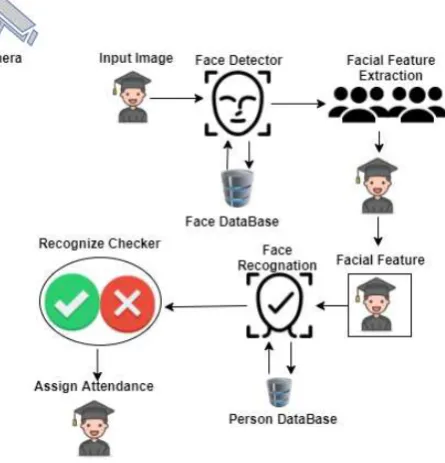
In this paper [1] the attendance is recorded by using a camera attached in the classroom which capture image of students. They have designed this system which is based on image processing and detect faces and save the extracted faces in database for recognizing them. The detected faces are compared with the database during face recognition. When faces are detected then attendance will be marked as present.
The system [2] finds the attendance by using position and face descriptions in classroom lecture. They projected the presence student and the location of each student by continuous inspection and footage. The result of this experiment shows performance for estimation of the attendance.
This paper [8] describes one of the biometric category is face detection and recognition giving result using MATLAB. This requires a high end specifications of a system in order get the better results. It won’t run on all the small specification systems. So, this can run only small database and compare them with the face required.
2.1 Related work on Face Recognition
Applications: -
Features of BEATVM :
a) This app allows Punch visits.
b) Group attendance has been taken by this app. c) This application can track location.
Limitations of BEATVM :
a) This app doesn’t track time and date of attendance. b) Application didn’t provide push notification for
user.
c) Export to MS Excel.
2.1.2 Luxand Face Recognition:
This app can detect any face and give it a name. The app will memorize the face and recognize it further. The app can memorize several persons. If a face is not recognized, tap and name it again.
Features of Luxand:
a) This app provides tracking time and date. b) Face detection.
c) Analytics and reporting of attendance.
Limitations of Luxand :
a) This app don’t allows for group attendance. b) This app can track location of user’s attendance c) Push notification.
2.1.3 Face Recognition Application:
This app demonstrates how to calculate Eigenfaces and Fisherfaces used for face recognition on an android device and data is maintained securely.
Features of Face Application:
a) Face detection and recognition. b) This app provides data safety.
Limitations of Face Application:
a) Group attendance.
b) This app didn’t export data to MS Excel.
2.1.4 Railer-Face Recognition Attendance:
a) This app provide Check in and check out option. b) This app can export data to MS Excel.
Limitation of Railer-Face:
a) Group attendance.
2.1.5 Abseno Attendance Face Recognition:
This app consist real time face recognition with Adjustable Confidence and Real Human Verification against spoof attempt using still image or video. It can export known person or import face data from/to another Abseno User. After verification of person report will be generated.
Features of Abseno:
a) This app does the real time face recognition. b) Push notification.
Limitations of Abseno:
a) Limited number of registrations.
2.1.6 Face Match R:
Face Match R allows us to test our facial recognition system. It can perform face recognition from your device’s photo gallery, Facebook or Instagram account.
Features of FaceMatchR :
a) Low data bandwidth requirements b) Backend cluster image processing
Limitations FaceMatchR:
a) Check in and check out. b) Export to MS Excel.
Taxonomy Chart is tabular outcome of the survey of the various web-based and native application for broader view for better innovation.
Chart -1: Taxonomy Chart
3. EXISTING SYSTEM
The main working principle of the existing system is that, the video captured data is converted into image to detect and recognize it. The attendance is marked by the recognized images else the system marks the database as absent.
Fig -1: Existing System Architecture
4. PROPOSED SYSTEM
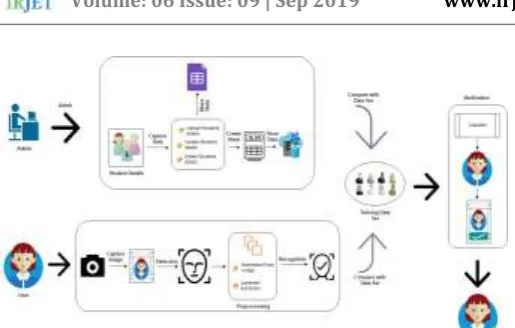
[image:3.595.326.549.348.580.2]Fig -2: Proposed System Architecture
4.1 Administration module:
Admin has authority to upload, modify and delete student details. He creates the excel sheet for the entire details and store it into the database and compare with the training data set for attendance of the particular student.
4.2 User Module:
4.2.1. Capture Image:
The frontal image of the student is going to capture by the mobile camera and further process goes for face detection.
4.2.2 Face Detection:
Face detection has the objective of finding the faces in an image and extract them to be used by various algorithms which are proposed for face detection using machine learning based methods.
4.2.3 Pre-processing:
The detected face is extracted and subjected to preprocessing. This preprocessing step involves calculations of landmarks from extracted images and creates template and store it.
4.2.4 Face Recognition:
The face recognition algorithm is responsible for finding characteristics which describe the image and compare with training data set for matching the template.
4.3 Verification Module:
It classifies the stored data with the help of machine learning classification algorithms to verify student and mark
5. CONCLUSION
We reviewed some of our related researches and found all the systems are commercialized. Only few of them were focused on making it open source but fully featured attendance systems were not made so we are focusing to make it open source to schools/colleges/organizations.
REFERENCES
[1] Vaibhav V. Mainkar, Murlidhar Shriram Samant, Dhanashri Vishnu Patil, Priyanka Arun Pednekar, Harshad Vijay Shinde, “Attendance Monitoring System Using Image Processing” IJICS, Volume 5, Issue 2, February 2018M. Young, The Technical Writer’s Handbook. Mill Valley, CA: University Science, 1989.
[2] Dan Wang, Rong Fu, ZuyingLuo,“Classroom Attendance Auto-management Based on Deep Learning”, ICESAME 2017, volume 123.
[3] K. Senthamil Selvi, P. Chitrakala, A. AntonyJenitha, “Face recognition based Attendance marking system” IJCSMC, Vol. 3, Issue. 2, February 2014, pg.337 – 342.
[4] Nandhini R, Duraimurugan N, S. P. Chokkalingam, “Face Recognition Based Attendance System” IJEAT, Volume-8, Issue-3S, February 2019.
[5] Kalachugari Rohini, Sivaskandha Sanagala, Ravella Venkata Rathnam, Ch. Rajakishore Babu, “Face Recognition Based Attendance System For CMR College of Engineering and Technology”, IJITEE,Volume-8 Issue-4S2 March, 2019.
[6] Akshara Jadhav, Akshay Jadhav, Tushar Ladhe, Krishna Yeolekar, “Automated Attendance System Using Face Recognition” IRJET, Volume: 04 Issue: 01 | Jan -2017.
[7] Anushka Waingankar, Akash Upadhyay, Ruchi Shah, Nevil Pooniwala, Prashant Kasambe, “Face Recognition based Attendance Management System using Machine Learning” IRJET, Volume: 05 Issue: 06 | June-2018.
[image:4.595.36.294.71.235.2][8] Venkata Kalyan Polamarasetty, Muralidhar Reddy Reddem, Dheeraj Ravi, Mahith Sai Madala, “Attendance System based on Face Recognition”, IRJET,Volume: 05 Issue: 04 | Apr-2018.
[11] K. Manjula, K. Vijayarekha, P. Vimaladevi. “Review On Classification Algorithms In Image Processing” IJITER, Volume 2, Issue 11; November – 2017.
BIOGRAPHIES
Name: Vaishnavi Hava Qualification: BE in Computer Engineering.
Name: Seema Kale
Qualification: BE in Computer Engineering.
Name: Arun Bairagi
Qualification: BE in Computer Engineering.
Name: Chandan Prasad
Qualification: M.E Computer Engineering, Android Master Trainer TSSC, (NSDC), Facilitator at Tata Strive.
Name: Sagar Chatterjee
Qualification: Bachelor of Commerce, Mobilization & Placement Coordinator at Tata Strive.
Name: Anish Varghese
Qualification: BSc in Hotel Management and Catering