Linking Individual and Collective Contests through
Noise Level and Sharing Rules
Pau Balart
∗Subhasish M. Chowdhury
†Orestis Troumpounis
‡January 30, 2017
Abstract
We propose the use of Nitzan’s (1991) sharing rule in collective contests as a tractable way of modeling individual contests. This proposal (i) tractably intro-duces noise in Tullock contests when no closed form solution in pure strategies exists, (ii) satisfies the important property of homogeneity of degree zero, (iii) can be effort or noise equivalent to a standard Tullock contest.
Keywords: Contest; Homogeneity of Degree Zero; Equivalence
JEL classification: C72; D72; D74
∗Department of Business Economics, Universitat de les Illes Balears. Ctra. de Valldemossa, km 7.5,
Ed. Jovellanos, Palma de Mallorca 07122. Spain, e-mail: [email protected]
†School of Economics, Centre for Behavioural and Experimental Social Science, Centre for
Competi-tion Policy, University of East Anglia, Norwich NR4 7TJ, UK, e-mail: [email protected]
‡Department of Economics, Lancaster University, Bailrigg, Lancaster, LA1 4YX, UK, e-mail:
1
Introduction
Suppose N players participate in a contest by exerting costly effort to win a prize of
common value V. A crucial modeling element in such setups is the contest success
function (CSF), fi, mapping the vector of non-negative efforts to the probability that
player i ∈N wins the prize (i.e., fi : RN+ → [0,1] such that
P
i∈Nfi(.) = 1). In the CSF
proposed by Tullock (1980),
fir(e1, ..., eN) =
er i
PN
j=1e
r j
if
N
X
j=1
ej >0 and 1/N otherwise (r-function)
where ei ≥ 0 denotes the effort exerted by player i and r ≥ 0 determines the level of
noise. If r = 0 then the noise is maximum and players face a fair lottery. If r→ ∞ then
there is no noise and the highest effort wins with certainty (an all-pay auction). Different
levels of noise can be introduced for intermediate values.
Although the importance of noise when modeling contests is widely accepted, Tullock’s
otherwise tractable proposal leads to certain modeling challenges: First, when more than
two players with asymmetric costs compete, a closed form solution for the equilibrium
in pure strategies exists only if r = 1. That is, the introduction of noise in asymmetric multiplayer contests becomes intractable. Second, when only two players compete, an
equilibrium in pure strategies does not exist for high levels of noise.
Here we propose the allocation of a prize among group members in collective
con-tests as introduced by Nitzan (1991) as a way of addressing these challenges. While
guaranteeing tractability, we show that (i) this proposal can be effort or noise equivalent
to an r-contest and (ii) several axiomatic and equilibrium properties are similar to
Tul-lock’s original proposal. These results differentiate this proposal to a similar approach
by Amegashie (2006) as based on Dasgupta and Nti (1998):
fiα(e1, ..., eN) =
ei+α
PN
j=1ej+N α
(α-function)
where α >0 is the introduced “tractable” noise parameter.
From an axiomatic perspective, ther-CSF satisfies all desirable properties of imperfect
discrimination, anonymity, monotonicity, homogeneity of degree zero (HD0) and Luce’s
axiom (Skaperdas, 1996). Achieving noise tractability using the α-function requires the
sacrifice of HD0. However, HD0 is desirable for contests where the result should be
minutes (see among others Hirshleifer 2000; Malueg and Yates 2006; Alcalde and Dahm
2007; Bevi´a and Corch´on 2015). HD0 is thus viewed as an essential property whenever
outlays are in quantifiable units such as money or time. Our proposal satisfies HD0, while
sacrificing Luce’s axiom. Hence, researchers and contest designers may choose between
the current proposal and the α-CSF as alternative ways of introducing “tractable” noise
depending on the importance of HD0 versus Luce’s axiom. Moreover, and in contrast to
the α-function, we show that our proposal can be effort or noise equivalent to Tullock’s
original proposal.
2
The
λ
-contest
Following Nitzan (1991) we define
fiλ(e1, ..., eN) = λ
ei
PN
j=1ej
+(1−λ)1
N if
N
X
j=1
ej >0 and 1/N otherwise (λ-function).
As discussed, and compared to the α-CSF, it is easy to show that theλ-function satisfies
HD0.1 Assume linear cost functions with ci > 0 denoting the marginal cost of player i,
and without loss of generality assume that c1 ≤ c2 ≤ ... ≤ cN, we can define player’s i
payoff in theλ-contest as:2
πiλ =fiλ(e1, ..., eN)V −ciei (1)
If λ ∈ [0,1], then the λ-function satisfies the properties of a CSF and is a convex
com-bination of the most common version of a Tullock CSF (r = 1) and of a fair lottery
(r = 0).3 Parameter λ is associated to the level of noise in the competition and clearly resembles the effect ofr in the r-contest. Low values of λ are associated with high levels of noise. Note however that λ need not be restricted in the [0,1] interval. When λ > 1
the proposed function fλ
i may take values outside [0,1] and therefore can not be
inter-preted as a CSF representing probabilities. If λ > 1, then the proposed function allows
for transfers among group members or the presence of a compulsory participation fee
(Appelbaum and Katz, 1986; Hillman and Riley, 1989). Since this may imply a negative
expected payoff for some contestants our setup may violate voluntary participation and
1The λ-function can be obtained from Bevi´a and Corch´on (2015) by setting α = 1
N, s = 1 and
β= NN−1λand the HD0 property can be found from there.
2For the reasons of interpretability, players’ heterogeneity is introduced through cost asymmetries.
This is equivalent to asymmetries in terms of valuations (Gradstein, 1995; Corch´on, 2007).
3Amegashie (2012) proposes a nested two-player contest that ranges from a Tullock to an all-pay
hence, as Hillman and Riley (1989) argue, is relevant in situations that involve winners
and losers. If one does not want to model such transfers and interpret the λ-function as
a CSF thenλ needs to be restricted to the [0,1] interval.
2.1
Equilibrium
The λ-contest as presented by its payoffs in (1) has been previously solved in Hillman
and Riley (1989).4
Remark 1. [Hillman and Riley (1989)]
Denote the cost-weighted prize valuations byVi = λVci , there exists a unique equilibrium
in pure strategies with player’s i effort given by:
ei = 1−
1
Vi
(M −1)
PM
j=1 1
Vj
!
(M −1)
PM
j=1 1
Vj
(2)
where M is the number of active players. Player M is the highest marginal cost player for whom the condition VM > (M
−2)
P i≤M−1
1 Vj
holds.
Using the λ-contest one can solve for the equilibrium efforts in closed form in any
asymmetric multiplayer contest. This is not possible in the r-contest. Comparing equi-librium properties across the three (r, α and λ) ways of modeling contests the following
results arise:
1. Individual and aggregate effort decreases with the level of noise in both the α
and λ-contest. This is different for r-contest where for the two player r-contest
comparative statics of aggregate effort with respect to noise levels depend on the
degree of asymmetry between the players.
2. Linking the asymmetry with aggregate equilibrium effort in a two-player λ-contest
is in line with the standard result of the r-contest (Nti, 1999) and the α-contest since aggregate equilibrium effort decreases in players’ asymmetry.
3. In anN-symmetric-players contest adding an additional player increases total effort
in the r-contest with an equilibrium in pure strategies and in the λ-contest, while
it may decrease total effort in the α-contest.
4. The λ-contest and r-contest can not sustain an equilibrium where all players are
inactive while this may occur in theα-contest.
4In their notation,W
i andLi denote winner and losers’ payoffs and theλ-contest is obtained for the
2.2
Equivalence
Following the definitions by Chowdhury and Sheremeta (2014):5
Definition 1. k
• Contests are effort equivalent if they result in the same equilibrium efforts.
• Contests are strategically equivalent if they result in the same best responses.
• Contests are payoff equivalent if in equilibrium they result in the same payoffs.
Following Alcalde and Dahm (2010) we use the effort-elasticity of the probability of
winning as a measure of noise in a contest j, i.e., νij(e1, ...eN) =
∂fij(e1,...eN)
∂ei
ei
fij(e1,...,eN)
and
pay attention to the case in which efforts are equalized.6
Definition 2. Two CSF j and k are noise equivalent if and only if νij(ej1, ...ejN) =
νk
i(ek1, ...ekN) for all i= 1, ..., N; whenever e j
1 =e
j
2 =...=e
j
N and ek1 =ek2 =...=ekN.
It can be shown, by comparing the α-CSF and the r-CSF, that none of the four
equivalence properties hold. We now restrict attention to the comparison between the λ
and r-contests.
Proposition 1. For any two-playerr-contest with an equilibrium in pure strategies (i.e.,
r such that V1r+V2r > rV2r):
1. There exists an effort equivalent λ-contest with λ= r(V1V2)r(V1+V2)2
V1V2(V1r+V2r)2
.
2. There exists no strategically equivalentλ-contest (except for r =λ = 0 andr=λ=
1 when the two contests coincide).
3. There exists no payoff equivalent λ-contest (except for r =λ = 0, r =λ = 1 when
the two contests coincide and the symmetric case, c1 =c2).
Figure 1 illustrates the result for two asymmetric players. On the left, best responses
are different for the λ and r-contest but they intersect at the same effort equivalence
point. On the right panel, the value of λ that guarantees payoff equivalence for player 1
only coincides with that providing payoff equivalence for player 2 when the two contests
coincide (i.e., r =λ = 1 andr=λ= 0).
5In the case of a unique equilibrium (Chowdhury and Sheremeta, 2011), strategic equivalence implies
effort equivalence while the opposite need not be true. Moreover, strategic equivalence need not imply payoff equivalence (Chowdhury and Sheremeta, 2014).
6The all-pay auction (i.e., r→ ∞) is considered a deterministic contest because in case of a tie, an
[image:6.595.73.522.75.240.2]
[image:6.595.184.414.444.605.2]
Figure 1: Best response functions and effort equivalence on the left (r = 0.5, λ = 0.524729) and payoff equivalence on the right. For both graphsV1 = 20, V2 = 12.
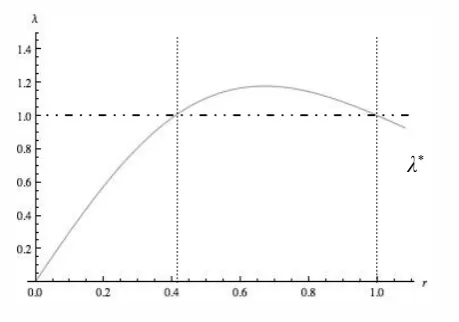
Figure 2 illustrates how effort equivalence can be obtained through the appropriate
choice of valueλ∗ for any given valuerfor a given level of asymmetry (V1/V2 = 10, in this
example). Notice that the value of λ∗ that guarantees an effort equivalent λ-contest, is not monotonic in r. This occurs because while in the λ-contest individual and aggregate
equilibrium efforts are decreasing in the level of noise, this need not be true in the r
-contest. Note that, the level of λ that ensures effort equivalence might involve transfers
as in Hillman and Riley (1989). This depends on the exact level of asymmetry.
Figure 2: Effort equivalence value of λ, given any r such that an equilibrium in pure strategies exists (Vr
1 +V2r > rV2r with V1/V2 = 10).
The result on noise equivalence is summarized in Proposition 2. Observe that for
asymmetric players the value of λ that guarantees noise equivalence differs from the
value that guarantees effort equivalence. Therefore one can obtain both effort and noise
Proposition 2. For any r-contest with r ∈ [0,1], the λ-contest and the r-contest are
noise equivalent if and only if λ=r.
This result implies that for any r ∈[0,1], we can find a λ-contest with a comparable
level of noise. It is particularly important if we take into account that the r-contest has
no closed form solution whenN ≥3. That is, for anyr-contest withr ∈[0,1) andN ≥3,
although ther-contest does not have a closed form solution, there exists a noise equivalent
λ-contest with λ =r and a closed form solution. In contrast to the α-contest that also
provides a closed form solution, our proposal can also guarantee noise equivalence with
the original r-contest.
2.3
Participation
We have shown that for anyr-contest, one can always find an effort equivalent λ-contest.
However, in the effort equivalentλ-contest the presence of transfers may be required (i.e.,
λ > 1, as in Figure 2 for r belonging to [0.41,1]). These transfers in turn may violate participation constraint (PC) as in Hillman and Riley (1989). The following remark
provides the conditions that guarantee voluntary participation.
Remark 2. In any λ-contest the PC is satisfied if
Vi
PN
j=1 1
Vj
λ(N−1)+1
N ≥λ(N −1)(2−
N−1
ViPNj=1 1 Vj
)∀i= 1, ..., N.
! !
!"#!$
!"#$%!&
%
!"#'%!&
%%
!"#$%&'(')*'&+#',#-&*$# ./*0/$1'$.#',#/2$#*34",/$./&
5'"(0/'",#"6#-0*/'4'-0/'", 4",./*0',/#',#/2$#$%&'70($,/# 834",/$./#
89#
89#
:%&'70($,/#834",/$./#
[image:7.595.87.404.382.609.2].0/'.6;',1#-0*/'4'-0/'",#4",./*0',/.
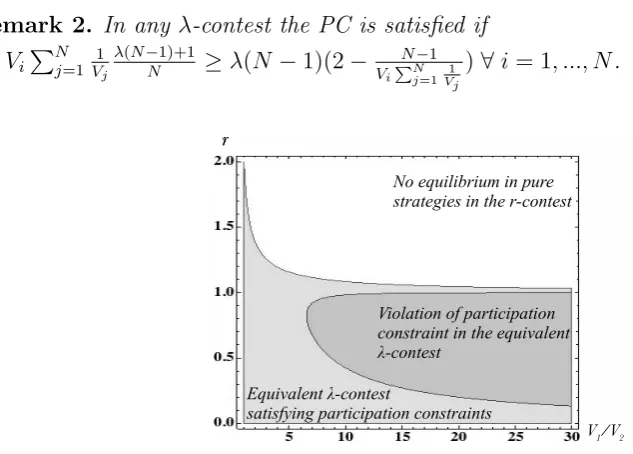
Figure 3: Participation constraint in the effort equivalent λ-contest.
Intuitively, as long as λ is low, that is either no transfers are involved (λ ≤ 1) or
transfers are present but are not too punishing the PC is satisfied. Once the required
transfers become high enough, then low contributors are severely punished and are better
off not participating in the contest.7 The conditions under which theλ-equivalent contest
does not satisfy the PC depend on the specific combination of cost asymmetry and noise
level.
In particular, for any two-player r-contest, although an effort-equivalent λ-contest
always exists, the latter fails to satisfy PC if
r(V1V2)r(V1+V2)2
V1V2(V1r+V2r)2
> (V1 +V2)
2
V2
1 + 2V1V2−V22
.
A graphical representation is given in Figure 3. The darkest area in the lower panel plots
the combinations of asymmetryV1/V2 andrfor which the effort equivalentλ-contest does
not satisfy the PC. While the effort equivalent λ-contest satisfies the PC for any level
of r when players’ asymmetry is low, for higher levels of asymmetry the region of r for
which an effort equivalentλ-contest satisfies the PC shrinks.
3
Discussion
We propose the use of theλ-function as a tractable way of modeling noise while
guaran-teeing HD0. Depending on whether HD0 or Luce’s axiom is more relevant, we highlight
the choice between theλ-contest and theα-CSF proposed by Amegashie (2006). We also show that the λ-contest can be effort or noise equivalent to an r-contest while several
equilibrium properties are similar to Tullock’s original proposal. The λ-contest can be
implemented in applications where the absence of closed form solutions induces focus
only on r = 1 (e.g., Franke 2012), while it can also be of interest for experiments given
the intuitive manner one can introduce noise in the lab.
References
Alcalde, J. and M. Dahm(2007): “Tullock and Hirshleifer: a meeting of the minds,”
Review of Economic Design, 11, 101–124.
——— (2010): “Rent seeking and rent dissipation: a neutrality result,”Journal of Public
Economics, 94, 1–7.
Amegashie, J. A.(2006): “A contest success function with a tractable noise parameter,”
Public Choice, 126, 135–144.
——— (2012): “A nested contest: Tullock meets the All-Pay Auction,” Tech. rep., MPRA
Appelbaum, E. and E. Katz (1986): “Transfer seeking and avoidance: On the full social costs of rent seeking,”Public Choice, 48, 175–181.
Bevi´a, C. and L. C. Corch´on (2015): “Relative difference contest success function,”
Theory and Decision, 78, 377–398.
Chowdhury, S. M. and R. M. Sheremeta (2011): “Multiple equilibria in Tullock
contests,”Economics Letters, 112, 216–219.
——— (2014): “Strategically equivalent contests,”Theory and Decision, 78, 587–601.
Corch´on, L. C.(2007): “The theory of contests: a survey,”Review of Economic Design, 11, 69–100.
Dasgupta, A. and K. O. Nti (1998): “Designing an optimal contest,” European
Journal of Political Economy, 14, 587–603.
Franke, J.(2012): “Affirmative action in contest games,”European Journal of Political
Economy, 28, 105–118.
Gradstein, M. (1995): “Intensity of competition, entry and entry deterrence in rent
seeking contests,”Economics & Politics, 7, 79–91.
Grossmann, M. (2014): “Uncertain contest success function,” European Journal of
Political Economy, 33, 134–148.
Hillman, A. L. and J. G. Riley (1989): “Politically contestable rents and transfers,”
Economics & Politics, 1, 17–39.
Hirshleifer, J. (2000): “The macrotechnology of conflict,” Journal of Conflict
Reso-lution, 44, 773–792.
Malueg, D. A. and A. J. Yates (2006): “Equilibria in rent-seeking contests with
homogeneous success functions,”Economic Theory, 27, 719–727.
Nitzan, S. (1991): “Collective rent dissipation,”Economic Journal, 101, 1522–1534.
Nti, K. O.(1999): “Rent-seeking with asymmetric valuations,”Public Choice, 98, 415–
430.
Skaperdas, S. (1996): “Contest success functions,” Economic theory, 7, 283–290.
Tullock, G.(1980): “Efficient Rent Seeking,” inToward a Theory of the Rent-Seeking
Society, ed. by J. M. Buchanan, R. D. Tollison, and G. Tullock, College Station, TX:
4
Appendix
4.1
Proof of Proposition 1
1. When N = 2 the condition for a player being active active in the λ-contest is
always satisfied. From Remark 1 the equilibrium effort of player i is ei = V2
iVjλ
(V1+V2)2
fori= 1,2,j 6=i. To prove effort equivalence equalize these equilibrium efforts with
the ones of the r-contest (Nti, 1999). Equilibrium efforts of the λ-contest coincide
with the ones of ther-contest for λ= r(V1V2)r(V1+V2)2
V1V2(V1r+V2r)2 .
2. Note that when r = λ = 0 or r =λ = 1 the λ-contest and the r-contest coincide,
hence strategic equivalence follows immediately in these cases. The best response
for playeriin theλ-contest isei(ej) = max{0,
p
ejViλ−ej}while it is not possible to
find a closed form solution for the best response of ther-contest. However, as shown
in Chowdhury and Sheremeta (2014) effort equivalence is a necessary condition for
strategic equivalence. Therefore, strategic equivalence is guaranteed only if the first
order conditions of the r-contest are satisfied for any value of ej after substituting
the best responses of theλ-contest with λ= r(V1V2)r(V1+V2)2
V1V2(V1r+V2r)2 . This is true if and only
if e
r
jrVi(A)r−1
(er j+(A)r)2
= 1, where A=−ej+
p
ejVi
r
r(ViVj)r−1(Vi+Vj)2
(Vr i+V
r j)2
which is not true for all
values of ej (only for the equilibrium one).
3. By plugin equilibrium efforts in the payoff of player 1 we obtain that the λ-contest
induces the same payoff as the one in ther-contest forλ= (V1+V2)2(V12r−V22r−2r(V1V2)r)
(V2
1−2V1V2−V22)(V1r+V2r)2 =
λ1. Similarly, the λ-contest induces payoff equivalence for player 2 if and only if
λ= (V1+V2)2(V12r−V22r+2r(V1V2)r)
(V2
1+2V1V2−V22)(V1r+V2r)2 =λ2. Normalizing V2 = 1 and V1/V2 =v we see that
λ1 = λ2, i.e., payoff equivalence, is only obtained for V1 = V2 or r ={0,1} (when
the two contests coincide).
4.2
Proof of Proposition 2
Playerieffort-elasticity in the λ-contest is e1
P
j6=iejN λ
(e1+Pj6=iej)( P
j6=iej(1−λ)+e1(1+(N−1)λ)) which
eval-uated at ei = e ∀i = 1, ..., N is λNN−1. Player i effort-elasticity in the r-contest is
r P
j6=ierj
er i+
P
j6=ierj which evaluated at ei = e ∀i = 1, ..., N is r
N−1
N . Thus λ = r guarantees