EFFECTS OF SHORT TERM TUBERCULOSIS TREATMENT UNDER DIRECT SUPERVISION
ON THE PERFORMANCE INDICATOR OF NATIONAL TUBERCULOSIS CONTROL
1
Sahli, A.,
2Humiran, Y.,
3 8Saif, W.
1
Epidemiologist, MSC Epidemiology, MOH, Department of Communicable Disease and Vector Control
2
Family physician, MOH, Public Health
3
Epidemiologist, MOH, Department of Communicable Disease and Vector Control, KSA
5
Health specialist, MOH, Primary Health Care Department
6
7
HLaboratory Specialist, Preventive Medic
8
Public Health Specialist, MOH, Communicable Disease and Vector Department
9
Pharmacists specialist, MOH, Supply Department
10
Community Physician, MOH, Department of Research and Health Surveys
ARTICLE INFO ABSTRACT
Tuberculosis is still a health problem of global concern,
annually and eight millions new cases of TB and encourages all countries to adopt all strategies to control TB and Directly Observed Therapy Short Term (DOTS) is one of these strategies. Therefore, the kingdom of Saudi Arabia adopted the implementation of DOTS in 2000 at facility level and then at community level in 2013. This is a descriptive study aims at identifying the effect of DOTS implementation at community level on the national tuberculosis program indica
effect of CBDOTS on the national TB program performance indicators? The data were collected with two well-constructed and pre tested questionnaires with well
registered patients in in national tuberculosis registry in 2011 and 2014 and all the health workers in the program. It is found that there is no statistical significant difference between the program indicators before and after the implem
administrative factors affecting the program performance such as the absence of policies, procedures and strategic planning. The study recommends the upgrading of the p
with the global movement towards TB elimination, updating and expanding of the laboratory net for TB diagnosis, implementing the quality measures especially in laboratory services and ensuring all the financial resources for the strategy implementation.
Copyright©2017, Sahli et al. This is an open access distribution, and reproduction in any medium, provided
INTRODUCTION
On March 24, 1882, Dr. Robert Koch announced the discovery of Mycobacterium tuberculosis, the bacteria that cause tuberculosis (TB) (www.cdc.gov/tb/worldtbday/history.h Tuberculosis considered as one of the reemerging diseases with high prevalence rates. World Health Organization (WHO) considers TB as a global public health emergency and
short term direct observed treatment strategy (
*Corresponding author: Seham A Habeeb,
Community Physician, MOH, Department of Research and Health Surveys
ISSN: 0975-833X
Article History: Received 15th July, 2017
Received in revised form 22nd August, 2017
Accepted 30th September, 2017
Published online 31st October, 2017
Citation: Sahli, A., Humiran, Y., Dahlan, A. et al. 2017. of national tuberculosis control programme, Gazan, 1438 H Key words:
Tuberculosis, Technical,
Financial administrative constrain, Gazan.
RESEARCH ARTICLE
EFFECTS OF SHORT TERM TUBERCULOSIS TREATMENT UNDER DIRECT SUPERVISION
ON THE PERFORMANCE INDICATOR OF NATIONAL TUBERCULOSIS CONTROL
PROGRAMME, GAZAN, 1438 H
3
Dahlan, A.,
4Fagih, A.,
5Jafar, E.,
6Magalt, Y.,
W.,
9Algasmi, A.
and
10,*Seham A Habeeb
Epidemiologist, MSC Epidemiology, MOH, Department of Communicable Disease and Vector Control
Family physician, MOH, Public Health Directorate
Epidemiologist, MOH, Department of Communicable Disease and Vector Control, KSA
4BA, MOH, Preventive Medicine
Health specialist, MOH, Primary Health Care Department
6BA, MOH, Public Health Directorate
HLaboratory Specialist, Preventive Medicine Department
Public Health Specialist, MOH, Communicable Disease and Vector Department
Pharmacists specialist, MOH, Supply Department
Community Physician, MOH, Department of Research and Health Surveys
ABSTRACT
Tuberculosis is still a health problem of global concern, WHO estimates that there is two millions deaths annually and eight millions new cases of TB and encourages all countries to adopt all strategies to control TB and Directly Observed Therapy Short Term (DOTS) is one of these strategies. Therefore, the kingdom Saudi Arabia adopted the implementation of DOTS in 2000 at facility level and then at community level in 2013. This is a descriptive study aims at identifying the effect of DOTS implementation at community level on the national tuberculosis program indicators. The main question of the study is that: what is the effect of CBDOTS on the national TB program performance indicators? The data were collected with two
constructed and pre tested questionnaires with well-trained data collectors. Moreover, it
registered patients in in national tuberculosis registry in 2011 and 2014 and all the health workers in the program. It is found that there is no statistical significant difference between the program indicators before and after the implementation of directly observed therapy short term at community level, and there are many administrative factors affecting the program performance such as the absence of policies, procedures and strategic planning. The study recommends the upgrading of the policies, procedures and the strategy to cope with the global movement towards TB elimination, updating and expanding of the laboratory net for TB diagnosis, implementing the quality measures especially in laboratory services and ensuring all the financial resources for the strategy implementation.
access article distributed under the Creative Commons Attribution License, the original work is properly cited.
On March 24, 1882, Dr. Robert Koch announced the discovery , the bacteria that cause (www.cdc.gov/tb/worldtbday/history.httm). Tuberculosis considered as one of the reemerging diseases with high prevalence rates. World Health Organization (WHO) considers TB as a global public health emergency and endorsed short term direct observed treatment strategy (DOTS) in 1995.
Community Physician, MOH, Department of Research and Health Surveys
It is built on observing and monitoring the patients Global Report 2016; Prado et al
patient follow-up during the treatment period may be a nominated health worker that take advantage of a family member or a trained volunteer, community based direct observed treatment (CBDOT)
countries with the aim of reducing workload on health facilities; especially in
high-Dharmadhikari, 2010). KSA adopted this strategy in 2000 and established an implementation at the hospital level by admitting the patients for two months receive treatment as in patient and continue for the coming four months at health
International Journal of Current Research Vol. 9, Issue, 10, pp.59874-59878, October, 2017
2017. “Effects of short term tuberculosis treatment under direct supervision on the performance indicator , 1438 H”, International Journal of Current Research, 9, (10),
59874-EFFECTS OF SHORT TERM TUBERCULOSIS TREATMENT UNDER DIRECT SUPERVISION
ON THE PERFORMANCE INDICATOR OF NATIONAL TUBERCULOSIS CONTROL
Magalt, Y.,
7M. Alatas,
Epidemiologist, MSC Epidemiology, MOH, Department of Communicable Disease and Vector Control
Epidemiologist, MOH, Department of Communicable Disease and Vector Control, KSA
Health specialist, MOH, Primary Health Care Department
ine Department
Public Health Specialist, MOH, Communicable Disease and Vector Department
Community Physician, MOH, Department of Research and Health Surveys
estimates that there is two millions deaths annually and eight millions new cases of TB and encourages all countries to adopt all strategies to control TB and Directly Observed Therapy Short Term (DOTS) is one of these strategies. Therefore, the kingdom Saudi Arabia adopted the implementation of DOTS in 2000 at facility level and then at community level in 2013. This is a descriptive study aims at identifying the effect of DOTS implementation at community tors. The main question of the study is that: what is the effect of CBDOTS on the national TB program performance indicators? The data were collected with two trained data collectors. Moreover, it includes all the registered patients in in national tuberculosis registry in 2011 and 2014 and all the health workers in the program. It is found that there is no statistical significant difference between the program indicators before entation of directly observed therapy short term at community level, and there are many administrative factors affecting the program performance such as the absence of policies, procedures and olicies, procedures and the strategy to cope with the global movement towards TB elimination, updating and expanding of the laboratory net for TB diagnosis, implementing the quality measures especially in laboratory services and ensuring all the financial
License, which permits unrestricted use,
built on observing and monitoring the patients (WHO et al., 2011), the supervisor of up during the treatment period may be a nominated health worker that take advantage of a family member or a trained volunteer, community based direct CBDOT) has been adopted in many countries with the aim of reducing workload on health -burden countries (Nardell and . KSA adopted this strategy in 2000 and established an implementation at the hospital level by admitting the patients for two months receive treatment as in patient and continue for the coming four months at health INTERNATIONAL JOURNAL OF CURRENT RESEARCH
center level (KSA Ministry of Health Report 2000). DOTS strategy strengthened public sector tuberculosis programs to tackle a large burden of the disease. The Stop TB Strategy, built on DOTS, helped to begin addressing drug resistant tuberculosis and HIV-associated tuberculosis while promoting research to develop new tools (WHO, End TB Strategy 2015). The Sustainable Development Goals (SDGs) for 2030 was adopted by the United Nations in 2015. One of its targets is to end the global TB epidemic. Gazan Province has been selected for the application as a first phase in 2013 in order to be assessing experience in preparation for distribution to other areas if it is successful. Therefore, ten field teams had been selected for this purpose; each team consists of doctor, nurse, and Epidemiology, in addition to a technician supervises both patients' treatment and screening of contacts and following them until cured indoors instead of admission in health facilities.
MATERIALS AND METHODS
This is cross sectional study conducted in Gazan Province. It is one of the smallest (11,670 km2) administrative areas of the Kingdom, located in the south-western tip of the country with a coastal boundary 260 km along the Red Sea and a 120 km border with the Republic of Yemen. The Yemeni border was finally and officially ratified following disputed 1934 boundaries in June 2000 as part of the Jeddah Treaty (1927). The present study aims at identifying the impact of the implementation of DOTS in community (CBDOT) on the national tuberculosis program performance indicators, detecting the administrative, financial and technical constrains facing the program, and the means of overcoming these constrains. It included all registered TB cases in national TB registers in 2013- 2014 and all health workers were included in the study. The study main question is that: what is the effect of CBDOTS on the national TB program performance indicators? The data were collected with two well-constructed and pre tested questionnaires with well-trained data collectors. There are four study dimensions: administrative, financial, technical, and constrains that affect the national TB program and tools to overcome all constrain affect the national TB program performance.
Statistical Analysis
Many statistical procedures were used to analyze the data. Frequencies, and percentage are made for the result mean, in addition, standard deviation, P value, chi2, ANOVA test were also used to determine the differences in the study population responses.
RESULTS
This study included 451 patients registered in national TB program, in addition to all health workers in the program. All results and information come from the national TB registry check list and questionnaire with health worker in the program. Thus, all variables were coded, P value was considered (0,05), and SPSS program was used to manage the data and the results. The results were formulated as follows:
The number of cases registered in the National Tuberculosis Registry was (233) before the implementation of (CBDOTS) and (218) after implementation. The number of registered cases
revealed clearly that despite the efforts made in the program, it was not reflected in the incidence rates, as is the case at the level of the country according to the statistical report for the year 2015 and the study is consistent with the study of Elquraini (Elquraini and Elmagdi, 2010).
The main reason behinds the re planning in controlling TB in the kingdom is to be in line with the end TB strategy goals of the 2015; since Global Strategy for TB Care is considered to be one of fundamental issues (Elhadoog, 2010).
The distribution of patients according to nationality revealed that there is a number of Saudis among the patients (336); represents 74.5%. Non-Saudis represents (115; 25.5%) and they were mainly from Ethiopia (6.2%), and Yemen (6%). Male patients represent about 66.7% and the rest were females; representing 33.3%.
Most of the patients were concentrated in the productive age group between 15 and 45 years, and most of the registered patients were in the unemployed category and are the poorest and vulnerable group similar to study conduct in Netherlands (Martien W. Borgdorff et al., 2001).
The pulmonary tuberculosis patients represent 355 (78.7%) %); and about (57.4%) of them were found positive sputum smear.
As shown in the above Table, there are no statistically significant differences between the two strategies in the treatment outcomes before and after implementation of (CBDOTS). This finding rejects the first hypothesis of the study that: there are differences with statistical significance in the performance indicators between the strategy of treatment in the community (CBDOTS) and the strategy of treatment in health facilities (HDOTS). It is clear from Table 1 above that in the treatment failure [OR (95%CI) 0.55(0.09-3.06) and P value 0.496], the mortality rate [95% CI (0.31-3.97) and P value 0.859], the cure rate before and after the strategy were applied to [OR (95%CI) 1.17 (0.56-2.48), and P value 0.672]. This result was consistent with several studies in this aspect such as the one conducted in Tanzania by Wandwalo, et al. (2004), (Wandwalo et al., 2004; Elmahalli and Abdel-Aziz, 2004). It also differs from the study conduct in Nigeria (Adewole et al., 2015). The second part of study presents the results of the questionnaire filled with health workers in TB program. It includes the demographic characteristics of the health, moreover, both workers and variables were coded according Likert Scale to five score (strongly agree- agree – neutral – disagree –strongly dis agree), and P value is determined less than (0.05).
The result was as follows
Table 1. The distribution of treatment outcome
Treatment outcome (n=254) DOTS OR (95%CI) P. value Before After
Total Recruited 134 120
Default 2 0
Treatment Failure 4 2 0.55(0.09-3.06) 0.496 Deported 7 7 1.12(0.38-3.30) 0.883
Died 5 5 1.12(0.31-3.97) 0.859
[image:3.595.39.556.186.267.2]Cured 116 106 1.17(0.56-2.48) 0.672
Table 2. Participants views on the of Administrative constrains
P value (Chi2)
SD Mean Strongly disagree Disagree Neutral agree strongly agree Statement 0.009 9.5 1.168 4.5 15 (22.7%) 12 (18.2%) 9 (13.6%) 14 (21.2%) 15 (22.7%) deficiency of policy and
procedure 0.003 13.769 1.463 4.15 9 (13.6%) 15 (22.7%) 4 (6.1%) 26 (39.4%) 12 (18.2%) absence of strategic planning
0.838 0.846 1.557 3.38 16 (24.2%) 12 (18.2%) 4 (6.1%) 26 (39.4%) 8 (12.1%) unclear structure 0.368 2 0.751 2.31 10 (15.2%) 27 (40.9%) 16 (24.2) 11 (16.7%) 2 (3.0%) no communication system
[image:3.595.41.557.297.375.2]0.758 25.667 0.154 2.52 9 (13.6%) 21 (31.8) 21 (31.8) 12 (18.2%) 3 (4.5%) weak electronic management
Table 3. Participants' views on the of financial constrains
P value ) Chi 2 ( SD Mean Strongly disagree disagree Neutral agree strongly agree Financial constrains 0.002 9.308 1.109 4.69 1 (1.5%) 2(3.0%) 2 (3.0%) 13 (19.7%) 48 (72.7%) Interrupted incentives 0.004 11.231 1.127 4.54 1 (7.7%) 1 (1.5%) 1 (1.5%) 18 (27.3 %)
46 (69.7%) No nutritional program for
patients 0.232 2.923 1.441 4.08 4 (6.1%) 2 (3.0%) 7 (10.6%) 20 (30.3%) 33 (50.0%) No budget for health education
0.002 9.308 1.109 4.69 1 (1.5%) 3 (4.5%) 1 (1.5%) 22 (33.3%) 39 (59.1%) No budget for the program
0.279 5.077 1.281 2.15 10 (15.2%) 22 (33.3%) 9 (13.6%) 9 (13.6%) 16 (24.2) Old transport vehicles
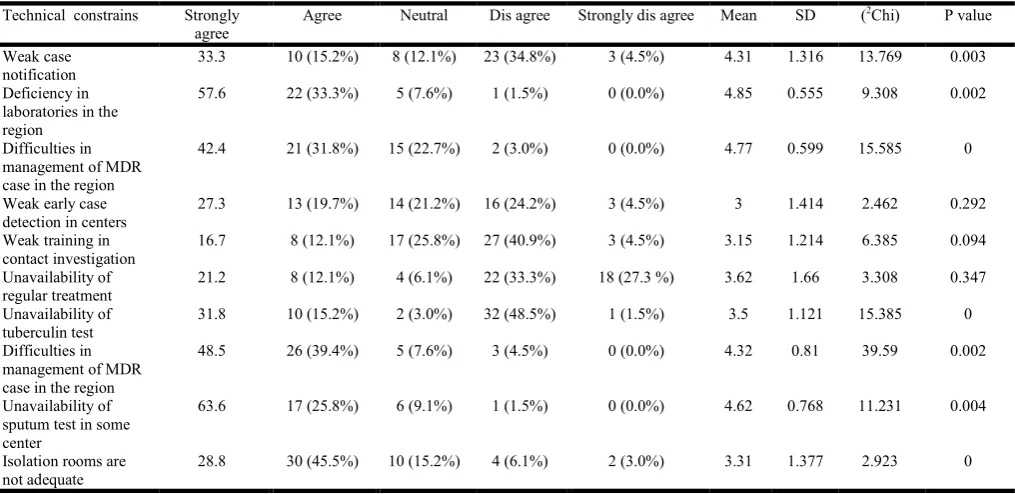
Table 4. Participants' views on the of technical constrains
P value ) Chi 2 ( SD Mean Strongly dis agree Dis agree
Neutral Agree
Strongly agree Technical constrains
0.003 13.769 1.316 4.31 3 (4.5%) 23 (34.8%) 8 (12.1%) 10 (15.2%) 33.3 Weak case notification 0.002 9.308 0.555 4.85 0 (0.0%) 1 (1.5%) 5 (7.6%) 22 (33.3%) 57.6 Deficiency in
laboratories in the region 0 15.585 0.599 4.77 0 (0.0%) 2 (3.0%) 15 (22.7%) 21 (31.8%) 42.4 Difficulties in
management of MDR case in the region
0.292 2.462 1.414 3 3 (4.5%) 16 (24.2%) 14 (21.2%) 13 (19.7%) 27.3 Weak early case
detection in centers
0.094 6.385 1.214 3.15 3 (4.5%) 27 (40.9%) 17 (25.8%) 8 (12.1%) 16.7 Weak training in
contact investigation
0.347 3.308
1.66 3.62 18 (27.3 %)
22 (33.3%) 4 (6.1%) 8 (12.1%) 21.2 Unavailability of regular treatment 0 15.385 1.121 3.5 1 (1.5%) 32 (48.5%) 2 (3.0%) 10 (15.2%) 31.8 Unavailability of tuberculin test 0.002 39.59 0.81 4.32 0 (0.0%) 3 (4.5%) 5 (7.6%) 26 (39.4%) 48.5 Difficulties in management of MDR case in the region
0.004 11.231 0.768 4.62 0 (0.0%) 1 (1.5%) 6 (9.1%) 17 (25.8%) 63.6 Unavailability of
sputum test in some center 0 2.923 1.377 3.31 2 (3.0%) 4 (6.1%) 10 (15.2%) 30 (45.5%) 28.8 Isolation rooms are
not adequate
Table 5. Health care worker views on the means to overcome the main obstacles
order p value
(Chi2) SD
mean Means to overcome the main obstacles
Second 0
82.74 0.4
4.85 Provision of financial resources
First 0
40.97 0.31
4.89 Expansion of laboratories services
Fifth 0
68.27 0.45
4.79 Provision of tuberculin test
Seventh 0
99.58 0.63
4.7 Issuing of standard operation procedures
Sixth 0
62.82 0.54
4.74 Support for health education system
Fifth 0
21.88 0.41
4.79 Attention to patient nutrition
Third 0
37.88 0.33
4.88 Provision of MDR drug
[image:3.595.46.554.410.657.2] [image:3.595.117.483.695.792.2]This confirms the hypothesis of the study of the existence of a relationship between the administrative factors and the performance of the national tuberculosis control program, and the development of strategic plans to achieve the vision and objectives of the program with a statistically significance methods. On the other hands, the study shows that the existence of clear policies and procedures in the implementation of the strategy has a high impact on the performance of the program. More than (45.4%) of all employees found that the appropriate means of communication and electronic management did not constitute an impediment to the work of the program and were not statistically significant P value 0.368. Regards to financial constraints, more than 92% of employees agreed on that the biggest financial constrains for the program performance was the interruption of incentives for employees at Mean (4.69) and P value (0.002) followed by the lack of a special budget for the program with an average Mean (4.69) P value (0.002). This is consistent with the study hypothesis that: (there is a relationship with a significant effect between the financial factors and the performance of the national program to control tuberculosis), elements of the short-term treatment strategy, the government commitment to program support and confirmed by the End TB Strategy (Global Strategy for Prevention, Cure and Control of TB after 2015), and the need for political commitment to adequate resources for tuberculosis care and prevention.
A response of the study population to the technical constrains questions were as follows:
Firstly, the workers stated that the shortage in the laboratory network is the most important technical factor with the Mean (4.85) and P value (0.002).
Secondly: The workers also totally reported that the difficulty of treating drug-resistant patients was an obstacle to program performance, with the Mean (4.77) and P value (0.000).
Thirdly: the workers stated the availability of sputum examination; in health centers and hospitals same as culture and sensitivity test on a regular basis (4.62, 4.32) and P value (0.002). And (0.004) is very important points.
[image:4.595.102.497.72.234.2]The above mentioned results are consistent with study hypothesis that: there is a relationship between the technical factors and the performance of the national tuberculosis control program. Studies show that one of the most important elements of the success of the DOTS strategy is early diagnosis and case detection by microscopy of the sputum smear which should be technically feasible anywhere. Significant progress has been made in establishing a scientific consensus on ensuring the quality of the sputum examination and is still not available in all facilities. It necessitates consideration of the expansion of the laboratory network within the region and attention to quality standards. The study also shows the importance of the diagnosis and treatment of drug-resistant TB cases, which started to threaten many countries in the world. There has recently been a large-scale outbreak of drug-resistant TB even in countries that are supposed to adopt WHO recommendations. The misuse of type 2 drugs has contributed to this outbreak. According to the health workers, the most important means of overcoming the special factors influencing the programme's performance were the expansion of the laboratory network and the availability of sputum tests, as well as the availability of the programme budget and the provision of drug-resistant treatment.
Table 6. ANOVA of study participants views according to job title
Domains Job title Mean SD F. Value P. value Administrative Obstacles Doctors 2.62 0.77 0.774 0.513
Nurses 2.93 1.12 Epi tech 2.98 1.20 Lab tech 3.53 1.15 Financial Barriers Doctors 2.90 1.07
0.311 0.817 Nurses 4.21 0.60
Epi tech 4.21 0.61 Lab tech 4.06 0.68 Solutions Strategies Doctors 4.27 0.23
3.214 0.029* Nurses 4.16 0.61
Epi tech 4.86 0.26 Lab tech 4.65 0.43
Technical barriers Doctors 4.90 0.31 0.414 0.744 Nurses 4.41 0.53
Epi tech 4.78 0.37 Lab tech 3.51 0.60
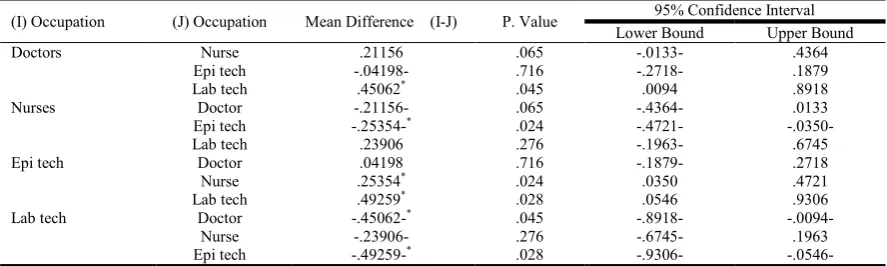
Table 7. Least Significant Difference (LSD) of the participants views according to Job title – Strategic Solutions Domain
(I) Occupation (J) Occupation Mean Difference (I-J) P. Value 95% Confidence Interval Lower Bound Upper Bound
Doctors Nurse .21156 .065 -.0133- .4364
Epi tech -.04198- .716 -.2718- .1879 Lab tech .45062* .045 .0094 .8918
Nurses Doctor -.21156- .065 -.4364- .0133
Epi tech -.25354-* .024 -.4721- -.0350-
Lab tech .23906 .276 -.1963- .6745
Epi tech Doctor .04198 .716 -.1879- .2718
Nurse .25354* .024 .0350 .4721
Lab tech .49259* .028 .0546 .9306
Lab tech Doctor -.45062-* .045 -.8918- -.0094-
[image:4.595.76.520.266.399.2]It becomes apparent from Table 6 that there was no variation in the opinions of the workers with respect to the factors determining the performance of the TB programme except for the means to overcome the influencing factors where it was (F value 3.214, P value 0.029. The LSD test shows the disparity in the opinions of the employees that the difference was between the doctors and the lab technician P value and (0.045).
Reconditions
The study recommends that:
1. The policies, procedures and objectives of the national tuberculosis control program should be updated in line with the objectives of the end-of-tuberculosis strategy (Global Strategy for Prevention, Cure and Control of TB after 2015).
2. Developing a program to eliminate latent TB as a means of expanding the examination and treatment of the most vulnerable groups and establishing a register of registration, reporting and epidemiological surveillance should be one of priorities.
3. Expanding the network of qualified laboratories in hospitals and health centers capable of diagnosing tuberculosis should be accounted for.
4. Applying quality standards in the laboratory for diagnosis of tuberculosis, and the establishment of a central unit on quality control should be started soon. 5. Providing a special budget for the needs of the program
to maintain continuous quality of performance should be focused on.
6. The program, policies and procedures should be adopted and strict control of their application correctly so as to prevent the emergence of strains resistant to drugs.
7. Studies and researches should be conducted to identify the existence of drug resistant strains.
8. Training and capacity-building of human resources should be considered.
9. The strategy in terms of cost and method of implementation to be consistent with the objectives of the program should be reviewed.
10.The implementation of strategy in the Kingdom is costly with no clear impact in TB program performance indicators, which make the need for evaluation of CBDOTS implementation is mandatory task.
Conclusion
The study concluded that:
There are no statistically significant differences between the two strategies in treatment outcome. There are administrative factors affecting the
performance of the program employees, the most important ones are: lack of policies and procedures, and the absence of strategic planning.
The financial factors affecting the performance of the program are many. The most important of which is the absence of a budget for the program and the
interruption of incentives for workers, as well as the technical factors affecting the performance of the program.
The study showed that there are important technical factors affecting the performance of the program, the most important of which are: (lack of laboratory network, difficulty in treating drug resistant cases, and lack of tests in health centers and hospitals).
Challenges
Acknowledgements
A very special gratitude goes to the Ministry of Health Department in Gazan; especially, the members of TB program and also for people who help and provide technical and financial supports. And finally, to everyone who participated by any means in this work.
REFERENCES
Adewole OO et al. 2015. A randomized controlled study comparing community based with health facility based direct observation of treatment models on patients' satisfaction and TB treatment outcome in Nigeria. PubMed 2015, 109(12):783-92. DOI: 10.1093/trstmh/ trv091. Elhadoog, 2010. "Tuberculosis in Saudi Arabia can we change
the way we deal with the disease", in: Journal of Infections and Public Health.
Elmahalli, A.A. and B.F. Abdel-Aziz, 2004. "Assessment of the implementation of DOTS strategy in two chest facilities in Alexandria, Egypt", in: East Mediterranean Health Journal.
Elquraini and Elmagdi, 2010. Prevalence of TB in kingdom of Saudi Arabia, retrospective study from [1991 to 2010] International Border Treaty between the Republic of Yemen
and Kingdom of Saudi Arabia 12 June 2000, Jeddah Treaty, retrieved at 21th of July 2017, from:
KSA Ministry of Health Report 2000
Martien W. Borgdorff et al. 2001. "Transmission of mycobacterium tuberculosis depending on the age and sex of Source Cases", in: American Journal of Epidemiology, Volume 154, Issue 10, pp. 934– 943.
Nardell E, Dharmadhikari, A. 2014. Rapid Impact of Effective Treatment on Transmission of Multidrug Resistant Tuberculosis, Int J Tuberc Lung Dis., 18(9): 1019–1025. doi: 10.5588/ijtld.13.0834
Prado TN et al 2011. Cost-effectiveness of community health worker versus home-based guardians for directly observed treatment of tuberculosis in Vitória, Espírito Santo State, Brazil, cad saude publica, 27(5):944-952.
Wandwalo E et al. 2004. Effectiveness of community-based directly observed treatment for tuberculosis in an urban setting in Tanzania: a randomized controlled trial. PMID: 15527158 (2004).
WHO Global Report 2016; www.who.int/tb/publications/ global_report/en/acssess at 2th of May 2017
WHO, End TB Strategy 2015 - World Health Organization www.who.int › Tuberculosis (TB)
www.cdc.gov/tb/worldtbday/history.htm