The Employee as Active Consumer of HRM:
Explaining Consumer Behaviour Using the AMO
Theory
Robin Leijdekkers
University of Twente P.O. Box 217, 7500AE EnschedeThe Netherlands
ABSTRACT,
In a world where HRM contributes more and more to company
success, many companies attempt to optimize employee consumption of HR practices
as these, in turn, have a positive effect on employee performance and commitment,
when consumed. However, employees require resources to do so. This study
considers the employee as active consumer of HRM and applies the AMO theory to
explain employee consumption behavior of HR practices by identifying resources that
enable them to consume HR practices. It takes a view of the AMO theory where
abilities, motivations, and opportunities serve as resources for the employee to
consume HR practices. Hence, this study applies the AMO theory to identify different
forms of ability-, motivation-, and opportunity resources considered as required for
employees’ consumption of HR practices. An exploring case study consisting of
interviews with employees, observations and an interview with a manager at a
company in the cleaning sector delivers an overview of forms of ability-, motivation-,
and opportunity resources that probably play a role in employees’ consumption of HR
practices. Besides these findings, this study provides some theoretical and practical
implications such as the indication that employees can have different motivations to
consume HR practices, which in turn can lead to different outcomes of these HR
practices.
Keywords
: HRM, HR practices, employees, active consumer, consumer behavior,
consumption, coproduction, value-in-use creation, AMO, abilities, motivations,
opportunities
Supervisor(s): 1
stSupervisor: Dr. J.G. Meijerink
2
ndSupervisor: Dr. A.C. Bos-Nehles
Acknowledgements
After doing my Bachelor thesis in the Information Management track I was convinced to do my Master thesis about a Marketing or HRM topic. After attending several courses during my Bachelor International Business Administration and my master Business Adminstration these two courses interested me the most. Eventually, I chose to pick a topic from the HRM track as some of those fascinated me the most. I was very interested in the active role employees have in the way HRM aids a company. This master thesis discusses a topic that focuses on the employee in an HRM context. I am glad to present you this master thesis.
1.INTRODUCTION
Many studies try to assess the performance and commitment of their workforce by looking at the Human Resource (HR) practices an organization offers to their employees. Several studies pointed out that the use of HR practices plays a role in determining the performance of an organization (e.g. Becker & Gerhart, 1996; Harel & Tzafrir, 1999; Paul & Anantharaman, 2003). The fact that HR practices are related to firm performance has been well elaborated. Research on the HR practices performance relationship has shown that HR practices are positively related to a number of firm performance measures such as market value (Huselid, 1995), return on equity (Delery & Doty, 1996), and operational measures of performance (MacDuffie, 1995). However, there are more factors that influence firm performance. In this, it is more useful to look at what the literature says about the relationship between HR practices and the individual performance and commitment of employees. Existing literature demonstrated the role that HR practices have in determining the performance and commitment of employees. Recent examples such as the research of Lamba and Choudhary (2013) and the research of Khalid, Reyman, and Ilyas (2015) that examined the relationship between HR practices and employees’ performance, aid the assumption that HR practices can play a role in the process of making an employee more committed to the organization and making them perform better. Hence, different researchers indicated that organizational performance could be achieved through employees’ involvement. It is the employees who translate HR practices into organizational performance (Nishii, Lepak, & Schneider, 2008; Ramsay, Scholarios, & Harley, 2000). In other words: literature has indicated that HR practices influence the indivual performance and commitment of employees positively. In turn, individual performance and commitment of employees contributes to the performance of the firm.
However, employees have to be involved in HR practices in order to let them have their impact employee performance and commitment. Just the presence of well-designed HR practices does not mean that they will work as they are supposed to (Khilji & Wang, 2006), just like a well designed training programme does not help an employee that does not take part in it. By ‘implementing’ HR practices a firm makes its HR practices fulfil its purpose. For example, by implementing training & development practices, a company attempts to reach desired outcomes, probably including increasing employees’ knowledge. However, besides those who develop HR practices, the employees theirselves play an important role in the implementation of HR practices. Research has rarely considered employees as active implementers of Human Resource Management (HRM) and therefore we know little about how they influence HRM; knowledge about whether and how they affect the implementation of HRM and its performance is still limited. This is striking, because employees think, (re)act, and make choices that help fulfil their interests
and needs (Lepak & Boswell, 2012). This should imply that they have an active role in the implementation of HRM, because HRM is also about their interests and needs. Coyle-Shapiro and Shore (2007) also noted that this active involvement of employees will remain unexplored when the literature does not consider the strategic intent of employees to negotiate and obtain benefits through the employment relationship.
Therefore, this study advances an approach that views employees as ‘active agents’ in the implementation of HRM, as they are the most important ‘consumers’ of HR practices. By consuming HR practices I mean that employees ‘take part’ in HR practices and use them to reach desired outcomes. For example, when an employee takes part in a performance appraisal meeting and gets to hear what he or she could improve to increase his/her performance, the employee consumes performance appraisal practices. This implies that in some way, employees decide whether and how to consume these practices. Drawing insights from the service logic (Vargo, Maglio & Akaka, 2008) and the consumer perspective (Priem, 2007) helps clarifying this role because it suggests that those who consume services are the creators of their value. Consumers do this by coproducing the service but also their use of the services consumers satisfy their personal needs and therefore create the value of services (Priem, 2007; Vargo & Lusch, 2004). This view has also been used in HRM-related studies, where many consider HR practices as a service for employees to satisfy their own needs, but also stimulate their individual performance (e.g. Meijerink, Bondarouk, & Lepak, 2016). Furthermore, employees have been recognized as the primary consumers of HRM (e.g., Paauwe, 2009). In addition, several studies showed that their active participation in HRM influences important HRM outcomes (e.g., Hicks & Klimoski, 1987;
Boon, Den Hartog, Boselie, & Paauwe, 2011; ALDamoe, Yazam, & Ahmid, 2012).
integrates resources when he or she consumes a service in order to fulfil needs. In other words; employees require resources in order to consume a specific service, which are HR practices in this case. From this perspective, this study attempted to explain what enables the employee to consume HR practices on the basis of which resources the employee requires to do this. I applied the AMO (Ability-Motivation-Opportunity) model of Appelbaum, Bailey, Berg, and Kalleberg (2000) to identify the resources that play a role in determining employees’ consumption of HR practices. In HRM research the theory of AMO has often been used in HRM-performance research (Boselie, Dietz & Boon, 2005; Paauwe, 2009) and here AMO guides the choice of which HR practices should be used to improve performance. However, in this study the AMO model was used differently. In marketing the theory of AMO has often been used to explain consumer behaviour (Thøgersen, 1995) and from an HRM perspective it is also relevant because it attempts to predict behaviour of people in a work-place context (Cox, Higgins, & Speckesser, 2009).
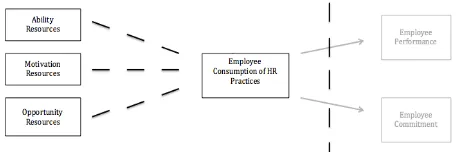
In this study I utilized the AMO model to identify forms of its three compenents that are needed for the employee to consume HR practices. Because abilities, motivations, and opportunities explain consumer behaviour and consumption requires resources, this study attempted to to identify required resources for the employee to consume HR practices based on abilities, motivations, and opportunities. In order to make this research purpose clearer, a research model is presented in Figure 1. The left side the model shows the AMO components as resources and their link with employee consumption of HR practices. In turn, employee consumption of HR practices is positively related to employee performance and commitment. However, this part of the model is made grey as the focus of this study does not lie on the relationship between the consumption of HR practices and employee performance and commitment. The focus of this study lies on identifying ability-, motivation-, and opportunity resources that play a role in determining employees’ consumption of HR practices. Therefore, the research question of this study states:
Which ability-, motivation-, and opportunity resources play a role in determining employees’ consumption of HR practices?
In short, the purpose of this research was to add another insight in what could increase the extent to which employees consume HR practices. The results of this study could potentially add value to the existing research on the consumption of HR practices by taking an employee’s point of view on which resources are required for consumption of HR practices. In addition, it could provide valuable information in the attempt to stimulate consumption of these practices.
The attempt of answering the research question was based on a case study, consisting of interviews with employees, observations and an interview with a manager, which was designed to investigate the required resources for employees’ consumption of HR practices.
In order to come with an effective research strategy, first the AMO model had to be operationalized for employees to deliver effective and representative questions, which could help me answering the research question. Thus, it was important to first operationalize the components of the AMO model for the employees. Furthermore, the concept of employee consumption of HR practices also had to be elaborated.
[image:4.595.313.542.354.430.2]The main contribution of this research to the literature, but also for practice, was the identification of several forms of ability-, motivation-, and opportunity resources that probably play a role in employees’ consumption of HR practices. Literature could build on the results of this study in order to strive for knowledge on what enables employees to be involved in HR practices and further research could perhaps focus on statistical relationships between the found resources and employee consumption of HR practices. In practice, this study constributes as it identified several resources which firms can take into account for developing HR practices and stimulating their consumption for example.
Figure 1. Research model
2. CONCEPTS FROM THE LITERATURE
In the following section I discussed the theoretical framework of my research and here I elaborated on the consumption of HR practices, the involvement of employee in these practices, and the application of the AMO model. Therefore, this theoretical framework is divided into three sections; ‘Employee consumption of HR practices’, ’Resources needed to consume HR practices, and ‘ Consumption of HR practices’.
2.1 Employee consumption of HRM
practices
practices in this study) the firm provides them. Firms can utilize and offer HRM to stimulate employee performance for example (Gilbert, 2012), but it is also in the interest of the employee. Taking an employee’s point of view, I consider HRM as a service to the employee, because when a firm offers their employees HR practices, it offers them a valuable action or effort to satisfy a need or to fulfil a demand. This assumption reconciles the true definition of services; “separately identifiable, intangible activities which provide satisfaction when marketed to consumers and/or industrial users and which are not necessarily tied to the sale or of a product or another service” (Verma, 2012, p. 33). Furthermore, employees consume these practices to satisfy a need. For example, an employee attents a training session in order to satisfy a need; the gain of knowledge or social interaction with collegues for instance. By attending the training, and thus integrating and utilizing all required resources for the training to be effective, the employee can be considered as consumer of a HRM service. In addition, Meijerink et al. (2016) mentioned that the service logic perspective, which discusses the interactive relationship between providers and consumers of a service, suggests that employees are active consumers of HRM such that employee-level attributes are likely to influence the value of HRM service value (a concept that captures both the quality and the nonmonetary costs of HRM services (Meijerink et al., 2016)). There are four key concepts addressed by the service logic that are relevant in explaining why employees, as active consumers affect HRM service value. Those are: the unit of exchange, value propositions, coproduction, and value-in-use-creation. Firstly, the service logic focuses on the
exchange of service. Providing HRM practices meets the criteria for being a service because it involves the application and exchange of competences (Boselie & Paauwe, 2005) HRM capabilities (Maatman, Bondarouk, & Looise, 2010), and intellectual capital (Meijerink & Bondarouk, 2013). These specialized competences are applied in performing HR activities, aimed to benefit both parties involved (such as by increasing the firm’s performance and an employee’s well-being). Secondly, a related key feature of the service logic is the idea that
value is not such as embedded in services (Vargo & Lusch, 2004; Vargo, Maglio, & Akaka, 2008). Gummesson (1998, p. 247) suggests that value creation is only possible when a good of service is consumed, which means that a service provider without customers cannot produce anything. He also suggests that the application of knowledge by a HRM service provider itself does not have value. Therefore, service providers can do no more than offer value propositions for users, which can potentially meet the needs of the consumers (Vargo & Lusch, 2004). These value propositions are basically value creation foundations, which sketch the value that a service can potentially provide to a consumer (e.g. competences, knowledge, but also accompanying tangibles), based on which this consumer decides if, how, and for what purpose the service is going to be used (Grönroos, 2008; Meijerink et al., 2016). Hence, HR
means that employees can consume HR practices in two ways: ‘coproduction’ and ‘value-in-use creation’. Now it is clear that employees can be considered as active consumers of HRM services and that they play a significant role in bringing these services into practice, a good conceptualization of consumer behavior is required. In order to understand what employee consumption is, it could be wise to first look at the general meaning of consumption. As mentioned earlier, consumption is about the use of resources in order to fulfill need(s) (Lazer, 1969; Goodwin et al., 2008). Consequently, when it is about the consumption of services, then it is not about the use of a product, but utilization of an intangible activity that provides satisfaction when marketed to consumers and/or industrial users, which are not necessarily tied to the sale of a product or another service (Stanton, 1973, p. 545). Besides that, in order to consume a service, resources are needed when an consumer wants to fulfill its needs. Consumption, or use, generally refers to the integration, application, and possible transformation of resources in a specific context to fulfil the demands of the consumer, to which the extent of this fulfilment eventually determines the value that is created for and by an employee (e.g. Vargo & Lusch, 2004; Meijerink et al., 2016). Moreover, resources can be tangible and static objects although they might also be intangible and dynamic (e.g. knowledge), which is especially the case with regard to the consumption of services (Vargo & Lusch, 2004). In fact, the consumer is the integrator of all necessary resources for using the service. According to the service logic, only when this happens, the consumer creates the real value of the service (Grönroos, 2011). For instance, driving lessons are a service. In order to fulfill the needs of the participant, which are ultimately becoming a better driver and getting a driver’s license, there are some resources needed to benefit from the driving lessons. These resources could be the money to pay the driving lessons, a car, a driving instructor, motivation, and so on. In fact, the participant/consumer is the one who integrates all the resources that enable him or her to benefit from the driving lessons. Without these resources, it is not possible to utilize them and consequently benefit from them. The same goes for consumption of HR practices. The consumer, the employee, needs different resources in order to integrate them, which makes it possible to benefit from the HR practice. For instance, in order to benefit from training practices some resources are required. One or more motivations, a room, a teacher and communicative skills are some examples of required resources. By integrating all these resources, the employee creates the real value of the training practice and only then the desirable outcomes can be reached. As such, the employee integrates all the required resources to fulfill its own needs. The goal of this study is to discover which resources play a role in determining the degree to which employees consume HR practices. In other words, the goal is to identify the resources that enable an employee to consume HR practices. In order to identify these required resources I
use the AMO theory of Appelbaum, Bailey, Berg, and Kalleberg (2000).
2.2 Resources needed to consume HR
practices
The consumption of HR practices of employees is influenced by several factors. This study takes a point of view that considers the three the main componenents of of the AMO as the main forms in which the required resources come to consume HR practices. These main resources are abilities, motivations and opportunities. The AMO theory (Appelbaum, Bailey, Berg, & Kalleberg, 2000) is relevant for explaining employee consumption of HR practices because abilities, motivations, and opportunities determinine the behaviour of people in a work-place context (Cox, Higgins, & Speckesser, 2009). As mentioned before, the AMO model has often been used in psychology, where it explains behaviour: motivation – the impetus toward a behavior; ability – skills and capabilities requisite to the performance of a behavior; and opportunity – contextual and situational constraints relevant to the performance of the behavior. Many marketing studies adopted this model to explain consumer bahaviour (e.g., Jaworski & MacInnis 1989; Hughes, 2007), showing that abilities, motivations and opportunities have a direct infuence on consumption, as a behaviour. Another view using constructs of ability, motivation and opportunity has been used as a basis for theory development in human resource management (Appelbaum et al., 2000), in which discipline it has been widely used (Boselie et al., 2005). Here motivations/incentives, abilities/skills, and opportunity are theorized to be direct determinants of effective discretionary effort by employees, which then determine performance of the firm. As this study tries to explain consumer behaviour as employees consuming HRM practices, I consider the AMO model as useful. However, the marketing view of the AMO model is more suitable for this research as it focuses on consumer behaviour. Hence, since the goal of this study is to try and explain employee consumption of HR practices by looking at which resources play a role in determining this consumption, the AMO model could be useful.
theory has already been used to explain consumer behaviour in a marketing perspective, as the ‘MOA model’ (Thøgersen, 1995) and that is also the purpose of this study; but then in an HRM perspective. In this, I consider employees as active consumers of HR practices who in fact integrate the resources that enable them to benefit from the respective HR practice. Because abilities, motivations and opportunities are expected to explain consumer behaviour, yet for consuming a service like an HR practice there are resources needed which then are integrated by the consumer. On that account, I argue that for an employee resources based on abilities, motivations, and opportunities are required to consume an HR practice. A study of Bos-Nehles, van Riemsdijk, and Looise (2013) already applied AMO in an HRM context. Namely, they used the AMO theory to explain the effectiveness of line managers’ HRM implementation. Here, Bos-Nehles and collegues separately discuss the three components of the AMO theory and crucial abilities, motivations, and opportunites of line managers in order to implement HR practices. Despite of the fact that this study investigated ability, motivation-, and opportunity resources required for employees, the view Bos-Nehles et al. (2013) take upon abilities, motivations, and opportunities could also be relevant for this study in order to explain and define AMO. In the remainder of this section I intended to give some clear explanations of abilities, motivations and opporutnties, also by referring to the definitions Bos-Nehles et al. (2013) provided in their study.
Abilities can be defined as competences (knowledge & skills) necessary to successfully implement HR practices on the work floor (Bos-Nehles et al., 2013). Abilities like flexibility (performing more than one task), listening, clear communication, and knowledge about the particular HR practices might be needed to use the HR practice in the first place. For instance, without clear communication, the consumption of performance appraisal practices would become very difficult. Without clear communication, a manager cannot report to the employee about his or her performance and with performance appraisal it is vital for the employee to understand the assessment interview in order to benefit from it. Therefore, employees require skills of clear communication when they want to consume these HR practices. So when it is about resources required for the consumption of HR practices in terms of abilities, I consider all abilities, knowledge and skills that an employee requires for consuming HR practices as required resources. Furthermore, Bos-Nehles et al. (2013) mentioned some characteristics of abilities that are crucial for line manager in order to implement HR practices. For example, they named knowledge, experience, people management skills, and effectiveness as crucial abilities for line-managers to implement HR practices. Apart from people management skills, because non-management employees generally do not manage other people, these abilities could also be applicable to employees for the consumption of HR practices. Moreover, Meijerink et al. (2016) also highlighted the
importance of ‘experience’ in order to explain employee competences.
Motivation is the willingness and desire to use an HR practice. According to Lepak et al. (2006), motivation(s) can be defined as a combination of an individual’s direction, intensity, and duration of effort. Increasing motivation of employees can be an important resource for stimulating employees to consume HR practices. In addition, the literature indicates that motivation itself is crucial for employees in order to consume HR practices. For instance, Lepak, Liao, Chung, and Harden (2006) indicated that when an employee has no motivation, he or she will probably not consume HR practices. Furthermore, the ‘self-determination theory’ (Ryan & Deci, 2000) names three important factors that play a role in increaseing motivation; competence, autonomy and relatedness. When an employee is aware of his or her competences, this can increase intrinsic motivation. The same goes for autonomy. The freedom to make own choices and actions is very important for increasing an employees’ intrinsic motivation. When a supervisor constantly keeps an eye on the action of a subordinate employee, this limits the employees autonomy and therefore also his or her intrinsic motivation. Relatedness can also increase intrinsic motivation. Social connectedness with other employees creates for instance awareness of social support and security, which increase motivation. This can also strengthen competences. When an employees’ task is an ‘optimal challenge’, which is not too easy but also not to hard, intrinsic motivation to do that task will also be increased. This all can be applied to the intrinsic motivation to consume HR practices. So when it is about motivations that are required for the consumption of HR practices, I consider these as goals that the employee wants to achieve by consuming HR practices. In this way, these motivations can be considered as required resources for the employee in order to consume HR practices. In other words, the motivation resources for consuming HR practices can be seen as the objectives that the employee wants to achieve by consuming the HR practice(s). Again refering to the study of Bos-Nehles et al. (2013), which linked AMO theory to the effectiveness of the implementation of HR practices by line-managers, motivation is crucial, also for line managers. In their study they defined motivations as the desire and willingness of a line-manager to perform HR tasks, which is likely also applicable for the motivation of employees to consume HR practices. Moreover, Bos-Nehles et al. (2013) mentioned some facilitators of motivation for line managers; responsibility, personal and institutional incentives, and appraisal. Also these could be applicable to employees when it is about motivations to consume HR practices. According to Gilbert (2012), when it is about
study, opportunities are defined as the presence of all needed resources provided by the work environment, which are needed for an employee to consume an HR practice. So when it is about opportunity resources, the employee itself is not responsible for providing the resources. Instead, the work environment and particularly the HR management, has to deliver these resources to make the consumption of HR practices by employees possible. The study using AMO theory to explain the effectiveness of implementation of HR practices by line-managers by Bos-Nehles et al.(2013) stated that opportunities can be understood as covering the following aspects. First, line managers need support from HR professionals. Second, there should be adequate capacity in terms of time to get involved in HRM implementation. Third, roles should be clearly defined and allocated, such that ambiguity is minimalized and hence policies and procedures should be clear and supportive. Linking these aspects to opportunities for employees required for the consumption of HR practices, it seems quite logical that “support”, “capacity in terms of time”, and “clear policies and procedures” could also be crucial resources for employees in terms of opportunities.
2.3 Consumption of HR practices
HRM departments of organizations deliver services to the employees in the form of HRM practices. HRM practices are means by which organizations attempt to shape and influence an individials performance at work and thus achieve organizational goals (Collins & Clark, 2003; Martinsons, 1995). As mentioned earlier, in this study I consider these HR practices as services, which are ‘consumed’ by the employees and therefore are implemented. HR practices most common and most suitable for this research are based on the five key practices of Boselie (2010, p. 134-135) and include training & development, recruitment & selection, compensation, performance appraisal and employee involvement. Since these five practices are present in most firms and therefore are very common, this study considered these five HR practices as most important and useful to observe. Furthermore, Boselie (2010, p. 134-135) defined these HR practices as a set of key practices, which he calls ‘high performance work practices (HPWP)’. These practices are aimed at reaching ‘high performance’ and therefore tend to stimulate employee performance. Hence, these HR practices are very applicable to the research model of this study. Furthermore, these practices are employee engagement-related (Albrecht, Bakker, Gruman, Macey, & Saks, 2015) and the role of the employee in these practices are significant and clear. Even though I addressed each HRM practice as a relatively discrete element of HRM services, the HRM literature suggest that synergistic systems or bundles of HR practices are more effective at influencing individual and organizational outcomes, than discrete or disconnected HR practices (Becker & Huselid, 2006). Therefore, despite of the fact that this study destinquishes five different HR practices, it attempts to explain which
abiliy-, motivation-, and opportunity resources play a role in “employees’ consumption of HR practices”, instead of treating them separately when coming to conclusions.
Recruitment & Selection Practices
According to (Gary, 2008) recruitment is the process of locating potential individuals who might join an organization and encouraging them to apply for existing or anticipated job openings. It is the process of locating, identifying, and attracting capable applicants and in this process the effort is made to inform these applicants fully about the opportunities the organization can offer and the qualifications that are required for the job. It can also be explained as the development of a pool of job candidates. Selection is the process of choosing individuals who have relevant qualifications to fill existing or job projected openings (Gary, 2008). It can be explained as the process of assessing candidates and appointing a post holder to ensure the most appropriate candidates are chosen from the developed pool. The task of hiring can be one of the responsibilities with the most impact in the organization. Hiring ‘mistakes’ can be quite costly for an organization and can cause disruption in the workplace; an employee that does not perform to the desired standard can make the other staff less productive. Fixing these problems can cost a lot of money and time. According to Heathfield (2011), employee involvement is a key in in a successful employee recruitment and selection process. Because in creating an organization with transparent communication, the fit of new employees and potential collaboration with their colleagues is critical. For instance, when a current employee is part of the selection process that picks their new collegue, they are commited to making that co-worker succeed. In addition, current employees can indicate with whom they expect to collaborate well. For instance, O’Leary (2016) highlighted three roles that employees can play with which he or she is involved in the recruitment and selection process: the employee as an agent, the employee as evaluator, or the employee as mentor. When an employee has an agent role, he or she adds value to the recruitment process ass he or she encourages positive public relations and improves potential employees’ perceptions of the firm. The employee as evaluator participates in the evaluation process and offers in regarding the candidates suitability and fit within an existing team structure. A mentor that is assigned to a candidate with all required information about the firm and ‘helps’ him or her in the recruitment process. Hence, when an employee has a role and uses it in the recruitment and selection process of new employees, this HR practice is considered as consumed. Also in this case, there are resources needed in order to benefit from recruitment and selection practices. The employee consumes these practices by combining these resources in order to fulfill needs.
the recruitment and selection procedures within the firm, and the knowledge of what employees are needed in the firm because without these abilities, the employee could not be of value in recruitment and development practices. Furthermore, regarding the three roles that employees can have in selection and recruitment according to O’Leary(2016) (agent, evaluator, mentor), it is likely that the employee that plays one or more of these roles needs the competences to fulfil this role in way such that it really contributes to the recruitment process. Therefore, required abilities could also be leadership skills, and the abilitiy to motivate and encourage people. Hence,
motivations required for these practices could be the goal of finding and hiring personel who fit into the current employee staff or having more responsibility as employee having an impact in decision making within the firm. Again, regarding the three employee involvement roles suggested by O’Leary (2016), the purpose of employee involvement in recruitment and selection is not only to find the right personell for the firm, but for example also to make the integration of candidates or potential new employees run smoothly. This could also be a motivation that is required for the consumption of HR practices. Opportunities required for employees’ consumption of recruitment and selection practices could for instance be the possibility to have a say in recruitment and selection practices. Furthermore, for employee involvement, it is also likely that leadership support, time, and the right policies and procedures are important resources.
Training & development Practices
In the field of HRM, training and development is the area concerned with organizational activity aimed at improving productivity and skills of individuals and groups in the organizational setting. According to Noe, Hollenbeck, Gerhart, and Wright (2008, p. 266) development refers to formal education, job experiences, relationships, and assessment of personalities and abilities that help individuals to prepare for the future. Training tends to be more narrowly focused and oriented toward short-term performance concerns. Development tends to be more oriented toward broadening and individual’s skills for future responsibilities (Snell & Bohlander, 2007). Investments in training are expected to have a positive impact on the skills and knowledge of the employees of a firm. Employees that are working in firms with good technical and non-technical training programmes, realize that their market value grow more favourably than in other firms, if the training is of the general type that also increases productivity outside the firm (Rathnaweera, 2010). Therefore, they may have an interest of remaining longer in the firm. The role that employees have in the implementation of this practice is to consume it or not. As mentioned earlier, when an employee consumes a practice, he or she in a way ‘integrates’ all necessary resources in order to benefit from HR practices.
So, with training and development practices an employee for instance needs a place and equipment in order to benefit take benefit from training and development. When consuming training and development practices, an employee in fact brings together and integrates the ncesessary resources. In this way, the employee is an active consumer by combining the resources necessary to consume the training.
When looking at which abilities, motivations and opportunites are likely to be required for employees in order to benefit from training and development practices, some predictions can be made. For instance, it is likely that, when it comes to abilities for training and development practices, an employee requires communicative skills, pre-knowledge of the subject of the training, and the abilty to absorb information and to do something with it, to name some examples. In terms of motivations, an employee logically has to be motivated, but he or she also has to know what can be achieved by accomplishing training and development practices. Examples of motivations for training and development practices could be: becoming more productive, gaining knowledge, and building a social network with other participants. Furthermore, a study on the benefits of training and development by Aguines and Kraiger (2009) indicated that employees can also become better in innovativeness, communications, consistency, and handling stressors thanks to training and development practices. Therefore, employees could also consider these potential benefits as a goal or motivation to consume training and development practices. Furthermore, the reason for employees to consume training and development practices does not alsways have do with ‘becoming better’. A motivation for employees to consume these practices could also be the fact that they concequently will be rewarded for attending training for instance. It is possible that an employee receives a salary raise for example, which could also be the motivator for employees to consume training and development practices. The employee also requires
opportunities to benefit from training and development practices. For instance, facilities like a room for training sessions, a competent instructor, writing materials, computers and other trainees could all be resources that are required to consume training and development practices. In addition, the employee needs time in order to attent training sessions. Moreover, Hunt and Michael (1983) indicated that support from their suppervisors and/or mentorships can be a valuable resource for the consumption of these HR practices.
Compensation Practices
compensation includes employee wages and salaries, incentive-payments, commissions, and bonuses. According to Snell and Bohlander (2007) employee benefits constitute an indirect form of compensation intended to improve the quality of work lives and the personal lives of employees. Many studies on the relationship between performance-related pay and company performance indicated that there is a positive relationship. According to Delery and Doty (1996) performance related pay is the single strongest predictor of firm performance. When an employee makes use of compensation practices, I consider this practice as consumed. Moreover, in general, employees can also be in the position to influence the compensation design and administration (Crane, Kahnweiler, O’Neill, & Mercer, 1993). In both cases, again, there are resources needed in order to benefit from the practice. By combining the necessary resources the employee is able to consume compensation practices.
Examples of abilities that could play a role in employees’ consumption of compensation practices could be the knowledge of the bonus system of the firm, the knowledge of performance measures of the firm, the knowledge of what is required to receive compensation and the ability to live up to these requirements. For instance, showing innovativeness is something that could be rewarded. When it is about employee involvement in compensation design, Crane et al. (1993) indicate when it is about employee involvement in compensation design, the outcomes of employee involvement efforts usally mediocre or short-lived when they are based on the fact that the economy has predicted to move in a certain direction for example. However, researchers and practioners agree that for employee involvement to be successful, a long term-commitment to change attitudes and company cultures is required. Therefore, the ability to be committed and to change attitudes in company cultures could also be required. Examples of required
motivations could be an employee’s goal to improve his or her personal life through compensation, receiving more appreciation for their work on the workfloor, or improving work life by receiving non-monetary bonuses for example. Given employee involvement in compensation design, Crane et al. (1993) indicated that employee driven innovation is mostly driven by internal forces within the organization. In this case, the motivations of employees to be involved in will mainly be caused by internal circumstances, like displeasure with the current compensation design. Here, a possible motivation for an employee to be involved in compensation design (when the firm gives their non-management employees the opportunity to be involved) could be the goal to tackle their displeasure with the current compensation design. Possible opportunities that are required could be the presence of a bonus-system, the presence of firm funds required to offer employees compensation, and an agreement which clarifies what an employee has to do in order to receive compensation. Moreover, it is likely that for both making use of compensation and being involved in compensation
design, an employee requires support from suboridinates because for both, encouragement to voice opinions and giving suggestions and being motivated to do so, could be important.
Performance Appraisal Practices
to prepare them for future responsibilities. Although these are the major purposes for which firms implement performance appraisal practices, the employees also require these goals in order to fulfil these purposes together with the firm. Therefore, these motivations could be important in determining employee consumption of performance appraisal practices.
Opportunities that could be required for the consumption of performance appraisal practices are a system that keeps track of the performance of employees, capable managers who lead assessment interviews, and a room where such interviews can take place. Furthermore, also here the presence of leadership support is likely to be important, because the employee might need support to attend performance appraisal practices, but also with using the feedback these practices profided, for better performance for example.
Employee Participation Practices
Many studies have indicated that employee involvement in decision-making is an important high performance HRM practices (Arthur, 1994; MacDuffie, 1994; Pfeffer, 1995). Employee involvement enhances the commitment of an employee to the organization. According to Wagner (1994) employee participation in decision-making can have a significant effect on employee satisfaction and performance at work. Considering the employee as an implementer of HR practices, what I consider as consumption of this practice is when an employee is in some way involved in decision-making. Again, there are resources needed in order to benefit from these practices. The employee consumes employee involvement practices by combining and integrating the necessary resources The employee implements, so consumes, this practice by having an influence on the decision making in ways that the firm wants him or her too. Employee involvement comes in many forms, because there are many ways in which an employee can influence decision-making in an organization. For instance, this involvement can come in the form of filling in a survey, or as representative of a group of employees in a meeting. By integrating all resources that are required for employee involvement, an employee consumes these practices.
Abilities that possibly play a role in determining employees’ consumption of employee involvement practices are for example communicative skills, knowledge of decision-making processes within the firm, and knowledge of what is happening within the firm, and the ability to bear responsibility. Motivations that could be important for employees’ consumption of these practices are for instance the goal of the employee to have more responsibility by having influence in the decision-making of the firm, but also the goal of forcing the firm to adapt to certain employee preferences. Possible motivations of the firm could be that the firm could use the opinion of employees in decision making, or using employee involvement as a reward for employees who are considered to perform well. Furthermore, opportunities that could play a role in
employees’ consumption of employee involvement practices could for instance be an employee involvement system that gives the employees the opportunites to give their opinion on matters and decision-making whithin the firm. For instance, surveys, suggestion boxes, and safety committees give the employee the opportunity to be involved in decision-making within the firm. Moreover, according to Nelson, Elliot, and Tarpley (2002) people have to be given the freedom to voice their opinions and make suggestions- whether these succeed or fail. In addition, employees need to know that their suggestions are taken seriously and that they can make a big difference. In many employee suggestion programmes the enthusiasm of the employee drops quickly, so the employees have stay encouraged by their subordinates. Given such, the freedom to voice opinions and support from subordinates are expected to be two important ‘resources’ for the consumption of employee involvement practices.
As I showed, there can be made quite an estimation of witch abilitiy-, motivation-, and opportunity resources play a role in determining employees’ consumption of HR practices and some of them, like the required equipment for training & development practices, are quite obvious. Nevertheless, as consumption of HRM services is about gathering, integrating and using all required resources in order to fulfil demands, it is about the whole of resources that are necessary for consumption. The goal of this study is to identify these resources on the basis of subviding these resources into ability-, motivation-, and opportunity resources.
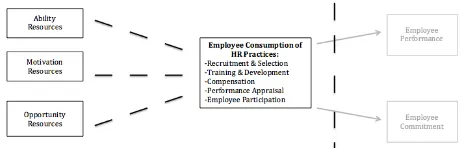
[image:11.595.310.542.517.591.2]In order to clarify the research model of this study, in figure 2 a new research model is presented, with the five added HR practices.
3. METHODOLOGY
The following section elaborates on the way this study answered the research question. It describes the methodology and research methods I used in order to answer the research question but it also explains why these were most suitable for this study. Furthermore, it describes the sample and the techniques of analysis this study carried out in order to derive conclusions from the gathered data.
3.1 Case Study
The methodology I considered suitable for this study is a case study. Case studies investigate single persons, groups, events or communities. Data is gathered from a variety of sources by using several different methods (e.g. observations and interviews) (Mcleod, 2008). Case studies may also continue for an extended period of time, so processes and developments can be studied as they occur. A case study allowed me to investigate a topic in far more detail than might be possible as it attempts to deal with a large number of research participants. Case studies are widely used in psychology, mostly with the goal to analyze and examine human behavior (McLeod, 2008). As this study intends to examine employee consumption of HR practices (and which abilitiy-, motivation-, and opportunity resources play a role in determining employees’ consumption of HR practices), a case study seems to be a suitable methodoly for this study. Also since we do not yet know which abilities, motivavations and opportunities play a role in determining employees’ consumption of HR practices, this study can be considered as exploratory and it could benefit from detailed information, which likely makes this methodology suitable. As a case study is not in itself a research method, I had to select methods of data collection and analysis that will generate material suitable for case studies. Amongst the sources of data the researcher is likely to turn to when carrying out a ase study are observations of daily routine’s, untrsuctured interviews with participants, diaries, personal notes, or official documents. Most of this information is likely to be qualitative, but the researcher in a case study might collect numerical data as well. Collected data can be coded using different theories.
The company or ‘the case’ that I investigated, and thus where I carried out several research methods, was a company named Visschedijk. Visschedjk is a company specialized in cleaning, catering, and facilitating cleaning products. The company is best known for cleaning buildings in several sectors such as the care sector, industrial sector, office sector, education sector, and the government. Here, Vischedijk takes care of the daily cleaining, maintenance of the floors, window cleaning, and façade cleaning, but also catering. Accordingly, Visschedijk’s main activities are cleaning, specialized window-and floor cleaning, and catering. Besides that, the company is engaged in the supply of facility products and it can also provide security services in order to
deliver it’s services as complete as possible to companies or organizations. On their website they have a webshop in which they offer facility products, besides the facility products they provide to the organizations and firms in which Visschedijk is active in cleaning and/or catering. The company is mostly active in the eastern and northern municipalities of the Netherlands and its headquarters are located in the city of Hengelo. Furthermore, the company has about 1500 employees and three more branches in Deventer, Emmen, and Groningen. Since the three main business units consist of cleaners, floor-and window specialists, and catering associates, this study fully focusses on these three departments and treats these as the case that has to be investigated. Of course, the case had to meet several conditions in order to be valuable to investigate for this study. Therefore, the five highlighted HR practices (training and development, recruitment and selection, compensation, performance appraisal, and employee participation) had to be present at the company and employees had to be aware of them and preferably consume them or have consumed them in the past, before he or she can say something about which abilitiy, motivation, and opportunity resources play a role in determining the degree to which they consume HR practices. Because of that, beforehand, I had a talk with one of the managers and a board member in order to discuss whether Visschedijk was a suitable case to investigate. After one meeting, I was convinced that Visschedijk was an appropriate case to investigate for this study.
3.2 Research methods
the identified resources play a role in employees’ consumption of HR practices.
3.2.1 Interviews with employees
Naturally, in order to conceive this rich and detailed information, employees themselves can provide information about which ability- and motivation resources they presume to require in order to consume HR practices. Moreover, employees can indicate which opportunities they presume to play a role in their consumption of HR practices. Qualitative interview questions could help indicating the ability-, motivation-, and opportunity resources employees consider as having an important role in determining the consumption of HR practices. Qualitative interview questions can provide rich and detailed information that could help answering the main question of this research, but they can also give information on ‘why’ employees consider the concerned abilities, motivations, and opportunities as having an important role in determining their consumption of HR practices.
As for the intrerview sample , five employees of each of the three main departments (cleaning, window- and floor cleaning, and catering) of Visschedijk where asked to participate in individual semi-structured interviews. Accordingly, a total of fifteen interviews were carried out. The participating employees were randomly chosen by one of Visschedijk’s managers in the respective department. I asked the managers to randomly pick employees from their department working at different locations in order to get results from multiple angles. In addition, the chosen employees had to meet the condition of having at least two years of experience in their function as cleaner, floor-and window cleaning specialist, or catering employee. Furthermore, I set one more requirement for the sample. I wanted there to be at least one of each gender within a group of five chosen responderts from a department. For the sample of the cleaning- and the catering department this was the case. However, for the window-and cleaning department there appeared to be no employees of the female gender. So in the sample of the floor- and window cleaning department there were only male employees available for interviews. In addition, the respondents were chosen and scheduled by one of the managers from the respective department. For example, a manager from the cleaning department gave me five names of employees in the cleaning department that were available for interviews and met the sampling requirements. Four of them were male, and one of them was female. When it came to specialists in floor-and window cleaning, I got the opportunity to interview five male employees. Furthermore, the respondents from the catering department consisted of four female employees and one male employee.
The design of the interviews was mainly based on answering the research question of this study. First, the goal of this study had to be operationalized into relevant interview questions. As I argued earlier, consumption of HRM services can appear in two forms; coproduction and
value-in-use creation(e.g. Meijerink et al., 2016). Therefore, during the interviews, for every highlighted HR practice I first asked the participating employees whether and how they coproduce these HR practices. Afterwards, I asked them which abilities, motivations, and opportunies were required to do so. Hence, I did the same for in-use creation. First I asked about value-in-use creation of the HR practice and then there were some questions on which abilities, motivations, and opportunities are required for them to obtain the benefits of the HR practice. In addition, the participants were also asked about the reason(s) why the given abilities, motivations, and opportunites were important for them. In this way, in the analysis of the interview results, interview transcipts of employees that consume HR practices in a different way than others could be compared with the rest of the participants. Accordingly, there could perhaps be discovered differences in abilities, motivations and opportunities of employees that consume HR practices by coproducing and value-in-use creating them. Thus, the respondents thus were conducted to an open-ended interview that asked them questions about their function within the company, and then the mentioned questions asked them about their coproduction and value-in-use of HRM practices and the abilities, motivations, and opportunities required for this consumption. Per HR practice, the same questions were asked. The interviews were semi-structured. This implies that the interviews were one-sided conversations with a list of predetermined questions. These unfold in a conversational manner offering participants the chance to explore issues they feel are important (Drever, 1995, p. 143). The questions I asked were open-ended. These questions were chosen to gave the respondent freedom in the way he/she wanted to answer the questions. Open-ended questions are useful for complex issues that do not have finite answers answers (Carey, Morgan, & Oxtoby, 1996). The operationalization tables and the interview protocol are presented in Appendices 1 and 2.
3.2.2 Observations
After conducting qualitative interviews with the employees, performing another data collection method could also be suitable and useful; observations. Observations involve looking and listening to the research subject very carefully. Researchers carrying out observations study an individual or group in their natural settings, without being informed of the observation in advance. Observational data is usually detailed information about the parcitcilar individual, group, or situations. Furthermore, non-participant observation researchers observe behaviour of the subject without interacting with the subject whereas whereas in participant observation the researcher put him or herself in the subject’s position. In this way the resesarcher becomes part of the world of the subject meanwhile focusing on their study. In direct observation, people know that the researchers is watching them, and there is concern that sometimes individuals change their ctions while ot showing at you are looking for or what they are really like (limitations). For this study, non-participant observations were suitable as it gave me the chance to fully focus on employees.Accordingly, in this way it was possible to observe HR practices being consumed. As mentioned earlier, employees consume HR practices and therefore probably integrate resources in the form of abilities, motivations and opportunities. By observing some of the highlighted practices while being consumed, I was able to get a good idea of which resources the employee integrates in order to consume these HR practices. Afterwards, these observations could be used to explain their consumption of HR practices and identify the ability-, motivation-, and opportunity resources required for this consumption. Consequently, this also could provide valuable information for answering the research question of this study. For example, by first observing a training session, I could identify motivations. For instance, when I saw employees actively communicating with eachother during the training, developing social contacts are probably a motivation to consume training & development practices. Accordingly, the observations were aimed at observing HR practices ‘in practice’ in order to identify ability-, motivation-, and opportunity resources employees need in order to consume these HR practices. However, I was not able to carry out observations for all five highlighted HR practices. Hence, I attended an introduction training session for cleaners to observe the HR practice training & development. I also attended an ‘individual development meeting’, in which I could observe the HR practice performance appraisal. For the other three HR practices (recruitment & selection, compensation, and employee participation) it was more difficult to find a moment to observe a specific practice. The nature of the other practices was not as tangible and clear in practice as training & development practices and performance appraisal practices.
The observed introduction training took place in a lecture room in at the main office of Visschedijk in Hengelo.
During this training a teacher taught new cleaners basic information about the firm, the rules and materials on the work floor, and some basic practices cleaners have to perform at work. Besides me, seven employees attended this training and it lasted about an hour.
The observed development meeting also took place at the main office of Visschedijk. In this development meeting the area sales manager from district Oldenzaal met with one of the employees of the cleaning department. During the meeting they filled in an appraisal questionairre about the performance and attitude of the employee during past year. Points of interest were discussed on the basis of this questionnaire. While filling in this form, the area sales manager primarily let the word to the employee in order to hear her own experiences on the workfloor during past year. In addition, the manager asked about problems she faced past year and whether she wanted to see things change at the workfloor. Furthermore, the manager told the employee what she did well, but the manager also gave her tips to improve her performance and attitude at the work floor. The meeting lasted about an hour. In both HR practices I participated and I made notes of my observations. With these notes I attempted to fill in the relevant parts of an interview template as if I were one of the respondents. I did this in order to get an idea of which ability-, motivation-, and opportunity resources I would need if I would consume these HR practices. The interview template I used for making notes of these observations is presented in Appendix 3.
3.2.3 Interview with a manager
said and together we attempted to answer the interview questions as if we were respondents of the interviews I performed earlier. This interview was not recorded and the notes with which we answered the interview questions are presented in Appendix 3.
3.4 Technique of analysis
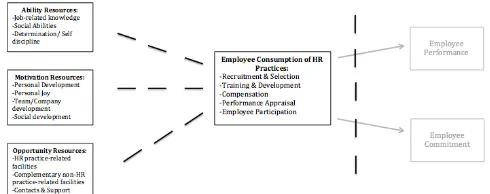
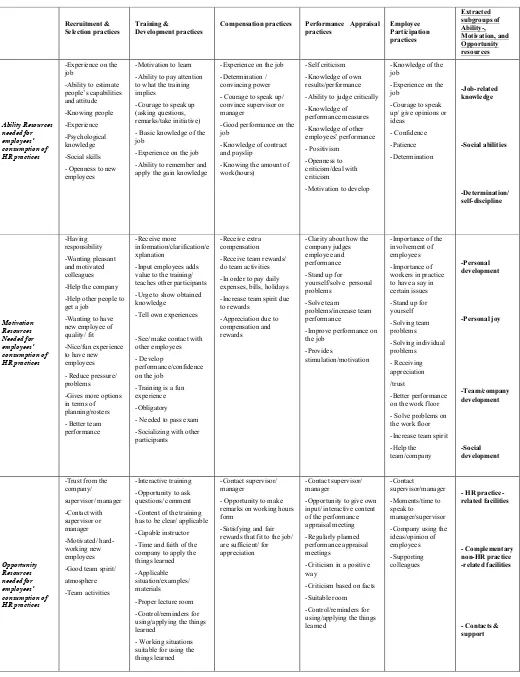
As I attempted to identify the consumption of HR practices of the participating employees and which ability-, motivation-, and opportunity resources are required for the consumption, the results of the interviews and observations had to be pictured clear. Therefore I had to analyse all the qualitative data I gathered from the interviews with the employees, the observations, and the interview with the area sales manager. The purpose of analysing qualitative data is to determine categories, relationships, and assumptions that inform the view of he respondent in general, and of the topic in particular (McCracken, 1988). This can be reached by subviding the data and assigning categories. A good summary of the results of the study can be reached by coding the data. Codes are labels for allocating units with meaning to the descriptive information collected during a study (Basit, 2003). Therefore, the answers of the respondents were coded by giving them a label of each catergory. However, beforehand all interview transcripts were imported into a coding programme named “Atlas.ti”. Coding gave me the opportunity to first divivide different sections of the interview and give them labels. In this way, the answers of the participating employees could be sorted out more easily even as it was easier to compare answers in this way. In this way, three main groups were made. Text passages concerning ability resources, motivation resources, and opportunity resources were destinquished. Despite the fact that in the concepts from the literature I indicated that consumption of services can occur in two forms, during the analysis of the data I focussed on consumption as a combination of coproduction and value-in-use creation. After distinquising the three groups, open coding was applied. Since I was looking for different forms of ability-, motivation-, and opportunity resources, I was open for new codes, dimensions, and constructs. Open coding gives the researcher the opportunity to do so. Moreover, the notes from the observations and the interview with the area sales manager were analyzed separately from the other interviews in order to see whether these research methods added some new insights on top of the results of the interviews. All different identified ability-, motivation-, and opportunity resources the interviews with employees, the observations, and the interview with the area sales manager indicated are presented in Table 1. After applying open coding to the interview transcripts and analyzing the notes from the observations and interview with the area sales manager different forms of ability-, motivation-, and opportunity resources were identified. These are further discussed in the findings section of this study.
4. FINDINGS
Performing fifteen interviews with employees, two observations and an interview with the area sales manager brought me a lot of valuable data for answering the research question. First, I tried to summarize the data to how it was most valuable to this study. Table 1 shows an overview of what the results of the interviews with the employees, the observations, and the interview with the area sales manager showed in therms of ability-, motivation-, and opportunity resources considered to be playing a role in the consumption of HR practices. Since the abilities, motivations, and opportunites that play a role in the consumption of HR practices were most important for answering the research question of this study, I focussed on these results. In order to comment on the received data and to come with conclusions, I attempted to extract subgroups for the abilities, motivations, and opportunities the data showed to be playing a role in employees’ consumption of HR practices. In this, by extracting subgroups I identified different forms of ability-, motivation-, and opportunity resources that play a role in the consumption of HR practices in general, and not in specific HR practices. In order to explain and describe the different subgroups of ability-, motivation-, and opportunity resources I identified, this section uses quotation from the interviews with employees. These quotations are labelled on the basis of the employee’s department and the order in which I interviewed them. In this, CL stands for cleaning department, FW stands for floor-and window cleaning specialists, and CA stands for catering department.
4.1 Ability resources
As the table with the overview of the research results indicates, I extracted three subgroups when it comes to ability resources that could play a role in determining employees’ consumption of HR practices. In spite of the various answers it brought me, I could devide the results from the interviews with employees, observations, and the interview with the area sales manager into three main subgroups of abilities in which the abilities were more ore less connected. I could devide them in ‘job-related knowledge’, ‘social abilities’, and ‘determination/self-discipline’.
Job-related knowledge