University of Warwick institutional repository:
http://go.warwick.ac.uk/wrap
A Thesis Submitted for the Degree of PhD at the University of Warwick
http://go.warwick.ac.uk/wrap/57302
This thesis is made available online and is protected by original copyright.
Please scroll down to view the document itself.
ORGANIZATIONAL
KNOWLEDGE IN THE MAKING:
HISTORY, BREAKDOWNS AND NARRATIVES
Gerardo Patriotta
Industrial Relations and Organisational Behaviour Warwick Business School
University of Warwick
July 1999
Dissertation submitted in fulfilment of the requirements
for
the award of the degree of Doctor of Philosophy in
Table of Content
List of Figures ... 4
List of Tables ... 5
Acknowledgements ... 6
Abstract ... 7
Introduction ... 8
Chapter 1: Literature Review ... 14
1.1 Introduction ... 14
1.2 Knowledge as representation: the cognitive approach ... 17
1.2.1 Organisational learning ... 19
1.2.2 The situated cognition perspective ... 22
1.2.3 Knowledge and sensemaking ... 23
1.2.4 Critical remarks ... 26
1.3 Knowledge as commodity: the strategic management approach ... 28
1.3.1 The resource-based theory ... 28
1.3.2 Towards a dynamic knowledge-based theory of the firm ... 32
1.3.3 Conceptual and methodological issues ... 35
1.4 The organisational perspective ... 38
1.4.1 Situated knowledge and the role of praxis ... 40
1.4.2 Formative contexts: the double structure of practical knowledge ... 43
1.4.3 Longitudinal and processual analysis: action, context and time ... 45
1.5 Knowledge and the laboratory: the techno-science approach ... 48
1.5.1 The social construction of technological systems ... 50
1.5.2 Opening organisational black boxes ... 52
1.6 Gaps in the literature and researchable questions ... 56
Chapter 2: Research Methodology ... 62
2.1 Introduction ... 62
2.2 "Thick description": in search of a theory of method ... 64
2.3 Thick description at work: the subtleties of interpretation ... 68
2.4 Three methodological lenses to study knowledge as an empirical phenomenon: history, breakdowns and narratives ... 71
2.4.1 History ... 72
2.4.2 Breakdowns ... 75
2.4.3 Narratives ... 82
2.5 Research design ... 85
2.5.1 Selection of the cases ... 86
2.5.2 Access ... 88
2.6 Research strategy ... 89
2.6.1 Data sources ... 92
2.6.2 Data collection ... 94
2.7 How do we write the story: rhetoric of representation and the problem of validity ... 97
2.8 Main limitations of the study ... 101
Chapter 3: The Company Background ... 104
3.1 Introduction ... 104
3.2 General: The Fiat Group ... 105
3.3 The years of perennial conflict (1919-1979) ... 107
3.4 From Fordism to the High-Tech Factory (1980-1989) ... 108
3.5 The integrated factory model (1990s) ... 111
3.6 The crystal pipeline: principles and structure of the integrated factory ... 113
3.7 Conclusion ... 117
Chapter 4: Knowledge-in-the-Making: The "Construction" of Melfi's Integrated Factory ... 119
4.1 Introduction ... 119
4.2 Two perspectives on organisational learning ... 121
4.3 Fiat's Melfi plant ... 124
4.4 Phase 1: The design concept ... 126
4.4.1 The cornerstones of innovation ... 128
4.4.2 The green field strategy ... 130
4.5 Tales of the "green field": competence building over the Melfi "building site" ... 135
4.6 Learning as appropriation: building identity through ownership processes ... 149
4.7 Specification-delegation chains: planned and emergent factors in the knowledge creation process ... 151
4.8 Concluding remarks ... 154
Chapter 5: Breakdowns and Bottlenecks: Capturing the Learning Dynamics on the Assembly Line ... 157
5.1 Introduction ... 157
5.2 The body welding unit ... 160
5.3 Men and machines ... 162
5.4 Breakdowns and Bottlenecks ... 166
5.4.1 Systemic breakdowns: analysing bottlenecks ... 168
5.5 Trouble-shooting at Melfi ... 171
5.6 Local and systemic breakdowns: cognitive implications of the D/A routine ... 176
5.7 Digging into tacit knowledge ... 179
5.8 Conclusions ... 183
Chapter 6: Sensemaking on the Shop Floor: The Narrative Dimension of Organisational Knowledge ... 186
6.1 Introduction ... 186
6.2 The Mirafiori Pressing plant ... 188
6.3 Encountering the team members ... 192
6.3.1 Sensemaking as anticipation ... 195
6.4 Breakdowns ... 197
6.4.1 The Panda's dashboard ... ... 198
6.4.2 The Panda's dashboard (2) ... 201
6.5 Detective stories as narrative devices ... 202
6.6 Team values, consensus and company culture ... 206
6.7 The detective's approach: theory of method ... 209
6.8 Making sense of sensemaking activities: a model of competence development ... 210
6.9 Concluding remarks ... 213
Chapter 7: Lessons from the Cases: Theoretical Interpretations ... 215
7.1 Introduction ... 215
7.2 Being and becoming: the ontology of organisation ... 217
7.3 Building a classificatory system of knowledge: the epistemological argument ... 221
7.3.1 Organisational black boxes ... 221
7.3.2 The knowledge cycle ... 223
7.4 Making theoretical interpretations of the case studies ... 227
7.4.1 Blueprints: the mark of organisation ... 228
7.4.2 Routines: organisations as clockworks ... 231
7.4.3 Common sense: organisations as human artefacts ... 235
7.5 Linking knowledge to organisational becoming ... 239
7.6 Conclusion ... 243
Chapter 8: Conclusions ... 246
8.1 Introduction ... 246
8.2 Theoretical contributions ... 247
8.3 Methodological contributions ... 254
8.4 Empirical contributions ... 256
8.5 Main limitations of the study ... 257
8.6 Suggestions for future research ... 258
List of Figures
Figure 1. Selection of the cases ... 87
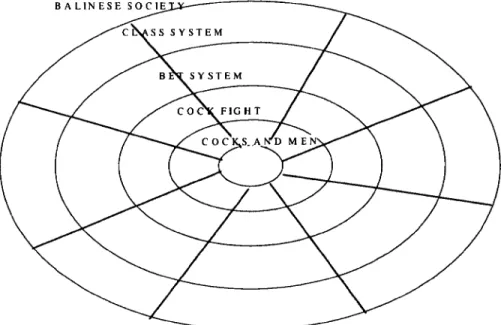
Figure 2. Narrative structure of the Balinese cock fight ... 99
Figure 3. Changes in Fiat's organisational structure at the plant level ... 115
Figure 4. Melfi's green field site (June, 1991) ... 131
Figure 5. Construction work: the paint shop (April, 1992) ... 141
Figure 6. Construction work: the body welding unit (September, 1992) ... 142
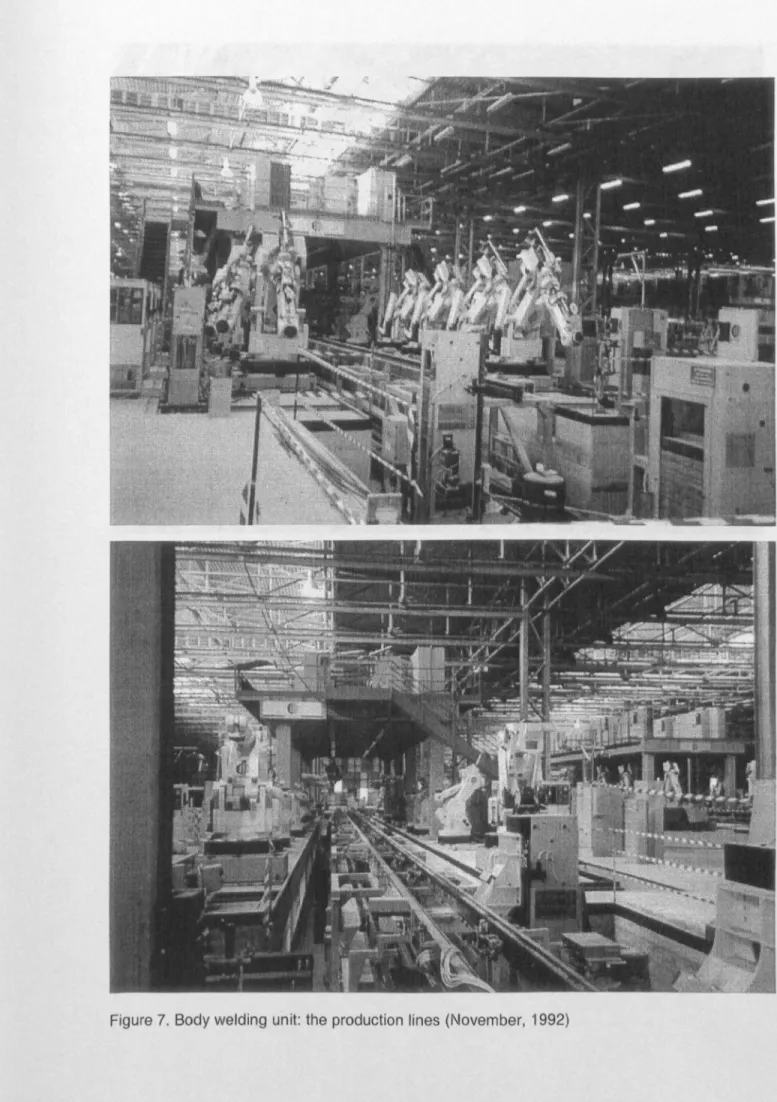
Figure 7. Body welding unit: production lines (November, 1992) ... 143
Figure 8. Body welding unit: overview (August, 1993) ... 144
Figure 9. The Melfi plant (September, 1993) ... 145
Figure 10. The D/A analogy is reflected in the definition of the product as an assemblage of parts ... 175
Figure 11. The D/A analogy is reflected in the definition of the production process as a sequence of operations along the assembly line ... 176
Figure 12. The knowledge implications of production systems ... 182
Figure 13. The D/A analogy as a knowledge system ... 183
Figure 14. The "Mirafiori Presse" plant within the Mirafiori industrial district ... 189
Figure 15. A traditional production line ... 190
Figure 16. Sensemaking on the shop floor ... 211
Figure 17. The knowledge cycle ... 224
Figure 18. A classificatory system of knowledge in organisations ... 241
Figure 19. Knowledge Types ... 242
List of Tables
Figure 1. Selection of the cases ... 87
Figure 2. Narrative structure of the Balinese cock fight ... .. 99
Figure 3. Changes in Fiat's organisational structure at the plant level ... 115
Figure 4. Melfi's green field site (June, 1991) ... 131
Figure 5. Construction work: the paint shop (April, 1992) ... 141
Figure 6. Construction work: the body welding unit (September, 1992) ... 142
Figure 7. Body welding unit: production lines (November, 1992) ... 143
Figure 8. Body welding unit: overview (August, 1993) ... 144
Figure 9. The Melfi plant (September, 1993) ... 145
Figure 10. The D/A analogy is reflected in the definition of the product as an assemblage of parts ... 175
Figure 11. The D/A analogy is reflected in the definition of the production process as a sequence of operations along the assembly line ... 176
Figure 12. The knowledge implications of production systems ... 182
Figure 13. The D/A analogy as a knowledge system ... 183
Figure 14. The "Mirafiori Presse" plant within the Mirafiori industrial district ... 189
Figure 15. A traditional production line ... 190
Figure 16. Sensemaking on the shop floor ... 211
Figure 17. The knowledge cycle ... 224
Figure 18. A classificatory system of knowledge in organisations ... 241
Acknowledgements
This project was partly funded by a two-year research grant awarded by the European Community under the "Training and Mobility of the Researchers" Programme. Throughout this long journey I was comforted and supported by a good number of friends, academics, and practitioners. The relationship with my two supervisors Andrew Pettigrew and Harry Scarbrough has considerably influenced my research
style and my intellectual thinking far beyond the specific concerns of the thesis. I have greatly benefited from Andrew's proverbial intellectual rigour and professional
touch. He helped me to unpack my most cryptic ideas and make explicit the
assumptions underlying my work through a systematic questioning process. Harry is
an original thinker. He is able to direct one's attention towards apparently peripheral details and turn them into major sources of intellectual production. I am grateful to him for his insightful suggestions and for having followed the unfolding of this work
even once he left Warwick to join Leicester University. More generally, the Warwick Business School provided an extremely challenging research environment. I would like to thank the PhD community and the academic staff of the School for their
openness to discussion and intellectual exchange. Outside Warwick I benefited from
the precious advice of prominent scholars. The meetings with Clifford Geertz at Princeton proved to be crucial for the elaboration of the methodology for the study. Hubert Dreyfus at Berkeley made me understand the relevance of breakdowns. The
seminars with Bruno Latour at LSE were a constant source of inspiration. A special
mention goes to Claudio Ciborra and Giovan Francesco Lanzara at the University of Bologna. Claudio has helped me to move my first steps within the academic world
through research collaborations and joint publications. Giovan Francesco has been
my spiritual mentor ever since I obtained my master degree. Finally, I would like to
thank Luciano Massone, Director of Industrial Relations of Fiat Auto, Luisella
Erlicher of ISVOR-Fiat, the managers and middle managers in Melfi and Mirafiori for their availability and collaborative attitude throughout the duration of the project.
My partner lanna Contardo was always on my side with her love and support while
we jointly went through the joys and frustrations of the PhD experience.
Abstract
The present study looks at the dynamics whereby organisational knowledge comes into existence and is eventually crystallised into stable structures of signification
through processes of utilisation and institutionalisation. Recent years have seen an
astounding explosion of writing about organisational knowledge. In different
versions, organisational theorists have been paying increasing attention to the idea of
the firm as a body of knowledge, stressing in turn the ability of firms to create,
manage and transfer knowledge as a critical success factor. However, the current debate on the topic has highlighted the difficulty of documenting empirically the
process of creation, accumulation and maintenance of knowledge in organisations. This, of course, begs the question: how is it possible to relate an empirical study to
the theoretical debate on knowledge in organisations? More specifically, how does a
particular knowledge system emerge and become stabilised? How does it evolve over
time? In this study, we argue that the lack of attention to knowledge as an empirical
phenomenon can be traced back to the assumptions underlying the mainstream knowledge-based theories of the firm, which emphasise the instrumental, functional
character of knowledge in organisations. In contrast to the functionalist view of knowledge, we contend that mainstream assumptions need to be combined with those
perspectives focusing on the social construction of knowledge and highlighting its
contentious, provisional nature. Given the problems identified at both theoretical and
methodological levels, the present study proposes a framework for studying knowledge as an empirical phenomenon based on three methodological lenses, which
are echoed in the title of this work: history, breakdowns and narratives. The three lenses have to be seen as bringing into focus the tacit features of knowledge and
organisation. The empirical core of the research is evidenced by three in-depth case
studies conducted at Fiat Auto Italy. The findings of the study provide the backbone for constructing a theoretical model of knowledge in organisations. The model links
the content, process, and context of knowledge-related phenomena in a coherent
classificatory system. More generally, the empirical research highlights the systemic, institutionalised, and multi-faceted nature of knowledge in organisations.
INTRODUCTION
This study looks at the dynamics whereby organisational knowledge comes into
existence and is eventually crystallised into stable structures of signification through
processes of utilisation and institutionalisation. Specifically, this research sets out to
achieve the following objectives:
" To study the dynamics of knowledge creation, utilisation, and institutionalisation in different organisational settings;
" To develop a methodology for studying knowledge as an empirical phenomenon;
" To develop a processual theory of knowledge in organisations able to link "modes
of knowing" to "modes of organising";
" To describe the evolution and transformation of knowledge systems over time.
Knowledge has become increasingly relevant in organisations following a major shift in the dominant modes of industrial development and wealth creation in
contemporary society. Peter Drucker (1993) has coined the term "knowledge society"
to stress the importance of knowledge as the defining characteristic of the post-
capitalist world. According to him, we have moved from an industrial economy based
on the application of knowledge to tools, products and processes, to a globalised, information-driven economy where knowledge is being applied to knowledge itself.
As a result of what Drucker calls the Productivity and Management Revolutions the
post-industrial era will be increasingly populated by organisations while knowledge
will displace capital as the motor of competitive performance. Within this scenario, knowledge-related factors will increasingly affect the current patterns of industrial
and organisational change.
Following the wider debate about the emergence of the information age and the
knowledge society, recent years have seen an astounding explosion of writing about
organisational knowledge. In different versions, organisational theorists have been
paying increasing attention to the idea of the firm as a body of knowledge, stressing in turn the ability of firms to create, manage and transfer knowledge as a critical
success factor. Within the fields of strategic management and organisation theory the
recognition of knowledge as a source of competitive advantage has shifted the
attention of scholars toward the so-called "intangible" assets of organisations. More
generally, the significance of knowledge in organisations has been related to broader discussion about the organisation of work, the management of people, organisational learning and corporate memory, the management of core competencies, the
management of knowledge-intensive firms, the value of intellectual capital and the
management of R&D activities (Scarbrough et al., 1999).
The introduction of epistemology in organisations has forced scholars to dig into the
nature of knowledge-sometimes even going back to the classical Greek
philosophers-in order to build a more or less dynamic knowledge-based theory of
the firm, more often than not within a prescriptive logic. As it is commonly accepted,
the study of knowledge as a phenomenon in its own right entered the research agenda following the increasing success of Japanese firms throughout the 80s and the
beginning of the 90s. The analysis of the superior performance of Japanese firms led
research to identify knowledge as a key competitive factor. Nonaka and Takeuchi's (1995) analysis of knowledge creating companies provided a pathbreaking work
within the literature. Interestingly, however, for at least one decade the debate within
the literature on knowledge has remained at the theoretical level. Even more interestingly, this debate seems to have developed incrementally rather than through
competing paradigms.
Despite the abundance of theoretical definitions of knowledge in organisations,
current mainstream conceptualisations seem to be constructed on a reductionist
argument. The reductionist view of knowledge can be articulated in a number of
related issues. First, knowledge is seen as an objectified, transferable commodity that
can be used instrumentally towards a firm's performance. Second, organisational knowledge processes are reconnectable to the dialectic between tacit and explicit
knowledge. Under these circumstances, Nonaka and Takeuchi's neat model of
knowledge creation through the conversion of tacit and explicit knowledge has been
widely and uncritically accepted. Third, current debates on knowledge in
organisations seem to suffer from a lack of interdisciplinarity. The strategic
management perspective dominates the research agenda while the contributions
existing theories underestimate the systemic nature of knowledge-related phenomena. In particular creation dynamics are privileged over institutionalisation processes
while knowledge is detached from the broader phenomenon of organising. Fifth, most
existing knowledge theories are informed by a pervasive assumption of
transmutability. Knowledge is seen as a-contextual, a-historical, and a-processual
(Pettigrew, 1990,1997).
Within the scenario depicted above, the current debate on the topic has highlighted
the difficulty of documenting empirically the processes of creation, accumulation and
maintenance of knowledge in organisations. The problem can be summarised as follows: while we have access to the explicit, formalised features of knowledge, it is
not possible to get the same insight into the tacit, experience-related side of it. This,
of course, begs the question: how is it possible to relate an empirical study to the theoretical debate on knowledge in organisations? More specifically, how does a
particular knowledge system emerge and become stabilised? How does it evolve over
time? The task is made particularly difficult by the fact that, as it has rightly been
pointed out, explicit (visible) knowledge is just the tip of the iceberg while most of
the knowledge organisations create and use remains at a tacit level.
This important omission is reflected in the lack of empirical studies on knowledge in
organisations. So far, the few existing ones have been conducted within fields that are
somewhat distant from the mainstream (e. g. cognitive anthropology, sociology of
science and technology). However, the emphasis placed on knowledge-related
phenomena in the last few years has promoted an increasing demand for empirical
evidence to support the abundant theoretical literature in which those phenomena have been debated. Today, major research programmes on knowledge-related issues
funded both by public bodies and corporations are being developed throughout the
world, whilst knowledge management has become a hot topic among executives and doctoral students. In the next few years we will see the results of a research trend that
has just started and the literature will probably be flooded by knowledge studies.
In this study, we argue that the lack of attention to knowledge as an empirical
phenomenon can be traced back to the assumptions underlying the mainstream knowledge-based theories of the firm, which emphasise the instrumental, functional
character of knowledge in organisations. In contrast to the functionalist view of
knowledge, we contend that mainstream assumptions need to be combined with those
perspectives focusing on the social construction of knowledge and highlighting its
contentious, provisional nature. Following Cooper (1990) we suggest that knowledge
originates from those processes whereby organisations appropriate order out of disorder. Accordingly, the analysis of any social organisation or social action needs to be performed at the cleavage between organisation-disorganisation. Therefore, the
epistemological argument of this study is grounded on an in-depth inquiry into the
ontology of organisations aimed at disclosing the tacit assumptions informing the
very concept of organising. Chapter 1, presents the main debates in the literature and
reviews the main empirical studies in order to identify what is known and not known.
The need to study knowledge as an empirical phenomenon has critical
methodological implications in so far as it points to the need for building effective
tools. The major difficulty with existing studies is related to their treatment of knowledge as an independent variable affecting competitive performance. As will be
argued in the next chapter, this conceptualisation poses problems of
operationalisation. The present research proposes a framework for studying knowledge as an empirical phenomenon. The framework is based on three
methodological lenses, which are echoed in the title of this work: history, breakdowns
and narratives. The three lenses have to be seen as bringing into focus the tacit features of knowledge and organisation. Knowledge is evoked and revealed as an
emergent phenomenon rather than defined a priori. Finally, the observational focus
on shop floor dynamics reinforces the empirical focus of the study as well as
constituting a main element of novelty with respect to existing studies. Chapter 2
explains in detail how each lens works.
The empirical core of the research is provided by three in-depth case studies
conducted at Fiat Auto Italy. The choice of the automotive sector for a study on
organisational knowledge was dictated by distinctive features of the competitive
environment in which car manufacturers operate. More than fifty years ago, Peter Drucker (1946) defined car manufacturing as "the industry of industries" and today,
the car market is still the one in which competition is most fierce. In the last decade,
the industry of industries has undergone a major transition from Fordist mass
production systems to new organisational models derived from Toyotism (Womack et
such as lean production, total quality management, just in time, teamwork, along with
the adoption of cutting edge technologies, have been pioneered in car manufacturing in response to competitive market forces. The above characteristics of the sector bear
critical consequences for knowledge creation, change and innovation.
The case studies focus on knowledge creation, utilisation and institutionalisation
processes occurring on the shop floor of two of Fiat's most renowned plants: Fiat SATA assembly plant in Melfi and the Mirafiori Pressing plant in Turin. Beyond the
specific business operations, the selected plants can be seen as productive units
characterised by distinctive combinations of product, production process, and work
organisation (Abernathy, 1978; Whipp and Clark, 1986). In this respect they are
characterised as knowledge systems in their own right. The two plants offer a stark
contrast as far as the institutional setting is concerned. Melfi is an avant-garde
assembly plant, located in the South of Italy, built as a green field site in 1993 and
opened officially in 1994. The plant is characterised by a novice work force and holds
one of the best productivity records in the world. Mirafiori is a brown field set up in
the 50s and characterised by an experienced work force. The two plants share the
same organisational model, known as the "integrated factory", introduced by Fiat at
the beginning of the 90s as a result of a major re-engineering process accompanying a
radical shift from mass production systems to a Post-Fordist paradigm. However,
while Melfi has been designed as an integrated factory, in Mirafiori the model has been superimposed on to the existing organisation. The two factories also differ in
terms of technology since Melfi is a final assembly plant relying on an assembly line,
whilst Mirafiori produces car parts and accordingly is organised as a batch production
system. The distinct settings of two plants characterised by different stages of
maturity constitute critical context variations in the study. These variations offer
alternative perspectives for the observation of organisational knowledge processes. The three case studies are presented in chapters 4,5 and 6 and are preceded by a brief
profile of the company in chapter 3.
The empirical findings of the study provide the backbone for constructing a
theoretical model of knowledge in organisations. The model links the content,
process, and context of knowledge-related phenomena in a coherent classificatory
system. Knowledge in organisations results from the dynamic interaction of the three
processes of creation, utilisation and institutionalisation leading to the production of
generic knowledge outcomes conceptualised as black boxes. Specifically, the case
studies highlight three main knowledge contents, which we label blueprints, routines,
and common sense. Finally, by juxtaposing the case studies in a sort of "photo-
montage" we introduce a time dimension (which was already present in the research design) that allows the researcher to follow a hypothetical knowledge trajectory. This
trajectory identifies three main types of knowledge - foundational, procedural and
experiential - corresponding to the knowledge contents mentioned above. The trajectory defines a possible evolutionary trend of knowledge in organisations. At the
overarching metalevel, the typology mentioned above is informed by a distinctive definition of organisation, based on the ontological categories of being and becoming,
and highlighting the tension between controversies and steady states. The ontological
argument portrays organisation as confronted by the equivocality of action and
exposed to major challenges for sensemaking. It looks at how organisations frame the
equivocality of action by means of primary sensemaking devices such as the division
of labour, routines and standard operating procedures, workflow and production
systems, and so on. Accordingly, organisation originates from those processes of
appropriation of order out of disorder. Likewise, knowledge springs from the tension inherent in the dichotomies organisation/disorganisation, being/becoming,
order/disorder, routines/breakdowns. The theoretical interpretations of the study are
presented in chapter 7.
The conclusions of the study summarise the main theoretical, methodological, and
empirical contributions achieved by this research. In contrast to the reductionist
CHAPTER 1: LITERATURE REVIEW
1.1 Introduction
A definition of organisational knowledge is implied by each of the various
conceptualisations of organisation that we find in the literature. Admittedly,
organisational theories reflect our knowledge about what an organisation is. However,
only recently has knowledge in organisations been put explicitly under scrutiny as a
phenomenon in its own right. The theme has become so popular that today we are
witnessing a shift from organisation theories to knowledge theories of organisations.
Existing theories of organisational knowledge are indebted to a wide spectrum of
theoretical traditions. Knowledge is a multifaceted phenomenon which has been
debated in a variety of disciplinary contexts: from philosophy and sociology, to social
psychology and cognitive science; from economics to management and organisational
analysis. The breadth and depth of the subject under investigation makes it difficult to
set the focus of a literature review.
For Spender and Grant (1996) the beginning of the knowledge-based paradigm can be
traced back to Simon's (1947) notion of bounded rationality. Interestingly, the work
of Simon epitomises the encounter of two epistemological traditions: one derived from economics and emphasising issues of individual self interest and rational decision-making, the other related to psychology, focusing on the link between
cognition and action and its behavioural consequences. It is this mix of tangible and intangible, technology and human skills, hard and soft concepts, that we find in most
of today's knowledge-based theories of the firm.
Likewise, Brian Pentland (1992) contends that the existing theories of organisational knowledge can be traced back to two distinctive roots. One approach-which derives
from the conceptualisation of the firm as an information processing device (Galbraith, 1977) and is related to cognitive science-has been to look at knowledge as a
cognitive phenomenon that can be equated to abstract representation. The alternative
approach has focused on organisational structures such as routines (Nelson and Winter, 1982). The structural view offers the insight that the capacity of the
organisation to act depends on things that are often tacit or taken for granted, apart from any explicit representation. This dichotomy is neatly captured by what Ryle (1949) called "the dogma of the Ghost in the Machine". The cognitive approach directs our attention to the ghost: perception, belief and sensemaking. The structural
approach focuses on the machine: structures, objects and routines.
Historically, the advent of knowledge to the forefront of organisational analysis can be dated back to the end of the 70s, with the appearance of organisational learning
theories (Argyris and Schön, 1978) and the conceptualisation of organisations as
cognitive artefacts. The cognitive approach draws on the metaphor of organisations as brains (Morgan, 1997) and builds on the concepts of "bounded rationality" (Simon,
1947), cybernetics (Ashby, 1952; Wiener, 1961), the definition of organisation as information processing devices (Galbraith, 1977) and interpretation systems (Daft and Weick, 1984). Organisational knowledge is represented and stored in cognitive
structures such as maps, frames, scripts (Sims and Gioia, 1986) which account for how organisations make sense of their activity and perform in the face of
environmental changes. Learning is defined as a cognitive process and seen as a
source of change and/or inertia. A fundamental dichotomy within the cognitive
approach is between cognition and action. The prosperity of organisational learning
theories was also promoted by the increasing influence of the cognitive approach in
emerging disciplines such as artificial intelligence and information systems.
On the practitioner's side, the increasing success of Japanese firms during the 80s and
the relative competitive decline of American companies boosted the attention to
knowledge-oriented factors. The emergence of new production systems, total quality
management, and teamwork shifted the focus of analysis towards the role of human
skills and intangible assets. Interest in benchmarking, best practice transfer and knowledge audits involved recognition that it was not so much firms' tangible assets
that mattered as the way they were being used and combined with individual and
organisational knowledge (Spender and Grant, 1996). The above developments
gradually brought the theme of organisational knowledge to the attention of the
strategic management literature, which ultimately ensured the success of knowledge- based theories.
(1959), Nelson and Winter (1982), the resource-based approach defined knowledge as
an asset or commodity. This conceptualisation resulted in a new theory of the firm -
emphasising firm-specific, difficult to imitate resources as a source of competitive
advantage - and somewhat displaced mainstream market-centred approaches to strategy (e. g. Porter, 1980). The analytical cornerstones of such a theory include:
resources (Wernerfelt, 1984); (Barney, 1991); core competencies (Prahalad and Hamel, 1990); and core capabilities (Leonard-Barton, 1992a).
Within the strategic management literature, learning assumed once again a central
role, accounting for the acquisition of firm-specific competencies and capabilities and the development of path-dependency. The ability of a firm to learn became somewhat
infused with value as the emergence of the Learning Organisation concept (Senge,
1990) as one of the fads of the early 90s demonstrates. Accordingly, the
interconnected processes of learning and knowledge acquisition were causally linked
to organisational performance - with a specific focus on the dynamics of innovation
and change - and assumed a quasi-ideological significance. Finally, the
conceptualisation of knowledge as a strategic factor of production found application in some of the best selling management books of the 90s documenting the increasing
success of Japanese firms. The latter emphasised the notion of product development
performance (Clark and Fujimoto, 1991), the conceptualisation of production systems
as knowledge systems (Womack et al., 1990), and the knowledge-creating company (Nonaka and Takeuchi, 1995). More generally, knowledge creation was assimilated to
the production process and the organisation was defined by using such metaphors as
"knowledge refinery" (Nonaka and Takeuchi, 1995) and "learning laboratory" (Leonard Barton, 1992b).
The move towards the commodification of knowledge did not leave out the cognitive
element as the terms competence and capability indicate. Rather the ghost was
somewhat incorporated in the machine. The tension between the soft cognitive
element and the hard structural one was well reflected in the definition of knowledge
as an "intangible" asset. Furthermore, the influence of social psychology was still
visible in the recognition of the duality of knowledge, which was articulated in the distinction between explicit and tacit knowledge (Polanyi, 1966). The latter informs
the most recent knowledge-based theories of the firm.
The theories of knowledge analysed above account for the vast majority of the literature that has been produced on the subject. The third strand analysed in the
present chapter is referred to as the organisational perspective (Scarbrough, 1998). Two major bodies of literature emerge within this strand. The first includes situated
theories of knowledge and is characterised by a distinctive focus on organisational
practices. It directs our attention to that body of organisational literature that has
stressed the importance of the "details of practice" (Brown and Duguid, 1991),
situated action (Lave and Wenger, 1991; Suchman, 1987) and methodological
situationalism (Knorr-Cetina, 1988). A second distinctive body of literature within the
organisational perspective refers to those studies that have emphasised the institutional dimension of knowledge focusing on the concepts of action, context and
time (e. g. Whipp and Clark, 1986, Pettigrew, 1987), formative contexts (Unger, 1987;
Blackler, 1992 Ciborra and Lanzara, 1994), and structuration (Giddens, 1984; Barley, 1986; Barley and Tolbert, 1997).
Finally, the fourth strand considered in this chapter can be labelled the "techno-
science" approach (Latour and Woolgar, 1979; Knorr-Cetina, 1981; Latour, 1987; Bijker et al., 1989). Its roots are in the sociology of science and sociological studies
of technology. The body of literature belonging to this strand emerges from the
rejection of the traditional mind-body opposition and the recognition of the socially
constructed nature of knowledge. The techno-science approach is primarily empirical in its focus. The laboratory serves as a metaphor -underlying most of the empirical work in this strand, emphasising the processes of knowledge production and
transformation.
In the following sections we review the four main perspectives on organisational
knowledge presented in the introduction in order to identify the gaps in the literature
and derive the main research
questions of the study.
1.2 Knowledge as representation: the cognitive approach
The "cognitive turn" in organisation studies was conceived as a way of bringing in
the concepts of mind, intentionality and sensemaking into the realm of organisational
psychology and artificial intelligence, organisational knowledge is seen to reside in
mental structures such as frames, scripts, cognitive maps and interpretative schemes,
which account for the sensemaking processes of organisational members. The latter include the members' perceptions of both their internal and external environments, their learning and unlearning, change and resistance to change, and appropriate and
inappropriate actions in the face of altered environmental conditions (Boland and Tenkasi, ibid. ).
In its most paradigmatic formulation, the cognitive framework is characterised by two
fundamental dichotomies: one between thought and action; the other between individual and organisation. In exploring the cognition-action linkages a fundamental
hypothesis is that action always possesses a cognitive basis which is reflected in the
above mentioned knowledge structures. But how do mental structures operate? According to Newell and Simon (1972) the human mind can be conceived as a
computational engine whose functioning is based on the manipulation of symbols
after the fashion of digital computers. As Norman (1993) has pointed out, the
caricature of the traditional symbolic approach to human cognition is that it focuses
entirely upon the processing structures of the brain and the symbolic representations
of the mind. All action is inside the head, yielding a natural distinction between the
reality out there and the processes taking place inside here.
Planning and representation are central to symbolic theories since human behaviour is
always oriented towards a goal. The planning model in cognitive science treats a plan
as a sequence of actions designed to accomplish some preconceived end. The model
posits that action is a form of problem solving, where the actor's problem is to find a
path from some initial state to a desired goal state, given certain conditions along the
way (Newell and Simon, 1972 cited in Suchman, 1987: 28). Under these
circumstances, internal representations act as filters mediating between goal and
situation. Representation is information about a situation, which is stored in human
memory as a result of previous experience and learning. As for a computer program,
representations contain a set of instructions on how to respond to a given situation. Accordingly, effective behavioural performance depends on the degree of accuracy in
the representation of a problem: it is a matter of matching action with representations;
it is the outcome of a cognitive coupling between the individual and his image of the
world.
Within cognitive theory, organisations are seen as an extension of the "computer
model of the mind". In recent years they have been variously defined as brains (Morgan, 1997) information processing devices (Galbraith, 1977), or thinking
systems (Sims and Gioia, 1986). In the classical Simonian view, organisations are
considered as devices for accomplishing complex tasks that may exceed the bounded
rationality of individuals. In this respect, human limitations are institutionalised in the
structure and modes of functioning of our organisations. Hierarchy, for example,
provides a powerful mechanism of simplification, capable to break a complex task down to its smallest components. Likewise, organisational routines and standard
operating procedures act as programs for action. More generally, organisations are
viewed as decision-making mechanisms (March and Simon, 1958), conveying a
simplified image of reality and thereby helping individuals to take rational decisions. In sum, Simon's theory of decision-making leads us to understand organisations as kind of institutionalised brains that fragment, routinise and bound the decision-
making process to make it manageable (Morgan, 1997). Furthermore, the
conceptualisation of knowledge as symbolic representation, related to problem
solving, bears important implications for organisational learning. According to Simon
et al. (1992) a primary task for researchers on organisational learning is to understand how people acquire new problem representations for dealing with new problems. New problems need new problem representations because existing problem solving
procedures are based on selective searches through a problem space defined by a
particular problem representation. Changes in problem representations imply fundamental change in organisational knowledge and skills.
1.2.1 Organisational learning
Organisational learning has been brought to the forefront of management by Argyris
and Schön (1978). Their aim was to explore the relationship between action and
cognition in organisations in order to develop an action-oriented theory of
organisational learning. In line with the brain metaphor they see organisations as
cognitive artefacts. Central to their framework is the notion of theories of action,
of action is a set of norms, strategies and assumptions informing human conduct. It
contains hypotheses about the world aimed at realising a correspondence between
situations, intentions and behavioural outcomes. Typically, a theory of action consists
of a set of interconnected propositions having an "if... then" form. Theories of action
are inferential (causal) structures, characterised by an instrumental quality: in
situation S, if you want to achieve consequence C, under assumptions a... n, do A... (Argyris and Schön, ibid.: 11)
For Argyris and Schön a crucial problem in effective action is that theories of action
which people actually use may differ from theories of action they espouse. This
potential split has important organisational consequences since it can lead to learning inefficiencies. There are various reasons why the two theories may not collide, which
can be reconnected to the tacit nature of theory in use. Theory in use may remain tacit because its incongruity with espoused theory is undiscussable. In fact, theory in use
reflects a set of assumptions, strategies and norms which have sedimented over time
and have come to be taken for granted. We act without being aware of the premises
that govern our behaviour. Or it may remain tacit because people know more than
they can tell (Polanyi, 1966), since the theory in use is inaccessible to them. In this
case, tacitness is related to the opacity of human behaviour and to the bounded
rationality of individuals. A theory of action contains a huge number of instructions
which it is impossible to codify or to describe. A further source of incongruence between espoused theory and theory in use is that people may deliberately hide the
theories underlying their behaviour for opportunistic reasons.
Just as individual theories of action may be inferred from individual behaviour, so
organisational theories of action may be inferred from patterns of organisational
action. More specifically, a firm's theory of action is a set of shared norms, strategies
and assumptions informing organisational practice and directed to the achievement of
corporate objectives. Furthermore, as individuals have espoused theories which may be incongruent with their (often tacit) theories in use, so with organisations. At the
organisational level, espoused theory is reflected in formal corporate documents such
as organisational charts, policy statements and job descriptions while the
organisational identity and continuity. Organisational knowledge resides in the
organisation's theory in use. Consequently, theory in use constitute the focus of any inquiry on organisational learning dynamics.
Organisational theory in use is encoded in private images and public maps of the
organisation. The latter are defined as shared descriptions which individuals jointly
construct to guide their behaviour. Maps offer a simplified picture of reality, thus
allowing for cognitive economies and providing guides to future action. In this
regard, maps are both descriptive and prescriptive. Having introduced the notion of
theory of action as a guide to individual behaviour in organisations, Argyris and
Schön analyse how these theories are formed, how they come to change, and in what
senses they may be considered adequate or inadequate. This analysis leads to a theory
of organisational learning. Human action and human learning are placed in the larger
context of knowing and defined as the construction, testing and restructuring of a
certain kind of knowledge. Likewise, organisational learning can be defined as a
stable modification of behaviour. It occurs as a result of modifications of individual's
maps and images of the organisation, which in turn, may produce changes in
organisational theory in use. Argyris and Schön distinguish between two types of learning. Single loop learning is based on a simple feedback mechanism that links
expected outcomes of action to the theory informing them in order to keep
organisational performance within the range set by organisational norms (keep the
organisation "on course"). The norms themselves remain unchanged. In this situation
organisational members respond to changes in the internal and external environments
of the organisations by detecting errors and correcting them within the existing theory in use. Single loop learning is effective for most of the day-to-day problems that
organisations have to face. A typical example would be the modification of an
organisational routine in response to a certain type of systematic disruption. The
modification occurs within a constant framework of norms for performance. Double loop learning refers to situations of organisational change where complex issues
cannot be tackled by means of existing cognitive and institutional resources. It implies changing existing norms and premises in order to solve the problem at hand. The authors also highlight the difficulties in succeeding in double loop learning.
These difficulties are related to the tendency of organisations to resist change by
organisations is the balance between control and innovation, between static and dynamic efficiency. In both cases, organisational learning, defined as a stable
modification of behaviour, implies testing and restructuring the existing theory in use. Put another way, learning does not take place if the modifications in strategies, norms
and assumptions are not embedded in organisational memory by means of encoding in organisational maps. Organisational learning is the result of a collective inquiry into the strategies, norms and assumptions underlying organisational practice.
1.2.2 The situated cognition perspective
More recent developments in cognitive and learning theories have attempted to move
away from the disembodied view of knowledge suggested by symbolic cognition in
order to stress the social, situated nature of representations. In particular, situated
cognition goes beyond the traditional dichotomies between thought-action and individual-organisation by reconceptualising the "world of social activity" in
relational terms (Chaicklin and Lave, 1993). Central to the situated approach is the
problem of the context in which human action and interaction takes place. The
context is described as a fabric of interrelated meanings rather than a sheer container
of activity divorced from everyday practice. Most of the contributions within this
perspective derive from psychology and cognitive anthropology and are characterised by a distinctive empirical focus on knowledge. They have in common a view of learning and knowing as predominantly social activities which take place through
participation within a "community of practice" (Lave and Wenger, 1991).
From such an epistemological stance, knowledge is not the property of the individual but is distributed across a social system. Hutchins' (1993,1996) ethnographic study
of the work practices of a navigation team represents one of the best empirical inquiries into situated cognition. The study considers navigation as an activity system
providing a distinctive context for thinking and learning. The routine activity on a
naval vessel is centred around the task of devising fixes at regular intervals in order to
establish the position of the ship. This task setting requires complex computations
that exceed the capabilities of any individual and therefore need to be divided across a
navigation team. Finally, the co-operative nature of the task requires substantial
sharing of information, while the presence of overlapping regions in the role system
underlying navigational computations qualifies the team as a socially distributed knowledge system. Following the cognitive tradition, Hutchins' study emphasises the
role of information processing and representation. However, it does so by taking a
situated and relational perspective. A major strength of Hutchins' study lies precisely in its ability to subtly conceptualise the navigation activity as a knowledge system. Under these circumstances, the context of navigation identifies a minimal form of
organisation, relating the task, the role system, the representational artefacts and
equipment (e. g. nautical charts and measuring instruments) supporting the team's
activities. The notion of a distributed knowledge system emphasises the fact that knowledge does not reside in the head of the team members, but rather is situated in a
variety of organisational structures and sensemaking devices connecting the team's
activities in a coherent whole.
The problem of the context also informs those related theories of knowledge and
action which hold that knowledge is embodied in praxis (Pentland, 1992). According to Scribner (1987), learning is centred around problem-solving and is intricately
related to the context, understanding by "context" here i) the problem's conceptual
structure as well as ii) the purpose of the activity and iii) the social milieu in which it is embedded. Doing and knowing, or what she calls "practical thinking", are seen as
open-ended processes of improvisation with the social, material and experiential
resources at hand. In the workplace setting, learners acquire knowledge,
competencies and skills through engaging in activities, continuously trying out new
strategies, routines and interventions, and drawing on all available resources in the
solution of practical problems. Practical problem solving is thus an open system that includes components lying outside the formal problem itself - objects and information in the environment, goals and interests of the problem solver, and social relations between workers.
1.2.3 Knowledge and sensemaking
Thus far, we have addressed only marginally the issue of meaning and interpretation
of action, which is crucial to the construction of organisational knowledge. Consequently, our analysis needs to descend to a further level of detail in order to
characterise their activity. Karl Weick has been the scholar who has introduced the
sensemaking perspective into organisational study and has made this concept the
analytical cornerstone of his phenomenology of organising (Weick, 1969). Sensemaking literally means the making of sense (Weick, 1995: 4). It deals with how
social agents construct meaning out of a flow of action and events and how this
meaning is crystallised into sensible structures. As Thomas et al. (1993) have pointed
out, the concept of sensemaking keeps action and cognition together. Like knowledge,
of which it represents the "in becoming" aspect, sensemaking is closely related to
action, contexts and time. Sensemaking is an ongoing activity related to how people
cope with equivocal flows of action.
Although the concept of sensemaking seems to deal mostly with cognitive
phenomena, when applied to organisations it proves to be extremely insightful. The
ongoing character of sensemaking activity is reflected in the organisational routines
conceived as carriers of tacit knowledge (Nelson and Winter, 1982). Also, in
organisations we find a fundamental analogy between the workflow and the flow of
meanings surrounding the execution of tasks and routines. If sensemaking keeps
action and cognition together, the cognitive content of action emerges only in specific
occasions, namely when action and cognition are set apart. This stresses the importance of breakdowns and triggers as entry points to tacit knowledge. Luis and
Sutton's (1991) discussion of conditions for conscious cognitive processing, when
people shift from automatic to active thinking, provides a valuable overview of
occasions for sensemaking. The authors identify three kinds of situations in which
actors are likely to become consciously engaged:
First, switching to a conscious mode is provoked when one experiences a situation as
unusual or novel -when something "stands out of the ordinary", "is unique" or when the "unfamiliar" or "previously unknown" is experienced. Second, switching is
provoked by discrepancy -when "acts are in some way frustrated", when there is "an unexpected failure", "a disruption" "a troublesome... situation", when there is a
significant difference between expectations and reality. A third condition exists of deliberate initiative, usually in response to an internal or external request for an increased level of conscious attention-as when people are "asked to think" or
"explicitly questioned" or when they choose to "try something new" (p. 60, also cited
in Weick).
Interruption is a common antecedent of sensemaking occasions. However, the mere
presence of discontinuities in action is not sufficient. The sensemaker is an active
agent and realities and environments are "enacted" by the actors who face them
through processes of bracketing, punctuation and retention (Weick, 1977). In a similar
vein, Luis and Sutton contend that "the situation alone does not determine whether
the previously unknown or discrepant event will be experienced as such, whether it
will `stand out'. Instead, the predispositions and experiences of the individual in the
situation contribute to the actor's sensitivity and openness to environmental
conditions" (pp. 60-61). In other words, occasions for sensemaking are themselves
constructed, after which they become a platform for further construction (Weick, 1995: 85). The last observation highlights the importance of contexts for sensemaking
and the act of interpretation. An action can become an object of attention only after it has occurred, and the choice of what the action means is heavily influenced by the
situational context (ibid.: 26). Hence a context affects both the process of noticing (Starbuck and Milliken, 1988) and the interpretation of what is noticed. It defines the
scope and meaning of action.
The above considerations have important empirical consequences as the presence of a
major crisis or disruption make sensemaking activities particularly conspicuous. A
good example of the above is Weick's classical study of a group of fire fighters facing
a major disaster in Mann Gulch (Weick, 1993). Drawing on secondary data provided by Norman Maclean's (1992) book Young Men and Fire, Weick describes in detail how a group of "smoke jumpers" performs in the face of a major fire. Failure in co-
ordination between the group of fire fighters and their leader is reconnected to discrepancies in the group's "cosmology", i. e. the cognitive structure governing the
sensemaking processes of the group. Specifically, the cosmology operating in Mann Gulch enables certain types of action while disallowing others (e. g. following certain types of orders). A major finding of the study is that serious dysfunctions in minimal
organisations' performance may derive from the concurrent failure of sensemaking
capacities (e. g. the ability to improvise) and organisational structures (e. g. the role
have come to take for granted over the years. The Mann Gulch disaster underscores
the consequences of such rigidities in a dramatic fashion and this, aside from the
author's elegant prose, is probably one of the narrative devices that make Weick's
account so compelling.
1.2.4 Critical remarks
While the cognitive focus has added to our understanding of organisations in many
ways, the predominant vision that has guided a major portion of cognitive studies has been symbolic cognition and the computer model of the mind. Boland and Tenkasi (1993) contend that this metaphor presents some limits. Firstly, it confuses information processing with meaning making. In fact, while a digital computer
operates on the physical form of the symbols it computes without any concern for
their meaning (syntax), the human mind is not indifferent with respect to meaning. Put another way, the computer model of the mind neglects the semantic dimension of
knowledge creation. Secondly, it overlooks and reifies the fluid, shifting and often
contradictory nature of human understanding to a fixed and static image. Thirdly, and
most importantly, the computer model of the mind is ill-equipped to explain the dynamics of conceptual change in human beings and organisations.
More generally, the two chief assumptions underlying the cognitive approach - all types of action have a cognitive basis, and organisational cognition is an extension of
individual cognition - raise major criticisms. A first point of controversy is that the view of knowledge purported by the cognitive approach is informed by an exclusive
preoccupation with the mind. In contrast with the planning model, the situated
cognition perspective has pointed out that knowledge does not necessarily need to be
explicitly represented (Suchman, 1987). Argyris and Schön have made clear that
theories in use do not need to be explicit. Advocates of the "thinking organisation"
(Sims and Gioia, 1986) recognise that mental structures often operate unconsciously. Even Simon (Vera and Simon 1993), in a recent article written in response to the
criticism coming from the situated action approach, has made clear that the fact that
organisational actors operate according to plans and symbolic representations, cannot be questioned by their not being aware of that. In other words, cognitive processing
and conscious awareness are two distinct issues. Secondly, organisational cognition is
derived from individual cognition without a clear explanation of how individual knowledge is organisationally amplified. For example, Argyris and Schön recognise
that organisational knowledge creation stems from the interplay between private
images and public maps of the organisations, but they do not explain the process that leads to sharing those images. Since the socially constructed nature of organisational knowledge is neglected, the cognitive perspective is not able to explain the genesis
and evolution of a certain belief system. Furthermore, the emphasis on cognition
overlooks the institutional dimension of knowledge and the role of contextual factors. As a consequence, the taken for granted aspects of knowledge underlying
organisational behaviour are underestimated. The above considerations, expose the
pervasive conceptualisation of cognition and action, individuals and organisations, as
separate entities within the same phenomenon. This problem represents a major
obstacle for understanding how organisations think. Indeed, the term "thinking
organisations", coined by Sims and Gioia, provides a way to capture a paradox:
organisations are the products of the thought and action of their members; they do not behave independently of the people who construct and manage them. At the same
time, organisations also seem to take on a life of their own, thus offering a view of a
"corporate mind".
In sum, the cognitive approach - based on a pervasive analogy with the computer
model of the mind - draws on structural-functionalist assumptions, proposing an
abstracted, disembodied view of human understanding. According to this vision, invisible, ordered patterns are supposed to lie beneath the conscious activity of the human subject. Thus, representation, conceived as a reified underlying pattern
becomes a thing to be unearthed in order to promote organisational change processes.
This position, which reflects the traditional Cartesian split between the mind and the body, has been nicely captured by Gilbert Ryle (1949) as the "dogma of the ghost in
the machine". The ghost is represented by the invisible knowledge structures
animating the human body and producing human behaviour. Given the "ghostly"
nature of knowledge, it is always problematic to empirically derive specific actions
and decisions from internal (invisible) representations of organisational actors. As a
consequence, the problem of studying knowledge empirically remains unresolved. On
the other hand, the situated cognition approach and the sensemaking perspective seem
conceptual basis for an empirical study on knowledge. In this respect, they provide a distinctive contribution towards the construction of a theory of knowledge in
organisations that recognises the cognitive dimension while taking into account the importance of meaning and context.
1.3 Knowledge as commodity: the strategic management approach
1.3.1 The resource-based theory
A great deal of the current literature about organisational knowledge, ranging from
those considering the economics of knowledge and its production to those
considering the management of innovation and organisational design, begins with the distinction between knowledge and the traditional factors of production: labour,
capital, and land (Spender, 1996). Prominent authors such as Drucker (1993), Quinn (1992), Reich (1991), Nonaka and Takeuchi (1995) have contended that knowledge
has become the most important or "strategic" factor of production, so managers must
know how to focus on its production, acquisition, movement, retention and
application.
The resource-based view of the firm (Penrose, 1959; Wernerfelt, 1984) draws on
recent theoretical developments in organisational economics and in strategic
management, as well as on a growing body of anecdotal and empirical literature (principally on product development) that highlights the importance of firm specific
factors in explaining firm performance (Teece et al., 1997). Most of this literature builds upon the increasing success of Japanese firms throughout the 80s and the
relative competitive decline of Western companies. Indeed, the opposition Western/Eastern is a leitmotiv of most influential knowledge-based theories (e. g.
Nonaka and Takeuchi, 1995).
I Interestingly, this point contrasts with the setback of Japanese firms during the 90s. In other words, the early debate on knowledge and competitive performance seems to be grounded in historical as well as contextual contingencies that do not hold true anymore.