Original Research Article
An epidemiological study regarding availability and utilization of public
health care services in slum in Amritsar city
Richa Verma, Tejbir Singh, Mohan Lal, Jasleen Kaur*,
Sanjeev Mahajan, Shyam Sunder Deepti
INTRODUCTION
Rapid urbanisation in developing countries has been characterised by an accompanying proliferation of slum areas. These slums lack essential services such as proper housing, water and sanitation, waste collection, roads for emergency access along with primary health services.1 By 2030, projections indicate that two billion of the global urban population will live in slums, mostly in Africa and Asia.2
According to census of India 2011, 37.71 crore people live in urban areas while the population of urban slums is 6.54crores.3 But unfortunately, the Government of India has not been able to solve the problems that are strangling the entire population of Indian slums.
Slums are characterized by least welfare and public services, including health services. The urban health situation in the cities has marked diversities in the organization of health care delivery system in terms of provisioning of primary health care services,
ABSTRACT
Background: Low level of education of the slum dwellers along-with poor socio- economic status and pathetic environmental conditions lead to their poor health indicators. Since the National Urban Health Mission (NUHM) was launched in 2013, the health services are still in their initial stages. Assessment of the availability as well as the utilization of health care services of the urban slums is the need of the hour.
Methods: The cross-sectional study was conducted in randomly selected slum in Amritsar city. All the houses were enumerated and visited by the interviewer herself. The eldest adult member of the family was selected as key respondent and written, informed consent was obtained. Predesigned questionnaire was used to collect the data which was then compiled and analyzed using statistical tests.
Results: Out of the total respondents, one third respondents had knowledge about the government health center nearby (statistically significant) while out of these, only one third utilized theservices at the center (statistically non-significant). Almost half of the respondents had knowledge about the medical camps and out of these, two-thirds utilized the services at medical camps.
Conclusions: Overall utilization of services is poor. More respondents were aware of the medical camps than the static government health facility and utilization of medical camps was also more. So the static health services under NUHM need to be further strengthened.
Keywords: Government health care, Slum, Utilization, UPHC, Medical camps
Department of Community Medicine, Government Medical College, Amritsar, Punjab, India
Received: 23 January 2019
Revised: 24 April 2019
Accepted: 02 May 2019
*Correspondence:
Dr. Jasleen Kaur,
E-mail: [email protected]
Copyright: © the author(s), publisher and licensee Medip Academy. This is an open-access article distributed under the terms of the Creative Commons Attribution Non-Commercial License, which permits unrestricted non-commercial use, distribution, and reproduction in any medium, provided the original work is properly cited.
management, etc. In some cities, urban local bodies are solely responsible for the health services, in some it’s the state government while it’s mostly a joint venture of the two in majority of the cities. Urban family welfare centers (UFWC) and urban health posts (UHP) were established in the vicinity of slums with main functions as to provide outreach, primary health care and family welfare and MCH services. But it proved to be a sad state of affairs as the functioning of these was not satisfactory.
Hence the health care delivery system in urban India can be considered to be bit patchy. The tenth plan document has stated that unlike the rural health services, there have been no efforts to provide well-planned and organized primary health care services in geographically delineated urban areas. As a result, in many areas primary health facilities are not available.
So, the national urban health mission (NUHM) was launched in 2013 with aim to address essential primary health needs of the urban poor. The existing urban health posts and urban family welfare centers were upgraded as urban primary health centers (U-PHC) in cities with population of 50000 and above in all districts and state headquarters with active involvement of urban local bodies (ULB).
Health services can make an important contribution to improved health conditions among disadvantaged groups. The biggest challenge in implementing the primary health care principles is of equitable distribution of health care to all.4
An extensive primary health care system exists in India, yet it is inadequate in terms of coverage of the population, especially in urban slum areas, and grossly underutilized. Assessment of the availability and utilization of public health services is important for the health of a nation.
The present study endeavored to study access to health services among the underprivileged represented by sample from urban slum.
METHODS
The cross-sectional study was conducted in urban slum in Amritsar city. Duration of the study was from 1st January 2017 to 31st December 2017.
All the urban primary health centers were enumerated after procuring the list from Civil Surgeon Office, Amritsar. Out of them, one urban primary health centre (UPHC- Kangra Colony) was randomly selected. As each primary health center caters to a number of slums, so a list of all the slums covered by the center was obtained and Mohkampura slum was further selected by lottery method. Out of the 5 areas served by different ASHAs in the slum, three areas were randomly selected: Area 1 (on the main road), Area 2 (railway lines) and Area 3 (40
khooh jhuggian). Area 1 consisted of well settled population, Area 3 being mostly migratory while Area 2 being a mixture of both. All the houses were enumerated and visited by the interviewer herself.
The eldest adult member of the family was selected as key respondent and written informed consent was obtained after explaining the purpose of the study. Predesigned questionnaire was used to collect the data which was then compiled and analyzed using statistical tests.
Exclusion criteria
Exclusion criteria were family did not give the consent / not willing to participate in the study; family not available on more than two visits.
Ethical considerations
Informed written consents were obtained.
All information was kept confidential.
No invasive or non-invasive intervention was performed.
RESULTS
Out of the total population of 4731, 577 (12.1%), 486 (10.2%), 458 (9.7%), 976 (20.6%), 1958 (41.4%) and 332 (7.2%) were in the age group of 0-4 years, 5-9 years, 10-14 years, 15-24 years, 25-59 years and 60 years and above respectively. Proportion of children in the age group of 0-4 years was more in area 3 (14.2%) as compared to area2 (12.1%) and area1 (10.4%) while proportion of elderly in the age group of 60 years and above was more in area1 (12.4%) as compared to 4.8% of the population in area2 and 3.5% of the population in area3. Out of the total population of 4731, 2619 (55.3%) are males and 2112 (44.7%) are females. In all the three areas, males outnumbered the females (51.7%, 52.3% and 64.3% males in area1, 2 and 3 respectively).
Out the total 1087 families, 345 (31.7%) had knowledge about the Government health facility (UPHC) near the slum whereas 742(68.3%) had no knowledge about UPHC. More proportion of the families of area1 had knowledge about the UPHC (48.2%) as compared to 22.1% of area 2 and 14.3% of area 3. When statistical tests were applied, the difference was found to be highly significant.
preferred by 50.4% families in area1, 8.1% in area2 and 7.7% in area3. Government health facility (UPHC) was preferred by more of the families of area1 (16.8%) as compared to area2 (6.2%) and area 3 (3.9%). Self –
medication or other systems of medicine were preferred by 40.8% of the families of area2, 23.6% families of area3 and only 11.2% of the families of area1.
Table 1: Demographic characteristics of the slum population.
Characteristic
Area1 (n=1648)
Area2 (n=1536)
Area3 (n=1547)
Total (n=4731)
N (%) N (%) N (%) N (%)
Age distribution (years)
0-4 171 (10.4) 186 (12.1) 220 (14.2) 577 (12.1) 5-9 157 (9.5) 150 (9.8) 179 (11.6) 486 (10.2) 10-14 156 (9.5) 149 (9.7) 153 (9.9) 458 (9.7) 15-24 344 (20.9) 316 (20.6) 316 (20.4) 976 (20.6) 25-59 692 (42.1) 639 (41.6) 627 (40.5) 1958 (41.4) 60 and above 203 (12.4) 74 (4.8) 55 (3.5) 332 (7.2)
Gender
Male 852 (51.7) 804 (52.3) 936 (64.3) 2619 (55.3) Female 796 (48.3) 732 (47.7) 584 (35.8) 2112 (44.7)
Table 2: Distribution of families according to knowledge about the government health facility (UPHC) near the slum.
Response Area1 Area2 Area3 Total
N (%) N (%) N (%) N (%)
Yes 226 (48.2) 85 (22.1) 34 (14.3) 345 (31.7)
No 244 (51.8) 299 (77.9) 199 (85.7) 742 (68.3)
Total 470 (100) 384 (100) 233 (100) 1087 (100)
Chi- square: 105.9 p- value <0.001
Table 3: Distribution of families on the basis of their preference to seek treatment.
Preference Area1 Area2 Area3 Total
N (%) N (%) N (%) N (%)
Pvt. clinic/ hospital 328 (69.7) 184(47.9) 161 (69.1) 673(61.9)
Govt. facility 79 (16.8) 24 (6.2) 9 (3.9) 112(10.3)
Chemist shop 41(8.7) 19 (4.9) 8(3.4) 68(6.2)
Self- medication 22 (11.2) 157 (40.8) 55(23.6) 234 (21.5)
Total 470 (100) 384(100) 233(100) 1087(100)
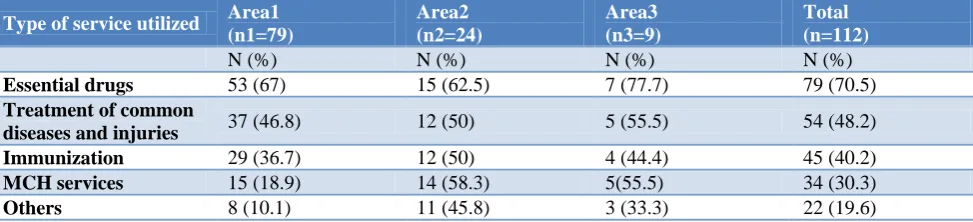
Table 4: Distribution of families according to utilization of the services at the government health center (multiple answers were allowed).
Type of service utilized Area1 (n1=79)
Area2 (n2=24)
Area3 (n3=9)
Total (n=112)
N (%) N (%) N (%) N (%)
Essential drugs 53 (67) 15 (62.5) 7 (77.7) 79 (70.5)
Treatment of common
diseases and injuries 37 (46.8) 12 (50) 5 (55.5) 54 (48.2)
Immunization 29 (36.7) 12 (50) 4 (44.4) 45 (40.2)
MCH services 15 (18.9) 14 (58.3) 5(55.5) 34 (30.3)
Others 8 (10.1) 11 (45.8) 3 (33.3) 22 (19.6)
Out of 112 families, 79 (70.5%) (i.e. 67%, 62.5% and 77.7% in area 1,2 and 3 respectively) had visited the center for procuring essential drugs, 54 (48.2%) families (i.e. 46.8%, 50% and 55.5% from area 1,2 and 3
families (i.e. 18.9%, 58.3% and 55.5% from area1,2 and 3 respectively) for immunization services while 22 (19.6%) families (i.e. 10.1%, 45.8% and 33.3% from area1, 2 and 3 respectively) visited the center for other services like prevention and control of locally endemic diseases and emergency services.
Figure 1: Distribution of families according to health personal who attended to them at the government
health center (n=112).
Out of total 1087 families, 517 (47.6%) families had knowledge about the medical camps being organized in the slum while 570 (52.4%) families had no knowledge about the medical camps. The proportion of families who
had knowledge about the medical camps was more in area3 (66.9%) as compared to 42.9% in area2 and 41.7% in area1 and the difference was found to be highly significant.
When 517 families who had knowledge about the medical camps, were asked about the utilization of the camps, more than two thirds (71.9%) replied that they had visited the medical camps while less than one third (28.1%) had not visited the medical camps. The proportion of families utilizing the services at medical camps was more in area3 (82.1%) followed by 70.4% on area1 and 64.2% in area2.
Figure 2: Distribution of families according to their satisfaction regarding the behavior of the staff at the
government health center (n=112).
Table 5: Distribution of the families according to knowledge about medical camps in the slum (n=1087).
Knowledge Area1 Area2 Area3 Total
N (%) N (%) N (%) N (%)
Yes 196 (41.7) 165 (42.9) 156 (66.9) 517 (47.6)
No 274 (58.3) 219 (57.1) 77 (33.1) 570 (52.4)
Total 470 (100) 384 (100) 233 (100) 1087 (100)
Chi- square value: 44.8463 p<0.001.
Table 6: Distribution of respondents according to utilization of medical camps in the slum (n=517).
Utilization Area1 Area2 Area3 Total
N (%) N (%) N (%) N (%)
Yes 138 (70.4) 106 (64.2) 128 (82.1) 372 (71.9)
No 58 (29.6) 59 (35.8) 28 (17.9) 145 (28.1)
Total 196 (100) 165 (100) 156 (100) 517 (100)
DISCUSSION
Urbanization has resulted in sharper inequalities between the urban rich and the urban poor, specifically in terms of access to primary healthcare which is universally essential for all. Social heterogeneity in slums contributed to by migration from different areas, instability of slums, and diversity of cultures leads to lesser eagerness and fewer occasions to build urban slum community as a strong collective unit, which is seen as a major demand side public health challenge in improving the health status of the slum dwellers.
When the age distribution was compared with census of India 2011, almost similar results were seen in the present study (Table 1) except for children in the age group of 0-4 years which constitute 12.1% in our study as compared to 9.3% as stated in the census 2011 and also the elderly age group (60 years and above) where the present study reports 7.2% and census 2011 reports 8.58%.5 The difference in the two age groups may be due to the reason that the study population belongs to urban slums. Table 1 also reveals that proportion of children in the age group of 0-4 years was more in area3 (14.2%) as compared to area2 (12.1%) and area1 (10.4%) while proportion of
0 10 20 30 40 50 60
Area 1 Area 2 Area 3 Total 27.9
45.8
55.5
30.4 41.7
12.5
22.2
36.6 30.4
41.7
22.2
33
Doctor Health worker Others
10%
90%
Satisfaction with behavior of the staff at UPHC
Satisfied
elderly in the age group of 60 years and above was more in area1 (12.4%) as compared to 4.8% of the population in area2 and 3.5% of the population in area3. This may be due to the reason that population of area1 has been staying in the slum since a very long time and is well settled whereas the population of area3, being migratory, mainly consists of younger population. Overall, males had higher percentage than the females in the slum, more so in area 3 (64.3%) as compared to area 2 (52.3%) and area 1 (51.7%) which may be due to the reason that males being the earning members of the family, migrate out more from their native place as compared to females.
Although slum residents often live close to many health care providers, they generally have little access to high-quality care. Table 2 shows that 31.7% of the families had knowledge about the health facility. According to a study by Singhal in urban slums of Rajasthan, only 23.6% of the respondents had knowledge about the government health facility.6 According to Table 3, 61.9% of the families preferred to take treatment from private clinic/ hospital, 10.3% from the government health facility while 21.5% preferred self- medication. According to a study done by Gupta and Guin regarding the health status and access to health services in Indian slums, it was observed that 70% respondents preferred to seek treatment from private clinic/ hospital, 17% from Government hospital/ dispensary while 7.4% of the respondents preferred self-medication at the time of sickness.7 In a study done by Singh and Kalaskar in urban slum of Mumbai (2017), three-fourth (74.8%) of the respondents seek medical care from a private health care provider and 20% from the Government health care provider while 5.2% of the respondents preferred ayurvedic and homeopathic medicine for treatment.8 Lesser utilization of the government health facility in all the above studies could be attributed to the inaccessibility to the center as well as non- availability of the doctor, medicines and lab services whereas round the clock availability of the private doctors enhances their utilization by the slum dwellers.
Regarding the services availed at the government health center (UPHC), procuring the essential drugs was the main reason for visiting the UPHC in all the three areas (Table 4). Low utilization of MCH and immunization services may be attributed to the reason that immunization services and partial MCH services are provided by ANM and ASHA in coordination with AWWs at regular outreach sessions held every Wednesday at the different AWCs of the slum.
According to the operational guidelines for conducting outreach sessions in urban areas under NUHM, special outreach sessions or the medical camps should be organized as close as possible to the habitations of the marginalized and vulnerable population.9 In Mohkampura slum, medical camps are organized by the ANM and ASHA with the frequency of once in every two months and the doctors of different specialties, from District
Hospital, examine the patients attending the camp and prescribe them medicines. As and when possible, various NGOs also arrange for the camps in the slum. Even the department of Community Medicine organizes medical camps in this area frequently. Table 6 shows that more utilization of the medical camps was observed in area3, possibly due to the poor socio-economic status of area3 as compared to families of area1 and area2. They were unable to afford health services at private clinics while the free services provided at the Government health center, was far from their homes.
According to Figure 1, 30.4% of the families were attended at the UPHC by the doctors while 33% families were attended by the other staff like class-4. Similar results were seen in a study done by Marimuthu et al in slums of Delhi, where 36.89% of the respondents were attended by other staff members like the class-4, etc. at the Government health center.10 Figure 2 shows that only 9.8% of the respondents were satisfied with the behavior of the staff at the UPHC. Almost similar results were seen in a study done among the slum dwellers of Delhi by Khokhar et al where none of the respondents visiting the center, reported the behavior of the staff to be cordial.11
CONCLUSION
Overall, almost one tenth of the population is utilizing the static health services provided by the government in the slum, more so by the well settled population of area 1 as compared to migratory slum dwellers of area 3. Around half of the families of the area studied were aware of the medical camps and out of those who had knowledge about these camps, two- third families were availing their services. Procurement of essential drugs was the main reason for visiting the UPHC. The government must make it a point that no post is vacant at the UPHC and the staff appointed should be available on duty as per routine. The behavior of the staff ought be cordial so that more of the beneficiaries are encouraged to avail the services at the UPHC.
Funding: No funding sources Conflict of interest: None declared
Ethical approval: The study was approved by the Institutional Ethics Committee
REFERENCES
1. About Slum Upgrading. Cities Alliance. 2011. Available at: http://citiesalliance.org/node/325. Accessed on 16 December 2016.
2. Ezeh A, Mberu B, Haregu T. Slum health is not urban health: why we must distinguish between the two. The Conversation. Available at: http://the conversation.com/slum-health-is-not-urban-health-why-we-must-distinguish-between-the-two-69939. Accessed on 22 January 2019.
4. Banerjee A, Bhawalkar JS, Jadhav SL, Rathod H, Khedkar DT. Access to Health Services Among Slum Dwellers in an Industrial Township and Surrounding Rural Areas: A Rapid Epidemiological Assessment. J Fam Med Prim Care. 2012;1(1):20–6. 5. Rathore R. Highlights: Census of India 2011 - General Awareness Study Material & Notes. Exam Pariksha. 2014. Available at: https://exampariksha.
com/highlights-census-india-2011-general-awareness-study-material-notes/. Accessed on 02 November 2018.
6. Singhal A. Utilization of Maternal Health Services in Slums of Rajasthan. Int J New Tech Res. 2015:8:76-81.
7. Gupta I, Guin P. Health Status and Access to Health Services in Indian Slums. Health (N Y). 2015;7:245. 8. Singh S, Kalaskar S. Health care seeking behavior
and utilization pattern in an urban slum of Mumbai: a cross sectional study. Int J Curr Res. 2017;9:49342–5.
9. Ministry of Health and Family Welfare, Government of India. Conducting Outreach
Sessions in urban areas (NUHM). 2015. Available at: https://www.wbhealth.gov.in/NUHM/... files/.../Outreach_Sessions_in_Urban_Areas.pdf. Accessed on 22 January 2019.
10. Marimuthu P, Rao GN, Sharma MK, Pandian RD. Perceptions on Public Health Facilities by Slum Dwellers in the Metropolitan Cities of India. Health (N Y). 2016;8:93.
11. Garg S, Khokhar AM, Singh MC. Health care service utilization for kuslsus and diarrhoeal diseases: a study amongst slum dwellers in Delhi. Health Popul -Perspect Issues. 2003;26(2):59–66.
Cite this article as: Verma R, Singh T, Lal M, Kaur J, Mahajan S, Deepti SS.An epidemiological study regarding availability and utilization of public health care services in slum in Amritsar city. Int J