ESSC-ESF Recommendations
Scientific Perspectives for ESA’s
Future Programme in Life and Physical
sciences in Space
Marine
Board
EUROPEAN
ESF focuses on science driven collaboration between the best European researchers in all disciplines. We promote the identification and advancement of leading edge science in Europe in close co-operation with our Member Organisations. We bring together leading scientists, scholars and funding agencies to explore new directions in research and to plan and implement European level research collaboration in a global context. Our main instruments include conferences, scientific foresights, collaboration programmes and support to outstanding young researchers. ESF also manages COST, an intergovernmental framework for European co-operation in the field of Scientific and Technical Research.
Created in 1975, the European Space Science Committee (ESSC) is the European Science Foundation (ESF) Expert Committee on space research. It covers all related aspects, i.e. space physical science, Earth observation, and life and physical sciences in space. The Committee investigates and presents the view of the scientific community in Europe on space research issues and provides an independent voice on European space science policy. The primary function of the ESSC is to represent the position of the scientific community in relation to needs and priorities in space science and technology. The ESSC is represented ex officioin all scientific advisory committees of ESA and participates as an observer to the ESA Councils at ministerial level. Several members of the Committee participate ex officioor personally in various advisory bodies of European institutions. At the international level, ESSC maintain strong relationships with the NRC Space Studies Board in the USA, and corresponding bodies in Japan and China.
Cover picture: View of the International Space Station taken by a crewmember onboard the Space Shuttle Discovery following the undocking of the two spacecraft (August 6, 2005).
1
Scientific Perspectives for ESA’s
2
The European Programme for Life and Physical Sciences and Applications in Space (ELIPS) was started in 2002, following plans drawn up by the European Space Agency (ESA) in response to scientific developments and after evaluation by the European Space Science Committee (ESSC) and the European Science Foundation (ESF) in 2000. Four years later, ESA has once again asked the ESSC-ESF to evaluate the impact, achievements and opportunities of ELIPS in a prospective manner, with a view to advising the responsible bodies (ESA, Ministerial Council, national agencies) on their future course of action and investments in these areas of research.
Most of ESF’s 2000 recommendations concerning the ELIPS programme had been embedded in ESA’s final proposal. From ESF’s and ESSC’s standpoint the most noticeable improvement in the ELIPS programme was the fact that user-defined scientific priorities were feeding the research plan in a bottom-up fashion. At the same time, a top-down strategic framework was defined, stating the broad objectives of ELIPS and the rationale for undertaking specific programmes. This approach is still valid today. Now, as in 2000, ESA should be commended for its support to user-driven research in space and the related opportunities that have been given to European scientists and their international partners to achieve important goals in the disciplines of life sciences and physical sciences. Despite current difficulties in accessing the ISS it is clear that Europe has achieved a leading position in these areas.
The broad user consultations organised by ESSC-ESF in May 2004 have resulted in the publication of strategic, organisational, structural and scientific priority recommendations that are presented and discussed in the main body of the report. This would not have been possible without the very strong commitment and hard work of the Chairs of these workshops, Frances Westall and Gregor Morfill. The unfailing involvement of the Chairs of the thematic sessions, D. Beysens, H.J. Fecht, G. Horneck, M. Lebert, P. Norsk, M. Pages, S. Vitale, D. Weaire, also mandates our gratitude. I would also like to thank all the scientists who have participated to the three workshops, have prepared overview
presentations in the various thematic areas, and have contributed to the general discussion leading to the production of this report. Finally N. Walter and J.-C. Worms are to be thanked for the difficult task of managing the organisation of the workshops, drafting the successive versions of the report, and enabling the publication of the final document.
We hope that this report and the recommendations therein will serve as useful guidelines for European research in the future.
Gerhard Haerendel,Chairman, ESSC-ESF
Strasbourg, May 2005
3
Executive summary
Strategic recommendations
• Continuation of the ELIPS programme and long-term stability. This can only be attained by a user-driven programme.
• ESA should maintain its efforts to provide access to space for basic and applied research.
• ESA should develop a plan for reliable European utilisation of the ISS. In the event of complete cessation of shuttle flights, ESA should develop alternatives quickly
• Means should be identified and implemented by ESA to strengthen and speed up its “Interim Science Programme”.
• Alternative (to ISS) programme developments should be taken up in the next two years, with the aim of providing a reliable and independent long-term research option for ESA.
• Strategic alliances should be investigated, such as coordinating ground-based and space research, networking, virtual laboratories, etc.
• Research should be better coordinated with national agencies.
• Faster ways of realising ambitious science proj-ects should be studied, e.g. by making use of the modularity of current and planned ISS Laborato-ries.
• Training and public relations must be continuously improved
• A set of common themes between the areas of physical and life sciences need specific attention and efforts; their scientific cross-cutting character mandate a specific inter-disciplinary approach, along with the inception of specific coordination measures at agency level. These include (i) complex systems, self-organisation, evolution; (ii) dust particle physics; (iii) exobiology; and (iv) preparation of human exploration.
4
Organisational and structural recommendations
• The current 4-year evaluation period of ELIPS should be kept and synchronised where neces-sary with important funding decisions; ‘ad hoc’ evaluations of sub-areas should be carried out where necessary.
• The quality of microgravity research must not be judged in isolation but be reflected in comple-mentary ground-based work within the broader context of the “mother” disciplines.
• Research activities in several fields of ESA’s mandatory science programme and of the ELIPS programme would benefit from a closer coordi-nation of efforts.
• Seed-funding for new developments arising out of ELIPS research or MAPs projects must be found, and ESA can help in many ways (e.g. legal, financial, organisational, brokerage etc.). • The cornerstone structure of ELIPS
recommend-ed by ESF in 2000 is still valid today, with sev-eral updates to take account of new develop-ments.
• European excellence in space science can be maintained by:
– ensuring competitiveness, attracting good scien-tists to the field, facilitating the publication of space science and related ground-based results in high profile (including non-space) journals; – an ESA support, coordinated with national
efforts, of educational and training programmes in European universities to foster the building of a space-orientated community.
Specific scientific priority recommendations
Fundamental physics
• ESA should support the pre-development of ICAPS and IMPF hardware , including future developments and related ground-based activities, and build the IMPACT facility. Related Phase A studies should be funded for:
– a “Bose-Einstein Condensate” experiment insert; – an insert to study universality concepts near the
critical point in liquid complex plasmas. • Space-borne implementation of experiments in the
field of long range quantum communication and quantum entanglement experiments should actively be pursued with, in particular:
– the development of a multi-purpose drag-free plat-form to perplat-form these experiments;
– the intermediate implementation of some of these experiments on existing facilities.
Material and fluid physics, interfaces
• Activities of materials / liquid phase physics depend critically on the availability of advanced flight hardware for the ISS (EML, glove box inserts, advanced crystal growth facility, metallic liquids in magnetic fields, new X-ray in-situ diag-nostics, etc), accompanied by ground based research in, e.g. synchrotron radiation, neutron scattering, EXAFS.
• Materials physics and fluid physics are closely connected and need close cooperation; two areas of interdisciplinary research have been further defined and could be activated by the formation of two new topical teams, in (a) nucleation, and (b) self-organisation.
• Several new facilities or instruments should be developed to fit the identified programme corner-stones in (a) supercritical chemistry, (b) vibrational physics, (c) combustion research diagnostics tools in parabolic flights and drop-tower facilities. • For human health and performance and radiation
protection issues, studies must be carried out in: accelerator measurements of new materials; multi-functional shielding materials for spacecraft and spacesuit; regolith-based shielding composites; nanomaterials for radiation environment protec-tion; magnetic materials; bonding technologies.
Human and animal physiology
• ESA should ensure that the number of test subjects required by the investigators is obtained, even though the experiments have to be conducted on several space missions.
• The cornerstones have been re-defined and should be supported with (i) facilities which provide access to microgravity, (ii) microgravity simula-tion studies, (iii) changes in G on the ground and in space, and (iv) animal facilities on the ground and in space.
• ESA should continue to induce spin offs of the results of spaceflight into medical treatment and procedures, development of instruments and equipment, and by using the ISS as a test bed for studying diseases.
Biology
5
possibilities of flight samples on ground, auto-mated facilities to support development, growth and harvesting of model systems.
• ESA should encourage that new experiments are performed with established model organisms. • A Topical Team should be established for
address-ing questions regardaddress-ing “How gravity drives evolution” (from simple to complex systems).
Exobiology
• ESA should continue its efforts in exploring Mars. • Exploring Europa’s sub-ice ocean and its poten-tial for habitability will be another important high-light in exobiology and should be prepared by a study on the habitability of Europa’s oceans and its potential biota.
• ESA should foster its planetary protection activi-ties.
• ESA should provide exposure facilities on the ISS and on autonomous free-flying satellites. • ESA should consider supporting field studies in
regions which are suitable terrestrial analogues of extraterrestrial habitats.
The “Evian” Cornerstones
Life Sciences Physical Sciences
Biology Fundamental Physics
• Molecular and cell biology • Physics of plasmas and solid/liquid dust particles • Plant biology • Cold atom clocks, matter wave interferometers • Developmental biology and Bose-Einstein condensates
Physiology Material Sciences
• Integrative gravitational physiology • Thermophysical properties of fluids for advanced • Non-gravitational physiology of spaceflight processes
• Countermeasures • New materials, products and processes
Exobiology Fluids Physics
7
Contents
9 Chapter 1: Framework of the study
13 Chapter 2: Results of the evaluation of the ELIPS Programme
23 Chapter 3: Progress through the ELIPS programme
31 Chapter 4: Scientific recommendations
39 Chapter 5: Physical sciences
57 Chapter 6: Life sciences
77 Chapter 7: Research in space – an integral part of general research
9
1.1. Background
At the request of the European Space Agency (ESA), in November 2000 the European Science Foundation (ESF) and the European Space Science Committee (ESSC), organised a workshop in Bischenberg (near Strasbourg, France) to evaluate ESA’s proposal for a new programme in life and physical sciences in space (ELIPS). This workshop, which gathered some 50 scientists and agency representatives, produced a report which was approved by the Executive Board of ESF, published in early 2001 and sent to the Ministers of ESA Member States in advance of the ESA Ministerial Council of November 2001, during which the ELIPS programme was subsequently endorsed.
Most of ESF’s recommendations concerning the ELIPS programme had been embedded in ESA’s final proposal. From ESF’s and ESSC’s standpoint the most noticeable improvement in the ELIPS programme was the fact that user-defined scientific priorities were feeding the research plan in a bottom-up approach. At the same time, a top-down strategical framework was defined, stating the broad objectives of ELIPS and the rationale for undertak-ing specific programmes.
ESA then asked ESF and ESSC to organise a similar (series of) workshop(s) in preparation of the next Ministerial Council, held in 2004. A large consolidated programme (life and physical sciences in space, Aurora, and possibly other components such as astronomy or Earth observation) will be presented by ESA to the ministers, accounting for roughly 1 billion euros. The science content of such a programme within the existing structure of ELIPS would obviously need to be evaluated independ-ently.
1.2. Objectives and approach
The aim of this exercise was to discuss the expec-tations and requirements of the user community with regard to a future ESA programme in life sciences (including exobiology), physical sciences (including fundamental physics in space), and general ISS use. The scientific contents of the Aurora programme which are relevant to the ELIPS programme would not be a part of this evaluation exercise, but could become the subject of a separate evaluation by ESF in the near future. The report and recommendations would be made available in September 2005.
A steering group was established, comprising observers from the ESA executive, the Chairman and Executive Secretary of ESSC, ESF Standing Committee representatives (PESC, LESC and EMRC), as well as ESF and ESSC appropriate staff members. This group met twice to prepare the workshop.
The input from ESA consisted in the “skeleton” ELIPS-2 programme.
ESA’s research plan in these areas is split into essentially two main categories (life sciences and physical sciences). A two-step approach was followed, in which the workshop itself was split in three parts: one workshop on life sciences, one on physical sciences, and a final workshop to synthetise the findings and recommendations from the first two events. The first round of consultation (the two thematic workshops) took place in Obernai (France) between 5 and 12 May 2004, and gathered a total of some 150 scientists, more or less equally split between the “space” and the “non-space” communi-ties. The balance between disciplines was excellent and allowed an even broader consultation than during the evaluation conducted in the year 2000.
The physical sciences in space category was sub-divided into three general themes: fluid physics, material sciences and fundamental physics. The life sciences in space category was also sub-divided into three general themes: biology, physiology and medical research, exo/astrobiology.
A general introduction to each workshop was provided by the organisers, detailing the objectives and expected outcome. ESA also prepared an
CHAPTER 1: FRAMEWORK OF THE STUDY
10
overview of the fields covered, complete with all the relevant information documents. Splinter sessions in each theme identified above took place during roughly half of the workshop. In line with the successful format of the Bischenberg meeting, a chairperson was nominated in each thematic session, with one or two individuals to provide overviews of the theme; in addition, each workshop was chaired by one recognised scientist (Table 1.1). General conclusions for each workshop were prepared during a final plenary session.
At ESA’s request, these two workshops looked at the ELIPS programme in a prospective way, namely: What was achieved so far? How should the identi-fied scientific goals evolve in the coming years? What science should be done in the next phase, given the foreseeable schedule, budgetary trend, and insti-tutional framework that Europe will provide for itself. In order to reach a manageable situation in terms of merging and synthesising the information, it was important to assess the scientific contents of ESA’s plans by using the same method for each subject. Hence a number of assessment criteria were suggested to the chairs and workshop participants. These suggested criteria are listed below, although it should be pointed out that the participants could decide whether or not to use them, produce new ones, or proceed differently.
1.2.1. General assessment criteria
• Is the strategy effectively based on user/science demands?
• Are the objectives well defined, do they represent scientific needs and incorporate long-term value? • Flexibility: Does the strategy incorporate the appropriate means to efficiently incorporate new ideas and themes? Is there a need for a top-down approach to develop strategies in Europe, in addi-tion to the science plans?
• European dimension: How well is the strategy connected with general research priorities/ programmes in Europe?
• European competitiveness: How well does the strategy strengthen/support European excellence? • International cooperation: To what extent/in what field can we benefit from cooperative programs/ projects with, Japan, Russia and the USA? • Interdisciplinary cooperation: In what fields is
interdisciplinary cooperation wanted/mandatory? • Implementation: What steps should be taken to
realise the Strategy?
1.2.2. Thematic assessment criteria
• Completeness: Are the essential elements reflected in the strategy?
• Maturity: What is the state of development of this field, what is its potential to grow?
• Enabling research: What research activities and technological development are necessary to allow the development of this field?
• Constraints: What would be the main constraints with regards to scientific achievements?
• Cross-fertilisation: What relations should be estab-lished with other disciplines in space research and non-space research?
• Approach: How can the objectives be best reached? • What is the application potential?
Table 1.1. Obernai workshop chairs
Physical sciences workshop Life sciences workshop Chair: Gregor Morfill Chair: Frances Westall Fundamental physics Human and animal physiology
Chair: Stefano Vitale Chair: Peter Norsk
Material science Biology
Chair: Hans J. Fecht Chairs: Montserrat Pages, Michael Lebert
Fluid physics Exobiology
CHAPTER 1: FRAMEWORK OF THE STUDY 11
1.3. Workshop participants
The participating scientists were key elements of this evaluation. They were composed of “space scientists” (scientists regularly involved in space projects, including ground-based/laboratory exper-iments) and “non-space scientists” (scientists who were not actively and regularly engaged in space projects). It is important that the participants’ scien-tific expertise and knowledge in their specific domain are well assessed and recognised within the scientific community. As stated above, the work-shops attracted roughly half space scientists and half of non-space scientists. Concerning the latter, the aim of having such mainstream scientists was to provide us with a fresh outlook on those space activ-ities which had to be evaluated. For example, biol-ogy projects undertaken in space or using space tools/assets should be evaluated in contrast to other biology projects not using space, to assess their rele-vance and interest to the whole field; also, the need for space tools had to be demonstrated vis-a-vis other means available to the community. This is the way that ESA is performing its review of proposals, and it is really the only way to do it, to avoid self-replication of research programmes.
The scientists were proposed by: • the Steering Group
• ESF’s Standing Committee members (PESC, LESC, EMRC)
• ESF’s Expert Committee members (ESSC, Euro-pean Polar Board, ESF’s Marine Board)
• the European Space Agency; PB-HSR delegates
A complete list of all workshop participants, workshop and session Chairs, presenters, observers, is provided in the appendix section at the end of the report.
1.4. Deliverable
A final meeting took place in Evian (France) on 14 and 15 June 2004, grouping some 30 people. The composition of this particular workshop included the chairs of the thematic workshops, ESSC and ESF staff and experts, ESA observers, and a few additional external experts with both space and non-space expertise, and who had not participated in the first two workshops. The Evian workshop summarised the conclusions and findings of the first workshops, and extracted recommendations.
13
Chapter 2: Results of the evaluation
of the ELIPS Programme
2.1. Preliminary remarks
The European programme for life and physical sciences and applications using the International space Station, (ELIPS) was started in 2002, follow-ing plans drawn up by European Space Agency (ESA) in response to scientific developments and after evaluation by the European Science Foundation (ESF) in 2000. Now, almost four years later, the time has come to evaluate the achievements and to assess, in a prospective manner, the opportunities and impact of ELIPS – with a view to advising the responsible bodies (ESA, Ministerial Council, national agencies) on their future course of action and investments.
The European Space Agency is to be commended for its support of user-driven research in space and the opportunities that have been given to European scientists and their international partners to achieve important goals in the disciplines of life sciences and physical sciences. It is clear that Europe now has a leading position in these areas. ESA has contributed to the success of European excellence in the field of research in space by:
• its support to the ELIPS programme;
• the excellence of the peer reviews of responses to announcements of opportunities;
• the fostering of networking between interdisci-plinary Topical Teams;
• communicating the scientific results of research in space; for example through the Erasmus Exper-iment Archive, and through ESA’s own website. • the public relations activities, which have reached
many members of the public.
2.2. The major scientific achievements
Although the unfortunate accidents of the Colum-bia shuttle and FOTON M-1 mission have led to significant retardation in flight opportunities for a number of programmed experiments, exciting results have been obtained from those experiments that have flown. On the positive side, the flight delays have also provided an opportunity for the provision and development of new facilities.
2.2.1. Physical sciences
The ELIPS programme and research in space play a vital role in the quest for knowledge and our desire to look beyond current frontiers. Advances in the basic understanding of the properties of matter, the laws of interaction forces, etc. ultimately lead to economic benefits, when one considers that nearly 40% of today’s economy is based on quantum mechanics and that the application of Einstein’s theory of relativity can now be bought in supermar-kets in packaged navigation devices. Similar devel-opments will happen as a result of progress in other areas of fundamental physics research.
Some recent highlights or achievements of funda-mental physics, materials physics and fluid physics, are summarised hereafter.
2.2.1.1. Fundamental physics
• Fundamental interactions and universal theories
– The importance and the impressive developments in the field of long-range quantum communica-tion and entanglement experiments, aimed at assessing the space-time structure of the princi-ples of quantum measurements, are fully recog-nised.
– In the field of precision measurements that require a more demanding performance of cancellation of gravitational field, the Bischen-berg1workshop participants recognised the very high scientific potential of some of the
CHAPTER 2: RESULTS OF THE EVALUATION OF THE ELIPS PROGRAMME
14
ments; for example, equivalence principle meas-urements on atomic and sub-atomic systems, or the search for long-range interactions required by quantum gravity.
• Complex plasmas
– Coalescence of complex plasma “fluid drops”. An experiment performed on the International Space Station (ISS), shows the deformation on approach due to a plasma sheath forming on the surface of the complex plasma cloud, despite its extreme porosity (99%).
– Self-organisation of counterstreaming complex plasmas. In normal plasmas one would expect the free energy due to the streaming to lead to insta-bilities which randomise the particle flow. In strongly coupled systems (experiment performed in parabolic flights) the flow self-organises into discrete interpenetrating streams, which seems to be energetically most favoured.
– The field of “complex plasmas” benefits from a working laboratory on the ISS since 2001 (PKE-Nefedov). Discoveries include the physics of decharging of plasmas and a new charge-induced runaway coagulation (gelation) transition that exceeds the well-known geometric rate by five orders of magnitude.
• Condensed matter (universality and scaling) Phase transitions appearing through manipulation of parameters show universality and a certain scal-ing behaviour. This universal, scaled behaviour depends only on the space dimensionality D (generally 3, or 2 for surface phenomena) and the dimensionality N of the order parameter (which breaks its symmetry at the transition). The couple (N, D) defines universality classes. The case N=1, D=3 corresponds to the gas-liquid critical point, where outstanding results have been obtained thanks to the space conditions of weightlessness.
2.2.1.2. Physics of fluids and interfaces
• Granular matter
Observation of a clustering transition in granular matter under vibration, which can be put in rela-tion to the accrerela-tion of matter in the cosmos (published in Physical Review Letters, commented in Science and Nature; bronze medal of CNRS). • Near-critical fluids
The microgravity environment of an orbiting plat-form is ideal for the study of compressible near-critical fluids. In particular, it has permitted the discovery of the Piston Effect, a very efficient way to thermalise such systems (French Academy of sciences award).
• (Metallic) foam dynamics
The 2001 Edmond Brun Prize was awarded by the French Academy of Sciences for scientific achievements on foam dynamics. Foams and emulsions have properties largely governed by the surface tension associated with the interface between the two phases, but gravity intervenes to cause drainage and separation in most cases. One particularly interesting case is that of metal foams which usually collapse before solidification in the terrestrial environment. Thus foams of remarkable structure and strength can be demonstrated under low gravity conditions.
2.2.1.3. Materials physics
• Solidification and casting
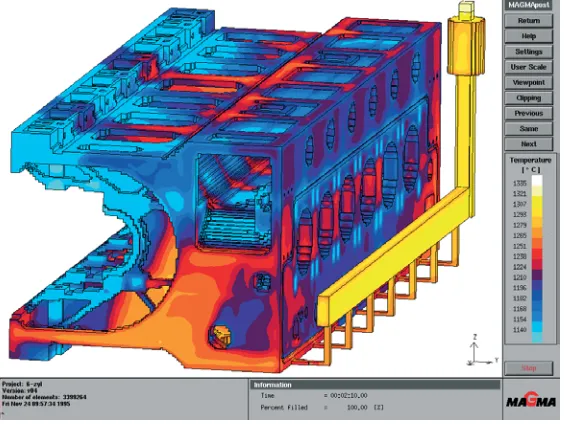
The specific environment of microgravity that can be achieved over long periods on board the ISS provides experimenters with a unique and valu-able complementary way to get rid of the complex distorting effects of fluid flow driven by buoyancy in liquid and gas phases. In this way the unam-biguous benchmark data needed to discriminate sound three-dimensional models within the diver-sity that is proposed for solidification and casting processes can be obtained.
• Materials processing
Europe has a strong and leading role in the field of materials science and engineering in general and, in particular, constructing complex and multi-functional space equipment, and conducting scien-tific analysis of materials processing in space and new materials for space.
• Metallic melts
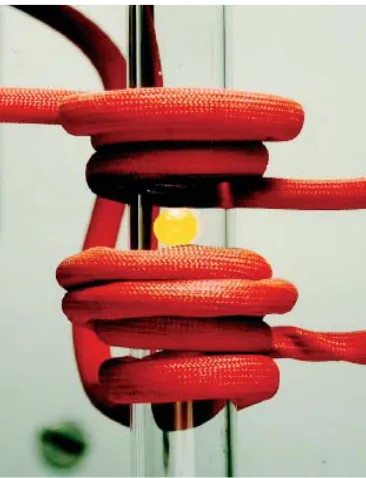
High-precision measurements on chemically highly reactive melts at the temperatures of inter-est require the application of containerless processing, using non-contact diagnostic tools to achieve an accurate surface nucleation control and synthesis of materials free of surface contamina-tion. Based on recent experience in space shuttle and parabolic flight experiments, electromagnetic levitation including sophisticated analysis tools has been developed and established as a versatile and reliable technique in studying highly reactive metallic melts.
2.2.2. Life sciences
CHAPTER 2: RESULTS OF THE EVALUATION OF THE ELIPS PROGRAMME 15
lar functions, such as maintenance of cell archi-tecture, cell motility, cell division, regulation of enzymes, ion channels and gene expression.
With regard to understanding human health issues on long-term space flights; for example, depression of the immune system or the induction of cancer, recent studies in microgravity and hypergravity are providing understanding of the mechanisms by which cellular systems sense the absence of gravity and by which many functions in humans, such as bone development, heart func-tion and immunocompetence, are altered. • Plant biology
Major progress has been made in understanding how gravity is sensed on the cellular level. Exper-iments using the higher plant Arabidopsis have demonstrated the physiological and molecular basis of root gravitropism. Furthermore, for the first time, experiments with single cells (Chara and Euglena) have allowed the elaboration of a plot of the path for gravity sensing from simple to complex systems to be made.
• Developmental biology
Observations of relevance to both extraterrestrial colonisation as well as to biological development on Earth were obtained from space experiments involving fish and amphibians. They revealed crit-ical periods of extremely high sensitivity to altered environmental conditions for the development of the vestibular system.
2.2.2.3. Exobiology
• Exobiology packages for exploration science missions
– The Mars Express mission is already providing much data on the geology, climate, and the radi-ation environment required for assessing its past and present habitability. The finding of methane in the atmosphere of Mars by Mars Express may be relevant to the search for life.
– The Cassini-Huygens space craft to Saturn and Titan is already providing new, exciting data regarding Saturn and the nature of its rings, as well as the first images of the surface of cloud-covered Titan and information regarding the composition of the atmosphere.
– The STONE-1 experiment showed that sedi-mentary rocks (Mars analogues) embedded into the ablative heat shield of the recoverable capsule of the Foton-12 spaceflight mission could survive terrestrial atmospheric entry.
– The BIOPAN mission demonstrated the survival of micro organisms in space conditions (protected that has led to a corresponding growth of research in
space.
2.2.2.1. Human and animal physiology
• Cardiopulmonary physiology
– The development of hypertension is now better understood as a result of the experiments under-taken on the ISS. These experiments brought new understanding of the mechanisms for adap-tation to weightlessness of the human cardiopul-monary system and the renal control of fluid and electrolyte balance, showing that they are due to both the abolition of hydrostatic pressure gradi-ents in the circulation as well as to a decrease in interpleural pressure.
– Space experiments also led to a discovery that has implications for the positioning of patients with cardiovascular disease. The results show that gravity affects the cardiovascular system in a front to back direction and vice versa in hori-zontal humans.
• Bone and muscle
– Striking interindividual variations in bone-loss responses seem to suggest a need for adequate crew preselection. Targeted treatment or preven-tion strategies would be useful, not only for space purposes but also for the increasing number of osteoporotic patients on Earth.
– Space missions are an ideal test-bed for the devel-opment of countermeasures. This is certainly valid for any bone and muscle loss induced by immobilization. Even for postmenopausal women and or ageing people (female and male) where the cause of bone loss might be different from disuse, these countermeasures would be of high value. • Neuroscience
Implications for long-term exposure to space conditions come from the demonstration that prolonged microgravity during orbital flight modi-fies the otolith inputs and determines the extent of their contribution to the vertical vestibulo-ocular reflex and optokinetic nystagmus. Recent space studies have demonstrated that the central nervous system is using an internal representation of grav-ity for the guidance of eye and body movements, for spatial orientation, and for higher cognitive processes.
2.2.2.2. Biology
• Molecular and cell biology
cellu-CHAPTER 2: RESULTS OF THE EVALUATION OF THE ELIPS PROGRAMME
16
by either a mineral layer or layer of dead cells). Circularly polarised solar radiation also induced chirality changes in prebiotic molecules. – For 2011, a Mars sample return mission is
planned. The critical health issues in connection with human missions to Mars have been assessed in the HUMEX study by ESA (ESA 2003). • Outreach and education
ESA has established the Virtual Institute of Exobi-ology at ESA/ESTEC (http://www.spaceflight.esa. int/exobio) thereby providing a platform for communication, training and education in the field of exobiology. This virtual institute also hosts the web page of the European Astrobiology Network Association (EANA) a network that currently links scientists active in exobiology from 17 European nations.
• Internal structure of ESA
Several steps have been taken by ESA towards main-taining European competitiveness in the rapidly emerging field of exobiology with the preparatory phase of the Aurora programme and its Exploration Programme Advisory Committee.
2.3. Recommendations
The recommendations that are summarised here are discussed and justified in detail in the main body of the report. They are organised in the following way: • strategic recommendations
• organisational and structural recommendations • scientific priority recommendations.
2.3.1. Strategic recommendations
• The ELIPS programme should be continued. Long-term stability is of paramount importance in research of this kind. Establishment of a manda-tory programme in these research areas should be discussed for the mid-term future.
• Many research areas need access to space to make major new advances possible, or to complement ground-based research. ESA should maintain its excellent efforts to provide access to space for basic and applied research.
• The ISS, and in particular the Columbus module, is the most important laboratory for the midterm future; ESA should develop a plan for reliable European use and pursue its implementation with the other ISS partners. In the event of complete cessation of shuttle flights, ESA should develop alternatives quickly – either European or joint European/Russian utilisation plans.
• Since the research possibilities on the ISS are currently limited, means should be identified and implemented by ESA to strengthen and speed up its interim science programme, wherever possible. • Since the ISS life-time for research appears to be limited, and since alternative programme develop-ments take time, such developdevelop-ments should be taken up in the next two years, with the aim of providing a reliable long-term research independ-ent option for ESA.
• Strategic alliances should be investigated, such as coordinating ground-based and space research (possible partner – European Union/Commission), networking, virtual laboratories combining Euro-pean research activities using, for example, grid-technology etc.
• Research should be better coordinated with national agencies on the programmatic level as well as on the utilisation level (the latter especially for an efficient use of the facilities).
• Faster ways of realising ambitious science projects should be investigated and studied (Phase A), for example, by making use of the modularity of current and planned ISS laboratories.
• Training and public relations must be continuously improved; for example by press releases and high quality professional television documentaries. • The establishment of Cornerstone Institutes (CIs)
was suggested during the workshops. Means to develop such institutes in a flexible manner, i.e. with due regard for the evolutionary aspect of the ELIPS cornerstones, could be discussed by ESA and Programme Board delegates. The aim of these CIs is to gather European representation in the given fields, monitor on-going projects, enlarge the contacts with non-space specialists; national agen-cies should be represented in the CIs.
2.3.2. Organisational and structural recommendations
• The evaluation period of ELIPS by the ESF, currently four years, should be kept and synchro-nised where necessary with important funding decisions.
• Ad hoc evaluations of sub-areas should be carried out where necessary.
CHAPTER 2: RESULTS OF THE EVALUATION OF THE ELIPS PROGRAMME 17
science (including astronomy) and research in space (as exemplified by the ELIPS programme) would benefit from a closer coordination of efforts. The appropriate organisational steps should be developed and implemented by ESA. • Seed-funding (or venture capital) for new
devel-opments arising out of ELIPS research projects must be found, if the added value to the commu-nity is to be realised properly. ESA can help in many ways (for example legal, financial, organi-sational, brokerage etc.), even within its current statutes, and ways to optimise this should be constantly addressed.
• The current cornerstone structure of ELIPS, as recommended in 2000, is still basically as valid today as it was then, although it had to be updated to take account of new developments. This is always necessary in rapidly evolving fields, and is a healthy sign.
2.3.3. Common scientific priority recommendations (life and physical sciences)
Generally, the existing and planned facilities should be used (or brought into use) as quickly as possible to get the maximum scientific return. The decisions taken recently by the US in the context of research on the ISS provide some constraints, but also some great opportunities for Europe.
On the other hand, the continued doubts about the access and availability of the ISS due to the shut-tle uncertainties have already started to hurt some research programmes, in particular the Microgravity Application Programme (MAP), where the indus-trial partners are beginning to doubt the benefits of application-related studies under reduced gravity, because these are not taking place, and the academic teams are not getting the scientific return essential to ensure continuity of funding. This harbours the great danger that, in spite of the great attraction of opportunities offered by research in space, the know-how and, more especially, young scientists, are lost to the field.
Thanks to the interim programme of ESA, some access to space will exist now in the short term (sounding rockets, Foton flights, Microgravity Science Glovebox inserts, Russian ISS module) and this is extremely important. It is also important to demonstrate that ESA is determined to seize the fresh opportunities for research in space, by devel-oping – from the interim programme – a clear roadmap for future use of the ISS and beyond.
For full exploitation of the research, the take-up
of opportunities offered by the space exploration initiative is an imperative goal. In order to reach this goal, the physics and life sciences disciplinary groups jointly suggest the following recommenda-tions to ESA:
• In order to continuously improve European excel-lence in space science, ESA should emphasise that space experiments must be embedded in strong basic science in the applying laboratory. This can be attained only by a user-driven programme. • European excellence in space science can be
main-tained by:
– ensuring competitiveness and by attracting good scientists to the field. ESA can play an effective role by investigating ways of facilitating the publication of space science results and results from related ground-based studies in high profile journals, including non-space journals; – ensuring that equipment used for research in
space is regularly updated (for example, modular facilities/laboratories) and that the conditions in space are correctly controlled;
– ESA support of educational and training programmes (for example, PhD, Marie-Curie etc.) at European universities to foster the build-ing of a space-orientated community. In this area, coordination of ESA’s efforts with national efforts is mandatory.
• Space science relies more and more on transdisci-plinary approaches to a research subject; for instance the human exploration of the solar system. ESA should foster collaboration and networking on a European and international basis; for instance through continued support of the Topi-cal Team programme, coordinating it with the other relevant ESA directorates.
• Ideally, ESA should programme more announce-ments of opportunities, (AOs), for flight opportu-nities, for example at least once a year, although it is recognised that this is dependent upon the avail-ability of flight opportunities and/or carriers. • To ensure the highest quality science, ESA should
conduct or instigate more frequent, rigorous eval-uation of the scientific results of completed space missions.
CHAPTER 2: RESULTS OF THE EVALUATION OF THE ELIPS PROGRAMME
18
along with the inception of specific coordination measures at agency level.
– complex systems, self-organisation, evolution – dust particle physics, exobiology
– preparation of human exploration (fluid and material sciences)
– general diagnostics.
2.3.4. Specific scientific priority recommendations
2.3.4.1. Physical sciences
• Fundamental physics
The recommendations in this area focus in particu-lar on the future IMPACT facility to be installed on board the ISS, and also on foreseen developments in the areas of cold atom physics, Bose-Einstein condensates, equivalence principles, quantum entanglement. Indeed, equivalence principle exper-iments, antimatter gravitational properties, matter-wave interferometers, are examples of experiments that need extreme free-fall conditions that can be achieved only in space. Space environment condi-tions can be achieved with a variety of techniques; for those experiments where repeatability and modularity are a key issue, ISS is a most suitable platform.
• The fundamental physics IMPACT facility should be built by ESA.
• To prepare this era of use, ESA should support the predevelopment of ICAPS and IMPF hardware for the IMPACT facility, support parabolic flight campaigns for PK and ICAPS precursors, and build the IMPF precursor experiment PK4. In addition the use of PK3+ in the interim science programme should be supported.
• A virtual laboratory network for IMPACT-related research should be set up.
• Concerning future developments when this facil-ity is in place, it is strongly suggested that a Phase A study be funded for a Bose-Einstein condensate experiment insert in the IMPACT facility. A Phase A study for investigating an IMPACT insert for studying universality concepts near the critical point in liquid complex plasmas should also be financed.
• Possibilities to use the long-term free-fall condi-tions of space to reach femto-Kelvin temperatures should be investigated.
• In the field of long-range quantum communication and quantum entanglement experiments, aimed at assessing the space-time structure of the principles
of quantum measurements, it is strongly recom-mended that the substantial leap in the scale of these experiments which would be allowed by a space-borne implementation, is actively pursued. • In the field of precision measurements requiring a more demanding performance of cancellation of gravitational field, it was also strongly recom-mended to actively explore:
– the possibility of developing a multipurpose drag-free platform to perform these experiments; – the intermediate implementation of some of these experiments on existing facilities as an enabling step toward the final experiment on such a drag-free platform.
• Materials physics and physics of fluids and interfaces
• The number of flights needs to be increased and existing programmes continued, including the facil-ities for Columbus. All activfacil-ities of materials/liquid phase physics depend critically on the availability of advanced flight hardware for the International Space Station, such as electromagnetic levitation facilities (EML), Glove box inserts; advanced crys-tal growth facility; mecrys-tallic liquids in magnetic fields; and new X-ray in situ diagnostics. • The research conducted in microgravity must be
accompanied by ground-based research looking into structural arrangement by, for example, synchrotron radiation, neutron scattering, EXAFS, etc.
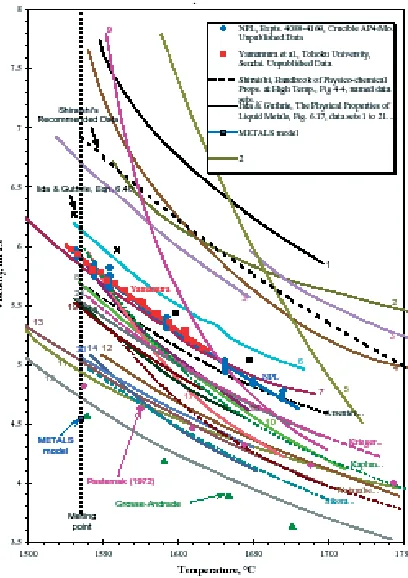
• Beyond the cornerstones first defined at the Bischenberg meeting, and updated at the Obernai workshop2, one should study: (1) thermophysical properties for the analysis of casting processes and to develop a theory of high-temperature melts; and (2) material design from fluids. In the area of physics of fluids and interfaces, two sub-topics are considered priority themes to be studied: (1) high-pressure and supercritical combustion and (2) boil-ing and boilboil-ing crisis.
• Materials physics and fluid physics are closely connected and this clearly implies a close cooper-ation between these communities and, to some extent, with the fundamental physics community. Two areas of interdisciplinary research have been further defined for the future and could be acti-vated by the formation of two new topical teams:
– Nucleation: bridging the activities in metallic
materials to more complex systems, such as
CHAPTER 2: RESULTS OF THE EVALUATION OF THE ELIPS PROGRAMME 19
proteins, semiconductors, complex macromole-cules.
– Self-organisation: This feature is encountered in
systems far from the thermodynamic equilib-rium. During this process spontaneous structure formation can occur, driven by external or inter-nal forces.
• Concerning the Electro-Magnetic Levitator (EML), experiments to be performed are:
– 1g EML: high flow velocity dominated by large
magnetic fields
– 1g EML: low flow velocity dominated by
Marangoni convection due to laser heating
– microgravity EML: wide range of fluid flow
conditions from 0.1 cm/s to 18 cm/s due to quasi-static acceleration levels and controllable magnetic fields; heat flow determined by radia-tion due to containerless processing in UHV. • Several new facilities or instruments should be
developed to fit the identified programme corner-stones; these encompass:
– a facility for supercritical chemistry
– a facility supporting investigations in vibrational
physics
– advanced diagnostics to support combustion
research in ground-based free-fall facilities (para-bolic flights and drop-tower).
• Human health and performance issues, radiation protection issues (radiation exposure and mission requirements, radiation measurements technolo-gies, shielding solutions etc) are paramount. Hence, studies concerning the following topics must be carried out::
– accelerator measurements of new materials – multifunctional shielding materials for spacecraft
and spacesuits
– regolith-based shielding composites
– nanomaterials for radiation environment
protec-tion
– magnetic materials
– bonding technologies (brazing, welding,
self-healing).
2.3.4.2. Life sciences
• Human and animal physiology
• ESA should facilitate the development of the necessary hardware for accepted experiments; ensuring that proposals should not be limited by what is already available. In this way, scientific excellence will not be sacrificed for temporary technical reasons.
• To obtain as high a scientific quality as possible, ESA should make sure that the number of test
subjects required by the investigators is obtained, even though the experiments have to be conducted on several space missions.
• It is suggested that the cornerstones from the Bischenberg meeting be restructured so that they better fit the more applied aspects of the future exploration/manned space programme. The suggested new cornerstones are therefore:
– Integrative gravitational physiology: To explore
in an interdisciplinary way systems that are sensi-tive to gravity, such as (but not limited to) the: cardiovascular system, pulmonary system, nerv-ous system, fluid-electrolyte homeostasis, skele-tal system, muscular system, immune system etc.
– Non-gravitational physiology of spaceflight:
Exploring effects of the non-gravitational extreme environments of space such as (but not limited to): nutrition, radiation, isolation, confine-ment, noise, disruption of circadian rhythms, immobilisation, hypobaric conditions (for exam-ple extravehicular activity, EVA), etc.
– Countermeasures: Developing physiological,
pharmacological, psycho-logical, and mechani-cal countermeasures against (but not limited to): spatial disorientation (nausea, imbalance), ortho-static intolerance, bone loss and microarchitec-tural deterioration, muscle atrophy and weakness, cardiac atrophy, radiation, nutrition etc. In addition, it is suggested that the three corner-stones be supported with facilities that give access to microgravity (parabolic flights, ISS, taxi flights), microgravity simulation studies (bed rest, water immersion etc.), changes in gravity on the ground and in space (centrifugation, short arm-centrifuge etc.), and animal facilities, also on the ground and in space.
• Encouragements to scientific users: Scientists are encouraged to:
– be interdisciplinary in their approach. – explore differences between individuals – conduct comparisons with clinical
(pathophysi-ological) conditions
– be aware of the fact that astronauts represent a
highly selected group of individuals
– conduct gender comparisons – perform interspecies comparisons.
CHAPTER 2: RESULTS OF THE EVALUATION OF THE ELIPS PROGRAMME
20
• Biology
• Apart from the existing or facilities planned for the near future, some new facilities are necessary, such as cell culture facilities, different kinds of bioreac-tors, standard preservation facilities, a quick and deep-freezing facility in space for the emerging high-throughput technological approaches, advanced microscopy with observation possibili-ties for flight samples on the ground, NIZEMI (upgrade to fluorescence techniques) and auto-mated facilities to support development, plus growth and harvesting of model systems are required to accommodate the needs of the growing number of promising new research lines. In addi-tion, ground-based facilities should be increased (for example, RPMs at each USOC). For a better understanding of the additional (besides micro-gravity) influence of space radiation on model systems, access to accelerators and strong radiation sources is required.
• ESA is asked to modify some of the cornerstones in order to adapt to new developments in the last couple of years:
– Biotechnology should be changed to Molecular and cell biology (including the understanding of
the impact of gravity on the cellular and molec-ular level).
– The cornerstone Plant Physiology should be
renamed Plant biology indicating the importance of cellular and molecular approaches.
– The cornerstone Cell and Developmental
Biol-ogy should be renamed Developmental biolBiol-ogy. Understanding the impact of gravity on devel-opmental processes is the main scientific target in this research area.
• ESA should encourage new experiments, when-ever possible to be performed with established model organisms to enhance the gain of molecu-lar information.
• A topical team should be established for address-ing questions regardaddress-ing how gravity drives evolu-tion (from simple to complex systems).
• ESA is advised to require that all scientists involved in space experiments supply all relevant literature references and hardware description materials in their publications. This initiative should also incorporate information on the Russ-ian-driven experiments and results.
• Exobiology
• ESA should continue its efforts in exploring Mars, which is considered a strong candidate for the detection of signatures of life beyond the Earth. ExoMars with its proposed Pasteur payload and the three research goals (search for past life, search for present life, and hazards to humans) should ideally be the next step in this direction. • Exploring Europa’s sub-ice ocean and its
poten-tial for habitability will be another important high-light in exobiology. As a preparatory step, ESA should initiate a study on the habitability of Europa’s sub-ice oceans, its potential biota and a suitable mission scenario.
• The abovementioned activities to search for signa-tures of life on other planets and bodies of our solar system must adhere to strict planetary protec-tion rules. Therefore ESA should foster its plane-tary protection activities.
• ESA should further foster exobiological research in Earth orbit by providing exposure facilities on the ISS and on autonomous free-flying satellites. Amendments of future facilities should include the provision of a sun-pointing device and tempera-ture control that maintains sub-zero temperatempera-ture during sun exposure.
• Concerning the preparation of human exploratory missions, ESA should foster interdisciplinary cooperation within the ELIPS programme and with its other relevant programmes. Contributions by the astrobiology and planetary exploration discipline include the development of life support systems including bioregenerative approaches; the detection, control and prevention of microbial contamination, and investigations of the radiation field in space and its biological effects. The studies require preparatory robotic space missions, use of the ISS, as well as supportive ground-based stud-ies.
• ESA should continue supporting research using ground-based facilities to gain information required for designing appropriate search-for-life experiments on Mars and Europa, and to elucidate potentially important pathways of prebiotic synthesis.
CHAPTER 2: RESULTS OF THE EVALUATION OF THE ELIPS PROGRAMME 21
2.4. The Evian3cornerstones
Cornerstone for materials science
In order to achieve the major goals set within the current programme two cornerstones have been identified:
• Thermophysical properties of fluids for advanced processes
Thermophysical properties of fluids for advanced purposes that are required as input parameters for adequately describing balances in volume phases (heat, chemical species, momentum etc.) and at interfaces (solid-liquid, liquid-gas, etc.).
Beyond this cornerstone: Thermophysical
prop-erties to analyse casting processes and develop a theory of high temperature melts (elementary, binary, multicomponent, industrial).
• New materials, products and processes In order to develop new materials with particular functionalities and, as a result, new products, new or improved processing techniques are generally required; in particular, for the reliable processing of liquid complex alloys.
Beyond this cornerstone: Materials design from
fluids, which is an excellent process, since it is very flexible; the previous cornerstone title was too broad as almost everything could be included in that topic.
Cornerstone for fundamental physics
• The fundamental physics disciplinary group propose to reformulate the first cornerstone of the field of fundamental physics as the Physics of
plasmas and solid or liquid dust particles, with an
emphasis on self-organising aspects and the driv-ing forces behind them.
• The fundamental physics disciplinary group recog-nises that the scientific case and the technical readiness of experiments on cold atom clocks,
matter wave interferometers and Bose-Einstein condensates in extreme conditions on the ISS
deserve the status of a cornerstone within ELIPS. These experiments will also constitute enabling steps for more ambitious ones, such as Hyper missions, that are already included in the ESA planning at large.
Cornerstone for fluid physics
• Interfaces should be given more prominence in the revised title for this area (Fluid, interface and
combustion physics).
Cornerstone for biology
• Molecular and cell biology: Understanding the
impact of gravity at the cellular and molecular levels.
• Plant biology: Understanding the impact of
grav-ity on plant systems. Study mechanosensory elements involved in mechanisms of graviorienta-tion and gravishaping.
• Developmental biology: Understanding the impact
of gravity on developmental processes.
Cornerstone for physiology
• Integrative gravitational physiology: Explore in
an interdisciplinary way systems which are sensi-tive to gravity.
• Non-gravitational physiology of spaceflight:
Exploring effects of the non-gravitational extreme environments of space.
• Countermeasures: Developing physiological,
pharmacological, psychological, and mechanical countermeasures.
Cornerstone for exobiology
• Origin, evolution and distribution of life:
Surviv-ability of organisms under extreme conditions on Earth, in space and in (simulated planetary envi-ronments).
• Preparation for human planetary exploration:
Quantify effects of radiation doses and investigate impact of isolation in high stress environments on humans; develop database for identification and use of in situ resources; study life support for long-duration planetary missions.
23
Chapter 3: Progress through the ELIPS programme
3.1. Physical sciences
3.1.1. Fundamental physics
3.1.1.1. Fundamental interactions and universal theories
Over the years, experiments have been performed or proposed in the fields of (1) fundamental inter-actions and theories such as the search for new long-range fundamental interactions and quantum effects, time dependence of fundamental constants, classi-cal tests of special and general relativity, observa-tion of gravitaobserva-tional waves, search for antimatter and extreme high energy matter, entanglement and de-coherence of quantum states over long distances and times; on (2) self-organisation of matter, such as macroscopic quantum condensates in extremely unperturbed conditions, statistical physics and phase transitions, cluster formation, crystallisation, fluid flows, flow patterns, nucleation, coagulation; and on (3) complex (chaotic and non-linear multi-process) systems.
One of the outstanding questions in our under-standing of nature is that two fundamental theories, namely quantum mechanics and general relativity –demonstrated by an enormous wealth of experi-ments – appear to be in contradiction. All theories trying to solve this paradox call new interactions into play. These interactions, weak and long range, would be superimposed on gravity, mimicking violations of Galileo’s principle of universality of free-fall, also known as the equivalence principle. The search for these forces asks for a large mass source, for example the Earth, very pure free-fall conditions (purely gravitational orbit) and a very quiet environment. Space appears to be the obliga-tory way to go. Indeed all experiments proposed and studied in some depth, are based on comparing the rate of fall of two bodies, nominally at the same location, due to the interaction with the Earth. In orbit, a difference in the rate of fall will result in a tiny relative acceleration of two orbiting bodies that could be measured with a sensitive differential accelerometer. A similar concept that uses cold atoms instead of macroscopic bodies has also been implemented on the ground and proposed for a flight implementation.
A series of questions about the space-time valid-ity of elementary interactions is tested via the time dependence of fundamental constants, something that can be done only with extremely precise clocks. Free-falling, high-precision atom clocks and hydrogen masers are the key instruments for these experiments. The approved experiment ACES will substantially advance the measurement precision of the time dependence of the fine structure constant, the key parameter of quantum electrodynamics, by compar-ing the pace of its cold atom clock PHARAO to that of the hydrogen maser.
For bosonic and fermionic quantum matter, grav-itational and inertial fields play important roles in several respects. These fields couple adiabatically to quantum states, modulating their properties. This makes the gravitational fields the ultimate disturbance for these systems but also makes the same systems ideal detectors of those fields. This is the reason why in recent years many proposals have been made to test matter-wave interferometry in space and to use the interferometers as detectors of frame dragging and other gravitational effects predicted by Einstein’s Theory of General Relativity. One of these proposals has been studied at system level by ESA as the Hyper mission, an orbiting matter-wave interferometer aimed at mapping the frame-dragging field of the Earth. Second, the Earth gravity forces experiment with cold atoms in general and Bose Einstein condensates in particular, to use levitation and confinement devices. The disturbance due to these devices prevents the condensate from reaching the ultimate low temperatures and an increase in the size of the system. In space, because of the possibility of long-term free-fall, one should be able to reach femto-Kelvin temperatures and open up a regime of new physics not obtainable on Earth. In this very low temperature regime, thermal noise is effectively suppressed, so that one can fully investigate the intrinsic limitations to quantum coherence in these macroscopic systems.
CHAPTER 3: PROGRESS THROUGH THE ELIPS PROGRAMME
24
currently based on photon states, can investigate large distances. On Earth, the fundamental limitation at ≈100 km due to the surface curvature, absorption losses in the atmosphere and losses in optical fibre systems is being rapidly approached.
3.1.1.2. Complex plasmas: a new state of soft matter
The need for research in space is obvious in this research field. Since one of the important points of this new state of matter is the (effective) absence of a damping background medium, support against grav-ity becomes a key issue. In the laboratory this support against gravity can be achieved using elec-trostatic fields, magnetic gradients and/or ther-mophoresis. However, for experiments under “low stress” conditions it is essential to use microgravity. This is a rapidly evolving field: 10 years after its beginnings (Thomas et al 1994) the field of complex plasmas has developed a high activity level similar to that of soft matter physics. It was found that since 1994 over 100 research groups have taken up this field. The field of complex plasmas has been fortu-nate inasmuch as it already has a working “labora-tory” (PKE-Nefedov) on the ISS since 2001. Many discoveries have already been made, including the physics of decharging of plasmas and a new charge-induced runaway coagulation (gelation) transition that exceeds the well-known geometric rate by five orders of magnitude.
3.1.1.3. Condensed matter – universality and scaling
Critical phenomena (phase transitions) appearing through manipulation of parameters show universal-ity and a certain scaling behaviour. The universal, scaled behaviour depends only on the space dimen-sionality D (generally 3, but it can be 2 for surface phenomena) and the dimensionality N of the order parameter (the parameter which breaks its symmetry at the transition). The couple (N, D) defines univer-sality classes. The case N=1, D=3 corresponds to the gas-liquid critical point, where outstanding results have been obtained thanks to the space conditions of weightlessness. The class N=2, D=3 corresponds to the superfluid transition. The critical temperature between the normal and the superfluid state of a system depends on the pressure. However, when we approach the critical temperature other thermody-namic quantities such as the specific heat, the magnetisation, or the density, behave universally, independently of the pressure. This means that near the critical temperature certain quantities describing
the many-particle system depend on the temperature alone. In these equations there is no reference to the actual system used. Therefore all systems must behave in the same way. This is a very surprising prediction.
Superfluid Helium 4He is best suited to an exper-imental study of these predictions of statistical physics, and renormalisation group theory. Many experiments have been carried out using superfluid Helium 4He on Earth. However, gravity induces inho-mogeneities in the system which greatly limits the attainable accuracy of these terrestrial results.
3.1.1.4. Complex systems – atmospheric and cosmic particles
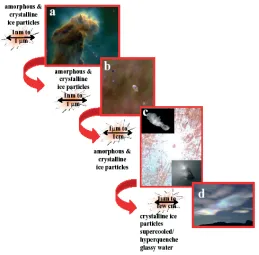
The most important complex system for humanity is our environment. There are many detailed interact-ing processes that play a role, in a complex and often non-linear function, in determining climate, ocean, land and atmosphere evolution. The influences extend from outside our planet – space – to internal ones produced by humankind itself. By simulating primitive and small solar system bodies – a major part in the ICAPS programme – fundamental prop-erties of these objects will be known by the time of Rosetta’s encounter of with comet 67P/Churyumov-Gerasimenko in 2014.
3.1.2. Physics of fluids and interfaces
3.1.2.1. Fluids with imposed, external body forces
On Earth the behaviour of all fluids is strongly affected by gravity. The effects of external fields (electric, magnetic, driven vibrations, thermal gradi-ents) may be difficult to distinguish in the presence of strong gravitational effects. A low gravity envi-ronment provides a unique opportunity to remove the strong limitation that this places on terrestrial exper-iments, whether aimed at fundamental or applied science.
3.1.2.2. Interface with a solid