http://www.ijcmph.com pISSN 2394-6032 | eISSN 2394-6040
Original Research Article
A survey of patient satisfaction of patients attending a psychiatry
outpatient clinic at a tertiary care centre
Shivananda Jena
1, Manushree Gupta
2*
INTRODUCTION
Around the world patient satisfaction with services has become one of the most important parameter to evaluate treatment outcomes, including India.1-4 Healthcare services are moving towards client-service provider model in India as well, under influence from practices around the world and as also mandated by the WHO under its quality rights initiative for mental health. The concept of „patient satisfaction‟ has eluded researchers and therefore a consensus remains to be
established in healthcare, especially in mental health services. In Donabedian's quality measurement model which is also adopted by the WHO quality assessment framework, patient satisfaction is defined as patient-reported outcome measure while the structures and processes of care can be measured by patient-reported experiences5.
Many authors tend to have different perceptions of definitions of patient satisfaction. Jenkinson et al and Ahmed et al pointed out that patient satisfaction mostly appears to represent attitudes towards care or aspects of care.6,7 While Mohan et al referred to patient satisfaction
ABSTRACT
Background: The concept of patient satisfaction in mental health services has eluded understanding in spite of large research body on this subject. Poor patient satisfaction leads to worse outcomes on psychiatric disorders. This study looked for social, demographic and clinical variables associated with patient satisfaction.
Methods: 1100 eligible subjects were screened and then 519 alternate sample subjects were recruited for the survey based on the selection criteria. Social, demographic and clinical variables were assessed and PSQ-18 (patient satisfaction questionnaire) was administered to all subjects.
Results: 453 (87.28%) patients reported satisfaction and 66 (12.72%) of patients reported being unsatisfied with the service provided. Four sub-scales “general satisfaction” (p<0.001), “technical quality” (p<0.001), “interpersonal manner” and “communication” were found to be associated with patient satisfaction while other 3 sub-scales (“financial aspects”, “time spent with the doctor” and “accessibility and convenience”) were not significantly associated with patient satisfaction.
Conclusions: Both the technical and the interpersonal and communication skills of the doctor were important in determining patient satisfaction whereas the often believed variables like financial aspect and the time spent with the doctor did not affect patient satisfaction significantly.
Keywords: Patient satisfaction, Mental health, PSQ-18
Department of Psychiatry, 1GB Pant Institute of Postgraduate Medical Education & Research (GIPMER), 2VMMC & Safdarjung Hospital, New Delhi, India
Received: 26 February 2018
Revised: 27 March 2018
Accepted: 28 March 2018
*Correspondence:
Dr. Manushree Gupta,
E-mail: [email protected]
Copyright: © the author(s), publisher and licensee Medip Academy. This is an open-access article distributed under the terms of the Creative Commons Attribution Non-Commercial License, which permits unrestricted non-commercial use, distribution, and reproduction in any medium, provided the original work is properly cited.
as patients‟ emotions, feelings and their perception of delivered healthcare services.8
Review of literature
Over the past few decades, patients‟ opinions regarding the assessment of services has gained prominence.9 Also, patients‟ ratings of their experiences and satisfaction with mental health services has been a frequently used indicator of service quality.10 Satisfaction is a general emotion, which is related to certain situations or occasions.11 Patient satisfaction includes two subjective sections: the expectation of care and the evaluation of care. Satisfaction is a subjective measure, and it is not a matter of being right or wrong when evaluating quality of care.12 All previous satisfaction studies have shown that patients with mental health problems are quite satisfied with healthcare in general.13-15 The central dimension, including satisfaction in psychiatric care, is the therapeutic relationship between staff and patients. Patients attending treatment at a clinic are supposed to take advantage of the competence provided by the clinic as a whole, not just from the therapist who is responsible for their treatment.A US survey of mental health care providers, however, showed a positive attitude towards patient satisfaction as an indicator of the quality of health services.16 It is not clear how satisfaction is related to technical quality, which is defined by Donabedian as the extent to which health care services meet predefined standards of acceptable or adequate care.17 Different studies have reported moderate to no association between patient satisfaction and technical quality of care.18 The patients‟ perception of being understood, trust and a good personal relationship with clinicians have been proposed as key elements from a patient‟s point of view.19 According to previous studies, psychiatric patients expect to get information about their disease and care from staff.20,21 On the other hand, persons suffering from mental illnesses are not always active information seekers.22
Crow et al distinguished between determinants of satisfaction related to patient characteristics and to health services.23 They identified three main types of individual factors, namely expectations, health status, and the socio-economic and demographic characteristics of the respondents. Furthermore, they concluded that the research on expectations as determinants of satisfaction was important but problematic.
We can conclude based on the previous studies that patients expect enough time from staff for listening and understanding their problems. They also expect respect from staff and they want nurses to work with them when the course of treatment is planned. The level of patient satisfaction has been highest in areas concerning patient– staff relationships, and lowest regarding the information received and their possibility to influence the treatment. There is evidence that poorer health status is associated with lower levels of reported satisfaction.24 Studies have
consistently found a clear correlation between self-perceived health status and patient satisfaction.25
This survey planned to find the satisfaction of patients with our psychiatry outpatient clinic (OPC) services. The more specific aim was to identify levels of satisfaction and socio-demographic and clinical factors associated with them.
METHODS
The survey was conducted in a tertiary care psychiatry outpatient clinic (OPC) where patients aged 13 and above are provided care. 1100 eligible patients were recruited for this survey over a 1 month period in January 2016. Alternate patients were selected through the central registration system. All subjects between 13-60 years and who attended the psychiatry clinic at least 5 times in the past were included whereas subjects with hearing impairment, mental retardation, psychotic disorder or delirium were excluded from the study. A total of 519 (52%) patients were included in the survey based on the selection criteria.
The recruited patients were given a Survey Information Sheet to read and a written informed consent was taken. Each patient was asked to fill in information in the patient satisfaction survey pro forma (PSSPF) detailing their socio-demographic and clinical variables. Those were illiterate were read the PSSPF and options were ticked by the investigator based on the patient‟s response.
The selected patients were then handed the self-rated Patient Satisfaction Questionnaire-18 (PSQ-18). The questionnaire was developed by Marshall & Hays.26 It contains 18 items tapping each of the seven dimensions of patient satisfaction with medical care measured by full version 50-item patient satisfaction questionnaire-III (PSQ-III): “general satisfaction”, “technical quality”, “interpersonal manner”, “communication”, “financial aspects”, “time spent with doctor”, and “accessibility and convenience”. PSQ-18 sub-scale scores are substantially correlated with their full-scale counterparts and possess generally adequate internal consistency and reliability. The questionnaire was translated to Hindi by an official translator and tested based on translation-retranslation method to check accuracy.
Statistical analysis
RESULTS
A total of 519 patients participated in our survey. Mean age was 34.8 years, with the mean duration of illness and treatment being 46 months and 21 months, respectively. 453 (87.28%) patients reported that they were satisfied (either “very satisfied” or “satisfied”) with our OPC service. Only 66 (12.72%) of patients felt unsatisfied (either “very unsatisfied “or “unsatisfied”) with the service. The former patients belonged to Satisfied Patient Group (SPG) and later patients belonged to Unsatisfied Patient Group (UPG).
PSQ-18 mean score was associated with the SPG (p<0.001) (Table 1). PSQ-18 has 7 scales. Four sub-scales [“General satisfaction” (p<0.001), “Technical quality” (p<0.001), “Interpersonal manner” and “Communication” were found to be associated with the SPG while other 3 sub-scales (“Financial aspects”, “Time spent with the doctor” and “Accessibility and convenience”) were not significantly associated with the SPG (Table 1).
Table 1: Association of PSQ-18 sub scales with patient groups.
PSQ-18 SPG UPG P value
Mean ±Sd Mean ±Sd
PSQ-18 total score 68.60 ±7.6 64.14 ±11.75 <0.001
General satisfaction 3.80 ±0.58 3.39 ±0.72 <0.001
Technical quality 3.92 ±0.47 3.71 ±0.49 <0.001
Interpersonal manner 4.12 ±0.6 3.89 ±0.74 0.000
Communication 4.15 ±0.62 3.89 ±0.72 0.000
Financial aspects 3.35 ±0.76 3.31 ±0.67 0.660
Time spent with doctor 3.69 ±0.73 3.59 ±0.86 0.330
Accessibility and convenience 3.52 ±0.61 3.38 ±0.77 0.100
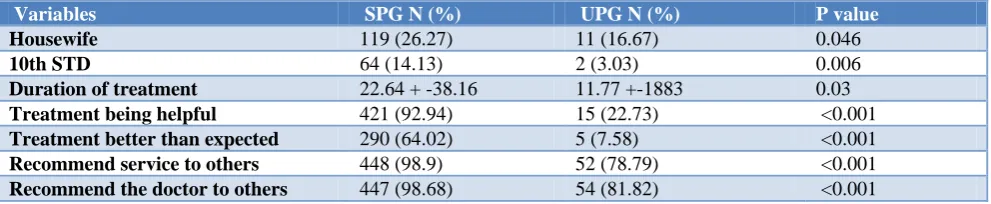
Table 2: Significant socio-demographic and clinical variables.
Variables SPG N (%) UPG N (%) P value
Housewife 119 (26.27) 11 (16.67) 0.046
10th STD 64 (14.13) 2 (3.03) 0.006
Duration of treatment 22.64 + -38.16 11.77 +-1883 0.03
Treatment being helpful 421 (92.94) 15 (22.73) <0.001
Treatment better than expected 290 (64.02) 5 (7.58) <0.001
Recommend service to others 448 (98.9) 52 (78.79) <0.001
Recommend the doctor to others 447 (98.68) 54 (81.82) <0.001
Socio-demographic and clinical variables and patient satisfaction
Total scores were comparable between age groups, sex, marital status, residence and type of family. Only two socio-demographic variables- “Home maker” (p=0.046) and “10th standard education” (p=0.006) were significantly associated with the SPG. One socio-demographic variable- “Postgraduate and above education” (p<0.001) was associated with the UPG. Among clinical variables “Duration of treatment” (p<0.001), “Treatment being helpful” (p<0.001), “Treatment better than expected” (p<0.001), “Recommend service to others” (p<0.001) and “Recommend the doctor to others” (p<0.001) were associated with the SPG (Table 2). Out of all clinical variables “Treatment neither helpful nor harmful” (p<0.001), “Treatment being harmful” (p<0.001), “Treatment was same as expected” (p<0.001), “Treatment was lesser than expected” (p<0.001), “Not recommend service to others” (p<0.001) and “Not
recommend the doctor to others” were found to have association with NPG. We found that variables like “Doctor type” and “Sex of the doctor” did not have statistically significant association with either SPG or UPG. The duration of treatment also had a significant bearing upon the satisfaction as a longer mean duration of 22 weeks was associated with significant patient satisfaction (p=0.030).
DISCUSSION
Our survey found the satisfaction levels of patients availing the Psychiatry OPC services at one of the tertiary level academic institute where the standards of care are expected to be high. The study had a good sample size of 519 subjects and hence aimed at filing the lacunae of information regarding the patient satisfaction from mental health services in our country.
was higher than two other studies on similar populations which reported satisfaction levels of 57% and 61%.27,28 Age, sex, marital status, residence and family type and expectation were not significantly associated with satisfaction as in previous studies: one in Pakistan (younger age) and in European countries (unmet needs).29,30 The USA and Canada (lower education), London and South Verona (paid employment) patient satisfaction studies showed similar results as in our study.31,32
Patient satisfaction was significantly dependent upon variables on PSQ like “general satisfaction”, “technical quality”, “interpersonal manner” and “communication skills” of the service provider i.e. the psychiatrist. More interestingly, the conventionally understood variables of patient satisfaction like the “financial aspect”, “time spent with the doctor” and “accessibility and convenience” did not affect the level of satisfaction with our services. Financial aspect was not significant because our services (consultation, investigations and medications) were provided free of cost to all patients. In India patient expects to have brief consultation lasting 5-10 mins for a review so it was not found to be a significant factor. As the hospital is located in central Delhi with main train station within 2 km. and several buses stops close to the hospital, accessibility and convenience factors were not found to be significant. Therefore, a large magnitude of the satisfaction was dependent upon the quality of service provided by of a treating psychiatrist which affected the doctor-patient relationship. Both professional and personal qualities of the doctor like the “Technical quality”, “Interpersonal manner” and “Communication skills” were associated with better patient satisfaction unlike in an earlier study which emphasized the personal qualities being more important than professional qualities.32
Patient satisfaction was closely associated with both interpersonal and technical skills of the treating doctor which was a finding of an earlier study from Taiwan (Yi-Chung).33 In both, this study and ours, the technical skills of the doctor were found more significant compared to the interpersonal skills in determining patient satisfaction. Mentally ill patients may not directly assess whether the psychiatrist can meet their needs by making the right diagnosis, and providing effective treatment at a low cost. Therefore, doctor's technical skill is the most important factor in overall satisfaction and plays a critical role in patient recommendation of a service to others. Our study did not show that technical skills were more significant than interpersonal manner and communication skills. There are several studies which also placed patient characteristics like education and employment status being important in determining patient satisfaction. In our study, two patient characteristics namely employment status (“Homemaker”; p<0.001) and “Education level” (10th standard education; p<0.001) were strongly associated with patient satisfaction. We found that
patients who had obtained postgraduate degree and above were unsatisfied. This may be due to high degree of expectations from highly educated patients. No other demographic characteristics were significantly associated with patient satisfaction. Our survey had several limitations. It did not include patients who had psychotic symptoms. Secondly, there was no association between psychiatric diagnosis and satisfaction was made. Thirdly, patients may have found difficult to be critical of the care they received, although patient data were anonymous and highly confidential.
Funding: No funding sources Conflict of interest: None declared
Ethical approval: The study was approved by the Institutional Ethics Committee
REFERENCES
1. Perälä ML, Räikkönen O. Parempaa laatua hoitotyössä. Kartoitus Sosiaali- ja Terveydenhuolto-organisaatioista (Better Quality for Nursing Care. An Exploration of Health and Social Care Organizations). STAKES 1994, Raportteja 158, Gummerus, Jyväskylä
2. Rosenheck N, Wilson MJ, Meterko M. Influence of patient and hospital factors on consumer satisfaction with inpatient mental health treatment. Psychiatric Services. 1997;48(12):1553-61.
3. Sodani PR, Kumar RK, Srivastava J, Sharma L. Measuring Patient Satisfaction: A Case Study to Improve Quality of Care at Public Health Facilities. Indian J Comm Med. 2010;35(1):52-6.
4. Jain A, Mishra N, Pandey C. A study to assess patient satisfaction in out patient department of a tertiary care hospital in north India. International J Comm Med Public Health. 2017;3(1):328-34. 5. Bjertnaes OA, Sjetne IS, Iversen HH. Overall
patient satisfaction with hospitals: effects of patient-reported experiences and fulfilment of expectations. BMJ Qual Saf. 2012;21(1):39-46.
6. Jenkinson C, Coulter A, Bruster S. Patients‟ experiences and satisfaction with health care: results of a questionnaire study of specific aspects of care. Qual Saf Health Care. 2002;11:335-9.
7. Iftikhar A, Allah N, Shadiullah K, Habibullah K, Muhammad AR, Muhammad HK. Predictors of patient satisfaction. Gomal J Med Sci. 2001;9(2):183-8.
8. Rama M, Kanagaluru SK. A study on the satisfaction of patients with reference to hospital services. Int J Business Economics Management Res. 2011;1:3.
9. Sitzia J, Wood N. Patient satisfaction: A review of issues and concepts. Soc Sc Med. 1997;45:1829-43. 10. Powell RA, Holloway F, Lee J, Sitzia J. Satisfaction
11. Westerbrook R, Oliver RL. The dimensionality of consumption emotion patterns and consumer satisfaction. J Consumer Res. 1991;7:81–6.
12. Vuori H. Patient satisfaction – does it matter? Quality Assurance in Health Care. 1991;3(3):183–9. 13. Svensson B, Hansson L. Patient satisfaction with inpatient psychiatric care. The influence of traits, diagnosis and perceived coercion. Acta Psychiatrca Scandinavica. 1994;90(5):379–84.
14. Korkeila J, Lehtinen V, Sohlman B, Tuori T. Patients‟ expectations from their psychiatric community care in Finland. Nordic J Psychiatry. 1998;52 (6):513–7.
15. Berghofer G, Lang A, Henkel H, Schmidl F, Rudas S, Schmitz M. Satisfaction of inpatients and outpatients with staff, environment, and other patients. Psychiatric Services. 2001;52(1):104–6. 16. Otani K, Herrmann PA, Kurz RS. Improving patient
satisfaction in hospital care settings. Health Serv Manage Res. 2011;24(4):163-9.
17. Donabedian A. The definition of quality and approaches to its assessment. Ann Arbor MI, Health Administration Press, 1980.
18. Edlund MJ, Young AS, Kung FY, Sherbourne CD, Wells KB. Does satisfaction reflect the technical quality of mental health care? Health Serv Res. 2003:38:631-45.
19. Hansson L, Bjorkman T, Berglund I. What is important in psychiatric inpatient care? Quality of care from the patient's perspective. Qual Assura Health Care. 1993;5:41-7.
20. Holloway A. Patient knowledge and information concerning medication on discharge from hospital. J Advanced Nursing. 1996;24:1169–74.
21. Slade M, Phelan M, Thornicroft G. A comparison of needs assessed by staff and by an epidemiologically representative sample of patients with psychosis. Psychol Med. 1998;28(3):543–50.
22. Välimäki M. Self-determination in psychiatric patients. Doctoral Dissertation D 288. Painosalama, Turku; 1998.
23. Crow R, Gage H, Hampson S, Hart J, Kimber A, Storey L, et al. The measurement of satisfaction with healthcare: Implications for practice from a systematic review of the literature. Health Tech Asses. 2002;6:1-244.
24. Raleigh VS, Irons R, Hawe E, Scobie S, Cook A, Reeves R, et al. Ethnic variations in the experiences
of mental health service users in England: Results of a national patient survey programme. Brit J Psych. 2007;191:304-12.
25. Paul P, Hakobyan M, Valtonen H. The association between self-perceived health status and satisfaction with healthcare services: evidence from Armenia. BMC Health Services Res. 2016;16(1):67.
26. Marshall GN, Hays RD. Santa Monica, CA:RAND Corporation. The Patient Satisfaction Questionnaire Short Form (PSQ-18) 1994: 7865.
27. Holikatti PC, Kar N, Mishra A, Shukla R, Swain SP, Kar S. A study on patient satisfaction with psychiatric services. Indian J Psychiatr. 2012;54(4):327.
28. Yimer S, Yohannis Z, Getinet W, Mekonen T, Fekadu W, Belete H, et al. Satisfaction and associated factors of outpatient psychiatric service consumers in Ethiopia. Patient Preference Adherence. 2016;10:1847.
29. Gani N, Saeed K, Minhas FA, Anjuman N, Waleed M, Fatima G. Assessment of patient satisfaction with mental health services in a tertiary care setting. J Ayub Med Coll Abbottabad. 2011;23(1):43–6. 30. Ruggeri M, Lasalvia A, Bisoffi G, Thornicroft G,
Vàzquez-Barquero JL, Becker T, et al, EPSILON Study Group. Satisfaction with mental health services in five European sites:results from the EPSILON study. Schizophr Bull. 2003;29(2):229– 45.
31. Stein MB, Roy-Byrne PP, Craske MG, Campbell-Sills L, Lang AJ, Golinelli D, et al. Quality of and patient satisfaction with primary health care for anxiety disorders. J Clin Psychiatry. 2011;72(7):970-6.
32. Barker DA, Shergill SS, Higginson I, Orrell MW. Patients‟ views towards care received from psychiatrists. Br J Psychiatr. 1996;168:641-6. 33. Tung YC, Chang GM. Patient satisfaction with and
recommendation of a primary care provider: associations of perceived quality and patient education. Intl J Quality Health Care. 2009;21(3):206–13.