Article
Two Genetic Codes: Repetitive Syntax for Active
non-Coding RNAs; non-Repetitive Syntax for the
DNA Archives
Guenther Witzany
Telos - Philosophische Praxis, Vogelsangstrasse 18c, 5111-Buermoos, Austria; [email protected]; Tel.: +43-6274-6805
Abstract: Current knowledge of the RNA world indicates two different genetic codes being present throughout the living world. In contrast to non-coding RNAs that are built of repetitive nucleotide syntax, the sequences that serve as templates for proteins share – as main characteristics – a non-repetitive syntax. The differences in their syntax structure is coherent with the difference of the functions they represent. Whereas non-coding RNAs build groups that serve as regulatory tools in nearly all genetic processes, the coding sections represent the evolutionarily successful function of the genetic information storage medium. The DNA genomes themselves are rather inactive, whereas the non-coding RNA domain is highly active, even as non-random genetic innovation operators. This indicates that repetitive syntax is the essential pre-requisite for RNA interactions to install variable RNA-group-identities, whereas the non-repetitive syntax serves as a stable conservation tool for successful selection processes out of RNA-groups cooperation and competition. The interaction opportunities of RNA loops with repetitive syntax are higher than with non-repetitive ones. Interestingly, these two genetic codes resemble the function of all natural languages, i.e., (a) everyday language use for organization and coordination of biotic group behavior, and (b) artificial (instrumental) language use for conservation of blueprints for complex protein-body constructions.
Keywords: RNA; DNA; Repetitive sequences; RNA stem loops; RNA group identities
1. Introduction
In the early 1990s, a research team from Boston University investigated quantifiable aspects of coding and non-coding genetic sequences such as statistical features of nucleotides of the molecular alphabet. While coding DNA is predominantly short-range correlated, the order in non-coding DNA is largely determined by long-range correlations. The authors suggested that their “results are consistent with the possible existence of one (or more than one) structured biological language(s) present in non-coding DNA sequences” [1]. From the theoretical perspective, a side result seems to be more interesting: The tests revealed that non-coding DNA more closely resemble a natural language such as everyday language, while the structure of coding DNA more closely resembles that of artificial (e.g., scientific) languages. Today we know that the first one is essential for any group building of a number of individuals as the primary tool to co-ordinate and organize commonly shared real-life situations. The latter one is a useful tool for complex artificial constructions and its archival conservation [2].
2. No life would function with DNA alone
coordinated by these agents. Furthermore, they are crucial for the cooperation between groups of RNA-stem loops to constitute important nucleoprotein complexes such as ribosome, spliceosome, and editosome [7]. Therefore, such RNA groups are essential for complex order of genome constructions. The construction, organization and regulation of cellular genomes, especially of high complexity, are special capabilities of repeat RNAs [8]. This does not mean that the coded content is crucial in higher eukaryotes but that the organizational regulation of content arrangements that determine protein translations seem more important. If we look at the number of genes of C. elegans and humans, we have approximately 20,000 protein coding genes, but a very different regulatory network.
With the focus on RNA-biology, it soon became obvious, that the syntax of non-coding RNAs and coded DNA differs fundamentally. It was recognized that the RNA sequences, in most cases, consisted of repetitive characters constituting the sequence structure. Additionally, it was soon mentioned that the repetitive RNA sequences are the main proponents of regulatory elements of gene expression in all domains of life [9]. With the detection of mobile genetic elements, it also became obvious that these agents of genetic novelty are constituted by repetitive elements [10].
RNA agents are generally constituted by ribonucleotide sequences with repetitive grammar. In contrast to protein coding sequences of the genetic text that do not represent repetitive sequence syntax, the non-coding RNAs all share this syntax feature. In this review, we will have a look at some functions and group behavioral motifs of such RNAs and their role in constituting and regulating genetic content of organisms.
3. Repetitive genetic syntax structures represent active agents
The language of the coding regions is the evolutionarily successful tool to conserve complex information within a storage medium whereas the non-coding repeat syntax is the essential tool to actively co-ordinate and organize interactions, such as regulations or even innovations [11]. This fits with the results of the Boston University findings concerning the two different kind of languages: everyday language, and artificial languages.
Based on the current knowledge about the functions of these two domains of languages, we may summarize the empirical knowledge about natural languages wherein the first one is (a) the medium of getting socialized within group interactions (as a pre-condition for learning and memory) to get the competence to combine (sign sequence based) linguistic utterances with the commonly used consensual meaning-function of words in everyday life situations. Additionally, this kind of code use is the essential tool to coordinate and organize everyday life of biotic communities [12]. In contrast, (b) the latter non-repeat DNA syntax is an artificial construction based on special conventions determining the meaning of certain code sequences. In artificial languages, the terms that are originally derived in everyday language get a new semantics, dependent on useful conventions in the specialized field.
To download biologically relevant information into real life-worlds, it is necessary to transcribe and translate DNA-stored information into real life worlds of dynamic RNA groups and protein worlds again. This occurs by:
• Splitting up double stranded DNA into two single strands by helicase.
• RNA polymerases do not duplicate the sequence exactly but, on the contrary, act highly “error prone”, i.e., extend the given sequence into a new alphabetical order which can serve as a new genetic identity contrasting its origin.
• Building of a messenger RNA after modifying the transcript by (i) RNA editing, and (ii) splicing out the (regulatory) non-coding RNAs, i.e., introns, to
• transport information content out of the nucleus to ribosomes (after forming a RNP complex of the two ribosomal subunits) in the cytoplasm followed
• by the tRNAs for translation into proteins with low error rate.
• Recycling and re-use of the remaining RNAs of certain RNA groups (e.g., spliced out introns, ribosomal subunits, tRNAs,) for further regulatory processes, such as important roles of microRNAs.
This means, for every download of information being relevant for real life organisms, the DNA content has to be translated into RNA sequence again to be available for active RNA group behavior, i.e., RNA mediated sequence modulation, and re-arrangements or modifications of any kind. Not to forget that the ribosome, the most abundant cellular RNA species, have evolved as the catalytic, organizational regulatory hub of protein biosynthesis in all cells. Two subunits together decode messenger RNA and additionally synthesize corresponding peptide chains [13].
Another interesting aspect is that infectious/invasive non-coding RNAs insert preferentially in non-coding DNA areas, whereas coding DNA usually is not the target of invading RNAs. This indicates that the insertion competence relates to interaction competence. In this perspective the non-coding DNA is the preferred habitat to settle down by infectious RNAs, e.g. y-chromosome in human genomes [14], whereas the coding regions are not preferentially targeted [15, 16]. This may indicate that the preferred change in evolutionary processes occurs in regulatory sections and not in the information storage coding for proteins, which is the main source for “mutations” in previous theoretical concepts of evolution.
4. Meaning of genetic information depends on social interacting agents
The action theoretical perspective opens understanding of how two or more participants can reach a common consensus on contents and fundamental goals of common behavior such as organization and cooperation. The tool for this common interaction are signs and signals of various forms, whereas also behavioral motifs such as combinations of dynamics and figures, may serve as signs that can be identified, interpreted, and are the reason for some responsive behavior [17].
As mentioned early by George Herbert Mead, meaning is a social feature and emerges if biological agents share rules to use and interpret signs to exchange messages. In addition, the late Wittgenstein proved that no meaning would emerge by the private one-time use by a lonesome agent. The social interactions in everyday life, based on a historically grown background, enables biological agents to interact for the organization and coordination of common behavior. And Charles Sanders Peirce noticed that historical experiences of common group behavior are the matrix to reach a consensus on the meaning of signs [17].
information may carry meaning for e.g., toxic components that kill invaded hosts. But the same information may carry meaning for immune functions (Antitoxins) to protect the host [21]. A variety of meanings may be coded in information in the genetic syntax, but the living agents that are involved in real-life contexts are crucial for meaning to emerge from the information they represent. They generate meaning out of genetic information storage medium by real-life world interactions with themselves or non-themselves (hosts) as documented in the recent knowledge about epigenetics [22]. Without living agents, no information out of DNA would find its way to some meaning.
In the ancient RNA world, with building RNA stem loop consortia, a biological behavior emerged that underlies a biological selection which is absent in a pure physico-chemical world [23,24]. The start of biological selection was the result of group behavior of RNA stem loops [25, 26, Briones]. After abundance of selection processes and compartmentalization processes, we may agree that the first biological cells as organisms emerged [27]. We should keep in mind, that all functions of these organisms that enabled them to replicate, metabolize, defeat against invading or parasitizing living agents are regulated by the obligate RNA-based competencies in transcription, translation, repair, and immunity. Hence, the basic features of cellular life are processed by a DNA based organism in which all functions still depend on an orchestrated line up of coupled RNA functions [28].
If we look at the current stage of life history, we have a biological system in that cellular life based on DNA storage medium, and RNA regulatory networks dominate the planet [29]. RNA groups still play important roles in catalyzing biochemical reactions, the translation of mRNAs into proteins, the fine-tuned regulation of gene expression, and the steps and sub-steps of immune defense in the various ways of recognition of “non-self”-integration of identification tools into the self-protecting system to recognize invading identities and the targeting of defense tools on these invading agents [30]. The coupling of the information and the contextual regulation of this information was the coupling of introns and exons, where the introns are representing the RNA repeat sequences within protein coding sections (non-repeat sequences). Interestingly, nature created a way to line up complex protein bodies in building a final non-repeat sequence of protein coding sections of the genetic text that serves as template; and splicing out the intronic sequences being relevant for regulatory functions [31-34].
5. Important aspects of natural genetic editors
Since the early RNA world, maybe before the evolution of DNA-based or even RNA-based protein bodies, the RNAs not only catalyze biochemical processes but also bind to proteins in various forms and modes so that proteins stabilized the RNA structures in a certain way for its specialized functions [35, 36]. Protein itself has very limited possibilities to transmit information (such as prions). A crucial key for protein synthesis is the ribosome with both its RNA based ribozymatic functions and its protein body to stabilize and interconnect the two complex and complicated subunits of RNA consortia. Without ribosome, no protein body would exist [37].
• It does not really interest whether the RNA world was predated by another primordial system, the facts outline RNA to be the only successful and essential natural code that provides the preconditions for RNA replication and DNA-based cellular life [38].
• Interestingly, RNAs can bind to small metabolites to use the binding energy to switch from one RNA structure to another. Additionally, very small RNAs act as ribozymes that may self-cleave. Larger ribozymes can act in complex RNA splicing interactions such as group II introns [41, 42].
• More often, RNAs work in concert with proteins, such as RNA splicing, RNA editing. We must not forget that a primary transcript involves approximately 200 proteins together with at least 5 small nuclear RNAs. Approximately 95% of say, the human genes, underlie splicing activities [43].
• Another important complementary interaction tool is the telomerase a certain form of reverse transcriptase being an essential function for creating DNA sequences in general, or how should we think of the emergence of DNA from a primordial RNA world [44]? • One interesting action on how RNAs act on each other is the antisense RNA action to
inhibit RNA protein interactions by complementary base pairing to RNAs [45,46]. • Another important function is the regulation of the translatability of mRNAs by small
double stranded RNAs. This is achieved by the recognition of complementary sequences in the mRNA, which serves as efficient tool also in RNA silencing [47,48].
• Additionally, the DNA storage medium condensed in chromatin may be manipulated in various ways by RNAs that attract proteins to modify the chromatin status – more globally or even specialized – to very local interactions affecting single genes or groups of genes. Interestingly, information that identifies invading genomes (such as in CRIPRS) is stored in DNA, but is then converted into small RNAs that recognize and interfere with these invaders. Therefore, the conversion of DNA into RNAs plays a crucial role for inheritance via RNA, and to remain, functions with the conversion process in the RNAs that process the action [32].
6. Evolutionary results of RNA productivity: DNA and protein bodies
The evolution of protein bodies, i.e., the translation of nucleic acid sequences into amino acid sequences, leads to the emergence of what we called “life”, i.e., the visible structures of organisms built out of cells, tissues, and organs [36,49]. If we look at the results of this strain of biological evolution, we can assume that no organism can function vitally without RNA- consortia interactions that dominate all regulatory processes within the living cells and cell societies such as tissues and organs [50].
To this dependency on the RNA world agents, the protein bodies also communicate by themselves but at a different level of signaling interactions, relatively independent of RNA world influences. Hence, this level of interactions (although dependent on RNA world activities at the base of all biologically relevant functions), is somehow independent from RNA-determined functions, because bodies interact within their phenosphere more than on their genosphere interactions which are focused on the bodies to which they relate. The phenosphere interactions are primarily more relevant to behavioral response behaviors between bodies, than the genosphere activities within the body [17]. The feedback of the “living DNA archives” to the current RNA networks constantly fine-tune their regulation and innovation capabilities.
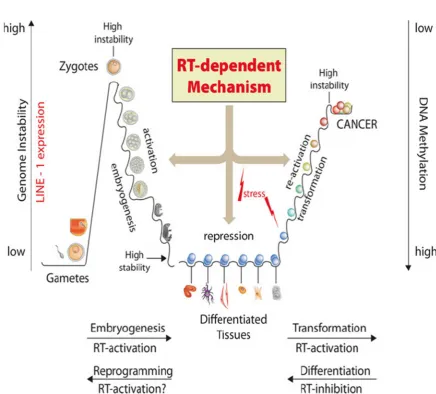
can look at such context-relevant situations in pre-implantation of placenta, trophectoblast differentiation, as well as tumor growth [51,52]. In all these situations, the genetic identity producers that are silenced or conserved as regulatory tools may become virulent again; active for change, de-regulation, and production of novel content arrangement. This may lead not only to genetic novelty, novel gene regulations, and changing dynamics but also to increased rates of disease caused by de-regulation of former counterbalanced networks of de-regulations, as described in Figure 1.
If RNA network, i.e., RNA-consortia interactions become relevant, the “force” of life is still activated [53]. However, in contrast to former narratives, we now can identify this neither as a metaphysical force from a transcendent creator, nor as a result out of mechanistic error replication events by chance, but as an intrinsic capability of biological entities dependent on the RNA agents’ activities [54]. If something gets out of control, they are still activated. If all functions well without stress, the RNA agents are constantly serving as a mighty network of conserved functions that integrate the wide open horizon of all interactional motifs being existent in a biological species. The main motif is to promote and support life processes and not to destroy them.
7. Keyplayer in RNA to DNA transformation: reverse transcriptase
In several attempts, biological features which cannot be found in inanimate nature have been reduced to the chemical level only. In this perspective, biological features are expanded organization systems at the macromolecular level, but in a strict natural law system. Authors were convinced that in this perspective, evolution can be integrated into chemical kinetics, a merger of population processuality with molecular biology [55,56]. Meanwhile, we know that the quantitative explanation of biological sign mediated interactions can identify side effects at its best, but cannot fully explain the main features of social interacting biological agents [57].
If we transfer this result to the quasispecies behavior at the RNA level, we can identify several RNA group behaviors that represent de novo generation activities that constitute the basis for evolutionary novelty [58,59]. If we take reproduction only from the physico-chemical perspective, we have to realize that a clonal reproduction can occur only in an identical copy production of the former product, if there is some change in this “error replication” was the term for decades. Nevertheless, as demonstrated by the biocommunication theory – the generation of novelty by agents competent in editing biological codes – this is not an appropriate description [60]. Similar to the generation of poems in a natural language by humans in this reductionistic light would be an error prone reproduction of former available sign sequences into new ones – a rather curious conclusion.
A key agent in several aspects of biology, especially in genetics, is the reverse transcriptase (RT). The reverse transcriptase derived from an RNA world, and correctly termed, is the primary tool to transport information from RNA to DNA prior to other polymerases [44,61, 62]. RTs can be identified through the whole current RNA world activities in virions and RNA viruses such as retroviruses, and is the essential tool to place RNA information within DNA-based genomes [63,64]. In this respect, it is an essential tool to install persistent viral agents in host genomes. The RTs care for virus replication cycles as well as suppressed viral-derived inhabitants that serve as regulatory elements of host genes. In special situations such as stress, the regulation of the host function may become weak and the original function may become virulent again (see Figure 1). Especially if RTs get into this modus, they may change the genetic identity of host genomes and fix it into the DNA storage medium being part of an inheritable feature [65,66].
Figure 1. Reverse Transcriptase is the key player to transfer RNA sequences into DNA. This is a counter regulated process we can look at in embryogenesis and cell differentiation. In tumorigenesis, this gets out of control (from: Spadafora, C. A LINE-1–encoded reverse transcriptase–dependent regulatory mechanism is active in embryogenesis and tumorigenesis. Ann NY Acad Sci 2015, 1341, 164–171.).
8. Conserved repetitive sequences in DNA archives: Centromeres, telomeres
replication at the ends of chromosomes and, therefore, not only is a key player of genome maintenance but is also part of an immunity function that provides telomere ends from infection by genetic parasites [72]. This is a new role of a reverse transcriptase and demonstrates that RNA agents serve for both, infection of host genomes and – as coapted exaptations – as immune function against (related) infectious agents. The evolutionary move from telomeres to centromeres in eukaryotes is an excellent example of re-invention of newly evolved features into another useful function [73].
Without infection there can be no evolution [74]. Infectious agents are the driving force to generate genetic novelty, generate immune functions against related parasites and, therefore, serve for protection of host organisms in an ongoing way [62].
9. Three of a perfect pair: inanimate nature, RNA-consortia/viruses and protein bodies
At the current stage of understanding how evolution occurs, and the emergence of RNA groups, viruses and DNA-based cellular life representing what we call “Life”, we know that cooperativity between these three levels is a core behavioral motif [23,26,75,76]. Single RNA stem loops, being alone, only react in a physico-chemical reaction modus without any biological selection, whereas if they build groups, they actively evolve self/non-self-differentiation and compete in a biological selection modus [20].
Viruses evolved in a constant competition of this RNA group selection, to become part of a group self and not to become a part in non-self, whether non-self by itself may represent another group. In the step from RNA consortia to protein-based cell bodies, the viruses played the essential driving role of infection/immunity/identity [14]. The genetic code went from molecule to a semiotic code by group interactions which fits the general thesis that any natural language or code needs competent agents that use (generate, innovate) such codes in social interactions [77], whereas a natural code without competent users does nothing.
The evolution of DNA, and later on of cellular protein-based life, cared for the emergence of phenotypes that interact via a different level of signalling. Although based on RNA-coordinated body regulation, the phenotypic interactions of protein-based cellular life forms determine ecosphere habitats. The interactions that constitute a phenosphere of protein bodies depends on the basics of RNA biology as the RNA biology depends on the natural laws of physics and chemistry. However, RNA biology transcends physics and chemistry by (i) social group behavior, (ii) semiotic code biology and the (iii) biological selection, all of them being absent in inanimate nature. Similarly, the phenosphere of protein bodies transcends RNA biology, because the phenosphere is mostly constituted by cellular signalling motifs of coordination, and organization, i.e. biocommunication [60]. We must differentiate these levels of interaction because they all are relevant in a complementary way to define life in the 21st century: First, you need physics and chemistry. Second, you need cooperative agents that build consortia which underlie Darwinian biology. Life starts here [78]. RNA consortia lead to DNA storage and cellular protein-based bodies. Thirdly, protein-based bodies interact and constitute the phenosphere of life, as we know it. Although all three levels derive and are constituted upon the former, they add a new level/sphere that is not present in the former one and cannot be deduced out of the former one. This means it is a real novelty.
currently know in its host persistence (toxin-antitoxin, restriction-modification, insertion/deletion etc.) and that will be detected in the future in all naturally counter-regulated biological processes [21]. As mentioned above, there is some crucial difference in the motifs and behavioral patterns of RNA consortia and protein-based cellular life. If we look at biocommunication processes in cells, tissues, organs, and organisms, in which signaling is relevant to all coordination and organization affairs, we can identify similar behavioral patterns throughout all domains of life. Whether it may be bacteria, protozoa, fungi, animals, or plants: All are highly sensitive organisms that actively compete for environmental resources. They assess their surroundings, estimate how much energy they need for particular goals, and then realize the optimum variant. They take measures to control certain environmental resources. They perceive themselves and can distinguish between ‘self’ and ‘non-self’. They process and evaluate information and then modify their behavior accordingly [80-85].
If we look at RNA agents that build consortia, we can identify behavioral motifs such as RNA binding, DNA binding, Protein-binding, nucleotide assembly and fold back to build stem loops with single strand motifs and double strands, pseudoknots, and spontaneous loop-building out of stems being prone to other (single stranded) loop interactions [86-90]. However, some common behavioral motifs also are shared, like identification of “self” and “non-self” , invasive behavior that manipulates another, rejection of invasive behavior as the commonly shared immune functions, group building, etc [91].
Ribozymes, introns, mobile genetic elements, viruses and their defectives, viroids, maybe we can look at viruses and virus-like agents now as first full range semiotic subjects, competent to follow interactional, behavioral rules in infection, colonization, immunity, recombination, context-dependent meaning fixation (methylation patterns) and finally sequence space innovation. Prior to protein-based cellular life viruses and virus-like genetic parasites seem to represent the evolutionary transition agents from the early RNA world to the living DNA archives [92-96].
10. Nothing in RNA-Biology makes sense except in the light of group-identity
Figure 2. The RNA “gangen” hypothesis of Luis Villarreal coherently explains cooperativity, followed by group identity of an RNA collective that requires opposite functions for the genesis of life (from: Villarreal LP (2015). Force for ancient and recent life: viral and stem-loop RNA consortia promote life. Ann NY Acad Sci 1341: 25–34).
From this perspective, some explanatory goals can be reached more easily than from previous ones, because the biological identity is in the main focus now:
and the subunits of former degraded nucleotide sequences of such agents. The re-use of RNAs in several lengths for several functions reminds us on their origin.
2) Evolutionary novelty also arises through exaptations of original novelties to other organisms as previously evolved; e.g., tRNAs, or the epigenetic marking of genomes led to memory and learning systems, or the pheromone receptors, as well as light receptors or the telomere repeats or centromeres.
3) The RNA world dominant interaction strategies of colonization via infection, defense/rejection and degradation and ligation competence need a new matrix for more complexity: Protein-based bodies with memory storage medium DNA, i.e., RNA world escape islands. Here, competing and co-operative agents with different strategies may reach the addiction module status, which means they are not eliminating each other but both survive in an instabil/stabil equilibrium status for both, the competing agents and the host (win-win situation). This makes the infectious agents become crucial drivers of the evolution of complexity.
4) Coherent sequence integration, without damage of protein coding sequence, may be transported by the LTRs of infectious agents. Later on, these tools are helpful in a real toolbox of similar and combinatorial modules for both infectious agents and host organisms. 5) Real revolutionary new organisms that represent success exemplares of new kingdoms such
as in the case of sharks, C. elegans, glass sponges, sea urchins, ferns, etc. are nearly free of disease-causing viral parasites. This means the uniqueness of addiction modules as a result of persistent colonization within these new creations have reached a kind of hallmark immunity.
6) Such evolutionary constructions may reach highly complex tissue societies, as represented in organs of various organisms that vary/combine with fluid organs such as blood systems, together with other body secretion systems creating a real fascinating construction to embody complexity.
7) Change in environmental conditions (context) may change the invasive strategies of infectious genetic parasites and also vary the potential targets for invasion. e.g., exogenous retroviruses rise selective pressure on HERV env's which results in an increase of the neocortex tissue by the reprogramming of neuronal stem cells. This rather organic emergence pattern has a clear result on the phenotypes as we currently may recognize at ourselves! 8) The virus competence is rather ecological, i.e. tissue specific or better: cell-community-
identity specific. If there are cell-communities as represented by tissues (e.g., organs) or fluids (e.g., blood) the virus and virus derived (defectives) inhabitants build a rather complex network of interactions for replication regulations, immune functions, repair competence, and also - if necessary - evolutionary innovations or its pre-steps to adapt.
In this perspective, nothing in RNA-biology makes sense, except in the light of group identity: How RNA groups constitute genetic content of themselves being relevant for host genetic content. To belong or not to belong to a group decides, whether an individual is part of an interactional group that share common capabilities that underlie biological selection, share interactional motifs, and attack and defense strategies. Any evolutionary relevant result can be seen within this light.
11. Conclusions
that of a natural everyday language, i.e. the essential tool to coordinate and organize common behavior. The non-repetitive coding DNA sequences, after being modified by the editosome and the spliceosome, serve as exon line-up for artificial constructions within an information storage medium for proteins that build the whole world of cellular-based life. Whereas the non-coding RNAs build an abundance of groups that are active in nearly all biological processes, the DNA serves as a living archive. The step from pure physical-chemical molecules to “meaning” of genetic information depends on social interactions of RNAs in generating groups with certain identities which underlie biological selection. We can find such RNA-based group-identities in viruses and virus-like infective agents that constantly invade DNA genomes as preferred habitat via a counterbalanced persistence strategy – the addiction module. For DNA based organisms an abundance of invading genetic parasites, infective clouds of RNA groups and their competitive counter-groups are the driving force of evolution and later on as co-adapted persistent agents serve as regulatory tools in nearly all cellular processes. Additionally, the productive RNA-groups constantly produce new sequence space, which not only serve as adaptation tools for their cell-based host organisms but also plays crucial roles in evolutionary novelty.
Conflicts of Interest: The author declares no conflict of interest.
References
1 Mantegna, R.N.; Buldyrev, S.V.; Goldberger, A.L.; Havlin, S.; Peng, C.K.; et al. Linguistic Features of Noncoding DNA Sequences. Phys. Rev. Lett. 1994, 73, 3169-3172. [DOI: 10.1103/PhysRevLett.73.3169] [http://www.ncbi.nlm.nih.gov/pubmed/10057305]
2 Witzany, G.; Life: The Communicative Structure. A new philosophy of biology. Libri Books on Demand, Norderstedt, Germany, 2000.
3 Atkins, J.F.; Gesteland, R.F.; Cech, T.R., Eds.; RNA Worlds: From Life's Origins to Diversity in Gene Regulation. New York: Cold Spring Harbor Laboratory Press: New York, USA, 2010.
4 Cech, T.R.; Steitz, J.A. The Noncoding RNA Revolution - Trashing Old Rules to Forge New Ones. Cell 2014, 157, 77-94 [DOI: 10.1016/j.cell.2014.03.008]
[http://www.ncbi.nlm.nih.gov/pubmed/?term=The+Noncoding+RNA+Revolution+-+Trashing+Old+Rules+to+Forge+New+Ones]
5 Shapiro, J.A.; von Sternberg, R. Why repetitive DNA is essential to genome function. Biol. Rev. Camb. Philos. Soc. 2005, 80, 227-250 [http://www.ncbi.nlm.nih.gov/pubmed/15921050]
6 Jurka, J.; Kapitanov, V.V.; Kohany, O.; Jurka, M.V. Repetitive Sequences in Complex Genomes: Structure and Evolution. Annu. Rev. Genomics Hum. Genet. 2007, 8, 241–259. [DOI: 10.1146/annurev.genom.8.080706.092416] [http://www.ncbi.nlm.nih.gov/pubmed/17506661]
7 Witzany, G. The agents of natural genome editing. J. Mol. Cell Biol. 2011, 3, 181-189. [DOI: 10.1093/jmcb/mjr005] [http://www.ncbi.nlm.nih.gov/pubmed/21459884]
8 von Sternberg, R.; Shapiro, J.A. How repeated retroelements format genome function. Cytogenet. Genome Res. 2005, 110. 108–116. [DOI: 10.1159/000084942] [http://www.ncbi.nlm.nih.gov/pubmed/16093662]
9 Cech, T.R. The RNA worlds in context. Cold Spring Harb. Perspect. Biol. 2012, 4(7):a006742 [DOI: 10.1101/cshperspect.a006742] [http://www.ncbi.nlm.nih.gov/pubmed/21441585]
10 Frost, L.S.; Leplae, R.; Summers, A.O. Toussaint A. Mobile genetic elements: the agents of open source evolution. Nat. Rev. Microbiol. 2005, 3, 22-732. [DOI: 10.1038/nrmicro1235]
11 Shapiro, J.A. Revisiting the central dogma in the 21st century. Ann. N.Y. Acad. Sci. 2009, 1178, 6-28. [DOI: 10.1111/j.1749-6632.2009.04990.x] [http://www.ncbi.nlm.nih.gov/pubmed/19845625]
12 Witzany G. Language and Communication as Universal Requirements for Life. In Astrobiology: An Evolutionary Approach; Kolb, V. Ed.; CRC Press: Boka Raton, USA, 2014, pp. 349-369.
13 Doudna, J.A.; Rath, V.L. Structure and function of the eukaryotic ribosome: the next frontier. Cell 2002, 109, 153-156. [http://www.ncbi.nlm.nih.gov/pubmed/12007402]
14 Villarreal LP. The origin of group identity. Viruses, Addiction and Cooperation. Springer: New York, USA, 2009.
15 Bushman, F.D. Targeting Survival: Integration Site Selection by Retroviruses and LTR-Retrotransposons. Cell 2003, 115, 135-138. [http://www.ncbi.nlm.nih.gov/pubmed/14567911]
16 Mitchell, R.S.; Beitzel, B.F.; Schroder, A.R.; Shinn, P.; Chen, H.; Berry, C.C.; Ecker, J.R.; Bushman, F.D. Retroviral DNA integration: ASLV, HIV, and MLV show distinct target site preferences. PLoS Biol. 2004, 2(8): E234. [DOI: 10.1371/journal.pbio.0020234] [http://www.ncbi.nlm.nih.gov/pubmed/15314653]
17 Witzany, G. Biocommunication and Natural Genome Editing. Springer: Dordrecht, Netherlands, 2010.
18 Maizels, N.; Weiner, A.M. Phylogeny from function: Evidence from the molecular fossil record that tRNA originated in replication, not translation. Proc. Natl. Acad. Sci. USA 1994, 91, 6729-6734.
[http://www.ncbi.nlm.nih.gov/pubmed/8041690]
19 Doudna, J.A.; Cormack, B.P.; Szostak, J.W. RNA structure, not sequence, determines the 5’ splice site specifity of a group I intron. Proc Natl Acad Sci USA 1989, 86, 7402-7406.
[http://www.ncbi.nlm.nih.gov/pubmed/2678103]
20 Witzany, G. Crucial steps to life: From chemical reactions to code using agents. Biosystems 2016, 140, 49-57. [DOI: 10.1016/j.biosystems.2015.12.007] [http://www.ncbi.nlm.nih.gov/pubmed/26723230]
21 Villarreal, L.P. The addiction module as a social force. In Viruses: Essential Agents of Life. Witzany, G. Ed.; Springer, Dordrecht, Netherlands 2012, pp. 107–145.
22 Mattick, J. Deconstructing the dogma. a new view of the evolution and genetic programming of complex organisms. Ann. N.Y. Acad. Sci. 2009, 1178, 29–46. [DOI: 10.1111/j.1749-6632.2009.04991.x]
[http://www.ncbi.nlm.nih.gov/pubmed/19845626]
23 Vaidya, N.; Manapat, M.L.; Chen, I.A.; Xulvi-Brunet, R.; Hayden, E.J.; Lehman, N. Spontaneous network formation among cooperative RNA replicators. Nature 2012, 491, 72–77. [DOI: 10.1038/nature11549] [http://www.ncbi.nlm.nih.gov/pubmed/23075853]
24 Vaidya, N.; Walker, S.I.; Lehman, N. Recycling of informational units leads to selection of replicators in a prebiotic soup. Chem. Biol. 2013, 20, 241–252. [DOI: 10.1016/j.chembiol.2013.01.007]
[http://www.ncbi.nlm.nih.gov/pubmed/23438753]
25 Hayden, E.J.; Lehman, N. Self-Assembly of a Group I Intron from Inactive Oligonucleotide Fragments. Chem. Biol. 2006, 13, 909-918. [DOI: 10.1016/j.chembiol.2006.06.014] [http://www.ncbi.nlm.nih.gov/pubmed/16931340]
27 Koonin, E.V. Viruses and mobile elements as drivers of evolutionary transitions. Philos. Trans. R. Soc. Lond. B Biol. Sci. 2016, 371(1701) pii: 20150442. [DOI: 10.1098/rstb.2015.0442]
[http://www.ncbi.nlm.nih.gov/pubmed/27431520]
28 Koonin, E.V. On the origin of cells and viruses: primordial virus world scenario. In Natural Genetic Engineering and Natural Genome Editing. Witzany, G. Ed.; John Wiley & Sons: Hoboken, USA, 2010, pp. 47– 64.
29 Lehman, N. The RNA world: 4,000,000,050 years old. Life 2015, 5, 1583–1586. [DOI: 10.3390/life5041583] [http://www.ncbi.nlm.nih.gov/pubmed/26791312]
30 Villarreal, L.P. Viruses and host evolution: virus-mediated self identity. In Self and Non-Self, Lopez-Larrea, C. Ed.; Landes Bioscience and Springer Science Business Media: Austin, USA, 2011, pp. 185–217.
31 Witzany, G. Noncoding RNAs: persistent viral agents as modular tools for cellular needs. Ann. N.Y. Acad. Sci. 2009, 1178, 244–267. [DOI: 10.1111/j.1749-6632.2009.04989.x] [http://www.ncbi.nlm.nih.gov/pubmed/19845641]
32 Wang, X.; Song, X.; Glass, C.K. The Long Arm of Long Noncoding RNAs: Roles as Sensors Regulating Gene Transcriptional Programs. Cold Spring Harb. Perspect. Biol. 2011, 3, a003756. [DOI: 10.1101/cshperspect.a003756] [PMID: 20573714 DOI: 10.1101/cshperspect.a003756]
33 Yang, L. Splicing noncoding RNAs from the inside out. Wiley Interdiscip. Rev. RNA 2015, 6, 651-660. [DOI: 10.1002/wrna.1307] [http://www.ncbi.nlm.nih.gov/pubmed/26424453]
34 Wilusz, J. Repetitive elements regulate circular RNA biogenesis. Mob. Genet. Elements 2015, 5, 1-7. [DOI: 10.1080/2159256X.2015.1045682] [http://www.ncbi.nlm.nih.gov/pubmed/26442181]
35 Moore, P.B.; Steitz, T.A. The Roles of RNA in the Synthesis of Protein. Cold Spring Harb. Perspect. Biol. 2011, 3(11), a003780. [DOI: 10.1101/cshperspect.a003780] [http://www.ncbi.nlm.nih.gov/pubmed/21068149]
36 Noller, H. Evolution of Protein Synthesis from an RNA World. Cold Spring Harb. Perspect. Biol. 2012, 4(4), a003681. [DOI: 10.1101/cshperspect.a003681] [http://www.ncbi.nlm.nih.gov/pubmed/20610545]
37 Root-Bernstein, M.; Root-Bernstein, R. The ribosome as a missing link in the evolution of life. J. Theor. Biol. 2015, 367, 130-158. [DOI: 10.1016/j.jtbi.2014.11.025] [http://www.ncbi.nlm.nih.gov/pubmed/25500179]
38 Sengupta, S.; Higgs, PG. Pathways of Genetic Code Evolution in Ancient and Modern Organisms. J. Mol. Evol. 2015, 80, 229-243. [DOI: 10.1007/s00239-015-9686-8] [http://www.ncbi.nlm.nih.gov/pubmed/26054480]
39 Rederstorff, M.; Bernhart, S.H.; Tanzer, A.; Zywicki, M.; Perfler, K.; Lukasser, M.; Hofacker, I.L.; Hüttenhofer, A. RNPomics: defining the ncRNA transcriptome by cDNA library generation from ribonucleoprotein particles. Nucleic Acids Res. 2010, 38(10). e113- [DOI: 10.1093/nar/gkq057] [http://www.ncbi.nlm.nih.gov/pubmed/20150415]
40 Rissland, O.S. The organization and regulation of mRNA-protein complexes. Wiley Interdiscip. Rev. RNA 2016, June 21. [DOI: 10.1002/wrna.1369] [http://www.ncbi.nlm.nih.gov/pubmed/27324829]
41 Lambowitz, A.M.; Belfort, M. Mobile Bacterial Group II Introns at the Crux of Eukaryotic Evolution. Microbiol Spectr 2015, 3, MDNA3-0050-2014. [PMID: 26104554 DOI: 10.1128/microbiolspec.MDNA3-0050-2014] [DOI: 10.1101/ cshperspect.a003616]
42 Lambowitz, A.M.; Zimmerly, S. Group II introns: Mobile ribozymes that invade DNA. Cold Spring Harb. Perspect. Biol. 2011, 3(8), a003616. [DOI: 10.1101/ cshperspect.a003616]
43 Giono, L.E.; Moreno, N.N.; Botto, A.E.C.; Dujardin, G.; Muñoz, M.J.; Kornblihtt, A.R. The RNA Response to DNA Damage. J. Mol. Biol. 2016, 428, 2636-2651. [DOI: 10.1016/j.jmb.2016.03.004]
[http://www.ncbi.nlm.nih.gov/pubmed/26979557]
44 Blackburn, E.H.; Collins, K. Telomerase: an RNP enzyme synthesizes DNA. Cold Spring Harb. Perspect. Biol. 2011, 3(5). pii: a003558. [DOI: 10.1101/cshperspect.a003558] [http://www.ncbi.nlm.nih.gov/pubmed/20660025]
45 Gottesman, S.; Storz, G. Bacterial small RNA regulators: versatile roles and rapidly evolving variations. Cold Spring Harb. Perspect. Biol. 2011, 3(12). pii: a003798 [DOI: 10.1101/cshperspect.a003798]
[http://www.ncbi.nlm.nih.gov/pubmed/20980440]
46 Updegrove, T.B.; Shabalina, S.A.; Storz, G. How do base-pairing small RNAs evolve? FEMS Microbiol. Rev. 2015, 39, 379-391. [DOI: 10.1093/femsre/fuv014] [http://www.ncbi.nlm.nih.gov/pubmed/25934120]
47 Joshua-Tor, L.; Hannon, G.J. Ancestral roles of small RNAs: an Ago-centric perspective. Cold Spring Harb. Perspect. Biol. 2011, 3(10), a003772. [DOI: 10.1101/cshperspect.a003772]
[http://www.ncbi.nlm.nih.gov/pubmed/20810548]
48 Ipsaro, J.J.; Joshua-Tor, L. From guide to target: molecular insights into eukaryotic RNA-interference machinery. Nat. Struct. Mol. Biol. 2015, 22, 20-28. [DOI: 10.1038/nsmb.2931]
[http://www.ncbi.nlm.nih.gov/pubmed/25565029]
49 Noller, H.F. The driving force for molecular evolution of translation. RNA 2004, 10, 1833-1837. [DOI: 10.1261/rna.7142404] [http://www.ncbi.nlm.nih.gov/pubmed/15547132]
50 Forterre, P. To be or not to be alive: How recent discoveries challenge the traditional definitions of viruses and life. Stud. Hist. Philos. Biol. Biomed. Sci. 2016, pii: S1369-8486(16)30008-5. [DOI: 10.1016/j.shpsc.2016.02.013] [http://www.ncbi.nlm.nih.gov/pubmed/26996409]
51 Spadafora, C. A LINE-1–encoded reverse transcriptase–dependent regulatory mechanism is active in embryogenesis and tumorigenesis. Ann. N.Y. Acad. Sci. 2015, 1341, 164–171. [DOI: 10.1111/nyas.12637] [http://www.ncbi.nlm.nih.gov/pubmed/25586649]
52 Villarreal, L.P. Viruses and the placenta: the essential virus first view. APMIS 2016, 124, 20-30. [DOI: 10.1111/apm.12485] [http://www.ncbi.nlm.nih.gov/pubmed/26818259]
53 Gomez, J.; Ariza Mateos, A.; Cacho, I. Virus is a Signal for the Host Cell. Biosemiotics 2015, 8, 483–49. [DOI 10.1007/s12304-015-9245-0]
54 Villarreal, L.P. Force for ancient and recent life: viral and stem-loop RNA consortia promote life. Ann. N.Y. Acad. Sci. 2015, 1341, 25-34. [DOI: 10.1111/nyas.12565] [http://www.ncbi.nlm.nih.gov/pubmed/25376951]
55 Eigen, M.; Winkler, R. The Laws of the Game: How the Principles of Nature Govern Chance. Princeton University Press: Princeton, USA, 1981.
56 Domingo, E.; Schuster, P. Eds.; Quasispecies: From Theory to Experimental Systems. Springer: Switzerland, 2016.
57 Witzany, G.; Baluska, F. Life's code script does not code itself. The machine metaphor for living organisms is outdated. EMBO Rep. 2012, 13, 1054-1056. [DOI: 10.1038/embor.2012.166]
[http://www.ncbi.nlm.nih.gov/pubmed/23146891]
59 Villarreal, L.P.; Witzany, G. When competing viruses unify: evolution, conservation, and plasticity of genetic identities. J. Mol. Evol. 2015, 80, 305–318. [DOI: 10.1007/s00239-015-9683-y]
[http://www.ncbi.nlm.nih.gov/pubmed/26014757]
60 Witzany, G. Pragmatic turn in biology: from biological molecules to genetic content operators. World J. Biol. Chem. 2014, 5, 279–285. [DOI: 10.4331/wjbc.v5.i3.279] [http://www.ncbi.nlm.nih.gov/pubmed/25225596]
61 Moelling, K.; Broecker, F. The reverse transcriptase-RNase H: from viruses to antiviral defense. Ann. N.Y. Acad. Sci. 2015, 1341, 126-135. [DOI: 10.1111/nyas.12668] [http://www.ncbi.nlm.nih.gov/pubmed/25703292]
62 Villarreal, L.P. Viruses and the evolution of Life. ASM Press: Washington, USA, 2005.
63 Qu, G.; Kaushal, P.S.; Wang, J.; Shigematsu, H.; Piazza, C.L.; Agrawal, R.K.; Belfort, M.; Wang, H.W. Structure of a group II intron in complex with its reverse transcriptase. Nat. Struct. Mol. Biol. 2016, 23, 549-557. [DOI: 10.1038/nsmb.3220] [http://www.ncbi.nlm.nih.gov/pubmed/27136327]
64 Podlevsky, J.D.; Chen, J.J. Evolutionary perspectives of telomerase RNA structure and function. RNA Biol. 2016, 30, 1-13. [DOI: 10.1080/15476286.2016.1205768] [http://www.ncbi.nlm.nih.gov/pubmed/27359343]
65 Sciamanna, I.; Vitullo, P.; Curatolo, A.; Spadafora, C. Retrotransposons, reverse transcriptase and the genesis of new genetic information. Gene 2009, 448, 180-186. [DOI: 10.1016/j.gene.2009.07.011]
[http://www.ncbi.nlm.nih.gov/pubmed/19631262]
66 Spadafora, C. Soma to germline inheritance of extrachromosomal genetic information via a LINE-1 reverse transcriptase-based mechanism. Bioessays 2016, 38, 726-733. [DOI: 10.1002/bies.201500197]
[http://www.ncbi.nlm.nih.gov/pubmed/27315018]
67 Deng, Z.; Wang, Z.; Lieberman, P.M. Telomeres and viruses: common themes of genome maintenance. Front. Oncol. 2012, 2, 201. [DOI: 10.3389/fonc.2012.00201] [http://www.ncbi.nlm.nih.gov/pubmed/23293769]
68 Nakamura, T.M.; Cech, T.R. Reversing time: origin of telomerase. Cell 1998, 92, 587–590. [http://www.ncbi.nlm.nih.gov/pubmed/9506510]
69 Nosek, J.; Kosa, P.; Tomaska, L. On the origin of telomeres: a glimpse at the pre-telomerase world. Bioessays 2006, 28, 182–190. [DOI: 10.1002/bies.20355] [http://www.ncbi.nlm.nih.gov/pubmed/16435294]
70 de Lange, T. A loopy view of telomere evolution. Front. Genet. 2015, 6, 321. [DOI: 10.3389/fgene.2015.00321] [http://www.ncbi.nlm.nih.gov/pubmed/26539211]
71 Heyer, W.D. Regulation of recombination and genomic maintenance. Cold Spring Harb. Perspect. Biol. 2015, 7(8), a016501. [DOI: 10.1101/cshperspect.a016501] [http://www.ncbi.nlm.nih.gov/pubmed/26238353]
72 Witzany, G. The Viral Origins of Telomeres and Telomerases and their Important Role in Eukaryogenesis and Genome Maintenance. Biosemiotics 2008, 1, 191-206. [DOI 10.1007/s12304-008-9018-0]
[http://link.springer.com/article/10.1007/s12304-008-9018-0]
73 Villasante, A.; Abad, J.P.; Méndez-Lago, M. Centromeres were derived from telomeres during the evolution of the eukaryotic chromosome. Proc. Natl. Acad. Sci. U S A 2007, 104, 10542-10547. [DOI:
10.1073/pnas.0703808104] [http://www.ncbi.nlm.nih.gov/pubmed/17557836]
74 Baluska, F. Cell-Cell Channels, Viruses, and Evolution. Via Infection, Parasitism, and Symbiosis toward Higher Levels of Biological Complexity. Ann. N.Y. Acad. Sci. 2009, 1178, 106-119. [DOI: 10.1111/j.1749-6632.2009.04995.x] [http://www.ncbi.nlm.nih.gov/pubmed/19845631]
76 Briones, C.; Stich, M.; Manrubia, S.C. The dawn of the RNA World: toward functional complexity through ligation of random RNA oligomers. RNA 2009, 15, 743-749. [DOI: 10.1261/rna.1488609]
[http://www.ncbi.nlm.nih.gov/pubmed/19318464]
77 Witzany, G. From molecular entities to competent agents: Viral infection-derived consortia act as natural genetic engineers. In Viruses: Essential Agents of Life; Witzany, G. Ed.; Springer: Dordrecht, Netherlands, 2014, pp. 407-419.
78 Witzany, G. The biocommunication method: On the road to an integrative biology. Commun. Integr. Biol. 2016, 9(2), e1164374. [DOI: 10.1080/19420889.2016.1164374] [http://www.ncbi.nlm.nih.gov/pubmed/27195071]
79 Seligmann, H.; Raoult, D. Unifying view of stem-loop hairpin RNA as origin of current and ancient parasitic and non-parasitic RNAs, including in giant viruses. Curr. Opin. Microbiol. 2016, 31, 1-8. [DOI:
10.1016/j.mib.2015.11.004] [http://www.ncbi.nlm.nih.gov/pubmed/26716728]
80 Witzany, G. Life is physics and chemistry and communication. Ann. N.Y. Acad. Sci. 2015, 1341, 1-9. [DOI: 10.1111/nyas.12570] [http://www.ncbi.nlm.nih.gov/pubmed/25557438]
81 Witzany, G. Ed.; Biocommunication in Soil Microorganisms. Springer: Dordrecht, Netherlands, 2011.
82 Witzany, G.; Baluska. F. Eds.; Biocommunication of Plants. Springer: Heidelberg, Germany, 2012.
83 Witzany, G. Ed.; Biocommunication of Fungi. Springer: Dordrecht, Netherlands, 2012.
84 Witzany, G. Ed.; Biocommunication of Animals. Springer: Dordrecht, Netherlands, 2014.
85 Witzany, G.; Nowacki, M. Eds.; Biocommunication of Ciliates. Springer: Dordrecht, Netherlands, 2016.
86 Smit, S.; Yarus, M.; Knight, R. Natural selection is not required to explain universal compositional patterns in rRNA secondary structure categories. RNA 2006, 12, 1-14. [DOI: 10.1261/rna.2183806]
[http://www.ncbi.nlm.nih.gov/pubmed/16373489]
87 Mercer, T.R.; Mattick, J.S. Structure and function of long noncoding RNAs in epigenetic regulation. Nat. Struct. Mol. Biol. 2013, 20, 300-307. [DOI: 10.1038/nsmb.2480] [http://www.ncbi.nlm.nih.gov/pubmed/23463315]
88 Gwiazda, S.; Salomon, K.; Appel, B.; Müller, S. RNA self-ligation: from oligonucleotides to full length ribozymes. Biochimie 2012, 94, 1457-1463. [DOI: 10.1016/j.biochi.2012.03.015]
[http://www.ncbi.nlm.nih.gov/pubmed/22465106]
89 Müller, S.; Appel, B.; Balke, D.; Hieronymus, R.; Nübel, C. Thirty-five years of research into ribozymes and nucleic acid catalysis: where do we stand today? F1000Res 2016, 5. pii: F1000 Faculty Rev-1511 [DOI:
10.12688/f1000research.8601.1] [http://www.ncbi.nlm.nih.gov/pubmed/27408700]
90 Pressman, A.; Blanco, C.; Chen, I.A. The RNA World as a Model System to Study the Origin of Life. Curr. Biol. 2015, 25, R953-963. [DOI: 10.1016/j.cub.2015.06.016] [http://www.ncbi.nlm.nih.gov/pubmed/26439358]
91 Villarreal, L.P. Persistent virus and addiction modules: an engine of symbiosis. Curr. Opin. Microbiol. 2016, 31, 70-79. [DOI: 10.1016/j.mib.2016.03.005] [http://www.ncbi.nlm.nih.gov/pubmed/27039268]
92 Forterre, P.; Prangishvili, D. The major role of viruses in cellular evolution: facts and hypotheses. Curr. Opin. Virol. 2013, 3, 558-565. [DOI: 10.1016/j.coviro.2013.06.013] [http://www.ncbi.nlm.nih.gov/pubmed/23870799]
94 Krupovic, M.; Koonin, E.V. Self-synthesizing transposons: unexpected key players in the evolution of viruses and defense systems. Curr. Opin. Microbiol. 2016, 31, 25-33. [DOI: 10.1016/j.mib.2016.01.006] [http://www.ncbi.nlm.nih.gov/pubmed/26836982]
95 Stedman, K. Mechanisms for RNA capture by ssDNA viruses: grand theft RNA. J. Mol. Evol. 2013, 76, 359-364. [DOI: 10.1007/s00239-013-9569-9] [http://www.ncbi.nlm.nih.gov/pubmed/23784142]
96 Stedman, K.M. Deep Recombination: RNA and ssDNA Virus Genes in DNA Virus and Host Genomes. Annu. Rev. Virol. 2015, 2, 203-217. [DOI: 10.1146/annurev-virology-100114-055127]
[http://www.ncbi.nlm.nih.gov/pubmed/26958913]