Predictive Analytics of COVID-19 using
Information, Communication and Technologies
Parikshit N. Mahalle1, Nilesh P. Sable2, Namita P. Mahalle3, Gitanjali R. Shinde4
1 Senior Member IEEE, Professor and Head, Department of Computer Engineering, STES’S Smt. Kashibai Navale College of Engineering, Pune, Maharashtra, India-411041
2 Chief Examination Officer and Associate Professor, Department of Computer Engineering, JSPM's Imperial College of Engineering and Research, Wagholi, Pune, Maharashtra, India-412207
3Consultant Biochemist, Pathology Department, Deenanath Mangeshkar Hospital and Research Center, Pune, Maharashtra, India - 411004
4 Assistant Professor, Department of Computer Engineering, STES’S Smt. Kashibai Navale College of Engineering, Pune, Maharashtra, India-411041
{1[email protected], 2[email protected],3 [email protected],4gr83gita @gmail.com}
Abstract
Globally, there is massive uptake and explosion of data and challenge is to address issues like scale, pace, velocity, variety, volume and complexity of the data. Considering the re-cent epidemic in China, modeling of COVID-19 epidemic for cumulative number of infect-ed cases using data available in early phase was big challenge. Being COVID-19 pandemic during very short time span, it is very important to analyze the trend of these spread and in-fected cases. This predictive analytics can be empowered using Information, Communica-tion and Technologies (ICT) services, tools and applicaCommunica-tions. This paper presents medical perspective of COVID-19 towards epidemiological triad and the study of state-of-the-art. The main aim this paper is to present different predictive analytics techniques available for trend analysis, different models and algorithms and their comparison. Finally, this paper concludes with prediction of COVID-19 using Prophet algorithm indicating more faster spread in short term. These predictions will be useful to government and healthcare com-munities to initiate appropriate measures to control this outbreak in time.
Keywords: COVID-19, Predictive Analytics, Forecasting models, Machine Learning Method, Prediction, Epidemic, Pandemic
1 Introduction
A novel human corona virus was originated from China in December 2019, causing a severe potentially fatal respiratory syndrome (COVID-19). The symp-toms of COVID-19 may or may not be visual in infected individual hence spread rate can be faster as individual himself not aware of infection [1]. World Health Organization (WHO) declared COVID-19 as pandemic on 3oth January 2020 due to its faster spread [2]. Despite of the continuous efforts, the virus has managed to spread in most of the territories in the world; WHO has announced COVID-19 as Pandemic [3]. Countries throughout the world working cooperatively and openly with one another and coming together as an united front in regards of efforts to bring this situation under control using available Information, Communication and Technologies (ICT). ICT need to be critically used to bring the situation under control and predictive analytics can be empowered using ICT services, tools and applications. ICT can empower epidemiological study to find the determinants, occurrence, and distribution of health and disease in a defined population in terms of COVID-19.
As study [4] shows that, 5% to 80% of people are tested positive for SARS-COV-2 may be asymptomatic. Predictive analysis using ICT plays an important role as some asymptomatic cases will become symptomatic over a period of time. Artificial Intelligence (AI) can be beneficial tool to fight against pandemic like COVID-19. AI models can be used for estimating and predicting spread rate, AI also used in the past pandemics like Zika-virus in 2015. Due to accurate and fast predictions spread rate can be minimized by taking necessary precautionary action before the time.
In nutshell, taking into consideration the current scenario a sad reality of the COVID-19 pandemic is that many people have been infected. As per the daily sit-uation report of WHO as on April 09, 2020 the COVID-19 transmission scenario reports 1436198 confirmed cases with 85522 deaths globally. In the view of above mentioned related issues we should promote ecumenical and interfaith collabora-tion and peaceful coexistence during the COVID-19 pandemic. Ensuring that ac-curate information is shared with communities; and misinformation in addressed through ICT.
2 Medical Perspectives
hospital acquired infection or spread within family. This should be determined ex-perimentally, which may help in revealing the actual numbers of infected patients and asymptomatic carriers.
Many studies have confirmed transmission amongst human of SARS-CoV-2 [6, 7], but mechanism of transmission and pathogenesis in spreading in humans remains to be fully explored? During transmission from human to human, whether the pathogenicity of this virus is decreased with the increase in rate of transmis-sion? If the transmission of this virus is declined, the outbreak may eventually end. Nevertheless, if there is continuous and effective transmission, SARS-CoV-2 will develop into an additional human coronavirus which is community acquired. It is difficult to recognize and take further actions in patient with undefined and mild symptoms. Studying a group of asymptomatic infected cases, and follow them for their clinical presentation, titers of antibody and viral loads, will help in understanding about the number of subjects have symptoms later, whether viral shedding is actually less robust and how frequently asymptomatic carriers can transmit virus further. A study reported that asymptomatic infection is high (15.8%) in children under 10 years [8].
COVID-19 can be spread through respiratory droplets or due to close contact with the infected patients. SARS-CoV-2 was isolated from fecal samples of in-fected patients, which supports the significance of feco-oral route in the transmis-sion of SARS-CoV-2, but a WHO-China joint commistransmis-sion report has denied this route of transmission [9]. However, the likelihood of transmission of SARS-CoV-2 through human waste, contaminated water, aerosols and air conditioners cannot be underestimated, this may have happened in case of Diamond Princess cruise ship, where there was widespread COVID-19 Infection [10] . Still, to confirm the role of feco-oral transmission of SARS-CoV-2, further studies will be required. Severe cases caused by infection of SARS-CoV-2 may develop neurological, res-piratory, gastrointestinal and hepatic complications leading to mortality. Many Studies have reported low sense of smell and taste as a manifestation of COVID-19 [11], but whether this is a unique feature of COVID-COVID-19 is uncertain. Till date we do not have definite anti-viral drug or vaccine for SARS-CoV-2. However, screening of new drug molecules may prove beneficial in treating COVID-19, which will have therapeutic effect.
and mathematical modeling is warranted to manage public health crisis in short and long term.
3 Related Works
As per the Italy official release, there are total 27980 infected cases and 2158 deaths of people who were positive of COCID-19 [12]. Due to rapid spread of COVID-19, in short time many studies have been carried out for prediction of trend and its impact. This section briefs about all such recent studies which are es-sentially related to predictive analytics. Giulia Giordano et al. [12] proposes epi-demic prediction model that compares infected density and the level of symptoms. Authors have proposed a SIDARTHE Model which helps to redefine reproduction number and simulation results also shows that the proposed model gives accurate results after comparing the findings with real data on the COVID-19 epidemic in Italy. Melanie Bannister at al. [13] presented an interesting study to establish the correlation of temperature and evidence of COVID-19 in Europe. Authors claim that, the seasonal variation; essentially in the temperature greatly impact the spread of COVID-19. Study states that, higher average temperature is potential candidate to limit the spread of COVID-19. Lucia Russo et al. [14] presented a mechanism to find the first day of infections and predictions of COVID-19 in Ita-ly. Depending upon proposed work, authors are able to estimate that the actual count of exposed cases of COVID-19. Vitaly Volpert et al. [15] nicely presented the effect of quarantine model on the spread of coronavirus infection using data analytics. The main aim of this work is to present the assessment of placed quar-antine mechanism using mathematical modeling.
progression for COVID-19 outbreak. This research aims to present statistical framework for combining various estimates of this reproductive number into growth, interval and dispersion. The results generated from this framework show that, all estimates of reproductive number are not accurate.
4 Predictive Analytics
Predictive analytics is specialized branch of data analytics for making better predictions using past data and using analysis techniques which includes statistical and learning methods. Discovery of patterns in input data and anticipat-ing what is likely to happen is the man objective of predictive analytics. Statistical analysis, predictive modeling and machine learning are three main pillars of pre-dictive analytics. The main capabilities of prepre-dictive analytics are statistical anal-ysis, predictive modeling, linear regression and logistic model.
Selection of appropriate predictive model and algorithm decide how effi-ciently we can make the better insights and useful decisions. Use case like hospital interested in prediction of number of patients likely to be admitted in intensive care unit in next seven days and prediction of fraud transaction for online banking provider might require different predictive analytics model than for predicting de-faulter applicant for loan provider and predicting number of COVID-19 infected patient in next 10 days. Selection of appropriate predictive model is based on what predictive question would you like to address and how optimization can be carried out using predictive algorithms. The major pillars of predictive analytics are listed below:
1. Predictive Analytics Models 2. Predictive Analytics Algorithms
Predictive Analytics Models
for short term predictions using data points collected from the past in time domain (i.e. based on time as input parameter). Collecting short term data from China epi-demic and predicting the same for India can be solved using these models.
Predictive Analytics Algorithms
Fig. 1 Prediction of Confirmed cases till end of May
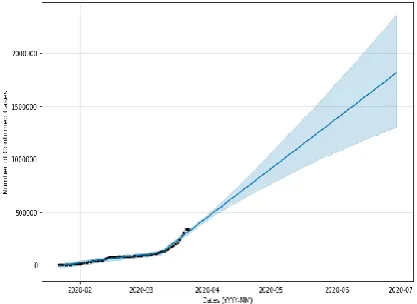
Fig. 2 Prediction of Confirmed cases till end of June
5 Conclusion
Due to pandemic of Coronavirus and COVID-19, all countries are looking to-wards mitigation plan to control the spread with the help some modeling tech-niques. This research works aims to understand the complete medical perspective of this COVID-19 pandemic and how predictive analytics will empower the pre-dictions. Analysis of various predictive analytics methods available in the litera-ture is presented in this paper. We have also discussed and presented the compara-tive analysis of various prediccompara-tive analytics models and algorithm by suggesting more appropriate use cases for application. Out study indicate that, there is a need of thorough assessment of these predictive analytics algorithm based on type of question to be answered. Application of Prophet predictive analytics algorithm on Kaggle dataset its predictions are also presented in this paper. Simulation result of this model shows that the confirmed COVID-19 infected cases would be 1.6 mil-lion and 2.3 milmil-lion by end of May and June respectively. We hope that these pre-dictions based on ICT will be also helpful to pharmaceutical companies to manu-facture drugs in faster rate.
References
1. The Novel Corona virus Pneumonia Emergency Response Epidemiology Team. The Epidemiological Characteristics of an Outbreak of 2019 Novel Corona virus Diseases (COVID-19)—China, 2020. China CDC Weekly. 2020;2:113-22
2. WHO. Novel Corona virus(2019-nCoV) Situation Report - 39. 2020 [cited 2020 March 1]; Available from: https://www.who.int/docs/default-
source/coronaviruse/situationreports/20200228-sitrep-39-covid-19.pdf?sfvrsn=5bbf3e7d_2
3. WHO. Novel Corona virus(2019-nCoV) Situation Report - 52. 2020 [cited 2020 March 12]; Available from: https://www.who.int/docs/default-
source/coronaviruse/situation-reports/20200312-sitrep-52-covid-19.pdf?sfvrsn=e2bfc9c0_4
4. The center of Evidence-Based Medicine Develops, Promotes and disseminates better evidence for healthcare CEBM-University of OXFORD report [cited 2020 April 6] https://www.cebm.net/covid-19/covid-19-what-proportion-are-asymptomatic/ 5. Singhal T.Indian J Pediatr. 2020 Apr;87(4):281-286.
6. Rothe C, Schunk M, Sothmann P, Bretzel G, Froeschl G, Wallrauch C, Zimmer T, et al. Transmission of 2019-nCoV Infection from an Asymptomatic Contact in Germany. N Engl J Med. 2020 Mar 5; 382(10):970-971.
7. Chan JFW, Yuan S, Kok KH, To KKW, Chu H, Yang J, et al. A familial cluster of pneumonia associated with the 2019 novel coronavirus indicating person-to-person transmission: a study of a family cluster. Lancet. 2020;395(10223):514–23. 2. 8. Xiaoxia L, Liqiong Z, Hui D, Jingjing Z, Yuan L, Jingyu Q,et al. SARS-CoV-2
Infec-tion in Children. New England Journal of Medicine. 2020. 10.1056/NEJMc2005073. 9.
10. Moriarty LF, Plucinski MM, Marston BJ, Kurbatova EV, Knust B, Murray EL, et al. Public health responses to COVID-19 Outbreaks on Cruise Ships-Worldwide, Febru-ary-March 2020.MMWR Morb Mortal Wkly Rep 2020;69:347-352
11. Russell Beth, Moss Charlotte, Rigg Anne, Hopkins Claire, Papa Sophie, Van Hemel-rijck Mieke Anosmia and ageusia are emerging as symptoms in patients with COVID-19: What does the current evidence say?2020 ecancer 14 ed98
12. Giordano, G., Blanchini, F., Bruno, R., Colaneri, P., Di Filippo, A., Di Matteo, A., & Colaneri, M. (2020). A SIDARTHE Model of COVID-19 Epidemic in Italy. arXiv preprint arXiv:2003.09861.
13. Bannister-Tyrrell, M., Meyer, A., Faverjon, C., & Cameron, A. (2020). Preliminary evidence that higher temperatures are associated with lower incidence of COVID-19, for cases reported globally up to 29th February 2020. medRxiv.
14. Russo, L., Anastassopoulou, C., Tsakris, A., Bifulco, G. N., Campana, E. F., Toraldo, G., & Siettos, C. (2020). Tracing DAY-ZERO and Forecasting the Fade out of the COVID-19 Outbreak in Lombardy, Italy: A Compartmental Modelling and Numerical Optimization Approach. medRxiv.
15. Volpert, V., Banerjee, M., & Petrovskii, S. (2020). On a quarantine model of corona-virus infection and data analysis. Mathematical Modelling of Natural Phenomena, 15, 24.
16. Weber, A., Ianelli, F., & Goncalves, S. (2020). Trend analysis of the COVID-19 pan-demic in China and the rest of the world. arXiv preprint arXiv:2003.09032.
17. Zhang, F., Zhang, J., Cao, M., & Hui, C. (2020). A simple ecological model cap-tures the transmission pattern of the coronavirus COVID-19 outbreak in Chi-na. medRxiv.
18. Hellewell, J., Abbott, S., Gimma, A., Bosse, N. I., Jarvis, C. I., Russell, T. W., ... & Flasche, S. (2020). Feasibility of controlling COVID-19 outbreaks by isolation of cases and contacts. The Lancet Global Health.
19. Liu, Z., Magal, P., Seydi, O., & Webb, G. (2020). Predicting the cumulative number of cases for the COVID-19 epidemic in China from early data. arXiv preprint arXiv:2002.12298.
20. Park, S. W., Bolker, B. M., Champredon, D., Earn, D. J., Li, M., Weitz, J. S., ... & Dushoff, J. (2020).Reconciling early-outbreak estimates of the basic reproduc-tive number and its uncertainty: framework and applications to the novel coronavirus (SARS-CoV-2) outbreak. medRxiv.
21. M. Chen, Y. Hao, K. Hwang, L. Wang and L. Wang, "Disease Prediction by Machine Learning Over Big Data From Healthcare Communities," in IEEE Access, vol. 5, pp. 8869-8879, 2017.
22. Shinde, Gitanjali R;Kalamkar, Asmita B.; Mahalle, Parikshit N; Dey, Nilanjan; Chaki, Jyotismita; Hassanien, Aboul ella; . (2020): Forecasting Models for Corona-virus (COVID-19): A Survey of the State-of-the-Art. TechRxiv. Preprint. https://doi.org/10.36227/techrxiv.12101547.v1