Computational methods for predicting functions at the mRNA isoform level
Sambit K. Mishra*, Viraj Muthye*, Gaurav Kandoi#
Bioinformatics and Computational Biology Program, Iowa State University, Ames, IA 50011
* These authors contributed equally
# Corresponding author
E-mail: [email protected] (GK)
Abstract
Multiple mRNA isoforms of the same gene are produced via alternative splicing, a biological mechanism that regulates protein diversity while maintaining genome size. Alternatively spliced mRNA isoforms of the same gene may sometimes have very similar sequence, but they can have
significantly diverse effects on cellular function and regulation. The products of alternative
splicing have important and diverse functional roles, such as response to environmental stress,
regulation of gene expression, human heritable and plant diseases. The mRNA isoforms of the
same gene, such as the apoptosis associated CASP3 gene, can have dramatically different
functions. The shorter mRNA isoform product CASP3-S inhibits apoptosis, while the longer
CASP3-L mRNA isoform promotes apoptosis. Despite the functional importance of mRNA
isoforms, very little has been done to annotate their functions. The recent years have however seen
the development of several computational methods aimed at predicting mRNA isoform level
biological functions. These methods use a wide array of proteo-genomic data to develop machine
learning-based mRNA isoform function prediction tools. In this review, we discuss the
computational methods developed for predicting the biological function at the individual mRNA
isoform level.
Keywords: Alternative Splicing; RNA-Seq; Machine Learning; Deep Learning; Recommender
Introduction
Cells can produce multiple mRNA isoforms from a single gene because of a post-transcriptional
regulatory mechanism, known as alternative splicing (AS). mRNA isoform sequences from a
single gene may differ in a few base pairs up to several exons/introns. Such differences in the
sequences can manifest either in the coding region or in the untranslated regions (3’ or 5’) of
mRNA isoforms and can be characterized by several splicing mechanisms. In the absence of
alternative splicing, all the introns are excised from the mRNA isoform. The commonly known
Figure 1. Common Alternative splicing events. The mechanisms of the most common
alternative splicing events: Exon Skipping, Intron Retention, Alternative 5’ splice site selection
and Alternative 3’ splice site selection, are presented. The colored bars (blue, orange, and green)
represent exons, while the black lines connecting them represent intronic segments.
1. Exon skipping – The most prevalent mechanism in vertebrates and invertebrates where
specific exons in the pre-mRNA are skipped in the mature mRNA transcript.
2. Intron retention – Common in lower metazoans and plants, it is a process where an
intron is retained in the mature mRNA, and
3. Alternative 3’/5’ acceptor/donor sites – A process that involves exons that are flanked
by competing splice sites on one end (3’/5’) and a fixed splice site on the opposite end, resulting
in an alternative region that is either included or excluded in the mature mRNA.
AS is a natural phenomenon and its prevalence is high in eukaryotes, such as mammals and plants
(Keren et al., 2010). The extent to which the eukaryotic genome undergoes AS is highly variable.
Almost 61% intron-containing genes in Arabidopsis thaliana, 60% multi-exon genes in
Drosophila melanogaster and as much as 90% multi-exon genes in human are alternatively spliced
(Graveley et al., 2011; Syed et al., 2012). Alternatively spliced mRNA isoforms from a single gene
can have different functions and are characterized by their encoded protein isoforms (Menon et
al., 2011). Not all mRNA isoforms generated by AS are functional. Some isoforms differ in their
biological properties, such as their catalytic activities, interactions of the mRNA isoform encoded
proteins with other proteins and the sub-cellular localization of their encoded proteins (Rafalska
et al., 2004). AS is responsible for several functions within the organism including regulation of
63 of SMG1 gene in peripheral leukocytes because of examination stress in male medical students
is a remarkable example of AS (Kurokawa et al., 2010). While several important cellular
mechanisms and functions are attributed to AS, the underlying knowledge of how exactly splicing
regulates such events is still unclear (Kelemen et al., 2013).
Due to the recent developments in massively parallel sequencing methods, a rapid collection of
mRNA isoform level sequence and expression data has been generated. This wealth of data at the
mRNA isoform level provides evidence confirming the differential expression of mRNA isoforms
under different conditions (Marquez et al., 2012; Pan et al., 2008; Raj & Blencowe, 2015). Such
evidence has led to the refinement and improvement in genome annotations by identifying new
functions of genes attributed to an alternatively spliced mRNA isoform product which were
previously unknown (Kelemen et al., 2013).
Most experiments that aim to characterize gene functions are typically performed at a gene level
i.e., the functional characterization is targeted only towards a given gene of interest and not
specifically towards its mRNA isoforms. Such experiments do not account for the fact that a gene
is a collection of multiple mRNA isoforms. Databases such as Gene Ontology (GO) (Carbon et
al., 2017), Uniprot Gene Ontology Annotations (Uniprot-GOA) (Barrell et al., 2009), and Kyoto
Encyclopedia of Genes and Genomes (KEGG) (Kanehisa et al., 2017) that curate functional data
are focused primarily on the canonical mRNA isoforms and do not have specific information on
the functions of alternatively spliced mRNA isoforms. This dearth of gene function
characterization at the mRNA isoform level has led to only a few hundred functional annotations
for mRNA isoform functions in functional databases like GO. While most experiments aimed at
annotating gene functions have lagged in describing and differentiating the functions of the mRNA
recommendation systems have been developed to annotate gene functions at the level of mRNA
isoforms.
Previously, machine learning methods have been used to address a multitude of problems, some
of which include, drug target discovery, gene function prediction, protein-protein interaction (PPI)
prediction, protein structure and functional site prediction, and subcellular localization protein
prediction (Dale et al., 2010; Demerdash et al., 2009; Kandoi et al., 2015, 2017; Mishra et al.,
2019; Muthye et al., 2020; Petrova & Wu, 2006). More recently, several machine learning and
recommendation system methods have also been developed to predict the biological functions of
mRNA isoforms (Chen et al., 2019; Eksi et al., 2013; Kandoi, 2019; Kandoi & Dickerson, 2019;
H.-D. D. Li et al., 2016; W. Li et al., 2014; Luo et al., 2017; Panwar et al., 2016; Shaw et al., 2018;
Tseng et al., 2015; Wang et al., 2020). These methods have been successful in predicting gene
functions at the level of mRNA isoforms and provide an added advantage over experimental
approaches in terms of time and resources.
The problem of mRNA isoform function prediction is a challenging one. Many mRNA isoforms
are non-functional and therefore introduce significant noise to any given dataset. Some mRNA
isoforms are condition or tissue specific and thus, are functionally active only under specific
conditions. The methods developed for predicting gene function cannot be directly used for mRNA
isoform function prediction because these methods ignore the distinct functions of alternatively
spliced mRNA isoforms of the same gene. Despite these limitations, the recently developed
computational methods have been able to identify mRNA isoforms that are strongly associated
with a gene’s annotated functions, differentiate functional mRNA isoforms from non-functional
mRNA isoform function prediction methods based on machine learning and recommendation
systems typically involve the following steps:
1. Training label generation- Involves creating a training dataset and assigning labels to
the data points. An example of label assignment in the context of mRNA isoform function
prediction could be assigning “functional” and “non-functional” labels to all mRNA isoforms in
the training data.
2. Feature calculation- Involves calculations of features for all mRNA isoforms in the
training data. Depending on the model, the features may be calculated for each mRNA isoform,
mRNA isoform pairs or genes.
3. Training the model- An initial model is trained on the training data
4. Model evaluation- The predictive performance of the trained model is evaluated on the
training data, often using different cross validation techniques.
5. Feature and model parameter optimizations- The parameters of the trained model
and the input mRNA isoform features are further optimized to improve prediction performance.
6. Prediction on test dataset- The optimized model is evaluated on a test dataset that is
independent of the training data.
Few mRNA isoform function prediction methods use more traditional and widely used algorithms
like logistic regression and random forest, while some others use deep learning or recommendation
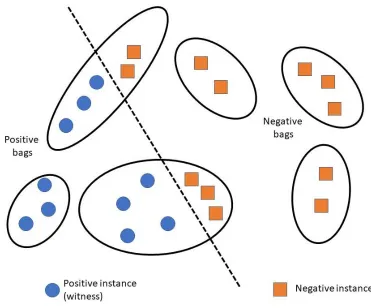
systems. However, a lot of the existing methods use the multiple instance learning (MIL)
considered a “bag” and an mRNA isoform is considered an “instance” of the bag. A gene
associated with the function under study is referred to as a “positive bag” and the mRNA isoforms
of the gene responsible for the gene’s function are known as “witness(es)”. There is at least one
witness in a positive bag. The aim is to identify a subset of mRNA isoform witnesses from a
positive bag that maximize their difference from the negative mRNA isoforms.
Figure 2. Overview of multiple instance learning (MIL) framework. Each gene (black ellipse) is
considered a bag, where each mRNA isoform (circle or square within the ellipse) is considered an
instance of the bag. A gene associated with a function is a positive bag, and all instances (mRNA
This review focuses on the machine learning and recommendation system approaches for mRNA
isoform function prediction. We also consider MIL-based methods since they use machine learning
algorithms as a base-learner within the MIL framework. This review is organized into the
following sections: 1. mRNA isoform level functional network prediction methods, 2. MIL-based
mRNA isoform function prediction methods. 3. Deep learning-based mRNA isoform function
prediction methods, 4. Recommender system-based mRNA isoform function prediction methods.
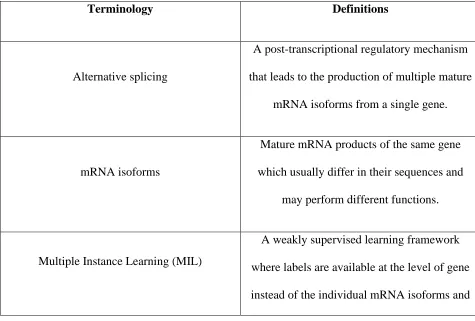
A glossary of frequently used terms in the field are provided in Table 1. Finally, we discuss ways
that can help further refine annotations at the mRNA isoform level.
Table 1 Frequently used terminologies and their contextual definitions in the field of mRNA
isoform function prediction.
Terminology Definitions
Alternative splicing
A post-transcriptional regulatory mechanism
that leads to the production of multiple mature
mRNA isoforms from a single gene.
mRNA isoforms
Mature mRNA products of the same gene
which usually differ in their sequences and
may perform different functions.
Multiple Instance Learning (MIL)
A weakly supervised learning framework
where labels are available at the level of gene
the goal is to find the specific mRNA isoforms
responsible for a gene’s function.
RNA-seq
A high-throughput way of measuring the
expression of gene and mRNA isoforms.
Gene Ontology (GO) term
A controlled vocabulary term that refers to a
specific function performed by genes and gene
products.
mRNA isoform-isoform interaction (III)
functional network
mRNA isoform level functional networks
where an edge between two mRNA isoforms
suggests the involvement of both mRNA
isoforms in the same function.
mRNA isoform level network-based methods
Fundamental cellular processes are regulated and performed by protein-protein interactions (PPIs).
Identifying the interacting partners of a protein can help us better understand its different roles
within and beyond the cell. In PPIs, the term “protein” generally refers to “protein variants encoded
by all mRNA isoforms of the gene”. PPIs do not take into consideration the mRNA isoforms from
which the proteins are encoded and thus, lack a one-to-one mapping between mRNA and protein
isoform data. It is widely acknowledged that AS can result in altered protein domains and
structures, thereby modulating PPIs. These differences in the interaction behavior can lead to loss
is therefore likely that each protein isoform encoded by an mRNA isoform of a gene, interacts with
a unique partner protein. Such an ensemble of isoform-specific interactions could regulate different
functions. Pipelines for predicting gene function using gene level networks cannot be directly
employed for solving the problem at the mRNA isoform level. This is mainly because most
functional data at the genomic level is analyzed for genes and not mRNA isoforms. Because of
this there are very few mRNA isoform pairs with functional information for developing models
for mRNA III functional network. In this section we discuss methods developed to predict mRNA
isoform-isoform interaction (IIIs) functional networks. Unlike co-expression networks where an
edge between two mRNA isoforms means that they have similar expression patterns, in a
functional network, an edge indicates that the two mRNA isoforms are involved in the same
function.
Isoform-Isoform Interaction Database (IIIDB)
In a two-step procedure, Tseng et. al. developed IIIDB (Tseng et al., 2015), an mRNA isoform
level functional network for humans. The authors first predicted IIIs at the mRNA isoform level
and then identified functional modules in the IIIs network. The IIIDB is developed using a series
of RNA-Seq datasets along with domain-domain interactions. A set of 19 RNA-Seq datasets with
at least 10 samples in each dataset from different physiological and experimental conditions was
used. All human mRNA sequences with a protein sequence in NCBI RefSeq (31,454 sequences;
Jan 2013 version) were used as the transcriptome annotations. The protein expression level was
assumed to be the same as that of the mRNA isoform expression level. If multiple mRNA isoforms
corresponded to the same protein sequence, the protein expression was calculated as the sum of all
mRNA isoform level co-expression networks were constructed for each RNA-Seq dataset by
calculating the Pearson correlation coefficient (PCC) between the expression of all mRNA isoform
pairs in that dataset. The PCCs were converted to z-scores and the z-scores were standardized to
have zero mean and unit variance to normalize the raw PCC values. A logistic regression model
was then used to predict if there exists an edge between any given mRNA isoform pair.
The explanatory variables used in the logistic regression model included the correlation values
from 19 RNA-Seq datasets and the domain-domain interaction scores from DOMINE database
(Raghavachari et al., 2008). For training and evaluating the logistic regression model, the authors
selected the positive set as: 1. mRNA isoform specific PPI from IntAct and 2. PPI involving genes
producing single mRNA isoforms only. To construct the negative set, the authors selected those
mRNA isoform pairs for which one mRNA isoform is predicted to be a plasma membrane cellular
component, while the other mRNA isoform is predicted to be a nuclear cellular component. The
authors used MODES network clustering method (Hu et al., 2005) for functional mRNA isoform
module discovery.
The authors verified the performance of their approach on the mRNA isoforms of APP gene, which
is associated with Alzheimer’s disease. They observed their method to have correctly predicted
the mRNA isoforms that were reportedly associated with Alzheimer’s. A major drawback of IIIDB
is that it limits its prediction to PPIs existing in IntAct. Because of this, new functional annotations
cannot be assigned at the gene or at the mRNA isoform level. Tissue, cell and/or condition specific
interactions and functions are ignored. The selection of negative set based on predicted subcellular
locations, while better than selecting random non-positive set, is still biased and propagates “error
Network of Splice Isoforms for Mouse
The authors applied a Bayesian network-based MIL approach to address the problem of mRNA
IIIs functional network prediction (H.-D. D. Li et al., 2016). Using this MIL approach, the authors
built an mRNA isoform-level functional relationship network of mouse by integrating data from
multiple sources.
In this approach, a pair of functionally related genes (positive bags) was assumed to contain at
least one pair of functionally related mRNA isoform pair. Additionally, in a pair of functionally
unrelated genes (negative bags), none of the mRNA isoform pairs were assumed to be related
functionally. Through this approach, the final goal was to recognize functionally related mRNA
isoform pairs from positive bags. A naïve Bayesian network was used as the base-learner for the
MIL framework. The authors developed a “single-instance bag MIL” algorithm, which improves
on the performance of previous MIL approaches and reduces the false positive rate.
The authors incorporated data from multiple sources. This included 65 heterogenous datasets:
RNA-seq, exon array, pseudo-amino acid, and isoform-docking data. For the first three dataset
types (RNA-seq, exon array, and pseudo-amino acid) the feature input was the correlation between
each mRNA isoform pair. For the isoform-docking data, the docking score between two proteins
was the input feature. Five-fold cross-validation was used to evaluate the performance of the four
types of input features. The most discriminative among the four feature types was the
isoform-docking score. The best performance was achieved by using an integrated network (using all
dataset types), compared to individual dataset types.
Functionally related gene pairs were defined as two genes which were assigned the same GO
GO, KEGG, and BioCyc (Caspi et al., 2008) databases. Negative pairs, i.e. functionally unrelated
genes, were chosen randomly. The RefSeq gene build version 37.2 of mouse was used to build the
mRNA isoform network.
This method was tested using multiple approaches. The first approach was using simulated datasets
from the RefSeq gene build. They focused on two parameters: 1. the mean difference (MD) of the
values between functionally related and functionally unrelated mRNA isoform pairs, and 2. the
ratio of multi-isoform genes to the total number of genes (MGR ratio). The approach was shown
to work well with genomic data of very weak MD, varying MGR ratios, as well as different
combinations of both MD and MGR.
The model was validated using single mRNA isoform gene pairs, that was referred to as the “gold
standard dataset”, using cross-validation. The approach was shown to be accurate when the Area
Under the Receiver Operating Curve (AUROC) values (0.656) were analyzed. Furthermore, using
data from the Corominas database, a database of experimentally verified isoform-isoform
interactions (Corominas et al., 2014), the authors showed that their approach was able to identify
which mRNA isoforms were interacting. Their mRNA isoform-level functional relationship
network identified varying functions of different mRNA isoforms from the same gene in several
cases. For example, they looked at the local networks of the mRNA isoforms of the Anxa6 gene
that are known to have two different functions. Only 13 out of 25 neighboring mRNA isoforms
were shared in their local networks.
The authors created an mRNA isoform-level functional relationship network of mouse, using data
from multiple sources, and a MIL approach. They rigorously tested their approach using both
i.e. a gene was either positive or negative for a GO term. Furthermore, in their approach, negative
gene pairs were randomly selected, thereby possibly introducing bias in their model. The GO
hierarchy was not used for generating the training labels, thereby resulting in the loss of important
functional information. Covariates such as tissue, condition, age, or sex specificity were not
considered.
Tissue-spEcific mrNa iSoform functIOnal Networks (TENSION)
In a different approach, the authors formulate the problem of mRNA III functional network
prediction as a simple supervised classification problem (edge prediction) and generate tissue level
mouse mRNA III functional networks (Kandoi & Dickerson, 2019). The 17 tissue-specific mRNA
III functional networks for mouse were developed using a series of RNA-Seq datasets, mRNA
sequence-based properties, and protein sequence features. The NCBI Mus musculus genome
assembly (GRCm38.p4) was used and all mRNA isoforms with available protein sequence (longer
than 30 amino acids and no non-standard amino acids) were used. For tissue-specific mRNA III
functional networks, only those tissues were included for which there were more than 10 samples.
These filtering criteria resulted in the selection of about 76000 mRNA isoforms from
approximately 22000 mouse genes. A total of 359 RNA-Seq samples from around 20 tissues (17
tissues have more than 10 samples) were processed to calculate the log-transformed FPKM values
for every mRNA isoform. For every tissue that had more than 10 samples, a PCC value was
obtained for every mRNA isoform pair. This resulted in 18 PCC values for all mRNA isoform
pairs (an additional value was obtained by using expression from all 359 samples) and were used
as features along with those obtained from the mRNA and protein sequences. Four PCC values
All PCC values were transformed using Fisher’s z-transformation. Finally, 27 mRNA
isoform-isoform level features were obtained and used to train random forest models for predicting
tissue-specific mRNA III functional networks.
The training and testing datasets were generated by combining the data from GO biological process
annotations, KEGG pathways, BioCyc pathways and PPIs from multiple databases. GO
annotations with little support such as those inferred from electronic annotations were not included
in the generation of training and testing datasets. The annotations in the GO were propagated along
the GO hierarchy (“true path rule”) to increase the number of positive annotations. GO terms with
more than 10 genes and less than 1000 genes annotated were considered. Single mRNA isoform
producing genes were used to generate the positive labels, while GO annotations tagged with a
“NOT” qualifier were used for the negative labels.
If two genes produce a single mRNA respectively and are co-annotated to the same GO term,
pathway, or PPI, the two mRNAs were assumed to be functionally related (positive label). If a
gene is tagged with a “NOT” qualifier for a GO term, it was considered non-functional (negative)
for the respective GO term. Because there are only few hundred such annotations in the GO, all
such annotations are also propagated to the child terms of the respective GO term (inverse of “true
path rule”). This increases the number of negative annotations significantly. All mRNA IIIs which
involve at least one negative annotation are considered as functionally unrelated (negative label).
All mRNA IIIs labelled as both positive and negative were considered as positives.
The authors generated a reference mRNA III functional network by using all 27 features and 17
tissue-specific networks by removing the tissue-specific RNA-Seq expression-based feature.
changed from positive to negative after removing the tissue-specific RNA-Seq feature. Similarly,
mRNA IIIs were considered tissue-specific non-functional pairs if the prediction changed from
negative to positive. The predictions were evaluated and validated by randomized positive and
negative class labels, updated GO annotations, stratified 10-fold cross-validations, and by
literature evidence. Additional validation was also performed by using tissue-preferred genes from
the transcriptomic BodyMap of mouse and 20 ubiquitously expressed genes (B. Li et al., 2017;
Söllner et al., 2017). The authors obtained significant improvement (20 points) in performance
compared to a previous method (H.-D. D. Li et al., 2016).
Although the authors use a more robust strategy to define their positive and negative labels, there
are still a few shortcomings of the proposed framework. Like previous studies, co-variates such as
age, sex and developmental stages were not considered. Instead, generic organism (or tissue) level
mRNA III functional networks were built. While several validation approaches have been used to
validate the predictions, no experiments were performed to validate novel predictions. TENSION
is readily available through Figshare (https://doi.org/10.25380/iastate.c.4275191) (Dickerson & Kandoi, 2019).
mRNA isoform level machine learning methods
Multiple Instance Learning (MIL)
The MIL framework has been used in several mRNA isoform function prediction tools. Here, we
review four MIL-based isoform function prediction methods.
Eksi et al. (Eksi et al., 2013) developed a MIL approach, IsoPred, using only RNA-seq data from
mouse. isoPred follows the conventions of the MIL approach as discussed earlier (see Introduction,
Figure 2). The objective here is to identify the mRNA isoform ‘responsible’ for the gene’s
function, therefore generating functional annotations at the mRNA isoform level.
The authors trained a support vector machine (SVM) model coupled within the MIL framework
(mi-SVM) on mouse RNA-seq data to predict the functions of the mRNA isoforms. The dataset
comprised RNA-seq data from 365 RNA-seq experiments from mouse and included 19,209 genes
and 24,274 mRNA isoforms. These RNA-seq datasets come from a wide variety of tissue and
experimental conditions. The annotations were taken from the GO database and all genes
associated with a given GO term or its descendants were treated as positives, while the rest were
considered negative. Bootstrap bagging was applied to obtain final mRNA isoform level scores.
The authors performed three types of tests to evaluate the predictive performance of their method.
First, they performed 5-fold cross-validation of gene-level predictions using single and multiple
mRNA isoform genes. Their tests revealed that their method shows superior performance for
multi-mRNA isoform genes (AUROC: 0.71), when compared to single mRNA isoform genes
(AUROC: 0.65). This suggests that their method can assign the function of a gene to at least one
mRNA isoform. Next, they performed validation of the predicted functional mRNA isoforms using
splice variant protein expression data in normal mammary tissue. They observed strong correlation
between the mRNA isoform predicted to have higher score and its protein expression. Finally, they
analyzed the disparate functions predicted for the mRNA isoforms of CDKN2a and ANXA6 genes
by comparing the predicted protein structures of the mRNA isoforms. They found that the different
functions predicted for the mRNA isoforms could be explained by the differences in the protein
Only expression profile of mRNA isoforms was used by IsoPred to characterize them. Although
RNA-Seq samples have been used from multiple different tissue and experimental conditions, no
tissue-specific predictions are made. No distinction is made between the covariates such as age
and sex. Random unannotated genes were used as negative sets which can introduce bias in the
training and testing dataset.
Instance-oriented Multiple Instance Label Propagation (iMILP)
The overall idea of instance-oriented Multiple Instance Label Propagation (iMILP) (W. Li et al.,
2014) is to model a gene-interaction network describing co-expression, which is derived from
RNA-Seq data. Such a model has “bags” (genes) of “nodes” (instances) where, each node is
represented by a mRNA isoform of a gene and each bag is assigned a label corresponding to the
gene’s function. The algorithm iterates over multiple mRNA isoform networks, each network
created from a different RNA-seq dataset, updating the labels in each iteration and ultimately,
identifying mRNA isoforms of a gene carrying out a certain function.
iMILP is composed of two modules- 1. network selection and combination, and 2. mRNA isoform
function prediction. For each GO term, the first module chooses an optimal subset of all input
mRNA isoform co-expression networks and combines them into a single network. In this step,
each individual network is treated as a “feature”, and the problem of selecting optimal networks is
treated as a “feature selection problem”. The wrapper method of feature selection, that uses a
greedy sequential forward strategy, is used to select optimal networks. The second module, the
iMILP predictor, takes the output from the first module and predicts mRNA isoform-specific
functions. The strategy used by the predictor for label propagation is that a node (mRNA isoform)
positive bags is assigned a higher prediction score for that GO term. Conversely, a node from a
positive bag that is not linked to any other node from positive bags receives a prediction score of
zero. Using this strategy, the predictor identifies which instances in a positive bag are positive.
One of the advantages of iMILP, over other MIL predictors, is that it uses a 3-class classification
approach for each label, i.e. positive, negative, and unknown (mRNA isoforms of genes that have
no annotated function).
The authors used 29 human RNA-Seq datasets, each having at least 6 experiments, to construct
mRNA isoform co-expression networks for each dataset. To identify functional homologs, each
mRNA isoform from a given RNA-Seq dataset was mapped on to 31,454 human mRNAs taken
from NCBI RefSeq database. For each dataset, the co-expression network was created using only
those mRNA isoforms that mapped on to the 31,454 human mRNAs. To construct an mRNA
isoform network, the authors used PCC for mRNA isoform expression and then used the GO data
as labels for functions. The PCC were transformed to z-scores and normalized to have zero mean
and unit variance.
The method showed an average cross-validation AUROC score of 0.67 averaged across all GO
terms. The authors also verified the prediction performance on different GO branches (biological
process, cellular component, and molecular function) with different number of genes in each
branch and observed an AUROC score > 0.6 in all cases. The authors then verified the performance
of their method for human protein isoforms. Their method predicted 70,392 isoform-level
functions, 13,621 of which were de novo predictions and 8,856 predicted isoform functions had at
least one annotation inherited from their host genes. In addition, their method exhibited high
predictive accuracy for the functions of five mRNA isoforms of the tumor suppressor gene (TP53):
or its descendants. Another 6 mRNA isoforms corresponding to the apoptosis regulatory genes:
BCL2L1, CFLAR and DNAJA3 were also used for validation. Each mRNA isoform is either
involved in the positive or negative regulation of apoptosis and this method, correctly predicted
the functions of 8/11 (72.7%) and 9/11 (81.8%) of the positive and negative mRNA isoform,
respectively.
iMILP used only expression profile of mRNA isoforms to characterize them. While RNA-Seq
samples have been used from multiple different tissue and experimental conditions, no
tissue-specific predictions are made. Covariates such as age and sex were also not distinguished in the
developed model. Genes annotated to sibling GO terms were used as negative sets which can
introduce bias in the training and testing dataset.
IsoFunc (MIL-SVM)
This method makes assumptions similar to that of Eksi et al. (Eksi et al., 2013) – 1. of all the
mRNA isoforms of a gene, at least one mRNA isoform is responsible for performing the gene’s
verified function, and 2. none of the mRNA isoforms of negative genes are associated with that
function. The underlying aim, similar to Eksi et al. (Eksi et al., 2013), is to identify subsets of
mRNA isoforms of positive genes that exhibit maximum difference between them and the mRNA
isoforms of the negative genes. For achieving this aim, the authors used the
“maximum-margin-based classification” approach. Their method implements MIL on a subset of mRNA isoforms
maximizing their objective function using SVM.
The method uses 248 RNA-seq runs (127 samples) from human taken from the ENCODE (Vetrie,
2004) project. The authors then selected 11,946 genes with 59,297 mRNA isoforms that had
descendants) were considered as positive for the GO term under study. All remaining genes were
considered as negative for the GO term under study.
The authors performed 5-fold cross-validation by creating positive and negative gene-sets for each
GO term and observed a median AUROC of 0.64. The authors also divided the genes based on the
number of protein-coding mRNA isoforms and observed performance improvement for genes with
higher number of mRNA isoforms. The authors also validated their method on two genes:
ADAM15 and LMNA/C for which there are experimental functional evidence at the mRNA
isoform level. ADAM15 has been shown to have two mRNA isoforms – ADAM15A and
ADAM15B and this method was able to distinguish between the functions of these mRNA
isoforms. Another gene, LMNA, which is associated with three mRNA isoforms – lamin A,
progerin and lamin C, was also used for validation. The authors observed distinct GO terms for
each mRNA isoform, which were consistent with previous literature.
Like several other mRNA isoform function predictors, this method suffers from the drawback of
using a 2-class classification system for labelling genes, i.e. a gene can only be “positive” for a
GO term or “negative”. Only mRNA expression profile has been used as an input to IsoFunc. No
tissue or condition specific predictions are made. Covariates such as sex and age are also not
considered. Random unannotated genes were used as negative for each GO term, which can
introduce bias in the training and testing dataset.
Weighted Logistic Regression-based MIL method (WLRM)
The authors have developed a Weighted Logistic Regression-based MIL (WLRM) model that uses
a “nonconvex sparsity-inducing regularizer” in the framework of MIL. A mapping of
simplex. Several smooth and non-smooth loss functions like hinge loss and logistic loss can be
incorporated in the proposed framework. An efficient block coordinate descent algorithm is also
developed to solve the highly nontrivial non-smooth and non-convex optimization problem
formulated in the WLRM framework.
Similar to IsoFunc (Panwar et al., 2016), WLRM used a total of 248 human RNA-seq runs (127
samples) taken from the ENCODE (Vetrie, 2004) project. The authors performed filtering based
on the percentage reads mapped to the reference human genome and average expression of
transcripts. They arrived at a total of 11,946 genes with 59,297 mRNA isoforms. This set of genes
was then annotated based on Gene Ontology. For a given GO term, genes (and their corresponding
mRNA isoforms) that were annotated for this term were labelled as positives and the remaining
set of genes and mRNA isoforms were treated as negatives. The authors used 94 benchmarked GO
terms to validate their method.
The WLRM approach was validated using 5-fold cross-validation for each GO term and then
compared with three existing methods- miSVM (Panwar et al., 2016), miFV (Wei et al., 2014) and
miVLAD (Wei et al., 2017) using cross-validation results. The performance comparisons were
carried out for five different groups of the 94 GO terms, each group created based on the number
of genes associated with each term. The authors observed that their method showed superior
performance (median AUROC 0.691) for the GO terms associated with fewer genes compared to
the three other methods. However, with an increase in GO term size, WLRM shows higher
specificity and accuracy compared to the three methods. More importantly, this method also
This method uses a 2-class classification system for their labels, where a gene can be either
“positive” or “negative” for a particular GO term, which may introduce bias in their training and
testing datasets. Unannotated genes were used as the negative set, which introduces bias in the
training and testing dataset. Only expression profile has been used to characterize the mRNA
isoforms. No tissue or condition specific predictions are made and covariates such as sex and age
are also not considered.
Deep Learning based methods
Deep learning techniques have been used in diverse biological contexts, like protein function
prediction and prediction of protein subcellular localization. Here, we review two tools that employ
a deep learning approach for predicting mRNA isoform specific functions – DIFFUSE and
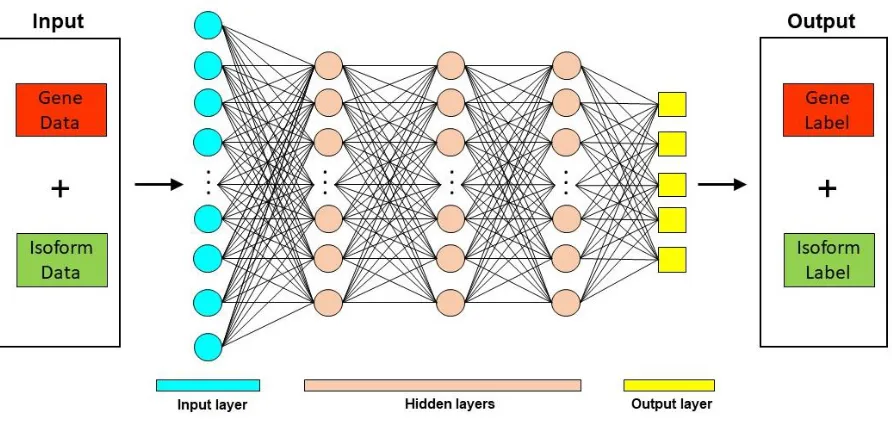
DeepIsoFun. A basic overview of the deep learning approach as applied to mRNA isoform
Figure 3. Deep Learning approach for mRNA isoform function prediction. In these methods, gene and mRNA isoform level features are used as input to a deep neural network which consists of multiple hidden layers. The output from these deep neural networks are the predicted gene and mRNA isoform level function predictions.
DeepIsoFun
Previous methods have tried to address the issue of mRNA isoform function prediction by using a
semi-supervised learning technique called MIL (Eksi et al., 2013; W. Li et al., 2014; Luo et al.,
2017; Panwar et al., 2016) However, the lack of labelled training data is reflected in their poor
performance. To improve performance, DeepIsoFun (Shaw et al., 2018) combines MIL with
domain adaptation (DA) (Ganin & Lempitsky, 2015) to predict the functions of mRNA isoforms,
using GO and RNA-Seq expression data.
The DeepIsoFun framework can be categorized into two domains: the gene domain and the mRNA
isoform domain. In the mRNA isoform domain, as per MIL, each gene is considered a bag, with
information, and are associated to functions in GO. Thus, by definition, a gene is both, a bag in
the mRNA isoform domain, and an instance in the gene domain. The relationship between the
function and expression of a gene can be transferred to the mRNA isoform domain, using the DA
technique. The application of the DA technique, to generate labelled training data and transfer
knowledge between the two domains, sets DeepIsoFun apart from the other MIL-based mRNA
isoform function predictors. DeepIsoFun with DA significantly outperforms DeepIsoFun without
DA.
The Deep Neural Network (DNN) architecture of DeepIsoFun is comprised of four modules: 1. an
autoencoder consisting of two fully connected hidden layers to extract common features of both
domains, and three classifiers implemented as parallel neural networks (NN), each consisting of
one hidden layer, 2. gene function predictor (labels the function of each gene), 3. mRNA isoform
function predictor (labels the function of each mRNA isoform), and 4. a domain label predictor
(ensures knowledge transfer from the gene domain to the mRNA isoform domain). The three
classifiers and the autoencoder form a deep feed-forward network. These NNs are trained for each
GO term. GO terms that are infrequent (associated with less than 5 proteins) and those inferred
from electronic annotation were excluded in the cross-validation training. The performance of
DeepIsoFun was shown to be robust across the three GO branches (Biological Process, Molecular
Function, and Cellular Component).
The performance of DeepIsoFun was analyzed using datasets from phylogenetically distant
organisms. First, three datasets were used from two organisms: Homo sapiens and Mus musculus
to compare DeepIsoFun to three existing methods: 1. iMILP (W. Li et al., 2014), 2. mi-SVM (Eksi
et al., 2013; Panwar et al., 2016), and 3. WLRM (Luo et al., 2017). In all the three datasets,
Dataset #1 AUROC of 0.735 vs 0.679 (mi-SVM) and 0.69 (WLRM); Table1 and Table 2 from
(Shaw et al., 2018)). Additionally, DeepIsoFun was compared to the other predictors on two more
datasets- Arabidopsis thaliana and Drosophila melanogaster. DeepIsoFun outperformed the other
predictors on these two datasets as well (Table S2 and S3 from (Shaw et al., 2018)). These
comparisons were made using a small subset of 117 GO Slim terms which have been used in
previous studies (Ashburner et al., 2000). Validation was carried out using 18 human genes with
multiple mRNA isoforms- some with pro-apoptosis and some with anti-apoptosis functions.
Compared to the remaining predictors, DeepIsoFun was better at differentiating the anti- and pro-
apoptosis functions of these mRNA isoforms.
In summary, due to the application of the DA technique, DeepIsoFun showed improved
performance over the existing mRNA isoform function predictors. The code for DeepIsoFun has
been made readily available on the project’s GitHub repository
(https://github.com/dls03/DeepIsoFun/) along with instructions for installation and use. Despite the improved performance of DeepIsoFun, the lack of labelled training data for mRNA isoform
function prediction and imbalanced GO data, leaves room for improvement. For instance, the
comparison of DeepIsoFun with other methods showed the best AUROC and AUPRC as 0.7 and
0.3 respectively for DeepIsoFun. Additionally, DeepIsoFun uses a 2-class classification system,
where an isoform can either be positive or negative with respect to each GO term, unlike a 3-class
system that adds an “unknown” label. Thus, DeepIsoFun assigns a “negative” label to gene that is
not assigned to a particular function, introducing bias in training and testing datasets. DeepIsoFun,
like the other MIL-based methods, uses only expression information to assign function of a gene
assign new functions at any of the two, gene or mRNA isoform levels. Tissue, condition, sex, and
age specific functions of mRNA isoforms are ignored.
Deep learning-based prediction of IsoForm FUnctions from Sequences and Expression
(DIFFUSE)
Several of the recently developed methods for functional annotation of mRNA isoforms use
information from expression profiles alone. There is another possible source of information
overlooked by these methods: the mRNA isoform sequences themselves. The mRNA isoform
sequences can contain information like active sites, binding sites, signal peptides, motifs, and
protein domains that can provide information about the function of that specific mRNA isoform.
For instance, alternative splicing of mouse transcription factors changed domain composition of
the mRNA isoforms, leading to tissue-specific isoforms with distinct functions (Taneri et al.,
2004). Deep learning-based prediction of IsoForm FUnctions from Sequences and Expression
(DIFFUSE) (Chen et al., 2019) uses both mRNA isoform sequence specific features and
information from expression profiles to predict mRNA isoform functions.
DIFFUSE consists of two important modules: 1. a DNN that extracts features from mRNA isoform
sequences and conserved domains, and 2. a conditional random field (CRF) that outputs a
prediction by taking into account both the DNN score and co-expression information. The input to
the DNN is comprised of trigrams generated from protein sequences and conserved domains. Here,
it is important to note that a “domain” (protein domain) refers to structural and evolutionary
building blocks of proteins. For each GO term, the DNN uses sequence information to measure
how likely it is that the mRNA isoform in question is positive for that GO term. In the second
information, a semi-supervised training algorithm is used to train the DNN and CRF together. The
labels are updated iteratively through mean field approximation.
DIFFUSE was compared to DeepIsoFun, mi-SVM, iMILP, and WLRM, focusing on a small set
of GO Slim terms, and three datasets. DIFFUSE showed a significant increase over the
performance of DeepIsoFun, which itself was shown to outperform the remaining three predictors.
An ablation study by removing the individual modules (CRF, conserved domain features, and
sequence features) showed that information contained in the conserved domain features was
important for predicting mRNA isoform function. Further, the authors analyzed correlation
between predicted functions and mRNA isoform sequences, expression profiles and protein
structures. They found that functional similarity was more correlated with sequence similarity than
expression similarity. DIFFUSE was validated using information for 14 mRNA isoforms of 6
genes with strong functional evidence. DIFFUSE predicted the function accurately for 11 of them,
more than the other methods.
DIFFUSE suffers from a similar limitation, as seen in DeepIsoFun. DIFFUSE, like DeepIsoFun,
uses a 2-class classification system; a gene can be “positive” or “negative” with respect to a
specific GO term. This assumes all unassigned gene-GO term relationships as negative which
introduces bias in the training and testing data. Like previous methods, DIFFUSE fails to make
any tissue, cell, or condition specific mRNA isoform function predictions. Unlike previous
methods, DIFFUSE utilizes the protein sequence and domain information to improve the
performance of mRNA isoform function prediction task, however, the mRNA isoform sequence
is yet to be used as another source of features. DIFFUSE ignores mRNA isoforms which are not
of all human mRNA isoforms. The code of DIFFUSE has been made readily available in their
GitHub repository (https://github.com/haochenucr/DIFFUSE).
Recommendation system-based methods
Another machine learning technique has been applied to the problem of mRNA isoform function
prediction: recommendation systems. Recommendation systems, used widely in non-biology
fields like e-commerce and online advertisements, are a set of tools that can provide suggestions
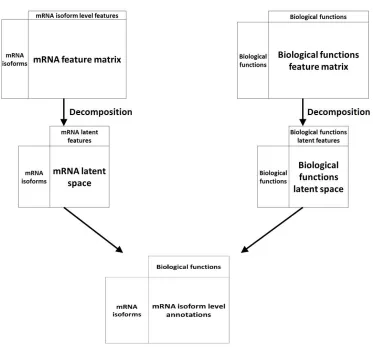
or recommendations of “items” that are useful to a “user”. In the context of biological questions,
“users” are typically entities like genes or mRNA and “items” are a biological property like
function (Figure 4). Below, we review two recommendation system-based mRNA isoform
Figure 4. An overview of recommendation system approaches for mRNA isoform function prediction. In recommendation system-based approaches, the mRNA isoform level features and the features at the biological functions like GO are projected to a latent space which are then associated by a decomposition unit to produce the final mRNA isoform level function recommendations.
mFRecSys
A recently developed predictor, mFRecSys (Kandoi, 2019), uses existing information of mRNA
isoform function to generate novel association recommendations. mFRecSys uses a
tri-factorization approach proposed by (Nickel et al., 2011). Matrix tri-factorization (MF) occupies a
critical role in recommendation systems. MF maps mRNA isoform and function terms from a
mRNA isoform function associations. The tri-factorization approach used in mFRecSys allows
incorporation of explicit biological context in predictions.
In mFRecSys, the “users” are the mRNA isoforms and the “items” are GO biological process
terms. mRNA isoforms for Mus musculus were used in training mFRecSys. To develop a
recommendation system to recommend mRNA isoform-specific functions, they characterized both
mRNA isoforms and GO biological process terms.
mRNA isoform features include tissue-specific expression data, and sequence properties of mRNA
and proteins. mRNA isoforms from the Mus musculus genome (GRCm38.p4 assembly) that have
both mRNA and protein sequence were used. Tissue-specific expression features were extracted
from 359 RNA seq samples from 17 mouse tissues from ENCODE (Vetrie, 2004). Sequence
features were extracted from mRNA and protein sequences (listed in Table 4.1 of (Kandoi, 2019)).
Semantic similarity for all GO biological process terms was calculated. GO biological process
terms were mapped to mRNA isoforms. These mappings were either positive, negative, or
unknown. This is an important feature of mFRecSys. A gene-GO term association is “positive” if
the gene is mapped to the GO term, “negative” if the gene is tagged with a “NOT” qualifier, and
“unknown” for all other associations. If a gene produces single mRNA isoforms, and is mapped to
a particular GO term, then this mRNA isoforms was considered positive for that term and its
ancestor terms (“true path rule”). If a gene producing multiple mRNA isoforms is negative for a
GO term, then all mRNA isoforms are considered negative for that GO term and all its child terms
(inverse “true path rule”).
In their training sets, they included 75,826 mRNA isoforms and 18,869 GO biological process
they developed 9 tissue-specific mFRecSys models using RNA-seq samples from the FANTOM5
project (Forrest et al., 2014). mFRecSys was validated using the latest annotations from GO. They
found that a recommendation system model using only mRNA sequence properties (0.993) was
better at mRNA isoform function prediction, while a model using only mRNA isoform expression
(0.976) information performed the worst.
While mFRecSys tries to address some of the limitations of previous method, there is still room
for improvement. More systems level properties such as explicit protein domains, PPIs, other
OMICS data such as Ribo-Seq, proteomics and metabolomics can be integrated. While the
performance metrics reported in the original mFRecSys paper are very high, the authors do not
perform a benchmark evaluation against previous methods. This makes it hard to assess the actual
improvements (if any) of mFRecSys over previous methods. Covariates like age and sex were
ignored.
DisoFun
DisoFun (Wang et al., 2020)is another recommendation system based mRNA isoform function
predictor. In DisoFun, a new collaborative matrix factorization technique is introduced that
integrates PPI network data and GO hierarchy to differentiate between mRNA isoform specific
functions. The goal of incorporating this information is to overcome the common assumption in
other predictors, that the collected annotations of each gene are complete. However, the GO
annotations of proteins are often incomplete (Huntley et al., 2014). While DeepIsoFun also uses
GO hierarchy to train the model, it uses only expression information. DisoFun improves on
previous predictors by incorporating PPI, GO hierarchy, and expression data to predict mRNA
DisoFun input includes mRNA isoform expression data, gene annotation data, PPI data and GO
hierarchy information. For the mRNA isoform expression data, 298 samples were taken from the
ENCODE project (Vetrie, 2004). PPI data was collected from BioGRID (Stark, 2006). The mRNA
isoform expression data matrix and gene annotation data matrix were factorized into low-rank
matrices. A low-rank matrix is shared between the two-resulting low-rank matrices to facilitate
collaboration, along with the PPI data and GO hierarchy information. The functional associations
between the mRNA isoforms and genes are encoded in a gene-isoform association matrix.
To assess the performance of DisoFun, the authors used a protocol referred to as “historical to
recent”. Essentially, they trained DisoFun on human GO annotations from a historical version
(2016) and validated the predictions on a later version (2018), accounting for structural changes in
GO. They also tested the performance of various components of DisoFun, i.e. different variations
of DisoFun that 1. does not use GO hierarchy, 2. does not use PPI data, 3. does not use both, and
4. uses both PPI and GO hierarchy. The authors report that the version of DisoFun that uses both
components significantly outperforms the other versions, and that the contribution of GO hierarchy
seems to be larger than that of PPI information.
The performance of DisoFun was also compared to the performance of other isoform function
predictors- mi-SVM, WLRM, iMILP, DeepIsoFun, and IsoFun. For these comparisons, annotation
information for human genes and isoforms (2018 version) was used. At both gene-level and mRNA
isoform level function prediction comparisons, DisoFun outperformed the other methods for
predicting GO biological process terms (AUROC: 0.71 vs 0.56 – 0.66). For mRNA isoform level
predictions, 2,782 single mRNA isoform human genes were used. DisoFun, IsoFun and mi-SVM
whose mRNA isoform level functions have been studied experimentally. The authors report that
DisoFun had the highest prediction accuracy, compared to the other predictors.
Like DeepIsoFun and DIFFUSE, a 2-class classification system is used- a gene can be “positive”
or “negative” with respect to a specific GO term. While comparing the performance of DisoFun at
gene-level to other predictors, the authors of DisoFun selected twice as many negative genes as
positive ones for each term for training the model, thereby potentially introducing bias in the
model. While DisoFun introduces new information by using PPI data, it ignores the potential
information carried in the mRNA isoform and protein sequences. Cell, tissue, or condition specific
predictions are not made, which are a major aspect of mRNA isoforms. Age and sex specific
functions are ignored. Like mFRecSys, DisoFun also makes novel mRNA isoform function
predictions. The code for DisoFun can downloaded from their website
(http://mlda.swu.edu.cn/codes.php?name=DisoFun).
Discussion
The completion of the human genome sequencing project resulted not only in a deeper
understanding of the genomic complexities of humans, but also stressed the importance of
alternative splicing in regulating phenotypic complexity (Koren et al., 2007). The results from the
human genome project revealed that most humans contain ~25,000 protein coding genes, which is
remarkably close to the number of genes in a nematode, C. elegans (20,000 genes) and is less than
that of rice (40,000 genes) - suggesting that organismal complexity cannot be explained merely
by the number of genes. The concept of alternative splicing was consequently introduced to explain
can potentially encode multiple protein isoforms, each isoform capable of executing a unique
function.
Despite the significant role of alternatively spliced mRNA isoforms in controlling organismal
complexity, limited progress has been made towards annotating their functions. Limitations in
experimental technologies have resulted in most large-scale genomic data to be profiled at gene
level, rather than mRNA isoform level. Consequently, functions have been often assigned only at
a gene level and the functions of the individual mRNA isoforms of a gene remain unannotated.
However, recent developments in sequencing technology have resulted in several RNA-Seq
datasets that provide information on mRNA isoform expression levels and an opportunity to
understand the expression profile of genes at mRNA isoform levels. Such datasets also inspired
the development of numerous computational methods as viable alternatives to experimental
approaches for mRNA isoform function detection.
Computational approaches developed in the recent years have, to an extent, been able to address
the shortcomings of experimental approaches (time and resource constraints) and have the
capability to predict organism wide mRNA isoform functions. To start with, such approaches often
require a gold standard dataset to train and test their prediction models. A gold standard dataset,
in the context of mRNA isoform function prediction, can be expected to contain a set of genes and
their mRNA isoforms with experimentally verified functions. However, the lack of such a dataset
in the scientific community makes it difficult to train prediction models and the accuracy of
predictions from computational methods becomes questionable. Therefore, most computational
methods resort to using single mRNA isoform encoding genes and their annotations as the ground
truth. One would then expect the predictions from these methods for multiple mRNA isoform
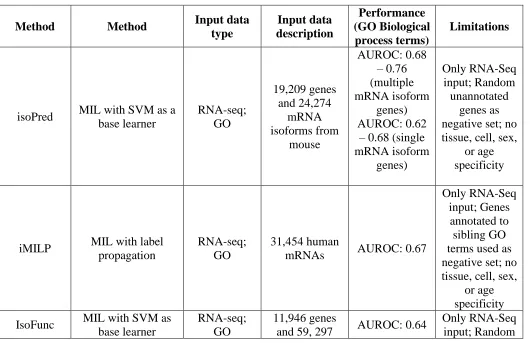
A summary of the computational methods reviewed in this work is summarized in Table 2. Most
computational methods have been trained using datasets from either mouse or humans, limiting
their applications to other species. It is known that alternatively spliced mRNA isoform sequences
are often strongly dependent on the splicing mechanisms, which can vary by species. Therefore, a
prediction method trained on human RNA-Seq datasets may learn the underlying functional
annotation rules specific to human (and closely related species) mRNA isoform data and may not
accurately predict the mRNA isoform functions in distinct species like plants, which observe a
different splicing mechanism. The current state of the art computational methods could strongly
benefit from using models that are trained on data from multiple species, which would make their
predictions more robust and generic.
Table 2. Summary of methods reviewed based on their input data type and approach
Method Method Input data
type Input data description Performance (GO Biological process terms) Limitations
isoPred MIL with SVM as a base learner RNA-seq; GO 19,209 genes and 24,274 mRNA isoforms from mouse AUROC: 0.68 – 0.76 (multiple mRNA isoform genes) AUROC: 0.62
– 0.68 (single mRNA isoform genes) Only RNA-Seq input; Random unannotated genes as negative set; no tissue, cell, sex,
or age specificity
iMILP MIL with label
propagation
RNA-seq; GO
31,454 human
mRNAs AUROC: 0.67
Only RNA-Seq input; Genes annotated to sibling GO terms used as negative set; no tissue, cell, sex,
or age specificity
IsoFunc MIL with SVM as
base learner
RNA-seq; GO
11,946 genes
and 59, 297 AUROC: 0.64
mRNA isoforms from
human
unannotated genes as negative set; no tissue, cell, sex,
or age specificity
WLRM MIL with weighted
logistic regression RNA-seq; GO 11,946 genes and 59,297 mRNA isoforms from human
AUROC: 0.6 – 0.85
Only RNA-Seq input; Random unannotated
genes as negative set; no tissue, cell, sex,
or age specificity
IIIDB Network-based
RNA-seq; Domain-Domain interactions; GO; PPI 31,454 mRNA isoforms from human Data not available Only RNA-Seq input; Subcellular localization as negative set; no tissue, cell, sex,
or age specificity; limited to existing PPIs Mouse Splice Isoform Network Network-based; MIL with Bayesian network RNA-Seq; Exon array; Protein docking; pseudo-amino acid composition; GO; Pathways Data not
available AUROC: 0.62
Random unannotated
genes as negative set; no tissue, cell, sex,
or age specificity
TENSION Network- based;
Random Forest RNA-Seq; mRNA Sequence; Protein Sequence; PPI; GO; Pathways 21,813 genes and 75,826 mRNA isoforms from mouse
AUROC: 0.94 No cell, sex, or age specificity
DeepIsoFun Deep learning RNA-Seq;
or age specificity
DIFFUSE Deep learning
RNA-Seq; mRNA sequence; Protein sequence; GO 19,303 genes and 39,375 mRNA isoforms from human AUROC: 0.84 Random unannotated genes as negative set; no tissue, cell, sex,
or age specificity
mFRecSys Recommendation
system RNA-Seq; mRNA sequence; Protein sequence; PPI; GO; Pathways 21,813 genes and 75,826 mRNA isoforms from mouse AUROC: 0.99 Limited tissue-specificity; No cell, sex, or age
specificity
DisoFun Recommendation
system RNA-Seq; PPI; GO 11,868 genes and 25,939 mRNA isoforms from human AUROC: 0.71 Only RNA-Seq input; Random unannotated genes as negative set; no tissue, cell, sex,
or age specificity
The field of mRNA isoform function prediction has developed rapidly since its inception. The
need to annotate the functions of mRNA isoforms has become even more obvious in the recent
years to understand their regulatory and functional behavior at the systems level. The field can
greatly benefit by using multi-omics data within a computational framework to predict mRNA
isoform functions. Integrative approaches combining protein structural data with multi-omics data
could also be used to tune the performance of existing computational methods. In the coming years,
the precise detection of mRNA isoform function is likely to encourage the use of mRNA isoforms
as biomarkers for different diseases, rendering them as preferred therapeutic targets.
References
Ashburner, M., Ball, C. A., Blake, J. A., Botstein, D., Butler, H., Cherry, J. M., Davis, A. P.,
Dolinski, K., Dwight, S. S., Eppig, J. T., Harris, M. A., Hill, D. P., Issel-Tarver, L.,
Kasarskis, A., Lewis, S., Matese, J. C., Richardson, J. E., Ringwald, M., Rubin, G. M., &
Sherlock, G. (2000). Gene ontology: Tool for the unification of biology. In Nature Genetics
(Vol. 25, Issue 1, pp. 25–29). https://doi.org/10.1038/75556
Barrell, D., Dimmer, E., Huntley, R. P., Binns, D., O’Donovan, C., & Apweiler, R. (2009). The
GOA database in 2009 - An integrated Gene Ontology Annotation resource. Nucleic Acids
Research, 37(SUPPL. 1), D396–D403. https://doi.org/10.1093/nar/gkn803
Carbon, S., Dietze, H., Lewis, S. E., Mungall, C. J., Munoz-Torres, M. C., Basu, S., Chisholm,
R. L., Dodson, R. J., Fey, P., Thomas, P. D., Mi, H., Muruganujan, A., Huang, X., Poudel,
S., Hu, J. C., Aleksander, S. A., McIntosh, B. K., Renfro, D. P., Siegele, D. A., …
Westerfield, M. (2017). Expansion of the gene ontology knowledgebase and resources: The
gene ontology consortium. Nucleic Acids Research, 45(D1), D331–D338.
https://doi.org/10.1093/nar/gkw1108
Caspi, R., Foerster, H., Fulcher, C. A., Kaipa, P., Krummenacker, M., Latendresse, M., Paley, S.,
Rhee, S. Y., Shearer, A. G., Tissier, C., Walk, T. C., Zhang, P., & Karp, P. D. (2008). The
MetaCyc Database of metabolic pathways and enzymes and the BioCyc collection of
pathway/genome databases. Nucleic Acids Research, 36(SUPPL. 1), 623–631.
https://doi.org/10.1093/nar/gkm900
functions from sequences and expression profiles via deep learning. Bioinformatics, 35(14),
i284–i294. https://doi.org/10.1093/bioinformatics/btz367
Corominas, R., Yang, X., Lin, G. N., Kang, S., Shen, Y., Ghamsari, L., Broly, M., Rodriguez,
M., Tam, S., Trigg, S. A., Fan, C., Yi, S., Tasan, M., Lemmens, I., Kuang, X., Zhao, N.,
Malhotra, D., Michaelson, J. J., Vacic, V., … Iakoucheva, L. M. (2014). Protein interaction
network of alternatively spliced isoforms from brain links genetic risk factors for autism.
Nature Communications, 5, 1–12. https://doi.org/10.1038/ncomms4650
Dale, J. M., Popescu, L., & Karp, P. D. (2010). Machine learning methods for metabolic pathway
prediction. BMC Bioinformatics. https://doi.org/10.1186/1471-2105-11-15
Demerdash, O. N. A., Daily, M. D., & Mitchell, J. C. (2009). Structure-based predictive models
for allosteric hot spots. PLoS Computational Biology, 5(10).
https://doi.org/10.1371/journal.pcbi.1000531
Dickerson, J. A., & Kandoi, G. (2019). Tissue-spEcific mrNa iSoform functIOnal Networks
(TENSION) Collection. Iowa State University. https://doi.org/10.25380/iastate.c.4275191
Eksi, R., Li, H. D., Menon, R., Wen, Y., Omenn, G. S., Kretzler, M., & Guan, Y. (2013).
Systematically Differentiating Functions for Alternatively Spliced Isoforms through
Integrating RNA-seq Data. PLoS Computational Biology, 9(11).
https://doi.org/10.1371/journal.pcbi.1003314
Forrest, A. R. R., Kawaji, H., Rehli, M., Baillie, J. K., De Hoon, M. J. L., Haberle, V.,
Lassmann, T., Kulakovskiy, I. V., Lizio, M., Itoh, M., Andersson, R., Mungall, C. J.,
… Hayashizaki, Y. (2014). A promoter-level mammalian expression atlas. Nature,
507(7493), 462–470. https://doi.org/10.1038/nature13182
Ganin, Y., & Lempitsky, V. (2015). Unsupervised domain adaptation by backpropagation. In F.
Bach & D. Blei (Eds.), 32nd International Conference on Machine Learning, ICML 2015
(Vol. 2, pp. 1180–1189). PMLR.
Graveley, B. R., Brooks, A. N., Carlson, J. W., Duff, M. O., Landolin, J. M., Yang, L., Artieri,
C. G., Van Baren, M. J., Boley, N., Booth, B. W., Brown, J. B., Cherbas, L., Davis, C. A.,
Dobin, A., Li, R., Lin, W., Malone, J. H., Mattiuzzo, N. R., Miller, D., … Celniker, S. E.
(2011). The developmental transcriptome of Drosophila melanogaster. Nature, 471(7339),
473–479. https://doi.org/10.1038/nature09715
Hu, H., Yan, X., Huang, Y., Han, J., & Zhou, X. J. (2005). Mining coherent dense subgraphs
across massive biological networks for functional discovery. Bioinformatics.
https://doi.org/10.1093/bioinformatics/bti1049
Huntley, R. P., Sawford, T., Martin, M. J., & O’Donovan, C. (2014). Understanding how and
why the Gene Ontology and its annotations evolve: The GO within UniProt. In GigaScience
(Vol. 3, Issue 1, p. 4). https://doi.org/10.1186/2047-217X-3-4
Kandoi, G. (2019). Machine learning tools for mRNA isoform function prediction.
Kandoi, G., Acencio, M. L., & Lemke, N. (2015). Prediction of druggable proteins using
machine learning and systems biology: A mini-review. In Frontiers in Physiology (Vol. 6,