JeDEM 9(1): 52-78, 2017 ISSN 2075-9517
http://www.jedem.org
Beyond
Ambiguity:
Conceptualizing
Open
Government through a Human Systems Framework
Merlin Chatwin*, Godwin Arku*
*The University of Western Ontario, Department of Geography, London, Ontario, Canada – {[email protected]; [email protected]}
Abstract: Democratic governments around the world have embraced the concept of open government due to its promise of rebuilding public trust and validation. The Open Government Partnership is a significant driver of this movement with over 75 member-nations, 15 subnational government participants, and many other local governments implementing reforms within their jurisdictions. The central tenets of transparency, accountability, participation, and collaboration are well understood within scholarly works and practitioner publications. However, questions remain about the adaptability and salience of open government as a concept across diverse social, cultural, and political contexts. This paper addresses these questions by utilizing a human systems framework called the ‘Dialogue Boxes’. To develop an understanding of how open government is currently positioned within scholarly works and practitioner publications, an extensive literature search was conducted. The search utilized major search engines, often-cited references, direct journal searches, and colleague-provided references. This paper uses existing definitions and descriptions to populate the framework with available information and to highlight where government practitioners can populate context-specific content. Ultimately, the aim of the paper is to demonstrate the utility of the dialogue boxes to develop a context-specific conceptualization of open government that leads to reforms that maximize the direct positive impact on people’s lives.
Keywords: open government reforms, action plans, human systems, literature review
Acknowledgements: Comments and suggestions from the two anonymous referees and the guest editor have been extremely helpful.
1.
Introduction
in Latin America’, ‘Open Gov Asia’ and ‘Open Government in the EU’. The central tenets of transparency, accountability, participation, and collaboration have become popular among politicians and policy-makers alike because of the potential to increase government efficiency and effectiveness (Meijer, Curtin & Hillebrandt, 2012; Chatwin & Arku, 2017). Open government is not a radically new idea. It is rooted in freedom of the press and information legislation movements, and its central tenets have been hallmarks of modern democracy since its inception (Parks, 1957; McDermott, 2010; Tauberer, 2014). Open government aligns with the principles of good governance and accommodates the ambitions of previous attempts to promote accountability, transparency, and efficiency through reforms such as ‘new public management’ and ‘e-government’ (OECD, 2005; McDermott, 2010; Hansson, Belkacem & Ekenberg, 2014). The modern understanding of open government originates from the United States through a presidential memo and directive issued by President Obama during his first 100 days which led to the formation of the OGP (White House, 2009a; White House, 2009b). While the concept of open government pre-dates these documents, this is when it entered the consciousness of academics and practitioners.
Despite its history and current appeal, the open government concept is yet to be attributed to a universally acknowledged definition. In fact, among scholars, the term open government is seen to lack a strong theoretical foundation and clarity about its functions and goals (Sandoval-Almazan & Gil-Garcia, 2015). Indeed, a recurring critique of open government centers on the lack of definitional clarity (Yu & Robinson, 2012; Francoli & Clarke, 2014). Grimelikhijsen and Feeney (2016) note that most research focuses on one component of open government resulting in a fragmented view. Emerging in the 1950’s as a push for information transparency, it has undergone considerable evolution in recent years. Unfortunately, the momentum often lacks clear direction and continuity. The vague nature of the concept has been at least somewhat intentional, as stated by Weinstein (2013:5), “the emerging concept of ‘open government’ was loose and flexible, not attached to any particular ideology. It allowed anyone to bring his or her agenda to a common goal”. This ‘loose and flexible’ approach has had its benefits, allowing the movement to encompass advocates from different approaches with conflicting demands and expectations. Whether the ambiguity was intentional or not, scholars and practitioners align in their concern that the current lack of definitional clarity for open government presents challenges to developing robust action plans and evaluations of their impact. If open government is entering a new phase of global importance, as suggested by Lee and Kwak (2012), then it is timely to address the lack of definitional clarity. This paper is informed by the following overarching question: Is the concept of open government adaptable enough to be salient within diverse social, cultural, and economic contexts? Additional questions include: How is open government currently conceptualized in scholarly works and practitioner publications? If open government is salient across diverse contexts, how do we conceptualize it in a way that its impact can be measured? This paper endeavors to answer these questions and demonstrate the utility of a human systems framework for governments to conceptualize open government in their context and develop meaningful open government reforms.
JeDEM 9(1): 51-77, 2017 Merlin Chatwin, Godwin Arku
outside of the OGP, especially at the subnational levels, that have accepted the premise of open government and implemented reforms that reflect the tenets of the concept (IDFI, 2016). The OGP has a diverse mix of social, cultural, economic, and government structures represented in the signatory jurisdictions and broadly serves as an “international platform for domestic reformers committed to making [member] governments more open” (OGP Home). While the OGP promotes the implementation of open government policies worldwide, the emerging results are not consistent across the participating countries, including changes in regulations and goals, different uses of open government implementation plans, and measurable achievements (Correa, Correa & Silva, 2014). These results are not surprising given the fuzziness of the concept and the extremely different conditions and contexts open government reforms are being carried out. To be sure, variations in policies and practice are not necessarily a negative aspect if they are a result of an underlying philosophy being applied with a deep contextual understanding and resultant in homegrown interpretations of open government. However, open government has been described as a ‘semantic shapeshifter’ with variations emerging based on the perspective of the individual or organization using the term (Francoli & Clarke, 2014:252).
To begin to address the questions and the ambiguity of open government, we utilize a human systems framework called the Dialogue Boxes (Patty, 2016). This model is appropriate because governments are large, human systems, organized around common goals and facing complex challenges: At its core, open government is about culture change. The aim in using the dialogue box model is to provide academics and practitioners alike with a way to conceptualize open government holistically, understanding the static theoretical components and the dynamic contextual components. This paper uses existing definitions and descriptions to populate the framework with scholarly and practitioner information and to highlight where context-specific content can be populated by future users. Further, the paper is meant to demonstrate the utility of a framework that facilitates a merging of contextual understanding with theoretical components to create a unique conceptualization of open government. For academia, the dialogue box perspective can highlight the different features to analyze, those that are consistent, and those that are contextually influenced. Precision in conceptualization is necessary to support the development of open government reforms that directly contribute to a stronger democracy and more active citizenship (Barber, 1984). Ultimately, the aim of this paper is to support the development of open government action plans that maximize the direct positive impact on people’s lives.
The rest of the paper is organized as follows: First, it provides an overview of the literature selection process. Next, the paper briefly discusses the origins of open government before introducing the Dialogue Boxes. The paper then discusses open government conceptually using the framework of the dialogue boxes. Finally, concluding statements are presented.
2.
Selection of Published Papers
Economic Co-operation and Development, World Bank, National and Subnational OGP Action Plans). The survey was carried out through major online search engines (e.g., Google Scholar, Scopus, Web of Knowledge, ABI/INFORM), using various related key terms such as: open government, open government definition, and open government reform. In addition, often-cited articles were included in the literature corpus using the snowballing method. For example, Wirtz and Birkmeyer (2015) and Meijer et al. (2012) conducted literature reviews to develop conceptualizations of open government. The scholarly works that they identified containing definitions of open government were also reviewed for this work. Additionally, a small number of newer academic journals were systematically checked for relevant literature. Finally, several articles were drawn to our attention by colleagues. The paper was specifically interested in the definitions and tenets of open government and not the practices. Thus, the articles reviewed indicated their relevance by the use of open government in the title, abstract, or as a key word. Each scholarly work or practitioner publication utilized had a different, yet relevant, focus and discusses one or more of the conceptual subcomponents of open government. Many of the scholarly works that were reviewed, but not utilized, used the term open government as ‘open government data’ or reduced the term open government to mean exclusively open data. The focus of this paper is to develop a broad conceptualization of open government from the existing scholarly works and practitioner publications. Writings that were too narrow in focus and did not provide a meaningful contribution were not used.
Out of the 61 references used, 11 are used for scholarly definitions, nine are used for practitioner definitions, and the remaining references were used to articulate the open government concept within the dialogue boxes. A statement was considered a ‘definition’ for the purposes of this study if it was identified and presented within its paper as such. If open government was referred to as a more abstract concept, then that literature was considered a descriptor and its contents were used to populate the dialogue boxes. The search was limited to the years of 2008-2017 for two primary reasons; first, the period coincides with the modern understanding of open government that emerged from the presidential memo and directive issued by the Obama administration, and second, it encapsulates the ideation and activities of the Open Government Partnership. The literature selected for this article is not exhaustive, rather it is an attempt to be representative of the diversity of scholarly and practitioner publications and provide a representative picture of possible conceptualizations around the concept of open government.
In addition, this paper used the 15 OGP Subnational Pioneer Pilot Project Action Plans launched in 2017 (OGP Subnational) to provide concrete examples to demonstrate how to use the dialogue box framework. The OGP subnational government action plans were utilized because they are the most recent working documents available at present. Finally, a few national government action plans were also utilized to populate the framework with examples.
3.
Brief Review of the Origins and Evolution of Open Government
JeDEM 9(1): 51-77, 2017 Merlin Chatwin, Godwin Arku
tenets of open government, namely transparency, accountability, and public participation, has been referenced extensively in the literature. For example, Tauberer (2014) discusses evidence of open information and accountability within the 17th-century Chinese empire. Similarly, in 1766, the
Kingdom of Sweden made the wide dissemination of government records a constitutional right and enacted a Freedom of the Press Act (Lamble, 2002). The term ‘open government’ first appears in scholarly work in relation to information transparency (Parks, 1957) and subsequently in the U.S. Freedom of Information Act of 1974 and the Privacy Act of 1974. The modern understanding of open government has substantially evolved, and, as previously noted, it is widely believed to have originated with a presidential memo and directive in the US under President Obama’s administration (White House, 2009a; White House, 2009b). The path to President Obama’s open government memo was paved with previous reforms such as ‘new public management’, an approach that integrates decentralization, performance management, autonomous agencies, and a customer centric focus into the public sector (Larbi, 1999). More recently, e-government and similar initiatives have attempted to harness new digital and information technology to reform government (Evans & Campos, 2013).
The Open Government Partnership (OGP) emerged as the result of a pledge made by President Obama to the United Nations General Assembly in September 2010, to support the opening of government to combat corruption and increase accountability (Harrison, Pardo & Cook, 2012). Launched in 2011 by a United States-led coalition of eight governments (Brazil, Indonesia, Philippines, Mexico, Norway, South Africa, the United Kingdom, and the United States) and nine representatives from civil society organizations, the Partnership leads open government reforms globally. The OGP membership has expanded to 75 national governments and 15 subnational governments who have made over 2500 open government commitments.
4.
Using the Dialogue Box Framework to Conceptualize Open
Government
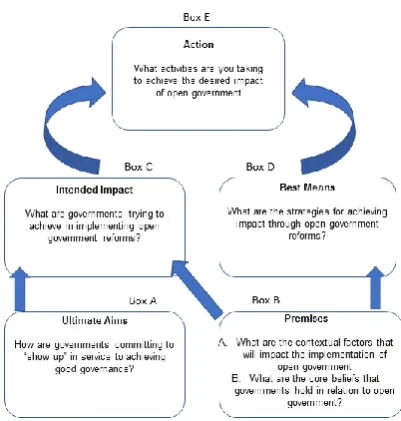
the top of the model and progress downwards, following the visual provided (Figure 1), outlining the connection between each box in the framework.
Figure 1: Dialogue Box Framework
Box E—Government Actions: The top of the model is the space for the activities or ‘Actions’. In open government, this is where the visible actions of governments would reside. When participating governments in the OGP make the commitments on their action plan (OGP, 2017), they frequently commit to an activity. A recent example, from the OGP subnational pilot project, is the use of crowdsourcing by the Seoul Metropolitan Government to create digital maps where citizens indicate safety and livability information harnessing geospatial technology (Seoul, 2016).
Box C—Government intended impact: Based on the flow of the model, effective actions in Box E must be influenced by a goal or a desired impact. The articulation of the goal resides in Box C and is labelled ‘Intended Impact’. The contents of this category define the motivation of governments and are the driving force behind keeping activities (Box E) occurring. Often, governments will state goals in their commitments, as evidenced by the recent action plan in Jalisco, Mexico. Their commitment was to reduce the gender wage gap in the private sector (Jalisco, 2016). Jalisco’s commitment is an example of a context-specific goal or intended impact, one that could be captured in a larger goal for a universal articulation of the goals of open government.
JeDEM 9(1): 51-77, 2017 Merlin Chatwin, Godwin Arku
contexts. The principles in Best Means support governments to achieve their ‘Intended Impacts’ and provides the foundation for choosing which activities to engage within Box E. Best Means are explored more fully later in the article, but often repeated foundational components of open government are transparency, accountability, and civic participation (OGP, 2017; OECD, 2016; Sandoval-Almazan & Gil-Garcia, 2015).
Box A—Government ultimate aims: Situated below Box C in the model is the ‘Ultimate Aims’. This is where participating authorities define the essence of open government for themselves. Governments are not always in full control of the outcomes or impact of reforms, especially when civic participation is involved. Organizational culture is difficult to change, and trust takes a long time to build. Regardless of the immediacy or delay in recognizable impact, Box A asks: How do governments that are ‘open’ commit to operating on a day to day basis? This question gets at the culture of an organization and recognizes that achieving impact is not fully in control of the government, but what is in control of the government is how they choose to approach their responsibilities. For instance, in Canada’s Action Plan on Open Government 2016-2018, they have committed to be ‘Open by Default’. That means Canada approaches all data and information as if it belongs to Canadians and commit to releasing it unless there is a reason not to (Canada, 2016).
Box B—Government context and beliefs: The final category for this review, situated beside Box A and having an influence on both Box C and Box D, is ‘Premises’. Box B holds two important components: context and beliefs. It is easy to see how a clear understanding of these components is integral to a conversation about open government. It is imperative to understand the underlying beliefs of open government and be able to test them rigorously. For example, to hold civic participation in Box D as the best means indicates that governments believe that the contribution of residents is valuable. Scotland indicated in their action plan that they believed more engagement of residents would result in better outcomes for people, better service delivery, and help protect civil liberties and human rights. Further, as a key component of this paper, clear articulation and understanding of the contextual factors in which open government is being applied are imperative to assessing the salience of the desired impacts as well as the means to accomplish those goals. The second component to Box B is the context: What are the social, cultural, economic, political, and environmental factors that will impact open government reform? As OGP expands its global reach, it becomes increasingly crucial that open government is understood within the context of each country. Box B is why governments invest in open government reforms and in what conditions the reforms will be implemented.
5.
Scholarly and Practitioner Open Government Definitions
JeDEM 9(1): 52-78, 2017 ISSN 2075-9517
http://www.jedem.org
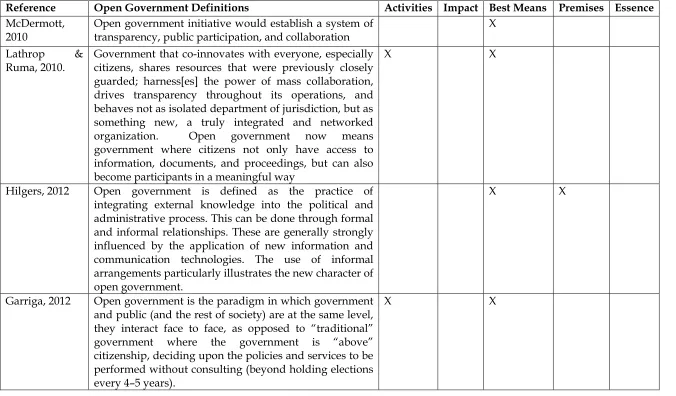
Table 1: Scholarly Definitions of Open Government
Reference Open Government Definitions Activities Impact Best Means Premises Essence
McDermott, 2010
Open government initiative would establish a system of transparency, public participation, and collaboration
X
Lathrop & Ruma, 2010.
Government that co-innovates with everyone, especially citizens, shares resources that were previously closely guarded; harness[es] the power of mass collaboration, drives transparency throughout its operations, and behaves not as isolated department of jurisdiction, but as something new, a truly integrated and networked organization. Open government now means government where citizens not only have access to information, documents, and proceedings, but can also become participants in a meaningful way
X X
Hilgers, 2012 Open government is defined as the practice of integrating external knowledge into the political and administrative process. This can be done through formal and informal relationships. These are generally strongly influenced by the application of new information and communication technologies. The use of informal arrangements particularly illustrates the new character of open government.
X X
Garriga, 2012 Open government is the paradigm in which government and public (and the rest of society) are at the same level, they interact face to face, as opposed to “traditional” government where the government is “above” citizenship, deciding upon the policies and services to be performed without consulting (beyond holding elections every 4–5 years).
Geiger and von Lucke, 2012
Open government acts as an umbrella term for many different ideas and concepts. The narrow definition of open government consists of transparency, participation, and collaboration of the state toward third actors in the economy or the citizenship. Most often, open government is equated with e-government and the usage of information and communication technologies.
X X
Meijer, Curtin, Hillebrandt, 2012
Open government is not only about openness in informational terms, but also about openness in interactive terms.
X
Ramirez-Alujas, 2012 Improve levels of transparency and access to information by opening public data (to exercise social control and accountability), and reuse of public sector information (to promote innovation and economic development); facilitate participation of citizens in the design and implementation of public policies (and influence decision-making); encourage the creation of opportunities for collaboration between the various stakeholders, particularly among government, civil society and the private sector to design and/ or co-produce public value.
X X X
Evans and Campos, 2013
Open government is widely understood as the leveraging of information technologies to generate participatory, collaborative dialogue between policymakers and citizens'.
X X
Wirtz and Birkmeyer, 2015
Open government is a multilateral, political, and social process, which includes in particular transparent, collaborative, and participatory action by government and administration. To meet these conditions, citizens and social groups should be integrated into political processes with the support of modern information and communication technologies, which together should improve the effectiveness and efficiency of governmental and administrative action.
JeDEM 9(1): 51-77, 2017 Merlin Chatwin, Godwin Arku McGee &
Edwards, 2016
Open[ing] governance means [working towards] governance relationships and processes that are transparent, accountable and participatory, and which allow the perspectives, needs and rights of all citizens to be addressed, including those most marginalised by power relations.
X X
Sandoval-Almazan & Gil-Garcia, 2016
Open government can be understood as a technological and institutional strategy that transforms government information from a citizen's perspective; Citizens can protect, reuse, collaborate, or interact with information and data in several forms; and as a result of this transformation, citizens are empowered to scrutinize public officials' decisions and actions to enhance transparency and accountability, and consequently, to propose different alternatives for public services and other government actions.
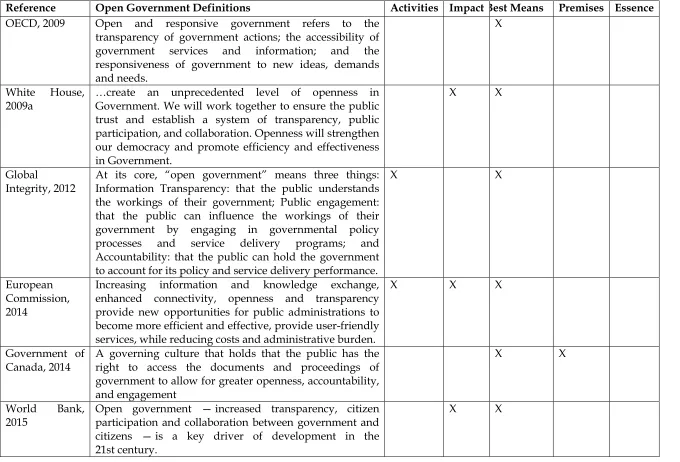
Table 2: Practitioner Definitions of Open Government
Reference Open Government Definitions Activities Impact Best Means Premises Essence
OECD, 2009 Open and responsive government refers to the transparency of government actions; the accessibility of government services and information; and the responsiveness of government to new ideas, demands and needs.
X
White House,
2009a …create an unprecedented level of openness in Government. We will work together to ensure the public trust and establish a system of transparency, public participation, and collaboration. Openness will strengthen our democracy and promote efficiency and effectiveness in Government.
X X
Global
Integrity, 2012
At its core, “open government” means three things: Information Transparency: that the public understands the workings of their government; Public engagement: that the public can influence the workings of their government by engaging in governmental policy processes and service delivery programs; and Accountability: that the public can hold the government to account for its policy and service delivery performance.
X X
European Commission, 2014
Increasing information and knowledge exchange, enhanced connectivity, openness and transparency provide new opportunities for public administrations to become more efficient and effective, provide user-friendly services, while reducing costs and administrative burden.
X X X
Government of Canada, 2014
A governing culture that holds that the public has the right to access the documents and proceedings of government to allow for greater openness, accountability, and engagement
X X
World Bank, 2015
Open government — increased transparency, citizen participation and collaboration between government and citizens — is a key driver of development in the 21st century.
JeDEM 9(1): 51-77, 2017 Merlin Chatwin, Godwin Arku OECD, 2016 A culture of governance based on innovative and
sustainable public policies and practices inspired by the principles of transparency, accountability, and participation that fosters democracy and inclusive growth
X X X
Information and Privacy Commissioner of Ontario, 2016
Open Government offers significant benefits and opportunities for government, business and the public including:
• Making democracy stronger because when government is more open, it is more likely to be held accountable for
its decisions
• Giving the public a greater voice in what government does, and fostering government decisions and action that further the interest of all, not just a few • Advancing a more efficient and effective government because it is more open to public scrutiny • Promoting integrity in government by providing the public with the information it needs to hold government responsible for its decisions, actions, and spending • Creating economic opportunities that benefit business, government and the public
X X X X
Williamson & Eisen, 2016 (Brookings)
Employ a broad definition of open government, focusing on three governance processes that allow the perspectives, needs, and rights of citizens—including the most marginalized—to be addressed. They are (1) initiatives to increase transparency; (2) interventions intended to expand public engagement and participation; and (3) efforts to improve responsiveness and accountability. Whether open government “works” or is “effective,” it means interventions that the evidence shows cause critical improvement in people’s lives (e.g. by improving health care, reducing corruption, increasing voting rates, and so on).
JeDEM 9(1): 52-78, 2017 ISSN 2075-9517
http://www.jedem.org
Unsurprisingly, given the academic and practitioner focus on transparency, participation, and accountability, all the definitions contained language that can be categorized as Best Means. The only other characteristic shared by all the definitions, both scholarly and practitioner, is that none of them mentioned elements of Box A- Ultimate Aims (Essence).
The references to Box E- Activities were very high-level throughout both the scholarly articles and practitioner publications. For example, multiple scholarly definitions discussed opening public data and the reuse of public sector information as activities of open government (Ramirez- Alujas, 2012; Sandoval-Almazan & Gil-Garcia, 2016). Other definitions focused on access to information within their definition (Lathrop & Ruma, 2010; Ramirez-Alujas, 2012; Grimmelikhuijsen, 2016). Access to information is intertwined with the history of open government, so perhaps it is most interesting that more definitions do not include references to it.
The references to Box C- Intended Impact were significantly fewer than either activities or best means. Wirt and Birkmeyer (2015) focus on improving the effectiveness and efficiency of government. Shifting towards a focus on the public, Ramirez-Alujas (2012) suggests the end goal is to co-produce public value. McGee and Edwards (2016) echo this sentiment by underscoring the importance of meeting the needs and rights of all citizens as the end goal.
As stated above, all definitions make some reference to elements in Box D - Best Means. The core components of transparency (Lathrop & Ruma, 2010; McDermott, 2010; Geiger & von Lucke, 2012; Ramirez-Alujs, 2012; and Birkmeyer, 2015; McGee & Edwards, 2016; Sandoval-Almazan & Gil, 2016), accountability (Ramirez-Alujas, 2012; Sandoval-Almazan & Gil, 2016), participation (Lathrop & Ruma, 2010; McDermott, 2010; Geiger and von Lucke, 2012; Ramirez-Alujas, 2012; Evans and Campos, 2013; Wirtz and Birkmeyer, 2015; McGee & Edwards, 2016), and collaboration (Lathrop & Ruma, 2010; McDermott, 2010; Geiger and von Lucke, 2012; Ramirez-Alujas, 2012; Evans and Campos, 2013; Wirtz & Birkmeyer, 2015; Sandoval-Almazan & Gil, 2016) dominate the academic definitions.
In Box B - Premises, there are no definitions that reference the need for context to be considered. However, there is one reference to underlying beliefs. Wirtz and Birkmeyer (2015) suggest that integrating citizens into the political process will improve effectiveness and efficiency. This statement of belief can be either validated or disproven by effective evaluation, placing it within the Box B categorization.
referencing innovative and sustainable practices and public influence on government action. In perhaps the most comprehensive definition provided, Williamson and Eisen (2016) reference initiatives, efforts, and interventions focused on achieving improvement in people’s lives.
The Box D- Best Means is again dominated by references to transparency (OECD, 2009; White House, 2009a; Global Integrity, 2012; European Commission, 2014; World Bank, 2015; OECD, 2016; Williamson & Eisen, 2016), accountability (Global Integrity, 2012; Government of Canada, 2014; OECD, 2016; Williamson & Eisen, 2016), participation (White House, 2009a; World Bank, 2015; OECD, 2016; Williamson & Eisen, 2016), and collaboration (White House, 2009a; World Bank; 2015). Interestingly, the Government of Canada (2014) and the OECD (2016) reference the building of an open government culture within their definitions. Culture is an integral part of building a foundation to achieve impact on the lives of people through government openness, efficiency, and effectiveness.
The Government of Canada states a clear belief (Box B- Premises) that the public’s right to access government information and proceedings will lead to greater openness (2014). This is echoed by the IPCO who suggests that giving the public information and a greater voice leads to the benefits of open government.
As noted in the scholarly works, no practitioner publications referenced to elements in Box A - Ultimate Aims in their definitions.
There were notable similarities between the definitions in scholarly works and the practitioner publications. Box D - Best Means ideas of transparency, accountability, and participation were dominant themes of all the definitions. Interestingly, collaboration was a much more prominent theme in the scholarly definitions (7 references) than the practitioner publications (2 references). This is possibly due to collaboration and participation being so closely intertwined that the practitioners do not recognize the need to state it as a separate entity. Only two scholarly definitions reference Box C- Intended Impact ideas, whereas, six practitioner publications populated their definitions with open government goals.
6.
Discussion: Open Government through the Dialogue Boxes
JeDEM 9(1): 51-77, 2017 Merlin Chatwin, Godwin Arku
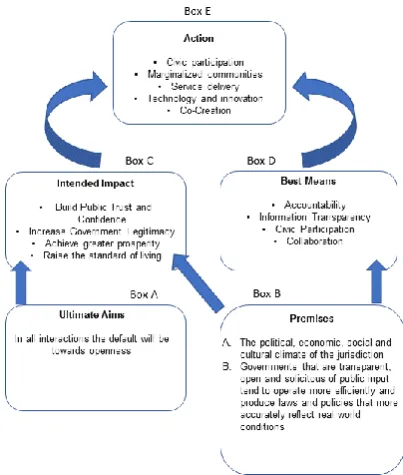
Figure 2: Dialogue Box Framework Populated With Open Government Content
Box E—Government Actions
The final overarching theme of activities is technology and innovation. These activities demonstrated an understanding of the importance of providing residents with open access to technology and increasing their capacity to utilize it for civic participation. An example of this is the Province of Ontario’s development of a platform to engage youth online to participate in designing the services and policies that impact them (Ontario, 2016). Through the Ministry of Children and Youth Services (MCYS), with assistance from the Premier’s Youth Table, Ontario has engaged youth to help design a tool that they can engage with when and how they prefer. Further, they provide outreach to youth, through youth, on how the platform works and continually gather feedback on how to make it better. This is a wholly appropriate use of technology in service to a goal (Box C) of building government trust (White House, 2009a). Another frequently mentioned group of activities within the technology and innovation theme is open data. Governments release datasets to enable citizens to re-use it with the intent of solving civic challenges in service delivery and policy development (Lathrop & Ruma, 2010; Francoli & Clarke, 2014). An emerging discourse in the open government and open data field evolving from technology and information is the wide array of ‘open’ transformations like; open access, open information, open innovation, open knowledge, and open platform (Harrison, Pardo & Cook, 2012). These ideas are gaining traction based on the belief that information, and the ability to distribute, share and collaborate with it, holds immense value.
A foundational action in Box E, which precedes action in the OGP framework, is co-creation. Emerging from Box D principles of public participation and collaboration, co-creation is organized around three essential elements: timely dissemination of information and feedback on how external contributions are used; inclusive space and platforms for ongoing dialogue and co-creation; and co-ownership and joint decision-making between government, civil society, and other stakeholders (OGP Participation & Co-Creation Standards, 2017).
An important note to consider within the emerging conceptualization of open government is that technology and innovation activities are situated in Box E rather than as the best mean or an intended impact. This is important as open government continues to expand across countries with varied levels of technological capacity. Scholars suggest that a government can be an open government, in the sense of being transparent, even if it does not embrace new technology (Yu & Robinson, 2012) As an example, in their recent subnational action plan, Sao Paulo committed to, “Increase the power of intervention of the Municipal Participative Councils in each Subprefecture (city, district), creating deliberative open sessions to receive proposals and demands from the citizens” (Sao Paulo, 2016:6). Their strategy is to make all agendas, schedules, and minutes of meetings for the Municipal Participative Councils available in print and electronic formats in a timely manner. Further, they committed to intersectoral open meetings with other local councils every six months and producing regular reports on the status of projects, works, and actions to guarantee proper oversight. Within the context (Box B) of Sao Paulo, this is an appropriate activity, based on a principle of information transparency (Box D), to build trust and confidence between the government and the public.
JeDEM 9(1): 51-77, 2017 Merlin Chatwin, Godwin Arku
Ofosu-Adarkwa, 2015). Often, open data and open government are conflated as being one in the same (McDermott, 2010; Janssen, Charalabidis & Zuiderwijk, 2012). Open data initiatives have a great potential to foster transparency, accountability, and civic participation, but only if they are paired with a focus on making data accessible, usable, and relevant to the demands of residents (Ohemeng & Ofosu-Adarkwa, 2015). Open data is generally understood to mean that many individuals or groups can access information and interact with it on their own terms, leading to significant benefits (Yu, Robinson, 2012). Opening data is not inherently the best mean or an intended impact; it is important that it is situated as a tool or an activity within the open government discussion.
As stated succinctly by Williamson and Eisen (2016) open government activities include a wide array of policies and programs with different measurable outputs. Outputs are largely within the control of the governance stakeholders implementing the reform (IDFI, 2016). For example, Ontario’s initiative to better engage youth will produce an online communication platform as one of its outputs. However, although “[t]hese process-oriented achievements” are important first steps, “they are not the results that we believe matter most to gauging the effectiveness of open government” (Williamson & Eisen, 2016:3).
Box C—Government intended impact
linkage is beyond the scope of this paper, but it demonstrates an emerging understanding that open government reforms should be a means to an end rather than a goal in themselves.
Recently, the OGP has put out their most definitive articulation of the intended impact of open government, stating, “achieving greater prosperity, well-being, and human dignity in our own countries and in an increasingly interconnected world” (OGP Digital Booklet, 2016:1). The OECD reiterates this when they state, “inclusive growth” (OECD, 2016), and it is further reinforced in literature that suggests open government can address the needs and rights of the most marginalized people (McGee & Edwards, 2016). The Government of Scotland Action Plan was explicit in their overall intended impact, noting, “a clear, unified vision for the kind of Scotland we want to see and how our actions will improve the quality of life for the people of Scotland” (2016:10). Existing research on Ghana suggests that open government reforms also impact the quality of life and aim to, “further develop the country as a whole” (Ohemeng & Ofosu-Adarkwa, 2015:420). These are ambitious goals that will require strategic implementation of integral best means (Box D) and an ongoing commitment from participating governments (Box A).
Box D—Government best means to make change
JeDEM 9(1): 51-77, 2017 Merlin Chatwin, Godwin Arku
directly related to civic participation and refers to the partnerships necessary within the private sector, academia, and civil society required for good open government implementation (Sandoval-Almazan & Gil-Garcia, 2015). The principle of accountability highlights the governments’ responsibility to inform the public of the decisions it makes, and how it spends public funds. In this context, accountability is downward and requires the public be informed and equipped to monitor their governments’ activities (Yilmaz, Beris, & Serrano-Berthet, 2008). This public scrutiny is what helps to achieve and maintain high standards and restore trust in government (OECD, 2005).
Transparency, public participation, collaboration, and accountability are undoubtedly integral components of scholarly works and practice of open government, in part, due to the focus is given to them by the OGP. One of the important things to note is that a foundational component often gets conflated with an end to itself. For example, information transparency is frequently identified as an integral component of open government. However, “Information alone does not guarantee positive outcomes” (The Knight Commission, 2009). Accountability, transparency, and civic participation are not sufficient goals within open government, rather, they are a means to an end. To further situate these features, they are also not specific activities (Box E) and cannot be observed in the form of outputs. They are best means that can be integrated into the design and implementation of activities.
Box A—Government ultimate aims:
inclination. This is echoed in the OGP member countries’ commitment who collectively promised to “uphold the value of openness in or engagement with citizens” (Open Government Declaration).
Box B—Government beliefs and context:
Beliefs- The key to understanding and utilizing the contents of belief in Box B is to recognize that it is not immediately necessary to contest that the beliefs that inhabit it are true. The importance of Box B is that one can articulate the underlying beliefs so that they can be examined and challenged; the ones that remain true in context remain and the others are erased. There are many underlying assumptions in open government documentation. One fundamental belief of open government is that the public has the right to access the records and proceedings of government (Treasury Board of Canada Secretariat, 2014). For example, a report from The Aspen Institute and James L. Knight Foundation states, “An informed and engaged citizenry facilitates effective governance at every level by providing a valuable counterbalance against the esoteric and oftentimes secretive machinations of government bureaucracy” (Gant & Turner-Lee, 2011:13). This is echoed by President Obama’s memo that states, “[p]ublic engagement enhances the Government’s effectiveness and improves the quality of its decisions” (White House, 2009a). These beliefs lead to a Box D that holds notions of civic participation and information transparency as the way to achieve impact. Gant and Turner-Lee (2011:13) note that, “Governments that are transparent, open and solicitous of public input tend to operate more efficiently and produce laws and policies that more accurately reflect real-world conditions.” Holding a belief that transparency leads to efficiency and representational laws and policies will undoubtedly influence what one adopts as principles.
Context- The OECD states that each jurisdictions’ unique context determines what open government should entail in practice and how governments should pursue their reforms (2016). This suggests the importance of incorporating the political, social, cultural, and economic factors that impact the lives of residents in open government design. Each government that seeks to achieve greater openness in government starts from different administrative cultures, political priorities, policy tools, and institutional environments (OECD, 2005). To initiate and sustain the culture change required amongst the governance system (specifically public servants), the intended impact and vision for achieving it must be clearly communicated. Meijer et al. (2012) argue that while governments might be tempted to design open government reforms for a general user, this will limit their effectiveness. Open government is relational, and its design should be informed by an analysis of user needs and capacities (Meijer et al., 2012). Studies show that active participation with government is often dominated by more privileged members of society; these privileged groups differ based on context, but each government will have its own group (Awal & Pawler, 2016).
7.
Discussion and Conclusion
JeDEM 9(1): 51-77, 2017 Merlin Chatwin, Godwin Arku
is currently conceptualized in the literature as a homogenous set of high-level principles for reform. However, conceptualizing open government through the dialogue box model highlights that there is room for diverse contextual factors to influence how open government reforms are developed. If governments and practitioners are willing to step back and make specific commitments about how they will interact with the public, regardless of their limitations, and articulate the beliefs and contextual factors that influence their decisions, they can design open government actions that are relevant in their jurisdiction. Open government initiatives need strong support and clarity of vision from top management and political leaders as well as meaningful participation from civil society, private sector, and members of the public. Effecting change in government systems, regardless of the context, is extremely challenging. This change will require a focus on both end goals of open government and the means of achieving those goals.
To date, there is limited research on the impact that open government reforms have had on public trust, citizen participation, government accountability, transparency and/or development outcomes (Scholl, & Luna-Reyes, 2011; World Bank, 2016; OGP Research Agenda, 2017). Scholarly works typically rely on normative arguments, in part, due to the reluctance of academia to engage in the ‘messy’ research that would be necessary to create an empirical foundation for open government (Gavelin et al., 2009; Smith, 2009; Noveck, 2015). Scholarly works in open government are beginning to build a case for the value of randomized control trials (RCTs) and action research as ways to effectively measure results of reforms (Noveck, 2015; Williamson & Eisen, 2016).
This study has taken an important step in demonstrating a human systems framework that can support the planning, implementation, and evaluation of open government reforms. When open government is conceptualized through the dialogue boxes, we believe governments can better articulate, through their action plans, the impact they hope to achieve and the means with which to accomplish them. Further, the model presented in this paper allows academics and practitioners to measure the specific activities implemented and evaluate the impacts they set out to achieve. At a more nuanced level, governments are also able to interrogate their common underlying beliefs for reform when they are articulated before activities are planned. Articulating core beliefs protects governments in developing countries and emerging economies against having western programs transplanted into inappropriate contexts in the name of open government reforms.
References
Awal, M. & Paller, J. (2016). Who really governs urban Ghana? Africa Research Institute.
Barber, B. (1984). Strong democracy: Participatory politics for a new age. Berkeley: University of California Press.
Chatwin, M. & Arku, G. (2017) Co-creating an open government action plan: the case of Sekondi-Takoradi Metropolitan Assembly, Ghana. Growth & Change. DOI: 10.1111/grow.12234
Chatwin, M., Arku, G. & Cleave, E. (2017). Open government at the subnational level: A comparative analysis of action plans in 15 countries. A Report.
Corrêa, A., Corrêa, P. & da Silva, F. (2014). Transparency portals versus open government data: An assessment of openness in Brazilian municipalities. In Proceedings of the 15th Annual International Conference on Digital Government Research, Aguascalientes, Mexico. doi:10.1145/2612733.2612760. Creighton, J. (2005). The public participation handbook: Making better decisions through citizen involvement. San Francisco: Jossey-Bass.
Dawes, S., & Helbig, N. (2010). Information strategies for open government: Challenges and prospects for deriving public value from government transparency. Electronic Government: Lecture Notes in Computer Science, M.A. Wimmer et al. (Eds.): EGOV 2010, LNCS 6228, 50- 60.
European Commission. (2014). Open Government. Retrieved on September 20, 2017 from: https://ec.europa.eu/digital-single-market/en/open-government
Evans, M. A, & Campos, A. (2013). Open government initiatives: Challenges of citizen participation. Journal of Policy Analysis and Management, 32(1), 172–185.
Frankena, W. (1965). Philosophy of Education. New York: Macmillan.
Francoli, M. and Clarke, A. (2014). What’s in a name? A comparison of ‘open government’ definitions across seven open government partnership members. Journal of eDemocracy, 6(1), 248-266.
Gant, J., & Turner-Lee, N. (2011). Government transparency: Six strategies for more open and participatory government. Washington, DC: The Aspen Institute and James L. Knight Foundation. Retrieved October6,2017,from
http://www.knightcomm.org/wpcontent/uploads/2011/02/Government_Transparency_Six_Strategies.pdf. Garriga, M. (2012). Is Open Government is encouraging the European institutions? In R-A. Hofmann & P. Bojórquez (Eds.),The Promise of Open Government. Retrieved on October 14, 2017 from: http://www.lapromesadelgobiernoabierto.
Gavelin, K., Burall, S., & Wilson, R. (2009). Open government: beyond static measures. A paper produced by Involve for the OECD.
Geiger, C. & Lucke, J. von. (2012). Open government and (linked) (open) (government) (data). eJournal of eDemocracy and Open Government, 4, 265–278.
Global Integrity. (2012). A working definition of open government. Retrieved from: http://www.globalintegrity.org/2012/05/working-definition-opengov/
Government of Canada. (2016). Canada’s action plan on open government. Retrieved on October 5, 2017 from: http://open.canada.ca/en/content/third-biennial-plan-open-government-partnership#toc5-1 Grimmelikhuijsen, S. & Feeney, M. (2016). Developing and testing an integrative framework for open government adoption in local governments. Public Administration Review. DOI: 10.1111/puar.12689. Hansson, K., Belkacem, K. & Ekenberg, L. (2014). Open government and democracy: A research review. Social Science Computer Review, 33 (5), 540-555.
Harrison, T., Pardo, T. & Cook, M. (2012). Creating open government ecosystems: A research and development agenda. Future Internet, 4, 900-928.
Information and Privacy Commissioner of Ontario (IPCO) (2016). Open government: Key implementation considerations.
Janssen, M., Charalabidis, Y., & Zuiderwijk, A. (2012). Benefits, adoption barriers and myths of open data and open government. Information Systems Management, 29(4), 258–268.
JeDEM 9(1): 51-77, 2017 Merlin Chatwin, Godwin Arku
Lamble, S. (2002). Freedom of information, a Finnish clergyman’s gift to democracy. Freedom of Information Review, 97, 2–8.
Lathrop, D. & Ruma, L. (2010). Open government: Collaboration, transparency, and participation in practice. O’Reilly Media: Sebastopol, CA, USA.
Larbi, G. (1999). The new public management approach and crisis states. UNRISD Discussion Paper No. 112.
Lee, G. & Kwak, Y. (2012). An open government maturity model for social media-based public engagement. Government Information Quarterly, 29, 492-503.
Meijer, A., Curtin, D. & Hillebrandt, M. (2012). Open Government: connecting vision and voice. International Review of Administrative Sciences, 78(1),10-29.
McDermott, P. (2010). Building open government. Government Information Quarterly, 27 (4), 401-413. McGee, R., & Edwards, D. (2016). Introduction: Opening governance – change, continuity, and conceptual ambiguity. IDS Bulletin, 47 (1), 1-22.
Municipality of Sao Paulo. (2016). Open government subnational action plan. Retrieved March 30, 2017 from https://www.opengovpartnership.org/subnational-government-pilot-program.
Noveck, B. (2015). Smart citizens, smarter state: The technologies of expertise and the future of governing. Harvard University Press.
Ohemeng, F. & Ofosu-Adarkwa, K. (2015). One way traffic: The open data initiative project and the need for an effective demand side initiative in Ghana. Government Information Quarterly, 32, 419-428.
Organization for Economic Co-operation and Development. (2005) Modernising Government: The Way Forward. Paris: OECD.
Organization for Economic Co-operation and Development (2016). Open government: The global context and the way forward. OECD Publishing, Paris. http://dx.doi.org/10.1787/9789264268104-en
Open Data Charter. Adopted by. Retrieved on September 30, 2017 from: https://opendatacharter.net/adopted-by-countries-and-cities/
Open Government Partnership. (2011). Open Government Declaration. Retrieved on September 30, 2017 from: www.opengovpartnership.org/about/open-government-declaration.
Open Government Partnership. (2012). Open Government Partnership: Articles of governance. Retrieved May 2, 2017, from https://www.opengovpartnership.org/sites/default/files/attachments/OGP_Articles- Gov_Apr-21-2015.pdf
Open Government Partnership. (2016) Digital booklet. Retrieved June 10, 2017 from http://www.opengovpartnership.org/sites/default/files/091116_OGP_Booklet_digital.pdf
Open Government Partnership. Home. Retrieved on September 20, 2017 from: https://www.opengovpartnership.org/
Open Government Partnership. (2017). Government point of contact manual. Retrieved on July 10, 2017 from https://www.opengovpartnership.org/sites/default/files/OGP_POC-Manual_2017_EN.pdf
Open Government Partnership. (2017). OGP Research Agenda 2017-2018, Retrieved on September 30, 2017 from: https://www.opengovpartnership.org/ogp-research-agenda-2017-18-call-proposals
Open Government Partnership. (2017). What’s in the OGP subnational action plans? A Report.
Parks, W. (1957). The Open Government Principle: Applying the Right to Know Under the Constitution. The George Washington Law Review, 26 (1), 1-22.
Patty, S. (2016). Moving icebergs: Leading people to lasting change. Dialogues in Action LLC. Portland, OR. Province of Ontario. (2016). Open government subnational action plan. Retrieved March 30, 2017 from https://www.opengovpartnership.org/subnational-government-pilot-program.
Ramirez-Alujas, A. 2012). Gobierno Abierto y Modernización de la Gestión Pública. Tendencias actuales y el (Inevitable) Camino que Viene - Reflexiones Seminales (Open Government and Modernization of Public Management: Current Trends and the (Inevitable) Way Forward - Seminal Reflections) (January 3, 2012). Political Science and Public Administration, 9 (15) 99-125.
Sandoval-Almazan, R. & Gil-Garcia, R. (2015). Toward an integrative assessment of open government: Proposing conceptual lenses and practical components. Journal of Organizational Computing and Electronic Commerce, 26:1-2, 170-192.
Schauer, F., (2011). Transparency in three dimensions. University of Illinois Law Review,4, 1339–1358 Scholl, H., & Luna-Reyes, L. (2011). Transparency and openness in government: a systems dynamics perspective. ICEGOV.
Scottish Government. (2016). Open government subnational action plan. Retrieved March 30, 2017 from https://www.opengovpartnership.org/subnational-government-pilot-program.
Sekondi-Takoradi Metropolitan Assembly. (2016). Open government subnational action plan. Retrieved March 30, 2017 from https://www.opengovpartnership.org/subnationalgovernmentpilot-program.
Smith, G. (2009). Democratic innovations: designing institutions for citizen participation. Cambridge University Press.
State Government of Jalisco. (2016). Open government subnational action plan. Retrieved March 30, 2017 from https://www.opengovpartnership.org/subnational-government-pilot-program.
The Knight Commission. (2009). Informing communities: Sustaining democracy in the digital age. Report of the Knight Commission on the information needs of communities in a democracy. Washington, DC: The
Aspen Institute. Retrieved October 9, 2017, from:
http://www.knightcomm.org/wpcontent/uploads/2010/02/Informing_Communities_Sustaining_Demo racy_in_the_Digital_Age.pdf.
Tauberer, J. 2014. Open government data, 2nd ed. Amazon Digital Services Inc. http://www.amazon.com/Open-Government-Data-Second-Edition-ebook/dp/B007U69DKU.
Treasury Board of Canada Secretariat (2014). Directive on Open Government (online). Retrieved on October 9, 2017 from: https://www.tbs-sct.gc.ca/pol/doc-eng.aspx?id=28108.
Weinstein, J. (2013). Transforming multilateralism: Innovation on a global stage. Stanford Social Innovation Review, 3-7.
White House. (2009a). Transparency and open government. Memorandum for the Heads of Executive Departments and Agencies. Retrieved on September 15, 2017 from: http://www.whitehouse.gov/the_press_office/TransparencyandOpenGovernment
White House. (2009b). Open Government Directive. Retrieved on August 10, 2017 from: http://www.whitehouse.gov/sites/default/files/omb/assets/memoranda_2010/m10-06.pdf
JeDEM 9(1): 51-77, 2017 Merlin Chatwin, Godwin Arku
World Bank. (2016). Open government impact and outcomes: mapping the landscape of ongoing research. A report.
Williamson, V., & Eisen, N. (2016). Working Paper: The impact of open government: Assessing the evidence. Center for Effective Public Management at Brookings.
Yilmaz, S., Beris, Y., & Serrano-Berthet, R. (2010). Linking local government discretion and accountability in decentralisation. Development Policy Review, 28(3), 259-293. doi:10.1111/j.1467-7679.2010.00484.x Yu, H. & Robinson, D. (2012). The New Ambiguity of Open Government. UCLA Law Review Discourse, 178, 180-208.
About the Authors
Firstname Lastname