Clim. Past, 14, 1345–1360, 2018 https://doi.org/10.5194/cp-14-1345-2018 © Author(s) 2018. This work is distributed under the Creative Commons Attribution 4.0 License.
Towards high-resolution climate reconstruction using an off-line
data assimilation and COSMO-CLM 5.00 model
Bijan Fallah1, Emmanuele Russo1, Walter Acevedo2, Achille Mauri3, Nico Becker1, and Ulrich Cubasch1
1Institute of Meteorology, Freie Universität Berlin, Carl-Heinrich-Becker Weg 6–10, 12165 Berlin, Germany
2Deutscher Wetterdienst, Offenbach, Frankfurt am Main, Germany
3European Commission, Joint Research Centre, Directorate D – Sustainable Resources – Bio-Economy Unit,
21027 Ispra, VA, Italy
Correspondence:Bijan Fallah ([email protected])
Received: 27 October 2017 – Discussion started: 20 November 2017
Revised: 9 May 2018 – Accepted: 5 September 2018 – Published: 24 September 2018
Abstract.Data assimilation (DA) methods have been used recently to constrain the climate model forecasts by paleo-proxy records. Both DA and climate models are computa-tionally very expensive. Moreover, in paleo-DA, the time step of consequence for observations is usually too long for a dynamical model to follow the previous analysis state and the chaotic behavior of the model becomes dominant. The majority of recent paleoclimate studies using DA have per-formed low- or intermediate-resolution global simulations along with an “off-line” DA approach. In an off-line DA, the re-initialization cycle is completely removed after the as-similation step. In this paper, we design a computationally affordable DA to assimilate yearly pseudo-observations and real observations into an ensemble of COSMO-CLM high-resolution regional climate model (RCM) simulations over Europe, for which the ensemble members slightly differ in boundary and initial conditions. Within a perfect model ex-periment, the performance of the applied DA scheme is eval-uated with respect to its sensitivity to the noise levels of pseudo-observations. It was observed that the injected bias in the pseudo-observations linearly impacts the DA skill. Such experiments can serve as a tool for the selection of proxy records, which can potentially reduce the state estimation er-ror when they are assimilated. Additionally, the sensitivity of COSMO-CLM to the boundary conditions is addressed. The geographical regions where the model exhibits high in-ternal variability are identified. Two sets of experiments are conducted by averaging the observations over summer and winter. Furthermore, the effect of the spurious correlations within the observation space is studied and a optimal
cor-relation radius, within which the observations are assumed to be correlated, is detected. Finally, the pollen-based recon-structed quantities at the mid-Holocene are assimilated into the RCM and the performance is evaluated against a test dataset. We conclude that the DA approach is a promising tool for creating high-resolution yearly analysis quantities. The affordable DA method can be applied to efficiently im-prove climate field reconstruction efforts by combining high-resolution paleoclimate simulations and the available proxy records.
1 Introduction
in-1346 B. Fallah et al.: Off-line data assimilation
strumental records: paleo-proxy reconstructions and climate models (Hakim et al., 2013).
Climate proxy archives (tree ring, coral, sediment, and glacial) are examples of indirect climate observations that suffer from several structural ill conditions (Acevedo et al., 2015; Jones and Mann, 2004). The data recording processes involved in such archives are very complex, encompassing physical, biological, and chemical processes (Evans et al., 2013). The temporal resolution of climate proxies does not exceed seasonal timescales. Differentiating the climate and human impact on proxies is also challenging work. Further-more, inverting proxy records into climate information is tra-ditionally done in the framework of statistical modeling and multivariate linear regression techniques dominate this area (Acevedo et al., 2015). Using more sophisticated statistical models is problematic because the overlapping time span between the instrumental (weather station observations) and proxy records becomes too short to train the statistical mod-els.
Climate models may serve as an alternative method for the investigation of long-term paleoclimate variability. They cre-ate dynamically consistent climcre-ate stcre-ates by using numerical methods (Goosse, 2016). However, their reconstructed states are very sensitive to the initial conditions and to the imposed forcings, as well as to the parameterization schemes used for the representation of sub-grid-scale processes (small-scale processes that are not explicitly resolved by the model). An improvement of the spatial resolution of climate models is thought to be of crucial importance for the study of past climate changes, in particular when comparing their results against proxy data that are highly affected by local-scale pro-cesses (Renssen et al., 2001; Bonfils et al., 2004; Masson et al., 1999; Fallah and Cubasch, 2015; Russo and Cubasch, 2016; Russo, 2016). As a consequence, along with GCMs, high-resolution regional climate models (RCMs) are recently being applied in paleoclimate studies. Several recent studies have applied a time slice climate simulation method (Kas-par and Cubasch, 2008) to dynamically downscale the global paleoclimate simulations with a higher resolution (Prömmel et al., 2013; Fallah et al., 2016; Russo and Cubasch, 2016). Simulation of the climate of the past using RCMs is a chal-lenging approach due to their high computational costs and the dependency of such models on the driving general cir-culation model (GCM). Given the computational costs of RCMs, previous studies could conduct only a single time slice climate simulation. An individual model simulation may not provide a sophisticated measure of the uncertainty in the climate state.
In addition to the two abovementioned methodologies, a novel and appealing technique for the reconstruction of the climate of the past is data assimilation (DA). According to Talagrand (1997), the assimilation of observations is the pro-cess through which the state of the atmospheric or oceanic flow is estimated by using the available observations and the physical laws that govern its evolution, presented in the form
of a numerical model. DA has recently emerged as a pow-erful tool for paleoclimate studies, mathematically blend-ing together the information from proxy records and cli-mate models (Evensen, 2003; Hughes et al., 2010; Brönni-mann, 2011; Bhend et al., 2012; Dee et al., 2016; Hakim et al., 2013; Steiger et al., 2014; Matsikaris et al., 2015, 2016; Hakim et al., 2016; Acevedo et al., 2017; Okazaki and Yoshimura, 2017; Perkins and Hakim, 2017). For a review of the DA techniques applied in paleoclimate studies, we refer to the works of Acevedo et al. (2015, 2017) and Steiger and Hakim (2016). One limiting aspect of classical DA methods is the fact that realistic climate models may not have predic-tive skills longer than several months (Acevedo et al., 2017; Perkins and Hakim, 2017). The models lose their forecasting skills shortly after initialization and evolve freely until the next step in which the observations are available. Consid-ering the complexity of the implementation of DA methods into climate models, their high computational expenses, and the short forecasting horizon of the models, an alternative DA approach (off-line or “no-cycling”) was applied by several scholars (Franke et al., 2017; Okazaki and Yoshimura, 2017; Dee et al., 2016; Acevedo et al., 2017; Steiger and Hakim, 2016; Chen et al., 2015; Steiger et al., 2014). In an off-line DA, the model initialization from the analysis has been aban-doned and the background ensembles are derived from pre-computed simulations (Okazaki and Yoshimura, 2017). In this paper we conduct a test by assimilating yearly aver-aged pseudo-observations and real observations into an en-semble of RCM simulations over Europe via an off-line DA approach. The main purpose of our study is to contribute to the simulation of the climate in general and to paleo-DA ef-forts in particular by addressing the following points.
i. What is the geographic distribution of model bias in an ensemble of regional climate simulations (members dif-fer slightly in boundary and initial conditions)?
ii. What is the optimum radius within which the observa-tions are correlated?
iii. Can this particular off-line DA approach be used to con-strain regional climate simulations in time and space?
iv. What is the range of observation errors within which the observations reduce the model’s bias via DA?
B. Fallah et al.: Off-line data assimilation 1347 2 Data and methods
2.1 Optimal interpolation basics
Prior to describing the experimental design, we give a brief review of the optimal interpolation (OI) method (for the full review see Barth et al., 2008a, b). OI or “objective analysis” or “kriging” is one of the most commonly used and simple DA methods applied since the 1970s (Barth et al., 2008b).
The unknown state of the climate (X) is a vector, which
has to be estimated conditioned on the available observations
(Y). Given the state vectorX, the state on observation
loca-tions is obtained by an interpolation method (here, nearest
neighbor). Here, this operation is noted as matrixH
(obser-vation operator) and consequently the state at the obser(obser-vation
locations is defined asHX. If the observations are in the form
of proxy data, the operatorHwill bring the model state to the
proxy state by means of a proxy forward model. The ultimate goal of OI is to estimate the real state of the climate, which is
labeled as the “nature” run (XN). After any DA cycle, the
so-called analysis (XA) is calculated given the observation (Y)
and the background XB(first guess or forecast). The
back-ground and observation can be written as
XB=XN+ηB, (1)
Y =HXN+ε, (2)
whereεandηB denote the observation and background
er-rors, respectively. In the applied OI scheme here, it is as-sumed that the background and observations are unbiased.
E[ηB] =0 (3)
E[ε] =0 (4)
Other hypotheses are that the information about the
obser-vation and background errors are known (priorknowledge)
and they are independent.
E[ηBηBT] =PB (5)
E[εεT] =R (6)
E[ηBεT] =0 (7)
The OI scheme is considered as the best linear unbiased
estimator (BLUE) of the nature state XN. A BLUE has the
following characteristics.
1. It is linear forY andXB.
2. It is not biased:
E[XA] =XN. (8)
3. It has the lowest error variance (optimal error variance).
The unbiased linear equation betweenXBandY can be
written as
XA=XB+K Y−HXB, (9)
whereKis the “Kalman gain” matrix. Equation (9) can be
written as
ηA=ηB+K ε−HηB=(I−KH)ηB+Kε. (10) Thus, the error covariance of the analysis will be
PA(K)=E[ηAηAT] =(I−KH)PB(I−KH)T+KRKT,
(11)
whereRis the observation error covariance matrix.
The trace of matrixPAindicates the total error covariance
of the analysis:
Trace(PA(K))=Trace(PB)+TraceKHPBHTKT
−2TracePBHTKT+Trace(KRKT). (12)
Given that the total error variance of the analysis has its
minimum value, a smallδKwill not modify the total
vari-ance:
TracePAnalysis(K+δK)−TracePA(K)=0
=2Trace
KHPBHTδKT
−2TracePBHTδKT+2TraceKRδKT
=2TracehKHPBHT+RiδKT. (13)
Assuming thatδKis arbitrary, the Kalman gain is
K=PBHTHPBHT+R
−1
. (14)
Finally, the error covariance of the BLUE is given by
PA=PB−KHPB
=PB−PBHT(HPBHT+R)−1HPB. (15) The calculation of the covariance matrices for RCM is very expensive. Therefore, an ensemble of the model states is applied to approximate the mean and covariance of the forecast (Evensen, 1994). Following a stochastic approach (Hamill, 2006), an observation ensemble is created by adding
random noise (in the observational range) to theY. In our
ex-periment, we tested the impact of different observation errors on the analysis skill in more detail. The error covariance of
the BLUE, PB, can be localized through the following
pa-rameterization:
PB(x1, . . ., xn, y1, . . ., yn)=
σ(x1, . . ., xn)2exp −
(x1−y1)2
L2 1
. . .−(xn−yn) 2
L2 n
!
, (16)
whereσ(x1, . . ., xn)2is the error variance andLn the
1348 B. Fallah et al.: Off-line data assimilation
2.2 Observation system simulation experiment
Models contain systematic errors that may have diverse ori-gins (dynamical core, parameterization, and initialization). DA schemes are also based on simplified hypotheses and are
imperfect (e.g., here the Gaussian parameterization forPB).
The interaction of error sources with one another obscures the tracing of the origins of such biases. These caveats are neglected by using a simplified numerical experiment called an observation system simulation experiment (OSSE). The usage of OSSEs is increasing in the field of climate DA as a validation tool (Annan and Hargreaves, 2012; Bhend et al., 2012; Steiger et al., 2014; Acevedo et al., 2015; Dee et al., 2016; Acevedo et al., 2017; Okazaki and Yoshimura, 2017). Firstly, one simulation is selected as the natural state of the
climateXN or the prediction target. Then by using the
out-put from the nature run and by adding random draws from a white noise distribution, pseudo-observations are created that are interpolated over the observation locations. The location of 500 random meteorological stations of the “ENSEMBLES daily gridded observational dataset for precipitation, temper-ature and sea level pressure in Europe called E-OBS” (Hay-lock et al., 2008) are used to create the pseudo-observation data (Fig. 1). Finally, the OI scheme is applied to assimilate the pseudo-observation into the free ensemble run (an un-constrained ensemble of simulations) and the observationally
constrained runXDAis obtained. Here we neglect the
reini-tialization step of the DA and draw the forecast state from a precomputed free ensemble simulation. Recently, such as-similation methodologies have been labeled as off-line DA (Huntley and Hakim, 2010).
2.3 Ensemble generation technique
RCM simulations tend to follow the trajectory of the driv-ing GCM; however, it is known that RCMs deviate from the driving GCM, both on smaller scales that are not resolved by the GCM and on larger scales that are resolved by the GCM (Becker et al., 2015). RCMs are very sensitive to the choice of the domain and are usually tuned for the selected area. Modifying the RCM domain in size or geographic area will set new boundary conditions for the RCM. In the context of domain manipulation, several studies analyzed the impact of the domain size on regional model simulations, finding that it might have a significant impact on predictive skill and clima-tological characteristics of the models (Larsen et al., 2013; Goswami et al., 2012; Colin et al., 2010). In addition, a shift of the model domain generates different large-scale patterns in the simulation outputs (Miguez-Macho et al., 2004), which are the consequence of the “large-scale secondary circula-tions” in the RCM and are relative to the driving data (Becker et al., 2015). There are different popular methods for gener-ating RCM ensembles, e.g., the use of different parameter-izations (Wang et al., 2011), different driving data (Verbunt et al., 2007), or different initialization dates (Hollweg et al.,
45°N
60°N
30°N
15°N
0° 20°E
Figure 1.RCM domains: the thin black box shows the nature and
the dashed boxes show the shifted members (only two are shown for the northwest and southeast with five grid points of distance from nature). The red pluses show 500 random meteorological stations of the “ENSEMBLES daily gridded observational dataset for precipi-tation, temperature and sea level pressure in Europe called E-OBS” (Haylock et al., 2008). The thick black box shows the evaluation domain.
2008). However, the uncertainty introduced by the selection of a specific model domain is rarely considered, but the use-fulness of this approach is shown in Pardowitz et al. (2016) and Mazza et al. (2017). The advantage of this method is that it is easy to implement and allows for a consistent model setup among the ensemble members. The multiple members are created by shifting the model domains relative to each other.
2.4 Experimental design
The CCLM model version cosmo_131108_5.00_clm8 (Asharaf et al., 2012) is used as the dynamical model and the nearest-neighbor interpolation is applied as the observation forward model. We have to note that model–data mapping is still a limiting factor in paleo-DA (Dee et al., 2016; Goosse, 2016). For a review of proxy system models we refer to the recent work of Dee et al. (2016). Here, our focus is only on the DA scheme and its usability in paleoclimate. Two sets of observations are used by time averaging daily values over the winter (DJF) and summer (JJA) seasons. The time average climate analysis is conducted by using the OI scheme as the DA tool. The horizontal resolution of the simulations is set to
0.44◦×0.44◦. Our OSSE consists of two sets of simulations.
B. Fallah et al.: Off-line data assimilation 1349
for Medium-Range Weather Forecasts (ECMWF), the so-called ERA-Interim (Dee et al., 2011) (initial and boundary conditions are taken from ERA-Interim). This run will be used as the “target” state of the climate in the investigations and is labeled as the nature run.
– Shifted domain simulations. All the model parameters are set as in the nature run but simulation domains are shifted in four distinct directions (northeast, northwest, southeast, and southwest) and with five different shift-ing values (one to five grid points) from the nature do-main. These shifting directions allow for optimal dif-ferent boundaries compared to the nature run (Fig. 1). Due to high computational expenses of such simula-tions we conducted 10-year simulasimula-tions (total number
of 21×10=210 model years). The state vector is taken
from the evaluation domain (thick black box in Fig. 1).
2.5 Model skill metric
The skill of the analysis (XA) can be quantified by the root
mean square error (RMSE):
RMSEhXAi=
XN− hXAi2
12
, (17)
where andh idenote the time and ensemble mean
opera-tor. The mean and spread of the ensemble are presented as
hXAi = 1
N
N
X
n=1
xnA, (18)
σ(i, j)=
v u u t
1
N−1
N
X
n=1
(n(i, j))2, (19)
wheren(i, j)=Xm(i, j)− hXi(i, j),N is the ensemble
in-dex, and (i, j) the indices of horizontal positions. The same
approach is used to calculate the skill for the free ensemble quantities.
To maintain clarity we focus only on the temperature at 2 m (T2M) as a variable. For evaluation, the relaxation zone where the boundary data are relaxed in the RCM (here 20 grid points next to the lateral boundaries) is removed. The sea surface temperature in our CCLM simulation is inter-polated from the driving model (here ERA-Interim) and not calculated by the model dynamics; the spread of the ensem-ble for T2M is zero over oceans. Therefore the RMSEs over oceans are masked out from the analysis and only values over land are shown.
3 Results
3.1 Unconstrained ensemble runs
Figure 2 shows the seasonal mean RMSE and the spread of the ensemble for T2M over the evaluation domain. A slight
change in the boundary conditions (shifting of the domain) of the model leads to large RMSEs (up to 1 K in seasonal means over 10 years) in the forecasted quantities (Fig. 2). Maximum RMSE values are located on the regions where the spread of the ensemble is also large. An interesting fea-ture of the RMSE pattern is the accumulation of the errors in the center and northeast of the domain for both the winter and summer seasons. West and north of the domain is largely dominated by the ocean where the temperature quantities are forced by the reanalysis data. There is a small difference be-tween the ensemble members on these areas, and the maxi-mum error values are mostly located on land. On the other hand, the maximum lateral inflow occurs on the west and the northwest boundaries. These features have to be considered cautiously when conducting long-term climate simulations using CCLM. The long seasonal time-averaging filter rela-tively dampens the RMSE and the spread of the ensemble. The errors will increase drastically for daily quantities. One of our main motivations in this paper is to test the usage of OI in the calculation of analysis quantities by assimilating the pseudo-observations and real observations in the free en-semble simulations.
3.2 Constrained ensemble runs
Prior to conducting the analysis calculation, we searched for
an optimal correlation length (L) for the covariance
localiza-tion, which minimizes the RMSE of the analysis. The mean RMSE over the evaluation domain is calculated for
differ-ent values ofL(0.1◦≤L≤6◦). The RMSE values show a
minimum at a correlation length of 1.7◦(∼190 km) for
sum-mer (JJA) and 2.1◦(∼230 km) for winter (DJF) (Fig. 3). For
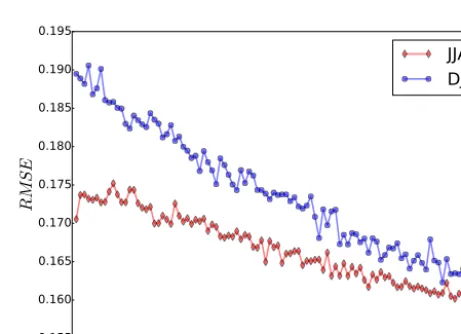
a long-term time averaging, e.g., yearly or decadal periods, the correlation length will increase accordingly (Chen et al., 2015). The increase rate of the RMSE with respect to the correlation length is larger during the summer than in winter. The error reduction of the DA is influenced by the shape of the white noise added to create the pseudo-observation data. Here, we assess the noise levels by the signal-to-noise ratio (SNR), which is the ratio of the variance of clean observa-tion to the variance of added white noise. Figure 4 shows the averaged seasonal near-surface temperature RMSE for the analysis of the ensemble run. The RMSE values are re-duced linearly with increasing SNR. In the study of Acevedo et al. (2017), the RMSE values did not change significantly between 2 and 11 SNR values. One possible reason for such a behavior might be due to the regional domain of RCM over Europe, which is dominated by local effects. On the other
hand,∼70 % of the GCM domain in Acevedo et al. (2017)
was covered by the oceans where no proxy was assimilated. In our experiment, the field mean filter does not flatten the RMSE reduction rate for larger SNR values over Europe. For
the rest of the paper the results are shown with SNR=3.
pseudo-1350 B. Fallah et al.: Off-line data assimilation
(a) Ensemble spread for winter
45°N
60°N
30°N
15°N
0° 20°E
0.0 0.1 0.2 0.3 0.4 0.5 0.6 0.7 0.8
SPREAD [K]
(b) Ensemble RMSE for winter
45°N
60°N
30°N
15°N
0° 20°E
0.0 0.1 0.2 0.3 0.4 0.5 0.6 0.7 0.8
RMSE [K]
(c) Ensemble spread for summer
45°N
60°N
30°N
15°N
0° 20°E
0.0 0.1 0.2 0.3 0.4 0.5 0.6 0.7 0.8
SPREAD [K]
(d) Ensemble RMSE for summer
45°N
60°N
30°N
15°N
0° 20°E
0.0 0.1 0.2 0.3 0.4 0.5 0.6 0.7 0.8
RMSE [K]
Figure 2.10-year ensemble spread and RMSE for the seasonal mean of 2 m temperature (K).
0 1 2 3 4 5 6
L
0.135 0.140 0.145 0.150 0.155 0.160 0.165 0.170
R
M
SE
JJA
DJF
Figure 3.Field mean of RMSE for near-surface temperature (K)
analysis over the evaluation domain for different correlation lengths
(L, in◦C) for winter (blue) and summer (red).
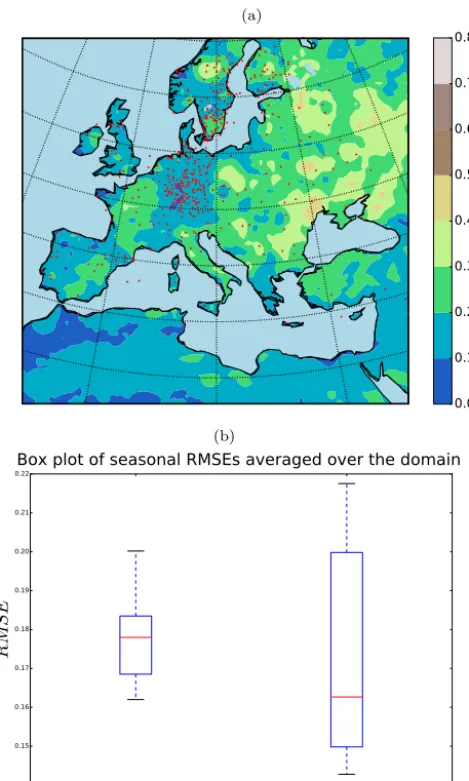
observations has significantly reduced the mean of the errors for both seasons. However, the spread of the errors is more highly reduced in summer than in winter. The regions with the largest error reduction are located in highly populated areas by pseudo-observations (e.g., Germany, Sweden, and
0 2 4 6 8 10
SNR
0.155 0.160 0.165 0.170 0.175 0.180 0.185 0.190 0.195
R
M
SE
JJA
DJF
Figure 4.Field mean of seasonal near-surface temperature RMSE
(K) of the analysis vs. SNR.
B. Fallah et al.: Off-line data assimilation 1351
(a)
45°N
60°N
30°N
15°N
0° 20°E
45°N
60°N
30°N
15°N
0° 20°E
0.0 0.1 0.2 0.3 0.4 0.5 0.6 0.7 0.8
RMSE [K]
(b)
Analysis
Forecast
0.14 0.15 0.16 0.17 0.18 0.19 0.20 0.21 0.22
R
M
SE
Box plot of seasonal RMSEs averaged over the domain
Figure 5.(a)10-year RMSE (K) of the analysis for summer (JJA)
and(b)the field mean RMSE (K) of the analysis and the free
en-semble run for summer (JJA).
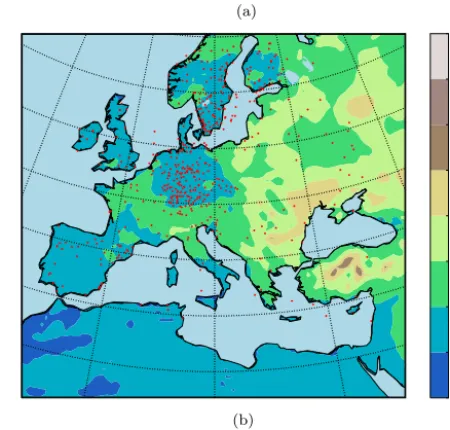
that contribute to the larger error spread during the winter (Fig. 6b). The DA has successfully detected these two out-liers and reduced the errors significantly (Fig. 6b).
3.3 Long ensemble runs
As defined by the World Meteorological Organization (WMO) the climate is explained by averaging the weather state for a period of at least 30 years. Therefore, we con-ducted a new set of five 36-year-long simulations (one nature and four shifted runs). The computational cost of RCM was the only limiting factor to choose this number of members
(5×36=180 years of model run). The members were
per-turbed by shifting the domain four grid points to the north-east, northwest, southwest, and southeast. The 36-year en-semble spread and RMSE show similar patterns as in the previous experiment using 20 members (Fig. 7). The
anal-(a)
45°N
60°N
30°N
15°N
0° 20°E
45°N
60°N
30°N
15°N
0° 20°E
0.0 0.1 0.2 0.3 0.4 0.5 0.6 0.7 0.8
RMSE [K]
(b)
Analysis
Forecast
0.10 0.15 0.20 0.25 0.30 0.35 0.40
R
M
SE
Box plot of seasonal RMSEs averaged over the domain
Figure 6.(a)10-year RMSE (K) of the analysis for winter (DJF)
with and(b)the field mean RMSE (K) of the analysis and the free
ensemble run for winter (DJF).
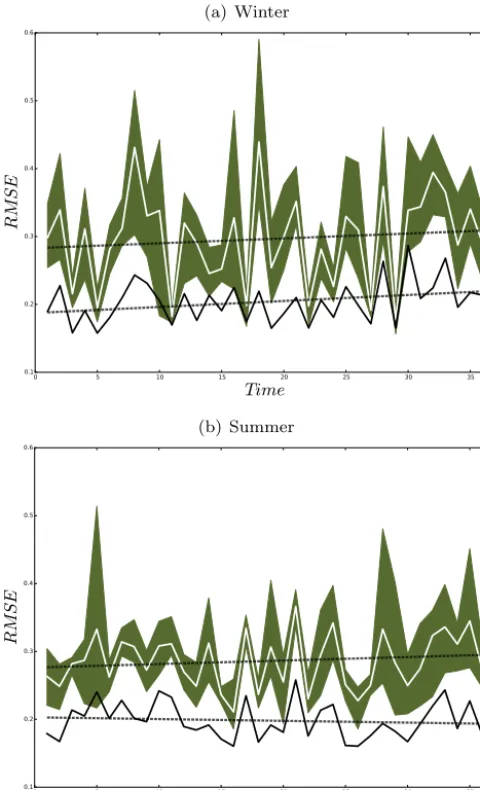
ysis quantities indicate a significant error reduction in both the median and spread of the ensemble (Figs. 8 and 9). Fig-ure 10 illustrates the time evolution of field mean RMSEs for the free ensemble and analysis quantities. There is a lin-ear trend in free-run RMSE. However, the linlin-ear trend is re-moved in the RMSE of the analysis for the summer. This fea-ture was previously observed in an off-line DA experiment using an intermediate complexity model and the EnKF ap-proach (Acevedo et al., 2017). Furthermore, the results show that the analysis RMSEs are significantly reduced compared to the free ensemble run.
3.4 Random background selection
re-1352 B. Fallah et al.: Off-line data assimilation
(a) Ensemble spread for winter
45°N
60°N
30°N
15°N
0° 20°E
0.0 0.1 0.2 0.3 0.4 0.5 0.6 0.7 0.8
SPREAD [K]
(b) Ensemble RMSE for winter
45°N
60°N
30°N
15°N
0° 20°E
0.0 0.1 0.2 0.3 0.4 0.5 0.6 0.7 0.8
RMSE [K]
(c) Ensemble spread for summer
45°N
60°N
30°N
15°N
0° 20°E
0.0 0.1 0.2 0.3 0.4 0.5 0.6 0.7 0.8
SPREAD [K]
(d) Ensemble RMSE for summer
45°N
60°N
30°N
15°N
0° 20°E
0.0 0.1 0.2 0.3 0.4 0.5 0.6 0.7 0.8
RMSE [K]
Figure 7.36-year ensemble spread and RMSE for the seasonal mean of 2 m temperature (K).
move the trend previously observed in the RMSEs for win-ter. Under this setup, the RMSE reduction shows a coher-ent pattern (Fig. 11a) and the uprising trend in RMSE is removed (Fig. 11b). However, the analysis RMSE mean is in the range of the background state. In our experiment, the background itself had acceptable skills over large portions of the domain. Using random states affects the model skills, for example over the western part of the domain (i.e., Spain, Portugal, France, and Morocco). We conclude that using ran-dom states would be beneficial if the model had no signifi-cant skills at any region of its domain. Such signifisignifi-cant skills of the background might be a characteristic of this particular RCM, which is tuned for Europe.
3.5 Application to a paleo-study: the case of summer temperatures over Europe at the mid-Holocene
A test with the real data will shed light on the applied DA ef-ficiency. Therefore, we design additional experiments using real proxies and precomputed COSMO-CLM simulations at the mid-Holocene. Here, we briefly explain the method and present the results for a single summertime (JJA) time slice of 6000 years before present (6KBP). We use the pollen-based temperature reconstructions of Mauri et al. (2015) as the ob-servation and the model simulations of Russo and Cubasch (2016) as the background in our DA method; 20 % of the
proxy data are kept as the test data (randomly selected), and the remaining 80 % as the training dataset. The proxy data do not have a regular timing. Two approaches are applied for averaging the proxy data.
a. Averaging with respect to their distance to the target year (6KBP): a time window centered on the target year
(e.g., reference time±500 years) is chosen and the
val-ues as well as their standard errors are weighted by their time distance to the target year. The weights are cho-sen from a normal distribution with a standard deviation of 100. A total of three weighting time spans are de-fined (five bins). Figure 12 shows the weights assigned to each time interval with respect to the reference time. The data falling in each particular time bin are weighted equally.
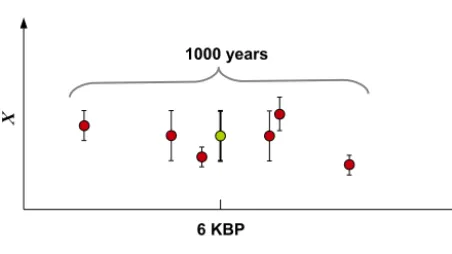
b. Averaging with respect to their uncertainties provided as standard error by Mauri et al. (2015) at the recorded time: all reconstructions within the time window of the
reference year ±500 years are chosen. The weighted
B. Fallah et al.: Off-line data assimilation 1353
(a)
45°N
60°N
30°N
15°N
0° 20°E
45°N
60°N
30°N
15°N
0° 20°E
0.0 0.1 0.2 0.3 0.4 0.5 0.6 0.7 0.8
RMSE [K]
(b)
Analysis
Forecast
0.15 0.20 0.25 0.30
R
M
SE
Box plot of seasonal RMSEs averaged over the domain
Figure 8.(a)36-year RMSE (K) of the analysis for summer (JJA)
and(b)the field mean RMSE (K) of the analysis and the free
ensem-ble for summer (JJA). Red squares indicate the mean of RMSEs.
Then the weighted mean is calculated by
x=
Pn
i=1
xiσi−2
Pn i=1σ
−2
i
. (20)
The uncertainty of the weighted mean is given then by
σx2= 1
Pn i=1σ
−2
i
, (21)
whereσis the standard error. Figure 13 shows the schematic
of weighting the observations with respect to their standard errors.
Finally, for the model, the 25-year time average is as-signed as the expected value and the standard deviation from the mean as the uncertainty measure. Figure 14 shows the schematic of the approach. Please note that, here, a single
(a)
45°N
60°N
30°N
15°N
0° 20°E
45°N
60°N
30°N
15°N
0° 20°E
0.0 0.1 0.2 0.3 0.4 0.5 0.6 0.7 0.8
RMSE [K]
(b)
Analysis
Forecast
0.10 0.15 0.20 0.25 0.30 0.35
R
M
SE
Box plot of seasonal RMSEs averaged over the domain
Figure 9.(a)36-year RMSE (K) of the analysis for winter (DJF)
and(b)the field mean RMSE (K) of the analysis and the free
ensem-ble run for winter (DJF). Red squares indicate the mean of RMSEs.
1354 B. Fallah et al.: Off-line data assimilation
(a) Winter
0 5 10 15 20 25 30 35
Time
0.10.2 0.3 0.4 0.5 0.6
R
M
SE
(b) Summer
0 5 10 15 20 25 30 35
Time
0.10.2 0.3 0.4 0.5 0.6
R
M
SE
Figure 10. Yearly field mean RMSE (K) of the ensemble mean
(white line) and analysis (black line) for winter (a)and for
sum-mer(b). Shadings show the ensemble members and dashed lines
indicate the linear trends.
for averaging, the analysis pattern is very similar to the previ-ous method (Figs. 17 and 18). Overall, we conclude that the proposed DA approach contributes to the error reduction in the analysis values for which the pure model outputs might not capture the local patterns.
We have to mention that the analysis presented here is based on the combination of the proxy reconstructions and the climate model, and any interpretation of the patterns should take into account the uncertainties provided by these two sources of information. Several factors have driven our decision to apply the proposed DA method to this partic-ular paleoclimate case study. Among these, the most im-portant one was the attempt to contribute to the reconstruc-tion of summer temperatures over the Mediterranean region at the mid-Holocene. This has been the subject of a
long-(a)
45°N 60°N
30°N
15°N
0° 20°E
45°N 60°N
30°N
15°N
0° 20°E
0.0 0.1 0.2 0.3 0.4 0.5 0.6 0.7 0.8
RMSE [K]
(b)
0 5 10 15 20 25 30 35
Time
0.1 0.2 0.3 0.4 0.5 0.6
RM
SE
Figure 11. (a) 36-year-averaged RMSE of the analysis using
40 random states as background;(b)field mean of RMSE from the
free ensemble (shading shows the ensemble spread, the white line the mean) and from the analysis using random background states (red line). Dashed lines are the linear fits and the blue line shows the 0.3 K RMSE value (plotted only for comparison of the trends).
standing debate within the paleoclimate community: on the one hand, climate model simulations (Braconnot et al., 2007; Fischer and Jungclaus, 2011; Bonfils et al., 2004; Russo and Cubasch, 2016) and some reconstructions based on specific proxy types (such as chironomids, Samartin et al., 2017) have shown that the area was characterized by warmer summer conditions with respect to present day; on the other hand, cli-mate reconstructions based on other proxies, in particular the ones based on pollen data (Cheddadi et al., 1996; Davis et al., 2003; Mauri et al., 2015), have given support to the idea of opposite, colder conditions over the area.
B. Fallah et al.: Off-line data assimilation 1355
Reference time Time 0.0
0.1 0.2 0.3 0.4 0.5 0.6 0.7
Wieght
1000 years
Figure 12.Schematic showing the weights for observations with
respect to their distance to the target year. A time window of 1000 years is chosen. The observations are weighted depending on their distances to the reference time.
Time
6 KBP 1000 years
X
Figure 13.Schematic showing the weights for observations with
respect to their standard error. A time window of 1000 years is cho-sen. The red dots represent the proxies in the 1000-year time win-dow and the green dot represents the weighted mean.
Italy were higher at the mid-Holocene compared to present times. This pattern was also captured by other proxy records from different parts of the Mediterranean area and the re-sults of climate models. Indeed, they criticized temperature reconstructions based on pollen data for this region due to the fact that Mediterranean vegetation is mainly controlled by ef-fective precipitation rather than temperatures. Our results are in agreement with Samartin et al. (2017) over northern Italy and the Alpine region despite the presence of heterogeneous colder conditions over southern Europe. Indeed, we believe that this complicated puzzle is not solved yet and more ef-forts should be put into joint cooperation among different proxy experts and climate modelers. We emphasize the fact that data assimilation could be considered a very useful tool for the syntheses of different climate records and physical representation of the climate system. This could offer a more reliable picture than individual proxy datasets or a single cli-mate simulation.
Time
X
M
o
d
e
l
Proxy
1
¾ µ
Figure 14.Schematic showing how the expected value (the mean)
and the deviation from the mean for the time slice simulation are selected. The model simulation is 25 years long. The green line rep-resents the model state.
(a) Analysis
(b) Model
Figure 15. DA results of T2M during summer at 6KBP using
weighted arithmetic mean by time distances:(a)analysis values
along with the testing observations (circles) and their standard error (squares). Values with an error covariance of analysis greater than
1356 B. Fallah et al.: Off-line data assimilation
4 2 0 2 4
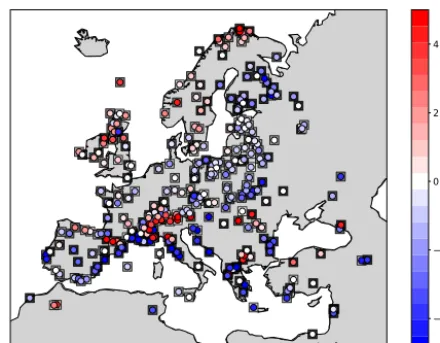
Figure 16.Weighted arithmetic mean using time distances:
anoma-lies (6KBP–0.2KBP) of assimilated observations (circles) super-posed on their standard errors (squares) with values in K. Color bar of the standard errors as in Fig. 15a.
4 Conclusion and discussion
Using a computationally fast DA approach, we assimilated pseudo-observations and real observations within an ensem-ble of precomputed RCM simulations. The ensemensem-ble is cre-ated by slightly perturbing the boundary and initial condi-tions of its members via the domain-shifting method. In the framework of a perfect model experiment the performance of free ensemble and analysis quantities is evaluated. Such experiments facilitate the estimation of observation, back-ground, and analysis error. In the first set of experiments, we conducted an ensemble of 20 simulations driven by ERA-Interim for the duration of 10 years. The nearest-neighbor interpolation is applied as the observation operator plus a random white noise with known standard deviation to create a set of pseudo-observations from the nature run. Pseudo-observations are assimilated within the ensemble of RCM runs by means of the OI approach. By conducting a set of simulations using four perturbed members and a nature run, we repeated the perfect model experiment for a time expan-sion of 36 years. This allowed us to draw concluexpan-sions on the time evolution of the DA skill for a typical climatolog-ical period (more than 30 years). In a final step, we assim-ilated pollen-based temperature reconstructions of the mid-Holocene precomputed RCM simulation with a 25-year
du-ration at 0.44◦horizontal resolution and compared the results
with a test dataset.
The comparison of ensemble mean of COSMO-CLM model outputs and the pseudo-observations shows that the model seems to be well tuned for central Europe. A region of significant model bias for both the winter and summer sea-sons is located over the east side of the domain. This area is located far from the ocean where the ERA-Interim data are prescribed (no coupled ocean was implemented).
There-(a) Analysis
(b) Model
Figure 17. DA results of T2M during summer at 6KBP using
weighted arithmetic mean by standard errors:(a)analysis values
along with the testing observations (circles) and their standard error (squares). Values with an error covariance of analysis greater than
0.9 are masked out from analysis and(b)the model forecast.
fore, we speculate that the model generates more variabilities and is free to evolve over this region (answer to question (i) in the Introduction). Furthermore, we iterated the DA experi-ment on different values of correlation length for the summer and winter to find the optimal correlation length quantity. The
optimum radius of correlation is found to be 1.7◦(∼190 km)
for summer (JJA) and 2.1◦(∼230 km) for winter (answer to
question (ii) in the Introduction). Afterward, we showed that the skill of OI is linearly influenced by the SNRs used to create the noisy observations (answer to question (iv) in the Introduction).
B. Fallah et al.: Off-line data assimilation 1357
4 2 0 2 4
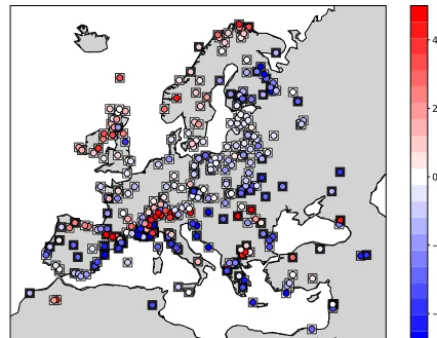
Figure 18. Weighted arithmetic mean using standard errors:
anomalies (6KBP–0.2KBP) of assimilated observations (circles) su-perposed on their standard errors (squares) with values in K. Color bar of the standard errors as in Fig. 17a.
inhomogeneity of the observation distribution over the do-main, the analysis presents error reduction over most of the domain. For a small ensemble with a longer integration pe-riod of 36 years, the analysis significantly outperforms the ensemble mean. However, for the winter season, the analysis error increases with time and it consists of the same rising trend as in the error of the ensemble mean. For the summer-time the trend was removed in the analysis. This was previ-ously observed in the study of Acevedo et al. (2017) by as-similating summertime tree ring width pseudo-observations in an AGCM using the EnKF. However, our simulations are very short compared to the one of Acevedo et al. (2017). Us-ing a random climatology from a large climate simulation pool as the background instead of using an ensemble simula-tion at the observasimula-tion period, following Steiger et al. (2014) and Dee et al. (2016), has removed the winter RMSE trend. However, the mean RMSE value was not significantly re-duced compared to the background. For the real-world ex-periment, the magnitude of the analysis skills might have been influenced by using the climate of a single run for the background state. As long RCM runs are now available (i.e., this study; Russo and Cubasch, 2016; Fallah et al., 2016; the Coordinated Downscaling Experiment – European Domain, EURO-CORDEX), which can serve as a large climate analog for the background state, we suggest further DA experiments to reconstruct high-resolution climate fields given the time-averaged observations.
In this paper inverse model outputs (temperature recon-structions) are exerted directly. In a real-world experiment, it is recommended to use proxy system models (PSMs) to remove the simplistic assumptions of inverse climate mod-eling and let the assimilation take place at the observation space instead of the model space (Dee et al., 2016; Dolman and Laepple, 2018). However, there is a huge gap in the
re-cent knowledge of PSMs and more efforts should be made to move the knowledge of forward proxy modeling one step for-ward (Acevedo et al., 2017). For example, a previous study (Acevedo et al., 2017) using a proxy forward model showed that the error reduction for other model values like precip-itation was not significant. In such setups, the success of paleo-DA is largely affected by the skill of the proxy forward model.
A major drawback of our experiment is the linearity as-sumption of the forecast model and the Gaussianity of the observation and model errors. In OI the background error covariance is usually prescribed and calculated once during the entire assimilation procedure. Our experiment showed that although the spread of the ensemble increases slightly in time, each individual member and the ensemble mean show a similar trend. This similar behavior of the members might be due to the systematic behavior of the CCLM. We suggest a multi-model ensemble approach to account for a wider range of internal variabilities. However, conducting such experi-ments is prohibitively expensive with today’s computational powers.
Code and data availability. The experiment code and its full
description are available upon the request to the correspond-ing author. The OI code and its description is publicly avail-able at http://modb.oce.ulg.ac.be/mediawiki/index.php/Optimal_ interpolation_Fortran_module_with_Octave_interface by the Geo-Hydrodynamics and Environment Research (GHER) research group (2018).
Author contributions. BF and WA designed the DA
experi-ments. BF and ER have conducted the RCM simulations. All au-thors analyzed the results, discussed the outcome, and drafted the paper.
Competing interests. The authors declare that they have no
con-flict of interest.
Special issue statement. This article is part of the special issue
“Paleoclimate data synthesis and analysis of associated uncertainty (BG/CP/ESSD inter-journal SI)”. It is not associated with a confer-ence.
Acknowledgements. The authors gratefully acknowledge the
1358 B. Fallah et al.: Off-line data assimilation
for his helpful comments on simulation setup and to the CCLM community.
Edited by: Christian Ohlwein
Reviewed by: three anonymous referees
References
Acevedo, W.: Towards Paleoclimate Reanalysis via Ensemble Kalman Filtering, Proxy Forward Modeling and Fuzzy Logic, PhD thesis, Geosim, available at: http://www.diss.fu-berlin. de/diss/receive/FUDISS_thesis_000000099753 (last access: 20 September 2018), 2015.
Acevedo, W., Reich, S., and Cubasch, U.: Towards the assimilation of tree-ring-width records using ensemble Kalman filtering tech-niques, Clim. Dynam., 46, 1–12, https://doi.org/10.1007/s00382-015-2683-1, 2015.
Acevedo, W., Fallah, B., Reich, S., and Cubasch, U.: Assim-ilation of pseudo-tree-ring-width observations into an atmo-spheric general circulation model, Clim. Past, 13, 545–557, https://doi.org/10.5194/cp-13-545-2017, 2017.
Annan, J. D. and Hargreaves, J. C.: Identification of climatic state with limited proxy data, Clim. Past, 8, 1141–1151, https://doi.org/10.5194/cp-8-1141-2012, 2012.
Asharaf, S., Dobler, A., and Ahrens, B.: Soil Moisture-Precipitation Feedback Processes in the Indian Summer Monsoon Season, J. Hydrometeor., 13, 1461–1474, https://doi.org/10.1175/JHM-D-12-06.1, 2012.
Barth, A., Alvera-Azcárate, A., and Weisberg, R. H.: Assim-ilation of high-frequency radar currents in a nested model of the West Florida Shelf, J. Geophys. Res., 113, C08033, https://doi.org/10.1029/2007JC004585, 2008a.
Barth, A., Azcárate, A., A., Joassin, P., Beckers, J.-M., and Troupin, C.: Introduction to Optimal Interpolation and Variational Analy-sis, Tech. rep., GeoHydrodynamics and Environment Research, GHER, University of Liege, Belgium, 2008b.
Becker, N., Ulbrich, U., and Klein, R.: Systematic large-scale sec-ondary circulations in a regional climate model, Geophys. Res. Lett., 42, 4142–4149, 2015.
Bhend, J., Franke, J., Folini, D., Wild, M., and Brönnimann, S.: An ensemble-based approach to climate reconstructions, Clim. Past, 8, 963–976, https://doi.org/10.5194/cp-8-963-2012, 2012. Bonfils, C., de Noblet-Ducoudré, N., Guiot, J., and Bartlein, P.:
Some mechanisms of mid-Holocene climate change in Europe, inferred from comparing PMIP models to data, Clim. Dynam., 23, 79–98, https://doi.org/10.1007/s00382-004-0425-x, 2004. Braconnot, P., Otto-Bliesner, B., Harrison, S., Joussaume, S.,
Pe-terchmitt, J.-Y., Abe-Ouchi, A., Crucifix, M., Driesschaert, E., Fichefet, Th., Hewitt, C. D., Kageyama, M., Kitoh, A., Laîné, A., Loutre, M.-F., Marti, O., Merkel, U., Ramstein, G., Valdes, P., Weber, S. L., Yu, Y., and Zhao, Y.: Results of PMIP2 coupled simulations of the Mid-Holocene and Last Glacial Maximum – Part 1: experiments and large-scale features, Clim. Past, 3, 261– 277, https://doi.org/10.5194/cp-3-261-2007, 2007.
Brönnimann, S.: Towards a paleoreanalysis?, ProClim-Flash, 1, 16, available at: http://www.wiso.unibe.ch/unibe/portal/fak_ naturwis/e_geowiss/c_igeogr/content/e39603/e68757/e179306/ e201975/e288406/Flash2011_ger.pdf (last access: 20 September 2018), 2011.
Cheddadi, R., Yu, G., Guiot, J., Harrison, S. P., and Prentice, I. C.: The climate of Europe 6000 years ago, Clim. Dynam., 13, 1–9, https://doi.org/10.1007/s003820050148, 1996.
Chen, X., Xing, P., Luo, Y., Nie, S., Zhao, Z., Huang, J., Wang, S., and Tian, Q.: Surface temperature dataset for North America ob-tained by application of optimal interpolation algorithm merging tree-ring chronologies and climate model output, Theor. Appl. Climatol., 127, 1–17, https://doi.org/10.1007/s00704-015-1634-4, 2015.
Colin, J., Déqué, M., Radu, R., and Somot, S.: Sensitivity study of heavy precipitation in Limited Area Model climate simulations: influence of the size of the domain and the use of the spectral nudging technique, Tellus A, 62, 591–604, 2010.
Davis, B., Brewer, S., Stevenson, A., and Guiot, J.: The temperature of Europe during the Holocene reconstructed from pollen data, Quaternary Sci. Rev., 22, 1701–1716, https://doi.org/10.1016/S0277-3791(03)00173-2, 2003. Dee, D. P., Uppala, S. M., Simmons, A. J., Berrisford, P., Poli,
P., Kobayashi, S., Andrae, U., Balmaseda, M. A., Balsamo, G., Bauer, P., Bechtold, P., Beljaars, A. C. M., van de Berg, L., Bid-lot, J., Bormann, N., Delsol, C., Dragani, R., Fuentes, M., Geer, A. J., Haimberger, L., Healy, S. B., Hersbach, H., Hólm, E. V., Isaksen, L., Kållberg, P., Köhler, M., Matricardi, M., McNally, A. P., Monge-Sanz, B. M., Morcrette, J.-J., Park, B.-K., Peubey, C., de Rosnay, P., Tavolato, C., Thépaut, J.-N., and Vitart, F.: The ERA-Interim reanalysis: configuration and performance of the data assimilation system, Q. J. Roy. Meteor. Soc., 137, 553–597, https://doi.org/10.1002/qj.828, 2011.
Dee, S. G., Steiger, N. J., Emile-Geay, J., and Hakim, G. J.: On the utility of proxy system models for estimating climate states over the common era, J. Adv. Model. Earth Syst., 8, 1164–1179, https://doi.org/10.1002/2016MS000677, 2016.
Dolman, A. M. and Laepple, T.: Sedproxy: a forward model for sediment archived climate proxies, Clim. Past Discuss., https://doi.org/10.5194/cp-2018-13, in review, 2018.
Evans, M., Tolwinski-Ward, S., Thompson, D., and Anchukaitis, K.: Applications of proxy system modeling in high reso-lution paleoclimatology, Quaternary Sci. Revi., 76, 16–28, https://doi.org/10.1016/j.quascirev.2013.05.024, 2013.
Evensen, G.: Sequential data assimilation with a
nonlin-ear quasi-geostrophic model using Monte Carlo
meth-ods to forecast error statistics, J. Geophys. Res.-Oceans,
99, 10143–10162, https://doi.org/10.1029/94JC00572,
https://doi.org/10.1029/94JC00572, 1994.
Evensen, G.: The Ensemble Kalman Filter: theoretical formula-tion and practical implementaformula-tion, Ocean Dynam., 53, 343–367, https://doi.org/10.1007/s10236-003-0036-9, 2003.
Fallah, B. and Cubasch, U.: A comparison of model sim-ulations of Asian mega-droughts during the past millen-nium with proxy reconstructions, Clim. Past, 11, 253–263, https://doi.org/10.5194/cp-11-253-2015, 2015.
Fallah, B., Sodoudi, S., and Cubasch, U.: Westerly jet stream and past millennium climate change in Arid Central Asia simulated by COSMO-CLM model, Theor. Appl. Climatol., 124, 1079– 1088, https://doi.org/10.1007/s00704-015-1479-x, 2016. Fischer, N. and Jungclaus, J. H.: Evolution of the seasonal
B. Fallah et al.: Off-line data assimilation 1359
Franke, J., Brönnimann, S., Bhend, J., and Brugnara, Y.: A monthly global paleo-reanalysis of the atmosphere from 1600 to 2005 for studying past climatic variations, Scientific Data, 4, 170076, https://doi.org/10.1038/sdata.2017.76, 2017.
GeoHydrodynamics and Environment Research (GHER) research group: Optimal interpolation Fortran module with Octave inter-face, available at: http://modb.oce.ulg.ac.be/mediawiki/index. php/Optimal_interpolation_Fortran_module_with_Octave_ interface, last access: 20 September 2018.
Goosse, H.: An additional step toward comprehensive paleocli-mate reanalyses, J. Adv. Model. Earth Syst., 8, 1501–1503, https://doi.org/10.1002/2016MS000739, 2016.
Goswami, P., Shivappa, H., and Goud, S.: Comparative analysis of the role of domain size, horizontal resolution and initial condi-tions in the simulation of tropical heavy rainfall events, Meteorol. Appl., 19, 170–178, 2012.
Hakim, G., Annan, J., Broennimann, S., Crucifix, M., Edwards, T., Goosse, H., Paul, A., van der Schrier, G., and Widmann, M.: Overview of data assimilation methods, PAGES news, 21, 72– 73, 2013.
Hakim, G. J., Emile-Geay, J., Steig, E. J., Noone, D., An-derson, D. M., Tardif, R., Steiger, N., and Perkins, W. A.: The last millennium climate reanalysis project: Framework and first results, J. Geophys. Res.-Atmos., 121, 6745–6764, https://doi.org/10.1002/2016JD024751, 2016.
Hamill, T. M.: Ensemble-based atmospheric data assimila-tion, in: Predictability of Weather and Climate, edited by: Palmer, T. and Hagedorn, R., Cambridge University Press, https://doi.org/10.1017/CBO9780511617652.007, 2006. Haylock, M. R., Hofstra, N., Klein Tank, A. M. G., Klok,
E. J., Jones, P. D., and New, M.: A European daily high-resolution gridded data set of surface temperature and pre-cipitation for 1950–2006, J. Geophys. Res., 113, D20119, https://doi.org/10.1029/2008JD010201, 2008.
Hollweg, H., Boehm, U., Fast, I., Hennemuth, B., Keuler, K., Keup-Thiel, E., Lautenschlager, M., Legutke, S., Radtke, K., Rockel, B., Schubert, M., Will, A., Woldt, M., and Wunram, C.: Ensem-ble Simulations over Europe with the Regional Climate Model CLM forced with IPCC AR4 Global Scenarios, Tech. rep., M und D Technical Report 3, World Data Center for Climate (WDCC) at DKRZ, https://doi.org/10.2312/WDCC/MaD_TeReport_No03, last access: 20 September 2018.
Hughes, M., Guiot, J., and Ammann, C.: An emerging paradigm: Process-based climate reconstructions, PAGES news, 18, 87–89, 2010.
Huntley, H. and Hakim, G.: Assimilation of time-averaged observa-tions in a quasi-geostrophic atmospheric jet model, Clim. Dy-nam., 35, 995–1009, https://doi.org/10.1007/s00382-009-0714-5, 2010.
Jones, P. D. and Mann, M. E.: Climate over past millennia, Rev. Geophys., 42, RG2002, https://doi.org/10.1029/2003RG000143, 2004.
Kaspar, F. and Cubasch, U.: Simulation of East African precipita-tion patterns with the regional climate model CLM, Meteorol. Z., 17, 511–517, https://doi.org/10.1127/0941-2948/2008/0299, 2008.
Larsen, M. A., Thejll, P., Christensen, J. H., Refsgaard, J. C., and Jensen, K. H.: On the role of domain size and resolution in the
simulations with the HIRHAM region climate model, Clim. Dy-nam., 40, 2903–2918, 2013.
Latif, M., Claussen, M., Schulz, M., and Brücher, T.: Compre-hensive Earth system models of the last glacial cycle, Eos, 97, https://doi.org/10.1029/2016EO059587, 2016.
Masson, V., Cheddadi, R., Braconnot, P., Joussaume, S., and Texier, D.: Mid-Holocene climate in Europe: what can we infer from PMIP model-data comparisons?, Clim. Dynam., 15, 163–182, https://doi.org/10.1007/s003820050275, 1999.
Matsikaris, A., Widmann, M., and Jungclaus, J.: On-line and off-line data assimilation in palaeoclimatology: a case study, Clim. Past, 11, 81–93, https://doi.org/10.5194/cp-11-81-2015, 2015. Matsikaris, A., Widmann, M., and Jungclaus, J.: Influence of proxy
data uncertainty on data assimilation for the past climate, Clim. Past, 12, 1555–1563, https://doi.org/10.5194/cp-12-1555-2016, 2016.
Mauri, A., Davis, B., Collins, P., and Kaplan, J.: The climate of Eu-rope during the Holocene: a gridded pollen-based reconstruction and its multi-proxy evaluation, Quaternary Sci. Rev., 112, 109– 127, https://doi.org/10.1016/j.quascirev.2015.01.013, 2015. Mazza, E., Ulbrich, U., and Klein, R.: The Tropical Transition of
the October 1996 Medicane in the Western Mediterranean Sea: A Warm Seclusion Event, Mon. Weather Rev., 145, 2575–2595, https://doi.org/10.1175/MWR-D-16-0474.1, 2017.
Miguez-Macho, G., Stenchikov, G. L., and Robock, A.: Spectral nudging to eliminate the effects of domain position and geometry in regional climate model simulations, J. Geophys. Res.-Atmos., 109, D13104, https://doi.org/10.1029/2003JD004495, 2004. Okazaki, A. and Yoshimura, K.: Development and evaluation of
a system of proxy data assimilation for paleoclimate recon-struction, Clim. Past, 13, 379–393, https://doi.org/10.5194/cp-13-379-2017, 2017.
Pardowitz, T., Befort, D. J., Leckebusch, G. C., and Ulbrich, U.: Estimating uncertainties from high resolution simulations of ex-treme wind storms and consequences for impacts, Meteorol. Z., 25, 531–541, https://doi.org/10.1127/metz/2016/0582, 2016. Perkins, W. A. and Hakim, G. J.: Reconstructing paleoclimate
fields using online data assimilation with a linear inverse model, Clim. Past, 13, 421–436, https://doi.org/10.5194/cp-13-421-2017, 2017.
Prömmel, K., Cubasch, U., and Kaspar, F.: A regional climate model study of the impact of tectonic and orbital forcing on African precipitation and vegetation, Palaeogeogr. Palaeocl.,
369, 154–162, https://doi.org/10.1016/j.palaeo.2012.10.015,
2013.
Renssen, H., Isarin, R., Jacob, D., Podzun, R., and Vandenberghe, J.: Simulation of the Younger Dryas climate in Europe using a regional climate model nested in an AGCM: preliminary results, Glob. Planet. Change, 30, 41–57, https://doi.org/10.1016/S0921-8181(01)00076-5, 2001.
Russo, E.: Mid-to-Late Holocene Climate and Ecological Changes over Europe, PhD thesis, Freie Universität of Berlin, Berlin, Ger-many, 2016.
Russo, E. and Cubasch, U.: Mid-to-late Holocene tempera-ture evolution and atmospheric dynamics over Europe in regional model simulations, Clim. Past, 12, 1645–1662, https://doi.org/10.5194/cp-12-1645-2016, 2016.
1360 B. Fallah et al.: Off-line data assimilation
summers inferred from fossil midge assemblages, Nat. Geosci., 10, 207–212, https://doi.org/10.1038/ngeo2891, 2017.
Steiger, N. and Hakim, G.: Multi-timescale data assimilation for atmosphere–ocean state estimates, Clim. Past, 12, 1375–1388, https://doi.org/10.5194/cp-12-1375-2016, 2016.
Steiger, N. J. and Smerdon, J. E.: A pseudoproxy assessment of data assimilation for reconstructing the atmosphere–ocean dy-namics of hydroclimate extremes, Clim. Past, 13, 1435–1449, https://doi.org/10.5194/cp-13-1435-2017, 2017.
Steiger, N. J., Hakim, G., Steig, E., Battisti, D., and Roe, G.: As-similation of Time-Averaged Pseudoproxies for Climate Recon-struction, J. Climate, 27, 426–441, https://doi.org/10.1175/JCLI-D-12-00693.1, 2014.
Talagrand, O.: Assimilation of observations, an introduction, J. Me-teorol. S. Jpn. Series 2, 75, 81–99, 1997.
Verbunt, M., Walser, A., Gurtz, J., Montani, A., and Schär, C.: Prob-abilistic flood forecasting with a limited-area ensemble predic-tion system: selected case studies, J. Hydrometeorol., 8, 897– 909, 2007.