MANET: CHALLENGES & APPLICATION IN REAL WORLD
Rajat Dixit1 & Dr. Sanjeev Kumar21. INTRODUCTION
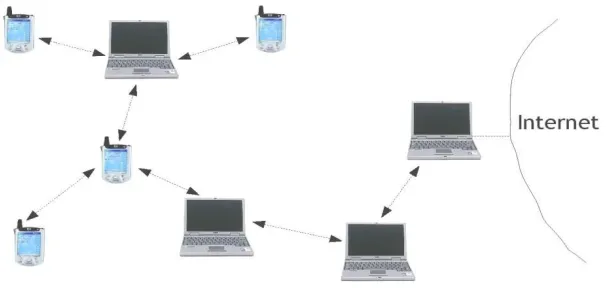
Wireless networks consist of a number of nodes which communicate with each other over a wireless channel which have various types of networks like sensor network, mobile ad hoc networks, cellular networks and satellite networks. Wireless sensor networks consist of small nodes with sensing, computation and wireless communications capabilities. Mobile ad-hoc networks are a new paradigm of wireless communication for mobile hosts where nodes of ad hoc networks are mobile and with wireless communication to maintain the connectivity, it is known as mobile ad hoc network (MANET) and require an extremely flexible technology for establishing communications in situations which demand a fully decentralized network without any fixed base stations. A Mobile ad-hoc network is a collection of independent mobile nodes that can communicate to each other via radio waves. The mobile nodes that are in radio range of each other can directly communicate, whereas others needs the aid of intermediate nodes to route their packets. Each of the node has a wireless interface to communicate with each other. These networks are fully distributed, and can work at any place without the help of any fixed infrastructure as access points or base stations. Figure 1 show how the mobile devices communicate in wireless ad-hoc networks.
Fig 1 Mobile ad hoc Network
2. HISTORY OF MANET
In early 1970s, the Mobile Ad hoc Network (MANET) was called packet radio network, which was sponsored by Defense Advanced Research Projects Agency (DARPA). They had a project named packet radio having several wireless terminals that could communication with each other on battlefields. “It is interesting to note that these early packet radio systems predict the Internet and indeed were part of the motivation of the original Internet Protocol suite”. The whole life cycle of Ad hoc networks could be categorized into the first, second, and the third generation Ad hoc networks systems. Present Ad hoc networks systems are considered the third generation. The first generation goes back to 1972. At the time, they were called PRNET (Packet Radio Networks). In conjunction with ALOHA (Arial Locations of Hazardous Atmospheres) and CSMA (Carrier Sense Medium Access), approaches for medium access control and a kind of distance-vector routing PRNET were used on a trial basis to provide different networking capabilities in a combat environment. The second generation of Ad hoc
1
Department of CSE, Mewar University, Chittorgarh, Rajasthan, INDIA 2
Department of Mathematics, IBS, Agra, UP, INDIA
Abstract- Mobile ad hoc network (MANET) represent complex distributed systems that comprise wireless mobile nodes that can freely and dynamically self-organize into arbitrary and temporary, ‘‘ad-hoc’’ network topologies, allowing people and devices to seamlessly internetwork in areas with no pre-existing communication infrastructure. Recently, the introduction of new technologies such as the Bluetooth, IEEE 802.11. These recent evolutions have been generating a renewed and growing interest in the research and development of MANET. This paper attempts to provide a comprehensive overview of this dynamic field. It first explains the important role that mobile ad hoc networks play in the evolution of future wireless technologies.
networks emerged in 1980s, when the Ad- hoc network systems were further enhanced and implemented as a part of the SURAN (Survivable Adaptive Radio Networks) program. This provided a packet-switched network to the mobile battlefield in an environment without infrastructure. In the 1990s (Third generation), the concept of commercial Ad hoc networks arrived with notebook computers and other viable communication equipments. At the same time, the idea of a collection of mobile nodes was proposed at several researchers gatherings. The IEEE 802.11 subcommittee had adopted the term "Ad hoc networks" and the research community had started to look into the possibility of deploying Ad hoc networks in other areas of application.
3. TYPES OF MANET
There are different types of MANETs including:
InVANETs – Intelligent vehicular ad hoc networks make use of artificial intelligence to tackle unexpected situations like vehicle collision and accidents [1].
A Vehicular Ad hoc Network [VANET]-VANET is a form of Mobile Ad hoc network, to provide communications among nearby vehicles and between vehicles and nearby fixed equipment, usually described as roadside equipment. The main goal of VANET is providing safety and comfort for passengers. To this end a special electronic device will be placed inside each vehicle which will provide Ad hoc Network connectivity for the passengers. This network tends to operate without any infrastructure or legacy client and server communication. Each vehicle equipped with VANET device will be a node in the Ad hoc network and can receive and relay others messages through the wireless network. Collision warning, road sign alarms and in-place traffic view will give the driver essential tools to decide the best path along the way. There are also multimedia and internet connectivity facilities for passengers, all provided within the wireless coverage of each car [1].
4. MANET CHALLENGES
The challenges that can be faced by MANET are:-
4.1 Restricted wireless transmission range:
The radio group will be restricted in the wireless networks and as a result data amounts it can provide much slighter than what a bound network can provide. This involves routing procedures of wireless networks must be use bandwidth in ideal way. This can be achieved through protecting the overhead as minimum as conceivable. The restricted transmission range also enforces restraint on routing procedures for sustaining the topographical information. Particularly in MANETs because of regular variations in topology, preserving the topological data for every node includes more controller overhead which results in additional bandwidth depletion [1].
4.2 Time-varying wireless link characteristics:
Wireless channel is liable to a range of broadcast disorders such as path harm, declining, intervention and obstruction. These features resist the series, data rate, and consistency of these cordless transmissions. [2]The range of which these features disturb the transmission that rest on atmospheric situations and flexibility of receiver and transmitter. Even two dissimilar key restraints, Nyquist’s and Shannon’s theorems that rule over capability to communicate the information at diverse data degrees can be measured.
4.3 Broadcast nature of the wireless medium:
The broadcast nature of the radio channel, such as transmissions prepared by a device is established by all devices that are in its straight transmission covering area. When a device receives data, no other device in its neighborhood, apart from the sender, must transfer. A device can acquire access to the mutual medium when its communications cannot disturb any constant session. Meanwhile several devices may resist for medium contemporarily, chance of data-packet crashes is very tall in wireless networks. Even the network is liable to concealed terminal issue and transmits storms. Concealed terminal issue mentions to the smash of data-packets at a receipt device because of immediate transmission of the nodes which are outside the straight communication series of the transmitter, but are inside the communication series of the receiver [2].
4.4 Packet losses due to transmission errors
Ad hoc wireless networks practices very advanced packet damage due to reasons such as extraordinary bit error rate (BER) in the wireless channel, enlarged crashes because of the existence of unseen terminals, occurrence of interventions, position reliant controversy, single directional associations, regular pathway breakages due to device movements, and the integral declining characteristics of the wireless passage[2].
4.5 Mobility-induced route changes
4.6 Mobility-induced packet losses
Communication contacts in an ad hoc network are insecuresuch that consecutively conservative procedures for MANETs over a great damage frequency will suffer from performance deprivation. Though, with large frequency of inaccuracy, it is problematic to supply a data-packet to its target.
4.7 Battery constraints
It is due to restricted resources that arrange main limitation on the mobile devices in an ad hoc network. Nodes which are contained in such network have restrictions on the supremacy[9] foundation in order to preserve moveability, dimension and capacity of the node. Due to accumulation of power and the processing capacity make the nodes heavyweight and less portable. Consequently only MANET devices have to use this resource.
4.8 Potentially frequent network partitions
Casually stirring nodes in an ad-hoc network may result in network panels. certain cases involve middle nodes to be extremely effected by such separation[7].
4.9 Ease of snooping on wireless transmissions (security issues)
Wireless passage being employed for ad hoc networks transmitted in natural surroundings. It is also shared by all devices in the network. Transmission of data through a device is acknowledged by all devices inside straight communication series. So invader is certain to sneak data/information which is communicated within network. The conditions of secrecy could be disrupted if enemy is capable in inferring data assembled by snooping [2].
4.10 Routing
In MANETs routing is an important challenge for the performance degradation due to unicasting, multicasting and geocasting demands by the network nodes in contrast to single hope wireless networks. It’s because of rapid -change in network topology and with different mobility speeds [4].
4.11 Quality of Service
In MANETs quality of service is an important challenge for the differed kind of quality level demands by the network nodes[5]. Its becomes very difficult to fulfill the different levels or priority demands related to quality of service so these network required best control of QoS specially in case of multimedia.
4.12 ecurity
In MANET, security is one the important challenge due to its wireless environment. The data of users from one node to another node must be transferred safely and completely[8]. The least privilege principle can also enhance the security of MANET systems as proposed for organizations.
5. APPLICATION OF MANET
Mobile ad hoc networks are suited for use in situations where an infrastructure is unavailable or to deploy one is not cost effective [39]. The following are some of the important applications:-
5.1 Business Application
Fig 2: Client-Server Model
This client-server model suffers the following major drawbacks that is a user cannot play games where there is no Internet infrastructure, or when the connection is too bad, or when the server is not available (either the server is down or refuses users because the maximum number of users is reached). Another drawback is that it limits the gamers from randomly announcing, discovering and joining a networked game.
5.2 Military Applications
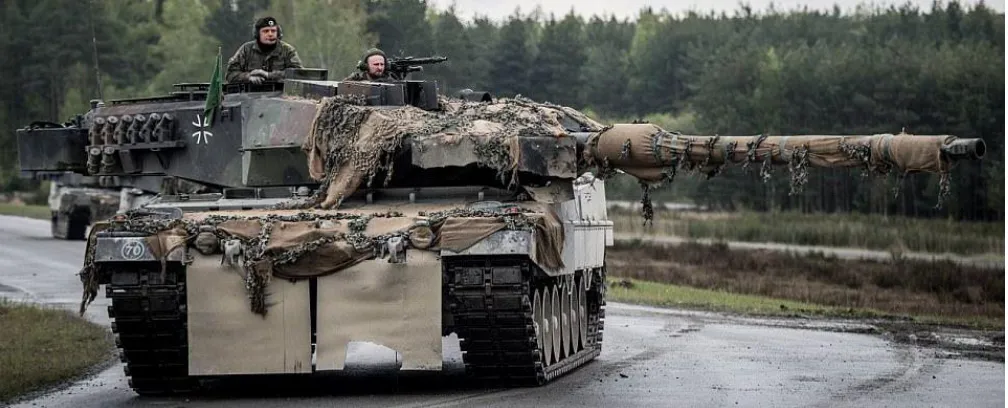
Military applications have motivated early research on mobile ad hoc networks. The ability to quickly set up a network among military units in hostile territory without any infrastructure support can provide friendly forces with a considerable tactical advantage on the battlefield[10]. For instance, each soldier can carry a mobile device that represents one of the mobile nodes in an Ad hoc network linking all soldiers, tanks, and other vehicles as shown in Fig 3.3. Recent advances in robotics have also motivated the idea of automated battlefields in which unmanned fighting vehicles are sent into battle. Supporting military applications requires self-organizing mechanisms that provide robust and reliable communication in dynamic battle situations.
Fig 3.3: Soldiers, Tanks and other Vehicles carrying Mobile Devices
5.3 Combat operations
Some of the essentials requirements of a combat operations include network deployability, network security, end to end IP, high mobile connectivity and anti jamming mechanisms. In most of the cases, military operations are often spontaneous i.e. with little or no fixed network infrastructure. Geographical location is one of the important factors of any military operation which makes the current geographical positioning systems less efficient to support such operations. As the soldiers in a combat operation cannot afford exposing themselves in a battlefield to acquire GPS coordinates[8].
Through anti-jamming mechanism the soldiers in a military operation are neither dependent on a single frequency nor are constrained to any military band. Mobile ad hoc networks are best suited to jamming because noise can now be routed around problem areas[10].
Another application example of a mobile ad-hoc network is Bluetooth, which is designed to support a personal area network by eliminating the need of wires between various devices, such as printers and personal digital assistants, hospitals, security i.e. law enforcement agencies etc[7].
6. CONCLUSION
MANET is the emerging technology but it has some challenges that must be covered for efficient results. The security is the main challenges in the networks and especially in the wireless technologies such as MANET. Mobile ad-hoc network allow the construction of flexible and adaptive networks with no fixed infrastructure. These networks are expected to play an important role in the future wireless generation. Future wireless technology will require highly adaptive mobile networking technology to effectively manage multi-hop ad-hoc network clusters, which will not only operate autonomously but also will be able to attach at some point to the fixed networks.
7. REFERENCES
[1] [1] Raja, M.L. and Baboo, C.D.S.S. (2014) An Overview of MANET: Applications, Attacks and Challenges.
[2] [2] Chitkara, M. and Ahmad, M.W. (2014) Review on MANET: Characteristics, Challenges, Imperatives and Routing N. Raza et al. 136 d Protocols. International Journal of Computer Science and Mobile Computing, 3, 432-437.
[3] [3] Mohammad, S., Alsanabani, M. and Alahdal, T. (2014) Comparison Study of Routing Protocols in MANET. International Journal of Ad Hoc, Vehicular and Sensor Networks, 1, 1-9.
[4] [4] Odeh, A., Abdel Fattah, E. and Alshowkan, M. (2012) Performance Evaluation of AODV and DSR Routing Protocols in MANET Networks.
[5] [5] Verma, S. and Singh, P. (2014) Energy Efficient Routing in MANET: A Survey. International Journal of Engineering and Computer Science, 3, 3971-3977.
[6] [6] Mamatha, G. and Sharma, D.S. (2010) Analyzing the MANET Variations, Challenges, Capacity and Protocol Issues. International Journal of Computer Science & Engineering Survey, 1, 14-21. http://dx.doi.org/10.5121/ijcses.2010.1102
[7] [7] Goyal, P., Parmar, V. and Rishi, R. (2011) Manet: Vulnerabilities, Challenges, Attacks, Application. International Journal of Computational Engineering & Management, 11, 32-37.
[8] [8] Aftab, M.U., Nisar, A., Asif, D., Ashraf, A. and Gill, B. (2013) RBAC Architecture Design Issues in Inst itutions Collaborative Environment. International Journal of Computer Science Issues, 10, 216-221.
[9] [9] Aftab, M.U., Habib, M.A., Mehmood, N., Aslam, M. and Irfan, M. (2015) Attributed Role Based Access Control Model. Confere nce on Information Assurance and Cyber Security (CIACS), Rawalpindi, 18 December 2015, 83-89. http://dx.doi.org/10.1109/CIACS.2015.7395571 [10] [10] Chitkara, M. and Ahmad, M.W. (2014) Review on MANET: Characteristics, Challenges, Imperatives and Routing Protocols. Int ernational Journal