International Journal of Current
Medical and Pharmaceutical
Research
Available Online at http://www.journalcmpr.com
RESEARCH ARTICLE
ROLE OF TESTOSTERONE IN MODIFICATION OF ISCHEMIC HEART DISEASE
Tanveer A Khan
1*., Awais A Zaidi
1., Lubna Shakir
1., Mahtab A Khan
2,3.,
Arsalan Ali
1., Ayesha Hussain
1.,Muhammad Yousaf
1.,
Haroon Babar
4and Muhammad Ans
51
Faculty of Pharmacy, Hajvery University, Lahore-Pakistan
2
Institute of Experimental and Clinical Pharmacology and Toxicology,
University of Lübeck, Germany
3
Bahauddin Zakariya University, Multan-Pakistan
4
Chaudhary Pervaiz Elahi Institute of Cardiology (C.P.E.I.C), Multan-Pakistan
5
Riphah International University Lahore-Pakistan
ARTICLE INFO ABSTRACT
The objective of this study was to assess the testosterone role in modification of ischemic heart disease. All subjects were male aged between 30 to 80 years. At the start of study, blood pressure, serum testosterone, lipid profile and left ventricular function were recorded. Males who were at high risk of cardiovascular disease have low endogenous testosterone level. The testosterone therapy, 250mg/2mlweekly (Intramuscularly) for six months was sufficient to lower the risk of further cardiac complications by decreasing serum total cholesterol, low density lipoprotein and triglycerides levels (p<0.0001) and showed improvement in high density lipoprotein and serum testosterone levels (p<0.02). Moreover it has also ameliorated the Left Ventricular Function. The study concluded that exogenous testosterone may be considered a valuable addition as a regular therapy in Ischemic Heart Disease patients in order to codify their cardiac functions.
Copyright © 2016 Tanveer A Khan et al. This is an open access article distributed under the Creative Commons Attribution License, which permits unrestricted use, distribution, and reproduction in any medium, provided the original work is properly cited.
INTRODUCTION
Androgens may play a key role in gender difference; current researches are now investigating the mechanisms through which androgens affect morbidity, mortality and heart diseases. In history, estrogens are considered to be protective for cardiovascular system, as it was from the observation that women, on an average, live longer than men (Stamler, 1977). A large quantity of available information about testosterone effects earlier, showing a conflict in connection between decrease testosterone levels and cardiac disease, other studies showing entirely dissimilar ndings, presenting undeviating relationship among low testosterone levels and cardiac disease or death. Earlier data on hypogonadal males showed a connection with hormone levels and increased mortality (Shores et al., 2006). Testosterone is associated to numerous aspects of cardiovascular illness in males, but the precise role is unsure (Shabsigh et al., 2005, Haddad et al., 2007). The consequences of reduced androgen levels include fat mass gain, loss of muscle and bone mass, fatigue, depression, anemia, poor libido, and erectile dysfunction. Most of the studies in the medical literature have used a cutoff level of
total testosterone of 300 ng/dl to aid in the biochemical diagnosis of hypogonadism (Rosner et al., 2007). The unswerving result of testosterone on coronary circulation in males is not known. In rabbits, testosterone administration has caused significant relaxation of pre-contracted aorta and coronary arteries in vitro, with or without endothelium (Webb et al., 1999). In vitro and in vivo studies have established that, testosterone have an impact on coronary vasodilation (Webb et al., 1999, Yue et al., 1995). A number of research groups have showed that testosterone therapy with I.M(Jaffe, 1977), I.V (Rosano et al., 1999), and transdermal preparations had animportant anti-ischemic effect in males with coronary disease (English et al., 2000c). Furthermore, men with coronary artery disease (CAD) have lower testosterone levels than men with normal coronary angiograms males of the same age (English et al., 2000b). Furthermore, it is evident from research studies that testosterone therapy delays the onset of ischemic heart disease (IHD), most likely as a consequence of a coronary vasodilator mechanism, improving the symptom of angina (English et al., 2000c, Samuel et al., 1943). Testosterone in men reaches highest levels at around the age of 30 years, after which levels gradually decline at a rate of 1 to
Key words:
Ischemic Heart Disease, Testosterone, HDL, LDL
Article History:
2% onyearly basis (Samuel et al., 1943). Levels of testosterone decrease in patients with persistent illnesses such as chronic
obstructive pulmonary disease (COPD), human
immunodeficiency virus, genetic disease like Klinefelter syndrome and type II diabetes mellitus (Cunningham et al., 2004, Kalyani et al., 2007). Acute illness, radiations, pituitary gland tumors are also known causes of low testosterone levels (Cunningham et al., 2004, Spratt et al., 1993). In men the progression and development of CAD is twice as compare to women (Stamler, 1977). One of the research study shows that men with decrease levels of serum testosterone are at higher risk of mortality secondary to cardiovascular disease in which the testosterone is less than the males with no cardiovascular disease and of same age(Barrett-Connor E, 1988). IHD progression can be reduced with the use of testosterone and there might be coronary vasodilator mechanism involved (English et al., 2000c).
Lipids levels always show different patterns with CAD. In particular in terms of high total low density lipoprotein (LDL) fractions, high total cholesterol, hyper triglyceridemia (Ramsay et al., 1996).There is an inverse correlation present between testosterone and obesity(Vermeulen et al., 1996, Vermeulen et al., 1999). Thus normal men with low testosterone appear to have adverse lipid profiles and a potentially atherogenic dyslipidemia before the treatment (Oppenheim et al., 1989). In the same way an inverse relationship is present between obesity and high density lipoprotein (HDL) (Lichtenstein et al., 1987).Testosterone is a key player in lowering of total cholesterol and LDL (Zgliczynski et al., 1996).The I/M testosterone therapy is also involved in decreasing the total cholesterol and LDL fraction in meta study of hypogonadal man having raised cholesterol and raised LDL fractions. In old age male patients, the testosterone is involved in ameliorating dyslipidemia and lowering of LDL levels related with atherosclerosis (Lancet, 1994). In malepatients with hypertension, the intensities of testosterone are low as compared to normal person(Phillips et al., 1993). Testosterone show to improve the cardiac output in patients with heart failure due to the result of reduction in peripheral vascular resistance therefore shows the property of vasodilation (Pugh et al., 2002).
Testosterone also shows an inverse relation with fibrinogen(DePergola et al., 1997, Phillips et al., 1994) and testosterone administration also results in the reduction of fibrinogen (Anderson et al., 1995). Testosterone also have an effect on haemostatic/fibrinolytic systems, it also shows anti-thrombotic activity and involve as a therapy in anti-thrombotic diseases (Noll et al., 1985). Testosterone improves the condition of men suffering from chronic inflammatory disease after the testosterone therapy(NakhaiPour et al., 2007).A number of researchstudies investigate the relationship between serum total testosterone levels and all-causes of death.Statistically signi cant elevated rates of all-cause mortality in those men with decrease levels of endogenous total testosterone was found(Haring et al., 2010, Vikan et al., 2009, Tivesten et al., 2009, Laughlin et al., 2008). A key pathologic feature of congestive heart failure (CHF) is a metabolic shift toward catabolism, which results from the activation of neuroendocrine and in ammatory pathways (Anker et al., 1997b, Anker et al., 1997a). Emerging evidence shows that there might be a relationship between testosterone de ciency, CHF, and exercise capacity demonstrated that reduced levels of total and estimated free testosterone were
both predictors of high mortalityrate in men with CHF (Jankowska et al., 2006).
MATERIALS AND METHODS
Study Participants
There were 60 patients of IHD who met the eligibility criteria of this study having ages in between 30-80 years. All the patients involved in this study were male hospitalized with a diagnosis of first incident of IHD.
Inclusion Criteria
All cases were selected according to the Council of Medical Research Study criteria of the Pakistan. Definite diagnosis of IHD was based on clinical examination, ECG readings, and capacity of left ventricular function (LVF). Research subjects were identified by visiting participating hospital, Chaudhary Pervaiz Elahi Institute of Cardiology (C.P.E.I.C)on daily or bi-weekly basis (two visits per week) and by consulting the physicians on duty.
Exclusion Criteria
Diagnosed lung cancer and/or prostate cancer or prostate swelling
Hemoglobin <10g/dl or >16.0g/dl
Sleep apnea
Drug abuse and Alcohol within the past year (based on self report)
New York Heart Association, III or IV class CHF
Myocardial infarction within the previous 03 months before entry
Stroke within the previous 03 months before entry
Chronic pulmonary disease
Serumcreatinine levels>2.0mg/dL
ALT 3x upper limit of normal
Untreated depression and psychiatric disorders
Medications use within the last three months:
1. Medication that have an effect on serum testosterone concentration
2. rhGH or megesterol acetate
3. daily use of prednisone for more than two weeks
Antipsychotic medications for Axis I disorders
Opiate abuse within the past 06 months
Subjects had a chronic kidney disease (CKD), liver disease, gastrointestinal tract or viral infection, HIV-infected, or thyroid disease. The data of expired patients were also excluded from the research project.
three months when improvement in health status in study subjects was seen.
Ethical Approval
This study was approved by Research and Ethics Committee (REC) of Faculty of Pharmacy, Hajvery University Lahore as well as Research and Ethics Committee of Ch-PervaizElahi Institute of Cardiology Multan. The study was approved by the committee and informed consent was obtained.
RESULTS
Only sixty male patients met the inclusion criteria. Their required tests were took and marked as baseline tests before the induction of exogenous test therapy. Some of the baseline test results are shown in Fig. 1 which describes the mean difference between the test results before the therapy, after three months and six months of therapy.
Fig. 1 is representing the significant improvement from mean baseline values of serum testosterone (Testo.), total cholesterol (T. Ch.), triglycerides (TG), Low density lipoprotein (LDL) and high density lipoprotein (HDL) after receiving exogenous testosterone 250mg/week therapy after three months of therapy and six months of therapy of testosterone.
The test results showed that the patients with IHD had testosterone level below normal range which may be a marked sign of disturbing other test results such as serum total cholesterol, serum Triglycerides, serum LDL, serum HDL, most importantly the LVF and may cause further complications if not addressed.
Themean baseline serum testosterone level is 321ng/dl. The serum testosterone level after three months of therapy was 366ng/dl and 386ng/dl after the therapy extended for three more months as shown in Fig. 2.
Fig. 2 is showing the comparison of baseline testosterone levels and the improvements of serum testosterone levels after induction of exogenous testosterone for three months and six months of therapy ( p<0.02).
As well as the condition of the patients perked up especially in elderly patients above sixty years of age. Exogenous testosterone induction as an adjunct therapy not only enhanced the serum testosterone levels but also the physical ability of the patients (p<0.02). Baseline total cholesterol levels were towards higher range as depicted in Fig. 3.
Fig. 3 is representing the relationship between baseline serum total cholesterol, cholesterol level after three months and six months extended therapy (p<0.0001).
But after the introduction of experimental intervention, it was found that the serum total cholesterol level got better and there was a decreasing trend of cholesterol level after three months of therapy and extended six months of therapy(p<0.0001).
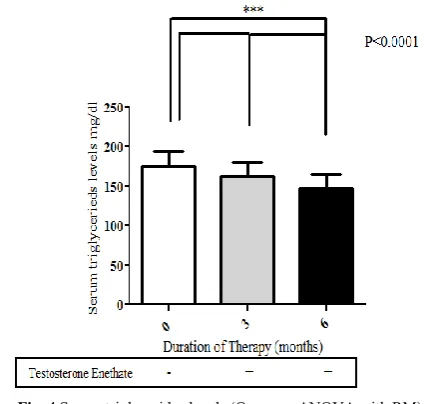
The ameliorations in baseline serum triglycerides levels after the therapy of three months and significant improvement after the therapy extended for further three months (p<0.0001) were observed in Fig. 4.
Fig. 4 shows the comparison between the baseline serum triglycerides before the exogenous testosterone therapy shown in white column, after three months shown in gray column, and six months therapy in black column (p<0.0001).
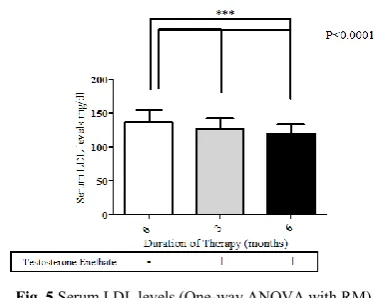
In comparison to the baseline serum LDL, the induction of exogenous testosterone as adjunct therapy shows much more significant result and improvement in the serum LDL as is shown in Fig. 5.
Testo.(ng/dl) T.Ch.(mg/dl) TG (mg/dl) LDL (mg/dl) HDL (mg/dl) 0
100 200 300 400 500
0 months 3 months 6 months
***
***
***
***
***
Fig. 1 Graphical representation of mean values
Fig. 2 Serum testosterone levels (One-way ANOVA with RM)
Fig. 3 Serum cholesterol levels (One-way ANOVA with RM)
Fig. 5 illustrates the difference between the base line serum LDL levels in white column, and improvements in the serum LDL levels after three months shown in gray column and six months therapy shown in black column (p<0.0001)
The serum LDL levels were decreased comprehensively as compared to baseline results (p<0.0001). On one hand the exogenous testosterone was able to decrease the serum LDL levels and on the other hand the serum HDL level raised as shown in Fig.6 as compared to baseline serum HDL after three months of therapy.
Fig. 6 demonstrates the difference between the base line serum HDL levels in (white column) before the induction of exogenous testosterone therapy and improvements in HDL after three months (gray column) and finally improvements in the serum HDL levels (Black Column) after six months therapy through statistical analysis (p<0.0001).
After six months more marked improvements resulted (p<0.0001). The baseline LVF test results showed poor values as shown in Fig. 7.
Fig. 7 describes the significant amelioration (p<0.0001) in the base line LVF (Left ventricular function). White column is representing the value at the start of therapy, (Gray column) after three months and (Black column) at the end of six months therapy.
In most of the patients the LVF function was quietly disturbed and below normal readings obtained but after incorporation of exogenous testosterone for three months, the LVF results were improved. Extension of therapy for further three months showed significant improvements in LVF results (p<0.0001).
DISCUSSION
The concept increasing in support of the fact that is an inverse relationship is present among low levels of serum testosterone and cardiac problems specially IHD and CAD. The males which had lower levels of endogenous testosterone are prone to develop CAD, IHD and disturbed lipid profile(Rosano et al., 2007, Li et al., 2012, Phillips et al., 1994).Serum testosterone level was lower in enrolled IHD patients of our study and this is in line with previous reports showing that testosterone confers cardiovascular protection by direct action on myocardium(Tsang et al., 2007). Administration of testosterone increases cardiac output acutely apparently via reduction in left ventricular after load(Pugh et al., 2002).Owing to anabolic properties, testosterone is also known to act as a vasodilator in systemic, coronary and pulmonary vascular beds (Tep-areenan et al., 2002, English et al., 2000a, English et al., 2002, English et al., 2001, Jones et al., 2002). Testosterone has been used as add on therapy in men with CHF that showed useful effects in them(Shapiro et al., 1999). In laboratory rats, testosterone therapy increases coronary blood flow and improves both partial and peak oxygen consumption by myocardium (Scheuer et al., 1987).
The effect of testosterone was not previously tested in humans with IHD and altered LVF. During this study a significant improvement in LVF during and after testosterone therapy has been observed in patients. High cholesterol levels have always shown to be one of the most imperative risk factors for the advancement towards atherosclerosis. Research studies have shown that men are at increased risk of developing adverse lipid pro les (Whitsel et al., 2001), and experience the risk of cardiovascular disease mortality more commonly as compared to women of similar age (Calof et al., 2005). The research studies linking the relationship between baseline serum testosterone levels and different lipid profiles and sub fractions having conflict, and therefore a clear agreement have not been accomplish by the various authors who have investigating this association also. Large, potential, population-based studies are required to further explain this matter. The proof on the effect of exogenous testosterone therapy lipid sub fractions levels is likewise different in different research studies. In one of the research study the exogenous testosterone replacement therapy through intra muscular injections cause a small amount of decrease in total serum cholesterol levels (Corona et al., 2011). Previously it was claimed generally through research studies that higher level of testosterone is the major cause of prostate cancer in male patients. The results of some clinical studies contradict that the exogenous testosterone administration is directly related to increase the risk of developing the prostate cancer in male patients receiving the exogenous testosterone. One of the research study showed that there were an increase prostate-related undesirable proceedings with exogenous testosterone administration (Filippi et al., 2009).
As a major androgenic hormone in males the testosterone also produces its effect in maintaining the body mass index of person. The precise mechanism by which endogenous testosterone and fatness is relate to each other is still not known. Testosterone may cause the breakdown of abdominal
Fig. 5 Serum LDL levels (One-way ANOVA with RM)
Fig. 6 Serum HDL levels (One-way ANOVA with RM)
0 3 6
0 10 20 30 40 50
Testosterone - + +
P<0.0001
***
*** ***
L
e
ft
v
en
tr
ic
u
la
r
fu
n
c
ti
o
n
t
e
st
fats in adipose tissue, which results in the reduction of fat in abdominal area of the body. Exogenous testosterone therapy produced some beneficial effects by lowering fats of the body. Thus by doing this, preventing the increase in fats of the body and ultimately providing safety from cardiac problems in future(Alexandersen et al., 1999). Another study shows the same and prosperous result in animal model. This discovery was con rmed in animal models as well(Godsland et al., 1987).
The impact of exogenous testosterone administration is helpful in maintaining the levels of serum testosterone levels in men with IHD. If there will a reduction in cholesterol availability there will be a less production of testosterone and the other function of human body might be affected with this preposition. The most important in lowering the male testosterone levels is the use of 3-hydroxy-3-methylglutaryl-Coenzyme A reductase inhibitors which not only decrease the total cholesterol, triglycerides, low density lipoproteins but they indirectly effect the production of sex hormones in male and thus not only effecting the production of testosterone but effecting other levels whose regulation are attributed to testosterone function in males. In one of the research study on exogenous testosterone therapy showed that testosterone replacement therapy improve the total serum cholesterol levels as compared to the testosterone levels before starting the therapy(Corona et al., 2011).
Our research study is advocating the IM administration of testosterone (250mg/2ml/week) as it is helpful in lowering the serum total cholesterol in IHD patients (Fig. 3). The mean of baseline cholesterol level shows decreasing trend after three months of testosterone therapy and more prospective results were seen as this therapy continued for three more months and at the end of therapy, we have better results and there was more improved and controlled total cholesterol levels. Patients show more positiveness towards the therapy and results are more influencing.
The improvements in the baseline serum triglycerides levels of IHD patients were also found when exogenous testosterone incorporated. The baseline results of patient shows high range patterns of serum Triglyceride levels. When these patients received exogenous testosterone for three months there was improvement in total cholesterol and Triglyceride levels. A further reduction in Triglycerides levels was observed when testosterone therapy proceeded for next three months and after six months there were marked improvement in results as shown in the (Fig. 4). This shows that testosterone is multifunctional hormone.
In low (LDL) cholesterol receptor de cient mice, orchiectomy is associated with accelerated formation of atherosclerotic lesions in the aorta, and testosterone supplementation was shown to retard the progression of these lesions(Nettleship et al., 2009). Administration of an aromatase inhibitor blocked the bene cial effects (Nathan et al., 2001). The LDL cholesterol levels decreases after exogenous testosterone replacement therapy(Nettleship et al., 2009).
The significant reduction in LDL levels in Chinese men were seen when testosterone was administered via IM route after four weeks for 3 months. They found that the effect of exogenous Testosterone on LDL activity is transient because of the multiple peaks and troughs of testosterone that are produced when testosterone is administered exogenously,
causing a down regulation of LDL. The decreased levels in LDL-C (low density lipoprotein-chylomicrons) size, however, persisted to the end of the study(Zhao and Li, 1998). These results are in conjunction with our findings. In our research the testosterone therapy shows prospective improvements not only in serum total cholesterol, Triglycerides, HDL but also shows improvement in serum LDL levels (Fig. 5).
Testosterone has some major effects on HDL concentration. Testosterone caused significant development in HDL levels. Fig. 6 shows the result of effectiveness of testosterone on HDL. After the baseline test, the therapy was introduced. Three months therapy produced better results than without therapy so we continued the therapy for next three months (Fig. 6) and observed further improvement in HDL data at the end of therapy. One of the research studies shows marked improvement in LDL levels and moderate improvements in HDL levels when participants receive testosterone therapy on weekly basis. It means that there is an inverse relationship present between the LDL and HDL. So if LDL decreases the HDL increases (Tsang et al., 2007). The LVF is mainly disturbed in patients suffering from IHD. Introduction of exogenous testosterone also plays its part in improving LVF (Pugh et al., 2002). There are some indications which shows that exogenous testosterone is growing evidence suggesting that testosterone might take part in the regulation of ventricular repolarization (Calof et al., 2005). In our research study the patients with IHD had deceased LVF state. When testosterone was introduced in their therapy, there are marked developments in LVF status and effect of exogenous testosterone therapy has caused remarkable improvement in LVF after six months of therapy (Fig. 7).
The results of this research study have significance because testosterone is the most important androgenic hormone of males differentiating them from females and improved the cardiac health status of study subjects. These outcomes may establish a solid ground for future studies addressing the cardiac problems in male. Advance research studies required to examine the effects of long-term, dose dependent exogenous testosterone administration in men with IHD or CAD and risk factors for CAD in men.
CONCLUSION
Androgenic hormone plays a key role in maintaining and improving the health of males’ especially cardiac health. This study shows that exogenous testosterone improves cardiac health and lipid profile in males which plays an integral role in maintaining cardiac health. Furthermore this study also highlights that exogenous testosterone can improve myocardial ischemia, left ventricular function and lasting out come in men with established ischemic heart disease.
Acknowledgement
We are thankful to all the patients who participated in this research study, the doctors and staff in ChoudryPervaizElahi Institute of Cardiology Multan, Dr.ShahidHameed (late) and Dr.Rashid Kamal from Nishter Hospital Multan and all the Lab assistants, and Syed HamzaMahmood for statistical assistance.
References
atherosclerosis: a study in castrated, cholesterol-fed rabbits. Circ res, 84, 813-9.
Anderson, r. A., ludlam, c. A. & wu, f. C. 1995. Haemostatic effects of supraphysiological levels of testosterone in normal men. Thromb haemost, 74, 693-7.
Anker, s. D., chua, t. P., ponikowski, p., harrington, d., swan, j. W., kox, w. J., poole-wilson, p. A. & coats, a. J. 1997a. Hormonal changes and catabolic/anabolic imbalance in chronic heart failure and their importance for cardiac cachexia. Circulation, 96, 526-34.
Anker, s. D., clark, a. L., kemp, m., salsbury, c., teixeira, m. M., hellewell, p. G. & coats, a. J. 1997b. Tumor necrosis factor and steroid metabolism in chronic heart failure: possible relation to muscle wasting. J am coll cardiol, 30, 997-1001.
Barrett-connor e, k. K. 1988. Endogenous sex hormones and cardiovascular disease in men. A prospective population-based study. . Circulation., 78, 539-545. Calof, o. M., singh, a. B., lee, m. L., kenny, a. M., urban, r.
J., tenover, j. L. & bhasin, s. 2005. Adverse events associated with testosterone replacement in middle-aged and older men: a meta-analysis of randomized, placebo-controlled trials. J gerontol a biol sci med sci, 60, 1451-7.
Corona, g., monami, m., rastrelli, g., aversa, a., sforza, a., lenzi, a., forti, g., mannucci, e. & maggi, m. 2011. Type 2 diabetes mellitus and testosterone: a meta-analysis study. Int j androl, 34, 528-40.
Cunningham, g. R., matsumoto, a. & r., s. 2004. Low testosterone and men???S health. J clin endocrinol metab, 89.
Depergola, g., mitrio v, sciaraffia m, pannacciulli n, minenna a, giorgino f, petronelli m, laudadio e & r., g. 1997. Lower androgenicity is associated with higher plasma levels of pro-thrombotic factors irrespective of age, obesity, body fat distribution, and related metabolic parameters in men. . Metabolism, 46, 1287–9.
English, k. M., jones rd, th, j., morice ah & ks., c. 2002. Testosterone acts asa coronary vasodilator by a calcium antagonistic action. . J endocrinol invest., 25, 455-458. English, k. M., jones, r. D., jones, t. H., morice, a. H. &
channer, k. S. 2000a. Aging reduces the responsiveness of coronary arteries from male wistar rats to the vasodilatory action of testosterone. Clin sci (lond), 99,
77-82.
English, k. M., jones, r. D., jones, t. H., morice, a. H. & channer, k. S. 2001. Gender differences in the vasomotor effects of different steroid hormones in rat pulmonary and coronary arteries. Horm metab res, 33,
645-52.
English, k. M., mandour o, steeds rp, diver mj, jones th & ks., c. 2000b. Men with coronary artery disease have lower levels of androgens than men with normal coronary angiograms. Eur heart j, 21, 890-894.
English, k. M., steeds, r. P., jones, t. H., diver, m. J. & channer, k. S. 2000c. Low-dose transdermal testosterone therapy improves angina threshold in men with chronic stable angina: a randomized, double-blind, placebo-controlled study. Circulation, 102, 1906-11. Filippi, s., vignozzi l, morelli a, chavalmane ak, sarchielli e
& b., f. 2009. Testosterone partially ameliorates metabolic pro le and erectile respon- siveness to pde5 inhibitors in an animal model of male metabolic syndrome. . J sex med., 6, 3274–3288.
Godsland, i. F., wynn, v., crook, d. & miller, n. E. 1987. Sex, plasma lipoproteins, and atherosclerosis: prevailing assumptions and outstanding questions. Am heart j, 114,
1467-503.
Haddad, r. M., kennedy cc, caples sm, tracz mj, boloña er, sideras k, uraga mv, erwin pj & vm., m. 2007. Estosterone and cardiovas- cular risk in men: a systematic review and meta-analysis of randomized placebo-controlled trials. Mayo clin proc., 82, 29-39. Haring, r., volzke, h., steveling, a., krebs, a., felix, s. B.,
schofl, c., dorr, m., nauck, m. & wallaschofski, h. 2010. Low serum testosterone levels are associated with increased risk of mortality in a population-based cohort of men aged 20-79. Eur heart j, 31, 1494-501.
Jaffe, m. D. 1977. Effect of testosterone cypionate on postexercise st segment depression. Br heart j, 39,
1217-22.
Jankowska, e., biel b, majda j, szklarska a, lopuszanska m, medras m & anker sd, b. W., poole-wilson pa, ponikowski p. 2006. Anabolic de ciency in men with chronic heart failure: prevalence and detrimental impact on survival. Circulation, 114, 1829–1837.
Jones, r. D., english, k. M., pugh, p. J., morice, a. H., jones, t. H. & channer, k. S. 2002. Pulmonary vasodilatory action of testosterone: evidence of a calcium antagonistic action. J cardiovasc pharmacol, 39, 814-23.
Kalyani, r. R., gavini, s. & dobs, a. S. 2007. Male hypogonadism in systemic disease. Endocrinol metab clin north am, 36, 333-48.
Lancet 1994. Randomised trial of cholesterol lowering in 4444 patients with coronary heart disease: the scandavian simvastatin survival study (4s). 344, 1383-9. Laughlin, g. A., barrett-connor, e. & bergstrom, j. 2008. Low serum testosterone and mortality in older men. J clin endocrinol metab, 93, 68-75.
Li, l., guo cy, jia ez, zhu tb, wang ls, cao kj, ma wz & zj., y. 2012. Testosterone is negatively associated with the severity of coronary atherosclerosis in men. Asian j androl., 14, 875-878.
Lichtenstein, m. J., yarnell, j. W., elwood, p. C., beswick, a. D., sweetnam, p. M., marks, v., teale, d. & riad-fahmy, d. 1987. Sex hormones, insulin, lipids, and prevalent ischemic heart disease. Am j epidemiol, 126, 647-57. Nakhaipour, h. R., grobbee, d. E., muller, m. & van der
schouw, y. T. 2007. Association of endogenous sex hormone with c-reactive protein levels in middle-aged and elderly men. Clin endocrinol (oxf), 66, 394-8. Nathan, l., shi, w., dinh, h., mukherjee, t. K., wang, x., lusis,
a. J. & chaudhuri, g. 2001. Testosterone inhibits early atherogenesis by conversion to estradiol: critical role of aromatase. Proc natl acad sci u s a, 98, 3589-93. Nettleship, j. E., jones, r. D., channer, k. S. & jones, t. H.
2009. Testosterone and coronary artery disease. Front horm res, 37, 91-107.
Noll, g., lammle b & f., d. 1985. Treatment with stanozolol before thrombolysis in patients with arterial occlusions. . Thrombosis research, 37, 529-3.
Oppenheim, d. S., greenspan, s. L., zervas, n. T., schoenfeld, d. A. & klibanski, a. 1989. Elevated serum lipids in hypogonadal men with and without hyperprolactinemia. Ann intern med, 111, 288-92.
hemostatic risk factors for coronary heart disease in men with hypertension. J hypertens, 11, 699-702. Phillips, g. B., pinkernell, b. H. & jing, t. Y. 1994. The
association of hypotestosteronemia with coronary artery disease in men. Arterioscler thromb, 14, 701-6.
Pugh, p. J., jones, t. & ks., c. 2002. Acute haemodynamic effects of testosterone administration in men with heart failure. . Eur heart j 2002; 23(suppl.):2, 24, 909-910. Ramsay, l. E., haq, i. U., jackson, p. R. & yeo, w. W. 1996.
The sheffield table for primary prevention of coronary heart disease: corrected. Lancet, 348, 1251.
Rosano, g. M., leonardo, f., pagnotta, p., pelliccia, f., panina, g., cerquetani, e., della monica, p. L., bonfigli, b., volpe, m. & chierchia, s. L. 1999. Acute anti-ischemic effect of testosterone in men with coronary artery disease. Circulation, 99, 1666-70.
Rosano, g. M., sheiban, i., massaro, r., pagnotta, p., marazzi, g., vitale, c., mercuro, g., volterrani, m., aversa, a. & fini, m. 2007. Low testosterone levels are associated with coronary artery disease in male patients with angina. Int j impot res, 19, 176-82.
Rosner, w., auchus, r. J., azziz, r., sluss, p. M. & raff, h. 2007. Position statement: utility, limitations, and pitfalls in measuring testosterone: an endocrine society position statement. J clin endocrinol metab, 92, 405-13.
Samuel, a. L., william & likoff 1943. The therapeutic value of testosterone propionateinanginapectoris. N engl. J med., 229, 770-772.
Scheuer, j., malhotra, a., schaible, t. F. & capasso, j. 1987. Effects of gonadectomy and hormonal replacement on rat hearts. Circ res, 61, 12-9.
Shabsigh, r., katz, m., yan, g. & n., m. 2005. Cardiovascular issues in hypogonadism and testosterone therapy. Am j cardiol., 96, 67-72.
Shapiro, j., christiana j & wh., f. 1999. Testosterone and other anabolic steroids as cardiovascular drugs.. Am j ther 6, 167-74.
Shores, m. M., matsumoto, a. M., sloan, k. L. & kivlahan, d. R. 2006. Low serum testosterone and mortality in male veterans. Arch intern med, 166, 1660-5.
Spratt, d. I., cox p, orav j, moloney j & t., b. 1993. Reproductive axis suppression in acute illness is related to disease severity. . J clin endocrinol metab., 76, 1548-1554.
Stamler, j. 1977. The coronary drug project— ndings with regard to estrogen, dextrothyroxine, clo brate and niacin. Adv exp med biol., 82, 52–75.
Tep-areenan, p., kendall, d. A. & randall, m. D. 2002. Testosterone-induced vasorelaxation in the rat mesenteric arterial bed is mediated predominantly via potassium channels. Br j pharmacol, 135, 735-40. Tivesten, a., vandenput, l., labrie, f., karlsson, m., ljunggren,
o., mellstrom, d. & ohlsson, c. 2009. Low serum testosterone and estradiol predict mortality in elderly men. . J clin endocrinol metab., 94, 2482–248.
Tsang, s., liu, j. & wong, t. M. 2007. Testosterone and cardioprotection against myocardial ischemia. Cardiovasc hematol disord drug targets, 7, 119-25. Vermeulen, a., goemaere, s. & kaufman, j. M. 1999.
Testosterone, body composition and aging. J endocrinol invest, 22, 110-6.
Vermeulen, a., kaufman jm & va., g. 1996. Influence on some biological indices on sex hormone binding globulin and androgen levels in aging or obese males. . J clin endocrinol metab, 81, 1821–6.
Vikan, t., schirmer, h., njolstad, i. & svartberg, j. 2009. Endogenous sex hormones and the prospective association with cardiovascular disease and mortality in men: the tromso study. Eur j endocrinol, 161, 435-42. Webb, c. M., mcneill, j. G., hayward, c. S., de zeigler, d. &
collins, p. 1999. Effects of testosterone on coronary vasomotor regulation in men with coronary heart disease. Circulation, 100, 1690-6.
Whitsel, e. A., boyko, e. J., matsumoto, a. M., anawalt, b. D. & siscovick, d. S. 2001. Intramuscular testosterone esters and plasma lipids in hypogonadal men: a meta-analysis. Am j med, 111, 261-9.
Yue, p., chatterjee, k., beale, c., poole-wilson, p. A. & collins, p. 1995. Testosterone relaxes rabbit coronary arteries and aorta. Circulation, 91, 1154-60.
Zgliczynski, s., ossowski, m., slowinska-srzednicka, j., brzezinska, a., zgliczynski, w., soszynski, p., chotkowska, e., srzednicki, m. & sadowski, z. 1996. Effect of testosterone replacement therapy on lipids and lipoproteins in hypogonadal and elderly men. Atherosclerosis, 121, 35-43.
Zhao, s. P. & li, x. P. 1998. The association of low plasma testosterone level with coronary artery disease in chinese men. Int j cardiol, 63, 161-4.