*Corresponding author: E-mail: [email protected], [email protected]
Department of Chemical Engineering, Dr. MGR Educational Research Institute University, Chennai-95, India Tel: +9094328842
Chemical Methodologies 3(2019) 83-93
Chemical Methodologies
Journalhomepage: http://chemmethod.com
Original Research article
Structural Characteristics Changes after the Degradation of
Polyethylene with Cobalt 12-Hydroxy
Oleate Acrylic
Dextrose
A. Umapathi Santhoskumar*, N. Jaya Chitra
Department of Chemical Engineering, Dr. MGR Educational Research Institute University, Chennai-95,India A R T I C L E I NF O R MA T I O N A B S T R A C T
Received: 07 June 2018
Received in revised: 27 August 2018 Accepted: 12 September 2018 Available online: 12 September 2018
DOI:
10.22034/CHEMM.2018.135055.1062
The novel bio-based additives synthesized in the present research were incorporated into LDPE, LDPE in about 1-5 wt % subsequently processed to produce films of 50 μ thickness. The bio-based additive such as cobalt ricinoleate (12-hydroxy) with acrylic dextrose (CRAD) additives was successfully synthesized and their performance on the photo and biodegradability of polyethylene films were studied under the influence of accelerated UV/sunlight. The changes in the structural of polymer due degradation were investigated by the FTIR. The percentage of biodegradation of the photodegraded film was analyzed by ASTMD 5338-98. The photodegraded film was subjected to biodegradation in the presence of Bacillus licheniformis isolated
from a dump. The percentage of biodegradation is 30%. KEYWORDS
LDPE
Biodegradation Photooxidation
Graphical Abstract
Biodegradation mechanism of LDPE with CRAD additives
Introduction
Plastics waste management has been assigned as a major environmental issue due to over-population and rapid economic development [1]. Exposure to ultra violet radiation may cause significant degradation of many materials [2]. UV radiation causes photoxidative degradation which results in breaking the polymer chains [3-11], produces radical and reduces the molecular weight, causing deterioration of mechanical properties and leading to useless material, after an unpredictable time [11-17]. Polystyrene (PS), one of the most important materials from the modern plastic industry, has been used all over the world, due to its excellent physical properties and low-cost [18-23]. When polystyrene is subjected to UV irradiation in the presence of air, it undergoes a rapid yellowing and a gradual embrittlement [23-26].
Experimental
Material and methods
Cobaltous chloride hexahydrate purified, sodium hydroxide and ricinoleic acid (12-hydroxy oleic acid) were used without further purification. General purpose film grade LDPE has been used to prepare films. Milli-Q ultrapure water was used throughout the course of this work and acrylic dextrose were used [26].
Synthesis of cobalt 12-hydroxyloleate and acrylic dextrose
One mole of sodium hydroxide (NaOH) was mixed with 1000 mL of ethanol in a volumetric flask to get 1N NaOH solution. About 720 mL of 1N NaOH and 80 mL of castor oil (source for 12-hydroxy oleic acid) were taken in a round bottomed flask fitted with a condenser and refluxed for one hour. The contents in the flask were neutralized with 1N hydrochloric acid and washed with water. About 60 g of sodium salt of 12-hydroxy oleic acid was obtained. The resulting sodium salt was subsequently treated with 1 mole of aqueous cobalt (II) chloride hexahydrate salt. The cobalt ricinoleate (12-hydroxyoleate) obtained was washed and finally dried by passing over anhydrous sodium sulphate [26].
One mole of acrylic acid with one mole of dextrose in the presence of concentrated hydrochloric acid as a catalyst to produce acrylic dextrose was synthesized. Cobalt ricinoleate (12-hydroxyoleate) acrylic dextrose (CRAD) was mixed with LDPE film.
Blending and film preparation of LDPE
The cobalt 12-hydroxyloleate mixed with acrylic dextrose was melt and, then, blended with LDPE at three different formulations 1, 3 & 5% respectively in (Haake, Rheomex OS, PTW16, Thermo scientific, Germany) Modular Torque Rheometer. The Modular Torque Rheometer blending was carried out at temperature range of 100-190 °C (from die to hopper) & a screw speed of 100 rpm. Subsequently, the pellets are dried in a dehumidifier at 70 °C for two hours to remove moisture. The pellets produced were subsequently dried & subjected to film cast process to produce films of 50 µ thicknesses.
Photodegradation
Fourier Transform Infrared Spectroscopy (FTIR)
The structural changes in LDPE films due to the presence of cobalt ricinoleate acrylic dextrose (CRAD) additive exposure to UV radiation were studied by Nicolet 6000 (USA) Fourier Transform Infrared Spectroscopy (FTIR) with the wave number range of 400-4000 cm-1.
Titration method of CO2 determined test (ASTM D 5338)
The details of the biodegradation experiment are summarized below;
Sample detail: Before and after brittle fragmented photodegraded LDPE-CRAD additives.
Conditions of reaction mixtures
Origin of compost : Municipal and vegetable waste Reaction Temperature : 58 °C
Dry Solid (%) : 52% Volatile Solid (%) : 20
Air flow rate : 100 mL/min Test duration (day) : 90 days
PH : 7.4
Reference material : Cellulose Volume of reaction vessel : 3000 mL
The preparation and ageing of the compost for biodegradation of film samples were carried out as per the standard. The PH value for all the samples, control and blank, was maintained. Barium hydroxide solution (0.024 N) was prepared by dissolving 4.0 g of anhydrous barium hydroxide in 1000 mL of distilled water. The solution was filtered and the normality was determined by titrating against standard acid solution and stored in a sealed container as a clear solution to prevent absorption of CO2 from air. About 5-20 L of 0.024 N barium hydroxide solutions was prepared at a time for running a series of tests. However, care was taken that a film of BaCO3 does not form on the surface of the solution in the glass vessels, which would inhibit CO2 diffusion into the absorbing medium.
Procedure: The composting vessels were incubated in diffuse light minimum for a period of 90
extensive channeling which could provide uniform attack of microbes on test specimen and provide an even distribution of moisture. The incubation time was fixed for 90 days.
Carbon dioxide analysis
The carbon dioxide (CO2) produced in each vessel reacted with Ba(OH)2 and was precipitated as barium carbonate (BaCO3). The amount of the produced carbon dioxide was determined by titrating the remaining barium hydroxide with 0.05 N hydrochloric acid to a phenolphthalein end point. Because of the static incubation, the barium carbonate built up on the surface of the liquid was periodically broken up by shaking the vessel gently to ensure the continued absorption of the evolved carbon dioxide. The hydroxide traps were removed and titrated before their capacity exceed. At the time of removal of the traps, the vessel was weighed to monitor moisture loss from the soil and allowed to sit open so that the air was refreshed before replacing fresh barium hydroxide and releasing the vessel. The carbon dioxide evolution rate reaches a plateau when all of the accessible carbon is oxidized. The test was terminated at this point. At the conclusion of the test, the pH and moisture and ash content of the soil is measured and recorded.
Result and Discussion
FTIR characterization of LDPE-CRAD
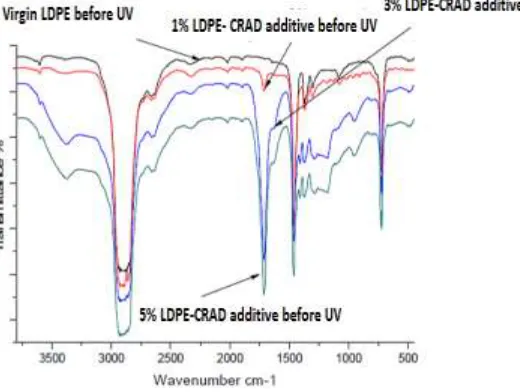
Figure 1. The FTIR peak of LDPE with CRAD before UV exposure
Figure 2. The FTIR peak of LDPE with CRAD after UV exposure for 50 hours
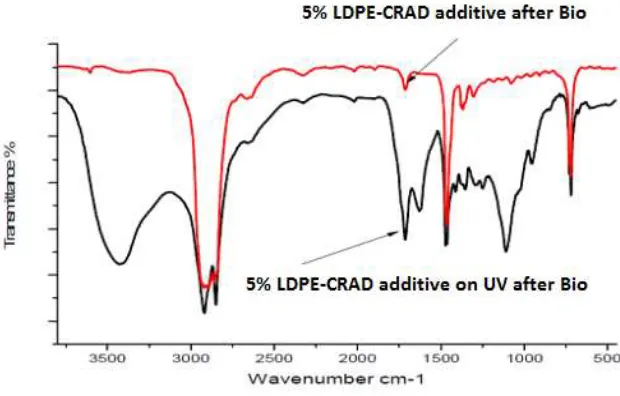
pathway of the biotic exposure film. In the FTIR of LDPE after the biotic exposure and the biotic exposure of the photodegraded film at the end of 90 days. It is clearly see that there are bands in three regions of the spectrum which have been changed in the range from 3600 to 3100 cm-1 and it appeared a wide peak which is due to the hydroxy group during the cytosol enzyamatic process. Further, the new absorbtion bands in the range from 1850 cm-1 to 1600 cm-1 was assigned to the carbonyl group. The carbonyl appearing during degradation is very useful to characterize the mechanism of biotic degradation.
Figure 3. The FTIR peak of LDPE with CRAD on UV after bio Biodegradation of the LDPE with CRAD additives
Figure 4. The percentage of biodegradation of LDPE with 5% CRAD additives as per ASTM D 5338
β-Oxidation pathway and glycogenisis process in cytosol for degradation of LDPE
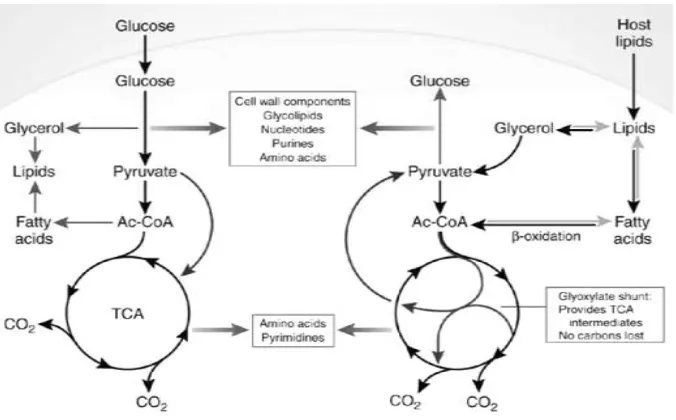
As shown in Figure 5. ricinoleic acid is a naturally occurring unsaturated omega fatty acid and the synthesized additive is a derivative of ricinoleic acid such as cobalt 12-hydroxyl oleate acrylic dextrose. These bioactive additives were degraded by β-oxidation and glycogennesis pathway. The
cytosol, which has specific forms in accordance to the different lengths of fatty acids. In the second step, enoyl-CoA hydratase hydrates the newly formed double bond between C-2 and C-3, producing an L-beta-hydroxyacyl CoA. Next, L-beta-hydroxyacyl CoA dehydrogenase converts the hydroxyl group into a keto group, producing a ketoacyl CoA. In the third and final step, the enzyme beta-ketothiolase cleaves the ketoacyl CoA and inserts the thiol group of another CoA between C-2 and C-3, reducing the acyl-CoA by 2 carbons and generating acetyl-CoA. The final two steps also have enzymatic forms specific to short chain fatty acids. This four step cycle repeats removing 2 carbons from the fatty acid each time until it becomes acetyl-CoA. Acetyl-CoA is necessary for the citric acid cycle, among other cellular processes. Thus, it is apparent that even small amounts of this additive is capable of initiating a significant rate of biodegradation.
Figure 5. The biodegradation mechanism of LDPE with CRAD additives
Conclusion
LDPE with CRAD additive shows improvement in photodegradation rates. The extent of photodegradation is directly proportional to the concentration of the CRAD additive. After the UV exposure of films with additives for the specified period, the FTIR results show that a higher concentration of carbonyl and hydroxy groups were formed indicating the films which were degraded to a larger extent when compared to virgin films without additives. After the photodegradation was subjected to biodegradation, the FT-IR characteristic peak has been changed due to the β-oxidation and glycogensis process.
References
[1] Abrusci C., Pablos J.L.,Corrales T., López-Marín J.,Marín I.,Catalina F. Int. biodeter. Biodeg.,
2011, 65:451
[2] Bevington J.C.,Breuer S.W., Huckerby T.N., Hunt B.J., Jones R. Eur. Polym. J., 1998, 34:539 [3] Magagula B.,Nhlapo N., Focke W.W. Poly. deg. stab., 2009, 94:947
[4] D'Auria M., Racioppi R. J. Photochem. Photobio. A Chem., 1998, 112:145
[5] Eltayeb E.,Mahdavian A.R.,Barikani M., Honarkar H. Iran. Poly. J., 2009, 18:753
[6] Fontanella S.,Bonhomme S., Koutny M., Husarova L., Brusson J.M., Courdavault J.P. J. poly. Degrad. stab., 2010, 3:009
[7] Ferreira F.G.D., Lima M.A,. Almeida Y.M.B., Vinhas G.M., Polym. Ciencia. Techn., 2009, 19:313 [8] Grant M.H., Editor. Encylopedia of chemical technology, New York: Wiley, 1998, p 8
[9] Gerhard Knothe, U.S. Depart., of Agri., Peoria, IL, USA, 2006
[10] Gulmine J.V., Janissek P.R., Heise H.M., Akcelrud L. Poly. Degrad. Stab., 2003, 79:385 [11] ASTM D Compost biodegradation, 5338-98, 2003, 1-10
[12] Jakubowicz I. Poly. Degrad. Stab., 2010, 80:39
[13] Khabbaz F., Albersson A.C., Karlson S. Poly. Degrad. Stab., 1999, 63:127 [14] Lie Ken Jie M.S.F., Cheng A.K.L. Natur. Prod. Lett., 1993, 3:65
[15] Marcelo A.G. Bardi, international Nuclear atomic conference-INAC 2009 [16] Marek Koutny, Poly. Degrad. Stab., 2006, 64:1243
[17] Vogt N.B. Polym. Degrad. Stab., 2009, 94:659 [18] Qun yan, Chines. J. polym. sci., 2007, 25: 341
[21] Roy P.K.,Surekha P., Rajagopal C., Chatterjee S.N., Choudhary V. Poly. Degrad. Stab., 2007,
92:1151
[22] Ojeda T.,Freitas A., Birck K., Dalmolin E., Jacques R., Bento F., Camargo F. Poly. Degrad. Stab., 2011, 96:703
[23] Ojeda T.,Freitas A., Dalmolin E., Pizzol M.D., Vignol L., Melnik J., Jacques R., Bento F., Camargo F.
Poly. Degrad. Stab., 2009, 94:2128
[24] Muthukumar T.,Aravinthan A.,Mukesh D. Poly. Degrad. Stab., 2010, 95:1993 [25] Yamashita T., Am. coll. Cardiol., 1998, 118:165
[26] Santhoskumar A.U., Palanivelu K. Int. J. poly. Mater. Biomater., 2012, 61:793
How to cite this manuscript: A. Umapathi Santhoskumar, N. Jaya Chitra. Structural Characteristics