Geschke Center
Doctoral Dissertations Theses, Dissertations, Capstones and Projects
12-2018
Developing Intercultural Competence Through
Online English Language Teaching
Didem Ekici
University of San Francisco, [email protected]
Follow this and additional works at:https://repository.usfca.edu/diss
Part of theBilingual, Multilingual, and Multicultural Education Commons, and theTeacher Education and Professional Development Commons
This Dissertation is brought to you for free and open access by the Theses, Dissertations, Capstones and Projects at USF Scholarship: a digital repository @ Gleeson Library | Geschke Center. It has been accepted for inclusion in Doctoral Dissertations by an authorized administrator of USF Scholarship: a digital repository @ Gleeson Library | Geschke Center. For more information, please [email protected].
Recommended Citation
Ekici, Didem, "Developing Intercultural Competence Through Online English Language Teaching" (2018).Doctoral Dissertations. 474.
The University of San Francisco
DEVELOPING INTERCULTURAL COMPETENCE THROUGH ONLINE ENGLISH LANGUAGE TEACHING
A Dissertation Presented to
The Faculty of the School of Education
International and Multicultural Education Department
In Partial Fulfillment
of the Requirements for the Degree Doctor of Education
ii
THE UNIVERSITY OF SAN FRANCISCO
Dissertation Abstract
Developing Intercultural Competence Through Online English Language Teaching
With an increasing number of refugees and immigrants in European and American
classrooms, teachers need to be prepared to meet their varied and complex needs. In particular,
to help these diverse students succeed, teachers need to be interculturally competent, which is a
combination of many skills including attitude, linguistic and cultural awareness, empathy, and
flexibility. However, developing these skills not only takes theoretical knowledge but also
hands-on training and practice. While many programs in school of education provide
experiential practicum projects and online collaborations with diverse students, they have not
expanded to the population in war zones. Moreover, a review of literature revealed a gap in
research on how online tutoring might impact the intercultural competence development of
pre-service ESL teachers. This study attempted to fill that gap by exploring how teaching English
online to students in Afghanistan for six weeks impacted the intercultural competence of
pre-service ESL teachers.
Ten pre-service ESL teachers participated in this study. Pre-interviews, post interviews,
and five reflection journals during the six weeks comprised the qualitative data. The data were
analyzed through the lens of the process model of intercultural competence framework by
Deardorff (2006a).
The data, which was analyzed, categorized, verified, and interpreted, revealed that the
preservice ESL teachers developed intercultural competence within a six-week period. While
some pre-service ESL teachers expressed their initial discomfort about the unknowns of teaching
iii
miscommunication, and grappling with their own assumptions, this discomfort diminished after a
few sessions. In fact, some participants described this experience as “eye-opening.”
Therefore, this study concluded that becoming familiar with the people and practices of a
diverse culture, in an online environment and for even a short duration, helped preservice
teachers develop self-awareness, empathy, and linguistic knowledge, all factors that helped
developed their intercultural competence. So it is recommended to integrate online teaching into
practicum and international field projects to help build a new generation of interculturally
iv
SIGNATURE PAGE
This dissertation, written under the direction of the candidate’s dissertation committee and
approved by the members of the committee, has been presented to and accepted by the Faculty of
the School of Education in partial fulfillment of the requirements for the degree of Doctor of
Education. The content and research methodologies presented in this work represent the work of
the candidate alone.
Didem Ekici, Candidate December 4, 2018
Dissertation Committee
M. Sedique Popal, Ed.D., Chairperson December 4, 2018
Shabnam Koirala Azad, Ph.D., Committee Member December 4, 2018
v
DEDICATION
I dedicate this dissertation to all forcibly displaced families, refugees, immigrants, asylum seekers and their children. I hope all your journey ends in a place you feel like home and I hope you always meet globally minded people who understand what you are going through during this
journey.
vi
ACKNOWLEDGEMENTS
First and foremost, I would like to thank my advisor and chairperson Dr. Popal. I
appreciate his effort to make time whenever I needed it. His optimistic attitude and invaluable
input propelled me in this process. It has been honor to be his student and learn from his wisdom
and experiences. I would also like to thank the respectable members of my committee, Dr.
Koirala -Azad and Dr. Mitchell for their critical eyes, constructive feedback, and time.
I am grateful for the patience, sacrifice, and constant encouragement of my husband Eren
who has been a remarkable supporter at every moment of this process. He is the one who, in the
first place, made me believe that I can be--and should be--a doctor of education. This would not
have happened without him.
I would like to thank my father who has always encouraged me to take risks since my
childhood, always believed in me, and encouraged me to pursue a doctoral degree. My mother
and my sister, thank you very much for your love and encouragement from overseas and for your
long-distance prayers. I also appreciate the moral support of my parents-in-law who always
believed in me.
To my colleague Marlene Mahony who shared her experiences with me at every single
step of my dissertation, offered her editorial advice and always motivated me saying, “almost
there” during my panicky moments. Thank you very much for your moral support!
I would also like to thank Amy Minett and Sarah Dietrich for their trust on me beginning
my time in my master’s studies until the end of my dissertation. I appreciate your assistance and
the constructive discussions we had during the debriefing sessions.
To Susan Katz, who contributed with her invaluable feedback at the initial stages and
vii
I appreciate the generous time of ten TESOL graduate students (pre-service ESL
teachers) who volunteered to participate in my study and shared their valuable experiences that
enriched my study. I also would like to thank the Afghan students of Pax Populi Academy, the
most dedicated students I have ever known. I have no doubt you will be very successful in life.
My friends who have generously supported me throughout this process and my
co-workers in the Learning Center - Kim, Rachel and Haley- who have encouraged me along the
way, I thank you all.
And last but not least, a special gratitude to Robert McNulty who is a dedicated
peacebuilder, professor, and incredible person to work with. It is because of him that I got
involved with the Pax Populi family years ago. All my previous work in this organization
viii
TABLE OF CONTENTS
ABSTRACT ... ii
SIGNATURE PAGE ... iv
DEDICATION... v
ACKNOWLEDGEMENTS ... vi
LIST OF TABLES ... xi
CHAPTER I: THE RESEARCH PROBLEM ... 1
Introduction ... 1
Statement of the Problem ... 3
Background and Need ... 6
Purpose Statement ... 8
Research Questions ... 8
Theoretical Framework ... 9
Limitations/Delimitations ... 14
Educational Significance ... 15
Definition of Terms... 16
Summary ... 18
CHAPTER II: REVIEW OF THE LITERATURE ... 21
Overview ... 21
Introduction ... 21
Teachers’ Perception of Diversity ... 26
Intercultural competence ... 30
Intercultural Competence and Foreign Language Education ... 33
Diversity Training for Teachers ... 35
In theory ... 35
In Practice ... 37
Online Tutoring ... 42
Language teaching and Online tutoring ... 44
Intercultural dimension of online teaching ... 45
Experiential projects ... 48
Experiential online projects ... 49
ix
CHAPTER III: METHODOLOGY ... 53
Restatement of the Purpose ... 53
Research Questions ... 53
Research Design... 54
Research Setting... 56
Population ... 58
Protection of Human Subjects ... 60
Instrumentation ... 60
Procedures ... 63
Data Analysis ... 66
Credibility and Trustworthiness ... 68
Background of the Researcher ... 71
CHAPTER IV: RESULTS ... 73
Overview ... 73
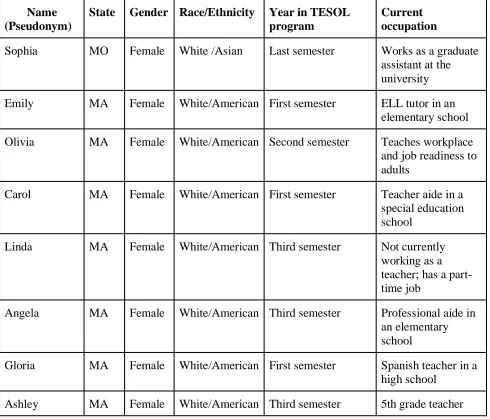
Participant Profiles ... 73
Emergent Themes ... 77
Research Question 1-a: To what extent are pre-service ESL teachers open to explore another culture? ... 77
Research Question 1-b: To what extent are pre-service ESL teachers able to tolerate ambiguity?... 84
Research Question 1-c: How and to what extent do pre-service ESL teachers become culturally and linguistically aware during the tutoring process? ... 93
Research Question 1-d: To what extent do pre-service ESL teachers develop their empathy skills and become more flexible after completing a six-week online tutoring? ... 102
Summary of the Findings ... 110
CHAPTER V: SUMMARY, DISCUSSION, CONCLUSION AND RECOMMENDATIONS ... 113
Chapter Overview ... 113
Summary of the Study ... 113
Discussion ... 117
Research Question 1: To what extent are pre-service ESL teachers open to explore another culture? ... 117
x
Research Question 3: How and to what extent do pre-service ESL teachers become
culturally and linguistically aware during the tutoring process? ... 124
Research Question 4: To what extent do pre-service ESL teachers develop their empathy skills and become more flexible after completing six-weeks of online tutoring? ... 128
Conclusion ... 131
Recommendation for Practice ... 135
Recommendation for Research ... 137
Concluding Remarks ... 138
REFERENCES ... 140
APPENDIX A: The Consent Form ... 154
APPENDIX B: Reflection Journal Questions ... 157
APPENDIX C: Contract Between the Tutor and the Tutee ... 159
APPENDIX D: Pre-Interview Questions ... 161
APPENDIX E: Post Interview Questions ... 162
APPENDIX F: Permission for Reflection Questions ... 163
APPENDIX G: Research Site Approval Letter ... 164
APPENDIX H: IRB Approval Letter ... 165
APPENDIX I: Data Coding Mind Map ... 166
APPENDIX J: Coding Categories ... 167
APPENDIX K: Email to Debrifers ... 169
xi
LIST OF TABLES
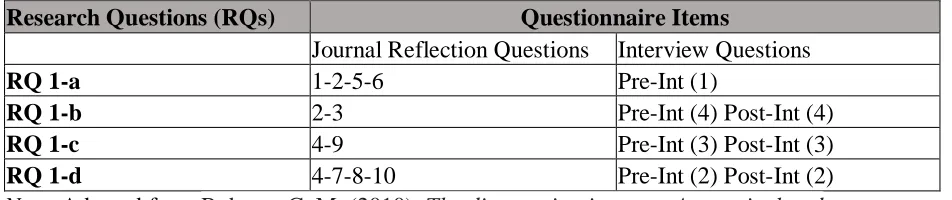
Table 1: Alignment of Research Questions (RQs) with Questionnaire Items ... 62
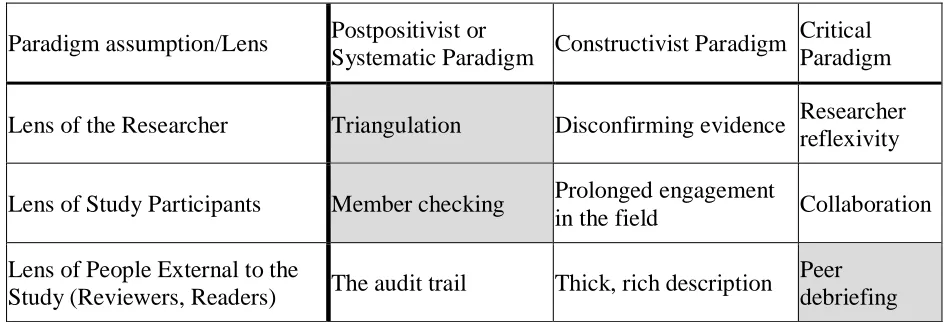
Table 2 :Validity Procedures Within Qualitative Lens and Paradigm Assumptions ... 69
Table 3: Profile of Ten Pre-service ESL Teachers ... 74
Table 4: Participants' openness to explore another culture ... 83
Table 5: Participants' tolerance for ambiguity ... 92
Table 6: Participants'linguistic and cultural awareness ... 101
CHAPTER I
THE RESEARCH PROBLEM
Introduction
Student diversity continues to grow in the classrooms as schools are welcoming the
children of immigrant, refugee and asylum seekers. During the acculturation process, these new
comers not only struggle with the difficulties of going back and forth between the school and
home cultures but also deal with the discrimination from their peers and even sometimes from
their teachers. The stereotypes and prejudices that have been imposed by the media might have
negative influence on some people’s approach to immigrants and refugees.
Considering the increasing number of refugees and immigrants in the U.S. and European
schools, being interculturally competent is crucial for educators to respond the needs of newly
arrived students (Hersi & Watkinson, 2012). In fact, Davis and Cho (2005) claimed teachers face
an increased pressure “to change curriculum and learning” to foster “global citizens who
preserve the variety and vitality of life” (p. 2), and Keengwe (2010) noted the pressure to help
students understand the “similarities and differences between/ among cultures” (p. 197). Agudo
(2014) called this intercultural competence “an essential life skill for both teachers and students”
(p. 85). So to be role models themselves, teachers need the right skills to appreciate, understand,
and communicate with people of diverse cultures. Therefore, teachers need to learn cultural
competence.
Those who teach English as a second language (ESL) especially need to develop
intercultural competence since they have more interaction with culturally diverse students than
content subject teachers. Since the majority of ESL teachers are native speakers of English and
between the ESL teachers and the students but also among the students (Nelson, 1998). Given
the multicultural nature of the ESL classrooms, intercultural competence is critical.
Intercultural competence is generally defined as the ability to have “effective” and
“appropriate” communication in intercultural situations (Deardorff, 2004). This ability is
sometimes taken for granted because it is assumed that teachers are capable of communicating
successfully with their students. However, studies show that teachers are uncomfortable
communicating with students from unfamiliar cultures (Diller & Moule, 2005; Futernick, 2007).
Because “most teachers do not see themselves as ready for a multicultural classroom” (Walters,
Garii & Walters, 2009, p. 151), it is important to create real life opportunities for teachers to
develop intercultural competence during their pre-service years. (He, 2013; Smolcic & Katunich,
2017). Because research shows that this competence can be developed by cross cultural
experiences (Jin, Cooper & Golding, 2016), it is important to create hands-on experiences during
the preservice years. Moreover, it is important to make sure the particular hands-on experiences
are effective.
Many Teaching English to Speakers of Other Languages (TESOL) programs provide
international hands-on opportunities such as practicum teaching and study abroad programs for
their student teachers during their preservice years (Wong, Indiatsi & Wong, 2016; Wurr, 2013).
However, because of geographical limitations, affordability, and safety concerns, these programs
are not preferred by most pre-service ESL teachers. Reaching out to students in war and post-war
zones is considered especially inconvenient. Because most refugees and immigrants come from
war regions like Afghanistan and Syria (Beaubien, 2017), online tutoring is an excellent option
to make intercultural experiences more accessible to both the students and teachers. “Just as
cost,” said Kentnor (2015), “distance education makes education attainable for those who are
unable to sit in the traditional classroom” (p. 30). In other words, online teaching not only
addresses the safety, financial, and geographical concerns of education but also provides an
alternative to traditional brick and mortar schools.
The history of distance education such as radio, television and mail goes back to the 18th
century (Kentnor, 2015), but online teaching/tutoring is a new concept in the literature. In 1987,
computer conferencing was introduced with a few Open University courses (Hawkridge &
Wheeler, 2010). Right after the invention of the World Wide Web in 1991, the first online
education programs were offered by University of Phoenix century (Kentnor, 2015). In 1990 the
first online collaboration was used for language education (O’Dowd, 2007). As a result, the
number of research studies about the impact of online teaching on cultural competence
development of preservice ESL teachers is limited. This dissertation aims to add to the body of
literature by exploring how pre-service ESL teachers’ online tutoring experiences with students
from Afghanistan influenced their development of intercultural competence.
Statement of the Problem
As a result of the increasing number of immigrants and refugees in the US and European
classrooms, teachers more frequently have students from cultures with which they are not
familiar (Hersi & Watkinson, 2012; Miller, Kostogriz & Gearon, 2009). According to United
Nations High Commissioner for Refugees (UNHCR) (2016), the number of forcibly displaced
people has increased “from 37.3 million in 1996 to 65.3 million in 2015 – a 75 per cent increase
and this is the highest number since World War II” (p. 6). Most importantly, the UNHCR (2016)
data showed that children below 18 years of age constituted about half of the refugee population
increase of school-age refugees, immigrants, and asylum seekers has increased the need for
teachers who are able to create comfortable classroom environments for these students. This is
why intercultural competence has become so popular in the field of education.
Intercultural competence is generally defined as the ability to effectively and
appropriately communicate with people from different backgrounds (Chen & Starosta, 1996;
Deardorff, 2004; Hammer, Bennet & Wiseman, 2003). For the teaching profession, intercultural
competence is more complex than the ability to successfully communicate. It is gaining
knowledge about the students’ culture, developing empathy and understanding, respecting
differences, and questioning their own values, biases, fears, and prejudices. An interculturally
competent teacher should be able to communicate successfully with students as well as maintain
an unbiased perception of the students’ culture. This development is only possible when teachers
become aware of their prejudices, come out of their comfort zones, and face their fears about
certain groups (Mahon & Cushner, 2002; Ross, 2008), especially when teachers lack experience
with those groups.
English language teachers are more likely to engage with students of different groups
than content subject teachers (Nelson, 1998) since ESL classrooms are places “where students
from a variety of ethnic backgrounds meet” (Barraja-Rohan, 1999, p. 143). Therefore, they
especially need the awareness and experience to apply “pedagogic innovations across contexts”
(Dogancay-Aktuna, 2005). TESOL programs provide the necessary skills to teach English as a
foreign or second language, but few of these programs create opportunities for hands-on
cross-cultural interaction. Lack of experience with cross-culturally diverse students might create anxiety
among pre-service English language teachers, and as Futernick (2007) found, one of the factors
prepared to meet the needs of English learners. This problem should be addressed during the
training period so that preservice teachers develop the awareness, empathy, confidence, and
commitment to work with students of diverse backgrounds.
According to Diller and Moule (2005), the anxiety of working with culturally different
students comes from both disregarding students’ cultures and “the guilt over the existence of
racism” (p. 171). These stereotypes are often developed in a subconscious way because they are
imposed in a repeated way by forces such as the media. While the media, according to Liu
(2012), can promote “better understanding and appreciation of different cultures,” it can also
“increase misunderstanding, fear, and antagonism through negative stereotypical representations
of people” (p. 274). These hidden and unconscious biases can prevent people from addressing
their fear of multicultural interactions. Even though it is the only way we can eliminate them, it
takes time and courage to admit our prejudices.
Teacher training programs can help preservice TESOL teachers to overcome their fears,
think critically about the foundations of these fears, and gain confidence and experience with the
diverse population before they perform on the “real stage” of the classrooms. In other words,
TESOL programs can prepare ESL teachers for cultural interactions by creating opportunities for
real life experiences with culturally diverse students, enabling them to reflect on these
experiences to diminish their fear and anxiety. Because “courses that remain mostly at a
cognitive level are less likely to help students reduce prejudice,” said Rodenborg & Boisen,
2013, p. 572), “immersion, dialogue, or other experiential methods that force affective
involvement are also needed.” As stated earlier, this need has increased with the increasing
This study aimed to show how teaching students from the war zone of Afghanistan in an
online environment for six weeks impacted the intercultural competence of the pre-service ESL
teachers. In particular, this study also investigated the comfort level of pre-service ESL teachers
as they communicated with students from another culture.
Background and Need
Effective communication with students from diverse races and ethnicities successfully
has become crucial for teachers, especially TESOL teachers. While some TESOL teacher
training programs have integrated pedagogical content that emphasizes multiculturalism and
cultural competence, these courses stay at the theoretical level. But there is a huge difference
between knowing something on the theoretical level and on a practical level. Practical, hands-on
experiences enhance the confidence of pre-service teachers (Barnes, 2017; Reeves, 2017;
Vinagre, 2017), for the more pre-service ESL teachers interact with culturally diverse students,
the more they are able to develop their intercultural competence. According to Allport’s (1954)
contact theory, the interaction between majority and minority groups actually enables the group
members to understand “the other,” appreciate the difference, and reduce prejudice. To provide
multicultural immersion and prepare pre-service ESL teachers for culturally diverse classrooms,
some TESOL programs integrate service learning projects, international field experiences, study
abroad programs, and immersion programs into their curriculum. Research shows that programs
that provide international field experiences develop a pre-service English language teachers’
intercultural competence because these programs help raise awareness about the individual
teacher’s cultural values and perceptions of the world (Lopes-Murphy & Murphy, 2016;
Most of the study abroad or service learning projects are with students from regions
outside of the war zones (Barnes, 2016; Chen, Liao, Chen, & Lee, 2011). However, data shows
that most refugees and asylum seekers come from war zone countries. In 2016 alone, according
to UNHCR, 75,000 children applied for asylum as “unaccompanied minors”. Most were from
Afghanistan and Syria” (Beaubien, 2017, p. 8). However, no studies have been conducted about
the preservice ESL teachers’ intercultural experiences with the students from a war zone like
Syria or Afghanistan
Bringing English language teacher candidates together with students from war zones has
been challenging because of geographical limitations, safety concerns, and affordability.
However, in this technological era, when people can connect with people from overseas with one
click, the distance can disappear. While Rodenborg and Boisen (2013) said, “Instructors in
geographic regions with racially homogenous populations can make use of media and social
networking methods to enhance the diversity of their students' indirect contacts” (p. 576), these
same networking methods can be used to connect teachers with students from post-war
countries. However, because of limited access to internet in post-war countries and the difficulty
of finding a population in war zones with whom to cooperate, no previous empirical studies have
assessed the effects of computer-mediated cross-cultural interaction.
Research is needed on this issue so that teacher training programs, school administrators,
and especially TESOL programs can understand how online interaction with students from
post-war zones can contribute to the cultural competence of pre-service English language teachers.
This can show if e-service learning projects or online immersion programs should be integrated
into teacher training curriculums to help teachers feel comfortable and confident as they
Purpose Statement
The purpose of this study was to explore the impact of a six-week virtual
synchronous tutoring on the development of the intercultural competence of pre-service ESL
teachers. These ESL teachers volunteered to teach students in Afghanistan through a non-profit
peacebuilding organization, Pax Populi, Applied Ethics Inc. By documenting the cross-cultural
experiences of the pre-service ESL teachers, this dissertation focused on the intersection of
self-reflection, online English language teaching, and intercultural competence. In essence, this
dissertation sought to explore how this experience influenced pre-service ESL teachers’
perception of Afghan culture and people.
Research Questions
The following research questions guided this study:
1. How does the experience of online teaching English as a foreign language to students
from Afghanistan for six weeks contribute to the development of the intercultural
competence of pre-service ESL teachers?
a. To what extent are pre-service ESL teachers open to explore another
culture?
b. To what extent are pre-service ESL teachers able to tolerate ambiguity?
c. How and to what extent do pre-service ESL teachers become culturally
and linguistically aware during the tutoring process?
d. To what extent do pre-service ESL teachers develop their empathy skills
Theoretical Framework
This study explored the experiences of ESL preservice teachers who interacted with
students from a war zone, Afghanistan, through the lens of Deardorff's (2006b) research-based
framework, the Process Model of Intercultural Competence. This was the first grounded research
based framework and “the first study to document consensus among leading intercultural
experts” (Deardorff, 2006a, p. 242). Deardorff research used questionnaire and Delphi study
methods for data collection. Delphi method is a process of anonymous communication among
the expert consultants who reflect on an important issue to arrive a consensus. Hsu and Sandford
(2007) described the Delphi technique as “well suited as a method for consensus-building” based
on the data from “a panel of selected subjects” (p. 1).
To implement this study design, Deardorff (2004) sent invitations to 73 higher education
institutions all over the United States, and 23 of them accepted to participate in the study. With
the participation of higher education administrators and experts in the field, she identified the
basic skills required for intercultural competence. The data were developed in three rounds of
questions. In the first round, open ended questions were sent to the participants. In the second
round, the experts rated the data of the first round. In the third round, the experts explained
whether they agreed with the data. The findings laid the foundation of the Process Model of
Intercultural Competence Framework.
Deardorff (2004) described the following the limitations of her study: getting input from
the institutions located in the United States (western perspective), possibility of biased wording
in the questionnaire, cultural bias of the expert panelists, and the researcher’s possible
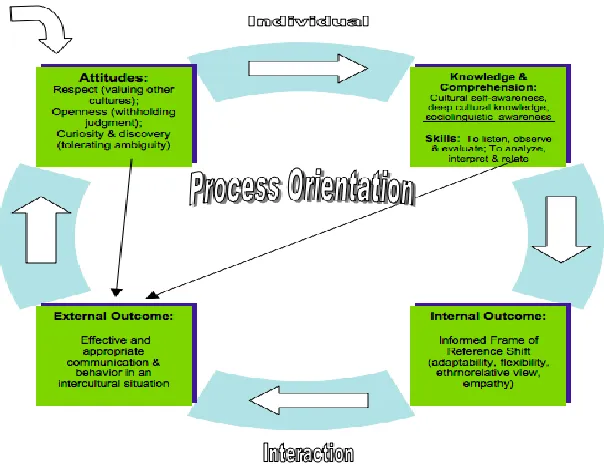
Deardorff’s (2006b) framework has fifteen components under five broad categories: 1-
attitudes, 2- knowledge & comprehension, 3- skills, 4- internal outcome and 5- external outcome.
Initial components are at the individual level while the final components at interaction level
(Figure 1). People can enter this process model framework from any component; however,
“having components of the lower levels enhances upper levels” (Deardorff, 2006a, p. 255), for as
she explained it, one can “go from attitudes and/or attitudes and skills/knowledge directly to the
external outcome, but the degree of appropriateness and effectiveness of the outcome may not be
nearly as high as when the entire cycle is completed and begins again” (p. 257). Two important
conclusions of Deardorff's (2004) study were that 1) components in the study were “more
general in nature (e.g., culture-specific knowledge, flexibility)” (p. 192) and 2) one component is
not enough to ensure intercultural competence. Most importantly, Deardorff (2006a) emphasized
that intercultural competence development is an ongoing process and “one may never achieve
ultimate intercultural competence” (p. 257). Detailed explanation of each component is presented
Figure 1: Deardorff's (2004) Process Model of Intercultural Competence (p. 196)
1. Attitudes: Attitudes determine the ability to move beyond one’s comfort zone.
Interacting with people from different cultures might create anxiety for many teachers
because of the “unexpected” or “unknown” things. According to Deardorff (2006b),
openness, curiosity, and discovery are the elements that can motivate one outside
his/her comfort zone, and so these elements are fundamentals of intercultural
competence. She explained that “attitudes—particularly respect (which is manifested
variously in cultures), openness, and curiosity—serve as the basis of this model and
have an impact on all other aspects of intercultural competence” (Deardorff, 2011, p.
68). Respecting and showing interest in others as well as challenging one’s own
2. Knowledge: Awareness of one’s own culture affects one’s perception of the world
and interaction with others. Knowledge about other cultures enables people to make
sense of things from others’ perspective. Cultural self-awareness, culture-specific
knowledge, deep cultural knowledge (including understanding other world views),
and sociolinguistic awareness are essential for this component (Deardorff, 2006b)
3. Skills: According to Deardorff (2006b), skills can be interpreted as how we acquire
and process knowledge. There are different ways of acquiring knowledge such as
listening, observing, and evaluating. Furthermore, the skills we use affect the way we
think interculturally.
4. Internal outcomes: Deardorff (2006b) states that in this stage of the intercultural
competence model, people start developing flexibility, adaptability, and empathy,
which creates an internal outcome of the intercultural interaction. Developing
empathy especially enables one to see the world from other people’s perspectives and
it is very important to develop this internal outcome. Internal outcome enhances the
external outcome which is observable (Deardorff, 2006a). Deardorff (2006b)
emphasizes the importance of this component this way: “At this point, individuals are
able to see from others’ perspectives and to respond to them according to the way in
which the other person desires to be treated” (p. 1). In other words, this is the stage in
which people start understanding others’ perspectives and adjust their behaviors
accordingly.
5. External outcomes: According to Deardorff (2006b), an external outcome is the
combined impact of all the previous stages on the behavior of an individual.
appropriate an individual behaves during intercultural interactions. Referring to
Spitzberg’s work (1989), Deardorff (2006a) described appropriateness as the
“avoidance of violating valued rules” and effectiveness as “the achievement of valued
objectives” (p. 256). It is also important to note here that “effectiveness can be
determined by the individual while the appropriateness can only be determined by the
other person” (Deardorff, 2006b, p. 2).
Deardorff’s framework has been used by many studies conducted in higher education context in
the US and in other countries as well. For example, Toyoda (2016) conducted a study with 20
students who were enrolled in a university-level advanced Japanese language course in an
Australian university. She aimed to assess the intercultural competence development among the
students based on the video diaries, end of semester surveys and observation notes. Throughout
two academic semesters, Australian students created six videos in groups and they shared these
videos with the university students in Japan. Afterwards, they got the ideas of native speakers of
the target language about these videos. They also kept video diaries to reflect on their learning.
All the participants completed an end-of semester survey to provide information on their
knowledge and growth. The findings showed that “students became increasingly aware of
cultural issues concerning the Self and Others” (Toyoda, 2016, p. 512) and developed
components of intercultural competence. She also emphasized the importance of higher order
thinking skills, such as awareness and comprehension in the process of intercultural competence
development.
Ko, Boswell and Yoon (2015) did a similar study to analyze the development of
intercultural competence. They studied 14 physical education (PE) graduate students who were
completed a seven-week global link project that included five weeks of individual interaction
(emails, social networking) and two weeks of group video conferencing with Korean students.
They exchanged information such as personal life, culture, and professional issues in physical
education. Based on the qualitative and quantitative data that consisted of open-ended
questionnaires, reflection reports, and Cultural Intelligence Scales (CQS), the researchers
concluded that this experience promoted the fundamental elements such as attitude, knowledge
and skills and behaviors that were described in Deardorff's (2006) framework, and therefore this
experience developed the PE students’ intercultural competence.
Limitations/Delimitations
Nevertheless, attitudes like withholding judgement or openness to another culture are
abstract terms that cannot be observed directly and easily. That posed a limitation to this study.
Even though some questions in the reflection journals directly asked the participants if they made
assumptions, withheld judgements, or adapted communication style and behavior, these
subjective questions were open to interpretation. Moreover, while expressing their perception of
the Afghan people, the participants might have felt hesitant to express their real opinions or they
may not have even been aware of their own implicit bias.
The length of the study was also a limitation. The pre-service ESL teachers interacted
with the students in Afghanistan only for six weeks. Even though this amount of time might be
enough to start developing linguistic, cultural, and self-awareness, it may not have been
sufficient to promote other complex skills such as empathy and flexibility. Still, since
intercultural competence is an ongoing process without an end point, time constraints were
Since this study focused on the development of intercultural competence of preservice
ESL teachers, no feedback was collected from the Afghan students. However, collecting data
from both sides would have enabled the researcher to see the cross-cultural interaction in more
dimension. Collecting data only from the pre-service ESL teachers was hence a delimitation of
this study.
Educational Significance
This study aimed to explore the development of intercultural competence in pre-service
ESL teachers who taught English to students from a war zone, Afghanistan. Even though much
research has evaluated the impact of study abroad programs, service learning, or field projects on
the intercultural competence development in pre-service and in-service English language
teachers, few studies have been conducted on the teachers’ online interaction with students from
the war zones. Understanding how online interaction impacts intercultural competence can
provide alternatives to experiential projects not only in TESOL programs but also in education
curricula in general.
Part of this insight included gaining a better understanding of cross-cultural interactions
in a virtual space. The preservice ESL teachers’ reflections on the use of online educational tools
and its influence on their teaching practices and intercultural interaction also informed the
current body of knowledge. Examining this impact through the lens of Deardorff’s (2006b)
intercultural competence framework and analyzing how this process affected pre-service
teachers’ ability to tolerate ambiguity, to feel empathy, and maintain flexibility was meant to
offer insight for other teacher training programs. This insight can be used for future
Online projects can eliminate the financial, logistic, and safety concerns of teaching
students in war zones. However, as the number of refugees from war zone countries increases,
teachers also need to augment their skill set. Because teachers rarely interact with people from
postwar zones before they have refugee students in their classrooms, they often feel unprepared
to navigate the cultural differences. That can stir uncomfortable feelings in the teacher. This
study looked at factors that might cause discomfort and the determinants that can increase a
teacher’s comfort and confidence. That development can perhaps inspire TESOL programs,
curriculum developers, school administrators, and teacher education programs to develop online
projects or virtual immersion programs to help teachers confront their fears during the preservice
years. These hands-on experiences can promote cultural interaction with students from
unfamiliar places, and hence develop the teacher’s own intercultural competence.
This study also offered a better understanding of the implementation of online cross
cultural projects in a virtual space. Preservice ESL teachers’ reflection on the use of online
educational tools and their influence on their teaching practices and intercultural interaction also
informed the current body of knowledge. The exploration of this intersection offered insights to
the future telecollaborative projects that focus on intercultural competence development.
Definition of Terms
The following definitions clarify the terms used in this study.
Asynchronous instruction: Asynchronous instruction is a way of online teaching that
“does not require the simultaneous presence of the participants by allowing them to access
materials and make contributions via textual, recorded audio-visual, or multimodal
Cross cultural communication: Cross cultural communication is “the ability to
communicate effectively in cross-cultural contexts when the students encounter interlocutors
whose languages, beliefs, backgrounds, and communication styles may vastly differ from their
own” (Tseng, 2017, p. 24).
Distance education: “Distance education is defined as a method of teaching where the
student and teacher are physically separated” (Kentnor, 2015, p. 22).
Diverse students: “Diverse student learners include students from racially, ethnically,
culturally, and linguistically diverse families and communities of lower socioeconomic status”
(Cole, 2008, p. 42).
Experiential Learning: “Experiential learning exists when a personally responsible
participant cognitively, affectively, and behaviorally processes knowledge, skills, and/or
attitudes in a learning situation characterized by a high level of active involvement” (Hoover &
Whitehead 1975, p. 25).
Hands-on: “Applied as opposed to theoretical” (Webster's New World College
Dictionary, 2005, p. 515).
Intercultural Competence: There is no consensus on the definition of intercultural
competence in the literature. For the scope of this paper Deardorff’s definition, which is based on
a grounded theory, will be used. Deardorff (2004) defines intercultural competence as “the
ability to communicate effectively and appropriately in intercultural situations based on one’s
intercultural knowledge, skills, and attitudes” (p. 194).
Service Learning: Service learning is a pedagogy that enables students to put theories
into practice by creating hands-on experiences while also serving the community. Service
centered, incorporates hands-on experiences, and integrates self-reflection into teaching
practices.
Study abroad programs: “Study-abroad programs are educational experiences that
involve exposure to foreign countries while participating in instructional practices that provide
credits for academic degrees at home” (Varela, 2017, p. 531).
Synchronous instruction: Synchronous instruction is an online teaching method that
requires “all the participants [to be] present online at the same time and participate through
textual, audio-visual, or multimodal communication tools” (Schmitt & Eilderts, 2018, p. 290).
Telecollaboration: Telecollaboration is the process of communicating and working with
other people, individually or in groups, in different geographical locations through online or
virtual means (Chun, 2015).
TESOL: Abbreviation for teaching English to speakers of other languages. (Hornby &
Crowther, 1995)
Tutors: In this study, the tutors are the pre-service ESL teachers who are enrolled in a
TESOL master’s programs of a university in the United States.
Summary
Seeberg and Minick (2012) said, “As the world population exceeds seven billion,
distances shrink, and people move in greater numbers across national borders, teacher educators
are asked to prepare teachers who are competent in helping learners function in a globalizing
reality” (p. 1). ESL teachers work with students who come from diverse cultural backgrounds
and do not speak English naturally. Besides teaching a new language to students, ESL teachers
are expected to create a bridge, or a smooth transition, between students’ native cultures and the
by withholding judgements, valuing and respecting students’ home cultures and native
languages, feeling empathy, and being flexible, which are regarded as the most important
components of being culturally competent.
However, few TESOL programs have sufficiently prioritized culturally responsive
teaching as part of their curriculum. Therefore, many ESL teachers start their teaching profession
unprepared for cross-cultural interaction. This can cause uncomfortable feelings. This concern
was even stated as one of the reasons for leaving the teaching profession by many teachers
(Futernick, 2007).
Therefore, it is crucial for teacher training programs to integrate more practicum teaching
opportunities with culturally diverse students in their curriculum. Still, these practicum
experiences, such as service learning projects and study abroad programs, might not be
convenient for all preservice teachers because of limitations of time, accommodation, and
affordability. To overcome these limitations, online English teaching can be considered as an
alternative to traditional practicum experiences. However, since online teaching is a new
phenomenon, the number of studies about the impact of online English teaching on the cultural
competence of preservice ESL teachers is limited. If more studies explore this topic, online
English teaching can be used by TESOL programs to provide practicum experiences for the kind
of cross- cultural communication that can develop intercultural competence.
Considering these facts, this dissertation aimed to explore the cultural competence of ten
pre-service ESL teachers who taught English to students in Afghanistan in an online platform
called Schoology. Through the lens of Deardorff’s (2006b) Process Model of Intercultural
Competence, this study examined the interviews and the reflection journals of preservice English
another culture, tolerating ambiguity, linguistic and cultural awareness, and the ability for
empathy and flexibility. The researcher also explored the ESL preservice teachers’ comfort level
CHAPTER II
REVIEW OF THE LITERATURE
Overview
This literature review chapter is divided into five sections. The first section concerns the
perception of teachers about the linguistically and culturally diverse students in their classrooms.
The second section includes the theories and background of the concept of intercultural
competence in education and foreign language teaching. The third section discusses the
theoretical and practical diversity training provided by the teacher training programs and
especially TESOL programs to prepare culturally competent teachers. The fourth section
introduces the concept of online tutoring and online intercultural practicum experiences in
teacher education and TESOL programs. Lastly, the final section addresses the experiential
projects and the development of cultural competence among ESL preservice teachers through
online tutoring.
Introduction
Immigration and the refugee issue is not a new phenomenon in the history of the United
States. According to the Migration Policy Institute (MPI), as of 2017, one-fifth of the world's
migrants live in the US (Zong, Batalova & Hallock, 2018). Moreover, statistics show that there
has been an increase in the population of first and second-generation immigrants. McNeely et al.
(2017) state, “First- and second-generation immigrant and refugee children represent the fastest
growing segment of the US population” (p. 121). Only in 2015, the United States opened its
doors to 70,000 refugees from different parts of the world (Zong, Batalova & Auclair, 2015).
about half of the refugee population in 2015 and that 75,000 children applied for asylum as
"unaccompanied minors" in 2016 (United Nations High Commissioner for Refugees, 2016).
This rapid influx of refugees and immigrants also showed itself in the education system.
As a result, immigrant students comprised “the fastest-growing segment of the school-age
population” in the United States (Hersi & Watkinson, 2012, p. 108). The fact that half of the
refugees and immigrants are school-aged has made the US classroom represent more diversity of
culture and languages than ever before. The increasing linguistic and cultural diversity has not
only created multicultural classrooms but also has generated some demands and difficulties
within itself. Miller, Kostogriz and Gearon (2009) state:
One of the most critical realities of contemporary education in a globalised world is the
growing cultural, racial and linguistic diversity in schools and the problems involved in
educating large numbers of students who do not speak the dominant language as their
home or heritage language. (p. 3)
The main reason behind these demands and problems is the adaptation process of the newly
arrived refugees and immigrants. When immigrant and refugee students come to the U.S., they
struggle with both language and cultural issues. The cultural and behavioral norms at home and
at school become different, and students are accordingly expected to switch from one culture to
another. Goodwin (2002) states, “Immigrant children end up being caught in the middle between
the culture of their ancestors and parents and the dominant culture of U.S. society” (p. 165). This
cultural adaptation process automatically shows itself in the academic success of the culturally
diverse student. According to Ambe (2006), “One of the reasons why schools have not
mismatch between the home culture of students and that of the school” (p. 691). So cultural
adaptation becomes more difficult as students try to negotiate these competing identities.
In addition to a complicated cultural adaptation process, these students also have to deal
with the attitudes, prejudices, and biases from their peers and even from their teachers.
Moinolnolki and Han (2017) state, “Not only are resettled refugee students often subjected to
prejudice and bullying from their peers, they also might be facing a teacher’s lack of cultural
sensitivity and preconceived notions about students’ cultural backgrounds” (p. 4). These
preconceived ideas or biases might affect the adaptation and the academic success of newly
arrived immigrant students in a negative way. According to Diller and Moule (2005) “Culturally
different students may have their achievement incentive affected if they sense racist or biased
practices” (p. 42). Similarly, Gay (2013) claims that “negative teacher beliefs” towards diverse
students “produce negative teaching and learning behaviors” (p. 56). In other words, immigrant
students are expected to catch up with their peers in terms of the academic content while also
dealing with language and culture issues. Negative attitudes from their peers and even from their
teachers do not make this process easier.
Therefore, teachers’ ability to cope with these problems and also address the needs of the
immigrant and refugee students in their classrooms has become an important issue (Friedlander,
1991; Pryor, 2001). Increased diversity in the US classrooms has brought more attention to a
teachers’ ability to communicate with culturally diverse students (He, 2013; McNeely et al.
2017). Hersi and Watkinson (2012) argue that, “To respond to the complexities and diversity
within the school-age ELL population, educators must take into account the different experiences
and academic needs of a wide range of students” (p. 98). Because teachers are expected to create
the importance of intercultural competence for educators comes into play (Taylor,
Kumi-Yeboah, Ringlaben, 2016; Witte & Harden, 2011).
Intercultural competence is a critical skill for educators both in K-12 education and
higher education (Arshavskaya, 2017). Considering the fact that ESL teachers have linguistically
and culturally diverse students in their classrooms, this issue becomes more crucial for ESL
teachers (Moeller & Nugent, 2014; Sercu, 2005). To train culturally competent language
teachers, some TESOL programs provide various practicum opportunities for pre-service ESL
teachers to work closely with culturally diverse students (Kim, 2017; Longview Foundation,
2008; Tomaš, Farrelly, & Haslam, 2008; Yang, 2014). However, these opportunities are not
provided in the war or postwar regions because of the logistic, financial and safety issues.
Walters, Garii, and Walters (2009) state that prospective teachers and their parents “are likely to
reject placements in non-traditional locations with limited amenities” (p. 155). They argue that
“Internships abroad create logistical and financial challenges for prospective teachers” with extra
curriculum workload besides “additional debt associated with flights and housing” and as a
solution to this “To economize, ways to save prospective teachers, money and time will have to
be identified” (p. 154-155). Likewise, Longview Foundation (2008) reports that because of the
limited time and resources, teacher candidates cannot take advantage of study abroad programs
and therefore, “Education programs are exploring innovative ways to ensure that their students
have international experiences in the course of their teacher preparation” (p. 21). To overcome
these concerns, online tutoring can be considered a viable solution to reach out to students in the
war zones and create some online practicum experiences for the pre-service ESL teacher
(Sehlaoui, 2001). Because the research on online English teaching to develop cultural
studies are limited, especially the ones conducted with the students from a war zone like
Afghanistan. Therefore, there has been a gap in the literature about this topic.
Some of the issues that this literature review focuses on are the importance of cultural
competence for educators and how teachers, especially ESL pre-service teachers, are becoming
ready for the increasing numbers of immigrants and refugees in the US classrooms. Intercultural
competence is a broad topic and it has been applied and implemented in different fields such as
health care, social work, business and education (Witte & Harden, 2011). This literature review
narrows down the topic to mainstream and ESL pre-service teachers specifically. Also, while
analyzing the previous studies, the researcher also focuses on online intercultural practicum
opportunities in TESOL programs which is limited. Thus, most of the research studies conducted
in this field concern K-12 mainstream classroom teachers but there are only limited number of
research studies that have been done with pre-service ESL teachers. Because of the limited
literature resources about the intercultural competence development of pre-service ESL teachers,
this review of literature also includes the studies with K-12 mainstream classroom teachers to
give the readers a general idea of the importance of the topic of intercultural competence for
educators.
The history of online collaborations and projects started in the1990s (O’Dowd, 2007)
and, therefore, the research studies on this field is limited as well. Thus, even though the focus of
this dissertation is on the impact of synchronous (simultaneous) online language teaching
specifically, asynchronous (not simultaneous) studies are also involved in this section.
Lastly, some TESOL programs and teacher education programs in general adopt some
practicum experiences such as field projects, service learning, or study abroad to develop cultural
1988; Yang, 2014). The majority of these research studies are conducted with the students out of
war zones because of logistic and safety limitations. Canh (2014) supports this fact saying,
“Most of the studies that have been documented in the TESOL practicum literature were
conducted in the Western world” (p. 200). For that reason, the research studies reviewed in this
chapter are mostly about the students from a region out of a war zone.
Teachers’ Perception of Diversity
To be able to successfully communicate with culturally diverse students, teachers need to
feel comfortable interacting with these students. Since schools have more linguistically and
culturally diverse students, whether or how teachers become more skilled and confident to reach
out to these students is uncertain. Moinolnolki and Han (2017) state that “teachers’ stressors in
working with newly arrived immigrant and refugee youth are relatively unexplored research
areas,” with a limited number of studies (p. 130). Dixon, Liew, Daraghmeh and Smith (2016)
also support his fact, “Very few studies have examined pre-service teachers’ attitudes toward and
beliefs about ELLs” (p. 5) Therefore, the topic of teachers’ comfort level communicating with
immigrant and refugees is not a widely explored area in the literature and the research studies on
this topic are limited.
On the other hand, some studies do show that some teachers feel nervous working with
students and their families from a culture with which they are not familiar. Larke (1990) states
that teacher education students do not feel comfortable communicating with ethnic minority
parents. These distressing feelings arise from the “unknown” nature of the communication.
People usually know the social and behavioral norms in the communities and cultures in which
they grow up, and this knowledge gives them comfort in daily communications. However, when
Pedersen (1994) also supports this fact, saying “Multicultural situations are often ambiguous and
result in stress because you're not sure what others expect of you or what you can expect of
them” (p. 71). As a result, teachers’ insufficient knowledge and experience about students’
culture may cause some negative educational and psychological outcomes (Sirin, Ryce & Mir,
2009).
Diller and Moule (2005) explain the cause of this anxiety among pre-service and
in-service teachers from a different perspective, explaining that teachers can feel or guilty “due to
feelings of guilt over the existence of racism or feelings of embarrassment because of past
indifference, the racist behavior of family and friends, or feelings of personal privilege or
entitlement” (p. 171). Moreover, approaching culturally diverse students with some assumptions
not only creates anxiety among teachers but also affects the teachers’ academic expectations
from the students (Peterson, Rubie-Davies, Osborne & Sibley, 2016). For example, Sirin et al.
(2009) examined impact of teachers’ perception of immigrant first grade students and their
parents on the students’ academic competence in the Northeast United States. The researchers
collected data from teachers and parents of 191 immigrant first grade students who attended
Islamic and public schools. The teachers’ academic expectations was assessed by a survey
where teachers responded using a five-point scale. They found that even after controlling the
variables of gender, ethnicity, parent involvement and education, teachers who perceived their
students’ parents as having more different values than themselves stated lower expectations of
these students in terms of their literacy and math skills. This study concluded that some teachers
set lower academic expectations of the culturally diverse students in their classrooms.
Additionally, most teachers feel more comfortable teaching students who are from the same
besides the language errors of immigrant students, English teachers were also worried about
“their own ability to work with such youngsters effectively” (p. 6). Considering that the majority
of teachers are ethnically white, this might be problematic on many different aspects (Taylor, et
al., 2016).
Regardless of factors that cause teachers anxiety, if teachers do not feel comfortable with
culturally and linguistically diverse students in their classrooms, then it is hard to acknowledge
their ability to make connections with the culturally diverse students. It follows that if teachers
are not reaching out, this may negatively impact student success (Blanchard & Muller, 2015;
Song, 2016). Conversely, when teachers feel comfortable with immigrant language-minority
students and have higher expectations of them, these attitudes influence students’ academic
performance positively. For example, Blanchard and Muller (2015) examined how teachers’
perceptions of immigrant and minority language students influence these students’ academic
achievement by using the Educational Longitudinal Study of 2002, which is “a nationally
representative survey of more than 16,000 2002 10th graders enrolled at 750 public and private
U.S. high schools” (p. 266). Data were collected from two follow up surveys in 2004 and 2006 in
addition to the school transcript data in 2005. The researchers measured the students’ academic
outcome by looking into two things in the data: the first one is the math GPA, and the other one
is whether the students advanced to the next level in math in 11th grade. Similarly, teachers’
perceptions of students’ academic success was measured based on math teachers’ expectations of
students’ ability to complete college or to earn a graduate degree. By comparing the immigrant
and language-minority groups, teachers’ perceptions, and the academic outcome variables, they
found that students whose teachers have higher academic expectations of them had higher GPAs.
amount of data--the findings are substantial. On the other hand, because the age range of students
is limited to 10th and 11th grades and the academic achievement assessment was based on the
math grades only, the findings cannot be generalized to all immigrant students and to different
content areas.
As discussed above, the US classrooms are getting culturally and linguistically diverse as
a result of increasing number of refugees and immigrants in the US school system (Miller,
Kostogriz and Gearon, 2009; Pappamihiel, Ousley-Exum, & Ritzhaupt, 2017). Also, the needs of
these students differ from their peers because of the cultural adaptation process and the negative
attitudes coming from their peers and even teachers (Moinolnolki, & Han, 2017). If these needs
and the problems of culturally diverse students are not addressed efficiently, their academic
success might be affected in a negative way (Blanchard & Muller, 2015; Gay, 2013; Song,
2016). Therefore, the role of teachers and their approach to their students are very important in
addressing these issues in their classrooms. Even though the number of research studies about
the teachers’ approach to linguistically and culturally diverse students is limited (Dixon et al.,
2016; Moinolnolki & Han, 2017), the existing resources show that teachers feel anxious
communicating with diverse students in their classrooms (Diller & Moule, 2005; Pedersen,
1994). If the lack of intercultural knowledge and experience cause these uncomfortable feelings,
some opportunities should be provided for the teachers during their pre-service years to help
them overcome these feelings (He, 2013; Sinicrope et al., 2007). For this reason, teacher training
programs play a big role at the stage of preparing teachers to culturally diverse classrooms
(Valentíin, 2006). The following section will explore what it means to be an interculturally
competent teacher and how teacher training programs, especially TESOL programs, can
Intercultural competence
There has not been general agreement on a precise definition for intercultural competence
in the literature (Liu, 2012; Moeller & Nugent, 2014). Witte and Harden (2011) state that even
though the interest has increased for the last three decades, the “concept of intercultural
competence is still vague” and there are 300,000 different definitions of cultural competence on
the internet (p. 1). As a reason for this, say Moeller and Nugent (2014), is that individuals are
prepared for intercultural relations in different contexts such as business, study-abroad,
international schools, medical careers, living abroad, and K-16 education, which leads to various
models and explanations of intercultural competence. Likewise, according to Kramsch (2002),
The desire to make sense of and cope with the differences and connections in
worldviews, international patterns, and discourse preferences of people who didn’t use to
come into contact with one another, but now increasingly do, both in real or virtual
environments, is what makes the concept of intercultural communication so timely but so
difficult to define. (Kramsch, 2002, p. 276)
However, a clear definition is important for consistent discussions.
Since scope of this dissertation is intercultural competence, it will provide some common
definitions before moving forward. Fantini (2007) defines intercultural competence as “a
complex of abilities needed to perform effectively and appropriately when interacting with others
who are linguistically and culturally different from oneself” (p. 12). Similarly, Flaskerud (2007)
defines cultural competence as “a set of congruent behaviors, attitudes, policies, and structures
that enable an individual to effectively work in cross cultural situations” (p. 121). Hammer,
Bennet, and Wiseman’s (2003) define of intercultural competence as “the ability to think and act
“performing effectively and appropriately,” “set of congruent behaviors,” and interculturally
appropriate ways” are subjective and open to discussion. Still, the basic idea behind these
definitions of intercultural competence is the ability to communicate successfully with people
from different backgrounds (Sinicrope et al., 2007).
The concept of intercultural competence has become more popular in educational field as
a result of the need for culturally responsive teaching for increasing number of refugees and
immigrants (Barnes, 2006; Kolano, Dávila, Lachance, & Coffey, 2014). In the field of education,
cultural competence is defined as the ability to successfully teach students who come from
cultures other than our own (Diller & Moule, 2005). When we think of the demographics of the
U.S. classrooms, the requirement for teachers to be interculturally competent more critical. To
address the needs of culturally and linguistically diverse students and communicate with them
successfully, all teachers are expected demonstrate this competence on their instruction and
behavior (Kolano et al., 2014; Merz, 2016). Goodwin (2002) explains the role and need of
culturally relevant instruction while teaching to immigrant children:
The practice of culturally grounded teaching and learning is particularly relevant for the
education of immigrant children because these youngsters not only bring many different
skills, strengths, and needs, but also represent unique histories, cultures, stories, values,
languages, and beliefs. In essence, culturally relevant teaching ensures child centeredness
through appropriate and meaningful instruction. (p. 167)
The impact of interculturally competent teachers and culturally responsive teaching on
the success of students has been demonstrated by some studies (Brown & Lee, 2012; Blanchard
& Muller, 2015). For example, Garcia and Chun (2016) conducted a study with 110 ethnic/racial
border. They investigated the impact of culturally responsive teaching and teacher expectations
on ethnic/racial minority students. They used different scales to measure teacher expectations
and culturally responsive teaching. Also, students’ academic assessment was made by students’
self-report on their grades in Math, English and Science. Findings of the study show that the
diverse teaching practices and teachers’ high expectations of culturally diverse students is likely
to contribute to students’ academic success and self-efficacy. According to this study, if the
teachers’ cultural competence has a positive impact on the academic performance of culturally
diverse students, then having teachers who are trained in this competence is key.
Training interculturally competent teachers is important not only to address the needs of
linguistically and culturally diverse students but also to educate globally minded students.
According to Garrett-Rucks (2016) “considerable academic attention and resources are spent on
internationalizing education,” and that is why “integrating intercultural dimensions into
educational systems” can “prepare learners for the challenges of a global workforce in the 21st
century” (p. 1). Likewise, Niculescu and Bazgan (2017) also believe that teachers not only “ play
a key role in the development of any student’s IC” but these teachers can also “affect future
generations’ thought and action” in other words, beyond being interculturally competent,
teachers “should encourage the development of students' IC” (p. 26). Merz (2016) further
explains the chain reaction of this teacher training, or lack thereof, saying if teacher educators are
not “modeling appropriate intercultural skills, attitudes, and knowledge to their pre-service
teachers,” then who would? (p. 97). In other words, to educate globally minded and culturally
competent individuals of the future, all teachers and teacher educators should be trained for