
130 | P a g e
ANALYSIS OF DIGITAL DIVIDEND SPECTRUM ON
700 MHZ IN THAILAND
Settapong Malisuwan
1, Nirachorn Yaowakhan
2,
Wassana Kaewphanuekrungsi
31,2,3
National Broadcasting and Telecommunications Commission, Thailand
ABSTRACT
The usage of wireless communication technology filtered via spectrum has increased dramatically, either for
voice or data services, spurred by widespread, ever-increasing demand of wireless communication equipment
that has been the major factor behind growth by leaps-and-bounds of spectrum demand. Accordingly, absence
of proper long-term planning can inevitably lead to shortage of spectrums to the extent that can hinder future
national development. The transition from traditional terrestrial analogue to digital television has partly
reduced demand for spectrum earlier reserved for terrestrial television, turning part of the 700 MHz digital
dividend spectrum into de-commissioned surplus. Accordingly, many countries have resorted to putting this
surplus spectrum into better use in the telecommunication sector to serve the fast expansion of the wireless
broadband communications industry where there is an acute shortage of spectrum. The objective of this
research is to analyze and propose a guideline on assignment of the 700 MHz digital dividend spectrum for the
benefit of the Thai telecommunication industry in technological, policy, transitional and management terms,
taking into account the fast pace of ever-changing technologies seen in this sector.
Keywords: Analysis, APT700, Digital Dividend, Spectrum, Thailand.
I. INTRODUCTION
Spectrum is a national resource of fast growing significance, either for government agencies, the private sector, businesses, manufacturing, hospitals, educational institutions, and various other services that require communications technology for running organizational operations, especially mobile communication systems run on spectrum. Accordingly, efficient and well-structured spectrum management designed specifically for each country is vital for materially contributing to its overall economic and social development.
In the case of transition from analogue terrestrial television broadcast to the new digital system which has led to the de-commissioning of part of the spectrum in favour of more advanced digital technology that provides wider, higher quality, multi-channel broadcasting but one requiring less spectrum space. The de-commissioned spectrum is generally known as digital dividend and, in the case of Thailand, the digital dividend is on the 700 MHz spectrum.
131 | P a g e
for serving domestic mobile phone services, especially those run on broadband to meet demand of fast growing consumers. Many research institutions have concluded that the proliferation of mobile phone usage has contributed to far greater socio-economic benefits than using digital dividends for the traditional television industry, as has been the case in many countries. A study by GSMA in 2013 found that a 700 MHz spectrum assignment to the mobile phone industry would materially create more economic benefits than to the television industry (in 2014-2020) either in terms of GDP growth or an expected 17.2 billion dollar tax revenue, not to mention other additional related businesses and employment (BCG-GSMA 2013) [1].
Moreover, the 700 MHz spectrum is especially suitable for broadband Internet services in remote areas and communities under Thailand's digital economy policy as it can cover the entire country with only a 30% cost of a 2,100 MHz spectrum network, according to a study by Qualcomm in 2011 (Qualcomm, 2011) [2]. The spectrum currently most suitable for Thailand is APT700 (694/698-806 MHz) proposed by Pacific Telecommunications (APT) which has been overwhelmly recognized by markets with a combined population of 2.1 billion people (Ericsson, 2014) [3].
The process of switching from a former to a new spectrum that produces digital dividend for the mobile phone industry requires time and high costs, together with appropriate financial compensation for those affected by the spectrum switch, policy support measures, and technical actions to ensure efficient spectrum utilization that will create sustainable and secure growth of a digital economy. This is the main responsibility expected of regulatory agencies in every country.
Digital dividend management is the key for an important global change, a challenge for many countries of using available spectrums as tools for switching from a traditional system to a new one for greater socio-economic benefits even though it involves a host of complicated legal, regulatory and procedural issues that may include financial compensation, commercial and legal negotiations with those entitled to continuing to use old spectrums so as to try to maximize benefits of developing this valuable resource.
II. RESEARCH METHODOLOGY
Rapid development of mobile broadband communication technology, equipment and applications has changed our daily life partly due to their user-friendliness which opens up new opportunities and challenges in every sector. For this reason, regulatory agencies need to adapt and adjust while setting policy of spectrum management after the switch-over from analogue to digital television in the interest of a country’s efficient and sustainable socio-economic system amid a fast changing social and technological environment.
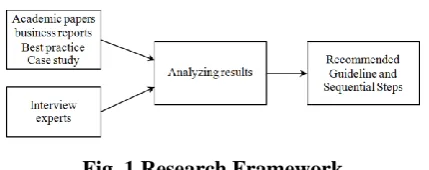
The objective of this research is to analyze and propose a guideline for allocating 700-MHz digital dividend to the Thai telecommunication industry in technical and policy perspectives based on secondary data culled from academic papers, business and best practices reports from respectable references and study cases in various countries which will be combined with primary data obtained from in-depth interviews with distinguished experts in various related fields.
132 | P a g e
Fig. 1 Research Framework
The experts sought for in-depth interviews for this research are those from five academic fields as shown in Table 1.
Table 1: Interviewing Experts and Key Focus
Area of expertise Numbers
Telecommunication Engineering 3
Information Technology 3
Economic 3
Telecom Law and Regulation 3
Policy and strategy 3
The in-depth interviews for this research focused on five fields directly related to the issue of m-Government, i.e. telecommunication engineering, information technology, economics, telecom laws and regulations, and policy and strategy, with 3 experts from each field that add up to a specialist group of 15.
Inputs from the in-depth interviews will be processed and analyzed together with secondary data which will be collated into a preliminary draft to be forwarded to the 15 experts for further comments with a goal of streamlining them into a spectrum assignment plan for digital dividend on 700 MHz for the Thai telecommunication industry in consistent with ITU proposals and the APT700 regional agreement.
III. DIGITAL DIVIDEND 700MHz
Digital dividend means the unutilized spectrum left over from the switch-over from the analogue terrestrial television to the new digital television system to raise efficiency of utilizing spectrum for the telecommunication industry which is short of spectrum for mobile broadband services. Although digital dividend spectrum may be somewhat different in various countries, they mostly comply with specifications under international agreements and are consistent with the policy of regional harmonization that can help reduce technical reception interference in border areas adjoining neighboring countries, and to achieve economies of scale for related equipment either in Europe, Africa or Asia. (ITU, 2012) [4]
3.1 Digital Dividend Value
133 | P a g e
Another key role of the 700 MHz spectrum apart from policy and technical perspectives is its enormous socio-economic benefits in generating national revenues, either through direct spectrum auction fees or higher indirect tax levies derived from materially faster economic growth after deploying the digital dividend spectrum for the telecommunication sector as seen from the 2100 MHz spectrum auction in Thailand in 2011.
Additionally, telecommunication infrastructure development has been a principle basis for business expansion in all other areas, creating more employment, boosting business ownership opportunities, and innovations arising from mobile broadband development which give people in rural areas adequate and equal access to information, data and diverse public services through mobile broadband networks acquired at suitable costs for developing countries.
3.2 Utilization of Digital Dividend
In theory, the digital dividend spectrum can be utilized in diverse areas, namely expanding television services by adding new broadcast channels, upgrading broadcast quality (HD), providing special 3D channels and mobile phone TV, or adopting new technology enabling simultaneous use for other television services on the same spectrum. The technology currently attracting most attention is "white space TV" which relies on existing unutilized parts of a TV spectrum in one area to provide high-speed Internet service through low power devices which have capability to search for suitable white space spectrum in specific areas for transmission that could ensure no interference with TV broadcasts operating on the same spectrum.
However, the most popular global trend, supported by many global organizations, is to use digital dividend in international mobile telecommunications (IMT) which would require spectrum assignment aimed at telecommunication harmonization that allows usage of their equipment anywhere in the world. As many countries recognize the urgent priority of spectrum assignment in telecommunications in order to meet the leaps-and-bounds increase in public demand of mobile broadband facility which is one of the key elements of developing a digital economy and society.
The shift of digital dividend utilization from television broadcasts to telecommunications requires clear long-term strategic planning as it is a national policy decision involving highly complex process which has been started with the successful transition to digital television, the analogue television switch-off, legislation and enforcement of regulations for former television service providers to exit the previous spectrum, joint efforts to amend all related laws, and cross-border coordination negotiations that require regional cooperation in the run-up to spectrum assignment for other services including telecommunications (ITU, 2012) [4]
3.3 Digital Dividend Suitable for Thailand
The International Telecommunication Union (ITU) divides the world into three regions based on their different utilization of the UHF (470-862 MHz) spectrum and long-standing different television broadcast technologies. The three regions are: Region 1 - Europe, Africa and Middle East; Region 2 - Americas; Region 3 - Asia-Pacific.
134 | P a g e
After that crucial decision, the Asia-Pacific Telecommunity (APT) undertook an additional study with an objective of creating the 700 MHz spectrum that would be recognized as the region's digital dividend spectrum (the 694/698-806 MHz or APT700) in 2011. Subsequently under this framework, 3GPP allocated Band 28 (FDD) and Band 44 (TDD) in June 2012, with Band 28 (FDD) attracting the interest of a high number of regulatory agencies and network service operators throughout Asia, Australia, New Zealand, and the Americas [7].
Fig. 2: Asia Pacific Telecom (APT) 700 MHz, 2 x 45MHz FDD plan (Band 28) [3]
Although countries in Region 3 have chosen diverse technologies for their terrestrial television broadcasts, either DVB-T, ATSC, ISDB-T or DMB-T, APT members are all well aware that adopting a common digital dividend spectrum of APT700 would create economies of scale that can cut cost of network equipment that has numerous options available in the markets under its coverage. The advantage of 700 MHz quality features of widespread coverage and high penetration power makes it suitable for indoor services including in remote rural areas. [8]
With features mentioned above, APT700 has been well received by many member countries in Region 3 led by Japan, Australia and New Zealand which use it as their actual broadcast platform, not to mention many other supportive countries in Latin America which clearly reflect the success of APT700 as normally this last group of countries tend to follow decisions made by the region's leader, the United States.
Even Mexico, with its 116 million people, has become the third largest country after India and Japan in term of population, to choose APT700 for its telecommunication sector. In Europe, efforts are also being made to use a common spectrum to help achieve global economies of scale [7].
The WRC-12 meeting allocated the 694-790 MHz spectrum to Region 1 for its mobile services which would be reserved for its primary service in broadcasting. This spectrum is generally known as "second digital dividend" or DD2 which was an addition to "first digital dividend" or DD1 that had been allocated earlier under CEPT800 or Band 20 (832-862 MHz/791-821 MHz). It is expected that DD2 would be launched after the WRC-15 meeting in November 2015 which would further boost support for APT700 as part of APT700 Lower Duplexer overlaps with part DD2 as shown in Figure 3 and Figure 4 [3].
135 | P a g e
Fig. 3: Relation between APT700 (B28) and CEPT800 (B20) or Digital Dividend 1 in Region 1 as
Digital Dividend 2 is in the same area as "Lower Duplexer' of APT700 [3]
Fig. 4: Global spectrum allocation for digital dividend and possibility of DD2 on APT700 Lower
Duplexer [3]
A GSMA study in 2013 concluded that allocation of 700 MHz digital dividend for Thailand's mobile phone service would materially generate more economic benefits than television broadcasts as demonstrated by the comparison in the following table:
Table 2: Comparison of benefits from allocating digital dividend to telecommunication services
vs television broadcasts [1]
Digital dividend allocation on 700 MHz for
telecom services
Digital dividend allocation on 700 MHz for
TV broadcasts
GDP grows 15.2 billion dollars (NPV) GDP grows 3.3 billion dollars (NPV)
Govt. Revenue grows 2.8 billion dollars (NPV) Govt. Revenue grows 0.9 billion dollars (NPV) Creates 30,000 new businesses Creates 100 new businesses
Creates 58,000 new jobs Creates 3,000 new jobs
IV. RESULTS AND DISCUSSIONS
136 | P a g e
1) In the cast of Thailand, the most suitable digital dividend spectrum is APT700 which lies in the 698 – 806 MHz range in order to maximize the economies of scale in consistent with the prevailing regional preference [5]. However Thailand's currently deployed 510 - 790 MHz spectrum for its terrestrial television broadcasts for both analogue and digital formats almost totally overlaps APT700 while its 470 – 510 MHz spectrum is still being used for both fixed line and mobile services which is not in line with prevailing regional practices (Figure 5).
2) The shift in the usage of APT700 spectrum from television broadcasts to telecommunications requires clear long-term strategic planning, one that is consistent with regional preference as it is a national policy decision involving a long, multi-agency process starting from 1) the successful digital TV switchover, 2) analogue switch-off (ASO), and 3) migration out of the old spectrum involving compensation for the disruptive change either financially or incentive-wise, legal or regulatory amendments, as well as cross-border negotiations on border straddling spectrum usage that require regional cooperation in the run-up to the telecommunication spectrum assignment.
Fig. 5: A Guideline to Allocate Spectrum in 700MHz
The switchover of television spectrum from analogue to digital is scheduled to complete within five years (2015 - 2020) and planning should be made for the analogue switch-off (ASO) by 2020, a timeframe put in place for complete switch-off of analogue broadcasts for radio and television by 2020, in accordance with an ASEAN agreement on the issue.
3) Improvement of utilizing the 470 - 510 MHz spectrum and negotiations where possible on migrating users of one particular spectrum to another within five years so as to leave room for additional public usage of digital television, a process that would involve financial compensation or provision of other incentives as well as related legal amendments and cross-border negotiations in order to ensure smooth allocation and switchover to the 700 MHz digital dividend spectrum for the telecommunication industry.
4) The public sector should adopt clear and consistent policies on digital dividend allocation for the telecommunication industry, with regulatory bodies dealing with the telecommunication sector allocating the APT700 (698 - 806 MHz) spectrum primarily to international mobile telecommunication businesses that is consistent with international practices.
137 | P a g e
efficient migration to the 700 MHz digital dividend spectrum. Law and regulatory amendments should also be undertaken to support the transitory efforts.
V. CONCLUSION
The 700 MHz digital dividend is a sub-1000 MHz spectrum with large coverage capability that attracts both old and new service providers as it requires lower investment in building operational networks. Thailand has a different system of allocating spectrums. Although it has undertaken the switchover of analogue terrestrial television to digital TV, it does not necessarily mean that additional digital dividend would be available to service the international mobile telecommunication industry.
The fact that Thailand's neighbours including Malaysia, Singapore, Indonesia, Laos, Vietnam and Brunei have lobbied in favour of the 700 MHz spectrum, as well as in international fora like ITU, APT and ASEAN which have promoted it as high speed mobile broadband has made Thailand falling behind many countries in Asia-Pacific and internationally in term of choosing a suitable communication spectrum, which in the long run may cause problems of signal interference along border areas if neighbouring countries chose to use the 700 MHz spectrum for their IMT services.
Accordingly, it is proposed that adjustments be made on Thailand's spectrum selection, by assigning the 470-694 MHz spectrum for television broadcasts and setting aside 698-806 MHz for mobile services. This would enhance harmonization with most Asia-Pacific countries and avoid future radio-frequency interference along border areas. This research seeks to provide useful regulatory information that would help set policy on managing mobile service frequencies and facilitate a successful switchover to digital dividend spectrum in the future.
REFERENCES
[1] BCG-GSMA. (2013). Socio-Economic Benefits of Assigning the Digital Dividend to Mobile in Thailand.
[2] Qualcomm. (2011). Harmonization of the Digital Dividend: Perspective from the Asia Pacific Region. [3] Ericsson. (2014). APT700: A Truly Global LTE Band.
[4] ITU. (2012). Digital Dividend: Insights for Spectrum Decisions.
[5] BCG-GSMA. (2012). The Economic Benefits of Early Harmonisation of the Digital Dividend Spectrum & the Cost of Fragmentation in Asia-Pacific.
[6] Tim Kelly and Carlo Maria Rossotto, 2012, Broadband Strategies Handbook. [7] 4G Americas. (2012). The Benefits of Digital Dividend.
![Fig. 2: Asia Pacific Telecom (APT) 700 MHz, 2 x 45MHz FDD plan (Band 28) [3]](https://thumb-us.123doks.com/thumbv2/123dok_us/9247269.1460909/5.595.113.447.200.294/fig-asia-pacific-telecom-apt-mhz-mhz-band.webp)
![Fig. 4: Global spectrum allocation for digital dividend and possibility of DD2 on APT700 Lower Duplexer [3]](https://thumb-us.123doks.com/thumbv2/123dok_us/9247269.1460909/6.595.169.433.249.423/global-spectrum-allocation-digital-dividend-possibility-lower-duplexer.webp)

