https://doi.org/10.5194/gmd-10-3411-2017 © Author(s) 2017. This work is distributed under the Creative Commons Attribution 3.0 License.
Optimizing the parameterization of deep mixing and internal
seiches in one-dimensional hydrodynamic models: a case
study with Simstrat v1.3
Adrien Gaudard1, Robert Schwefel2, Love Råman Vinnå2, Martin Schmid1, Alfred Wüest1,2, and Damien Bouffard1,2
1Eawag, Swiss Federal Institute of Aquatic Science and Technology, Surface Waters, Research and Management,
Seestrasse 79, 6047 Kastanienbaum, Switzerland
2École Polytechnique Fédérale de Lausanne, Physics of Aquatic Systems Laboratory, Margaretha Kamprad Chair,
EPFL-ENAC-IIE-APHYS, 1015 Lausanne, Switzerland
Correspondence to:Adrien Gaudard ([email protected]) and Damien Bouffard ([email protected]) Received: 10 October 2016 – Discussion started: 29 November 2016
Revised: 1 July 2017 – Accepted: 10 August 2017 – Published: 18 September 2017
Abstract. This paper presents an improvement of a one-dimensional lake hydrodynamic model (Simstrat) to char-acterize the vertical thermal structure of deep lakes. Using physically based arguments, we refine the transfer of wind energy to basin-scale internal waves (BSIWs). We consider the properties of the basin, the characteristics of the wind time series and the stability of the water column to filter and thereby optimize the magnitude of wind energy transferred to BSIWs. We show that this filtering procedure can signif-icantly improve the accuracy of modelled temperatures, es-pecially in the deep water of lakes such as Lake Geneva, for which the root mean square error between observed and sim-ulated temperatures was reduced by up to 40 %. The mod-ification, tested on four different lakes, increases model ac-curacy and contributes to a significantly better reproduction of seasonal deep convective mixing, a fundamental parame-ter for biogeochemical processes such as oxygen depletion. It also improves modelling over long time series for the pur-pose of climate change studies.
1 Introduction
1.1 Hydrodynamics of vertical mixing in lakes
Lakes are recognized as sentinels of changes in climate and catchment processes (Shimoda et al., 2011; Adrian et al., 2009). They have multiple intricate interactions with their
environment, simultaneously reacting to external forces and acting on their surroundings. The complex hydrodynamic processes occurring in stratified lakes are mainly governed by the combination of surface heat flux and wind stress (Bouffard and Boegman, 2012). The former sets up a den-sity stratification by warming the near-surface water, which floats on top of the cold deep water. This stratification pat-tern isolates the lower parts of the lake (hypolimnion) from the surface layer (epilimnion) and acts as a physical barrier reducing vertical fluxes. The latter, wind stress, brings mo-mentum into the system and thereby contributes to mixing. Notably, the action of wind stress on a stratified basin leads to internal waves (seiches), rerouting the energy at various spa-tial and temporal scales (Wüest and Lorke, 2003; Wiegand and Carmack, 1986). Basin-scale internal waves (hereafter BSIWs) play a crucial role in the transport of mass and mo-mentum in the lake, driving horizontal dispersion and vertical mixing, with important implications for biogeochemical pro-cesses (Bouffard et al., 2013; Umlauf and Lemmin, 2005).
Figure 1.Period of the first longitudinal mode BSIW as a function of the day of year in Lake Geneva. Points are coloured based on the observed maximum water column stabilityN2. Values ofN2< 10−4s−2correspond to rare instances of complete lake overturn, i.e. unstratified water columns, and are consequently not shown. The figure was constructed from more than 50 years of monitoring data at the deepest location of the lake.
longitudinal or transversal standing waves (TBSIW (s)) can
then be estimated with the Merian formula (Bäuerle, 1994; Merian, 1828):
TBSIW=2L
n2gρ2−ρ1 ρ2
h1h2
h1+h2 −1/2
, (1)
whereL(m) is the length of the basin at the interface depth (in the direction of the excitation),g(m s−2) is the acceler-ation of gravity,ρ1andρ2(kg m−3) are the densities of the
upper and lower layers, h1 andh2 (m) are the layer
thick-nesses andnis the number of wave nodes.
In most lakes, the zone of abrupt temperature change, commonly referred to as the thermocline or metalimnion, progressively deepens from spring to autumn. The temper-ature difference between the two layers, determining the stratification strength, decreases from mid-summer to au-tumn. The net result of both a deepening of the thermocline and a reduced stratification strength is a strong increase in TBSIW(Eq. 1). This effect is remarkably strong in
meromic-tic and oligomicmeromic-tic lakes, which can maintain stratification throughout the whole year. Lake Geneva can be categorized as oligomictic with a period of the dominant first-mode lon-gitudinal BSIW ranging from∼60 to∼600 h, as shown in Fig. 1. As expected, the wave period greatly increases from late autumn to early spring due to weakening of the stratifi-cation.
Besides wind-induced BSIWs, convection is a subtle al-though important vertical energetic pathway in lakes (Read et al., 2012; Wüest et al., 2000). This process may be trig-gered by surface cooling or density currents (Thorpe et al., 1999). The generally weak winds over perialpine lakes in-crease the relative importance of convective processes in these systems. Notably, cooling during winter is
responsi-ble for temperature and thus density homogenization in mid-latitude water bodies.
In deep lakes, however, the vertical mixing caused by con-vective and wind-induced turbulent processes (Imboden and Wüest, 1995) may be insufficient to mix the water column down to the deepest layers. In this case, the deepest part of the lake remains separated from the homogenized upper part (Jankowski et al., 2006; Straile et al., 2003). The extent of deep mixing is of critical importance for reoxygenation of the deep water, and therefore for water quality. Insufficient oxygen supply often affects lake ecosystems and can trigger the release of harmful compounds and reduced substances such as iron or manganese (Friedrich et al., 2014; Beutel and Horne, 1999). Comprehension and accurate prediction of the extent of deep mixing are thus vital for proper management of water resources, especially in deep lakes. Moreover, deep mixing, as a key process of heat transfer to the hypolimnion, partly governs its response to climate change (Ambrosetti and Barbanti, 1999). However, the complex vertical pathway of kinetic energy makes modelling of the thermal structure challenging.
1.2 Numerical modelling
Over the past decades, many numerical models have been developed to allow for prediction and understanding of hy-drodynamics in lakes and reservoirs. The algorithms and as-sumptions applied by these models vary greatly, as does their complexity, which ranges from simple box models to in-tricate three-dimensional models (Stepanenko et al., 2016; Wang et al., 2016; Ji, 2008; Hodges et al., 2000). For climate change studies, long-time lake simulations are needed, often utilizing vertical one-dimensional (1-D) models (Wood et al., 2016; Butcher et al., 2015; Komatsu et al., 2007; Hostetler and Small, 1999). These models are computationally inex-pensive (Goyette and Perroud, 2012), permitting long-term simulations (several decades or longer) and facilitating pa-rameter estimation and sensitivity analyses.
running conditions (Stepanenko et al., 2013). Model accu-racy can be improved by including BSIW parameterization and subsequent mixing (Schwefel et al., 2016). The problem has been partly tackled for small basins (Stepanenko et al., 2014), but not for large, deep lakes.
An inherent weakness of 1-D models is the neglect of horizontal processes. These models may be able to repro-duce fine vertical structures, but generally perform calcula-tions that are horizontally averaged over the whole simu-lation domain (Komatsu et al., 2007). Besides the classical problem of spatial heterogeneity, the ratio between vertical and horizontal turbulent viscosity, recognized as impacting the response of lakes to wind forcing (Toffolon and Rizzi, 2009), cannot be accounted for. When vertical and horizon-tal viscosity are of the same order of magnitude (typically in winter), horizontal circulation is favoured and wind en-ergy will give rise to large horizontal gyres rather than ver-tical motion (Straile et al., 2010). The stratified situation, associated with smaller vertical viscosity in comparison to horizontal viscosity, will favour BSIWs as well as up- and down-welling, the energy being absorbed by thermocline dis-placement and subsequently dissipated (Woolway and Simp-son, 2017). We hypothesize that in 1-D models resolving BSIWs, too much wind energy is introduced and converted into BSIW in winter, incorrectly impacting deep convection patterns (Fink et al., 2014b).
Here, we propose physically motivated modifications of the BSIW parameterization of a well-established 1-D numer-ical model for better reproduction of deep mixing and hence improved prediction of deep water temperature. In Sect. 2, we present the model, describe our modifications and intro-duce the sites for which we test the model. In Sect. 3, we discuss some aspects of our modifications and compare both calibration and results of the initial and modified models. Fi-nally, we discuss the implications of our improvements.
2 Methods
In this study, we use the Simstrat v1.3 one-dimensional nu-merical model, a modified version of the model developed by Goudsmit et al. (2002). Simstrat is a finite-difference buoyancy-extended reservoir model withk–εturbulence clo-sure. It has been extensively used to simulate water col-umn temperature development under different conditions and over periods ranging from days to decades (Schwefel et al., 2016; Fink et al., 2014b; Stepanenko et al., 2014; Straile et al., 2010; Peeters et al., 2007, 2002). The model performs equally well and in many aspects even better than other mod-els, as shown in a comparison study simulating Lake Geneva (Perroud et al., 2009). A possible reason for that is the im-plemented explicit parameterization of turbulence caused by BSIWs through the partitioning of wind energy.
2.1 Parameterization of internal waves
Simstrat parameterizes the total BSIW energy Eseiche (J)
as a balance between production Pseiche (W) and loss
Lseiche(W) of seiche energy (Goudsmit et al., 2002):
dEseiche
dt =Pseiche−Lseiche. (2)
Within the standard system of equations of a k–ε model, wherekis the turbulent kinetic energy andεits dissipation, Pseiche is used as a source term in the differential equation
for k and, multiplied byε/ kand a constant, as a source term in the differential equation forε.Pseicheis parameterized as
a function of the energy introduced by wind forcing at the lake surface:
Pseiche=αAlakeρairC10U103, (3)
where α (−) is the efficiency of energy conversion from wind to seiches, Alake (m2) the surface area of the lake,
ρair(kg m−3) the density of air,C10(−) the wind drag
coef-ficient andU10(m s−1) the wind speed 10 m above the water
surface. The following power law is used to calculateLseiche
from the total seiche energyEseiche:
Lseiche=AlakeVlake−3/2ρwater−1/2CDeffE3seiche/2 , (4)
whereVlake (m3) is the volume of the lake,ρwater(kg m−3)
the density of water andCDeff (−) the bottom drag
coeffi-cient.
The wind drag coefficient is calculated according to an em-pirical relation based on Wüest and Lorke (2003) – which is not the original formulation of Goudsmit et al. (2002).
C10=
6.215×10⁻² ;U10≤0.10 m s−1
4.4×10⁻²U10−1.15 ;0.10< U10≤3.85 m s−1 −7.12×10⁻⁷U102
+7.387×10⁻⁵U10
+6.605×10⁻⁴ ;U10>3.85 m s−1
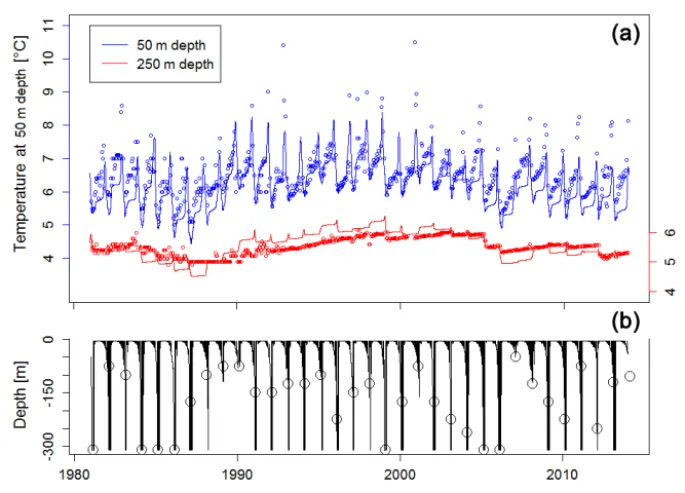
Figure 2.Evolution of observed and modelled temperature for Lake Geneva.(b)Evolution of observed and modelled mixing depth for Lake Geneva. Circles represent observations; lines represent results obtained with the unmodified Simstrat model. The mixing depth is defined as the uppermost depth at which the absolute temperature gradient exceeds 0.005◦C m−1, using time-averaged temperature time series over 60 days.
region is then insufficiently represented (Stepanenko et al., 2010). For Lake Geneva, this disequilibrium is exemplified in Fig. 2a by comparing observed and modelled temperature at 50 and 250 m depth. Mixing is clearly underestimated at a depth of 50 m and overestimated at a depth of 250 m. As a result, in most winters the simulated mixing depth strongly exceeds the observed value (Fig. 2b).
2.2 Proposed improvements
Our approach consists in parameterizing the energy pathway from wind to BSIWs with two factors representing differ-ent controlling processes. Those factors are used to calculate a filtered wind speedU10filteredfor subsequent estimation of the BSIW energy production in Simstrat with Eq. (3). The focus here is not a global reduction of wind strength, but rather fil-tering at the event scale as a function of the present state of the lake and of wind forcing. The standard wind speedU10is
still used for all other calculations, i.e. shear stress and heat flux.
U10filtered=fdurfstabU10. (6)
fdur andfstab range from zero to one and consequently
in-duce a reduction of the effective wind speed available for BSIW energy production. We filter the wind based on the duration of wind events withfdur(−) and based on lake
sta-bility withfstab(−).
Regardless of their intensity, wind events much shorter than the BSIW period (from Eq. 1) will inefficiently ex-cite the oscillation modes of the internal waves. Specifically, wind stress lasting less than one-fourth of the wave period should be filtered out (Schwefel et al., 2016; Stevens and Im-berger, 1996). This limitation is parameterized infdurand is
computed as follows: fdur=min
( T
wind
TBSIW/4 1/2
,1 )
. (7)
HereTwind(s) is the duration of a wind event andTBSIW(s)
is the period of the first horizontal mode of BSIWs given in Eq. (1). The ratio is raised to the power of one-half in order to smooth the cut-off effect induced by the chosen criterion (one-fourth of the BSIW period). Wind events are defined as the periods with mean wind speed equal to at least 1.5 times the overall average. Their duration is then the longest interval such that this condition is satisfied. The filter is applied at all times during the whole duration of the corresponding wind events. This filter is simplified since it considers neither the resonance effects nor the other oscillation modes of a given basin. However, we hypothesize that, despite its simplicity, the filter covers most of the BSIW excitation range for large lakes.
(Imberger and Hamblin, 1982). W measures the ratio be-tween buoyancy force and wind stress, and scales inversely to the magnitude of vertical mixing in stratified basins (Shin-tani et al., 2010).W is defined as
W =gρ2−ρ1 ρ1
h21 u2
∗Lmax
(8)
where ρ1 and ρ2 (kg m−3) are the densities of the upper
and lower layers,h1(m) is the thickness of the upper layer,
Lmax (m) is the length of the basin at the surface and
u∗(m s−1) is the water-side shear velocity:
u2∗≈C10U 2 10ρair
ρ1
. (9)
The reduction factor based on the stability of the water col-umn is then computed as
fstab=
1
1+ W
L/(4h1)
. (10)
HereL(m) is the approximate length of the basin at the inter-face depth (see Eq. 11) andh1(m) is the thickness of the
up-per layer. The normalizing factorL/(4h1)was discussed as
an appropriate threshold for the amplitude of BSIWs (Adams and Charles, 2000). BothLandW are bounded from below to their respective minimal non-zero value. This avoids com-putation errors and total filtering of the wind time series when the lake is well mixed (therefore consisting in a single layer of thicknessh1, withL=0 andW=0; in this case the lower
layer is defined using the bottom temperature).
Arguably,fdurandfstabbuild on similar principles.
How-ever, they incorporate different and complementary filtering of the wind field.fdur explicitly takes the duration of wind
events into account, and therefore the physical resonance ef-fects inherent to wind excitation of a water body.fstab
com-pares the actual wind stress at the water surface to the overall stability of the water column.
The construction of the filtered wind requires knowledge of the wind characteristics before and after the present time, as well as of the corresponding state of the lake at each time step. Therefore, the model should be run with the unfiltered wind speed in a first step. Afterwards, the filter can be applied using the output of the first model run to calculate the filter parameters and determineU10filteredfrom Eq. (6) for a second run. An improvement would be to calculate wind filtering at runtime (i.e. during model execution).
Verification of the wind filtering algorithm was performed (see the “Code and data availability” section).
2.3 Sites presentation and in situ data
The proposed change to the modelling scheme is applied and tested on four perialpine lakes in Switzerland. The cho-sen lakes range in volume from 1.1 to 89 km3, representing
the general conditions for medium- to large-sized lakes. In-formation for each lake is provided hereunder. InIn-formation about the data sources is provided in the “Code and data availability” section.
Lake Geneva (46.452◦N, 6.620◦E) is the largest lake of western Europe, located between France and Switzerland. Overall, the lake has a maximum length of∼75 km, a max-imum width of∼13 km and a surface area of 580 km2. The maximum depth is 309 m and the average hydraulic resi-dence time is about 11 years. The Rhône River is both the main inflow and outflow. The lake is heavily affected by wind-induced currents, mixing and internal waves (Bouffard and Lemmin, 2013). Concurrently, its size makes it thermally stable, and the mild climate maintains a relatively high hy-polimnion temperature (above 5◦C) (Michalski and Lem-min, 1995). Full mixing occurs irregularly in Lake Geneva (every 7 years on average).
Sixty years of vertical temperature profiles, obtained with a conductivity–temperature–depth (CTD) probe, are avail-able at the deepest point. This combined dataset is used for model initialization and calibration. The weather station in Pully (46.512◦N, 6.667◦E) provides meteorological data necessary for model forcing since 1981: air temperature, hu-midity, wind speed and direction, solar radiation and cloudi-ness. Given the large retention time of the basin, we neglect river inflow and outflow.
Lake Constance (47.629◦N, 9.374◦E) is a deep perialpine lake with a maximum depth of 254 m. The Rhine River acts as its main tributary, resulting in a hydraulic residence time of about 4.5 years. The maximum length is ∼50 km and the width∼12 km, for a surface area of 536 km2. Seasonal mixing reaches the lake bottom every few years (Fink et al., 2014a).
Surface forcing data have been provided by the weather station in Güttingen (47.602◦N, 9.279◦E) since 1981, while CTD profiles and hydrological data about the inflow rate and temperature have been available since 1984. Both inflow and outflow are assumed to take place near the lake surface. Monthly CTD measurements at the deepest point cover the complete time period.
Lake Neuchâtel (46.904◦N, 6.843◦E) is a medium-sized lake located in western Switzerland. Although relatively deep (maximum 152 m), Lake Neuchâtel is monomictic. It is therefore a good test case for our numerical model scheme to assess the correct reproduction of deep mixing. Its surface area is 218 km2and the average hydraulic residence time is slightly more than 8 years.
Meteorological data have been available for more than 35 years from the stations listed in Table 1, but regular CTD profiling started only in 1994. Given the long residence time, inflows and outflows are neglected.
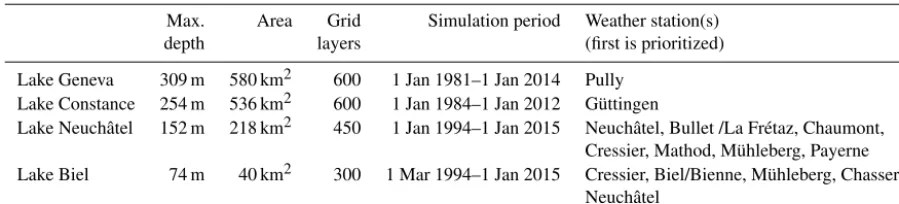
Table 1.Main properties of the study sites.
Max. Area Grid Simulation period Weather station(s)
depth layers (first is prioritized)
Lake Geneva 309 m 580 km2 600 1 Jan 1981–1 Jan 2014 Pully Lake Constance 254 m 536 km2 600 1 Jan 1984–1 Jan 2012 Güttingen
Lake Neuchâtel 152 m 218 km2 450 1 Jan 1994–1 Jan 2015 Neuchâtel, Bullet /La Frétaz, Chaumont, Cressier, Mathod, Mühleberg, Payerne Lake Biel 74 m 40 km2 300 1 Mar 1994–1 Jan 2015 Cressier, Biel/Bienne, Mühleberg, Chasseral,
Neuchâtel
It is also monomictic. Lake Biel has had a very short aver-age retention time of only 60 days since the correction of the Aare River in the 19th century (Albrecht et al., 1999). In-flows thus play a primary role in the hydrodynamic behaviour of the lake.
As for Lake Neuchâtel, the CTD measurement program started in 1994. The forcing time series for Lake Biel was likewise computed based on several meteorological stations around the lake, listed in Table 1. For the inflows, a gravity-driven intrusion algorithm adapted from Hipsey et al. (2013) is applied, with an inflow plunging in the lake, entraining water and stabilizing when density equilibrium is reached. The inflow corresponds to the sum of the Hagneck River, the Suze River and the Zihl channel, and density effects of salinity and suspended matter are neglected.
The most important aspects of these four lakes are summa-rized in Table 1. For Lake Neuchâtel and Lake Biel, several weather stations are used to fill data gaps in the prioritized measurement station. In this case, missing data were com-pleted with data from nearby weather stations, which were linearly adjusted to have the same mean as the priority sta-tion.
2.4 Model configuration and calibration
The model is set to use a time step of 300 s. Both the ini-tial model and the improved version are calibrated with the PEST (Model-Independent Parameter Estimation and Uncer-tainty Analysis) software package (Doherty, 2005), using its default set-up. PEST searches for the optimal value of chosen parameters which ensure the best match between model re-sults and available observations (here, temperature measure-ments over the simulation period). Only three parameters are chosen for calibration: the fraction of wind energy converted to seiche energy (α; see Eq. 3), the fit parameter for absorp-tion of long-wave radiaabsorp-tion (p1) and the fit parameter for the
fluxes of sensible and latent heat (p2).p1linearly scales the
amount of heat that is absorbed in the lake water from the in-coming long-wave radiation from the atmosphere, andp2
lin-early scales the exchange of sensible and latent heat between the lake surface and the atmosphere (Goudsmit et al., 2002). p1andp2account for the fact that, in specific cases, there is
generally a bias between the calculated and the effective heat
fluxes, as empirical formulas are used and the meteorological data are not always fully representative of the lake surface. All the other parameters are set to standard values (see Ta-ble 2), which makes the optimization procedure more solid and more trustworthy. Latitude is set according the above de-scription of the sites, and the geothermal heat flux is set as follows: 0.50 W m−2for Lake Geneva, 0.00 W m−2for Lake Constance, 0.15 W m−2for Lake Neuchâtel and 0.08 W m−2 for Lake Biel. These values match the temperature slopes found in the deep water over summer and autumn (when heat input from above is negligible). Deep river inflows are not modelled, although they can bring heat to the hypolimnion in summer (Fink et al., 2016).
As mentioned above, the focus of the wind filter is not a global reduction of the energy input to BSIWs. Instead, it should act at the event scale, depending on the current state of the lake and wind forcing. The parameterα then allows one to adjust the absolute magnitude of the energy input.
The length of each lake, used to compute the BSIW pe-riod, was calculated with the surface area of the lakeAlake
according to
L=2pAlake. (11)
This rather simplistic formula assumes a rectangular shape with an aspect ratio equal to 4, but limits the number of input parameters needed by the model.Lis then the fetch along the longest dimension of the basin.
3 Results and discussion 3.1 Wind filtering
Table 2.Fixed (non-calibrated) physical parameters of the model.
Parameter description and units Parameter in Goudsmit Value et al. (2002)
Geographical latitude (◦) − Lake-dependent
Air pressure (mbar) pa 990
Fractionation coefficient for seiche energy (−) q 1.25
Bottom drag coefficient (−) CDeff 0.002
Geothermal heat flux (W m−2) Hgeo Lake-dependent
Fraction of short-wave radiation absorbed − 0.30
as heat in the uppermost layer (−)
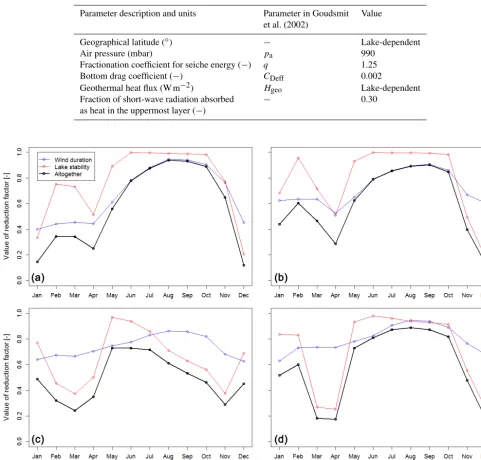
Figure 3.Monthly averaged reduction factors for Lake Geneva(a), Lake Constance(b), Lake Biel(c), and Lake Neuchâtel(d). Shown factors: wind duration (Eq. 7:fdur, blue), lake stability (Eq. 10:fstab, red) and overall resulting filtering factor (fdurfstab, black).
Applied on the observed hourly wind speed according to Eq. (6), the filtering scheme displays a seasonal reduc-tion of the observed values. In winter, wind intensity is re-duced, whereas in summer, the time series remains rather unchanged.
Results are essentially the same for Lake Constance, al-though filtering was globally weaker in the first months of the year. In Lake Biel, the overall filtering ratio is a smoother curve with minimal reduction occurring as early as May. In Lake Biel and Lake Neuchâtel, filtering in winter and spring
is mostly driven by high lake stability, and much less by the wind duration. In particular, repeated unstratified periods, characterized by high Wedderburn numbers, lead to sharp wind filtering. In deep lakes, homogeneity occurs very infre-quently and rather briefly. Especially for Lake Biel, unstable water columns appear during summer already, which leads to stronger stability-driven filtering.
Table 3.Calibration results and near-bottom RMSE for the “deep” lakes.
Lake Geneva Lake Constance
Parameter Initial Improved Relative Initial Improved Relative
and units model model change model model change
α(−) 0.0709 0.1761 +148 % 0.0295 0.0515 +74.6 %
α·(fdur·fstab)3(−) 0.0709 0.0699 −1.40 % 0.0295 0.0215 −27.1 %
p1(−) 1.089 1.065 −2.20 % 1.208 1.177 −2.60 %
p2(−) 1.250 1.087 −13.0 % 1.064 0.898 −15.6 %
Near-bottom RMSE (◦C) 0.32 0.20 −37.5 % 0.29 0.24 −17.2 %
Table 4.Calibration results and near-bottom RMSE for the “shallow” lakes.
Lake Neuchâtel Lake Biel
Parameter Initial Improved Relative Initial Improved Relative
and units model model change model model change
α(−) 0.0099 0.0111 +12.1 % 0.0043 0.0049 +14.0 %
α·(fdur·fstab)3(−) 0.0099 0.0050 −49.5 % 0.0043 0.0016 −62.8 %
p1(−) 1.205 1.204 −0.10 % 1.095 1.095 0.00 %
p2(−) 1.250 1.249 −0.10 % 1.250 1.250 0.00 %
Near-bottom RMSE (◦C) 0.48 0.47 −2.20 % 0.94 0.91 −3.20 %
limitation could be parameterized with an additional factor fdir(−), which could be included in Eq. (6).
fdircan be estimated as the fraction of the time that wind
direction is in the same half-circle (i.e. within±π/2 radians) as the average wind direction. The average wind direction is computed during each wind event identified with the method described in Sect. 2.2. Such filtering is expected to partic-ularly impact systems with pronounced diurnal or seasonal wind forcing.
3.2 Calibration results
Parameter calibration of the initial model for Lake Geneva yielded unrealistic parameter sets. While trying to match the observed temperatures, PEST raisedp2, the correction factor
for the flux of latent and sensible heat, to a value exceed-ing 1.5. Such strong correction factors suggest that lake pro-cesses are not correctly accounted for. Hence, for all subse-quent calibration procedures, the range of calibration ofp1
and p2 was bound between 0.80 and 1.25. The calibration
results under this constraint are shown in Table 3. Forcing the lake with the filtered wind time series results in a notable improvement ofp2(i.e. getting closer to 1.00). We also
no-tice an increase inα, which amplifies the overall magnitude of energy transfer to seiche-induced mixing. This compen-sates for the reduction due to the filtered wind magnitude, but increases further the impact of the long wind events (which went through the filter), in contrast to the ones that were fil-tered out.
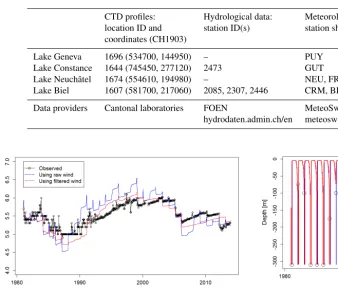
Figure 4.Temperature time series at 50 m depth in Lake Geneva: observations, initial model and improved model.
These results were confirmed by applying the same proce-dure for Lake Constance. Notably,p2was reduced for both
lakes, whilep1, the fit parameter controlling infrared
radia-tion from the sky, remained almost constant. One may also note thatαis considerably higher for Lake Geneva than for Lake Constance, illustrating a strong impact of the regional wind field on BSIWs. However, the global energy transfer ratio, expressed byα(fdurfstab)3(see Eq. 3), remains rather
similar in the deep lakes, pointing towards a globally effi-cient energy transfer: the total amount of energy transferred to BSIWs is not much reduced by wind filtering.
Table 5.Identification of the data used.
CTD profiles: Hydrological data: Meteorological data: location ID and station ID(s) station short name(s) coordinates (CH1903)
Lake Geneva 1696 (534700, 144950) – PUY
Lake Constance 1644 (745450, 277120) 2473 GUT
Lake Neuchâtel 1674 (554610, 194980) – NEU, FRE, CHM, CRM, MAH, MUB, PAY
Lake Biel 1607 (581700, 217060) 2085, 2307, 2446 CRM, BIL, MUB, CHA, NEU
Data providers Cantonal laboratories FOEN MeteoSwiss
hydrodaten.admin.ch/en meteoswiss.admin.ch
Figure 5.Temperature time series at 250 m depth in Lake Geneva: observations, initial model and improved model.
Figure 6.RMSE change between the initial and improved models, as a function of depth. RMSE values are calculated with the tem-perature time series at the observation depths.
showed extremely similar results (Table 4). Expectably, there was a slight increase in theαparameter, which compensates for the reduced wind intensity. The increase is much slighter than for the large, deep lakes, the reason for which is under-stood to be the lower influence of BSIWs. For Lake Neuchâ-tel, the value of the p2 parameter dropped below the
cho-Figure 7.Deep mixing extent in Lake Geneva, illustrated as the mixing depth as a function of time. Circles represent observations; the curves represent corresponding model results: the original ver-sion (blue) and the verver-sion using filtered wind (red). The mixing depth is defined as the first depth at which the absolute temperature gradient exceeds 0.005◦C m−1, using time-averaged temperature time series over 60 days.
sen upper bound, meaning that the model was not forced to converge anymore. In these shallow lakes, the global energy transfer ratio, expressed byα(fdurfstab)3(see Eq. 3), gets
sig-nificantly reduced, which once more reveals that seiches are less efficiently excited there.
For the deep lakes (especially for Lake Geneva), the cal-ibrated values of theαparameter tend to be higher than the ones found by previous studies, which ranged from 0.001 to 0.03 for large basins (Schmid and Köster, 2016; Fink et al., 2014b; Finger et al., 2007). There are several reasons that can explain this deviation.
– If the wind observed at the onshore meteorological sta-tion(s) underestimates the wind intensity over the lake, PEST is likely to compensate with a larger α value (and a largerp2 value). For Lake Geneva, it has been
– The wind drag coefficient for Simstrat is given by an empirical expression (Eq. 5) instead of a constant, in contrast to most previous studies. This leads to an over-all lower drag and therefore also to a larger α value (see Eq. 3): in our case for Lake Geneva,αincreased by∼25 %.
– This is also one of the first studies where the parameter defining the fraction of short-wave radiation absorbed as heat in the uppermost layer (see Table 2) is set to a non-zero value (which was physically incorrect). This change also appears to lead to an increasedαvalue: in our case for Lake Geneva,αincreased by∼18 %. 3.3 Simulation results
For the following model results, the optimized set of param-eters found by PEST was used. Results with filtered wind data for Lake Geneva do not improve significantly at mid-depth, even though greater variability is reproduced (Fig. 4). However, the accuracy in deep layer temperature improved greatly (Fig. 5). In accordance with Lake Geneva, the model performance improved in the deep water of Lake Constance. Reduction in root mean square error (RMSE) in deep wa-ter temperature substantiates these statements (see Table 3). As expected, for shallower lakes with yearly turnover, the extended model neither improved nor worsened the results (see Table 4). Figure 6 shows the change in RMSE between the improved model and the version using unfiltered wind. In this case, positive values express a reduction of RMSE, i.e. an improvement of the model. In the deepest part of Lake Geneva, the improvement was nearly 40 %, which supports our approach.
For the shallower Lake Neuchâtel and Lake Biel, there is very little change in the results. Correcting the remaining off-set, which is surely caused by other inaccuracies in the mod-elling schemes and in the forcing input, would require further work.
As shown in Fig. 7 (which is an overlap of the lower pane of Fig. 2), the modelled yearly mixing depths are in much better accordance with the observed values. This is due to re-duced wind-inre-duced mixing in the hypolimnion, which then remains denser than the upper layers through the winters that are not cold enough to trigger complete mixing. Figure 7 shows that the original version of the model largely over-estimated deep convective mixing, as full lake mixing was predicted almost every year. Using wind filtering, deep sea-sonal mixing is more finely reproduced, which also helps to-wards modelling of lake-scale circulation of water, oxygen and nutrients.
4 Conclusions
The difficulty of 1-D lake models in reproducing deep water temperatures is mainly caused by the unrealistic transport of
wind energy to the deeper layers of the lake. Especially in large lakes, turbulent kinetic energy produced by the dissipa-tion of internal waves plays a major role. Our study showed that the internal wave parameterization of Simstrat can be remarkably improved for deep lakes by using filtering tech-niques taking into account the physical processes necessary for internal wave generation. In turn, the filters had only mi-nor effects on shallower lakes as they fully mix over winter. However, it is very likely that our filter can be optimized for each specific case.
By considering the signal properties of the wind speed time series (notably the duration of wind events), as well as the stability of the water column, we were able to parameter-ize deep mixing in the basin better than with the simple pa-rameterization provided by the original Simstrat model. This supports our assumption that BSIW processes are a key fac-tor for the inaccuracy of 1-D models in the deep hypolimnion of large lakes. Not surprisingly, the filtering had almost no ef-fect in summer, when the Wedderburn number and the BSIW period remain small. In winter, however, filtering strongly re-duced the energy transport into internal seiches. These results lead to better prediction of mixing depth and thermal struc-ture in the deep water and open the door to a finer understand-ing of the process and, altogether, to a better management of lakes. Indeed, prediction of deep water reoxygenation, nu-trient cycle and sediment interactions would greatly benefit from accurate modelling of deep mixing. In addition, the lat-ter is also essential for long-lat-term climate change studies.
Our findings emphasize the fact that the properties of com-plex three-dimensional processes such as BSIW formation must be better parameterized in 1-D models. If such mech-anisms are overly simplified, significant inaccuracies may arise. Our method has the advantages of remaining rather simple and of requiring very little computation time and very few additional parameters. In our opinion, the main draw-back is the difficulty in linking wind and internal water mo-tion using only direct approximamo-tions, especially for lakes with complicated shapes, bathymetry and wind fields. For instance, we neglect the oscillatory character of BSIW, res-onance and damping effects and the several possible oscilla-tion modes. In general, there is very little research about the temporal variability of wind-induced mixing (Woolway and Simpson, 2017), and the modelling of deepwater temperature evolution could still benefit much from better understanding and parameterization of the underlying processes.
documen-tation of the numerical model, data processing and verification of the algorithms, as well as the parameter and input files, can be ac-cessed through an archived GIT repository (link: https://github.com/ adrien-ga/Simstrat-BSIW/tree/v1.3, DOI: 10.5281/zenodo.841084, direct download link: https://github.com/adrien-ga/Simstrat-BSIW/ archive/v1.3.zip). As previously discussed, this version of Simstrat implements the possibility of using a separate time series of wind speed for computing seiche energy, a gravity-driven intrusion al-gorithm for inflows and wind drag coefficient varying with wind speed.
Competing interests. The authors declare that they have no conflict of interest.
Acknowledgements. The authors would like to thank Jonathan
Schenk for participating in the modelling work, and the above-mentioned organizations for providing the data used in this paper. In addition, the authors express their acknowledgements to David Ham and one anonymous referee for their constructive comments, which helped to improve the manuscript, as well as to the topical editor Robert Marsh.
Edited by: Robert Marsh
Reviewed by: David Ham and one anonymous referee
References
Adams, H. E. and Charles, R. M.: A Preliminary Investigation of Lake Stability and Chemical Analysis of Deep Waters of the Kigoma basin (Northern Basin) and the Kalemie Sub-basin (Southern Basin) of Lake Tanganyika, www.geo.arizona. edu/nyanza/pdf/adamscharles.pdf, 2000.
Adrian, R., O’Reilly, C. M., Zagarese, H., Baines, S. B., Hes-sen, D. O., Keller, W., Livingstone, D. M., Sommaruga, R., Straile, D., Van Donk, E., Weyhenmeyer, G. A., and Winder, M.: Lakes as sentinels of climate change, Limnol. Oceanogr., 54, 2283–2297, 2009.
Albrecht, A., Goudsmit, G., and Zeh, M.: Importance of lacustrine physical factors for the distribution of anthropogenic 60Co in Lake Biel, Limnol. Oceanogr., 44, 196–206, 1999.
Ambrosetti, W. and Barbanti, L.: Deep water warming in lakes: an indicator of climatic change, J. Limnol., 58, 1–9, 1999. Bäuerle, E.: Transverse baroclinic oscillations in Lake Überlingen,
Aquat. Sci., 56, 145–160, 1994.
Beutel, M. W. and Horne, A. J.: A review of the effects of hypolim-netic oxygenation on lake and reservoir water quality, Lake Re-serv. Manag., 15, 285–297, 1999.
Bouffard, D. and Boegman, L.: Basin-scale internal waves, in: En-cyclopedia of Lakes and Reservoirs, Springer Netherlands, Dor-drecht, 102–107, 2012.
Bouffard, D. and Lemmin, U.: Kelvin waves in Lake Geneva, J. Great Lakes Res., 39, 637–645, 2013.
Bouffard, D., Ackerman, J. D., and Boegman, L.: Factors affect-ing the development and dynamics of hypoxia in a large shallow stratified lake: hourly to seasonal patterns, Water Resour. Res., 49, 2380–2394, 2013.
Boyce, F. M., Hamblin, P. F., Harvey, L. D., Schertzer, W. M., and McCrimmon, R. C.: Response of the thermal structure of Lake Ontario to deep cooling water withdrawals and to global warm-ing, J. Great Lakes Res., 19, 603–616, 1993.
Butcher, J. B., Nover, D., Johnson, T. E., and Clark, C. M.: Sen-sitivity of lake thermal and mixing dynamics to climate change, Climatic Change, 129, 1–2, 295–305, 2015.
Doherty, J.: PEST: Software for Model-Independent Parameter Es-timation, Watermark Numerical Computing, Australia, 2005. Finger, D., Schmid, M., and Wüest, A.: Comparing effects of
olig-otrophication and upstream hydropower dams on plankton and productivity in perialpine lakes, Water Resour. Res. 43, W12404, https://doi.org/10.1029/2007WR005868, 2007.
Fink, G., Schmid, M., Wahl, B., Wolf, T., and Wüest, A.: Heat flux modifications related to climate-induced warming of large Euro-pean lakes, Water Resour. Res., 50, 2072–2085, 2014a. Fink, G., Schmid, M., and Wüest, A.: Large lakes as sources and
sinks of anthropogenic heat: capacities and limits, Water Resour. Res., 50, 7285–7301, 2014b.
Fink, G., Wessels, M., and Wüest, A.: Flood frequency matters: why climate change degrades deep-water quality of peri-alpine lakes, J. Hydrol., 540, 457–468, 2016.
Friedrich, J., Janssen, F., Aleynik, D., Bange, H. W., Boltacheva, N., Çagatay, M. N., Dale, A. W., Etiope, G., Erdem, Z., Geraga, M., Gilli, A., Gomoiu, M. T., Hall, P. O. J., Hans-son, D., He, Y., Holtappels, M., Kirf, M. K., Kononets, M., Konovalov, S., Lichtschlag, A., Livingstone, D. M., Mari-naro, G., Mazlumyan, S., Naeher, S., North, R. P., Pap-atheodorou, G., Pfannkuche, O., Prien, R., Rehder, G., Schu-bert, C. J., Soltwedel, T., Sommer, S., Stahl, H., Stanev, E. V., Teaca, A., Tengberg, A., Waldmann, C., Wehrli, B., and Wenzhöfer, F.: Investigating hypoxia in aquatic environments: di-verse approaches to addressing a complex phenomenon, Biogeo-sciences, 11, 1215–1259, https://doi.org/10.5194/bg-11-1215-2014, 2014.
Goudsmit, G.-H., Burchard, H., Peeters, F., and Wüest, A.: Ap-plication of k-ε turbulence models to enclosed basins: the role of internal seiches, J. Geophys. Res.-Oceans, 107, 3230, https://doi.org/10.1029/2001JC000954, 2002.
Goyette, S. and Perroud, M.: Interfacing a one-dimensional lake model with a single-column atmospheric model: Application to the deep Lake Geneva, Switzerland, Water Resour. Res., 48, W04507, https://doi.org/10.1029/2011WR011223, 2012. Hipsey, M. R., Bruce, L. C., and Hamilton, D. P.: GLM: General
Lake Model. Model overview and user information, Univ. West. Aust. Tech. Man., Perth, Australia, 2013.
Hodges, B. R., Imberger, J., Saggio, A., and Winters, K. B.: Mod-eling basin-scale internal waves in a stratified lake, Limnol. Oceanogr., 45, 1603–1620, 2000.
Hostetler, S. W. and Small, E. E.: Response of North American Freshwater Lakes to Simulated Future Climates, Wiley Online Library, https://doi.org/10.1111/j.1752-1688.1999.tb04241.x, 1999.
Imberger, J. and Hamblin, P. F.: Dynamics of lakes, reservoirs, and cooling ponds, Annu. Rev. Fluid Mech., 14, 153–187, 1982. Imboden, D. M. and Wüest, A.: Mixing mechanisms in lakes, in:
Jankowski, T., Livingstone, D. M., Bührer, H., Forster, R., and Niederhauser, P.: Consequences of the 2003 European heat wave for lake temperature profiles, thermal stability, and hypolim-netic oxygen depletion: Implications for a warmer world, Lim-nol. Oceanogr., 51, 815–819, 2006.
Ji, Z.-G.: Hydrodynamics and Water Quality: Modeling Rivers, Lakes, and Estuaries, John Wiley & Sons, Inc., Hoboken, NJ, USA, 2008.
Komatsu, E., Fukushima, T., and Harasawa, H.: A modeling ap-proach to forecast the effect of long-term climate change on lake water quality, Ecol. Model., 209, 351–366, 2007.
Lemmin, U. and D’Adamo, N.: Summertime winds and direct cy-clonic circulation: observations from Lake Geneva, Ann. Geo-phys., 14, 1207–1220, 1997.
Merian, J. R.: Über die Bewegung tropfbarer Flüssigkeiten in Gefässen, Math Ann., Ser. Basel, Schweighauser, vol. 27, 575 pp., 1828 (reproduced by: Vonder-Mühll, K., 1886).
Michalski, J. and Lemmin, U.: Dynamics of vertical mixing in the hypolimnion of a deep lake: Lake Geneva, Limnol. Oceanogr., 40, 809–816, 1995.
Mortimer, C. H.: Lake hydrodynamics, Mitt. Int. Ver. Limnol., 20, 124–197, 1974.
Peeters, F., Livingstone, D. M., Goudsmit, G.-H., Kipfer, R., and Forster, R.: Modeling 50 years of historical temperature profiles in a large central European lake, Limnol. Oceanogr., 47, 186– 197, 2002.
Peeters, F., Straile, D., Lorke, A., and Ollinger, D.: Turbulent mix-ing and phytoplankton sprmix-ing bloom development in a deep lake, Limnol. Oceanogr., 52, 286–298, 2007.
Perroud, M., Goyette, S., Martynov, A., Beniston, M., and Annevil-lec, O.: Simulation of multiannual thermal profiles in deep Lake Geneva: a comparison of one-dimensional lake models, Limnol. Oceanogr., 54, 1574–1594, 2009.
Read, J. S., Hamilton, D. P., Desai, A. R., Rose, K. C., MacIn-tyre, S., Lenters, J. D., Smyth, R. L., Hanson, P. C., Cole, J. J., Staehr, P. A., Rusak, J. A., Pierson, D. C., Brookes, J. D., Laas, A., and Wu, C. H.: Lake-size dependency of wind shear and convection as controls on gas exchange, Geophys. Res. Lett., 39, L09405, https://doi.org/10.1029/2012GL051886, 2012. Schmid, M. and Köster, O.: Excess warming of a Central European
lake driven by solar brightening, Water Resour. Res., 52, 8103– 8116, 2016.
Schwefel, R., Gaudard, A., Wüest, A., and Bouffard, D.: Effects of climate change on deep-water oxygen and winter mixing in a deep lake (Lake Geneva) – comparing observational findings and modeling, Water Resour. Res., 52, 8811–8826, 2016. Shimoda, Y., Azim, M. E., Perhar, G., Ramin, M., Kenney, M. A.,
Sadraddini, S., Gudimov, A., and Arhonditsis, G. B.: Our cur-rent understanding of lake ecosystem response to climate change: what have we really learned from the north temperate deep lakes?, J. Great Lakes Res., 37, 173–193, 2011.
Shintani, T., de la Fuente, A., Niño, Y., and Imberger, J.: General-izations of the Wedderburn number: parameterizing upwelling in stratified lakes, Limnol. Oceanogr., 55, 1377–1389, 2010. Stepanenko, V. M., Goyette, S., Martynov, A., Perroud, M.,
Fang, X., and Mironov, D.: First steps of a lake model intercom-parison Project: LakeMIP, Boreal Environ. Res., 15, 191–202, 2010.
Stepanenko, V. M., Martynov, A., Jöhnk, K. D., Subin, Z. M., Per-roud, M., Fang, X., Beyrich, F., Mironov, D., and Goyette, S.: A one-dimensional model intercomparison study of thermal regime of a shallow, turbid midlatitude lake, Geosci. Model Dev., 6, 1337–1352, https://doi.org/10.5194/gmd-6-1337-2013, 2013. Stepanenko, V. M., Jöhnk, K. D., Machulskaya, E., Perroud, M.,
Subin, Z., Nordbo, A., Mammarella, I., and Mironov, D.: Simu-lation of surface energy fluxes and stratification of a small boreal lake by a set of one-dimensional models, Tellus A, 66, 21389, https://doi.org/10.3402/tellusa.v66.21389, 2014.
Stepanenko, V., Mammarella, I., Ojala, A., Miettinen, H., Lykosov, V., and Vesala, T.: LAKE 2.0: a model for temperature, methane, carbon dioxide and oxygen dynamics in lakes, Geosci. Model Dev., 9, 1977–2006, https://doi.org/10.5194/gmd-9-1977-2016, 2016.
Stevens, C. and Imberger, J.: The initial response of a stratified lake to a surface shear stress, J. Fluid Mech., 312, 39–66, 1996. Straile, D., Livingstone, D. M., Weyhenmeyer, G. A., and
George, D. G.: The response of freshwater ecosystems to cli-mate variability associated with the North Atlantic Oscillation, in: The North Atlantic Oscillation: Climatic Significance and Environmental Impact, edited by: Hurrell, J. W., Kushnir, Y., Ottersen, G., and Visbeck, M., American Geophysical Union, Washington, D.C., https://doi.org/10.1029/134GM12, 2003. Straile, D., Kerimoglu, O., Peeters, F., Jochimsen, M. C.,
Kümmer-lin, R., Rinke, K., and Rothhaupt, K.-O.: Effects of a half a mil-lennium winter on a deep lake – a shape of things to come?, Glob. Change Biol., 16, 2844–2856, 2010.
Thiery, W., Stepanenko, V. M., Fang, X., Jöhnk, K. D., Li, Z., Martynov, A., Perroud, M., Subin, Z. M., Darchambeau, F., Mironov, D., and Van Lipzig, N. P. M.: LakeMIP Kivu: eval-uating the representation of a large, deep tropical lake by a set of one-dimensional lake models, Tellus A, 66, 21390, https://doi.org/10.3402/tellusa.v66.21390, 2014.
Thorpe, S. A., Lemmin, U., Perrinjaquet, C., and Fer, I.: Observa-tions of the thermal structure of a lake using a submarine, Lim-nol. Oceanogr., 44, 1575–1582, 1999.
Toffolon, M. and Rizzi, G.: Effects of spatial wind inhomogeneity and turbulence anisotropy on circulation in an elongated basin: a simplified analytical solution, Adv. Water Resour., 32, 1554– 1566, 2009.
Umlauf, L. and Lemmin, U.: Interbasin exchange and mixing in the hypolimnion of a large lake: the role of long internal waves, Limnol. Oceanogr., 50, 1601–1611, 2005.
Valerio, G., Cantelli, A., Monti, P., and Leuzzi, G.: A modeling ap-proach to identify the effective forcing exerted by wind on a pre-alpine lake surrounded by a complex topography, Water Resour. Res., 53, 4036–4052, 2017.
Valipour, R., Bouffard, D., Boegman, L., and Rao, Y. R.: Near-inertial waves in Lake Erie, Limnol. Oceanogr., 60, 1522–1535, 2015.
Wang, W., Roulet, N. T., Strachan, I. B., and Tremblay, A.: Mod-eling surface energy fluxes and thermal dynamics of a season-ally ice-covered hydroelectric reservoir, Sci. Total Environ., 550, 793–805, 2016.
Wood, T. M., Wherry, S. A., Piccolroaz, S., and Girdner, S. F.: Sim-ulation of deep ventilation in Crater Lake, Oregon, 1951–2099, US Geological Survey in Reston, Virginia, 56 pp., 2016. Woolway, R. I. and Simpson, J. H.: Energy input and dissipation in
a temperate lake during the spring transition, Ocean Dynam., 67, 959–971, https://doi.org/10.1007/s10236-017-1072-1, 2017.
Wüest, A., Piepke, G., and Van Senden, D. C.: Turbulent ki-netic energy balance as a tool for estimating vertical diffusivity in wind-forced stratified waters, Limnol. Oceanogr., 45, 1388– 1400, https://doi.org/10.4319/lo.2000.45.6.1388, 2000.