The effects of captioning texts and caption ordering on L2 listening
comprehension and vocabulary learning
Ali Roohani
(Assistant Professor, Shahrekord University, Shahrekord, Islamic Republic of Iran) [email protected]
Masood Rahimi Domakani
(Assistant Professor, Shahrekord University, Shahrekord, Islamic Republic of Iran) FatemehAlikhani
(MA Graduate, Shahrekord University, Shahrekord, Islamic Republic of Iran)
(Received: 01.01.2013, Accepted: 28.05.2013)
Abstract
This study investigated the effects of captioned texts on second/foreign (L2) listening comprehension and vocabulary gains using a computer multimedia program. Additionally, it explored the caption ordering effect (i.e. captions displayed during the first or second listening), and the interaction of captioning order with the L2 proficiency level of language learners in listening comprehension and vocabulary performance. To these ends, a computer software program was designed and 200 EFL learners (100 high-intermediate and 100 low-intermediate level students) were asked to participate in the experiment. They were randomly assigned into four groups: captioned (listening to texts twice with captions), noncaptioned (listening to texts twice without captions), first captioned (listening to texts first with captions and then without captions), and second captioned (listening to texts first without captions and then with captions) groups. They listened to four audio texts (i.e. short stories) twice and took the listening and vocabulary tests, administered through the software. Results from t-tests and two-way ANOVAs showed that the captioned stories were more effective than the non-captioned ones. Moreover, the caption ordering had no significant effect on the participants' L2 listening comprehension and vocabulary performance. Finally, L2 proficiency level differences did not affect performance derived from caption ordering.
Keywords:Captions, captioning order, computer Software, listening Comprehension, vocabulary
Introduction
Computers entered school life in the late 1950s in developed countries and have been developing throughout the world since then (Gunduz, 2005). Initially, they were mostly brought to educational settings for the purpose of processing and displaying information and their applicability to teaching was not greatly emphasized. However, as Brett (1995, p. 77) states,
and technologies. And drawing on multimedia software programs, computer assisted language learning (CALL), an approach to language teaching and learning in which computers are used as an aid to the presentation, reinforcement and assessment of materials (Davies, 2002), is used for learning/teaching language skills. With CALL finding its stable floor in educational settings, listening skill (i.e. the ability to understand language which is used by native speakers) is no exception in making use of multimedia CALL.
Traditionally, second language (L2) listening comprehension was considered as a passive and receptive skill, meriting little attention, and listening activities in L2 classrooms mostly consisted of listening to a tape and repeating after the teacher or dictation with a focus on bottom-up processing, which made L2 classrooms somewhat boring (Hayati& Vahid, 2012). However, with listening as an active process in which listeners attempt to discriminate between sounds, understand vocabulary and structures within the context of the utterance, CALL programs, appropriately selected and organized, have offered a range of opportunities to develop L2 listening skill and vocabulary learning; the attractive capability of multimedia CALL in controlling and arranging various media has introduced audiovisual materials enhanced with captions as a potential pedagogical tool in helping L2 learners improve their listening comprehension skill and vocabulary learning. However, the use of captions in listening materials (i.e. textual versions of the audio dialogues displayed at the bottom of the screen) with L2 learners at different proficiency levels has not been without controversy (Danan, 2004; Pujola, 2002). On the one hand, it is claimed that captions can promote L2 learning by helping learners visualize what they hear,
particularly if the input is a little beyond their linguistic control level (Danan, 2004). Besides, visual clues and soundtracks in captioned listening materials can create an authentic culture and language environment in which incidental learning can take place (Yang-dong &Cai-fen, 2007). Furthermore, captions might be conducive to language comprehension by facilitating additional cognitive processes, such as greater depth of oral-word processing (Bird & Williams, 2002). On the other hand, it is claimed that captions are more of a distraction in natural and meaning focused learning than help for L2 learners, particularly for those at low levels (Taylor, 2005). It is believed that "misuse" of captions in listening can potentially prevent the development of listening strategies (Pujola, 2002, p. 252). Creating a gap in L2 research, the above issues are motivating enough for us to explore the impacts of captioning and order of its presentation on L2 listening comprehension and vocabulary gains across two different L2 (i.e. English) proficiency levels through a computer multimedia software with the hope of helping L2 teachers and material developers in the development of more effective computer-based listening activities. This objective can achieve more significance in the English as a foreign language (EFL) context of Iran where not much attempt has been made to develop computer programs in spite of the potential of recent computer technology in facilitating L2 learning.
Review of literature
Since 1980s, CALL has continued its progress and, for the last decade or so, a number of studies (e.g., Cushion & Dominique, 2002; deHaan, 2011; Jayachandran, 2007) have been conducted to identify the effect of CALL on L2 listening comprehension. Although there are some studies (e.g., Chang, 2002; Dupagna, Stacks, & Giroux, 2007) which show the negative effect of CALL on L2 listening comprehension, most of the studies (e.g., Pujola, 2002; Volle, 2005) have revealed the positive effect of CALL on L2 learners’ listening.
For instance, Verdugo and Belmonte (2007) examined the effects that digital stories might have on the understanding of spoken English by a group of Spanish learners. Results showed that computer and internet-based technology could improve English listening comprehension. Also, in the EFL context of Iran, Khoii and Aghabeig (2009) and Barani (2011) investigated the effect of using computer software on the improvement of listening comprehension of elementary and intermediate L2 students respectively. Results of both studies showed that the use of computer software could improve the students’ listening ability, as compared with the traditional way of listening to tapes and answering some questions from their book.
Captions are “on-screen text in a given language combined with a soundtrack in the same language” (Markham & Peter, 2003, p. 332). The processing of converting the audio content into text and displaying it on a screen or monitor may be a bonus in language learning. Inspired by this claim, Bird and Williams (2002) examined how a bimodal presentation (aural and visual) of novel words would impact the learning of the words. Vocabulary was presented to advanced learners of English in three
sides, Guillory (1998) have reported that captions are beneficial for beginning-level learners when only key words are presented as captions, rather than having entire sentences on screen as captions (i.e., the full text of what was spoken).
Captions can be overused (Pujola, 2002), so it may be important to see whether listening materials should be played once with captions and once without, that is, whether captioning should be in the first viewing. Having gone beyond the comparison of captioned versus non-captioned materials, Winke, Gass, and Sydorenko (2010) investigated the effects of order of captioning during video-based listening activities in Spanish and less-commonly taught languages with non-Latin scripts in the US (i.e. Arabic, Chinese, and Russian). All the participants watched video materials twice. The findings indicated that captioning during the first showing of the videos was more effective for the performance on listening comprehension and vocabulary for Spanish and Russian learners. They have suggested that "learners of a language whose orthography is closer to that of the target language are better able to use the written modality as an initial source of information" (p. 80).
The above studies mostly investigated the role of captioning in L2 listening comprehension, but it is very difficult to generalize findings; most of the above studies did not group subjects by proficiency levels; the differences might be due to proficiency levels or the type of materials or tests used in the study. Moreover, there has been very little empirical research in EFL contexts about the role of captioning and almost none, except one (Winke et al. 2010) about the order of captioning in L2 listening comprehension and vocabulary. It is important to know when EFL learners
should be exposed to captioning in audio materials to better avoid the misuse of captions. None of the studies have addressed the aforementioned issues in the Iranian EFL context. To fill this gap, the present study is aimed to investigate the impacts of captioning and captioning order on L2 (i.e. English) listening comprehension and vocabulary gains through a multimedia computer program in an Iranian EFL context. To these ends, the following research questions have been developed:
1. Do captions improve L2 learners’ comprehension of English texts and learning of English vocabulary?
2. When an English text is listened to twice, is captioning more effective when the first listening is with captions or when the second listening is with captions?
3. Does English proficiency level interact with captioning order to affect L2 learners’ comprehension of English texts and learning of English vocabulary?
Method
Participants
participants had passed at least eight terms in language institutes; therefore, it was assumed that these students were familiar with multiple-choice listening and vocabulary tests and had an adequate command of listening skill for the purpose of the study.
Instruments and materials
To collect data, this study made use of several instruments: The first instrument was the Objective Placement Test (OPT, 2008) consisting 20 multiple-choice listening, 20 multiple-choice reading, and 30 multiple-choice language use items. This study used the OPT to select 200 intermediate EFL learners and place them into two L2 ability groups (i.e., high and low). In the current study, the Cronbach Alpha reliability of this test was found to be acceptable (0.80). Besides, the correlation coefficient between the scores obtained from the OPT and a retired paper-based TOEFL was found to be high (see procedures). The second one was a listening comprehension test, consisting of 24 true/false items and 32 multiple-choice (MC) items. The participants had to click on the choice true
or false in 15 seconds and the best
alternative in MC in 30 seconds after the audio prompts were presented to them (see Figure 1).
Figure 1: A Sample Shot of the Listening Comprehension MC Items
Finally, the third one was a vocabulary test, consisting of 36 multiple-choice items with the key target vocabulary selected from the audio texts and no cognates. Each test had five choices, one of which was “I knew this word before listening to the text” (Figure 2). Meanwhile, the validity of the listening comprehension and vocabulary tests was established through factor analysis, using principle component analysis (PCA) on a group of 100 participants. Moreover, the reliability of the listening comprehension and vocabulary tests as measured by Cronbach’s alpha in the current study was found to be 0.81 and .0.85 respectively.
Figure 2: A Sample Shot of the Vocabulary MC Items
The audio texts used in this study included four English short stories, selected on the basis of length, conceptual difficulty, and readability from the Steps to Understanding
(Hill, 1988), presenting audio materials at the intermediate level. Each short story, approximately one minute in length, had a single narrator telling the story.
Procedure
dependability of the data, 25 of the selected participants (12 males and 13 females) also answered a retired version of TOEFL (2004), and the correlation between their OPT and TOEFL scores was investigated using the Pearson product-moment correlation coefficient, which turned out to be high (0.85). Meanwhile, the computer software through which the listening and vocabulary tests were administered was piloted on a sample of 20 intermediate level L2 learners to assess the appropriacy of the materials, time, wordings and instruction. In addition, the construct validity of the tests was examined by PCA in a sample of 100 intermediate EFL students. Using Catell’s (1966) scree test, 56 listening and 36 vocabulary items with acceptable eigenvalues were retained for the further data collection. To assess the potential impacts of captioning and order of captioning on L2 listening comprehension and vocabulary, the selected participants were then randomly assigned into four groups, each with 50 EFL learners: the caption group (CG), noncaption group (NCG), the first caption group (FCG), and the second caption group (SCG). For the main trial,
1. the CG listened to the audio short stories twice, both times with captioning (Figure 3);
2. the NCG listened to the audio short stories twice, both times without captioning;
3. the FCG listened to the audio short stories twice, first time with captioning;
4. the SCG listened to the audio short stories twice, second time with captioning.
After the second listening of each audio text, the corresponding listening comprehension test items, followed by the corresponding
vocabulary test items, were administered to the participants of the main study. Finally, discrete-point scoring procedures (i.e. 0 for false and 1 for right answers) were utilized to obtain each participant's total listening and vocabulary scores through the software.
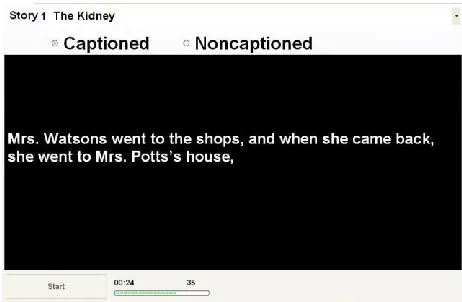
Figure 3: A Sample Shot of the Listening Part
Results
Table 1 shows the descriptive statistics (mean and standard deviations) of the L2 (i.e., English) listening comprehension and vocabulary scores for the four groups across the two proficiency levels. As demonstrated in the table, the high-intermediate participants in the four groups received a higher mean score than the low-intermediate ones on both listening and vocabulary items, with the highest listening and vocabulary mean scores belonging to the caption group (M = 51.12, M = 31.48 respectively). Moreover, the standard deviations in the four groups did not show great variability in the listening and vocabulary scores.
Tables 2 and 3, there was a statistically significant difference between the listening mean scores of the CG (M = 48.84, SD = 2.77) and the NCG participants (M = 46.74,
SD = 3.25) at the 0.01 level, t (98) = 3.47,
*p < .01. That is, the CG participants outperformed the NCG ones on the L2 listening comprehension test. Moreover, the eta squared, showing the magnitude of the mean difference, was found to be moderate (0.10). Along the same lines, a statistically significant difference between the vocabulary mean scores of the CG (M = 29.22, SD = 2.72) and the NCG participants (M = 27.52, SD = 2.96) was found, t (98) = 2.98, *p < .01. That is, the CG participants performed better on the vocabulary test than the NCG participants did. However, the magnitude of the difference in the means was not large (eta squared = .083).
Table 1: Listening Comprehension and Vocabulary Scores
Groups Proficiency
Level Listening Vocabulary
M SD M SD
CG High (n = 25) 51.12 1.09 31.48 1.38
Low (n = 25) 46.56 1.91 26.96 1.59
NCG High (n = 25) 49.48 1.50 29.96 1.64
Low (n = 25) 44.00 1.93 25.08 1.68
FCG High (n = 25) 47.96 1.61 29.76 1.66
Low (n = 25) 42.68 1.51 23.96 1.33
SCG High (n = 25) 48.76 1.53 28.28 2.52
Low (n = 25) 43.80 1.70 23.32 1.65
Table 2: t-Test for the Captioning Effect on the Listening Comprehension scores
Levene’s
Test t-test for Equality of Means
F Sig t df Sig
Equal Variances Assumed
2.23 .139 3.47 98 .001
Table 3: t-Test for the Captioning Effect on the Vocabulary scores
Levene’s
Test t-test for Equality of Means
F Sig t df Sig
Equal Variances
Assumed .331 .567 2.98 98 .004
The focus of enquiry in the second research question was the effect of captioning order on the L2 listening comprehension and vocabulary scores. To respond, independent
t-tests were employed with the order of captioning (first/second captioning) as the independent variable and listening comprehension and vocabulary scores as dependent variables involved in the analysis. As exhibited in Table 4, there was not a statistically significant difference between the listening mean scores of the FCG (M = 45.32, SD = 3.08) and SCG participants (M
= 46.28, SD = 2.97) at 0.01, t (98) = -1.58, p
= .117. That is, the FCG participants' performance on the listening comprehension test was not significantly different from that of the SCG participants. Naturally, the magnitude of the mean difference was small (eta squared = 0.02). In line with these results, as depicted in Table 5, no significant difference between the mean scores of the FCG (M = 26.86, SD = 3.28) and SCG participants (M = 25.80, SD = 3.27) was reported, t (98) = 1.61, p = .110. And, the eta squared was found to be so small (0.02). That is, the FCG participants' performance on the L2 vocabulary test was not significantly different from that of the SCG participants.
Table 4: t-Test for the Captioning Effect on the Listening Comprehension Scores
Levene’s
Test t-test for Equality of Means
F Sig t df Sig
Equal Variances
Table 5: t-Test for the Captioning Effect on the Vocabulary Scores
Levene’s
Test t-test for Equality of Means
F Sig t df Sig
Equal Variances
Assumed 1.32 .254 1.61 98 .110
The third research question explored whether L2 proficiency level interacted with the captioning order to impact the participants’ L2 listening comprehension and vocabulary scores. To respond, separate two-way between-groups ANOVAs were run. The results are shown in Tables 6 and 7.
Table 6: Tests of Between-Subjects Effects on the L2 Listening Comprehension
Source Squares Sum of df Square Mean F Sig. Partial Eta Squared
Corrected
Model 1622.6 7 231.8 87.9 .000 .762
Intercept 437954.4 1 437954.4 1.66 .000 .999
Proficiency
Level 1285.2 1 1285.2 487.7 .000 .718
Captioning
* Level 6.1 3 2.01 .766 .514 .012
Error 506 192 2.6
Total 440083 200
The ANOVA revealed that there was a statistically significant effect for the L2 proficiency level on the listening comprehension scores, F (1, 192) = 487,
*p< .01. Based on Cohen’s (1988) guidelines, the effect size for the proficiency level was large (partial eta squared = .71). But, the interaction effect between captioning and proficiency level for the listening comprehension scores was not statistically significant, F (3, 192) = .766, p
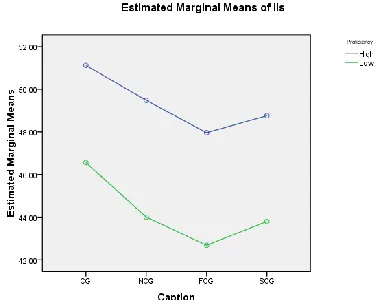
= .514. Figure 4 displays a clear picture of the participants' performance in the two proficiency levels. The pattern of performance was somehow similar in the
two proficiency level groups, with the CG receiving a higher listening mean score and FCG receiving a lower one. Likewise, the post hoc test showed that the CG performed significantly better than other groups including the FCG and SCG. Also, the performance of the SCG was better than that of FCG on the listening scores even though the difference was not significant at .01 (mean difference = .96, p = .018).
Figure 4: Interaction between Proficiency Level and Captioning for the L2 Listening Comprehension
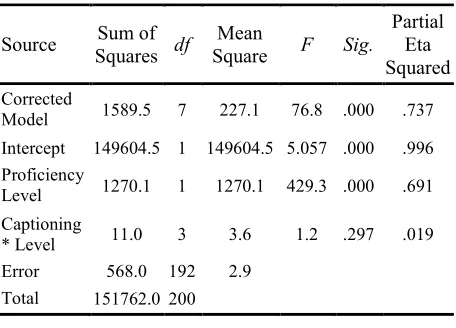
Furthermore, as depicted in Table 7, there was a statistically significant effect for the L2 proficiency level on the vocabulary scores, F (1, 192) = 429 *p< .01, with the effect size of .69. Following Cohen’s (1988) guidelines, this effect size could be large. In line with the results on the listening comprehension scores, the interaction effect between captioning and proficiency level for the vocabulary scores was not statistically significant, F (3, 192) = 1.20, p = .297.
received the lower one in the two proficiency level groups. Also, the post hoc test showed that the CG performed significantly better than other groups including the FCG and SCG. However, unlike the listening test, the performance of the FCG was better than that of SCG on the vocabulary scores though the difference was not significant at .01 (mean difference = 1.06, p = .013).
Table 7: Tests of Between-Subjects Effects on the L2 Vocabulary Test
Source Squares Sum of df Square Mean F Sig. Partial Eta Squared
Corrected
Model 1589.5 7 227.1 76.8 .000 .737
Intercept 149604.5 1 149604.5 5.057 .000 .996
Proficiency
Level 1270.1 1 1270.1 429.3 .000 .691
Captioning
* Level 11.0 3 3.6 1.2 .297 .019
Error 568.0 192 2.9
Total 151762.0 200
Figure 5: Interaction between Proficiency Level and Captioning for the L2 for the L2 Vocabulary
Discussion
Captioned video and audio materials for L2 learning are becoming more common. However, there is controversy over whether they bring more native voices into the
up new words, can also partially support the above result.
The other concern of this study was to investigate the ordering effect of caption presentation. The results pointed out that when a short story was listened to twice, once with captioning and once without, the order of viewing had no significant impact on either L2 listening comprehension or vocabulary. Winke et al. (2010) argued that the order of captioning had an impact on the overall comprehension and vocabulary recognition. They found that Spanish and Russian learners presented with captions in the first viewing were better able to perform on the listening comprehension and the vocabulary tests than learners presented with captions in the second viewing. They suggested that this was due to the important role of attention in L2 learning. The results of the present study likewise showed the participants had a better performance on the vocabulary test with the captions in the first viewing, but unlike the study by Winke et al. (2010), its effect was not found to be so significant since the mean score of the first captioning group was marginally better than the second captioning group. Besides, second captioning group performed better on the listening comprehension, though not significantly. It can be argued that the captions in the first viewing seemed to help isolate key vocabulary that the L2 learners were not encountered for the first time or perceived to be important, so they might have paid more attention to new vocabulary in the subsequent listening or confirmed their hypotheses on the meaning of unknown words, hence having a better performance on the vocabulary test. That is, the first caption viewing might help further information-gathering on the vocabulary during the second listening. If so, the second listening in the present study provided additional confirmatory/non-confirmatory
evidence of form-meaning as regards vocabulary. At the same time, the first caption viewing could not be very facilitative for L2 listening comprehension when the second listening was presented without captioning perhaps because most participants in the first caption group might have lost track of plots or the main idea in the audio stories. And, zero captioning in the second listening could not greatly help them compensate for their failure. Rather, non-captioning in this context might have put more stress on them, hence not displaying a good performance on the listening comprehension test in comparison with the vocabulary one. But when the first listening was presented without captioning, the participants' attention might have been better drawn to the incidents and theme of the audio stories and the second listening with captions could have provided additional confirmatory/non-confirmatory evidence of their comprehension or, at least, reduced the anxiety associated with listening. All said, the effect of ordering needs further studies before making a strong statement about its effect given that the effect of this variable was not found to so effective in L2 listening comprehension and vocabulary performance at a less conservative level of significance, and there are not enough studies in the literature to compare and generalize the above findings broadly.
listening comprehension regardless of the L2 proficiency level. Thus, it is assumed that captioning can be a pedagogical tool, which aids language processing, and function similarly for upper and lower L2 proficiency levels. Ellis (2003) states that “learning to understand a language involves parsing the speech stream into chunks which reliably mark meaning” (p. 77). It can be argued that the captions presented twice might have helped the L2 learners see and be able to parse patterns or chunks in the audio listening materials. This might have aided both high- and low-intermediate participants in remembering and learning from the chunks when they were repeated (i.e. presented in written form twice). Meanwhile, the better mean scores obtained by high-intermediate participants, in general, as compared with low-intermediate ones, could be due to better L2 ability, which was observed in all four groups of the study. That is to say, it was regardless of caption ordering. The investigation of patterns of performance by the two proficiency level groups in Figures 4 and 5 suggest that captioning in repeated listening can be beneficial for a range of proficiency levels, perhaps, so long as the listening materials are suitable in terms of content and difficulty to L2 learners' proficiency levels. However, in Taylor’s (2005) study, the lower-level learners reportedly had difficulty with attending to captions than upper-level students perhaps because they had a harder time with the content of the video materials; the content might have been too difficult for them. In line with Winke et al.'s (2010) claim, the above results of the present study suggest that the question over whether lower-level students can benefit from captions in the same way as upper-level learners should focus more on the appropriateness of the complexity level of L2 listening materials rather than the
appropriateness of the captioning for L2 lower-level learners.
Conclusion
According to Hashemi and Aziznezhad (2011), “CALL offers modern English language teachers many facilities and novel techniques for teaching and learning” (p. 833). Thus, the effect of CALL on listening comprehension and vocabulary learning has shown great consideration among language teachers and researchers. Despite the significance of CALL in listening comprehension or vocabulary learning and captioning, supported by a number of empirical studies conducted in L1 (Bird & Williams, 2002), there is a paucity of research on CALL-facilitated captioning techniques in L2 listening comprehension and vocabulary learning, particularly in EFL contexts. The present study then took a further step to help fill this gap by investigating, firstly, the impact of captioning; secondly, the effect of captioning order; and, finally, the effect of possible interaction between L2 (i.e. English) proficiency and captioning on L2 listening comprehension and vocabulary gains.
comprehension and vocabulary tests. However, this issue is due further investigation since small contributions sometimes cannot totally be ignored in educational settings. Finally, this study did not find that L2 proficiency level differences would affect performance derived from captions ordering. Constrained by the time, this study did not explore whether additional listening with captions or captioning order would result in greater vocabulary and comprehension gains. Possibly there is a ceiling effect for captioning. Besides, the L2 participants in this study were not allowed to toggle captions on and off in the program. Perhaps allowing L2 learners to toggle captions on and off can provide more information when captions might be useful or useless to them. Thus, future research can transcend limitations observed in this study in addressing captioning in a multimedia environment.
References
Barani, G. (2011). The relationship between computer assisted language learning (CALL) and listening skill of Iranian EFL learners. Procedia Social and
Behavioral Sciences, 15, 4059-4063.
Bird, S. A., & Williams, J. N. (2002). The effect of bimodal input on implicit and explicit memory: An investigation into the benefits of within-language subtitling. Applied
Psycholinguistics, 23(4), 509-533.
Brett, P. (1995). Multimedia for listening comprehension: The design of a multimedia-based resource for developing listening skills. System, 23(1), 77-85.
Catell, R. B. (1966). The scree test for number of factors.Multivariate
Behavioral Research, 1, 245-276.
Chang, C. Y. (2002). Does computer-assisted instruction+problem solving=improved science outcome?:
A prior study. Educational Research, 95(3), 143-149.
Cohen, J. W. (1988). Statistical power analysis for the behavioral sciences
(2nded.). Hillsdale, NJ: Lawrence Erlbaum Associate.
Cushion, S., & Dominique, H. (2002). Applying new technological developments to CALL for Arabic.
Computer Assisted Language
Learning, 15(5), 501-508.
Danan, M. (2004). Captioning and subtitling: Undervalued language learning strategies. Translators’
Journal, 49(1), 67-77.
deHaan, J. (2011). Teaching and learning English through digital game projects. Digital Culture &
Education, 3(1), 46-55.
Davies, G. (2002). Computer Assisted
Language Learning (CALL).
Retrieved January, 2012 from http://www.llas.ac.uk/resources/guid econtents.html
Dupagna, M., Stacks, D. W., & Giroux, V. M. (2007). Effects of video streaming technology on public speaking students’ communication
apprehension and
competence.Journal Educational
Technology Systems, 35(4), 479-489.
Ellis, N. C. (2003). Constructions, chunking, and connectionism: The emergence of second language structure. In C. J. Doughty & M. H. Long (Eds.), The handbook of second language
acquisition (pp. 63-103). Malden,
MA: Blackwell.
Grgurović, M., &Hegelheimer, V. (2007). Help options and multimedia listening: Students' use of subtitles and the transcript. Language
Learning and Technology, 11(1),
45-66.
French video on learner comprehension.Calico Journal, 15(1), 89-108.
Gunduz, N. (2005). Computer-assisted language learning (CALL).Journal of Language and Linguistic Studies, 1(2), 193-214.
Hansen, C., & Lesley, T. (2005).Placement
and evaluation package. Cambridge:
Cambridge University Press.
Hashemi, M., &Aziznezhad, M. (2011). Computer assisted language learning freedom or submission to machines?
Procedia-Social and Behavioral
Sciences, 28, 832-835.
Hayati, S. S., & Vahid, H. (2012).The relationship between prior knowledge and EFL learners’ listening comprehension: Cultural knowledge focus. Mediterranean
Journal of Social Sciences, 3(1),
361-370.
Hill, L. A. (1988). Steps to understanding. Oxford: Oxford University Press. Jayachandran, J. (2007). Computer assisted
language learning (Call) as a method to develop study skills in students of engineering and technology at the tertiary level. The Indian Review of
World Literature in English, 3(2),
1-7.
Khoii, R., &Aghabeig, M. (2009).Computer software and the improvement of the elementary EFL students’ listening comprehension.Journal of Teaching English as a Foreign Language and
Literature, 1(2), 89-101.
Krashen, S. D. (2003). Explorations in
language acquisition and
use.Portsmouth, NH: Heinemann.
Markham, P. L., & Peter, L. (2003). The influence of English language and Spanish language captions on foreign language listening/reading comprehension. Journal of
Educational Technology Systems, 31(3), 331-341.
Pujola, J. T. (2002). CALLing for help: Researching language learning strategies using help facilities in a web-based multimedia program.
ReCALL, 14(2), 235–262.
Taylor, G. (2005). Perceived processing strategies of students watching captioned video. Foreign Language
Annals, 38(3), 422-427.
Tuncok, B. (2010). A case study: Students’ attitudes towards computer assisted
learning, computer assisted
language learning and foreign
language learning. Unpublished
master's thesis, The University of Arizona, US.
Vanderplank, R. (1993). A very verbal medium: Language learning through closed captions. TESOL Journal, 3(1), 10-14.
Verdugo, D. R., & Belmonte, I. A. (2007). Using digital stories to improve listening comprehension with Spanish young learners of English.Language Learning &
Technology, 11(1) 87-101.
Volle, L. M. (2005). Analysing oral skills in a voice email and online interviews.Language Learning
&Technology, 9(3), 146-163.
Winke, P., Gass, S., & Sydorenko, T. (2010). The effects of captioning videos used for foreign language listening activities.Language
Learning & Technology, 14(1),
65-86.
Yang-dong, W., &Cai-fen, S. (2007). Tentative model of integrating authentic captioned video to facilitate ESL learning. PLA
University of Foreign Languages,
Zarei, A. A. (2009). The effect of bimodal, standard and reversed subtitling on L2 vocabulary recognition and recall.