http://mojem.um.edu.my
25
[1] University of Balochistan PAKISTAN
[2]SBK Women University PAKISTAN
Corresponding Author: University of Balochistan, PAKISTAN
Email: [email protected]
ABSTRACT
Constant efforts have been made to improve the quality and performance of schools in Pakistan. Research has shown that leadership is a driving force in bringing about revolutionary changes in schools. This qualitative multiple-case study explores the task-oriented, relation-oriented, and change-oriented leadership behaviors in selected high-performing schools in Quetta, Balochistan, Pakistan. Data were collected through in-depth semi-structured interviews from a total of 12 participants selected via purposive sampling. The participants included principals, assistant principals, and teachers from two high-performing schools. Data were analyzed using the grounded theory approach involving open coding, axial coding, and selective coding. The findings showed that leaders in selected high-performing schools exhibited adaptive leadership behaviors. The effective and continuous monitoring, proper planning, assigning and clarifying tasks, and efficiently distributing budgets were some of the task-oriented leadership behaviors in selected high-performing schools. The relation-oriented leadership behaviors were determined to be shared decision-making, establishing a friendly and trusting relationship, being open and honest, and recognizing contributions. Being active and ambitious, having strong vision, and commitment to change were the change-oriented leadership behaviors shared across selected schools. The findings of this study can be of use to the Ministry of Education Pakistan and the Education Department of the Government of Balochistan.
Keywords: Leadership, high-performing schools, principals, secondary schools
APRIL 2017, VOLUME 5, ISSUE 2, 25 - 41
E-ISSN NO: 2289 – 4489
MULTIPLE-ORIENTED LEADERSHIP BEHAVIOR AND SCHOOL
PERFORMANCE: A MULTIPLE-CASE STUDY
Waheed Bahadur1, Amir Bano1, Zarina Waheed2 &
http://mojem.um.edu.my
26
INTRODUCTION
School leadership is regarded as one of the most crucial factors influencing students’ retention within the education system (International Crisis Group, 2014). The government of Pakistan recognized that education system transformation is impossible without quality school leaders (Ministry of Education Pakistan, 2009). Research has shown that leadership is one of the driving forces in bringing revolutionary changes to schools (Aziah & Abdul Ghani, 2012; Lewis & Demie, 2015). School leadership directly or indirectly influences most aspects of school and student performance (Leithwood & Jantzi, 2000; Mulford & Silins, 2011). Therefore, recent literature shows a great deal of interest in exploring leadership behaviors in high performing schools. The purpose of such studies is to document their respective best practices and behaviors to help leaders in struggling and low-performing schools to learn, improve, and subsequently replicate their reported success (e.g., Caldwell & Harris, 2008; Crum & Sherman, 2008; Crum, Sherman, & Myran, 2009; Sanzo, Sherman, & Clayton, 2011).
However, in the case of Pakistan, large-scale studies (e.g., ASER-Pakistan, 2015) are scarce; education researchers and practitioners are less enthusiastic about one of the most important, influential, and instrumental components, which is school leadership. Thus, in-depth studies on leadership behaviors of high-performing schools are needed. Based on what we know, very little research has been done on leadership behaviors in the context of Pakistan. Some studies on leadership have been conducted in business organizations (Chaudhry, Javed, & Sabir, 2012; Ghulam, Javed, Ajmal, & M. Naveed, 2012; Sabir, Iqbal, Rehamn, Shah, & Yasmeen, 2012; Tipu, Ryan, & Fantazy, 2012), in Europe or in countries such as USA, Malaysia, or Australia (Crum & Sherman, 2008; Crum et al., 2009; Mulford et al., 2008; Sufean, 2014). These works are tenuously related to the school environment in Pakistan. Consequently, the purpose of this study is to explore task-oriented, relation-oriented, and change-oriented leadership behaviors in selected high-performing Government Boys High Schools (GBHS) in Quetta, Balochistan, Pakistan through the in-depth qualitative approach.
Context of the Study
Modern education in the Indian subcontinent (currently divided into India, Pakistan, and Bangladesh) began during the British era when education was transformed from traditional and religious schools to modern English medium schools. The colonial period oversaw progress in the education system; however, the reported progress was relative, and the subsequent nation states of India and Pakistan remained fairly backward in education (Bengali, 1999). This was attributed to British prejudice toward Muslims and the reluctance, and sometimes outright hostility by some to embrace modern scientific ideas and the English language (Hoodbhoy, 2009).
Education is vital for national development; a nation with more educated people sees quicker and more comprehensive development. As noted by Hussein (2012), “[Education] can also transform a nation as a whole from the traditional and backward context of existence into a modern and progressive state of development” (p. xxiii). Since independence, the Pakistani government has undertaken countless initiatives to strengthen its education system to help the nation cope with current and future global challenges. However, Ghazi et al. (2010) pointed out that:
http://mojem.um.edu.my
27
Unfortunately, after 69 years, the education system of Pakistan remained stagnant and archaic (Ghazi et al., 2010). Pakistan suffers from low literacy rates, ranking right after Nigeria. According to the Education for All Global Monitoring Report (2012), Pakistan holds the spot for the most number of children neglecting to attend school, and one-third drop out of primary school. This translates into 25 million children not in school (ASER-Pakistan, 2015, p. 7).
The provinces of Pakistan, encompassing Punjab, Sindh, Khyber Pakhtunkhwa, Azad Kashmir, Balochistan and Gilgit-Baltistan suffer from low literacy and an alarming number of primary school age children dropouts. Balochistan fared the worst; where only 51% children are enrolled in primary schools (Ministry of Education Pakistan, 2013). A recent report highlighted that the condition of education in Balochistan in terms of quality, access, gender gap, and a high dropout rate is worsening, as the statistics in 2014 leave much to be desired compared to the previous year (ASER-Pakistan, 2015).
The education system in Pakistan faces many problems. On top of these, the unavailability of a uniform education system across the board continues to plague the education system. The education system in Pakistan is categorized into elite private schools, government school, madaris (or religious seminaries), and poor private schools. The majority of students in Pakistan attend public or government schools, with a majority of the students hailing from low socioeconomic status (SES) (ASER-Pakistan, 2015). According to Alcott and Rose (2015), 80% of poor students in Pakistan attend government schools, where the quality of education is abysmal. The curriculum in these schools (developed by textbook boards in each province) is criticised for being redundant, problematic, and unable to facilitate higher order thinking skills in the students (Afzal, 2015).
Furthermore, the structure of government schools is top-down and highly centralized. The role of the provincial education departments is to implement educational policies and plans formulated by the Federal Ministry of Education (MoE) (Simkins, Sisum, & Memon, 2010), thus, having limited power in formulating innovative and creative plans and policies based on the needs and demands of their respective provinces. Similarly, school leaders, due to the highly bureaucratic and centralized systems, have limited opportunities to partake in the schools’ development and improvements (Simkins et al., 2010).
Another critical issue is the recruitment of school leaders. In Pakistan, school leaders for public schools are appointed through: (a) hired on the basis of teaching experience, and (b) direct recruitment through the Public Service Commission. These approaches are not without problems. First, leaders who used to be schoolteachers are very experienced in teaching but lack the management and administrative skills and experiences (Simkins et al., 2010). According to Memon et al. (2000), only 25% of head teachers are directly recruited in Pakistan. Directly recruited leaders lack the school experience and the pre-service training prior to joining the schools as leaders. The qualification required for direct recruits is a Master of Education (M.Ed one-year and two-year programs), which is especially designed for Senior Science/General School Teachers (SST’s), consisting of only one course of three Credit Hours (especially in case of Balochistan) in Educational Management and Administration. Opportunities for in-service professional development training for school leaders in Pakistan are quite limited (Shah, Sultana, Hassain, & Ali, 2011).
http://mojem.um.edu.my
28
The Characteristics of High-Performing Schools
The first study exploring the characteristics of high-performing school was done by Weber (1970). Weber (1970) examined the characteristics of four inner-city schools in the United States of America (USA). These were schools that perform well in reading programs and have students from low SES. He found some common factors in these schools, such as strong and effective school leadership, excellent teaching and learning environment, high expectations, strong emphasis on reading, and the careful evaluation of the students’ progress in reading. In a second attempt, a group of researchers reviewed the literature to identify the key characteristics of high-performing schools (Sammons, Hillman, & Mortimore, 1995). They listed eleven characteristics which are: a) professionally sound leadership; b) shared vision; c) an attractive school atmosphere for working and teaching and learning; d) ample consideration and time allocated to teaching-learning process; e) adequately planned and conducted teaching sessions; f) setting and communicating high expectations; g) timely and fair feedback; h) strong parents and school relationship; i) monitoring of instructional process; j) professional development; and k) focus on students’ empowerment. Sammons et al. (1995) not only validated earlier studies but extended them and provided a detailed image of factors contributing to the success of high-performing schools. In line with the aforementioned studies, recent works show increasing research interest in exploring the characteristics of high-performing schools in order to be informed about the contributing factors in their success (Demie & Lewis, 2010; Demie & McLean, 2007; Lewis & Demie, 2015; Muhammad Faizal, Saedah, Norfariza, & Faisol, 2011; Shannon & Bylsma, 2007). However, one of the common factors found in these studies is a “strong, purposeful, and shared leadership” with a strong determination for school change and improvement.
Leadership in Schools
School success and performance depends on how leaders lead (Huang & Liao, 2011). Leadership is a process of direction and the art of influencing others (Karuna, Kanokorn, Sujanya, Somjed, & Aduldej, 2014; Leithwood, Harris, & Hopkins, 2008). It affects and alters the process and functions of schools, as well as the mind-sets and behaviors of the people (Leithwood, Day, Sammons, Harris, & Hopkins, 2006; Leithwood & Wahlstrom, 2008; Mulford & Silins, 2011). School leadership has been regarded as a key element in schools that directly or indirectly influences all aspects of school life (Fullan, 2001, 2003, 2011; Mulford & Silins, 2011). School leaders create an effective change process, initiate vision, challenge the status quo, and take risks that improve school performance (Aziah & Abdul Ghani, 2012; Leithwood & Wahlstrom, 2008; Pokharel, 2014). School leaders share leadership responsibilities with teachers. They organize professional development activities for teachers by creating professional communities and facilitate group learning (Mulford et al., 2008). They create a culture of trust, honesty, loyalty, and sharing in the school (Crum & Sherman, 2008; Crum et al., 2009; Sanzo et al., 2011). They also develop a collaborative environment by accepting feedback and developing networks and keep their focus on instructional practices. They spend relatively more time in affiliating instructional process by providing support and facilities, as well as by supervising, evaluating, and monitoring instructional practices (Hallinger, 2003). They are adaptive and employ innovative strategies to minimize resistance and facilitate change. They also encourage and motivate teachers to be innovative and creative. These types of school principal behaviors influence school performance (Marks & Printy, 2003; Muhammad Faizal et al., 2011).
THEORETICAL FRAMEWORK: TRI-DIMENSIONAL THEORY OF LEADERSHIP BEHAVIORS
http://mojem.um.edu.my
29
The task-oriented leadership behaviour includes short-term planning, clarifying task objectives and role expectations, monitoring operations and performance, and problem solving (Yukl, 2012). The relation-oriented leadership behaviour is based on the leaders supporting, developing, recognizing, and empowering behaviors (Yukl et al., 2002). The change-oriented leadership behavior, on the other hand, involves monitoring the external environment, envisioning change, encouraging innovative thinking and practices, risk-taking, and facilitating collective learning (Yukl, 2012).
The tri-dimensional theory of leadership behaviors is a comprehensive theory on leadership behavior. It includes the behaviors and propositions proposed by the majority of theories and models of leadership behaviors (e.g., charismatic, transformational, path-goal, change-oriented) (Yukl, 2004). This theory provides effective behavior categories, where the behaviors in each type of leadership category are clear and observable (Yukl, 2004; Yukl et al., 2002). More importantly, it explains the collective leadership and managerial behaviors of leaders in any organization (Gil, Rico, Alcover, & Barrasa, 2005). Although limited studies exist on the use of tri-dimensional theory of leadership behaviors in school settings (Hussin & Waheed, 2016), this theory is applicable to all organization types (Yukl, 2004). This theory has been employed in business and healthcare organizations (Barrasa, 2003; Gil et al., 2005; Michel, Lyons, & Cho, 2010; Yukl, 2012). Hence, in this study, the types/orientations of leadership behaviours proposed by Yukl (2002, 2004) are explored within selected high-performing GBHS in Pakistan.
METHODOLOGY
Qualitative research was employed for this study. According to Creswell (2012), the qualitative research method is appropriate for studies aiming at understanding a phenomenon from participants in their respective natural settings. Similarly, case study design is best suited when the purpose is to understand a complex social system with multiple variables of interest and importance (Merriam, 2009). This study analyzed two cases “schools”, where individuals had been together for years and have developed shared values, beliefs, and language (Creswell, 2012). Therefore, the research design suitable for this study was the multiple-case study (Stake, 1995; Yin, 2009).
Two urban GBHS schools were selected as sites for this work. The top two GBHS that exhibit excellent performance in the matriculation examinations under the Balochistan Board of Intermediate were selected as sites. Both schools were old urban schools with a large number of students. Proper permission was sought from both principals before conducting the actual studies, and they were assured that the results will be confidential. Although we found it difficult to obtain information in the beginning, a workable relationship was developed after a few visits. The participants were subsequently interviewed after the third visit to the schools.
Participant Selection
http://mojem.um.edu.my
30
Table 1
The Profiles of School Leaders
Principal in school A Principal in school B
Age 37 years 39 years
Gender Male Male
Qualification M.Sc. and M.Ed.
Enrolled in M.Phil.
Form-D and M.Ed. Enrolled in M.Phil.
Experience as teachers 10 years 7 years
Experience as principals 3 years 3 years
Data Collection Procedures
Many tools can be used to collect data for qualitative studies, such as observation, interviews, documents, artefacts, biographies (Creswell, 2012; Merriam, 2009). However, in this work, semi-structured interviews were used as a source of information. Interviews have been regarded as an essential data collection method for qualitative studies (Yin, 2009). We developed the interview questions based on the theoretical framework and research questions and also used probing questions during data collection when necessary (Merriam, 2009). Each interview took approximately 30 minutes. The interviews were conducted after the appropriate permissions were granted, and were tape recorded. They were conducted in the preferred language of the participants, whether English or Urdu, to make the participants comfortable and to gather as much information as possible from them. The tape-recorded interviews were transcribed into Urdu and subsequently translated into English. Both the English and Urdu versions were then submitted to experts in both languages for further reviews and validations. The transcripts were brought back to the participants for review and validation as well.
Data Analysis
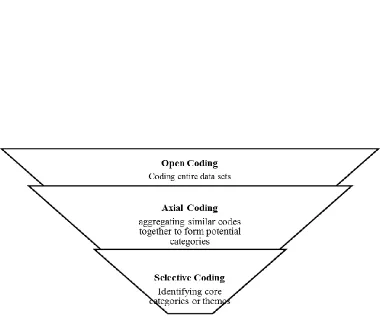
In order to evaluate the collected data, we used the grounded theory analysis method (Corbin & Strauss, 2008). The theory offers an accessible approach for qualitative data analysis. The researcher coded the interviews and identified themes (patterns) that are correlated to the research questions (Merriam, 2009). This method is composed of three types of coding, which are: a) open coding, b) axial coding, and c) selective coding. Coding is mainly based on the inductive method, or in other words, it allows the generation of themes from the data in an inductive manner. Moreover, writing memos, theoretical questioning, and reflective notes are an essential part of data analysis.
http://mojem.um.edu.my
31
Figure 1: The method of data analysis (Source: Corbin & Strauss, 1990, 2008).
FINDINGS
The purpose of this study is to explore the task-oriented, relation-oriented, and change-oriented leadership behaviors in selected high-performing schools in Pakistan. The participants provided a bulk of information that helped explore the common themes on leadership behaviors between the selected case schools.
http://mojem.um.edu.my
32
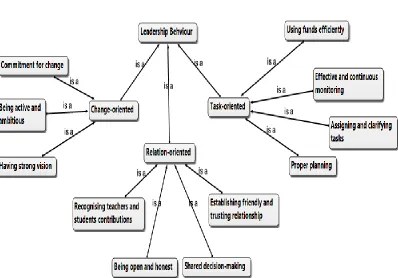
Figure 2: The Summary of the Themes (Atlas.ti)
Task-Oriented Leadership Behavior
Data analysis showed that the behavior of both leaders was mainly task-oriented. Their main emphasis was on effective and continuous monitoring. The monitoring mainly involved extempore visits to classrooms, doing the rounds, checking students’ homework and assignments, analyzing results, and gathering student feedback. The school A principal considered continuous monitoring as one of the main factors contributing to the school’s success. He shared his views on monitoring:
http://mojem.um.edu.my
33
The principal of school B posited that monitoring should be based on some important areas that require special attention and focused and regular monitoring. He further added that:
“I personally observe things and monitor the results and performance. If I find any deficiencies, I get in touch with the concerned teacher and try to work on it with them” (SB-P13:6; 15:15).
Similar to the principal of school B, the principal of school A also mentioned that he tries to keep the weaknesses of the teachers a secret and does not disclose them to others. One of the important things the participants highlighted was that the leader in school A has made it compulsory for the teachers to write reflective diaries at the end of each lesson. The assistant principal from school A mentioned that:
“Now, we [principal and assistant principal] have a diary for each class that we use to record progress. If there are any weaknesses, we call meetings and try to resolve issues via excellent suggestions” (SA-P6:10; 22:22).
In school B, the principal pointed out that he sometimes, after observing the class, asks some questions related to the content to see if the students understood the lessons. On top of monitoring, the principals emphasized planning, assigning, and clarifying tasks, and efficiently using the budget. The principals were effectively planning by involving the teachers, especially in the context of distributing limited available funds. A teacher from school B reflected that:
“When he has a plan, he calls for a meeting and shares it on an open forum for discussion and feedback. After satisfying all of the aspects and taking into account the consideration of [the] majority, the plan is then implemented” (SB-P8:7; 18:18).
The principals, as task-oriented leaders, focused not only on constructing plans, but they tried their best to effectively implement them. Moreover, both schools received annual funds from the government, but according to school members, these were limited and could be used only for a few purposes. Second, the majority of the students were from low SES; therefore, the schools could not hope for donations from the parents. However, the principals in both schools were active in soliciting resources from different governmental departments, political parties, and NGOs (non-governmental organizations) for construction and renovation, computers, and teaching and learning. The principal from school A said that “since I have become principal of this school, I have tried to provide maximum possible materialistic resources to help the teaching-learning process”, while, a teacher from
school B claimed that “Many times, NGOs and government representatives visited and assisted our school”
(SB-P6:8; 27:27).
Relation-Oriented Leadership Behavior
http://mojem.um.edu.my
34
declared that “He has an impressive personality and is very kind. We like working under his supervision” (SA-P5:10; 48:48). A teacher from school B said that:
“I have personally experienced the principal’s God-given abilities. He can easily tell if anyone is in trouble, and proceed to meet them in private to help them out as much as he is able to. He treats all of us like family” (SB-P6:6; 11:11).
The teachers also regarded that due to their relation-oriented behaviors, they developed trust and respect among each other. One teacher reported that:
“He respects teachers. This is what we want. When plans are to be made, he welcomes suggestions. He really knows how to encourage a teacher to realize their values for future development, making him respected by staff and others at work” (SB-P 6:11; 38:38).
The principal from school A pointed out that:
“I first tried to develop trust and confidence with the teachers so that they are comfortable sharing their problems with me, whether personal, academic or financial, which will allow us to solve any problems together” (SA-P1:16; 36:36).
The excerpt indicates that the principals in both schools not only show respect and trust for the teachers but empower them by developing their confidence and self-concept. The data analysis showed that the teachers had limited opportunities for in-service training from the MoE and the Education Department Government of Balochistan (EDGoB). The principals developed professional learning communities to empower their respective teachers. They also attempt to be open to the teachers so that they could solve personal and work related problems while also involving them in decision making and planning. Furthermore, one of the main preferences of both leaders was that they attempted to develop a friendly relationship with the teachers. The principal from school A revealed his preference to be:
“I regularly interact with the teachers, and I sometimes meet them twice a day to shake hands, and … in my free time, I join them for fun and friendly discussions. I never consider them to be any different from me, and try to develop a friendly atmosphere whenever I can” (SA-P1:14; 34:34).
Moreover, reward and appreciation were also being used as tools to develop and strengthen relationships with the teachers and students by both principals. According to a teacher from school B, the principal’s behavior of appreciation and encouragement is valuable for the teachers and helped foster confidence among the students and teachers. The school A principal said that:
http://mojem.um.edu.my
35
Data analysis also showed that the principals, as relation-oriented leaders, tried their best to develop a good relationship with the parents, but it remained a challenge for them. According to them, the majority of the parents were poor and living a hard life and not very educated. Therefore, their attempts to get involved failed. However, they had developed very strong relationships with community members, especially with political representatives and NGOs.
Change-Oriented Leadership Behavior
It was evident from the interviews that both leaders demonstrated change-oriented leadership behavior as well. They were regarded as ambitious, intelligent, active, energetic personalities and the main contributors to school change and success. A teacher from school A said, “By the grace of God, this time we have got a young, dynamic principal, who has much work potential and personal interest in the school”. Similarly, the assistant principal from
school B remarked that “…major role of the principal is that he is very active, energetic, and works at his full
potential”.
Both principals attempted to alter the school’s infrastructure, process, and working culture. They have a powerful vision for change. For example, one of the teachers from School A declared that the principal had the vision to make the school the best and ideal school in the near future, while the principal in school B claimed that he does not only envision the school as one of the best schools in the province but also in the country. They were also
putting their efforts to accomplish their vision, and one of the teachers from school B avowed, “To accomplish his
vision he thrives for students to be successful” (SB-P8:2; 10:10). The interview with the school A principal garnered the same comment, where as a principal, he needs to be fully committed and devoted to the school for it to improve, and subsequently change. One of the main factors in both schools was that there were limited options for the principals to practice their respective innovation and creativity or to facilitate the school members for such practices.
DISCUSSION AND IMPLICATIONS
Leadership to effect school success and performance needs to be adaptive and multiple-oriented (Mulford et al., 2008; Yukl, 2004). This article aimed at exploring the leadership behaviors in selected high-performing GBHS in Quetta. The framework of this study was based on Yukl’s tri-dimensional leadership behavior: task-oriented; relations-oriented; and change-oriented leadership behaviors. The main leadership behavior orientations were present in both schools. All of the behaviors were considered to influence the school performance. However, within this framework, we found flexible leadership behaviors in the school context.
Effective and continuous monitoring, proper planning, assigning and clarifying tasks, and efficiently utilizing the budget are some of the task-oriented leadership behaviors found in the selected high-performing schools. Nevertheless, the main focus of both school principals was on continuous and effective monitoring. It is not surprising, considering that the previous research strongly emphasized the success of continuous and effective monitoring process in school (Hallinger, 2003). Effective and regular monitoring is one of the most important features in high-performing schools. The leaders are active in monitoring the teaching, learning and the school process, whether formal or informal, which is more likely to boost the school performance and success (McGee, 2009; Sammons et al., 1995). Monitoring helps the leaders determine the problems that interrupt the smooth and effective working of the school and instructional processes (Yukl, 2012).
http://mojem.um.edu.my
36
the teachers. They involve them in decision- making, and in turn, the teachers trust them. Honesty and trust help develop strong teacher-leader relationships and are the main ingredients of leadership in high-performing schools (Crum et al., 2009). The leaders in such schools develop strong teamwork among the teachers and involve them in everything and remain connected with each other (Shannon & Bylsma, 2007).
They also need to praise and appreciate the teachers and students to strengthen the developed bonds and help them teach and learn, respectively. Research has shown that teachers are more likely to obey their leaders if they receive proper and timely appreciation (Nir & Hameiri, 2014).
Being active and ambitious, having a strong vision, and being committed to change are the change-oriented leadership behaviors that both schools have in common. Leaders’ behavior is the key to school success (Boonla & Treputtharat, 2014; Harris, Jones, Adams, Perera, & Sharma, 2014; Murdoch, 2016). Principals, as change-oriented leaders, envision change and communicate their respective visions to their schools. They inform the school members what is happening around them and how to surpass others (Yukl, 2012).
Current and prospective leaders may consider the explored themes to initiate and manage the change process and improve performance at their respective schools. Both cases involve education leadership in certain schools serving socially deprived students. The findings have implications for Ministry of Education Pakistan (MoE) and the Education Department of the Government of Balochistan (EDGoB), which are:
1. It is evident that both principals lack vast teaching experience, but both are young and
well-educated. It can be said that younger, energetic, and well-educated people should be recruited as principals.
2. Although both principals lack vast teaching experience, they are enthusiastic about furthering their
education. Thus, MoE and the EDGoB should motivate current principals to further their education via multiple monetary and non-monetary rewards.
3. Although no institution provides pre-service education for school leaders in Balochistan, the
findings of this study can be incorporated into different in-service training courses by the MoE and EDGoB.
4. The teacher educator institutions, such as the Provincial Institution for Teacher Education (PITE),
teacher education colleges, and universities can use the findings of this study while teaching courses such as Educational Administration and Management.
The findings in this study are promising; however, they are limited in certain aspects. First, the study was limited because the research design was the qualitative case study. The data were collected from interviews, which might have affected the reliability of the findings. It is suggested that future researchers collect data via observations and document analysis alongside interviews. Moreover, future researchers can conduct the same study using quantitative research techniques to obtain generalizable results. The study was only conducted in two urban GBHS schools in Quetta. Future researchers can conduct such studies in rural schools or on leadership behavior of female principals serving in girls’ secondary schools.
CONCLUSION
http://mojem.um.edu.my
37
into an excellent and high-performing school. MoE Pakistan, in collaboration the Provincial Department of Education, needs to take serious steps by designing programs and policies to uplift and strengthen the capabilities and competencies of school leaders in Pakistan. A well-designed in-service professional qualification for school leaders should be launched to ensure that all school leaders possess the qualities required for leaders of 21st-century schools.
Moreover, the current tenure-based selection criteria should be changed to leadership competencies criteria, and continuous in-service training should be provided to all school leaders. By doing so, the overall education system of Pakistan can undergo a quality reform that will be benefit all parties.
REFERENCES
Afzal, M. (2015). Education and attitudes in Pakistan: Understanding perceptions of terrorism. United
States Institute of Peace.Washington, DC. Retrieved from
http://www.usip.org/sites/default/files/SR367-Education-and-Attitudes-in-Pakistan.pdf
Alcott, B., & Rose, P. (2015). Schools and learning in rural India and Pakistan: Who goes where, and how much are they learning? Prospects, 45, 345–363. http://doi.org/10.1007/s11125-015-9350-5
ASER-Pakistan. (2015). Annual Status of Education Report-Pakistan, 2014. Lahore, Pakistan: Author.
Aziah, I., & Abdul Ghani, K. A. (2012). A journey to excellence: A case of Ulu Lubai National Primary School
in Limbang Sarawak, Malaysia. Procedia - Social and Behavioral Sciences, 69, 1309–1313. doi:
10.1016/j.sbspro.2012.12.067
Barrasa, A. (2003). Hierarchical taxonomy of leadership behavior: Antecedents, structure, and influence in work groups effectiveness. Doctorado Interuniversitario En Psicología de Las Organizaciones Y Del Trabajo Curso.
Bengali, K. (1999). History of educational policy making and planning in Pakistan. Islamabad, Pakistan:
Sustainable Development Policy Institute.
Boonla, D., & Treputtharat, S. (2014). The relationship between the leadership style and school
effectiveness in school under the office of secondary education area 20. Procedia - Social and
Behavioral Sciences, 112, 991–996. http://doi.org/10.1016/j.sbspro.2014.01.1260
Caldwell, B., & Harris, J. (2008). Why not the best schools? Camberwell, Australia: ACER Press.
Chaudhry, A. Q., Javed, H., & Sabir, M. (2012). The impact of transformational and transactional leadership styles on the motivation of employees in Pakistan, Pakistan Economic and Social
Review, 50(2), 223–231. Retrieved from
http://pu.edu.pk/images/journal/pesr/PDF-FILES/7%20CHAUDHRY%20Motivatio
n%20of%20Banking%20Employees%20in%20Pakistan_v50_no2_2012.pdf
http://mojem.um.edu.my
38
Corbin, J., & Strauss, A. (2008). Basics of qualitative research: Techniques and procedures for developing
grounded theory. (3rd ed.). Thousand Oaks, CA: SAGE.
Creswell, J. W. (2012). Educational research: Planning, conducting and evaluating quantitative and
qualitative research (4th ed.). Upper Saddle River, NJ: Pearson.
Crum, K. S., & Sherman, W. H. (2008). Facilitating high achievement: High school principals’ reflections on
their successful leadership practices. Journal of Educational Administration, 46(5), 562–580.
http://doi.org/10.1108/09578230810895492
Crum, K. S., Sherman, W. H., & Myran, S. (2009). Best practices of successful elementary school leaders. Journal of Educational Administration, 48(1), 48–63. doi: 10.1108/09578231011015412
Demie, F., & Lewis, K. (2010). Raising the achievement of Portuguese pupils in British schools: A case study
of good practice. Educational Studies, 36(1), 95–109.
http://doi.org/10.1080/03055690903162408
Demie, F., & McLean, C. (2007). Raising the achievement of African heritage pupils: a case study of good
practice in British schools. Educational Studies, 33(4), 415–434. doi:
10.1080/03055690701423606
Education for All Global Monitoring Report. (2012). Education in Pakistan: Fact sheet. Retrieved from
https://en.unesco.org/gem-report/sites/gem-report/files/EDUCATION_IN_PAKISTAN__A_FACT_SHEET.pdf
Fullan, M. (2001). Leading in a culture of change. San Francisco, CA: Jossey-Bass.
Fullan, M. (2003). Change force with a vengeance. London, UK: RoutledgeFalmer.
Fullan, M. (2011). Change leader: Learning to do what matters most. San Francisco, CA: Jossey-Bass.
Ghazi, S. ., Ali, R., Khan, M. S., Hussain, S., & Fatima, Z. T. (2010). Causes of the decline of education in Pakistan and its remedies. Journal of College Teaching and Learning, 7(8), 9–18.
Ghulam, A., Javed, I., Ajmal, W., & M. Naveed, R. (2012). Relationship between transformational
leadership style and innovative work behavior in educational institutions. Journal of Behavioural
Sciences, 22(3), 18.
Gil, F., Rico, R., Alcover, C. M., & Barrasa, Á. (2005). Change-oriented leadership, satisfaction and
performance in work groups: Effects of team climate and group potency. Journal of Managerial
Psychology, 20(3/4), 312–328. doi: 10.1108/02683940510589073
Hallinger, P. (2003). Leading educational change: Reflections on the practice of instructional and
transformational leadership. Cambridge Journal of Education, 33(3), 329–352.
http://doi.org/10.1080/0305764032000122005
Harris, A., Jones, M. S., Adams, D., Perera, C. J., & Sharma, S. (2014). High-performing education systems
in Asia: Leadership art meets implementation science. The Asia-Pacific Education Researcher,
http://mojem.um.edu.my
39
Hoodbhoy, P. (2009). Pakistan’s higher education system: What went wrong and how to fix it. The
Pakistan Development Review, 581–594.
Huang, Y.-C., & Liao, L.-C. (2011). A college leader’s transformational leadership. Journal of Management Research, 3(2), 1–22. doi: 10.5296/jmr.v3i2.646
Hussein, A. (2012). Mission of public education in Malaysia: The challenge of transformation. Kuala
Lumpur, Malaysia: University of Malaya Press.
Hussin, S., & Waheed, Z. (2016). Rising to prominence and excellence: A conceptual model of school transformation. In NTED2016 (pp. 3221–3231). Valencia, Spain.
International Crisis Group. (2014). Education reform in Pakistan: Asia Report No. 257. Islamabad/Brussels.
Retrieved from
http://www.crisisgroup.org/~/media/Files/asia/south-asia/pakistan/257-education-reform-in-pakistan.pdf
Karuna, S., Kanokorn, S., Sujanya, S., Somjed, S., & Aduldej, T. (2014). Leadership practices of secondary
school principals: A cross-national comparison of Thailand U.S. principals. Procedia - Social and
Behavioral Sciences, 112, 847–852. doi: 10.1016/j.sbspro.2014.01.1241
Khan, A. (2013). A qualitative study of foreign funded capacity development program of head teachers: Lessons from Pakistan. European Journal of Business and Social Sciences, 1(12), 107–123.
Leithwood, K., Day, C., Sammons, P., Harris, A., & Hopkins, D. (2006). Successful school leadership: What it is and how it influences pupil learning. DfES Research report 800. London, UK: DfES
Leithwood, K., Harris, A., & Hopkins, D. (2008). Seven strong claims about successful school leadership. School Leadership & Management, 28(1), 27–42. doi: 10.1080/13632430701800060
Leithwood, K., & Jantzi, D. (2000). The effects of transformational leadership on organizational conditions and student engagement with school. Journal of Educational Administration, 38(2), 112–129. doi: 10.1108/09578230010320064
Leithwood, K., & Wahlstrom, K. L. (2008). Linking leadership to student learning: Introduction. Educational Administration Quarterly, 44(4), 455–457. doi: 10.1177/0013161X08321495
Lewis, K., & Demie, F. (2015). Raising the achievement of white working class pupils: Good practice in schools. Review of Education, 1–21. doi: 10.1002/rev3.3037
Marks, H. M., & Printy, S. M. (2003). Principal leadership and school performance: An integration of
transformational and instructional leadership. Educational Administration Quarterly, 39(3), 370–
397. doi: 10.1177/0013161X03253412
McGee, G. W. (2009). Closing the achievement gap: Lessons from Illinois’ Golden Spike high-poverty high-
performing schools. Journal of Education for Students Placed at Risk, 9(2), 97–125. doi:
http://mojem.um.edu.my
40
Memon, M., Ali, R. N., Simkins, T., Garretm, V. (2000). Understanding the headteachers’ role in Pakistan:
Emerging role demands, constraints and choices. International Studies in Educational
Administration Journal, 28(2), 48–56.
Merriam, S. B. (2009). Qualitative research: A guide to design and implementation. San Francisco, CA:
Jossey-Bass.
Michel, J. W., Lyons, B. D., & Cho, J. (2010). Is the Full-Range Model of Leadership really a full-range model of effective leader behavior? Journal of Leadership & Organizational Studies, 18(4), 493–507. doi: 10.1177/1548051810377764
Ministry of Education Pakistan. (2009). National Education Policy 2009. Retrieved from
www.unesco.org.pk
Ministry of Education Pakistan. (2013). National plan of action plan of action to accelerate
education-related MDGs 2013-16: Achieving universal quality primary education in Pakistan.
Muhammad Faizal, A. G., Saedah, S., Norfariza, M. R., & Faisol, E. (2011). School effectiveness and
improvement practices in excellent schools in Malaysia and Brunei. Procedia - Social and
Behavioral Sciences, 15, 1705–1712. doi: 10.1016/j.sbspro.2011.03.355
Mulford, B., Kendall, D., Ewington, J., Edmunds, B., Kendall, L., & Silins, H. (2008). Successful principalship of high-performance schools in high-poverty communities. Journal of Educational Administration, 46(4), 461–480. doi: 10.1108/09578230810882009
Mulford, B., & Silins, H. (2011). Revised models and conceptualisation of successful school principalship for improved student outcomes. International Journal of Educational Management, 25(1), 61–82. doi: 10.1108/09513541111100125
Murdoch, D. (2016). Holistic school improvement: The journey in Australian Adventist Schools. TEACH
Journal of Christian Education, 10(1), Article 6.
Nir, A. E., & Hameiri, L. (2014). School principals’ leadership style and school outcomes. Journal of
Educational Administration, 52(2), 210–227. doi: 10.1108/JEA-01-2013-0007
Pokharel, B. (2014). Preparation of principals for school change: A comparative study between Nepal and Singapore. Malaysian Online Journal of Educational Management, 2(3), 1–17.
Sabir, M. S., Iqbal, J. J., Rehamn., K., Shah, K. A., & Yasmeen, M. (2012). Impact of corporate ethical
vaulues on ethical leadership and employees. International Journal of Business and Social
Science, 3(2), 163–171.
Salfi, N. A. (2011). Successful leadership practices of head teachers for school improvement: Some
evidence from Pakistan. Journal of Educational Administration, 49(4), 414–432. doi:
10.1108/09578231111146489
Sammons, P., Hillman, J., & Mortimore, P. (1995). Key characteristics of effective schools: A review of
http://mojem.um.edu.my
41
Sanzo, K. L., Sherman, W. H., & Clayton, J. (2011). Leadership practices of successful middle school
principals. Journal of Educational Administration, 49(1), 31–45.
http://doi.org/10.1108/09578231111102045
Shah, S. M. H., Sultana, N., Hassain, K. S., & Ali, I. (2011). Impact of professional development on the
performance of secondary school principals: A managerial perspective. International Journal of
Management, 28(4), 92–105. Retrieved from
http://search.proquest.com/docview/902631521?accountid=28930
Shannon, G. S., & Bylsma, P. (2007). The nine characteristics of high-performing schools: A research-based
resource for schools and districts to assist with improving student learning (2nd ed.). Olympia,
WA: OSPI.
Simkins, T., Sisum, C., & Memon, M. (2010). School leadership in Pakistan: Exploring the headteacher’s role. school effectiveness and improvement. International Journal of Research, Policy and Practice, 14(3), 275–291. doi: 10.1076/sesi.14.3.275.15841
Stake, R. E. (1995). The art of case study research. Thousand Oaks, CA: Sage.
Sufean, H. (2014). School culture and instructional leadership of high-performing and low-performing
schools : Patterns of variation and relationship. IOSR Journal of Humanities and Social Sciences,
1–9.
Tipu, S. A. A., Ryan, J. C., & Fantazy, K. (2012). Transformational leadership in Pakistan: An examination of the relationship of transformational leadership to organizational culture and innovation
propensity. Journal of Management & Organization, 18(4), 461–480. doi:
10.5172/jmo.2012.18.4.461
Weber, G. (1970). Inter-city children can be taught to read: Four successful schools. (Vol. 18). Washington, DC: Council for Basic Education.
Yin, R. K. (2009). Case study research: Design and methods (4th ed.). Thousand Oaks, CA: Sage.
Yukl, G. (2004). Tridimensional leadership theory: A roadmap for flexible, adaptive leaders. In Leading in
turbulent times (pp. 75–91). Oxford, UK: Blackwell.
Yukl, G. (2012). Effective leadership behavior: What we know and what questions need more attention. Academy of Management Perspectives, 26(4), 66–85.
Yukl, G., Gordon, A., & Taber, T. (2002). A hierarchical taxonomy of leadership behavior: Integrating a half
century of behavior research. Journal of Leadership & Organizational Studies, 9(1), 15–32. doi: