Biotechnology:
Biotechnology:
How Do We Use What We Know
about Life?
Role of bacteria in technology
• Advantage to using bacteria
Possess plasmids
• Small extra loops of DNA
Experience transformation
• Bacteria take up plasmids from surroundings
Single celled
Reproduce quickly
– One source contains the gene that will be cloned. – Another source is a gene
carrier, called a vector.
– Plasmids are small, circular DNA molecules that
replicate separately from the much larger bacterial
chromosome; they are often used as vectors.
Recombinant DNA is formed by joining nucleotide sequences from two
•
Restriction enzymes
– recognize a particular short DNA sequence, called a restriction site, and
– cut both strands of the DNA at precise points in the sequence, yielding pieces of DNA called
restriction fragments.
Gene/Therapeutic Cloning
• Definition: using bacteria to make multiple
identical copies of a single stretch of DNA.
• Useful in understanding eukaryotic genome.
• Cloning Vectors:
– Any vehicle that inserts a fragment of foreign DNA into the genome of a host cell.
– Example: virus or genetically engineered plasmid.
How Do We Use Biotechnology?
• Gene therapy:
treatment of a genetic disease by alteration of the affected
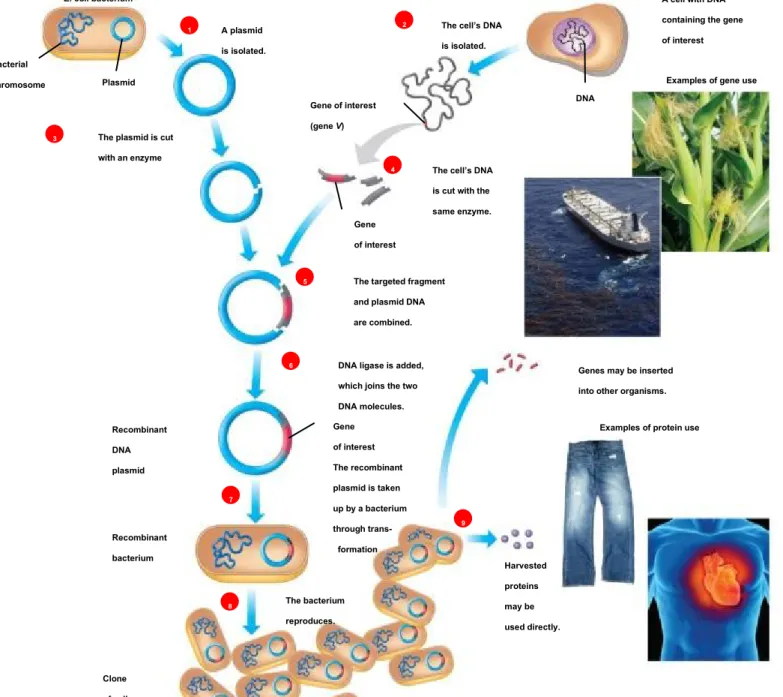
Figure 12.1b-0 Plasmid 1 2 3 4 5 6 7 9 8 Bacterial chromosome
E. coli bacterium
A plasmid is isolated.
The plasmid is cut with an enzyme
The cell’s DNA is isolated.
DNA
A cell with DNA containing the gene of interest
Examples of gene use Gene of interest
(gene V)
The cell’s DNA is cut with the same enzyme. Gene
of interest The targeted fragment and plasmid DNA are combined. DNA ligase is added, which joins the two DNA molecules. Gene of interest
Genes may be inserted into other organisms.
Examples of protein use
Harvested proteins may be used directly. The recombinant
DNA Fingerprinting
• Agarose gel
electrophoresis:
– Allows separation of DNA on the basis of size.
Uses of DNA Fingerprinting
• Identification – exact matches
• Paternity – All markers from child can be
found in either mother or father
Polymerase Chain Reaction
• Allows scientists to
make copies
of a small
sample of DNA.
• Requires:
– Primers: two synthetic short strands of DNA that are complementary to each of the two DNA sequences that flank the gene or DNA to be
copied.
DNA Sequencing
• Determining the base-by-base order of the nucleotides in a stretch of DNA.
DNA Sequencing
• Makes possible comparisons of DNA
sequences
– between individuals to teach us about our susceptibility to disease.
– between species to teach us about how we evolved.