World Maritime University World Maritime University
The Maritime Commons: Digital Repository of the World Maritime
The Maritime Commons: Digital Repository of the World Maritime
University
University
World Maritime University Dissertations Dissertations
1999
The effects of industrial waste water discharges on the coastal
The effects of industrial waste water discharges on the coastal
zone of Cameroon
zone of Cameroon
Gertrude Inack-MbaiWMU
Follow this and additional works at: https://commons.wmu.se/all_dissertations
Recommended Citation Recommended Citation
Inack-Mbai, Gertrude, "The effects of industrial waste water discharges on the coastal zone of Cameroon" (1999). World Maritime University Dissertations. 1092.
https://commons.wmu.se/all_dissertations/1092
non-World Maritime University
Malmö, SwedenTHE EFFECTS OF INDUSTRIAL WASTE
WATER DISCHARGES ON THE COASTAL
ZONE OF CAMEROON
By
GERTRUDE INACK MBAÏ
Republic of CameroonA dissertation submitted to the World maritime University in partial fulfilment of the requirements for the award of the degree of
MASTER OF SCIENCE
In
MARITIME SAFETY AND ENVIRONMENT PROTECTION (Policy)
1999
Declaration
I certify that all the material in this dissertation that is not my own work has been
identified, and that no material is included for which a degree has previously been
conferred on me.
The contents of this dissertation reflect my own personal views, and are not
necessarily endorsed by the University.
16 August 1999
Supervised by:
P. K. Mukherjee
Faculty Professor
World Maritime University
Assessor:
Fernando Pardo
Associate Professor
World Maritime University
Dedication
To my loving considerate husband Martin Inack Mbaï for his frequent letters, weekly encouragement and support
To my kids
Kevin, Loïc, Maeva and Jory Inack And their cousin Stephan
For their understanding and moral support
Acknowledgements
I am indebted to the following:
Paul Atanga (Former 1993 student) who showed me the pathway to World Maritime
University (WMU) in Malmö, Sweden and to the ITF for awarding me a fellowship
for my studies at this University; Professor P. K. Mukherjee for his careful
supervision and for his English assistance; Mr Clive Cole who devoted his valuable
time for completing Shakespeare's language; Charles Biney, consultant of FAO in
Limbe, Cameroon and Kouassi at 'Centre de Recherche Oceanographique' in
Abidjan, whose email always brought new thoughts to my dissertation.
I am again indebted to my sister Ms Ngo-Bissoy Henriette-Angèle in Yaoundé,
Cameroon and my brother Bebga Claude-Michel in Abidjan, Côte d'Ivoire for their
advice and inspiring example (I will always remember the devoted time you usually
spent encouraging me through letters and by telephone); Mr Abessolo Monefong
Charles for his help; Ms Susan Wangeci-Eklöw and Cecilia Denne for their support.
I wish to express sincere thanks to Mr Mouko Mpegna at SONARA for his help in
collecting data; to numerous students at WMU especially Fumbuka from Tazania,
Tecle Abraham from Eritrea, Christian Herbert from Liberia, Santiago Alvarez from
Cuba, whose help cannot be denied. Moussa Daouda from Niger, my fellow country
Enaw Judith and Simo Bansi Emilie (Former student at WMU) I will always
remember your constant support and care.
Mr & Mrs Bibanga, you have been special to me during my stay in Sweden. Among
many things, you have been sending email and calling my kids and me every week
from the USA. Sincerely, I am unable to pay it back.
Finally, I would like to express my gratitude to the women association "Les Lilas"
ABSTRACT
Title of Dissertation: The Effects of Industrial Waste Water discharges on the
Coastal zone of Cameroon
Degree: Master of Science
This dissertation discusses the impacts of water pollution loads from industrial
effluents in the Cameroon littoral zone. The area covers 9,670 km2. It is a
concentrated zone of industries, people and a natural habitat for fauna and flora. The
polluting wastewaters (WW) contain critical pollutants such as organic matters,
nutrients and metals, likely to endanger significantly the marine and coastal
ecosystem. In other words, the ecosystem is suffering from the effects of untreated
WW released directly into the rivers and the sea. The high concentration of
pollutants creates diminution of oxygen within the receiving waters and the milieu
put out of balance becomes unhealthy for the ecosystem. This situation leads to
death or extinction of aquatic species. In addition, the problems inflicted by the WW
within this area include impacts on society and economics concerns.
To cope with this wastewater, law and regulations are set out although they are not
adequately implemented. Thus, proposed measures and opportunities have been
made for control and minimisation of pollution at sources in order to deal with
cleaner production within the factories. Moreover, to monitor and manage the
contamination of this waste, the implementation of the measures will need not only
financial assistance from donors, but also involvement of the government,
industrialists and all the people on the whole. Recommendations are made in the
way to enhance the effectiveness of the industrial cleaner production and the
environmental protection.
TABLE OF CONTENTS
Declaration ii
Dedication iii
Acknowledgements iv
Abstract v
Table of Contents vi
List of Tables ix
List of Figures ix
List of Abbreviations ix
1 Introduction
1.1 The Problem Within The Coastal Zone 1
1.2 Importance Of The Topic 2
1.3 The Objectives 2
1.4 Methodology And Difficulties Encountered 3
2 Analytical Description Of The Cameroon Coastal Zone
2.1 Description Of The Littoral Areas 5
2.1.1 Geographical Aspects of the Region: Location and Boundaries 5
2.1.2 Physical And Hydrographical Context 8
2.1.3 Climatic And Oceanographic Factors 8
2.1.4 Biological And Ecological Considerations 10
2.2 Social And Economic Aspects 11
2.2.1 Population 11
2.2.2 Agricultural And Fisheries Sectors 11
2.2.3 Activities And Characteristics Of The Industries 12
2.3 Comments 13
3 Aspects Of Environmental Issues Of Wastewater Discharges
3.1 Introduction 15
3.2 Industrial Wastewater 15
3.2.1 Identified Products Entering The Processes 15
3.2.1.3 Others 18
3.2.2 Variety of Pollutants 18
3.2.3 Improvement and effects of critical pollutants 19
3.2.3.1 Suspended Solids 20
3.2.3.2 Organic Matters 20
3.2.3.3 Nutrients 22
3.2.3.4 Petroleum Hydrocarbons 23
3.2.3.5 Metals 24
3.2.3.6 Pesticides 24
3.2.3.7 Thermal 25
3.3 Further Discussion Of The Problems 25
3.3.1 Environment 25
3.3.2 Social Aspects 27
3.3.3 Economic Issues 27
3.4 Conclusion 28
4 Environmental Policies And Regulations
4.1 Introduction 30
4.2 Legal And Institutional Aspects 30
4.2.1 Industrial Activities And Regulations 31
4.2.2 Water Pollution Control 32
4.3 Focus On The EIA Analysis 33
4.3.1 Methodology 34
4.3.2 Projects Requiring an EIA 34
4.3.3 Role And Responsibilities 35
4.4 Identification Of Current Problems 36
4.4.1 Non-existence of WW Treatment Infrastructures 36
4.4.2 Inappropriate Technology 36
4.4.3 Insufficient Qualified Personal Staff 37
4.4.4 Lack Of An Information Network 37
4.4.5 The Non-Implementation Of Existing Regulation 38
4.4.6 Unforced Decisions 38
4.4.7 Insufficient Regional And International 39
5 Proposal Measures To Manage Industrial Wastewater
5.1 Introduction 41
5.2 Pollution Prevention 41
5.3 Low Wastewater Loads 42
5.3.1 Water Saving Activities 42
5.3.2 Collecting Systems 43
5.3.3 Dry System Evacuation 44
5.3.4 New Equipment Solutions 44
5.4 Waste Water Treatment 45
5.4.1 Physical Treatment 45
5.4.2 Biological Process 46
5.4.3 Chemical Treatment Process 47
5.5 Financial Aspects 47
5.5.1 Estimated costs 47
5.5.2 Acquiring the capital 48
5.6 Conclusion 49
6 Conclusion And Recommendations
6.1 Conclusion 50
6.1.1 Summary 50
6.1.2 Remarks 51
6.2 Recommendations 52
6.2.1 At The Personal Level 53
6.2.2 Industrialists (at Industrial Level) 53
6.2.3 Local And Regional Organisation 54
6.2.4 At The Government Level 55
Bibliography 57
Appendices
Appendix 1: Variety of fish, crustacean and molluscs 60
Appendix 2: List of major industries in Cameroon coastal zone and their
impacts on the environment 61
Appendix 3: Institution involved in the management of the Cameroon’s
CHAPTER 1
Introduction
1.1 The problem within the coastal zone
Many industrial plants are attracted to coastal locations because of the ready
availability of ways to discharge effluent without expensive treatment, sometimes,
without any proper treatment at all. Cameroon's coastal land area extends from the
Rio del Rey estuary to the coastal mangrove estuary of Kribi. It covers an area of
9670 km2. It is the location for 90% of the major industries of the country and is, at the same time, a receptacle for industrial material draining into the rivers towards the
sea. The coastal population density of 132 people per km is also high, as the overall
population has been growing rapidly over the years. Thus, as a result of discharges
of wastes, and particularly untreated or insufficiently treated waste water, the
potential for degradation of the marine and coastal environment in this area, is a
cause for grave concern.
Industrialists and the public at large hardly seem to be aware of the impacts of
industrial waste although industrialisation is increasing. In contrast, the Government
seems to be aware of this concern but its attitude is characterised by the absence of
clear, legally binding regulations and limited institutional capacity, lack of
appropriate equipment and trained personnel. Thus, it is critical to enquire whether
pollution loads and discharges are responsible for the degradation of the environment
proper regulations, institutional capacity, lack of equipment and personnel due to
absence of financial means and the will to do anything to solve the problem.
1.2 Importance of the dissertation topic
Water pollution is a subject of growing public interest but in Cameroon it does not
seem to generate much expressed concern. In contrast, conservation and protection
of the forests in the country is widely known. Although liquid wastes is not an
international issue (Professor Wiswall’s WMU lecture, 1999) it deserves more
attention than generally accorded. Hence the choice of this dissertation topic.
Marine pollution is an on-going problem and dealing with industrial waste water
(WW) requires continuous improvement. The world of water and industrial
wastewater management as it is known is changing, and people in Cameroon should
follow this trend. The 5th International Conference on Water Pollution, 1999 pointed out that environmental problems caused by the increase of pollutant loads discharged
into natural water bodies are of a great concern.
Furthermore, as beneficiaries of nature, people should all be responsible for looking
after the environment, collectively and individually. Thirdly, through regulation and
technology, the littoral zone should be rationally managed in order to conserve and to
protect the biodiversity. Finally, it seems that significant gaps remain in knowledge,
awareness and information at the level of marine pollution from industries ashore.
1.3 Objectives
The approach adopted in this work is to limit the study on the effects of industrial
wastewater in the coastal zone although the statistics of the water pollution loads
include sanitary and domestic services. However, it is unthinkable that this
legal and economic issues that surround the topic. The aim of the present study is to
attempt to show how untreated industrial waste water can contribute to the pollution
of the environment.
After the Introduction, Chapter 2 will describe the littoral zone of Cameroon. It will
point out relevant industrial activities and other characteristics found within the area.
Chapter 3 will examine the characteristics of the pollutant substances and their
effects on the marine environment.
Chapter 4 will show how the current topic requires a complex body of legislation for
setting out frameworks of regulation and control. In addition, it will present a
concrete approach to be undertaken for industrial projects to comply with
environmental regulations. As the marine and coastal environment is to be protected,
suggestions of ways to deal with the impacts of waste water on the environment will
be provided in chapter 5.
Chapter 6 will offer a general summary pointing out other threats that endanger the
coastal and living marine resources. This Chapter will conclude with recommended
practices for the future of a clean and modern industry at the level of the people, the
Government and industry.
1.4 Methodology and difficulties encountered
The dissertation focuses specifically on wastewater from industries. As part of the
preparation of this dissertation, a questionnaire was addressed to 15 different factory
managers. It has not been easy to obtain information from people individually.
Contact with relevant persons was difficult because some managers do not care
enough about clean production but treat minimising wastewater generation as an
environment responded more or less favourably, giving pieces of data and asking to
remain anonymous.
In view of the scarcity of available data at the sources, the basis of data acquisition
for this dissertation has been the Coastal Profile and “Analyse de la Pollution
Industrielle, Portuaire et des Transports”. Internet has provided a means for
significant data collection through which personal contacts have been made and
relevant materials on the topic obtained namely, "Quantitative Estimation of
Land-based sources of pollution in Cameroon". Many other important sources have
assisted in carrying out this work such as: conversations with students at WMU,
library books and other articles published in journals, in particular the periodical
"Industrial and Environment".
If the content of this work can raise any interest, it is hoped that its very incomplete
achievement should make business leaders and government reconciles their thoughts
CHAPTER 2
Analytical Description of the Cameroon Coastal Zone
Nearly all-major factories in Cameroon are located in the coastal area. This coastal
area located on the Gulf of Guinea is supplied by waters from inland rivers and the
Atlantic Ocean. It is a concentrated area of people, a natural habitat for rare species
of fish, animals and mangroves. This chapter will briefly describe the region and its
inherent activities. Then it will discuss the economic and social dimensions of the
activities including the environmental aspects.
2.1Description of the littoral area
2.1.1 Geographical aspects of the region: location and boundaries.
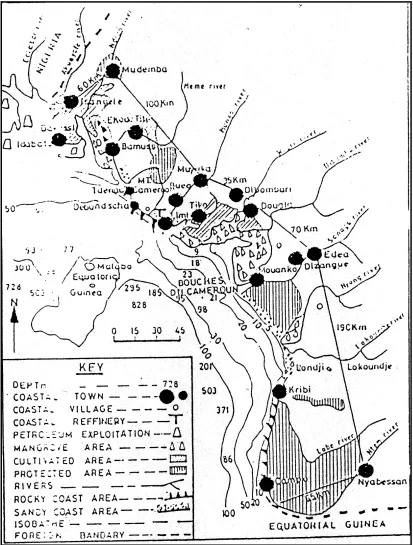
The Cameroon coastline of about 402 km is open to the Atlantic Ocean. It lies from
the Nigerian border (Akwafe River) at the latitude 4o40’N to the Equatorial-Guinea border (Campo River) in the south, latitude 2o20’N (Fig 1). The coastal region here includes estuaries from the level of high tides up to 60 km over the continental shelf
and slope. It comprises rivers, which obviously find their way into the ocean. A
continuous line linking towns from North to South marks the continental boundary.
This zone partially covers three provinces the Southwest province in the north, the
Littoral in the centre and the South province in the south (Fig. 2) and five
Figure 1: Location of the Cameroon Coast
Figure 2: Definition and boundaries of the Cameroon coastal zone
2.1.2 Physical and hydrographical context
The continental shelf area is about 25 nautical miles wide on the average while the
southern portion is 15 nautical miles. It appears that sea swells are from the south to
the south-west and of distant origin. The relief shows a rocky zone with intermittent
occurrence of sandbanks. Here is the area where the mixing of nutrients reaching
deep water with surface water occurs.
The main river systems within the coastal landscape and draining into the ocean are
Dibamba, Ntem, Nyong, Mungo, Wouri and Sanaga. The Sanaga River is the most
important. It waters half of the meridional part of the country with its 900 km.
These waters have high discharges into the Gulf of Guinea and are receptacles of
water discharges from the industries. Thus, they are a site for biological productivity
because marine pollution from organic material of the food chain takes place there.
Mungo enters the sea through a delta while the others together form the Cameroon
estuary. Always under the scope of the hydrographic aspect, this littoral zone
includes two sedimentary basins: the Campo basin of 45 km2 and the Douala Rio-del-Rey basin. The latter appears more important as it is a concentration of most
factories and the area where the author’s investigations were made. It lies from the
second to the fifth parallel north and covers an area of 9500 km2.
2.1.3 Climatic and oceanographic factors
The coastal climate, just as in the rest of the Gulf of Guinea results from the
combined effects of the tropical oceanic low-pressure zone and the inter-tropical
front within the continent. Monsoon winds that cause humidity value to be almost at
saturation point largely contribute to make Debunscha the second wettest place in the
world (Angwe and Gabche, 1997); a rainfall-recorded value shows an average annual
of 11,000 mm. Air temperature is above 25oC throughout the year, the water temperature is almost as high. However, it is not the case of coastal waters in the
between 18 and 20 on the one hand and remain above 25o on the other. This thermocline between the two layers plays an important role in the dynamism of the
living organisms, as it is a predilection as a reproduction area for many species of
fish and crustacean (Appendix 1).
From the information given in the paragraphs above, it can be seen that the basins are
not concentrated. However, there might be a great exchange of water with the
Atlantic and the mixing of water from the estuary. At this stage, there should be
dispersion and dilution of pollutants in surface coastal waters. Although the water is
almost warm, evaporation however might be less, due to the great amount of inflows
from the rivers (Table 1). In addition, due to high rainfalls along the coast combined
with the dense river network, the Cameroon coastal waters might be characterised by
low salinity and weak water circulation. In 1987, peak salinity values of 20% were
recorded at 15km from Douala Port in the dry season and less than 12% in the rainy
season (Folack et al, 1996).
Table 1: Cameroon’s major coastal rivers and hydrological zones
Major rivers Drainage area in
km2
Estimated discharge (m3/s)
Minimum Maximum
Mungo 2420 27,5 636
Wouri 8250 49,0 1425
Ntem 26,350 50 764
Nyong 26,400 25,7 376
Sanaga 131,500 171,0 7570
The table 1 shows estimation of water discharge in m3/s, from 1974 to 1989. To confirm what has been said earlier about the Sanaga River, it is clearly shown that its
inflow is much greater than the other rivers combined. It can be also noted that this
river converges with other streams along its paths from the plateaux.
2.1.4 Biological and ecological considerations
The coastal ecological system is characterised by a high diversity including coral
reefs, algae, fish, mangrove seagrass and other animals. Cameroon coastal fauna is
composed of a rich diversity of animals, such as mammals, wild boar, crocodiles and
giant frogs that measure 30cm and weigh 2.4kg. A variety of fish, crustacean and
lobster is found along the coastal sea (Appendix 1). Birds such as parrots and heron
are also part of the population.
Available evidence strongly suggests that mangroves here are highly productive.
They cover 2,700km2 (Folack and Galega, 1996) and constitute excellent shelter for shrimps, molluscs and fish that spawn in mangrove waters. It is said that within this
coastal forest, there are several vegetable species widely used in traditional medicine
and undoubtedly have pharmaceutical value. Also found is small grass with potential
for horticulture.
These diversified species seem to be endangered by coastal activities such as
industrialisation from which the discharges of effluents into the marine environment
are a concern. In this context, if the ecosystem is not preserved, human life will be
indirectly affected. That is, if one component is affected, the adverse effect will
eventually work on human beings. Thus, the objective should be to protect this
coastal environment and prevent marine pollution at the source. The next chapter
will show what kinds of substances pollute this zone and endanger its species. The
2.2 Social and economic aspects
2.2.1 Population
The coastal zone divided into three provinces represents almost 20% of the total
population of the country. The estimated population of the country in 1997 was
about 15 million inhabitants with an annual growth rate varying between 2 and 6%.
Cameroon is a largely urbanised country compared to other west and central African
countries (Angwe & Gabche, 1997). The main coastal towns are Douala, Limbe,
Kribi, Edea, and Buea. Douala is the most populated city and the country’s industrial
heartland. It might be useful to emphasise that the high concentration of factories is
located in the commercial port city of Douala; the port being situated on the Wouri
River, 25 km from the sea. The Limbe Port at Cape Limboh is a petroleum terminal.
2.2.2 Agricultural and fisheries sectors
Agriculture is the most important contributor to the gross domestic product. The
agro-industry of this zone is composed of crops such as palm oil, rubber and tea.
Part of the harvest is exported in their raw form while the rest is transformed locally
by the industries. Industrial crops such as cocoa, coffee and cotton are not suitable in
the coastal area. In general, the soil in this continental zone is wet, which renders
agricultural activities weak. Following this, and knowing that Cameroon is an
agricultural country, in this coastal zone there seem to be fewer jobs in the primary
sector of agriculture but more in the secondary industrial and tertiary sector. Thus,
36.9% of people are engaged in the primary sector as against 71,9% for the whole
country. 21.4% and 41.7% are in secondary and tertiary sector respectively as against
7.3%and 20% for the country. On the whole, this area is considered as the economic
heart of Cameroon as it holds 90% of the economic activities of the entire country.
Regarding fisheries, and according to the Research Centre for Fisheries and
Oceanography, fishing in Cameroon constitutes the second most important
practised in the rivers and two nautical miles offshore. It accounts for approximately
65,000 tons of fish annually. Industrial fishing had a production estimated at 73,000
tons in 1993.
2.2.3 Activities and characteristics of the industries
Manufacturing industries in Cameroon account for 17% of the Gross National
Product, nearly 90% of national production. As mentioned earlier, industries are
concentrated along the coastal area and particularly in Douala. Particular attention
will therefore be given to this city. Edea has also been a centre of attraction not only
because of the Sanaga River into which there should be possible waste water
discharges but also because of the presence of ALUCAM, the aluminium plant and
the power plant. The whole industrial activity deals with:
- manufacture of soap and detergents due to an impressive availability of locally
produced palm-oil
- production of plastics for packaging although wastewater is not produced
- breweries and beverages
- textile manufacturing
- paint processing
- tanneries
Cameroon has been a producer of crude oil since 1972. The annual production is
2,000,000 tons per year although it was 3 million tons in 1985 (SONARA, 1998). Oil
is refined in Limbé by the National Refinery Company Ltd (SONARA). The country
also possesses reserves of natural gas off shore estimated at 115 billion m3
(Anonymous, 1998). The non- exhaustive list of the principal industries is shown in
From the information given by the services of Mine Water and Energy and the
Ministry of Environment and Forest (MINEF), petroleum activities generated in the
process of the off-shore drilling of crude oil are important. On the other hand, 15%
of the country’s pollution found in the coastal zone results from the diversity of these
industries and the products they manufacture or use (UNITAR and EC, 1997).
New industries are still growing. Manufacturing activities within this littoral area has
had a profound effect on public services and water supply. Environmental quality
and public health have been severely affected by irrational industrial development
and the continued deterioration of the environment due to industrial waste water
pollution (hereafter referred to as WW)
Regarding the specific case of the Douala-Bonaberi industrialisation, there are two
main streams into which the “trade effluents” (a term used by Rhodas meaning waste
water) of the factories found their ways: the rivers Ngoua and Bany. In their turn,
they empty into the Wouri River towards the Atlantic Ocean. Within the Bonaberi
industrial zone, residual effluents are directly discharged into the Mungo River and
Wouri River. Some diseases are endemic in this city. Hazardous residues from
industries and their discharges into the waters cause severe degradation.
Environmental problems will be discussed further. However, it should be
emphasised that most synthetised industries’ residuals are toxic, persistent and
biomagnifiable and tend to accumulate in the receiving environment (Lassig, 1999).
2.3 Comments
The Cameroon continental shelf gradually descends through 0, 30, 50 and 100m
depths. In other words, the country has a low-lying coastal zone. Consequently, there
is generally weak water circulation. The coastal zone has a dense river network and
only one drainage basin, the Atlantic Basin through which all the rivers drain into the
In addition, the Cameroon maritime and coastal zone is endowed with a large
biodiversity and potential and most of the factories are located within this area. It has
also been noticeable from the investigation that most of the industries are
characterised by the absence of control measures concerning waste disposal and
management.
Concerning WW, there was no adequate treatment and no common discharge for the
waste. Therefore, the trade effluents are purely and simply released into nature via
the sea. Because there is low circulation, the water here might be polluted.
Obviously, the untreated WW is a threat to the environment and to human health. By
virtue of this, it is expected that the protection of ecosystems might be of highest
priority in environmental protection. For that matter, the framework law on
environmental coastal and marine pollution addresses these issues (MINEF, 1998).
In practice, it appears that there is no proper management of this ecosystem.
Nevertheless, industrialisation seems to increase and is encouraged in order to
advance economic growth and improve standards of living. This behaviour seems to
be in the first position of the Government and industrialists who measure their
contribution to social welfare instead of caring about the environment.
This position seems to prevail in most developing countries. It is the reason why
Bigham wrote; “the primary industrial problem to be faced by national government
may well be that of achieving a sufficient national income to rise … rather than to be
concerned with immediate problems of pollution”. Similarly, answering a
questionnaire, one said, “we are not in a hurry to prevent or solve problems of marine
pollution”. To him, it is not necessary to care about the use of the marine
environment therefore, discharging WW into nature should not be a question of any
importance. Nevertheless, is it not the same environment that is a scarce resource
since its use for WW disposal may produce any kind of adverse result? Should it be
understood that even if laws are enforceable, a project for protection of the marine
CHAPTER 3
Aspects of Environmental Issues of Water Discharges
3.1 Introduction
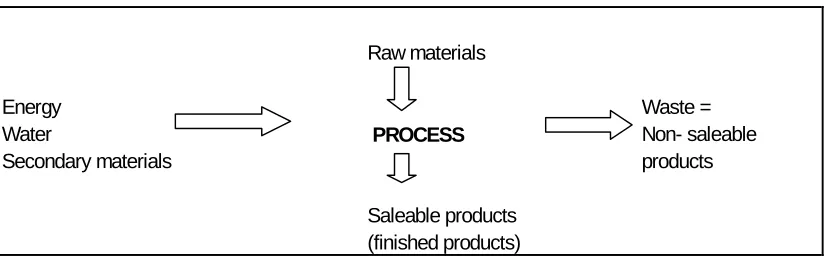
In assessing the pollution of the coastal zone from industrial WW, it appears that
industries involve the use of a variety of products such as chemicals and water as
inputs. The different factories that use water ultimately generate WW from their
activities. This effluent may come through manufacturing processes, washing and
cleaning operations and may contain pollutants harmful to the coastal and marine
environment. Pollution of the watercourse of rivers and estuaries may be caused by
single factors or by a combination of different types of industrial discharges. As
industrial activities deal with manufacturing of mixed substances and chemicals, this
chapter will identify some products and chemicals used in different kinds of
activities. It will analyse the impacts of untreated WW on the environment. Finally, it
will discuss some problems encountered and relating to the threat of WW from the
industries.
3.2 Industrial Waste Water
3.2.1 Identified products entering the processes
3.2.1.1 Water
The significant industries within the coastal zone of Cameroon have included
factories, petroleum products and textile. Within the area of investigation, some
industries are not concerned about WW generated in the production process. For
instance, it was said that SOPICAM (Insecticide company) does not use nor release
waste neither does CIMENCAM (Cimenterie du Cameroun), which is located in the
port area. It releases only solid wastes. In the case of the latter industry, it pollutes
the air with very fine particles of cement dust. Of course, these particles are later
dispersed and deposited on the land and in the water. The quantity of water entering
the industrial process varies widely and is highly representative. This water is used
for cooling, chemical processes or washing. Unfortunately, the overall indication of
this input has not been available. Nevertheless, after a considerable time of patience
and pressure on a few industries, it appears that CEP (Compagnie Equatoriale de
Peinture) utilises 4 to 5 million tons per day. ALUCAM (Aluminium du Cameroun)
uses 12 million m3 per day.
3.1.2.2 Chemicals used
“Nearly a hundred varieties of chemicals are used during the paint processing," said a
guide when asked to identify the type of chemicals entering the process. “ We use
industrial chemicals," said another elsewhere. “We do not pollute with consumer
chemicals," said an interviewee in a company. It can be underlined that of course, a
single product does not always pollute, but when mixed with or in the presence of
another product, might have a serious impact on water quality, that is pollution may
occur. It is known however that soda is one of the main chemicals used in soap
processing. Products such as polyol and toluene dysocyanate are present in the foam
industry. Fluorine is used in aluminium refining. In some factories, it was found
that a high concentration of caustic soda and formoline solution is used to clean
tanks. So is Chlorine. In tanning industry production process, it is used a wide range
of chemicals including sodium sulphide, chromium, sodium chloride, sodium
carbonate, formic and sulphuric acid (Anonymous, 1998).
and cosmetics. According to the studies done jointly by MINDIC and MINAGRI in
1996, the total amount of chemicals used in 1990 was 1,165,3324 tons. Petroleum
products were the greatest amount with 820,000 tons followed by industrial
chemicals with 193,370 tons (UNITAR et al., 1997 and Anonymous, 1998).
A study by the Ministry of Environment and Forest (MINEF) had assessed the global
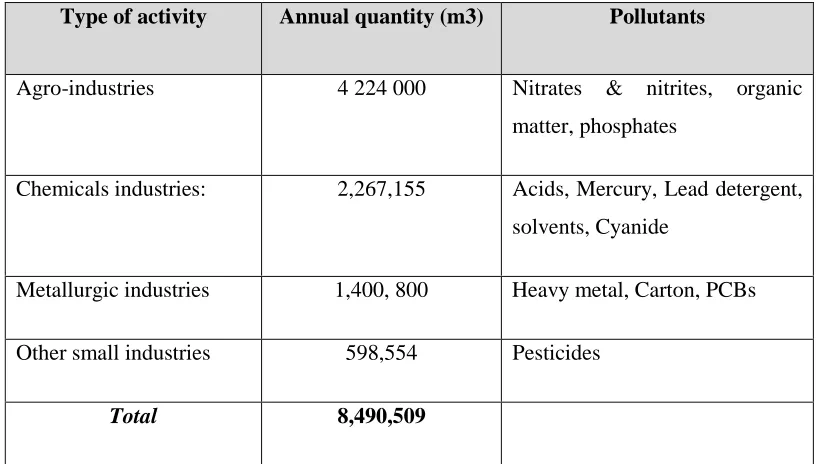
production of industrial wastewater in 1995. The estimated industrial WW discharges
is shown in Table 2 below.
Table 2: Annual Production of liquid waste (MINEF, 1995)
Type of activity Annual quantity (m3) Pollutants
Agro-industries 4 224 000 Nitrates & nitrites, organic
matter, phosphates
Chemicals industries: 2,267,155 Acids, Mercury, Lead detergent,
solvents, Cyanide
Metallurgic industries 1,400, 800 Heavy metal, Carton, PCBs
Other small industries 598,554 Pesticides
Total 8,490,509
Source: MINEF 1995, UNITAR et al., 1997
All pollution loads refer to year 1995. It was estimated that almost 8,500,000m3 per year of untreated industrial waste water deposited intentionally find their way into
rivers via the sea. The contribution from agro-industries liquid waste of 4,224,000m3 is relatively half of the total annual production. The contribution of industrial
3.2.1.3 Others
On the other hand, The diversity of industries leads to the thinking that there is also a
variety of materials entering manufacturing and processing. Subsequently some
agro-industries, such as breweries use malt, houblon, wheat and maize; others use national
raw products, such as cocoa, sugar cane, tee and palm oil. It may be useful to point
out that although some products are imported, a considerable amount is national
crops. Aluminium comes from Guinea. Crude oil is imported from Libya and others.
3.2.2 Variety of pollutants.
Industrial activities generate different kinds of effluents that contains a considerable
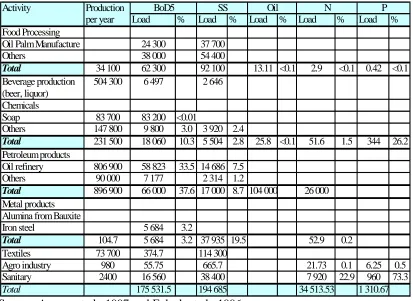
amount of harmful substances which are pollutants (Table 3). Due to the
geographical position of most industries, WW has been discharged into the streams
and rivers to the sea with no, or minimal (mostly insufficient) treatment. The
untreated liquid is susceptible to degrading the physical, chemical and biological
characteristics of the environment. The importance of the stress on the marine
environment is the function of the chemical and biological characteristics of the
pollutant agent. Also, factors such as concentrationpersitences and bioaccumulation
stress the marine environment.
Substances that are released in low concentration may not be immediately harmful to
the marine environment. For this matter, some companies without proper WW
treatment plants try to do their best by neutralising or cleaning liquid wastes hoping
that the effluents will have less impact on the environment. For instance in some
factories, the mixture of ammoniac with water is used to decontaminate WW before
it is released in the watercourses. However, when marine organisms absorb
pollutants, concentrations in their tissues may increase to toxic level. That means
that the effect exits even at low levels. Similarly, pollution can be expressed by
excess siltation which itself is not a toxic process (Quing, 1987 p. 19). In addition,
Thus, it should be noted that pollution of marine or coastal waters derive not only
from toxic effects.
3.2.3 Importance and effects of critical pollutants
As most industries are concentrated in the coastal area, this zone is generally
considered the most polluted one. As far as the potential effects on the marine
organisms, ecosystems and human health are concerned, the most critical pollutants
(Table 3) from the trade effluents include, among others, suspended solids (SS),
organic matters e.g BOD (Biological Oxygen Demand) as a result of pollution,
nutrients such as phosphorus and nitrogen, petroleum, hydrocarbon, metals, e.g.
mercury, lead and zinc.
Table 3: Estimated water pollution loads (t/y) from the industrial effluents in the
Cameroon. coastal zone.
Source: Angwe et al., 1997 and Folack et al., 1996
Activity Production
per year Load % Load % Load % Load % Load %
Food Processing
Oil Palm Manufacture 24 300 37 700
Others 38 000 54 400
Total 34 100 62 300 92 100 13.11 <0.1 2.9 <0.1 0.42 <0.1
Beverage production 504 300 6 497 2 646 (beer, liquor)
Chemicals
Soap 83 700 83 200 <0.01
Others 147 800 9 800 3.0 3 920 2.4
Total 231 500 18 060 10.3 5 504 2.8 25.8 <0.1 51.6 1.5 344 26.2
Petroleum products
Oil refinery 806 900 58 823 33.5 14 686 7.5
Others 90 000 7 177 2 314 1.2
Total 896 900 66 000 37.6 17 000 8.7 104 000 26 000
Metal products Alumina from Bauxite
Iron steel 5 684 3.2
Total 104.7 5 684 3.2 37 935 19.5 52.9 0.2
Textiles 73 700 374.7 114 300
Agro industry 980 55.75 665.7 21.73 0.1 6.25 0.5
Sanitary 2400 16 560 38 400 7 920 22.9 960 73.3
Total 175 531.5 194 685 34 513.53 1 310.67
P
A brief discussion of these materials will be useful in assessing the impact of
industrial wastewater. It should be stated that the accurate values of different
parameters in mg/l have not been available. Therefore, it should be considered that
the discharges of effluents being in excess, the rate of the parameters is assumed to
be greater than the normal admitted value. It should be noted that water temperature
is another parameter that affects marine living resources.
3.2.3.1 Suspended Solids
Suspended solids are a very common characteristic for all industries. The estimated
SS annual load that reached the coastal zone is 194,685 tons of which food
processing industries discharge effluents contain a load of 92,420 ton per year (t/y).
Based on the assumption above, the high discharge of SS might affect the quality of
the water and largely disturb the conditions in the habitat. The water can lose its
clarity. Low transparency over an extended period of time can degrade the health of
a water body as the decreased amount of light penetration reduces the area for
aquatic plants and primary producers to grow. In addition, many marine organisms
feed by filtering water and large amounts of suspended matter may foul their
filter-feeding systems. In addition, the decomposition of SS may lead to diminution of
oxygen within waters. For instance, the River Ngoua releases a heavy odour of
rotten eggs (Personal observation, 1998) “recalling depletion of sulphur” (Nzeuguem
1996). Only rare types of species such as bacteria can live in such a toxic area.
3.2.3.2 Organic Matters
Taking into account the inflow of industrial and municipal WW, as well as storm
waters and in the absence of available data regarding Chemical Oxygen Demand, the
annual pollution load of BOD corresponds to 175,531 t. The major pollutant
industries were, in order of significance, petroleum refining, food processing and
chemical production. Not all food processing industries might be responsible for high
Furthermore, it is noteworthy that discharges from domestic and associated sanitary
activities contributed 16,500 t/y BOD and 38,400 t/y SS.
Discharge of organic matter into receiving waters in large quantities, continuously in
excess, is liable to result in eutrophication. The most serious consequences of
eutrophication are the depletion of dissolved oxygen in the marine waters (Lassig,
1999). The continuous "rain" of organic matter from the eutrophicated water layers
above ceases in areas where there is no oxygen left at all in the bottom water. The
continued decomposition process results in the formation of hydrogen sulphide. This
toxic gas makes life impossible for all life forms except various types of bacteria.
Bottoms with hydrogen sulphide are easily classified as "dying" or "dead", but
should more correctly be referred to as "temporarily lifeless" (Binko, 1998). The
damage can be repaired if the pressure is lifted, either through improved input of new
oxygen or through decreased load of organic matter or, preferably, through both.
Animal life will gradually return and the seabed will be recolonized.
It should be noted that dissolved oxygen concentration is an important factor
controlling the presence or absence of estuarine species. Aquatic plants and animals
require a certain amount of oxygen dissolved in the water for respiration and basic
metabolic processes. Waters that do not contain high amounts of dissolved oxygen
are unhealthy for the ecosystems and are not capable of sustaining several species of
aquatic organisms. As mentioned earlier, Cameroon's wetlands and mangroves
provide a shelter for various living organisms, fauna fish and plant species. In
addition, these areas are vital feeding and nesting zones. Curiously, they are one of
the victims of water pollution, which can lead the endangered species to be driven
into extinction. Within this area, algae that is an essential part for the food chain is
found. When massive quantities of organic matter from chemical pollutants are
released into the water streams, more algae and other aquatic plants grow and bloom
at a faster rate. The excessive amount of algae can affect the area in two ways.
First, with time, they start to die and decay. The decay operation attacks the area and
milieu become anaerobic. The ecosystem put out of balance leads for instance to the
death of aquatic organisms and fish. On the other hand, fish can migrate to other
places more suitable for their life and organisms such as plant biomass will be in
competition for a comfortable environment. Second, the algae reduce the amount of
light able to penetrate the water. The insufficient light that reduces photosynthesis
can affect the growth of other aquatic plants, which need light for their life. An
important consequence of these adverse effects is that mass mortality of organisms
occurs or species may eventually become extinct.
3.2.3.3 Nutrients
The addition of nutrients, such as nitrogen and phosphate, into marine waters can
have a considerable effect on the water quality, particularly for near shore habitats
where nutrient input typically occurs and tends to be confined. The greatest impact
these nutrients may have is the sudden increase in aquatic plants, in terms of
biomass. The amount of light that can penetrate the water column and the amount of
nutrients in the water affect phytoplankton growth in terms of photosynthesis.
Nitrogen is the primary nutrient that controls or limits the growth of phytoplankton in
marine waters. Although nitrogen occurs naturally in the marine environment, when
massive quantities from chemical pollution enter the waters, they can lead to activate
algae blooms and eutrophication. When blooms occur, water conditions (such as
reduced water clarity and dissolved oxygen) may become unfavourable for aquatic
organisms. It should be emphasised that eutrophication is the most significant effects
caused by nutrients as abnormal introduction of nutrients into the marine
environment always result in increased organic matter (Kuwabara, 1984 p. 16 and
Lassig, 1999). An increase in phytoplankton biomass may cause a decline in
dissolved oxygen as the phytoplankton cells respire and decay. The impact of
eutrophication on the oxygen balance in the marine waters and ecosystem's function
Phosphorous is an essential element for aquatic plants and a fundamental element in
the metabolic process for both plants and animals. Total phosphorous includes both
organic phosphorous and inorganic phosphates. Inorganic phosphates are rapidly
taken up by algae and other aquatic plants, although phosphates are usually not the
limiting nutrient in marine waters. However, large inputs could cause algae blooms,
which could lead to unfavourableconditions.
3.2.3.4 Petroleum hydrocarbons
Table 4: Water pollution loads (t/y)- Toxic chemicals.
Source: Angwe et al., 1997.
In Limbé, although WW from the refinery is thoroughly treated before being
discharged into the sea, it however encounters oil spill problems. Beaches are
polluted and oil is clearly seen on the water surface. ‘It is just small negligent spill’
mentioned an agent of SONARA! However, one thing to remember is that oil, the
"ugly pollutant" as it is called, seems to be ubiquitous of all the contaminants
regardless of the quantity of the spill. That is why Bulloch wrote “…marine
ecologists generally agree that chronic low levels of oil are more damaging to marine
life than a single catastrophic oil spill”. Although seawater contains natural bacteria
to degrade oil, continuous spills might not be readily degraded within a particular
marine environment.
Spills come from the refinery, ships or off shore drills. One thing is certain and that
is that oil is biologically toxic and depletes O2 in the water due to biochemical and
Type of industry
Load % Load % Load % Load % Load %
1. Metal products 2.04 0.1 4.5 100 7.6 17.2
2. Petroleum 3.494 99.9 2.76 100 36.7 82.8 759 100
products
TOTAL 3.496 100 2.76 100 4.5 100 44.3 100 759 100
S
chemical demand (Pardo, 1998). They affect marine organisms in their larval or
juvenile period. Consumption of contaminated seafood such as mollusc and shellfish
by humans may be a serious health hazard. In addition, in the very long term, plant
life near the sea, will be contaminated and will break; mangrove being difficult to
clean pollution might be adequately prevented from the sources whatever they are.
Now, fishermen complain about drop in fish cash within Limbé area.
3.2.3.5 Metals
Metal production, mainly manufacture of alumina, was also a major contributor to
water pollution by SS (Table 3). The annual SS production of the factory was
37,935t representing 20% of the total load. There is no clear-cut way to define
poisonous natural element or toxic metal. The physiological action of any element
depends on its mischief. For instance, Bulloch wrote that:
Barium in ion form is poisonous. Yet, barium sulphate is so soluble that
it can be swallowed in large quantity by impurity. The metal will be
toxic or harmful only if it is assimilated or accessible to man by plant or
animal at a significant level.
It is the case of heavy metals, particularly mercury and cadmium, which are well
known to be accumulated in marine organisms and can have detrimental and often
irreversible effects on human health through consumption of contaminated sea food.
The poisonous effects of mercury have been demonstrated in the poisoning incidents
at Minamata in Japan.
3.2.3.6 Pesticides
These substances are known to be persistent and highly toxic to marine organisms,
ecosystems and humans. Specifically, untreated industrial WW effluents contain
pesticides that can contaminate ground water around the Douala area (Binko, 1998).
Ngo-ingested the human nervous system can be affected through the water that is
carcinogenic and an endocrine disrupter.
3.2.3.7 Thermal
Water temperature is an important factor in an estuary and should be monitored for
several reasons. In Edea, 'water entering the process is used only for cooling and
does not contain harmful substances and is released through pipes into the River
Sanaga' (Interview with ALUCAM personnel, 1998). Also, discharges from the
power plant may be entering the same river. Nevertheless, a study on industrial
pollution reveals that this WW are discharged with a high unacceptable temperature
(Nzeuguen 1996). Whether or not it is so, it might be useful to note that discharge of
warm water into natural streams decreases oxygen solubility in water. In addition, as
water temperature rises, biological and chemical activity increases, adding to the
potential occurrence of phytoplankton blooms as higher temperatures facilitate the
uptake of nutrients. Moreover, some pollutants introduced into water are in
themselves inoffensive to the marine environment, but when they are mixed or in the
presence of high temperature, they become toxic. It is the case of substances such as
cyanide, zinc and copper. They become very toxic when in contact with high
temperature. In other words, any discharge of warm water into rivers, mangroves or
estuaries is a threat to the marine environment leading, for example to adverse effects
on production of fisheries.
3.3Further discussion of the problems
The problems inflicted by the lack of WW treatment facilities within the Cameroon
coastal zone include the environment, impacts on society and economic concerns.
3.3.1 Environment
With the continuation of untreated WW being discharged into the water systems, the
ecosystem will continue to degrade at a fast rate. With the high rate of wetland
Since most wetlands are used for breeding, nesting and food resource grounds for
species, by destroying them, a possibility of these species becoming extinct or
endangered must be taken into account.
Another aspect of the environment is the ground water which is a source of fresh
water access and runoffs into the nearby water systems and rivers. Nearby industrial
plants that discharge untreated chemically contaminated effluents are continuously
destroying the groundwater and water systems. With the lack of wastewater
treatment procedures within these industrial plants, there will be a continuation of
discharging pollution into the environment. Another factor that affects the
environment is the depletion of plant biomass due to eutrophication. As mentioned
earlier, eutrophication is mainly caused by the overload of nutrients entering the
water system. Without pre-treating the effluents, the continuation of nutrient rich
water will be discharged into the water systems as well. By negatively altering the
ecosystem in various ways, the natural services that the ecosystem provides can not
harvest the natural renewable substances to keep within the regeneration rate. With
time, these once sustained ecosystems and environmental conditions are altered
beyond their reparable state.
It should be pointed out that the littoral area is not only threatened or polluted by
industrial activities. It is known that there is a continuous stretch of pollution of
several of other land-based marine pollution (LBMP) sources. These sources of
LBMP are domestic sources, agricultural run-off, radioactive and river discharges.
Other threats to the coastal and marine environment that cause the physical
destruction of important habitats are ones activities such as the building of ports,
tourism, clearance of mangroves and fishing practices with the use of chemicals.
These activities give rise to alteration of coral reefs, shorelands and seafloor. The
introduction of alien species can also have serious effects upon marine ecosystem
integrity. These physical alterations can result in possible changes in estuarine
that they are being depleted. In other words, physical alterations and destruction of
habitats adversely affect biological diversity and biological productivity (GPA,
Internet 1999).
3.3.2 Social Aspects
Within the vicinity of Douala city, people lack access to pipe borne water so rivers
are the main supply of water supply to the population. A shortage of potable water is
always observed especially during the dry season when the demand for water is high
and the use of rivers receiving the WW increases for domestic needs. Consequently,
people might be affected by the polluted waters. Research made by UNITAR in
1997 revealed that most rural areas do not have access to potable drinking water and
so depend on wells and surface water. In addition, the configuration of Douala City
is such that the area has been suffering from severe flooding during the rainy season.
Linkage overflows from sanitary septic tanks could thus contaminate the water
affecting the wells and streams. Up to now it has not resulted in any a massive
deaths that have been recorded, such as in Memosata in Japan.
However, the health factors include the effects on humans due to the toxins and
hazardous pollutants in the water systems. Diseases such as skin diseases, cholera,
typhoid and dysentery have massively affected the population in Douala during the
past ten years. It should be noted that during those years, contamination, which
occurred, led to either hospitalisation or death. Polluted WW not only affects
humans, but it also affects the farmlands on which the polluted WW is used. Since
the WW is used for irrigation of farmlands, the pollutants can affect and contaminate
the vital crops such as grain. With a decrease in the food supply from subsidy crops,
starvation and a decrease in agriculture can affect the society.
3.3.3 Economic Issues
It should be noted that many are aware of the impact of pollution due to the
factors that arise can include, among others funding, land reclamation and duration
of building. In a country facing an economic crisis, funding should be taken into
serious great consideration. To build an industrial WW treatment plant would cost
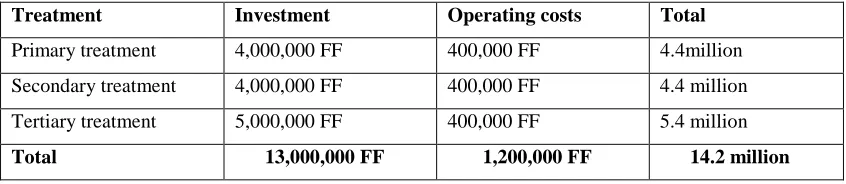
an estimated US$ 5.7 million (Internet 1999). A study in Cameroon in 1996 (before
the devaluation of the regional money, CFA) revealed an estimated cost of 14.2
million FF (French francs) dispatched as shown in Table 5 of Chapter V. For these
estimated costs, will industrialists fund such a project within a weak economic
situation, and where environmental concerns are still backward? There are
institutions such as the World Bank, of course, which should provide the loans.
Regarding the land, some industries are situated within a confined area so that even if
there were a possibility to install a WW treatment plant, there would not be enough
space for additional installations. Therefore, they would have to move away to other
wider areas. This should be a major concern since the factories will stop, which will
affect people in terms of jobs and profit. It would be difficult to cover the economic
losses due to the unproductive period.
Another economic concern with the same consequences is the duration of building a
WW treatment plan, which could last 2 - 4 years (Anonymous, 1999). Moreover,
this amount of time can never be regained in terms of income. Bearing in mind that
the first purpose of the economy is the growth of GDP, it is noticeable that economic
concerns of self-interest seem to predominate over environmental solutions. It would
appear that this problem is common in most less developed countries in Africa and
elsewhere (Interview with WMU students, 1999).
3.4 Conclusion
Biodiversity loss and ineffectual management of natural resources are of growing
concern due to the introduction of high quantities of untreated industrial wastewater.
The need to resolve the conflict between continued discharges and preservation of
local, state, and federal governments; universities; interest groups; and private
industry in developing and implementing natural resource management goals is
fundamental to achieving use and protection of marine ecosystems.
Nevertheless, these problems caused by the lack of wastewater treatment facilities
must be solved. Thus, to maintain the integrity and biological diversity of habitats,
which are of major socio-economic and ecological interest and for better production
within the industries, strategies must be planned to build efficient WW plants.
Therefore, it should be recommended that the waste water be treated efficiently, and
that environmental regulations be implemented and enforced. These combined
opportunities can help reduce the amount of trade effluent. Although the WW
project plan will take some time for completion, the long-term effects of improving
CHAPTER 4
Environmental Policies and Regulations
4.1 Introduction
The discharges into the waters should be controlled and monitored by the competent
authorities. These authorities might carry out the necessary measures for
environmental protection. In Cameroon, the main Ministries involved in the
management of the littoral area might also ensure that the legal framework is
preceded by a coastal environmental impact assessment (EIA).
4.2 Legal and institutional aspects
The concept of industrial marine pollution arose in Cameroon in 1990 by the
Presidential Decree No 76/372 of 02 Sept 1976 regulating unclean and dangerous
industries. Thus, it is only by Law No 51/MINDIC/ICI f 28 Dec 1990 of application
of Ordinance No 90/001 of January 1990 of the industrial free zone, that industrial
marine pollution has been underlined within the management of the Cameroon coast.
However, provisions in this regulation were inadequate and unsuccessful. Even
implementation of the law over the industries besides the free zone was not
significant.
of purely environmental legal measures covering the zone seems to be non-existent,
which emphasised in extent the saying that " there is no integrated coastal area
management plan in operation as yet, in any of the countries of the West and Central
African region" (Kouassi, 1999 p. 75). Based on the problems illustrated in Chapter
3, one can think that even the creation of an institutional framework to fulfil the
requirements in the coastal area has failed to raise awareness of the need to protect
and preserve this zone. In fact, despite the provisions of Law No 96/12 of 5 August
1996 relating to environmental management, this area seems to remain the receptacle
for all kind of wastes. Industrial WW discharges are subject to neither efficient nor
appropriate control.
4.2.1 Industrial Activities and regulations
Industrialisation of the littoral area and particularly Douala City took place without
adequate consideration of environmental issues. In fact, according to Shresta, the
conventional phases of a typical industrial project are pre-operation, which is project
formulation and planning. The second phase is operation corresponding to project
implementation; finally, post -operation valuable for waste management and
disposal. However, management and planning institutions created by the
government namely MAGZI (Mission d'Aménagement et de Gestion des Zones
Industrielles) or MAETUR (Corporation for Urban and rural Planning) did not
adequately address the environmental problems related to their projects nor did they
carry out long-term planning projects with environmental consideration. For
instance, MAGZI is the agency with efficiency and economical means placed in
charge of the rational condition of building industrial systems in Cameroon.
According to Nzeuguem, this institution has failed to accomplish its objectives. It has
failed, in that, instead of properly doing its job, it has only stopped on clearing
aspects of land, creating and building pipes whereas environmentally sound
Furthermore, the refinery whose obvious pollution of the environment seems to be
predominant is regulated by a law relating more to financial needs rather than to
prevention of damage to the environment. This is the case in law No 78-24 of Dec
1978, which completed hydrocarbon regulation by the mining legislation of Law No
64-LF-3 of 06 April 1964 and laid stress on exploitation or exploration with
systematic control and monitoring provisions. In addition, this law is silent on
environmental impacts, sanctions and penalties in spite of mining activities or
handling hydrocarbons. Yet, strong sanctions methods are laid down in Law 96/12.
These cases illustrate the fact that with respect to protection of the coastal area in
Cameroon, laws were formulated with economic rather than environmental concerns
in mind.
4.2.3 Water pollution control
Cameroon's legislation on fresh water pollution control strategies was essentially
based on two main laws: law No 84/13 of 5 December 1984 on water regimes and
Law No 73/16 of 7dec 1973 on spring and mineral water. Two other decrees
completing and modifying the later are: Decree No 74/372 of 9 April 1974 giving the
text of application of law No 73/16 0f December1973 and decree No 90/1479 of
November 1990 modifying the latter.
To reinforce the framework of environmental needs and because the environment
might be suffering from the effluent discharges from industry or because of general
awareness, a recent decree No 98/005 of 14 April 1998 on water regime was
promulgated (Cameroon Tribune, the national news paper, 1998). This Law revises
the 1984 Law on water regimes by introducing aspects on preservation and
conservation of the natural aquatic environment and resources. This should further
consider provision of logistics for continuous monitoring of the quantity and quality
of liquid effluents entering the respective water bodies. In addition, this Law clearly
polluter and responsibility of parties involved in the control of the waters. However,
the task of the Minister of Mine, Water and Energy (MINE) among other things,
should be to control actively and efficiently, residual liquid for reduction of
maximum pollutants. ‘Pollution control should be done every 6 months focusing on
safety measures of pollution loads’ (Anonymous 1999).
It can be seen that the government makes efforts in the enactment of laws regulating
and controlling pollution by liquid effluents within the country. However, these
measures are handicapped not only by the lack of any enabling provisions (Textes
d’application), but especially by not having a definition of strategies controlling the
quality of the coastal aquatic environment against liquid effluents.
Legislation and control measures show that the environment must be protected. The
Ministry of Environment and Forestry (MINEF) under the umbrella of the
government, should embark on a process of establishing a national framework for a
definitive enabling text for possible incentives of environmental industrialists on the
one hand, and penal sanctions for environmental culprits on the other. Also, the
legal framework might be preceded by a coastal environment impact assessment
4.3 Focus on the EIA: Analysis
In the context of the London Dumping Convention, “the EIA is a systematic
examination with a view to determining if a project is environmentally harmful or
not” (Cohen, 1998). The EIA has been initiated into the development process of
Cameroon in August 1996 and expected to play a major role in regulating activities
and development projects within the littoral area. Assuming that regulations,
practical implementation framework and a suitable institutional set up are well
defined, it can eventually be needed to analyse how efficiently the EIA can be
4.3.1 Methodology
Methodology relates to the identification, collection and organisation of
environmental impact data, which might serve as a basis for project appraisal, in
particular social and economic data. As a rational instrument the EIA shall be
undertaken for proposed activities that are likely to have adverse impacts on the
environment and are subject to a competent authority. This is why it is stipulated
that "the promoter or owner of any development, labour, equipment or project which
is likely to endanger the environment, due to its dimension, nature of impact of its
activities on the natural environment shall carry out an impact assessment" (Law
96/12, 1996).
4.3.2 Projects requiring an EIA
The European Community like the World Bank is engaged in such projects and has
divided them and their activities into three categories A, B and C. With reference to
Cohen’s handout (1998) a full-scale EIA is required for category A such as land
clearance and levelling. A partial EIA is needed for category B such as industrial
projects not included in A. The partiality arises here because the projects falling into
this category might have a less adverse environmental impact than in A; but EIA is
normally not required in category C. Apparently, a national text stating the list of
various categories and laying down conditions under which an EIA in categorised
projects will be established is not published yet.
Nevertheless, based on the project categories in an EIA perspective, large-scale
wastewater (WW) treatment project belongs to category A and WW treatment
facilities relates to category B. In any case a development project for which an EIA
is not mandatory is subjected to the opinion of the MINEF. This opinion will help
the ministries such as MINDIC and organisations such as MAGZI, in for instance,
4.3.3 Role and responsibilities
In the absence of an applicable text of the EIA the list of the entire participants
cannot be exhaustive. However, the following parties have been identified through
Folack's (1996) investigation.
The promoter can be a physical or moral person belonging to a private or public
sector and proposing to carry out any project for which EIA is compulsory. He will
then be responsible for carrying out an impact assessment and compiling specific
documents relating to the study and methodology of EIA as described in 4.3.1.
The interministerial committee (IC) attached in appendix No 3, is responsible for
assisting, the government in formulating, co-ordinating and monitoring national
environmental policies and activities. This is why its participation in the EIA
process might create a feeling of commitment to delineate its priorities. Under the
umbrella of the MINEF, the IC would need to focus on reinterpreting the available
laws, national or international from a Cameroonian perspective and enforce them
strategically according to local specifics and needs.
The permitting authority, also known as the ministerial department, should issue a
permit to the promoter. This contract should contain simple and readable terms; it
should also contain conditions such as the level of pollution control of discharge
from the industries. Both the decision-makers and members and of the public who
will be affected by the development of the project should understand the terms.
The public, as beneficiary, must safeguard the environment and contribute to its
protection. The public's opinion on any development that affects the environment
must be required and taken into consideration during the planning process of the
EIA. The right of the public to environmental information is well addressed in