Major bleeding after percutaneous
coronary intervention and risk
of subsequent mortality: a systematic
review and meta-analysis
Chun Shing Kwok,1Sunil V Rao,2Phyo K Myint,3Bernard Keavney,1 James Nolan,4Peter F Ludman,5Mark A de Belder,6Yoon K Loke,7
Mamas A Mamas1
To cite:Kwok CS, Rao SV, Myint PK,et al. Major bleeding after percutaneous coronary intervention and risk of subsequent mortality: a systematic review and meta-analysis.Open Heart 2014;1:e000021. doi:10.1136/openhrt-2013-000021
▸Additional material is published online only. To view please visit the journal online (http://dx.doi.org/10. 1136/openhrt-2013-000021).
Received 13 December 2013 Revised 11 January 2014 Accepted 18 January 2014
For numbered affiliations see end of article.
Correspondence to Dr Mamas A Mamas; [email protected]
ABSTRACT
Objectives:To examine the relationship between periprocedural bleeding complications and major adverse cardiovascular events (MACEs) and mortality outcomes following percutaneous coronary
intervention (PCI) and study differences in the prognostic impact of different bleeding definitions. Methods:We conducted a systematic review and meta-analysis of PCI studies that evaluated
periprocedural bleeding complications and their impact on MACEs and mortality outcomes. A systematic search of MEDLINE and EMBASE was conducted to identify relevant studies. Data from relevant studies were extracted and random effects meta-analysis was used to estimate the risk of adverse outcomes with periprocedural bleeding. Statistical heterogeneity was assessed by considering the I2statistic.
Results:42 relevant studies were identified including 533 333 patients. Meta-analysis demonstrated that periprocedural major bleeding complications was independently associated with increased risk of mortality (OR 3.31 (2.86 to 3.82), I2=80%) and MACEs (OR 3.89 (3.26 to 4.64), I2=42%). A differential impact of major bleeding as defined by different bleeding definitions on mortality outcomes was observed, in which the REPLACE-2 (OR 6.69, 95% CI 2.26 to 19.81), STEEPLE (OR 6.59, 95% CI 3.89 to 11.16) and BARC (OR 5.40, 95% CI 1.74 to 16.74) had the worst prognostic impacts while HORIZONS-AMI (OR 1.51, 95% CI 1.11 to 2.05) had the least impact on mortality outcomes.
Conclusions:Major bleeding after PCI is independently associated with a threefold increase in mortality and MACEs outcomes. Different contemporary bleeding definitions have differential impacts on mortality outcomes, with 1.5–6.7-fold increases in mortality observed depending on the definition of major bleeding used.
INTRODUCTION
Advances in antithrombotic therapy have improved the outcomes of patients undergoing
percutaneous coronary intervention (PCI) through the reduction of ischaemic events at the expense of increased procedure-related bleeding complications. Major bleeding events in contemporary PCI are significant, with 30-day bleeding event rates reported between 0.7% and 1.1% in elective,1–30.6% and 4.7%3–6 in non-ST-elevation myocardial infarction (NSTEMI) and 0.9% and 8.9% in ST-elevation myocardial infarction (STEMI)3 4 7 8 depend-ing on the definition used.
There are currently around 10 different definitions of major bleeding used in trials and registries of patients undergoing PCI9 10 and these definitions include various clinical events, such as blood transfusion or retro-peritoneal haemorrhage, laboratory para-meters, such as differing values of haemoglobin decreases, and clinical out-comes such as mortality9 resulting in signifi -cant differences in bleeding event recording across clinical trials thereby making compari-sons between therapeutic strategies difficult. Furthermore, the incidence of major bleed-ing varies dependbleed-ing on definition used. In
KEY MESSAGES
▸ The strength of this systematic review was the large number of studies included with over half a million total participants.
▸ Another strength was that we were able to evalu-ate the effect of different major bleeding defini-tions and its impact on risk of mortality and major adverse cardiovascular events.
▸ This systematic review had the limitation that studies included varied in antithrombotic and antiplatelet regimes after PCI procedure.
▸ Another limitation was that the systematic review was unable evaluate whether the subsequent mortality was directly related to the bleed.
Kwok CS, Rao SV, Myint PK,et al.Open Heart2014;1:e000021. doi:10.1136/openhrt-2013-000021 1
Review
on September 13, 2020 by guest. Protected by copyright.
http://openheart.bmj.com/
one study, the RIVAL non-coronary artery bypass graft (non-CABG) related major bleeding occurred in 0.87% in the STEMI cohort and 0.57% in the NSTEMI group, while if an ACUITY major bleeding definition was used, major bleeding occurred in 3.1% in the STEMI group and 2.26% in the NSTEMI group, respectively.
Major periprocedural bleeding complications follow-ing PCI are predictors of mortality and major adverse cardiovascular events (MACEs),11–13 with up to 12.1% of all in-hospital mortality after PCI in the National Cardiovascular Data Registry’s CathPCI Registry related to bleeding complications.14 In contrast, other studies have suggested that although bleeding may be causally related to adverse outcomes in some patients in the real-world setting, it is often merely a marker for patients at higher risk for adverse outcomes.15 16
Some prior studies that have reported on the prognos-tic impact of major bleeds have not accounted for differ-ences in baseline covariates such as age, syndrome of presentation and comorbidities that would themselves impact on MACEs and mortality outcomes.17–21 In con-trast, while other studies have adjusted for baseline cov-ariates, different definitions of major bleeding such as TIMI,2 11 22 23 GUSTO,20 24 STEEPLE20 25and BARC23 have been used, which have been shown to have differ-ential impacts on mortality/MACEs outcomes.20 23 26 Furthermore, the timing of bleeding from index PCI procedures included in such studies has varied from 48 h,25 been limited to those that occur in hospital,23 27 to 30 days2 28 with impact on mortality and MACEs out-comes studied at different time points such as 30 days,8 24 286 months24 27or 1 year.2 22 23 25
Until today, there has not been a systematic review or meta-analysis previously published studying the prognos-tic impact of periprocedural major bleeding events on mortality and MACEs outcomes following PCI. We have therefore undertaken a meta-analysis to systematically study the impact of major bleeding following PCI on mortality and MACEs outcomes. In this meta-analysis, we provide an overview of the cohorts evaluating the rates of major bleeding events and systematically study the dif-ferences in the prognostic impact of different bleeding definitions and the relationship between major bleeding and clinical events at different time points.
METHODS Eligibility criteria
We selected studies of patients who underwent PCI that reported on mortality or cardiovascular events among patients with and without major bleeding events. There was no restriction based on study design, definition of major bleeding or the indication for PCI or its status as an urgent or elective procedure. We excluded studies that did not report on categories of major bleeding and those that did not report either mortality or MACEs.
Search strategy
A search of EMBASE (1974 to January 2014) and MEDLINE (1946 to January 2014) was conducted on OvidSP. The search terms are shown in online supple-mentaryfigure S1. We did not use any language restric-tions. We checked the bibliographies of included studies and relevant review articles found on the search for add-itional relevant articles.
Study selection and data extraction
Two reviewers (CSK and YKL) checked all titles and abstracts for studies that could potentially meet the inclusion criteria. We retrieved full reports of these potentially eligible studies and independently extracted data on study design, participant characteristics, inter-ventions used, major bleeding events, follow-up, outcome events and methods of ascertaining measured clinical events on to a preformatted spreadsheet. Any discrepancies between the two reviewers were resolved by consensus after consulting a third reviewer (MAM).
Quality assessment
Risk of bias was assessed by considering four different areas: ascertainment of major bleeding events, ascertain-ment of outcome events, extent of loss to follow-up and the use of adjustment for confounders in the analysis. We also assess for publication bias using funnel plots when there were >10 studies available in the meta-analysis and there was no evidence of substantial statistical heterogeneity.29
Data analysis
We used RevMan V.5.1.7 (Nordic Cochrane Centre) to do random effects meta-analysis using the inverse vari-ance methods for pooled ORs. We assumed similarity between the OR and other relative measures such as relative risk, rate ratios or HRs because cardiovascular events and death were rare events.30 The analysis was stratified based on whether the results had considered the effect of potential confounders through adjustments or propensity-matched cohorts or not. In order to reduce the risk of bias from confounding so that we have a more reliable estimate of the independent effect of bleeding on prognosis, we appraised studies with multivariate adjustments or propensity-matched cohorts separately from studies with crude or unadjusted results. We used adjusted or propensity-matched risk estimates where available. For datasets reporting multiple time points, we took the earliest time point for the primary analysis. Any later time points were subsequently ana-lysed in the separate Forest plots stratified according to timing of outcome assessment. Where there were mul-tiple definitions of major bleeding we choose to use the results for TIMI major bleeding.
We planned for three analyses. The primary analysis was the pooled adjusted and unadjusted risk of mortality with and without major bleed. The secondary analysis
2 Kwok CS, Rao SV, Myint PK,et al.Open Heart2014;1:e000021. doi:10.1136/openhrt-2013-000021
Open Heart
on September 13, 2020 by guest. Protected by copyright.
http://openheart.bmj.com/
was the unadjusted and adjusted risk of MACEs with and without major bleed. In a post hoc sensitivity analysis, we conducted a pooled analysis after excluding studies where it was clear that only some (and not all) of the participants had undergone PCI.
Statistical heterogeneity
We used the I2 statistic to assess statistical heterogeneity. I2 Values of 30–60% represent moderate levels of heterogeneity.31
RESULTS Study selection
The process of selection of studies is shown in online sup-plementaryfigure S1. We retrieved 42 relevant studies of patients that underwent PCI (total number of participants 533 333), which evaluated the risk of adverse events with and without major bleeding.2 8 11 14 17–23 27 28 32–58 The number of participants in each study ranged from 352 to 280 390 and the number of major bleeding events was 66 277 (37 studies, 15.3%). A total of 40 studies evaluated mortality as an outcome and 11 studies reported on MACEs.
Description of studies included
The study designs, date of study, country of origin and indication for PCI is shown in table 1. There were 12 studies (149 650 participants), which were post hoc ana-lyses of randomised controlled trials and 1 matched observational study (280 390 participants). Of the studies that reported number of centres, there were more multicentre studies than single centre studies (n=17 and n=13). The age and gender of participants along with the antiplatelet and anticoagulant regimes used is shown in online supplementary table S1.
Table 2shows the timing of major bleeding, definition of major bleeding used in the individual studies and the incidence of major bleeding in each study. While many of the studies did not report when assessment for major bleeding took place (n=15), 15 of the studies clearly stated that they evaluated in-hospital major bleeding. The definitions of major bleeding also varied among the included studies and formal definitions of major bleed-ing included TIMI, GUSTO, STEEPLE, HORIZON-AMI, CRUSADE, BARC and REPLACE-2 definitions. These definitions are summarised in online supplementary table S2. Follow-up of patients in the studies included in this analysis varied from 48 h to more than 3 years. The impact of major bleeding on clinical outcomes was adjusted for baseline covariates in 22 studies (490 699 participants) while in 20 studies (42 634 participants) only unadjusted outcomes were reported.
Quality assessment
Online supplementary table S3 shows the quality assess-ment for included studies. Ascertainassess-ment of bleeding
and mortality varied from data collection from medical record reviews to prospective evaluation in trials where independent committees adjudicated bleeding and outcome events.
Major bleeding and risk of mortality at any time point
The impact of major bleeding on mortality outcomes was studied in 40 studies reporting outcomes in 525 691 patients. In total, 66 016 major bleeds were reported. Crude rates or risk estimates for mortality in individual studies are shown in online supplementary table S4. Mortality rate was 3595/62 036 (5.8%, 28 studies) in patients who sustained a major bleed and 8937/370 522 (2.4%, 28 studies) in patients not experiencing major bleeding complications.
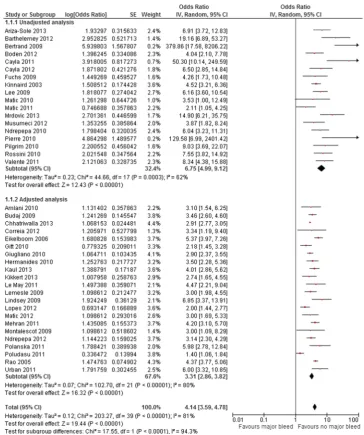
Meta-analysis of these data demonstrated that the overall risk of mortality was significantly greater among patients who sustained major bleeding complications periprocedurally (figure 1). The risk estimate for mortal-ity was significantly lower in the subgroup of studies, which adjusted for potential confounders (OR 3.31 (2.86 to 3.82), I2=80%, 491 565 participants compared to the OR calculated in those studies that did not adjust for baseline covariates; OR 6.75 (4.99 to 9.12), I2=62%, 34 126 participants).
Major bleeding and risk of MACEs at any time point
The impact of major bleeding on MACEs outcomes was studied in 13 studies reporting outcomes in 69 843 patients. Crude rates or risk estimates for MACEs in indi-vidual studies are shown in tables 3 and 4; 757 major bleeds (6.8%) were reported.
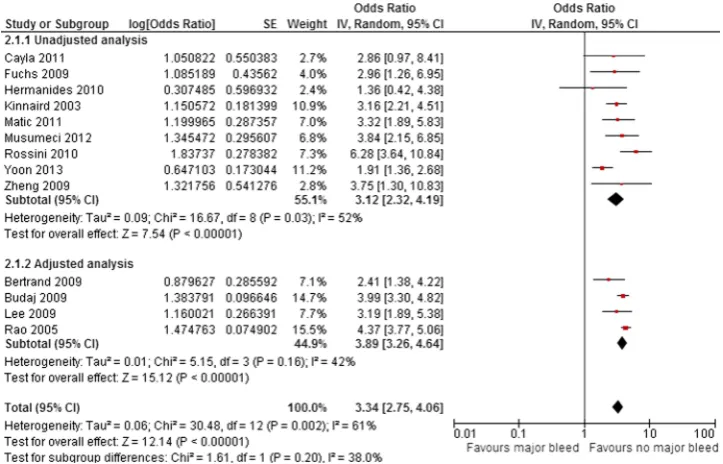
MACE rates were 295/1701 (17.3%) in patients who sustained a major bleed and 2101/38 520 (5.4%) in patients not experiencing major bleeding complications. The overall risk of MACEs was significantly higher among patients with major bleeds (figure 2). The risk of MACEs did not significantly differ in the subgroup of studies that adjusted for baseline covariates (OR 3.89 (3.26 to 4.64), I2=42%, 25 829 participants as compared to those that did not adjust for baseline covariates OR 3.12 (2.32 to 4.19), I2=52%, 101 184 participants).
Mortality with major bleeding at different follow-up durations
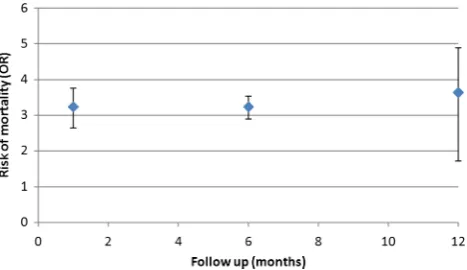
The adjusted risk of mortality was significantly greater among patients with major bleeds at all time points eval-uated (figure 3). For 30-day mortality, adjusted risk was OR 3.24 (2.73 to 3.84, I2=81%, 11 studies, 403 457 parti-cipants) and at 6 months, the OR remained elevated at 3.23 (2.92 to 3.57, I2=0%, 4 studies, 50 872 participants; table 3). At the 1-year time point, the risk of mortality was OR 3.64 (2.39 to 5.56, I2=89%, 9 studies).
MACEs with bleeding at different follow-up durations
Analysis of the impact of major bleeding on MACEs out-comes at different time points was stratified into risk of
Kwok CS, Rao SV, Myint PK,et al.Open Heart2014;1:e000021. doi:10.1136/openhrt-2013-000021 3
Review
on September 13, 2020 by guest. Protected by copyright.
http://openheart.bmj.com/
Table 1 Study design, year of study, country of origin and participant inclusion criteria
Study ID Design Date of study
Number of
centres Country Inclusion criteria
Amlaniet al32 Prospective cohort May 2003 to July 2007 Single centre Canada Patients with STEMI Ariza-Soleet al33 Prospective cohort October 2009 to April
2012
Single centre Spain Patients with STEMI
Barthélémyet al20 Prospective cohort NA Single centre France Patients in E-Paris Registry with STEMI and PCI Bertrandet al34 Post hoc analysis of
RCT
October 2003 to April 2005
Single centre Canada Patients in EASY trial with PCI without STEMI
Bodenet al35 Cohort NA NA The
Netherlands
Patients with STEMI and PCI
Budajet al36 Post hoc analysis of RCT
NA Multicentre International Patients with NSTEMI ACS. Note that only 64–79% had PCI
Caylaet al18 Post hoc analysis of RCT
NA Multicentre France Patients in ABOARD trial with NSTEMI and PCI
Caylaet al37 Post hoc analysis of RCT
NA Multicentre International Patients in ATOLL study with STEMI and PCI
Chhatriwallaet al14 Matched cohort 2004 to 2011 Multicentre USA Patients in the CathPCI Registry Correiaet al38 Cohort August 2007 to
December 2010
Multicentre Brazil Patients with ACS. Note that only 76–90% had coronary angiogram
Eikelboomet al28 Post hoc analysis of RCTs
NA Multicentre International Patients in OASIS 1 and 2 and CURE who had ACS. Note that only 10–11% had PCI/stent/atherectomy
Fuchset al21 Prospective cohort January 2001 to June 2005
Single centre Israel Patients with STEMI and PCI
Gittet al39 Cohort October 2006 to
October 2008
Multicentre International Patients with ACS. Note that only 65–82% had primary/rescue PCI
Giuglianoet al8 Post hoc analysis of RCT
NA Multicentre International Patients in ExTRACT-TIMI 25 trial where patients received fibrinolysis
Hermanideset al22 Prospective cohort January 1991 to December 2004
Single centre The Netherlands
Patients with STEMI and PCI
Kaulet al40 Post hoc analysis of RCT
May 2004 to August 2008
Multicentre International Patients with NSTEMI
Kikkertet al41 Prospective cohort January 2003 to July 2008
Single centre The Netherlands
Patients with STEMI and PCI
Kinnairdet al11 Retrospective cohort 1991 to 2000 NA USA Patients who underwent PCI Le Mayet al42 Cohort May 2005 to July 2010 NA Canada Patients with STEMI and PCI Leeet al43 Prospective cohort February 2003 to March
2006
NA Korea Patients with PCI with DES
Lemesleet al27 Cohort January 2000 to December 2007
Single centre USA Patients≥80 years of age with PCI
Lindseyet al44 Prospective cohort July 2004 to January 2006
Multicentre USA Patients in EVENT registry with PCI
Lopeset al45 Retrospective cohort November 2001 to December 2006
Multicentre USA Patients in CRUSADES registry and subset with PCI
Continued
4
Kwok
CS,
Rao
SV
,
Myint
PK,
et
al
.
Open
Heart
2014;
1
:e000021
.
doi:10.113
6/openhrt-20
13-000021
Op
en
H
e
ar
t
Table 1 Continued
Study ID Design Date of study
Number of
centres Country Inclusion criteria
Maticet al46 Cohort August 2009 to
December 2012
NA Serbia Patients with STEMI and PCI
Maticet al47 Cohort August 2009 to
December 2010
NA Serbia Patients with STEMI and PCI
Maticet al48 Prospective cohort August 2009 to December 2010
NA Serbia Patients with STEMI and PCI
Mehranet al2 Post hoc analysis of RCTs
NA Multicentre International Patients in REPLACE-2, ACUITY and HORIZONS-AMI trial with PCI
Montalescotet al25 Post hoc analysis of RCT
December 2005 to December 2006
Multicentre International Patients in STEEPLE trial who underwent elective PCI
Mrdovicet al49 Cohort February 2006 to December 2009
Single centre Serbia Patients with STEMI and PCI
Musumeciet al50 Cohort June 2005 to June 2008
Multicentre Italy Patients with PCI and DES
Ndrepepaet al17 Post hoc analysis of RCT
September 2005 to January 2008
NA Germany Patients in ISAR-REACT-3 trial with PCI
Ndrepepaet al23 Post hoc analysis of RCT
NA NA Germany Patients in ISAR-REACT, ISAR-SWEET, ISAR-SMART and
ISAR-REACT-2 trials with PCI
Pierre-Louiset al51 Cohort NA NA USA Patients with ACS and PCI
Pilgrim and Wenaweser52 Cohort May 2002 to December 2005
Single centre Switzerland Patients with PCI
Polanska-Skrzypczyk et al53
Prospective cohort February 2001 to October 2002
Single centre Poland Patients with STEMI and PCI
Poludasuet al54 Prospective cohort July 2001 to May 2010 Multicentre USA Patient with PCI Raoet al24 Post hoc analysis of
RCTs
NA Multicentre International Patients in GUSTO IIb, PURSUIT and PARAGON A/B. Note that only 11–30% had PCI
Rossiniet al55 Cohort NA NA USA Patients with PCI and DES
Urbanet al56 Prospective cohort May 2006 to April 2008 Multicentre International Patients in e-SELECT registry with PCI and DES Valenteet al19 Prospective cohort January 2004 to
December 2008
Single centre Italy Patients in Intensive Cardiac Care Florence STEMI Registry who had STEMI and PCI
Yoonet al57 Cohort NA NA Korea Patients in IRS DES registry with PCI and DES
Zhenget al58 Retrospective cohort January 2004 to January 2008
Single centre China Patients with elective or urgent PCI
ACS, acute coronary syndromes; DES, drug-eluting stent; NA, not applicable; NSTEMI, non-ST-elevation myocardial infarction; PCI, percutaneous coronary intervention; RCT, randomised controlled trial; STEMI, ST-elevation myocardial infarction.
Kwok
CS,
Rao
SV
,
Myint
PK,
et
al
.
Open
Heart
2014;
1
:e000021.
doi:10.1136/
openhrt-2013
-000021
5
Re
v
iew
Table 2 Timing of bleeding, definition of major bleeding and follow-up
Study ID
Timing of
bleeding Major/severe bleeding criteria
Number of participants in bleeding group
Number of participants in
control group Follow-up
Amlaniet al32 Within 30 days Haemoglobin drop≥5 g/dL, intracranial haemorrhage, bleeding requiring surgery or blood transfusion of at least 2 units
152 (67 had PCI) 1237 (566 had PCI) 30 days
Ariza-Soleet al33 In-hospital CRUSADE 33 1031 Mean follow-up
344 days
Barthélémyet al20 In-hospital TIMI, GUSTO, STEEPLE Total 671 NA 1 year
Bertrandet al34 Unclear REPLACE-2 19 1329 30 days,
6 months, 1 year
Bodenet al35 In-hospital CRUSADE 203 762 1 year
Budajet al36 Up to 180 days ESSENCE 771 (30 days), 937
(180 days)
18 851 (30 days), 18 851(180 days)
180 days
Caylaet al18 30 days STEEPLE 19 333 30 days
Caylaet al37 30 days STEEPLE 42 868 30 days
Chhatriwallaet al14 In-hospital CathPCI Registry definition 56 078 224 312 In-hospital
Correiaet al38 In-hospital BARC type 3 or 5 29 426 In-hospital
Eikelboomet al28 Within 30 days Bleeding that was significantly disabling, bleeding requiring transfusion of≥2 units of packed cells or bleeding that was life threatening
783 3363 30-day mortality
Fuchset al21 Unclear TIMI 27 804 30 days and
6 months Gittet al39 In-hospital Drop in haemoglobin of >5 g/dL or haematocrit of >15% 281 8451 In-hospital
Giuglianoet al8 Up to day 8 TIMI 309 20 014 30 days
Hermanideset al22 48 h TIMI 80 4371 30 days and
1 year Kaulet al40 Up to 120 h after
randomisation
GUSTO 598 8808 30 days
Kikkertet al41 Unclear TIMI 35 331 1–30 days
Kinnairdet al11 Unclear TIMI 588 8992 In-hospital
Le Mayet al42 Unclear TIMI 91 1941 6 months
Leeet al43 Median 1366 days STEEPLE 148 3022 Median
1366 days Lemesleet al27 In-hospital Decrease in haematocrit of≥15% and/or the occurrence of
a major haematoma/gastrointestinal bleeding/intracerebral bleeding
127 2639 6 months
Lindseyet al44 In-hospital TIMI 180 5781 1 year
Lopeset al45 In-hospital CRUSADE 3902 28 993 30 days, 1 year,
3 year, >3 years
Maticet al46 Unclear GUSTO 32 738 In-hospital
Maticet al47 Unclear HORIZONS-AMI 88 1154 30 day
Continued
6
Kwok
CS,
Rao
SV
,
Myint
PK,
et
al
.
Open
Heart
2014;
1
:e000021
.
doi:10.113
6/openhrt-20
13-000021
Op
en
H
e
ar
t
Table 2 Continued
Study ID
Timing of
bleeding Major/severe bleeding criteria
Number of participants in bleeding group
Number of participants in
control group Follow-up
Maticet al48 Unclear BARC 114 1558 1 year
Mehranet al2 30 days TIMI 267 17 034 Up to 1 year
Montalescotet al25 48 h STEEPLE 3528 (total) NA 1 year
Mrdovicet al49 Unclear TIMI 22 2074 30 days and
1 year Musumeciet al50 30 days,
12 months, any follow-up
TIMI 52 1385 3 years
Ndrepepaet al17 Unclear REPLACE-2 555 4015 1 year
Ndrepepaet al23 In-hospital TIMI, REPLACE-2, BARC Total 12 459 NA 30 days, 1 year
Pierre-Louiset al51 In-hospital Intracerebral or intraocular bleeding, clinical bleeding requiring blood transfusion, clinical bleeding with a reduction in haematocrit >10 points, retroperitoneal or gastrointestinal bleeding, access site bleeding requiring intervention, and≥4 cm diameter vascular access site haematoma
34 600 In-hospital
Pilgrim and Wenaweser52
In-hospital TIMI 48 3787 30 days
Polanska-Skrzypczyk et al53
In-hospital TIMI 40 1024 1 year
Poludasuet al54 Unclear HORIZONS-AMI 396 11 595 2.3 years
Raoet al24 Unclear GUSTO 2908 23 544 Up to 6 months
Rossiniet al55 Unclear TIMI 57 1301 1 year
Urbanet al56 Unclear STEEPLE Total 15 147 NA 360 days
Valenteet al19 In-hospital TIMI, ACUITY Total 991 NA In-ICCU
Yoonet al57 In-hospital BARC type 2–5 234 5932 2 years
Zhenget al58 Unclear TIMI 27 385 1 year
ICCU, intensive coronary care unit; NA, not applicable; PCI, percutaneous coronary intervention.
Kwok
CS,
Rao
SV
,
Myint
PK,
et
al
.
Open
Heart
2014;
1
:e000021.
doi:10.1136/
openhrt-2013
-000021
7
Re
v
iew
MACE <1 year and≥1 year due to the limited number of studies presenting MACE data and its relationship with time. The adjusted risk of MACE <1 year was OR 3.96 (3.26 to 4.81, I2=53%, 2 studies, 47 422 participants) and for≥1 year was OR 3.19 (1.89 to 5.37, 1 study, 3170 par-ticipants;table 3).
Adverse outcomes and different definitions for major bleeding
The impact of different definitions of major bleeding on mortality and MACEs outcomes are presented intable 4. REPLACE-2 (OR 6.69 (2.26 to 19.81), I2=84%, 3 studies, 17 996 participants) definition of major bleeding had
Figure 1 Adjusted risk of mortality with and without major bleed after percutaneous coronary intervention.
Table 3 Summary of risk of mortality and MACEs among patients with and without major bleed after percutaneous coronary
intervention at different time points
Duration OR I2(%)
Number of participants
Number of events in bleed group/total
Number of events in non-bleed group/total
Adjusted risk of mortality
30 days8 14 24 28 32 36 38 39 40 41 45 3.24 (2.73 to 3.84) 81 403 457 3307/59 630 7645/317 375
6 months24 27 36 42 3.23 (2.92 to 3.57) 0 50 872 154/1028 1119/20 606 1 year2 22 23 25 44 48 53 56 3.64 (2.39 to 5.56) 89 74 637 160/2494 677/36 167
Adjusted risk of MACEs
<1 year24 34 36 3.96 (3.26 to 4.81) 53 47 422 175/790 1204/20 180
>1 year43 3.19 (1.89 to 5.38) NA 3170 NA NA
MACEs, major adverse cardiovascular events; NA, not applicable.
8 Kwok CS, Rao SV, Myint PK,et al.Open Heart2014;1:e000021. doi:10.1136/openhrt-2013-000021
Open Heart
on September 13, 2020 by guest. Protected by copyright.
http://openheart.bmj.com/
the greatest impact on mortality outcomes, while the ACUITY/HORIZONS-AMI had the least impact (OR 1.51 (1.11 to 2.05), I2=12%, 1 study, 13 233 participants).
Sensitivity analysis
Sensitivity analysis excluding studies where not all partici-pants had PCI did not significantly alter the pooled ana-lysis for association between major bleeding and mortality (OR 3.16 (2.61 to 3.81), I2=75%, 372 449 participants).
DISCUSSION
Advances in antithrombotic and antiplatelet therapy have improved outcomes following PCI through the reduction of ischaemic events although this has been at the expense of increased procedure-related bleeding complications. Our meta-analysis of 42 studies including
over half a million patients confirms that major bleeding is independently associated with a threefold increase in mortality and MACEs outcomes, and that this increased mortality and MACEs risk observed following a major bleed is sustained for periods of over 1 year. We also show that major bleeding events as defined by different contemporary bleeding definitions have differential impacts on mortality outcomes, with 1.5–6.7-fold increases in mortality observed depending on the defi n-ition of major bleeding used.
There are a number of potential mechanisms that may underlie the relationship between major bleeding and adverse mortality outcomes. Patients that sustain major bleeding complications post PCI are more likely to be older, have renal failure, undergo PCI for STEMI/ NSTEMI presentations, present with haemodynamic compromise or have a history of heart failure2 59that also
Table 4 Summary of risk of mortality and MACEs among patients with and without major bleed after percutaneous coronary
intervention with different definitions of bleeding
Mortality MACEs
Definition of major bleed OR I2(%)
Number of
participants Definition OR I2
Number of participants
BARC23 38 48 5.40 (1.74 to 16.74) 88 14 550 BARC NA NA NA
CRUSADE33 35 45 3.69 (1.68 to 8.12) 85 14 055 CRUSADE NA NA NA GUSTO24 40 46 4.30 (3.76 to 4.92) 0 27 222 GUSTO24 4.37 (3.78 to 5.07) NA 26 452 HORIZON-AMI47 54 1.51 (1.11 to 2.05) 12 13 233 HORIZON-AMI NA NA NA REPLACE17 23 34 6.69 (2.26 to 19.81) 84 17 996 REPLACE NA NA NA STEEPLE18 25 37 43 56 6.59 (3.89 to 11.16) 53 23 107 STEEPLE43 3.19 (1.89 to 5.37) NA 3170
TIMI2 8 11 19 20 21 22 42
44 49 50 52 53 55
5.15 (4.01 to 6.61) 69 69 449 TIMI21 2.41 (1.42 to 4.35) NA 1348
Other14 27 28 32 36 39 51 3.34 (2.59 to 4.32) 76 346 670 Other36 3.99 (3.3 to 4.82) NA 19 622
MACEs, major adverse cardiovascular events; NA, not applicable.
Figure 2 Adjusted risk of major adverse cardiovascular event with and without major bleed after percutaneous coronary intervention.
Kwok CS, Rao SV, Myint PK,et al.Open Heart2014;1:e000021. doi:10.1136/openhrt-2013-000021 9
Review
on September 13, 2020 by guest. Protected by copyright.
http://openheart.bmj.com/
independently predict adverse mortality outcomes them-selves. Many previous studies17–21 that have reported on the prognostic impact of major bleeds have not accounted for differences in such baseline covariates that are themselves known to impact on mortality outcomes, which would overestimate the mortality risks associated with a major bleed. For example, in an analysis from the Global Registry of Acute Coronary Events (GRACE), major bleeding was no longer associated with 6-month mortality after adjustment for the known comorbidities with the authors concluding that comorbidities asso-ciated with major bleeding accounting for the higher rate of mortality in patients who bled.15 Consistent with this, we have observed that in meta-analysis of studies that do not adjust for baseline covariates, major bleeding is associated with a sixfold increased risk in mortality, but this decreases to a threefold independent increase in mortality once baseline covariates are adjusted for, sug-gesting that major bleeding is independently linked to mortality and MACEs outcomes.
The potential mechanisms by which a major bleed adversely impacts on clinical outcomes are numerous. Major bleeds such as an intracranial haemorrhage or severe blood loss as can occur in a gastrointestinal haem-orrhage may result in mortality directly, although such bleeding events would not explain the persistent mortal-ity risk observed for over a year following a major bleed-ing event in our meta-analysis. Major bleeds may necessitate the discontinuation of antiplatelet or antith-rombotic medications that increase the risk for stent thrombosis, a strong independent predictor of mortality outcomes in the short and longer term (>1 year).60 Furthermore, increased production of erythropoietin in response to anaemia that occurs following a major bleed may contribute to a prothrombotic systemic state beyond the acute phase through platelet activation and induc-tion of plasminogen activator inhibitor-1 (PAI-1).61 62 Treatment with erythropoietin has been associated with increased risk of thrombosis in critical care patients63 and increase in the composite endpoint of death, acute myocardial infarction, stroke and stent thrombosis in patients with STEMI.64 Blood transfusions have been
linked to adverse shorter and longer term mortality65 and have been shown to predict 30-day mortality66 inde-pendently of bleeding and haematocrit. Adverse mortal-ity outcomes associated with blood transfusions occur through a number of mechanisms including prothrom-botic effects mediated through acute platelet release of CD40 ligand,67 platelet activation and induction of PAI-161 an inhibitor of endogenous fibrinolytic mechan-isms. These increased risks of mortality also extend to non-red blood cell transfusions such as platelets or plasma/cryoprecipitate that may also be utilised follow-ing a periprocedural major bleed.68
Our observations of a differential impact of different major bleeding definitions on mortality outcomes is par-ticularly pertinent suggesting that the choice of bleeding definition used has significantly influenced the outcome of previous studies, since the definition employed will influence the prevalence of reported bleeds as well as their prognostic impact. For example, in the RIVAL study69 non-CABG related major bleeding as defined by the study was not significantly different between the radial and femoral arms of the study (OR=0.73, 95% CI 0.43 to 1.23; p=0.9), while use of the ACUITY major bleeding criterion was associated with a statistically sig-nificant reduction in major bleeding in the radial arm of the study (OR=0.43, 95% CI 0.32 to 0.57; p<00001). Similarly, in the SYNERGY trial that used the GUSTO and TIMI major definition of bleeding, the enoxaparin arm was associated with a significantly higher rate of major bleeding as defined by TIMI major criteria but no difference in major bleeding as defined by the GUSTO major definition. Definitions that encompass less severe bleeding events (such as the ACUITY definition) are not as strongly linked to adverse events and therefore may not be a powerful means of evaluating bleeding avoid-ance strategies. In order to prove efficacy for bleeding avoidance the use of a more discriminative definition would be preferable.
Our meta-analysis has a number of potential limita-tions. First, an inherent limitation of any meta-analysis is that of publication bias; studies that show a neutral outcome in mortality are less likely to be published than those that show a positive outcome and thus tend to bias any meta-analysis of published data towards a more posi-tive outcome. Second, studies included in this meta-analysis often used different antithrombotic and antiplatelet regimes for the PCI procedures undertaken for different indications, hence it is unclear whether the prognostic impact of a major bleed differs with different antiplatelet/anticoagulant combinations or whether it differs in the elective/acute coronary syndrome setting. Finally, our current analysis does not provide insight into whether the timing of the major bleed in relation to the index PCI procedure has a differential impact on mor-tality outcomes.
In conclusion, our meta-analysis of 42 studies includ-ing over half a million patients has revealed that major bleeding is independently associated with a threefold
Figure 3 Risk of mortality with major bleed with different duration of follow-up.
10 Kwok CS, Rao SV, Myint PK,et al.Open Heart2014;1:e000021. doi:10.1136/openhrt-2013-000021
Open Heart
on September 13, 2020 by guest. Protected by copyright.
http://openheart.bmj.com/
increase in mortality and MACEs outcomes, and that this increased mortality and MACEs risk observed follow-ing a major bleed is observed for periods of over 1 year. We also show that major bleeding events as defined by different contemporary bleeding definitions have differ-ential impacts on mortality outcomes. Given the signifi -cant impact of major bleeding on mortality outcomes, formal bleeding risk assessment should be undertaken as part of the decision-making process for PCI proce-dures and bleeding avoidance strategies such as optimal pharmacotherapy and access site choice should be actively undertaken, particularly in those patients at highest baseline risk for bleeding complications.
Author affiliations
1Cardiovascular Institute, University of Manchester, Manchester, UK 2Department of Cardiology, Duke Clinical Research Institute, Duke University Medical Center, Durham, North Carolina, USA
3Division of Applied Health Sciences, School of Medicine & Dentistry, University of Aberdeen, Aberdeen, Scotland, UK
4Department of Cardiology, University Hospital North Staffordshire, Stoke-on-Trent, UK
5Department of Cardiology, Queen Elizabeth Hospital, Birmingham, UK 6Cardiothoracic Division, The James Cook University Hospital, Middlesbrough, UK
7Norwich Medical School, University of East Anglia, Norwich, UK
Contributors CSK, MAM and YKL contributed to planning, conduct and reporting of the work. SVR, PKM, BK, JN, PFL and MDB contributed to the interpretation of the findings and reporting of the work. MAM is the guarantor and was responsible for the overall content.
Competing interests None.
Provenance and peer review Not commissioned; externally peer reviewed.
Data sharing statement No additional data are available.
Open Access This is an Open Access article distributed in accordance with the Creative Commons Attribution Non Commercial (CC BY-NC 3.0) license, which permits others to distribute, remix, adapt, build upon this work non-commercially, and license their derivative works on different terms, provided the original work is properly cited and the use is non-commercial. See: http:// creativecommons.org/licenses/by-nc/3.0/
REFERENCES
1. Lincoff AM, Kleiman NS, Kereiakes DJ,et al. Long-term efficacy of bivalirudin and provisional glycoprotein IIb/IIIa blockade vs heparin and planned glycoprotein IIb/IIIa blockade during percutaneous coronary revascularization: REPLACE-2 randomized trial.JAMA
2004;292:696–703.
2. Mehran R, Pocock S, Nikolsky E,et al. Impact of bleeding on mortality after percutaneous coronary intervention results from a patient-level pooled analysis of the REPLACE-2 (randomized evaluation of PCI linking angiomax to reduced clinical events), ACUITY (acute catheterization and urgent intervention triage strategy), and HORIZONS-AMI (harmonizing outcomes with revascularization and stents in acute myocardial infarction) trials.
JACC Cardiovasc Interv2011;4:654–64.
3. Subherwal S, Peterson ED, Dai D,et al. Temporal trends in and factors associated with bleeding complications among patients undergoing percutaneous coronary intervention: a report from the National Cardiovascular Data CathPCI Registry.J Am Coll Cardiol
2012;59:1861–9.
4. Mehta SR, Jolly SS, Cairns,et al. RIVAL Investigators. Effects of radial versus femoral artery access in patients with acute coronary syndromes with or without ST-segment elevation.J Am Coll Cardiol
2012;60:2490–9.
5. Mehran R, Pocock SJ, Stone GW,et al. Associations of major bleeding and myocardial infarction with the incidence and timing of mortality in patients presenting with non-ST-elevation acute coronary
syndromes: a risk model from the ACUITY trial.Eur Heart J
2009;30:1457–66.
6. Happe LE, Rao SV, Horblyuk R,et al. Consequences of major bleeding in hospitalized patients with non-ST segment elevation acute coronary syndromes receiving injectable anticoagulants.Curr Med Res Opin2009;25:413–20.
7. Stone GW, Witzenbichler B, Guagliumi G,et al. Bivalirudin during primary PCI in acute myocardial infarction.N Engl J Med
2008;358:2218–30.
8. Giugliano RP, Giraldez RR, Morrow DA,et al. Relationship between bleeding and outcomes in patients with ST-elevation myocardial infarction in the ExTRACT-TIMI 25 trial.Eur Heart J2010;31:2103–10. 9. Rao SV, Mehran R. Evaluating the bite of the BARC.Circulation
2012;125:1344–6.
10. Mehran R, Rao SV, Bhatt DL,et al. Standardized bleeding definitions for cardiovascular clinical trials: a consensus report from the bleeding academic research consortium.Circulation
2011;123:2736–47.
11. Kinnaird TD, Stabile E, Mintz GS,et al. Incidence, predictors, and prognostic implications of bleeding and blood transfusion following percutaneous coronary interventions.Am J Cardiol2003;92:930–5. 12. Manoukian SV, Feit F, Mehran R,et al. Impact of major bleeding on
30-day mortality and clinical outcomes in patients with acute coronary syndromes: an analysis from the ACUITY trial.J Am Coll Cardiol2007;49:1362–8.
13. Rao SV, Eikelboom JA, Granger CB,et al. Bleeding and blood transfusion issues inpatients with non-ST-segment elevation acute coronary syndromes.Eur Heart J2007;28:1193e204.
14. Chhatriwalla AK, Amin AP, Kennedy KF,et al. Association between bleeding events and in-hospital mortality after percutaneous coronary intervention.JAMA2013;309:1022–9.
15. Spencer FA, Moscucci M, Granger CB,et al. Does comorbidity account for the excess mortality in patients with major bleeding in acute myocardial infarction?Circulation2007;116:2793–801. 16. Berger PB, Manoukian SV. Bleeding is bad…isn’t it?Circulation
2007;116:2776–8.
17. Ndrepepa G, Schulz S, Keta D,et al. Bleeding after percutaneous coronary intervention with bivalirudin or unfractionated heparin and one-year mortality.Am J Cardiol2010;105:163–7.
18. Cayla G, Silvain J, Barthelemy O,et al. Trans-radial approach for catheterisation in non-ST segment elevation acute coronary syndrome: an analysis of major bleeding complications in the ABOARD Study.Heart2011;97:887–91.
19. Valente S, Lazzeri C, Chiostri M,et al. STEMI patients—the more you bleed, the more you die: a comparison between classifications.
Clin Cardiol2011;34:90–6.
20. Barthélémy O, Silvain J, Brieger D,et al. Bleeding complications in primary percutaneous coronary intervention of ST-elevation myocardial infarction in a radial center.Catheter Cardiovasc Interv
2012;79:104–12.
21. Fuchs S, Kornowski R, Teplitsky I,et al. Major bleeding complicating contemporary primary percutaneous coronary interventions-incidence, predictors, and prognostic implications.Cardiovasc Revasc Med
2009;10:88–93.
22. Hermanides RS, Ottervanger JP, Dambrink JH,et al. Incidence, predictors and prognostic importance of bleeding after primary PCI for ST-elevation myocardial infarction.EuroIntervention2010;6:106–11. 23. Ndrepepa G, Schuster T, Hadamitzky M,et al. Validation of the
bleeding academic research consortium definition of bleeding in patients with coronary artery disease undergoing percutaneous coronary intervention.Circulation2012;125:1424–31.
24. Rao SV, O’Grady K, Pieper KS,et al. Impact of bleeding severity on clinical outcomes among patients with acute coronary syndromes.
Am J Cardiol2005;96:1200–6.
25. Montalescot G, Gallo R, White HD,et al. Enoxaparin versus unfractionated heparin in elective percutaneous coronary intervention 1-year results from the STEEPLE (SafeTy and efficacy of enoxaparin in percutaneous coronary intervention patients, an international randomized evaluation) trial.JACC Cardiovasc Interv
2009;2:1083–91.
26. Rao SV, O’Grady K, Pieper KS,et al. A comparison of the clinical impact of bleeding measured by two different classifications among patients with acute coronary syndromes.J Am Coll Cardiol
2006;47:809–16.
27. Lemesle G, Labriolle AD, Bonello L,et al. Impact of bivalirudin on in-hospital bleeding and six-month outcomes in octogenarians undergoing percutaneous coronary intervention.Cather Cardiovasc Interv2009;74:428–35.
28. Eikelboom JW, Mehta SR, Anand SS,et al. Adverse impact of bleeding on prognosis in patients with acute coronary syndromes.
Circulation2006;114:774–82.
Kwok CS, Rao SV, Myint PK,et al.Open Heart2014;1:e000021. doi:10.1136/openhrt-2013-000021 11
Review
on September 13, 2020 by guest. Protected by copyright.
http://openheart.bmj.com/
29. Ioannidis JP, Trikalinos TA. The appropriateness of asymmetry test for publication bias in meta-analyses: a large survey.CMAJ
2007;176:1091–6.
30. Davies HT, Crombie IK, Tavakoli M. When odds ratios mislead?
BMJ1998;316:989–91.
31. Deeks JJ, Higgins JP, Altman DG. Analysing data and undertaking meta-analyses. In: Higgins JPT, Green S. eds.Cochrane handbook for systematic reviews of interventions. John Wiley & Sons, 2008. http://handbook.cochrane.org/chapter_9/9_5_2_identifying_and_ measuring_heterogeneity.htm
32. Amlani S, Nadarajah T, Afzal R,et al. Mortality and morbidity following a major bleed in a registry population with acute ST elevation myocardial infarction.J Thromb Thrombolysis
2010;30:434–40.
33. Ariza-Sole A, Sanchez-Elvira G, Sanchez-Salado JC,et al. CRUSADE bleeding risk score validation for ST-segment-elevation myocardial infarction undergoing primary percutaneous coronary intervention.Thromb Res2013;132:652–8.
34. Bertrand OF, Larose E, Rodés-Cabau J,et al. Incidence,
predictors, and clinical impact of bleeding after transradial coronary stenting and maximal antiplatelet therapy.Am Heart J2009;157: 164–9.
35. Boden H, Velders M, van der Hoeven,et al. The risk of in-hospital bleeding and long-term mortality in patients with ST elevation myocardial infarction treated with primary percutaneous coronary intervention.J Am Coll Cardiol2012;60:B161–2.
36. Budaj A, Wikelboom JW, Mehta SR,et al. Improving clinical outcomes by reducing bleeding in patients with non-ST-elevation acute coronary syndrome.Eur Heart J2009;30:655–1.
37. Cayla G, Barthelemy O, Silvain J,et al. Anticoagulation, arterial access and bleeding in primary PCI: an analysis of the randomized ATOLL trial.Eur Heart J2012;33:462.
38. Correia LC, Sabino M, Brito M,et al. Causality analysis of the relationship between bleeding and lethality in acute coronary syndrome.Arq Bras Cardiol2012;98:488–96.
39. Gitt AK, Bauer T, Hochadel MG,et al. Impact of radial arterial access for PCI in acute coronary syndromes on bleeding complications in clinical practice: results of the Euro Heart Survey PCI-registry.Eur Heart J2010;31(Suppl 1):659.
40. Kaul P, Tanguay JF, Newby LK,et al. Association between bleeding and mortality among women and men with high-risk acute coronary syndromes: insights from the early versus delayed, provisional Eptifibatide in Acute Coronary Syndromes (EARLY ACS) trial.Am Heart J2013;166:723–8.
41. Kikkert WJ, Zwindermann AH, Vis MM,et al. Timing of mortality after severe bleeding and recurrent myocardial infarction in patients with ST-segment-elevation myocardial infarction.Circ Cardiovasc Interv2013;6:391–8.
42. Le May M, MacDougall A, So D,et al. Impact of bleeding on mortality in patients referred for primary PCI in ST-elevation myocardial infarction.Can J Cardiol27(5 Suppl 1):S219.
43. Lee JY, Kim YH, Kim WJ,et al. Long-term clinical impact of bleeding after percutaneous coronary intervention with drug-eluting stent in real world practice.J Am Coll Cardiol2009;53:A45.
44. Lindsey JB, Marso SP, Pencina M,et al. Prognostic impact of periprocedural bleeding and myocardial infarction after percutaneous coronary intervention in unselected patients. Results from the EVENT (Evaluation of Drug-Eluting Stents and Ischemic Events) Registry.JACC Cardiovasc Interv2009;2:1074–82.
45. Lopes RD, Subherwal S, Holmes DN,et al. The association of in-hospital major bleeding with short-, intermediate-, and long-term mortality among older patients with non-ST segment myocardial infarction.Eur Heart J2012;33:2044–53.
46. Matic D, Mrdovic I, Stankovic G,et al. Incidence, predictors and prognostic implications of bleeding complicating contemporary primary percutaneous coronary interventions.Eur Heart J2010;31 (Suppl 1):5.
47. Matic D, Stankovic G, Antonijevic N,et al. Prognostic implications of bleeding complicating STEMI treated with primary percutaneous coronary intervention.Eur Heart J2011;32(Suppl 1):394. 48. Matic D, Milasinovic D, Asanin M,et al. Prognostic implications of
bleeding measured by Bleeding Academic Research Consortium (BARC) categorization in patients treated with primary percutaneous coronary intervention.Eur Heart J2012;33(Suppl 1):208–9. 49. Mrdovic I, Savic L, Asanin M,et al. Sex-related analysis of
short-and long-term clinical outcomes short-and bleeding among patients treated with primary percutaneous coronary intervention: an
evaluation of the RISK-PCI data.Can J Cardiol2013;29: 1097–103.
50. Musumeci G, Rossini R, Lettieri C,et al. Prognostic implications of early and long-term bleeding events in patients on one-year dual antiplatelet therapy following drug-eluting stent implantation.
Catheter Cardiovasc Interv2012;80:395–405.
51. Pierre-Louis B, Aronow WS, Yoon JH,et al. Risk factors for major bleeding and for minor bleeding after percutaneous coronary intervention in 634 consecutive patients with acute coronary syndromes.Am J Ther2010;17:e74–7.
52. Pilgrim TM, Wenaweser P. Impact of bleeding on clinical outcome in patients undergoing PCI.Eur H J2010;31(Suppl 1):658.
53. Polanska-Skrzypczyk M, Karcz M, Bekta P,et al. Major bleeding is a predictor of mid-term mortality in STEMI patients treated with primary PCI. The ANIN myocardial infarction registry.Eur Heart J2011;32 (Suppl 1):876–7.
54. Poludasu S, Baber U, Clark AE,et al. Impact of major bleeding on long term mortality in patients with and without anemia undergoing percutaneous coronary intervention with bivalirudin.TCT Abstracts JACC2011;58(20 Suppl B):B17.
55. Rossini R, Musumeci G, Lettieri C,et al. Long-term bleeding events in patients with prolonged dual antiplatelet therapy after DES implantation.Eur Heart J2010;31(Suppl 1):167.
56. Urban P, Abizaid A, Banning A,et al. Stent thrombosis and bleeding complications after implantation of sirolimus-eluting coronary stents in an unselected worldwide population: a report from the e-SELECT (Multi-Center Post-Market Surveillance) registry.J Am Coll Cardiol
2011;57:1445–54.
57. Yoon YH, Kim YH, Park KM,et al. Impact of in-hospital bleeding on major adverse cardiac events and stroke using bleeding academic research consortium classification in patients who undergoing percutaneous coronary intervention.Am J Cardiol2013;111 (Suppl 7):91B.
58. Zheng HC, Q Zhang Q, Zhang RY,et al. Clinical outcomes of patients with major bleeding after primary coronary intervention for acute ST-segment elevation myocardial infarction.J Interv Radiol
2009;18:808–11.
59. Mehta SK, Frutkin AD, Lindsey JB,et al. Bleeding in patients undergoing percutaneous coronary intervention: the development of a clinical risk algorithm from the National Cardiovascular Data Registry.Circ Cardiovasc Interv2009;2:222–9.
60. Dangas GD, Claessen BE, Mehran R,et al. Clinical outcomes following stent thrombosis occurring in-hospital versus out-of-hospital: results from the HORIZONS-AMI (Harmonizing Outcomes with Revascularization and Stents in Acute Myocardial Infarction) trial.J Am Coll Cardiol2012;59:1752–9.
61. Doyle BJ, Rihal CS, Gastineau DA,et al. Bleeding blood transfusion and increased mortality after percutaneous coronary intervention.
J Am Coll Cardiol2009;53:2019–27.
62. Smith KJ, Bleyer AJ, Little WC,et al. The cardiovascular effects of erythropoietin.Cardiovasc Res2003;59:538–48.
63. Corwin HL, Gettinger A, Fabian TC,et al. Efficacy and safety of epoetin alfa in critically ill patients.N Engl J Med2007;357:965–76. 64. Najjar SS, Rao SV, Melloni C,et al. Intravenous erythropoietin in
patients with ST-segment elevation myocardial infarction: REVEAL: a randomized controlled trial.JAMA2011;305:1863–72.
65. Chase AJ, Fretz EB, Warburton WP,et al. Association of the arterial access site at angioplasty with transfusion and mortality: the M.O.R. T.A.L study (Mortality benefit Of Reduced Transfusion after percutaneous coronary intervention via the Arm or Leg).Heart
2008;94:1019–25.
66. Rao SV, Jollis JG, Harrington RA,et al. Relationship of blood transfusion and clinical outcomes in patients with acute coronary syndromes.JAMA2004;292:1555–62.
67. Yacoub D, Hachem A, Théorêt JF,et al. Enhanced levels of soluble CD40 ligand exacerbate platelet aggregation and thrombus formation through a CD40-dependent tumor necrosis factor receptor-associated factor-2/Rac1/p38 mitogen-activated protein kinase signaling pathway.Arterioscler Thromb Vasc Biol
2010;30:2424–33.
68. Robinson SD, Janssen C, Fretz EB,et al. Non-red blood cell transfusion as a risk factor for mortality following percutaneous coronary intervention.Int J Cardiol2012;157:169–73.
69. Jolly SS, Yusuf S, Cairns J,et al. Radial versus femoral access for coronary angiography and intervention in patients with acute coronary syndromes (RIVAL): a randomised, parallel group, multicentre trial.Lancet2011;377:1409–20.
12 Kwok CS, Rao SV, Myint PK,et al.Open Heart2014;1:e000021. doi:10.1136/openhrt-2013-000021
Open Heart
on September 13, 2020 by guest. Protected by copyright.
http://openheart.bmj.com/