The Thirty-Third AAAI Conference on Artificial Intelligence (AAAI-19)
Distantly Supervised Entity Relation
Extraction with Adapted Manual Annotations
Changzhi Sun,
1Yuanbin Wu
1,21School of Computer Science and Software Engineering, East China Normal University
2Shanghai Key Laboratory of Multidimensional Information Processing
[email protected], [email protected]
Abstract
We investigate the task of distantly supervised joint entity re-lation extraction. It’s known that training with distant super-vision will suffer from noisy samples. To tackle the problem, we propose to adapt a small manually labelled dataset to the large automatically generated dataset. By developing a novel adaptation algorithm, we are able to transfer the high quality but heterogeneous entity relation annotations in a robust and consistent way. Experiments on the benchmark NYT dataset show that our approach significantly outperforms state-of-the-art methods.
Introduction
A fundamental problem in information extraction is to rec-ognize entities and relations from plain texts. Given a sen-tence, the task aims to find out strings representing differ-ent objects (e.g., person (“Jobs”, “Obama”), organization (“Labour Party”)), and different semantic relations among entities (e.g., affiliation relation between a person and an organization). As it is always the first step to convert un-structured texts into un-structured knowledge, the entity and re-lation extraction task attracts long lasting interests in both researches and applications of natural language processing.
Given a manually annotated dataset, fully supervised models (especially, neural-network-based models) have achieved remarkable progress on the extraction task (Miwa and Bansal 2016; Katiyar and Cardie 2017; Zheng et al. 2017; Zhang, Zhang, and Fu 2017). However, the main fac-tor limiting the application of these methods is the cost to obtain high quality annotations on entities and relations.
In order to gain more training data on broader domains, Mintz et al. (2009) start using distant supervision from knowledge bases. Specifically, instead of annotating enti-ties and relations manually, we can generate training data automatically via aligning triples in knowledge bases and free texts. The main problem of distantly supervised datasets is the noisy samples: the aligned relations are not always true in contexts. For example, the triple (“Obama”, “United States”) holds a “born in” relation in a knowledge base, but it does not necessarily mean all appearances of the pair ex-press the same relationship.
Copyright c2019, Association for the Advancement of Artificial Intelligence (www.aaai.org). All rights reserved.
Relation Types Entity Types
ACE05 NYT
PER (person)
LOC (location)
ORG (organiztaion)
ACE05 NYT
PER(person)
LOC(location)
ORG(organiztaion)
GPE (geographical entities)
FAC(facility)
VEH(vehicle)
WEA (weapon)
/business/company/founders /business/company/industry /location/country/capital /location/location/contains /people/person/nationality /people/person/place_of_birth ...
ART (agent-artifact)
GPE-AFF (gpe-affiliation)
ORG-AFF (organization-affiliation)
PART-WHOLE (part-whole)
PER-SOC (person-social)
PHYS (phisical)
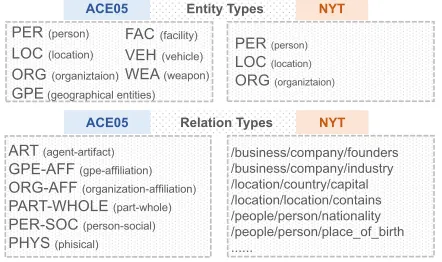
Figure 1: Datasets with different annotation schemas. ACE05 is a manually labelled dataset with 7 entity types and 6 relation types. NYT is a distantly supervised dataset (from Freebase) with 3 entity types and 24 relation types.
In this work, we focus on distantly supervised extraction models, and try to alleviate the effect of noisy training sam-ples by adapting high quality annotations from manually la-belled datasets. By introducing accurate context-dependent samples to automatically generated datasets, we aim to make distantly supervised models more accurate and robust.
The major challenge here is that the two datasets are usu-ally heterogeneous: they could annotate different types of entities and relations following different guidelines. For ex-ample, Figure 1 shows annotation schemas of two bench-mark datasets (ACE05 and NYT). A straightforward way to tackle this challenge is simply merging the two datasets. However, it ignores inherent differences between the two schemas and hardly brings performance gains to distantly supervised models. Another way is trying to establish a (approximate) mapping between the two schemas manually (Qiu, Zhao, and Huang 2013). However, it would be inflexi-ble to extend to more schemas. Thus, how to balance scala-bility and specificity, and how to carefully control the adap-tation process are key problems to the task.
to locate boundaries of entities. For extracting relations, the shared task is to determine whether two entities form a valid relation. We assume that the two shared tasks are much less sensitive to different annotation schemas, and can be utilized to transfer context-dependent knowledge on entities and re-lations from the manually labelled dataset. In order to fur-ther control the adaptation process, we also investigate con-sistency constraints between shared extraction tasks and the original extraction tasks. A set of new loss functions is pro-posed to characterize the constraints.
We conduct extensive experiments on the benchmark NYT dataset, and observe that our model achieves 3.7% im-provement of F1 score against the state-of-the-art system. To summarize, the major contributions of this paper are • We first investigate the problem of using manually
la-belled datasets to help distantly supervised entity relation extraction.
• We design a novel adaptation framework which transfers heterogeneous knowledge through new shared tasks. • Our proposed model significantly outperforms the
state-of-the-art methods on benchmark NYT dataset.1
Related Work
There have been extensive studies on extracting entities and relations from plain texts. Currently, the state-of-the-art systems usually adopt the supervised joint learning algo-rithm. It can mitigate the error propagation and strengthen the interaction between the entity model and the relation model. Feature-based joint models (Miwa and Sasaki 2014; Li and Ji 2014) use manually extracted features to per-form entity detection and relation detection simultaneously. Those methods rely on handcrafted features, which leads to additional complexity. To overcome this limitation, sev-eral neural-network-based joint models have been proposed, such as tree LSTM-based model (Miwa and Bansal 2016), attention-based model (Katiyar and Cardie 2017), sequen-tial labelling model (Zheng et al. 2017) and global nor-malization model (Zhang, Zhang, and Fu 2017). Besides, Ren et al. (2017) study domain-independent framework by modeling entity-relation interactions jointly. Wang et al. (2018) develop a transition-based system for joint extrac-tion task. Specially, our basic models are derived from Sun et al. (2018), which introduce joint minimum risk training to provide a new joint learning paradigm. Different from Ren et al.; Wang et al. (2017; 2018), our basic models do not perform joint decoding or model the dependencies between relations in a sentence.
Another thread of related work is multi-task learning. It has been proven effective in many NLP tasks (Collobert and Weston 2008; Jalali et al. 2010; Peng and Dredze 2016). The basic method is hard parameter sharing (Caruana 1993). (Søgaard and Goldberg 2016) only share parameters at lower layers for lower level tasks. Liu, Qiu, and Huang; Chen et al. (2017; 2017) induce the adversarial shared-private space. However, those approaches do not model the rela-tionships between labels. Meanwhile, Augenstein, Ruder,
1
We will make our implementation publicly available.
and Søgaard (2018) present a multi-task framework over disparate label spaces to learn transfer functions between label embeddings. Chen, Zhang, and Liu; Peng, Thomson, and Smith (2016; 2017) train models on disparate annota-tions of the same task. In contrast, the difference of our method requires multiple tasks on multiple datasets. Be-sides, Jiang, Huang, and Liu; Qiu, Zhao, and Huang (2009; 2013) study the joint Chinese word segmentation and the part-of-speech tagging task with heterogeneous annotation datasets. Comparing with Qiu, Zhao, and Huang (2013), the shared representations of our method are more explanatory.
Task Definition
Given an input sentences=w1, . . . , w|s|(wiis a word), we
study the task of extracting a set of entitiesE and a set of relationsRfroms. An entitye∈ Eis a sequence of words labeling with an entity type (e.g., person (PER), organization (ORG)). LetTebe the set of possible entity types. A relation
ris a triple(e1, e2, l), wheree1ande2are two entities,lis a relation type describing the semantic relation betweene1 ande2 (e.g., organization affiliation relation (ORG-AFF)). LetTrbe the set of possible relation types.
In this work, we focus on improving distantly super-vised information extraction using high quality heteroge-neous datasets. Specifically, given two training sets Da,
Db containing sentences annotated with entities and
rela-tions, we assume that Da is a large automatically labeled dataset which includes (many) noisy annotations, whileDb
is a small manually labeled dataset which is more accurate. Furthermore, Da and Db could be annotated with
differ-ent types of differ-entities (Ta
e,Teb) and relations (Tra,Trb)
fol-lowing different guidelines (i.e., heterogeneous). Our goal is to strengthen the model performance when training on the noisy datasetDa.
Basic Models
Before describing our proposed models, we first introduce two building blocks commonly applied in modern informa-tion extracinforma-tion systems: a biLSTM-based sequence labeling model for detecting entities (Mseq) and a CNN-based multi-class multi-classifiers for detecting relations (Mrel).
The Sequence Model
M
seqTo extract certain text spans from a sentence, we adopt the BILOU tagging scheme: B,I, L andO denote the begin, inside, last and outside of a target span,Udenotes a single word span. For example, to extract entities annotated with entity types Te, we assign a tagti to each wordwi, where
ti∈ {B,I,L,O,U}×Te2encodes both the span and the type
information of an entity (e.g., (B,PER) means the begin of aPERentity).
Given an input sentences, the sequence labeling model tries to predict the true tagst=t1, t2, . . . , t|s|using a
biL-STM (bi-directional long short time memory network) chain with parameterθ:
hi=biLSTM(xi;θ), (1)
2
where hi is the hidden state vector of the biLSTM (i.e.,
concatenation of a forward and a backward LSTM’s hidden states at positioni), andxiis the word representation ofwi
which contains pre-trained embeddings and character-based word representations by running a CNN on the character se-quences ofwi. Then, the posterior of tagtˆiis given by
Pseq(ˆti|s) = Softmax(Wehi),
whereWeis the parameter. The objective is to minimize
Lseq =−
1 |s|
|s| X
i=1
logP(ˆti=ti|s). (2)
The Relation Model
M
relGiven a pair of entities(e1, e2)extracted by a sequence la-beling modelMseq, we use a multi-class classifier to deter-mine whether they form a certain type of relation. For exam-ple, to identify relations inTr, the classifier assigns a relation
labell ∈ {NONE} ∪ Trto the pair, whereNONEmeans no
relation exists.
The multi-class classifier first applies CNNs (convolution neural networks) to extract features for(e1, e2):
fe1,e2 =CNNs(e1, e2, s;ω), (3) where different CNNs are applied on words inside entities
e1, e2, and context words between them (see the experiment section for details). Here, each word is represented using hidden state vectors hi of the biLSTM chain (i.e., sharing
parameters with Mseq) and one-hot entity tag representa-tions. Then, the posterior of relation typeˆl is obtained by a multi-layer perceptron with one hidden layer,
Prel(ˆl|e1, e2, s) = Softmax(Wr2ReLU(Wr1fe1,e2)),(4) and the training objective is to minimize
Lrel=−
X
(e1,e2)
logP(ˆl=l|e1, e2, s;ω) # candidate pairs(e1, e2)
, (5)
where the true label l can be read from annotations, and model parameters areWr1,Wr2andω.
A Joint Extraction Model on
D
aWith the help of the two building blocks, we are able to build a simple joint extraction system given the training setDa3. First, we apply a sequence labeling modelMa
seq to extract entities with typeTa
e. Then, for each pair of the extracted
entities, we use a relation classifierMa
relto recognize rela-tions in Ta
r. Finally, to train the model jointly, we simply
minimize the sum of their objectivesLa
seq+Larel.
In the following section, we will describe our strategies to improve the performances of this simple model. In gen-eral, instead of directly training with noisy samples inDa,
we will try to utilize another heterogeneous but high quality datasetDb.
3To make notations clear, we will always use superscript to
in-dicate different models and parameters. For exampleMa
seq,M
b
seq
are sequence models training onDa andDbrespectively,hai,hbi
are their hidden states, andPa, Pbare their posterior distributions.
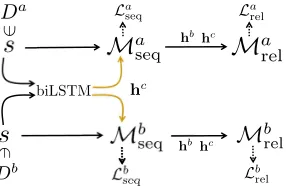
Figure 2: Adapting via shared representationshc.
Adaptation Models
Although distant supervision is an effective way to obtain large amounts of data, drawbacks of the automatically gen-eratedDa are also obvious. For example, some annotated
relations are incorrect (false positive) due to the heuristic grounding of knowledge base triples, and some true rela-tions may not be annotated (false negative) due to the low coverage of seed relations of the distant supervision process. On the other hand, there are many manually labeled datasets which are built for extracting entities and relations in various domains. They may not follow the same anno-tation schema withDa, but the high quality annotations in
them may provide some useful common knowledge which is invariant with respect to domains. Thus, it’s interesting to study whether we can improve model performances onDa
by adapting those heterogeneous datasets.
Adapting via Merging Datasets
Our first attempt is simply merging datasets Da andDb,
and feeding the merged dataset into a vanilla joint extrac-tion model (Mseq,Mrel). The system is the same as trained onDa, except that now it needs to work with larger sets of
entity typesTa e ∪ T
b
e and relation typesT a r ∪ T
b r.
However, according to our empirical evaluation (on the testing set ofDa), this simple solution fails to improve
per-formances. In fact, since the distant supervised set Da is usually much larger than the manually labeled set Db,
di-rectly mixing the two training sets is inefficient to explore the samples in Db. Thus, we may need to develop
fine-grained methods to control the adaptation process.
Adapting via Shared Representations
Instead of using a unified model, we could keep extraction models ofDaandDbseparated and capture interactions be-tween the two models using an additional model. Specif-ically, we break the task of adapting Db to Da into two steps. First, we try to identify shared information between the two datasets which will serve as common knowledge for extracting entities and relations. Second, we combine the shared and the private (dataset-dependent) information in each model’s prediction (Figure 2).
Formally, for each sentences∈Da, we feed it into a joint extraction model with a sequence modelMa
seqand a relation
model Ma
rel. Similarly, for sentences inD
b, we apply
an-other pair of modelsMb
seq,M
b
Markovic , the leader of the party.
Plushenko , ..., ended the evening in third place, behind Stephane Lambiel of Switzerland , ... , and
Brian Joubert of France . /people/person/nationality
U
(U,PER) (U, ORG)
ORG-AFF
leader party 1
U
(B,PER) (L,PER) (U, LOC)
Brain Joubert France
1
B L U
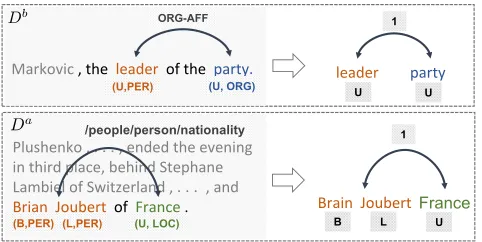
Figure 3: An example of different annotations and their transformation versions for the shared extraction tasks. The left part is original annotations inDaandDb. The right part
is corresponding annotations for the entity span detection and the binary relation detection.
in these models will aim to represent dataset-dependent fea-tures.
In order to encode the shared information, we introduce a new biLSTM chain which accepts both sentences fromDa
andDb. The hidden stateshc
iof this shared biLSTM are
con-catenated toha
i ofMaseqandhbi ofMbseqbefore performing the private prediction on the entity tagti,
Pseqa (ˆti|s) =Softmax(Wae(h a i ⊕h
c
i)), (6)
Pseqb (ˆti|s) =Softmax(Wbe(h b i⊕h
c
i)). (7)
The relation modelsMa
rel,Mbrel also build feature vectors fa
e1,e2,f
b
e1,e2using the shared representationh
c i.
Here, the main assumption is that if the representation hcis useful on bothDaandDb, it probably captures some
shared information between them. Thus, from the perspec-tive ofDa, instead of only using its private feature
repre-sentation, we also adapt some knowledge fromDbthrough the shared representation. Our major concern about only us-ing shared representations in adaptation is that the meanus-ing of shared information is unclear. In fact, there is no crite-ria about which representations are better except the end-performances. Thus, it may be possible thathchold unnec-essary information to overfit the training sets.
Adapting via Shared Tasks
Inspired by the separation of shared and private representa-tions, we can add more control on the adaptation process. A key observation is that althoughDa andDb have different annotation schemas, we can decompose the extraction tasks into overlapped subtasks. For example, to extract entities, we can first find the start and end positions of them, then determine their entity types. It is possible that even though entity typesTa
e,Tebare different, the distributions of the start
and end positions could be much closer in the two datasets. For example, in Figure 3, “party” and “France” are anno-tated with different entity types inDa andDb, but the start
positions of them are both right behind the preposition “of”. Thus, it would be reasonable to assume that they share a task of predicting boundaries of entity spans.
Figure 4: Adapting via shared tasks. As Figure 2, shared rep-resentations are included (the yellow flow). The main differ-ences are the new loss functions in red and blue .
Similarly, in order to extract relations, we can first pre-dict whether an entity pair forms a valid relation, then deter-mine their relation types. In Figure 3, entity pairs (“leader”, “party”) and (“Brian Joubert”, “France”) are annotated with different types inDa andDb, but both of them hold a
syn-tax relation of nominal modification. It suggests that we can also add a share task to predict the existence of a relation.
Formally, we introduce two shared tasks to help the adap-tation: entity span detection and binary relation detection (Figure 4). The entity span detection task focuses on lo-cating boundaries of entities. As for the ordinary entity ex-traction task, we apply a sequence labeling modelMc
seq. For each wordwi,Mcseqpredicts a tag in{B,I,L,O,U}to mark the appearance of an entity (ignoring specific entity types). It also shares hidden stateshc withMa
seqandMbseqas Equa-tion 6 and 7. More importantly, Mc
seq now equips with a loss functionLc
seqwhich is based on the entity span annota-tions in bothDaandDb. We computeLc
sequsing Equation 2 by transforming ground truth annotationstinto theBILOU schema.
Thebinary relation detectiontask is to predict whether a certain relation exists between an entity pair (ignoring spe-cific relation types). We use a relation modelMc
relwhich is applied on the candidate entity pairs fromMc
seq, and extract entity pair representationsfec1,e2 based on the hidden states hc. It will assign each entity pair a label in{0,1}to indicate
the existence of a relation. LikeMc
seq, we add a loss func-tionLc
relon outputs ofMcrelto supervise the training process. The computation ofLc
relfollows Equation 5 with true binary annotationsltransformed from the original typed relation la-bels. One additional observation is that we could also utilize representations of entity pairs fec1,e2 in the private relation models.
Comparing with sharing representations, the main differ-ence here is the loss functionsLc
Transition Loss Functions
Based on the designed shared tasks, we can add a set of con-sistent constrains to further control the relation between the shared and private models.
For entity models, Ma
seq outputs a posterior Pseqa (ˆti|s)
over the tag set{B,I,L,O,U} × Ta
e, and Mcseq outputs a posteriorPseqc (ˆti|s)over{B,I,L,O,U}which is a projected
set. A natural consistency requirement betweenPa
seqandPseqc is the margin constraint,
Pseqc (?|s) = X
∗∈Ta e
Pseqa ((?,∗)|s), ?∈ {B,I,L,O,U}.(8)
In other words, given a sentence inDaand a positioni, the
probability of being the start of an entity (B) should be the sum of probabilities of being the start of any specific entity (B, *). The same consistency problem also appears between
Pb
seqandPseqc .
Instead of adding hard constraints, we characterize the consistency using soft constraints. Specifically, we will try to minimize two newtransition loss functionsLa,transseq,L
b,seq trans, LOtrans,seq=kP
c
seq−MseqOPseqOk2, O∈ {a, b}. (9)
whereMa
seq, Mseqb are transition matrices which convert dis-crete distributionsPa
seq, Pseqb toPseqc . We can also add similar transition loss functions for the relation model,
LOtrans,rel=kPrelc −MrelOPrelOk2, O∈ {a, b}. (10) The adaptation model jointly minimize the sum of loss functions
X
M∈{a,b,c}
LM
seq+LMrel
+ X
O∈{a,b}
LOtrans,seq+LOtrans,rel(11)
To summarize, adapting via shared tasks is a finer model than only sharing representations. It has a clear interpreta-tion of the shared model, and the connecinterpreta-tion between the shared and the private task can be explicitly characterized. These prior knowledge on model design could make the learned models more stable and robust.
Training the Models
To train the joint model, we optimize the Equation 11 on two datasets in an alternative way. Specifically, we alternately select a random batch from the two datasets Da andDb,
then the Equation 11 on batchBis reduced to X
M∈{O,c}
LM
seq+LMrel
+LOtrans,seq+LO
,rel trans
,O∈ {a, b}.
(12) The training procedure is described in Algorithm 1. We em-ploy the scheduled sampling strategy (Bengio et al. 2015) in the entity model similar to (Miwa and Bansal 2016). We op-timize our model using Adadelta (Zeiler 2012) with gradient clipping. The network is regularized with dropout.4Within a fixed number of batches, we select the model according to the best relation performance on development sets.
4
Our word embeddings is initialized with 100-dimensional glove (Pennington, Socher, and Manning 2014) word embeddings. The dimensionality of the hidden units is 128. For all CNN in our network, the kernel sizes are 2 and 3, and the output channels are 25.
Algorithm 1The training procedure
Input: Da,Db,
Output: the trained model 1: randomly initialize parameters 2: whilethe model has not convergeddo 3: forO∈ {a, b}do
4: randomly select batchBfrom corpusDO
5: computeLO
seq,Lcseqon batchBby Equation 2
6: computeLOtrans,seqby Equation 9
7: generate candidate relations 8: computeLO
rel,Lcrelby Equation 5
9: computeLOtrans,rel by Equation 10
10: compute final lossLby Equation 12 11: update parameters by minimizing lossL
12: end for 13: end while
Experiments
We evaluate the proposed framework on public NYT
dataset. 5 The training set has 353k relation triples, which are generated by distant supervision. The test set is man-ually labeled and contains 3880 relation triples. Following (Ren et al. 2017; Zheng et al. 2017; Wang et al. 2018), we randomly select 10% of the test set as the development set and use the remaining data as evaluation. We use standard
ACE05dataset as the manually labeled dataset (see Figure 1)6.
We compute the Equation 3 according to (Sun et al. 2018). Specifically, the fe1,e2 is concatenated by six fea-ture vectors, namely, fe1,fe2,fmiddle,fleft,fright and fdist. fe1 and fe2 are feature vectors by running two CNNs on word representations of e1 and e2. Similarly, we build fmiddle with another CNN, on words between e1 and e2. We use “LSTM-Minus” method (Wang and Chang 2016; Zhang, Zhang, and Fu 2017; Sun et al. 2018) to compute left context feature vectorsfleftand right context feature vectors fright. Forfdist, we use one-hot feature vectors to represent the distance betweene1ande2in the sentence.
We evaluate the performances using precision (P), recall (R) and F1 scores. Specifically, an output entityeis correct if its type and the region of its head are correct, and an output relationris correct if itse1, e2, lare correct (i.e., “exactly match”). In previous work, the entity type are not consid-ered when computing the relation F1 score (Ren et al. 2017; Zheng et al. 2017; Wang et al. 2018). We also report this results for comparison.
In this paper, the default setting is the adaptation model with entity transition loss (line 6 in Table 2), which achieves the best relation performance on NYT dataset.
Results on NYT
First, we compare our method with previous work (Table 1). The first part contains pipelined methods, and the second part contains joint extraction models. The last part includes joint extraction models with the “exactly match” evaluation.
5
https://github.com/shanzhenren/CoType.
6
Relation
Model P R F
Gormley (2015) 55.3 15.4 24.0
Mintz (2009) 25.8 39.3 31.1
Tang (2015) 33.5 32.9 33.2
Hoffman (2011) 33.8 32.7 33.3
L&J (2014) 57.4 25.6 35.4
Ren (2017) 42.3 51.1 46.3
Zheng (2017) 61.5 41.4 49.5
Wang (2018) 64.3 42.1 50.9
Sun (2018) 67.4 42.0 51.7
Our Model 70.4 45.6 55.4
Sun (2018)(exactly match) 65.2 40.6 50.0
Our Model(exactly match) 68.3 44.2 53.7
Table 1: Results on the NYT dataset.
In general, our proposed method achieves significant im-provements over all the existing models in relation F1 score. In particular, it achieves 5.9 percent improvement over the joint sequence labeling method (Zheng et al. 2017) and out-performs 4.5 percent comparing with the joint transition-based system (Wang et al. 2018). Comparing with the state-of-the-art method (Sun et al. 2018), it achieves 3.7 point improvement. It shows that our method can boost the per-formance of distant supervision using the manually labeled high quality dataset.
Next, we analyse the contributions and effects of the var-ious components of our method (Table 2). We have some observations regarding this results.
1. “onlyDa” (line 1) is competitive with current best joint decoders (Wang et al. 2018; Sun et al. 2018). It suggests that basic modelsMseq,Mrel(see previous section) are ef-fective.
2. “Da∪Db” (line 2) has poor relation performance com-paring“only Da”. We think that directly mixing the two
datasets is inefficient since the Da dataset is much larger
than theDbdataset,
3. After exploiting the manually labeled ACE05 dataset via shared representations (line 3), it achieves slight improve-ments on both the entity and the relation performances. These observations show that the shared representations can improve performances and it is a simple method for adapta-tion model.
4. After adding two shared tasks (line 4), both the entity and relation performances have large improvements (1.2 per-cent for entity and 2.7 perper-cent for relation). It demonstrates that this model can combine the paradigms of adapting via merged dataset and adapting via shared representations in a more careful way.
5. After imposing the transition losses both on entity model and relation model (line 5), the relation performance has slight improvement (0.1 percent), but the entity performance decreases. Interestingly, when we keep only transition loss
Entity Relation
Model P R F P R F
onlyDa 82.6 91.2 86.7 61.8 43.3 50.9
Da∪Db 84.5 91.9 88.1 60.7 42.3 49.8
onlyhc 83.5 93.1 88.0 65.6 42.0 51.2
hc+Lc 86.2 92.5 89.2 66.5 45.4 53.9
+Ltrans 82.8 89.6 86.1 64.8 46.2 54.0 +Lseqtrans 86.6 92.9 89.6 70.4 45.6 55.4
+Lrel
trans 87.2 93.9 90.4 72.9 40.9 52.4
Table 2: Results on the NYT dataset in different settings. “onlyDa” uses basic models trained onDa; “Da∪Db”
de-notes the adaptation model via merging datasets; “onlyhc” denotes adaptation model via shared representations; “hc+ Lc” is the adaptation model via shared task. “+Ltrans” is
the “hc+Lc” with entity and relation transition losses;
Sim-ilarly, “+Lseqtrans” and “+Lreltrans” keep only transition losses on entity and relation respectively.
Percentage Entity Relation
ofDb P R F P R F
100% 86.6 92.9 89.6 70.4 45.6 55.4
75% 83.6 91.1 87.2 69.0 42.0 52.2
50% 85.9 92.7 89.2 62.8 47.6 54.2
25% 84.5 91.4 87.8 67.3 44.5 53.6
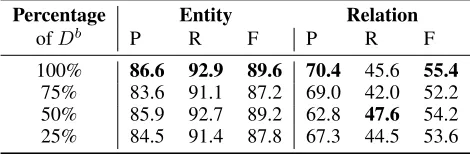
Table 3: Results on the NYT dataset varying on the percent-age of the ACE05 dataset.
on entity model (line 6), it largely improves the relation per-formance. Meanwhile, when we keep only transition loss on relation model (line 7), it fails to improve relation perfor-mance but achieves the best entity perforperfor-mance. These ob-servations show that the transition loss added to the entity model or relation model could bias the performance of en-tity or relation. One possible reason is that the enen-tity model and the relation model are closely related to each other, and imposing restrictions on one side will affect the other. How-ever, how they affect each other in this joint settings is still a open question.
Thirdly, we present the influences of quantity of manually labeled dataset (Table 3). We randomly select 25%, 50%, 75% of the ACE05 dataset. We note that as the quantity increases, the performance does not increase steadily. We think this is caused by random sampling. In other word, the impact of each sample of ACE05 dataset on performance is different. For example, the result with 50% ACE05 dataset has high recall, but the result with 100% ACE05 dataset has high precision. How to select samples efficiently could be an interesting future work.
S1 after the authorities described suspects talking about blowing up the [sears tower]ORGcontains-2:♥♣♠ :♥♣in [chicago]LOCcontains-1:♥♣♠ :♥♣and the f.b.i. ’s [miami]LOC:♥♣♠headquarters .
S2 said [dennis rice]PER:♥♣♠
company-1:♥♠, senior vice president of marketing for [disney]
ORG:♥♣♠
company-2:♥♠’s buena
vista [pictures]ORG:♣unit .
S3 in [california]LOCcontains-1:♥♣♠ :♥♣♠|contains-3:♣ , where parents first started educational founda-tions in response to a statewide law capping property taxes , the combined district of [santa monica]LOCcontains-4:♥♣♠ :♣|contains-2:♠and [malibu]LOCcontains-2:♥♣♠ :♥♣requires . . .
Table 4: Examples from the NYT dataset with label annotations from “+Lseqtrans” model and “onlyhc” model for comparison. The♥is the gold standard, and the♣,♠are the output of the “+Lseqtrans” ,“onlyhc” model respectively.
(B,PER)(B,LOC)(B,ORG)(I,PER) (I,LOC) (I,ORG) (L,PER)(L,LOC)(L,ORG)(U,PER)(U,LOC)(U,ORG) O
B I L U O
0.0 0.2 0.4 0.6 0.8 1.0
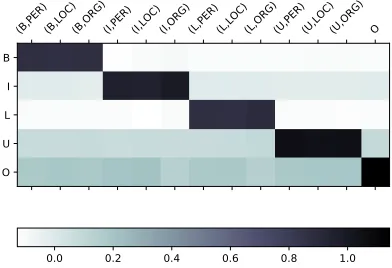
Figure 5: Visulization of the transition matrixMa
seq.
For example, the probability of tag B mainly comes from the transition of tag (B,PER), (B,LOC) and (B,ORG). In addition, to compare with automatically learned transition matrix, we try to fix the matrix by the mapping between the tag of original task and the tag of shared task. Specifically, in Figure 5, the diagonal entries are set to 1.0, while others are set to 0.0. In this case, it achieves 88.9 entity F1 score and 52.8 relation F1 score, demonstrating the effectiveness of the soft constraints on modeling consistency.
Fifthly, we examine the performance with respect to dif-ferent distances between entity pairs (Figure 6). In general, our model outperforms the two baselines significantly when the distance is lower than 6. Besides, we observe that the performances of all models are very low when the distance is greater than 6. Thus, joint decoding algorithms which can capture long distance dependencies might be a promising di-rection in this joint extraction task.
Finally, in this work, we focus on improving distantly su-pervised information extraction using high quality hetero-geneous datasets. We report the performances on ACE05 dataset. We use the same data split as previous work (Li and Ji 2014; Miwa and Bansal 2016; Sun et al. 2018). Our ba-sic models achieve 57.8 relation F1 score trained on ACE05. Comparing with the model only trained on ACE05, our sys-tems (with NYT) have nearly the same performance. For example, our best model “+Lseqtrans” achieves 56.6 relation F1 score on test set. We think the automatically generated
1 2 3 4 5 6
distance between entity pairs 30
40 50 60 70
F1 score
+ seq trans only hc Da Db
Figure 6: F1 scores on NYT dataset with respect to the dis-tance between entity pairs.
data degrades the quality of whole dataset, due to it includes many noisy samples and has the low coverage.
Case Study
We compare the “+Lseqtrans” with the “only hc” on some concrete examples, as shown in Table 4. For S1, our model identifies acontainsrelation between “[chicago]LOC” and
“[sears tower]LOC”, while the “onlyhc” do not find this
re-lation even the entities are correct. For S2, the “+Lseqtrans” does not detectcompanyrelation while the “onlyhc” cor-rectly find it. These two observations show that our model is good at dealing with the situation when the distance between entities is low, as expected. For S3, the “+Lseqtrans” wrongly identifies the relation between “[california]LOC” and “[santa
monica]LOC” even the relation between “[california]LOC”
and “[malibu]LOC” is detected. We think advanced
improve-ment methods which model dependencies between relations might be helpful in this situation.
Conclusions
tasks and imposing consistency constraints between shared extraction tasks and the original extraction tasks, our frame-work could control the adaptation process in a more care-ful and interpretable way. Experiments on benchmark NYT dataset show the effectiveness of the proposed methods.
Acknowledgements
The authors wish to thank all reviewers for their help-ful comments and suggestions. The corresponding author is Yuanbin Wu. This research is supported by STCSM (18ZR1411500).
References
Augenstein, I.; Ruder, S.; and Søgaard, A. 2018. Multi-task learning of pairwise sequence classification Multi-tasks over disparate label spaces. InProc. of NAACL, volume 1, 1896– 1906.
Bengio, S.; Vinyals, O.; Jaitly, N.; and Shazeer, N. 2015. Scheduled sampling for sequence prediction with recurrent neural networks. In Advances in Neural Information Pro-cessing Systems, 1171–1179.
Caruana, R. A. 1993. Multitask learning: A knowledge-based source of inductive bias.Machine Learning Proceed-ings10(1):41–48.
Chen, X.; Shi, Z.; Qiu, X.; and Huang, X. 2017. Adversarial multi-criteria learning for chinese word segmentation. In Proc. of ACL, 1193–1203.
Chen, H.; Zhang, Y.; and Liu, Q. 2016. Neural network for heterogeneous annotations. InProc. of EMNLP, 731–741. Collobert, R., and Weston, J. 2008. A unified architecture for natural language processing: Deep neural networks with multitask learning. InProc. of ICML, 160–167.
Gormley, M. R.; Yu, M.; and Dredze, M. 2015. Improved re-lation extraction with feature-rich compositional embedding models.arXiv preprint arXiv:1505.02419.
Hoffmann, R.; Zhang, C.; Ling, X.; Zettlemoyer, L.; and
Weld, D. S. 2011. Knowledge-based weak
supervi-sion for information extraction of overlapping relations. In Proceedings of the 49th Annual Meeting of the Asso-ciation for Computational Linguistics: Human Language Technologies-Volume 1, 541–550.
Jalali, A.; Sanghavi, S.; Ruan, C.; and Ravikumar, P. K. 2010. A dirty model for multi-task learning. InAdvances in neural information processing systems, 964–972. Jiang, W.; Huang, L.; and Liu, Q. 2009. Automatic adap-tation of annoadap-tation standards: Chinese word segmenadap-tation and pos tagging – a case study. InProc. of IJCNLP, 522– 530.
Katiyar, A., and Cardie, C. 2017. Going out on a limb: Joint extraction of entity mentions and relations without depen-dency trees. InProc. of ACL, 917–928.
Li, Q., and Ji, H. 2014. Incremental joint extraction of entity mentions and relations. InProc. of ACL, 402–412.
Liu, P.; Qiu, X.; and Huang, X. 2017. Adversarial multi-task learning for text classification. InProc. of ACL, 1–10.
Mintz, M.; Bills, S.; Snow, R.; and Jurafsky, D. 2009. Dis-tant supervision for relation extraction without labeled data. InProc. of IJCNLP, 1003–1011. Suntec, Singapore: Asso-ciation for Computational Linguistics.
Miwa, M., and Bansal, M. 2016. End-to-end relation extrac-tion using lstms on sequences and tree structures. InProc. of ACL, 1105–1116.
Miwa, M., and Sasaki, Y. 2014. Modeling joint entity and relation extraction with table representation. In Proc. of EMNLP, 1858–1869.
Peng, N., and Dredze, M. 2016. Multi-task
multi-domain representation learning for sequence tagging.CoRR, abs/1608.02689.
Peng, H.; Thomson, S.; and Smith, N. A. 2017. Deep mul-titask learning for semantic dependency parsing. InProc. of ACL, 2037–2048.
Pennington, J.; Socher, R.; and Manning, C. 2014. Glove: Global vectors for word representation. InProc. of EMNLP, 1532–1543.
Qiu, X.; Zhao, J.; and Huang, X. 2013. Joint Chinese word segmentation and POS tagging on heterogeneous annotated corpora with multiple task learning. InProc. of EMNLP, 658–668.
Ren, X.; Wu, Z.; He, W.; Qu, M.; Voss, C. R.; Ji, H.; Ab-delzaher, T. F.; and Han, J. 2017. Cotype: Joint extraction of typed entities and relations with knowledge bases. InProc. of WWW, 1015–1024.
Søgaard, A., and Goldberg, Y. 2016. Deep multi-task learn-ing with low level tasks supervised at lower layers. InProc. of ACL, 231–235.
Sun, C.; Wu, Y.; Lan, M.; Sun, S.; Wang, W.; Lee, K.-C.; and Wu, K. 2018. Extracting entities and relations with joint minimum risk training. InProc. of EMNLP.
Tang, J.; Qu, M.; Wang, M.; Zhang, M.; Yan, J.; and Mei, Q. 2015. Line: Large-scale information network embedding. In Proc. of WWW, 1067–1077.
Wang, W., and Chang, B. 2016. Graph-based dependency parsing with bidirectional lstm. InProc. of ACL, 2306–2315. Wang, S.; Zhang, Y.; Che, W.; and Liu, T. 2018. Joint extrac-tion of entities and relaextrac-tions based on a novel graph scheme. InIJCAI, 4461–4467.
Zeiler, M. D. 2012. Adadelta: an adaptive learning rate method.arXiv preprint arXiv:1212.5701.
Zhang, M.; Zhang, Y.; and Fu, G. 2017. End-to-end neu-ral relation extraction with global optimization. InProc. of EMNLP, 1731–1741.