A Current-View on Rural Settlements in the Republic of Turkey
Yasemin KUSLU
Atatürk University, Faculty of Agriculture, Agricultural Structures and Irrigation Department, 25240 Erzurum, Turkey Email: [email protected]
This study discussed regulations related to village and rural development in the history of the Republic of Turkey. Also, it deals with different physical planning approaches of rural settlements and their success situations and the spatial problems of rural settlements. In recent years, the view of the people and the capital to rural settlements had changed gradually in Turkey. On the one hand, abandoned villages in terms of the young and dynamic labor force, on the other hand, the necessity of making these areas attractive for the efficiency of agricultural production emerges as a dilemma. The villages had come to the agenda again for urban people because of the reasons such as the desire to get away from the stuffy environment of the city by means of rural tourism. In this paper, in the light of these general situation assessments, possible targets of the village renewal studies were put forward.
Keywords: Rural settlements, Village Renovation, Models, Planning, Turkey
INTRODUCTION
Rural settlements are formed within own natural, economic and social structure of each country (Kuslu and Yaganoglu, 2007; Tu et al., 2018). These settlements have been established in natural ways in the historical process or in artificial ways in obligatory situations such as floods, earthquakes, landslides or social conflicts. Unlike the villages that were formed during the natural process, the settlements established later on were generally “planned” (Conrad et al., 2015; Long and Liu, 2016; Kuslu et al., 2017a). It is natural that rural settlements have different characteristics among countries. Because many of these settlements are proof of the tradition and living history of that country (Guri et al., 2014). However, a general description of rural settlements can be made as follows: Rural settlements have been one of the main factors that should be evaluated together with the changes in social and economic conditions. In many studies, rural settlements are defined as places outside the settlements considered as cities (Francis et al., 2012; Gomez et al., 2019). The most prominent features of these units can be listed such as economic activities are predominantly based on the use of natural production resources, face-to-face relationships are relatively more common, living conditions are more shaped according to customs and traditions. Moreover, technical, technological, economic, and social developments are generally more shaped. (Demirel, 1999; Eminağaoğlu and Çevik, 2007; Okuroğlu et al., 1994; Owen, 1998; Takka, 1998).
When viewed in the historical process of the rural areas in Turkey (or villages in general) "security" sense appears to the first reason for establishing. So it is seen the homogeneity in terms of ethnicity and religion. Most of them have been formed by close groups due to relatives or consanguinity. Refocusing on rural settlements has emerged as a necessity on October 29, 1923, with the establishment of the Republic of Turkey. Because, the young country Republic of Turkey, that has newly come out of long year's wars and changed the form of government, was adopting a production model that is based on agricultural production. Agriculture was the propulsion of the economic sectors (Gümüş and Körhasan, 2009). Based on this, different rural settlement development and improvement models have been put forward by different governments in the country's history. In this study, the village renewal and development models applied in the history of the Turkey Republic are discussed. The current situation and sustainability of these models have been evaluated.
Different Approaches and Objectives of Rural Settlements in Turkey
In the context of the history of Turkey, it has been seen that the first consideration of the rural settlements was done in the Village Law of 447 number (Official Gazette, 1924). And, some specific examples of the Republic of
Research Article
Turkey was asked to put forward in a model village (Çetin 1999). This model village typical of the Republic of Turkey was exposed. The first activities of this law were applied for the rehabilitation of villages which became completely unusable during the First World War (Atatürk, 2019; Takka, 1998). Later on, immigrants who came with population exchange were settled in these villages. These applications were very important to show the village model in the Republic of Turkey that overlaps with the world village model in terms of physical planning. The most comprehensive practical implementation of rural area planning is the “pilot village” or “sample village”. For this purpose, studies carried out in four villages within the provincial borders of Istanbul in 1961 (Gümüş and Körhasan, 2009).
This practice was abandoned due to the high project cost, the possibility of investment concentration in a certain area, and contrary to the principle of collective development. In the following periods, the idea that rural settlements should be arranged in their own geographic and administrative region prevailed (Çetiner, 1990; Eminağaoğlu and Çevik, 2005). Since the foundation of the Republic, studies on rural areas had been carried out under different names such as “central village”, “village-town” and “agro-urban". These models were constructed in the context of political preferences under the different government regimes but all of the projects had not been applied (Çetin, 1999; Turgut, 2011).
In the central village approach, the objective is to ensure the effective delivery of the services that the public institutions are responsible for providing to the village and the farmers. This approach focuses on the solution of the dispersed settlement types, which is one of the most important problems in rural planning. Also, it is aimed to rationally carry out the services for the rural area, to provide suitable space for industrialization and for ease of becoming an institution (Göksu, 1982; Okuroğlu et al., 1994).
The village-town approach is a restructuring and spatial arrangement model based on the division of labor between settlements, aiming to integrate the village and the city for development. In this model, it is aimed to gather the services in a center, to transfer the production to the industry and to take the services offered to the city to these centers based on the principle that development should start from the peasantry (Çetiner, 1990; Eminağaoğlu and Çevik, 2005; Çolakoğlu, 2007).
In the agro-urban approach, the principle of combining about ten nearby villages in terms of services and facilities and to provide the social, infrastructure, and health facilities offered to the cities had been taken into consideration. It is also envisaged to establish producer unions for economic advance (Çetiner, 1990; Eminağaoğlu and Çevik, 2007). The aforementioned approaches are not distinctly different from each other.
Each has well-intentioned objectives, such as increasing agricultural production and the peasant's development opportunities, raising his income by rationally using the power of production. But these approaches have been prepared with a centralized thinking structure and they have been tried to implement without providing public participation and their reflections on social and cultural space. As the scope, concept and application areas of political authorities' development models are time-variant. Therefore, it could not be implemented completely, and efficient results could not be obtained.
Spatial Problems of Rural Settlements in Turkey
Even still, the problems caused by migration from rural areas to urban areas in Turkey since the 1950s have not been fully solved, it is observed that the rural population has decreased rapidly in recent years (Figure 1). This situation makes it difficult for both the peasant and the urbanization to gain quality, and it is placed among the issues waiting for a national solution (Öztürk and Mengüloğlu, 2008).
Figure 1. The number of villages and rural population rates in Turkey for long years
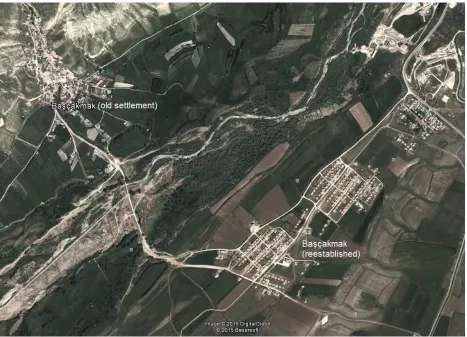
Figure 2. An example village image reestablished due to earthquake in Erzurum in Turkey
The current state of the Village Law is not suitable for the realization of the expansion and construction of the villages in accordance with scientific conditions and to fulfill the rural peoples’ requirements healthily. Statistical data, obtained from Turkish Statistic Institute (TSI), shows that 95% of the structures in the villages are contrary to the legislation of the Village Law. One of the most important reasons for this irregular constructions is that the village settlement limits have not been defined yet. Therefore, any type of new constructions in the villages can also be unplanned.
Importance of Village Renovation Activities in Rural Development Plans
According to the general assumption in Turkey's industrialization is a tight relationship between urbanization and development but defends might urbanization. Therefore, investments in rural areas had remained less than in urban areas. Consequently, the balance between villages and cities have deteriorated. Göksu (1982) states that the "city" definition is different in developed countries. According to this situation, the city is defined not only as of the areas where the city is settled but as areas where the prosperity of urbanization can reach. In other words, village settlements are located within the urbanized region (Arendt et al., 1994). According to Owen (1998), rural people have an influential role in the
decisions that have been taken at a regional scale for sustainable development planning in developed countries. This situation is especially encouraged by rural people to participate directly or indirectly in the planning process.
science, art and health rules. In this law, taking into account the development and expansion potential of the village, the resettlement of the village settlement borders should be left to the metropolitan municipal council or the provincial general assembly.
The fact that the urban conditions are more attractive to the young population is an issue that should be considered in terms of the indispensability of the young labor force in agriculture (Kuslu, 2008). Village renovation and modernization works may be one of the solutions to this problem. Rapid industrialization and uncontrolled rural migration and mismatch in land-human relations adversely affect the integration of villages and cities. The increasing tendency of urban people to nature, the desire to learn about different cultures and lifestyles, and the feeling of moving away from crowded urban environments bring rural areas to the agenda. The interest in rural areas in the regions with touristic texture increases especially in summer months and the population of these settlements increases several times during certain periods of the year (Kuşat, 2014). This situation is gradually changing the view of the investors, urban people, and capital towards the village. This change must be compatible with the protection of agriculture and natural resources.
The different situations mentioned above reveal the necessity of renewing, developing and transforming rural settlements into an alternative living space. Rural planning in the country is created by associating with agriculture in the past. However, the existence of a rural area different from agriculture, the opportunities to be examined outside agriculture, the experiences that have occurred over the centuries, the advantages that biodiversity and cultural diversity can bring are issues to be considered (Kuslu et al., 2017a). In the following years, it is clear that adaptation to the developments in the field of rural development and the accordance with the European Union should be at the forefront in the development and renewal of rural areas in the world.
What Are the Possible Targets of Village Renovation Work?
About 100 years ago, the "modern village" targets, dreamed by the Republic of Turkey and laid down via law, have not been reached in all regions of the country. Soil is the most common form of existence of the villages as well as the element of production. However, land consolidation has become the primary condition for reasons such as the uneven distribution of ownership, the inability to use the agricultural land at full capacity due to the immigration of some of the landowners, the shapeless and fragmented agricultural lands and the insufficient rate of utilization of on-farm development services (Kuslu and Yaganoglu, 2007; Kuslu and Ertem, 2019). However, one or more of the following practices should be targeted within the scope of village renewal and development (Arendt et. al, 1994; Çetiner, 1990, Demirel et al., 1997; Takka, 1998; Turgut, 2011).
• Shifting the structures in areas that may be exposed to disasters such as landslides, floods, and earthquakes to safe areas (Kuslu et al., 2017a) • Eliminating the infrastructure deficiencies of the
settlement
• Reconsideration of agricultural areas that have lost or are likely to lose their function (Kuslu et al., 2017b) • Construction of missing social and public facilities in
the village settlement (school, library, health center, recreation and entertainment areas, playgrounds, parks, fountains, etc.)
• Adjusting the transportation system in the village and agricultural lands and making the roads suitable for pedestrian and vehicle traffic
• Establishment of common spaces for agriculture and animal husbandry
• Addressing the historical and cultural structures in the village settlement areas and restoring them if necessary
• Establishing an alternative living space for urban life by identifying the elements that will reflect the characteristics of the village life and reveal the original characteristics
• Development of local administration elements and opening of business lines that can keep the young population in the village
• Afforestation of village settlements, increasing green areas and making more important rural values more visible
• Preservation of elements such as trees, tree groups, and shrubs present in the village or the countryside, eliminating bad-looking and negative elements • In addition to focusing on elements that may be
attractive in terms of tourism, developing service sectors such as rest and accommodation
CONCLUSIONS AND RECOMMENDATIONS
Although there are no definite statements in the definition of the rural settlements and the determination of their borders, the "legal boundary” and demographic definitions are available in Turkey's laws. Definition of "the main occupation of the places that agricultural activities" are inadequate to express. Because it is now possible to talk about different activities such as tourism and industry for rural settlements. Population density, social structure, lifestyle, spatial texture, economic structure, natural habitats, environmental relations, and unique identity characteristics should be included in the scope of such updates and rural settlements. Uncontrolled migration of the young population can also be prevented in rural areas where economic concerns are removed.
Thus, the elements that can cause loss of life and property can be eliminated. As a requirement of the Reconstruction Law No. 3194, which has come into force in its new form, many villages have turned into neighborhoods. The development and expansion plans of these villages, as well as the neighborhoods, can be made effectively by the municipalities at the provincial and district levels.
To solve the problems related to rural areas, it is important to plan and elaborate on a regional scale away from the centralist approach. Also, it is necessary to make the compulsory legal arrangements to keep the proposed solutions and programs prepared above the political authority and ensure their continuity. In this way, the urban-rural segregation levels can be reduced.
To summarize, in the renewal and development of rural settlements, the current structural situation, geographical location, topographic characteristics, the possibility of natural disasters, rural appearance and socio-cultural structures should be taken into consideration. If deemed necessary, future development plans should be reduced to the provincial and district levels.
REFERENCES
Arendt R, Brabec EA, Dodson HL, Reid C, Yaro RD (1994). Rural by Design: Maintaining Small Town Character, Lincoln Institue of Land Policy. University of Massachusetts, Massachusetts.
Atatürk MK (2019). Nutuk 1919-1927. (e-book) (Atatürk's Speech in Turkish). https://ekitap.ktb.gov.tr/TR-81464/nutuk.html (Accessed 20.12.2019)
Conrad C, Rudloff M, Abdullaev I, Thiel M, Loew F, Lamers JPA (2015). Measuring rural settlement expansion in Uzbekistan using remote sensing to support spatial planning. Appl. Geogr. 62: 29–43.
Çetin T (1999). Modern Türkiye Yaratma Projesinin Orijinal Bir Boyutu: Örnek Köyler, 75 Yılda Köylerden Şehirlere. (Book in Turkish), Tarih Vakfı Yayınları, Numune Matbaası, İstanbul.
Çetiner A (1990). Kırsal Yerleşmeler ve Fiziki Düzenleme İlkeleri. (Book in Turkish), İTÜ, Mimarlık Fak. Yay., İstanbul.
Çolakoğlu E (2007). Village-town project as a solution to rural development problem. ZKÜ Sosyal Bilimler Dergisi, 3(6): 187–202.
Demirel Z, Takka S, Işık A (1997). Ülkemizde köy yenileme uygulaması. 6. Ulusal Kültürteknik Kongresi 5-8 Haziran 1997, Bursa-Kirazlıyayla, 24-33.
Demirel Z (1999) Arazi Toplulaştırma. (Book in Turkish), YTÜ.İN. DN-99.0486, Fakülte Yay. No: İN.JFM-99.001, YTÜ Basım-Yayın Merkezi, İstanbul,
DPT (2000). 8th Five-Year Development Plan,
http://ekutup.dpt.gov.tr/plan/viii/plan8.pdf, (Accessed 20.03.2019)
DPT (2006). 9th Five-Year Development Plan,
http://ekutup.dpt.gov.tr/plan/plan9.pdf, (Accessed 20.03.2019)
DPT (2019). 11th Five-Year Development Plan,
http://www.sbb.gov.tr/wp- content/uploads/2019/11/ON_BIRINCI_KALKINMA-PLANI_2019-2023.pdf, (Accessed 20.03.2019)
Eminağaoğlu Z, Çevik S (2005). Kırsal yerleşmelere ilişkin tasarım ve planlama politikalarının bölgesel ölçek içinde değerlendirilmesi. Planlama, 2: 72-81.
Eminağaoğlu Z, Çevik S (2007). Kırsal yerleşmelere ilişkin tasarım politikaları ve araçlar. Gazi Üniv. Müh. Mim. Fak. Der., 22(1): 157-162.
Francis CA, Hansen TE, Fox AA, Hesje PJ, Nelson HE, Lawseth AE, English A (2012) Farmland conversion to non-agricultural uses in the US and Canada: Current impacts and concerns for the future. Int. J. Agric. Sustain. 10: 8–24.
Gomes E, Abrantes P, Banos A, Rocha J, Buxton M (2019). Farming under urban pressure: Farmers’ land use and land cover change intentions. Appl. Geogr. 102: 58–70.
Göksu Ç (1982). Kümelenmiş Kentsel Sistemler Mekan Örgütlenmesi İçin Bir Model Araştırması. (Book in Turkish), Karadeniz Teknik Üniversitesi Basımevi, Trabzon.
Guri F, Jouve AM, Dashi E (2014). Impact of rural migration on farm land use in northeastern Albania. New Medit. 13: 22–30.
Gümüş H, Körhasan M (2009). Demographic change in urbanized rural settlements of Turkey. e-Journal of New World Sciences Academy Nature Sciences. 4(1): 20-34.
Kuslu Y (2008). Effects of an irrigation project in prevention of migration from rural areas. Water Resour. Manage. 22(5): 611-619. https://doi.org/10.1007/s11269-007-9181-0
Kuslu Y, Sahin U, Kızıloglu FM, Okuroglu M (2017)a. Reestablished rural settlements: the case study of Erzurum Başçakmak settlement. J. Agric. Fac. Uludag Univ. 31(1): 39-47.
Kuslu Y, Sahin U, Kızıloglu FM, Okuroglu M (2017)b. Agro-ecological zones and land use planning at the Kuzgun Dam irrigation area. Atatürk Univ. J. Fac. Agric.48(2): 99-105.
Kuslu Y, Ertem E (2019). Evaluation of the land consolidation project of the Beypınarı district of Erzurum province in terms of road network adequacy. Atatürk Univ. J. Fac. Agric., 50(3): 274-281, https://doi.org/10.17097/ataunizfd.541809
Kuşlu Y, Yağanoğlu AV (2007). Determination of rural infrastructure on the irrigation area of the Kuzgun Dam. Atatürk Univ. J. Fac. Agric., 38 (1): 71-81.
Kuşat N (2014). Rural tourism as an alternative for sustainable rural development and its applicability in Turkey. The Inter. J. Econ. Soc. Res., 10(2): 65-87. Long H, Liu Y (2016). Rural restructuring in China. J. Rural
Stud. 47: 387–391.
Official Gazette (1924). Village Law. http://www.mevzuat. adalet.gov.tr/html/368.html (Accessed 20.03.2019) Official Gazette (2011). Reconstruction Law.
http://www.mevzuat.adalet.gov.tr/html/711.html (Accessed 20.03.2019)
Okuroğlu M, Yağanoğlu AV, Örüng İ (1994). Kırsal Yerleşim Tekniği. (Book in Turkish), Atatürk Üni. Zir. Fak. Ders Kitapları Yay. No: 165, Erzurum.
Owen S (1998). The role of village design statements in fostering a locally responsive approach to village planning in the UK, J. of Urban Design 3(3): 359-380. Öztürk T, Mengüloğlu M (2008). The planning of physical
rural area in sustainable progressing, J. of Fac. of Agric., OMU, 23(3): 209-215.
Takka S (1998). Kırsal Alanın Geliştirilmesinde Arazi Toplulaştırmasının Önemi ve İzmir-Bergama-Kadıköy Köy ve Arazi Gelişim Projesi. (Book in Turkish), Köy Hizmetleri Vakfı Yayınları No:1, Ankara,
TSI (2019). Turkish Statistic Institute, http://www.turkstat.gov.tr/UstMenu.do?metod=kategori st (Accessed 20.03.2019)
Tu S, Long H, Zhang Y, Ge D, Qu Y (2018). Rural restructuring at village level under rapid urbanization in metropolitan suburbs of China and its implications for innovations in land use policy. Habitat Int. 77: 143–152. Turgut K (2011). Kırsal yerleşimlerin dönüşümü için bir öneri: köy yenileme programı. İdarecinin Sesi, Temmuz- Ağustos: 66-70.
Accepted 27 December 2019
Citation: Kuslu Y (2019). A Current-View on Rural Settlements in the Republic of Turkey. Journal of Agricultural Economics and Rural Development, 5(3): 678-683.