A Study on the "Flexibility" of Information Systems (Part 4): Theoretical Summary and
the Validation with Examples
Author Details: Masaru Furukawa 1. Introduction
Today, an organization’s success depends heavily on information technology (IT) because many organizations rely on their management information systems (MISs). Nevertheless, organizations, especially their IT
managers, struggle to bridge the large gap between IT implementation and business strategies to achieve maximum output from their MIS. Table 1 illustrates in detail the gap between the information system (IS) division and its corporate end users.
Over the past 50 years, IT managers have been struggling with this gap while seeking to resolve the issue. The literatures (Earl, 1993; Segars & Grover, 1999; Tallon et al., 2000; Jorfi et al., 2011) suggest that MIS flexibility could be one solution; however, few studies on practical approaches employ MIS flexibility planning to align IT and business strategy. Consequently, this paper focuses on the theme of IT/business strategy alignment to explore the solution to alleviate IT managers’ problems by means of solving the following question: How should we make our existing MIS flexible to absorb possible future demands for change?
To answer this question, this paper explores the mechanism of IT/business strategy alignment and presents a practical, strategic planning scheme for MISs, whereby the concept of the future-oriented penalty of change (POC) analysis (Furukawa & Minami, 2013) and its methodology (Furukawa, 2013) is employed to overhaul the IT infrastructure (ITI).
2. The Planning Scheme for MIS flexibility 2.1 Definitions of MIS flexibility via POC
Today, most organizations are using their own MIS. Thus, it is indispensable for organization to perform effective and efficient management and business performance. Therefore, our study considers that the business performance of an organization is the results of utilizing its MIS function, and can be defined by the cost and time to create and maintain its function.
Parker & Benson (1988), to be referred in the case study in the next section, classified the MIS value into six types, and the value of IT infrastructure was defined as the sixth value to support the generation of other five values. By using their ideas, with the assumption of MIS value as the MIS contribution to business performance, Furukawa & Minami (2013) defined MIS value as Formula (1), and MIS flexibility as Formula (2).
POC reward MIS value
MIS (1)
POC y flexibilit
MIS 1 (2)
MIS reward, right-hand side numerator of formula (1), represents the reward obtained by using MIS functions. And, in order to obtain this reward, it is necessary to pay the penalty (POC) as denominator. Larger MIS reward and smaller POC makes MIS value larger. Obviously, larger MIS reward and smaller POC is preferable.
Formula (2) represents the relationship between MIS flexibility and POC. MIS flexibility is large, POC small. MIS flexibility insufficient, POC increases. In this sense, POC can be used as an evaluation index of MIS flexibility. And this index can be used to explore the solution for the IT manager’s problems illustrated in Table 1. Because, small POC means that MIS can be changed quickly, easily and with low cost.
2.2 Probabilistic definition of POC and MIS flexibility
Chryssolouris (1996), researcher in the industrial machines, described the following: change can be expressed as a transition from one state to another; multiple changes exist as alternatives; each alternative requires each POC; adoption of specific alternative can be expressed as a probabilistic event.
Because this idea is helpful to the present purpose, it is used for the POC calculation in the following formula as the decision-making problem of alternative selection (Furukawa, 2000 & 2001):
alternative'sPOC alternative'sProbability POC
of value
Expected
(3)In this paper, Formula (3) has the following meanings:
How should we make our existing MIS flexible to absorb possible future demands for change?
To seek a more tangible answer, this question can be expressed in the following terms:
How can we properly incorporate factors into our MIS flexibility that will minimize the potential POC, which may be incurred by changing its functionality to adapt to future demands for change, when we are proactively redesigning its architecture?
2.3 Need for enhanced MIS performance
To acquire MIS value, organizations must address the demands of changing environments that generate MIS-external demands (upper left of Figure 1), prompting them to revise their strategies and incorporate these demands as business objectives into SIS planning. To address the demands of MIS-external change, the IT division must maintain sufficient processing capability to enhance MIS flexibility. Doing so generates demands for MIS-internal change (right side of Figure 1) in order to enable MIS-Service-Supply to meet the demands for MIS-external change.
Nevertheless, changes to MIS require management resources, which should be considered by POC. In reality, these resources are rarely provided; therefore, it is difficult for an IT division to process each change in demand in the time required, delaying the execution of business strategies. Therefore, it is recommended that for the IT division to break this inappropriate cycle, it must learn how to predict demands for change and enhance MIS flexibility to manage those demands by redesigning the IT infrastructure with minimal POC. This approach calls for the adaptability of innovative technologies, such as the exchange of IT infrastructural components.
2.4 Construction of MIS flexibility
When an IT division undergoes a change, as illustrated in Figure 1, the demand is external:
Changes in the business strategy to address external demands for MIS change, such as changes in laws and institutions. These demands for change have to be executed within a predetermined time.
Changes in the corporate business process to enhance performance (i.e., business process reengineering (BPR)).
Changes to the ITI architecture to address internal demands for MIS change, such as the IT division aiming to supply better services to corporate end users.
These changes, with their multiple motivations, should enhance the effectiveness of the existing MIS as well as its capacity to anticipate potential change in demands.
2.5 Significance of redesigning the IT infrastructure
obtain adequate resources from its organization to execute the ITI redesign, which explains the reluctance of many IT divisions to enter into the redesign process (Gebauer & Schober, 2006).
Category Meaning Causes Risks Risk evasion strategies
H a rd w a re E x c h a n g e - a b ilit y
easiness of
exchange and
change of hardware items
machine
replacement system unusable
enhancement of connection interchangeability; enhancement of upper compatibility (open protocol, open system)
upgrading basic
software system unusable
enhancement of connection interchangeability; enhancement of upper compatibility; multiplexing, back up & recovery; insurance & maintenance contract; out-sourcing (external equipment)
Fau lt t o ler a n c e
ability to continue to provide service on given application functions
bugs in basic software
system uncontrollable;
system breakdown back up & recovery; preventive maintenance bugs in application
programs
system unusable; system failure
thoroughness of testing; standardization;, educational training; back up & recovery
operational error system failure educational training; job enrichment: out-sourcing (skilled engineers) A p p lic a tion s y s te m S y s te m s tr u c tu
re ability to add new application functions
(degree of
structuring)
external environmental changes; enterprise-internal
changes in
managerial function and /or in business process
delay in due date delivery; POC excess over the estimates; productivity
deterioration,
malfunction; system failure
technological strategies:
standardization of protocol (open system); structuring- based approach (analysis, design documentation and programming); data-oriented approach (database normalization);
corporate strategies:
accumulation of engineers’ experience and enhancement of skills; educational training of users, workload reduction (reduction of engineers’ overload); job enrichment; practical use of external consultants
S e rv ic e a re a
ability to provide unfamiliar services
provision of services requested for an unfamiliar business area
delay in due date delivery; POC excess over the estimates; productivity
deterioration;
malfunction; system failure
pre-definition of the relationship of management-target entities (or of whole business process) ;
building and managing normalized database
IT a d o p tion
ability to provide services with unfamiliar technology and/or methods
IT innovation; implementation of new technology and/or methods
delay in due date delivery; excess over the estimates; productivity deterioration;
malfunction, system failure
accumulation of engineers’ experience; R&D; standardization of system development; educational training (rectification of skill deficiency)
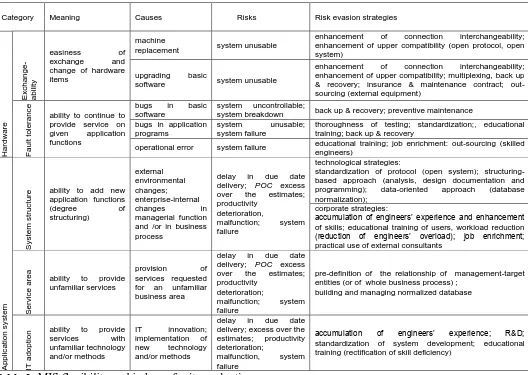
Table 2: MIS flexibility and indexes for its evaluation
A review of the IT division reveals that its major role is to meet internal and external demands for MIS change with minimum POC from MIS modification (POCM). In effect, the division is allowed to incur a minimum
POC to organize MIS well enough to accommodate future demands for change. Proper ITI redesign will not only ensure greater ease and efficiency during MIS change but will also incur additional POC of its own renovation (POCR). This fact is denoted in the structure of MIS flexibility as the POC indexes POCM and POCR.
However, the POC of its own renovation (POCR) incurred by moderate redesign of the ITI can have the benefit,
referred to as the utility of renovation (UTLR), of reducing the POC required to manage future demands for
change because the redesigned ITI reduces the vulnerability to MIS change. Thus, redesigning the ITI can be redefined as the proper application of IT to evade the risk-prone changes that accompany MIS changes.
Further, the POC of wholesale MIS change after the renovation (post-ITI-overhauling as POCpost) is
represented as follows (Furukawa, 2001):
R R
M
post POC POC UTL
POC . (4)
2.6 An MIS flexibility Planning Scheme for IT/Business Strategy Alignment
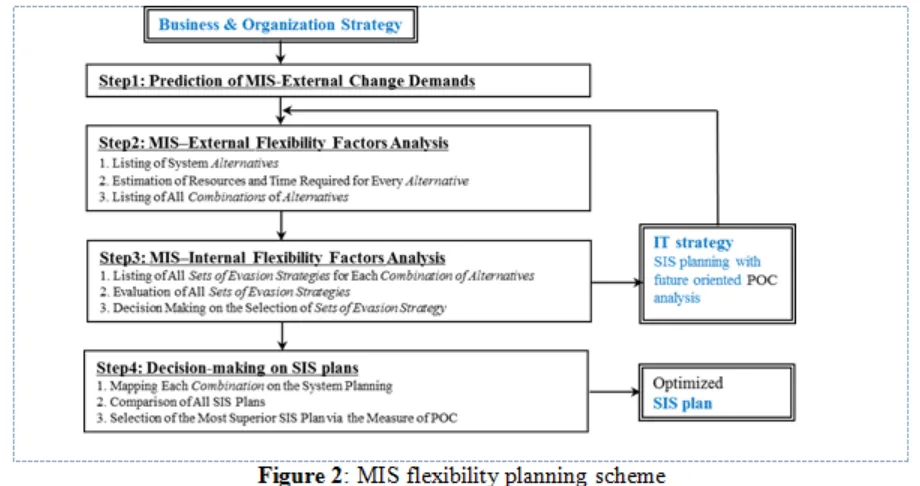
Figure 2 illustrates an MIS flexibility plan using future-oriented POC analysis, and the abstract is as follows:
Step 1 predicts, as the source, the external demands for MIS change from the business and organization strategies. Step 2 analyzes the external factors for MIS change by focusing on the “amount of volume of demands for change the MIS can accommodate within the required time.” Step 3 analyzes the MIS internal flexibility factors, which are constrained by the MIS external flexibility factors by focusing on the “strategies to enhance MIS flexibility” by “selecting the tactics to evade risk-prone changes with Table 2.” Further, the IT strategy is developed, and if necessary, it will be transferred to Step 2. Step 4 involves the selection of an optimized SIS plan (Furukawa, 2001).
2.7 Common Understanding on the MIS
If an MIS produces slow change because of complicated legacy systems, or organizational stubbornness, then MIS cannot become a source of sustainable profit (Duncan, 1995; Weill et al., 2002). Conversely, if MIS produces rapid changes, then organizations can execute their strategies without any constraints (Ross et. al, 2006; Tallon, 2007). The literature suggests that MIS flexibility, with SIS planning, has a positive effect on strategic alignment, and that effective SIS planning emerges with experience (Jorfi et al., 2011).
To support an organization in executing and realizing its business mission, objectives, and plans, an MIS should be equipped with the functionality to process information easily and quickly, and therefore be designed without any unwieldy complexity. Thus, we explore the simplicity that should be built into MIS flexibility with a proper ITI overhaul.
Nevertheless, the proposed approach of Figure 2 depends much more on the relationship between the organization and technology. Therefore, the value of POC depends on the capability within an individual organization; a low “common understanding on the MIS,” as illustrated in Figure 3, will put constraints on executing this approach. The proposed scheme of MIS flexibility planning for improving the organization’s level of IT/business strategy alignment implies that the implementation of this approach would require an organization to accumulate long-term experience, which would foster the ability to construct the basis of calculating POC, depending on the maturity level of IT/business strategy alignment.
2.8 Metrics for Strategy Alignment
The SIS plan (Figure 2) can be categorized into input, process, and output (IPO) at each stage of the plan-do-check-action (PDCA) cycle of IT service management. The information technology infrastructure library (ITIL) [Farenden, 2012] is now collecting the best practices in IT service management.
In the Balanced Scorecard (BSC) [Kaplan & Norton, 2000], IT strategy is located within the “perspective of the business process” on the corporate business strategy map. In order to provide continuous high-quality IT service to end users and to accelerate the maturity of IT governance and management, it will be effective to use control objectives for information and related technology (COBIT) [COBIT5, 2012].
The indexes are defined as follows: The critical success factor (CSF) is MIS flexibility (= 1 / POC); the key performance indicator (KPI) is MIS reward; the key goal indicator (KGI) is MIS value. These indexes connect the BSC, SIS plan, ITIL, and COBIT.
3. Verification of the Proposed Scheme with Examples
Using specific examples, this section verifies the validity and meaning of our planning scheme. 3.1 Decision Making by means of MIS value
3.1.1 POC and value of government information systems
Tomoyuki Saruwatari (former Vice Governor of Kyoto) is known for implementing the governmental administrative information system used by all municipalities in Kyoto (prefectures, cities, towns, and villages). His motives for doing so illustrate the contribution of our scheme (MonthlyMeeting200, 2009). Saruwatari asked, “Why must each municipality bear the cost of developing its own information system and continue to spend huge sums on a software company for maintaining it?” He further noted, “The governmental administrative business is being conducted on the basis of law that is uniform over the nation and is highly standardized.” He concluded, “The information system to support business under the same law must be a sufficient one.” His conclusion that municipalities should eliminate redundancy in information systems to minimize POC is the conclusion proposed in this study too.
Unified or not, the total MIS reward produced by governmental administrative information systems is substantially the same for the nation as a whole. However, unification makes a great difference in the POC of developing and maintaining information systems because redundancy and continued spending produce POC on a national scale. Also, the POC required to maintain extremely redundant information systems supports vast numbers of people in the IT industry.
Resources wasted on POC could support IT professionals skilled in governmental administrative information systems. With regard to ITIL, thIT division could maintain information management services that qualify as best practices. Further, it could use the COBIT model to evaluate and improve current information systems. Given resources, the division could mature to provide governance that assures continuous high-quality customer service as the organization responsible for the nation’s information security.
3.1.2 Why legacy systems survive
The service area of MIS has expanded beyond individual corporations to encompass global company groups. This study now returns to the subject of MIS flexibility in business.
Now in Japan, the promotion of distribution business message standards (BMS) project that intends to reduce the POC spent in commerce by replacing various kinds of outdated communication tools, which have been used since the 1980s, with new Internet-based standards is well underway. This is the Japanese original standard of electronic data interchange (EDI) messages that are exchanged between businesses in the distribution of consumer goods. The publication of the first specification was in April 2007 by the Supply Chain Standards Management and Promotion Council. With the use of new Internet based standards, industry-wide POC spent in commerce will be greatly reduced.
To ascertain implementation status among wholesalers and manufacturers, the BMS Council has conducted a Distribution BMS Introduction Survey every two years since 2009 (SCSMPC, 2013). According to research by the Council in 2013, 26 percent of retailers had “already introduced” BMS (16 percent in 2011), 16 percent “plan to introduce” it (15 percent in 2011), and 42 percent “want to introduce (pending).” In addition, 43 percent were “already supported” by BMS (26 percent in 2011); and 11 percent were “scheduled to be supported” (21 percent in 2011).
Although the BMS has progressed steadily since 2009, it has taken six years for this, which is a long period. 64 retailers indicated that they “do not want to introduce” BMS or “want to introduce (pending).” The reasons they gave for their tardiness include “uncertain return on investment” (53 percent; 59 percent in 2011), “availability of existing equipment” (45 percent; no corresponding answer in 2011), and “indecision about renewal of core systems” (38 percent; 42 percent in 2011).
However, if the MIS reward is uncertain, then the company considers that the proposal includes only one of the cost-increase factors. In this case, they should adopt the method that requires minimum POC. In other words, for the survival of its legacy system, a company would apply partial modification, which is the addition of an interface with the BMS, to its familiar and existing legacy system. In short, at this time for the company, the legacy system is more flexible than the cloud-computing environment.
As long as obsolete communication systems remain in use, commercial systems cannot eliminate excess POC that occurs because of redundancy. To promote BMS in distribution, each supply chain group should advocate POC reduction rather than wait for participation of individual companies. The formula for MIS value suggests that the supply chain group should consider how to share POC for gaining maximum MIS value from BMS.
3.1.3 MIS value of support strategies (1) Value of strategy support
The “value of strategy support” refers to the utility from the use of an MIS as support for current business strategies. In this context, generally, MIS implementation is in pace with the changes in SOPs and the MIS itself. Quick implementation of these changes boosts the efficiency of accomplishing current business strategies. (Parker and Benson, 1988)
The president of Tostem Corporation, the core member of the company group of LIXIL and a domestic leader in the aluminum sash industry in Japan, did not recognize the strategic importance of the logistic center system, which had been built for a limited area (Kyushu, Japan) and conducted next-day deliveries of orders. One day in 1975, the president noticed that this system was a crucial competitive factor and then decided to build large logistic centers in the metropolitan suburbs of six locations across the country. It took six years to complete the information system for the logistic centers and an extra year and a half to resolve the initial problems to have a smoothly working system that enabled next-day deliveries and inventory reduction. The growth of the company’s production-based market share, which had temporarily halted, began to rise again: from 27 percent in 1981 to 27.5 percent in 1983 and to 30 percent in 1985 (Shintaku, 2002).
(2) Value of competition
The “value of competition” refers to the utility that an MIS generates by enabling the organization concerned to catch up with a competitor with a business advantage. Obviously, poor MIS efficiency on the part of the organization only aggravates its business disadvantage against the competitor. Here the organization’s urgent challenge is to transform its MIS into one that is as good as or, preferably, better than that of its competitor. (Parker and Benson, 1988)
(3) MIS flexibility in large-scale systems development
In this Japanese case, MIS reward s refer to the utility obtained through the MIS function and its use of a logistics system; that is, the implementation of next-day deliveries and inventory reduction.
In the development of large systems, sub-systems are generally outsourced to different vendors. If they are inexperienced in the target area, then development teams and vendors cannot avoid trials and errors, which can occur in parallel with the team and vendors, to complete the system. By the time the final design of the target system is almost established, it becomes redundant, which dramatically degrades the flexibility of the existing MIS, in spite of the best efforts of IT managers. As illustrated in Table 1, the current MIS loses its flexibility.
3.2 Reconstruction of legacy systems
This subsection validates the effectiveness and limitations of the proposed scheme by means of a case study of Nachi-Fujikoshi Corporation (hereafter “Fujikoshi”), which planned and implemented a method to solve its chronic problem of overloading (Table 1).
3.2.1 Overview of the company’s MIS
At that time in 1981, Fujikoshi was a general machine manufacturer with approximately 5,000 employees, annual revenues of 150 billion yen, and a capital of 10 billion yen. Post the implementation of a punch-card system in 1955, the company has created various corporate MIS functions to meet the business needs of the time.
During its 25 years of computer use, the company’s MIS exhibited the following problems. Location of necessary data is unknown
No data sharing (particularly between business processes)
Asynchronous data exist in several places
Frequent consistency issues among management reports
Dramatic increase in the number of programs and files
These state of affairs show that the IT division “has a difficulty in improving the current MIS and adding new functionality,” and in other words, “the relationship between files and data is too complicated to manage the existing MIS.” As illustrated in Table 1, IT managers faced a problematic situation.
The problems faced by the IT division can be summarized as follows. First, Due to the increasing number of programs and files for each business process, a large amount of total person-hours are spent on the maintenance of the current MIS; thus, the present MIS becomes more complicated and unwieldy. Second, complete response to the needs stemming from the business strategy is impossible because the coverage is expanding beyond the boundaries of the enterprise. Moreover, difficultly in providing sufficient services to meet continually growing demands for change and to improve business processes as the organization strategy from end users.
These issues stem from the internal structure of the present MIS that has become complex and unmanageable. The IT division of Fujikoshi declared its desire to scrap the existing system and build a new one; the corporate executives approved the idea.
3.2.3 Decision-making based on POC analysis
The IT strategy of the IT division, which involves overhauling the ITI, cannot be budgeted without the approval of company executives. Accordingly, preparations are required to provide an advance explanation to the executives on the utility of the new MIS. In this case, Fujikoshi decided to overhaul the ITI, giving the highest priority to its possible future utility.
In this restructuring, all the data of the current MIS were normalized and a new database equipped with a data dictionary was completed. Then, the system restructuring that made the new database serve as an interface produced a condition of the independence between subsystems.
and files to cope with new demands for MIS change. As the result, there should be a dramatic reduction in POC for reconstructing the MIS of each division followed by the ITI overhaul.
Decision-making regarding the advisability of ITI overhaul was conducted when the SIS plan was established. Thus, for decision-making, companies estimate and weigh the penalties incurred by overhauling the ITI to meet future utility.
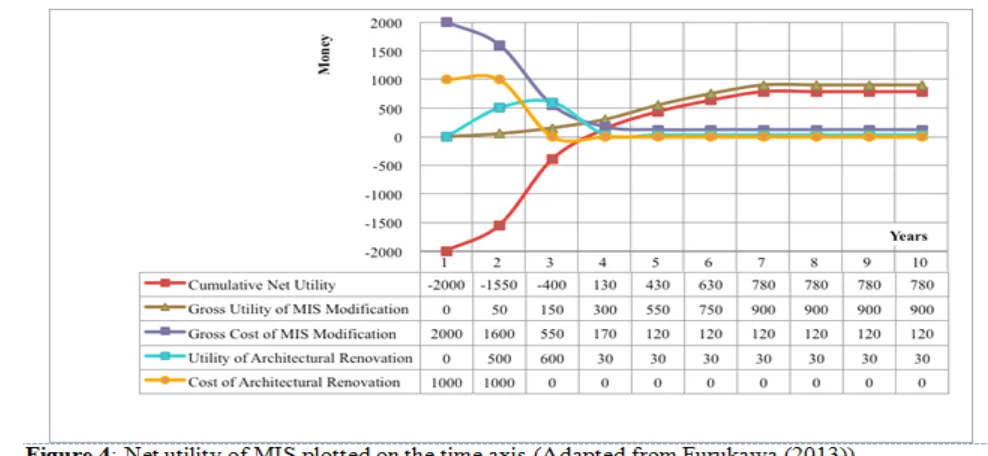
Companies are most capable of making appropriate decisions when cost and utility are visible along the time axis. Figure 4 illustrates the behavior of cost and utility in an initial project to build a new MIS of business divisions while an ITI is already in place. In this figure, the net utility derived from the relationship between cost and utility (utility minus cost), when executing an initial project, is negative; however, it is assumed to become positive over time.
The difficulty in graphing these concepts lies in how the evaluation reflects the proficiency of engineers and end users; in other words, how a quantitative evaluation incorporates the degree of “common understanding on the MIS” through accumulated experience, as shown in Figure 3. This point is truly one of the most difficult while creating plans to improve the level of IT/business strategy alignment. Generalizing and realizing a method of estimation requires incorporating learning and growth mechanisms into a quantitative evaluation. In addition to a summary of mechanisms for “accumulating of MIS experience,” as shown in Figure 3, this shall be a topic for future study.
4. Conclusion
This paper has discussed an important and current theme of IT/business strategy alignment, and has proposed a planning scheme for MIS flexibility. First, the paper explained the problem of the gap in IT/business strategy alignment, based on previous studies. Second, the paper explored the link between MIS flexibility and SIS planning, followed by a definition of MIS flexibility via POC analysis. Third, the paper validated a description of an MIS flexibility-planning scheme by means of examples.
The answer to the question: “How should we make our existing MIS flexible to absorb possible future demands for change?” was revealed through the relationship between MIS change demands, SIS planning, ITI, and MIS flexibility.
Detailed and practical studies on the quantitative relationship between the internal and external factors of MIS flexibility remain the challenges.
References
i. Bharadwaj, A. (2000). A resource-based perspective on information technology capability and firm performance: An empirical investigation. MIS Quarterly, 24(1), 169-196. http://dx.doi.org/10.2307/3250983
ii. Chryssolouris, G. (1996). Flexibility and Its Measurement. CIRP Annals - Manufacturing Technology, 45(2), 581-587. http://dx.doi.org/10.1016/S0007-8506(07)60512-5
iii. COBIT5 (2012). COBIT 5: A Business Framework for the Governance and Management of Enterprise IT. ISACA.
iv. Duncan, N. (1995). Capturing flexibility of information technology infrastructure: A study of resource characteristics and their measure. Journal of Management Information Systems, 12(2), 37-57.