LAUTECH JOURNAL OF ENGTNEERING AND TECHNOLOGY 3(1) 2005: 82- 86
A ROBUST FACE RECOGNITIOI\ ALGORITHM USII\G A TEMPLATE
APPROACH
Yusuff A. A.. Okelola M. O. Adevemo
I.A.
Elech'onic and Electrical Engineertrg Deparfment, Faculty of Engineering and Technology Ladoke Akintola University of Technology, P.M.B. 4000, Ogbomoso Oyo-state Nigeria
ABSTRACT
In this paper a system that uses a template matching approach along with a training algorithn for tuning peribrmance was described The sr-stern soh'es two types of prablems at the same time: l. Correct identification oJ individuals in the Image datubase. 2. Rejection of individuals x)ho ure not in the dstabsse. Results show that this training methotl is capable of a consistent correct classijlcation rates and a low false positive rutes,
INTRODUCTION
Many face recognition algorithrns are tuned to perform o one of these face recognition problems. 1 Correct classification experiments. 2. False positive experiments. The task here is to design a system that gives a good classification results.
The proposed algorithm is used with a simple nearest neighbor template matching classifier. The experimental results obtained are better than resuits gctten using a variety of different classifiers, such as Fisherfaces, wavelet, eigenfaces, e.t.c.
This paper is organized as follows: Section 2 describes how the template matching classilier s'olks and how the output of the classifier is comprrted. Next we describe a training method rvherebl' thc parameters of the classifier system can be determined from the available training set. ln section 4 ne describe the database of face images that was used in these experiments. Finally, we present and analyze thc experirnental results.
Classification and Decision Algorithm
The face recognition algorithm is stated as follolvs: Given a database of human face images and an input image, the system must decide on one of the followurg: 1. Identify the best matching individrrai in the database.
2.Reject the input image if no match is found for it. Suppose the database of face images of N knor,vn individuals is denoted D. And suppose that D contains K different samples of each individual with different facial expressions.
D - { I , r ' . n = I , 2 , . . . , N , k = 7 " 2 , . . ' , K }
Each image in the database
is mapped
as fbllow:
(
. , ,
X : l r , , o = p ( I ,) ' . n = 1 , 2 , - . - , N , k
= 1 , 2 , . . . , K I
For a nearest neighbor classifier p is simply an
identity map. For eigenfaces method, p maps each image in database D onto the corresponding coordinates.
ln order to compute the output of the nearest neighbor classifier, we first need a way of measuring the distance between two images representatlon. Lel the distance between images x and y be d(x, y) . The design of the nearest neighbor classifier is as tbllorv: Store all of the images representation in X into memory. Then, given an input image I, first apply p to compute its coordinates in the chosen representation: x = p(I). Then compute the distance between x and each of the sarnples in the database sanrples and determine the closest sample
r / ( . t , , , , , , 0 , , , , , , , . r ) < d ( x , , 0 , x )
1 b r a l l n : 1 . 2 , . . . , N a n d k : 1 , 2 , . . . , K . 'fhe
output is taken as nnri, , the individual whose inragc- has minimumd( xn.k,x). In order to address rhe issue of relecting individuals whose images are not in the database, a more useful decision rule mrght use a tlueshold to decide whether or not to identit\ the image or reject it:
( . ^
i "n''" 'f d(xn",,,,,on,u, ,x) < T olltDvt : <'
i,otherwise, reject
A more sophrsticated decision algorithm woulti involve detemrining and storing a different threshold for each rndividual in the database. In this case, the only modification needed in the decision rule abovc u'ould be to replace T by 4,,,,,,,. where 4,,,,,,, i. ,1r. thrcshold lbr the matching image
'Ihe
Yusuff A.A., Okelola, M.O. and Adeyemo, l.A. /LAUTECH Journal of Engineering and Technology 3(1) 2005: 82 - 86
individual in the database: a lower threshold L,, and a n u p p e r t h r e s h o l d U n , D : 1 , 2 , . . . , N
nmin if d(\rniok*in,1;(Lnrnin
OUIPUI=r e j e c t i f d ( x n k , x ) > U n
"lnln'"Intn Inln
a p p l y h e u r i s t i c i f t - , . , s d ( \ u , r : ) < l J n m l n " r n i 1 " ' n i i l I n l n
The lolver threshold is used to determine *hen there is a sufficiently close match between the input x and the closest sample trnu*. Jn.,",r,",., su.h thar the input image can be reliably identified as indiridual n,.i,,. The upper threshold is used to deterrnine r.hen there is a sufficient misnratch benveerr r ai:d ail t,i the sample images, even the closest olc .r such that the input should be rejected as not kir(",\ n l() the system. The onlv other possibilitl is r',hcn thc' minimum distance falls betuccn the trro thresh.-rkls:
L " / / r u r r r 3 d ( x . . , . . . r ) < L ' t n u r r x n r - n ' i n t h i s c a s e . \ \ c p r o p o s e t h e fo l l o u in _ s h e r r r i s r i c :
Identifl' the input as person fl,,,;,, if the second l-'cst matching is also a sarnple of individual n,,,;,, :
Otheruise, re.ject the input as not kno\4n to thL' system.
'I'he
proposed decision rule is shorvn in Fig. I
Fig.l. The threshold used for the decision stage
Training Phase for Threshold Computation We require two set of data sets: a classification tlaining set X and a false positive training set Y. The classification training set consists of samples of the people in the database, and is used to tune the identification and classification capability of the system. The lalse positive training set consist of sarnples of individuals rvho are not in the database, and is used to tune the rejection capability of the systenl.
We first partition the classification database into tu,o dJs-jcrint sets; X' and X2. Both X1 andX2 contain all sarrples of all the individuals in the database.
X , = {-t,* e -\". n = I,2,'.',N,k = \,2,'..,'/.}
X . , = { . r u -
e X ' . n = 1 , 2 , . . ' . N , k
= y 2 + 1 . . . . , K }
i s a r a l i d p a r l i t i o nNext. intraclass distances are computed for each indiridual in the database. For a fixed individual n, we select an image 1r,,, from Xr and then compute
the distance betrveen .r,,0 and each irnage of person n in X2 . This process is repeated for all such images of person n in X1 . The average cf all these distances is computed and this value is set as an approximate lower threshold L, for individual n.
To cornpute the upper threshold, interclass distances are computed. For each image x,ro in X. rve compute the distance between xtlk and each of the intages I the false positive training set Y. The minimum such distance is recorded as upper threshold U,, for n It is possible to avoid creating a separate false positive training set Y. Here, for an individual n and image x,,o , to compute the interclass distance, we simply compute he distance xrk and each other image ir the classification data set, excluding all those images of individual n. In this case, the false positive set consist of a sequence of l- deleted training sets; that is, training set with one individual removed.
' { . t
The Database of Faces Images
The database consists of 260 different men arrd women of varions background and ages betrveen 22 and 28 years old that graduated in Electronic and Electrical Engineering Department. LAUECH. Ogbomoso. For each person, two sets of 5 images u,ere snapped, giving a total of l0 training irna-ees per Derson. The first group of 5 images all shorvs a blank facial expression. The second group of -5 images shor.vs different facial expressions: angry, smile, surprised, wink and blank.
Tuo test irnages were also collected for each person: a blank image and an arbitrary image, rvhere the sub-iect gives an unusual expression, rvhich might fbol the recognition system.
;\li irnages rvere snapped at a dirnension of 82 X I 15 and stored as 8-bit gray scale, The images were later cropped to a size of 72 X ?2 in othel to eliminate the hair, neck and shoulder of the person from image. Intensity normalization was tlien carried out on the i m a g e s .
F ig2 shows a set of 72 X 72 sample images for one of the subject in the database. In (a), the 45 blanl< images are shown; in (b). the 5 facial expression irnages are shorvn. And in (c), the two test images are shorvn: blank and arbitrarv.
Yttsuff A.4., Okelola, M.O. and Adeyemo, l.A. /LAUTECH Journat of Engineering and Technology 3(I) 2005: S2 - 86
Wink
SmileFig.2 Sample images from the database
showing (a)
the 5 blank expression
images (b) the five different
expressions:
angry, smile, surprised,
wink artd blank.
Experimental Resalts
The training set X consists
of all l0 training images
for each person in the database.
X1 consists
of the 5
blank expressions
for each person and Xz consists
of
the 5 facial expression
images. After training, the
system was tested for both correct classification
performance
and false positive performance.
We also
looked at the performance
as the number of people
in
the database
varied from 20 to 260 individuals; this
helped in checking how the performance
scales
with
increasing
number
of subjects
in the database.
Tablel shows
the results
of the correct
classification
experiments
for both the blank and arbitrary test
images.
Each number
in Table I is an average
over 3
different nials of the experiment.
In each trial. a
different
database
was randomly
chosen.
Table l: Classification results for the blank
expression test set and the arbitrary
expression
test set
N u m b e r of people
Arbitrary Reject Error Reject Drror
Training Time
(min)
2 0
80
1 0 0
1 6 0
240
260
4 . 1
4 . 0
4 . 3
3 . 0
3 . 0
4 . 0
0
0
0
0 . 1
0
0 . 3
37.0 0
37.0 0
3 7 . r 0
3 7 , 3 0
39.5 0
37.2 0
I
9
l 4
22
3 0
3 9
84
Blank
Blank
Blank
BlankBlank
l.A. /LAUIECH Journal of Enginering aoct fdfrr lrt - A - 6
scales
well and
Table 2: False positive rcsuls
rue of less than.170
Number of People
Ar expected, for the
tSrts a much larger
t-t
r.6
t . 5
1 . 5
1 . 2
L l
lll set, there are no
t
false nositive
b slightly hrgher
poperly rejected
hbcHlr
%
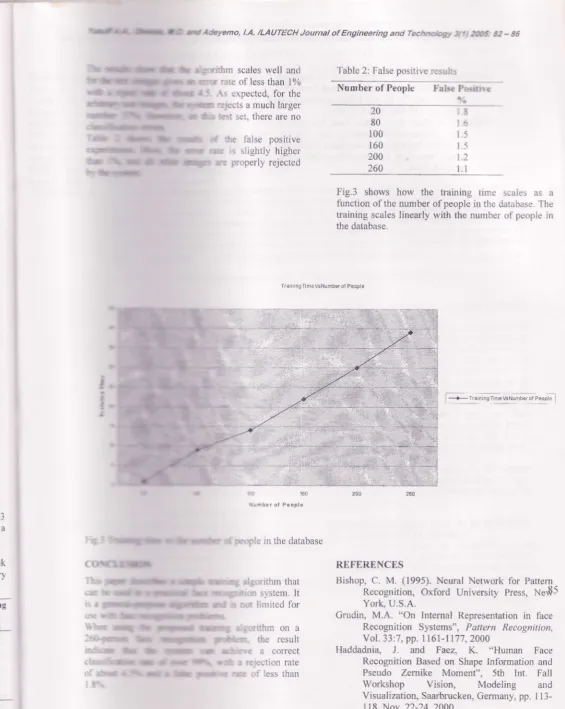
Fig.3 shows how the haining time scales as a
fimction of the number of people in the database.
The
faining scales linearly with the number of people in
the database.
20
80
100
160
700
.
260
Trelningfimo VsNumbar of Peopl6
'er 3
i l , 8
tank
rary
r 160
b r b . r o t P e o p l e
in the database
{riftm
that
s)rstem.
It
r
limited for
{ritbm
on a
tbc result
I correct
I tcirtion rate
I a1qi.i.er*"wnrru* J e""pr" .|
REFERENCES
Bishop, C. M. (1995). Neural Network for Pattern
Recognition, Oxford University Press, Nef5
Yorh U.S.A.
Grudin, M.A- "On Internal Representation
in face
Recognition Systems", Pattern Recognition,
V o l . 3 3 : 7 ,
p p . 1 1 6 1 - 1 1 7 7 , 2 0 0 0
Haddadni4 J. and Faez, K. "Humal Face
Recopition Based on Shape Infonnation and
Pseudo Zemike Moment", sth Int. Fall
Workshop
Vision,
Modeling
and
Visualization,
Saarbrucken,
Germany,
pp. I
l3-118,
Nov.22-24,2000
ring no 4)
Yusuff A.A., Okelola, M.O. and Adeyemo, I.A. /LAUTECH Journal of Engineering and Technotogy 3(1) 2005: 82 - 86