8
INTERNATIONAL JOURNAL OF ADVANCES IN ENGINEERING RESEARCH
DEVELOPMENT OF A SECURED
DEVICE-TO-DEVICES COMMUNICATION TECHNIQUE IN
ELECTRONIC RECRUITMENT SYSTEM
Oluwaleke A. A. #1, Lasisi, H.2, Awofolaju T.T. 3.
1
Electrical and Electronics Engineering Department, Olabisi Onabanjo University, Ago-Iwoye, Ogun State, Nigeria
2 Electrical and Electronics Engineering Department, Osun State University, Osogbo, Nigeria 3 Electrical and Electronics Engineering Department, Osun State University, Osogbo,Nigeria
ABSTRACT
This paper developed an effective staff e-recruitment system that attracts candidates and creates a talent pool for the selection of best hands. It provides a platform for device-to-devices, otherwise known as point-to-multipoint communication system, where employer links with job seekers across the globe via internet. Web base recruitment management system also known as online recruitment system is designed to overcome the problem of manual method of recruiting staff. The system facilitates the entering of data by applicants and gives administrator access to the records. The project was developed using PHP (Pre-Processor Hypertext), HTML(hypertext mark-up language),and MYSQL (structured query language) as background database programming languages, WAMP (Windows Apache MySQL PHP) as local host server, and windows10 for the system implementation. The adoption of the programming languages provides easy implementation of a web based application; either intranet or extranet, enhances interactivity, simplicity and user-friendliness through the embedded tools. The research work ensured an appreciable reduction in time, rigour, fraud or interference by the middle men acting as intermediaries, and expenses involved in manual recruitment.
Keyword: e-recruitment, device-to-devices, point-to-multipoint, intranet, extranet, internet, online,MySQL, WAMPSERVER, HTML.
1.0
INTRODUCTION
Recruitment is the practice that connects the employers and the employees. It can as well beexplained as a way of seeking for viable applicants for employment. Moreover, it can be seen as a process of discovering the sources of manpower to meet the requirement of staffing schedule [1]. However, thee-recruitment process begins when new recruits are sought after and ends when the submitted applications are processed and recommended by the automated recruitment system. The outcome is a pool of applications from which new employees are chosen.
9
INTERNATIONAL JOURNAL OF ADVANCES IN ENGINEERING RESEARCH
1.1 Analysis of the Existing System
Generally, system analysis is the process of collecting and analyzing facts in respect of existing system operation and procedure in order to geta full appreciation of the prevailing system with the aim of designing and implementing an effective computerized program.In other word, system analysis entails a carefully study of the problems of an existing system for the purpose of designing an improved system [3].
The developed e-recruitment system was deployed at the Federal Polytechnic Ede, Osun State, Nigeria, where the existing mode of operation in its recruitment establishment unit is on a manual basis. The establishment affairs that are in charge of coordinating recruitments perform the functions of advertisement of vacant positions, sending of applications to various departments/units for short-listing and returning back to the establishment office, invitation of the short listed applicantsfor interview, coordination of interview process and invitation of successful applicants in connection with the management directives.
1.2 The Proposed e-recruitment System
This paper proposed, designed and developed an e-recruitment system to mitigate the lapses associated with the conventional manual recruitment technique. The e-recruitment management system is an interactive computer program for solving recruitment problem [4].
1.3 Manual Recruitment versus e-recruitment Techniques
Table I shows the comparisons of the conventional manual recruitment system with the e-recruitment technique in terms of pros and cons.
Table I: General Comparison of Online-recruitment and Manual recruitment.
Online-recruitment Manual Recruitment
Larger geographical spread [5]. Limited coverage area Large audience. Limited audience Greater chance of getting right candidate
quicker and greater effectiveness.
Slim chance of getting the right candidate. Process involve is not effective, rather stressful.
Quicker turn-around time and cost saving [6]. Much time and cost are involved.
Computer literacy involved It is easy to use as no special technicality is required.
2.0 METHODOLOGY
10
INTERNATIONAL JOURNAL OF ADVANCES IN ENGINEERING RESEARCH
design methodology is divided into two major categories, namely; input and output designs. However, the input design is further sub-divided into two: e-recruitment administrator login page design and online recruitment registration form design. The output design in the other hand is sub-divided into three stages called;recruitment home page design, vacancy page design and e-recruitment application registration report page design [7]. The developed e-e-recruitment system was deployed into staff recruitment for Federal Polytechnics, Ede, Osun State, Nigeria and the performance improvement of the system over the conventional manual method was evaluated.
2.1 Input Design
The system acquires applicants’information via the input interface.The input interface into
the system prompts users to enter required data. The input interface was designed such that all the necessary data are prompted for e-recruitment system with hypertext markup language HTML.
2.1.1 e-recruit Administrator Login Page
The e-recruit Administrator Login Page was designed with enough security measures that only give authentic administrators access to the applications that are made by the job seekers. This interface was designed to inquire for the administrator user ID and Password before access is granted to prevent unauthorized login. This interface was also designed to validate all the data input to prevent entry of incomplete information into the database. The hypertext preprocessor language was used to generate login pin code for the applicant.No applicant can assess the e-recruitment pages without the pin code. The data needed as input to access the registration area of the e-recruitment system is as presented in Table II.[8].
Table II: Data needed for the Administrator login
Field Name Data Type Size
AdminID Varchar 20 Password Varchar 20 FullName Varchar 40
2.1.2 Online Recruitment Registration Form
The online recruitment registration form is part of input design for the system. It was
designed to accept the personal, qualification and guarantor’s information of the applicant. The
11
INTERNATIONAL JOURNAL OF ADVANCES IN ENGINEERING RESEARCH TableIII: Data needed for Online Recruitment Registration form
Field Data Type Size
ID MediumInt 8 Surname Varchar 20 OtherNames Varchar 30 ContactAddress Varchar 50 Phone Varchar 20 Phone2 Varchar 20 PostalAddress Varchar 80 StateofOrigin Varchar 20 LGA Varchar 20
CV Varchar 50
Cert1 Varchar 30 School1 Varchar 50 Date1 Varchar 20 Cert2 Varchar 30 School2 Varchar 50 Date2 Varchar 20 Cert3 Varchar 30 School3 Varchar 50 Date3 Varchar 20 Cert4 Varchar 30 School4 Varchar 50 Date4 Varchar 20 PostCategory Varchar 20 Specification Varchar 30 GuarantorName1 Varchar 30 GurantorAddress2 Varchar 50 GuarantorPhone1 Varchar 20 GuarantorName2 Varchar 30 GuarantorAddress2 Varchar 50 GuarantorPhone2 Varchar 20 Pic Varchar 50
2.2 Output Design
12
INTERNATIONAL JOURNAL OF ADVANCES IN ENGINEERING RESEARCH
2.2.1 e-recruitment homepage Design
The hypertext preprocessor language was used in designing the home page to be very responsive and fortified with animations to make it user friendly. Moreover,the hypertext markup language was used to design the arrangement of the pages on the site using table headers and title features of the programming language. Feature like hypertext was used to link a text or word on the home page to another page on the e-recruitment system while hyperlink was used in linking pages together on the e-recruitment site. For instance, when an applicant clicks on any of the menus on the homepage, detail of that title menu is designed to popped up for next action [10].
2.2.2 Vacancy Page Design
The various vacant positions in the various departments are enlisted using hypertext markup language.The table and the header format of this programming languagewere used for proper listing of the departments and the positions available in them. The hyperlink feature was used to link the various vacant positions to a page where the applicant will enter his or her qualifications and uploading of resume.
2.2.3 e-recruitment Application Registration Report Design
The page was developed to display the report of the applicant registration information which includes the full name, phone number, email address, state, CV attachment, specification, guarantor information, picture and the qualification on spread sheet format. This is a database designed and developed to represent the applicants’ inputted data.
3.0
RESULT AND DISCUSSION
13
INTERNATIONAL JOURNAL OF ADVANCES IN ENGINEERING RESEARCH
Figure 1: Block Diagram of the e-recruitment system Output Display.
3.1 Output of e-Recruitment Admin Login Page
The page provides a security and verification medium via the use of admin users login details, this gives selective access to the main site. The page accepts the Admin ID and Password to be authenticated, and then grant or deny access based on the authenticity of the login pin codes. The pin is generated by the database using the hypertext pre-processor scripting language. The Screenshot of e-recruitment Administrator Login Page is as shown in Figure 2.
Figure 2: Screenshot of e-recruitment Administrator Login Page
START
DISPLAY HOME PAGE
HOME ABOUT
E-RECRUITMENT
ONLINE APPLICATION
E RECRUIT ADMINISTRATOR
14
INTERNATIONAL JOURNAL OF ADVANCES IN ENGINEERING RESEARCH
3.2 E-Recruitment Registration Page
This page accepts the recruitmentinformation of the applicants, so that their records are kept electronically. The information collected includes personal information, qualifications, institutions attended, etc. The form was designed to be responsive and equipped with auto fill. This is put in place so that the applicant can have a better experience on the registration page.The
Screenshot of e-Recruitment Registration Formis as shown in Figure 3.
Figure 3: Screen shot of e-Recruitment Registration Form
3.3e-recruitment Home Page
The page provides information about the e-recruitment system and the developer. The form contains all menu, links and information about other functions on the site. The page contains a link to e-recruitment page for the applicants to apply. The Screenshot of e-recruitment Home Page is as shown in Figure 4.
15
INTERNATIONAL JOURNAL OF ADVANCES IN ENGINEERING RESEARCH
3.4 Vacant Positions Page
The page provides list of vacant positions that are available for the applicants to apply for. Web scripting languages like hypertext mark-up (HTML) makes this page very robust and responsive to every command been inputted by the applicant in the shortest time (milli-seconds) possible. Every details, including job description and other benefits are embedded into each of the vacant positions using hyperlink design features, so that, at a click on the positions, everything needed to be known before applying is displayed in a draw down menu [11]. The Screenshot output of Vacant Positions Page is as shown in Figure 5.
Figure 5: Screenshot of Vacant Positions Page
3.5 E-Recruitment Application Registration Report Page
The page provides list of registrations that have been made by applicants for different positions. The page display all the information and also a link to download the CV file uploaded. All the data inputted are clearly displayed in an excel spread sheet format. The page is developed to be a secured and flexible database in such a way that the applicants’ records can be viewed, modified and managed for the purpose of an uninterrupted selection. The Screenshot output of e-Recruitment Application Registration Report Page is as shown in Figure 6.
16
INTERNATIONAL JOURNAL OF ADVANCES IN ENGINEERING RESEARCH
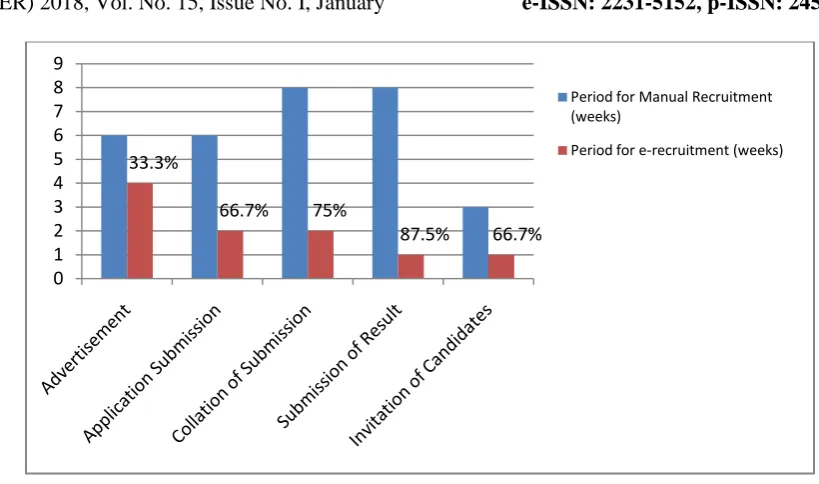
Figure 7: Performance improvement of the e-recruitment technique in time management.
4.0 CONCLUSION
The e-recruitment system has been designed and developed. The deployment of the system entails a changing over from the conventional (manual) system to electronic method.It was proved via the system deployment that, the e-recruitment is far better than the existing system in terms of accuracy, efficiency, speed, time management (as shown in Figure 7) and cost saving. This paper however recommends that, the changeover method be parallel changeover rather than direct one. Parallel changeover requires allowing the e-technic and the conventional system to be operational for a while before the old system is faced out. However, in direct changeover method, the old method is stopped and the new system becomes operational. The parallel changeover enables adaptation of staff to the new system and allows modification of the program (e-recruitment system).Moreover, future expansion of the systems’ scope is possible by adding plugging, that is, many other features that can make the e-recruitment system more robust, interactive and flexible.
5.0 REFERENCES
[1] Keller, K.L., & Staelin, R. (1987). Effects of quality and quantity of information on decision effectiveness,Journal of Consumer Research, 14(2), 200-213.
[2] Feldman, D.C. and Klaas, B.S. (2002) ‘Internet Job Hunting: A Field Study of Applicant Experiences with On-line Recruiting’, Human Resource Management, 41:2, 175-192.
[3] Galanaki, E. (2002) ‘The Decision to Recruit Online: A Descriptive Study’, Career Development International, 7:4,243-251.
[4] http://recruitment.naukrihum.com/importance-of-recruitment.html, July, 2017.
33.3%
66.7% 75%
87.5% 66.7%
0 1 2 3 4 5 6 7 8 9
Period for Manual Recruitment (weeks)
17
INTERNATIONAL JOURNAL OF ADVANCES IN ENGINEERING RESEARCH
[5] Aragones, A., Hart-Davidson, W., 2002. Why, When and How do Users Customize Web Portals. IEFE International Professional Communication Conference, 20 September 2002 Portland, Oregon.
[6] Zusman, R.R. and Landis, R.S. (2002) ‘Applicant Preferences for Web-Based versus Traditional Job Postings’, Computers in Human Behavior, 18:3, 285-296.
[7]Lee, I. (2005). The evolution of e-recruiting: A content analysis of Fortune 100 career web sites. Journal of Electronic Commerce in Organisations, 3(3), 57-68.
[8] Alfus, P,(2000).‘Today’s Recruitment Practices Require Traditional and Internet.Techniques’, Hotel and Motel Management, December 2000.
[9]Gill, J. (2001, July 18). Now hiring. Apply on-line, Business week Online.Retrieved from http://www.businessweek.com/careers/content/jul2001/ca20010718_003.htm
[10]http://media.wiley.com/product-data/excerpt/24/04708619/0470861924.pdf