ABSTRACT
MITCHELL, WILLYETTA ADELE. Physics Instructors Are Not Blank Slates Either: An Exploratory Study of Introductory Physics Instruction. (Under the direction of Len Annetta and John Penick).
The purpose of the study was to investigate the views of the nature of science and the classroom practices of instructors who teach introductory physics at a research intensive
university. A study of this nature is necessary because calls to change how science is taught have been made since the 1800’s, yet the methods of instruction have remained virtually unchanged. The conflict between how science is taught and how students learn science can be remedied by effective professional development at the university. However, training on the change process is virtually nonexistent in teacher education programs and in teacher professional development workshops at all levels.
Physics Instructors Are Not Blank Slates Either: An Exploratory Study of Introductory
Physics Instruction
by
Willyetta Adele Mitchell
A dissertation submitted to the Graduate Faculty of North Carolina State University
in partial fulfillment of the requirements for the Degree of
Doctor of Philosophy
Science Education Raleigh, North Carolina
2009
APPROVED BY:
________________________ John E. Penick, Co-Chair
________________________ Len Annetta, Co-Chair
________________________ John Hubisz
ii
DEDICATION
iii
BIOGRAPHY
Willyetta was born March 23, 1970 in San Francisco, California. She attended college at Xavier University of Louisiana where she received a Bachelors of Art in Physics and a Masters of Arts in Curriculum and Instruction. It was at Xavier University, where she became increasingly interested in studying effective teaching methods in the sciences when she took three semesters of general physics taught using the inquiry-based science method. Shortly, thereafter she enrolled in North Carolina State University and she began her career as a science educator under the direction of Dr. Michael Paesler, Dr. John Hubisz, and Dr. John Penick. Her experience in science education is rich and diverse. She has taught science courses both public and private schools at all levels. She has also trained pre-K through 8th grade science teachers in both formal and informal science settings.
iv
ACKNOWLEDGMENTS
ALL GLORY AND HONOR IS YOURS ALMIGHTY FATHER, FOREVER AND EVER! I must give thanks to God who has never left me in throughout my journey in
education. He has been everything to me I needed: a father, a mother, a listening ear, a comforter, and a friend…Thank you God.
I have realized that there is a time and a season for everything. In following my own path toward completion of the doctorate, I have learned many lessons. Not all the lessons were wanted or appreciated; however, they have served to make me wiser and to deepen my appreciation for time.
v
So many scholars and friends have played a role in the present work to give due thanks and appreciation: Dr. Ibrahim Halloun, Dr. Mary Atwater, Dr. Sally Adkin, Jenny Allen, Gloria Barrett, Carole Stern, Dr. Dedra Eatmon, Dr. Myra Halpin, Darlene Haught, Dr. Chris Gioppo, Dr. Midori Suzuki, and Dr. Michael Reidy.
I am also appreciative and thankful for the support of my dissertation chairs: Drs. John Penick, Len Annetta, John Hubisz and Michael Paesler. Without their support, this dissertation would not have been written. They have been great mentors and critics. They all modeled lessons that I will gladly carry with me in my future work with graduate and undergraduate students. But above all, they have been my friends, encouraging me to keep my eye on the prize. I feel it a great privilege to have been taught and mentored by them.
But, no one deserves more thanks than my husband, Corey, for his unwavering faith, support, encouragement, patience, and belief in me ultimately made this Ph.D. possible. Often serving as my springboard, providing practical critiques of my work and challenging my thinking, his support and companionship were critical ingredients in providing me the strength and persistence necessary to complete this work. He still manages to believe that I can do anything even when I could not quite believe in myself.
vi
TABLE OF CONTENTS
LIST OF TABLES ... ix
LIST OF FIGURES ... xi
CHAPTER ONE: INTRODUCTION ... 1
STATEMENT OF THE PROBLEM ... 1
Criticism of Higher Education ... 3
Undergraduate Dissatisfaction with Science ... 6
The Golden Age of Science Education and Physics Education Reform ... 9
STATEMENT OF PURPOSE ... 12
RESEARCH QUESTIONS ... 12
SIGNIFICANCE OF THE STUDY ... 13
LIMITATIONS OF THE STUDY ... 14
IMPORTANT TERMINOLOGY ... 15
ORGANIZATION OF THE DISSERTATION ... 16
CHAPTER TWO: LITERATURE REVIEW ... 17
INTRODUCTION ... 17
SECTION I. A LOOK AT PHYSICS EDUCATION REFORM ... 18
SECTION II: THE SOCIAL, CULTURAL AND INSTITUTIONAL CONTEXT OF UNIVERSITY PHYSICS INSTRUCTORS ... 30
The Culture of Physics ... 32
Scholarship of Teaching and Learning ... 38
The Nature of Science and Instructional Practices ... 41
SECTION III: THE STUDY ... 48
Research Design ... 48
Data Collection Instruments ... 50
Questionnaires ... 50
Class ObservationInstruments ... 57
Interviews ... 58
Limitations and Disadvantages of the Research Design ... 59
CHAPTER THREE: METHODOLOGY ... 60
INTRODUCTION ... 60
RESEARCH PROCEDURE ... 60
SAMPLE ... 61
DATA COLLECTION INSTRUMENTS ... 63
Questionnaire ... 63
Class Observation Instruments ... 66
Interviews ... 75
Data Analysis ... 77
vii
LIMITATIONS ... 82
CHAPTER FOUR: RESULTS ANS DISCUSSION ... 83
INTRODUCTION ... 84
SECTION I: AN EXAMINATION OF THE PHYSICS INSTRUCTORS’ VIEWS OF THE NATURE OF THE SCIENCE ... 85
Responses to the VASS Questions concerning the nature of science ... 86
Scientific Domain ... 88
Structure. ... 88
Methodology. ... 90
Validity. ... 91
Cognitive Domain ... 92
Learnability. ... 92
Reflective Thinking. ... 93
Personal Relevance. ... 95
Analysis of Instructors Views About Science ... 95
Teacher Practice Index ... 100
Summary of Research Question One ... 110
SECTION II: CLASSROOM OBSERVATIONS ... 111
Instructional Context ... 111
Instructional Practices ... 114
Modes of Instruction ... 114
Introduction Emphasis ... 116
The Use of Questions ... 117
Teacher Behavior ... 120
The Use of Materials ... 121
Flanders Interaction Analysis ... 124
Interview Quotes ... 131
Interviewees Views on the Nature of Science ... 132
Interviewees Conceptions of Physics and Pedagogy ... 133
Instructional Practices and the Physics Professors Views ... 134
Interviewees Conceptions on the Culture of Physics ... 134
Summary of Research Question Two ... 137
Summary of Research Question Three ... 138
CHAPTER FIVE: DISCUSSIONS AND RECOMMENDATIONS ... 139
INTRODUCTION ... 139
DISCUSSION OF FINDINGS ... 141
Discussion of Research Question One ... 141
Discussion of Research Question Two ... 144
viii
RECOMMENDATIONS ... 149
Educating University Faculty on the Models for Educational Change ... 154
Scholarship of Teaching and Learning ... 157
Establishment of a Professional Learning Communities ... 159
Graduate Student Teaching Programs ... 161
Establishment of a Center of Pedagogy ... 162
Direction for Future Research ... 163
CONCLUSION ... 164
REFERENCES ... 166
APPENDICES ... 194
APPENDIX A- CONSENT TO DO RESEARCH ... 195
APPENDIX B-VASS QUESTIONNAIRE ... 196
APPENDIX C-MODIFIED CLASSROOM OBSERVATION PROTOCOL ... 203
APPENDIX D-INTERVIEW QUESTIONS ... 208
APPENDIX E-FLANDER’S INTERACTION ANALYSIS SYSTEM... 210
ix
LIST OF TABLES
Table 2.1: VASS Taxonomy ... 51
Table 2.2: Summary of Halloun’s Paradigm ... 56
Table 3.1: General Profile Characteristics (Halloun and Hestenes, 1998) ... 64
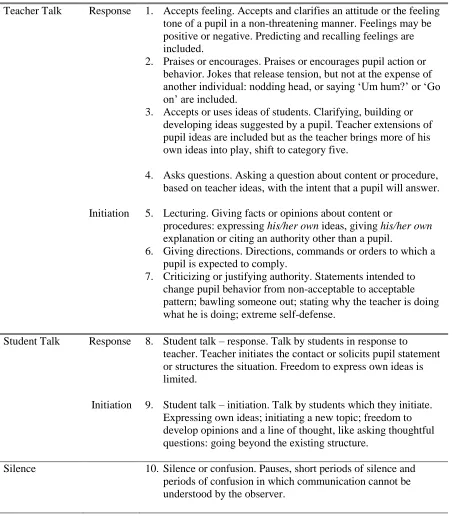
Table 3.2: Flanders’ Interaction Analysis Categories (Flanders, 1970) ... 70
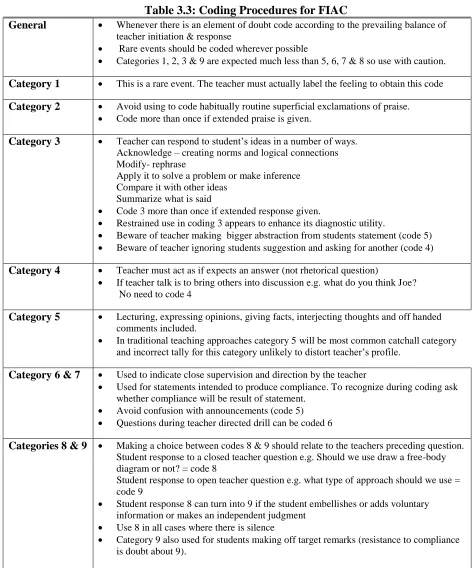
Table 3.3: Coding Procedures for FIAC ... 72
Table 3.4: Coding Pairs Used For The Analysis Coding Procedures for FIAC ... 73
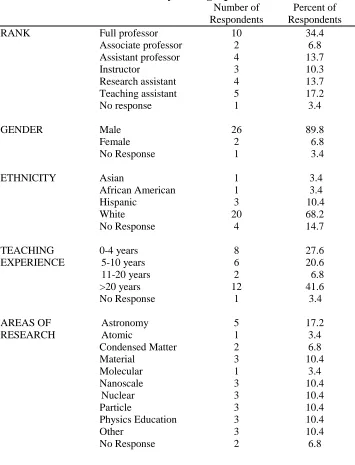
Table 4.1: Faculty Demographics Information ... 85
Table 4.2: VASS-The Responses for the Structure Dimension of the Nature of Science . 89
Table 4.3: VASS- Methodology Dimension of the Nature of Science Responses ... 91
Table 4.4: VASS- Validity Dimension of the Nature of Science Responses ... 91
Table 4.5: Learnability Dimension of the Nature of Science Responses ... 92
Table 4.6: Reflective Thinking Dimension of the Nature of Science ... 94
Table 4.7: Personal Relevance Dimension of the Nature of Science responses ... 95
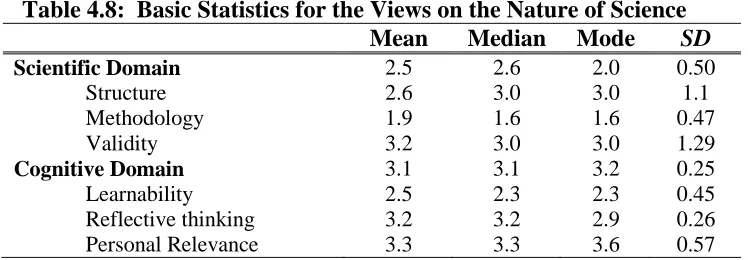
Table 4.8: Basic Statistics for the Views on the Nature of Science ... 96
Table 4.9: Respondent Profiles on the Views of the Nature of Science ... 97
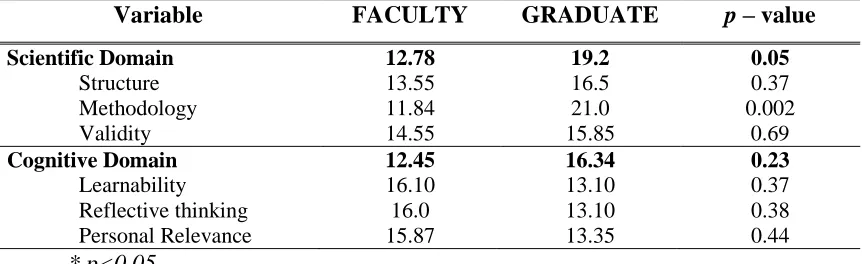
Table 4.10: Mean Score and Comparison of Means across the University Teaching Faculty and Graduate Students ... 98
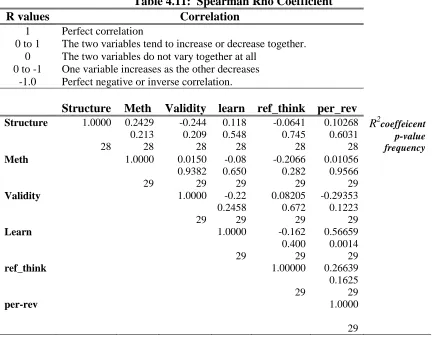
Table 4.11: Spearman Rho Coefficient ... 99
Table 4.12: Introductory Physics Classes Observed ... 112
Table 4.13: Percentage of Modes of Instruction Utilized By Physics Professors ... 115
x
Table 4.15: Types of Questions Used by Physics Professors by Percentage ... 119
Table 4.16: Teacher Behavior by Percentage ... 120
Table 4.17: Materials Used in Introductory Physics Courses ... 122
Table 4.18: Summary Score Rating for Introductory Physics Classes ... 123
Table 4.19: Comparison of Instructional Methods using a Cumulative Link Model ... 130
Table 5.1: Factors That Affect How Physics Instructors Teach And How Students Learn ... 148
xi
LIST OF FIGURES
Figure 3.1: Contrasting Alternatives Design Scale ... 63
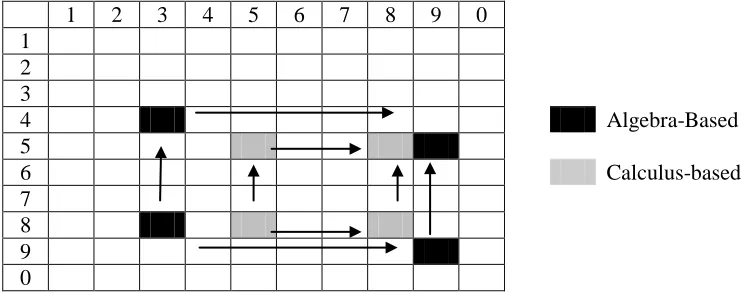
Figure 3.2: FIAC categories in 10x10 matrix completed with data ... 74
Figure 3.3: Typical pattern of interaction for calculus and algebra based physics ... 74
Figure 4.1: Triangulation Mixed Method Design ... 83
Figure 4.2: Frequency on how to study using the textbook ... 101
Figure 4.3: Frequency on how to solve homework problems ... 102
Figure 4.4: Frequency of the class discussions about misconceptions about real world systems and phenomena ... 103
Figure 4.5: Frequency of discussion in class about homework and exam mistakes ... 105
Figure 4.6: Frequency of student engagement in lab activities at home and at school ... 106
Figure 4.7: Frequency of discussion of physics applications in real life ... 107
Figure 4.8: Frequency of discussion about how physics relates to other science disciplines and technology ... 108
Figure 4.9: Frequency of discussion on the nature of scientific laws and scientific thinking ... 109
Figure 4.10: Frequency of discussion on the role of mathematics in physics ... 110
Figure 4.11: Floor Plan of the Lecture Classroom ... 113
Figure 4.12: The question cycle used with a classroom response system ... 118
Figure 4.13: Average Talk Time in Calculus Based Physics... 124
Figure 4.14: Average Total Talk Time in Algebra-Based Physics ... 125
Figure 4.15: Average Talk Time in Conceptual Physics ... 127
xii
Figure 5.1: Irvine’s Cultural Synchronization Model ... 140
Figure 5.2: Respondent Profiles ... 141
Figure 5.3: NSRC Theory of Action ... 151
1
CHAPTER ONE: INTRODUCTION
STATEMENT OF THE PROBLEM
Numerous calls for change in the ways science is being taught in America offer beguiling challenges that are not new to the science education community. Most visions of promoting educational change focus on the societal need for a more scientifically literate nation. Such changes and literacy developed through the use of research-based instructional methods are predicted to increase recruitment into math, science and engineering careers that serve as America‘s economic engines (Center for Science, Mathematics and Engineering Education, Committee on Undergraduate Science Education, 1999; National Science Foundation, 1996; Project 2061/American Association for the Advancement of Science, 1989).
Along with science literacy, calls for change in instructional methods stress active learning through inquiry that models scientific processes. Research indicates that teachers who use collaborative or active teaching approaches achieve higher levels of student learning than those using more traditional and passive instructional techniques (Goodsell, Maher, & Tinto, 1992; Wankat, 2002; Weimer and Lenze, 1994). As a result, teachers from preschool through college are being challenged to move from the traditional didactic lecture models of teaching science to an inquiry-based instructional model where students construct knowledge from experiences, ideas, investigations and discussions.
2
the formal training ground for teachers, further calls for change require university teachers to teach about the nature of science through inquiry, and the responsibility for much of the proposed reforms is ultimately placed on the university science professors, yet little is known about what they understand about the desired teacher roles or the nature of science and student inquiry.
At the undergraduate level, science courses are taught to students who will be the future leaders in science, education, and other fields. These courses set the tone for how science is taught at all levels and research suggests that teachers of any subject typically teach the same way they were taught (Britzman, 1986; Goodlad, 1990; and Lortie, 1975). Thus, science education is caught in what Hawkins (1990) describes as a loop in history by which some children are taught science little and poorly and grow up to be teachers who teach science little and poorly.
To further compound this situation; individuals who work in the scientific community often have little firsthand knowledge of the skills necessary to teach. When compared to most elementary and secondary teachers, scientists who teach in universities usually have had different experiences and success with science. As a result, they may well have different views than the elementary and secondary teachers as to what goals are important, even though scientists are often among the experts consulted during the creation of the goals for K-12 science education (Roth, 1989).
3
actions. In an attempt to seek resolution to the problems created by this disconnect, this study explored the nature of science within the physics department at North Carolina State
University (NCSU) as it pertains to the relationships between teaching introductory physics courses. Through a written questionnaire, classroom observations and selected interviews, this research study served as an initial starting point in investigating how physics faculty and graduate assistants view the nature of science and their use of innovative teaching practices and materials in introductory physics classes. A brief review of higher education practices in general and reform in physics education will demonstrate some of the problems and promises such reforms could offer teacher education.
Criticism of Higher Education
In 2000, The Boyer Commission published a report on the education of
undergraduates in research universities entitled Reinventing Undergraduate Education: A Blueprint for America's Research Universities. This report shows that the 125 research universities in the United States make up only three percent of the total number of institutions of higher learning, yet from 1991-1995 they conferred 32 percent of the bachelor's degrees. The report notes that graduates from research universities furnish the cultural, intellectual, economic, and political leadership of the nation (Boyer, 1998). Many of the graduates become science teachers.
Although the report provides an impressive set of data and comments, it also provides a critique of research universities, noting that research universities often fail their
4
university income, helping to support research programs and graduate education. But, in too many cases, the students paying tuition receive less than their money's worth. Recruitment materials proudly display world-famous professors, state-of-the-art facilities, and the ground-breaking research that goes on within the university. However, many students graduate without ever seeing the famous professors or experiencing genuine research or studying in state-of-the-art labs. Some university instructors are likely to be poorly trained or untrained teaching assistants or part-timers who are feeling their way towards effective teaching techniques. Some others may be "…tenured drones who deliver set lectures from notes on yellowed paper, making no effort to engage the bored minds of the students in front of them…‖(Boyer, 1990, pg. 15).
While there may be some truth to these claims, the extent of the problem is not clear. The Boyer report makes over fifty recommendations for improving teaching at the research institutions but provides no evidence of their cost-effectiveness for society or learning effectiveness for students. While most of the recommendations address curriculum, few consider the effectiveness or education of the professors or the nature of instruction. It is clear, though, that the Boyer Commission is concerned with the quality of undergraduate teaching.
5
of their courses (Center for Science, Mathematics, and Engineering Education, Committee on Undergraduate Science Education, 1999).
Many note that high quality undergraduate education requires higher education leaders and faculty who take student learning seriously. If learning is of such importance, then teaching must also be considered. In short, the critical thinking and scholarly skills used in research also can be used in teaching, studying and improving science. There is clear evidence of scholarship and research activity having a beneficial impact on teaching and learning (Carnegie Foundation for the Advancement of Teaching, 2005, p. 1)
The Carnegie Foundation‘s concern for teaching led to the establishment of the Carnegie Foundation for the Advancement of Teaching and the Carnegie Academy for the Scholarship of Teaching and Learning (CASTL). Designed to advance the development of a scholarship of teaching and learning, CASTL:
fosters significant, long-lasting learning for all students;
enhances the practice and the profession of teaching; and
recognizes and rewards teaching in ways similar to other forms of scholarly work. (Carnegie Foundation for the Advancement of Teaching, 2005).
6
proposed alternatives to lecturing involve students in an active fashion and most seek to have students play multiple roles and be more communicative in class.
Teaching and learning research highlight the efficacy of active learning (Bonwell & Eison, 1991; Johnson, Johnson & Smith, 1991) and suggest that learning involves an ongoing, reciprocal relationship between student and teacher. For this to happen, faculty must employ modes of teaching that require students to be active learners who take responsibility for their actions and learning. When both faculty and students actively
participate in the teaching and learning process, the resulting synergy can produce powerful effects on student learning.
Undergraduate Dissatisfaction with Science
7
boring, has little relevance to daily life and is hard to relate to, especially for women and minorities (Rayman & Bret, 1995; Seymour, 1995; Seymour & Hewitt, 1997).
Kardash & Wallace (2001) reported that students cite many specific complaints about instruction in the science classroom: at the top of the list are unclear course goals, poor organization and inconsistency across materials, homework and evaluation. Students also complain of grading that is not reflective of achievement. There is an emphasis on
competition over cooperative learning and a focus on memorization over understanding, a lack of linkage among concepts, too few examples and demonstrations, little classroom interaction, and faculty indifference to students. And, since science teachers are among these dissatisfied undergraduates, beginning teachers are not being prepared in an optimum
manner. The decline in science majors and the poor performance of American high school students on standardized tests have caused many outside the academic community to be concerned about America's scientific future.
8
program where they learn the subject to be taught as well as how to plan, deliver, and assess instruction. Their role models are often science professors who rarely have formal education in developmental psychology, research related to teaching and learning, or in alternative teaching techniques (Schuler, personal communication, July 27, 2007).
Additionally, faculty members do not have much incentive to obtain this education and knowledge (McKeachie, 1999; National Science Foundation, 1996) or to demonstrate innovative teaching. Teaching is frequently viewed as an interference with research time, particularly at large research universities. Graduate assistants or part-time faculty are often assigned to teach introductory undergraduate courses and laboratory sections at many research institutions (McKeachie, 1999; Seymour & Hewitt, 1997). The hallmark of a truly valuable professor (or graduate student) is having almost no teaching responsibility except for graduate students in his or her specialty area. Faculty have set the wrong expectations for student learning where the focus in the college classroom continues to be transmitting information via lectures and readings and expecting memorization of content rather than students developing and cultivating "higher-order" learning (e.g., critical thinking) and affective dimensions (e.g., attitudes and values).
9
classification system (McCormick, 2000) which was completed in 2005 (Carnegie Foundation for the Advancement of Teaching, 2005). Additional criteria in this new
classification include teaching and service activities. The new typology emphasizes teaching by focusing on the number and types of degrees offered rather than emphasizing research funding, selectivity in admissions or the total number of Ph.D.s awarded.
The Golden Age of Science Education and Physics Education Reform
During the 1950‘s, in response to the dissatisfaction with what was being taught in physics and the government‘s concern with the shortage of graduates in scientific and technological fields, the Physical Science Study Committee (PSSC), including professional physicists and both high school and college instructors, convened to address the need for changes in the physics curriculum (Shymansky, Kyle and Alport, 1983). The need for change became more urgent and visible when the Soviet Union launched the first man-made
satellite, Sputnik, in 1957. The federal government responded by passing the National Defense Education Act that provided funds to support math, science, and technology
education for students at all levels. Additional funding was provided by the National Science Foundation for curriculum development and teacher preparation. The resulting emphasis on science education accompanied by enhanced funding inaugurated a period lasting three decades considered to be the ―Golden Age of Science Education‖ in the U.S.
10
inclusion of multi-media material (Helgeson, Blosser & Howe, 1977). Next came the
"misconceptions" movement where an awareness of our common presumptions about student learning became the main focus. One conclusion from this research was that students came to class with many naïve mental models for how the physical world works (Kuhn, 1970;
Trowbridge and McDermott, 1980, Halloun and Hestenes, 1985; Redish, 1994). Then a renewed focus on the roles of students and teachers and the general atmosphere of the
"classroom culture or climate‖ which is the foundation upon which all teaching and learning rests began. The ―classroom culture or climate‖ addresses the norms established by the teacher for classroom interactions, for expectations of engagement and work output, for use of time, and for specific responsibilities of teacher and students. As part of these reform efforts, physics education instruction examined behaviors of instructors and students, ostracism of women students, excessive competitiveness over grades, and non-cooperation, among others (Tobias, 1992). Assessment has also been part of the ―classroom culture and climate‖ reform as the focus shifted to in-class examinations and more authentic assessment (Tobias, 2005).
Hake (2002) identified fourteen lessons learned from the physics education reform effort. Six relate directly to teaching:
1. Faculty members overestimate the effectiveness of their teaching (Mazur, 1997; Hake, 2000).
11
3. High quality education research and development by disciplinary experts are needed to improve educational methods within the discipline (Redish, 1999; Hestenes, 1987; Arons, 1998; Hammer, 2000; McDermott, 1993).
4. Disciplinary experts should take advantage of the insights of cognitive scientists (Gardner, 2004; Mestre and Touger, 1989)
5. Development of effective instructional methods requires long-term classroom field testing, feedback, assessment, research analysis, and redesigning of non-traditional educational methods and curricula (Wilson and Davis, 1994; Sarason, 1996)
6. Cooperation of instructors, departments, institutions, and professional organizations is required for the synthesis, integration, and change of the entire chaotic educational system (Duderstadt, 2000; Hilborn, 1997; Tobias, 2005; Pister, 1996).
According to the Boyer Commission (1998), teaching is a scholarly operation and is performed best by those who study it. Teaching, like other forms of scholarship, is an
12
college science faculty understanding of teaching and learning and how they view science education. This dissertation study is an effort to add to the knowledge base in this area. STATEMENT OF PURPOSE
This mixed methods study focused on the academic culture of a single physics department, especially as it related to teaching introductory physics classes at a research extensive university. In this study, a modified version of the Views About Sciences Survey (VASS) (Halloun, 2001) instrument (Appendix B), Classroom Observation Protocol
(Appendix C), Flanders System of Interaction Analysis (Appendix D), and selected interviews (Appendix E) were used to explore physics faculty‘s and graduate assistants‘ views of science and the instructional strategies used in introductory physics classrooms. This research yielded information pertinent to many faculty and curriculum developers as they explore new ways to improve physics courses. Understanding how physics faculty members apply scholarship to their teaching furthers what is known about the scholarship of teaching physics at research extensive institutions of higher learning.
RESEARCH QUESTIONS
13
teaching. To provide supporting evidence, this research examined both quantitatively and qualitatively the teaching methods used and perceptions of science and teaching held by physics faculty and graduate assistants at North Carolina State University (NCSU). This research study explored three broad questions:
1. How do physics instructors view the nature of science?
2. What modes of instruction are used in the introductory physics classrooms at NCSU?
3. What relationships exist between the views of the nature of science and the classroom instructional practices in the university physics classroom? SIGNIFICANCE OF THE STUDY
14 LIMITATIONS OF THE STUDY
This study was confined to interviewing and observing 12 graduate students and 17 faculty in the physics department of North Carolina State University, a research extensive land grant university. This purposive sampling was used because it best served the purpose of this study. This sample was by no means intended to be representative of any larger
population of physics teachers. Sources of error associated with teacher research further limit conclusions (Bogdan & Biklen, 1998). These include observer/experimenter drift, error of leniency, halo-effect, personal bias, reliability decay, contamination and error of central tendency (Borg and Gall, 1989). Exclusions and loss of subjects due to incomplete data surveys also limited generalizability.
In any research, bias is inherent. According to Lincoln and Guba (1985), while constructing holistic meanings, the analysis is influenced by the researcher‘s interactions with the subjects. Miles and Huberman (1994) suggested the following to check for researcher effects: (a) stay on-site as long as possible, (b) use unobtrusive measures where possible and (c) make sure the research intentions are unequivocal for informants. In addition, the research site can affect the researcher. To minimize these effects, Miles and Huberman (1994) suggest the following: (a) avoid "elite" bias by including lower-status informants, (b) spread out site visits, (c) triangulate data, and (d) keep research questions firmly in mind.
15
each day, leaving gaps in observation. According to Miles and Huberman (1994), the inclination is to make inferences (possibly erroneous) that connect any gaps.
Since this type of research is interpretive and value laden, the researcher‘s
interpretations and biases will naturally play a major role in the analysis of this research. It is also logical, based on the researcher‘s history as a physics teacher and desire for quality physics education, that the researcher‘s perspective is immersed as a secondary instrument. IMPORTANT TERMINOLOGY
One of the difficulties in studying education is that there is not a consistent
vocabulary used by researchers in the field. It is important to clearly define the terms that are used in this study. Listed below are definitions of the terms used in this study. For the
purpose of this research study, the terms graduate students and assistants are used
interchangeably and refer to university teaching and research assistants. Views and beliefs are used interchangeably:
Beliefs (views): A set of personal cognitive constructs that drives a person‘s actions (Fang, 1996).
Culture: A set of shared philosophies, ideologies, values, assumptions, expectations, attitudes and norms within a community (Aikenhead, 1998).
Data analysis is a process of organizing and interpreting data (Creswell, 1994; Glesne and Peshkin, 1992; Goetz and Le Compte, 1984).
16
Scholarship of teaching and learning: A faculty-driven initiative to improve learning by fostering faculty inquiry into learning and by building interdisciplinary communities that support and refine this inquiry. This innovative form of faculty development inspires and improves learning by engaging the scholarly talents and dedication of the faculty.
Teacher Practical Knowledge: The integration of knowledge, conceptions, beliefs and values developed by teachers based on their classroom experiences.
Structure: Specific views about the coherence of science and its relation to the real world.
Methodology: Subjects‘ views about certain processes and tools for developing and applying scientific knowledge.
Validity: Views about the verity and fidelity of scientific knowledge. Learnability: Views about what it takes to learn science.
ORGANIZATION OF THE DISSERTATION
17
CHAPTER TWO: LITERATURE REVIEW
INTRODUCTION
Education is at the forefront of the national agenda. States battle for education funding and there is a national teacher shortage in the STEM Fields. Questions concerning the adequacy of K-16 student learning, especially in the academic areas directly related to economic advancement center on science, math and engineering are not being addressed. Attention is focused in two areas: (1) teachers and teacher training and (2) various
pedagogical techniques. To address these issues, this chapter reviews selected research and writings relevant to this investigation into teaching introductory physics at the university level. Organized into three sections, the first section examines research-based instructional methods promoted by physics education researchers. It opens with a look at the historical foundation of curricular change in American universities and the science education agenda. The section transitions into a holistic examination of the discipline of physics and the role that the culture of physics as a discipline plays in how science is taught, including research on the nature of science and its impact on instructional practice. This first section concludes with a discussion of elements identified in the literature that serve as barriers to changing teachers and teaching practices.
18
learning for further support and ends with a review of the conversations on how scientists view science and how those views affect what goes on in the classroom. Section Three supports the research design and the data collection methods that were used in this study. SECTION I. A LOOK AT PHYSICS EDUCATION REFORM
Science education reform efforts from 1958-1988 are sometimes categorized as the ―Golden Age‖ (Trowbridge, Bybee, and Powell, 2000). The early part of this era was characterized by the theory of behaviorism which focused in the idea that the desired behavior can be shaped through reinforcement and practice (Skinner, 1968; Gagne, Briggs and Wagner, 1992, Thorndike, 1913; Hull, 1943). The problem with behaviorism is that it neglected critical thinking, reasoning, and understanding (Bransford, Brown and Cocking, 1999). By 1968, most educators were seeking independent learning and looking to Piaget and his developmental stage theory for inspiration (Lawson and Staver, 1989).
(Know-Learning-19
Evidence-Wonder) inquiry strategies (Hershberger, Zembal-Saul, and Starr, 2006). Social constructivism stresses that knowledge is filtered through sociological factors such as culture and language. A social constructivist instructor relies on cooperative learning techniques guiding the lesson based upon the input from the students. Few of these learning theories have influenced undergraduate teaching.
Early studies of college physics teaching revealed that the concern about college science teaching dates back to the earliest part of the twentieth century. The number of high school students enrolled in physics decreased dramatically in the 1900‘s from nineteen percent to about seven percent (U.S. Bureau of the Census, 1975). Monahan (1930, as cited in DeBoer, 1991) suggested that teachers could solve the enrollment problem by
transforming physics courses to become more ―vital, practical and interesting‖ by lecturing less and allowing students more time with laboratory activities. In the 1930‘s, a deeper analysis of physics instruction in America began when H. Emmett Brown, of Columbia University Teachers College, wrote a series of articles on the failure of physics educators to reflect on their own teaching practices (DeBoer, 1991).
20
should be able to demonstrate a sound understanding of physics topics by thinking through quantitative problems and drawing conclusions from sets of data.
Professional organizations, with the support of the National Science Foundation (NSF), began to take the criticisms seriously and studied ways they could help school science programs. In the fall of 1956, the Physical Science Study Committee (PSSC) convened to develop a new high school physics course that provided depth in classical physics, added modern physics, and left out the usual technical and industrial applications. At the same time other conferences sponsored by the American Association of Physics Teachers (AAPT), American Institute of Physics (AIP), and the National Science Teachers Association (NSTA) investigated the need for revised courses at the high school level (NSF, 1962). Then in October of 1957, the Soviets launched the first man-made satellite. The U.S. government reacted by initiating the National Defense Education Act (NDEA) and enhancing the
educational efforts of the National Science Foundation. The resulting mandate to cultivate a passion for math and science in America‘s youth yielded the most sweeping efforts in U.S. history to reform K-12 science instruction.
21
Prigo (1978) published the results from a lecture course he created that focused on the cognitive development of the students. This study found that the "objects" of physics should be emphasized because roughly 50% of college freshman perform at the concrete
operational stage of development.
Unfortunately, PSSC and other efforts did not solve the problem of physics literacy and declining enrollment. Opposition to the early reform initiatives gained momentum as the number of students majoring in science and mathematics continued to drop (Kardash and Wallace, 2001; National Science Foundation, 1996; Seymour and Hewitt, 1997; Strenta, Elliott, Adair, Matier and Scott, 1994). Even those students who did well on the tests had difficulty integrating memorized facts and formulas into real life applications (Yager, 1991).
Noting that early reform efforts were aimed at producing scientists, education researchers began to look at student motivation and the broader goals of science literacy. Researchers examined teaching methods positioning the teacher as the sole information provider to passive students. Many curriculum projects began to promote innovative teaching and active student involvement (Shymanksy, Kyle, and Alport, 1983; Penick, 1994).
But, even in what were viewed as innovative curricula, students complained that physics classes were just boring lectures that meant nothing (Rayman and Brett, 1995;
22
innovation continued, and eventually dozens of NSF-funded projects were offering
laboratory-centered, inquiry driven curriculum projects. Unfortunately, only a few students benefited from the NSF-funded projects (The Subcommittee on Basic Research, 1998).
Project 2061 (1990) continued the work to identify problems in the science classrooms concluding that the present curricula in science and mathematics were overstuffed and undernourished. Science instruction emphasized the learning of answers more than the exploration of questions, memory at the expense of critical thought, bits and pieces of information instead of understanding in context, recitation over argument, and reading in lieu of doing. Teachers failed to encourage students to work together, to share ideas and information freely with each other, or to use modern instruments to extend their intellectual capabilities. (Project 2061, 1990, pg. xvii).
Obviously, the traditional teacher-as-information-giver and textbook-guided instruction did not bring about the desired outcomes, as students still could not think
critically (Project 2061, 1990; Boyer, 1990; NRC, 1996, McNeal and D‘Anzo, 1997) and just developing new curriculum was not sufficient. Some felt the most logical alternative was to change the focus of the classroom from teacher-dominated to student-centered using a constructivist approach to focus more on student thinking and ways that prior experiences, ideas and ways of thinking influence how students react to instruction (Bruner, 1966; Piaget, 1970; Schunk, 2000; Fosnet, 1996; Biehler and Snowman, 2003). Penick (personal
23
Many educators viewed constructivism as the vehicle to improve instruction. This learning philosophy extends back through many years and many philosophers, including Dewey (1938), Kant (1946), and even as early as Vico (2000). The guiding principle of this philosophy is that, "One only knows something if one can explain it.‖ (Yager, 1991). Kant further elaborated this idea by asserting that human beings are not passive recipients of information. Learners actively make knowledge by connecting previously assimilated knowledge to new ideas, information, and experiences and make it theirs by constructing their own interpretations (Cheek, 1992). Costa and Liebmann (1998) explained that with knowledge doubling every five years - every 73 days by the year 2020 – one can no longer attempt to anticipate future information requirements. ―If students are to keep pace with the rapid increase of knowledge, we cannot continue to organize curriculum in discrete
compartments…the disciplines as we have known them, no longer exist. They are being replaced by human inquiry that draws upon generalized transdisciplinary bodies of knowledge and relationships.‖ (p.23).
24
be recognized for researching their own teaching as well as for traditional scholarly activities (Healey, 2000; 2005; Yorke, 2000). Professional societies began to devote more serious attention to enhancing undergraduate teaching and learning in various disciplines (Doyle, 2000; McNeal and D‘Avanzo, 1997; NRC, 1999, 2000; Rothman and Narum, 1999).
Even with all the talk and progress focused on high school physics reform, most undergraduate physics programs in the 1990‘s still closely resembled those of the 1960‘s. One exception was the Introductory University Physics Project, (Coleman, Holcomb, Ridgen, 1998) that was developed as a national attempt to develop new patterns of subject manner and new methods of instruction for the introductory college physics course. Guiding principles of the project called for total content to be reduced, course content coherence, topics making up the subject be linked together with a storyline, and include 20th century physics. Funding was provided by the NSF, AAPT, American Physical Society (APS), and the American Institute of Physics (AIP).
In the 1990‘s, physics departments all over the country were establishing research groups to study educational problems within the discipline (Heron and Meltzer, 2005). In 1994, the American Physical Society accepted physics education as a valid form of research. In the fall of 1996, the National Science Foundation released Shaping the Future, the results of a comprehensive analysis of undergraduate science, mathematics, engineering, and
25
This report spoke of all students, including physics majors, engineering students, pre-medical students, pre-service teachers, women, minorities, and others underrepresented in the scientific community. Shaping the Future was intended to guide both the NSF and
administrators in colleges and universities across the country examine undergraduate science education programs. A roundtable discussion, ―Physics at the Crossroads,‖ convened and led to a clear vision of the need for effective action for innovation and revitalization of
undergraduate physics education. This vision asserted that the undergraduate physics
education educates the next generation of research physicists, and consequently must provide effective science education for all students, including future K–12 teachers, posing a major responsibility that cannot be ignored by the physics community.
In 1999, the Strategic Programs for Innovations in Undergraduate Physics (SPIN-UP) project, a task force of eleven physicists from two-year colleges, four year colleges, and research universities compiled a list of characteristics of successful undergraduate programs at institutions such as Brigham Young, NCSU, and Harvard, to name a few. It was no secret that the preparation of many teachers in high school physics and middle school physical science is inadequate and in elementary school science nonexistent (Gollub and Spital, 2002; Lopez and Schultz, 2001). In 2002, another effort, The Physics Teacher Education Coalition (PhysTEC), was created to aid physics department‘s work with their schools of education to improve the science education of future K-12 teachers. Both groups focused on the entire program of an undergraduate physics department rather than solely on curriculum and
26
serious educational innovation and hoped to identify a set of principles common to successful physics departments. They found a wide diversity of approaches in applying those principles to the local situation and concluded that each physics department must identify its local mission and the resources needed to carry out that mission.
Several physics education researchers have conducted systematic studies on how instructors‘ beliefs about teaching and learning affect the adoption and use of research based curriculum and strategies (Henderson and Dancy, 2006; Van Sickle and Kubinec, 2003), students‘ conceptual understanding of physics (McDermott, 1984; Aguirre and Erickson, 1984; Thacker, 2003), and student views of the nature of science (AAAS, 1990). These studies further revealed that students already have deep-seated ideas about the physical world before entering physics classes (Halloun and Hestenes, 1998).
The use of research-based introductory curricula in small classes can significantly improve students‘ conceptual understanding (Hake, 2002; Redish, Saul and Steinberg, 1997; Laws, 1997; Heller, Keith, and Anderson, 1992). Although there is no universal best way to teach physics, research shows that some general principles apply (Project 2061, 1990; McDermott and Shaffer, 1994; Crouch and Mazur, 2001).
Most argue that effective teaching:
promotes scientific ways of thinking;
actively involves students in their own learning;
helps students to develop a conceptual framework as well as problem-solving skills;
27
helps students experience science in varied, interesting, and enjoyable ways, and
assesses student understanding at frequent intervals throughout the learning process. Along these lines cognitive scientists and educational researchers have developed general principles for improving teaching methods (delivery).
Recently, physics educators have created a number of new models for physics instruction using group activities and active student learning (Redish and Steinberg, 1999). Listed below are descriptions of a few recently developed materials for undergraduate physics:
Student Centered Activities for Large Enrollment Undergraduate Programs (SCALE-UP) (Beichner, Berhol, Burniston, Dail, Felder, Gastineau, Gjertsen, and Risley, 1999; Beichner, Saul, Allain, Deardoff, and Abbott, 2000).
This approach requires redesigned classrooms equipped with round tables and laptop computers. Instructors use research-based pedagogies that include collaborative groups and Socratic dialogs through active engagement with their students.
Investigative Science Learning Environment (ISLE) (Ektina and van Heuvelen, 2001). This approach uses the results of research on learning such as multiple representations of the processes of scientific investigation, active engagement, and multiple exposures to concepts to help students apply laws and models to real-world problems.
Matter and Interactions, Electric and Magnetic Fields (Chabay and Sherwood, 1999). This approach attempts to make introductory physics reflect the contemporary physics enterprise. The students begin with a few fundamental principles and then proceed to learn introductory physics focusing on the atomic nature of matter with computer modeling.
Teaching Physics Through Cooperative Problem Solving (Heller, Keith and Anderson, 1992; Heller and Hollbaugh, 1992).
28
Peer Instruction (Crouch and Mazur, 2001; Fagen, Crouch and Mazur, 2002; Mazur, 1997).
This method consists of short lectures followed by a related conceptual question that probes student understanding of the ideas presented. The students discuss their answers in cooperative groups and then the instructor moves on to the next topic.
Just-in-Time Teaching (JiTT) (Novak, Patterson, Gavrin, Christian, 1999; Novak and Middendorf, 2002; Novak and Patterson, 2000).
This method connects outside of class preparation with what happens during the class. This teaching and learning strategy has students responding electronically to carefully constructed web-based assignments just before class and the instructor reads the student responses ―just in time‖ to structure class discussions to meet the needs of the students.
Detailed empirical studies confirm that physics instruction at the university level generally has been ineffective (Hake, 2002; Hestenes, 1992). Research suggests that student understanding of the basic concepts in the first semester of a physics course should produce a score of 80% on the Force Concept Inventory (FCI) Test (Hestenes, 1992). The FCI is a qualitative, research-based, multiple-choice test that probes student understandings of fundamental concepts in Newtonian mechanics. A typical pre-test score in an introductory physics course in the university is between 40 and 50% when entering. Yet, students taught using the traditional lecture method only score 50-60% after they complete the course (Hake, 2002; Hestenes, 1992).
29
methods using elements of ―interactive engagement‖ to be extremely effective in helping students acquire conceptual knowledge.
Physics education researchers have developed a number of alternative instructional strategies that can be used in large lecture classes. These incorporate active learning into introductory physics classrooms by using hands-on materials in small recitation or lab sections that supplement lecture (Beichner, Berhold, Burniston, Felder, Gastineau, Gjertsen and Risley, 1999; McDermott, Shaffer, and Physics Education Group, 2003) or interactive lecture activities for large classes like Peer Instruction (Mazur, 1997; Fagen, Crouch, Mazur, 2002). Studio-style classes like Workshop Physics and SCALE-UP also allow students to work in teams observing and studying physics phenomena (Laws, 1997, Beichner and Saul, 2003).
Even with these advancements, NSF statistics show that from the mid-1990‘s to 2000, engineering and physics doctorates continued to decline by 15% and 22% respectively
(Leath, 2005). There is still a ―quiet crisis‖ as America is not producing enough scientists and engineers (Building Engineering and Science Talent, 2002). It is important to investigate why this crisis exists after all these calls for change.
30
get their foundations to teach, both formally and informally. Ultimately, the university
science professors must recognize that much of the onus to change the way science is taught is up to them.
Current researchers recognize the lack of professional development for teachers to develop leadership skills (Crowther, Kaagen, Ferguson, and Hann, L, 2002). Since most science teachers have not received training related to teaching, it stands to reason that they would not have full insight into their roles as leaders in the educational community. Through examining research and reflecting on personal experience, scientists must take on a
leadership role in the educational community. Katzenmeyer and Moller‘s (2001) work provides a framework for looking at teacher leaders. The model operates on the premise that before teachers can understand their roles as leaders, they must know themselves.
The first step in the process that science professors need to make to understand their role as leaders is to examine how their views and beliefs inform their instructional practices. The next step in the process is to examine where they are in the change process. The last step of the process is for the science professors to understand themselves and their responsibility to the educational community. This study will focus on the first step of this process: an
examination of the views and beliefs of introductory physics professors about the nature of science.
SECTION II: THE SOCIAL, CULTURAL AND INSTITUTIONAL CONTEXT OF UNIVERSITY PHYSICS INSTRUCTORS
31
institutional context in which scientists operate (Cole and Engestrom, 1993; Littleton, 2000). This type of analysis validates certain knowledge and behaviors making the implementation of tasks and changes difficult for a scientist in the role of teacher (Littleton, 2000). Therefore it is necessary to analyze American faculty in the university. One critical area to look at is the promotion process.
Tenure and promotion are based more on research than on teaching. A recent study by the U.S. Department of Education, National Center of Educational Statistics (2006) found faculty with the least amount of student contact hours earn the highest salaries, and that the more refereed publications a faculty member produces, the higher their salary. Since research drives the tenure and promotion process, teaching is generally seen as secondary. Faculty members who are considered to be innovative and who adjust their teaching styles to accommodate students needs receive few rewards for their attempts (Becher, 1989 and Finkelstein, 1995).
32
2004). Minorities are a rare find. The top fifty research institutions have a total of 19 Black women teaching math, science, or engineering; only two were in mathematics, one in chemistry, and none in computer science or physics. According to the a report entitled, A National Analysis of Diversity in Science and Engineering Faculties at Research
Universities, when minority and female professors are not hired, treated fairly, and retained, the female students perceive that they will be treated similarly, dissuading them from persisting in that discipline (Wilson, 2004).
The Culture of Physics
In the sciences, physics has been a popular area of study (Gaston, 1973; Pickering, 1984; and Traweek, 1992). According to Huber and Morreale (2002),
Each discipline [including physics] has its own intellectual history, agreements, and disputes about subject matter and methods that influence what is taught, to whom, when, where, how, and why… . Each has a set of traditional pedagogies, such as lab instruction and problem sets in the sciences, and its own discourse of reflection and reform. Each has its own community of scholars interested in teaching and learning in that field, with one or more journals, associations, and face-to-face forums for
pedagogical exchange (pg. 23).
Knowing the norms and practices of physics as a discipline provides a partial view of what physicists think and their roles related to effective science teaching practices (Fang 1996; Kelly and Berthelsen, 1995; Kuzmic, 1994). These norms and practices as well as the values, beliefs, and attitudes held by faculty, reflect their education and socialization experiences. All of these combined could be said to define the culture of a physics department.
33
Serpa, 1985; Peterson and Spencer, 1990). Understanding the physics faculty means
understanding them in terms of their ―beliefs, attitudes, technologies, languages, leadership and authority structures‖ (Maddock, 1981, p. 20), much of which is developed during their socialization as scientists.
Socialization is the process through which individuals acquire the norms, knowledge, and skills needed to exist in a given society (Merton, 1957). The process of socialization begins when a new faculty member enters the institution and typically takes place over a period of several years in three general stages (Hipps, 1980; Louis, 1980). First is the anticipatory stage, where the future faculty members participate in both undergraduate and graduate learning experiences. As physics students, they come to learn what are considered the ―norms‖ of physics. Norms are the unwritten rules that determine acceptable and unacceptable patterns of behavior (Merton, 1957), along with an attached sense of punishments and rewards (Giddens, 1991).
34
While many receive feedback on their teaching, it is usually related to correctness of content. The way students learn is rarely discussed (Gaff, 2002, Golde and Dore, 2001; Thomas, 2002). At the conclusion of the graduate experience, graduate students preparing to become prospective faculty have a solid understanding of what research and faculty life are like, but they rarely possess an informed vision of effective teaching or the skills to create or implement innovative teaching.
Once these post-grads find a job and are hired as new faculty, new professors enter the second stage of faculty socialization--the organizational stage. At the beginning of this stage, new faculty members are oriented to the university, usually just a few days before school starts. Subsequently, they are on their own to face a number of institutional challenges, most often by trial and error (van Maanen and Schein, 1979). Often, the first definitive deadline is to teach a class, leading to prodigious efforts at creating the class or presentation. But, few scientists at the university level have an understanding of learning or formal training in pedagogy or training (McKeachie, 1999; NSF, 1996). Much of what is known by science faculty about effective teaching practices is obtained during their apprenticeship or, at best, a review of the literature. A few participate in conference
35
Although most universities have organized centers for faculty development,
universities appear to value research over teaching (Bleak, Neiman, Sternman and Trower, 2000; Boyer Commission on Educating Undergraduates in Research University, 1998; Gray, Diamond and Adam, 1996; Rice, Sorcinelli, and Austin, 2002). University scientists
understand research better than education or teaching and there is a perceived difference between good research and good teaching. Research is assessed when colleagues share ideas, offer critiques or modifications, and learn from each other. Evaluation takes place at every step of the process, at conferences and as research grants or articles are submitted to funding sources and professional journals. With research, the more positive the feedback, the higher the reward. Rewards come usually in the form of promotions, laboratory space, higher salaries, and often, fewer teaching responsibilities. A researcher who fails to gain respect in the scientific community can lose institutional support, be assigned fewer teaching assistants, and may be denied promotion and tenure while earning smaller salary increases.
Concurrently, discussing and evaluating teaching at the university level is not systematic, clearly understood or institutionalized. Few faculty will be found routinely analyzing and discussing teaching, and generally, teaching evaluations come at the end of a course through student evaluations. Unlike science research, this provides no opportunity for controls or manipulations of relevant variables. At the same time, few opportunities exist for developing norms or making comparisons.
36
in physics tend to prefer research to teaching but are open to collaboration with colleagues (Biglan, 1973). Like other scientists, operate in a cultural environment where they share a well-defined system of procedures, meaning, language, and symbols that influence
worldview and social interactions. Physicists have particular need to create a good impression among as many key scientists as possible, either through personal contact or through published work (Reif, 1961). The professional language of a discipline, the
―vocabularies and codes," plays a key role in establishing academic cultural identity (Becher and Trowler, 2001). This includes how diagrams are drawn on the chalkboard and in
students' notebooks, how equations are written, ways graphs are interpreted, and how demonstrations are performed (Lemke, 1998).
Occasionally, scientific research may have significant implications for the outside world. Becher and Trowler (2001) suggested that an academic's professional life is affected by these implications and wider social environment in which he or she works. For example, physicists "may share a particular sense of responsibility" for the creation of nuclear
weapons. Thus, academic culture includes perceived social and ethical responsibilities (Becher and Trowler, 2001; Taylor and Cobern, 1998).
Another characteristic of the university culture, including physics, is that almost everything and everyone is assessed and ranked in some way (Becher, 1989). Becher and Trowler (2001) maintain that in each pure science (physics, chemistry, astronomy, botany, biology, etc.) there are "gatekeepers" who determine who is allowed into a science
37
"the stars" of a particular discipline occupy the main gate-keeping roles. Gatekeepers have a significant role in terms of the development of knowledge and disciplinary practices. They determine which work is considered good and what is irrelevant or less important. Most departments also have someone functioning as an academic "thermostat," dealing with different and persistent pressures, conducting, controlling, and enlarging them in relation to their departmental expectations.
Even though research is primary and gatekeepers persist, some physicists have a long history of interest in student learning and many of the early science educators had physics backgrounds (Penick, personal communication). For example, the first large science curriculum project, PSSC, was organized by physicists. The Association of American Colleges and Universities, in a 2002 report, noted:
The tradition in higher education is to award the [Ph.D.] degree and then turn the students loose to become teachers without training in teaching or, equally ridiculous, to send the students off without degrees, with unfinished research, incomplete dissertations, etc. hanging over their heads while the wrestle with the responsibilities of learning to teach…. During the long years of work toward a doctoral degree, the candidate is rarely, if ever, introduced to any of the ingredients that make up the art, the science and the special responsibilities of teaching. Yet, the major career option for most holders of the Ph.D. is full-time teaching in a college or university (p.35).
38
content. Marincovich, Prostko and Stout (2004) criticize science teachers for making dangerous assumptions in education. Many scientists believe that,
…students are supposed to apply hard facts and reliable data to a problem solving situation, to consider possible outcomes, to hypothesize the most reasonable prediction, to perform a tightly controlled experiment to test the hypothesis, to measure the result meticulously, and to come to probable, carefully qualified
conclusions based on the resulting evidence. Student opinion has little or no place in the process, and should establish the validity of the source when citing someone else‘s published opinion (Nelson and Rogers, 2004, p. 145).
Instructors teach as if their students have the same needs, interests and abilities as the scientists themselves had when they were students. Often, science professors forget that in many cases students take courses to fulfill a graduation requirement, to see if they are interested in the subject, or simply because the course may help to get a job (Angelo and Cross, 1993). Realizing the many facets of teaching and its importance to the university, many universities have embraced the idea of applying research skills and practices to the scholarship of teaching and learning.
Scholarship of Teaching and Learning
The Scholarship of Teaching and Learning (SOTL) is characterized as a systematic approach to inquiry about teaching and learning, the outcomes of which are shared with academic communities to enhance our collective knowledge of teaching and learning
39
susceptible to critical review by teachers professional peers and amenable to productive employment in future work by members of that same community‖ (Shulman, 1999, pg. 6).
SOTL provides educators with a tool to evaluate their profession and their
performance. Ernest Boyer's 1990 report, Scholarship Reconsidered, forcefully stated that it was time for institutions of higher education to move past the tired old 'teaching versus research' debate and to give the term 'scholarship' a more capacious meaning. This idea brought greater attention to teaching as a valid form of scholarship within the university. According to Boyer, the act of teaching is scholarly and can be compared to other forms of scholarship in that it is an experiment that is driven by an examination of the course
objectives. Faculty members make informed improvements in the classroom and students are assessed to discern whether learning is taking place. This is not a one-time event, but takes place over an extended period of time in five stages: vision, design, enactment, outcomes, and analysis (Shulman, 1999).
With vision, the first element of SOTL, professors must transform the classroom to a place where meaningful learning can occur. Vision is usually presented in the form of the course syllabus with the course objectives. The syllabus outlines the course objectives, setting the stage for a comprehensive plan of class activities, teaching practices, and assessment methods.
40
objectives of the course (Shulman, 1998b). This is also a place where teachers can plan to incorporate research-based teaching methods. Once faculty have developed the course objectives and designed course activities, the next step is implementing the course, followed by analysis and redesign. The sequence can be compared to the processes of carrying out an experiment (Shulman, 1998).
Once design is accomplished, the class begins; enactment and strong assessment practices are implemented. Palomba and Banta (1999) defined assessment as a process that focuses on student learning, reviewing and reflecting on teaching in a more planned and careful way in order to see if the students are meeting the expectations and objectives of the course. Assessment is most effective when it reflects ―an understanding of learning as multidimensional, integrated, and revealed in performance over time" (Banta, Lund, Black, and Oblander, 1996, p. 10). Multiple assessment methods should be used in order to create a comprehensive picture of what is actually occurring in the classroom (Palomba and Banta, 1998). Strong assessment practices are prerequisites to Shulman's last two elements of the scholarship of teaching and learning--outcomes and analysis. Once the redesigned course is implemented and assessed, instruction must produce tangible learning outcomes, i.e. changes in students' ideas about a topic. The results of assessment measures help faculty learn how the teaching practices and class activities affected student learning and development. Once this happens, the results can be disseminated across disciplines.
41
colleagues‖ (Danielson and McGreal, 2000, p. 24). There are various factors that hinder the implementation of the SOTL, primarily the conflict between teaching and research that stems from the nature of academia. Research is to know and understand, while teaching is viewed as doing the right thing (Wong, Yung, Cheng, Lam, and Hodson, 2004). Other researchers argue that teaching is too complex to include a research component (Foster and Nixon, 1978). At the same time, research productivity is measurable (by the articles, citations or quarterly journals) while teaching success is less quantifiable.
Scholarship of teaching and learning is likely to require methods outside one's own disciplinary training (McKinney, 2004) and an additional time commitment. ―Teaching is a profession in which it is extraordinarily difficult to find enough time to collect data…reflect, reread, or share with colleagues‖ (Cochran-Smith and Lytle, 1993, p. 91). However, teaching is limited to the awareness of current practice, student needs, and methods of SOTL.
The Nature of Science and Instructional Practices
Little recognition is given to the fact that many teachers often misunderstand the nature of science which can have an adverse effect on their teaching. Early curricular studies viewed science as a body of knowledge that students learn through direct instruction. John Dewey was among the first to describe science teaching as paying too much attention to the memorization of science facts and too little attention to thinking (Dewey, 1910).
42
uncovered that the science teachers thought science followed the scientific method but they did not understand experimental design. He concluded that American science teachers do not truly understand the nature of science and are not conveying it to their students.
The model of the nature of science that Kimball used to measure the views of professional scientists and science teachers was based on eight tenets based on Klopfer (1969)
1. Curiosity is the fundamental driving force in science. 2. Science is process oriented.
3. The goal of science education is to produce ever increasing comprehension in developing knowledge.
4. There is no single scientific method.
5. The methods of science are characterized by values rather than techniques. 6. The basic characteristics of science are based on faith in the physical universe. 7. Science has a unique attribute of openness of mind and investigation.
8. Science is tentative and revisionary.
Although, all of the tenets reflect how science should be taught, many science
instructors promote the opposite, which is indicative of what is traditionally found in science classroom. Teachers have to become comfortable doing inquiry-based science so that