A Case Study
Chris Ho
Master of Business Management (Victoria University)
Graduate Certificate of Adult Learning (Monash University)
Graduate Certificate of Adult Literacy and
Numeracy Practice (Box Hill Institute)
Bachelor of Science (Victoria University)
Submitted in partial fulfilment for the degree of
Doctor of Education
College of Education
Victoria University Melbourne Australia
Declaration
I, Chris Ho, declare that the EdD thesis entitled Changes in the Working
Lives of VET Practitioners in Recent Years: A Case Study is no more than
66 000 words in length including quotes and exclusive of tables, figures,
appendices, bibliography, references and footnotes. This thesis contains no
material that has been submitted previously, in whole or in part, for the
award of any other academic degree or diploma. Except where otherwise
indicated, this thesis is my own work.
Acknowledgements
This study has enabled me to develop many skills in research. I am now
ready to embark on more research studies with the intention of contributing
to the education system in Australia and, where needed, in other countries.
All of this would not have been possible without the generosity of Victoria
University in granting a scholarship, Dr Marg Malloch for inviting me to
study in the doctorate program at Victoria University, Melbourne Australia,
and Dr Marcelle Cacciattolo agreeing to co-supervision and providing
relevant feedback throughout the research.
My deepest gratitude is for Adjunct Professor Dr Ian Ling, who has been
my supporter and mentor, giving me the enlightenment, encouragement and
direction which led me to finishing this research; without him this thesis may
not have come to fruition. I also would like to extend my appreciation to Mrs
Marg Ling, who has provided me with many comforting drinks, and even
more so with encouraging remarks that kept me on track both intellectually
and emotionally.
I would also like to thank my wonderful Phillipa Ho who has been
extremely supportive of my studies throughout the past six years; without
her, our home would not have been able to function. To my children I would
also like to say ‘thank you’ for being interested in some of my research and
for just being wonderful children.
I thank Dr Diane Brown for copyediting the thesis in accordance with the
Australian Standards for Editing Practice (2013) and the national
IPED/DDOGS guidelines for editing research theses.
Finally, I would like to add: ‘An education is important not just for now
but forever; for learning should be a lifelong journey to fulfil the aspiration to
Abstract
The purpose of my case study, undertaken by means of interviews in the
hospitality centres of two TAFE institutes in Melbourne, Victoria, Australia,
was to gain an in-depth understanding of the changes which have occurred in
recent years and their effects on the working lives of the VET practitioners.
To achieve this I used a qualitative research method to seek answers to the
research questions, by using a set of case study procedures which allowed me
to systematically collect evidence, and produce findings based on the data
collected.
Recent changes in the workplace for Vocational Education and Training
(VET) practitioners have been occasioned by four predominant factors:
changes in state and federal government policies; changes in training
packages in order to make them more relevant; advancement in technology
and the way it has been integrated into a blended learning approach; and
adoption of a business model approach in vocational education to ensure that
centres within institutions remain profitable and viable.
My findings indicate there has been a dramatic increase in the
administrative workload placed on VET practitioners, caused by these
changes. In particular, the pressures on VET practitioners to be more
productive, and the pressure on administration staff (centre managers and
above) to perform financially for their centres and their institutions and, in
many cases, the lack of necessary communication and leadership skills
required to build productive and enthused teams able to focus more on
viability and profitability, is leaving trainers feeling confused and inadequate
as they grapple with students who now must be treated as both learners and
As an outcome of my study, I have proposed a transformational model –
applicable at both an individual and organisational level – that will alleviate
the stress and the pressure in times of change, and transform the VET
Table of Contents
Declaration ... i
Acknowledgements ... ii
Abstract ...iii
Table of Contents ... v
List of Figures ... ix
List of Tables ... x
CHAPTER 1 INTRODUCTION TO VOCATIONAL EDUCATION AND TRAINING ... 1
Introduction ... 1
Context and rationale ... 2
Research questions ... 3
General research question ... 3
Specific research questions ... 4
Vocational education and training (VET) ... 4
Importance of VET ... 6
Australian vocational education and training work force ... 8
Changing culture ... 9
Purpose of the study ... 10
Thesis structure ... 12
Summary ... 13
CHAPTER 2 LITERATURE REVIEW ... 14
Introduction ... 14
Note on the sources used for this review... 15
Brief history of vocational education ... 15
Early history ... 16
More recent developments: 1950–1975 ... 17
Recent changes ... 18
Funding policy changes... 18
Changing work force ... 21
Changing nature of work ... 22
Changing identity ... 26
Changing pedagogies ... 28
Professional development ... 30
Possible causes for the changes ... 31
Government policy changes ... 31
VET trainers and lifelong learning ... 32
Employability skills development ... 34
Globalisation and technical advances ... 36
Vocational education in the USA ... 39
Possible directions for the future ... 42
Conclusion ... 44
CHAPTER 3 METHODOLOGY AND METHODS ... 46
Introduction ... 46
Qualitative research ... 47
Distinguishing between qualitative and quantitative research ... 48
Key characteristics of my qualitative research ... 48
Advantages of qualitative data ... 49
Case study methods ... 50
Types of case study ... 53
Limitations of case study approach ... 57
Justification for the use of case study ... 58
Case study design... 59
Identifying the cases to be investigated ... 61
Collecting data ... 61
Content analysis ... 64
Analysing and interpreting data ... 67
Identifying the research questions ... 75
Conclusion ... 76
CHAPTER 4 ANDREW BARTON INSTITUTE ... 77
Introduction ... 77
Inductive data reduction ... 77
Question 1. What changes have you noticed in the past five to ten years in the workplace? ... 78
Impact of compliance ... 78
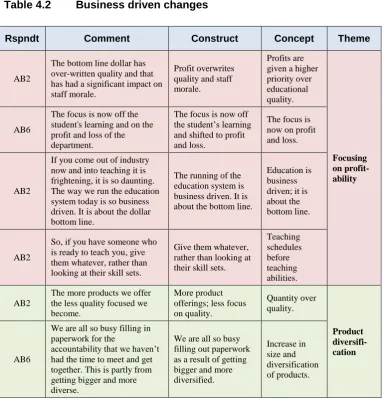
Changes that are business driven ... 82
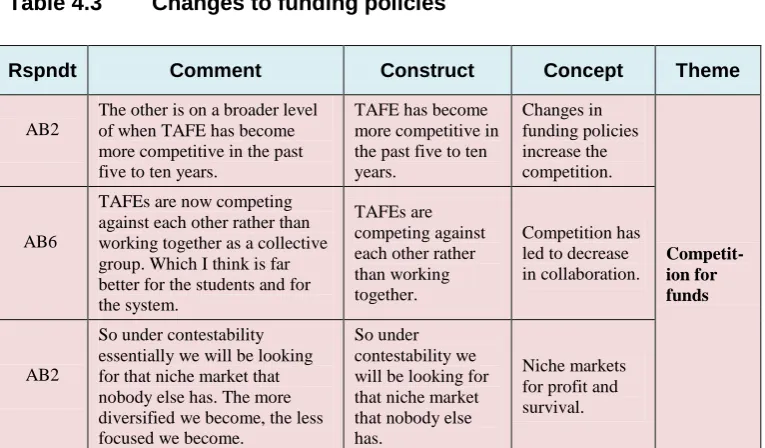
Changes to funding policies ... 85
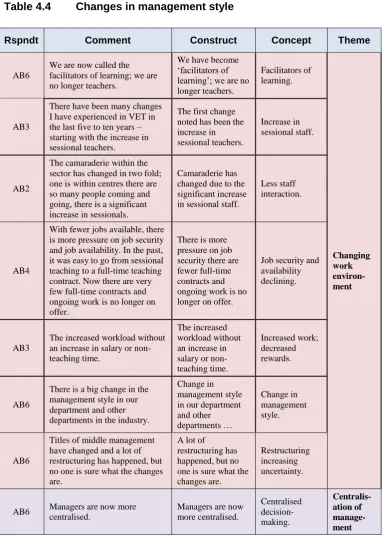
Changes in management style ... 86
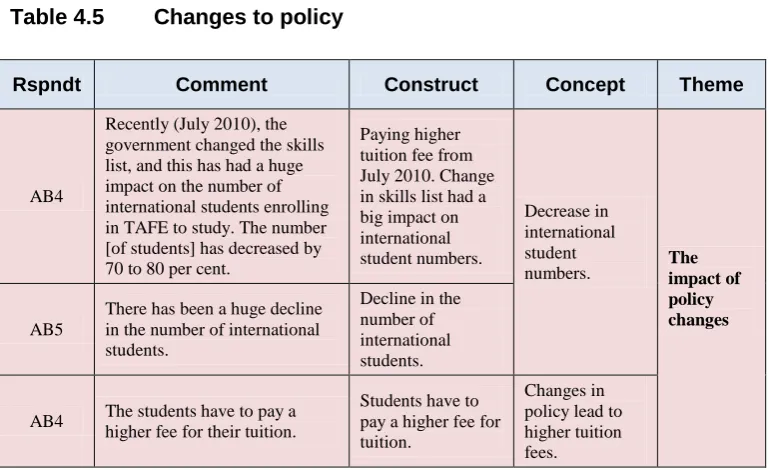
Changes in policy ... 90
Lack of collaboration ... 91
Changing student population ... 92
Synthesis ... 99
Question 2: What driving forces have directed changes in the VET industry in recent years ... 100
Federal government policies ... 100
Management changes ... 105
Student interactions ... 110
Synthesis ... 116
Question 3: How have changes affected the day-to-day activities of VET practitioners? ... 117
Increase in compliance work ... 118
Increased stress ... 122
Students ... 127
Synthesis ... 129
Question 4: What power relationships have emerged between administrators, staff and students? ... 130
Corporatisation ... 130
Management ... 137
Culture change ... 140
Synthesis ... 145
Question 5. What leadership skills are required to lead in this culture of change? 146 Change management skills ... 146
Situational leadership skills ... 148
Transformational leadership skills ... 151
Synthesis ... 158
CHAPTER 5 MATTHEW NIXON INSTITUTE ... 159
Introduction ... 159
Inductive data reduction ... 159
Question 1: What changes have you noticed in the past five to ten years in the workplace? ... 160
Analysis of organising themes ... 160
Changes in management ... 163
Students 168 Synthesis ... 173
Question 2: What driving forces have directed changes in the VET industry in recent years ... 174
Federal government policies ... 174
An emergent business model ... 177
Changing student attitudes ... 181
Competition ... 184
Synthesis ... 186
Question 3: How have changes affected the day-to-day activities of VET practitioners? ... 187
Changing work force ... 187
Industry standards ... 190
Management issues ... 192
Multiskilling ... 195
Students’ attitudes ... 196
Increased administrative work ... 198
Synthesis ... 199
Question 4: What power relationships have emerged between administrators, staff and students? ... 200
Corporatisation ... 200
Student/teacher roles ... 202
Power shift ... 204
Workplace learning ... 206
Leadership and management ... 207
Building rapport ... 212
Synthesis ... 213
Question 5: What leadership skills are required to lead in a culture of change? .... 214
Workplace situational leadership ... 215
Transformational leadership ... 216
Transparent leadership ... 223
CHAPTER 6 FINDINGS AND REFLECTIONS ... 228
Introduction ... 228
Question 1: What changes have you noticed in the past five to ten years? ... 229
Issue 1.1 – Compliance ... 229
Issue 1.2 – Policy changes ... 229
Issue 1.3 – Student profiles ... 232
Issue 1.4 – Centralisation of decision making and a change in management style ... 233
Question 2: What have been the driving forces directing changes in the industry in recent years?... 235
Issue 2.1 – Policy changes ... 235
Issue 2.2 – Business model of operation ... 236
Issue 2.3 – Changing perception of students as clients ... 237
Question 3: How have changes affected day-to-day activities of VET practitioners? ... 240
Issue 3.1 – Management ... 240
Issue 3.2 – Increase in administration workload ... 241
Issue 3.3 – Multiskilling and multi-tasking ... 242
Question 4: What power relationships have emerged between administrators, staff and students? ... 245
Issue 4.1 – Profitability and financial survival ... 245
Issue 4.2 – Clients ... 247
Issue 4.3 – Communication and hidden agendas ... 248
Question 5: What leadership skills are required to lead in this culture of change? ... 249
Issue 5.1 – Financial survival skills ... 249
Issue 5.2 – Servicing clients ... 251
Issue 5.3 – Transparency ... 252
Issue 5.4 – Meeting the needs of stakeholders ... 254
Issue 5.5 – Understanding each other’s position ... 255
Issue 5.6 – Understanding the environment ... 256
Issue 5.6 – Communication skills ... 257
Issue 5.9 – Transformational skills ... 258
CHAPTER 7 MOVING FORWARD ... 259
Becoming a corporate educational organisation ... 259
VET change model ... 260
Individualistic transformational model ... 262
Model for policymakers ... 264
References ... 265
Appendices ... 280
Appendix 1: ... 281
Appendix 2: Findings and reflections ... 282
Appendix 3: ... 287
List of Figures
List of Tables
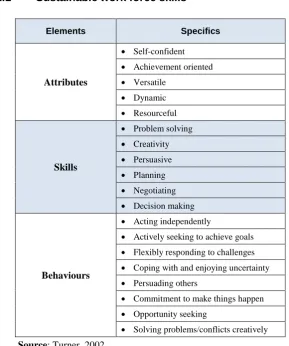
Table 2.1 Sustainable work force skills ... 36
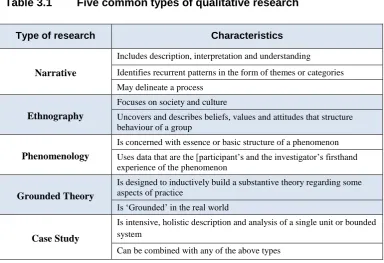
Table 3.1 Five common types of qualitative research ... 50
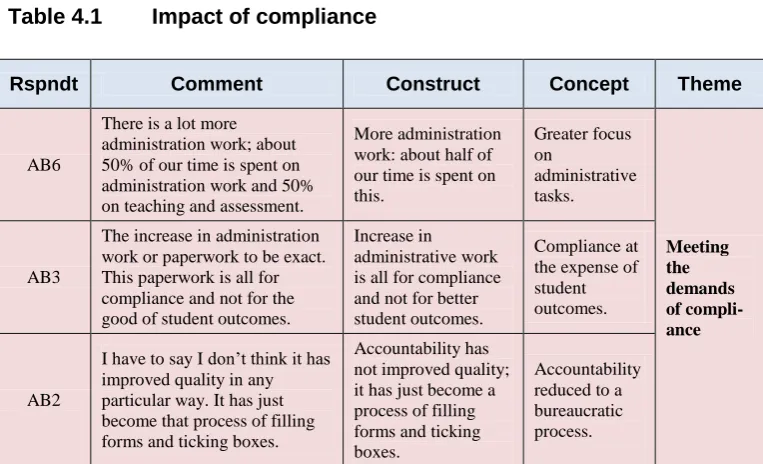
Table 4.1 Impact of compliance ... 78
Table 4.2 Business driven changes ... 82
Table 4.3 Changes to funding policies ... 85
Table 4.4 Changes in management style ... 87
Table 4.5 Changes to policy ... 90
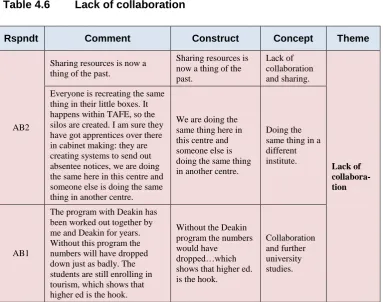
Table 4.6 Lack of collaboration ... 91
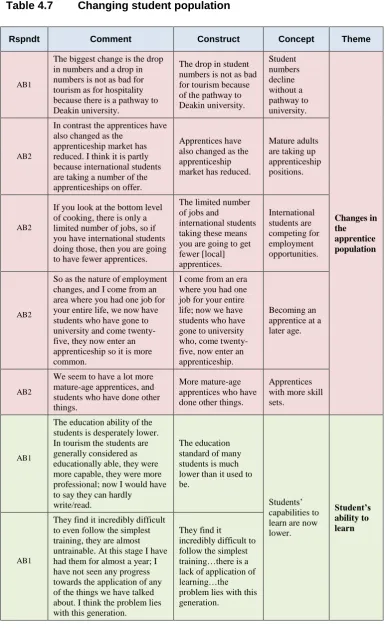
Table 4.7 Changing student population ... 93
Table 4.8 Federal government policies ... 100
Table 4.9 Management changes ... 105
Table 4.9 Student interactions ... 111
Table 4.10 Increased compliance work ... 118
Table 4.11 Increased stress ... 122
Table 4.12 Students ... 128
Table 4.13 Corporatisation ... 130
Table 4.14 Policy ... 133
Table 4.15 Management ... 137
Table 4.16 Role change ... 140
Table 4.17 Change management ... 146
Table 4.18 Situational leadership skills ... 148
Table 4.19 Transformative leadership skills ... 151
Table 5.1 Compliance ... 160
Table 5.2 Changes in management ... 164
Table 5.3 Students ... 168
Table 5.4 Federal government policies ... 174
Table 5.5 Emergent business management model ... 177
Table 5.6 Changing student attitudes ... 182
Table 5.7 Competitive forces ... 184
Table 5.8 Changing work force... 187
Table 5.9 Industry standards ... 191
Table 5.10 Management issues ... 192
Table 5.11 Multiskilling ... 194
Table 5.12 Students’ attitudes ... 197
Table 5.14 Corporatisation ... 200
Table 5.15 Changing roles ... 203
Table 5.16 Power shift ... 204
Table 5.17 Workplace learning ... 206
Table 5.18 Leadership and management... 208
Table 5.19 Building rapport ... 212
Table 5.20 Situational leadership ... 214
Table 5.21 Transformational leadership ... 217
Table 5.22 Transparency ... 223
Table 6.1 Sessional staff cost savings ... 230
CHAPTER 1
INTRODUCTION TO VOCATIONAL EDUCATION
AND TRAINING
Introduction
The Vocational Education and Training (VET) industry has gone through
many changes in recent times: these changes do not appear to be stopping
any time soon. They are largely affected by government policy changes, the
constant revision of training packages to stay relevant with industry needs,
and the need for training organisations and institutions to be viable and
profitable. The purpose of this study is to use a qualitative research
methodology, reported as a case study to draw out perceptions and
misconceptions of the changes taking place in two VET institutions and to
understand the effects these changes have on the everyday lives of VET
practitioners. This study has also explored changes in the workplace
environment of VET practitioners affiliated with both institutions.
There have been many articles and research tied to the changing role of
VET practitioners, but none have gone into details as to what the changes
meant and they affect the everyday life of a VET practitioner. By using the
proposed framework of qualitative research in the form of a case study within
two institutions, some of the effects of the changes taking place in the VET
industry will be clarified. This will give in-depth insight as to how these
changes are affecting the everyday working lives of VET practitioners in
Technological advancement and immigration policies can also be seen as
driving forces for these changes in Australia, and in other educational
institutions around the world. The impact of technology advancement and
globalisation has encouraged changes in teaching and learning to serve
expected outcomes (Kaufman, 2002, 7). Australian immigration policies
negatively affected the number of international students choosing Australia
as a place to acquire their training, causing the number of international
students to decrease. These changes are evidential in appendix 3 and 4, where
the skilled occupation list in 2013 had a number of skills removed from the
skilled occupation list without any additional skills added.
Context and rationale
The context within which my research was carried out was based on two
TAFE institutes in their respective hospitality management centres. These
centres were chosen at the time because of the numerous changes they were
going through, and the visible stress placed on VET practitioners in these
centres. By examining the changes in the working lives of these practitioners,
an in-depth analysis was carried out on the effects of these changes.
Vocational Education and Training (hereafter referred as VET) has
transformed from being a well-defined group of occupations, mostly
associated with the TAFE institutes (Simons, 2008), to a broader based task
force which includes staff working in a variety of settings such as business
enterprises, industry organisation, commercial training organisations, private
registered organisations, adult and community based organisations, schools,
government sectors and TAFE institutes. For the purpose of this research,
staff in the same centre from both institutes will be the source for the data
collected in this case study. This data will then be analyse and compared to
gain in-depth understanding of the changes taking place and the impacts
these changes had on the day-to-day working lives of these VET
The notion of change, as a necessary condition for the continuous
improvement of education, should not be dismissed, especially in the context
of VET. Fullan (1993) has reported an anonymous first-year university
student as saying, ‘Everything must change at one time or another or else a
static society or school will evolve’. The question in this study is not the
importance of change, but the number of changes and their effects on the
working lives of VET practitioners. I discuss the research focus of this
change in the next section.
Research questions
Arising from the foregoing context and rationale, and as previously
mentioned, my research involved an investigation of the changing lives of
VET practitioners in the hospitality departments of two institutes. An
in-depth analysis of the effect of these changes was undertaken in order to
provide answers to the following questions:
How have the changes affected current VET practitioners in their
day-to-day work routines?
In what way have these changes affected the attitudes of the VET
practitioners?
What power relationships have emerged between administrators, staff
and students?
General research question
In order to guide my research, I posed a general research question:
What are the key changes in the working lives of VET practitioners in
recent years, and how have these changes affected their attitudes
Specific research questions
In order to provide a focus for answering the general research question, the
following specific research questions were developed:
1. What changes have you noticed in the past five to ten years in the
workplace?
2. What driving forces have directed changes in the VET industry
in recent years?
3. How have changes affected day-to-day work activities of VET
practitioners?
4. What power relationships have emerged between administrators,
staff and students?
5. What leadership skills are required in this culture of change?
These specific research questions were designed to gain an in-depth
understanding of the VET Practitioners’ perceptions of the changes which
had taken place in recent years. They were designed to gain a holistic look at
how the changes had affected the daily working lives of VET practitioners,
the perceived outcomes from all these changes. The last question was
designed to achieve an evaluation of what VET practitioners deemed as the
skills needed to lead, when there were so many changes taking place. These
questions were not designed to draw on the perception of good policy or bad
policy. They were not intended to achieve an understanding for a paradigm
change in the Vocational Education and Training sector, but the perception of
how changes have affected VET practitioner’s lives and possibly how the
sector can move forward.
Vocational education and training (VET)
The VET sector has experienced and continues to experience significant
changes and evolution processes, particularly since the 1990s. This,
according to the National Skills Standards Council (2013), includes the
an open and competitive vocational education and training market,
which has led to significant growth and diversification in the
providers of vocational education and training;
growth in fee-for-service delivery;
continued increase in the offshore delivery market;
technological advances and innovation in the nature and way
vocational education and training is delivered; and
increased overlap and blurring with schools and higher education
sectors, including the emergence of dual and multi sector providers.
There are nearly 5 000 registered training organisations in Australia,
operating within a widely varying range of types, as follows:
large government-owned TAFE institutes with many thousands of learners and hundreds of qualifications on scope;
providers registered to offer both vocational education and training
and higher education qualifications (approximately 90 providers); large private training colleges providing a broad range of training; very small private colleges focused on niche industry and learner
needs;
community colleges;
not-for-profit organisations;
enterprises delivering training and assessment to its employees; and secondary schools.
The training and assessment of learners is being carried out in a range of
environments, from classrooms to the workplace, to simulated workplace
environments and in some instances online through the use of multimedia
modes. There are 1.9 million learners in the public VET system (NCVER,
2012) including 1.5 million government- funded students and an estimated
400, 000 domestic full fee paying students. Approximately 249, 400 students
participated in VET in school programs, in around 18, 500 Australian high
000 learners were studying Australian VET qualifications offshore in 2009.
There are approximately 3300 nationally recognised VET qualifications of
which 59 are training packages and 1600 are accredited courses developed to
address those not covered by training packages. The scope of VET is wide
and diverse.
Importance of VET
The skills education and training system plays a critical role in delivering
sustainably higher living standards through forming one of five pillars of
productivity. According to the National Panel for Economic Reform (2013),
skills and education create social and economic benefits through enhancing
civil society, providing greater opportunities and generally improving life
outcomes.
The Commonwealth of Australia (2012) has indicated that the Australian
economy is going through a period of change, driven by a number of factors
including: the expansion of trade relationships with Asia; a new and rapidly
emerging economy; new and emerging technologies; an ageing population
and work force; and a shift to a low carbon economy. Australian workers also
need the capacity to innovate and respond flexibly to the changing demands
of the workplace and job market. With all these changes going on, Australian
businesses will in future be embracing technological and business
innovations to achieve competitive advantage in a global market. Future jobs
which will be more complex and there will be a consequential increase in
demand for a work force with higher level skills (Australian Work force and
Productivity Agency, 2013). Unfortunately, in Australia, there is a widening
gap between the expected supply of higher level skills and expected industry
demand. By 2015, it is estimated that Australia will need another 2.4 million
of its workers to have qualifications at the certificate III level or above to
meet the projected industry demand and replacement of retiring workers
Australian service sector, this estimated rise may come mostly from the
hospitality and tourism sector.
To create a higher skilled work force requires the capability to be more
readily adaptable, innovative and able to implement new ideas through the
use of new technology within Australian businesses. We providers will need
our VET system to create the necessary kind of skills listed above; this will
only be possible if we have trainers who have these skills and capabilities.
In Australia, the blurring of the formerly distinctive divide between
higher education, vocational education and schools means that vocational
education trainers are now required to teach in schools at one end of the
educational scale and in higher education programs at the other (Wheelahan
et al., 2009). While school teachers mostly teach in schools and university
lecturers mostly deliver their lectures in universities (although they may
support their students in the workplace), university lecturers also deliver
distance, online and mixed modes of teaching; however, the range of types of
providers is much narrower than that of VET. Vocational education trainers
deliver training in publically funded Registered Training Organisations
(RTOs) and private RTOs, which may be large or small. They may teach on
or off campus or both, in many different types of workplaces: prisons and
army barracks; in a range of community settings such as neighbourhood
houses and refugee support centres; in private corporate organisations; and
on irregular worksites such as domestic homes or on the side of a highway.
Vocational trainers also engage with early school leavers both young and old,
who do not particularly want to learn or who not and still do not want to
learn: this latter group attend VET institutions primarily for the purpose of
obtaining Centrelink payments. The learning ability and aspirations of these
students are low.
The complex demand placed on vocational trainers is not one which can
be simplified overnight; however, it needs to be addressed promptly if the
vocational education system is to surface and flourish into the future. In
knowledge providers, if they are to cater effectively for all the changes taking
place in the vocational education sector. My research will focus on some of
these changes.
Australian vocational education and training work force
The Australian vocational education and training work force comprises a mix
of trainers/teachers and assessors, other vocational education and training
professionals and general staff across the public, private and not-for-profit
sectors (Productivity Commission, 2011). Estimates of the exact size,
demographics and profile of the VET work force are not available; however,
it is estimated that there are about 73 000 TAFE institute employees and 150
000 employees involved in vocational education and training delivery at
non-TAFE organisations (Productivity Commission, 2011). This amounts to 223
000 employees involved in vocational education: a sizeable number of people
in the work force and a number which we would like to see increase, if our
nation is to have a prosperous future in the changing Australian and global
economy. Trainers or teachers and assessors are theoretically required to be
skilled in the practices of teaching, training and assessment, to possess sound
industry currency and to develop new business with industry, where and
when possible. Within the profession of ‘trainers or teachers and assessors’
there are VET practitioners including training/teaching professionals,
enterprise trainers and assessors, industry experts, and other vocational
education and training professionals (Productivity Commission, 2011). For
the purpose of this research, the term ‘Vocational Education and Training’
(VET) practitioners is used for three levels of staff that have direct contact
with development, delivery, review and in most cases assessment of
vocational education and training. These three levels comprise administration
staff, training staff and centre administrative staff and above.
Nearly all trainers and assessors in TAFE and private RTOs hold a
and assessment activities hold a minimum qualification required for
vocational education and training or teaching (i.e. the Certificate IV in
Training and Assessment) or an equivalent qualification (Productivity
Commission, 2011). About half of the vocational education and training
work force comprises trainers or teachers and assessors who are ‘dual
professionals’, having the ability and qualifications to operate in both
education and industry environments. The Productivity Commission
estimated that approximately 65 per cent of trainers or teachers and assessors
in TAFE and community services are employed on a casual or sessional basis
(Productivity Commission, 2011); some are employed on yearly contracts or
contracts of a lesser timeframe and this begs the question. Can we keep the
vocational education and training system sustainable and productive if the
work force is made of predominantly casual employees, who may be in one
institution one quarter and in another institution the next quarter?
In a work force with such a high casual rate, individual staff will need to
be more proactive in order to maintain morale and their own personal
development to ensure their future employment viability.
Changing culture
While it is possible to conceptualise newly employed VET practitioners as
having the knowledge and skills to perform the multiple tasks required in
changing the VET environment, the issue of cultural change is likely to be
more problematic. Many new VET practitioners working with non-standard
employment status will be required to work across organisational boundaries,
and be able to work productively in different organisational cultures that
characterise the newly diversified VET sector. In a real sense, all registered
training providers are now in the business of vocational education and
training. Many VET providers also work under a common regulated
framework. Consequently, they are governed by the same accreditation,
levels. All providers are now influenced by government policy and must
negotiate administrative and policy demands of government.
These changes are likely to disturb the different norms, values, morale
and modes of conduct which have provided public and private sector
organisations with distinct and separate organisational identities. They may
also disturb the distinctive organisational cultures constructed by these
differences. For example, TAFE as a public sector organisation has an
identity built around public service. It has therefore constructed an
organisational culture that values vocational education and training built
around concepts of social good (Seddon, 2000b); thus discourses of equity,
impartiality and adherence to rules and regulations designed to increase
public confidence and political accountability have been central to the
construction of a shared organisational culture (Chappell & Johnson, 2003).
With the introduction of the VET business model, this construction of a
shared organisational culture has been either disturbed or to a point of being
broken. The new TAFE construct norms, values, morals and modes of
conduct once distinguishable are now indistinguishable from those found in
the private or corporate sector.
New VET practitioners must be capable of adapting to the cultural divide
which distinguishes the world of work from the world of education. They
must also be able to distinguish private enterprise from the public service.
This requires VET practitioners to negotiate different values, norms and
modes of conduct than those currently found in either the public or private
vocational education sector.
Purpose of the study
The purpose of this study was to gain an in-depth understanding of the
changes that have affected the everyday working lives of the VET
practitioners in recent years. The VET sector represents a critical and
formal learning, the workplace and broader community learning. Kearns &
Papadopoulos (2000: 23) have identified four sustaining foundations of such
lifelong learning practices as being:
1. ‘Learn to learn skills’.
2. Motivation and desire for lifelong learning.
3. Confidence to keep learning throughout life.
4. Personal mastery (as a basis for empowerment in work and in
society).
These four sustaining foundations can and should be applied to both students
and trainers/teachers.
Changes will occur regardless of what the influences are, and VET
practitioners must be able to cope with these changes and rise above them; in
gaining an in-depth understanding of the changes and their effects, VET
practitioners will be able to deal with change and become an integral part of
the VET system. This will be a system which is relied upon by lifelong
learners, school leavers, skills councils and non-academics who need to
become a productive part of our society. As the VET sector evolves,
instructors and administrators must also transform in order to contribute to
the learning needs of our learners and the needs of the organisations we work
for: I am personally committed to this transformation.
This case study focused on the changes in the working lives of VET
practitioners in the state of Victoria, Australia, who provide training
programs recognised at state and national levels within the National Training
Framework. The reflections and findings bring new data to the debate or
discourse and contribute to a broader discussion about trainers of VET in
Australia in the future. There are several limitations to this study. The first is
its scope; it is limited to a point-in-time profile of VET practitioners. The
study is also limited to the context of two institutions within Victoria, and
within one common centre. Since the beginning of this study, there have been
liberal government in 2014, there may be many changes likely to occur in the
very near future.
Thesis structure
This case study research consists of seven chapters and includes
auto-ethnographic material that has helped me to review my position as a
researcher in this research. In Chapter 1 the context and rationale of the
research is introduced; in Chapter 2 a literature review is presented that
relates, predominantly, to recent changes that have occurred in the VET
industry in Australia, generally, and in Victoria, in particular; and in Chapter
3 the methodology and methods used to gain an in-depth understanding of
the changes in the working lives of VET practitioners and their effects on
individuals are detailed, as well as the organisation or institution. In Chapters
4 and 5 the outcomes of the inductive data reduction analysis I undertook in
order to derive two sets of emergent concepts and themes from the data
collected from individual semi-structured interviews are presented. In
Chapter 6 reflections and findings that highlight the changing nature of the
VET industry in Victoria from 2005 to 2014 are presented.
In conclusion, in Chapter 7, a transformational model based on my
research findings that will help to facilitate future change in the VET industry
at state, national and international levels is presented. In particular, my model
aims at:
alleviating the discomfort felt by VET practitioners in these times of
change;
improving individuals’ productivity as a result of genuine concern
and support for one another; and
Summary
In sum, this study is about VET practitioners, and the effects that recent
changes in the VET system have had on their lives in Victoria and in
Australia. VET nationally is important to the Australian economy and to the
many individuals employed in this sector. The learners who have come to
rely on the VET system, to provide skills and knowledge, and to get them
ready for entering the work force also view VET as an important part of their
lives. The VET sector has experienced significant changes in recent times
and there is no end in sight. These changes are dominated by economic
discourse that points to the need for VET systems to be sustainable and
profitable.
In the next chapter, I will discuss recent changes that, specifically, have
affected Vocational Education and Training (VET) in Victoria in the past
decade: mine is a local study. I will, however, reflect on national
developments that have impinged on the local scene and will, briefly, link
CHAPTER 2
LITERATURE REVIEW
Introduction
The Vocational Education and Training (VET) industry has gone through
many changes in the past decade and a half, and this does not seem to be
stopping any time soon. There is a great deal of research on the changing
workplace or role of VET trainers. This chapter seeks to review such
research to clarify the changes that have occurred in the VET sector.
Engaging in a review of the literature will also give a sense of direction as to
changes that the VET industry will need to consider and embed over the next
five to ten years.
In this review, I provide an historical overview by examining the
resurgence and ideology of VET, finishing with more recent developments. I
proceed by outlining recent changes that have affected VET and the possible
causes for such changes in the context of TAFE (Technical and Further
Education). Finally, I explore the possible directions offered by the research
literature to assist in guiding future directions for the VET sector. This
review was written based on a number of articles and researchers sourced on
the topic of the changing workplace and role of VET trainers. Further, the
issues raised in this research may become outdated with more changes on the
way for the VET industry, as flagged above.
Articles used in this literature review have been accessed from
well-respected journals such as the Australian Journal of Teacher Education,
as the National Centre for Vocational Education Research, and the Australian
National Training Authority (ANTA). The review has also explored similar
issues in other countries to gain a better understanding of the global nature of
the changing workplace/role of VET trainers. Scoping national and
international literature also provides a comparison of the Australian VET
system to that of other countries.
Note on the sources used for this review
The databases and journals used for this review are sourced from A+
Education journals, The Age newspaper, Academic Search Premier Database,
Australian National Training Authority, Australian Public Affairs, Australian
Council for Education Research, National Centre of Vocational Education
Research, Education Resources Information Centre, Organisational
Vocational and Adult Learning and Organisational for Economic
Co-operation and Developments.
Many of these articles were written by industry experts, most of whom
are still practicing in the industry and all of whom are suitably qualified to be
quoted. For example, Professor Terri Seddon was, at the time she was
working in the field, Associate Dean (Research), Faculty of Education,
Monash University, Melbourne; Clive Chappell was a senior research fellow
with the Research Centre for Vocational Education and Training in the
Faculty of Education, University of Technology Sydney; Erica Smith was a
member of the academic professional development team at the University of
South Australia, Adelaide and a leading academic in the field of competency
based training.
Brief history of vocational education
In this section, I consider the initial emergence of vocational education in
Australia, discuss a major reason for its delayed development in the tertiary
Early history
The year 1889 could be considered a significant timeline in the development
of technical education (Goozee, 1995). All the structures and frameworks for
future development had been established. In Victoria, the Ballarat School of
Mines (the first technical school) was established in 1870; it was followed
shortly after, in 1873, by the establishment of the Bendigo School of Mines.
Another fourteen technical institutions soon followed between 1870 and
1890 (Goozee, 1995). Technical education was also being developed
throughout others states and territories at the same time.
There was little involvement of the Commonwealth prior to the 1940s.
Earlier, in the 1930s, state governments were experiencing difficulties in
financing the provision of programs designed to alleviate high levels of
unemployment caused by the economic depression in 1929. David
Drummond, Minister of Education for New South Wales, called for a
meeting in 1936; here, he provided a lengthy statement (cited in Spaull
1987:8), in which he outlined
…the parlous state of technical education in New South Wales, how this came at a
critical stage in the need for industrial revival and youth training to overcome the unemployment of the 1930s and how New South Wales and other states could not find funds from their own resources.
This argument gained considerable support from other state ministers, but
the motion was rejected by the Australian Government at the Premiers’
Conference in May 1936 (Goozee, 1995). It was not until the 1940s that the
Commonwealth provided financial assistance to the states for technical
education – a decision largely due to the need for technical education as an
essential part of the Second World War effort. In 1943, the Australian
Government established the Walker Committee to ‘consider the general
problems of the co-ordination of the various activities of the Commonwealth
within the education field’ (Tannock 1976:4). This committee played a very
important role in Australian education, as it began the Australian
responsibility for education. The Commonwealth Office of Education was
created within the framework of the Department of Post-war Reconstruction
on 8 November 1945. Its function, in terms of the Education Act 1945, was
to advise the minister on matters relating to education, including the granting
of financial assistance to the states; to liaise on education matters with the
states and overseas; and to undertake research and to provide statistics and
information (DEET 1988:27).
More recent developments: 1950–1975
Changes to the VET sector since the 1950s are best summed up by a
graphical display in Appendix 1, which outlines all the major changes that
took place in Australian vocational education systems. These changes were
due, in part, to Australian Government funding policy changes; some were
due to economic changes while others were due to societal and industrial
needs.
Although technical education provided training specific to local
industries and the unemployed, this sector was unable to establish its position
in tertiary education prior to 1970. This was due, in part, to its lack of clear
identity and charter, and its wide range of courses, awards and the diversity
of structures across Australia. The inclusion of technical education within
state and territory Departments of Education restricted tertiary development,
as priority in funding was given to primary and secondary schools. It was not
until the 1970s, when the Australian Government commenced providing
designated grants to TAFE systems, that the states and territories were able to
expand and upgrade their facilities for vocational education.
Regardless of the causes for change, one thing is certain: changes in the
vocational education system in Australia and worldwide are necessary in
order to provide the global skills and knowledge needed by all countries
(including in their industries), for the purpose of advancement and
Recent changes
Over the past three decades (1987–2014), there have been extensive changes
in vocational education: in funding policies, in the work force, the nature of
the work, the identity of instructors, in pedagogy and the upgrading of skills
through professional development. I address each of these in the following
sub-sections.
Funding policy changes
Vocational Education and Training (VET) sectors in Australia, and therefore
in Victoria, have undergone some significant changes over the past decade
and a half. These changes include the amalgamation of TAFE institutes and
the creation of a market for the provision of part of state-funded VET
training, in which public and private providers compete for funding from the
state government (Shah, 2003).
Prior to this time, TAFE served two major client groups. The first was
traditional apprentices, trainees and their employers. The second group
comprised young people undertaking full-time vocational training courses
after finishing secondary school. The TAFE system, and the mechanism for
funding, reflected these priorities. The situation changed irreversibly in the
early 1990s, driven by a number of interrelated factors, including the
following:
Profound structural shifts in the labour market caused by, among
other things, increasingly rapid technological change and increased
globalisation of markets.
Agreements for greater industry input into the training system
through the development of a network of state and territory and
national industry training advisory boards.
The introduction of competition into the training provider market by
allowing providers (other than the institutes of TAFE) to receive
process, and by allowing providers to deliver training in other states
and territories.
Changes to the traditional apprenticeship system, including the
development of traineeships, and the implementation of the new
Apprenticeship system from 1 January 1998. New apprenticeship
arrangements included choice of training provider and arrangements
for on-the-job delivery of the formal part of the training program. Government funding in the form of subsidies to employers of
apprentices and trainees, growth funds to state and territory training
authorities and funds for capital works, capital improvements and
special projects.
National agreements to fund and promote recognised vocational
education and training in secondary schools as part of upper
secondary education (Adams, 2001).
The majority of these policy changes had implications, either directly or
indirectly, for the ways in which resource allocation to the public VET
system was managed.
Following the release of Skills for Australia 1987 (Dawkins & Holding,
1987), the VET sector was then subjected to a series of structural reforms.
The reason for these structural reforms was to enhance the VET system’s
efficiency, effectiveness, flexibility and its responsiveness to the industry’s
changing expectations and needs. A national Competition policy was
recommended in the Hilmer report (1993) and was agreed for adoption by the
Commonwealth, state and territory governments (Shah, 2000).
With the agreement in place, there was a push towards creating a national
market for VET where both public and private providers competed for
funding from Commonwealth, state and territory governments. To promote
this change in VET, these governments have:
Encouraged the creation of a new competitive education and training
market by sanctioning the establishment of private providers in
Promoted a competitive ethos within publicly funded educational
institutions and extended the public accreditation processes of
education and training to industry and enterprise training (Chappell &
Johnston, 2003).
Encouraged business and industry to be more actively involved in
providing training for its work force and have encouraged the
establishment of private providers of Vocational Education and
Training (Chappell & Johnston, 2003).
These introduced changes by the government have created a diversified
VET sector, and with this diversity comes an ill-defined border that has
public, private and non-government agencies limping on one leg with very
little direction for future sustainability. The changes in the early 1990s driven
by open competition and a number of other interrelated factors had a
profound effect on the structure of the labour market and the nature of work
in the VET sector.
There were numerous funding cuts to the TAFE sector from 2012 to
2013, which caused many more changes to the lives of VET practitioners. In
September 2012, for example, TAFE staff in Victoria protested against a
massive $300 million funding cut to the TAFE sector (Wheelahan, 2012);
New South Wales and Queensland also suffered massive cuts in their state
TAFE funding budgets. These funding cuts resulted in hundreds of jobs
being made redundant in Victoria, and thousands of jobs around the nation.
In March 2013 the Victorian state government stated ‘they will provide two hundred million dollars for Victoria’s TAFE system’ (Vic Media release, 12
March 2013). This provision would not however reverse the effects of the
cuts in 2012. This new government funding provision would be allocated
over four years, and was targeted towards ‘innovation and structural reform’
(Preiss & Cook, 2013). It would only see on average 50 million dollars being
put back into the TAFE system every year, over four years. This lack of
funding along with re-structural reforms in the VET sector contributed to the
Changing work force
Changes in the nature and patterns of work were complex and they are not
easily captured in a single frame of reference. There were shifts occurring in
the nature of work itself and in the composition of the work force; these are
discussed below.
The work force has become more ‘feminised’ through shifting patterns of
participation for men and women (NCVER, 2013; Shah, 2003). This shift in
gender structure parallels the shift in the industrial structure of employment,
where there is a relative decline in employment in manufacturing and related
industries and where men had a more prominent role. The growth in
employment has been in information technology, hospitality, tourism and
business, finance and community service; it has translated into a more
prominent role for women in the provision of training, and hence provides a
partial explanation for the increase in their employment in TAFE institutes
(Shah, 2003).
Over the past decade and a half, there has been an increase in the
participation of women in the VET work force; this reflects the increase in
the number of part-time or sessional jobs available in the VET sector. For
women, in particular, part-time work allowed them to keep a foot in paid
employment as well as take on the duties of raising families (Shah, 2003).
This use of part-time employment offered TAFE institutes’ management
greater flexibility in resource allocation in an era of reduced, direct funding
sources and rapid changes in technology training.
There are increasing numbers of workers employed under part-time and
casual/sessional arrangements. A number of reviews have noted that the
universality of the full-time permanent job, usually held by the male or
female breadwinner of the family is a thing of the past (NCVER, 2004). In
1993, 66 per cent (or 8100) TAFE employees were full-time trainers but by
1998 this proportion had dropped by three percentage points. This declining
number of full-time permanent employment was probably driven by
union, reported that some institutes had been directing trainers to deliver a
portion of the annual curriculum hours flexibly to cut trainer salary costs
(Forward, 2000). There was also anecdotal evidence suggesting that
sometimes employees in administrative and technical support areas had been
asked to teach to fill in gaps when normal trainers were not available. In
1993, 46 per cent of all trainers were on tenure or ongoing full-time, but by
1998 this percentage was down to 37 per cent. Employment of sessional
trainers in TAFE institutes had become more significant. In 1993, 26 per cent
of trainers were sessional, but by 1998 this proportion had jumped to 36 per
cent. Such arrangements helped in reducing salary costs for the TAFE
institutes but contributed to a loss of income, for a month or more, for
sessional staff who may not have had alternative work during non-teaching
periods (Shah, 2003).
Changing nature of work
Trainers in institutional VET settings have experienced considerable changes
to their work in the past two decades. These have impacted the ways in
which they understand their professional identities and their relationship with
other parts of the VET sector (Chappell & Johnston, 2003; Harris, Simons &
Clayton, 2005).
The roles of VET trainers/practitioners have not only expanded: they
have also diversified. Quality teaching and learning practices emphasise the
development of self-paced, independent learners. Many trainers now
‘facilitate learning’, rather than undertaking traditional face-to-face training.
They are learning managers, requiring effective communication skills,
relevant and up-to-date content knowledge, and the knowledge and skills to
deliver and assess in a wide range of contexts (NCVER, 2004). Some VET
practitioners are acting as ‘learner brokers’ to learners, enterprises and
providers.
The drive towards improved efficiency has meant that many staff had to
interesting and has provided more opportunity for career development. On
the other hand, it has also meant that VET trainers have had to take on wider
ranges of administrative and other functions for which they are not
adequately trained, and which are not properly recognised as part of their
work. In addition to these changes, the administrative and compliance
systems they use have been over-designed, are over-regulated and not ‘user
friendly’ (NCVER, 2004); TAFE managers also report that full-time teaching
staff are
increasingly expected to undertake administrative functions associated with maintaining and organising learning environments serviced by the comings and goings of sessional staffs and short term contract staffs. (Chappell & Johnston 2003:52)
There is evidence to suggest that this indicated ‘an emerging role for the
experience staff as a learning environment manager’ (Chappell & Johnston,
2003).
Seddon (2009) examined the relationship between productivity and
occupational expertise in education and training, and argued productivity is
not just a here and now issue. It should be anchored in the traditions,
relationships and cultures of Australian education.
As a consequence of shifting work roles and responsibilities, public VET
providers are experiencing concerns about their work. These VET trainers
felt a considerable amount of tension between their core activities of teaching
and training and the pressure to become involved in other work functions
such as revenue-raising activities and administrative functions. Another
tension is attempting to balance flexibility alongside meeting customer/client
needs. This is especially the case when VET training packages must comply
with the Australian Quality Training Framework (AQTF) which has its own
set of requirements that adhere to consistency in teaching and learning
outcomes (NCVER, 2004).
Throughout the past decade, the composition of students in the VET
their age and cultural, ethnic and religious backgrounds. The changing
relationship between trainers and students has also meant that students are
now seen as consumers or clients. A shift in the relationship between student
and trainer has meant that trainers can sometimes find it hard to meet their
client’s needs, with so many different cohorts of students. The consequences
of not knowing what the client’s needs were resulted in lack of student
motivation to engage and to learn.
Research reported a decade ago by NCVER (2004) described how the
Netherlands and Australia were using network learning theory as a means of
further illuminating the relationship between learning and work. The report
suggests that trainers have a role in creating spaces for learning. To create
meaningful space trainers need to spend time and effort in understanding the
culture of enterprises with which they work. They will need to develop and
draw on skills and knowledge bases quantitatively different from those held
by the trainer who is ‘inside’ the enterprise. This is a practice adapted in the
Australian VET sector. Network learning theory involves the participation of
individuals in community practices, and learning organisations involves
work-based learning, coaching and mentoring.
Young and Guile (1997:205) have indicated that, in their new roles, VET
professionals need to be able to confront a range of new demands, including:
supporting the skill development process for an increasingly diverse population of learners;
having the ability to work simultaneously across a number of
geographical locales, usually in collaboration with other
professionals;
supporting the development of transferable skills (e.g. key
competencies); and
developing the ability to support enterprises as well as their own
This 1997 range of demands remained current in 2008; it may even have
implications for the future, where individuals will need to become learning
specialists and institutions will need to become learning organisations.
The emerging demands of facilitating online learning have resulted in
significant expansion in the role of work of VET practitioners. A study of
eighteen practitioners (Harris, Simons & Clayton, 2005) who were involved
in online delivery found that:
the adoption of online delivery was driving a job redesign process
which was not reflected in current human resource policies within
organisations;
there was a blurring of specialist functions which required
practitioners to be multiskilled and prepared to take on a range of
functions, some of which were previously the province of middle
management;
relationship building with both students and colleagues is a critical
component of the role of an online practitioner; and
work conditions of participants – particularly in relation to work
intensification and difficulties in achieving sustainable work/family
life – are impacting the realisation of this newly emerging role for
VET practitioners.
These changes in the role of VET practitioners are both challenging and
empowering, but they may also prove to be stressful and disempowering.
Erica Smith (2010) has highlighted two important constraints in the VET
sector: the VET system is tightly controlled by the interests of industry; at the
same time, it is inflexible in adapting to new approaches. Both of these act to
disadvantage many groups of learners. Internally, teachers and trainers do not
have adequate skills to work skilfully and critically with competency based
training, leading to ill identified pedagogy and a narrow focus on the
assessment of individual items of performance.
Changes in vocational work, driven by the accelerating impact of
transforming both work design and conceptions of the contemporary worker
(ANTA, 2003a). This has implications for vocational trainers to be learning
specialists in order to keep up with the impact of technological advancement,
rather than just vocational skills experts. Vocational trainers will need to be
more flexible, autonomous, motivated, orientated to lifelong learning and
self-regulating in order to be industry current and connected to the
requirements of the industry (Chappell & Johnston 2003). With the rapidly
transforming nature of vocational work (Darwin, 2004) it will become
extremely challenging for vocational practitioners to create learning in a
context that is relevant, current and sustainable.
Changing identity
Trainers in TAFE institutes have experienced many changes brought on by
government policy changes and this has impacted their everyday pedagogical
practices. These changes have caused a lot of confusion, regarding TAFE
trainers’ identities, in this complex and sometimes contradictory VET
industry.
Chappell (1999) has identified three dominant discourses within TAFE
institutes that have shaped the formation of TAFE trainers’ identities. The
first, referred to as industrial skills development, provides the rationale for
the establishment of technical education in Australia. Technical education
was created specifically to service the labour market needs of industry and
the economy more generally. In 2005 the Howard government pledged a
large sum of $65.4 million to establish 24 Australian Technical Colleges in
regional and metropolitan locations suffering skill needs. The intention was
to provide quality education and trade training for senior secondary students.
This affirmed the first discourse of industrial skill development.
This discourse has constructed TAFE trainers in particular ways. They
are represented, primarily, as having specialised vocational knowledge in a
trade or other occupation rather than possessing any specialised educational
trainers as industry practitioners who happen to train and this position
continues to be reflected in TAFE recruitment policies that continue to
require trainers to have industrial expertise (Chappell, 1999). This discourse
is reiterated in the current TAFE sector where full-time trainers are
recommended to take time off to work, each year, in their respective
industry.
This remains an important discourse that TAFE trainers use to construct
their occupational identity, acting as a point of difference that distinguishes
them from other trainers working in education. This discourse may have been
valid in 1999, but it was no longer valid in 2008 – nor is it valid in 2014:
TAFE trainers now need to be much more than just industrial trade
specialists.
The second discourse of liberal education has constructed a significantly
different institution from that responsible for providing industry with a
suitably skilled work force. According to Chappell (1999), these discourses
of liberal education and industrial skills development provided a persuasive
rationale for the existence of TAFE as a liberal institution. It is my perception
that this rationale continues in 2014, because of the heavy reliance from
industry employers to acquire suitably competent and skilled individuals
from TAFE institutes.
The third discourse is that of ‘public service’ (Chappell, 1999: 35). This
discourse is in and of itself inextricably linked to the rise of liberal
democratic governance. The emergence of liberal democracy is characterised
by increasing involvement of the state in the social, cultural and economic
life of society, largely through the construction of various state
instrumentalities and bureaucracies including those of public education.
Harris et al. (2005) devoted an entire publication in which they describe the
extent to which training reforms are changing the organisation culture of
TAFE. They argue that the changes to mindsets and work roles of VET
professionals, particularly those who are employed in these institutions, have