Volume 8, No. 5, May-June 2017
International Journal of Advanced Research in Computer Science RESEARCH PAPER
Available Online at www.ijarcs.info
ISSN No. 0976-5697
A Vague Rule Based Analysis Model for Software Risk and Quality Evaluation
Kavita Dahiya
Research Scholar
Computer Science and Application Department MDU, Rohtak
Dr. Priti
Assistant Professor
Computer Science and Application Department MDU, Rohtak
Abstract: A software system is defined large number of modules and integrated components. While developing a software system, it is required
to analyze the risk factor or the expected quality at the planning stage. At this stage, the requirement and expectation based mapping can be obtained to identify the risk and the quality. These measures directly represent the chances of system failure, cost of project, delay of project etc. In this research, multiple aspect based software quality estimation is provided. These multiple aspects include the entity specific, procedural, resource specific and the object specific. The paper has defined a vague formulated risk evaluation model with multiple associated stages. At the earlier s tage, t he r isk c ategorization i s p rovided. Later o n, t he vague b ased i ndividual as pect r isk an d t he cat egory s pecific a ggregative r isk evaluation is provided. In this paper, the risk estimation measure is applied on Cocomo NASA 2 projects datasets. The result shows that the model provided effective evaluation of software projects.
Keywords: Risk Quality, Vague Rule, Software Metrics, Process Metrics
INTRODUCTION
The quality of software system affects from various errors, faults and associated risks. Various software metrics are available to analyze the software system at each process stage of S DLC ( Software D evelopment L ife C ycle). The metrics are defined to estimate the software system based on different p arameters including the p erformance, r eliability, cost, r eusability, et c. These p arameters c an be a dapted individually or i n c ombined f orm t o t ake t he de cision regarding the effectiveness of the software system. The functionality d riven m ethods ar e av ailable t o an alyze t he quality o f s oftware s ystems. A t th e in itial l evel, th e s tatic analysis is applied on software system to take the outer view. In this s tudy, th e s oftware s ize, tim e and cost d riven parameters ar e co nsidered. The u sed m anpower, development schedule can be considered to analyze the complexity o f the s oftware s ystem. L ater on t he d ynamic parameters are applied to evaluate the quality and reliability of software systems. The run time observation with different test methods can be applied. The analysis includes the deep white box testing methods as well as the run time evaluation using b lack b ox t esting. These dynamic m ethods can estimate th e s oftware cost, q uality, e fforts, reusability requirement, m aintenance r equirement, e tc. In this s ection various kinds of available software metrics and the associated metrics categories are discussed. The section has given a c lear vi ew t o the va rious a daptive m ethods a nd metrics available to analyze the software system.
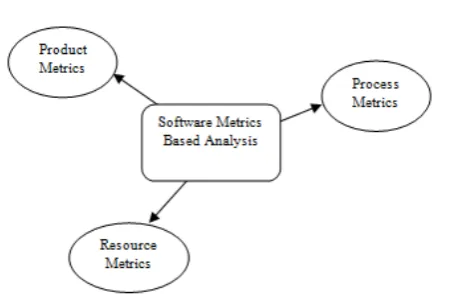
[image:1.595.321.557.302.449.2]In the wider form, the software metrics defined to analyze the s oftware s ystem ar e d ivided into three m ain cat egories shown in figure 1. These metrics can be applied in composite form at different stages of SDLC to perform the evaluation at each level. Each of the categories also having a number of inclusive parameters, constraints and methods. In composite form, t hese m etrics ar e a ble to ch aracterize t he software system quality in the adaptive way. The product level, process level and the required resource level evaluation are required t o o bserve e ach i nclusive aspect of s oftware systems.
Figure 1. : Methods of Software System Evaluation
1.1 Product type metrics:
These are the static measures used to analyse the software size, c omplexity, testability m easures and th e e xistence of common bugs in software systems. The main effect of these metrics is o n t he p erformance o f software systems. T hese metrics a lso a ble to ge nerate t he evaluation regarding t he portability, efficiency and the cost. The time line of software development, required software efforts or manpower can be estimated based o n the size l evel es timation. T he structure and the c omponent d ensity b ased ob servations a s the measure the quality of the software system.
1.2 Process type metrics:
1.3 Resource metrics:
The resource metrics are able to identify the requirement of s oftware s ystems a t va rious s tages, including the development stage, design stage and the maintenance stage. The resource m etrics a re h aving ef fective contribution i n planning of s oftware s ystem a nd design. The hum an a nd non-human resource estimation, the task assignment can be regulated based on these metrics. The software cost and the schedule can be predicted based on the resource metrics. The metrics are able to generate the quantified d ecision on requirement and av ailability measures. T he c omponent specific and the aggregative decision can be taken based on these metrics.
In this paper, an analytical observation on various aspects of s oftware q uality e valuation is considered w ith mathematical f ormulation. T he p aper has an alyzed the software project under product level, resource level, software release level software aspect estimation. Each of the aspect is analyzed individually under va gue rule a nd later o n t he composite features ar e ev aluated. I n this s ection, th e brief introduction t o th e s oftware system e valuation and m etric based estimation i s provided. V arious categories of metrics are discussed in this section. In section II, the work provided by ea rlier researchers i s discussed. I n s ection I II, t he proposed research methodology with algorithmic method is discussed. I n s ection IV, t he results obtained f rom t he algorithmic implementation are discussed. In section V, the conclusion obtained from work is presented.
RELATEDWORK
Lot of work i s earlier p rovided by different r esearchers for software quality, cost and risk estimation. The parameter specific and the operation s pecific work i s provided by t he researchers to evaluate the software quality. Reham Ejaz et. al.[1] h as defined a q uality assurance model to analyze the defect in software system. The software development effort and c riticality e stimation is provided t o perform th e risk assessment an d v erification a t t he analytical s tage. A uthor estimated th e quality d riven e valuation identify the component and the software cost. Philip Koopman et. al.[2] has e valuate t he risk f actors f or t he e mbedded s oftware system. The software development problems are categorized by t he a uthor w ith e ach of t he de velopment s tage. The system evaluation, categorization and the product evaluation was p rovided t o m easure the i ssue ve ctors. A w ork on software s afety an d process i mprovement f or d ifferent real time p rojects w as id entified by V ictor R . Basili e t. a l.[3]. Author identified the software safety and ge nerated the hardware s pecific evaluation t o identify th e a ssociated deficiencies. T he p rocess level q uantization and the r isk evaluation w ere provided t o observe the s oftware s afety a t product and process level. The design phase evaluation and safety risk estimation was provided by the author. A detailed industry based study work on risk for software change was identified by S hihab e t. a l.[4]. I n this s tudy more than 450 developers of large enterprises was involved and identify the software level changes at code and design time. The design review and testing was provided by the author to determine the r isk e valuation. The a dditional a ttention at design t ime was provided to formulate the associated changes more accurately. The modification made by the developer and its
impact at different phases of software development was also identified.
G. Antoniol e t. a l.[5] has identified the r equirement o f software ev aluation an d r esearch with specification o f new trends and needs. The opportunistic c hallenges and t he key factor evaluation for software system was also formulated by the au thor. The benchmark r equirement o f s oftware development and its i ntegration in r eal e nvironment was identified by the author. Tomaszewski et. al.[6] has applied a comparative ev aluation on software f ault an d change identification f or th e in dustrial projects. The f ault f eature identification for different categorize of faults and risk was evaluated by the author. The system risk and the fault identification w ith s oftware c hange w as f ormulated by t he author. Islam et . a l.[7] h as defined a risk m anagement an d evaluation model for software development project. A uthor identified the unanticipated problem with pose and potential risk ev aluation. The s tage d riven development an d component i ntegration was provided b y the a uthor. T he technical development and the risk evaluation was provided by th e a uthor t o e stimate th e s oftware quality. D urisic et. al.[8] has defined a work on product quality e stimation for software ch ange es timation. The m etric and complexity specific risk evaluation was provided to identify the software cost. The p hase s pecific evaluation and t he a rchitectural change were identified by the author to estimate the quality for different f unctional a spects. The q uality r isk e valuation and t he m etrics level s upport was i dentified by t he a uthor. Matsuo et. al.[9] ha s defined the task di versity a nalysis for software s ystem d evelopment. A contract m odel f or risk aversion w as p rovided by t he a uthor t o e stimate t he situational r isk. T he d istributed task m odel i s defined t o reduce the time and cost of development for larger projects. The situational estimation was also provided to improve the software performance. Islam et . a l.[10] h as i dentified the security r isk w ith i nvolvement o f hum an f actor a nd management. The risk identification, analysis and mitigation was provided by the author.
intelligent aspect m odeling a nd th e im proved s oftware system d evelopment w as a lso provided by t he author. Layman et. al.[15] has defined a work on component driven analysis o f development, s cheduling a nd t he s oftware delivery. The artifact driven estimation and the trend based measurement were also provided by the author.
From th is s ection, it is identified th at t o im prove th e software system development, a prior analysis and evaluation stage is required to identify the future risks and to improve the s oftware q uality. I n t his p resent work, a vagueg r ule based software risk and quality estimation is provided under different integrated aspects. In next sections, the model and the associated experimentation is also described.
VAGUE RULE ADAPTIVE SOFTWARE QUALITY
EVALUATIONMODEL
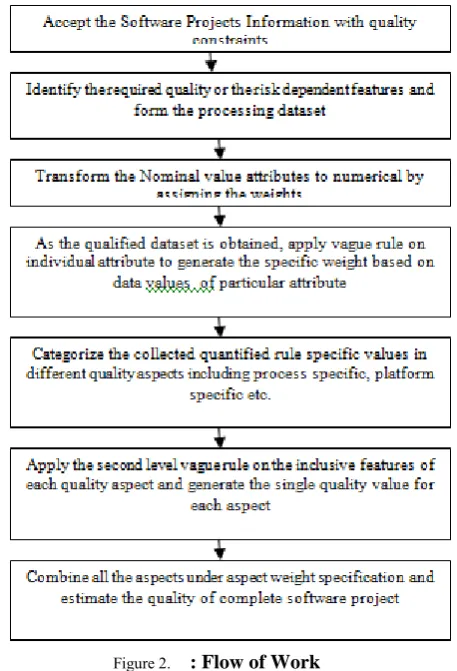
In t his present w ork, a m ore ef fective and rule based method is p rovided t o e stimate th e s oftware quality. The quality of the complete system is not based on one factor but it includes more 10 different factors. These factors are representing t he quality o f s oftware s ystem und er different perspectives in cluding th e e ntity s pecific, o bject s pecific, process specific o r t he resource specific. T hese al l q uality vectors are here estimated individually and i n combination. In c ombination, the q uality is d efined respective t o s ome quality or the risk category. Such as the programmer ability, OS s upport, technology i s t he i ndividual quality o r risk factors which are combined to represent the platform risk. In same way, s ix di fferent c ategories of s oftware q uality measures u nder different as pects a re g enerated. A nd e ach category is d efined by m ultiple in dividual quality o r risk factors. To evaluate these risk factors in composite form, a vague rule based method is applied. Vague defines the mathematical r ules that c ombines t he at tributes based on union, intersection or s ome ot her a ssociation rules. F inally, the quality o f the individual module or software system is evaluated. The work flow of the proposed mathematical rule based software quality evaluation method is shown in figure 2.
Figure 2. : Flow of Work
Here figure 2 has described the complete work to analyze the software system under different aspects and by apply the value specific mathematical ev aluation. I n t his method, a t first th e in dividual a ttribute is a nalyzed und er va gue r ule formulation a nd l ater on th e aspect in clusive a ttributes are analyzed c ollectively. Based o n t he r equirement an d t he observation, the weights are assigned to each aspect as well as each quality feature.
The presented work begins, as th e s tatistics of software project g et a vailable. This d ataset is h aving th e descriptive features as well as the q uality specific features. To process the p roposed algorithmic a pproach, th e quality s pecific features are separated and presented as the featured dataset. The raw dataset collected is having the no minal values. To perform the value specific rule formulation, it was required to t ransform t he dataset i n numerical f orm. F or t his, t he mapping of each nominal value to specific numerical value is done. T his mapping is ba sed o n the weight o f t he relative nominal values such as vh (very high) is assigned by higher numerical va lue a nd vl (very l ow) i s a ssigned by l east numerical v alue. A s t he n umerical dataset i s obtained, t he next w ork d efined he re is t o apply t he va gue r ule on e ach individual a ttribute to a ssign t he w eights ba sed on v alue observation. A fter t his s tage, v ague t rained dataset i s obtained with relative numerical weights.
[image:3.595.329.558.54.390.2]The mathematical rule framed algorithmic method is shown below.
Algorithm 1
VagueRuledAnalysis(projects)
/*projects is the list o f s oftware p rojects defined with relative characteristics*/
{
1. for i=1 to projects.length [Process the projects] {
2. Pfeatures=projects(i).GetFeatures() [Obtain all the project features] 3. For j=1 to prfeatures.length
[Process all the features with nominal values] {
4. tfeatures(j)=ApplyRule(prfeatures(j))
[Apply f irst le vel r ule to tr ansform t he n ominal values to numerical features]
}
5. ScheduleRisk=GetVagueScheduleRisk(tfeatures)
[Identify the s chedule r isk f rom t he g enerated features]
6. [SoftRelRisk D BSizeRisk
ProcessComplexityRisk]=GetVagueProductRisk(tf eatures)
[Obtain the Vague adaptive product risk]
7. [TimeBoundRisk M emoryConsRisk D BSizeRisk
MachineVolRisk]=GetVaguePlatformRisk(tfeature s)
[Identify the VAgue based Platform Risk]
8. [AnaCapRisk A ppExpRisk L angExpRisk
ProCapaRisk M acExpRisk
ModProgPracRisk]=GetVaguePersonalRisk(tfeatur es)
[Identify the vague based Personal Risk]
9. [ToolUseRisk T imeConsRisk
TurnAroundTimeRisk P rogCapRisk
MachExpRisk]=GetVagueProcessRisk(tfeatures) [Identify the Vague based Process Risk]
10. ScheduleRisk=VagueAgg(ScheduleRisk)
[Apply Vague Aggregative for Schedule Risk]
11. ProductRisk=VagueAgg(SoftRelRisk,DBSizeRisk,
ProcessComplexityRisk)
[Apply Vague Aggregative for Product Risk]
12. PlatformRisk=VagueAgg(TimeBoundRisk,
MemoryConsRisk,DBSizeRisk, MachineVolRisk)
[Apply Vague aggregative for Platform Risk] 13
PersonalRisk=VagueAgg(AnaCapRisk,AppExpRis
k, LangExpRisk,ProCapaRisk,
MacExpRisk,ModProgPracRisk)
[Apply Vague Aggregative for Personal Risk]
14. ProcessRisk=VagueAgg(ToolUseRisk,
TimeConsRisk,TurnAroundTimeRisk, ProgCapRisk,MachExpRisk)
[Apply Vague Aggregative for Process Risk] }
}
The Algorithm 1 has formulated the method to extract the project features and trained them under various mathematical rules to analyze the quality of a software project. At the first level, t he f eature driven a nalysis o n e ach i ndividual rule i s
applied. Later on, composite evaluation of the software project is done by c ombining t hese hi gh l evel r ules. The algorithmic process has provided the product level, process level, personal level, platform le vel quality o f s oftware systems. The implementation of the proposed work model is done on Cocomo N ASA 2 p rojects dataset. T he implementation results are discussed in the next section. RESUTS AND ANALYSIS
In this paper, a vague inspired software quality estimator is defined based on various integrated features. The proposed model is implemented in matlab environment on PROMISE Software engineering repository. It i s the publicly available repository which i s ha ving the de scription of 93 N ASA projects designed between 1971 and 1987. The description of this collected dataset is shown in table 1
Table I. Table 1 :Dataset Properties
Properties Values
Dataset Repository PROMISE S oftware E ngineering
Repository
Source of Data http://promise.site.uottawa.ca/ SERepository
Number of Projects 93
Year of Development 1971 to 1987 Number o f P roject
Features 24
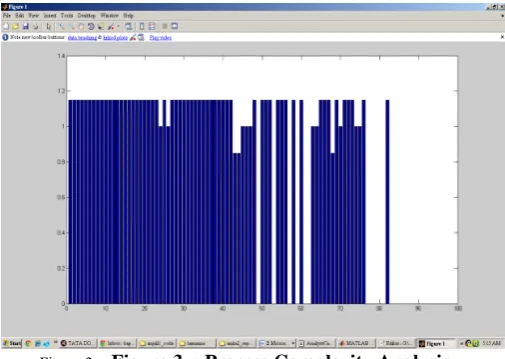
[image:4.595.315.568.521.700.2]Here figure 1 has shown the basic characterization of the dataset considered in this work for the analysis. Each of the projects i s d efined here with 2 4 d ifferent features. T hese features i nclude the descriptive f eatures s uch as n ame o f project, p roject cat egory, development environment, development year etc as well as the quality specific features including the storage support, platform support, tool support etc. The evaluation results based on various q uality a spects are presented in this section. Figure 3 is showing the quality estimation based on the process level complexity of software projects.
Figure 3. Figure 3 : Process Complexity Analysis
experience of programmer, tool usage experience of programmer, turn a round time o n software p roject and t he time constraint associated to the particular project. The white lines are s howing t he projects w ith l esser process l evel quality.
Figure 4. : Personal Risk Analysis
[image:5.595.315.568.52.241.2]Figure 4 is shows the individual project evaluation based on personal evaluation. Here x axis represents the software projects and y axis shows the personal associated complexity to represent the criticality in software projects. The personal capability r epresents th e individual c apability in t erms o f language experience, machine experience, modified program practice e xperience et c. H igher t he personal quality o f software individuals, more reliable the software project can be developed. The white lines are showing the projects with lesser personal level quality.
Figure 5. : Platform, Risk Analysis
Figure 5 is shows the individual project evaluation based on platform capability evaluation on which the software will be developed. H ere x a xis represents t he s oftware projects and y a xis s hows th e p latform a ssociated complexity concerns. T he platform quality aspect depends on the dead line s pecification, u ser s ystem memory, D B s ize a nd th e machine vo latility. I f t he developing environment a nd the user e nvironment a re not s ame, t he hi gher r isk i n s oftware delivery an d m ore chances o f s oftware m aintenance. S uch system can be c onsidered w ith lesser de liverable q uality features.
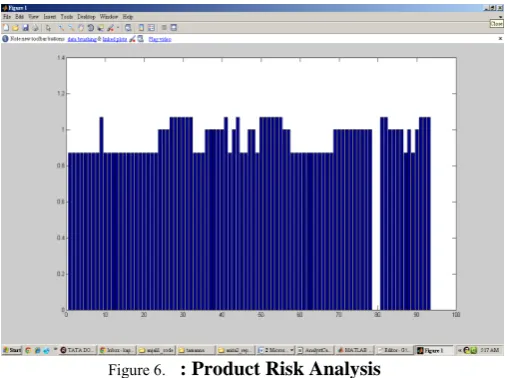
Figure 6. : Product Risk Analysis
Figure 6 is shows the individual project evaluation based on product capability evaluation on which the software will be developed. H ere x a xis represents t he s oftware p rojects and y a xis s hows t he pr oduct a ssociated complexity concerns. T he pr oduct qu ality depends on the software release specific constraints, software size evaluation and the process level ex pectations. S oftware product i s t he a ctual deliverable s o that the complexity a t p roduct l evel m ust satisfy the high quality measures.
CONCLUSION
In this paper, a vague inspired method is defined for software risk evaluation. The proposed work model first divided the available software features in relative categories. The method also evaluated th e in dividual f eature u nder m athematical rules as well as aggregative category inclusive features. The work model is applied on Nasa 2 projects dataset. The results are obtained in terms of different risk categorization for all available projects.
REFERENCES
[1] Reham E jaz," A Q uality Assurance M odel f or A nalysis
Phase", NSEC’10, 04-OCT-2010, Rawalpindi, Pakistan ACM 978-1-4503-0026-1/10/10
[2] Philip Koopman," Risk Areas In Embedded Software Industry
Projects", WESE’10, October 24, 2010, Scottsdale, AZ, USA. ACM 1-58113-000-0/00/0010
[3] Victor R. Basili," Obtaining Valid Safety Data for Software
Safety M easurement an d Process I mprovement", ESEM’10, September 16–17, 2010, Bolzano-Bozen, Italy. A CM 978-1-4503-0039-01/10/09
[4] Emad Shihab," An Industrial Study on the Risk of Software
Changes", SIGSOFT’12/FSE-20, N ovember 1 1–16, 20 12, Cary, North Carolina, USA. ACM 978-1-4503-1614-9/12/11
[5] G. Antoniol," Requiem for software evolution research: a few
steps t oward t he cr eative ag e", IWPSE'07, S eptember 3 -4, 2007, Dubrovnik, Croatia. Copyright 2007 ACM ISBN 978-1-59593-722-3/07/09
[6] Piotr Tomaszewski," Comparing the Fault-Proneness of New
and Modified Code — An Industrial Case Study", ISESE’06, September 2 1–22, 2006, R io de J aneiro, B razil. ACM 1 -59593-218-6/06/0009
[7] Shareeful I slam," Software D evelopment R isk M anagement
[image:5.595.36.281.121.306.2] [image:5.595.33.288.443.622.2][8] Darko Du risic," Measuring t he S ize o f Changes i n Automotive S oftware S ystems a nd t heir I mpact on Product Quality".
[9] Tokuro M atsuo," Diversification o f R isk b ased on D ivided
Tasks in Large-scale Software System Manufacture", June 12, 2007. San D iego, C alifornia, US A CM 978 -1-59593-856-5/07/06
[10] Shareeful I slam," Human F actors i n S oftware S ecurity R isk
Management", LMSA’08, May 11, 2008, Leipzig, Germany. ACM 978-1-60558-027-9/08/05
[11] Qi L i," A V alue-Based R eview P rocess f or Prioritizing
Artifacts", ICSSP’11, M ay 2 1–22, 2011, Waikiki, Honolulu, HI, USA ACM 978-1-4503-0730-7/11/05
[12] Kohl W itmer," A M ethod f or R isk M itigation D uring t he
Requirements P hase f or M ultimedia S oftware S ystems",
SIGDOC'06, October 18 –20, 2006, M yrtle B each, S outh Carolina, USA. ACM 1-59593-523-1/06/0010
[13] Idongesit M kpong-Ruffin," Quantitative S oftware S ecurity
Risk Asse ssment M odel", QoP’07, O ctober 29 , 2007, Alexandria, V irginia, U SA. A CM 978 -1-59593-885-5/07/0010
[14] John D hlamini," I ntelligent R isk M anagement T ools f or
Software D evelopment", S ACLA ’ 09, 2 9 J une - 1 J uly, Mpekweni B each R esort, S outh Africa A CM 978 -1-60558-683-0/09/07
[15] Lucas L ayman," Mining S oftware Ef fort D ata: Preliminary