Vol. 4, Issue 1, January 2015
A Review of Recent Development in Smart
Grid Systems
Syed Afsar1, Govardhan Nadendla2, Dr.Rama Sudha
PG Student, Dept of EEE, Andhra University College of Engineering, Visakhapatnam, India1 PG Student, Dept of EEE, Andhra University College of Engineering, Visakhapatnam, India2
Professor, Dept of Electrical and Electronics Engineering, Andhra University College of Engineering, Visakhapatnam, India3
ABSTRACT: In the recent trends, there is a rise in percentage over the interests of smart grids in both the producers and consumers. The developments of micro grids in parallel with the development of smart grids have to be taken in consideration for efficient system performance. The concept of developing renewable energy to meet the real time demand taking into the consideration, the management of these resources is essential for overall system performance. With the increasing development in the fields of information technology and communication systems, the concepts of smart grids alongside micro grids have swung into a new era. This paper presents an overview of smart grids and advances in the development of micro grid.
KEYWORDS: Micro-Grid, Smart Grid, Distributed Generation, Micro Sources Emulator.
I. INTRODUCTION
Distributed generation (DG) has gained increase popularity in the energy sector primarily driven by the rising concern of climate change and energy security. In addition, the lack of sufficient energy resources, the increase of public awareness in reducing pollutant gas emission and also the liberalization of electricity market have given rise to the use of DG. This in turns create the concept of smart grids and micro-grids. The potential economy and environmental benefits of smart grid include technology investment that result in job creation, reduction in carbon dioxide emissions level, workforce development and the smart grid as an economic development toolSmart micro-grid is an advanced framework based on the service-oriented architectures forintegrating micro-grid modeling, monitoring and control, as shown in Fig. 1
Vol. 4, Issue 1, January 2015
Given the importance of the smart grid concept towards building a sustainable electricity system, many innovative concepts have been proposed by researchers. However, it is essential to first test the proposed concept at laboratory level before it can be fully implemented to the real system. In this respect, this paper reviews the smart grids features and also describes the facilities available in micro-grids laboratories.
III. SMART GRIDS SYSTEMS
I.Smart Grid Requirement:
Smart grids are the networks that interconnect both the information and communication technology (ICT) and the power network. The effective deployment of ICT plays a fundamental role towards the successful implementation of smart grid concept. One of the main challenges of smart grids is to upgrade the present conventional passive network to the future active network with two-way communication capability. Recent studies show that active network is cost effective and it has great potential to increase the overall system utilization .
The key requirements that are necessary to make the fundamental changes of the present distribution networks are as follows.
A. Self-Healing Grids
1. Network with high reliability and inherent security in all levels.
2. Decentralized control and wide spread use of sensors and measuring equipment. B. Economical Grids
1 .Optimum use of assets and applying the concepts of demand response and demand side management
2. Non-hierarchical distribution of electric power production and use of distributed generation driven by the consumers. 3. Extensive use of network automation and reduced human intervention.
C. Low carbon network
1. Integration of multiple energy resources. 2. Electrification of transport sector.
3. Management of pollution and carbon dioxide emission. D. Two-way communication and advance software
1. The smart devices transmit the information over a two-way communications pathway.
2. A key aspect of the smart grid will be its use of the same information technology that enables two-way communication between the consumers and utility.
In addition, it is important to highlight that the design of future smart grid system should be low-loss and with environmental considerations .
II.Traditional Networks Towards Smart Grids:
Smart grid does not concern only the bidirectional data communication but also the bidirectional power flow capability. The networks can potentially consist of thousands of small producers and electricity retail sellers. For instance, the consumers can enter the electricity market by selling the excess energy generated by DG (such as solar photovoltaic) to the grid. Therefore, in smart grid, two new networks are envisaged namely:
1 .Islanded distribution network (micro-grid)
2. Virtual electricity distribution company (virtual utility) or (virtual power market)
Vol. 4, Issue 1, January 2015
1. Installation and commissioning of smart sensors (smart metering) on all key elements of the distribution networks to enable two-way communication
2. Integration and synchronization of Advanced Metering Infrastructure (AMI) systems with other centralized software applications (office back-end).
3. Portal service subscribes (office front-end) and Enterprise Resource Planning Systems and voice service to subscribers.
4. Installation of intelligent real time fault detection system.
5. Residential consumer demand response to electricity price signals.
6. Integration of low-voltage control and monitoring with real time control of high-voltage systems such as SCADA
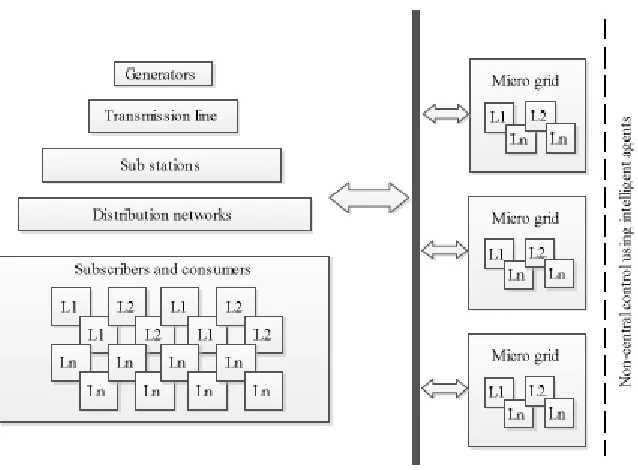
Fig 2: Traditional hierarchical power networks
Vol. 4, Issue 1, January 2015
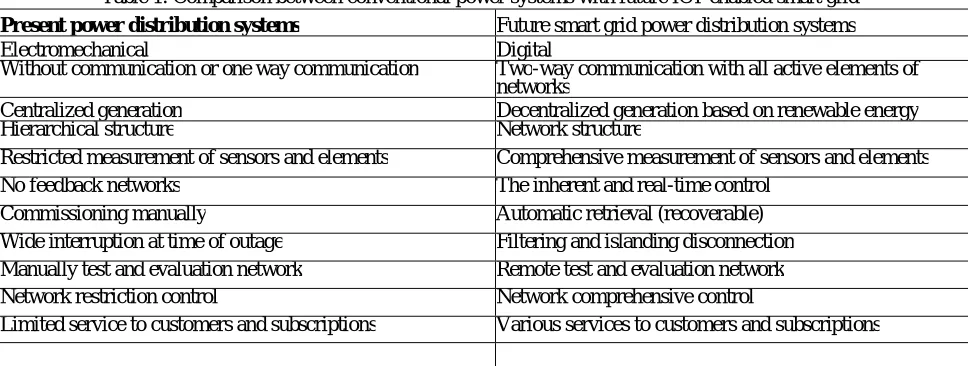
Table 1: Comparison between conventional power systems with future ICT enabled smart grid
Present power distribution systems Future smart grid power distribution systems
Electromechanical Digital
Without communication or one way communication Two-way communication with all active elements of networks
Centralized generation Decentralized generation based on renewable energy Hierarchical structure Network structure
Restricted measurement of sensors and elements Comprehensive measurement of sensors and elements No feedback networks The inherent and real-time control
Commissioning manually Automatic retrieval (recoverable) Wide interruption at time of outage Filtering and islanding disconnection Manually test and evaluation network Remote test and evaluation network Network restriction control Network comprehensive control
Limited service to customers and subscriptions Various services to customers and subscriptions
IV. MICRO-GRID STUDIES AND SMART GRID PROJECTS
Extensive research is necessary in order to implement evolutionary smart distribution networks for flexible and intelligent operation and network control.Consortium for Electric Reliability Technology Solutions (CERTS) was established in the US for power system reliability of emerging technological, economic, regulatory-institutional, and environmental influences. The use of Distributed Generation (DG) has increased rapidly given the potential benefits. These benefits include the reduction of transmission and distribution losses, improving the transmission and distribution capacity, improve voltage profile and power quality systems. An islanding detection on a laboratory sized power system has been implemented at Tennessee Tech University of Cookeville, USA. Intentionally and unintentionally islanding mode have been investigated and reported in reference.
In Europe, micro-grid projects have been installed or enlarged at different laboratories. Single phase laboratory system designed in National Technical University of Athens (NTUA), the Design Centre for Modular Supply Systems (DeMoTec) at Institute for Solar Energy Supply Technology (ISET), and the general test site for DER and flywheel by University of Manchester. These projects involved micro-grid operation on laboratory scales and simulations. Multi Agent System (MAS), controllable load, and monitoring and controlling system have been implemented at NTUA. The application of MAS consists of four agents, which are: production unit, consumption unit, power system, and Micro Grid Central Controller (MGCC). The DeMoTec promotes design, development and presentation of systems for the utilization of renewable energies and the rational use of energy. More information can be obtained from.
In Japan, the new Energy and industrial Technology Development organization (NEDO) and the Ministry of Economy, Trade and Industry have started three demonstrations projects under regional power grid with renewable energy resources. The sites are in Aomori, Aichi and Kyoto, and the main achievement of these projects is the development of optimum operation and control system. Even though the technical feasibility of micro-grid have been tested at multiple field-test demonstration projects the clear economic and environmental benefits of such technologies have not been demonstrated.
Vol. 4, Issue 1, January 2015
1 .Lower installation and maintenance costs with self-describing devices that reduce manual configuration. 2. Communication infrastructure using readily available TCP/IP and Ethernet technology.
3. Engineering and commissioning effort with standardized models and naming conventions that eliminates manual mapping of I/O signals to power system variables.
4. Lower cost to configure and deploy devices with standardized device configuration files.
5. Deployment of sensor via a high speed process bus that enables sharing of instrumentation signals between devices. Furthermore, Commonwealth Scientific and Industrial Research Organization (CSIRO) Energy Transformed Flagship in Australia attempts to investigate potential issues of the isolated operation of micro-grid from the utility grid point of view. One of the most prominent and important problems in micro grids is to control the balance between generation and consumption that discussed in reference. This issue will become obvious when the energy is exported from the renewable sources driven by the intermittent output, as shown in Fig. 4
Fig. 4:A typical generation of daily photovoltaic power [22]
Fig 5: Timing classification of control function for EMS [13].
Vol. 4, Issue 1, January 2015
grid management classification has been divided into two timing scale, which are long-term energy management and short-term power balancing as shown in Fig. 5.
Research work from discussed the construction, operation and control of a laboratory-scale micro-grid where two generators have been used to simulate PV and wind generators. The experiments demonstrated that in order to have a successful operation of micro-grid in islanding mode, it is essential to incorporate storage devices into the system. The experimental result shows the laboratory-scale micro grid system can be operated in two modes, i.e., grid connected (Mode-G) or island-mode (Mode-I). Hence, increased reliability of energy supplies with a seamless transfer from the one mode to the other.
V. MICRO SOURCES EMULATOR FOR LABORATORIES
Renewable energy resources are not available in laboratory environments as the capital investment of these resources is expensive and required large installation space. Furthermore, the generation of renew able energies is unpredictable and not controllable. Therefore, emulation of micro sources at laboratory level is important to investigate the dynamic behavior of the micro sources. The emulator can also be served as an experimental platform for various research activities. Different types of emulator, namely PV array, wind turbine and micro turbine emulator are discussed in the following sections
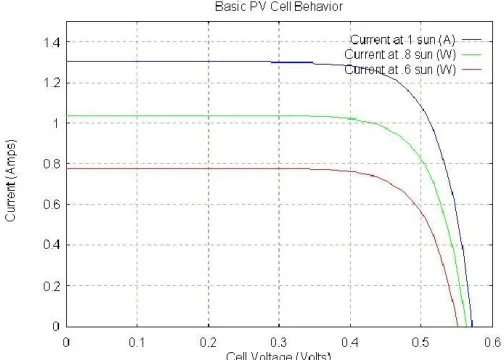
1.PV array emulator: Based on I-V curves of PV module as shown in Fig. 6, a PV simulator was emulated by regulating the DC output of a power supply. The PV emulator consists of a set of DC motor generator (4000 rpm, 42 V) and a variable DC power supply with 120 V and 2 kW capacity
Fig 6: The I-V characteristic curve of a PV cell
2.Micro Turbine
Vol. 4, Issue 1, January 2015
Fig 7: Wind Turbine Emulator
3.Wind turbine emulator
To implement a wind turbine emulator that shown in Fig. 7, three major parts are considered, which include wind speed emulator, generator and a power electronic converter. A dc motor and induction generator is used along with power electronic drivers for this application.
VI. FUTURE DIRECTION
There are many open research problems that need to be addressed in order to achieve a state-of-the-art smart grids technology for real world application. Investigating full- scale deployment, experimental performance analysis and transition between grids connected and island mode will be providing significant reliability and security benefits in future direction. This section discusses some of the future direction of smart grid and micro-grid related field of research interest.
1. Management of Alternative Power Resources:
Various types of renewable energy supplies such as solar and wind have been used in smart grids. As an example, the target of 50% wind power in Denmark in 2025 points to significantly increasing challenges of wind power integration in the near future. Furthermore, California’s Renewable Energy Program is going to increase their usage of renewable energy resource to 33% by 2020. Due to the low capacity and size of the renewable energy, consumers cannot use it as a complete energy provider but they can use the virtual power plant to produce the electricity for injection to the power grid. Thus control and communication algorithm need to be developed to facilitate the efficient and reliable development of renewable energy future.
2. Energy Efficiency and Demand Response:
Vol. 4, Issue 1, January 2015
project future energy consumption. This information is particularly useful when the system required its customer to response to the system requirement accordingly.
3. Self Healing Requirement:
In traditional power networks, self-healing was not possible and small failure in grid could lead to wide area shortage. However, with the smart grid concept, it has the possibility to monitor and manage the fault in a more effective manner. Further optimization and fast response to fault by equipping and improving the requirements of grid can minimize the impact of damage due to the outage. Micro-grid and virtual power plant will also potentially provide such capability to smart grid.
VII. CONCLUSION
This paper reviews the smart grid features and micro-grid operation. The comparison between conventional power distribution systems with future ICT enabled smart grid has been outlined.
REFERENCES
1. Kezunovic, M.; McCalley, J. D.; Overbye, T. J.; , "Smart Grids and Beyond: Achieving the Full Potential of Electricity Systems," Proceedings of the IEEE [Early access article].
2. Zhou Xue-song; Cui Li-qiang; Ma You-jie; "Research on Control of Micro Grid," in Measuring Technology and Mechatronics Automation (ICMTMA), 2011 Third International Conference on, 2011, pp. 1129-1132.
3. Lu, D.; Francois, B.; , "Strategic framework of an energy management of a microgrid with a photovoltaic-based active generator," Advanced Electromechanical Motion Systems & Electric Drives Joint Symposium, vol.3, no.1, pp.282-292, March 2012
4. Vaccaro, A.; Popov, M.; Villacci, D.; Terzija, V.; , "An Integrated Framework for Smart Microgrids Modeling, Monitoring, Control, Communication, and Verification," Proceedings of the IEEE , vol.99, no.1, pp.119-132, Jan. 2011.
5. United States Department of Energy Washington, DC 2058 "2010 Smart Grid System Report" Report to Congress February 2012.
6. P. Mancarella, C. K. Gan, and G. Strbac, “Optimal design of low voltage distribution networks for CO2 emission minimisation. Part I: Model formulation and circuit continuous optimisation,” IET Gener. Transm. Distrib., vol. 5, no. 1, pp. 38-46, 2011.
7. Nikos Hatziargyriou, Hiroshi Asano, Reza Irvani, and ChirsMarnay, “Microgrids: An Overview of Ongoing Research, Development, and Demonstration Projects,” Enviromental Energy Technologies Division, BERKELY LAB, July 2007. [Online] http://eetd,lbl.gov/EA/EMP/emp- plus.html.
8. C. Sontidpanya, G. Radman, and R. Craven, “An island detection demonstration on a laboratory sized power Grid (LabGrid),” in Southeastcon, 2011 Proceedings of IEEE, 2011, pp. 158-163 .
9. Design-Centre for Modular Supply Technology, DeMoTec. Renewable Energy. [online] http://www.iset.uni- 10. kassel.de/pls/w3isetdad/www_iset_new.main_page?p_lang=eng&p_name=7230090.
11. M. Barnes, A. Dimeas, A. Engler, C. Fitzer, N. Hatziargyriou, C. Jones, S. Papathanassiou, and M. Vandenbergh, "Microgrid laboratory facilities," in Future Power Systems, 2005 International Conference on, 2005, pp. 6 pp.-6.
12. T. Funabashi and R. Yokoyama, "Microgrid field test experiences in Japan," in Power Engineering Society General Meeting, 2006. IEEE, 2006, p. 2.
13. Choi, Sungyun; Kim, Beungjin; Cokkinides, George J.; Meliopoulos, A. P. Sakis; , "Autonomous state estimation for the smart grid - laboratory implementation," in Transmission and Distribution Conference and Exposition, 2010 IEEE PES, 2010, pp. 1-8.
14. Lasseter, R.H.; , "Smart Distribution: Coupled Microgrids," Proceedings of the IEEE , vol.99, no.6, pp.1074-1082, June 2011.
15. . Lightner, E.M.; Widergren, S.E., "An Orderly Transition to a Transformed Electricity System," Smart Grid, IEEE Transactions on, vol.1, no.1, pp.3-10, June 2010.
16. K. Hedegaard, P. Meibom, Wind power impacts and electricity storage - A time scale perspective, Renewable Energy, Volume 37, Issue 1, January 2012, Pages 318-324.
17. . Gang Lu; De, D.; Wen-Zhan Song; , "SmartGridLab: A Laboratory-Based Smart Grid Testbed," in Smart Grid Communications (SmartGridComm), 2010 First IEEE International Conference on, 2010, pp. 143-148.. 2010.
18. Pudjianto, D.; Ramsay, C.; Strbac, G.; , "Virtual power plant and system integration of distributed energy resources," Renewable Power Generation, IET , vol.1, no.1, pp.10-16, M
![Fig 5: Timing classification of control function for EMS [13].](https://thumb-us.123doks.com/thumbv2/123dok_us/7790136.1290438/5.595.171.428.313.467/fig-timing-classification-control-function-ems.webp)