996
Available online: https://edupediapublications.org/journals/index.php/IJR/ P a g e | 996
CONTENT MANAGEMENT SYSTEM
SERVICES
MUHAMMED NATHIR NAKKAR
Master of Software Engineering,
MSc/Bachelor courses in Computer Science, Software Engineering
University POLITEHNICA of Bucharest
(
UPB), Romania
Email: -
[email protected]
ABSTRACT:
This study is the special case that portrays the necessities. It is for the utilization ofdesigner. Engineer can't
change the necessities without
counseling the customer. Thepresent Content Management System is done physically and is chosen to automate everyone of these exercises. The
gatherings required for these
advancements are:
The following conclusion has been drawn with the discussion with the parties involved.
1) Every client identified by a unique number.
2) Every client will be identified by registration number, which is grouped accordingto category of domain.
3) Each service will be identified by
domain name, which is grouped
according to thecategory of domain.
This is a model venture, which is done in JAVA, and HTML software where the
databaseutilized is Oracle. This
application is electronic. This venture is for the most partmanaging the portion and support of PCs. The product gives remote availability to theclient and empower client to play out specific capacities and the head can keep up arepetition free database. The expected objective for the venture is to give a quick gettingto database framework for the representatives of the framework division. The front-endj2ee(JSP) with Oracle as back-end has been observed to
be exceptionally proficient forthis
framework. The item is relied upon to work according to the prerequisites.
Theframework configuration gives
office to upgrade its elements. The
present framework haseasy to
understand elements and makes it simple to the database and applications.
997
Available online: https://edupediapublications.org/journals/index.php/IJR/ P a g e | 997
INTRODUCTION
Content management refers to the
system and processes whereby
information is created,
managed,published, and archived.
Information typically passes through this lifecycle fora finite period of time. Acontent management system (CMS) provides the necessaryinfrastructure for multiple persons to effectivelycontribute content and collaboratethroughout these lifecycles.
A content management system (CMS) is a database which organizes and provides access to all types of digital content -
files containing images, graphics,
animation, sound, video or text. It
contains information about these files
(known as 'digital assets'), and may also contain links to the files themselves in order to allow them to be located or
accessed individually. A content
management system is usually used to
manage digital assets during the
development of a digital resource, such as a website or multimedia production. It might be used by staff digitizing images, authors and editors, or those responsible for the management of the content
development process (content
managers).
Content management systems range
from very basic databases, to
sophisticated tailor-made applications. These more complex systems can be
integrated with the eventual digital resource in order to enable access to digital assets and to allow regular updating.
This type of product is relatively new and there are very few content management systems available as
off-the-shelf packages, although an
increasing number of companies have ready-made applications which can be quickly adapted for different projects. Content management systems can be used to carry out a wide range of tasks, including those described below.
A content management system is not any of the following:
a library, archive or museum
management or cataloguing system (although some of these types of system are beginning to include
certain aspects of content
management systems, and can be
integrated with a content
management system);
a picture library system;
a word processing or other text file
containing lists of digital resources;
a presentation file (e.g. a PowerPoint
file);
A multimedia application.
Content management systems do not
contain information about the
998
Available online: https://edupediapublications.org/journals/index.php/IJR/ P a g e | 998
(e.g. editor, system manager, image manager etc.).
Content management systems are
essential for large or even small-scale projects which involve the capture or creation of digital assets. They also are increasingly necessary for the creation of
any but the most basic
websites.Managing the capture or
creation of digital images requires
metadata to be recorded which
documents the capture, ownership, location and licensing conditions relating to each image. Even for a few dozen images, this may add up to hundreds of different pieces of information, the management of which would not be
possible without some automated
assistance. For a learning resource containing hundreds or even thousands of images, the job is larger still.
Similarly, managing a website with even a few pages is a time-consuming task when updates are required, perhaps when a page is added which requires the navigation menu to be updated on other pages, or when a logo changes which then needs to be reflected on all pages. For this reason, the use of templates which draw on content held in a database, is a vital management tool. Without this type of application, the website would either fall out of date very quickly, or would require ever greater staff resources to retain its currency.
EXISTING SYSTEM:
The study exhibit a semi anonymous benefit control plan AnonyControl to address the information security, as well as the client character protection in existing access control plans. Other than
the way that we can express
discretionarily broad encryption
approach, our framework additionally endures the bargain assault towards characteristics powers, which is not secured in numerous current works. We amplify generalizing so as to exist plans the entrance tree to a benefit tree. we amplify generalizing so as to exist plans the entrance tree to a benefit tree. The key purpose of the character data spillage we had in our past plan and additionally every current property based encryption plans is that key generator issues characteristic key in light of the reported trait, and the generator needs to know the client's ascribe to do as such.
PROPOSED SYSTEM:
Property based encryption is utilizing information transferred. This is every last hub scrambled information in store.
Fine-Grain idea utilizing encoded
information change over into twofold esteem completely secure for database. Different procedures have been proposed to secure the information substance protection through access control. We
propose AnonyControl and
999
Available online: https://edupediapublications.org/journals/index.php/IJR/ P a g e | 999
to control clients' entrance benefits without knowing their character data.
They will take after our proposed convention when all is said in done, yet attempt to discover however much data
as could reasonably be expected
separately. The proposed plans can secure client's protection against every single power. Fractional data is revealed in AnonyControl and no data is uncovered in AnonyControl-F. We firstly execute the genuine toolbox of a multiauthority based encryption plan AnonyControl and AnonyControl-F.
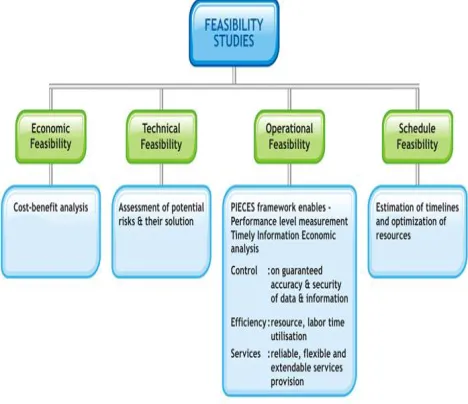
FEASIBILITY STUDY
Feasibility studies incorporates
'Financial Feasibility' to complete money
saving advantage investigation,
'Specialized Feasibility' to get to potential dangers and their answer,
'Operational plausibility', 'Calendar
possibility' to gauge courses of events and advance assets and time to finish venture exercises according to the
timetable furthermore 'Lawful
achievability' to tie to the copyrights,
monetary reporting necessities,
contractual commitments, possession, outsourcing game plans, and so forth.
Plausibility study empowers one to complete Payback investigation, Net Present Value Analysis, Return on
Investment Analysis before task
exercises begin. Besides, since the possibility study is regularly the first
phase of a venture's life cycle, the potential for expense improvement at this stage is the most elevated.
UEM has the top to bottom procedure learning to lead possibility studies for a customer's potential water and waste water ventures. Whether a customer is investigating the plausibility of reusing regarded waste water for reuse as methodology or utility water or whether a customer is keen on deciding the least life-cycle-cost answers for treating their waste water, UEM can give impartial suggestions by taking advantage of our broad involvement in gushing treatment.
Figure 2.1 Feasibility Study
IMPLEMENTATION
Execution is the phase of the venture
1000
Available online: https://edupediapublications.org/journals/index.php/IJR/ P a g e | 1000
transformed out into a working
framework. Hence it can be thought to be the most basic stage in accomplishing a fruitful new framework and in giving the client, certainty that the new framework will work and be compelling. The usage stage includes watchful arranging, examination of the current framework and its requirements on execution, planning of systems to accomplish changeover and assessment of changeover techniques.
CONCLUSION
This is a model project, which is done in JAVA, and HTML language where the database used is Oracle. This application is web-based. This project is mainly
dealing with the allocation and
maintenance of computers. The software provides remote accessibility for the user and enable user to perform certain functions and the administrator can maintain a redundancy free database.
The intended goal for the project is to provide a fast accessing database system for the employees of the system department. The front-end j2ee(JSP) with Oracle as back-end has been found to be very efficient for this system. The product is expected to function as per the
requirements. The system-design
provides facility to enhance its features. The current system has user-friendly features and makes it easy to the database and applications.
FUTURE SCOPE AND FURTHER
ENHANCEMENT OF THE
PROJECT:
Each and every module in this project is individual and independent from other modules. All modules are called from the main form. Any new operation or activity can be added to the project as new module or existing one can be enhanced without disturbing the data. Hence the project can be extended according to the requirements.
For linking database data controls, data access objects are used and for querying purpose structured query language is used. So RDBMS with SQL interface can be used as back end without modifying the existing system. Thus the system gives the scope for further application.
REFERENCE:
1. Oberheide, J., Veeraraghavan, K.,
Cooke, E., Flinn, J., &Jahanian, F. (2008, June). Virtualized in-cloud security services for mobile devices.
In Proceedings of the First
Workshop on Virtualization in
Mobile Computing (pp. 31-35). ACM.
2. Schoo, P., Fusenig, V., Souza, V.,
Melo, M., Murray, P., Debar, H.,
...&Zeghlache, D. (2011).
Challenges for cloud networking security. In Mobile Networks and Management (pp. 298-313). Springer Berlin Heidelberg.
1001
Available online: https://edupediapublications.org/journals/index.php/IJR/ P a g e | 1001
for data center and cloud networking. Communications Magazine, IEEE, 51(9), 24-31.
4. Houidi, I., Mechtri, M., Louati, W.,
&Zeghlache, D. (2011, July). Cloud service delivery across multiple
cloud platforms. In Services
Computing (SCC), 2011 IEEE
International Conference on (pp. 741-742). IEEE.
5. Nurmi, D., Wolski, R., Grzegorczyk,
C., Obertelli, G., Soman, S., Youseff, L., &Zagorodnov, D. (2009, May). The eucalyptus open-source
cloud-computing system. In Cluster
Computing and the Grid, 2009.
CCGRID'09. 9th IEEE/ACM
International Symposium on (pp. 124-131). IEEE.
6. Wodczak, M. (2011, November).
Resilience aspects of autonomic
cooperative communications in
context of cloud networking. In Network Cloud Computing and Applications (NCCA), 2011 First International Symposium on (pp. 107-113). IEEE.
7. Bitar, N., Gringeri, S., & Xia, T. J. (2013). Technologies and protocols for data center and cloud networking. Communications Magazine, IEEE, 51(9), 24-31.
8. Bechler, M., Hof, H. J., Kraft, D.,
Pahlke, F., & Wolf, L. (2004, March). A cluster-based security architecture for ad hoc networks. In
INFOCOM 2004. Twenty-third
AnnualJoint Conference of the IEEE
Computer and Communications
Societies (Vol. 4, pp. 2393-2403). IEEE.
9. Covington, M. J., Fogla, P., Zhan,
Z., &Ahamad, M. (2002). A
context-aware security architecture for
emerging applications. In Computer Security Applications Conference, 2002. Proceedings. 18th Annual (pp. 249-258). IEEE.
10. Zhou, L., & Chao, H. C. (2011).
Multimedia traffic security
architecture for the internet of things. Network, IEEE, 25(3), 35-40.
11. Pensak, D. A., Cristy, J. J., & Singles, S. J. (2001). U.S. Patent No. 6,289,450. Washington, DC: U.S. Patent and Trademark Office.
12. Nagaratnam, N., Janson, P., Dayka, J., Nadalin, A., Siebenlist, F., Welch, V., ...&Tuecke, S. (2002). The security architecture for open grid
services. Open Grid Service
Architecture Security Working
Group (OGSA-SEC-WG), 1-31. 13. Wood, D. L., Pratt, T., Dilger, M. B.,
Norton, D., &Nadiadi, Y. (2004).
U.S. Patent No. 6,691,232.
Washington, DC: U.S. Patent and Trademark Office.
14. Okuhara, M., Shiozaki, T., & Suzuki, T. (2010). Security architecture for cloud computing. Fujitsu Sci. Tech. J, 46(4), 397-402.
15. Subashini, S., &Kavitha, V. (2011). A survey on security issues in service delivery models of cloud computing. Journal of network and computer applications, 34(1), 1-11. 16. Ramgovind, S., Eloff, M. M., &
Smith, E. (2010, August). The management of security in cloud computing. In Information Security for South Africa (ISSA), 2010 (pp. 1-7). IEEE.
1002
Available online: https://edupediapublications.org/journals/index.php/IJR/ P a g e | 1002
18. Ramgovind, S., Eloff, M. M., & Smith, E. (2010, August). The management of security in cloud computing. In Information Security for South Africa (ISSA), 2010 (pp. 1-7). IEEE.
19. Zissis, D., &Lekkas, D. (2012). Addressing cloud computing security issues. Future Generation computer systems, 28(3), 583-592.
20. Subashini, S., &Kavitha, V. (2011). A survey on security issues in service delivery models of cloud computing. Journal of network and computer applications, 34(1), 1-11. 21. Wang, Q., Wang, C., Li, J., Ren, K.,
& Lou, W. (2009). Enabling public verifiability and data dynamics for storage security in cloud computing. In Computer Security–ESORICS 2009 (pp. 355-370). Springer Berlin Heidelberg.
22. Rimal, B. P., Choi, E., &Lumb, I. (2009, August). A taxonomy and survey of cloud computing systems. In INC, IMS and IDC, 2009. NCM'09. Fifth International Joint Conference on (pp. 44-51). Ieee. 23. Briand, L., &Labiche, Y. (2001). A
UML-based approach to system
testing. In ≪ UML≫ 2001—The
Unified Modeling Language.
Modeling Languages, Concepts, and Tools (pp. 194-208). Springer Berlin Heidelberg.
24. Reuys, A., Kamsties, E., Pohl, K., & Reis, S. (2005, January). Model-based system testing of software
product families. In Advanced
Information Systems Engineering
(pp. 519-534). Springer Berlin
Heidelberg.
25. Campione, M. (2001). The Java
tutorial: a short course on the basics
(Vol. 1). Addison-Wesley
Professional. P(1-10)
26. Dean, J., & Dean, R. (2007). Introduction to programming with Java: a problem solving approach. McGraw-Hill, Inc..p(15-30)
27. Savitch, W. (2014). Java: An
Introduction to Problem Solving and
Programming plus
MyProgrammingLab with Pearson eText--Access Card Package. Addison-Wesley Professional.
28. Sowizral, K., Rushforth, K.,
&Sowizral, H. (1997). The Java 3D API Specification. Addison-Wesley Longman Publishing Co., Inc..
29. Wood, C. (1999). OLE DB and
ODBC Developer's Guide. John Wiley & Sons, Inc.p(1-10)
30. Fisher, M., Ellis, J., & Bruce, J. C.
(2003). JDBC API tutorial and