ABSTRACT
NOBLES, CURREY ALLEN. Processing Factors Affecting Commercially Produced Pork Bacon. (Under the direction of Dana J. Hanson.)
Three studies were performed to assess the effects of processing and ingredient
parameters on the production yields and consumer acceptance of pork bacon. Products were
produced at a commercial processing facility and processed under standard plant procedures.
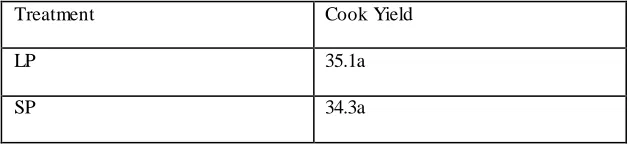
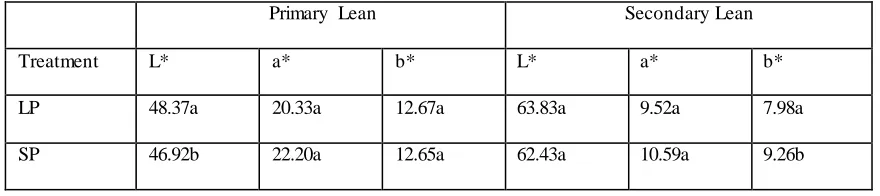
Study 1 was conducted to assess the effect of sodium phosphate reduction on
processing yields and consumer sensory perception of bacon. Standard sodium phosphate
level bacon (SP) and low sodium phosphate level bacon (LP) were produced at a commercial
bacon processing facility. The SP bacon was formulated to 0.05% sodium phosphate in the
finished product. LP bacon was formulated to 0.005% sodium phosphate in the finished
product. SP bacon trees (N=9; 575 individual pork bellies) and LP bacon trees (N=9; 575
individual pork bellies) were produced. Phosphate reduction had no effect (p>0.05) on
smokehouse and cooler yields. Phosphate reduction also showed no effect (p>0.05) on yield
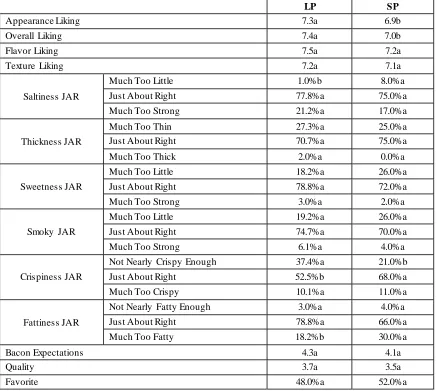
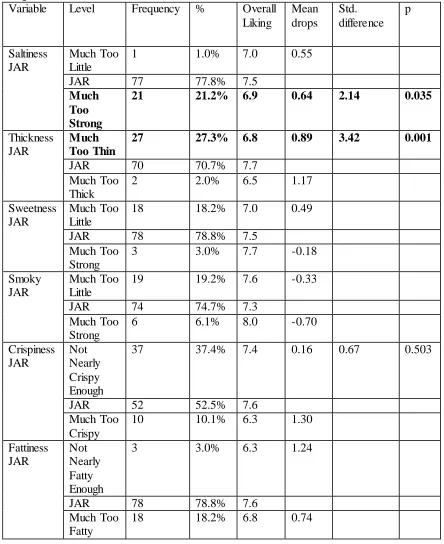
of #1 and #2 bacon slices. At 30 days post processing consumers rated LP bacon higher than
SP bacon (p<0.05) in the attribute of overall liking, but there was no clear preference
(p>0.05) of either product among consumers. At 110 days post processing SP bacon was
rated higher by consumers (p<0.05) than LP bacon in the attribute of overall flavor liking,
but there was no clear preference (p>0.05) for either product. Sodium phosphate reduction
was not detrimental to processing yields and still produced a product that was well received
by consumers.
Study 2 was conducted to assess the effect of brine temperature reduction on
processing yields and consumer sensory perception of commercially produced bacon. Brines
produced with a mixture of ice and water (-6.5oC) were used to process bacon. RTB bacon
trees (N=10, approximately 640 individual pork bellies) and LTB bacon trees (N=10,
approximately 640 individual pork bellies). Brine temperature reduction showed an effect on
smokehouse yield with LTB having a significantly higher (p<0.05) yield than RTB
(LTB=95.98%; RTB=94.54%). There was no effect on overall yield (p>0.05). Brine
temperature reduction showed no effects (p>0.05) on yield of #1 and #2 bacon slices. At 30
days post processing consumers rated RTB bacon (7.3) higher than LTB bacon (6.8, p<0.05)
in the attribute of texture liking, and there was a clear preference (p<0.05) of consumers
towards LTB bacon (59.6%). At 110 days post processing there were no differences (p>0.05)
in consumer acceptance of bacon. Brine temperature reduction had beneficial effects on
smokehouse yield while still producing a product that was well received by consumers.
Study 3 was conducted to assess the effects post injection dwell and smoke time on
the processing yields and consumer sensory perception of commercially produced bacon. The
experimental design for this study was a 2X2 factorial design with two levels for each
variable. The levels of post injection dwell time were 0 and 2 hours and the levels of smoke
time were 4 and 6 hours. This experimental design produced 4 treatments: 0 hour post
injection dwell, 4 hour smoke (0D4S); 0 hour post injection dwell 6 hour smoke (0D6S); 2
hour post injection dwell, 4 hour smoke (2D4S); and 2 hour post injection dwell 6 hour
smoke (2D6S). 0D4S had the highest smoke yield (96.19% p<0.05), whereas 2D4S had the
highest cooler yield (97.55 p<0.05). 2D4S had a significantly higher smoke yield than 2D6S
(p<0.05), but was not significantly different from 0D6S. Consumers rated 2D4S significantly
different (p>0.05) either of the other treatments. There was no difference among treatments
Processing Factors Affecting Commercially Produced Pork Bacon
by
Currey Allen Nobles
A thesis submitted to the Graduate Faculty of North Carolina State University
in partial fulfillment of the requirements for the Degree of
Master of Science
Food Science
Raleigh, North Carolina
2017
APPROVED BY:
_______________________________ ____________________________
Mary Drake David P. Green
______________________________ Dana J. Hanson
ii
DEDICATION
This thesis is dedicated to all friends, family, and the wonderful faculty and staff of the NC
State University Department of Food Science who devoted hours of their time to teach me so
iii
BIOGRAPHY
Currey Nobles was born to Jeff and Tami Nobles on April 17, 1993 in Asheboro, North
Carolina. Currey grew up in Asheboro with his older sister, Caroline. Food Science was
unknown to Currey until he came and toured NC State for potential college admission. On
this tour, the guide could not stop raving about the awesome class he was enrolled in where
the professor brought snacks and you learned the science of food. Through many fortunate
circumstances, Currey landed in the NC State Department of FBNS, and was able to find a
wonderful place in the meat lab both as an undergraduate worker and graduate student. The 5
years in the FBNS department have been marked by countless exams, projects, and sanitation
iv
ACKNOWLEDGEMENTS
Many thanks are owed to Dr. Dana Hanson for his guidance, support and feedback
throughout my undergraduate and graduate career. Through his involvement in my life I have
been exposed to countless aspects of the meat industry, and the food industry as a whole. I
have learned how to interact and share knowledge with academically inclined students and
BBQ enthusiasts. I have been fortunate enough to travel domestically and internationally,
which has been a highlight of my graduate experience. His support through this project has
been second to none. I will forever be grateful for all you have done for my education, career,
and personal growth.
I would also like to acknowledge Dr. Maryanne Drake and Dr. David Green for
taking time to support my project and serve on my committee. Both have set wonderful
examples about interacting with peers and incredible devotion to their expertise.
Many thanks also goes to Mr. Travis Tennant. An expert Meat Lab Manger and BBQ
ace made the hours in the meat lab pass quickly. Always helpful with a mechanical issues or
statistics question, Travis is a great example of a true academic devoted to his passion.
I would like to thank my parents, Jeff and Tami, for always supporting and
encouraging me through my graduate work. You are the best parents anyone could ask for.
v
TABLE OF CONTENTS
LIST OF TABLES ...viii
LIST OF FIGURES ... xi
CHAPTER 1 REVIEW OF LITERATURE ...1
1.1History of Meat Curing ...2
1.2Curing Methods ...3
1.2.1 Dry Curing ...3
1.2.2 Immersion Curing ...4
1.2.3 Injection Curing ...4
1.3Bacon Consumption Trends...4
1.4Standard of Identity...6
1.5Curing Ingredients ...6
1.5.1 Water ...6
1.5.2 Salt ...8
1.5.3 Sweetener ...9
1.5.4 Sodium Nitrite and Sodium Nitrate ...10
1.5.5 Cure Accelerant ...15
1.5.6 Sodium Phosphate...16
1.6General Bacon Processing ...18
1.6.1 Smoke and Post Injection Dwell Time ...21
1.7References ...23
CHAPTER 2 THE EFFECT OF SODIUM PHOSPHATE REDUCTION ON COMMERCIALLY PRODUCED PORK BACON ...28
2.1 Abstract...29
2.2 Introduction ...30
2.3 Materials and Methods ...30
2.3.1 Bacon Production ...30
2.3.2 Processing Yield Analysis ...32
2.3.3 Color Analysis...33
2.3.4 Cook Yield Evaluation ...33
2.3.5 Sensory Evaluation ...34
2.4 Results and Discussion...36
2.5 Conclusions ...45
2.6 References ...48
CHAPTER 3 EFFECT OF BRINE TEMERPATURE REDUCTION ON COMMERCIALLY PROCESSED PORK BACON...50
3.1 Abstract...51
vi
3.3 Materials and Methods ...53
3.3.1 Bacon Production ...53
3.3.2 Processing Yield Analysis ...54
3.3.3 Color Analysis...55
3.3.4 Cook Yield Evaluation ...56
3.3.5 Sensory Evaluation ...56
3.4 Results and Discussion...58
3.5 Conclusions ...68
3.6 References ...73
CHAPTER 4 THE EFFECTS OF POST INJECTION DWELL AND SMOKE TIME ON COMMERCIALLY PROCESSED PORK BACON ...74
4.1 Abstract...75
4.2 Introduction ...76
4.3 Materials and Methods ...77
4.3.1 Experimental Design...77
4.3.2 Bacon Production ...77
4.3.3 Processing Yield Analysis ...79
4.3.4 Color Analysis...79
4.3.5 Cook Yield Evaluation ...80
4.3.6 Sensory Evaluation: Consumer Evaluation ...80
4.3.7 Sensory Evaluation: Descriptive Analysis ...82
4.4 Results and Discussion...83
4.5 Conclusions ...92
4.6 References ...95
CHAPTER 5 FINAL SUMMARY ...96
5.1.Overall Conclusions ...97
5.2 Economic Implications ...97
5.3 Future Research ...100
5.4 References ...101
APPENDICES ...102
Appendix 6.1. General production flow for commercial bacon processing ...103
Appendix 6.2. Demographic information for 30 day post processing sensory evaluation of reduced phosphate bacon ...104
Appendix 6.3. Demographic information for 110 day post processing sensory evaluation of reduced phosphate bacon ...105
Appendix 6.4. Demographic information for 30 day post processing sensory evaluation of reduced brine temperature bacon ...106
Appendix 6.5. Demographic information for 110 day post processing sensory evaluation of reduced brine temperature bacon ...107
vii
Appendix 6.7. Complete descriptive analysis results of bacons produced with varying post injection dwell and smoke times as well as 2 competitors’ bacon..109
Appendix 6.8. Additional data from Study 1 ...110
Appendix 6.9. Additional data from Study 2 ...111
viii
LIST OF TABLES
The effect of sodium phosphate reduction on commercially processed pork bacon
Table 2.1. Smoke, cooler and overall yield (%) of low and standard phosphate bacons...36
Table 2.2. Slice yield (%) of low and standard phosphate bacons graded as #1 slices, #2 slices and ends and pieces ...36
Table 2.3. Cook yield (%) of low and standard phosphate bacons ...37
Table 2.4. Color analysis of primary and secondary lean of low and standard phosphate bacons ...38
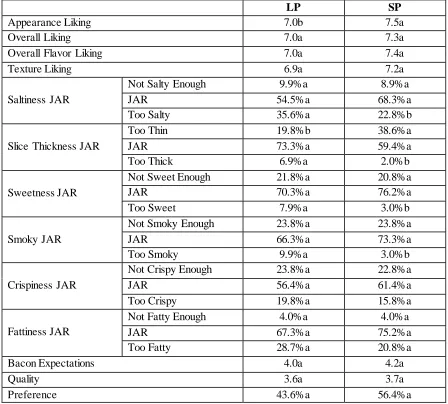
Table 2.5. Sensory analysis of 30 day post processing low and standard phosphate bacons ...39
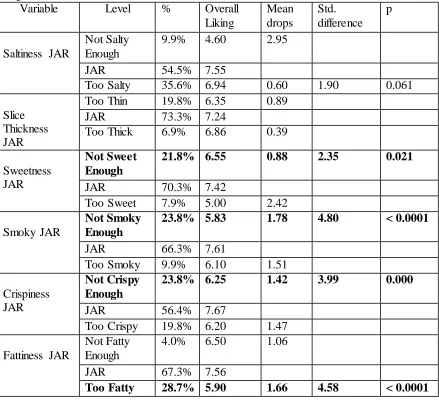
Table 2.6. Penalty analysis of 30 day post processing LP bacon based on JAR and overall liking scores ...40
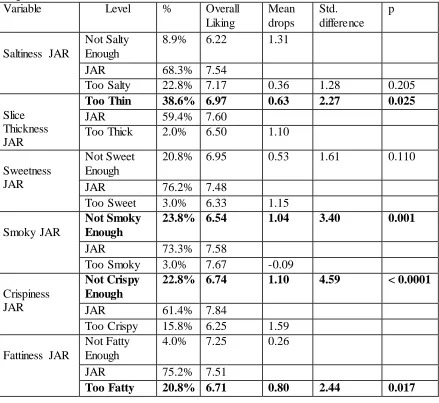
Table 2.7. Penalty analysis of 30 day post processing SP bacon based on JAR and overall liking scores ...41 .
Table 2.8. Sensory analysis of 110 day post processing low and standard phosphate bacons ...42
Table 2.9. Penalty analysis of 110 day post processing LP bacon based on JAR and overall liking scores ...43
Table 2.10. Penalty analysis of 110 day post processing SP bacon based on JAR and overall liking scores ...44
The effect of brine temperature reduction on commercially processed pork bacon
Table 3.1. Smoke, cooler, and overall yield (%) of bacons prepared with ice/water brine and room temperature water brine ...58
Table 3.2. Slice yield (%) of bacons prepared with ice/water brine and room temperature water brine graded as either #1 or #2 slices ...58
ix
Table 3.4. Color analysis of primary and secondary lean of bacons prepared with ice/water brine and room temperature water brine ...60
Table 3.5. 30 Day post processing sensory evaluation of bacons prepared with ice/water brine and room temperature water brine ...62
Table 3.6. Penalty analysis of 30 day post processing LTB bacon based on JAR and overall liking scores ...63
Table 3.7. Penalty analysis of 30 day post processing RTB bacon based on JAR and overall liking scores ...64
Table 3.8. 110 Day post processing sensory evaluation of bacons prepared with ice/water brine and room temperature water brine ...65
Table 3.9. Penalty analysis of 110 day post processing LTB bacon based on JAR and overall liking scores ...66
Table 3.10. Penalty analysis of 110 day post processing RTB bacon based on JAR and overall liking scores ...67
The effects of post injection dwell and smoke time on commercially processed pork bacon
Table 4.1. Experimental design for testing varying levels of post injection dwell time and smoke time ...77
Table 4.2. Smoke and cooler yield (%) of bacon processed with varying post injection dwell and smoke times ...84 .
Table 4.3. Raw #1 slice yield (%) data of bacon processed with varying post injection dwell and smoke times ...84
Table 4.4. Cook yield (%) of bacon processed with varying post injection dwell and smoke times...85
Table 4.5. Color analysis of primary and secondary lean of bacon processed with varying post injection dwell and smoke times ...86
Table 4.6. Nine point hedonic scale scores of sensory attributes of bacon processed with varying post injection dwell and smoke times as well as 2
competitors bacon ...87
Table 4.7. Five point intensity scale scores of sensory attributes of bacon processed with varying post injection dwell and smoke times as well as 2
x
Table 4.8. Pre-consumption purchase intent of bacon processed with varying post injection dwell and smoke times as well as 2 competitors’ bacon ...88
Table 4.9. Post-consumption purchase intent of bacon processed with varying post injection dwell and smoke times as well as 2 competitors’ bacon ...88
xi
LIST OF FIGURES
The effects of post injection dwell and smoke time on commercially processed pork bacon
Figure 4.1. Key flavor attribute spider plot of bacon processed with varying post injection dwell and smoke times as well as 2 competitors’ bacon ...91
1 CHAPTER 1
REVIEW OF LITERATURE
Currey A. Nobles
2
1.1.History of meat curing
Meat curing technology has been practiced for many centuries. It stemmed from the
use of salt as a preservative. Ancient cultures found that meat that was rubbed with salt did
not spoil as fast as meat that was not treated with salt. This is due to fact that salt inhibits
bacterial growth through a reduction in water activity. This practice was prevalent in many
ancient cultures throughout Europe and formed the basis for meat curing technology that is
recognized today (Pegg and Shahidi, 2000, Keeton, 2011). While salt was added for a
preservative effect, small sodium or potassium nitrate impurities in the salt formed the basis
for the curing reaction. These nitrates interacted with the meat, and coupled with time and
microbial action produced nitric oxide which reacted with myoglobin to produce crudely
cured meat products (Keeton, 2011). The curing of meat products is facilitated by the
addition of salt (sodium chloride) and either sodium nitrate or sodium nitrite to the meat
matrix (Binkerd and Kolari, 1975, Pegg and Shahindi, 2000, Duncan and Foster 1967). In
1923, the USDA authorized a study by Kerr et al. (1926) to examine the direct use of sodium
nitrite in the curing of hams. Based off their results Kerr et al. (1926) found that “One-fourth
of an ounce, or less, of sodium nitrite appears to be sufficient to fix the color of 100 pound of
meat.” These results led to sodium nitrite being approved for use as a curing agent in
federally inspected facilities so long as the residual nitrite did not exceed 200 parts per
million (Keeton, 2011). The method of delivery of the curing ingredients can vary depending
3
1.2. Curing Methods
There are multiple methods in which to deliver curing ingredients to a meat system, but
all methods generally fall in one of three categories (Pegg, 2004).
1. Dry Curing
2. Immersion Curing
3. Injection Curing
1.2.1 Dry Curing
Dry curing is a curing method in which the curing ingredients are manually applied to
the surface of the meat product. This is the most primitive method of curing which was
discovered and practiced by ancient civilizations. Dry curing has persisted as a common
curing method due to its inherent history and artisan perspective. While many spices, flavors,
or sweeteners can be added to the dry cure mixture, salt and nitrite are the main ingredients.
Dry curing is not commonly practiced for commercial bacon production due to its time and
labor intensive practices. Curing mixtures penetrate the meat system at roughly 1 inch per 7
days, so the meat product must be massaged and curing mixture reapplied to attain an even
distribution of curing agents throughout the product. (Scramlin, 2009, Ray, 2012). While dry
curing is not commonly used for commercial bacon production, there are markets in which
dry cured products dominate (Armenteros et al., 2012). Southeastern United States country
ham, Spanish style jamon, and Italian style prosciutto are all examples of dry cured products.
The raw materials typically used for dry curing are whole muscle products such as hams or
muscles from the pork shoulder. These materials are ideal for dry curing application because
their production is typically a long process (at least 4 months) in which the curing agents will
4 1.2.2 Immersion Curing
Immersion curing is a method in which a curing brine is made and the meat product is
submerged in the brine to facilitate distribution of curing ingredients. The ingredients in the
curing brine can include water, salt, sodium nitrite, and other flavorings or spices. While
immersion curing takes less time than dry curing, it is still a lengthy process that can take
upwards of 7-10 days. Due to the time investment immersion curing is not typically used for
commercial production of bacon (Scramlin, 1999, Ray, 2012).
1.2.3 Injection Curing
Injection curing is the most common curing method used for commercial bacon
production. In injection curing a curing brine is formulated with water, salt, sodium nitrite,
sodium erythorbate, and any other functional ingredients or flavorings. After the curing brine
is formulated it is delivered to the raw pork bellies through the use of an injection system.
The injection system delivers a set amount of brine to the bellies through sets of hollow
needles that pierce the belly and distribute the curing brine evenly throughout the product.
The amount of curing brine delivered to the product is determined by the pressure of the
injection system, how many needles are present in the injection system, and the speed of the
conveyor belt on which the raw bellies are carried. This curing method allows quick and even
distribution of the curing ingredients which makes it ideal for the high volume commercial
bacon production sector (Scramlin, 1999, Ray, 2012).
1.3. Bacon consumption trends
Bacon is a highly valuable pork commodity. Bacon consumption trends have been
5
factors is the movement of bacon from solely a ‘breakfast’ item to a highly commoditized
and readily available foodservice item (Pellegrini, 2013). Incorporation of bacon as an
ingredient into sandwiches, salads, pizza and other readily available food service items has
drastically increased demand and consumption since the mid-1990s (Mandigo, 2000). While
breakfast still drives bacon consumption, foodservice applications comprise a major market
segment. As reported by Pellegrini (2013), 67% of all restaurants include some form of
bacon on their menus. In addition, a senior brand manager of a major commercial bacon
producer said that “foodservice bacon sales have posted a 3-4% annual growth rate every
year since 2007” (Pellegrini, 2013).
Bacon is also increasingly being used in novel or adventurous applications and has
been identified as a ‘food trend’ in recent years. Some of the novel applications for bacon
include: bacon infused cocktail type drinks, maple bacon dessert items, and even bacon
confectionary products (Ozersky, 2014). In 2005, sales of refrigerated bacon totaled $2
billion which was a 20.5% increase over the past 5 years. This huge increase in sales was
driven by the functionality and versatility of bacon as a consumer product (Crews, 2016).
The National Pork Board reports that 53% of households always have bacon on hand in the
kitchen (National Pork Board, 2007). Consumer demand for bacon has continued to rise
since 2005, even in spite of increased prices for the product. In 2013, retail sales of bacon
increased 2.5%, to a market value of $3.7 billion. The wholesale value of the belly primal
also increased from $39.04/head to $58.07/head. Both the retail and wholesale increase in
value is coupled with the 8 cent increase to $4.19 average cost for a retail package of bacon
(Pellegrini, 2013). Due to the prevalence of bacon, and its wide consumption, it is an
6
1.4. Standard of Identity
Bacon, by USDA definition, can only be used to identify the cured belly of a swine
carcass (USDA FSIS, 2005). The belly primal of a swine carcass typically comprises
approximately 9% of the live weight of the animal, 14% of the chilled carcass weight, but the
belly represents around 17% of the total value of the carcass (Stifler, 1975). In addition to the
raw material designation to meet the standard of identity for bacon, to be legally labeled
bacon, “The weight of cured pork bellies ready for slicing and labeling as ‘‘Bacon’’ shall not
exceed the weight of the fresh uncured pork bellies.” (USDA, 1984) This means that the
weight of finished product cannot exceed the weight of raw material due to addition of water
and curing ingredients. If a product does not meet these two categories, it cannot be labeled
‘bacon’ and must be labeled with its starting raw materials. For example, pork jowls are
commonly cured and made into a bacon type product, but they must be labeled as ‘pork jowl
bacon’ (USDA FSIS, 2005). Even with the legal labeling restrictions, since the belly is such a
valuable portion on the carcass, bacon processing is a highly valued operation.
1.5 Curing Ingredients
1.5.1 Water
Water is a vital ingredient for injection cured products such as bacon. Water
constitutes the bulk of the curing brine and serves as the solvent for all curing ingredients
formulated into the brine. Water is typically between 70-80% of the curing brine and
facilitates proper mixing and solubilization of curing ingredients. Water can be formulated
into the curing brine as either liquid water or ice. Reducing the temperature of the brine can
7
form of water, it is a vital ingredient to any injection cured product as it serves as the solvent
medium and insures even distribution of the curing ingredients throughout the brine as well
as the product itself. While water is a large percentage of the curing brine injected into pork
bellies during bacon production, the weight of product after heat treatment in the smokehouse
cannot exceed the raw weight of the bellies, if the product is to be legally labeled as ‘bacon’.
In essence, all the water that is pumped into the bellies must be removed to call the product
bacon. Due to this regulation, commercial bacon processors must manage injecting enough
curing brine to facilitate curing, but not so much as to drastically increase smokehouse times
and decrease product yield.
In a 2016 study, Peterson et al studied the effects of variable brine temperature on the
processing characteristics of bacon and hams. Three different brine temperatures of -1.1oC,
7.2oC and 15.5oC were utilized in the study. All other curing brine components were kept
consistent. The brine temperature treatments did not affect (p>0.18) cooked yield, chilled
weight or evaporative chill loss of hams. There were some color differences of the hams,
with the 15.5oC hams being both lighter and redder (p<0.05) than both the -1.1oC, 7.2oC
hams. From a sensory perspective, 15.5oC hams were saltier (p<0.10) than the -1.1oC, 7.2oC
hams, but there was no difference between juiciness or mouthfeel between the three
treatments (p>0.05). Brine temperature did not affect the pump uptake or cooked yield of
bacon (p>0.05). This study showed some processing effects due to curing brine temperature
on hams, but not pork bellies (Peterson, et al., 2016).
Leach (2000) used cold (-1.7oC), intermediate (1.4oC) and warm (3.9oC) curing brine
temperatures to examine their effect on ham processing characteristics. The study found that
8
intermediate and warm temperatures. However, the -1.7oC hams cured with the cold brine
had significantly higher (p<0.05) perceived flavor intensity, juiciness, and overall tenderness
when compared to -1.7oC hams cured at intermediate and warm temperatures (Leach,
2000).
Gilchrist (1996) examined the effects of cold (13oC) and hot (38oC) brine on the
processing characteristics of cured hams. This study found that cold brine cured hams had
lower (p<0.05) salt and nitrite contents at 0 hours of ham tumbling than hot brine cured
hams, and cold brine cured hams also had a lower (p<0.05) concentration of nitrite with 8
hours of ham tumbling (Gilchrist, 1996). This study also showed that the hot brine cured
hams had a significantly higher (p<0.05) smokehouse yield, as measured by water holding
capacity than the cold brine cured hams. The hot brine cured hams had an average of 96%
smokehouse yield, compared to 93.5% yield for the cold brine cured hams.
1.5.2 Salt
Salt, in addition with nitrite, is a vital ingredient necessary to produce cured meat
products. Salt serves many functions within a cured meat system. Salt is typically the most
abundant ingredient present in an injection curing brine (except for water) and therefore
contributes a significant flavor to the product (Froehlich et al. 1983). Salt is typically
formulated between 12-15% of the curing brine for bacon, and targeted between 1.5-2% of
the finished product based on the percent pickup from the injection curing process. In
addition to contributing significant flavor to cured meat products, salt functio ns both
independently and in tandem with nitrite to have antimicrobial properties. Salt, on its own,
functions osmotically to drive water out of a meat system and lower the water activity of the
9
can have more pronounced antimicrobial effects at higher concentration, but such high salt
concentrations would make an undesirable product for consumers. In addition to
antimicrobial functions, salt plays a large role in the functionality and acceptability of cured
meat products. Salt can function in a water binding capacity which is essential for the
functionality of many types of sausages and hams. Aside from water binding, salt serves to
enhance the perception of meat flavor and overall acceptability of a product (Pietrasik and
Gaudette, 2015). Due to recent health concerns about high levels of sodium intake, there has
been much research devoted to the reduction of sodium in processed meats, with a focus on
cured meats (Pietrasik and Gaudette, 2015, Tamm et al. 2016, Cluff et al. 2016).
1.5.3 Sweetener
Salt, on its own, would create a product with a harsh, undesirable flavor, so
sweeteners are commonly added to cured meat products to alter the flavor profile (Pegg,
2004). The most common sweetener added to cured meats products is sugar (sucrose).
However, depending on the product the sweetener could vary from maple syrup to honey to
brown sugar. Sugar acts to temper the harsh flavor of the salt and provide a more desirable
product. In addition to flavor modification, sweeteners can provide an avenue for Maillard
browning to occur (Pegg, 2004). Depending on the chemical structure of the sweetener it can
serve as a substrate for Maillard browning either in the course of production or through
consumer preparation of the product. The Maillard browning products give bacon a
characteristic aroma that could also be influenced by the presence of nitrite. This was shown
by Timon et al (2004) when the volitale aromatic compounds associated with bacon (cured)
10 1.5.4 Sodium Nitrite and Sodium Nitrate
Sodium nitrate and sodium nitrite are both curing agents that are used in commercial
production of cured meat products. While sodium nitrate and nitrite are commonly used
curing ingredients, over the course of the curing reaction they are reduced to nitric oxide
which is the active curing ingredient that interacts with myoglobin to ‘cure’ the product
(MacDougall, et al., 1975, Sebranek and Fox, 1985). Nitric oxide interacts with the
myoglobin the meat system to form a complex known as nitric oxide myoglobin which is
responsible to the color of uncooked cured meats. When the product is exposed to heat, the
nitric oxide myoglobin is converted to nitric oxide hemochrome which is responsible for the
characteristic pink color of cured meat products (MacDougall et al., 1975, AMSA, 2012).
The conversion to nitric oxide myoglobin is assisted either through endogenous or
exogenously added nitrifying bacterial cultures, or with the addition of a cure
accelerant/reducing agent such as sodium erythorbate or ascorbate. While both sodium nitrate
and sodium nitrite can be used as curing agents, sodium nitrite is more commonly used due
to the fact that it can be more quickly reduced to nitric oxide. The USDA regulates that the
ingoing concentration of sodium nitrite for commercially produced injection cured bacon
cannot exceed 120 parts per million and must be used in conjunction with 550 parts per
million of sodium erythorbate. (USDA, 1999)
The functions of sodium nitrite in cured meat products are fourfold:
1. Development of cured meat color
2. Development of cured meat flavor
11 4. Antimicrobial functions
Cured meat color is vital to consumer acceptance of a cured meat product. The
characteristic pink color associated with ham, frankfurters, and other cured meats is vital to
the consumer acceptance and enjoyment of the product (Mancini and Hunt, 2005). Cured
meat color is caused by the reduction of sodium nitrite to nitric oxide and the subsequent
interaction of nitric oxide with myoglobin (MacDougall et al. 1975, Pegg and Shanidi, 2000).
Myoglobin is a prominent protein found in meat and is primarily responsible for meat color.
Myoglobin contains 8 α-helices, as well as a heme ring with a centrally located iron atom.
This central iron atom can form 6 bonds, with one site available for reversible ligand binding
that, in conjunction with the oxidation state of the iron atom determines meat color (Mancini
and Hunt, 2005). In the case of cured meat color, the iron is in Fe2+ state, and nitric oxide is
bound to the myoglobin.
Just as in the development of cured meat color, sodium nitrite functions in a cured meat
product to develop cured meat flavor. The mechanism and exact role of nitrite in determining
cured meat flavor is still somewhat not understood, but the addition of nitrite does cause
detectable flavor differences. This was initially described by Cho and Bratzler (1970) in their
study examining pork loin roasts cured with and without nitrite. Through a series of triangle
and 2 sample tests, these authors were able to show that consumers could identify the roasts cured with sodium nitrite as having a ‘more cured flavor’ than those roasts cured without
sodium nitrite, even at higher salt levels (Cho and Bratzler, 1970). Dethmers and Rock
(1975) also showed that the addition of curing ingredients produced a higher quality product.
Thuringer sausages were produced with varying levels of sodium nitrite and subjected to
12
more desirable thuringer that rated higher in appearance and flavor quality scores than
thuringer cured with 0 or 50 parts per million sodium nitrite (Dethmers and Rock, 1975).
While cured meat flavor is complex, and characterized by more than sodium nitrite alone.
Sodium chloride and sodium nitrite with their respective prooxidiant and antioxidant
capabilities serve to create a complex flavor system in cured meats (Sebranek and Fox,
1985).
Sodium nitrite, in addition to functioning with cured meat flavor and color, also has
antioxidant properties in cured meats. The antioxidant role of sodium nitrite in cured meats is
mainly focused on the prevention and/or retardation of lipid oxidation. Lipid oxidation can
produce many undesirable flavors and odors, and is of concern in a high fat product such as
bacon. Sodium nitrite can function to sequester free radicals and reactive oxygen species to
prevent and slow lipid oxidation. MacDonald et al. (1980) evaluated the antioxidant
capacities of sodium nitrite both by itself and in the presence of prooxidants such as Fe2+ and
Fe2+-EDTA as well as beef and pork extracts to simulate a cured meat system. While sodium
nitrite showed some prooxidant capabilities on its own, when combined in a model meat
system with Fe2+ or Fe2+-EDTA, there was a significant (<0.05) reduction in oxidation rates
(MacDonald et al., 1980). Sebranek and Fox (1985) reported that nitric oxide produced
during the curing reaction could function as a lipid antioxidant due to its nonpolar solubility.
This is directly applicable to high fat systems such as bacon. Berardo et al (2016) more
recently showed that sodium sodium nitrite alone, and in conjunction with sodium
erythorbate can have lipid antioxidant capabilities. The combination of sodium sodium nitrite
and sodium erythorbate had the greatest antioxidant effect on dry fermented sausages (27.5%
13
sodium erythorbate are ingredients in commercially produced bacon, so the lipid antioxidant
properties of the ingredients is of great value to processors.
In addition to the aforementioned functions, one of the most vital functions of sodium
nitrite in cured meats is the antimicrobial properties it provides. Sodium nitrite can provide
control of many bacteria present in a meat system, but the most important is the control of
Clostridium botulinum. This bacterium is a food borne pathogen that produces a toxin that
one of the deadliest substances on earth. Christiansen et al. (1974) showed the effects of
sodium nitrite in bacon on the growth and survival of C. botulinum. In this study bacon was
cured with varying concentrations of sodium nitrite (0-340 ppm sodium nitrite), inoculated
with C. botulinum, and then stored either at 7oC or 27oC. No C. botulinum toxin was found in
any samples stored at 7oC for up to 84 days. Toxin production was detected in samples stored
at 27oC, inoculated with a low level of C. botulinum if formulated with 120 µg sodium
nitrite/g meat or less (Christiansen et al., 1974). In addition to control of C. botulinum,
sodium nitrites in cured meat products can also control the outgrowth of Clostridium
perfringens during typical cooling cycles. Meyers et al (2016) showed that increasing sodium
nitrite concentration (0, 50, 100 ppm) was more effective in controlling the outgrowth of a 3
strain C. perfringens cocktail broth that was subjected to a representative thermal treatment
and cooling process to mimic cured meats processing. Providing control of C. botulinum is
one of the most important functions of the meat curing process.
With consumers becoming more aware of the method in which their food products are
being produced, coupled with the trend of ‘all natural’ and ‘organic’ products, the meat
industry has had to rely on alternative curing methods. The natural and organic meat sector is
14
premiums for natural and organically cured meat products (Sebranek and Bacus, 2007). Due
to this available market, the meat industry has relied on natural sources of sodium nitrite and
nitrate to produce organic and natural products such as bacon, ham, and frankfurters that
possess many of the same qualities consumers expect from their conventionally cured
counterparts. The most commonly used natural curing ingredients are sea salt, raw
(turbinado) sugar, and some form of vegetable juice or powder. The most common sources of
vegetable juice or powder were celery, carrot, beet, and spinach, but celery juice and powder
have seen the most application within the processed meat industry (Sebrank and Bacus,
2007).
Sindelar (2006) showed that frankfurter styles sausages could be produced using
alternative curing methods that were comparable to conventionally cured frankfurters.
Alternatively cured product was produced through the incorporation of vegetable juice
powder and a nitrate reducing starter culture. These products were compared to a
conventionally (sodium sodium nitrite with sodium erythorbate) cured product in the
attributes of: color, lipid oxidation, cured pigment and trained sensory evaluation. While
there was some variation between the treatment products and the control, all products
exhibited cured meat characteristics of color and flavor (Sindelar, 2006).
While it is important to show that alternatively cured meat products exhibit similar color
and flavor properties to their conventionally cured counterparts, the safety of the product also
has to be taken into account. Since the presence of sodium nitrite can control the outgrowth
of Clostridium spp., the safety of naturally or organically cured products must be insured. In
a 2011a study, Jackson et al., examined the efficacy of a variety of natural and alternative
15
Six different natural cures each containing either a sodium nitrite/nitrate source, starter
culture, and/or antimicrobial were compared to a negative control (truly uncured) and
positive control (conventionally cured with sodium sodium nitrite and sodium erythorbate).
While there were some similarities, 3 of the naturally cured frankfurters and 2 of the
naturally cured ham products had significantly (p<0.05) higher growth of C. perfringens as
compared to the conventionally cured positive control (Jackson et al., 2011a). This indicates
that if products were manufactured under the same natural curing procedures as the indicated
treatments, consumers could be at an increased risk for food borne illness. The safety of
commercially available naturally cured meat products was also assessed by Jackson et al., in
2011b. In this study, Jackson et al. (2011b) obtained commercially available, naturally cured
frankfurters (10 samples), hams (7 samples), and bacon (9 samples) and subsequently
challenged each sample through inoculation of C. perfringens. Each naturally cured product
was evaluated against a conventionally cured control. 7 of the naturally cured frankfurter
products, 5 of the naturally cured ham products, and 4 of the naturally cured bacon products
exhibited significantly (p<0.05) higher growth of C. perfringens over the 10 day storage
period at 20oC, as compared to the conventionally cured positive control products (Jackson et
al., 2011b). Once again this shows while alternative curing methods can produce products
that exhibit color and flavor characteristics comparable to conventionally cured products, but
could possibly be a higher food safety risk for the consumer.
1.5.5 Cure Accelerant
Depending on the product in question, cure accelerants may be added to increase the
rate of the curing reaction. This is a common practice in the production of high throughput
16
accelerants such as sodium erythorbate and sodium ascorbate function as reducing agents to
speed the reduction of sodium nitrite to nitric oxide which can interact with myoglobin to
form the cured meat pigment (Pegg, 2004). Cure accelerants are not always added to long
cured products which rely on nitrifying bacteria for the reduction of sodium nitrite to nitric
oxide. The concentration of sodium erythorbate, the most common cure accelerant in bacon
production, is monitored and regulated by the USDA. The maximum allowable ingoing
concentration of sodium erythorbate in injection cured bacon is 550ppm (USDA, 1999)
1.5.6 Sodium Phosphate
Sodium phosphate is a widely used functional ingredient added to many different
types of processed meat products. They can be used in water enhanced, but uncured products
such as whole pork loins or beef strip loin steaks. Sodium phosphate, typically in the form of
sodium tripolyphosphate, sodium hexametaphosphate, or sodium pyrophosphate are
dissolved in water, salt, and sometimes antimicrobial agents such as sodium lactate/acetate
and injected into the meat product at 10-15% over the raw weight of the meat (Kilic et al,
2016, Vangnai et al, 2014, Knock et al, 2006). The main function of sodium phosphate in a
cured meat system is to increase the water holding capacity (WHC) of the meat system.
Sodium phosphate increase the WHC by raising the pH of the meat system away from the
isoelectric point of meat. Keller and Acton (1974) identified the minimum WHC of a sausage
product occurred at a pH between 5.0-5.2. This pH corresponds to the approximate
isoelectric point of actomyosin, which is the major contractile protein in meat. This principle
was also demonstrated by Bianchi et al. (2009), in their work on turkey breast meat quality
17
The increase of WHC has multiple beneficial effects for the processor. An increase in
WHC increases the perceived juiciness and moistness, which makes the product more
desirable from a consumer perspective (Jensen et al., 2003, Lawrence et al., 2003). In
addition to positively affecting sensory characteristics of the product, addition of phosphate
to increase WHC helps in protect cooking yields in the production plant. The addition of
water allows for greater profit margins due to decreased cooking loss (Baczwaski and
Mandigo, 2003). The combined effects of increasing processing yields as well as making the
product more desirable to the consumer makes sodium phosphate and ideal functional
ingredient in a processed meat system.
However, this is only a tangible benefit to the processor for products that can have a
greater than 100% yield after the cooking process such as hams. There is no cooking loss
standard of identity similar to that for bacon, for hams. Hams can have upwards of 30%
added water and still be labeled as a ham product depending on the amount of added water
and native protein (USDA, 1984b). Bacon, however, must meet the green weight stipulation,
so the effect of increased WHC on bacon is possibly not a huge benefit to the processor.
However, there have been studies that show addition of phosphate can increase the textural
properties of cured meat products, which is of great interest to bacon processors from the
perspective of slicing yield.
The effects of sodium phosphate on the texture of a variety of meat products has been
studied. Roldan et al (2014) found that addition of a 0.2% or 0.4% solution of sodium
phosphate to whole lamb loins increased the instrumental texture properties (hardness,
cohesiveness, and shear force) of the product after it was cooked sous-vide style to an
18
compared to lamb loins injected with distilled water, and the control loins did not exhibit the
same textural properties (Roldan et al., 2014). This same phenomenon was seen in the
production of 2 types of Spanish style dry sausages (salchichon and chorizo) formulated with
a low and high inclusion of sodium phosphate. For both types of sausage an increase in the
sodium phosphate inclusion led to a numerical increase in the textural properties of the
products. Hardness, elasticity, cohesiveness, and chewiness were the textural properties
measured. While the high level of sodium phosphate inclusion was always significantly
different from the low level of inclusion, the chorizo style sausage with a high level of
phosphate inclusion had significantly (p<0.05) higher hardness, elasticity, and chewiness as
compared to a control with no sodium phosphate inclusion (Fonseca et al., 2011).
Keenan et al (2010) found that the reduction of phosphate in a cured beef system
from 0.3% to 0.15% had no effect (p>0.05) on the cook loss or total yield of two roast beef
type products. Hayes et al (2006) reported similar findings on a study examining enhanced
pork loins. Loins that were enhanced with a 5.5% salt and 3.3% sodium tripolyphosphate
solution showed no significant differences in cook loss or drip loss (p>0.05) as compared to
non-enhanced pork loins. Detienne and Wicker (1999) showed that pork loins enhanced with
a final product concentration of 1.5% salt showed no difference in overall yield (purge and
cook yields) between injected phosphate levels of 0.15%, 0.3%, and 0.45%.
1.6. General Bacon Processing
Bacon is a widely consumed cured meat product that is a valuable commodity to pork
producers and processors. Due to the widespread popularity of bacon processors are looking
19
product that is acceptable to consumers (Soladoye et al, 2015, Young, 2008, Person et al,
2005). Processors are looking for areas along the bacon production chain in which
adjustments can be made to increase probability. Commercially manufactured bacon is
typically produced by implementing the following processing steps. The first step in bacon
production is the fabrication of raw materials. Bacon is produced from the belly of a pork
carcass which can range anywhere between 5.4kg to upwards of 9.9kg, which represents
approximately 14-15% of the total carcass weight (Stiffler, 1975). Once the bellies are
procured and outer skin is removed, they are subjected to injection curing in which bellies are
pumped with curing brine to typically 112%-115% of their green (raw) weight (Young,
2008). After injection, bellies are hung on combs and placed on trees. Bacon combs have
multiple piercing tips that penetrate the belly to secure bellies throughout processing (Beld
and Scribner, 2009). The combs are then hung on trees attached to rail systems in the plant
that allows the product to flow through production. Some processors incorporate a post
injection dwell time ranging from 2-6 hours to facilitate even cure development, but this is
not done industry wide.
The next step is the smoking/heat treatment of the bellies. This step serves multiple
functions. Smoking provides desirable flavors and colors to the bacon, while the heat
treatment ensures enough moisture loss to verify the bacon meets the legal definition of ‘bacon’. The time of smoke cycle varies between processors, but typically range between
4-12 hours (Soladoye, 2015, Young, 2008). After smoking, the product is chilled and then
tempered to roughly -5.5oC. After tempering, the bacon is decombed and placed in a
hydraulic press to ensure consistent product shape. Once the bacon is pressed, it is sliced,
20
customer product specifications. There are no regulatory guidelines or directive for quality
grades of bacon, so this procedure is generally done in plant (Young, 2008). While the
grading varies between producers, bacon typically falls into one of three categories. Number
1 (#1) slices are the highest valued slices, have a desirable lean/fat ratio and are relatively
free of defects. Number 2 (#2) slices are of lower value than #1 slices, but can be marketed to
different demographics at different price points, increasing consumer reach of the product.
The final category of bacon grade is ends and pieces (EP). EP are the lowest valued product,
but can be further processed into bacon bits by grinding and microwave cooking to add value
and reach a wider consumer base. Overall, the ideal distribution of slicing grades is #1:
70-75%, #2: 15-20%, EP: 5-10%, but this can vary based on initial meat quality or size
specifications (Person et al, 2005). While this is general production flow for commercially
produced bacon, processing can vary based on the facility, the company, or consumer
feedback. A detailed flow diagram depicting a general commercial bacon processing
operation can be found in appendix 6.1.
Commercial processors are concerned with processing yields throughout production
such as: smokehouse yield, cooler yield, press/trim yield, and slicing yield. While these
parameters are of huge importance to a high volume commercial bacon processor, they can
be impacted by initial raw material quality, preprocessing handling, and size. Belly fat
quality, thickness, frozen or fresh storage, and other carcass quality traits have all been
explored in their relationship to bacon quality in terms of processing and/or slicing yields
(Seman et al, 2013, Scramlin 2009, Robles 2004, Rentfrow et al, 2003). While these studies
give various insight into different parameters that affect bacon quality, the goal of this
21
volume commercial processor will have to process bacon out of varying quality raw
materials, so it was the goal of this research to understand the impacts of the identified
variables on the processing yields and resultant product quality that would represent a typical
production shift at the facility.
1.6.1 Smoke and Post Injection Dwell Time
The thermal processing of pork bellies after they have been injected with the curing
brine is most commonly performed in a smokehouse during commercial bacon production.
Heat treatment of the bellies in a smokehouse accomplishes multiple objectives necessary for
the safe production of a high quality product. First and foremost, heat treatment allows the
product to meet the legal definition of ‘bacon’ by removing moisture so that the bacon exits
the smokehouse at or under the initial raw (green) weight (USDA, 1984a). In addition to
providing the standard of identity, treatment in a smokehouse can provide characteristic
flavor and color consumers have come to expect from bacon. Smoke is a complex system
that contains many chemical elements that contribute to flavor and color. Yu et al (2008)
used solid phase microextraction to examine the flavor compounds associated with
traditional Chinese bacon. Yu identified 48 individ ual flavor compounds in the bacon, many
of which were due to the act of smoking. Phenols, methoxyphenols, and furans were all
identified in the product and contributed flavor notes of caramel, sweet, smoky, or cresolic
notes (Yu et al, 2008).
Post injection dwell time is a processing step that is performed in some commercial
bacon production facilities. If performed, the bellies are injected with curing brine, combed,
22
dwell from anywhere between 2-6 hours before going into the smokehouse for heat
treatment. Post injection dwell time is implemented in some facilities to allow for even
dispersion of the curing solution which can improve uniformity of product color as well as reduce ‘pickle pockets’ of brine that can sometimes form in the center of the bellies and lead
to reduced slice yield. Scramlin (2009) noted that an extended post injection dwell time (6
hours) resulted in a higher yield of #1 bacon slices (p<0.05) when compared to the #1 slice
23
1.7 References
AMSA. 2012. Meat Color Measurement Guidelines. American Meat Science Association. Champaign, Illinois.
Armenteros, M., Aristoy, M. C., Toldra, F. 2012. Evolution of nitrate and nitritie during the processing of dry-cured ham with partial replacement of NaCl by other chloride salts. Meat Science, 91, 378-381.
Baczwaski, M., and Mandigo, R. W. 2003. Case ready and enhanced pork-how do ingredients make them work? Nebraska Swine Reports, Paper 51.
Beld, J. J., Scribner, A. F. 2009. High yield bacon comb. US Patent 7607973 B1.
Berardo, A., DeMaere, H., Stavropoulou, D. A., Rysman, T., Leroy, F., and DeSmet, S. 2016. Effect of sodium ascorbate and sodium nitritie on protein and lipid oxidation in dry fermented sausages. Meat Science, 121, 359-364.
Bianchi, M., Petracci, M., and Cavani, C. 2009. The use of margination to improve poultry meat quality. Italian Journal of Animal Science, 8, 757-759.
Binkerd, E. F. and Kolari, O. E. 1975. The history and use of nitrate and sodium nitrite in the curing of meat. Food and Cosmetics Toxicology, 13, 655-661.
Cho, I. C., and Bratzler, L. J.1970. Effect of sodium sodium nitrite on flavor of cured pork. Journal of Food Science, 35, 668-670.
Christiansen, L. N., Tompkin, R. B., Shaparis, A. B., Kueper, T. V., Johnston, R. W.,
Kautter, D. A., and Kolari, O. J. 1974. Effect of sodium sodium nitrite on toxin production by Clostridium botulinum in bacon. Applied Microbiology, 27, 733-737.
Cluff, M., Steyn, H., Charimba, G., Bothma, C., Hugo, C. J., and Hugo, A. 2016. The chemical, microbiological, sensory and technological effects of intermediate salt levels as a sodium reduction strategy in fresh pork sausages. Journal of the Science of Food and Agriculture, 96, 4048-4055.
Crews, J. 2016. The Evolution of ‘Bacon-Mania’. Meat+Poultry.
http://www.meatpoultry.com/articles/news_home/Bacon_Business/2016/01/The_evolution_o f_bacon_mania.aspx?ID=%7BDF1C1701-5DF5-4EB9-A428-5DF85E3AC9C9%7D
24
Detienne, N. A., and Wicker, L. 1999. Sodium chloride and tripolyphosphate effects on physical and quality characteristics of injected pork loins. Journal of Food Science, 64, 1042-1047.
Duncan, C. L. and Foster, E. M. 1967. Role of curing agents in the preservation of shelf-stable canned meat products. Applied Microbiology, 16, 401-405.
Fonseca, B., Kuri, V., Zumalacarregui, J. M., Fernandez-Diez, A., Salva, B. K., Caro, I., Osorio, M. T., and Mateo, J. 2011. Effect of the use of a commercial phosphate mixture on selected quality characteristics of 2 Spanish-style dry-ripened sausages. Journal of Food Science, 76, S300-S305.
Froehlich, D. A., Gullett, E. A., Usborne, W. R. 1983. Effect of sodium nitrite and salt on the color, flavor and overall acceptability of ham. Journal of Food Science, 48, 152-154.
Gilchrist, C. L., 1996. Assessment of Ultrasonic Cavitation, Brine Temperatures, and Tumbling on the Quality Attributes of Pork Muscle in Sectioned and Formed Hams. PhD. Thesis. Oklahoma State University.
Hayes, J. E., Desmond, E. M., Troy, D. J., Buckley, D. J., and Mehra, R. 2006. The effect of enhancement with salt, phosphate and milk proteins on the physical and sensory properties of pork loin. Meat Science, 72, 380-386.
Jackson, A. L., Kulchaiyawat, C., Sullivan, G. A., Sebranek, J. G., and Dickson, J. S. 2011a. Use of natural ingredients to control growth of Clostridium perfringens in naturally cured frankfurters and hams. Journal of Food Protection, 74, 417-424.
Jackson, A. L., Sullivan, G. A., Kulchaiyawat, C., Sebranek, J. G., and Dickson, J. S. 2011b. Survival and growth of Clostridium perfringens in commercial no-nitrate-or-sodium nitrite-added (natural and organic) frankfurters, hams, and bacon. Journal of Food Protection, 74, 410-416.
Jensen, J. M., Prestat, C., Ryan, K. J., Robbins, K. L., Homco-Ryan, C. L., McKeith, F. and Brewer, M. S. 2003. Enhancement solution effects on shelf-life, color and sensory
characteristics of pork chops during retail display. Journal of Food Quality, 26, 271-283.
Keenan, D. F., Desmond, E. M., Hayes, J. E., Kenny, T. A., and Kerry, J. P. 2010. The effect of hot-boning and reduced added phosphate on the processing and sensory properties of cured beef prepared from two forequarter muscles. Meat Science, 84, 691-698.
25
Keller, J. E., and Acton, J. C. 1974. Properties of a fermented, semidry turkey sausage during production with lyophilized and frozen concentrates of Pediococcus cerevisiae. Journal of Food Science, 39, 836-840.
Kerr, R. H., Marsh, C. T., Schroeder, W. F., and Boyer, E. A. 1926. The use of sodium sodium nitrite in the curing of meat. Journal of Agricultural Research. 33, 541-551.
Kilic, B., Simsek, A., Claus, J. R., Atilgan, E., and Bilecen, D. 2016. Impact of added encapsulated phosphate level on lipid oxidation inhibition during the storage of cooked ground meat. Journal of Food Science, 81, C359-C368.
Knock, R. C., Seyfert, M., Hunt, M. C., Dikeman, M. E., Mancini, R. A., Unruh, J. A., Higgins, J. J., and Monderen, R. A. 2006. Effects of postassium lactate, sodium chloride, and sodium acetate on surface shininess/gloss and sensory properties of injection-enhanced beef strip-loin steaks. Meat Science, 74, 319-326.
Lawrence, T. E., Dikeman, M. E., Hunt, M. C., Kastner, C. L., and Johnson, D. E. 2003. Staged injection margination with calcium lactate, phosphate and salt may improve beef water-binding ability and palability traits. Meat Science, 65, 967-972.
Leach, J. N., 2000. Effects of Brine and Ham Temperatures on Injection Yield, Instrumental Color, Sensory and Shear Characteristics of Cured Ham. M.S. Thesis. University of
Arkansas.
Mancini, R. A., and Hunt, M. C. 2005. Current research in meat color. Meat Science, 71, 100-121.
Mandigo, R. W. 2000. Quality lean growth modeling bacon quality assessment. Pork Checkoff Research Report. NPB #97-1999.
MacDonald, B., Gray, J. I., and Gibbins, L. N. 1980. Role of sodium nitrite in cured meat flavor: antioxidant role of sodium nitrite. Journal of Food Science, 45, 893-897.
MacDougall, D. B., Mottram, D. S., and Rhodes, D. N. 1975. Contribution of sodium nitrite and nitrate to the colour and flavor of cured meats. Journal of the Science of Food and Agriculture, 26, 1743-1754.
Myers, M. L., Sebranek, J. G., Dickson, J. S., Shaw, A. M., Tarte, R., Adams, K. R., Neibuhr, S. 2016. Implications of decreased sodium nitrite concentrations on Closdtrdium perfringens outgrowth during cooling of ready-to-eat meats. Journal of Food Protection, 79, 153-156.
National Pork Board. 2007. Bacon Trends.
26
Ozersky, J. 2014. Why the Bacon Trend will Never End. Food and Wine. http://www.foodandwine.com/blogs/why-bacon-trend-will- never-end
Pegg, R. B. 2004. Curing production procedures. In W. K. Jensen, C. Devine, and M. Dikeman (Eds.), Encyclopedia of Meat Sciences, 349-374. Oxford: Elsevier.
Pegg, R. B. and Shahidi, F. 2000. Sodium nitrite curing of meat. The N-nitrosamine problem and sodium nitrite alternatives. Trumbull, CT: Food and Nutrition Press.
Pellegrini, M. 2013. The 2013 Bacon Report. The National Provisioner August 2013, 23-30.
Person, R. C., McKenna, D. R., Griffin, D. B., McKeith, F. K., Scanga, J. A., Belk, K. E., Smith, G. C., and Savell, J. W. 2005. Benchmarking value in the pork supply chain:
Processing characteristics and consumer evaluations of pork bellies of difference thicknesses when manufactured into bacon. Meat Science, 70, 121-131.
Peterson, B. C., Arkfeld, E. K., Holmer, S. F., McKeith, F. K., Dilger, A. C., and Boler, D. D. 2016. Effects of brine temperature on ham and bacon processing characteristics. Meat Science, 112, 130.
Pietrasik, Z., and Gaudette, N. J. 2015. The effect of salt replacers and flavor enhancer on the processing characteristics and consumer acceptance of turkey sausages. Journal of the
Science of Food and Agriculture, 95, 1845-1851.
Ray, F. K. 2012. Meat Curing. In: Oklahoma Cooperative Extension Service. Stillwater, OK. ANSI-3994.
Rentfrow, G., Sauber, T. E., Allee, G. L., and Berg, E. P. 2003. The influence of diets containing either conventional corn, conventional corn with choice white grease, high oil corn, or high oil high oleic corn on belly/bacon quality. Meat Science, 64, 459-466.
Robles, C. C. 2004. The effect of fresh and frozen bellies on bacon processing characteristics and bacon quality. M.S. Thesis. University of Nebraska at Lincoln.
Roldan, M., Antequera, T., Perez-Palacios, T., and Ruiz, J. 2014. Effect of added phosphate and type of cooking method on physico-chemical and sensory features of cooked lamb loins. Meat Science, 97, 69-75.
Scramlin, S. M., 2009. Bacon Production: Evaluating Potential Processing and Management Practices to Improve Product Quality of Industrial Sliced Bacon. Ph.D. Dissertation.
University of Illinois at Urbana-Champaign.
27
Sebranek, J. G., and Fox, J. B. 1985. A review of sodium nitrite and chloride chemistry: interactions and implications for cured meats. Journal of the Science of Food and Agriculture, 36, 1169-1182.
Seman, D. L., Barron, W. N. G., and Matzinger, M. 2013. Evaluating the ability to measure pork fat quality for the production of commercial bacon. Meat Science, 94, 262-266.
Sindelar, J. J. 2006. Investigating uncured no nitrate or sodium nitrite added processed meat products. Ph.D. dissertation. Iowa State University.
Soladoye, P. O., Shand, P. J., Aalhus, J. L., Gariepy, C., and Juarez, M. 2015. Pork belly quality, bacon properties and recent consumer trends. Canadian Journal of Animal Science, 95, 325-340.
Stiffler, D. M., Chant, J. L., Kinsman, D. M., and Kotula, A. W. 1975. Indices of leanness in commercial bacons. Journal of Animal Science, 41, 1611-1617.
Tamm, A., Bolumar, T., Bajovic, B., and Toepfl, S. 2016. Salt (NaCl) reduction in cooked ham by a combined approach of high pressure treatment and the salt replacer KCl. Innovative Food Science and Emerging Technologies, 36, 294-302.
Timon, M. L., Carrapiso, A. I., Jurado, A., Lagemaat, J. 2004. A study of the aroma of fried bacon and fried pork loin. Journal of the Science of Food and Agriculture, 84, 825-831.
USDA FSIS. 2005. Food Standards and Labeling Policy Book. 13-26. USDA, Washington, DC.
USDA. 1999. Title 9. Code of Federal Regulations. Section 424.22. Certain Other Permitted Uses.
USDA. 1984a. Title 9. Code of Federal Regulations. Section 319.107. Bacon.
USDA. 1984b. Title 9. Code of Federal Regulations. Section 319.104. Cured Pork Products.
Vangnai, K., Houser, T. A., Hunt, M. C., and Smith, J. S. 2014. Effect of enhancement on the formation of heterocyclic amines in cooked pork loins: preliminary studies. Meat Science, 98, 88-93.
Young, B. 2008. Bacon technology. Bacon Technology Journal. Available:
http://www.provisioneronline.com/ext/resources/march2011images/Tech_Journals/PO-Bacon-Tech-Journal-08.pdf
28 CHAPTER 2
EFFECT OF SODIUM PHOSPHATE REDUCTION ON COMMERCIALLY PRODUCED PORK BACON
Currey A. Nobles