ABSTRACT
GOZEN, ARIF OMER. Lateral Structuring and Stability Phenomena Induced by Block Copolymers and Core-Shell Nanogel Particles at Immiscible Polymer/Polymer Interfaces. (Under the direction of Jan Genzer and Richard J. Spontak).
We have investigated the parameters such as copolymer/nanoparticle concentration, architecture and molecular weight combined with film thickness, time and temperature in order to develop a molecular-level insight on how lateral interfacial structuring occurs at immiscible polymer/polymer interfaces.
In order to develop a molecular-level understanding of how these ‘smart’ self-assembling materials and core-shell nanogel particles interact both intra- and inter-molecularly and form ordered structures in bulk, as well as at immiscible interfaces, we first focused on the response of core-shell polymer nanoparticles, designated CSNGs, composed of a cross-linked divinylbenzene core and poly(methyl methacrylate) (PMMA) arms as they segregate from PMMA homopolymer. We have demonstrated that these nanogel particles exhibit autophobic character when dispersed in high molecular weight homopolymer matrices and segregate to the interface with another fluid.
In parallel with our core-shell particle studies, we have also explored the structuring of copolymer molecules that are far from equilibrium in bulk and complex laminate of polymer thin films. Our early triblock copolymer studies have proven that molecular asymmetry has a profound effect on order-disorder transition temperature.
We focused primarily on the effect of the copolymer chemical composition (i.e., block sizes) on the dewetting behavior of PS/SM thin films on PMMA. We elucidate the interfacial segregation and concurrent micellization of diblock copolymers in a dynamically evolving environment with changing boundary conditions as spherical holes develop. These studies reveal that in-plane interfacial nanostructures produced by block copolymers may not always provide stabilization of the bilayer; this behavior has been attributed to the interplay between copolymer micellization and copolymer segregation at the immiscible polymer interface.
Lateral Structuring and Stability Phenomena Induced by Block Copolymers and Core-Shell Nanogel Particles at Immiscible Polymer/Polymer Interfaces
by
Arif Omer Gozen
A dissertation or submitted to the Graduate Faculty of North Carolina State University
in partial fulfillment of the requirements for the degree of
Doctor of Philosophy
Chemical Engineering
Raleigh, North Carolina, USA 2010
APPROVED BY:
_______________________________ ______________________________ Prof. Jan Genzer Prof. Richard J. Spontak Chair of Advisory Committee Co-Chair of Advisory Committee ________________________________ ________________________________
Dedication
August 3rd, 2004… the day I left Istanbul to start a completely new life. I was very nervous because I did not know what to expect, on the other hand, I was unbelievably excited and all I knew was I had always wanted this so bad, but, beyond all, I was far to recognize the situation until I started packing my bags the night before. I still remember it like yesterday that none of us at home could look at each other in the eye, without shedding a single teardrop. We all knew that this leave was going to be different this time, a great, but, a longer one. None of us expected the unfortunate losses we have had along the way though… So soon… This great journey has been a total rollercoaster for me. Although I was very fortunate to cross paths with so many absolutely wonderful people, there were times that I was so close to lose my faith, and more importantly, my will to complete this journey. With the greatest and unconditional love given to me by my dear parents and sister, I was able to stand up again and carry on with my mission. They are the reason of the person that I have become; thus, I dedicate this work to them and to the ones that are, physically, no longer with us from the bottom of my heart.
Canım Ablam… My love for you is beyond words, defies explanations. Your presence in this world, to me, is my greatest inspiration. It would have been impossible to carry on without your endless support and love. Since I was born, you have always picked me up whenever I was down. You mean the world to me!
Canım Annem, fedakar Annem…!Seni çok seviyorum. Varlı!ın için, tüm sevgin ve
için, benimle a!ladı!in için ve beni bugünlere getirdi!in için sana minnettarım. Bundan sonra her"ey cok daha güzel olacak!
Canım Babam… I have always lived for this day to write this dedication letter to you, but never in a million years, would I have imagined that I would have to do it without your presence… You were always there for me; only one phone-call away to talk to me, comfort me, and tell me “Don’t worry about it, Son, everything is going to be okay”… You were my motivation, inspiration… everything! I know that you are always with me, and will always be... Everybody misses you so much, but me, the most… May your soul rest in peace wherever you are. I LOVE AND MISS YOU SO MUCH!
! ! I won't be afraid
I'll be alright if you help me
I know you're looking down from heaven And I won't let you down
I'll be everything you taught me And all that I know is
I'll wait patiently to see you in heaven...!
Biography
Arif Omer Gozen was born on July 31st, 1981 in Istanbul, Turkey. He has one elder sister, Elif, who is one of the leading businesswomen in phone banking in Turkey. Growing up, Omer always suffered from having excessive amounts of energy and he mostly spent it on causing trouble for Elif, racing motorcycles, jumping off high places, doing acrobatics, poking crab nests with his bare hands, swimming, singing songs in languages he didn’t know, dancing etc.
He has always been a very persistent person with his demands and developed his communication skills accordingly to obtain what he wants (as a kid, at first, these were mostly food-oriented such as junk food, corn, soda, chewing gum, candies, cookies etc.). He has always had an enormous love for his family, and his loved dog, Kuki. He is a 14-year-old black/white Cocker Spaniel (and you do not want to know what kind of a trick Omer pulled to convince his parents to adopt Kuki!).
He has learned how to swim, after a few failing attempts, at the age of two without any help (As a result of those attempts he can hold his breath for over 3 minutes). Omer has been always fortunate to study by the sea. That is why Omer absolutely adores his city, Istanbul. He went to Kabatas Erkek High school located by the infamous Bosphorus and he never hesitated to dive in to the cold waters of Bosphorus even a bit during the lunch breaks. Omer has never lost his interest in swimming (after swimming competitively in college, he switched lanes –literally– and started playing water polo as soon as he joined NCSU in Fall 2004).
After high school, he first attended the department of Chemical Engineering at Istanbul Technical University for the freshman year, then, transferred to the department of Chemical Engineering at Bogazici University. In his junior year, he developed an interest in the world of polymers when he met his thermodynamics professor, Ms. Turkan Haliloglu (although he had thought that she was from somewhere out of the space by the end of her first lecture) During the last two years in college, he took many courses in fundamentals of polymers, statistical mechanics, advanced thermodynamics and gained research experience on molecular dynamics studies on protein folding/unfolding under the supervision of Ms. Haliloglu (then, Ms. Haliloglu and Omer were finally on the same page!)
Procter & Gamble Co. at Beauty Care-Technology Division on developing novel materials for hair styling products.
Acknowledgments
My sincerest appreciation goes to my advisers, Prof. Jan Genzer and Prof. Richard J. Spontak, for, first of all, believing in me, and their great motivation and continuous support over the course of this journey, during the hard times especially.
Dear Rich, you mean more than just an adviser to me. Thank you for sharing all of your experience and expertise on shaping my career and helping my personal development.
Dear Sir, pí!i Vám, ne jako Vá! student, ale jako n"kdo, koho jste velmi inspiroval b"hem této dlouhé cesty. M"l jsem velké !t"stí, #e jsem Vás potkal a mohl pracovat pod Va!ím vedením. Za posledních p"t let jste zanechal nesmazatelnou stopu v mém #ivot" i v mém srdci a jsem Vám vd"$n% za ka#d% okam#ik. V#dy si Vás budu pamatovat jako skv"lého
p&ítele s obrovsk%m srdcem a neoby$ejn%m duchem. Jste ta nejlep!í v"c, která m'#e potkat
studenta doktorského studia. Bez Vás by byla tato cesta nemo#ná. D"kuji Vám za nekone$nou
podporu.
I would like to thank my committee members, Prof. Orlin Velev and Prof. Peter Kilpatrick for their guidance and insightful comments on my work and making this work possible.
Istanbul Technical University, Turkey, encouraged me to apply to NCSU. I could not express how impactful their roles have been in my life.
I would like to give my greatest appreciation to the outstanding faculty of the department of Chemical and Biomolecular Engineering at North Carolina State University, first of all, for accepting me to their doctorate program, giving me the opportunity prove myself to pursue this career path and guiding me with their expertise whenever I needed. I am specifically thankful to, Prof. Kirill Efimenko for his guidance in our laboratories, Prof. Saad Khan, Prof. Greg Parsons, Prof. Orlin Velev, Prof. Michael Dickey, and Prof. Wesley Henderson for granting me access to their laboratories.
The greatest staff of all times: Ms. Sandra “The Queen” Bailey, Ms. Diane Harper, Ms. Saundra Doby, Ms. Rajani Verghese, Ms. Sheila Hayes, Ms. Gwen “My Lady” Johnson, Mr. Kit Yeung, Ms. Shirley Kow, Ms. Clarice Whitmarsh, Ms. Angela Efimenko. You are all wonderful people and you have made this possible. Thank you for all your help and doing things without me even having to speak a word!
I would like to thank Daniel Halbert and Peter Cronin from Siemens Healthcare Diagnostics (formerly Dade Behring) for giving me the opportunity to gain experience in the field of gel nanocomposites and also providing my PhD funding.
During my internship at Miami Valley Innovation Laboratories (MVIC), P&G Co, OH, I had the great opportunity of working with Dr. Randy Washington. I have learned so much from our fruitful discussions. I cannot possibly thank him and Dr. Steve Smith enough for making one of my greatest dreams come true.
Raleigh stands out as one of the best experiences of my life and I owe that solely to the wonderful people from all over the world and every possible nationality, I have crossed paths over the past 5.5 years. They have affected me in so many great ways, and more importantly, made me even further develop as a very open-minded human being who truly appreciates different cultures. I truly value your friendship so much. Amongst these great friends, there are some very special souls that have become my family abroad. I would like to thank a few special ones here that have touched my heart in every possible way a human being could. Even though they joined the department one year after I started, Evren and Murat quickly became the brothers I have never had. Since then we have been inseparable. Their beautiful families have always treated me as one of their own children. I am very fortunate and humbled to have them in my life.
And many other special people: Murat, Mehmet, Ozan, Melda, Tugce, Can Sezer, Erdem, Acar, Elif, Ozge, Baha, Michael Lawson, my awesome homie Jared Klein and the roomies in the past… You all mean a lot to me!
Table of Contents
Page
List of Tables ... xiv
List of Figures...xv
CHAPTER 1: Importance of macromolecular structuring in polymer thin films ...1
1.1 Motivation...1
1.2 Generic topics in polymer thin-films...3
1.2.1 Polymer thin-film stability...3
1.2.2 Block copolymers and their use as compatibilizers in thin-film stabilization...6
1.2.3 Core-shell polymer nanoparticles (CSPNs) in thin-films...12
References...16
CHAPTER 2: Autophobicity-driven surface segregation of core-shell polymer nanogel particles (CSNGs)...21
2.1 Motivation...21
2.2 General concepts on core-shell nanogel particles...22
2.3 Experimental...23
2.3.1 Materials ...23
2.3.2 Particle synthesis and characterization ...24
2.3.2.1 Divinyl benzene-core (DVB)/PMMA-arm particles (CSNGs) ...24
2.3.2.2 PEGDMA-core/PS-arm particles (CSNG-Rs)...25
2.3.3 Thin-film preparation and characterization ...25
2.4 Results and discussion ...27
2.4.1 Autophobicity-driven segregation of CSNG ...27
2.4.2 Time-dependence of the autophobicity-driven segregation of CSNG ...34
2.4.3 Image analysis of CSNG ...36
2.4.4 Electric field-driven segregation of CSNG...37
References...44
Appendix ...48
Appendix A. Synthesis and characterization of CSNG-Rs ...49
Chapter 3: Lateral structuring at immiscible polymer/polymer interfaces induced by aggregation and adsorption of core-shell polymer nanoparticles ...52
3.1 Motivation...52
3.2 Experimental...53
3.2.1 Materials ...53
3.2.2 Methods ...55
3.3 Results and discussion ...56
3.3.1 CSNG as stabilizers ...56
3.3.2 Effect of CSNG concentration...61
3.4 Summary...72
References...74
CHAPTER 4: Mean-field phase behavior of triblock copolymers varying in molecular asymmetry...76
4.1 Introduction...76
4.2 Experimental...78
4.2.1 Materials ...78
4.2.2 Methods ...78
4.2.2.1 Rheological characterization ...78
4.2.2.2 Mean-field phase behavior ...79
4.3 Results and discussion ...81
Acknowledgments ...87
References...88
Appendix ...92
Appendix A. Fortran algorithm of mean-field phase behavior...93
CHAPTER 5: Asymmetric block copolymers at immiscible polymer/polymer interfaces...134
5.1 Block copolymer architecture...134
5.2 Overview on block copolymer micelles and critical micelle concentration (CMC) ...135
5.3 Motivation for this study ...138
5.4 Experimental...140
5.4.1 Materials ...140
5.4.2 Methods ...142
5.4.2.1 (PS/SM)/PMMA bilayers ...142
5.4.2.2 PS/(PMMA/SM) bilayers ...143
5.4.2.3 PS/SM/PMMA and (PS/SM)/SM/PMMA trilayers on silicon substrates ...144
5.4.2.4 Self-standing thin-films of (PS/SM) on Cu TEM grids...145
5.5. Results and discussion ...146
5.5.1 (PS/SM)/PMMA bilayers ...146
5.5.2 (PS/SM)/PMMA bilayers ...152
5.5.3 Self-standing thin-films of (PS/SM) on Cu TEM grids...154
5.5.4 PS/SM/PMMA and (PS/SM)/SM/PMMA trilayers on silicon substrates ...155
References...166
Appendix ...169
Appendix A. CMC values via dry-brush theory...170
Appendix B. CMC values via self-consistent field theory (SCFT) ...173
Appendix C. Interfacial tension vs. diblock asymmetry and concentration in PS/SM/PMMA bilayers via Self-Consistent Field Theory...174
Chapter 6: Mixtures of asymmetric block copolymers at immiscible ps/pmma interfaces...176
6.1 Motivation...176
6.2 Experimental...179
6.2.1 Materials ...179
6.2.2 Methods ...179
6.3 Results and discussion ...181
6.3.2 Mixtures of PS50-b-PMMA10 / PS10-b-PMMA50...183
Chapter 7: Conclusions and recommendations for future work ...188
7.1 General Remarks ...188
7.2 Conclusions...192
7.2.1 Thermal Response of PMMA-arm CSNGs ...192
7.2.2 Nanoparticle Architecture on Dewetting Mechanism And Lateral Structuring: PS-arm vs. PMMA-PS-arm CSNGs...194
7.2.3 Effect of Block Copolymer Nature and Architecture on Polymer Thin-Film Stability: Stability Induced by Mixing vs. Destabilization due to Micellization ...196
7.2.4 Copolymer Mixtures in Thin-Films: Competition Between Interfacial Structuring vs. Micellization ...197
7.3 Recommendations for Future Work ...198
7.3.1 Core-Shell Nanoparticles...199
List of Tables
Page Chapter 3
Table 3.1 Properties of CSNG-R(w). (“w” denotes the molecular weight in kg/mol). ... 53
Chapter 5
Table 5.1 Molecular weight and the PDI values for the SM copolymers. ... 141 Table A5.1 Molecular weight and the PDI values for the SM copolymers. ... 172 Table A5.2 Molecular weight and the PDI values for the SM copolymers. ... 173
List of Figures
Page Chapter 1
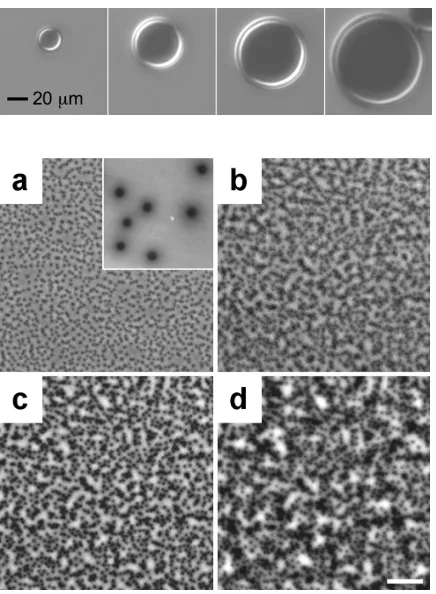
Figure 1.1. Wetting and dewetting behavior of two polymer films. ... 3 Figure 1.2.Two mechanisms of dewetting:(i) nucleation and growth (NG)(top row) and spinodal dewetting (SD) (middle and bottom rows) at various time intervals. The bottom scale marker signifies 30 µm. ... 5 Figure 1.3. Mean-field representation of the equilibrium phase diagram for a bulk diblock copolymer system: (a) theoretical, (b) experimental. ... 6
Chapter 2
Figure 2.1 Schematic illustration of CSNGs. Structural properties: gyration diameter (Dg = 26 nm), number of PMMA arms attached to the core (#PMMA = 28), molecular weight of each PMMA arm (MPMMA = 11 kDa) and grafting density of the PMMA arms (σPMMA = 0.013 arms/nm2). ... 24 Figure 2.2 Schematic illustration of CSNG-R# particles (R# denotes the weight-average molecular weight. Structural properties: gyration diameter (Dg = 13.1-14.5 nm), number of PS arms attached to the core (#PMMA = 22-32), molecular weight of each PS arm (MPS = 11 kDa) and grafting density of the PS arms (σPMMA = 0.010-0.012 arms/nm2). ... 25
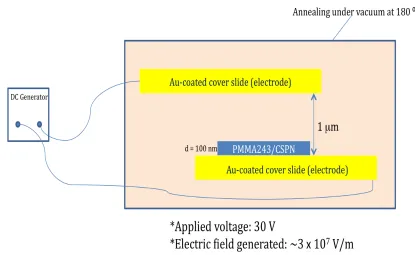
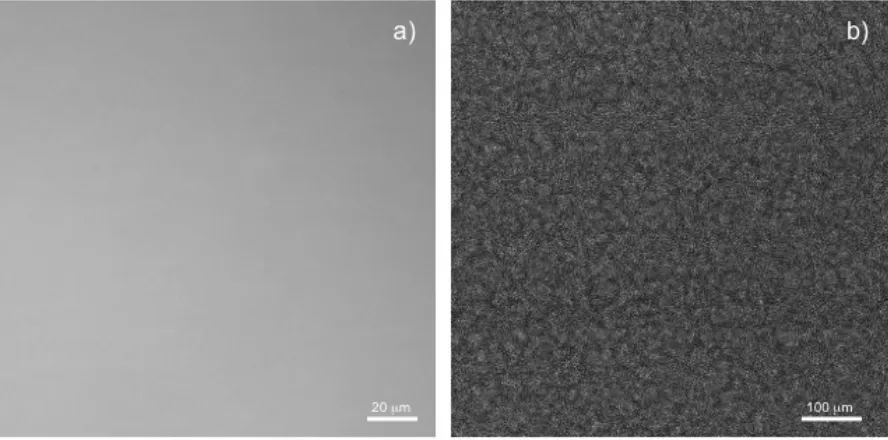
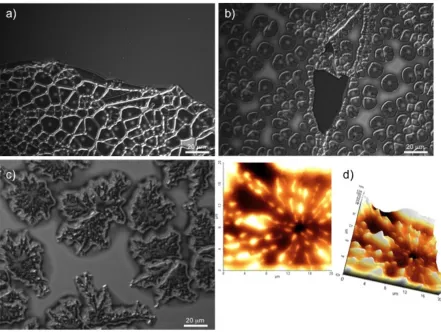
selective dissolution, and the circle identifies several partially protruding CSMG nanoparticles that have begun to sink back into the PMMA matrix upon dewetting-induced surface exposure. A schematic series of top and side views are provided in (b) to illustrate this mechanism of surface energy-induced CSMG submersion as a function of annealing (PS dewetting) time. ... 30 Figure 2.6 Energy-filtered TEM images of CSMG-R nanoparticles acquired from (a) the interior of a thin PS film and (b, c) the interface between 216 kDa PS and 900 kDa PS after annealing at 180°C for 24 h. The PS homopolymer matrices and arms of the CSMG-R nanoparticles are selectively stained and the light features correspond to the unstained acrylic cores of the nanoparticles. The regions separated by dashed lines in (b) are discussed in the text. The circled feature in (a) and the arrow in (b) highlight examples of large nanoparticle aggregates. ... 33 Figure 2.7 AFM height images showing the time-dependence of CSNG aggregation on PMMA243 surface after PMMA243/CSNG/PS50 was annealed for (a) 1 h, (b) 3 h, (c) 6 h, (d) 9 h, (e) 12 h and (f) 84 h at 180°C. PS50 was selectively removed prior to AFM topography imaging. ... 35 Figure 2.8 Total number of particles in aggregates vs. annealing time. ... 37 Figure 2.9 Schematic illustration of the electric field experimental setup. ... 39 Figure 2.10 Optical microscopy images of (a) Au-coated glass surface, (b) PMMA/CSNG layer on Au electrode after floating, (c) PMMA/CSNG after on Au-electrode after 27 h at 180°C, and (d) PMMA/CSNG on Au, after 24 h electric field applied at 180°C. Scale marker is 50 microns. ... 41 Figure 2.11 AFM images of (a) PMMA/CSNG layer on Au electrode after floating, (b) PMMA/CSNG after on Au-electrode after 27 h at 180°C, (c) PMMA/CSNG (dewetted areas corresponding to cf. Fig. 2.9c) on Au after 24 h at 180°C electric field applied and (d) 3D image of the structuring in part c. Scale marker is 1 micron. ... 42
Chapter 3
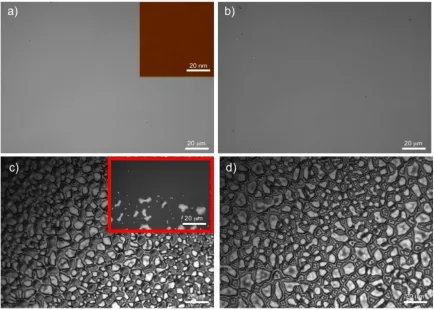
Figure 3.3 48 nm thick pure CSNP-R378 at 180°C for 80 h on silicon wafer (a) optical micrograph at 20x with DIC optics, (b) by scanning electron microscopy in field emission mode, 5 kV at 100,000x. ... 58 Figure 3.4 Optical micrographs of (a) as-cast film of PS204/PMMA51 on silicon substrate (the inlet image is the surface topography scan showing a roughness value of 0.216 nm), (b) as-cast film of R378/PMMA51 on silicon substrate, (c) PS204/CSNG-R378/PMMA51 bilayer at 180°C for 80 h (the inlet shows a PS layer dewetting from a PMMA substrate with the evidence of PS islands), and (d) PS204/CSNG-R378/PMMA51 bilayer at 180°C for 80 h after PMMA51 layer was selectively removed with acetic acid. .. 60
Figure 3.12 Optical micrographs of PS879/CSNG-R378/PMMA51: (a) 1wt% CSNG-R378 loading at 190°C for 2 h, (b) 5wt% CSNG-R378 loading at 190°C for 3.5 h (c) 15wt% CSNG-R378 loading at 190°C for 40 h. ... 72
Chapter 4
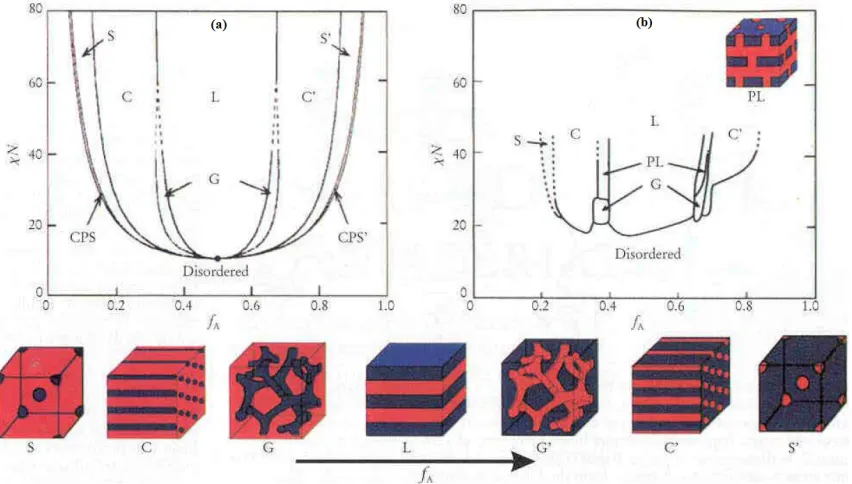
Figure 4.1. Dependence of the order-disorder transition temperature (TODT) measured by dynamic rheology on the mass of the growing A2 endblock (MA2) in the 46-A2 ( ) and 9-17-A2 ( ) triblock copolymer series (see the text for details). The solid lines connect the data, and the dotted vertical lines identify the conditions corresponding to molecularly symmetric triblock copolymers wherein MA1 = MA2. ... 81 Figure 4.2. Values of (χN)ODT presented as a function of molecular asymmetry (t) as predicted from the mean-field theory of Mayes and Olvera de la Cruz30,31 for two asymmetric triblock copolymer designs: (a) fixed molecular composition (fA) and (b) variable molecular composition. Corresponding values of fA are listed in (a), and the two copolymer systems under investigation (see the text for details) are labeled in (b). ... 83 Figure 4.3. Values of TODT for the 9-46-A2 ( ) and 9-17-A2 ( ) triblock copolymer series normalized with respect to TODT for the parent diblock copolymer (τ = 1) in each series and presented as functions of (a) molecular asymmetry (t) and (b) molecular composition (fA). The solid lines are mean-field theory predictions used in conjunction with c(T) reported by Lodge et al.34 The dotted lines identify the conditions corresponding to τ = 0.5 (a) and TODT,r = 1 (a and b). ... 84 Figure 4.4 Dependence of TODT on τ for the 9-46-A2 ( ) and 9-17-A2 ( ) triblock copolymer series. The solid lines represent fits of the mean-field predictions displayed in Fig. 2.2b to both datasets. The inset is a schematic illustration depicting the chain conformations associated with the transformation of an A1B diblock copolymer (a) to an A1BA2 triblock copolymer (b-e). A relatively short A2 block initially remains mixed with the B midblock (b). As the length of the A2 block is further increased, it microphase-separates to form a bidisperse brush with the A1 block (c). When τ = ½, the triblock copolymer becomes molecularly symmetric in which case the lengths of the A1 and A2 endblocks are identical (d). A further increase in the length of the A2 block (τ < ½) is accompanied by a bidisperse brush and an order-disorder transition governed by the A2 block (e). ... 85
Chapter 5
standing between two glass pieces on the corners. The middle hole where the film is located is freely standing, having an air/air interface on both sides. ... 154 Figure 5.12 Linear dewetting rate of PS30/PS10-b-PMMA50 on PMMA243 at 180°C as a function of PS10-b-PMMA50 layer film thickness: (a) copolymer-free PS30 and (b) 0.25wt% copolymer-added PS30. Grafting densities are represented as a function of midlayer film thickness. Mushroom-to-brush crossover for the PS block is at ΣPS10 = 1. ... 157
Figure 5.13 Linear dewetting rate of PS30/PS50-b-PMMA10 on PMMA243 at 180°C as a function of PS50-b-PMMA10 layer film thickness: (a) copolymer-free PS30 and (b) 0.25wt% copolymer-added PS30. Grafting densities are represented as a function of midlayer film thickness. ... 161 Figure 5.14 (Left) Linear dewetting rate of PS30/PS50-b-PMMA54 on PMMA243 at 180°C as a function of PS50-b-PMMA54 layer film thickness: (a) copolymer-free PS30 and (b) 0.25wt% copolymer-added PS30. Grafting densities are represented as a function of midlayer film thickness. ... 162 Figure A5.1 Typical density profile for PS30/PS50-b-PMMA54/PMMA243. ... 174
Chapter 6
Figure 6.1 Linear dewetting rates of PS50/SM on PMMA243 at 180°C as a function of SM copolymer concentration. One symmetric and three asymmetric copolymers are embedded in PS. ... 177 Figure 6.2 Linear dewetting rate for PS50 containing equimass PS20-b-PMMA50 and PS50-b
-PMMA20 mixtures on PMMA243 at 180°C as a function of copolymer concentration. ... 181 Figure 6.3 Linear dewetting rate for PS50 containing PS10-b-PMMA50 and PS50-b-PMMA10 mixtures on PMMA243 at 180°C as a function of copolymer concentration. The composition of PS10-b-PMMA50 was varied from 50wt% (yielding an equimass mixture, 50/50) to 99wt% (99/1). The composition of the PS50-b-PMMA10 copolymer was varied accordingly. The grey bar represents the concentration regime, beyond which the stability is governed by PS50-b
-PMMA10. The cartoon on the top left is an illustration of PS10-b-PMMA50 micelles at the
interface, and the one on the bottom right side represents the stability induced by PS50-b
CHAPTER 1: Importance of macromolecular structuring in polymer thin films
1.1 Motivation
investigated. These two competitive events, i.e., copolymer self-organization and interfacial structuring, affect the stability of the thin-film laminates, which is of general and crucial consideration in the development of, for instance, advanced coatings. In such confined systems, molecular self-organization may be transient, resulting in metastable nanostructural elements that dissolve as the global free energy of the system seeks a minimum. For comparison, we have likewise examined the interfacial segregation of core-shell polymeric nanoparticles that mimic effectively block copolymer micelles. Unlike copolymer micelles, however, the core of the purposefully designed nanoparticles is chemically cross-linked and cannot dissolve in homopolymers in which they are incorporated in this study. The interplay between the surface and interfacial tension force these nanoparticles migrate selectively and reversibly and reside along a polymer/polymer interface. Planar and topographical imaging have also shown nanoparticle aggregation along the interface. These results (i) raise fundamental questions regarding the competition between (supra)molecular self-organization and interfacial modification in confined thin-film laminates, and (ii) open new avenues to designer polymer laminates on polymer substrates for advanced coating, templating and responsive technologies.
1.2 Generic topics in polymer thin-films
1.2.1 Polymer thin-film stability
The stability of polymer thin films is critical to the development of advanced protective coatings and defect-free multilayer assemblies, in which case the molecular-scale processes responsible for film destabilization must be fully understood.
When a liquid is placed upon a solid, it can remain stable and "wet" the substrate or it can alternatively become unstable and "dewet" from the substrate, depending on the surface tension of the liquid and the interfacial tension between the liquid and the substrate. These scenarios are depicted in Fig. 1.1.
Figure 1.1. Wetting and dewetting behavior of two polymer films
temperatures higher than the glass transition temperatures of the polymer layers (T >Tg), both layers are liquid. If the melt viscosity of polymer B is significantly higher than that of polymer A (ηB >>ηA), polymer B behaves solid-like relative to A and can be treated as such,
according to the results of Brochard-Wyartet al.1 The tendency for polymer A to dewet from substrate B is dictated by the spreading parameter (S), defined as
S = γBAB (γA + γAB) , (1.1)
whereγA and γB denote the surface tensions of A and B, respectively, and γAB is the interfacial
Figure 1.2.Two mechanisms of dewetting:(i) nucleation and growth (NG)(top row) and spinodal dewetting (SD) (middle and bottom rows) at various time intervals. The bottom scale marker signifies 30 mm.
magnitude. This result is not entirely surprising since the intuitive limiting case requires that, at a sufficiently high copolymer concentration, the top film must be fully stabilized.
1.2.2 Block copolymers and their use as compatibilizers in thin-film stabilization
Block copolymers represent a fascinating class of self-assembling materials.12-21 They provide a large source of possible nanostructures differing in geometry that can be used to fabricate functionalized materials from neat copolymer melts, as well as from mixtures with a homopolymer (or a solvent), as the starting point.17,20,22-26
Figure 1.3. Mean-field representation of the equilibrium phase diagram for a bulk diblock copolymer system: (a) theoretical, (b) experimental.12
homopolymers covalently bonded to form a diblock copolymer. While homopolymers commonly undergo phase separation at macroscopic length scales, block copolymers self-assemble spontaneously into a variety of ordered morphologies due to the restriction arising from the covalent linkage. Commonly encountered morphologies are depicted in Fig. 1.3 and include spheres arranged on a body-or face-centered cubic lattice, cylinders arranged on a hexagonal lattice, bicontinuous channels and alternating lamellae.12,18,19 Other aperiodic morphologies including sponge and network morphologies have likewise been reported,35 but are not considered further here. The important parameters to be considered in the design of block copolymer molecules (cf. Fig. 1.3) are (i) the molecular composition (expressed in terms of the number, or volume, fraction of one of the blocks, fA) and the interblock incompatibility parameter (χN).
copolymers varying in asymmetry as the A2 endblock is grown via living anionic polymerization. The result of this specific study is further discussed in Chapter 4.
The morphological design rules described above are only applicable to bulk systems wherein edge or surface effects are completely neglected. Geometric confinement can affect profoundly the manner by which block copolymer molecules distribute and organize, as demonstrated both experimentally and theoretically. Geometric confinement, such as that encountered in molecularly thin films, can also affect the equilibrium morphologies of block copolymers or copolymer/homopolymer blends, resulting in markedly different morphologies in thin films compared to those in the bulk.24-26,38,39
According to their self-consistent field theory (SCFT) predictions, the magnitude of µM is anticipated to increase with decreasing film thickness due to the increased entropic penalty needed to squeeze copolymer molecules into smaller aggregates. As a result, copolymer migration to the interface becomes more favorable relative to micellization, which is experimentally observed. While the SCFT approach is not ideally suited for the case of a dynamically-evolving system, such as a polymer thin film undergoing dewetting, it provides guidance into the physics of the present system of interest. Zhu et al.42 report detecting no PS-b-PMMA micelles in apparently stable PS films measuring ≈100 nm thick at various copolymer concentrations (above the cmc), whereas Wei et al.11,26,34 provide evidence to the contrary in dewetting films only ≈60 nm thick. Thus, this discrepancy illustrates that such complex systems warrant further systematic investigation.
In the presence of a parent homopolymer, another parameter that becomes critically important is the molecular weight disparity (a) between the homopolymer and the host block of the copolymer (a = MhA/MA).29,35,43 If the homopolymer molecular weight is much larger, for example, than that of the corresponding copolymer block, the copolymer brush formed once the copolymer molecules self-organize will remain dry. This chain-penetration effect dictates the extent to which the homopolymer can be incorporated within the copolymer matrix in copolymer-rich blends, as well as the size and shape of copolymer dispersions within the homopolymer matrix in homopolymer-rich blends.
macrophase-separated homopolymers, which generally tend to be thermodynamically immiscible due to a combination of endothermic mixing and a near-negligible entropy of mixing. Bulk polymer processing exposes such ternary systems to high shear fields that permit migration of the copolymer molecules to the dynamically evolving and curved polymer/polymer interface, with the result that the degree of dispersion of one homopolymer in a matrix of the other is vastly improved.21 While this strategy has long been adopted in the polymer industry, it is not necessarily downward scalable, that is, scalable to nano- or molecular-scale dimensions when confinement effects can no longer be ignored. As an example, we consider the dewetting of a thin polymer film from a flat, immiscible polymer substrate. Incorporation of a block copolymer into the top layer results in a competition for the copolymer molecules to (1) form micelles (energetically favored at concentrations above the cmc in the thin film, which may differ from that of the bulk) and (2) stabilize the polymer/polymer interface. Such nanoscale compatibilization is of tremendous technological interest due to the general importance of multilayer polymer films.11,17,22,23,26,34
difficult to assess the role of discrete macromolecular assemblies on morphological development near surfaces and interfaces.
1.2.3 Core-shell polymer nanoparticles (CSPNs) in thin-films
An alternative to block copolymer micelles re core-shall polymer nanoparticles (CSPNs) with unique 3D structures, which can be imagined as branched macromolecules.51 CSPNs generally consist of an organic (A) core surrounded by a dense brush of chemically dissimilar (B) arms52 and are of technological interest due to their tailorable chemistry and unique physico-chemical properties.55 The desired applications of these particles commonly vary from personal care products to drug delivery vehicles.47-52
If the B shell is cross-linked chemically, the A core of such nanoparticles can be removed selectively and subsequently used as a hollow compartment for encapsulation.53,54 Such particles consist commonly of chemically cross-linked hydrophilic chains that can swell to tunable extents in an aqueous environment. In this regard, they possess many of the stimuli-responsive characteristics (responsive to external stimuli factors as temperature,53,54 pH,55,56 ionic strength54 and solvency56) of their hydrogel analogs57.
The nanoparticles of interest in this work must, however, resemble chemically the
Inverted CSP nanoparticles with PS arms varying in size and a chemically cross-linked acrylic core have likewise been prepared for this project. The observation that these nanoparticles can extend through a polymer/polymer interface and then submerge below an exposed polymer surface upon thermal treatment demonstrates that the nanoparticles can be responsive to their environmental conditions. Recently, we have explored a variety of systems to obtain a better understanding of how these nanoparticles behave in thin-film polymer laminates. The details of such nanoparticle-added PS/PMMA laminates, including the synthesis procedure (cf. Appendix 3A) are discussed further in Chapters 2 and 3.
In this dissertation, we intend to develop a deeper molecular-level understanding of how the parameters such as copolymer/nanoparticle concentration, copolymer molecular weight, composition, layer concentration, and layer thickness promote lateral interfacial structuring at immiscible polymer/polymer interfaces due to copolymer/nanoparticle segregation. Thus, this Ph.D. Thesis is divided into the following areas and serves the purpose of understanding:
1. Time-temperature conditions that favor the autophobically-driven surface enrichment of CSPNs under different levels of interfacial tension,
2. Migration of discrete nanostructures (CSPNs) to polymer/polymer interfaces where they can form lateral aggregates and form tentacle-like structures at the interface,
References
1. Redon, C.; Brochard-Wyart, F.; Rondelez, F. Dynamics of Dewetting. Physical Review Letters66, 715 (1991).
2. Reiter, G. Dewetting of Thin Polymer Films. Physical Review Letters 68, 75-78 (1992).
3. Sferazza, M. ; Xiao, C.; Jones, R.A.L.; Bucknall, D.G.; Webster, J.; Penfold, J. Evidence for Capillary Waves at Immiscible Polymer/Polymer Interfaces. Physical Review Letters 78, 3693 (1997).
4. Limary, R.; Green, P.F. Hierarchical Pattern Formation in Thin Film Diblock Copolymers above the Order-Disorder Transition Temperature. Macromolecules 32, 8167 (1999).
5. Sferrazza, M.; Heppenstall-Butler, M.; Cubitt, R.; Bucknall, D.; Webster, J.; Jones, R.A.L. Interfacial Instability Driven by Dispersive Forces: The Early Stages of Spinodal Dewetting of a Thin Polymer Film on a Polymer Substrate. Physical Review Letters 81, 5173–5176 (1998).
6. Xie, R.; Karim, A.; Douglas, J.F.; Han, C.C.; Weiss, R.A. Spinodal Dewetting of Thin Polymer Films. Physical Review Letters 81, 1251-1254 (1998).
7. Sharma, A.; Khanna, R. Pattern Formation in Unstable Thin Liquid Films. Physical Review Letters 81, 3463 (1998).
8. Herminghaus, S.; Jacobs, K.; Mecke, K.; Bischof, J.; Fery, A.; Ibn-Elhaj, M.; Schlagowski, S. Spinodal Dewetting in Liquid Crystal and Liquid Metal Films.
Science 282, 916 (1999).
9. Segalman, R.A.; Green, P.F. Dynamics of rims and the onset of spinodal dewetting at liquid/liquid interfaces. Macromolecules 32, 801 (1999).
10. Bollinne, C.; Cuenot, S.; Nysten, B.; Jonas, A.M. Spinodal-like Dewetting of Thermodynamically-Stable Thin Polymer Films. Eur. Phys. J. E 12, 389 (2003). 11. Wei, B.; Lam, P.G.; Braunfeld, M.; Agard, D.A.; Genzer, J; Spontak, R.J. Tunable
Instability Mechanisms of Polymer Thin Films by Molecular Self-Assembly.
12. Bates, F.S.; Fredrickson, G.H. Block Copolymers - Designer Soft Materials. Physics Today 52, 32-38 (1999).
13. Lodge, T.P. Block Copolymers: Past Successes and Future Challenges. Macromol. Chem. Phys. 204, 265 (2003).
14. Hamley, I.W. Block Copolymers in Solution: Fundamentals and Applications (John Wiley & Sons, 2005).
15. Block Copolymers I (ed. Abertz, V.) (Springer, 2005). 16. Block Copolymers II (ed. Abertz, V.) (Springer, 2005).
17. Albrecht, T.T.; Steiner, R.; DeRouchey, J.; Stafford, C.M.; Huang, E.; Bal, M., Tuominen, M.; Hawker, C.J., Russell, T.P. Nanoscopic Templates from Oriented Block Copolymer Films. Adv. Mater. 12, 787-791 (2000).
18. Bates, F.S.; Fredrickson, G.H. Block Copolymer Thermodynamics: Theory and Experiment. Annu. Rev. Phys. Chem. 41, 525-557 (1990).
19. Fredrickson, G.H.; Bates, F.S. Dynamics of Block Copolymers: Theory and Experiment. Annu. Rev. Mater. Res. 26, 501-550 (1996).
20. Parka, C.; Yoonb, J.; Thomas, E.L. Enabling Nanotechnology With Self-Assembled Block Copolymer Patterns. 44, 6725-6760 (2003).
21. Ruzette, A.V.; Leibler, L. Block Copolymers in Tomorrow's Plastics. Nature Materials 4, 19-31 (2005).
22. Cheng, J.Y.; Mayes, A.M.; Ross, C.A. Nanostructure Engineering by Templated Self-Assembly of Block Copolymers. Nature Materials 3, 823 (2004).
23. Lazzari, M.; López-Quintela, M.A. Block Copolymers as a Tool for Nanomaterial Fabrication. Adv. Mater. 15, 1583-1594 (2003).
24. Jeong, U.; Ryu, D.Y.; Kho, D.H.; Kim, J.K.; Goldbach, J.T.; Kim, D.H.; Russell, T.P. Enhancement in the Orientation of the Microdomain in Block Copolymer Thin Films upon the Addition of Homopolymer. Adv. Mater. 16, 533 (2004).
26. Wei, B.; Genzer, J; Spontak, R.J. Dewetting Behavior of a Block Copolymer/Homopolymer Thin Film on an Immiscible Homopolymer Substrate.
Langmuir 20, 8659-8667 (2004).
27. Bernard, B.; Brown, H.R.; Hawker, C.J.; Kellock, A.J.; Russell, T.P. Adhesion of Polymer Interfaces Reinforced with Random and Diblock Copolymers as a Function of Geometry. Macromolecules 32, 6254-6260 (1999).
28. Folkes, M.J. Processing, Structure and Properties of Block Copolymers (Elsevier Applied Science Publishers, 1985).
29. Hamersky, M.W.; Smith, S.D.; Gozen, A.O.; Spontak, R.J. Phase Behavior of Triblock Copolymers Varying in Molecular Asymmetry. Physical Review Letters 95, 168306 (2005).
30. Matsen, M.W.; Bates, F.S. Conformationally Asymmetric Block Copolymers. J. Polym. Sci., Part B: Polym. Phys. 35, 945 (1997).
31. McGrath, J.E. Block Copolymers: Overview and Critical Survey (Academic Press, 1977).
32. Retsos, H.; Margiolaki, I.; Messaritaki, A.; Anastasiadis, S. H. Interfacial Tension in Binary Polymer Blends in the Presence of Block Copolymers: Effects of Additive MW. Macromolecules 34, 5295-5305 (2001).
33. Riess, G. Micellization of Block Copolymers. Prog. Polym. Sci. 28, 1107-1170 (2003).
34. Wei, B. in Chemical & Biomolecular Engineering (NC State Univ., 2005).
35. Spontak, R.J.; Patel, N.P. in Developments in Block Copolymer Science and Technology (John Wiley & Sons, 2004).
36. Kane, L.; Norman, D.A.; White, S.A.; Matsen, M.W.; Satkowski, M.M.; Smith, S.D.; Spontak, R.J. Molecular, Nanostructural and Mechanical Characteristics of Lamellar Triblock Copolymer Blends: Effects of Molecular Weight and Constraint. Rapid Communications 22, 281 (2001).
37. Banaszak, M.; Wołoszczuk, S.; Pakula, T.; Jurga, S. Computer simulation of structure and microphase separation in model A-B-A triblock copolymers. Phys. Rev. E 66, 031804 (2002).
38. Fasolka, M.J.; Mayes, A.M. Block Copolymer Thin Films: Physics and Applications.
39. Green, P.F.; Limary, R. Block Copolymer Thin Films: Pattern Formation and Phase Behavior. Advances in Colloid and Interface Science 94, 53-81 (2001).
40. Kim, S.H.; Misner, M.J.; Xu, T.; Kimura, M.; Russell, T.P. Highly Oriented and Ordered Arrays from Block Copolymers via Solvent Evaporation. Adv. Mater. 16, 226 (2004).
41. Wei, B.; Gurr, P. A.; Genzer, J.; Qiao, G. G.; Solomon, D. H.; Spontak, R. J. Dewetting of Star Nanogel/Homopolymer Blends from an Immiscible Homopolymer Substrate. Macromolecules 37, 7857-7860 (2004).
42. Zhu, S.; Liu, Y.; Rafailovich, M.H.; Sokolov, J.; Gersappe, D.; Winesett, D.A.; Ade, H. Confinement-Induced Miscibility in Polymer Blends. Nature 400, 49 (1999). 43. Mayes, A.M.; de La Cruz, M.O. Microphase Separation in Multiblock Copolymer
Melts. J. Chem. Phys .91 (1989).
44. Castelletto, V.; Caillet, C.; Hamley, I.W. Liquid-Solid Transition in a Model Hard Sphere System of Block Copolymer Micelles. Physical Review E 65, 050601 (2002). 45. Castelletto, V.; Hamley, I.W., Pedersen, J.S. A Small Angle Neutron Scattering
Investigation of the Structure of Highly Swollen Block Copolymer Micelles. J. Chem. Phys. 117, 8124-8129 (2002).
46. Connell, S.D.; Collins, S.; Fundin, J.; Yang, Z., Hamley, I.W. In Situ Atomic Force Microscopy Imaging of Block Copolymer Micelles Adsorbed on a Solid Substrate.
Langmuir 19, 10449-10453 (2003).
47. Das, M.; Zhang, H.; Kumacheva, E. Microgels: Old Materials with New Applications. Annu. Rev. Mater. Res. 36 (2006).
48. Becker, M.L.; Remsen, E.E.; Pan, D.; Wooley, K.L. Peptide-Derivatized Shell-Cross-Linked Nanoparticles. 1. Synthesis and Characterization. Bioconjugate Chem. (2004). 49. Cheng, C.; Qi, K.; Khoshdel, E.; Wooley, K.L. Tandem Synthesis of Core-Shell
Brush Copolymers and Their Transformation to Peripherally Cross-Linked and Hollowed Nanostructures. J. Am. Chem. Soc. 128, 6808-6809 (2006).
51. Ma, Q.; Remsen, E.E.; Kowalewski, T.; Schaefer, J.; Wooley, K.L. Environmentally-Responsive, Entirely Hydrophilic, Shell Cross-linked (SCK) Nanoparticles. 1, 651-655 (2001).
52. Sun, X.; Rossin, R.; Turner, J.L.; Becker, M.L.; Joralemon, M.J.; Welch, M.J.; Wooley, K.L. An Assessment of the Effects of Shell Cross-Linked Nanoparticle Size, Core Composition, and Surface PEGylation on in Vivo Biodistribution. 6, 2541-2554 (2005).
53. Berndt, I.; Pedersen, J.S.; Richtering, W. Temperature-Sensitive Core–Shell Microgel Particles with Dense Shell. Angew. Chem. Int. Ed. 45, 1737-1741 (2006).
54. Snowden, M.J.; Chowdhry, B.Z.; Vincent, B.; Morris, G.E. Colloidal Copolymer Microgels of N-isopropylacrylamide and Acrylic acid: pH, Ionic Strength and Temperature Effects. J. Chem Soc., Faraday Trans. 92, 5013-5016 (1996).
55. Atkin, R.; Bradley, M.; Vincent, B. Core-Shell Particles Having Silica Cores and pH-Responsive Poly(Vinylpyridine) Shells. Soft Matter 1, 160-165 (2005).
56. Saunders, B.R.; Crowther, H.M.; Vincent, B. Poly[(Methyl Methacrylate)-co-(methacrylic acid)] Microgel Particles: Swellilng Control Using pH, Cononsolvency and Osmotic Dewelling. Macromolecules 30, 482-487 (1997).
CHAPTER 2: Autophobicity-driven surface segregation of core-shell polymer nanogel particles (CSNGs)
2.1 Motivation
Organic nanogel (NG) particles are of great research interest due to their three-dimensional
structure and characteristics. NGs represent polymeric materials comprising macromolecular
networks from nanometers to micron size. Due to their network-induced structural integrity,
NGs behave as discrete colloidal particles in a variety of aspects such as the hydrodynamic,
electrophoretic, and rheological behavior of dispersions. Having been heavily used as fillers
in paint and coating industries due to their highly viscous nature at high molecular weights,
the NG particles have attracted tremendous interest in many other technological applications
such as controlled drug delivery, designing new-generation of sensors, advance coatings and
biomaterial supports/vehicles. When composed of cross-linked macromolecules, they
become capable of swelling and contracting, due to changes in surrounding media such as
temperature, pH, ionic strength, and solvency, while maintaining their structural integrity.
Developments in synthetic techniques have facilitated the customized design of these
particles, one of which is of our interest in their use (core-shell structures with controlled
chemical/cross-linking) for our application. Technological applications, with variations in
chemical compositions tuned by synthesis resulting in vast opportunities of macromolecular
2.2 General concepts on core-shell nanogel particles
NG particles of interest in this study are the core-shell type systems, which can be envisaged
as permanently cross-linked block copolymer micelles. They can be also modified in the
same fashion as block copolymers,1-11 changing their physical structure,12,13 which provides
opportunities to tailor their end applications, in addition to altering their chemical
composition. As physical models of permanent diblock copolymer micelles14,15
and
alternatives to organically-modified metal or metal oxide nanoparticles,16-19
core-shell
nanoparticles are of technological interest due to their tunable chemistry and
physico-chemical properties.20,21
The common structure consists of an organic (A) core surrounded by a dense brush of
chemically dissimilar (B) arms (corona).22-24
If the B shell is chemically cross-linked, the A
core of such nanoparticles can be removed selectively and used subsequently as a hollow
compartment for encapsulation.25-28 For instance, if the corona is composed of a stimuli-(e.g.,
pH,29 temperature30 or ionic strength31) responsive polyelectrolyte, it could facilitate
encapsulation and release of drugs or enzymes in a controlled manner.32 Studies33,34 have also
demonstrated that cross-linking the micellar corona which allows the selective-removal of
the cores, produces hollow particles. The size of such hollow polymer nanocapsules can be
tuned by changing the properties of the copolymer, such as the block size. Altering the
cross-link density of the core,30 thus changing the swell-ability of these nanoscale capsules34 in
good solvents has also been of great interest for controlled drug delivery.
Unlike block copolymer micelles formed by molecular self-assembly to minimize
by synthesis allowing us to explore them in environments where micelles break and
transform.
In this work, we investigate core-shell nanoparticles (denoted as CSNGs in the text)
dispersed in a molten thin film of a poly(methyl methacrylate) (PMMA) homopolymer that is
identical chemically to, but of substantially higher molecular weight than, the arms forming
the shell of the CSNG, which can interact freely with the homopolymer. Due to
autophobicity between the densely packed, short PMMA arms of the CSNGs and the long
PMMA chains in the matrix, the nanoparticles segregate to the film surface. They cannot,
however, break through the surface because of the high surface energy of PMMA. Similar
thermal treatment of CSNG-containing PMMA thin films with a polystyrene (PS) capping
layer replaces surface energy at the PMMA/air interface by interfacial energy at the
PMMA/PS interface, which reduces the energy barrier by an order of magnitude, thereby
permitting the nanoparticles to emerge out of the PMMA bulk. This nanoscale process is
reversible and can be captured at intermediate degrees of completion.
2.3 Experimental
2.3.1 Materials
Three polystyrene (PS) homopolymers (Mw = 50, 216 with Mw/Mn = 1.06 and Mw = 900 kDa
with Mw/Mn = 1.10) were purchased from Pressure Chemical, Inc. (Pittsburgh, PA), and
Polymer Source Co., respectively. The PMMA homopolymer (Mw = 243 kDa, Mw/Mn = 1.06)
Solvent-grade toluene was supplied by Fisher Scientific (Fairlawn, NJ) and was used without
further purification. CSNGs were synthesized by Dr. Greg Qiao of University of Melbourne,
Australia and used as-received.
2.3.2 Particle synthesis and characterization
2.3.2.1 Divinyl benzene-core (DVB)/PMMA-arm particles (CSNGs)
CSNGs were synthesized by Gurr et al.35 by the “arms-first” method. The PMMA arms were
synthesized first by atom-transfer radical polymerization (ATRP) and then cross-linked with
DVB to form discrete particles also under ATRP conditions.
Figure 2.1 Schematic illustration of CSNGs. Structural properties: gyration diameter (Dg =
26 nm), number of PMMA arms attached to the core (#PMMA = 28), molecular weight of each
PMMA arm (MPMMA = 11 kDa) and grafting density of the PMMA arms (σPMMA = 0.013
arms/nm2).
Size exclusion chromatography (SEC) measurements were performed in THF using a
Waters 717 Plus Autosampler operated in series with a Wyatt Dawn F laser photometer
operated at 90° and in parallel with a Waters 410 differential refractometer and a Viscotek
T50A differential viscometer. Results from the Viscotek TriSEC®
calibrated with PMMA standards yielded a number-average molecular weight (Mn) and
polydispersity index (PI) of 335 kDa and 1.10, respectively, and a gyration diameter (Dg) of
26 nm. The number of PMMA arms (each with Mn ≈ 11 kDa and PI < 1.10) on a single
CSNG was 28.
2.3.2.2 PEGDMA-core/PS-arm particles (CSNG-Rs)
The second type of particles (CSNG-Rs) with poly(ethylene glycol dimethacrylate)
(PEGDMA) cores and PS arms were also synthesized by the same method mention above
(Please refer to Appendix 2A for more detail in synthesis and characterization).
Figure 2.2 Schematic illustration of CSNG-R# particles (R# denotes the weight-average molecular weight. Structural properties: gyration diameter (Dg = 13.1-14.5 nm), number of
PS arms attached to the core (#PMMA = 22-32), molecular weight of each PS arm (MPS = 11
kDa) and grafting density of the PS arms (σPMMA = 0.010-0.012 arms/nm2).
2.3.3 Thin-film preparation and characterization
The CSNG nanoparticles were mixed (concentration 20% w/w) with PMMA243 (the suffix
was spin-coated onto Si wafer to yield films measuring ≈110 nm thick, as discerned from
ellipsometry. PS50 (the suffix denotes the molecular weight in kDa) was similarly dissolved
in toluene (2% w/w) and spin-coated on glass slides to produce films measuring ≈65 nm
thick. Each PS film was floated on the surface of DI water and then transferred to the top of
a PMMA243/CSNG film in such fashion that half of the PMMA/CSNG film was covered by
PS while the other half remained exposed permitting the effect of the PS film to be directly
discerned under a given set of treatment conditions. After drying for at least 24 h in air at
ambient temperature, each layered specimen was annealed in a Mettler-Toledo hot stage at
180°C for different time intervals under continuous N2 flow. Visual observation of the
post-annealed specimens was performed with an Olympus BX60 optical microscope, whereas
atomic force microscopy (AFM) of the PMMA/CSNG surfaces after selective-removal of the
top PS50 layer with cyclohexane was conducted with a Digital Instruments 3000 instrument
operated in tapping mode.
CSMG-Rs were used for transmission electron microscopy (TEM) samples of the
double-layer assemblies. The CSMG-R nanoparticles were incorporated into a thin,
spin-coated film of PS216, welded between two thick solvent-cast films of high-molecular-weight
PS900. The sample was annealed at 180°C for 24 h and cross-sectioning with a microtome,
and, then were exposed to the vapor of 0.5% RuO4 (aq) for 7 min and examined on a Zeiss
2.4 Results and discussion
2.4.1 Autophobicity-driven segregation of CSNG
According to optical microscopy, the top PS50 layer dewets from the PMMA243/CSNG
substrate via nucleation and growth mechanism and forms discrete islands of PS50 under the
conditions examined here. This observation is consistent with the previous work by Wei et
al,23
where the particles were embedded in the PS50 layer (cf. Fig. 2.3b).36
Results from that
study indicate that bare PMMA regions from which PS fully dewets appear smooth, whereas
regions below PS-rich islands become rough due to CSNG presence along the PS/PMMA
interface, as depicted in Fig. 2.3c.
Figure 2.3 Schematic illustrations showing the distribution of CSNGs in (a) PMMA bottom layer and (b) the PS top layer23
In the present study, we have incorporated the CSNG nanoparticles into the
PMMA243 homopolymer. PMMA243/CSNG film without the top PS layer remains smooth,
with a measured root-mean-square roughness (RMS) of 0.78 nm, after annealing for 80 hours.
Fig. 2.4a confirms that the dry regions from which the PS layer dewetted are likewise
featureless (R = 0.83 nm). In both cases, no evidence indicates that CSNGs locate atop the
PMMA layer.
Figure 2.4 Series of AFM height images showing the PMMA surface after different exposure conditions at 180°C: (a) complete dewetting of the PS capping layer after 80 h; formation, and subsequent solvent-removal, of PS islands after (b) 80 and (c) 20 h; and (d) further annealing of (b) without the PS capping layer for 40 h.
In order to image the PMMA243/CSNG/PS50 interface after annealing the bilayer for
80 hours at 180°C, PS50 top layer was removed selectively by cyclohexane. AFM
islands was significantly roughened (R = 3.51 nm), as shown in Fig. 2.4b. Bright features
measuring ≈30 nm in height are attributed to protruding aggregates of CSNG nanoparticles,
which not only segregated from the PMMA homopolymer matrix but also emerged from the
PMMA matrix along the PMMA/PS interface. Our experiments have also shown that a
CSNG-free PMMA/PS interface is smooth with RMS equal to 0.57 nm.
At shorter annealing times (≈ 20 hours), fewer, discrete features measuring on the
order of a few tens of nanometers laterally and ≈25 nm in height become evident along the
PMMA/CSNG surface below the dewetted PS islands (cf. Fig. 2.4c), revealing that the
occurrence, as well as extent, of CSNG protrusion is a time-dependent process. Further
annealing of the PS-capped PMMA/CSNG layer heated for 80 hours at 180°C for 40 hours
after the PS layer was removed results in total disappearance of the CSNG nanoparticles
confirming that emergence of the nanoparticles along the PMMA/PS interface is reversible.
The mechanism by which the nanoparticles sink back into the PMMA homopolymer
in the absence of PS capping is illustrated in Fig. 2.5a; the figure shows the boundary of a PS
as it slowly dewets from the bottom PMMA243/CSNG substrate. Numerous CSNG
aggregates are observed clearly where PS contacted the PMMA/CSNG substrate after 6
hours at 180°C. Just outside this region, CSNGs at different levels of submersion are
evident, which can be explained by the dynamic nature of the experiment. As depicted
schematically in Fig. 2.5b, the CSNGs emerge as before along the PMMA/PS interface, but
Figure 2.5 (a) AFM height image showing the PMMA surface after annealing for 6 h at 180°C. The dashed line marks the periphery where a dewetted PS island resided prior to selective dissolution, and the circle identifies several partially protruding CSMG nanoparticles that have begun to sink back into the PMMA matrix upon dewetting-induced surface exposure. A schematic series of top and side views are provided in (b) to illustrate this mechanism of surface energy-induced CSMG submersion as a function of annealing (PS dewetting) time.
This sequence of events of the surface segregation and emergence of CSNG
nanoparticles from the PMMA matrix depends on the subtle interplay between
entropically-driven autophobicity and enthalpically-governed surface/interfacial energy. While
autophobicity between the PMMA arms and the PMMA homopolymer drives the
nanoparticles to segregate from the PMMA matrix and form protruding aggregates along the
surface, the surface energy due solely to PMMA (γPMMA) serves to suppress the particles, as
evidenced by the absence (or disappearance) of nanoscale surface features.
Two structural aspects contribute to autophobicity between free (i.e., homopolymer
density of the brush, which comprises the outer layer of the CSNG as discussed above. The
second factor is the disparity in chain length between the grafted brush and free
homopolymer chains. In the present case, the CSNG arms are much shorter (N = 110) than
the PMMA homopolymer (with a degree of polymerization, P, of 2260 repeat units).
Pioneering the concept of wet and dry polymer brushes, Leibler have proposed a scaling
model to predict the onset of autophobicity. According to the model of Leibler and
co-workers,37,38
free homopolymer chains that are longer than a critical value (P*
) given by
(Na2
/σ)2/3
, where N is the number of monomer units in the PMMA homopolymer, a is the
statistical length of a single MMA repeat unit (in nm) and σ is the graft density of the PMMA
arms (in arms/nm2
). If P >> P*, the long homopolymer chains are unable to wet a
chemically identical brush composed of chains wherein the repeat units are of size a. If the
statistical length of a single MMA repeat unit is taken as 0.67 nm, P* ≈ 708 in the present
PMMA/CSNG system so that P >> P*
. In addition, the PMMA chains are also sufficiently
long to satisfy the condition of P > 5N required by Liu et al.39
for autophobic segregation to
occur. The high grafting density of PMMA arms and long PMMA homopolymer promote
autophobic segregation of the nanoparticles from the PMMA matrix. The results presented
here indicate that for CSNG nanoparticles to emerge alone or as aggregates from the PMMA
matrix due to autophobic segregation is regulated by surface (γPMMA) or interfacial (γPMMA/PS)
energy. Segregation to and subsequent emergence along the PMMA surface would induce
surface roughening and incur an energy penalty (ΔFsurf) on the order of kBT/a
2
, assuming that
γPMMA is unaffected by the presence of CSNG nanoparticles with chemically identical arms.
about an order of magnitude smaller (at ≈2 mJ/m2) than
γPMMA, again assuming that the
presence of CSNGs again has negligible influence. When the specimens with an exposed
PMMA surface are further annealed, the energetics is governed again by γPMMA, which
explains the submersion of CSNGs back into the PMMA matrix when the PS islands are
removed.
Autophobicity-driven segregation of CSNG illustrated in Fig. 2.5 could be confirmed
directly by cross-sectional transmission electron microscopy (TEM) in Fig. 2.6 by using, a
new species-reversed nanoparticle, hereafter designated CSMG-R, with an acrylic core
derived from ethylene glycol dimethacrylate (EGDMA) and PS arms. In this case, the PS
arms could be selectively stained, thereby permitting direct visualization of the unstained
CSMG-R cores. A series of energy-filtered TEM images of stained cross-sections of the
annealed trilayered assembly is presented in Fig. 2.6 and reveals several key morphological
characteristics. The first such feature evident in Fig. 2.6a is the presence of light dispersions,
attributed to the unstained acrylic cores of the CSMG-R nanoparticles, uniformly distributed
in an electron-dense (stained) PS matrix. The smallest dispersions measure about 5-15 nm in
diameter, whereas the average dispersion size is closer to 20-25 nm, although these and
larger dispersions (such as the circled one in Fig. 2.5a) most likely represent nanoparticle
aggregates and not individual nanoparticles. Note that the image width exceeds greatly the
thickness of the thin film, which implies that the sectioning/viewing direction is not
In Fig. 2.6b, discrete dispersions are visible in the left-hand region (I) of the image,
but disappear for the most part in the region labeled II. This apparent lack of dispersions in
Fig. 2.6b and the enlargement in Fig. 2.6c may reflect a reduction in CSMG-R nanoparticles
in region II, which is unlikely due to the uniform distribution seen in images such as the one
displayed in Fig. 2.6a. Conversely, it may be a consequence of a substantial increase in
nanoparticles concentration, which would explain why the diffuse features in Fig. 2.6a are
absent, while large, irregularly shaped aggregates (cf. Fig. 2.6b) exist.
It is also important to recognize that such nanoparticle extension from the host film
into an immiscible polymer, such as PMMA, is expected to be considerably less pronounced
due to enthalpically repulsive interactions. These observations of a similar, but not identical,
layered assembly containing species-reversed CSNG-Rs is generally consistent with the
postulated picture of nanoparticle enrichment/emergence along the polymer/polymer
interface.
2.4.2 Time-dependence of the autophobicity-driven segregation of CSNG
Patterning of polymer surfaces, by utilizing the observed autophobic-segregation
phenomenon investigated above, in a controllable fashion is of our interest in order to design
surfaces with tailorable properties. The protrusion/elevation of the CSNGs, triggered by
surface/interfacial energy interplay, and the simultaneous capability of organized in-plane
structure make such systems candidates for active reflective surfaces and smart tags. We
have also observed that the annealing time, at which the CSNG-added film is exposed to
2.4.3 Image analysis of CSNG
The images collected with the AFM were analyzed with Scion image analysis software to
understand how dense the particles and aggregates pattern on the PS/PMMA interface at
different time intervals.
According to the image analysis, particle clusters in size of 90-150 nm (4-6 individual
particles considering the diameter of an individual particle, 26 nm) form network-like
structures after 24 hrs and 80 hrs of annealing time intervals. The chains can be up to
150-200 clusters. Random distribution of particle clusters (no network-like structures) can be
observed at early times (6 hrs of annealing). There are three important parameters in the
analysis: (i) the number of particles with respect to total area density of the particles, (ii) total
number of particles and (iii) average aggregate size. Area and number density calculations of
the particles were performed in Scion Image Analysis software. Threshold values were
optimized accordingly. Increasing the threshold value decreases the total particle area, hence
the total # of particles except for the images in which the particles form long chains. It
affects both the area and number density.
Figure 2.8 represents the total number of particles in the system with respect to
various annealing times. According to the plot, the total number of the MG particles
segregated from the PMMA matrix to the PS/PMMA interface increases as the annealing
time increases. PMMA homopolymer relaxes as annealing time is increased, thereby