ABSTRACT
PAPARELLA, PAUL DAVID. Learning to Lead: Faculty Learning on Short-Term Study Abroad Programs. (Under the direction of Dr. Audrey Jaeger.)
The purpose of this doctoral study was to gain a deeper understanding of faculty learning from their experiences directing and teaching on short-term study abroad programs. While student learning outcomes in education abroad have been widely studied over the years (Anderson, Lawton, Rexeisen, & Hubbard, 2006; Chieffo & Griffiths, 2004; Mapp, 2012; McKeown, 2009; Ransbury & Harris, 1994), only a few empirical studies (Rasch, 2001; Strang, 2006, Watts, 2015) have examined another vital stakeholder in any university’s internationalization strategies: the faculty who direct short-term study abroad programs.
This gap in the literature is surprising given the increasing popularity of credit-bearing study abroad programs, in particular short-term programs (which can include
summer, January term or Maymester) within the last decade. With rising student enrollments leading to an increase in the variety and type of study abroad program offerings, university officials are also working to increase the accessibility of these programs to traditionally underrepresented students. In addition to concerns about program access and equity, institutions of higher education are also addressing questions from parents and other stakeholders about the academic rigor of short-term programs as well as the risk of sending undergraduate students abroad, with differing levels of preparation. Studies (Hoye & Rhodes, 2000; Janeiro, Fabre & Rosete, 2012; Luethge, 2004) reveal the legal exposure faculty
These rising concerns about the evolving landscape in study abroad render it critical to focus not only on students going abroad and their experiences, but also on the faculty directors who are responsible for supervising and teaching their students on the program. Using a basic qualitative research design, the researcher interviewed 16 faculty directors from six different institutions of higher education in the southeast U.S. to investigate the following research questions: What are experienced faculty directors perceiving to be the most important dimensions of their role? And how did they learn about these dimensions? This study sought to answer those two research questions, using Goode’s basic typology (2007) as an analytical tool for understanding faculty director’s roles and responsibilities from an organizational perspective, while also seeking deeper insights into faculty learning by employing Neumann’s (2009) five learning propositions for an ‘inside-out’ point of view. The role of context in shaping faculty learning was another key component in this study.
Copyright 2018 by Paul David Paparella
Learning to Lead: Faculty Learning on Short-Term Study Abroad Programs
by
Paul David Paparella
A dissertation submitted to the Graduate Faculty of North Carolina State University
in partial fulfillment of the requirements for the Degree of
Doctor of Philosophy
Educational Leadership, Policy, and Human Development
Raleigh, North Carolina 2018
APPROVED BY:
_______________________ _______________________
Dr. Audrey J. Jaeger Dr. Chad Hoggan
Committee Chair
_______________________ _______________________
ii DEDICATION
To my wife, Jiyeon Jeong, and children (Gina and Logan), as well as my parents, Paul and Catherine Paparella:
Words cannot express the seemingly endless love, support and patience you have all given me these past seven years, which enabled me to overcome every challenge and setback encountered along the way.
To my parents: Rest assured, I will never forget your kindness and emotional support, clearly conveyed in every phone call and email. You serve as a guiding inspiration for me, and I cherish your wisdom, encouragement, and humor, all of which helped me persevere, even in my most exhausted state. Thank you for never giving up on me and for never ceasing to listen.
To my wife (Jiyeon): I would never have reached this point without you at my side, celebrating my achievements and consoling me whenever I needed a boost. The many sacrifices you have made in these past 7 years will not be forgotten, and now I look forward to beginning a new chapter with you and our children. Thank you from the bottom of my heart for helping me become a better person and for bringing a sense of purpose to all that I do.
iv BIOGRAPHY
Paul D. Paparella grew up in Suffern, New York and attended Siena College in Albany, NY, majoring in political science. In 1995, he completed his Master’s degree in International Relations at the State University of New York at Albany (SUNY Albany), Rockefeller College of Public Affairs and Policy. His initial career interests centered on international development, and shortly after receiving his MA, he worked for an international non-profit organization based in Washington, DC.
v ACKNOWLEDGEMENTS
The completion of any dissertation represents a significant achievement for any graduate student but is never a solo journey. To my dissertation committee (Dr. Audrey Jaeger, Dr. Chad Hoggan, Dr. Darla Deardorff and Dr. Diane Chapman), I would like to convey my deepest gratitude for your encouragement and support, and for bearing with me during each revision. I could not have asked for a better committee! A heartfelt thanks to Dr. Jaeger (AJ) who served as my dissertation committee chair and my graduate advisor, for keeping me on track, teaching me the value of cohesive, logical writing over an abundance of prose and helping me abide by deadlines, while always fulfilling her commitments. You inspired me along this journey and provided me with new insights and ideas whenever I had reached an impasse. Thank you for taking me on as one of your advisees and for chairing the committee even with your many other commitments- I know your plate is always full. I must also thank Darla Deardorff for offering her wisdom and encouragement ever since I started to work in the Global Education Office at Duke in 2006. I enjoyed supporting your class at NC State (‘International Issues in Higher Education’) as a TA where I gained a deeper
understanding of internationalization abroad and ‘at home’ as well as newer perspectives on understanding and assessing intercultural competency.
vi trials and tribulations of this doctoral journey. My friends Jason Giersch and Joel Wright were also willing to serve as my sounding board, contributing their ideas and opinions, while encouraging me to be creative in my thought process and to think ‘outside the box’.
I would also thank my colleague and co-worker, Susan Pratt, who offered
camaraderie and friendship while letting me vent especially in those moments when life, work and school became overwhelming. I owe you one! To my supervisor in the Global Education Office at Duke, Dr. Amanda Kelso, you not only gave me the time and space I needed to manage my workload while progressing through my graduate program, but you also shared your wisdom and served as an example of perseverance that inspired me through the various stages of my dissertation writing, For that and more, including your ongoing support with my professional development, I extend my sincerest thanks.
There are many others among my friends, colleagues and family who blessed me with their kindness and compassion (you know who you are), that I can only hope to repay in the near future. Thank you all for being there when I needed you and for teaching me to be patient with myself, a critical life lesson. I look forward to reconnecting with you and
vii TABLE OF CONTENTS
LIST OF TABLES ... xi
LIST OF FIGURES ... xii
CHAPTER ONE: INTRODUCTION ... 1
Definition of Internationalization ... 1
Lincoln Commission and the Growing Importance of Study Abroad ... 3
Generation Study Abroad ... 4
Overview of Short-term Study Abroad Programs ... 6
Benefits ... 7
Challenges ... 9
Problem Statement ... 19
Purpose Statement ... 23
Research Questions ... 25
Education Abroad Glossary ... 25
Conceptual Framework ... 28
Significance of the Study ... 31
Research Methodology ... 32
Chapter Summary ... 33
CHAPTER TWO: LITERATURE REVIEW ... 36
Faculty Roles in Study Abroad ... 37
Rasch’s Study... 38
Strang’s Study ... 42
Watt’s Study... 42
Goode’s Typology ... 45
“Dean of Students” Dimension ... 47
Mental health. ... 47
Alcohol consumption and students abroad. ... 48
Title IX and sexual assault at home and abroad. ... 49
Group dynamics. ... 51
Logistical Dimension ... 53
Intercultural Dimension ... 54
Academic Dimension ... 57
Learning Theories ... 58
Situated Learning Theory ... 59
Critiques of Situated Learning ... 61
Neumann’s Conceptual Theory on Scholarly Learning ... 62
Chapter Summary ... 67
CHAPTER THREE: RESEARCH METHODOLOGY ... 69
Chapter Overview ... 69
Research Design... 70
Basic Qualitative Research Design ... 70
viii
Population ... 73
Sample selection criteria. ... 74
Sample selection procedures. ... 75
Instrumentation ... 76
Pilot Study ... 77
Data Collection ... 77
Role of the Researcher ... 77
Individual Interviews ... 79
Post-Reflection Questionnaires ... 81
Data Analysis ... 81
Coding ... 82
First-cycle coding for first research question... 82
First-cycle coding for second research question. ... 85
Second-cycle coding. ... 86
Analytic Memoing ... 86
Post-Coding Strategies ... 87
Strategies for Ensuring Trustworthiness of Findings... 89
Credibility ... 89
Transferability ... 90
Dependability ... 91
Confirmability ... 91
Limitations of the Study... 92
Ethical Concerns ... 94
Chapter Summary ... 95
CHAPTER FOUR: FINDINGS ... 97
Findings Applied to Goode’s Dimensions ... 99
“Dean of Students” Dimension ... 100
Student safety. ... 100
Student health... 105
Group dynamics. ... 107
Logistics Dimension ... 110
Shared responsibilities (faculty directors and study abroad office). . 112
Crisis management. ... 112
Budget management... 114
Applications, admissions and enrollment management. ... 116
On-site staff supervision. ... 118
Intercultural Dimension ... 120
Academic Dimension ... 124
Summary of Findings Applied to Goode’s Typology... 127
Findings Applied to Neumann’s Five Learning Propositions... 128
Proposition One: Professors’ Learning as Part of Professors’ Work ... 130
Proposition Two: Learning as Someone Learning Something ... 134
Proposition Three: Professors’ Scholarly Learning ... 137
ix Proposition Four: Professors’ Scholarly Learning as Personal and
Emotional Experience ... 142
Proposition Five: Contexts, in Part, as the Contents of Learning ... 146
Learning from the host country setting. ... 147
Learning from students. ... 150
Chapter Summary ... 152
CHAPTER FIVE: DISCUSSION, IMPLICATIONS AND CONCLUSION ... 154
Goode’s Typology Re-examined ... 155
Variations in Faculty Responses and Missing Elements (“Dean of Students” Dimension) ... 155
Students’ health and safety ... 155
Missing element in “Dean of Students” dimension: sexual assault.. 156
Implications for future research, practice, and policy in “Dean of Students” dimension related to mental and physical health. ... 158
Variations in Faculty Responses and Missing Elements (Logistics Dimension) ... 166
Missing elements in logistics dimension: admissions and enrollment management. ... 166
Implications for future research, practice, and policy in the logistics dimension related to admissions and enrollment management. ... 168
Variations in Faculty Responses and Missing Elements (Intercultural Dimension) ... 170
Implications for future research, policy, and practice in the intercultural dimension. ... 171
Missing element in intercultural dimension: cultural mentoring. ... 173
Variations in Faculty Responses and Missing Elements in Goode’s Typology (Academic Dimension)... 175
Experiential earning. ... 176
Implications for future research, practice and policy in experiential learning... 178
Missing elements in the academic dimension: inclusive teaching.... 179
Implications for future research, practice and policy in inclusive teaching. ... 180
Summary of Findings Applied to Goode’s Typology... 181
Neumann’s Propositions Re-examined ... 183
Proposition One: Professors’ Learning as Incidental with Limited Training ... 183
Proposition Two: Prior Learning from Previous Experiences in Host Country and Knowledge of Student Culture ... 187
Proposition Three: Professors’ Scholarly Learning Abroad ... 192
Proposition Four: Professors’ Scholarly Learning as Reflected by Personal and Emotional Experiences Abroad ... 196
x
Summary of Neumann’s learning propositions as applied to this study ... 203
Chapter Summary ... 204
REFERENCES ... 208
APPENDICES ... 237
APPENDIX A: Sample Interview Protocol ... 238
APPENDIX B: Contact Letter to Executive Directors of Study Abroad Offices ... 241
APPENDIX C: Email to Individual Faculty Directors ... 243
APPENDIX D: Post-Interview Reflection Questionnaire ... 245
APPENDIX E: NC State Human Subjects Informed Consent Form ... 247
APPENDIX F: Biographical and Professional Data Form ... 251
xi LIST OF TABLES
Table 1. Dimensions of the NAC Study Abroad Faculty Director Role ... 46
Table 2. Coding Strategies for Research Questions 1 and 2 ... 84
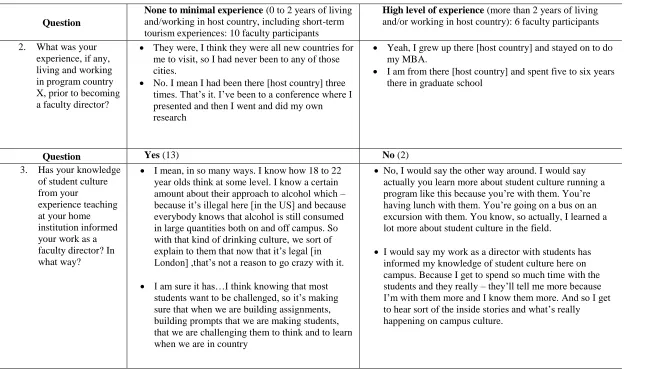
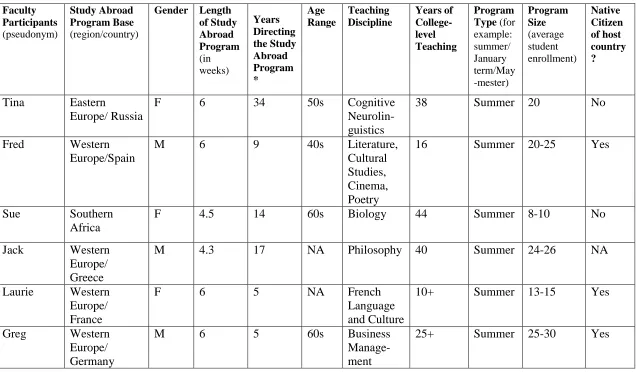
Table 3. Demographic Breakdown of Faculty Participants ... 98
Table 4. Findings Applied to Goode's Dimensions ... 101
Table 5. Neumann's Five Learning Propositions and Their Major Determinants ... 129
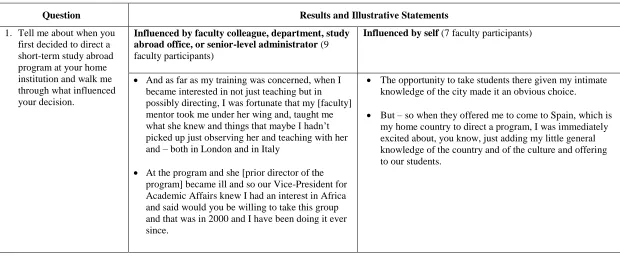
Table 6. Illustrations of Motivating Factors for Becoming a Director and the Degree to which Prior Learning Helps Navigate Managing a Short-Term Program. ...135
Table 7. Examples of Scholarly Learning Experiences Based on the Post-Interview Reflection Questionnaire Question: What Have You Learned About Your Own Disciplinary Area of Expertise in Your Experience Leading a Short-Term Study Abroad Program?...138
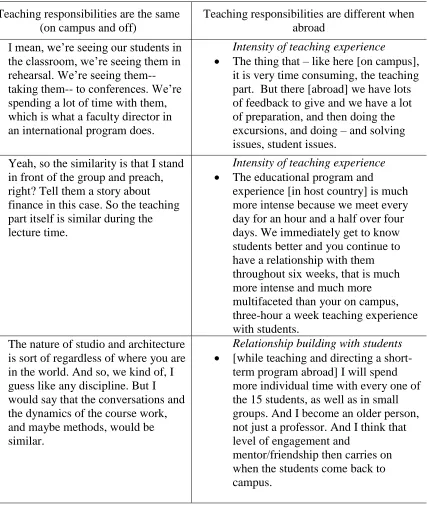
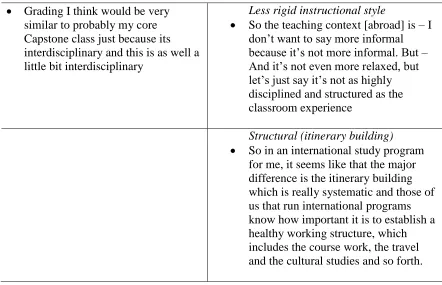
Table 8. Examples of Scholarly Learning Experiences Based on Interview Question: How Would You Compare Your Campus Teaching and Administrative Responsibilities with the Work You Perform as a Faculty Director of a Short- Term Study Abroad Program?…………...………...…...…....141
Table 9. Examples of What Faculty Directors Have Learned from Students on their Study Abroad Programs……….………151
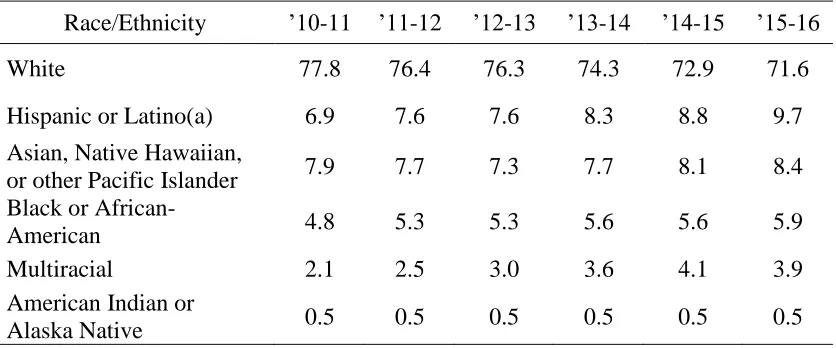
Table 10. Profile of U.S. Study Abroad Students (2010-2016) ... 165
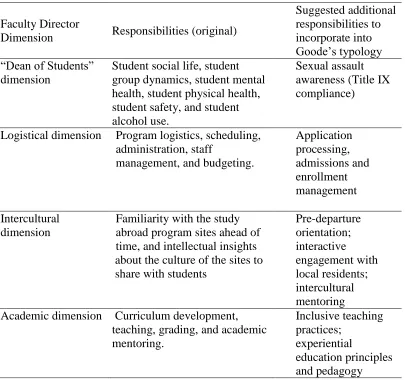
Table 11. Goode's Typology with Suggested Additions from Study Findings ... 182
xii LIST OF FIGURES
Figure 1. Rasch’s model of faculty influence on students in the study abroad
1 CHAPTER ONE: INTRODUCTION
Within the United States, the proliferation of cross-border education sponsored by institutions of higher education over the past 20 years has been widely noted, with 325,339 U.S. students studying abroad for academic credit in the 2015-2016 academic year, according to the 2017 Open Doors report from the Institute of International Education (IEE). This was an increase of 3.8% from the previous year and an all-time record for study abroad among U.S. students (Open Doors, 2017). As universities in the U.S. expand the portfolio of global opportunities for their undergraduate and graduate students, often with faculty driving these efforts (Hulstrand, 2009), these institutions continue to pursue internationalization as a means to create and cultivate students with a global perspective (Braskamp, Braskamp, & Merrill, 2009).
Although many studies are available that have documented the experiences of undergraduate students who chose to study abroad, there has been much less research on a critical stakeholder in any university’s internationalization efforts, the faculty who many universities and colleges employ to direct these international programs for undergraduates. To make up for this shortfall, my study will add to the scholarly literature on study abroad from the perspective of faculty who lead these credit-bearing programs abroad. This study should also be of value for study abroad administrators who are seeking to find different approaches to train new faculty directors of their international programs.
Definition of Internationalization
2 process of integrating an international, intercultural or global dimension into the purpose, functions or delivery of post-secondary education” (p. 11). Other scholars (de Wit, Hunter, Howard, & Egron-Polak, 2015) added to Knight’s (2004) definition of internationalization by
providing a supplemental purpose: education for the public good and improving academia’s mission. As they stated, “'the intentional process of integrating an international, intercultural or global dimension into the purpose, functions and delivery of post-secondary education, in order to enhance the quality of education and research for all students and staff, and to make a meaningful contribution to society” (de Wit et al., 2015, p. 29).
Specific examples of internationalization activities include international exchange programs, transnational research, recruitment of international students, service-learning programs, international branch campus building, internationalization of the curriculum at home, and study abroad (de Wit, 2002). In fact, previous research on higher education cites the vital role that faculty play in all aspects of internationalization (Childress, 2010; Engberg & Green, 2002), yet research that centers specifically on the role of faculty directors in education abroad is limited, with only a few studies available (Rasch, 2001; Strang, 2006, Watts, 2015).
3 world—technologically and economically speaking—with international travel becoming more commonplace (Anderson, Lawton, Rexeisen, & Hubbard, 2006).
Lincoln Commission and the Growing Importance of Study Abroad
The Lincoln Commission (2005), spearheaded by the late U.S. Senator Paul Simon, was a bipartisan panel of government-appointed education officials that outlined a bold vision to have one million U.S. undergraduates study abroad for academic credit by the year 2020. In its landmark report, the Commission presented a robust defense of the value of study abroad, citing the ways in which study abroad can enhance U.S. global economic competitiveness and maintain the country’s security, a key concern following the September 11, 2001 attacks on the U.S. The report states, “Study abroad is one of the major means of producing foreign language speakers and enhancing foreign language learning. In today’s world, study abroad is simply essential to the nation’s security” (Lincoln Commission, 2005, p. 6).
In addition to addressing national security concerns, the Commission’s report depicted other benefits of study abroad, including the value of training students with skills and knowledge to be global citizens while boosting their intercultural sensitivity—a critical factor to enhancing the performance of U.S. businesses that are tied to international trade (Lincoln Commission, 2005; Wiers-Jenssen, 2008). Just as crucial to the nation’s economic success, according to the Commission, is the notion of a globally competent American leadership capable of defending its democratic values.
4 studied abroad, compared with 325,339 U.S. students in the 2015-2016 academic year, an increase of 111% over this 15 year time period. While this growth in student participation is considerable, it continues to fall short of achieving the Commission’s target goal of one million U.S. students studying abroad by 2020 (Twombly, Salisbury, Tumanut, & Klute, 2012). In fact, the 285,322 U.S. undergraduates who studied abroad in the 2015-2016 academic year are but a small percentage of the total national enrollment of 16,470,964 U.S. undergraduate students (excluding international students) in higher education (Open Doors, 2017).
To put this in perspective, these participation numbers represent a mere 1.7% of all U.S. students enrolled in U.S.-based higher education institutions in 2015/2016 and only 10.4% of U.S. graduates (Open Doors, 2017). According to Stanitski and Fuellhart (2003), the low study abroad participation rate among undergraduate students in the U.S. can be attributed to a variety of factors, including financial limitations, curricular requirements on the home campus that limit student’s opportunities to go abroad, or shifts in student’s priorities during their undergraduate career (i.e., some students may end up choosing a U.S-based internship over an international program if they feel compelled to choose one over the other). These constraints have made it difficult for U.S. colleges and universities to show large-scale growth in their study abroad enrollments in the short-term, but as noted
previously, when viewed over a longer stretch of time, such as the past decade, the gradual increase of student participation in credit-bearing study abroad becomes more apparent.
Generation Study Abroad
5 Sponsored by the Institute of International Education (IIE) with a $2 million initial
investment, “Generation Study Abroad is a five-year initiative to mobilize resources and commitments with the goal of doubling the number of U.S. students studying abroad by the end of the decade” (“Generation Study Abroad,” n.d.).To achieve the objective of doubling the participation rate, which would bring the enrollment total to 600,000 undergraduate students per year, additional funds will be required from other institutions throughout the U.S. to allow for new scholarships for high school and university students. The Institute for International Education is also soliciting support toward this initiative from the U.S.
government (as well as other countries that are trying to increase the number of U.S. students applying to their universities), along with interested private sector and non-profit
organizations. This comprehensive approach aims to change the study abroad landscape by opening up opportunities for all students, especially those with financial need, to participate in study abroad as a means to bolster their career prospects in a global, 21st century economy.
6 Overview of Short-term Study Abroad Programs
American public and private colleges and universities have been offering study abroad programs since 1923 when a professor at the University of Delaware first led a junior year abroad program in France. So while the study abroad experience within the U.S. is itself not a new development, what has appeared within the past two decades is a surge in student demand nationwide, especially for short-term programs (Mapp, 2009). This trend has
prompted institutions of all types, ranging from four-year institutions to two-year community colleges, to expand education abroad opportunities and take advantage of the fact that faculty at these universities may be more willing to undertake the responsibility for leading a short-term program. In addition to the rapid growth of short-short-term study abroad programming, another widely noted trend in international education has been the development of a wider variety of program types that include internships and service-learning activities (Donnelly-Smith, 2009) though the focus for this study will be on traditional short-term faculty-led, credit-bearing education abroad programs.
7 travel-embedded courses taught by faculty that fall outside of the study abroad office’s purview.
Indeed, since most short-term programs are directed by university faculty and receive the largest share of students compared to other types of international programming, the focus of this study will be centered on faculty, and their learning experiences when directing a short-term study abroad program. The escalating popularity of short-term study abroad programs can be attributed to various benefits that students experience when they choose this type of program over a longer-term international sojourn.
Benefits
With regard to students, the rising popularity of short-term study abroad
programming has been attributed to a variety of factors, in particular greater affordability, with these programs typically offered at lower price points than semester or academic year study abroad program offerings. Reduced costs can help students with higher financial need such as first-generation students who may have already secured substantial financial aid or scholarship funding. Another benefit of short-term study abroad programs is the ease of accessibility they provide students in certain disciplines with tightly sequenced curricular requirements, including engineering or the hard sciences that may make it more challenging for students to study abroad for longer periods of time than the summer or a J-term
(Hulstrand, 2006).
Yet another advantage of short-term programs is that they allow students who have not been overseas before to try this out as an important first step before considering a longer sojourn abroad, thus building their self-esteem in the process as a form of learning
8 experiences can serve as professional development opportunities where undergraduate students can acquire marketable skills, such as intercultural communication and creative thinking (Carley & Tudor, 2006; Mills, Deviney, & Ball, 2010; Movassaghi, Unsal, & Göçer, 2014).
There are benefits for faculty directors of short-term study abroad programs as well. An advantage for faculty members who direct a short-term study abroad program is that they are able to control the curriculum, aligning the program activities with the student’s
coursework on the home campus (Donnelly-Smith, 2009). Moreover, short-term programs often provide greater flexibility with faculty schedules, compared to semester or academic year programs, which would require the faculty member to receive approval from the appropriate department head for a leave of absence, and would entail a more difficult
sacrifice of teaching and research responsibilities on the home campus (Mapp, 2012). Lastly, the rewards of leading a study abroad program include the ability for faculty to offer unique, enriching intercultural experiences that can be brought back to the home campus for more research and enhanced teaching (Sandgren, Elig, Hovde, Krejci, & Rice, 1999).
9 Challenges
Institutional level (institution and faculty). With the rapid growth in short-term study abroad programming, came greater calls for accountability from stakeholders ranging from government officials, policy makers and senior-level university administrators, to parents and professional associations (Bolen, 2001; Stebleton, Soria, & Cherney, 2013). The heightened demands to justify the value of the short-term study abroad experience for
students surged in recent years due to emerging concerns about a) whether the institution’s short-term study abroad programs provide a sufficient level of academic rigor that justifies assigning academic credit to the experience in compliance with the university or college’s accreditation requirements (an area of responsibility shared by both the institution as well as the faculty directors who manage programs abroad), and b) whether the university or college can provide financial support to students for a short-term study abroad experience, which is the institution’s responsibility to increase the capacity of its financial aid office to support student access to short-term programs.
Academic rigor.
Some scholars have criticized the increased commodification of study abroad in higher education, reflected in the consumeristic approach taken by various higher education institutions to market and advertise their study abroad programs that can override the
10 with citizens from the host community (Ogden, 2008; Tenhaken, 2014). Compounding the difficulty in maintaining a suitable level of academic rigor for the short-term program abroad, is the lack of required standards for universities and colleges to follow, making it less evident for faculty directors to know how to be consistent in setting their academic expectations for the study abroad programs they manage (Bolen, 2001).
Since the ever-expanding array of short-term programs has also invited critical
commentary and sweeping generalizations of the kind witnessed in news accounts (Marklein, 2004), it becomes the responsibility of the institution and the administrative office offering short-term faculty-led programming to ensure that faculty directors are given the training necessary to create robust experiential learning opportunities for their students. Although experiential learning is a primary objective in most study abroad programs, faculty may be new to this style of pedagogy or simply unaware of how to incorporate culturally immersive elements to their program (Roberts, Conner, & Jones, 2013; Zamastil-Vondrova, 2005). Failure to offer sufficient guidance and training to faculty directors can result in programs that tilt more toward recreation and less toward education despite lofty program goals (Mills et al., 2010).
11 program (Dessoff, 2006). With competition for limited financial resources, institutions of higher education must also be prepared to demonstrate why education abroad is a worthwhile investment, since funds for the school’s international programming could otherwise be steered toward administrative offices and academic departments on campus.
Kamdar and Lewis (2015) maintain that justifying this spending for study abroad requires assessing the value of the experience, a task that falls on both university
administrators as well as faculty directors who are in the best position to gauge whether the students on their program are achieving the various goals set out for them. Yet reaching a consensus as to which program objectives are the most important for assessment is not an easy task, since it is common for universities to list multiple objectives for their study abroad programming, ranging from enabling students to achieve select pre-professional goals, interact successful with citizens from the host country in terms of communication and
behavior, achieve various academic outcomes, and experience personal enrichment on a wide range of criteria such as becoming a global citizen (Braskamp, Braskamp, & Merrill, 2009).
12 While students must bear responsibility for their academic and intercultural
performance on a study abroad program, the faculty director who leads the program abroad needs to have the professional skills and ability to enable students who put forth the effort to achieve the program’s objectives (Tenhaken, 2014), keeping in mind how the program objectives will be expected to coincide with the institution’s overarching internationalization objectives (Dewey & Duff 2009).
The next series of challenges in running a short-term study abroad program speak to program-level responsibilities of short-term faculty directors, which include establishing and assessing the academic and intercultural competencies expressed in the program’s mission and goals, and responding to any external threats that may affect the entire program, such as a terrorist strike in the host city abroad or unexpected political turbulence following a national election.
Program-level (faculty and students). Carly and Tudor (2006) suggested that the rapid increase in short-term study abroad programs has prompted concerns from international education scholars and practitioners as to whether the faculty directors are being equipped with the training and tools to not only deliver a robust academic experience for the
undergraduate students on their programs, but to adequately assess the learning outcomes as well for the student cohort.
13 which provide guidelines for institutions of higher education to maintain the highest degree of academic integrity possible for their international programs, regardless of the program’s duration.
While pre and post-program examinations completed by students can determine whether they a) gained factual knowledge in the theme of the program, such as in an environmental science program in Australia focusing on the country’s marine conservation efforts, or b) improved their foreign language proficiency (for language-based study abroad programs), other types of assessment beyond traditional campus-based metrics may be needed to determine higher-level cognitive abilities in students, such as enhanced critical thinking skills, resulting from experiential learning abroad (Nguyen, 2012). As noted by Vande Berg (2006), the influence of the faculty director of a study abroad program is paramount to the learning environment onsite and the director is uniquely positioned to observe student’s intellectual progress over time, which reflects the higher level of control that faculty directors have in the assessment process, including evaluating their students’ level of intercultural competency, another program-level responsibility in their purview.
Intercultural competency: definition and application in study abroad. Since the definitions of intercultural competency have varied widely in the scholarly literature, it is important to identify a unified interpretation of this complex topic to the fullest extent
14 culturally different from oneself” (p. 12, emphasis in original).
Some common threads among these varying definitions of intercultural competence include valuing and comprehending other cultures through experience while also
understanding one’s own cultural background (Byram, 1997). Deardorff (2004) maintains that, “intercultural competence is the ability to communicate effectively and appropriately in intercultural situations based on one’s intercultural knowledge, skills, and attitudes” (p. 194). Deardorff’s (2004) definition is especially useful in that it is encompasses these multiple domains (knowledge, skills, and attitudes) compared with other studies that are more narrowly focused on a singular dimension.
In the field of higher education, assessment of student’s learning outcomes has been a longstanding requirement for on-campus coursework. Yet the call for an accurate evaluation of off-campus student learning has become prevalent as well, prompted not only be best practices within the field of education abroad, but also by parents and regional accreditation bodies as concerns mount about rising tuition rates, declining financial resources for state institutions and deregulation (Vande Berg, 2007). As Savicki (2008) argues, current
assessment efforts that focus on student’s intercultural skill development have lagged behind the evaluation of academic outputs, such as curriculum-based objectives employed by faculty to gauge what students have learned in class. In some institutions, senior-ranking university administrators and academic departments have only begun to recognize the importance of assessing intercultural competency in study abroad students, despite the fact that international educators have long been aware of the value of cognitive, affective, and behavioral
15 Helping students improve their intercultural competency on a short-term study abroad program is not only a common institutional goal, but often a program-level objective
determined by the faculty director who is then charged to make this goal attainable for the students on the program. This becomes a more difficult task when working with students of diverse backgrounds who may lack experience in overseas travel or interacting with people from other cultures (Medina-Lopez-Portillo, 2004). Compounding the complexity, faculty directors themselves do not necessarily possess advanced levels of intercultural competency, much less the tools needed to deliver these experiences abroad in a way that is integrated with the programs’ curricula and enables students to demonstrate noticeable gains in their intercultural skill set (Deardorff, 2009; Goode, 2007).
In sum, complex challenges await institutions of higher education and the faculty directors of short-term programs when they attempt to assess not only the material curricular-specific outcomes of study abroad, but the intercultural products as well, including critical thinking when applied with a cultural context (Yershova et al., 2000). Key to these efforts, yet lagging behind in the scholarly research, is the role of the faculty director of a short-term study abroad program in not only providing students with opportunities for learning and intercultural skill building, but also assessing the individual progress of each student in these domains. These program-level responsibilities fall neatly within the academic and
intercultural dimension, yet another critical responsibility for all faculty directors belongs in a different realm entirely: maximizing the safety and security for the entire cohort of
16
National security threats to study abroad programs. The complexity of program management emerges when entire student groups have had to evacuate their program site, whether due to natural disaster, such as the March 2011 earthquake and tsunami in northern Japan or from political turmoil, as when programs in Turkey were shut down due to the attempted coup in mid-July 2016. Though the university study abroad offices in the U.S. were responsible for coordinating the emergency response in these situations, they must still rely on the judgment and experience of faculty directors abroad who may be in danger as well depending on the situation (Friend, 2012).
Of equal concern in recent years has been the current turmoil in the Middle East fomented by ISIL and now manifested in the continuing spectacle of terrorist attacks around the globe, including historically popular study abroad destinations in Western Europe, as recently demonstrated by vehicular attacks in Barcelona (August 2017), Nice (July 2017), London (March 2017); and Berlin (December 2016) to name some of the most high profile attacks.
Other attacks involving armed terrorists believed to be affiliated with ISIS include bombings at concerts (Manchester, 2017), airports in Brussels (May 2016) and Istanbul (June 2016), as well as coordinated strikes with mass shootings from heavily armed suicide
bombers operated in densely populated tourist districts in Paris (November 2015).
17 While the statistical likelihood of a group-level emergency on a study abroad program remains low in most countries hosting U.S. students, there can be no room for complacency for the faculty who direct these programs. Yet at the same time, a different challenge for faculty directors has emerged in recent years: responding to individual student health and safety concerns, that span the spectrum from mental health problems such as depression to sexual assault. These constitute a student-level challenge that faculty directors may need to confront while their programs are underway.
Student level. As faculty directors contend with increasing demands from their home institution for a more accurate assessment of the academic rigor and intercultural
effectiveness of short-term education abroad programs, they must also respond to heightened health and safety concerns for the student participants (Hummer, Pedersen, Mirza, & Labrie, 2010; Luethge, 2004; Van der Woorf, 2007). All of which further magnifies the complexity of their role and demonstrates the multifaceted challenges that directors may encounter that are not always within their direct control. According to Hornig (1995), “For the faculty director of the foreign study program, the nontraditional teaching situations and the unexpected responsibilities and obligations can pose difficult and potentially serious professional problems” (p. 22), including responding to student health and safety concerns and issues that may emerge on a short-term program.
Student health and safety. With regard to student safety, the fact remains that for
18 spectrum from routine occurrences such as petty mugging and harassment to more serious, but quite rare, events, ranging from drowning to motor vehicle accidents, sexual assault to murder. Faculty directors may also need to confront the possibility of some students
consuming excessive quantities of alcohol while on the overseas program, which can result in their impaired judgment, leading to catastrophic outcomes such as experiencing sexual or physical aggression (Hummer et al., 2010).
The startling rate of mental health disorders reported on U.S. college campuses, particularly depression, has been the source of significant discussion among campus health practitioners and student affairs professionals (Barr, 2013; Kadison & DiGeronimo, 2004). It is not uncommon for students with pre-existing mental health problems to fail to report this information to their study abroad office when applying to a program. Moreover, the stress of adjusting to a different culture may trigger even higher levels of psychological distress and loneliness (Hunley, 2009). As the primary point of contact for students while they are abroad, faculty directors must be prepared to respond to a student’s anxiety or depressive disorder, with few resources on site to assist the student (Lucas, 2009).
first-19 time legal access to alcohol (Hummer et al., 2010) and less oversight (Decker, Raj, &
Silverman, 2007).
All of these scenarios, ranging from an individual student’s mental or physical health being compromised to national-level security threats that can quickly affect an entire group, as well as the challenge of implementing and assessing rigorous academic and intercultural objectives, point to the critically important role that institutions entrust to faculty directors: providing students with an enriching, academically robust intercultural experience in a safe, secure overseas environment in conformance with the institution’s policies and procedures.
Problem Statement
While it is common for colleges and universities in the U.S. to outsource their overseas programs to companies or organizations often referred to as ‘third party study abroad providers’, many institutions of higher education continue to hire their own faculty to run summer and semester study abroad programs. However, in their respective studies, Rasch (2001) and Watts (2015) found that higher education institutions lacked an in-depth
understanding of the myriad challenges faculty directors face when they are directing students on an overseas program. Given the widely acknowledged importance of education abroad, the prevalence and growth of study abroad programs in the U.S (especially short-term programs for undergraduates), and the pivotal role played by faculty who are often asked to lead these international programs, there is a need to consider the proficiency of faculty directors in their roles since not every faculty director may be up to the increasingly complex task of leading a short-term program.
20 quality of the programs themselves and rising expectations that programs abroad demonstrate stricter adherence to western health and safety standards, make it clear that what faculty directors perceive to be the most essential dimensions of the directorship position and how they learn about these dimensions needs to be more fully understood by study abroad office administrators. By gaining a more in-depth understanding of how faculty directors learn about the roles that they fulfill, study abroad offices may be in a better position to facilitate more effective training mechanisms to prepare new faculty to lead their short-term programs abroad.
Yet the learning experiences of faculty directors as they assume responsibility for the institutional, program, and student-level challenges addressed previously (some of which are not always within their control as in the case of students’ personal health issues), receive little attention in scholarly literature, aside from a small number of studies, anecdotal in nature, that touch on some of the complex challenges confronting all faculty who manage study abroad programs (Hornig, 1995; Lucas, 2009). Other studies provide guidelines for developing and implementing new short-term programs (Fabregas Janeiro, Fabre, & Rosete, 2012; Stanitski & Fuellhart, 2003) or highlight the perceived barriers to faculty engagement abroad (Savishinsky, 2012).
21 determine whether the dimensions he outlined in his study continue to mesh with
contemporary accounts of the roles and responsibilities of faculty directors. In other words, do his dimensions remain current and accurate in how they define the core functions of a faculty director of a short-term program? In addition to Goode’s work (2007), three other studies (Rasch, 2001; Strang, 2006; Watts, 2015) that are closely aligned with this
researcher’s field of inquiry will be analyzed in greater depth in the next chapter, since their primary focus on the faculty director’s perspectives is highly relevant to this study.
The general lack of scholarly literature on the faculty role in short-term study abroad experiences is alarming given the rising numbers of students choosing these experiences. Understanding the faculty experience and the learning that takes place contrasts sharply with a rich volume of student-centered research, in particular the assessment of student learning and personal development outcomes in areas such as global sensitivity and intercultural competence (Deardorff, 2011; Root & Ngampornchai, 2013; Salisbury, An, & Pascarella, 2013), intercultural communication and sensitivity (Williams, 2005),personal growth and development (Chieffo & Griffith, 2004), as well asforeignlanguage acquisition (Amuzie & Winke, 2009; Engle & Engle, 2004; Magnan & Back, 2007).
22 increase accessibility to students who have been traditionally under-represented in study abroad, most notably minority groups (Brux & Fry, 2009; Donnelly-Smith, 2009).
These are but a few topics of great importance to education abroad, since the growing number of students participating in study abroad warrants continuing assessment of any academic and personal gains resulting from these international experiences. University administrators are also struggling to diversify their study abroad student populations and ensure equity in terms of access to these valuable opportunities, making this literature highly relevant to their efforts. However, leaving out the faculty directors from the scholarly
research produces a less informed perspective on study abroad in general since the faculty are often involved in the recruitment process for their international programs and bear a
significant amount of responsibility for delivering safe, high-quality educational experiences abroad, while assessing students’ progress on a variety of learning outcomes.
23 education experiences are as rich and meaningful as possible” (Forum for Education Abroad, 2015). Yet some faculty directors may be unfamiliar with the Forum’s Standards of Good Practice, especially if the study abroad office is not able to find a way to disseminate this
information to them effectively.
In sum, the growing national demand for academically rigorous short-term study abroad programming that maintains the highest levels of safety for the student participants necessitates more research on the pivotal role of the faculty director entrusted with fulfilling these expectations.
Purpose Statement
The study abroad landscape poses a wide array of unique challenges not typically encountered by faculty on their home campus: (a) working and living in another country will subject the director to differing cultural norms as well as logistical and financial challenges, (b) teaching and directing a study abroad program—regardless of its duration—involves managing a cohort of diverse undergraduate students, handling group dynamics as well as individual behavioral and health issues without instant access to the extensive student support systems and legal protections of the home campus (Barr, 2013), and (c) teaching a course, or multiple courses, on a study abroad program involves implementing experiential teaching strategies to contextualize student learning by connecting it to local realities as well as global dimensions.
24 minimum of four consecutive years of experience leading a short-term program up to the present year (2017), in order to gain a fuller understanding of their unique perspectives when they lead a group of undergraduate students on a short-term study abroad program. By adding to the limited compilation of scholarly literature on faculty learning within the study abroad context, this inquiry gave faculty directors a voice in sharing what they had
discovered over time as they became more adept at performing the multifaceted roles of a program director.
25 Another problem with top-down training is that it can miss the individual strengths and weaknesses of faculty when they assume this leadership role for the first time by neglecting to take into account any prior experiences they may have had in leading students on international programs. Though some institutions of higher education may be content with their approach to faculty director training, there has been little empirical research on faculty and how they learn to handle the differing responsibilities and challenges of directing a study abroad program. As Lattuca emphasizes, “Research on the role of learning in faculty member’s lives is critical because the success of faculty member’s learning experiences has real consequences for students, scholarly communities, and the larger society that is informed by their work” (2005, p. 14). This study has contributed a more comprehensive
understanding of the faculty directors’ learning experience, which may lead to new ideas for study abroad office administrators on how to more effectively train faculty, especially novice directors.
Research Questions My study addressed the following research questions:
1) What are experienced faculty directors perceiving to be the most important dimensions of their role?
2) How did they learn about these dimensions?
Education Abroad Glossary
For greater ease in understanding the various terms commonly used in the field of international education and in this study, the following Education Abroad Glossary
26 Direct Enrollment
Study at an overseas university without the assistance of external offices such as those of a program provider.
Education Abroad
Education that occurs outside the participant’s home country. Besides study abroad, examples include such international experiences as work, volunteering, non-credit
internships, and directed travel, as long as these programs are driven to a significant degree by learning goals.
Exchange
A program involving reciprocal movement of participants—whether faculty, students, staff, or community members—between institutions or countries.
Faculty-Led Program (or Faculty-Directed Program)
A study abroad program directed by a faculty member (or members) from the home campus who accompanies students abroad, usually, though not always, brief in duration. Hybrid Program (or Mixed Program)
A program that combines two or more of the program types to a significant degree. For example, a study abroad center might emphasize courses just for study abroad
participants but also permit students to enroll in host university courses and to do a credit-bearing internship.
Immersion Program
27 study programs.
Internship Abroad
A work abroad placement, usually connoting working with professionals, with a primary purpose that is educational. Essentially synonymous with the terms Practicum and Practical Training (the latter term also describes a status for international students pursuing an internship in the U.S.). An internship program may be offered for the experience in its own right, or it may be combined with coursework and offered within the context of a study abroad program for academic credit. An internship may be paid or unpaid.
Island Program
An informal term for a program whose pedagogy formally includes little cultural immersion, such as a program in which campus students live together and home-campus faculty instruct them in facilities owned by the home home-campus. Usage of this term is declining because of pejorative connotations.
January Term (or J-Term, or Intersession)
The shorter term between fall and spring semesters. Some institutions on this calendar require the J-term for graduation; at others it is optional or is required only for a specified number of years.
Maymester or May Term
Semester system similar to the 4-1-4 system except that the three- to four-week term, almost always optional, comes after spring semester, typically in May.
Service-Learning Abroad (or Community-Engaged Learning)
28 program. The learning is given structure through the principles of experiential education to develop an integrated approach to understanding the relationship among theory, practice, ideals, values, and community.
Short-Term Program
A program lasting eight weeks or less; may include summer, January, or other terms of eight weeks or less.
Student Exchange
A reciprocal agreement whose participants are students. Subtypes are Bilateral Exchanges and Multilateral Exchanges. Exchanges often involve some system of “banking” tuition (and sometimes other fees) collected from outgoing students for use by incoming students. The term student exchange is sometimes used erroneously as a synonym for study abroad.
Study Abroad (synonymous with, and preferred to, Overseas Study or Foreign Study) A subtype of Education Abroad that results in progress toward an academic degree at a student’s home institution. (Or may also be defined as a subtype of Off-Campus Study that takes place outside the country where the student’s home institution is located.) This
meaning, which has become standard among international educators in the U.S., excludes the pursuit of a full academic degree at a foreign institution. (In many other countries the term study abroad refers to, or at least includes, such study.)
Conceptual Framework
The research questions used in this study were derived from Neumann’s (2006) research, which introduced newer approaches to understanding faculty learning,
29 investigated scholarly learning as an emotional and personal endeavor through her empirical study of the role that passion plays in how faculty view their teaching, research and creative endeavors. In another study, Neumann (2009) focused on the efforts and struggles of recently tenured faculty to pursue their own scholarly learning in the midst of increasing administrative responsibilities, such as committee work, student advising, and research activities that may be of greater interest to others in the department than to the faculty member. Neumann (2009) explores how faculty enact agency in support of their scholarly learning as they encounter time constraints from their heightened administrative duties. The implications of her studies extend to both faculty and university leaders in that she advocates for joining an ‘inside-out’ perspective that takes into consideration faculty lives, teaching, research, and scholarly learning, with an ‘outside-in’ perspective that concentrates on organizational structure, financing and reward structures, institutional missions and other imperatives.
This approach mirrors what was described in the problem statement for this study: faculty directors of study abroad programs should be invited to contribute their learning experiences to the scholarly literature on international education so that study abroad administrators can understand what the faculty may need to enhance their skills in this complex task. If this is done, then greater collaborations between faculty and the study abroad office may be fostered, which bodes well for the continuing professional and personal growth of the faculty director.
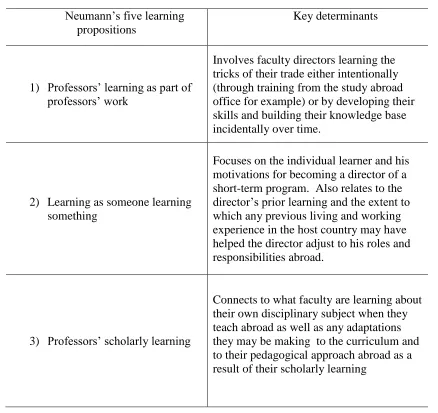
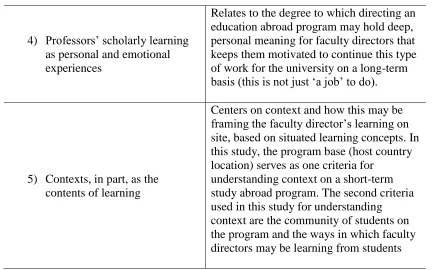
30 part of professors’ work: Professors’ work requires that they learn” (p. 255); 2) “Learning as
someone learning something: To say that someone learns implies that someone is learning
something” (p. 256); 3) “Professors’ scholarly learning: to understand a professor’s
scholarly learning is to understand how she learns what she professes through her practices of research, teaching, and service: her subject matter knowledge and ways of knowing unique to it” (p. 258); 4) “Professors’ scholarly learning as personal and emotional experience: For many professors scholarly learning holds personal meaning. It may be intensely emotional” (p. 261); and 5) “Contexts, in part, as the contents of learning: Professors’ learning happens in contexts that shape what they learn (content). Yet they can also learn new ways to think about these contexts, thereby influencing what they learn in them” (p. 263).
31 with Neumann’s conceptual propositions on faculty learning by connecting the learning process of individual faculty members with the unique context in which they are working, the study abroad program setting, which includes the students on the program as well as the geographical environment.
Each of these five propositions comprise Neumann’s conceptual framework (2009) on faculty’s scholarly learning and will be analyzed in more depth in chapter two. This study helped build on Neumann’s work by extending it beyond the campus context to the field of study abroad.
With Neumann’s work on faculty learning providing an overarching framework for this study, I also incorporated Goode’s typology (2007) and its four dimensions (logistical, intercultural, academic, and “Dean of Students”) to serve as an analytical framework. In so doing, I could better gauge whether Goode’s dimensions (2007) of the faculty director of a short-term education abroad program continue to fit neatly within that rubric or whether new dimensions that build on this typology emerged from the findings in this study.
Significance of the Study
32 operating without the wide variety of student support systems often in place on the home campus, such as counseling centers and the student health clinic (Burch, 2009). This researcher only found three studies that examined faculty specifically in the context of delivering a study abroad program (Rasch, 2001; Strang, 2006;Watts, 2015).
Since learning is not restricted to students only, the ontological and epistemological shifts that faculty directors of short-term study abroad programs may experience as they adjust to the responsibilities of their role were worth exploring, especially with regard to how their learning relates to their professional development and understanding of international education in general. What insights can veteran summer faculty directors offer based on what they have learned along the way? Then, using this insight, how can a university’s study abroad office better prepare new faculty directors for the complex roles they will assume when they direct a program abroad?
Research Methodology
33 focus on understanding the learning experiences of faculty who direct international programs. With that approach in mind, a basic qualitative research design was ideal for the study of processes and how people construct meaning through their experiences (Merriam, 2014).
Using criterion-based sampling, I conducted semi-structured, open-ended interviews of sixteen faculty directors in various four-year private and public colleges and universities in the southeast. Each interview adhered to an interview protocol and standard interviewing strategies for basic qualitative research (Mertens, 2014). In addition to individual interviews, I also collected data from a post-interview reflection questionnaire that the faculty
participants were asked to complete. A pilot study of three faculty members, drawn from one of the selected universities in this study, who all had significant experience directing summer study abroad programs helped me refine and clarify the interview questions and ensure content validity (though the faculty in the pilot study were not interviewed afterwards for the dissertation study). Data analysis consisted of two–cycle coding, analytic memoing, and the use of triangulation to boost the trustworthiness of this study as described in more detail in chapter three.
Chapter Summary
34 their internationalization efforts; (c) faculty who lead short-term programs are facing more complex responsibilities related to student health and safety, such as complying with university protocols on sexual assault and Title IX, working with students who may exhibit mental health problems, or responding appropriately to a major security incident abroad, while attempting to deliver on the programs’ intercultural and academic outcomes, and (d) as universities become more legally accountable for delivering a safe experience for their students, whether they are on campus or enrolled in a study abroad program, faculty directors must shoulder the burden, while often lacking key resources on-site such as a counseling center for students, residential life staff, peer support groups, etc. The research questions in this study incorporated both Goode’s typology (2007) for the analytical framework as well as Neumann’s (2014) five propositions on faculty learning, especially the last proposition on context-driven learning (which is related to situated learning theory), as the conceptual framework to further support these context-driven queries.
The significance of the study is explained in light of the perceived shortcomings of training of new faculty directors by U.S.-based study abroad office staff. With the increased responsibilities and complexity of the faculty director position, one would anticipate more comprehensive training strategies than disseminating a faculty handbook or holding an occasional meeting to discuss the program budget, logistics or student health and safety concerns. Yet while it is incumbent for education abroad administrators to provide
36 CHAPTER TWO: LITERATURE REVIEW
To lay the groundwork for my study on the learning process of faculty directors of short-term study abroad programs, this chapter is divided into two sections, beginning with a survey of studies on the myriad responsibilities, ranging from academic to administrative, of faculty directors who lead undergraduate students on a short-term study abroad program. Adapting Goode’s (2007) typography of the various roles of a faculty director, I will briefly investigate the ways in which the scholarly literature has interpreted these roles (and in select cases, tested them empirically in different settings), by highlighting the most salient points, as well as any perceived limitations or shortcomings from the findings of these studies. In this way, I can provide the reader with a more robust understanding of the complex
challenges that faculty directors may encounter when leading a short-term study abroad program.
In the second section, I will delve into Neumann’s (2009) conceptual framework on the faculty, which offers rich insights and a more holistic understanding of the personal and professional motivations of faculty members themselves, in relation to their learning (i.e., learning from the ‘inside out’). Neumann’s research on the scholarly learning of faculty as articulated through her five propositions on faculty learning, mentioned briefly in the first chapter, constitutes the conceptual framework for this study.
37 abroad programs learn to adapt to the realities they confront overseas, which can be quite different from their typical work routine on their home campuses in the U.S.
Faculty Roles in Study Abroad
Despite the strong scholarly interest in the phenomenon of internationalization at the university level (de Wit, 2002; Stromquist, 2007), as well as the emerging recognition of the vital role played by faculty in these efforts (Bedenlier & Zawacki-Richter, 2015; Bond, Qian & Huang, 2003), there remains a noticeable lack of research on faculty involvement in one particular domain: education abroad (Savishinsky, 2012). This is surprising in that the opportunity to direct a study abroad program represents a unique and integral way for faculty to impact students and is often touted as one of the most prominent indicators of a
university’s commitment to internationalization (Dutschke, 2009; Green & Olson, 2003) at least from a U.S perspective. As expressed by Janeiro, Fabre & Rosete (2012), other countries and regions outside of the U.S. have not incorporated the faculty-led study abroad model in their internationalization efforts, focusing instead on increasing traditional student exchange agreements, recruiting international faculty, engaging in global research projects, and establishing joint degree programs, most of which are driven by economic incentives and the desire to boost competitiveness along with the institution’s global ranking (Green, 2013; Huang, 2007).
38 Watts, 2015), the findings are based on a one-unit case study sample circumscribing any generalizable conclusions that could be drawn from them. Nonetheless, the research on short-term study abroad programs conducted by Rasch (2001), Strang (2006), and Watts (2015) warrants special attention in this study due to their specific focus on faculty who lead these international programs and how they perceive their role as directors.
Since there was no prior data available in the literature that connected to her research questions, Rasch (2001) used grounded theory in a qualitative research design to seek
emerging themes that would enable theory development. Her exploratory study investigated fifteen faculty directors in a private, research university in the south to gauge their
perceptions of the value of study abroad. Noting the escalating attention paid to the internationalization efforts of U.S. institutions of higher education, Rasch addressed a significant gap in the literature on international education, faculty directors and their experience managing these short-term programs, as well as how this experience impacted them personally and professionally. Rasch’s study is significant in that it was the first of its kind to center its focus on the role of a faculty director of a study abroad program, setting a baseline for further study of faculty directors in the context of education abroad.
Rasch’s Study
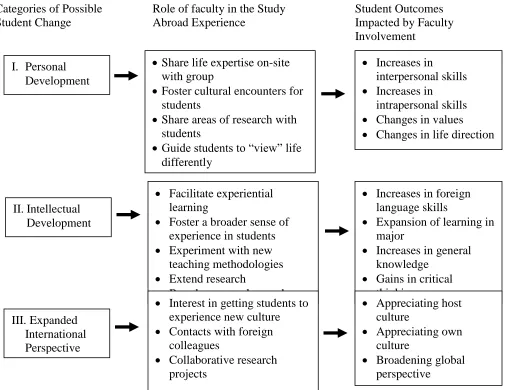
40 Categories of Possible Role of faculty in the Study Student Outcomes
Student Change Abroad Experience Impacted by Faculty Involvement
Figure 1. Rasch’s model (p. 117, 2001) of faculty influence on students in the study abroad experience (evolving process). I. Personal Development II.Intellectual Development III.Expanded International Perspective
Share life expertise on-site with group
Foster cultural encounters for students
Share areas of research with students
Guide students to “view” life differently
Facilitate experiential learning
Foster a broader sense of experience in students Experiment with new
teaching methodologies Extend research
Broaden research agenda Interest in getting students to
experience new culture Contacts with foreign
colleagues
Collaborative research projects
Increases in
interpersonal skills Increases in
intrapersonal skills Changes in values Changes in life direction
Increases in foreign language skills
Expansion of learning in major
Increases in general knowledge
Gains in critical thinking
Appreciating host culture
Appreciating own culture
41 One noteworthy finding in Rasch’s study was “the capacity of faculty to share their knowledge, foster, and guide cultural experiences [which] has a direct impact on the student group experience as well as the building of self-awareness and shifting life values.” (p. 118). In revealing their perceptions of what it meant to direct a study abroad program, the faculty respondents used similar terms to describe their roles: parent, counselor, professor,
administrator, caretaker, mother/father figure, cultural guide, friend, etc. Rasch also discovered a lack of institutional commitment toward study abroad from their home university, according to the majority of faculty respondents in her pioneering study. The faculty participants who raised this complaint also decried the insufficient resources at the home institution, human and capital, to support their study abroad programs, which they felt revealed a devaluing of their position. The issue of whether faculty directors feel supported by the study abroad office at their home institution is an important one as it relates to faculty training and development. In that regard, Rasch’s study was instrumental in the way it revealed faculty discontent with the level of preparation they received from the study abroad office at their home institution.
Lastly, faculty respondents in Rasch’s study noted one of the key motivating factors for leading a short-term program was the opportunity to combine the academic components of their program with the host country setting in innovative ways. This speaks to the