Western University Western University
Scholarship@Western
Scholarship@Western
Electronic Thesis and Dissertation Repository
6-24-2016 10:30 AM
Understanding Collaborative Sensemaking for System Design —
Understanding Collaborative Sensemaking for System Design —
An Investigation of Musicians' Practice
An Investigation of Musicians' Practice
Nadia Conroy
The University of Western Ontario
Supervisor Dr. Victoria Rubin
The University of Western Ontario
Graduate Program in Library & Information Science
A thesis submitted in partial fulfillment of the requirements for the degree in Doctor of Philosophy
© Nadia Conroy 2016
Follow this and additional works at: https://ir.lib.uwo.ca/etd Part of the Library and Information Science Commons
Recommended Citation Recommended Citation
Conroy, Nadia, "Understanding Collaborative Sensemaking for System Design — An Investigation of Musicians' Practice" (2016). Electronic Thesis and Dissertation Repository. 4031.
https://ir.lib.uwo.ca/etd/4031
This Dissertation/Thesis is brought to you for free and open access by Scholarship@Western. It has been accepted for inclusion in Electronic Thesis and Dissertation Repository by an authorized administrator of
i
Abstract
There is surprisingly little written in information science and technology literature about the design
of tools used to support the collaboration of creators. Understanding collaborative sensemaking
through the use of language has been traditionally applied to non-work domains, but this method is
also well-suited for informing hypotheses about the design collaborative systems. The presence of
ubiquitous, mobile technology, and development of multi-user virtual spaces invites investigation
of design which is based on naturalistic, real world, creative group behaviors, including the
collaborative work of musicians. This thesis is considering the co-construction of new (musical)
knowledge by small groups. Co-construction of new knowledge is critical to the definition of an
information system because it emphasizes coordination and resource sharing among group
members (versus individual members independently doing their own tasks and only coming
together to collate their contributions as a final product). This work situates the locus of creativity
on the process itself, rather than on the output (the musical result) or the individuals (members of
the band). This thesis describes a way to apply quantitative observations to inform qualitative
assessment of the characteristics of collaborative sensemaking in groups. Conversational data were
obtained from nine face-to-face collaborative composing sessions, involving three separate bands
producing 18 hours of recorded interactions. Topical characteristics of the discussion, namely
objects, plans, properties and performance; as well as emergent patterns of generative, evaluative,
revision, and management conversational acts within the group were seen as indicative of
knowledge construction. The findings report the use of collaborative pathways: iterative cycles of
generation, evaluation and revision of temporary solutions used to move the collaboration forward.
In addition, bracketing of temporary solutions served to help collaborators reuse content and
offload attentional resources. Ambiguity in language, evaluation criteria, goal formation, and group
awareness meant that existing knowledge representations were insufficient in making sense of
incoming data and necessitated reformulating those representations. Further, strategic use of
affective language was found to be instrumental in bridging knowledge gaps. Based on these
findings, features of a collaborative system are proposed to help in facilitating sensemaking
routines at various stages of a creative task. This research contributes to the theoretical
ii
the design of systems for supporting these activities. By studying an environment which forms a
potential microcosm of virtual interaction between groups, it provides a framework for
understanding and automating collaborative discussion content in terms of the features of dialogue.
Keywords
Computer Supported Collaborative Work, Sensemaking, System Design, Music Information
iii
Acknowledgements
I would like to thank Dr. Victoria Rubin, my thesis supervisor, for her expertise, patience and
enthusiastic support of this project. I am grateful to Dr. Diane Rasmussen and Dr. Grant
Campbell for assisting me with their feedback and advice. Thanks to my friend Charles for his
insight and help. I am grateful to the family of Christopher Dixon for awarding me grants that
helped make the writing of this work possible, and to Shawn MacDonald for his invaluable
enthusiasm and passion for music, and in helping me arrange the subjects for this study. Thank
you to the Associate Dean of the faculty, Dr. Susan Knabe for helping me schedule my work and
being a source of support. I would also like to thank my parents who have tirelessly encouraged
me throughout my life.
Finally, I would like to thank the talented and eager musicians who participated in this project.
They are at its heart, and I am very grateful for their enthusiasm, friendliness, and tolerance of
iv
Table of Contents
Abstract ... i
Acknowledgements ... iii
Table of Contents ... iv
List of Tables ... vii
List of Figures ... ix
List of Appendices ... x
Glossary of Terms ... xi
Chapter 1 ... 1
1 Introduction ... 1
1.1 Dissertation Structure... 1
Chapter 2 ... 2
2.1 Problem Statement ... 2
Chapter 3 ... 4
3.1 Justification of the Problem ... 4
Chapter 4 ... 6
4.1 Rock Lottery ... 6
4.2 Information Behaviour of Musicians ... 6
Chapter 5 ... 8
5 Literature Review ... 8
5.1 Sensemaking ... 8
5.2 Creativity and Music ... 16
5.3 Computer Supported Collaborative Work ... 20
v
6.1 Research Questions ... 31
Chapter 7 ... 33
7 Data Collection ... 33
7.1 Participants and Recruitment Strategy ... 33
7.2 Task Description ... 35
7.3 Research Setting ... 36
7.4 Post-Session Interviews ... 38
Chapter 8 ... 39
8 Data Analysis ... 39
8.1 Conversation Analysis ... 41
8.2 Referential Structure Analysis ... 41
8.3 Qualitative Analysis with Collaborative Sensemaking... 43
8.4 Justification ... 44
8.5 Summary of Analysis ... 47
Chapter 9 ... 49
9 Findings ... 49
9.1 Quantitative Findings ... 49
9.2 Transcript Summary ... 50
9.3 Conversational Categories ... 51
9.3.1 Generating Dialogue ... 51
9.3.2 Evaluation Dialogue ... 52
9.3.3 Management Dialogue ... 53
9.3.4 Revision Dialogue... 54
9.3.5 Conversation Analysis Summary ... 55
vi
9.4 Referential Structure Analysis ... 60
9.4.1 Coding Example ... 60
9.4.2 Reference Metrics ... 61
9.5 Reference Typology and Trends ... 63
9.5.1 Performance ... 66
9.5.2 Performance Summary ... 67
9.5.3 Properties ... 69
9.5.4 Property Summary ... 70
9.5.5 Objects ... 72
9.5.6 Object Summary ... 74
9.5.7 Plans ... 76
9.5.8 Plans Summary ... 78
9.6 Quantitative Findings Summary ... 80
Chapter 10 ... 82
10 Discussion and Qualitative Findings... 82
10.1 Design Implications ... 83
10.2 Problem Pathways ... 85
10.2.1 Solutions and Plan Structures ... 94
10.2.2 Notations and Information Extraction ... 95
10.2.3 Summary of Problem Pathways ... 97
10.3 Awareness and Sensemaking ... 97
10.3.1 Affect Awareness ... 99
10.3.2 Activity Awareness ... 105
10.3.3 Scripts and Timelines... 108
vii
10.4 Language and Sensemaking ... 110
10.4.1 Ambiguity ... 111
10.4.2 Bracketing of Cues... 114
10.4.3 Ontology ... 116
10.4.4 Inferred Topics ... 118
10.4.5 Summary of Language and Sensemaking ... 120
10.5 Collaborative Learning and Sensemaking ... 121
10.5.1 Frame-based Communication ... 125
10.5.2 User Profiles ... 128
10.5.3 Summary of Learning and Sensemaking ... 129
10.6 Discussion Summary ... 129
Chapter 11 ... 131
11 Conclusion ... 131
11.1 Contributions ... 132
11.2 Study Limitations and Future Work ... 134
References ... 138
Appendices ... 148
viii
List of Tables
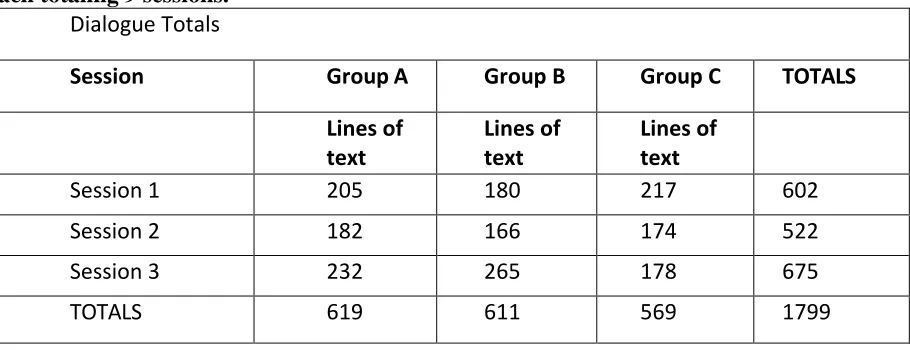
Table 1: Transcript Dialogue Totals ... 50
Table 2: Counts of Dialogic Acts ... 56
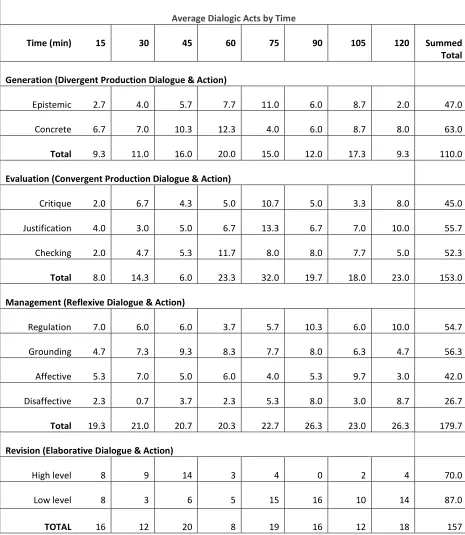
Table 3: Average Counts of Dialogic Acts Across Time. ... 58
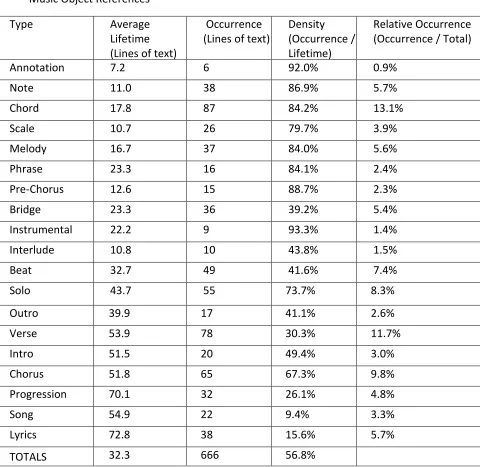
Table 4: Reference Totals ... 64
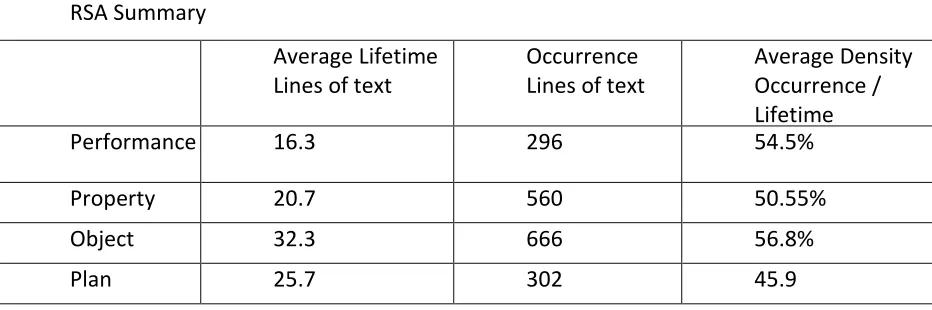
Table 5: Average Lifetime, Occurrence and Average Density ... 64
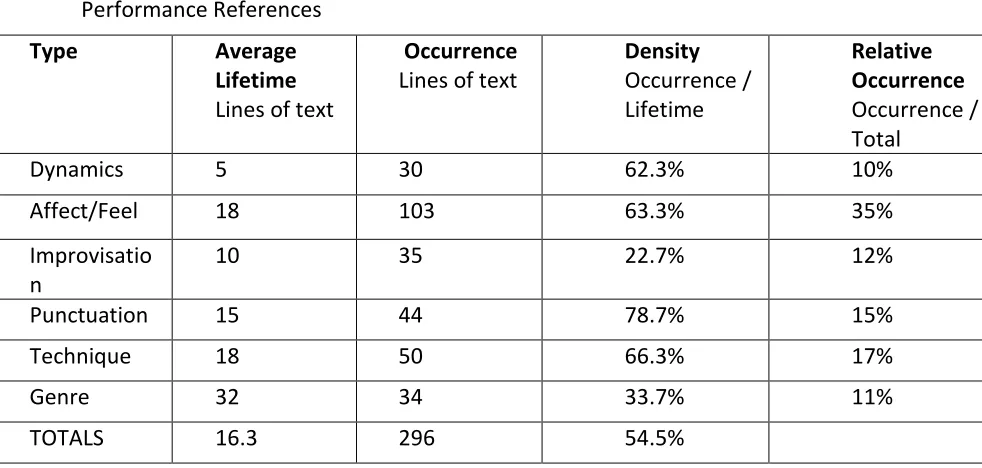
Table 6: Performance Reference RSA Metrics. ... 68
Table 7: Property Reference RSA Metrics. ... 71
Table 8: Object Reference RSA Metrics... 74
Table 9: Plan Reference RSA Metrics. ... 78
Table 10: Problem Solving Summary ... 97
Table 11: Affect and Activity Awareness Summary. ... 110
Table 12: Language Summary. ... 120
ix
List of Figures
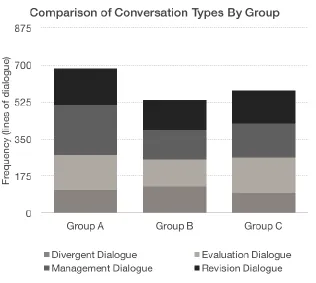
Figure 1: Histogram summarizing dialogic acts ... 56
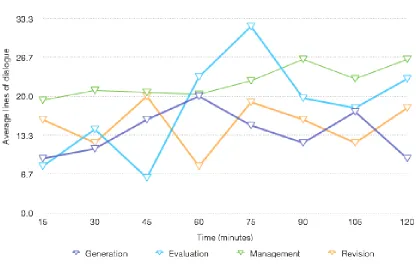
Figure 2: Average frequency over time of dialogue categories. ... 59
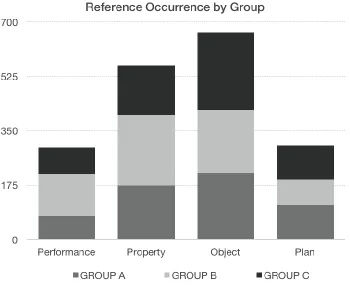
Figure 3: Histogram of occurrence totals ... 65
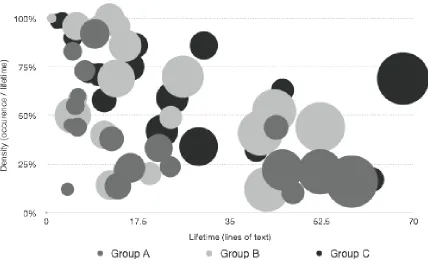
Figure 4: Bubble plot of performance references. ... 68
Figure 5: Bubble plot of property references ... 70
Figure 6: Bubble plot of object references. ... 75
Figure 7: Bubble plot of object references e. ... 79
x
List of Appendices
13.1 Group A Dialogic Acts ... 148
13.2 Group B Dialogic Acts ... 149
13.3 Group C Dialogic Acts ... 150
13.4 Interview Questions ... 151
13.5 Consent Form ... 152
xi
Glossary of Terms
API Application Programming Interface
CA Conversation Analysis
CSCL Computer Supported Collaborative Learning
CSCW Computer Supported Collaborative Work
Cardinality RSA finding that is defined as the number of references of overlapping lifetimes in
a conversation segment. Used as a heuristic for complexity inherent in the
collaboration
Density RSA metric defined as the occurrence divided by lifetime. It is a measure of the
relative importance of a reference in a conversation segment
Frame Concept from HCI theory of sensemaking. Frames are the placeholders for new
data, and the means through which knowledge is organized and communicated
Groupware Software designed to facilitate collective work by a number of different users
HCI Human Computer Interaction
IE Information Extraction
Lifetime RSA metric defined as the number of lines of conversation text from the first
mention of a reference type to the last. It is a measure of the overall relevance of
reference.
LIS Library and Information Science
MIB Music Information Behaviour
MIR Music Information Retrieval
NLP Natural Language Processing
Object RSA reference defined as the content of conversation in terms of musical ‘things’
(nouns). For example, chords, notes, verse, etc.
Occurrence The raw frequency of a reference type
Ontology A definition of the types, attributes and relationships of the entities that comprise a domain
Performance RSA reference type defined as directives and instructions given between members
xii Property
Reference
RSA reference type defined as characteristics (adjectives) of RSA objects
Unit of RSA analysis which is a term in the discourse, consisting of plans,
properties, objects, and performance
Rock Lottery Local rock music fundraising event in London
1
Chapter 1
1 Introduction
The overall goal of the current research is to address the problem of designing information
systems which have the capacity to support creative human tasks. The study builds on the
premise behind Computer Supported Collaborative Work (CSCW), which is a design field aimed
to facilitate group work through the application of computer technologies, driven by
ever-changing contextual and environmental constraints (Schneider et al., 2010). Using field
observation, and a systematic quantification of the content of group conversation, the study
formulates a comprehensive description of collaborative sensemaking of practitioners, while
accounting for contextual factors that steer the process. Although utilizing data- gathering
methods similar to other studies of collaborative songwriting, the current approach differs in that
it deals with short-term outcomes over observations in close succession. It also utilizes measured
patterns in language to hypothesize about sensemaking routines with the goal of facilitating
sensemaking within a collaborative system.
1.1 Dissertation Structure
This dissertation begins with a background and introduction to the information behaviour of
musicians in relation to creating music. There is a timely problem intrinsic to this research of
how to investigate collaboration in a real-world setting as a way to address and inform the design
of collaborative applications. Previous research in sensemaking activities, creativity, and
collaborative applications are discussed, while focusing on the lack of investigation regarding
amateur musicians and the need for more robust, expressive collaborative technologies.
A three-pronged methodology is described, designed to capture and quantify user discussion as a
way to learn about sensemaking, and thus inform the design. A model of the interaction is
outlined, and the results are assessed with a concentration on sensemaking processes, together
with possible design intervention used to overcome them. For each qualitative finding, system
design feature(s) are proposed to address the exhibited needs of collaborators, and to help capture
2
Chapter 2
2.1 Problem Statement
Thus far, only scant research exists from information science about how the design of
collaborative tools is used to support the collaboration of creators. This gap exists despite the fact
of current rapid development of technological resources and tools to support collaboration. As
has been demonstrated in prior research, language behaviour offers many insights about the
nature of collaborative practice in non-work, leisure domains. Building upon this research,
methods of language analysis inform the hypothesis of this dissertation, with the focus on
designing collaboration technologies and systematizing the study of collaborative music making
practices.
In the climate of development of web technologies which support collaboration, a change is
occurring in the practice of those musicians who rely on digital representations to exchange and
develop across virtual spaces. One of the objectives of Music Information Behaviour (MIB) is to
understand, through the incorporation of empirical user studies, how information systems can be
brought into alignment with users' needs (Cunningham et al., 2003). Information behaviour may
indeed be extended to include not only how music is used and searched, but how it is created as
well. It is pertinent to ask whether collaborative systems can be improved to support activities
aimed at producing content of a creative nature. The production process, it is hypothesized,
provides a wealth of useful information in the form of collaborative interaction. As this
interaction is made explicit, through language analysis for instance, it provides an abundant
source for describing the music itself.
Collaborative music-making refers to the individual and social practices through which a piece of
music is conceived, negotiated, and codified. The findings, although specific to the music
domain, carry into collaborative problem-solving as a creative task in general, challenging
models of how groups and communities innovate and progress over time. In many cases, today’s
musicians depend on digital representations of music which are adapted, edited and shared using
various software tools. The question of how these competencies can be more effectively
cultivated and assessed at the collective level presents a major challenge (Tan et al., 2014).
3
collaborative systems may be fundamentally at odds with the requirements of such systems to
support important aspects of creativity (Eaglestone & Ford, 2007). The creation of music (and
performance) may be facilitated through the development of more specialized computer-
supported collaborative applications, ones which adopt a transparent and mediating function in
the musical discourse between creators and their musical experiences. As information technology
evolves, so has access to music, and so have capabilities for managing, preserving, and retrieving
musical information (Laplante & Downie, 2006). The field of music information systems suffer
from a scarcity of viable and robust tools both to enhance these competencies, and to track the
work of composers. The primary problems addressed in the current research arise from current
information system designs, particularly with respect to those systems used to structure
interaction as a way to support human tasks. Work on digital representations remains a highly
individualized practice. The result is that the capacity for true collaborative engagements and
peer negotiations in the course of making music is noticeably limited.
This thesis considers the co-construction of new, musical knowledge by small groups. It is
critical to information system because it emphasizes coordination and resource sharing among
group members, who come together to collate contributions into a final product. The aim is to
improve upon the present situation by adopting a normative perspective which is informed by
Computer Supported Collaborative Work (CSCW), Human Computer Interaction (HCI), and
sensemaking theory. The objective is to establish the baseline for theorizing about collaborative
products involved in collaborative music-making. I identify key dimensions of real world
practices, including modes of communication and conversational topics which relate to
sensemaking, and propose the theoretical scaffolding for computer-mediated collaborative
engagements. The scaffolding is a dialogic framework for characterizing, fostering, and
assessing roles of amateur musicians in the context of collaborative problem-solving. I propose
system features based on findings, which capitalize on the products of collaborative interaction.
Using a three-pronged method of conversational analysis, referential structure analysis and
qualitative analysis on datasets consisting of field observation, conversational transcripts and
interviews, I measure and assess patterns of participants’ verbal and musical group activities. A
profile of these trends is provided in regards to how they facilitate sensemaking and creative
4
Chapter 3
3.1 Justification of the Problem
Over the past decade, dissatisfaction has arisen with the limitations of the information seeking
approach to collaborative sensemaking (Case, 2002), and with the limited explanatory power
underlying the concepts, models, and theoretical notions that underpin collaborative problem
solving. The emphasis on collective creativity specifically stems from recent scholarly calls in
the field to move beyond traditional measurements of creativity as an individual mental property
toward a focus on its collective and collaborative aspects—that is, its social and interactional
dimensions. By examining the real-world practice of experienced, non-professional musicians
the study addresses this lack of understanding. It looks at how the products of collaboration, and
the language patterns and behaviours of collaborators, are indicative of sensemaking and
co-construction of knowledge. The goal of this research is to inform the design of collaborative
technologies.
Research in Human Computer Interaction (HCI) has looked for tools which may help facilitate
creativity in problem solving tasks and the composition of novel artifacts. Creative work such as
music production is a cognitive activity operating within environmental conditions (Wiggins,
2007), and is a situated practice governed by rules, objectives, and opportunities for exploration.
The rise in social computing has led to a shift from passive media consumption to cultures of
participation (Blomberg & Karasti, 2013). What is more, the coordination and integration of
collective design rationale and social creativity provides new opportunities in sophisticated
socio-technically mediated collaborative communities. Collaboration patterns unite collaboration
rationale and creativity by acting as “boundary definitions”, allowing generic lessons learnt to be
uniquely modified, extended, and appropriated by individual communities to match the
peculiarities of their situated reality (de Moor, 2012). Tools should, therefore, provide ways to
build the domain knowledge of users by giving access to performances, encouraging sharing of
musical experiences, donating results, and motivating learners through expert feedback (Fischer,
2011). Insights from the HCI domain are incorporated to help understand how design principles
might address complex informational needs within music communities, while recognizing the
ways musicians actively “regulate, elaborate, and substantiate themselves as social agents” (de
5
benefit from technology by empowering them to be not only more productive, but more
innovative. Informing design, for example through enhanced interfaces, allows the exploration of
alternatives, and highlights key portions of the dialogue which capture design decisions involved
in the creation of collaborative products (Hargreaves et al., 2012). By observing group
songwriting behaviours, this study also builds on research of creativity which challenges the
popular stereotype of the creative artist as ‘lone seeker’, and highlights the social nature of
6
Chapter 4
4.1 Rock
Lottery
To conduct the study, I have chosen a setting that is an ideal environment for interfacing with
and observing musicians, collaborating in a live musical enterprise. Here, I briefly introduce the
Rock Lottery event: a local charity event which is an invitation-only music performance show,
organized by an arts organization, whereby 25-35 local rock musicians are assembled at random
into distinct bands. Each band writes several songs over the course of three days, and then
performs the songs at a local venue. The Rock Lottery has been an ongoing and popular event
involving many talented experienced local musicians. Proceeds from the event go to support a
local art gallery. The participants involved represent a cross-section of practicing,
non-professional artists who perform in local bands. It forms the setting for my research and the
avenue for sampling participants, as well as for information gathering and data collection.
4.2 Information Behaviour of Musicians
This is a study about learning the collaborative behaviours of a community in order to create
systems designed to facilitate group sensemaking through the use of these tools. The question,
therefore, hinges on a broader look at the target group, musicians, to property situate extending
knowledge in three areas addressed in the literature. For musicians, technical resources are
viewed as the catalyst through which people manage these needs. However, there is surprisingly
little mentioned in information science research about how these same resources may support the
creation of music itself. Historically, creating music has always been intimately linked, even
synonymous with the human musical experience (Small, 1998). Indeed, it is a relatively modern
phenomenon to view music simply as a reified, externalized “object” that is merely described
and consumed. Notions of creativity have always been interpreted as highly individualistic.
The affordances allowed through collaborative technologies demands renewed investigation to
help steer the development of tools which are able to consume and use these data in productive
ways. Support has increased use of interactive systems and “human in the loop” methods,
modelling how humans perceive content and how to integrate such a model in the development
7
information behaviour in various real-world settings to help to understand MIB (Cunningham et
al., 2003) and collaborative work (Schmidt & Bannon, 2013). A summary of the work by various
researchers reveals a strong correlation among the preferred resources and channels of
information and music information behaviour. Patterns in collaborative experiences have also
been investigated through interviews and observation (Rasmussen & Conroy, 2012). With
multimedia objects, there is often the need to look outside the visual, sonic, or even textual
content and involve human intelligence in the description of media content. Musicians and music
users develop and annotate their own content in new ways, access music from a wealth of web
resources, and integrate it as part of their creation. Products are disseminated to vast audiences to
an extent not before realized. Those persons who wish to explore ways that new music can be
invented outside of traditional commercial channels have demonstrated ingenuity to capture
performances, edit and share content in ways that are gradually redefining norms of music
production (Tanaka et al., 2005). Innovations of this sort yields major implications not only for
the future of the subdomains of music: commercial enterprise, education, and industry — but
also for our concept of what it means to be a creator, and for our perceptions of creativity itself.
In this study, I explicitly concentrate on the pre-development activities which refer to all
activities from idea generation until the implementation of a creative artefact. The creative
process may be conceived of as a series of problem solving and sensemaking exercises, each
requiring the rapid organization of knowledge, synthesizing new data, reshaping beliefs, and
developing routines to achieve a common goal. The information operates on environmental
factors in which the user currently exists. In this environment, generating knowledge, screening,
evaluating and authorizing form the substance of decision making processes across time
(Mintzberg et al.,1979).
Parallels to these ideas have been employed in the theory and practice of library and information
science, as well as CSCW in non-work settings. Factors that constitute barriers or obstacles to
information seeking include lack of specialized resources, a complication or problem that can be
attributed to the specialized nature of a community. Results of these studies are discussed in detail
below. Gaps in research informs the direction of the current study, a study which quantifies and
8
Chapter 5
5 Literature Review
This section includes a literature review relating to the current research in sensemaking, music and
creativity and computer supported collaborative work.
5.1 Sensemaking
Sensemaking as a concept and a term is the product of a period of ongoing evolution of meaning
and use. The concept has migrated from and between disciplines, and has been subsumed within,
for example, the more precise task of information seeking, real world problem solving, and
collaborative search. Most of the current sensemaking research has been focused on helping
individual users make sense of large amounts of information. As it has been adopted in various
domains, the term has undergone the business of morphing from rigid definitions towards
flexible applications depending on the phenomenon under examination.
A body of research in the information science domain has emerged around system users and their
engagement and use of information. In LIS, Sense-making theory creates an insightful picture of
the ways by which individuals make sense of their experiences in problematic situations (Dervin,
1999). Dervin employs the metaphors of situations, gaps, bridges, and uses to depict information
seeking as a process of interaction between operators emerging in the cognitive mental states of
the individual, and actors in the physical world. Gaps refer to questions or information needs that
develop — states of disharmony in understanding and missing links between states. In contrast,
gap-bridging refers to processes of information seeking and use as the construction of a more
proper definition of the situation. Although the Sense-making theory draws heavily on
conceptual formulations, it has nevertheless gained empirical support, which in turn has
strengthened the hypothesis that information seeking is a constructive process based on the
utilization of categories of situations, gaps, and uses. The starting state of the process occurs as a
gap, an anomalous state of knowledge, or an information need. According to Savolainen (2006)
it is the way by which individuals orient themselves in non-work situations and seek information
to facilitate problem solving. The dimension of cognitive versus affective indicates the degree of
9
emphasizes an analytic and systematic approach to problems. On the other hand, the affective
orientation refers to an emotionally laden and unpredictable reaction to issues at hand.
In the Human Computer Interaction (HCI) field, sensemaking is addressed in the context of
individual and group interactions with information systems. It has been viewed as a cyclic
process of finding information based on an initial framework, and organizing information into
categories or refining representations based on new information found. Russell et al. (1993)
employ sensemaking as the process of encoding retrieved information to answer task-specific
questions. Task completion can be described in terms of operations, where each operation
requires particular resources. These can be either internal cognitive resources or external for
information storage. While sensemaking has been modelled as an important aspect of
information seeking activities, discussions of sensemaking have been in the context of individual
information seeking (Paul & Morris, 2011). Within HCI, the related Data/Frame Theory of
sensemaking (Klein, 2006) involves a series of closed loops of populating and reshaping frames
which in turn shape the data. The data/frame theory assumes that meaningful representations,
called frames, define what counts as data and how those data are structured for mental processing (Klein et al., 2006). Whereas frames define and shape data, data can mandate changes to frames.
Cycles of searching for representations and then encoding them is identified as a four stage
process: First there is a search for representations in the part of the sensemaker. The sensemaker
creates representations to capture important regularities in a way that supports the use of the
instantiated representation. Second, representations are encoded it in an appropriate
representation. Third, data-driven representations shift and reduce the cost of the task operations
(Russell et al., 1993). Hence, sensemaking can involve elaboration of a frame (e.g., filling in
details), questioning a frame (e.g., due to the detection of anomalies), or reframing (e.g.,
rejecting a frame and replacing it with another). The data/frame theory proposes
backward-looking processes involved in forming mental models that explain past events and
forward-looking mental simulations that predict how future events will unfold (Pirolli & Russell, 2011).
Thus, sensemaking iterates between the top-down representation instantiations and bottom-up
representation search processes.
Collaborative sensemaking models are useful to delineate the activities at the point between
10
facilitating collaborative work. They help contextualize information in order to create meaning to
address the problem, and are organized into three broad phases: problem formulation, collaborative information seeking, and information use (Karunakaran et al., 2013).
The evolution of the term across disciplines is significant for this study since I utilize elements of
the concepts of sensemaking from both these disciplines. The following discussion will highlight
empirical findings that demonstrate the utility of sensemaking theory as it relates to
understanding group interactions not only in professional occupational arenas, but in leisure
(non-work) domains as well. Its track record in such environments has been useful in pointing to
the function of discourse as a tool for constructing shared meaning within social communities,
bound by common goals. A review of recent research of computer supported collaborative work
and specifically non-work-based applications, is then used to draw connections between ways
that sensemaking methodology can be used in the development of social software and
groupware. I thus address a critical goal of HCI, which is to explore how collaborative
sensemaking can be empirically leveraged to form collaborative instruments that assist members
of groups, using technology as a means of group participation, joint authorship, and identity
construction.
Since the 1970s, Dervin’s writings have pivoted around a central theme—a call to focus on
communication as communication rather than as transmission, and to reduce the disparity between user-oriented research and practice. It has been applied to users, for example, patrons,
audiences, patients, employees, citizens, leaders, and customers, with an emphasis on an instance
of dialogue. The practice of making ideas is what Dervin calls “verbings” (1983) that rise above
the specific noun-based idiosyncrasies of formalized information domains to the universals of
how humans navigate situations. Designing of information is based on the dialectical dance
between nouns and verbs: nouns stand for relatively stable representations of reality—for
example, facts—whereas verbings imply the ways in which these facts are approached as something malleable and designable in a specific context (Savolainen, 1995). The focus on
language is evident in the work of a number of LIS researchers working within the constructivist
paradigm (Talja, 2002), scholars who have put a primary emphasis on discourse as the vehicle
through which the self and the world are articulated, and on the way different discourses enable
11
In collaborative sensemaking the idea is extended outside of the individual. Groups of people
making sense of complicated and dynamic information, must coordinate not just their
information sharing but also their intents, their interpretations, and revisions of past theories
based on newly arriving information. In HCI there has been a recent emergence of collaborative
and social sensemaking systems with a host of problems to address, including issues of common
ground, communication, hand-offs, and coordination. In particular, there is a growing focus on
understanding how teams working in different domains shift their attention individually, and as a
group, to handle the sensemaking tasks (Pirolli & Russel, 2011).
DuPreez and Fourie (2010) looked at users in an occupational context with the aim of developing
a framework of the collaborative behaviour of engineers. Theoretical models which are
applicable to a study of this user group were analyzed, in particular Leckie, Pettigrew and
Sylvain’s general model of the information seeking of professionals (1996). The influence of
sensemaking rests primarily in its linkage of the definition of information use to the user’s
situation. Context of behaviour was found to be understood within more narrow boundaries of
social norms, which sets the parameters of acceptable standards and codes of behaviour.
Although social norms do allow for a degree of social control, they also provide some assurance
that people will behave properly, creating a framework within which members of a small world
maintain their sense of order and balance. Thus, even though the boundaries of world are set by
social norms, most members nonetheless feel disinclined to cross them (Huotari & Chatman,
2001).
Other workplace studies have shifted the focus from individual to collaborative sensemaking to
examine the phenomenon in emergency room settings, where nurses do not simply provide an
answer, but evoke past memories and re-contextualize them to apply to the problem
(Karunakaran et al., 2013). Both the charge nurse and the attending physician are able to share
frames of reference and understand when actors interactively make sense of the sought
information that is fragmented and messy (Reddy, et al., 2010). These sensemaking processes
thus give facts and experiences meaning, making the underlying information more salient—a
result which, in turn, could lead to generative outcomes. Incidental forms of information
behaviour emerge from an inclusive understanding of those practices. Here, a constructivist and
12
factors in the environment. Participants in a clinical care setting position themselves in ways that
justify certain forms of information seeking and giving.
In HCI, there is a prevailing “user-centered” approach to information research, based on an
implicitly systems-centric perspective (Julien, 1999). Sensemaking is not an outcome, but a
process of authoring—one which is ongoing, social, and grounded in identity construction
(Weick, 1995). Collaboration on creative, problem solving communication follows predictable,
repeated structures. These are structures which provide a framework for discussing
sub-problems, associated processes, and sequencing information (Shah, 2012). In terms of design,
such a rule-based structures integrated in a messaging system can aid information users.
Weinberger et al., (2013) studied the various ways students make sense of algebra lectures. In this
case, sensemaking was the central process by which students construct personal meanings for
phenomena they experience. Results show the importance of how their sensemaking practices
influence what they might learn from the lecture, and identified three types of sensemaking
frames: content-oriented framesto organize data related to the mathematical content of the
lecture; communication-oriented framesrelated to the instructor’s presentation and delivery; and
situating-oriented framesto related to the purpose that the content and communicational aspects
serve in the class (2013). A relationship is drawn between the choice of frame, the students’
sensemaking practices, and in turn, the potential missed opportunities for learning from the
lecture. The idea of a sensemaking frame is particularly useful since it helped to specify aspects
of attention during the learning process, and anticipate categories of meaning that are constructed
along the way.
Since its inception, sensemaking and design has been focused on how to influence technological
output, particularly in human computer interaction research (Dervin & Naumer, 2009). Research
emerging in 1993 from the Computer-Human Interaction special interest group from the Palo
Alto research centre emphasized how to use and promote sensemaking through interface
development. This approach focused on information retrieval according to well-defined work
tasks. Individual characteristics of information seekers, as well as socio-cultural determinants of
information seeking, seem to deserve closer attention than addressed in sensemaking theory.
Using sensemaking theory as a lens to observe and analyze the decision making behaviour of
13
Muhren, et al. (2008) provide a concise set of design premises that have been developed for
dynamic emergency response management information systems. The authors found that
management is constantly acquiring and processing information from a variety of informal and
formal sources that may indicate the possible surge of acute social crisis. Therefore, those
information systems that enable effective and efficient information processing and decision
making within, between and among the organizations are a critically important asset to these
organizations.
Savolainen (1995) has used sensemaking as a way to concentrate on the situational aspect of
information seeking, providing detailed anthropological analysis of everyday life information
seeking situations. These studies have divided the environment of information users into a set of
preconditions which shape behaviours of insiders and outsiders, and purposive and
non-purposive information behaviour for making sense of a problem situation (Savolainen, 1995).
Discursive positioning gives LIS researchers new insight into the social practices within which
everyday life information seeking takes place. In particular, positioning offers a glimpse into the
ways that information needs come to be constructed among participants, and how those
constructions invite or discourage information seeking or giving (Prigoda & McKenzie, 2007).
Sometimes, user behaviour is examined as it naturally occurs; sometimes it is examined in the
context of specific design tools. Different operations during sensemaking require different
cognitive and external resources, and representations are chosen to reduce the cost of information
processing. The power of these representational shifts is generally under-appreciated, and invites
studies to explain how externalization of representations may facilitate sensemaking.
A movement has emerged to push sensemaking research out of the workplace altogether. This
concern is not new within LIS circles, even identified as far back in 1974 (Talja & Hartel, 2007),
with a presentation of so-called “life information” research which includes discussions of the
information needs of select groups. The discussion turns to certain major contributions of
non-work information seeking, also called citizen information seeking, previously overshadowed by analysis of professional occupations. These activities take on great significance, particularly
when one acknowledges the ubiquitous nature of technology in everyday communication.
Non-work settings have become saturated with collaborative-type technologies; examples include
14
mixed reality environments. Methods for understanding sensemaking theory application span
both qualitative and quantitative approaches while engaging with and observing the non-work
practices of a diverse blend of communities; for example, domestic and parenting (Massimi et al.
2012; Rode, 2009;), children and youth (Barkhuus & Lecusay, 2012), leisure (Durrant et al.,
2012; Szymanski et al., 2008), and gaming (Crabtree et al., 2007; Nardi & Harris, 2006). The
basis of the discussion of life information is the identification of what information is required for
successful living in every sense, from basic survival to higher-order emotional and
self-realization needs. Life information, therefore, includes a broad range of potential areas of
exploration which do not necessarily demand individual justification apart from self-evident
psychological and socially significant everyday life needs. Understanding sensemaking as a
function of physicality, affect, and as a component of information creation is promising in that it
provides potential generalizability to domains which themselves rely on actions as a component
of information behaviour and creative authorship.
In his study of theatre professionals, Olsson (2010) developed a more holistic approach of
information behaviour which acknowledges the complexity of sensemaking as more than the
problem-solving behaviour of individuals, but as an embodied, social process, involving emotion
as well as rationality. Rather than a series of isolated encounters with information sources, his
participants reported the continuous nature of their relationships. Individuals’ encounters with
information sources, Olsson concluded, are built on previous experiences which helps to foster
constructions of the dramatic text and other informants. In this case, professional lives are based
on the ability to embody their knowledge: they need to manifest their understanding in the
physical world as physical actions in a physical space. At the same time, professional designers
need to do this through set and costuming, and directors through “blocking” the movements of
their actors, constructing the action to suit the confines of the space.
As yet, no studies have addressed music as a design phenomenon in its own right. The field of
music is extremely diversified, thus requiring an approach which that accounts for its many
contexts and communities of practice. A generalizable characteristic as a leisure activity is that it
takes on informal learning characteristics, with amateurs and professionals accessing data and
materials through the Internet. Making music also necessarily involves physical engagement as
15
interviews informed by sensemaking have been used to study various information-creating
behaviours such as creating web-based magazines and newspapers, online media libraries, and
Wiki articles (Koh, 2013). Applying various information sources as a method of learning has
been noticed in the context of information creation and remixing. Information creation is
postulated as one of the most complicated information behaviours, since intensive information
seeking and use occur simultaneously (Koh, 2013). In spite of the current widespread practice of
information creation by young people, little research exists to illuminate how creative users are
engaged in creative information behaviour or how they make participatory contributions to the
changing information world. Koh’s study shows remixing as the creative reuse of information in
order to produce new information. Previous studies on youth content creation identified that
remixing is prevalent among today’s youth regardless of gender, age, and socio-economic group
(Lenhart & Madden, 2007). To create and publish reliable content, young people seek
information from multiple sources and determine its accuracy (Koh, 2013).
Koh’s findings illustrate the process of information creation, including content development,
organization, and presentation, as well as noticeable patterns by youth such as visualizing,
tinkering, and gaining a sense of empowerment. Creating information on the web includes
identifying relationships between information pieces, connecting them with links, and
developing categories of information so that people can navigate interactively. The act of
remixing consists of a combination of skills such as gathering, blending, and recreating new
expressive materials, and suggested and novel type of information behaviour applicable to
technology in the new millennium (Lenhart & Madden, 2007).
As with theatre professionals, a principal attraction of studying creative behaviour has been the
opportunity it has afforded to explore the role of affect in their sensemaking processes.
Information researchers have tended to regard affective factors as at best only an annoying
interference with effective application of cognitive skills to information retrieval and, at worst,
the primary barriers to information retrieval (Olsson, 2010). Previous research has reported that
youth experience both positive and negative feelings when they interact with information in the
digital environment. Young people feel confident, comfortable, and familiar with information on
the web. These feelings include a sense of empowerment, a sense of ownership of the innovation
16
also experience anxiety and uncertainty, or and express difficulty using information in the digital
environment (Bowler, 2010). The studies described above use sensemaking as an analytical
framework applied across many domains including art, leisure, and ill-defined problem solving
scenarios. As yet, no studies have addressed music as a similar design phenomenon, a
phenomenon which also necessarily involves physical engagement, as well as potentially new
constructions based on past experience.
5.2 Creativity and Music
Creativity and innovation are increasing sought after and desired in many parts of our lives. The
value of creativity is recognized in many areas including science and technology, social
development, education and the arts. Information technologies support the generation of
knowledge by enabling rapid access and processing of information at a global level, and there is a
drive to research and develop technologies to support growth in creative fields. However, there is
often confusion between tangible benefits of technology and the novelty of unfamiliar and
sophisticated applications.
Creativity does not simply describe a particular kind of individual action but the way in which
such action is recognized and acknowledged (Burnard & Younker, 2004). Music making is
necessarily a collective process, though some actors have more creative roles than others. There is
a dearth of research on the creative process of music making, and few studies investigate the
factors that inspire music composers or explore how initial ideas are synthesized into musical
scores and products. Investigation is needed in several areas: How do composers begin a
composition? Are they being influenced by factors outside of music, and how conscious are they
of these influences? What representations do composers rely upon during the creative process? If
the locus is with the individual, it is necessary to consider how to measure the capacity for
creativity, such as through divergent thinking tasks (Hargreaves et al., 2012). If the locus is on the
product, it is necessary to consider what criteria is used to judge its degree of creativity
(Eaglestone & Ford, 2007).
The body of theories generally referred to as stage theories describe creative work in discrete
17
problem. Illumination is sometimes referred to as the flash of insight when there are signs that the
the solution is soon to come. Incubation is the period when a creator is distanced from the problem
– when conscious work is put on the back burner so to speak. Verification is the stage of
refinement and development (Thorpe, 2007).
Creativity in problem solving processes is marked by innovations which are novel, elegant and
address the requirements of the problem definition. Burnard and Younker (2004) investigated how
individual composing pathways are framed in terms of problem solving and creative thinking,
using a range of datasets to track students’ thinking through talk and reflection on action. The
intention of this work was to help identify difference and diversity in composing and to look
critically at how individual approaches to composition reflect an interplay of activities such as
verification, incubation, preparation and exploration. They argue that problem solving is a crucial
part of the process of learning how to compose. Studies by Collins & Dunn (2011) confirm that
many composers engage in experimentation and problem solving as they write, particularly during
the initial stages of creation. They found that the composer was reluctant to abandon or alter the
main ideas that arose on the first day of creating.
Ill-structured problems are those characterized by their lack of a clear path to the solution, or a
clear problem statement at all (Rosen, 2014). In the case of ill-structured problems frequently
found in music (such as composition and improvisation), the goal of musically creative tasks is to
produce dissociation through the auditory channel. The ‘Eureka moment’ of the composer, which
after further processing leads to the final work, is a moment of dissociation. To be considered
creative, music must take the listener to dissociation through a different neural pathway, for
example, by introducing unusual changes in tempo, tone, or key (Hargreaves et al., 2012). The
related concept of spreading activation postulates that information is stored as a collection of small discrete nodes which are activated by other nodes through links (Collins & Loftus, 1975). A
series of pitches in a tune may activate a tonal system, such as a major key, and the major key may
then activate a happy emotion node (Hargreaves et al., 2012).
For music makers, periods of incubation are focused on creating a piece that leads to an
experience stemming from the mechanics of dissociation. The concept of 'flow' (Csikszentmihalyi,
1996) is another conscious manifestation of dissociation that takes place during the period in
18
incorporates two basic phases: 1) the creative, subjective-intuitive phase, or state of flow, in which
new musical material is produced; and 2) the evaluation of the material on the basis of knowledge
and previous experiences in the context of the composition.
Addressing innovation in songwriting, McIntyre (2008) considers the veracity of the systems
model of creativity which, like other models, may be investigated through qualitative research
methodologies such as verbal protocol analysis. She found substantial evidence of three
components of the systems model: domain, field, and person. Songwriters rely on existing
background knowledge with regard to melody writing, song structure, harmonic and arrangement
components (domain). They also operate within a broader sphere of social influence (fields) which
dictate whether to accept innovations in domain knowledge through a feedback process. Finally,
the limitations on autonomous decision making are constrained through expectations of their roles
as songwriters (persons), and these decisions centre around the basic cognitive practice of
nonlinear parallel processing of multi-categorized information. Folkestad et al. (1998) report
finding two main strategies of composition: horizontal (conceptually completing the composition
in form and content from beginning to end), and vertical (completing the composition in discrete,
fully-formed, consecutive sections). Composers develop their own ideas and then explain them to
peers through both verbal and non-verbal means (including singing, rhythmic speech, non-verbal
imitation of sounds, demonstration of ideas on instruments, and graphic representation of ideas).
These resonate with other findings in that they identify strategies that both conceptualize a
composition as a whole and also involve passing through a series of processes until a composition
is created (Thorpe, 2007).
The choice of musical genre like rock, punk, reggae, or classical is also an important variable in
task design since the freedom to explore and develop new ideas should be an intrinsic part of the
musical tradition. Campbell (1995) focused on the socio-musical aspects of songwriting by garage
bands as a way to access the fundamental “realness” and anti-establishment character of rock
music. She describes the processes of teaching and learning amongst members of the groups, as a
rigorous form of musical transmission that she refers to as “song-getting.” McGillen and
McMillan (2003) assert that the characteristics of a “garage” band (amateur modern rock
ensemble) revealed that participants’ shared drive and focus, and their sense of identity and
19
about why they play and compose together in bands. On the other hand, Seddon and O’Neil
(2003) found that those with prior experience of formal instrumental training tended to adhere to
musical parameters associated with traditional forms and structures which are learned. For this
group, experimentation played less of a role than those who had no formal musical training. They
postulate that, as Webster had proposed, the acquisition of performance skill focuses on
convergent thinking (coming up with a single best solution to a particular problem), while
improvisation and composition focus upon divergent thinking (generating creative ideas by
exploring many possible solutions).
Existing relationships between musicians is a factor of strong intuitive import to collaborative
creation. Wiggins (2007) argue that there is a greater likelihood of transactive communication
between groups of friends than those with no prior relationship, and that communication is
affected by the existence of friendship. Open-ended and creative activities invariably involve tasks
secondary to the creative process, namely, those which function to construct a shared social reality
and maintain mutual engagement. Utilizing an open ended task design allows exploration of the
nature of composition in a holistic sense, without the influence of classroom expectations. The use
of closed, highly-structured creative tasks involving scientific reasoning are not well suited to
understand real group composition (Wiggins, 2007). It is therefore helpful to explore the
significance of divergent thinking for those with limited formal music training, yet with
substantial musical competence and domain knowledge.
Certain research has measured the links between the incorporation of certain technologies and the
qualitative increase in creativity and group learning. Studies of collaborative creativity using
music technologies and of students’ perspectives on composing with MIDI (Burnard, 2008)
establish that technology provides an enabling environment in which learners and teachers enter a
co-participative process around activities (Draper, 2008). There is now general consensus that the
creation of a substantial new work or idea involves problem-solving and reworking over time as
opposed to one “Aha moment” during which the entire piece is suddenly formulated (Thorpe,
2007; Collins & Dunn, 2011; Rosen, 2014).
Research in Human Computer Interaction (HCI) has looked for tools which may help facilitate
creativity in problem solving tasks and the composition of novel artifacts. Creative work such as
20
Wiggins, 2002). Like music itself, the use of systems in music-making involves a sociocultural
and theoretical approach which assesses behaviour with an emphasis on context (Hargreaves et
al., 2012). Therefore, by applying reasoning based on contextual data such as task requirements
and user information, tools provide ways to build domain knowledge by giving access to
performances, encouraging sharing of musical experiences, donating results, and motivating
learners through expert feedback (Shneiderman, 2000, Fischer, 2011). Insights from the HCI
domain help us understand how design principles might address complex informational needs
within music communities, while empowering and encouraging development, education, and
innovation.
5.3 Computer Supported Collaborative Work
Group work is a process of connecting different agents together for a harmonious action. This
exercise often involves bringing people or systems under an umbrella at the same time and place.
During the process, the involved agents may share resources, responsibilities, and goals. Unlike
coordination, and in contrast to cooperation, collaboration involves creating a solution that is
more than merely the sum of each party’s contribution. It involves various agents that may see
different aspects of a problem that no individual has the skills to design, develop, and deliver
alone, and it recognizes that shared artifacts are created over time (Schumann et al., 2013). In
collaborative work that involves creation and design projects, designers require notation that
communicates a sense of accommodation of ambiguous goals, and to clearly communicate
uncertain ideas. Uncertain information finds its way into many typical design scenarios including
co-authoring papers, iterating designs, negotiating plans, or decision-making. Group members
engage in a process through which they can go beyond their own individual expertise and vision
by constructively exploring their differences and searching for common solutions. Passing such
messages among the participants during collaboration based on structured content can be helpful
in distributing the messages with some sort of filtering, or the following rules and roles of a
system, or both.
On a process level, free riding, dominance, group think, or hidden agendas are a few phenomena
in group work that make it a non-straightforward effort (Nunamaker et al. 1997). Research in
information behaviour has examined activities such as information seeking and retrieval from the
21
collaboration rather than in an individual entity (Karunakaran et al., 2013). On a group level, it is
essential to create a shared understanding, define rules for decision-making, and facilitate
interaction in such a way that effective collaboration becomes possible.
CSCWhas emerged from a process of interlinking a range of research activities and
communities. The technological array in which CSCW is embedded is in continual flux. The
World Wide Web, initially launched in December 1989 to facilitate large-scale collaborative
work in scientific research at CERN (Berners-Lee, 1990) underwent extensive development over
the following decades to become a cross- platform facility for communication and interaction
(Schmidt & Bannon, 2013). New technologies with collaborative potentials are emerging,
developed for various purposes. Researchers engaged in their development or application may
join the CSCW movement because they realize that their problems are related to problems
already studied within CSCW; while researchers already engaged in CSCW research may
explore the potentials of these new technologies. In sum, CSCW did not emerge as a
specialization of an established discipline or as a joint venture and was not formed with a defined
and generally agreed-to research program.
Communication on mobile devices plays an important role in people’s use of technology for
leisure. Mobile Internet connectivity can support a variety of group-based messaging and media
sharing scenarios, and group-based messaging can enhance the social and leisure aspects of the
communication (Reddy et al., 2010). Researchers, developers, and users are still asking in what
ways and to what extent. Systems for text and photo messaging pervade daily work, and the use
of mobile devices for one-on-one and group communication are witnessed to be used for their
social qualities, utility, and “fun” (Count, 2007). The use of qualitative feedback has shown that
for leisure activities, the use of these technologies is often and importantly about establishing and
maintaining the emotional connection between people. In the context of computer-mediated
communication, desktop-based systems supporting passive social awareness among groups have
been shown to support coordination, and social psychology literature shows that cohesive groups
encourage cooperation (Bentley et al., 1992), which in turn leads to positive feelings among
group members.
Building on this infrastructure, a range of technologies has emerged, ranging from “collaborative
22
such as “social media”, and free-form hypermedia technologies, such as wikis (Grasso &
Convertino, 2012). At the same time, the mosaic of CSCW is rapidly evolving to also facilitate
location-based, mobile communication, and other forms of “context-aware” computing (Schmidt
& Bannon, 2013). Also termed “groupware”, these programs are used to support collaborative
work by sharing tools and resources between group members and by giving communication
opportunities within the group, and to the external world. They are generally of two kinds:
task-related and communicative. Task-task-related tools support the performance of the task and the
problem-solving process. Communicative tools provide not only access to collaborating partners,
but also to other resources, such as external experts or other information sources (Erkens et al.,
2005).
In recent reviews of the literature, it has been accurately noted that most field work studies of
collaborative information behaviour have been developed in the healthcare environment and
hospitals (Schmidt & Bannon, 2013), since they are becoming more information-intensive and
collaborative. As a result, the findings from these field studies are generalizable and transferable
to multiple settings (Blomberg & Karasti, 2013). Researchers have also become aware that
organizational work cannot be reduced to a series of individual activities and have consequently
recognized the need to move beyond traditional interaction patterns between an individual user
and a certain technology, or a closed set of environments. Shah (2012) has outlined 12 key
dimensions to collaborative systems, which are integral to the development of any system which
is intended to enhance sensemaking work. Of these dimensions, 4 (intent, activeness, user roles, and awareness) are highlighted and discussed below as a way of demonstrating how gaps in
non-work sensemaking research can be aligned and applied to state-of-the-art CSCW research in
specific collaborative dimensions. The state of the research has yet to address fully technological
applicability to non- work and leisure domains, and in particular how a concrete understanding of
these components can translate supporting group sensemaking in a system. Joint interpretation of
and the meaning attributed to shared artefacts and representations by the actors is a central theme
in CSCW examples (Schmidt & Bannon, 2013).
The first dimension of Shah’s collaboration scheme is intent. Intent is defined as the degree to which various aspects of collaboration are stated and understood (Shah, 2012). For example,
23
know who is responsible for doing what part. On the other hand, collaboration may happen
without explicit specifications, such as visitors to Amazon.com receiving recommendations
based on other people’s buying behaviour. This dimension is an important consideration when
defining how explicitly task requirements are established at the outset. Benefits can emerge when
these are not precisely laid out and instead remain ambiguous. Ambiguity is beneficial in design
communication, communicating imprecise, uncertain and provisional ideas is a vital part of
design teamwork (Dalrymple, 2001). With reference to knitwear design, where communication
using inadequate representations causes severe problems, Eckert and Stacey found that
systematic use of meta-notations for conveying provisionality and uncertainty can reduce these
problems (2003). However, a caveat in this circumstance is that uncertain and provisional
elements need to be expressed as clearly as possible. Understanding what uncertainty
information designers can and should communicate, and how they should do so, is an urgent task
for research. In collaborative work that involve the creation and design projects, viewing design
communication as conveying permitted spaces for further designing is a useful rationalization for
understanding what designers need from their notation, to achieve clear communication of
uncertain ideas.
Sketches and other representations of designs can be both intrinsically ambiguous, and
ambiguous or misleading by failing to convey information about uncertainty and provisionality.
An effective collaborative system should provide support for passing such messages among the
participants during collaboration, as well as some kind of structure imposed on the messages
passed to incorporate additional information, such as time stamps, tags, and associated processes
(Shah, 2012). Such structure and information can be helpful in distributing the messages with
some sort of filtering, or following rules and roles of a system, or both.
Shah’s second dimension of activeness is about the involvement of a user in a group activity,
whether there is an agreement about collaboration, and the difference between active and passive
control over the actions. The coordination of activities is a major problem when considering
teamwork. This is especially true when team members are distributed. Consider, for example, a
team of distributed software developers that in parallel changes the source code of a project.
Without any kind of support from the software, it is almost impossible to maintain an overview