Open Access
Research
Analysis of the human cytomegalovirus genomic region from
UL146 through UL147A reveals sequence hypervariability,
genotypic stability, and overlapping transcripts
Nell S Lurain*
1, Andrea M Fox
1, Heather M Lichy
2,3, Sangeeta M Bhorade
4,
Carl F Ware
5, Diana D Huang
1, Sau-Ping Kwan
1, Edward R Garrity
3and
Sunwen Chou
2,3Address: 1Department of Immunology/Microbiology, Rush University Medical Center, Chicago, IL, USA, 2Medical and Research Services, VA Medical Center, Portland, OR, USA, 3Division of Infectious Diseases, Oregon Health & Science University, Portland, OR, USA, 4Division of Pulmonary and Critical Care, Loyola University Medical Center, Maywood, IL, USA and 5Division of Molecular Immunology, La Jolla Institute for Allergy and Immunology, San Diego, CA, USA
Email: Nell S Lurain* - [email protected]; Andrea M Fox - [email protected]; Heather M Lichy - [email protected];
Sangeeta M Bhorade - [email protected]; Carl F Ware - [email protected]; Diana D Huang - [email protected]; Sau-Ping Kwan - [email protected]; Edward R Garrity - [email protected]; Sunwen Chou - [email protected]
* Corresponding author
Abstract
Background: Although the sequence of the human cytomegalovirus (HCMV) genome is generally conserved among unrelated clinical strains, some open reading frames (ORFs) are highly variable. UL146 and UL147, which encode CXC chemokine homologues are among these variable ORFs.
Results: The region of the HCMV genome from UL146 through UL147A was analyzed in clinical strains for sequence variability, genotypic stability, and transcriptional expression. The UL146 sequences in clinical strains from two geographically distant sites were assigned to 12 sequence groups that differ by over 60% at the amino acid level. The same groups were generated by sequences from the UL146-UL147 intergenic region and the UL147 ORF. In contrast to the high level of sequence variability among unrelated clinical strains, the sequences of UL146 through UL147A from isolates of the same strain were highly stable after repeated passage both in vitro and in vivo. Riboprobes homologous to these ORFs detected multiple overlapping transcripts differing in temporal expression. UL146 sequences are present only on the largest transcript, which also contains all of the downstream ORFs including UL148 and UL132. The sizes and hybridization patterns of the transcripts are consistent with a common 3'-terminus downstream of the UL132 ORF. Early-late expression of the transcripts associated with UL146 and UL147 is compatible with the potential role of CXC chemokines in pathogenesis associated with viral replication.
Conclusion: Clinical isolates from two different geographic sites cluster in the same groups based on the hypervariability of the UL146, UL147, or the intergenic sequences, which provides strong evidence for linkage and no evidence for interstrain recombination within this region. The sequence of individual strains was absolutely stable in vitro and in vivo, which indicates that sequence drift is not a mechanism for the observed sequence hypervariability. There is also no evidence of transcriptional splicing, although multiple overlapping transcripts extending into the adjacent UL148 and UL132 open reading frames were detected using gene-specific probes.
Published: 12 January 2006
Virology Journal 2006, 3:4 doi:10.1186/1743-422X-3-4
Received: 31 August 2005 Accepted: 12 January 2006
This article is available from: http://www.virologyj.com/content/3/1/4
© 2006 Lurain et al; licensee BioMed Central Ltd.
Background
Human cytomegalovirus (HCMV) has a double-stranded linear DNA genome of approximately 235 kbp in length making it the largest of the human herpesviruses. Analysis of the complete genome of several strains predicts over 160 open reading frames (ORFs) [1-3]. The overall nucle-otide sequence of strains isolated from unrelated sources is relatively conserved, however, the sequences of specific ORFs can be highly variable. Sequence variation was ini-tially described in the glycoprotein B (gB) gene of clinical HCMV strains [4]. The discovery of a genomic region in the Toledo strain that had been deleted from the proto-type laboratory strain AD169 [5], added a new set of pre-viously unrecognized open reading frames (ORFs). Sequence comparisons of specific ORFs in this region as well as in the remainder of the genome of HCMV clinical isolates have revealed a surprisingly high level of variabil-ity. These ORFs include RL6, RL12, UL4, UL18, UL55 (gB), UL73 (gN), UL74 (gO), UL139, UL144, and UL146 [2,4,6-14]. The variability appears not to be randomly generated but usually occurs as a limited number of dis-tinct sequence groups. The consensus nucleotide
sequences of the groups may vary by as much as 50% or more depending on the ORF. In many cases the majority of nucleotide changes are non-synonymous, which results in similar variability for the predicted amino acid sequences.
There is relatively little evidence for linkage among these hypervariable genes. Variant groups of gN and gO, which are encoded by adjacent ORFs UL73 and UL74, appear to be strongly linked [15,16], although they are not found in the same glycoprotein complex. In contrast gO and gL whose products are components of the same glycoprotein complex are found in different genetic combinations in unrelated HCMV strains [17]. Attempts to establish link-age of gB sequence groups with several other hypervaria-ble ORFs have generally produced negative results [7,8,13,16].
Several of the encoded products of the hypervariable ORFs in HCMV have predicted immunomodulatory func-tion. Of particular interest is the UL146 ORF, which encodes a C-X-C chemokine homologue [18,19]. The
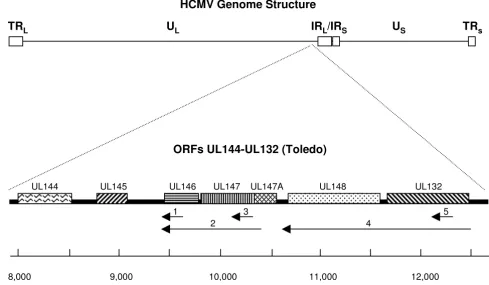
Map of HCMV UL144 through UL132 open reading frames
Figure 1
Map of HCMV UL144 through UL132 open reading frames. Upper map shows the general structure of the complete HCMV genome. Lower map is an expansion of the region of interest at the indicated position on the HCMV genome. UL,
unique long; US, unique short; IRL, internal repeat long; IRS, internal repeat short; TRL, terminal repeat long; TRS, terminal
repeat short. Numbered arrows indicate riboprobe sequences. Nucleotide numbers below the map are based on the Toledo sequence (GenBank accession number U33331).
8,000 10,000 11,000 12,000
UL145 UL146 UL147 UL147A UL148 UL132
UL144
4
1 5
9,000
2 3
U
STR
sIR
L/IR
SU
LTR
LUL146 phylogenetic analysis
Figure 2
UL146 phylogenetic analysis. UL146 amino acid sequences from 48 clinical strains, plus Towne and Toledo. Group designa-tions correspond to those of Dolan et al. [2].
CH6 Towne E1113
NW232 CH8 PT3 PT20 PT21 PT23 C1917
PT5 C172 BI-5 C954
E545 E763 E460 CH25 CH23
C322 CH18
NW23-1
PT2 PT1 PT11 C239 C124 E428
CH20 C221
E759 C956 CH15 C952
CH5 CH1 CH2 CH14 CH22 PT12
CH21 CH19
PT16 Toledo
E760 PT13 C194 PT18 C949
C101
100 76
100
100
100 100
71
93 100
100
100 99
7
3
8
9
10
11
12
13
14
5
1
2
--NGRCXC--UL146 product has functions associated with α -chemok-ines including induction of chemotaxis, calcium flux, and neutrophil degranulation [18,20]. The product also appears to be required for infection of neutrophils [21]. Despite these established functions, UL146 is among the most variable of the HCMV ORFs. Although the variability occurs throughout the nucleotide sequence [2], phyloge-netic analyses have shown that the UL146 sequences of clinically unrelated patients cluster in defined sequence groups [2,22].
The adjacent UL147 ORF, which is also variable, encodes a second C-X-C chemokine homologue, although no chemokine-associated activity has been reported [19]. The UL147A ORF begins only two nucleotides downstream of the UL147 coding sequence, but no function has been assigned to the predicted product [2,3,23,24].
In the current study, we characterized the UL146 sequences, the neighboring ORFs UL147 and UL147A, and the intergenic regions of a large number of HCMV clinical isolates focusing on the following characteristics of this genomic region: 1) the variability and sequence sta-bility of HCMV clinical strains during long-term replica-tion both in vitro and in vivo; 2) the potential linkage of the UL146, UL147, and UL147A ORFs; and 3) the tran-scriptional pattern associated with these ORFs.
Results
Sequence variability of the UL146 ORF
Phylogenetic analysis was performed on a total of 50 UL146 sequences. Of these, 48 were obtained from clini-cal HCMV strains isolated from different patients at the two different sites: 29 strains from Chicago and 19 strains from Portland. The highly-characterized strains Towne and Toledo were also included in the phylogenetic analy-sis. Among these strains the length of the ORF ranges from 342 to 375 nucleotides encoding predicted proteins of 114 to 125 amino acids. The nucleotide variability is as high as 58% between strains such as CH-14 and PT-18 (Figure 2). Despite this variability the strains can be placed into 12 discrete sequence groups differing by at least 10%. The amino acid sequences generate the same groups with the overall percentage of variability greater than 60% (Figure 2). These have been numbered in Figure 2 based on homology with groups defined by Dolan et al. [2], who reported a total of 14 sequence groups. There were no strains homologous to their groups 4 and 6. In some cases, strains from Chicago and Portland have iden-tical UL146 nucleotide sequences. For example the sequence of PT-18 (Chicago) is identical to that of C194 (Portland) and BI-5 (Chicago) is identical to C954 (Port-land).
The CXC chemokine motif is conserved in all strains, and the majority of the UL146 sequences have an adjacent ELR motif as well. The ELR residues have been shown to be required for chemokine function and binding and activa-tion of the receptors CXCR1 and CXCR2 [25-27]. The var-iable X residue of the CXC motif in our strains is most often proline, although arginine, threonine, and lysine are also found in that order of frequency. Five strains, CH-1, CH-2, CH-5, CH-14, and CH-22 from Chicago have the ELR motif replaced by the variant NGR sequence (Figure 2, Group 5), which has been described in other studies [2,9,10,22]. In addition, the complete UL146 nucleotide sequences of these 5 strains in Group 5 are either identical or differ by no more than a single nucleotide, and the X residue in the CXC motif is consistently threonine. Besides the cysteine residues in the CXC motif, each of the 50 strains has two additional cysteine residues, which occur at approximately the same positions in the individ-ual strain sequences. These residues are homologous to those of the prototype CXC chemokine, IL-8, which form disulfide bonds with the cysteines of the CXC motif [25,28]. Predicted N-linked glycosylation sites are not conserved among the UL146 sequence groups. Group 1 containing the Toledo strain has three predicted sites, one of which lies within a putative signal sequence [2]. Other groups have only single sites (Group 8) or lack sites alto-gether (Group 7).
The hypervariability of the UL146 ORF led to an analysis of the sequence components downstream of the UL146 stop codon. A subset of 32 strains was selected for this analysis: 17 from Chicago and 13 from Portland plus Towne and Toledo. This included the intergenic region between UL146 and UL147 plus each of the downstream ORFs, UL147 and UL147A. The sequence groups that were defined by the original set of 50 strains are all repre-sented except Group 3.
Sequence variability of the intergenic region between UL146 and UL147
The intergenic region between UL146 and UL147 showed a very high degree of variability. This is the result of not only nucleotide differences, but also the length of this non-coding region, which ranges from 43 to 214 bp depending on the strain. However, within sequence groups defined by UL146, the associated intergenic nucle-otide sequences and sequence lengths are either identical or differ by no more than 2 nucleotides, and all are AT rich.
UL146-147 intergenic region phylogenetic analysis
Figure 3
UL146-147 intergenic region phylogenetic analysis. Dendrogram of intergenic nucleotide sequences from 32 strains. Group designations are the same as those in Figure 2.
CH1 CH22 CH2 CH5 CH14
BI-5
C954 C124
E428
Towne
C949
CH6
NW23-2
C1917
CH8
C952
C221
CH15
E759
C956
CH20
C322
CH23
E460
E763
CH18
CH25
CH19 Toledo CH21
E760
NW23-1
7
8
9
10
11
12
13
14
5
1
UL147 phylogenetic analysis
Figure 4
UL147 phylogenetic analysis. UL147 amino acid sequences from 32 strains. Group designations are the same as those in Figure 2.
Towne
C949
NW23-2
CH8
C1917
CH6
CH5
CH1
CH2
CH14
CH22
E760
Toledo CH19 CH21 C322
C124 E428 CH25
CH18
CH23
E460
E763
BI-5 C954 C952
CH20
NW23-1
C221
E759
C956
CH15 87
100 100
100
98
100
95
95 100
86
78 77
70
7
8
9
10
11
12
13
14
5
Group 7 strains based on UL146 in Figure 2. The longest intergenic sequence was found exclusively associated with sequences that have the aberrant NGRCXC chemokine motif, which are all in Group 5. These results indicate that the UL146 sequences are consistently linked to specific intergenic sequences.
Sequence variability of UL147
Alignment of the UL147 ORF sequences in the 32 isolates showed that the 5' half (basepairs 1–216) varied by as much as 22% at the nucleotide level with a corresponding amino acid variability of 26%. By comparison the 3' half of the ORF (basepairs 217–480) showed only 3–4% nucleotide and amino acid sequence variability. The over-all variability of the UL147 ORF is approximately 15%. The length ranges from 474 to 480 nucleotides, which translates into a difference of only 2 amino acids among unrelated strains. Several isolates have 2 adjacent methio-nine codons at the predicted start site, which leads to ambiguity in determining the initiation codon. There is a completely conserved DXRCXC chemokine motif where the first X represents either an arginine or lysine residue and the second X is always an arginine residue in the strains that we analyzed. Phylogenetic analysis based on UL147 alone (Figure 4), again showed sequence groups very similar to those determined by UL146 sequences, which suggests that the linkage observed for UL146 and the intergenic region can be extended to include UL147. There are no N-linked glycosylation sites encoded by any of the 32 UL147 amino acid sequences.
Sequence variability of UL147A
The predicted initiation codon of the UL147A ORF is invariably 2 nucleotides downstream of the UL147 stop codon, which shifts the reading frame from that of UL147. The UL147A ORF is highly conserved among all strains with a maximum of 6–7% variability in the nucleotide and amino acid sequences. The length of the ORF is invar-iably 228 nucleotides. Sequence groups are not distin-guishable, because of the high level of conservation. There are no N-linked glycosylation sites.
Table 1 summarizes the characteristics of the 3 ORFs UL146, UL147, and UL147A and the UL146-147 inter-genic region based on the analysis of the 32 isolates. All
components except UL147A have different nucleotide lengths. In general the non-synonymous nucleotide sub-stitutions are reflected by a slightly greater variability at the amino acid level. Despite this hypervariability, isolates BI-5 from Chicago and C954 from Portland have identical sequences for the entire region UL146 through UL147A.
UL144 sequence groups
Previous work with the UL144 ORF, which is a TNF recep-tor homologue [29], showed that there is sequence varia-bility of up to 20% and the sequences are distributed among three major groups one of which can be divided into 3 subgroups [6,7,30,31]. A limited number of UL144 sequences from the Chicago strains were compared using the previously published UL144 group designations [7] to determine whether there is any linkage between UL144 groups and those defined by the UL146-UL147A region. There was no evidence of linkage as demonstrated by sev-eral strains that grouped together based on similar UL146-UL147A sequences but differed in their UL144 sequences. For example, NW23-2, PT3, and PT20, are all in the same UL146 group (Group 7, Figure 2), but they represent UL144 groups 2, 3, and 1A respectively [7].
Sequence stability of the UL146 ORF in virus isolates passaged in vitro
A possible mechanism for generating the UL146 hypervar-iability could be gradual drift during long-term virus rep-lication. To address this possibility by in vitro methods, 11 isolates from Portland and 2 from Chicago were each passaged a minimum of 10 times and as many as 47 times in cell culture (Table 2). The phenotype of the isolates changed from cell-associated to extracellular as a result of these multiple passages. Despite the change in phenotype, all strains in Table 2 with the same designation have iden-tical nucleotide sequences. The results demonstrate that passage of the same strains in cell culture over several months produced no detectable changes in the nucleotide sequence of the UL146 ORF. This is particularly evident in comparing the nucleotide sequences of the low passage versus high passage isolates from subjects N, P, G, and T, which are identical.
Table 1: Characteristics of open reading frames UL146, UL147, and UL147A.
Open reading frame Number of nucleotides Number of amino acids Maximum nucleotide variability
Maximum amino acid variability
UL146 342–375 114–125 58% 61%
Intergenic region 43–214 --- ---
---UL147 471–477 157–159 13% 15%
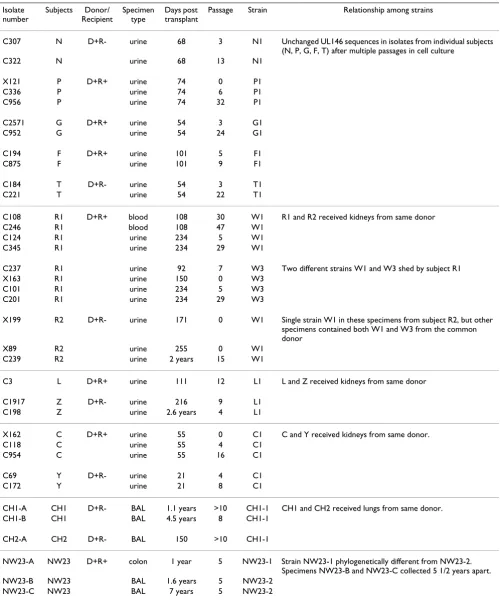
Table 2: Serial isolates or passages from the same or related solid organ transplant recipients.a
Isolate number
Subjects Donor/ Recipient
Specimen type
Days post transplant
Passage Strain Relationship among strains
C307 N D+R- urine 68 3 N1 Unchanged UL146 sequences in isolates from individual subjects (N, P, G, F, T) after multiple passages in cell culture
C322 N urine 68 13 N1
X121 P D+R+ urine 74 0 P1
C336 P urine 74 6 P1
C956 P urine 74 32 P1
C2571 G D+R+ urine 54 3 G1
C952 G urine 54 24 G1
C194 F D+R+ urine 101 5 F1
C875 F urine 101 9 F1
C184 T D+R- urine 54 3 T1
C221 T urine 54 22 T1
C108 R1 D+R+ blood 108 30 W1 R1 and R2 received kidneys from same donor
C246 R1 blood 108 47 W1
C124 R1 urine 234 5 W1
C345 R1 urine 234 29 W1
C237 R1 urine 92 7 W3 Two different strains W1 and W3 shed by subject R1
X163 R1 urine 150 0 W3
C101 R1 urine 234 5 W3
C201 R1 urine 234 29 W3
X199 R2 D+R- urine 171 0 W1 Single strain W1 in these specimens from subject R2, but other specimens contained both W1 and W3 from the common donor
X89 R2 urine 255 0 W1
C239 R2 urine 2 years 15 W1
C3 L D+R+ urine 111 12 L1 L and Z received kidneys from same donor
C1917 Z D+R- urine 216 9 L1
C198 Z urine 2.6 years 4 L1
X162 C D+R+ urine 55 0 C1 C and Y received kidneys from same donor.
C118 C urine 55 4 C1
C954 C urine 55 16 C1
C69 Y D+R- urine 21 4 C1
C172 Y urine 21 8 C1
CH1-A CH1 D+R- BAL 1.1 years >10 CH1-1 CH1 and CH2 received lungs from same donor. CH1-B CH1 BAL 4.5 years 8 CH1-1
CH2-A CH2 D+R- BAL 150 >10 CH1-1
NW23-A NW23 D+R+ colon 1 year 5 NW23-1 Strain NW23-1 phylogenetically different from NW23-2. Specimens NW23-B and NW23-C collected 5 1/2 years apart. NW23-B NW23 BAL 1.6 years 5 NW23-2
NW23-C NW23 BAL 7 years 5 NW23-2
aSpecimens designated with C, CH, or NW were cultured. Specimens designated with X were analyzed directly.
Sequence stability and analysis of the UL146 ORF in virus isolates passaged in vivo
Because cell culture represents only one cell type and con-tains no cells of the immune system, the effect of long-term infection on UL146 variability in vivo was investi-gated. Multiple isolates were collected from some of the patients over a period of several months to several years at both the Chicago and Portland sites. The UL146 nucle-otide sequence of each individual strain was found to be identical for all isolates from the same patient for periods of up to several years, as shown by isolate pairs NW23-B/ C, CH1-A/B, X199/C239 and C1917/C198 in Table 2.
There were 3 pairs of kidney transplant recipients from Portland and 1 pair of lung transplant recipients from Chicago, for which both recipients received organs from the same donor. These are patients R1 and R2, L and Z, C and Y, CH-1 and CH-2 (Table 2). All donors were HCMV seropositive (D+) and some were documented to have transmitted one or more strains of CMV to multiple recip-ients. Isolates were obtained over periods of up to 5 years post-transplant. All isolates from recipients having the same donor had identical nucleotide sequences. Thus, passage of the same strain in different hosts over long periods of time did not alter the UL146 sequence. Some of these strains were also subjected to extensive passage in cell culture and still retained absolute sequence stability. Of note in this regard is the stability of strain W1 from iso-late C246, which represents cell culture passage 47 of a blood isolate from 108 days post-transplant.
In some cases there was evidence that patients were infected with more than one strain. However, the integrity of individual strains within the same patient was main-tained. For example, Chicago isolates NW23-A and NW23-B are from the same patient. The UL146 sequence of the earlier isolate, NW23-A (Group 10), from a colon biopsy differs significantly from that of NW23-B (Group 7), an isolate obtained 5 months later from a bronchoave-olar lavage (BAL). A third isolate, NW23-C also from a BAL obtained more than 5 years later is identical in sequence to NW23-B. The recipient was HCMV seroposi-tive and received an organ from a seroposiseroposi-tive donor (D+/ R+), therefore, the recipient was infected with two differ-ent strains (NW23-1 and NW23-2) from two unrelated sources. The original isolate likely represents reactivation of the endogenous HCMV strain present pre-transplant, and the later isolates were derived from the donor strain. Kidney transplant recipients R1 and R2 had 2 strains in common, although recipient R2 shed one of the strains only intermittently (Table 2) [32]. Identical sequences for each strain were found in isolates from different compart-ments (blood and urine) and isolates obtained at different times post-transplant.
Sequence stability of UL147 and UL147A
To extend the analysis of strain stability, the UL147 and UL147A ORFs were sequenced in clinically related isolates obtained at different time points as much as several years apart. In a total of 8 different cases, all isolates from the same patient had identical UL147 and UL147A sequences. Thus, the same sequence stability observed for the UL146 ORF appears to apply to these ORFs as well.
Transcriptional profile
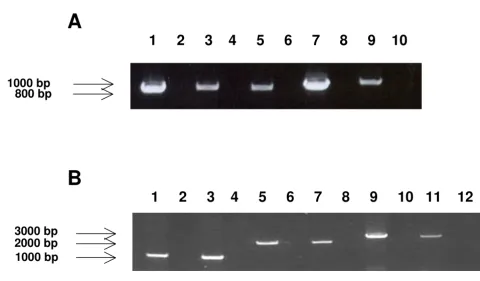
The transcriptional pattern associated with this group of ORFs was analyzed to further characterize their relation-ship from the standpoint of potential splicing and tempo-ral expression. RNA was extracted from virus-infected cells at 10–14 days post-infection. Figure 5A shows representa-tive RT-PCR products generated by the forward primer upstream of UL146 and the reverse primer downstream of UL147A. A total of 15 UL146-UL147A RT-PCR products amplified from unrelated Chicago strains were sequenced. These strains represent different UL146 sequence groups. In each case the sequence of the RT-PCR product was iden-tical to the sequence of the PCR product derived from the viral genomic DNA. The differences in the sizes of the products reflect differences in the lengths of the intergenic regions. These results indicated that there is a single tran-script that contains all three ORFs with no evidence of splicing. The RT-PCR analysis was extended using the same forward primer upstream of UL146 with primers downstream of UL148 and UL132. Figure 5B shows cDNA products from strains CH-21 (Group 1) and CH23 (Group 9) amplified by each of the three sets of primers. The sizes correspond to the products predicted by the genomic sequence. Sequencing of the UL146-UL148 and UL146-UL132 products again showed no evidence of splicing. When a conserved forward primer upstream of UL145 was used with the reverse primer downstream of UL147A, no cDNA product was obtained indicating that the UL145 ORF is not on the same transcript that contains UL146, UL147, and UL147A.
with the homologous RNA from strains CH-1 and CH-22 (Group 5) and less intense with CH-18 (Group 9) and CH-19 (Group 1) RNA samples, which have much lower sequence homology. The completely homologous RNA bands (CH1 and CH2) are approximately 3.7 kb in size. The bands detected for CH19 and CH18, which have lim-ited homology to the probe, are slightly smaller as pre-dicted by the differences in the length of the UL146-UL147 intergenic region. Reprobing the same northern blot with riboprobe 2, which is antisense to the three ORFs (UL146, UL147, UL147A), shows 2 additional tran-scripts of approximately 3.1 and 2.5 kb in length (Figure 6B). Riboprobe 3, which contains only the relatively con-served 3-prime UL147 sequences, detects the same 3 tran-scripts (Figure 6C). These results indicate that UL146 sequences are present only on the largest transcript, which also contains UL147 sequences. The smaller transcripts contain UL147 sequences but have no sequences in com-mon with UL146.
To determine the temporal expression of the transcripts, RNA produced in the presence or absence of the DNA rep-lication inhibitor, foscarnet (400 µM), was obtained for northern analysis at different time points post-inocula-tion. Using riboprobe 1, the large 3.7 kb transcript appears at 48 h post-infection (Figure 7A) and is inhibited to a large extent but not completely by 400 µM foscarnet (Figure 7B). The small amount of detectable transcript in the presence of foscarnet suggests early-late temporal con-trol. A similar set of blots was hybridized with riboprobe 2. In the absence of foscarnet the 2.5 kb transcript is detected at the earliest time of 24 h and remains detecta-ble up to 144 h post-infection (Figure 7C). As shown in Figure 7D, foscarnet does not affect the 2.5 kb transcript, which indicates its early temporal expression. The 3.1 kb transcript does not appear until 48 h post-infection but is expressed up to 144 h post-infection. This transcript is completely inhibited by foscarnet (Figure 7D), which is consistent with the characteristics of true late temporal expression.
The size of the RT-PCR product obtained using primers flanking UL146 and UL132 (Figure 5) plus the length of the 3.7 kb transcript detected by riboprobes 1, 2, and 3, indicates that this transcript contains more than the UL146, UL147, and UL147A ORFs. Riboprobes 4 and 5 were designed to detect the downstream ORFs UL148 and UL132. In the absence of foscarnet, riboprobe 4 (anti-sense to both UL148 and UL132) detected 3 smaller tran-scripts of approximately 2.2 kb, 1.7 kb, and 1.0 kb in size in addition to the larger transcripts detected by riboprobes 1, 2, and 3 (Figure 7E). In Figure 7F the 1.7 kb transcript is unaffected by foscarnet (early transcript), while the 2.2 kb transcript appears to be inhibited by the drug (late transcript). The larger transcripts (3.7, 3.1, and 2.5) show
the same temporal expression in the presence of foscarnet as detected by riboprobes 1 and 2. The pattern of tran-scription detected by riboprobe 5, which is homologous to UL132 was identical to that detected by riboprobe 4 (data not shown). Cellular RNA did not hybridize with any of the riboprobes (Figure 7C and 7E, lanes labeled U).
The northern results reveal that the largest RT-PCR prod-uct spanning UL146 through UL132 is derived from the 3.7 kb transcript, because UL146 sequences are not present on any of the other transcripts detected from this region. The size of the 3.7 kb transcript would exclude additional ORFs downstream of UL132 in the absence of splicing. No splicing was detected by sequencing the cor-responding RT-PCR product. The 3-prime UL147 ORF sequences are present on the next smaller transcripts (3.1 and 2.5 kb). UL132 sequences are present on all of the transcripts associated with this region, which suggests there may be a common transcriptional 3-prime end. Analysis of the Toledo sequence for polyadenylation sig-nals provides further evidence for 3' co-terminal tran-scripts, because there is a single consensus sequence at bp 12,563 just downstream of UL132. The next closest sig-nals are 2.8 kb upstream and 2.3 kb downstream of this site, which are not consistent with the size and hybridiza-tion patterns of the observed transcripts. HCMV strains Merlin (GenBank Accession # AY446894) and 3157 (Gen-Bank Accession # AY446867) have similar patterns of poly A signals in the homologous region.
Discussion
This study has focused on a region of the HCMV genome that encodes products potentially very important for the overall pathogenesis of the virus. To our knowledge this is the first comparative study of all of the genomic compo-nents of the ORFs from UL146 through UL147A and the first report of multiple overlapping transcripts expressed from this region.
The results show that among clinical HCMV strains there is a gradient of sequence variability that ranges from very high to low beginning with the UL146 ORF and progress-ing downstream through UL147A. Paradoxically, the hypervariable UL146-UL147A sequences of individual strains were found to be completely stable throughout long term propagation in vitro and in vivo.
CMVs [24,33,34] but not murine CMV (MCMV) [20] per-haps reflecting a divergence in evasion strategies.
The cumulative evidence from this study and others clearly establishes the hypervariability of the UL146 ORF among clinical HCMV strains [2,9,10,22]. These results emphasize that within a defined sequence group, UL146 sequence similarities exist among unrelated clinical strains from widely separated geographic areas, while at the same time there is a high level of UL146 sequence divergence between different groups within individual geographic areas. Despite the hypervariability, all reported UL146 sequences including those in the present study have conserved functional residues associated with CXC chemokines [2,9,10,22]. ELR residues adjacent to the CXC motif are also present in most of the UL146 sequences. ELR-positive CXC chemokines have been reported to induce angiogenesis and vascular remodeling through binding to CXCR2, while ELR-negative chemok-ines are angiostatic [26,35,36]. The UL146 protein expressed from the Toledo strain induces CXC chemokine functions including neutrophil chemotaxis, calcium flux,
and degranulation and binds to CXCR2 [18]. However, the angiogenic activity of UL146 has not been deter-mined. In UL146 Group 5 sequences (Figure 2) the ELR residues are replaced with NGR. The arginine residue that is considered to be absolutely essential for receptor bind-ing [27] is retained, but the potential effect of the NG sub-stitution on chemokine functions is not known. All of the UL147 sequences have DXR residues in the homologous positions of the ELR residues next to the CXC motif. Sim-ilar to the UL146 sequence, the arginine residue required for receptor binding is conserved in all UL147 sequences, but no chemokine-related functions have yet been attrib-uted to the UL147 product.
Recently it was reported that ELR-positive CXC chemok-ine activity is elevated in association with bronchiolitis obliterans syndrome (BOS) [35] in lung transplant recip-ients. In association with the elevated CXC chemokines there was vascular remodeling of the trachea and aberrant angiogenesis. HCMV infection and disease is a frequent and serious complication for lung transplant recipients. Although HCMV infection was not included in the analy-RT-PCR amplification
Figure 5
RT-PCR amplification. (A) RT-PCR products containing UL146 through UL147A orfs. Lane 1 NW23-1; Lane 2 NW23-1 no RT control. Lane 3 CH15; Lane 4 CH15 no RT control. Lane 5 CH25. Lane 6 CH25 no RT control. Lane 7 CH22; Lane 8 CH 22 no RT control. Lane 9 CH-14. Lane 10 no RT control. (B) RT-PCR products containing portions of region UL146 through UL132 from strains CH21 and CH23. Lane 1 CH21 UL146-UL147A; Lane 2 no RT control. Lane 3 CH23 UL146-UL147A; Lane 4 no RT control. Lane 5 CH21 UL146-UL148; Lane 6 no RT control. Lane 7 CH23 UL146-UL148; Lane 8 no RT control; Lane 9 CH21 UL146-UL132; Lane 10 no RT control; Lane 11 CH23 UL146-132; Lane 12 no RT control.
800 bp
1000 bp
1000 bp
3000 bp
1
2
3 4
5
6
7
8
9 10
B
A
1
2
3 4
5
6
7
8
9
10 11 12
sis for the BOS study, these new findings suggest a possi-ble functional link between HCMV chemokine activity and human disease. It will be important for HCMV patho-genesis to determine whether such a link exists and how sequence variability could affect this function.
Further sequence examination of the intergenic region between UL146 and UL147 produced two unexpected findings. First, it was found to be highly variable in both nucleotide length and sequence. This is surprising because in previous analyses of other variant HCMV genes [7](N.S. Lurain, unpublished data), the coding sequences from all unrelated clinical isolates could be amplified using a sin-gle set of primer pairs from the non-coding flanking regions, suggesting that the sequences of these flanking regions are generally conserved. The upstream non-coding sequence of UL146 has conserved primer binding sites, but the intergenic region provides no conserved down-stream site. A second unexpected finding is the consistent linkage of the highly variable intergenic sequences with specific UL146 ORF sequence groups. The UL147 ORF has lower overall sequence variability than the UL146 ORF. However, phylogenetic analysis based on UL147 sequences shows that the strains cluster in the same groups determined by the UL146 and intergenic sequences. Thus, there is no evidence for recombination between UL146 and UL147.
The start site of the UL147A ORF is invariably only 2 nucleotides downstream of the UL147 stop codon. Despite the highly conserved sequence of the UL147A ORF, this very short 2-basepair sequence between the UL147 and UL147A ORFs strongly suggests linkage to the rest of the region. However, there is no known functional relationship between the predicted products of UL147 and UL147A.
In contrast, the present study established that the sequence groups of the hypervariable UL144 ORF are not linked to the UL146 sequence groups even though UL144 is less than 1 kb upstream of UL146. We have previously shown UL144 to be unlinked to the variable gB gene, which is more than 90 kb upstream [7]. These data along with those reported by others indicate that most of the known hypervariable ORFs are unlinked, which suggests that so far, with the exception of UL146 and UL147, the pattern of known variant genes present in each strain was most likely generated over very long periods of time by recombination events [8,11,15]. The lack of recombina-tion within the region UL146 through UL147A is further supported by the fact that there are HCMV strains from each geographic site that have identical sequences span-ning this entire region. This raises the question of how the hypervariability has evolved. We addressed this question first by investigating the possibility of cumulative sequence drift over long-term virus propagation. Serial passage of multiple clinical isolates over several months in cell culture failed to produce even a single nucleotide substitution despite phenotypic changes from cell-associ-ated to cell-free virus. This in vitro approach confirms that long-term cell culture does not add sequence artifacts. However, cell culture lacks components of the immune system that could produce sequence drift through selec-tion of antigenic variants.
The possibility of sequence drift in vivo was addressed by analyzing sequential isolates obtained from transplant recipients over long-term follow-up of several months to several years, a much longer period of follow-up than that of previous studies [10,22]. All isolates from specimens from the same patient including those from different body compartments maintained identical UL146 sequences demonstrating that no sequence drift occurred Northern analysis of total transcripts from UL146 through UL132
Figure 6
Northern analysis of total transcripts from UL146 through UL132. Transcriptional pattern associated with UL146 through UL132 from different HCMV clinical strains. (A) Total RNA extracted from cells infected with designated strains and hybridized with UL146 CH22-specific riboprobe number 1 (See Figure 1). (B) Same blot as in (A), but rehybridized with ribo-probe number 2 (Figure 1) containing UL146 through UL147A orfs derived from strain CH22. (C) Total RNA extracted from cells infected with designated strains and hybridized with UL147 CH19-specific riboprobe number 3 (Figure 1).
C
B
A
CH19 CH18
2.5 kb 3.7 kb 3.1 kb 3.7 kb
Riboprobe 3
Riboprobe 1 Riboprobe 2
in vivo. The most convincing evidence that in vivo passage of HCMV strains does not produce sequence drift comes from the data from four matched pairs of transplant
recip-ients with the same donor. All isolates from related patient pairs have identical nucleotide sequences of the UL146-UL147A region, and in the case of CH1 and CH2 Northern analysis of temporal transcriptional pattern of UL146 through UL132
Figure 7
Northern analysis of temporal transcriptional pattern of UL146 through UL132. Total RNA was extracted at the indicated time points post-inoculation from cells infected with strain CH2 and hybridized with riboprobe number 1 derived from strain CH22 in the absence (A) or presence (B) of 400 µM foscarnet. (C) and (D) same as (A) and (B) but hybridized with riboprobe number 2. (E) and (F) same as (C) and (D) but hybridized with riboprobe 4. Lanes labeled U contain RNA from unin-fected cells. Ribroprobe 5 data are not shown but are identical to ribroprobe 4 data as indicated by parentheses. Agarose gels showing 28S ribosomal RNA for loading control below (C) through (F).
B
A
3.7 kb
1.0 kb 3.7 kb 3.1 kb
E
F
C
D
2.5 kb 3.7 kb 3.1 kb
1.7 kb2.2 kb 2.5 kb
Riboprobe 1 + foscarnet
Riboprobe 4 (5) + foscarnet Riboprobe 1
Riboprobe 4 (5)
Riboprobe 2 Riboprobe 2 + foscarnet
24h 48h 72h 96h 144h 24h 48h 72h 96h 144h 24h 48h 72h 96h 144h
24h 48h 72h 96h 144h 24h 48h 72h 96h 144h U
the sequence identity was maintained over a period of almost 5 years. Thus, passage of the same strain in differ-ent hosts did not select variant UL146 sequences.
Some patients had evidence of infection with more than one strain, for example subjects R1 and NW23 (Table 2). However, the UL146-UL147A sequences of each individ-ual strain remained stable over long-term passage both in vitro and in vivo with no evidence of recombination. We would predict from the observed sequence stability of HCMV strains during long-term passage that even minor sequence differences among isolates from the same patient indicate the presence of multiple strains rather than sequence drift of a single strain. This prediction can be confirmed by analyzing the sequences groups of other unlinked variable genes such as UL144 and gB detected among the same isolates.
The close linkage and sequence stability of the UL146-UL147A ORFs led to the investigation of potential splic-ing and temporal expression of transcripts from this region. Analysis of RT-PCR products revealed a single large transcript that contained not only the UL146-UL147A ORFs but also the downstream UL148 and UL132 ORFs. The RT-PCR sequences showed no evidence of spliced transcripts. Northern analysis identified a dom-inant large 3.7 kb transcript that hybridized with ribo-probes representing all 5 ORFs, and also identified 5 other transcripts ranging in size from approximately 1.0 to 3.1 kb that hybridized with riboprobes from one or more of the ORFs. UL146 sequences were only detected on the largest transcript (3.7 kb), and UL132 sequences were detected on all transcripts. The transcripts represent differ-ent temporal classes as determined by the time of expres-sion post-infection and by the effect of foscarnet on that expression. Based on size and hybridization patterns, UL146 appears to be expressed only from the large 3.7 kb transcript, which has early-late kinetics. UL147 is likely expressed from the 3.1 kb transcript, which has true late kinetics. These results are slightly different from earlier microarray analysis of HCMV transcriptional expression based on the Towne strain [37], which indicated that UL146 (UL152 in Towne) and UL147 have similar early-late kinetics. The discrepancies likely result from the ina-bility of microarray analysis to distinguish overlapping transcripts. Penfold et al. [18] reported that the UL146 protein is expressed with true late kinetics as shown by foscarnet inhibition, but no transcriptional analysis was reported. However, early-late transcriptional expression is compatible with the potential timing of chemokine activ-ity that would likely play a role in pathogenesis after viral replication.
The northern analysis of the UL146-UL132 ORFs shows a transcriptional pattern and complexity similar to that
found in other genomic regions of HCMV including the UL93-UL99 ORFs [38,39], which have: 1) overlapping transcripts with different 5-prime termini; 2) co-terminal 3' ends; and 3) different temporal expression of the tran-scripts. The RT-PCR and northern data show a series of transcripts that all include UL132 sequences at the 3' end but vary in the number of upstream ORFs and differ in their temporal expression. The single poly A signal, which is downstream of the UL132 stop codon, supports the possibility of a common 3'-terminus for all of these tran-scripts [2,5].
Conclusion
Despite an extensive characterization of the UL146-UL147A ORFs, we are left with the question of how the UL146 protein with an apparent defined function that is conserved in all HCMV clinical isolates has developed such a highly variable but stable amino acid sequence. The results of our study allow us to rule out several mech-anisms that might generate sequence diversity. Sequence drift was eliminated as a mechanism by the long-term in vitro and in vivo passage of a large number of HCMV iso-lates, which produced no sequence changes in individual strains. A second possible mechanism is selection of immune escape mutants as has been reported for the m157 ORF of MCMV [40]. The in vivo stability of UL146 and UL147 especially in paired transplant recipients, however, argues against a similar selection for HCMV. An immune escape mechanism may exist for HCMV, but it appears not to be based on either of these two genes. Tran-scriptional splicing is a third potential mechanism for generating sequence diversity, yet is unlikely, because the single UL146 transcript is unspliced.
and UL147 may be a mechanism for generating the observed variability [34]. However, the absolute sequence stability in vitro and in vivo along with the conserved groups based on UL146 through UL147A sequences from widespread geographic sites do not appear to support this mechanism.
It is very possible that the variability of the UL146 and UL147 ORFs may have evolved in a host-specific manner over a very long period of time, which has been postulated for hypervariable ORFs found in human herpesvirus 8 [42,43]. The fact that the differences among HCMV strains based on UL146-UL147A sequences do not present as random changes but instead occur as defined sets of amino acid substitutions suggests that there may be selec-tion based on virus and/or host funcselec-tional constraints. Variability of host factors such as CXCR2 or MHC haplo-types may affect the ability of specific virus genohaplo-types to productively infect individual hosts. Although there is no evidence so far that HCMV strains differ in pathogenicity, undoubtedly both host and viral factors are involved in determining the outcome of HCMV infection.
Methods
Virus isolates and specimens
HCMV isolates and HCMV-infected specimens (white blood cells and urine) were obtained at two geographi-cally distant medical centers: the VA Medical Center and Oregon Health and Science University, Portland, OR and Rush University Medical Center, Chicago, IL. Samples from specimens obtained for normal patient care includ-ing viral isolates, white blood cells, and urine were col-lected from secol-lected patients over periods of several months to several years as well as from 4 pairs of solid organ transplant recipients (3 kidney, 1 lung) who were infected through organs obtained from a common HCMV-positive donor. The use of these specimens as dis-carded clinical material was in accordance with federal guidelines, and the study was approved by the Institu-tional Review Boards at both Rush University Medical Center and the Oregon Health and Science University.
Viable isolates were received as infected human foreskin fibroblast (HFF) monolayers in tube cultures, which were trypsinized and passed to fresh uninfected monolayers. The level of infectivity was increased by repeated rounds of trypsinization and redistribution of infected ers as well as by passage of infected cells to new monolay-ers. The total number of passages required to reach a level of 60 to 80% infectivity was usually in the range of 4 to 6. All of these strains remained cell-associated and stocks were maintained as infected cells.
For stability studies, selected isolates from Portland were passed multiple times beyond the point at which the
virus-infected cells began to release extracellular virus. Cell culture supernatants from these isolates were har-vested after multiple subsequent passages.
DNA extraction and PCR amplification
For the Chicago isolates, CMV genomic DNA was extracted from infected HFF monolayers, culture superna-tants, or directly from patient specimens using the QIAamp DNA Mini Kit (QIAGEN, Inc., Valencia, CA). The extracted DNA served as the template for PCR amplifica-tion using the GenAmp XL kit (Applied Biosystems, Foster City, CA). For the Portland isolates, HCMV DNA was extracted from infected HFF cultures using a Hirt method [44]. Viral DNA from ultracentrifuged urine sediment was extracted by alkaline lysis as previously described, or by SDS-proteinase-phenol extraction [45].
The UL146 ORF was amplified from DNA extracts from the Portland patient specimens using the outer primers 5'-TTACGGAACCGTGTCTGAGT-3' (forward) and 5'-GTT-GATGTG ACGACGCACGGCTTGC-3' (reverse). Nested PCR was performed with the inner primers 5'-GAAAC-CTAATTGACGTGTGATCG-3' (forward) and 5'-AGCCAG-CACTTCCTGACGATT GCAG-3' (reverse). The outer primers alone were used to amplify the UL146 ORF from DNA extracted from infected cells in cultures. The ampli-fication protocol for the Portland isolates was 95°C 2 min for 1 cycle, 15 cycles of 94.5°C for 30 s, 54°C for 30 s, 72°C for 1 min followed by 15 cycles of the same temper-atures and times except that the 72°C extension was increased by 5 s per cycle.
For specimens from Chicago both the UL146 and UL147 ORFs were amplified as one product using the primers GATGTGTCATGGACGCAGTT-3' (forward) and 5'-CAGAAG ATGAGGAGCAGGAA-3' (reverse). PCR amplifi-cation was carried out using the GeneAmp XL Kit (Applied Biosystems). The amplification protocol was 94°C 1 min for 1 cycle followed by 30 cycles of 94°C 1 min, 60°C for 10 min.
The UL147A ORF was amplified from the Chicago speci-mens with the same forward primer used for the UL146-UL147 product described above and the reverse primer 5'-CGCT ACCAGCATGACGTCTC-3', which is downstream of the UL147A stop codon. The resulting product con-tained the UL146, UL147, and UL147A ORFs. The prim-ers used for the Portland specimens for the same region were 5'-GCTTAAGCCAATCGCAGCGAGC-3' and 5'-GTC GCCTCGGTAGCTCAGTAGC-3'. The amplification proto-cols were the same as described above for the UL146-UL147 products.
5'-TCGTATTACAAAC-CGCGGAGAGGAT-3' and reverse primer 5'-ACTCA-GACACG GTTCCGTAA-3'. The conditions for amplification were 94°C for 5 min followed by 30 cycles of 94°C for 1 min, 55°C for 1 min, 72°C for 1 min and ending with a single extension cycle of 72°C for 5 min.
DNA sequencing
DNA sequencing reactions were performed using the BigDye Terminator Kit version 3.0 or 3.1 (Applied Biosys-tems). The reactions were analyzed using either an ABI PRISM 3100 Genetic Analyzer (Applied Biosystems) (Chi-cago) or ABI 377 Automated Sequencer (Portland). UL146 sequencing primers for specimens from Portland were 5'-GAATTGATGTGTCATG GACGCAG-3' (Forward) and 5'-GACAGGTGTCGTACCGAT-3' (Reverse). For spec-imens from Chicago, the UL146 coding strand was sequenced using the forward PCR primer above. The reverse sequence was obtained using the primer 5'-CCAG-CACTTCCTGACGATTG-3'.
Sequencing of UL147 required additional primers. The 5-prime end of the coding sequence of UL147 could not be obtained with a universal primer, because the intergenic region between UL146 and UL147 does not contain con-served primer binding sites. The sequence of this region was obtained using the reverse primers for UL146 and UL147 (above) and one of the following overlapping reverse primers: ATCTCTGCGAGGATGCTAGT-3' or 5'-TGGCCAGGCACCGAACTCAA-3'. The 3-prime portion of the UL147 ORF plus the entire UL147A ORF was sequenced using the forward primer: 5'-AAGCT-GCAATCGTCAGGAAG-3'. The sequence of the non-cod-ing strand of UL147A was obtained with the reverse PCR primer described above. Portland primers for UL147 sequencing were 5'-GCAGGACGAGCGTGAAC AGC-3' and 5'-GTTGATGTGACGACGCACGGCTTGC-3'.
RT-PCR
RNA was extracted from infected cells using the RNeasy kit (QIAGEN). The extracts were treated with DNase I (Invit-rogen). Reverse transcription was performed using the SuperScript First Strand Synthesis System (Invitrogen). cDNA was produced by amplification with the UL146 for-ward primer and either the UL147 or the UL147A reverse PCR primers. Additional cDNA products were generated using the UL146 forward primer with reverse primers downstream of the UL148 or UL132 ORFs. The UL148 reverse primer sequence is 5'-TC TTGCTATGTC-CGCGAACG-3', and the UL132 reverse primer sequence is 5'-AGATCCC GAGTACGACTAGG-3'. Control reactions that did not include the reverse transcription step were amplified in parallel reactions to check for DNA contam-ination.
All RT-PCR products were sequenced to check for splicing. The primers described above were used for the UL146-UL147A portion of the cDNA products. An additional sequencing primer was used for the UL148 coding strand: 5'-ACGCTCCTCGTCACTTGTGT-3'. Three additional sequencing primers were used for UL132: 5'-TACACCCT-GTCACCGAA AGC-3' (forward); 5'-CTGATCGCGG-TAGTTTACTC-3' (forward); and 5'-TCACGAACGAC GTGTCCAAG-3' (reverse).
Northern analysis
Northern analysis using the NorthernMax-Gly kit (Ambion) protocol was performed on the same RNA extracts used for RT-PCR. In addition, RNA was extracted at 24, 48, 72, 96, and 144 h post-infection from cells that were infected with selected HCMV strains and grown in the presence or absence of 400 µM foscarnet. RNA Millen-nium Markers™ (Ambion) were run on each gel for size determinations. RNA samples were mixed with loading buffer containing glyoxal followed by electrophoresis on 1% agarose gels. RNA was transferred to Brightstar nylon membranes (Ambion). Five different riboprobes were made using cloned templates of cDNA products inserted into the pGem-TA vector (Promega) (Figure 1). Ribo-probe 1 contains 216 bp specifically antisense to the UL146 ORF of isolate CH-22 and 87 bp of the upstream UL146 flanking region. Riboprobe 2 is antisense to 1095 bp of the coding sequences containing the complete UL146 and UL147 ORFs from isolate CH-22. Riboprobe 3 is antisense to 177 nucleotides of the UL147 ORF (bases 225 to 402) from isolate CH-19. Riboprobe 4 is antisense to 1990 bp spanning the coding sequences of UL148 and UL132, and riboprobe 5 is antisense to 303 bases of the UL132 ORF. Both riboprobes 4 and 5 were derived from isolate CH-19. A riboprobe was also produced from the Millennium Marker™ Probe Template (Ambion) for detec-tion of the RNA Millennium Markers™. The recombinant plasmids were linearized and RNA representing the non-coding strand was generated using either T7 or SP6 RNA polymerase and labeled by incorporation of digoxigenin-dUTP (Roche Applied Science). Hybridization of RNA blots was carried out at 68°C overnight. The blots were visualized by addition of anti-digoxigenin antibody labeled with alkaline phosphatase followed by addition of the substrate 5-bromo-4-chloro-3-indolyl phosphate (BCIP) and nitroblue tetrazolium (NBT).
Phylogenetic analysis
ver-sion 3.6a2, obtained from J. Felsenstein, University of Washington, Seattle, WA [46]. The SEQBOOT module was used to generate 100 bootstrap data sets. Genetic dis-tances were calculated from the bootstrap data using PRO-TDIST, and the resulting values were used to generate phylogenetic trees using NEIGHBOR. A consensus tree was computed by CONSENSE. The depiction of the tree was produced using TreeView [47]. For the UL146-147 intergenic region a dendrogram was generated from the DNA sequences using Align Plus 5 version 5.11 (Scientific and Educational Software).
Nucleotide sequence accession numbers
The accession numbers for 18 of the UL146 sequences analyzed in Figure 2 are: DQ115708 through DQ115725. The nucleotide accession numbers for the UL146 through UL147A sequences of the 30 clinical strains analyzed in Figures 3 and 4 are: DQ115727 through DQ115756.
Competing interests
The author(s) declare that they have no competing inter-ests.
Authors' contributions
NSL conceived the study, analyzed the data from the Chi-cago site, and drafted the manuscript. SC contributed to the design of the study, analyzed the data from the Port-land site, and helped to draft the manuscript. AMF per-formed the sequencing and transcriptional analysis at the Chicago site. HML performed the sequencing and partici-pated in the analysis at the Portland site. DDH provided essential expertise for the phylogenetic analyses. SMB and ERG provided clinical specimens and clinical data for the Chicago site. CFW provided critical intellectual input and interpretation. SPK provided essential input for the tran-scriptional analysis.
Acknowledgements
This work was supported in part by Department of Veterans Affairs research funds and NIH grants AI39938 to S.C., AI48073 to C.F.W and N.S.L., and American Lung Association of Metropolitan Chicago Career Investigator Award to N.S.L.
References
1. Chee MS, Bankier AT, Beck S, Bohni R, Brown CM, Cerny R, Horsnell T, Hutchison CA, Kouzarides T, Martignetti JA, et al.: Analysis of the protein-coding content of the sequence of human cytomeg-alovirus strain AD169. Curr Top Microbiol Immunol 1990,
154:125-169.
2. Dolan A, Cunningham C, Hector RD, Hassan-Walker AF, Lee L, Add-ison C, Dargan DJ, McGeoch DJ, Gatherer D, Emery VC, Griffiths PD, Sinzger C, McSharry BP, Wilkinson GW, Davison AJ: Genetic con-tent of wild-type human cytomegalovirus. J Gen Virol 2004,
85(Pt 5):1301-1312.
3. Murphy E, Yu D, Grimwood J, Schmutz J, Dickson M, Jarvis MA, Hahn G, Nelson JA, Myers RM, Shenk TE: Coding potential of labora-tory and clinical strains of human cytomegalovirus. Proc Natl Acad Sci U S A 2003, 100(25):14976-14981.
4. Chou SW, Dennison KM: Analysis of interstrain variation in cytomegalovirus glycoprotein B sequences encoding neu-tralization-related epitopes. J Infect Dis 1991, 163(6):1229-1234. 5. Cha TA, Tom E, Kemble GW, Duke GM, Mocarski ES, Spaete RR:
Human cytomegalovirus clinical isolates carry at least 19 genes not found in laboratory strains. J Virol 1996, 70(1):78-83. 6. Bale JFJ, Petheram SJ, Robertson M, Murph JR, Demmler G: Human cytomegalovirus a sequence and UL144 variability in strains from infected children. J Med Virol 2001, 65(1):90-96.
7. Lurain NS, Kapell KS, Huang DD, Short JA, Paintsil J, Winkfield E, Ben-edict CA, Ware CF, Bremer JW: Human cytomegalovirus UL144 open reading frame: sequence hypervariability in low-pas-sage clinical isolates. J Virol 1999, 73(12):10040-10050. 8. Pignatelli S, Dal Monte P, Landini MP: gpUL73 (gN) genomic
var-iants of human cytomegalovirus isolates are clustered into four distinct genotypes. J Gen Virol 2001, 82(Pt 11):2777-2784. 9. Prichard MN, Penfold ME, Duke GM, Spaete RR, Kemble GW: A
review of genetic differences between limited and exten-sively passaged human cytomegalovirus strains. Rev Med Virol
2001, 11(3):191-200.
10. Hassan-Walker AF, Okwuadi S, Lee L, Griffiths PD, Emery VC:
Sequence variability of the alpha-chemokine UL146 from clinical strains of human cytomegalovirus. J Med Virol 2004,
74(4):573-579.
11. Rasmussen L, Geissler A, Winters M: Inter- and intragenic varia-tions complicate the molecular epidemiology of human cytomegalovirus. J Infect Dis 2003, 187(5):809-819.
12. Vales-Gomez M, Shiroishi M, Maenaka K, Reyburn HT: Genetic var-iability of the major histocompatibility complex class I homologue encoded by human cytomegalovirus leads to dif-ferential binding to the inhibitory receptor ILT2. J Virol 2005,
79(4):2251-2260.
13. Bar M, Shannon-Lowe C, Geballe AP: Differentiation of human cytomegalovirus genotypes in immunocompromised patients on the basis of UL4 gene polymorphisms. J Infect Dis
2001, 183(2):218-225.
14. Davison AJ, Akter P, Cunningham C, Dolan A, Addison C, Dargan DJ, Hassan-Walker AF, Emery VC, Griffiths PD, Wilkinson GW: Homol-ogy between the human cytomegalovirus RL11 gene family and human adenovirus E3 genes. J Gen Virol 2003, 84(Pt 3):657-663.
15. Pignatelli S, Dal Monte P, Rossini G, Landini MP: Genetic polymor-phisms among human cytomegalovirus (HCMV) wild-type strains. Rev Med Virol 2004, 14(6):383-410.
16. Mattick C, Dewin D, Polley S, Sevilla-Reyes E, Pignatelli S, Rawlinson W, Wilkinson G, Dal Monte P, Gompels UA: Linkage of human cytomegalovirus glycoprotein gO variant groups identified from worldwide clinical isolates with gN genotypes, implica-tions for disease associaimplica-tions and evidence for N-terminal sites of positive selection. Virology 2004, 318(2):582-597. 17. Rasmussen L, Geissler A, Cowan C, Chase A, Winters M: The genes
encoding the gCIII complex of human cytomegalovirus exist in highly diverse combinations in clinical isolates. J Virol 2002,
76(21):10841-10848.
18. Penfold ME, Dairaghi DJ, Duke GM, Saederup N, Mocarski ES, Kemble GW, Schall TJ: Cytomegalovirus encodes a potent alpha chem-okine. Proc Natl Acad Sci U S A 1999, 96(17):9839-9844.
19. Saederup N, Mocarski ESJ: Fatal attraction: cytomegalovirus-encoded chemokine homologs. Curr Top Microbiol Immunol 2002,
269:235-256.
20. Sparer TE, Gosling J, Schall TJ, Mocarski ES: Expression of human CXCR2 in murine neutrophils as a model for assessing cytomegalovirus chemokine vCXCL-1 function in vivo. J Interferon Cytokine Res 2004, 24(10):611-620.
21. Hahn G, Revello MG, Patrone M, Percivalle E, Campanini G, Sarasini A, Wagner M, Gallina A, Milanesi G, Koszinowski U, Baldanti F, Gerna G: Human cytomegalovirus UL131-128 genes are indispensa-ble for virus growth in endothelial cells and virus transfer to leukocytes. J Virol 2004, 78(18):10023-10033.
22. Stanton R, Westmoreland D, Fox JD, Davison AJ, Wilkinson GW:
Stability of human cytomegalovirus genotypes in persist-ently infected renal transplant recipients. J Med Virol 2005,
75(1):42-46.
Publish with BioMed Central and every scientist can read your work free of charge "BioMed Central will be the most significant development for disseminating the results of biomedical researc h in our lifetime."
Sir Paul Nurse, Cancer Research UK
Your research papers will be:
available free of charge to the entire biomedical community
peer reviewed and published immediately upon acceptance
cited in PubMed and archived on PubMed Central
yours — you keep the copyright
Submit your manuscript here:
http://www.biomedcentral.com/info/publishing_adv.asp
BioMedcentral
24. Davison AJ, Dolan A, Akter P, Addison C, Dargan DJ, Alcendor DJ, McGeoch DJ, Hayward GS: The human cytomegalovirus genome revisited: comparison with the chimpanzee cytome-galovirus genome. J Gen Virol 2003, 84(Pt 1):17-28.
25. Clark-Lewis I, Schumacher C, Baggiolini M, Moser B: Structure-activity relationships of interleukin-8 determined using chemically synthesized analogs. Critical role of NH2-termi-nal residues and evidence for uncoupling of neutrophil chem-otaxis, exocytosis, and receptor binding activities. J Biol Chem
1991, 266(34):23128-23134.
26. Addison CL, Daniel TO, Burdick MD, Liu H, Ehlert JE, Xue YY, Buechi L, Walz A, Richmond A, Strieter RM: The CXC chemokine recep-tor 2, CXCR2, is the putative receprecep-tor for ELR+ CXC chem-okine-induced angiogenic activity. J Immunol 2000,
165(9):5269-5277.
27. Baggiolini M, Dewald B, Moser B: Human chemokines: an update.
Annu Rev Immunol 1997, 15:675-705.
28. Baggiolini M: Chemokines in pathology and medicine. J Intern Med 2001, 250(2):91-104.
29. Benedict CA, Butrovich KD, Lurain NS, Corbeil J, Rooney I, Schneider P, Tschopp J, Ware CF: Cutting edge: a novel viral TNF recep-tor superfamily member in virulent strains of human cytomegalovirus. J Immunol 1999, 162(12):6967-6970.
30. Arav-Boger R, Willoughby RE, Pass RF, Zong JC, Jang WJ, Alcendor D, Hayward GS: Polymorphisms of the cytomegalovirus (CMV)-encoded tumor necrosis factor-alpha and beta-chemokine receptors in congenital CMV disease. J Infect Dis
2002, 186(8):1057-1064.
31. Picone O, Costa JM, Chaix ML, Ville Y, Rouzioux C, Leruez-Ville M:
Human cytomegalovirus UL144 gene polymorphisms in con-genital infections. J Clin Microbiol 2005, 43(1):25-29.
32. Chou SW: Reactivation and recombination of multiple cytomegalovirus strains from individual organ donors. J Infect Dis 1989, 160(1):11-15.
33. Hansen SG, Strelow LI, Franchi DC, Anders DG, Wong SW: Com-plete sequence and genomic analysis of rhesus cytomegalo-virus. J Virol 2003, 77(12):6620-6636.
34. Arav-Boger R, Zong JC, Foster CB: Loss of linkage disequilibrium and accelerated protein divergence in duplicated cytomega-lovirus chemokine genes. Virus Genes 2005, 31(1):65-72. 35. Belperio JA, Keane MP, Burdick MD, Gomperts B, Xue YY, Hong K,
Mestas J, Ardehali A, Mehrad B, Saggar R, Lynch JP, Ross DJ, Strieter RM: Role of CXCR2/CXCR2 ligands in vascular remodeling during bronchiolitis obliterans syndrome. J Clin Invest 2005,
115(5):1150-1162.
36. Beisser PS, Goh CS, Cohen FE, Michelson S: Viral chemokine receptors and chemokines in human cytomegalovirus traf-ficking and interaction with the immune system. CMV chem-okine receptors. Curr Top Microbiol Immunol 2002, 269:203-234. 37. Chambers J, Angulo A, Amaratunga D, Guo H, Jiang Y, Wan JS, Bittner
A, Frueh K, Jackson MR, Peterson PA, Erlander MG, Ghazal P: DNA microarrays of the complex human cytomegalovirus genome: profiling kinetic class with drug sensitivity of viral gene expression. J Virol 1999, 73(7):5757-5766.
38. Welch AR, McNally LM, Gibson W: Cytomegalovirus assembly protein nested gene family: four 3'-coterminal transcripts encode four in-frame, overlapping proteins. J Virol 1991,
65(8):4091-4100.
39. Wing BA, Huang ES: Analysis and mapping of a family of 3'-cot-erminal transcripts containing coding sequences for human cytomegalovirus open reading frames UL93 through UL99.
J Virol 1995, 69(3):1521-1531.
40. French AR, Pingel JT, Wagner M, Bubic I, Yang L, Kim S, Koszinowski U, Jonjic S, Yokoyama WM: Escape of mutant double-stranded DNA virus from innate immune control. Immunity 2004,
20(6):747-756.
41. Cicin-Sain L, Podlech J, Messerle M, Reddehase MJ, Koszinowski UH:
Frequent Coinfection of Cells Explains Functional In Vivo Complementation between Cytomegalovirus Variants in the Multiply Infected Host. J Virol 2005, 79(15):9492-9502. 42. Meng YX, Spira TJ, Bhat GJ, Birch CJ, Druce JD, Edlin BR, Edwards R,
Gunthel C, Newton R, Stamey FR, Wood C, Pellett PE: Individuals from North America, Australasia, and Africa are infected with four different genotypes of human herpesvirus 8. Virology
1999, 261(1):106-119.
43. Zong JC, Ciufo DM, Alcendor DJ, Wan X, Nicholas J, Browning PJ, Rady PL, Tyring SK, Orenstein JM, Rabkin CS, Su IJ, Powell KF, Crox-son M, Foreman KE, Nickoloff BJ, Alkan S, Hayward GS: High-level variability in the ORF-K1 membrane protein gene at the left end of the Kaposi's sarcoma-associated herpesvirus genome defines four major virus subtypes and multiple variants or clades in different human populations. J Virol 1999,
73(5):4156-4170.
44. Rosenthal LJ, Crutchfield DB, Panitz PJ, Clanton DJ: Isolation of human cytomegalovirus DNA from infected cells. Intervirology
1983, 19(2):113-120.
45. Chou S, Merigan TC: Rapid detection and quantitation of human cytomegalovirus in urine through DNA hybridiza-tion. N Engl J Med 1983, 308(16):921-925.
46. Felsenstein J: PHYLIP -Phylogeny Inference Package (Version 3.2). Cladistics 1989, 5:164-166.
47. Page RDM: TreeView: An application to display phylogenetic trees on personal computers. Comput Applic Biosci 1996,
12:357-358.