© 2016, IJCSMC All Rights Reserved 41 Available Online atwww.ijcsmc.com
International Journal of Computer Science and Mobile Computing
A Monthly Journal of Computer Science and Information Technology
ISSN 2320–088X
IMPACT FACTOR: 5.258
IJCSMC, Vol. 5, Issue. 6, June 2016, pg.41 – 47
Enhancement of Wireless Network Security
by Customized Encryption Technology &
using Multilayer of Security
Sonu
1
, Surender Singh
2
¹Computer Science & Engg. Department, Om Institute of Technology & Management, Haryana, India
²Assistant Professor, Computer Science & Engg. Department, Om Institute of Technology & Management, Haryana, India ¹ [email protected], ² [email protected]
Abstract - Wireless computing proposes new ways to provide services. These pioneering technical & pricing opportunities bring changes within way business operated. Lack of security is only barrier within wide adoption of cloud computing. The rapid growth of Wireless computing has brought many security challenges for users. Wireless computing offers many benefits, but it also is vulnerable to threats
Keywords – “Cryptography, IP Filter, RSA, AES, OTP (One Time Password), Java”
I. INTRODUCTION
A wireless network is any type of computer network which is using wireless data connections to connect network nodes. Wireless networking is a method by which domestic, telecommunications networks & enterprise installations avoid costly process of introducing cables in a building. Because a connection among different equipment locations. Wireless telecommunications networks are generally implemented & administered using radio communication. Such implementation takes place at physical level of Open System Interface model network structure. The examples of wireless networks consist of cell phone networks, Wireless local networks, wireless sensor networks, satellite communication networks, & terrestrial microwave networks.
Terrestrial microwave – Terrestrial microwave communication usually make utilization of Earth-based transmitters & receivers resembling satellite dishes. Terrestrial microwaves are within low gigahertz range, which limits all communications to line-of-sight. Relay stations are spaced approximately forty eight km (thirty mi) apart.
Communications satellites – Satellites communicate via microwave radio waves, which are not deflected by Earth's
atmosphere. The satellites are stationed within space, typically within geosynchronous orbit 35,400 km (22,000 mi) above equator. These Earth-orbiting systems are capable of receiving & relaying voice, data, & TV signals.
© 2016, IJCSMC All Rights Reserved 42
Radio & spread spectrum technologies – Wireless local area networks use a high-frequency radio technology is same as digital cellular & a low-frequency radio technology. Wireless LANs use spread spectrum technology to enable communication among many devices within a limited area. IEEE 802.11 defines a common flavor of open-standards wireless radio-wave technologies are known as Wifi.
Free-space optical communication - uses for visible or invisible light for communications. In most cases, line-of-sight propagation is used, which limits physical positioning of communicating devices.
II.
Types of Wireless Networks
Wire-less PAN
Wireless is a personal area networks interconnect devices within a relatively small area, that is comely with a person's reach. example, both Bluetooth radio & invisible infrared light provides a WPAN for interconnecting a headset to a laptop. ZigBee also supports WPAN applications. Wi-Fi PANs are becoming common place as equipment designers are starting to integrate Wi-Fi into the variety of costumer electronic devices. Intel My Wi-Fi & Windows seven virtual Wi-Fi capabilities have made Wi-Fi PANs simpler & easier to setup & configure.
Wireless LAN
Wireless Land area networks is often used for connecting to local resources & to Internet A wireless local area network (WLAN) links are two and more than two devices over short distance using a wireless distribution method, usually providing a connection by an access point for internet accessing. The use for spread-spectrum or OFDM technologies could allow the users to move within a local coverage area, & still remain connected to network.
Products using IEEE 802.11 WLAN standards have been marketed under the brand name of Wi-Fi. Fixed wireless technology implementation point-to-point links among computers/networks at two locations at different places, often using for dedicated microwave/ modulated laser light beams over line of sight paths. It is often used within cities to connect networks within two/more buildings without installing a wired link.
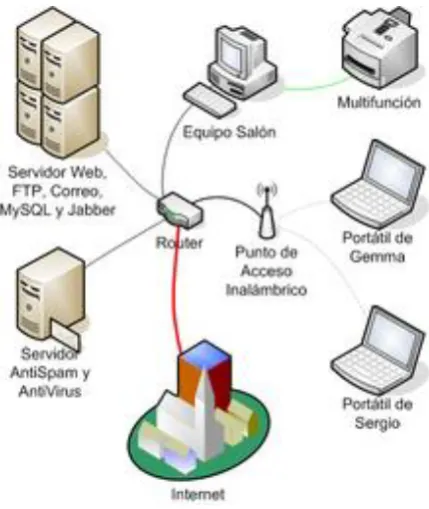
Fig 1. Wireless Local area Network
© 2016, IJCSMC All Rights Reserved 43
connection by an access point for internet accessing. The use for spread-spectrum or OFDM technologies could allow the users to move within a local coverage area, & still remain connected to network.
Products using IEEE 802.11 WLAN standards have been marketed under the brand name of Wi-Fi. Fixed wireless technology implementation point-to-point links among computers/networks at two locations at different places, often using for dedicated microwave/ modulated laser light beams over line of sight paths. It is often used within cities to connect networks within two/more buildings without installing a wired link.
Wireless mesh network :-
Wireless mesh network is wireless network made up for radio nodes organized within a mesh topology. Each node forwards messages on behalf of other nodes. Mesh networks could self-heal, automatically re-routing a node which has lost its power.
Wireless MAN
Wireless metropolitan area networks are a type of wireless network which would connect several wireless LANs.WiMAX is a type of Wireless MAN & is described by IEEE 802.16 standard.
Wireless WAN
Wireless WAN is wireless network is that typical covered large areas, like between neighbouring towns & cities, or city & suburb. These networks could be used to connect branch offices of business or as a public internet access system. Wireless connections among access points are usually point to point microwave links using parabolic dishes on 2.4 GHz band, rather than omni directional antennas used with smaller networks. A typical system consists of base station gateways, access points & wireless bridging relays. Other configurations are mesh systems where every access point acts as a relay also. When combined with renewable energy systems like photovoltaic solar panels or wind systems they could be stand alone systems.
Global area network
A global area network is used for supporting mobile across a arbitrary are number of the wireless LANs, satellite coveraged areas, etc. The key challenged with in mobile network is handing off user communications from one local coverage area to next. In IEEE Project 802, this consists of a succession of terrestrial wireless LANs.
Space network
Space networks are networks used for communication between spacecraft, usually within vicinity of Earth. Example of this is NASA's Space Network.
III.
Problem Statement & Objectives
There was problem with existing security system. There was security threat by crypto analyst. Crypto analyst is person who could access convert encrypted data to decrypted form using this cracking techniques.Lack of security is only barrier within wide adoption of cloud computing. The rapid growth for cloud computing have buy more security challenges for users. Cloud computing offers many benefits, but it also is vulnerable to threats. One of main threat exist today is problem of unauthorized users or entities. For avoiding this problem new technique is developed within this cloud computing is that data owners could share their outsourced data with a large number of users, who might want to retrieve certain specific data files they are interested within during a given session.
The main objective of research is to secure the data by integrating IP filter and OTP mechanism to enhance the security of cryptography based wireless network.
IV.
Existing Implementation
Cryptography
Encryption Steps:-
• Encryption of plaintext that is to be send by sender use to encryption from secret picture which can actually sender’s private key & thus generating cipher text using DES.
• Further, it would carry out process on secret picture by use of covered picture which is receiver’s public key & thus encrypting with in Rivers Shamir Adleman algorithm for example RSA.
© 2016, IJCSMC All Rights Reserved 44
Decryption Steps:-
The Decryption of message received from sender’s side would occur as follow:
• Digital envelope would reach receiver’s side.
• Digital envelope would be opened to get encrypted picture & decrypt using its own private key with RSA algorithm & receiver get secret picture.
• Cipher text would be changed using planet extusing secret picture applying DES.
• Thus receiver would get plain text.
Socket implementation after Cryptography
Here we would create our server & client communication protocol using own port using socket programming.
1. First step is to create server side port using following algorithm
• Create ServerSocket object using our own port 6666.
• Accept client request using Server socket object.
• Receive data from client within form of input data stream object.
• Convert data stream object to string
• Input data stream is within form of cipher data decrypted are using proposed algorithem.
• The Close Connection
2. Second step is to create Client side interface to connect to server.
• Create ServerSocket object using our own port 6666 to connect to server
• Encrypt data before sending.
• Send data using data output stream object.
• Clean output buffer.
• Close connection.
V.
PROPOSED MODEL
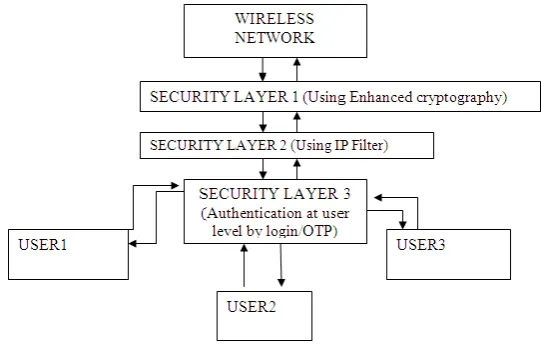
In proposed model there would be triple layered security:-
1. Security layer 1 would be customized cryptography algorithm of AES to enhance security. 2. Security layer 2 would drop packets from unauthentic IP addresses.
3. Security layer 3 would authenticate user by providing login password security at application layer. 4. Security would be enhanced using one time password also that becomes useless after using one time. 5. In this way we will secure wireless network from external attacks and authentic access.
© 2016, IJCSMC All Rights Reserved 45
OTP GENERATION
One time password would be generated randomly by Math.random() function in java. Each and every time the complex OTP number could be generated to be used during decryption.
Using Math.random() double random = Math. random() * 50 + 1; or int random = (int )(Math. random() * 50 + 1); ...
Using Random class in Java. Random rand = new Random(); int value = rand.nextInt(50); This will give value from 0 to 49. For 1 to 50: rand.nextInt(50) + 1.
IP Filter
Centralized database of IP address would be created on centralized server and decryption request from authentic IP would be accepted. If IP is not found in database or its status is 0 then Decryption would not be allowed.
VI.
Tables and figures of transmission speed of Packets in different media:-
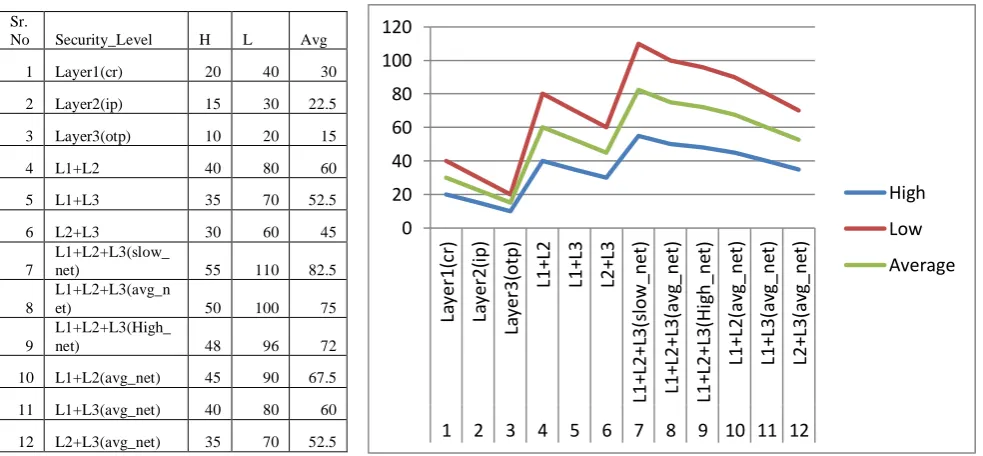
Table 1 Data in case of Fiber optics cable Fig 3. Analysis of transmission speed of packet in case of Fiber optics cable
0 20 40 60 80 100 120
La
yer
1(
cr
)
La
yer
2(
ip)
La
yer
3
(o
tp)
L1
+L
2
L1
+L
3
L2
+L
3
L1
+L
2+L
3(
sl
o
w_
net
)
L1
+L
2
+L
3
(avg
_net)
L1
+L
2
+L
3(
H
ig
h_ne
t)
L1
+L
2
(av
g_
ne
t)
L1
+L
3
(av
g_
ne
t)
L2
+L
3
(av
g_
ne
t)
1 2 3 4 5 6 7 8 9 10 11 12
High
Low
Average Sr.
No Security_Level H L Avg 1 Layer1(cr) 20 40 30 2 Layer2(ip) 15 30 22.5 3 Layer3(otp) 10 20 15
4 L1+L2 40 80 60
5 L1+L3 35 70 52.5
6 L2+L3 30 60 45
7
L1+L2+L3(slow_
net) 55 110 82.5
8
L1+L2+L3(avg_n
et) 50 100 75
9
L1+L2+L3(High_
net) 48 96 72
© 2016, IJCSMC All Rights Reserved 46
Table 2 Data in case of Coaxial Cable Fig 4. Analysis of transmission speed of packet in case of Coaxial Cable
Table 3 Data in case of Twisted Cable Fig 5 Analysis of transmission speed of packet in case of Twisted Cable 0 20 40 60 80 100 120 140 La yer 1( cr ) La yer 2( ip) La yer 3( o tp) L1 +L 2 L1 +L 3 L2 +L 3 L1 +L 2+L 3( sl o w_ net) L1 +L 2+L 3( avg _net) L1 +L 2+L 3( H ig h_ne t) L1 +L 2( av g_ne t) L1 +L 3( av g_ne t) L2 +L 3( av g_ne t)
1 2 3 4 5 6 7 8 9 10 11 12
High Low Average 0 20 40 60 80 100 120 140 La yer 1 (c r) La yer 2( ip) La ye r3
(otp) +LL1
2 L1 +L 3 L2 +L 3 L1 +L 2 +L 3 (s lo w_ net) L1 +L 2+L 3( avg _net ) L1 +L 2 +L 3 (H ig h_ne t) L1 +L 2 (av g_ne t) L1 +L 3 (av g_ne t) L2 +L 3 (av g_ne t)
1 2 3 4 5 6 7 8 9 10 11 12
High
Low
Average Sr.N
o. Security_Level H L Avg 1 Layer1(cr) 25 50 37.5 2 Layer2(ip) 20 40 30 3 Layer3(otp) 15 30 22.5
4 L1+L2 45 90 67.5
5 L1+L3 40 80 60
6 L2+L3 35 70 52.5
7
L1+L2+L3(slo
w_net) 60 120 90
8
L1+L2+L3(avg
_net) 55 110 82.5
9
L1+L2+L3(Hig
h_net) 53 106 79.5
10 L1+L2(avg_net) 50 100 75 11 L1+L3(avg_net) 45 90 67.5 12 L2+L3(avg_net) 40 80 60
Sno Security_Level H L Avg 1 Layer1(cr) 30 60 45 2 Layer2(ip) 25 50 37.5 3 Layer3(otp) 20 40 30
4 L1+L2 50 100 75
5 L1+L3 45 90 67.5
6 L2+L3 40 80 60
© 2016, IJCSMC All Rights Reserved 47
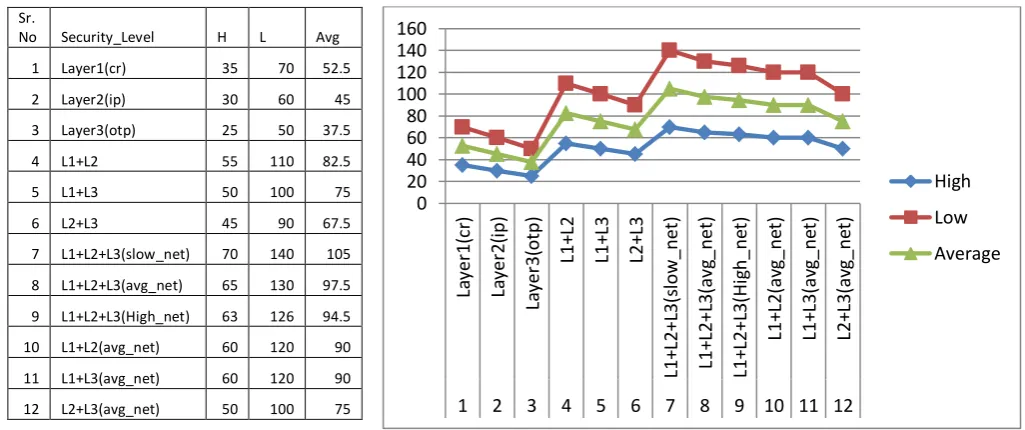
Table 4 Data in case of Wireless Network Fig 6 Analysis of transmission speed of packet in case of Wireless network
VII.
Conclusion & Future Scope
We have enhanced security by enhancing encryption algorithm. Here we have also defined our own ports for server and client. Its defined new rules for encryption & decryption & involved multiple layer of security like IP Filter & OTP code this would definitely improve security mechanism within Wireless computing environment.
Future Analysis could be made on different network and topology. Additional security layers may be added to enhance security
References:
1. Natasha Saini1, Nitin Pandey2, Ajeet Pal Singh3,” Enhancement Of Security Using Cryptographic Techniques”,
978-1-4673-7231-2/15©2015 IEEE.
2. Bhushan Chaudhari, Prathmesh Gothankar, Abhishek Iyer, D. D. Ambawade,”Wireless Network Security Using Dynamic Rule
Generation of Firewall”, 2012 International Conference on Communication, Information & Computing Technology (ICCICT), Oct. 19-20,2012.
3. Raghav Mathur, Shruti Agarwal,” Solving Security Issues in Mobile Computing using Cryptography Techniques -A Survey”,
International Conference on Computing, Communication & Automation (ICCCA2015), ISBN:978-1-4799-8890-7/15©2015 IEEE.
4. Sangita A. Jaju, Santosh S. Chowhan,” A Modified RSA Algorithm to Enhance Security for Digital Signature”,
978-1-4799-6908-1/15©2015 IEEE.
5. Natasha Saini1 ,Nitin Pandey2, Ajeet Pal Singh3,” Enhancement Of Security Using Cryptographic Techniques”,
978-1-4673-7231-2/15©2015 IEEE.
6. Michael Ekonde Sone,” Efficient Key Management Scheme to Enhance Security-Throughput Trade-off Performance in Wireless
Networks”, Science & Information Conference 2015 July 28-30.
7. Takahiro Fujita, Kiminao Kogiso, Kenji Sawada, & Seiichi Shin, “Security Enhancements of Networked Control Systems Using
RSA Public-Key Cryptosystem”, 978-1-4799-7862-5/15©2015 IEEE.
8. Prachi, Surbhi Dewan, Pratibha, Comparative Study of Security Protocols to Enhance Security over Internet”, 2015 Fifth
International Conference on Advanced Computing & Communication Technologies, 2327-0659/15© 2015 IEEE.
9. Antonio F. Skarmeta, Jos´e L. Hern´andez-Ramos, M. Victoria Moreno, “A decentralized approach for Security & Privacy
challenges in Internet of Things”, 2014 IEEE World Forum on Internet of Things (WF-IoT). 978-1-4799-3459-1/14©2014 IEEE.
10. Yasmin Alkady, Mohmed I. Habib, Rawya Y. Rizk,” A New Security Protocol Using Hybrid Cryptography Algorithms”,
978-1-4799-3370-9/13©2013 IEEE.
0 20 40 60 80 100 120 140 160
La
yer
1(
cr
)
La
yer
2(
ip)
La
yer
3(
o
tp)
L1
+L
2
L1
+L
3
L2
+L
3
L1
+L
2+L
3(
sl
o
w_
net)
L1
+L
2+L
3(
avg
_net
)
L1
+L
2+L
3(
H
ig
h_ne
t)
L1
+L
2(
av
g_ne
t)
L1
+L
3(
av
g_ne
t)
L2
+L
3(
av
g_ne
t)
1 2 3 4 5 6 7 8 9 10 11 12
High
Low
Average
Sr.
No Security_Level H L Avg
1 Layer1(cr) 35 70 52.5
2 Layer2(ip) 30 60 45
3 Layer3(otp) 25 50 37.5
4 L1+L2 55 110 82.5
5 L1+L3 50 100 75
6 L2+L3 45 90 67.5
7 L1+L2+L3(slow_net) 70 140 105
8 L1+L2+L3(avg_net) 65 130 97.5
9 L1+L2+L3(High_net) 63 126 94.5
10 L1+L2(avg_net) 60 120 90
11 L1+L3(avg_net) 60 120 90