i
MANAGEMENT CHALLENGES FACING HEAD TEACHERS IN THE IMPLEMENTATION OF SUBSIDIZED TUITION SECONDARY
EDUCATION: A CASE OF KAJIADO COUNTY, KENYA
KATUNDU N. SIMON E55/CE/14273/09
A RESEARCH PROJECT SUBMITTED IN PARTIAL FULFILLMENT OF THE REQUIREMENTS FOR THE DEGREE OF MASTER OF
EDUCATION IN THE DEPARTMENT OF EDUCATIONAL MANAGEMENT, POLICY AND CURRICULUM STUDIES
SCHOOL OF EDUCATION, KENYATTA UNIVERSITY
ii
DECLARATION
I declare that this research project is my original work and has not been presented in another university for a degree award. This research project has been accompanied by referenced sources duly acknowledged. Where text, data, tables or graphics have been borrowed from other sources including the internet, they are specifically accredited and references cited using APA style and in accordance with anti-plagiarism regulations.
Katundu N. Simon Date
E55/CE/14273/09
This research project has been submitted with our approval as university supervisors.
Dr. Martin Ogola Date
Lecturer,
Department of Educational Management,
Policy and Curriculum Studies, School of Education, Kenyatta University
Dr. Florence Itegi Date
Senior Lecturer,
Department of Educational Management,
iii
DEDICATION
iv
ACKNOWLEDGEMENT
I sincerely appreciate all those who through ideas, encouragement, and support helped me carry out this research and write this report. I would also wish to give my earnest thanks to my supervisors Dr. Martin Ogola and Dr. Florence Itegi for their determined effort and time in giving their professional supervision and guidance during the research work.
v
TABLE OF CONTENTS
DECLARATION... ii
DEDICATION... iii
ACKNOWLEDGEMENT ... iv
TABLE OF CONTENTS ...v
LIST OF TABLES ... viii
LIST OF FIGURES ... ix
LIST OF ABBREVIATIONS AND ACRONYMS ...x
ABSTRACT ... xi
CHAPTER ONE: INTRODUCTION AND BACKGROUND TO THE STUDY ...1
1.1 Introduction ...1
1.2 Background to the Study ...1
1.3 Statement of the Problem ...5
1.4 Purpose of the Study ...6
1.5 Objectives of the Study ...6
1.6 Research Questions ...6
1.7 Significance of the Study ...7
1.8 Limitations of the Study...7
1.9 Delimitations ...8
1.10 Assumptions of the Study ...8
1.11 Theoretical Framework ...8
1.12 Conceptual Framework ...11
1.13 Operational Definition of Terms ...13
CHAPTER TWO:REVIEW OF RELATED LITERATURE ...14
2.1 Introduction ...14
2.2 Global Overview of Subsidized Secondary Education ...14
2.3 Status of Secondary Education in Sub-Saharan Africa...15
2.4 Status of Subsidized Secondary Education in Kenya ...16
vi
2.5.1 Physical Facilities ...18
2.5.2 Instructional Materials ...19
2.5.3 Qualification and Adequacy of Teachers ...20
2.5.4 Socio-Cultural Factors ...21
2.5.5 Learner Characteristics in Relation to SSE ...22
2.6 Summary ...23
CHAPTER THREE:RESEARCH DESIGN AND METHODOLOGY ...24
3.1 Introduction ...24
3.2 Research Design...24
3.3 Location of the Study ...24
3.4 Target Population ...25
3.5 Sample and Sampling Procedures ...25
3.6 Research Instruments ...27
3.6.1 Questionnaires...27
3.7 Pilot Study ...27
3.7.1 Validity ...28
3.8 Data Collection Procedure ...28
3.8.1 Administration of Questionnaires ...28
3.8.2 Conducting Interviews ...29
3.9 Data Analysis ...29
3.10 Ethical Consideration ...30
CHAPTER FOUR:DATA ANALYSIS, FINDINGS AND DISCUSSIONS ...31
4.1 Introduction ...31
4.2 General and Demographic Information ...31
4.2.1 Response Rate ...31
4.2.2 Demographic Information ...32
4.2.3 Gender of the Respondents ...32
4.2.4 Academic Qualification ...32
4.2.5 Enrolment Trend of Students in Schools ...33
4.2.6 Distribution of Teachers by Teaching Experience...34
vii
4.3.1 Adequacy of Physical Facilities ...36
4.3.2 Influence of Physical Facilities on Quality of Teaching /Learning ..38
4.4 Instructional Materials and Quality of Secondary Education ...39
4.4.1 Sufficiency of Instructional Resources ...39
4.4.2 Influence of Instructional Materials on Teaching /Learning ...41
4.5 Adequacy of Teachers and Subsidized Secondary Education ...43
4.5.1 Adequacy of Teachers...43
4.5.2 Influence of Teacher Shortage on Teaching and Learning ...44
4.6 Socio- cultural Factors and Subsidized Secondary Education programme .46 4.7 Characteristics of Students and the Implementation of SSE ...48
4.7.1 Student Characteristic and Implementation of SSE ...49
4.7.2 Influence of Learner Characteristics on Teaching and Learning ...50
CHAPTER FIVE:SUMMARY, CONCLUSIONS AND RECOMMENDATIONS ...52
5.1 Introduction ...52
5.2 Summary of Findings ...52
5.2.1 Influence of Physical Facilities on Implementation of SSE ...52
5.3 Conclusion ...54
5.4 Recommendations of the Study ...56
5.5 Suggestions for Further Study ...57
REFERENCES ...58
APPENDICES ...64
Appendix I: Questionnaire for the Head teachers ...64
Appendix II: Questionnaire for teachers ...70
Appendix III: Questionnaire for Students ...75
Appendix IV: Interview Guide for Sub-County Education Officer (SCEO) and Sub-County Quality Assurance and Standards Officer (QUASO) 77 Appendix V: Research Authorization from SCEO ...78
Appendix VI: Research Authorization (NACOSTI) ...79
viii
LIST OF TABLES
Table 3.1: Category of Schools ... 25 Table 3.2: A summary of population and sample that will be used in the study .. 26 Table 4.1: Academic Qualification of Head Teachers and Teachers ... 32 Table 4.2: Number of years of teaching in the current school ... 35 Table 4.3 Respondents’ views’ on influence of physical facilities on quality of
teaching/learning ... 38 Table 4.4: Respondents’ views’ on sufficiency of instructional resources ... 40 Table 4.5: Respondents’ Opinions on textbook ratio in schools ... 41 Table 4.6: Respondents’ views’ on influence of instructional materials on teaching and learning ... 42 Table 4.7: Status of teachers in secondary schools ... 43 Table 4.8: Respondents’ views’ on influence of teacher shortage on teaching and
learning ... 45 Table 4.9: Respondents’ views’ on influence of socio-cultural factors on teaching
and learning ... 47 Table 4.10: Respondents’ views’ on influence of learner characteristics on teaching
ix
LIST OF FIGURES
Figure 1.1: Basic systems model ... 9
Figure 1.2: Relationship between management challenges head teachers face during implementation of SSE and the desired outcomes. ... 11
Figure 4.1: Enrolment trend in schools ... 33
Figure 4.2: Teachers’ teaching experience ... 34
Figure 4.3: Adequacy of physical facilities in schools ... 36
Figure 4.4: Socio-cultural practices affecting education in schools ... 46
x
LIST OF ABBREVIATIONS AND ACRONYMS
BOM Board of Management
CDE County Director of Education DRC Democratic Republic of Congo EFA Education For All
FDSE Free Day Secondary Education FGM Female Genital Mutilation FPE Free Primary Education GER Gross Enrolment Ratio GOK Government of Kenya
MDGs Millenium Development Goals
MOEST Ministry of Education Science and Technology QUASO Quality Assurance and Standards Officer SCEO Sub County Education Officer
SCEO Sub County Education Officer SSA Sub-Saharan Africa
SSE- Subsidized Secondary Education TSC Teachers Service Commission
xi
ABSTRACT
1
CHAPTER ONE
INTRODUCTION AND BACKGROUND TO THE STUDY
1.1 Introduction
This chapter presents background to the study, problem statement, purpose of the study, objectives of the study, research questions, limitations and delimitations of the study and assumptions of the study. Theoretical and conceptual frameworks are also described.
1.2 Background to the Study
Education provides the basic foundation of the growth and development of human capital leading to high living standards and quality welfare of our society. Thus, through education, individuals who are the recipients are able to realize their full potential and become productive in the society. The policy, Education For All (EFA) was first embraced when the a world conference of all states was held by United Nations Educational Scientific and Cultural Organizations (UNESCO) at Jentein Thailand in 1990 (Republic of Kenya, 2005). This led the government to invest heavily in education towards achieving the EFA goals. As well, the demand for education changed at an increasing rate. For instance, it was noted that there was a 40% increase in enrolment in primary schools between the year 1999 and 2005 (Verspoor, 2008). As a result, the demand for secondary education also increased as large numbers graduated from primary schools.
2
with such problems as inadequate teaching and learning resources and poor quality of secondary education.
In Columbia, Khames (2000, cited in Mwendwa, 2015) notes that the major issue affecting administrators in secondary schools is limited facilities which places majority of school-going age to a risk of poor attendance and drop-out from school. Privatization of education has also been realized due to preference of selective scholarship to regional education. Such challenges as shortage of qualified and trained teachers have been reported in Botswana (2015).
It was noted that in Kenya more girls dropped out of school than boys due to unsupportive environment to the girls (Mwiria, 2005, cited in Hassan, 2012). Moreover, low enrolment in educational institutions is majorly contributed by cultural related practices including Female Genital Mutilation (FGM), domestic labour and early marriages. According to Muhindi (2012), parental involvement in children’s education forms a significant factor in retention and completion rates as many parents believe the government takes all the responsibilities following the introduction FDSE. Hence, parents hardly take part in their children’s education making it difficult for head teachers to maintain good working relationships with the community due to poor interactions and communication (Kilonzo, 2013).
3
placing Africa in a position where culture and traditional norms are protected within the education policy (Republic of Kenya, 2005).
In Kenya, education is acknowledged as a human right to every citizen and the Constitution provides that every child is entitled to basic education. Despite these acknowledgment, the intake rate in secondary schools in Kenya is still dismal in many parts of the country, especially the Arid and Semi-Arid Locations (ASALs). For instance, the enrolment in secondary schools decreased from 30% in 1990 to 27% in 1994 with most cases reported in ASAL areas. In response to this, the Kenyan government undertook another strategy related to strengthening access, equity and provision of quality education for all. A report by UNESCO (2005) concurs that secondary education is becoming more widely available in some developing countries worldwide.
4
an increase in the number of public secondary schools in 1963 from 151 to 3660 in 2005 (Republic of Kenya, 2005).
In Kenya, an additional of 1.5 million children had opportunities to secure places for the first time in primary schools following the introduction of FPE which ensured access, retention and quality education (UNESCO, 2005). However, this created overcrowding in secondary schools due to high demand hence the government subsidized secondary education by catering for tuition fee in 2008, while parents were to meet other requirements such as transport, boarding fees, feeding programs and development funds.
While provision of Free Day Secondary Education (FDSE) is commendable as it offers more children from poor families’ access to secondary schools, it’s important that the government’s ambition does not compromise on quality. Education cost has been the greatest concern with regards to meeting the expense in Sub-Saharan Africa as almost all states have implemented policies for EFA and FPE. Despite the implementation of FPE policy in achieving Universal Primary Education, the head teacher’s role still remains critical at the school level (Kamunde, 2010). Head teacher as a stakeholder is faced with enormous demands and complex challenges that is built into reform processes.
5
cited in Kwamboka, 2008). However, the effort has been surpassed by emerging issues related education ranging from delayed disbursements by the government, over-enrollment in classes and limited teaching and learning facilities (Turana, 2010). It is against this background that this study sought to investigate and suggest suitable solutions to these issues.
1.3 Statement of the Problem
6
1.4 Purpose of the Study
This study aimed at investigating the management challenges facing the implementation of Subsidized Secondary Education in public secondary schools in Mashuuru Sub-County, Kajiado County. This study also sought to assess the implication of these challenges on quality of secondary education.
1.5 Objectives of the Study
The study was guided by the following objectives:
i) To determine the effect of physical facilities on quality of secondary education in Mashuuru Sub-County
ii) To establish the influence of instructional materials on quality of secondary education in Mashuuru Sub-County.
iii) To investigate how staffing of teachers affects the management of SSE and its implication on quality of teaching and learning process in Mashuuru Sub-County.
iv) To determine the effect of socio-cultural factors on the SSE programme in Mashuuru Sub-County.
v) To assess the influence of students’ characteristics on the implementation of SSE.
1.6 Research Questions
The study sought to answer the following research questions:
7
iv) In what ways do socio cultural practices influence the implementation of SSE?
v) How do characteristics of learners influence the implementation of SSE?
1.7 Significance of the Study
The study findings might be of great significance to the Ministry of Education in providing useful data based on issues related to implementation of free secondary school education in Kenya. In response, the Ministry of Education would be a position to establish develops strategies to curb them and support effective implementation of Subsidized Secondary Education.
It might be of help to the Boards of Management of public secondary schools by providing insight on the issues related to implementation of free secondary school education programmeand its implementation. Head teachers and teachers might also effectively respond with regards to ways of proper adjustments.
Recommendations of this study might provide opportunities for other interested researchers to add more knowledge on the similar problem of the study which would otherwise be relevant and used to make comparisons related to education at secondary level.
1.8 Limitations of the Study
8
financial constraints and a large expansive area that cannot be accessed easily due to poor transport and communication network.
It was not possible to cover opinions of the educational stake holders because getting all of them required considerable time and resources which were not available.
1.9 Delimitations
This study was confined into only issues encountered by head teachers in the management of SSE because of their central role in the implementation of the programme. Thus other factors like parental involvement and social divides were left out in the study. Only public schools located within Mashuuru Sub-County were included in the study hence the private schools and other public secondary schools located out of the boundaries of Mashuuru Sub-County were left out.
1.10 Assumptions of the Study
i) Head teachers in secondary schools were facing issues related to implementation of Subsidized Secondary Education Programme.
ii) All the target population was easily accessible during the actual study. iii) The information given by the respondents were true and without bias.
1.11 Theoretical Framework
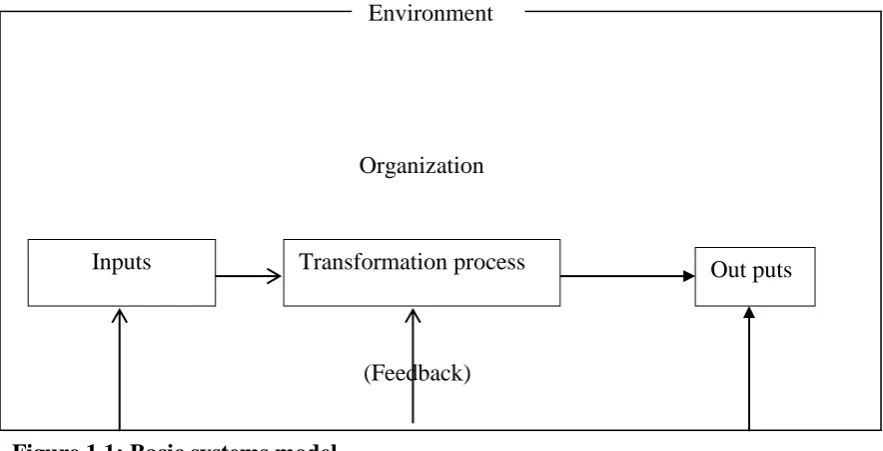
9
interrelated. Inputs in this case include materials, human, finance or information resources which are utilized to yield a product or service. During the process, these inputs undergo a transformation through technology and administrative functions by the head teachers. In the context of the study, transformation is the learning process occurs when students and teachers interact in schools.
On the other hand, the outputs include the products and services of the school which are generated and distributed in form of knowledge. Feedback in this case is taken as the information concerning the process of the organization that dictates the selection of inputs during the cycle that follow. Finally, the environment includes social, political and economic forces that impinge on the organization. To school administrators this include the pressure at the local, County and national levels. Thus according to Lunenburg (2008), it is the responsibility of the administrators of schools to manage and establish internal operations while at the same time monitoring the environment and responding to the external demands.
Figure 1.1: Basic systems model
Adopted from educational administration - concepts & practices 5th Ed. By Lunenburg FC, Ornstein A, C (2008: 31)
Organization Environment
(Feedback)
10
The organization is the school. In the study, the inputs include students who were enrolled in school, Subsidized Secondary Education funds given to school by the government, physical facilities like libraries, laboratories, toilets among others and teaching learning resources like classrooms, textbooks, and desks. The transformation process is the interaction between teachers and students, among teachers themselves, among teachers and support staff and students and support staff. All these are meant to add value on main clients who are students. Outputs include the way students succeeded while in school for example how they performed internal exams and final KCSE exams, measures taken by head teachers when SSE funds delayed or failed to meet school needs. It also includes the general development of school in terms of school infrastructure and performance in KCSE exams. The feedback is information given on the outputs like student’s success or failure in internal school or national exams (KCSE) or even County exams. It also includes information on the pace of the school development for example construction new infrastructure like libraries, laboratories among others. The environment includes the societal beliefs of people around the school for example cultural beliefs, economic lifestyle and their way of life. It also includes political forces and their influence on the school.
11
1.12 Conceptual Framework
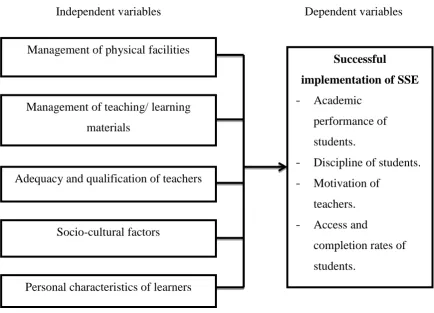
According to Kothari (2004), a conceptual framework presents an argument of the concepts chosen for investigation, and any relationship among them will be useful and appropriate given the research problem under investigation. Based on the systems theory, the success in implementation of the free secondary education must be taken as a whole taking care of the interactions between its parts and the external environment (Lunenburg, 2008). For this to be poosble, school management, parents and community must play their role effectively for the benefit of school. Figure 1.2 presents the relationship between management challenges head teachers face during implementation of SSE and the desired outcomes.
Figure 1.2: Relationship between management challenges head teachers face during implementation of SSE and the desired outcomes.
Management of physical facilities
Management of teaching/ learning materials
Adequacy and qualification of teachers
Socio-cultural factors
Personal characteristics of learners
Successful implementation of SSE
- Academic performance of students.
- Discipline of students. - Motivation of
teachers. - Access and
completion rates of students.
12
Figure 1.2 demonstrates that if laboratories, dormitories, playgrounds, libraries, latrines and classrooms are inadequate, teaching and learning in affected. Students, teachers and support staff utilize those facilities. Teaching/learning resources included text books, exercise books, pens, chalk, dusters, and reference books like dictionaries, and Bible among others. It is the role of the head teacher to ensure all the instructional materials were in school. If they are not available or inadequate, teaching / learning process is negatively affected. Teachers should be adequate, qualified and committed in performance of their duties in school because they play key roles in successful implementation of SSE.
13
1.13 Operational Definition of Terms
Administration-Ability to co-ordinate events and direct them in achieving a common goal (s) and objective (s) in an organization.
Drop out – A student or pupil who leaves school before completing the course which he/she enrolled in.
Head teacher- Refers to a teacher with overall administrative responsibilities over a school.
Management challenges- These are difficulties that are experienced by school head teachers in the course of administering the schools.
Management-Entails the combination of setting objectives and arranging suitable resources in order to accomplish the stated organizational goals by focusing on all employees.
Physical facilities –includes such amenities as classrooms, libraries, laboratories, play grounds, latrines and dormitories which simplify teaching and learning in secondary schools.
Subsidized Secondary Education – Refers to secondary education funded by the government from taxes or donor funding. In Kenya, it takes care of tuition, repairs and maintenance, and conservancy, activity fees and personal emolument.
Teaching experience-Refers to the number of years a teacher has taught in a particular school.
14
CHAPTER TWO
REVIEW OF RELATED LITERATURE
2.1 Introduction
This chapter reviews the literature of studies related to the topic of this study. The literature reviewed has been done in accordance with the objectives of the study which include the global and regional overview of subsidized secondary education and management factors influencing quality of subsidized secondary education. Research gaps have been also identified in empirical studies and filled by this study.
2.2 Global Overview of Subsidized Secondary Education
According to the World Bank (2005), the subsidiary nature of secondary schools in historical platform of developed countries was linked to higher education leading to unique policy, curriculum decisions, evaluation, accreditation and certification. However, in the 20th Century, policies were made relating to secondary education which at expanding access to education and universal coverage by United States of America. As a result, compulsory education was extended to the point that basic education included lower secondary schooling. Education was fully funded beyond the compulsory level in developed countries.
15
parents, school boards, parents, teachers and other partners collaborate with the department of education to ensure that policies governing school fees are implemented in all regions within Canada.
Free education up to secondary level is provided through fiscal policies in Japan and hence the school going age have no option rather than attending school full time. Through the Constitution Welfare Clause, Article 1 section 8, the US government is directed to levy taxes and collect revenues for the support of education (Muchiri, 2012).
2.3 Status of Secondary Education in Sub-Saharan Africa
Following the implementation of free primary education in most countries in Africa, the demand for secondary education has increased in the period between 1999 and 2005 by almost 40% (Verspoor, 2008). It is envisioned that the number in secondary enrolment could even triple by 2020 in many countries due to high completion rates in primary schools creating a big challenge for secondary school policy with regards to responding to inevitable rapid increase in demand for access. This requires huge investment in the improvement of human resources basically in secondary education. According to Verspoor (2008), the issue of high demand for access in secondary education has been addressed by many countries through spreading the same quantity of resources over larger number of students. This has consequently exposed many schools in situations of insufficient text books, large class sizes, poorly stocked libraries and double or triple shifts in use of laboratory equipment.
16
secondary schools in Democratic Republic of Congo. In Burkina Faso, the government offers two government paid teachers to every newly established community lower secondary school (Muchiri, 2012). Community teachers in junior secondary schools in Chad are mostly paid by the parents. Studies in Malawi show that parents are also burdened to incur expenses for writing materials and books for their children despite the abolition of school fees.
In Ghana, free secondary education has been implemented since 1996 despite the introduction of indirect fees by some schools which is meant to cover for the lost revenue created as a result of obligation for district authorities to abolish school fees. According to Muhindi (2012), girls remain under represented in the overall enrolment in Rwanda following an introduction of a nine-year basic education programme which led to 18.3% increase in enrollment in 2006.
2.4 Status of Subsidized Secondary Education in Kenya
In Kenya, the provision of quality education is envisioned as the key variable towards accomplishing the national development goals and the vision 2030. To achieve industrialization, the Kenyan government has assured maximum development of human resource which is basic in all aspects of growth and development (Munavu, Ogutu & Wasanga, 2008). Despite the consequent increase in enrollment since 2003, the introduction of FDSE in 2008 intended to minimize the cost burden on parents and expand access of more children to minimum basic secondary education.
17
relevance, quality and equity (Republic of Kenya, 2005). The numbers of primary schools do not match the few secondary schools in Kenya thus limiting Gross Enrollment Ratios (Munavu et al., 2008). Despite the expectation of easing the burden of secondary education, FSDE has not been efficient and sustainable due to several challenges faced by the administrators in its implementation.
Muthuiya (2013) identifies delay of disbursing funds, overcrowding, inadequacy of facilities, inadequate funds to support all students and embezzlement of funds as the main challenges facing the implementation of SSE.
Muhindi (2012) notes that the FDSE is not adequate and majority of students are not able to meet the cost of compulsory items as required of them. In his study, Mwendwa (2015) identified limited physical facilities as the major issue encountered by the principals in management of human resources in the secondary schools. The study found out that principals face financial challenges, lack of adequate facilities and shortage of teaching staff.
18
poverty levels in the district, early pregnancies and marriages and heavy domestic responsibilities for the girl child.
According to Ogola (2011), most head teachers experience challenges such as inadequate teaching staff, inadequate instructional materials, lack of finances, indiscipline among pupils and lack of physical facilities. This interferes with provision of quality education since the introduction of SSE. The study emphasizes that head teachers experience several challenges in relation to finance, discipline, physical facilities among others.
2.5 Management Factors Influencing Quality of Subsidized Secondary Education
This section deals with challenges facing head teachers in the management of SSE and their implication to quality of education. The first part deals with physical facilities and the effects followed by instructional materials then qualifications and adequacy of teachers, socio cultural factors and their effects and characteristics of students and ends with a summary.
2.5.1 Physical Facilities
19
UNESCO Report (2005), states that increased enrolment has adverse effect on physical facilities. It indicates that congestion and overcrowding militates against good teaching / learning. The report argues that water and sanitation are important in teaching and learning environment. It also states that large enrolments put stress on physical facilities making the teaching learning environment unconducive.
In a study by Nyongesa (2007), most schools lack enough facilities and have inadequate equipment such as furniture, laboratories and libraries. To manage these limited physical resources efficiently; the head teacher should delegate some of the responsibilities to teachers and support staff. It is against this background that my study concerned itself with physical facilities.
A study by Ogola (2011) states that many schools lack physical facilities like social halls, libraries, dining halls and dormitories. It points out that this creates a lot of administrative constraints to head teachers as in some schools students have to study in overcrowded classes, libraries, laboratories etc. which interferes with quality teaching and learning. Asayo (2009) states that the effort of the government to sort out the problems of SSE has not met its opted objective. Currently, many problems have not been fixed in many schools across the country since the situation was even made worse following students’ protests which led to destruction of school facilities through fire (Daily Nation, July 21, 2016).
2.5.2 Instructional Materials
20
teaching and learning in secondary schools. These include charts, maps, textbooks, and journals, magazines whose management is based on good planning, acquisition, allocation and maintenance.
Olembo et al., (1999) as quoted by Ogola (2011) states that textbooks remain the most widely used instructional materials and head teachers have to be instrumental in securing adequate financial support for instructional materials of all types for the purpose of quality teaching and learning process. It is role of the head teacher to ensure that his/her school has adequate teaching/ learning materials. This is a challenge to most head teachers (Olembo & Ross, 1992).
2.5.3 Qualification and Adequacy of Teachers
According to UNESCO (2006), increased large classes means teachers handle many students and therefore students hardly get the attention they deserve hence many are not learning much and this militates against quality education. Teachers can no longer mark exercise books on time because there are many students. Due to increased work load, teachers resort to fewer assignments and fewer questions.
21
Mbiti (1999) as quoted by Mutembei (2012) asserts that the head teacher must observe the following important points in his/her dealings with the staff members. He must provide opportunities for teamwork among the staff members, he must create a sense of respect and trust in every teacher, he must endeavor to create a high sense of morality and professional commitment to the school and he must delegate duties and responsibilities to other teachers.
According to Munira (2015) effective supervision of teachers by headteachers has not been effective due to large class size following the introduction FDSE which led to high demand for secondary education. This has also posed a challenge to head teachers in their teacher motivating roles in secondary schools (Onyango, 2011). This study partly seeks to focus on teachers and what schools do in case they are inadequate in Mashuuru Sub-County because qualified teachers are a prerequisite to the provision of quality education.
2.5.4 Socio-Cultural Factors
Socio-cultural beliefs and practices in the community influence the education standards. A study by Aftin (2011) in Mandera County revealed that most girls who dropped out of school were married off to men who were wealthy in exchange of dowry due to peer pressure and demand by parents. Keveu and Maiyo (2008) identifies early pregnancies and marriages as a constraint affecting girl child education.
22
addition, boys have to help their parents with fencing, herding and help in branding livestock during market days (Ombongi, 2008).
Saru (2006) revealed that FGM practices, early marriages and lack of priority in education among the girls were some of the factors influencing retention and access in ASAL areas. According to Hassan (2012), boys were preferred to girls by their parents as far as schooling is concerned. It is a belief that educating girls is a waste of resources among Somali families and hence boys are given more privileges than girls since they are referred to as bread winners and family heads (Hassan, 2012).
2.5.5 Learner Characteristics in Relation to SSE
UNESCO (2006) states that teachers cannot maintain tight control over larger classes. This deteriorates discipline due to large numbers of students and teachers shortage. Congestion in class hinders classroom management and teachers control over students. Some students who are expelled for disciplinary reasons come back to school. In a study by Ogola (2011), there are efforts made by many schools to stamp out discipline among students. The rampant issue is that in management of students personnel, head teachers are still faced with disciplinary problems such as vernacular speaking, drug abuse, lateness, alcoholism, stealing, coupling, cheating in examinations etc. He emphasizes that this has interfered with quality education since the introduction of SSE.
23
evaluate students’ progress and time tabling (Olembo et al., 1999; Siringi, 2003).).Some of the discipline problems emanate from the society around the school and it’s the role of the head teacher to solve them (Grossinkle, 1990).
In the course of managing discipline of students, head teachers are sometimes let down by teachers. Kilonzo (2013) states that head teachers are sometimes threatened by students and some parents who make them refrain from taking appropriate action against offenders. In addition, some teachers fail to implement the school rules and regulations therefore making head teachers ineffective in handling indiscipline.
2.6 Summary
24
CHAPTER THREE
RESEARCH DESIGN AND METHODOLOGY
3.1 Introduction
This chapter explains the methods that were used to carry out this study. It describes the research design, location of the study, target population and sample size, research instruments, pilot study, validity and reliability of the instruments, and data collection techniques. Data analysis and ethical considerations have been also discussed.
3.2 Research Design
This study adopted a descriptive survey design. The design was used because the study involved a broad category of stakeholders in education and this allowed the researcher to collect data, summarize, present and interpret without any manipulation (Orodho, 2002). Mugenda and Mugenda (2003) point out that descriptive research studies are designed to gather pertinent and precise information related to the current situation of the phenomenon and report the way things are. Through the use of descriptive research design, the research is able to interact with the individuals, personally administer research tools, and directly make observations on the current events (Kombo, 2010).
3.3 Location of the Study
25
facing head teachers in implementing SSE in Mashuuru Sub-County. The area was also ideal for the study since the researcher is familiar with the location.
3.4 Target Population
This study targets all the 6 head teachers, 67 teachers and 1120 students in 6 public secondary schools in Mashuuru Sub-County. The secondary schools are comprised of 1 girl’s boarding, 1 boy’s boarding, 1 mixed and 3 mixed/boarding schools. One Sub County QUASO and 1 Sub-County Education were also targeted.
3.5 Sample and Sampling Procedures
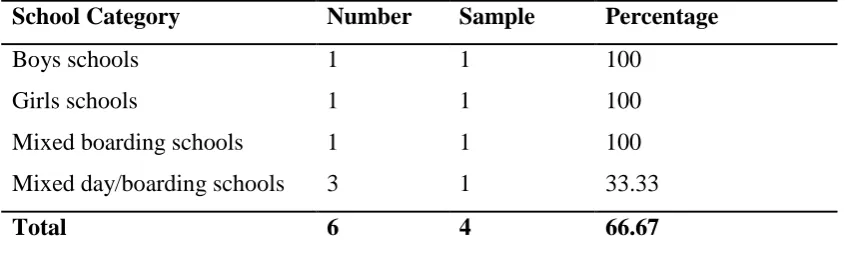
Stratified random sampling technique was used to pick 1 boy’s, 1 girl’s, 1 mixed and 1 mixed day/boarding secondary schools from the 6 secondary schools leading to a total of 4 schools. The use of stratified random sampling was appropriate because it enabled each individual in all categories to be selected in the study. Table 3.1 presents the sample distribution of schools based on categories.
Table 3.1: Category of Schools
School Category Number Sample Percentage
Boys schools 1 1 100
Girls schools 1 1 100
Mixed boarding schools 1 1 100
Mixed day/boarding schools 3 1 33.33
Total 6 4 66.67
Source: Mashuuru Sub-County Education Office
26
numbered in odd numbers from number 1 were selected from the class register until the required number is reached. In addition, purposive sampling was used to select all the Sub-County Education Officer and Sub-County Quality Assurance and Standards Officer (QUASO) as the key respondents.
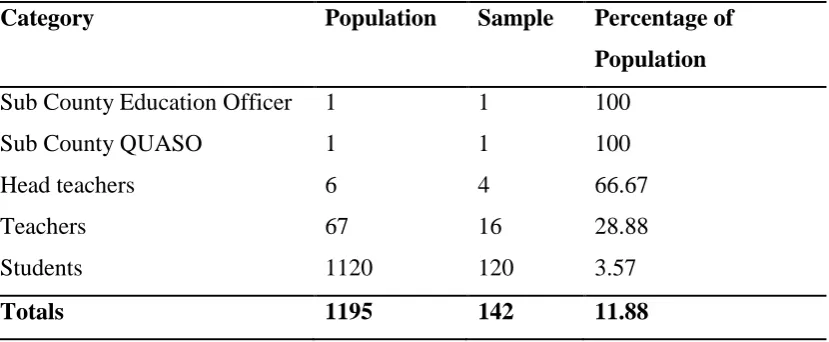
Teachers were sampled using stratified random sampling technique as follows; 1 from humanities department, 1 from languages department, 1 from science department and 1 from technical department yielding a of 4 teachers per school. Therefore, the summary of the sample population was 4 head teachers, 16 teachers, 1 SCEO, 1 QUASO and 120 students. This yielded a total of 142 respondents which represented 11.88% of the target population. This was in line with Gay (1992) who suggests that a sample of least 10% is an ideal for study for a bigger population and 20% for a smaller population.
Table 3.2: A summary of population and sample that will be used in the study Category Population Sample Percentage of
Population
Sub County Education Officer 1 1 100
Sub County QUASO 1 1 100
Head teachers 6 4 66.67
Teachers 67 16 28.88
Students 1120 120 3.57
27
3.6 Research Instruments
Questionnaires and interview guides were used for data collection.
3.6.1 Questionnaires
To obtain information from head teachers, teachers and students, questionnaires were personally administered. The type of questionnaires which were to be used comprised both open ended and closed end questions. Questionnaires were used because it has the ability to collect a large amount of data in a reasonable quick space of time. The utilization of the instrument was appropriate because it is cost effective and easy to administer (Orodho, 2005).
3.6.1 Interview Schedule
The interview schedules were used to collect data from the Sub-County Education Officer and Sub-County QUASO. The interview guides consisted of open-ended items and were appropriate to gather in-depth data which could not be possibly collected using other research tools like questionnaires and observation checklists (Mugenda, 1999).
3.7 Pilot Study
28
researcher to identify any weakness in the research tools and to assess if the anticipated data analysis techniques were appropriate.
3.7.1 Validity
Content validity was ascertained through expert judgment by research experts who were consulted. Therefore, the researcher sought assistance of the supervisors to help improve content validity of the instruments. The feedback was used to adjust and modify the items which were identified as ambiguous and irrelevant to the study objectives. Difficult and unclear questions were reframes using appropriate language that could be easily understood by the respondents.
3.7.2 Reliability
An instrument is said to be reliable if it consistently produces similar results when retested with similar subjects (Mugenda & Mugenda, 1999). Test-retest method was used whereby the research tools were administered to a sample group and after one week the same instruments were administered to the same group. The scores from two tests were correlated using Spearman’s Rank order correlation and a coefficient of 0.76 was obtained and accepted. The instruments are considered reliable if a correlation of 0.75 or above is obtained (Orodho, 2005).
3.8 Data Collection Procedure
3.8.1 Administration of Questionnaires
29
with the respondents on the first day of the week. On the second day, questionnaires were personally administered to head teachers, teachers and students through drop-and-pick –later method. Questionnaires were collected later on the same day.
3.8.2 Conducting Interviews
One on one interview was conducted on County Education Officer and Sub-County QUASO which involved probing the interviewees by asking open questions to gather in-depth information. The exercise for each session tool an approximate duration of 25 minutes. Data were recorded through note taking.
The same procedure as demonstrated in the stages above) continued for the remaining schools which tool a time frame of two weeks. By the end of the study, the researcher appreciated all the participants and the collected data were kept safely for analysis.
3.9 Data Analysis
30
3.10 Ethical Consideration
31
CHAPTER FOUR
DATA ANALYSIS, FINDINGS AND DISCUSSIONS
4.1 Introduction
This study aimed at investigating the management challenges facing the implementation of Subsidized Secondary Education in public secondary schools in Mashuuru Sub-County, Kajiado County. This chapter presents data analysis, results and discussions of the analyzed data gathered from a total sample of 142 respondents. Data was analyzed using descriptive and inferential statistical methods. Information processed was tabulated. The findings of the research study were discussed under the following themes derived from the objectives; to determine the influence of physical facilities on quality of secondary school education, to examine the influence of instructional materials on quality of secondary education, to establish how staffing of teachers affects the management of subsidized secondary education, to analyze the influence of socio-cultural factors on the subsidized secondary education programme, and to determine the influence of students characteristics on the implementation of subsidized secondary education.
4.2 General and Demographic Information 4.2.1 Response Rate
32
4.2.2 Demographic Information
The demographic information of respondents such as age, gender, and teaching experience, and education level were used to characterize the management challenges for head teachers in implementation of subsidized secondary education in Mashuuru sub-county.
4.2.3 Gender of the Respondents
The gender distribution of the respondents was analyzed. The findings revealed that 3(75%) of the head teachers were male while 1(25%) was a female head teacher. This implies that leadership in secondary school was not equally distributed with regards to gender. Among the teachers, 10(62.5%) were male while 6(37.5%) were female. The findings further indicated that 75(62.5%) of the students were male while only 45(37.5%) were female students implying that there was gender imbalance in enrolment.
4.2.4 Academic Qualification
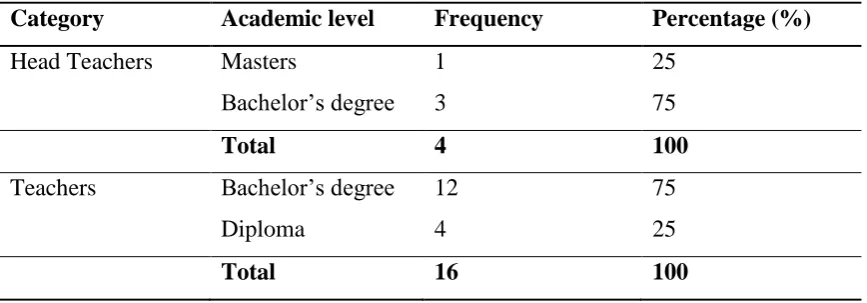
The researcher also assessed the level of academic qualification of the respondents and the results are as presented in table 4.1.
Table 4.1: Academic Qualification of Head Teachers and Teachers
Category Academic level Frequency Percentage (%)
Head Teachers Masters 1 25
Bachelor’s degree 3 75
Total 4 100
Teachers Bachelor’s degree 12 75
Diploma 4 25
33
From the table above, the study found that majority of the head teachers (75%) were Bachelor degree holders, a few (25%) were Master’s degree holders, while none had diploma as their level of academic qualification. Majority of the teachers (75%) were bachelor’s degree holders, while a few (25%) had diploma academic qualification. This implied that all the teachers had the academic qualifications required for teaching in secondary schools.
4.2.5 Enrolment Trend of Students in Schools
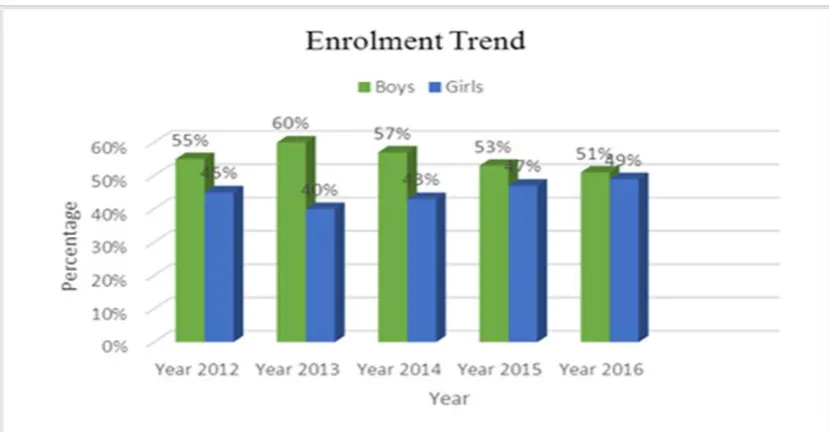
The trend of the students enrollment in their schools since the year 2012 was assessed by seeking the head teachers’ opinions and the findings were as shown in the Figure 4.1.
Figure 4.1: Enrolment trend in schools
34
in 2014. The study indicated that 53% of students who enrolled were boys against 47% who were girls in 2015; while 51% of the students who enrolled were boys against 49% girls in 2016. Thus, from the study, it is therefore evident that the enrolment trend favors the boy student in the schools in Mashuuru Sub-County. However there was a steady increase in enrollment of girls. This could be attributed to the awareness of girl child education. The graph also revealed a steady decline in enrollment as the years progressed a fact that shows that either the enrolled students were dropping out of schools or there was less enthusiasm towards SSE or both.
4.2.6 Distribution of Teachers by Teaching Experience
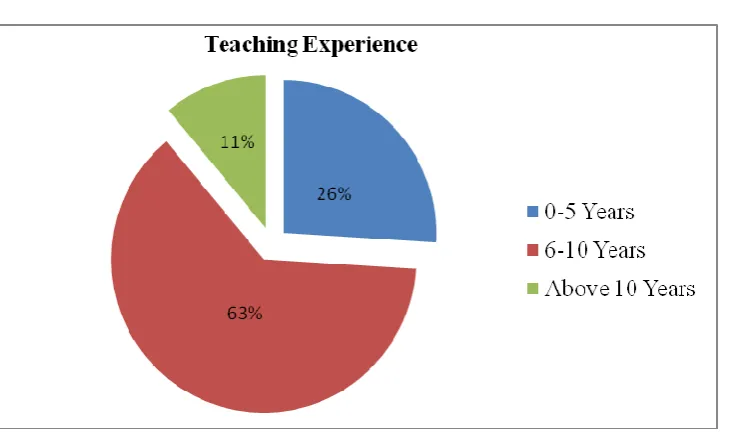
To establish teaching experience of teachers, teachers were required to indicate the years they had served as teachers in secondary schools. Findings were summarized in figure 4.2.
Figure 4.2: Teachers’ teaching experience
35
been in schools long enough to understand the challenges faced in the implementation of SSE.
4.2.7 Teachers’ Teaching Experience in the Current School
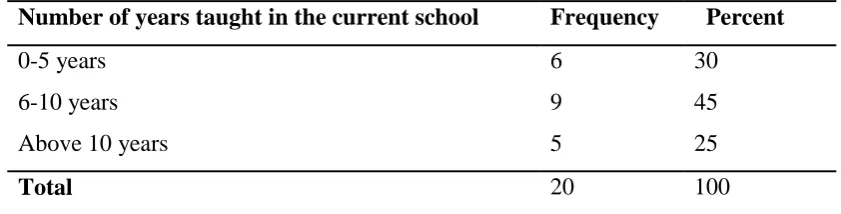
To assess the teachers’ teaching experience in the current schools, teachers were required to indicate the number of years they had served as teachers in their current working stations. The findings were presented in table 4.2.
Table 4.2: Number of years of teaching in the current school
Number of years taught in the current school Frequency Percent
0-5 years 6 30
6-10 years 9 45
Above 10 years 5 25
Total 20 100
From table 4.2, the study established that majority of the participants consisting of 45% (9), indicated that they had taught in their current school for a period between 6-10 years. The study further found that (6) which is equivalent to 30% of the respondents indicated they had taught in their current station for a period of between 0-5 years, as 5 which constitutes 25% of the respondents stated that they had taught in the current school for more than 10 years.
4.3 Influence of Physical Facilities
36
4.3.1 Adequacy of Physical Facilities
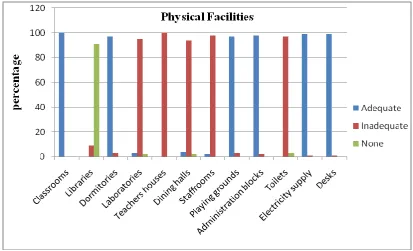
To assess the availability of various physical facilities in schools, head teachers and teachers were required to indicate the adequacy of such facilities as classrooms, libraries, dormitories, laboratories, teachers’ accommodation facilities, dining halls, staffrooms, play grounds, administration blocks, toilets, electric supply and furniture. The findings are as presented in figure 4.3.
Figure 4.3: Adequacy of physical facilities in schools
37
Majority of the respondents (100%) stated that staff houses were inadequate. other inadequate physical facilities included, staff rooms (98%), toilets (97%), laboratories (95%) and dining halls (94%). This was a source of demotivation to teachers as they were forced to rent houses outside the school. This reduced their interaction with students which negatively affected teaching and learning. Some of the teachers arrived to school late and tired which hampers their curriculum delivery. Bennell (2004) as quoted by Mitaru (2015) notes that accommodation of teachers is a major problem in most secondary schools since the facilities in most cases do not meet the required standards.
Most respondents (91%) stated that libraries were not available in their schools. This implied that most students were not able is do further studies on their own. Schools also lacked a place to store the books which led to their damage. In most schools toilets were inadequate compared to the number of students using them. Laboratories were small and therefore congested during lessons. Shortage of laboratories meant that science teachers were not performing practical’s for students regularly in schools. This led is poor performance in science subjects.
38
4.3.2 Influence of Physical Facilities on Quality of Teaching /Learning
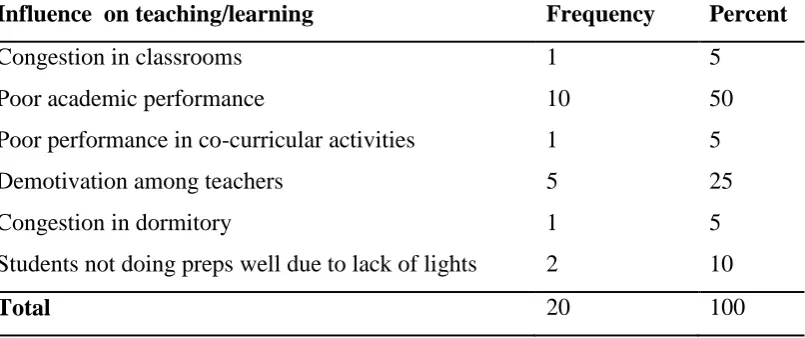
The study sought to establish how the adequacy of physical facilities affects quality of teaching/learning in schools from head teachers and teachers. In response to the question, the results were indicated in table 4.3.
Table 4.3 Respondents’ views’ on influence of physical facilities on quality of teaching/learning
Influence on teaching/learning Frequency Percent
Congestion in classrooms Poor academic performance
Poor performance in co-curricular activities Demotivation among teachers
Congestion in dormitory
Students not doing preps well due to lack of lights
1 10 1 5 1 2 5 50 5 25 5 10
Total 20 100
From table 4.3, majority of the respondents stated that adequacy of physical facilities in the schools affected quality of teaching/learning as evidenced by 50% of them who said that it contributed to poor academic performance. These included libraries which lacked in most school and laboratories which were inadequate. Some of the respondents (25%) stated that adequacy of physical facilities led to demotivation among teachers. These included staff houses which were missing in most schools and staff rooms which were small and congested. This was a discouragement to teachers who were using them.
39
low enrollment hence the head teachers receive less funds for subsidized secondary education to construct adequate physical facilities.
These findings are in line with the findings by Mwendwa (2015) who identified that there were limited physical facilities as the major issue encountered by headteachers in management of human resources in the secondary schools. In support to these findings, Njeru and Orodho (2003, cited in Aroni, 2013) note that quality of education is affected by sufficiency of learning resources such as teaching effort, instructional materials and physical facilities. A study by Ogola (2011) revealed that many schools lack physical facilities like classrooms, libraries, dining halls and dormitories which create a lot of commotion in libraries, and laboratories thereby interfering with quality teaching and learning.
4.4 Instructional Materials and Quality of Secondary Education
In objective two, the study sought to find out how the instructional materials affect quality of secondary education. Text books, chalks, dusters, exercise books, laboratory apparatus, and chemicals, charts, and maps, were used as indicators to realize this objective of the study.
4.4.1 Sufficiency of Instructional Resources
40
Table 4.4: Respondents’ views’ on sufficiency of instructional resources Instructional materials Adequate
(Frequency)
% Inadequate (Frequency)
%
Text books 54 40.3 80 59.7
Chalk 110 82 24 17.9
Dusters 72 53.7 62 46.3
Exercise books 121 90.3 13 9.7
Laboratory apparatus 46 34.3 88 65.7 Laboratory chemicals 27 20.1 107 79.9
Charts 59 44 75 56
Maps 62 46.3 72 53.7
41
The study sought to know from the head teachers about the textbook ratio in schools. The findings were presented in table 4.5.
Table 4.5: Respondents’ Opinions on textbook ratio in schools Text book ratio Percentage
1.1 0%
1.2 15%
1.3 25%
1.4 and above 60%
From table 4.5 above, 60% of the head teachers stated that most common textbook ratio was 1:4 and above students. Some head teachers (25%) indicated that the student: text book ratio in their schools was 1:3. The other student: textbook ratios of 1:2 were 15% while 1:1 was not in their schools. The head teachers said that teaching and learning materials like textbooks and other reference books were a big challenge to them. Parents hardly buy new books for their children and also fail to replace lost books since the introduction of SSE. Similar findings were made by Olembo et al (1999) as quoted by Ogola (2011) who states that text books remain the most widely used instructional materials in schools.
4.4.2 Influence of Instructional Materials on Teaching /Learning
42
Table 4.6: Respondents’ views’ on influence of instructional materials on teaching and learning
Influence on teaching and learning Yes % No %
Many students sharing one book 128 95.5 6 4.5 Students delaying in doing assignments 124 92.5 10 7.5
Poor academic performance 106 79.1 28 20.9
Indiscipline of students 121 90.3 13 9.7
Any other 46 34.3 88 65.7
43
negatively affected teaching and learning as students were forced to share the available few resources.
These findings are supported by the findings that inadequacy of funds to purchase text books and learning materials were among the challenges encountered by newly appointed heads of schools in Mombasa County. It is the duty of the head teacher to develop supervisory strategies, execute strategies for improvement, maintain the system, improve curriculum and library material, and evaluate students’ progress and time tabling (Olembo et al., 1999; Siringi, 2003).). Some of the discipline problems emanate from the society around the school and it’s the role of the head teacher to solve them (Grossinkle, 1990).
4.5 Adequacy of Teachers and Subsidized Secondary Education
The third objective of the study sought to investigate how staffing of teachers affects the management of SSE and its implication on quality of teaching and learning process in Mashuuru Sub-County.
4.5.1 Adequacy of Teachers
The researcher sought to establish the existing teacher/pupil ratio from head teachers and the results are presented in table 4.7.
Table 4.7: Status of teachers in secondary schools
Teacher Status Mean
Number of TSC teachers 9.5 Average student enrolment 266 Average teacher shortfall 3.1 Teacher/pupil ratio 1:28
44
Table 4.7 shows the distribution the number of teachers with respect to mean. The number of TSC teachers was 9.5, short fall of teachers was 3.1 and student’s average enrollment was 266. Thus, the teacher: pupil ratio was 1:28. These findings imply that all the sampled schools experienced a serious shortage of teachers which they attempt to address through supplementing the teaching staff with the BOM teachers. Some of the BOM teachers were university students on long holidays hence not conversant with the syllabus and teaching methods in the subjects they taught which negatively influenced the quality of education.
The SCEO noted that a good number of teachers were not committed in teaching because they left the school any time greener pastures arose. The high turnover of BOM teachers in schools also affected consistency of teaching and syllabus coverage. These findings concur with the report by the World Bank (2007) as quoted by Muchiri (2012) who states that the government offers two government paid teachers to every newly established community lower secondary school in Burkina Faso. Similarly Mwendwa (2015) states that principals face financial challenges, lack of adequate facilities and shortage of teaching staff.
4.5.2 Influence of Teacher Shortage on Teaching and Learning
45
Table 4.8: Respondents’ views’ on influence of teacher shortage on teaching and learning
Influence on teaching and learning Yes % No %
Poor academic performance 14 70 6 30 Slow coverage of syllabus 16 80 4 20 Indiscipline among students 8 40 12 60 Large workload among teachers 17 85 3 15
46
4.6 Socio-cultural Factors and Subsidized Secondary Education programme
Objective four of the study sought to determine the influence of socio-cultural factors on the Subsidized Secondary Education Programme.
4.6.1 Socio Cultural Practices in Schools
The study used early marriages, early pregnancies, and female genital mutilation, preference in educating boys and child labor as indicators of socio cultural practices in the sampled schools. The results are presented in the figure 4.4
Figure 4.4: Socio-cultural practices affecting education in schools
47
(87%) and child labor (78%).Most of the girls in schools dropped out of school because they were married off by their parents to generate income especially after undergoing female genital mutilation. Early pregnancies were also a serious challenge to head teachers in schools as it led to absenteeism of girls which affected their academic performance.
These findings are in tandem with Hassan (2012) who states that boys were preferred to girls by their parents as far as schooling is concerned. It is a belief that educating girls is a waste of resources among Somali families and hence boys are given more privileges than girls since they are referred to as bread winners and family heads (Hassan, 2012). Kiveu and Maiyo (2008) identify early pregnancies and marriages as a constraint affecting girl child education.
4.6.2 Influence of Socio-Cultural Factors on Teaching and Learning
The study sought to find out how socio-cultural factors influence teaching and learning in schools from the head teachers, teachers and students. The results are presented in table 4.9.
Table 4.9: Respondents’ views’ on influence of socio-cultural factors on teaching and learning
Influence on teaching and learning Yes % No %
48
From table 4.9, most respondents stated that socio-cultural factors influence teaching and learning in the sampled schools. Majority of the respondents 132 (98.5%) stated that the socio-cultural factors led to drop out of students from school. In addition, 129 (96.3%) of the respondents stated that socio-cultural practices led absenteeism of students from school. Most girls dropped out of school due to early pregnancies because of the shame associated with pregnancies. Some even preferred to be married off than be embarrassed in school. The influence of other socio-cultural factors included indiscipline among the students in schools 127 (94.8%) and poor academic performance among students 122 (91%). Drop out students from school, absenteeism and indiscipline among students contributes significantly to poor academic performance. Some girls became disobedient to teachers and school rules after undergoing FGM claiming they were now adults able to make their own decisions. This led to indiscipline in schools which affected effective implementation of SSE. A study by Aftin (2011) points out that early marriage affects retention of girls in schools where girls are withdrawn from school to be married off to wealthy men in the community in exchange for dowry. Saru (2006) states that some of the socio-cultural factors affecting performance in ASAL areas include circumcision, early marriages, and low opinion of women and lack of priority in education.
4.7 Characteristics of Students and the Implementation of SSE
49
4.7.1 Student Characteristic and Implementation of SSE
To assess the discipline problems, respondents were asked to identify the behavioral disorders of the students that did not comply with the school rules and regulations. The findings were presented in figure 4.5.
Figure 4.5: Discipline problems in school
50
Due to cultural practices like FGM, some students were not respecting teachers claiming they were adults able to make their own decisions. Some of them did not do assignments and homework given and when their parents were called in school, they sided with their children. This was challenge to head teachers in enforcing discipline in their schools. This finding concurs with Kilonzo (2013) who states that head teachers are sometimes threatened by students and some parents who make them refrain from taking appropriate action against offenders.
4.7.2 Influence of Learner Characteristics on Teaching and Learning
The researcher wanted to establish how discipline problems in school influence the quality of teaching and learning. Head teachers, teachers and students were required to give their views on the effect of students’ characteristic in terms of performance, school attendance and retention on teaching and learning.
Table 4.10: Respondents’ views’ on influence of learner characteristics on teaching and learning
Influence on teaching and learning Yes % No %
Absenteeism 125 93.3 9 6.7 Drop out 20 15 114 85 Poor academic performance 110 82 24 18
51
the teaching and learning in school. In addition, 82% of the respondents stated that discipline problems contributed to poor academic performance among students. Many of the students who engaged in indiscipline spend most of their time doing punishments rather than revising for exams and doing assignments. The SCEO confirmed that absenteeism of students was common in most secondary schools in the sub-county which contributed to poor academic performance.
52
CHAPTER FIVE
SUMMARY, CONCLUSIONS AND RECOMMENDATIONS
5.1 Introduction
This chapter gives the summary of study findings, draws conclusions and make recommendations as per the findings of the study. Suggestions for further are also given in this chapter.
5.2 Summary of Findings
Findings of the study have been summarized as per the objectives of the study which were; to determine the influence of physical facilities on quality of secondary school education, to examine the influence of instructional materials on quality of secondary education, to establish how staffing of teachers affects the management of subsidized secondary education, to analyze the influence of socio-cultural factors on the subsidized secondary education programme, and to determine the influence of students characteristics on the implementation of subsidized secondary education.
5.2.1 Influence of Physical Facilities on Implementation of SSE
53
science subjects. Teachers were not able to conduct practicals frequently for learners.
5.2.2 Sufficiency of Instructional Materials
Majority of the respondents comprising 79.9% stated that laboratory chemicals are not adequate in the sampled schools. Most respondents (90.3%) stated that exercise books were adequate in the sampled schools.
Majority of the respondents (95.5%) stated that adequacy of instructional materials made many students to share one book. Most head teachers said that teaching and learning materials like textbooks and other reference books were big challenge to them. Due to shortage of textbooks, some students stole textbooks from others to do further studies and assignments contributing to indiscipline among students. The SCEO and QUASO also stated that in most schools, there were inadequate instructional resources especially textbooks, laboratory apparatus and chemicals which negatively affected teaching and learning as students were forced to share the available resources.
5.2.3 Influence of Adequacy of Teachers on SSE