’interHist’ - an interactive visual interface for corpus exploration
Verena Lyding, Lionel Nicolas, Egon Stemle
European Academy of Bolzano/Bozen viale Druso 1, 39100 Bolzano, Italy
{verena.lyding;lionel.nicolas;egon.stemle}@eurac.edu
Abstract
In this article, we present interHist, a compact visualization for the interactive exploration of results to complex corpus queries.
Integrated with a search interface to the PAISÀ corpus of Italian web texts,interHistaims at facilitating the exploration of large results
sets to linguistic corpus searches. This objective is approached by providing an interactive visual overview of the data, which supports the user-steered navigation by means of interactive filtering. It allows to dynamically switch between an overview on the data and a detailed view on results in their immediate textual context, thus helping to detect and inspect relevant hits more efficiently. We provide background information on corpus linguistics and related work on visualizations for language and linguistic data. We introduce the
architecture ofinterHist, by detailing the data structure it relies on, describing the visualization design and providing technical details of
the implementation and its integration with the corpus querying environment. Finally, we illustrate its usage by presenting a use case for the analysis of the composition of Italian noun phrases.
Keywords:visualization, corpus linguistics, language analysis
1.
Introduction
Apart from building the basis for natural language process-ing tools, language resources can also be a source of knowl-edge directly explored by researchers. For example, lan-guage corpora are employed for retrieving information (e.g. by historians, market researchers, etc.) or as reference for authentic language in use in linguistic studies.
On the one hand, human users have informational needs that essentially differ from requirements arising in the con-text of corpus-based NLP research. On the other hand, they hold special sensory capabilities for perceiving and pro-cessing information. Thus, the importance and potential of providing adapted interfaces for the exploration of lan-guage resources should not be underestimated.
Research on advanced interfaces for language resources is yet another challenging task in the NLP context. In deliver-ing resources to the user, concern with the development of powerful interfaces is a service to the human analyst com-parable to the provision of e.g. annotation tools.1
In this paper, we are presentinginterHist, an example visu-alization tool for analyzing language data from a corpus. In section 2. we give background information and information on related works. In section 3. we present its architecture and functionalities, and illustrate its usage for the analysis of Italian noun phrases.
2.
Background and related work
2.1. Linguistic corpus analysis
Corpus linguistics is concerned with the study of language based on empirical data collected in electronic corpora (cf. e.g. Biber et al. (1998); McEnery and Wilson (2005); Lüdeling and Kytö (2009)). It provides a specific use case
1
While e.g. part-of-speech tagging enables advanced modes for searching corpus data, clear and varied presentation formats facilitate navigation and data understanding.
of human users directly accessing and interacting with lan-guage corpora.
Comparable use cases with respect to user interaction with language resources, include exploration tasks onelectronic lexica,word nets, and analyses intranslatology.
Corpus linguistics provides a systematic methodology that builds on quantitative information for deriving insights from language in use by exploration, or testing of linguistic hypotheses. Typical corpus linguistics’ analysis tasks in-clude the search and extraction of authentic text samples for specified linguistic phenomena, their inspection and analy-sis in context, and their quantification.
Corpus analyses procedures are usually assisted by query and analysis tools, such as concordancers (cf. e.g. Scott (2010)), or custom scripts for the extraction and process-ing of corpus data. In that way, examples matching a user-devised query are extracted automatically, while sub-sequently results are processed manually (e.g. irrelevant hits are removed, matching hits are categorised into distinct groups, etc.).
Despite the automatization of the data extraction step, the wealth of data that a user is confronted with can become an issue for corpus-based linguistic studies. Often sev-eral thousands of examples are retrieved for one query2,
which makes it challenging to carry out corpus analyses efficiently, that is reaching a high coverage with reasonable efforts.
2For example, even in a medium sized corpus like PAISÀ (250
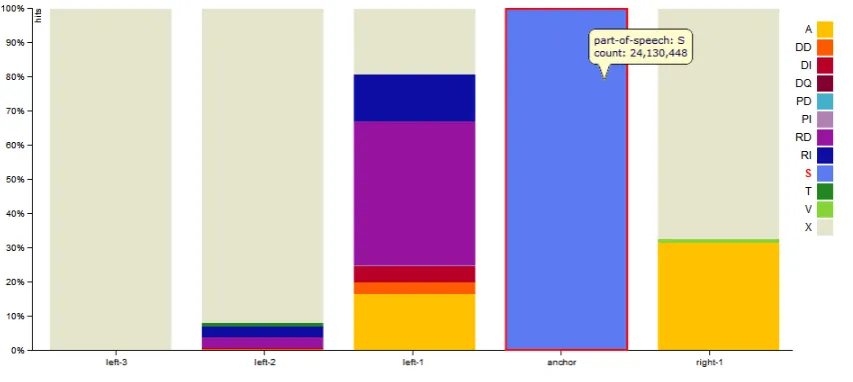
Figure 1:interHistvisualization for Italian noun phrases
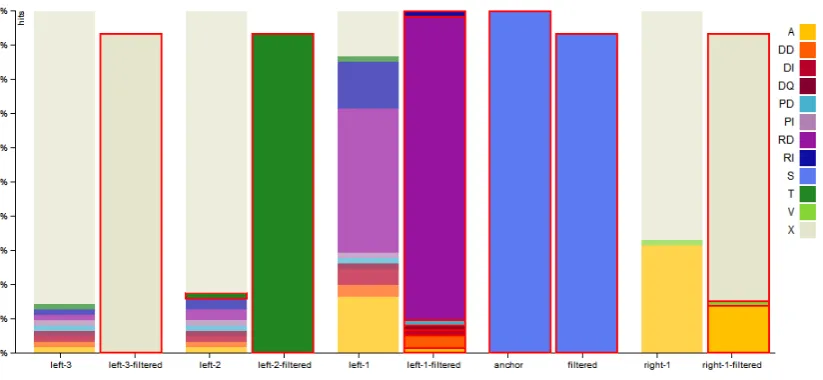
Figure 2: Filtered results by condition:adjectivepreceding thenoun
Following the query description, the visualization is built on the token-level attributepart-of-speech, which provides for the abstraction over KWIC results.
Figure 1 shows the basic13 interHist visualization corre-sponding to the study on Italian noun phrases, as approx-imated by the query in (a). Token positions are calculated relative to the anchor element ’noun’ (S), displayed as light blue bar in fourth position. The anchor is the only obliga-tory element within the search query. It hence determines the results total, displayed on mousing-over the blue his-togram bar. Theanchorconstitutes the central position of the token sequence, with a left context of up to three token positions and a right context of zero or one token expanding from it (marked in the visualization as ”left-1, left-2, left-3“ and ”right-1“).
A legend of the colors as assigned to part-of-speech val-ues is provided on the right of the diagram. The descrip-tions correspond to the ISST-TANL part-of-speech tagset14
13
that is without any interaction applied
14http://www.italianlp.it/docs/ISST-TANL-POStagset.pdf
as employed by the PAISÀ corpus. In addition, we intro-duced a category ’X’ as dummy value designating positions not covered by all noun phrases.
The visualization helps to understand, that one posi-tion left of the noun, determiners (’RD’/’RI’, determina-tive/indeterminative article) constitute the most frequently occurring word classes followed by adjectives(’A’). Two positions left predeterminers (’T’) are more frequent than adjectives.
filter-Figure 3: Filtered results by condition:predeteriminerin position left-2 ofnoun
Figure 4: Filtering as in Figure 3 displayed with ’fixed minimum’ values
ing condition applied to the results set. In this example the distribution of word classes over token positions got recal-culated according to the condition: ”tokens one position left (left-1) of the anchor noun (’S’) are restricted to part-of-speech typeadjective(’A’)“.15 The first sequence of his-tograms still represents the distribution of word classes in the full results set. It is visually modified in to make trans-parent what filtering condition is active, by drawing a red line around the filtered element, and reducing the brightness of all other elements.
By coordinating views on a full results set and a subset of it, it can be observed how parts-of-speech in different token positions depend on each other.
15First-level and second-level histograms are calculated on
to-tals for the full and restricted results set.
The visualization in Figure 2 for example makes notice that under the condition of having an adjective preceding the noun in position left-1, the frequency of adjectives in posi-tion left-2 is increasing, while the occurrences of predeter-miners in left-2 is decreasing.
To the contrary we could filter by predeterminer(’T’) in position left-2. The resulting visualization is shown in Fig-ure 3. We can see that under this condition, in left-1 the variation of part-of-speech types fundamentally reduces to
determinative article(’RD’) anddemonstrative determiner
(’DD’). To check if other parts-of-speech might be found with small frequencies, switching to ’fixed minimum’ rep-resentation format is helpful. Figure 4 displays the respec-tive visualization and shows that alsoadjectives,indefinite
andinterrogative determinersetc. occur in small numbers.
A. Lüdeling and M. Kytö. 2009. Corpus Linguistics. An International Handbook., volume 1/2 ofHandbooks of
Linguistics and Communication Science. Mouton de
Gruyter, Berlin.
V. Lyding, E. Stemle, C. Borghetti, M. Brunello, S. Castag-noli, F. Dell’Orletta, H. Dittmann, A. Lenci, and V. Pir-relli. to appear. The paisà corpus of italian web texts. InProceedings of the Web as Corpus Workshop at EACL 2014.
T. Mayer, C. Rohrdantz, M. Butt, F. Plank, and D. A. Keim. 2010. Visualizing Vowel Harmony. Linguistic Issues in Language Technology, 4(Issue 2):1–33, December. T. McEnery and A. Wilson. 2005. Corpus linguistics : an
introduction. Edinburgh Univ. Press, Edinburgh. L. Renzi. 1988. Grande grammatica italiana di
consul-tazione. La frase. I sintagmi nominale e preposizionale., volume 1. Il Mulino, Bologna.
C. Rohrdantz, S. Koch, C. Jochim, G. Heyer, G. Scheuer-mann, T. Ertl, H. Schütze, and D. A. Keim. 2010. Vi-suelle textanalyse. Informatik-Spektrum, 33:601–611. M. Scott. 2010. What can corpus software do? In Anne
O’Keeffe and Michael McCarthy, editors,The Routledge Handbook of Corpus Linguistics, Routledge Handbooks in Applied Linguistics, pages 136–151. Routledge, Lon-don.
M. Trenkmann, M. Potthast, H. Gruendl, P. Riehmann, B. Stein, and B. Froehlich. 2012. Wordgraph: Keyword-in-context visualization for netspeak’s wildcard search.
IEEE Transactions on Visualization and Computer Graphics, 18(9):1411–1423.
C. Ware. 2004. Information Visualization: Perception for Design. Morgan Kaufmann Publishers Inc., San Fran-cisco, CA, USA.
M. Wattenberg and F. B. Viégas. 2008. The word tree, an interactive visual concordance. IEEE Transactions on Visualization and Computer Graphics, 14(6):1221– 1228.
D. Widdows, S. Cederberg, and B. Dorow. 2002. Visuali-sation techniques for analyzing meaning. InProceedings of the Fifth International Conference on Text, Speech and Dialogue, pages 107–115.