CLIENT DEFECTION IN THE DESIGN INDUSTRY:
A Study of the Causes, Process,
and Context of Switching Agencies
MARIO VAFEAS
Red Strategic Design
TONI HILTON
ABSTRACT
This paper explores the factors that cause client defection in the graphic design industry within the context of the business relationship in which it takes place. The paper examines the literature pertaining to defection, loyalty, relationship dynamics, service failure and service recovery. It highlights studies that demonstrate the financial benefits of customer retention while bemoaning the fact that few organisations seem to understand the importance of developing long-term relationships. A qualitative approach was adopted for the primary research. The findings show that the most common reasons for switching are dissatisfaction with either pricing or design quality. A new model of switching behaviour is proposed, together with a set of practical measures that design agencies can instigate to reduce the likelihood of defection. The implications of this study suggest that design agencies should encourage more active and co-operative participation in the relationship by clients.
INTRODUCTION
The majority of graphic design agencies have an uneven distribution of business, with a small number of clients contributing the core of the agency’s turnover. The loss of a single client can therefore, be disastrous, since it leads to a sudden and potentially significant drop in turnover, often with no advance warning.
Whilst the process of attracting and winning new clients should be an on-going strategy, it is lengthy and costly, and conversion rates are low. The alternative solution is to make efforts to reduce the rate of defections. Reichheld & Sasser (1990) provide strong justification for this approach by demonstrating that even a small reduction in the number of client defections can significantly boost a service provider’s profits. Client defection suggests the decision to leave one service provider in favour of another. As such this paper is concerned with switching behaviour and is not limited to the decision to exit as defined by Stewart (1998).
Research into client defection is limited. Two detailed customer switching studies exist. Keaveney (1995) investigates the reasons for customer switching in services, but does not cover business to business. Michell et al. (1992) has greater relevance since it investigates account switching within advertising. Little else has specifically targeted defection (or ‘relationship termination’).
CONCEPTUAL BACKGROUND
Customer Defection And Retention - Why It Matters
Loyalty - A Multi-Dimensional Construct
If retention is dependent on customer loyalty, it is critical to understand its nature. It is generally agreed (Rust & Zahorik, 1993; Heskett et al., 1994) that quality and satisfaction have an important bearing on loyalty. But satisfaction in itself is not sufficient; complete satisfaction is the key to securing customer loyalty (Jones & Sasser, 1995).
De Ruyter et al.’s (1997) research suggests that the relationship between satisfaction and loyalty is non-linear. Furthermore, they found that, while perceived service quality contributes positively to loyalty, the intensity varies across industries. Industries with high switching costs generally enjoy much higher levels of customer loyalty. This is clearly very worrying for design agencies that are operating in an industry where switching costs are generally considered to be low.
Gwinner et al. (1998) recommend ‘relationship building’ as a positive way of securing loyalty. Their research found that, even when core service benefits are less than superior, loyalty can be enhanced if the customer experiences confidence (reduced anxiety), special treatment (financial and non-financial), and social benefits (personal recognition and friendship).
Service Failure, Customer Complaint Behaviour, And Service Recovery
Besides the obvious benefits to be gained from loyal customers, Hirschman (1970) points out that, when things go wrong, loyal customers are more likely to ‘voice’ their dissatisfaction in order to have matters put right, rather than simply take their business elsewhere (‘exit’). This gives the provider the opportunity to remedy the problem and prevent negative word-of-mouth. So, while no provider wishes to hear criticism, ‘voice’ is something to be encouraged.
Although there is general agreement that service providers should attempt to recover from service failures, there is disagreement over the likely consequences of recovery. While it has been suggested (Fornell and Wernerfelt, 1987; Bateson, 1995) that effective recovery can actually restore satisfaction to similar, or even higher, levels than those enjoyed by the customer prior to the service failure, Boshoff (1996) concludes that ‘great service recovery cannot compensate for poor service delivery, but can go a long way to limiting its harmful impact’ (p. 126). Boshoff (1996) found that the key to successful recovery is what is offered in atonement, rather than how quickly it is offered.
Buyer-Seller Relationships
If the view that loyalty and retention are fundamental to the service firm’s future profit stream is accepted, then it is essential that the firm builds and maintains long-term relationships with its clients.Various authors (Ford, 1982; Dwyer et al., 1987; Wackman et al., 1987) have conceptualised the business relationship as a
processual, life-cycle phenomenon characterised at different stages by a set of variables (Wilson, 1995). Key amongst these are commitment and trust.
(Rusbult & Buunk, 1993, p. 180). Morgan and Hunt (1994) defined trust as
confidence in an exchange partner’s reliability and integrity. These two variables are particularly important in design where few formal contracts, creating structural bonds, are ever entered into and where non-retrievable investments in the relationship are unlikely to be made by clients.
Transactional cost analysis theory (Williamson, 1981) suggests that parties enter into long term relationships in order to reduce their transactional costs that would otherwise involve: search, selection, negotiation and contractual set-up costs for each interaction. Consequently, trust between parties becomes an imperative in long-term relationships since initial set-up contracts cannot possibly envisage every eventuality that may occur. Trust also lessens the fear of opportunistic behaviour by the other party, so further reduces costs associated with monitoring transactions.
Social bonds may exist within the business relationship or may occur indirectly via reference groups. Clearly the people-intensive nature of design and the uniqueness of every job suggest that social bonding is a particularly important factor in the industry.
Dependence on partners within relationships comes from the belief that the
outcomes from the relationship are valuable in general and compare favourably with alternatives (Thibaut & Kelley, 1959). Indeed a client may remain with a service provider if the relational outcomes are not satisfactory but are nevertheless perceived to be better than available alternatives (Anderson & Narus, 1990). The vast number of alternative suppliers in the design industry means that clients have ample opportunity to make such comparisons, so it is more likely that design agencies are more dependent on their clients than clients on their agencies.
Defection
Defection involves a conscious decision to switch patronage to an alternative supplier (Stewart, 1998). Few studies have investigated the causes of customer defection so there is no shortage of recommendations for further research (Dwyer et al., 1987; Wilson, 1995; Keaveney, 1995; Halinen, 1997).
Michell, Cataquet, and Hague (1992) researched the reasons for client-advertising agency break-ups in the UK. Respondents were asked to rank five categories in order of importance and then to rate the importance of 32 individual variables. The most important variables were: ‘standard of creative work’, ‘agency not close enough to client’s business’, ‘standard of agency’s marketing advice’, and ‘change in marketing policy’.
METHODOLOGY
Although this study is primarily explorative and qualitative, with the aim of developing an empirically-grounded model, it was not the intention to adopt a purely inductive approach. Instead, a ‘loose’ theoretical framework based on the works of Michell et al. (1992) and Keaveney (1995), guides the research.
The intention was to use a phenomenological, qualitative approach. Given the lack of existing studies on switching, qualitative research will be more likely to expand understanding, provide new insights, and guide future research.
The proposed data collection method was the semi-structured interview. The sampling frame consists of all FMCG (Fast Moving Consumer Goods) companies in England and Wales that are known to commission packaging design. Of the 95 approaches (asking if the company had switched design agency during the previous twelve months), responses (whether positive or negative) were received from 42 companies. From the 42 companies that responded, 11 individuals agreed to participate. Participants’ job descriptions ranged from Marketing Director to Product Manager.
Fieldwork was carried out during September 1999 at the respective work places of the participants. The average interview duration was 35 minutes.
FINDINGS AND DISCUSSION
Relationship Process And The Context Of Defection
General Characteristics
All respondents had worked with a large number of agencies and as a result were able to discuss relationships in general terms. The most senior managers, with 10-15 years of experience, had each worked with up to 15 agencies. Despite what might appear to industry outsiders as a high ‘turnover’ of agencies, most respondents believed this to be normal, healthy, and not particularly disloyal.
However, respondents were prone to be contradictory when discussing loyalty. On the one hand they would argue that they would prefer to be loyal to one or two agencies, since this gave the agency a chance to really understand the brand. Yet they readily expressed the view that it was healthy to change agencies regularly in order to get fresh ideas (an agency’s creativity has finite limits) The extensive availability of alternatives (de Ruyter et al., 1997), the difficulties of design evaluation, the absence of formal contracts, and the lack of perceived risk only serve to encourage ‘promiscuity’.
Most respondents had mixed feelings concerning relationships with design agencies, ranging from satisfaction and enjoyment through to frustration. Several respondents mentioned a difference in nature and style of design versus advertising agency relationships. While all acknowledged the reason why this should be (larger budgets for advertising; senior management involvement; long-term contracts), there was agreement that design agencies were lacking in the professionalism displayed by advertising agencies.
Exploration and Selection
The most common method for searching for design agencies is to consult colleagues. Referrals are seen as a safe method for choosing from the plethora of agencies and usually imply that the agency has had some experience in the client’s product category. Once a shortlist has been drawn up, it is extremely common for the client to organize a pitch in order to make the final selection. And yet, a large proportion of relationships are terminated soon after starting. There are two possible explanations for this: either it belies the theory that careful selection should result in a suitable partner (Cagley, 1986); or, the selection process is at fault. Clients stress the importance of what Wackman et al. (1987) call work-product factors at the selection stage - rational factors such as experience in the client’s category, reputation, and past design work. Yet, when discussing loyalty, ‘trust’, ‘strong interpersonal chemistry’, ‘eagerness’, and ‘reliability’ are key factors in the maintenance of relationships. It seems that during the selection process, clients are ignoring the factors, which will become important to them as the relationship develops.
Growth and Maturity
This is the critical phase for the relationship. Invariably it begins positively, with good creative work in evidence and considerable energy and enthusiasm on the part of the agency. There is frequent, sometimes daily interaction, and the agency will often be represented at meetings by two or three people - the account manager, a strategic planner, and the Creative Director. There is a sense that the agency is working in the best interests of the client.
However some respondents spoke of a turning point as their first project with the agency progressed beyond the halfway mark. There were two explanations for this. Firstly, the agency’s interest in the project wanes once the exciting creative work has been completed and the more ‘mechanical’ design development and artwork processes begin. As the level of creativity in the job decreases and the level of administrative, organisational input increases, agency personnel (particularly senior staff) are less evident and the frequency of communication decreases. Secondly, client-agency confrontations arise. In many cases, these confrontations revolve around pricing. Once a confrontation of this sort occurs, a number of respondents said they find themselves actively looking for other faults in the relationship. As a result, several key relationship constructs (e.g. trust, commitment, social bonds, etc.), many of which interact with each other, do not seem to reach the necessary threshold. If these key constructs are missing, a relationship is vulnerable and, as Ford (1982) argues, may be broken-off because of a single failure in service delivery (a disagreement over cost, for example).
when lacking, cause relationship break-ups, can, when present, contribute to its strengthening; e.g. innovative design, interpersonal chemistry, proactivity, and interest in the client’s business.
But why should these factors exist in some relationships and not in others? Only one explanation is forthcoming from the research, and that is that some organisations are more compatible than others. Relationships with the greatest chance of longevity seem to be those between small client companies and small agencies. Perhaps these relationships do display a certain level of interdependence, with smaller client companies dependent on their suppliers.
Relationship Dissolution And The Reasons For Switching
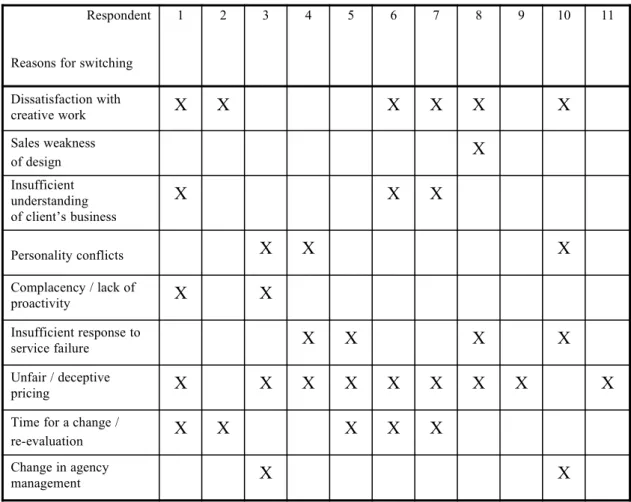
Table 1 shows the complete range of factors cited by each respondent as reasons for terminating a relationship with a design agency. While all respondents were able to think of several occasions when they had ended a relationship with a design agency, all were able to choose and discuss one specific relationship. It is these eleven relationships, which have been used to compile table 1.
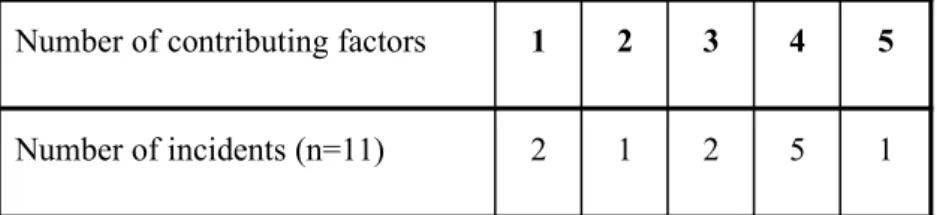
Borrowing from Keaveney’s (1995) terminology, the majority of switching incidents are complex (defined as involving more than one factor). Table 2 shows the categorisation of incidents according to the number of factors involved. These results must be regarded as disturbing for agencies. While there was an admission by respondents of a certain amount of ‘problem-seeking’ as soon as one aspect of the relationship went wrong, there must be some justification for finding fault in all these areas.
‘Pricing’ was cited by almost all respondents and was a key factor in the decision to terminate a relationship, notwithstanding, in some instances, the effectiveness and creativity of design work. The universal complaint was that projects would always cost more than had been originally quoted by the agency. Agencies are regarded at best as bad project managers, and at worst, as fraudulent. Respondents seemed to be unanimous in their condemnation of insufficient and ambiguous communication on the part of agencies. Design agencies may be, as respondents assert, poor project managers. On the other hand, given the competitive nature of the industry and the strength of buyer power, they may feel obliged to quote as low as possible when pitching in order to win a project, only to find that costs escalate once the project is underway.
‘Sales weakness of design’, ‘insufficient understanding of client business’, and ‘dissatisfaction with creative work’ can be grouped under the broad heading ‘core service failures’. ‘Dissatisfaction with creative work’ was sub-divided into two categories: ‘lack of originality’ and ‘flawed response to design brief’. The frequency of ‘core service failure’ as a cause of switching seems to contradict the findings of Gwinner et al. (1998) who found that, in consumer services, relational benefits can compensate for less than superior core service benefits. Clients are unforgiving - no amount of relational history or personal ties can make up for sub-standard design quality.
the client. ‘Lack of originality’ may well be a consequence of what Ford (1982) calls institutionalisation, where routine reduces responsiveness. If this is the case, what is surprising is the speed with which this stage is reached in so many relationships. A second possibility is that the client mistakes consistency of approach by the agency for lack of originality. ‘Flawed response to design brief’ can be the result of sub-standard design and/or a misunderstanding of the brief. It is rather surprising that ‘insufficient understanding of the client’s business’ should surface as a complaint part-way through a relationship, since most agencies are supposedly appointed on the basis of their knowledge of a client’s market. One explanation that emerged during the research was the substitution of established contact personnel with juniors, whose knowledge of the client’s business was superficial.
Although not mentioned as a principal reason for switching, five respondents mentioned ‘time for a change’ (used interchangeably with ‘re-evaluation’) as a factor. Three of these mentioned it in conjunction with ‘dissatisfaction with creative work’, which suggests a not unnatural interaction between these variables. It was also seen by some as a necessity, in order to continually inject fresh creative thinking into a brand. What is concerning is the frequency with which design buyers feel the need for variety.
Two respondents mentioned the departure of their account manager as reasons for switching - one mentioning it as the principal reason. These two clients had developed strong personal relationships with a single agency individual, clearly a dangerous situation for the agency, which was entirely reliant on its account manager remaining at the agency.
‘Personality conflicts’ was mentioned by three respondents as a trigger for ending a relationship, and in two of these three cases, the conflict was said to have been the result of arrogance on the part of the agency. Clearly, ‘interpersonal chemistry’ is critical in the client-account manager relationship, since the nature of the service exchange is one of continual interactions. Two instances of personality conflicts coincided with changes in account management at the agency.
Not surprisingly, ‘insufficient response to service failure’ was always connected with dissatisfaction elsewhere in the relationship - on two occasions it was cited in conjunction with a conflict over costs, and on the third occasion with conflict over poor design.
‘Complacency’ was mentioned by two respondents as a factor in terminating long-term relationships and was regarded as a sign of insufficient agency commitment. One respondent characterised it as:
- a lack of proactivity;
- no display of ‘eagerness’ on the part of the agency when awarded projects; - deterioration in care and attention to detail;
- a reduction in attention from senior agency staff.
relationship. As soon as these investments stop or are reduced, commitment decreases.
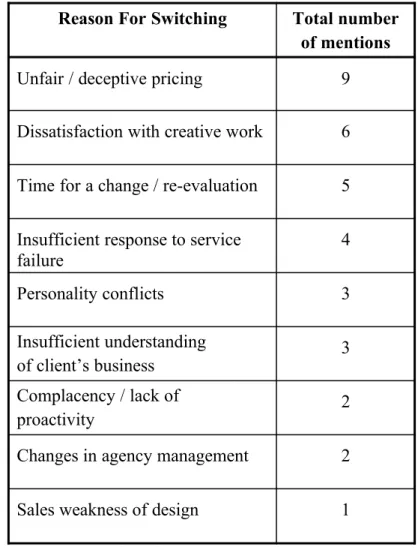
Table 3 shows the frequency with which each of the switching factors was mentioned across all 11 respondents.
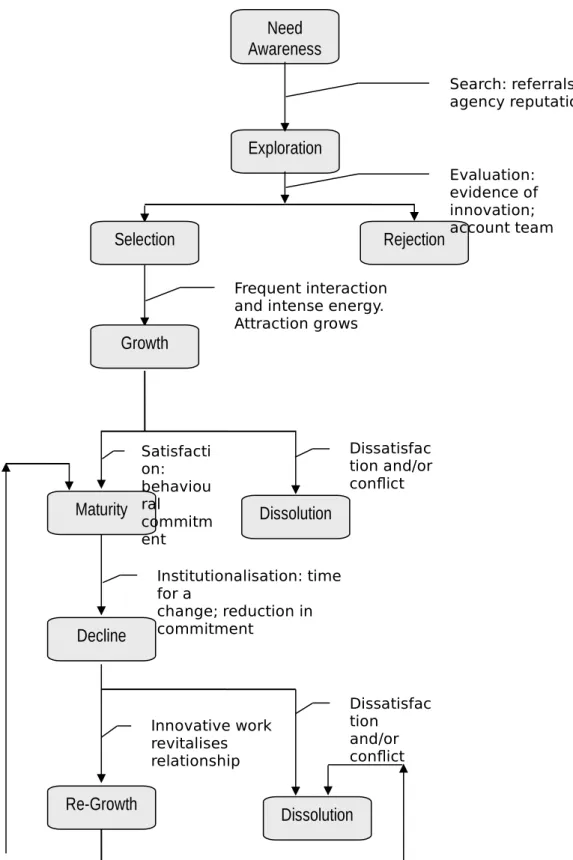
Figure 1 shows a processual model of client-agency relationship dynamics.
The Process of Switching
In all cases, projects were seen through to their completion, regardless of whether there had been conflict. No respondent switched agencies during a project. In most cases, there was one event, which triggered the decision to end the relationship, though, as table 1 (above) shows, several factors always contributed to the decision. Table 4 shows the frequency with which certain factors were cited as principal reason for switching.
Unfortunately for design agencies, and contrary to Michell et al.’s (1992) findings for the advertising industry, the decision to switch agencies is, in most cases, taken by one person - the ‘user’, who can be a relatively junior manager. Whether this is in the best interests of a brand is arguable, since there is a danger of the client reacting to day-to-day issues rather than looking at the long-term. However, the absence of senior management involvement in design is a reality, and agencies should be prepared for the possibility of ‘arbitrary’ decisions.
There is usually no contract to terminate and, compared with advertising, the significance for the business of ending the relationship is generally considered to be minor. Often clients do not inform their agency that the relationship has ended. They simply brief another agency the next time a design need arises.
Service Failures, Customer Complaint Behaviour, And Service Recovery
Respondents were able to highlight several occasions where they experienced dissatisfaction. In almost all instances clients confronted agencies. This is at odds with consumer services (cf. Hirschman, 1970; Boshoff, 1996). In most cases clients felt that blame lay firmly with the agency. In general, agencies responded to
complaints in one of two ways. Some would take the matter seriously, attempt to explain why the problem had occurred, and then put things right. When probed, clients said that their opinion of the agency could actually improve to a higher level than before the service failure. Other agencies, however, were less compliant, refusing to accept blame or to compromise. Even if the matter was eventually
resolved, clients said that in these cases the relationship was irreparably damaged as a
do not go out of their way to spread negative word of mouth, they will mention their dissatisfaction to colleagues when an appropriate occasion arises.
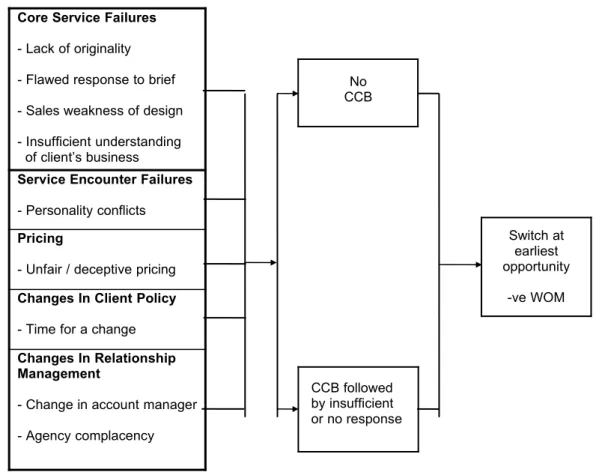
Figure 2 proposes a model of client switching behaviour, based on the data collected from the research.
IMPLICATIONS OF THIS STUDY FOR THE DESIGN
INDUSTRY
Clearly there is little that can be done to change the characteristics of the industry or the nature of design, with all the inherent problems associated with intangibility, inseparability and variability. However, many of the factors leading to switching appear to be within the control of agencies. Clients seek first rate design from their agencies – adequate performances are not sufficient. A number of measures would help eliminate potential ‘fail points’:
the need for better information-gathering on the specific needs of client organisations and the environment in which their brands operate;
the need to develop a culture where relationship maintenance is a critical goal for the business;
the need to develop a culture of pride in the ability to deliver on time and within the ‘agreed-budget’;
the need to maintain client perceptions of the quality of, and their satisfaction with, the relationship.
Ennew & Binks (1999) studied the impact that cooperative behaviour had on customers’ perceptions of the quality of, and their satisfaction with the relationship and how this ultimately influences retention. The hypothesis for the study was that active participation by both parties would result in raised client perceptions of service quality, enhanced client satisfaction and a greater likelihood of client retention. The rationale was that the way in which customers participate in service provision may affect the service provider’s performance of the service. Customers that do not provide timely, accurate and complete information may receive a delayed or even an inappropriate service performance. Conversely customers who provide appropriate information when needed and adopt appropriate roles may receive a service that is more appropriate to their needs because they have taken the trouble to familiarise the service provider with their specific requirements. Furthermore, the more customers familiarise themselves with the service provided the less likely they are to have unrealistic performance expectations.
The application of this hypothesis to the design agency context would suggest that design agencies are more likely to satisfy and retain clients when they have successfully encouraged clients to actively participate in the process.
important than expected. Furthermore they noted that the institutional atmosphere of the relationship had the biggest influence on customer participation levels; customer perceptions of quality and satisfaction and customer retention levels. All of these levels were reduced where customers perceived their maintenance of the relationship was due to negative constraints. This finding is consistent with Bendapudi & Berry’s (1997) hypothesis that constraint-based relationship maintenance will result in less positive behavioural outcomes than dedication-based relationship maintenance.
Information Sharing
In the design agency context, cooperative behaviour would involve the client providing the agency with relevant and timely information such as strategic brand plans and effective design briefs and other relevant information that will enable the agency to fully understand, and respond to, the specific needs of the client organisation and the business environment in which the brand(s) operate.
It is customary for design agencies to provide work for a ‘pitch’ on a complimentary basis, in the hope that they will win the business and then be able to recoup their costs during the life-time of that relationship. So, in this case, the client effectively has nothing to lose financially by sharing information during the ‘courtship’ stage of the relationship. However, given the frequency of pitches (and the lack of contractual relationships) within the industry, clients may well be cautious about revealing brand plans to an agency that does not end up working for them, but for one of their competitors at some point. In addition, if the client decides to start looking around for a new agency they are also likely to be more cautious with the nature and relevance of the information that they share with the incumbent agency. This caution must ultimately affect the quality of response that the agency is able to deliver.
Responsible Behaviour
This dimension recognises that clients have duties and responsibilities within the relationship and is consistent with the idea that effective service provision may require customers to be placed in the role of partial-employee. So responsible behaviour is the extent to which clients conform to roles and adopt behaviours expected of them by the legal service provider. This will require the agency to develop a clear view of ‘the responsible client’ and an ability to communicate the desired role and behaviours explicitly to clients.
Personal Interaction / Fear Reduction
Personal interaction between clients and the agency personnel delivering the service links directly into the inseparability characteristic of services and recognises that client relationships with individuals may be more significant than the relationship with the design agency itself. Elements involved in this area are: ‘trust, reliability, support, cooperation, flexibility, and commitment’ (Ennew & Binks, 1999, p.124) which combine in such a manner that acts to reduce customer fear or perception of threats within the relationship. Two dimensions of service provider behaviours were noted by the authors. First, the extent to which the service provider appears to actively or positively help the relationship, and secondly the extent to which the provider avoids doing anything negative that might harm the relationship. So it might be important for agencies to demonstrate such behaviours more overtly.
So, involving senior staff, during the ‘courtship’, who are never seen again may leave the client thinking that their business is no longer important to the agency. Ensuring that senior staff are involved when resolving problems demonstrates how seriously client satisfaction is regarded by the agency. Likewise, communicating when budgets are likely to be exceeded, in order to gain agreement to continue, could be viewed as acting constructively to support the relationship.
Summary
Client participation must be an imperative starting point for a design agency to deliver an effective service. However, the discussion above highlights how difficult it can be to achieve. It may also be true that clients are more willing participants during the early stage of the relationship and that a major role for the account managers within design agencies is to continually encourage the active maintenance of such client participation.
REFERENCES
Anderson, J. & Narus, J. (1990) ‘A Model Of Distributor Firm And Manufacturer Firm Working Partnerships’, Journal Of Marketing, 54, January, 42-58
Bateson, J. (1995) Managing Services Marketing, The Dryden Press, Chicago, 3rd ed.
Bendapudi, N. & Berry, L. (1997), ‘Customers’ Motiviations for Maintaining Relationships with Service Providers’, Journal of Retailing,73, 1, 15-37
Boshoff, C. (1996) ‘An Experimental Study Of Service Recovery Options’,
International Journal Of Service Industry Management, 8, 2, 110-130
Cagley, J. (1986) ‘A Comparison Of Advertising Agency Selection Factors’,
De Ruyter, K., Wetzels, K. & Bloemer, J. (1997) ‘On The Relationship Between Service Quality, Service Loyalty, And Switching Costs’, International Journal Of Service Industry Management, 9, 5, 436-453
Dwyer, R., Schurr, P. & Oh, S. (1987) ‘Developing Buyer-Seller Relationships’
Journal Of Marketing, 51, 2, 11-27
Ennew, C. & Binks, M. (1999) ‘Impact of Participative Service Relationships on Quality, Satisfaction and Retention: An Exploratory Study’, Journal of Business Research, 46, 121-132.
Ford, D. (1982) ‘The Development Of Buyer-Seller Relationships In Industrial Markets’, in Ford, D. (ed.) (1990) Understanding Business Markets, Academic Press, London, pp 42-57
Fornell, C. & Wernerfelt, B. (1987) ‘Defensive Marketing Strategy By Customer Complaint Management’, Journal Of Marketing Research, 24, Nov., 337-346
Gwinner, K., Gremler, D. & Bitner, M. (1998) ‘Relational Benefits In Service Industries: The Customer’s Perspective’, Journal Of The Academy Of Marketing Science, 26, 2, 101-114
Halinen, A. (1997) Relationship Marketing In Professional Services, Routledge, London
Heskett, J., Jones, T., Loveman, G., Sasser, W. & Schlesinger, L. (1994) ‘Putting The Service-Profit Chain To Work’, Harvard Business Review, 72, Mar-Apr, 164-174
Hirschman. A. (1970) Exit, Voice, And Loyalty, Harvard University Press, Cambridge, MA
Jones, T. & Sasser, W. (1995) ‘Why Satisfied Customers Defect’, Harvard Business Review, 73, Nov-Dec, 88-99
Keaveney, S. (1995) ‘Consumer Switching Behaviour In Service Industries: An Exploratory Study’, Journal Of Marketing, 59, 2, 71-82
Michell, P., Cataquet, H. & Hague, S. (1992) ‘Establishing The Causes Of Disaffection In Agency-Client Relations’, Journal Of Advertising Research, Mar-Apr, 41-48
Morgan, R. & Hunt, S. (1994), ‘The Commitment-Trust Theory of Relationship Marketing’, Journal of Marketing, 58, 20-38.
Reichheld, F. (1996) ‘Learning From Customer Defections’, Harvard Business Review, 74, Mar-Apr, 56-69
Reichheld, F. & Sasser, W. (1990) ‘Zero Defections: Quality Comes To Services’,
Richins, M. (1983) ‘Negative Word-Of-Mouth By Dissatisfied Consumers’, Journal Of Marketing, 47, 1, 68-78
Rusbult, C. & Buunk, B. (1993), ‘Commitments Processes in Close Relationships: An Interdependence Analysis’, Journal of Social and Personal Relationships, 10, 175-204.
Rust, R. & Zahorik, A. (1993) ‘Customer Satisfaction, Retention And Market Share’, Journal Of Retailing, 69, 2, 193-215
Stewart, K. (1998) ‘The Customer Exit Process - A Review And Research Agenda’,
Journal Of Marketing Management, 14, 235-250.
Thibaut, J.W., and Kelley, H.H., (1959), The Social Psychology of Groups, John Wiley, New York.
Wackman, D., Salmon, C. & Salmon, C. (1986) ‘Developing An Advertising Agency-Client Relationship’, Journal Of Advertising Research, Dec, 21-28
Wetzels, M., De Ruyter, K. & Van Birgelen, M. (1998) ‘Marketing Service Relationships: The Role Of Commitment’, Journal Of Business And Industry Marketing, 13, 4/5, 406-423
Williamson, O. (1981), ‘The Economics of Organizations: The Transaction Cost Approach’, American Journal of Sociology, 87, 3, 548-577.
BIOGRAPHY
Mario Vafeas is an Account Director / Planner at Red Strategic Design, a graphic design agency in Bristol specialising in packaging. Prior to entering the design industry, he worked in FMCG marketing as a brand manager. This paper is from a dissertation completed for his MBA from Bristol Business School, for which he was awarded the Clerical Medical Prize for ‘Best MBA Student’.
Toni Hilton has been a member of the Marketing School at Bristol Business School (University of the West of England) since 1991, where she specialises in the marketing of professional services. She is currently completing her Doctoral study into the loyalty and switching behaviour of law firm clients in the UK. Prior to this she worked as an International Marketing Director for both UK and US based companies.
ADDRESS FOR CORRESPONDENCE
Mario Vafeas, Red Strategic Design Ltd, The Old Stables, Coombs End, Dodington, Bristol, BS37 6SQ.
Tel: +44 (0) 1454 326106
Email: [email protected]
Toni Hilton, Bristol Business School, University of the West of England, Coldharbour Lane, Bristol, BS16 1QY.
Respondent
Reasons for switching
1 2 3 4 5 6 7 8 9 10 11
Dissatisfaction with
creative work X X X X X X
Sales weakness
of design X
Insufficient understanding of client’s business
X X X
Personality conflicts X X X
Complacency / lack of
proactivity X X
Insufficient response to
service failure X X X X
Unfair / deceptive
pricing X X X X X X X X X
Time for a change /
re-evaluation X X X X X
Change in agency
management X X
Number of contributing factors 1 2 3 4 5
Number of incidents (n=11) 2 1 2 5 1
Reason For Switching Total number of mentions
Unfair / deceptive pricing 9
Dissatisfaction with creative work 6
Time for a change / re-evaluation 5
Insufficient response to service failure
4
Personality conflicts 3
Insufficient understanding
of client’s business 3
Complacency / lack of
proactivity 2
Changes in agency management 2
Sales weakness of design 1
Figure 1 AModel Of Client-Agency Relationship Dynamics
Need Awareness
Exploration
Selection Rejection
Growth
Maturity Dissolution
Decline
Re-Growth Dissolution
Search: referrals; agency reputation
Evaluation: evidence of innovation; account team
Frequent interaction and intense energy. Attraction grows
Satisfacti on: behaviou ral commitm ent
Dissatisfac tion and/or conflict
Institutionalisation: time for a
change; reduction in commitment
Innovative work revitalises relationship
Principal Reason For Switching Total number of mentions
Unfair / deceptive pricing 5
Dissatisfaction with creative work 3
Change in agency management 1
Insufficient response to service failure
1
Sales weakness of design 1
Core Service Failures
- Lack of originality
- Flawed response to brief
- Sales weakness of design
- Insufficient understanding of client’s business
Service Encounter Failures
- Personality conflicts
Pricing
- Unfair / deceptive pricing
Changes In Client Policy
- Time for a change
Changes In Relationship Management
- Change in account manager
- Agency complacency
CCB = Customer complaint behaviour -ve WOM = Negative word-of-mouth
Figure 2 AModel Of Client Switching Behaviour In The Design Industry
No CCB
CCB followed by insufficient or no response
Switch at earliest opportunity
Table 1 Switching Factors Cited By Each Respondent
Table 2 Categorisation Of Simple And Complex Switching Incidents
Table 3 Frequency Of Switching Factors Across All Respondents
Table 4 Frequency Of Factor As Principal Reason For Switching
Figure 1 AModel Of Client-Agency Relationship Dynamics