Volume 2011, Article ID 136319,15pages doi:10.1155/2011/136319
Research Article
Automatic IP Generation of FFT/IFFT Processors with
Word-Length Optimization for MIMO-OFDM Systems
Pei-Yun Tsai, Chia-Wei Chen, and Meng-Yuan Huang
Department of Electrical Engineering, National Central University, Jhongli 32001, Taiwan
Correspondence should be addressed to Pei-Yun Tsai,[email protected] Received 26 May 2010; Revised 18 October 2010; Accepted 11 November 2010
Academic Editor: Juan A. L ´opez
Copyright © 2011 Pei-Yun Tsai et al. This is an open access article distributed under the Creative Commons Attribution License, which permits unrestricted use, distribution, and reproduction in any medium, provided the original work is properly cited.
A systematic approach is presented for automatically generating variable-size FFT/IFFT soft intellectual property (IP) cores for MIMO-OFDM systems. The finite-precision effect in an FFT processor is first analyzed, and then an effective word-length searching algorithm is proposed and incorporated in the proposed IP generator. From the comparison, we show that our analysis of the finite precision effect in FFT is much more accurate than the previous work. With the flexible architecture and the effective word-length searching techniques, we can strike a good balance for the performance and the hardware cost of the generated IP cores. The generated FFT soft IP cores are portable and independent of the silicon technology, which helps to greatly reduce the design time. Experimental results demonstrate that the proposed IP generator indeed provides FFT IPs which meet the requirements and are more suitable in recent MIMO-OFDM communication standards/drafts than some conventional FFT IP generators.
1. Introduction
Orthogonal frequency-division multiplexing (OFDM) is one of the most popular modulation schemes in recent wireless communication systems. In OFDM transceivers, discrete Fourier transform (DFT) operation plays an important role to modulate data onto each subcarrier. With the fast Fourier transform (FFT) algorithm, hardware implementation of DFT, which is not only computation intensive but also communication intensive, becomes feasible.
Different OFDM systems use various FFT sizes to accom-modate time-selective and/or frequency-selective channel environments. Even in one system, FFT operations of variable sizes are mandatory to offer the scalability for perfor-mance considerations. In addition, input multiple-output (MIMO) antenna configuration is a widely adopted technique recently, which needs a multichannel FFT/IFFT processor in a transmitter/receiver. An extensive literature exists, which reports the lower-power/small-area/high-speed implementation of the dedicated FFT processors for cer-tain single-input single-output (SISO) wireless communi-cation standards/specificommuni-cations [1–5] and for multiple-input multiple-output OFDM systems [6,7].
However, it is a time-consuming work if a dedicated FFT processor is redesigned each time for every communication system. In the past, several general-purpose FFT IP core generators have also been developed [8–11] including the state-of-the-art spiral program [12,13]. On the other hand, FFT/IFFT core generators specific for OFDM systems can be seen in [14,15]. In [11,12,15], the generated hardware employs the radix-2 FFT algorithm and different degrees of parallelism are exploited, either using multiple butterfly stages or multiple butterfly units inside a butterfly stage, to tradeoff throughput requirements and hardware costs. Radix-2 and radix-4 pipelined multipath delay commutator architectures have been used in [8,9]. Higher radix algo-rithm (radix-2/4/8) was first utilized in [14], which adopts memory-based architecture and pipelined single-path delay feedback architecture. Note that the FFT/IFFT core generator in [15–17] is capable of generating an FFT IP that handles variable-size FFT/IFFT operations and satisfies the signal-to-quantization-noise-ratio (SQNR) constraint.
different from previous works, we try to analyze the finite precision effect in FFT processors and aim to offer an FFT IP generator that has the capability of automatic word-length optimization to achieve hardware efficiency. The IP generator can generate the hardware description language of an FFT processor according to the constraints set by users and therefore speed up the process for implementing a new OFDM transceiver. Its features can be summarized as follows.
(i) Parallel processing and multiple channels are taken into consideration, either to increase throughput or to support MIMO configurations.
(ii) The word lengths are optimized, which can be shown to provide more efficient hardware design under the constraint of SQNR values than some conventional works [15,16].
(iii) Insertion of pipeline registers mainly depends on the requirement of operating frequency to ensure the necessity of flip-flop instantiation.
From the experimental results, we can see that these improvements are effective to generate FFT IPs that strike a good balance between complexity and performance.
The rest of the paper is organized as follows. InSection 2, the generic FFT architecture adopted by the proposed FFT IP generator is illustrated. InSection 3, we discuss the finite precision effect in FFT operation. The work flow of the IP generator and the word-length optimization procedure are delineated in Section 4. Experimental results and compar-isons are shown inSection 5. Finally,Section 6gives a brief conclusion.
2. Architecture of FFT Processors with MIMO
Configuration and Parallel Processing
InTable 1, we have listed some essential parameters in several
recent OFDM standards/drafts. Note that in UWB using MB-OFDM modulation scheme, we show its one-channel sampling rate. It is clear that the needed FFT processor must support variable sizes as well as parallel processing for either high throughput or multiple channels. In addition, the FFT sizes mainly range from 64 points to 8192 points, and the operating frequency covers from tens to hundreds of mega Hz. To facilitate automatic generation of the FFT processors fulfilling the above requirements, we resort to exploit the mapping of its recursive nature to the pipelined architecture. However, to accomplish parallel processing with the high-radix algorithm, we proposed to combine two well-known pipelined architectures, namely, the single-path delay feedback (SDF) architecture and the multipath delay commutator (MDC) architecture.
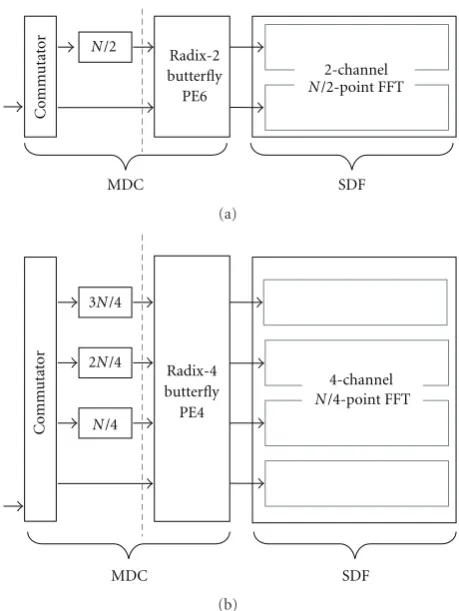
Figure 1 shows our adopted architecture that is able to
support the parallelism degree of two or four by utilizing the property of the multipath delay commutator architecture in parallel processing. If the parallelism degree of p is desired, where p = 2 or 4, a radix-p MDC stage is first employed. Thereafter, for the p parallel paths, we cascade p-channelN/ p-point FFT processors implemented
Radix-2 butterfly PE6
Com
m
ut
at
or
MDC SDF
2-channel N/2
N/2-point FFT
(a)
Radix-4 butterfly PE4
C
o
mm
utat
or
4-channel
MDC SDF
3N/4
2N/4
N/4
N/4-point FFT
(b)
Figure 1: (a) Architecture of an FFT processor with parallelism degree of two. (b) Architecture of an FFT processor with parallelism degree of four.
by the radix-2/22/23single-path delay feedback architecture.
If parallel processing to enhance the throughput is not necessary, the generated FFT processor is reduced to the conventional SDF architecture.
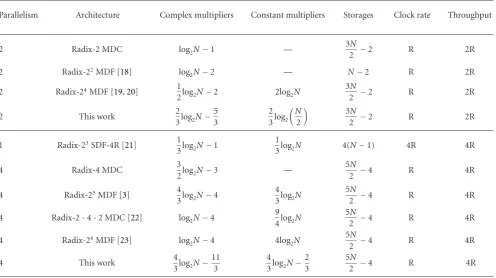
Table 2 compares the hardware complexity of the
pro-posed architecture and several conventional works with par-allelism [3,18–24]. However, those works may be designed for specific applications such as UWB and may have special optimization at certain stages. Here, we simply consider their extensions to anN-point FFT processor. Note that hardware complexity and architecture flexibility are essential concerns. In our adopted architecture of parallelism degree of two, one complex multiplier is required in the first radix-2 MDC processing element and 2(log8(N/2)−1) complex multipliers are used in the remaining two sets of radix-23 N/2-point
SDF architecture. Similarly, if the parallelism degree is four, 3 + 4(log8(N/4)−1) complex multipliers are needed in our architecture instead of 3(log4N−1) complex multipliers in the conventional radix-4 MDC architecture. Although the higher radix-24 architecture [20,23] can effectively reduce
Table1: FFT parameters in several OFDM systems..
FFT size Sampling rate (MHz) MIMO channels
DVB-T/H 2048–8192 9 —
802.11a 64 20 —
802.11n 64–128 40 Up to 4
UWB (MB-OFDM) 128 528 2
802.16e (OFDM) 256 32.7 —
802.16e (OFDMA) 128–2048 20 Up to 4
3GPP-LTE 128–2048 30.7 Up to 4
802.20 512–2048 20 Up to 4
Table2: Complexity comparison of several FFT processors with parallelism.
Parallelism Architecture Complex multipliers Constant multipliers Storages Clock rate Throughput
2 Radix-2 MDC log2N−1 — 3N
2 −2 R 2R
2 Radix-22MDF [18] log
2N−2 — N−2 R 2R
2 Radix-24MDF [19,20] 1
2log2N−2 2log2N
3N
2 −2 R 2R
2 This work 2
3log2N− 5 3
2 3log2
N
2
3N
2 −2 R 2R
1 Radix-23SDF-4R [21] 1
3log2N−1
1
3log2N 4(N−1) 4R 4R
4 Radix-4 MDC 3
2log2N−3 —
5N
2 −4 R 4R
4 Radix-23MDF [3] 4
3log2N−4
4 3log2N
5N
2 −4 R 4R
4 Radix-2·4·2 MDC [22] log2N−4
9 4log2N
5N
2 −4 R 4R
4 Radix-24MDF [23] log
2N−4 4log2N
5N
2 −4 R 4R
4 This work 4
3log2N− 11
3
4 3log2N−
2 3
5N
2 −4 R 4R
higher sampling frequency is used in advanced systems. With our proposed architecture, the advantage is twofold. On one hand, the same control flow as the one needed for generation of multiple-channel FFT processors can be shared. On the other hand, we still exploit the radix-23
algorithm in hardware reduction. From the table, it is clear that our architecture is flexible and hardware efficient.
Basic arithmetic processing elements (PEs) are shown in
Figure 2for constructing various FFT processors. While PE1,
PE2, and PE3 are used in the SDF architecture, PE4, PE5, and PE6 are instantiated in case parallel processing is needed. PE3 and PE6 compute the radix-2 butterfly operation. PE1 and PE4 handle the extra complex multiplication of−j. PE2 and PE5 deal with the trivial multiplications ofW81 as well
asW83 by shifters and adders. PE4 and PE5 are only utilized
when the degree of parallelism is four. The delay buffer with a
size greater than 16 is made up of a memory array addressing by an incrementer whose current value and previous value are adopted as the read and write addresses to guarantee the read operation done before the write operation at the same address.
The variable FFT sizes are achieved by the alternative data paths controlled by the multiplexers as shown in Figure 3, which is an example of 64-point to 4096-point variable-size single-channel FFT processor. ForN = 2K, there are total K stages. To perform the 23n-point FFT operation, where
3n≤K, the signal directly enters the PE1 at the (K−3n+1)th stage. When 2·23n-point FFT is desired, the signal feeds
directly to PE3 at stage (K −3n). If (22·23n)-point FFT is
MUX
MUX
MUX
MUX MUX
MUX
MUX
MUX
MUX
MUX
Delay buffer Delay buffer Delay buffer
1
−j
−j
−j
−j
PE1 PE2 W1 PE3
8
W81 W3
8
W83
−
−
−
−
−
+
+
+
+
+
+
+ +
+ +
1
PE4 PE5
PE6 S&A
− −
−
− −
+
+
+
+
−
−
Figure2: Block diagram of basic arithmetic processing elements.
2048 1024 512
PE1 PE2 PE3
PE1 PE2 PE3
PE1 PE2 PE3
PE1 PE2 PE3
MUL1
MUX1
Stage 1 Stage 2 Stage 3
Stage 4 Stage 5 Stage 6
Stage 7 Stage 8 Stage 9
Stage 10 Stage 11 Stage 12 ROM ROM ROM
256 128 64
MUL2
MUL3
MUX3
MUX2
32 16 8
MUX4
4 2 1
Figure3: Architecture of the generated SISO variable-length radix-23FFT processor.
PE1 will be programmed to use only one half of its original size, which can be done by simply using the arithmetic shift of the counter output to the left by 1 bit without changing the memory array. The gray vertical lines along the data path denote the possible pipeline-register insertion positions. If the required operating frequency is not high, then according to the information in the timing library, only parts of these
pipeline registers are instantiated. On the contrary, all of them will exist if the clock frequency needs to be raised to over 100 MHz.
PE1 PE2 PE3 PE1
PE1 PE2 PE3
PE1 PE2 PE3
PE1 PE2 PE3
32 16 8
32 16 8
32 16 8
32 16 8
4
PE1 4
PE1 4
PE1 4 Stage K-3 Stage K-2
Stage K-1 & K
PE5
Com
m
ut
at
or
Com
m
ut
at
or
M
o
dified
constant
m
ultiplier
ROM
· · ·
· · ·
· · ·
· · ·
Figure4: Architecture of a MIMO FFT processor with 4 channels.
Q
Q
Q
Q
Q
Q
Q
Q
Q
Q
Q
Q
Q
Q
Q
Q
Q
Q
Q
Q
Q
Q
Q
Q
Q
Q
Q
Q
Q
Q
Q
Q
Q
Q
Q
Q
Q
Q
Q
Q Radix-4 Radix-2
W0n N
WN4n
WN2n
WN6n
W1n N
W5n N
WN3n
WN7n
yp(n)
xs−1(n)
xs−1(m)
xs(n)
−j
−j
−j
W1 8
W3 8
− −
− − −
−
− −
−
−
−
−
σPE,2 s−1 σPE,2 s σCM,2 p
Figure5: Signal flow graph of the radix-23algorithm.
of rows corresponds to the number of channels. However, if we simply duplicate the single-channel FFT processor several times to obtain a multichannel FFT processor, the hardware redundancy exists. Therefore, the hardware sharing techniques are employed in the generated IP core. Generally, inM-channel FFT processors, because independentMdata streams are processed simultaneously, only one ROM table will be generated and its output is connected toM twiddle-factor multipliers. The ROM table saves only twiddle twiddle-factors in [0,π/4], and we use the symmetry of sine/cosine wave-forms to derive the values of the remaining twiddle factors. In the special case of a four-channel FFT processor in MIMO systems, a modified constant multiplication module and PE5 are adopted to save hardware complexity in the tail stages as shown inFigure 4[3]. The modified constant multiplication module contains eight sets of shifters and adders for the twiddle factors Wn
64,n = 1, 2,. . ., 8, which can have 38%
complexity reduction compared to four complex multipliers
according to [3]. An extra commutator is required to reorder the four-channel signals so that different sets of shifters and adders can be used by the four data paths without conflict. As a result, for 4-channel FFT handling more than 64 points, architecture in Figure 4 is employed. If an FFT processor dealing with more than 256 points with parallelism level of 4 is required, architectures of Figures1and4will be combined and generated.
By adopting the radix-23 algorithm and the flexible
architecture that utilizes both SDF and MDC, the proposed IP generator thus supports multichannel as well as parallel processing, one fixed-size or multiple variable-size, and user-specified operating frequency with reduced complexity.
3. Finite Precision Effect and
Word-Length Optimization
To design a proper word-length searching procedure, we need to realize the mean squared quantization error due to the finite precision effect. Observe the signal flow graph of the radix-23 FFT operation as given in Figure 5. It is
clear that only two types of arithmetic computations are involved, that is, complex addition/subtraction and complex multiplication. In addition, the twiddle factors are all pure fractional numbers except for±1 and 0. Obviously they cause a long word length in the fractional part after multiplication. Hence, to avoid rapid growth in hardware complexity, trun-cation is necessary. InFigure 5, the circle with “Q” denotes the introduction of the probable quantization effect due to truncation. In the following, the mean squared quantization errors resulted from these two types of arithmetic operations and the truncation are analyzed. Note that these analyses are also applicable to radix-2 and radix-4 algorithms.
3.1. Quantization Error after Complex Addition/Subtraction.
xs(n) as well as xs(m), where xs(n) is the nth signal at the sth stage, the notation (·) indicates the quantized version of the signal, andm =n+N/2s. The output after complex
addition/subtraction is given by
xs+1(n)=xr,s+1(n) +jxi,s+1(n)
=xr,s+1(n) +δr,s+1(n)
+jxi,s+1(n) +δi,s+1(n)
=xr,s(n) +xr,s(m) +δr,s(n) +δr,s(m)
+jxi,s(n) +xi,s(m) +δi,s(n) +δi,s(m)
,
xs+1(m)=
xr,s(n)−xr,s(m) +δr,s(n)−δr,s(m)
+jxi,s(n)−xi,s(m) +δi,s(n)−δi,s(m)
, (1)
wherexr,s(n) andxi,s(n) denote the real part and imaginary
part of xs(n) and δr,s(n) and δi,s(n) represent the real part
and the imaginary part of the quantization error, which may have nonzero mean. Assume the mean square error at thesth PE stage due toδr,s(n) andδi,s(n) asσPE,2 s. Note that one half
of the signals at the (s+ 1)th stage is computed by addition while the other half is computed by subtraction. Therefore, the mean of the quantization error (xs+1(n)−xs+1(n)) with n=0, 1,. . .,N−1 at stage (s+ 1) is given by
μPE,s+1=E
δr,s(n)
+jEδi,s(n)
=μPE,s. (2)
The mean squared quantization error after addition and subtraction can be calculated respectively as
E xr,s+1(n)−xr,s+1(n)
+jxi,s+1(n)−xi,s+1(n)2
=E δr,s(n) +δr,s(m)2
+E δi,s(n) +δi,s(m)2
,
E xr,s+1(m)−xr,s+1(m)
+jxi,s+1(m)−xi,s+1(m)2
=E δr,s(n)−δr,s(m)2
+E δi,s(n)−δi,s(m)2
.
(3)
With the assumption of uncorrelated quantization errors, the mean squared error at stage (s+ 1) becomes
σ2
PE,s+1=2σPE,2 s. (4)
Details are shown inAppendix A.
3.2. Quantization Error after Complex Multiplication.
Assume that Wr,p(m) and Wi,p(m) indicate the real part
and the imaginary part of the mth twiddle factor at the
pth complex multiplication block. Thenth quantized signal
yp(n) after thepth complex multiplication takes the form of
yp(n)=yr,p(n) +jyi,p(n) =xr,s(n) +δr,s(n)
+jxi,s(n) +δi,s(n)
·Wr,p(m) +r,p(m)
+jWi,p(m) +i,p(m)
≈xr,s(n)Wr,p(m)−xi,s(n)Wi,p(m)
+Wr,p(m)δr,s(n)−Wi,p(m)δi,s(n)
+xr,s(n)r,p(m)−xi,s(n)i,p(m)
+jxr,s(n)Wi,p(m) +xi,s(n)Wr,p(m)
+Wi,p(m)δr,s(n) +Wr,p(m)δi,s(n)
+xr,s(n)i,p(m) +xi,s(n)r,p(m)
,
(5)
where r,p(m) and i,p(m) denote the real-part and the
imaginary-part quantization errors of the twiddle factor. Since the twiddle factors can be predetermined by rounding operation, they can be assumed to have zero mean. The statistics of quantization errors after complex multiplication can be derived as
μCM,p=
E Wr,p(m)
Eδr,s(n)
−E Wi,p(m)
Eδi,s(n)
+jE Wi,p(m)
Eδr,s(n)
+E Wr,p(m)
Eδi,s(n)
,
σCM,2 p≈E
Wr,p(m)δr,s(n)−Wi,p(m)δi,s(n)
+xr,s(n)r,p(m)−xi,s(n)i,p(m)
2
+E Wi,p(m)δr,s(n) +Wr,p(m)δi,s(n)
+xr,s(n)i,p(m) +xi,s(n)r,p(m)
2 .
(6)
Similarly, by applying the assumption of uncorrelated errors ofδr,s(n),δi,s(n)r,p(m), andi,p(m), and mutually
indepen-dent random variables of the data paths and twiddle factors, the mean squared error becomes
σ2 CM,p≈E
Wr,p(m)δr,s(n)
2
+EWi,p(m)δi,s(n)
2
+Exr,s(n)r,p(m)
2
+Exi,s(n)i,p(m)
2
−2E Wr,p(m)Wi,p(m)δr,s(n)δi,s(n)
+EWi,p(m)δr,s(n)
2
+EWr,p(m)δi,s(n)
+Exr,s(n)i,p(m)
2
+Exi,s(n)r,p(m)
2
+ 2E Wr,p(m)Wi,p(m)δr,s(n)δi,s(n)
=2E W2
r,p(m) +Wi2,p(m)
σ2 PE,s
2
+ 2E x2
r,s(n) +x2i,s(n)
σT2,p
2 ,
(7)
where the mean squared error of the twiddle factors at the
pth complex multiplication block,E{2
r,p+i2,p}, is denoted
asσ2
T,p.
It is clear that in (7), the term (W2
r,p(m) +Wi2,p(m)) has
unit magnitude. On the other hand, according to Parseval’s theorem, we can derive the average of (x2
r,s(n) +xi2,s(n)). The
derivations are available in Appendix B. In our case of the radix-2 butterfly,
E x2
r,s(n) +x2i,s(n)
= 2s N2
N−1
k=0
|X(k)|2
. (8)
Generally, in OFDM systems, the frequency-domain data
X(k) are selected from some pre-determined constellations with normalized energy. Consequently, the averaged energy of frequency domain signal X(k) can be easily computed. Thus, from (7) and (8), the mean squared error after complex multiplication becomes
σCM,2 p≈σPE,2 s+
2s N2
N−1
k=0
|X(k)|2
σT2,p=σPE,2 s+
2s Nσ
2
T,p. (9)
3.3. Quantization Error after Truncation. Two types of
signal truncation are discussed here. One is truncation after multiplication and the other is truncation after addition/subtraction. Different error distributions can be observed in each case.
If the fractional parts of the twiddle factor and the data path containbt andbdbits, respectively, then after complex
multiplication, the word-length in the fractional part of the product becomesbt+bdbits. Therefore, truncation is often
performed. As shown in Figure 6, define d = 2−(bt+bd) as
the finest granularity. After truncation, we usebmbits in the
fractional part. Note thatD = 2−bm = 2Md, where M = bt+bd−bm. Because FFT involves a lot of butterfly operations,
according to the central limit theorem, for d D, the quantization error can be modeled as Gaussian distribution which may be biased and thus have a nonzero mean α as indicated in Figure 6. The distance between the floating-point representation yr,p(n) and the nearest fixed-point
representation in the finest granularity is denoted byt. After truncation, all the signalsyr,p(n) inside one of the shadowed
region now are classified aszr,p(n) and have squared error of
(t+id−lD)2, wherel=0,±1,±2,. . . ihas equal probability ranging from 0 to 2M−1 andtis assumed to be uniformly
distributed in [0,d).
Define the conditional probability on t and i of the quantization error falling in each shadowed region indexed bylasg(l|t,i), which can be computed as
g(l|t,i)=
−t−id+(l+1)D
−t−id+lD
1
√
2πνe
−(x+α)2/2ν2
dx
=q
−
t−id+α+lD ν
−q
−
t−id+α+(l+1)D ν
, (10) where
qy=
∞
y
1
√
2πe −x2
dx, (11)
and ν2 is the variance of quantization error in either the
real or the imaginary part after complex multiplication and before truncation, which can be calculated as (1/2)(σCM,2 p− μ2CM,p). Denote fT(t) as the probability density function of t and fT(t) = 1/d. Then, after truncation of the bits in
the fractional part, the mean squared error of the complex output becomes
σT21,p=2 ∞
l=−∞
2M−1
i=0 1 2M d 0 g
(l|t,i)fT(t)(t+id−lD)2dt,
(12) and the mean of quantization error after truncation can be given by
μT1,p=
1 +j ∞
l=−∞
2M−1
i=0 1 2M d 0 g
(l|t,i)fT(t)(t+id−lD)dt.
(13) Equations (12) and (13), which can be computed by numeric approaches, play an important role to analyze the statistics of quantization errors owing to truncation after complex multiplications.
For those cases which use one-bit truncation after the butterfly operation, the assumption of Gaussian distribution is not suitable because the inequalityDdis not satisfied. We then utilize the same assumption of uniform distribution as in [25]. Thus, one half of the signal remains the same, and the other half has additional quantization error of d. The mean of quantization error after LSB truncation can be calculated as
μT2,s=
1 2E
δr,s(n)
+1 2E
δr,s(n) +d
+j 1 2E
δi,s(n)
+1 2E
δi,s(n) +d
=μPE,s+d
1 + j
2 . (14) The mean squared error after LSB truncation can be derived as
σT22,s=
1 2E δ
2
r,s(n)
+1
2E δr,s(n) +d
2
+1 2E δ
2
i,s(n)
+1
2E δi,s(n) +d
2
=σ2 PE,s+dE
δr,s(n) +δi,s(n)
+d2.
Unlike in [25], we introduce an extra term to account for the possible nonzero mean after truncation. In the following, we can see its influence on the accuracy of the analytic mean square quantization errors.
3.4. Discussion on Word-Length Optimization. According to
the previous analyses for the finite precision effect in an FFT processor, some observations are summarized below.
(i) In the radix-23 single-path delay feedback
architec-ture, the average signal energy is increased by 2 according to Parseval’s theorem (see Appendix B), while the mean squared quantization error also doubles after butterfly operation as given by (4). Define a signal-to-quantization error ratio (SQNR) as
SQNR=10·log10E |xs(n)|
2
σ2 PE,s
. (16)
Hence, if the signal is not truncated after butterfly operation, the SQNR remains the same.
(ii) The SQNR decreases after complex multiplication because of the finite precision of twiddle factors. The quantization errors in twiddle factors are further scaled by the average energy of the signal to be multiplied as indicated in (9). Consequently, the word-length settings of twiddle factors and data paths should be decided individually. Moreover, (9), also reveals the reason that a shorter word-length can always be assigned for twiddle factors than the data path in an FFT processor since 2s/N1.
(iii) The mean squared quantization errors increase monotonically from the first stage to the last stage. For those stages at which quantization errors accu-mulate and severely pollute the least significant bits (LSBs) of finite-precision signals, proper truncation introduces only negligible degradation compared to
σPE,2 sas in (15) ford2σPE,2 s.
To verify the previous analysis, the analytic results (12) and simulated results are compared in Figure 7. The hori-zontal axis represents the word-lengthbmwhile the vertical
axis denotes the MSE. Twiddle factor multiplications for 64-point and 512-64-point FFT operations are both evaluated. In both cases, the twiddle factors are quantized to 10 bits in their fractional part. The fractional part of the input data-path signal before multiplication is represented by 11 bits and 12 bits in 64-point and 512-point FFT, respectively. Accordingly, without truncation, the fractional parts become 21 and 22 bits. From the figure, we can see that the analytic results approach the simulated results. Besides, the proper word-lengthbmcan be selected around the knee point close to the
error floor, which implies that only slight degradation occurs.
In Figure 8, the analytic results by using (4), (9), (12),
and (15) and the simulated results of the mean squared quantization errors at each stage for 512-point FFT are compared. In addition, we also provide the curve of the analytic results by [25]. The effect ofW1
8 and W83 in PE2
t
D
d
Zr,p(n) yr,p(n)
l= −1 l=0 id
α E{yr,p(n)}
6ν
Figure6: Quantization error distribution.
8 10 12 14 16 18
10−4
10−5
10−6
10−7
10−8
Fractional part word-length after truncation
MSE
Analytic results (withW64m) Simulated results (withWm
64) Analytic results (withWm
512) Simulated results (withWm
512)
Figure7: Analytic and simulated quantization mean squared error after truncation.
10−4
10−5
10−6
10−7
10−8
M
ean
squar
ed
er
ro
r
Simulated MSE Analytic MSE Analytic MSE [25]
12 bits
12 bits 12 bits
12 bits
10 bits
10 bits 11 bits
truncation after CM
truncation after CM one-bit truncation9 bits
11 bits One-bit truncation
Stage
1
Stage
2
Stage
3
CM
1
Stage
4
Stage
5
Stage
6
CM
2
Stage
7
Stage
8
Stage
9
10-bit
12-bit
Figure 8: Comparison of analytic and simulated mean squared quantization errors at each stage in a 512-point FFT processor.
Input parameters
Word-length optimization
Instantiation & connection
Output files Timing
library
Instance library
Figure9: Flowchart of the proposed IP generator.
after complex multiplication can estimate the finite precision effect more accurately.
4. Work Flow
The work flow of the IP generator is indicated inFigure 9. In the first step, a user assigns his options such as the FFT size, configurations of parallelism, target operating frequency, allowable SQNR, and the FFT/IFFT mode for his desired IP core. Then, in order to minimize the finite precision effect, the word-length of each block will be optimized based on the SQNR criterion. In the third step, the IP generator instantiates the related submodules from the library and connects those submodules in the highest-hierarchy top module. Finally, together with the desired
hardware description language of the FFT processor, we also provide the test bench to users. We will describe the details of these four steps in the following.
4.1. Input Parameters. The proposed IP generator provides
five main options.
4.1.1. FFT or IFFT Mode. In an OFDM system, the IFFT
operation is needed in a transmitter while the FFT operation should be done in a receiver. The IFFT operation can be written as
x(n)= 1 N
N−1
k=0
X(k)WN−nk =
1
N
⎡ ⎣N−1
k=0
X∗(k)WNnk
⎤ ⎦
∗
, (17)
which can be interpreted as applying the FFT operation to the complex conjugate of the inputs and then dividing the complex conjugate of the FFT output by N. Since N is a power of two, no extra hardware is required for the division. Hence, the proposed IP generator can provide the IFFT processor by incorporating additional paths to derive the 2’s complement of the imaginary part of both the inputs to the FFT processor and outputs from the FFT processor.
4.1.2. FFT/IFFT Size. InTable 1, we can see that the current and emerging OFDM standards mainly use FFT/IFFT sizes up to 8192. Consequently, our IP generator can provide one single-size FFT/IFFT processor from 8 to 8192 points by cascading adequate processing elements and also produce a variable-size FFT/IFFT processor in the range of 64 to 4096 points by adding multiplexers to control the data paths.
4.1.3. Sampling Rate. The generated FFT/IFFT processor
must fulfill the system requirement of real-time operation. The proposed IP generator automatically inserts the neces-sary pipeline registers in the positions as indicated by the gray vertical lines inFigure 3to reduce the critical path delay and thus satisfies the target of working frequency. In the timing library, we have constructed a table listing the critical path delay of PEs and multipliers. The highest frequency around 140 MHz is obtained in 90-nm FPGA, when the critical path contains only a complex multiplier.
4.1.4. SQNR Value. The finite-word-length representation of the FFT/IFFT processor inevitably introduces quantization errors, which degrade system performance. Therefore, the word lengths of the generated FFT/IFFT IP core must be optimized according to the requested SQNR value.
4.1.5. Multiple-Channel and Parallel Processing. The gener-ated processor can support up to eight-channel FFT/IFFT operations to cover the needs in MIMO-OFDM systems. In addition, parallelism degrees of two or four to enhance throughputs are also implemented to support wide-band applications such as UWB.
4.2. Word-Length Optimization. Consider the hardware
Table3: One example of the proposed fractional-part word-length search procedure. 2 1 Analytic SQNR Simulated SQNR Twiddle Stage 8 Stage 7 Stage 6 CMul 2 Stage 5 Stage 4 Stage 3 CMul 1 Stage 2 56.35 56.72 9 12 13 13 13 13 13 13 13 13 13 56.22 56.53 9 12 12 13 13 13 13 13 13 13 13 55.98 56.23 9 12 12 12 13 13 13 13 13 13 13 55.10 55.48 9 12 12 12 12 12 13 13 13 13 13 54.48 54.64 9 12 12 12 12 12 12 13 13 13 13 54.72 55.04 9 11 12 12 12 12 13 13 13 13 13 54.38 54.50 9 11 11 12 12 12 13 13 13 13 13 46.51 47.06 11 11 11 11 11 11 11 11 11 11 11 52.53 53.07 12 12 12 12 12 12 12 12 12 12 12 58.55 59.08 13 13 13 13 13 13 13 13 13 13 13 58.51 59.03 12 13 13 13 13 13 13 13 13 13 13 58.38 58.91 11 13 13 13 13 13 13 13 13 13 13 58.03 58.52 10 13 13 13 13 13 13 13 13 13 13 56.49 56.86 9 13 13 13 13 13 13 13 13 13 13 53.43 53.58 8 13 13 13 13 13 13 13 13 13 13 Stage 1 Search phase
smaller word length in processing elements, the less com-plexity the complex adder/subtractor and the delay buffer. If a smaller word length is assigned to twiddle factors, the size of ROM tables can be scaled down linearly and the size of the complex multiplier can also be reduced, which saves more in silicon cost. The proposed IP generator can automatically search for the optimal word-length setting of each stage, which is a feature that the conventional IP generators do not provide.
Exhaustive search for optimal word lengths is a time-consuming work. Observing the pipeline architecture, if the data-path at earlier stages uses a smaller word length, the delay elements can save more and a smaller-size complex multiplier is probably instantiated. Hence, we proposed a procedure which includes two search phases, that is, global search and local search, which aim to use smaller word-length settings at the earlier stages. Initially, the same word length of the fractional part is set at all the PE stages. In the first phase, that is, the global search, the fractional-part word lengths of all the PE stages are increased or decreased together until an SQNR value of the FFT output closest to but greater than the target value is obtained. Subsequently, the reduction of the twiddle-factor word length is not ceased until the SQNR value is below the target value. In fact, the
global search phase only determines the finest precision of data paths and twiddle factors, which has also been proposed in [16]. On the other hand, it has been pointed out in [25] that using varying word lengths at each stage is viable when the request of the IP that is optimized for each specific application is eager. We then proposed a second phase to fine tune the word length at each stage. The quantization error accumulates and thus the LSBs may be contaminated by quantization errors. We then truncate the LSB from the last stage to examine if the target SQNR can be still fulfilled. If the answer is true, then the test of LSB truncation proceeds to the earlier stages sequentially until the SQNR value is not satisfied. When it happens, we then restore the truncation at that stage and initiate a new iteration of LSB truncation from the last stage again. The procedure goes on so that the word length at each stage can be minimized.
Table 3 gives the results of word-length optimization
Stage Stage Stage
W
o
rd
length
of
M
antissa
Exponent
Convergent block floating point
& block floating point Fixed point
W
o
rd
length
of
fix
ed
point
Proposed scheme
W
o
rd
length
of
pr
op
osed
scheme
(a)
7 8 9 10 11 12 13 14
10 20 30 40 50 60 70
Word-length This work
Convergent block floating point [16] Block floating point [16]
Fixed-point [15]
SQNR
(dB)
(b)
Figure10: (a) Illustration of different data-path representations and (b) comparison of SQNR values versus word-length settings by different representations.
Therefore, we can only remove one LSB from stage 5 to stage 8 in the first iteration. Subsequently, the second iteration starts to truncate one LSB again from the last stage. This time, one LSB is removed only at stage 8.
InFigure 10(a), we illustrate the word-length assignment
of different representations at each stage, and inFigure 10(b), the SQNR values versus word lengths under different representations are given, where the word length of twiddle factor is set to 18 bits to get rid of its influence and the FFT size is 2048 points. The block-floating point representation uses an exponent at each stage to absorb the variation of dynamic ranges [16]. The convergent block-floating point representation has several scaling factors at one stage and one for each group [26]. It converges to one exponent for one FFT output. The fixed-point representation has only one format
can approach the desired SQNR value by removing those harmless LSBs at the last stages compared to the fixed-point representation as shown in Figure 10(a) and can employ more flexible and adequate word lengths at each stage. Since the word lengths at each stage may be different, we depict the averaged word length of the proposed scheme in
Figure 10(b). It is thus clear that our proposed word-length
algorithm can meet the requirement of any user-specified SQNR value with reduced silicon cost.
4.3. Instantiation and Connection. Since the architecture to be generated is very regular, in the library we have prepared the basic submodules such as PE1 to PE6, a complex multiplier, a memory array, shift registers, pipeline registers, a commutator, and multiplexers. After the optimal word-lengths are derived, we can instantiate related submodules in the top module.
Nested FOR loops are used in the program to do the instantiation. In the outer loop, the program will judge which processing elements should be inserted, whether a multiplexer is required or not to control the signal flow, and whether a pipeline register should be included at the current stage. The look-up tables for twiddle factors will be automatically generated after its word length and the table size is determined. For the multichannel configuration, the second inner loop is used to duplicate the submodules that can not be shared. Once the instantiations of all the submodules are complete, the wires that connect these input and output ports are declared and constructed. Sign extension and LSB truncation are performed necessarily to ensure correct signal propagation between stages with different representation formats.
4.4. File Output and Test Bench. Finally, our IP generator will provide the user an FFT processor IP core and one test bench to facilitate its verification. For a variable-size FFT processor, the multiple test benches are offered to verify the correctness of each respective size.
5. Experimental Results and Comparisons
To verify the proposed IP generator, design examples of different configurations are tested as shown inTable 4. First, we use the IP generator to generate FFT IP cores. Their function has been examined to be correct with the auto-matically generated test bench. The desired SQNR as well as the resulted SQNR that adopts the simulated values in the search procedure is also available in the table. InTable 4(a), the performance and complexity of the FFT IP cores that are implemented by FPGA of device xc4vsx55-12 are given. The hardware complexity is evaluated in terms of FPGA resources of all design examples. The number of flip-flops is related with the pipeline registers and short delay buffers, while the number of slices reflects the logic complexity including distributed RAMs for long delay buffers and ROMs for twiddle-factor lookup tables. The DSP slices correspond to the multipliers. In our generated IP core, the DSP slices divided by four is exactly the number of complex multipliers.
For applications in UWB systems with a sampling rate of 528 MHz and a throughput requirement more than 410 Mega samples, four parallel processing blocks are used so that the operating frequency can be reduced by a factor of 4 [3,
24]. The throughput is calculated by the maximum operating frequency derived after synthesis. It is clear that the generated FFT IP meets the requirements of the UWB systems. For two-channel FFT processors, the complexity grows almost linearly. In addition, we can see the advantages of the modified constant multipliers inFigure 4by comparing the implementation results of 802.11n with one channel and four channels. We can see that the DSP slices are reduced from 8×4 to 16, a 50% reduction in complex multipliers. And the number of slice grows due to the complexity of shifters and adders in constant multipliers. As to the large-size FFT processors for 3GPP-LTE or DVB-T, the advantage of the radix-23algorithm is clear in that it results in small increase
of the number of complex multipliers. However, in these FFT processors, large ROM tables with 256 entries in 2048-point FFT and with 1024 entries in 8192-point FFT are required. Also, the long delay buffers implemented by distributed RAMs are also entailed. Both occupy large resources of the number of slices. Although block RAMs in FPGA can be used instead, owing to that the RAM macro is vendor specific, we still use the memory array, thus being implemented by distributed RAMs, to support the applications of the generated IP cores in cell-base design flow. On the right-hand side of the table, we compare the IPs generated by different generators. Due to the fact that the pipeline registers are not inserted arbitrarily, equal throughput of the generated FFT processors is not straightforward to come by. However, we can normalize the hardware complexity to the throughput and evaluate the relative complexity as the ratio indicated in the parenthesis. With the radix-23 algorithm
and the flexible architecture, our generated IP core uses less flip-flops and DSP slices (complex multipliers) with a slightly increased number of slices compared to the ones generated by Xilinx Logicore and the Spiral program. Thus, the hardware efficiency is better.
In Table 4(b), the synthesis results of several generated
Table4: Experimental results and comparisons of various generated FFT/IFFT processors implemented (a) by FPGA and (b) by cell-base design flow.
(a)
This work Spiral [27] Logicore [10]
(sic)
Standard UWB UWB 802.11n 802.11n 802.16e/3GPP-LTE DVB (OFDM)802.16e — —
Length 128 128 64∼128 64∼128 128∼2048 2048∼8192 256 256 256
Desired SQNR
(dB) 45 45 55 55 50 45 50 Data: 16 bits Data: 16 bits
Resulted SQNR
(dB) 45.05 45.01 55.65 55.34 50.04 45.01 50.04 — —
MIMO
configurations 1 2 4 1 2 1 2 1 1
Parallel
processing blocks 4 4 1 1 1 1 1 4 1
Target Freq.
(MHz) 410/4 410/4 40 40 32 20 100 — —
Max Freq. (MHz) 152 151 65 45.77 42 22.93 127 198 315
Number of slice
Flip-flops 1829 3628 1753 399 1654 3231 1378 (100%) 2523 (257%) 5198 (304%)
Number of slices 2459 4803 7549 1312 10004 17158 2820 (100%) 1886 (94%) 3370 (96%)
DSP slices 28 56 16 8 24 16 16 (100%) 16 (140%) 70 (353%)
Throughput
(MSample) 608 604×2 65×4 46 42×2 22.94 127×2 181 315
(b)
Ours [15] [2] [8] Ours [15] [28] Ours
UWB Ours [7]
Process (μm) 0.09 0.09 0.35 0.25 0.35 0.09 0.35 0.13 0.09 0.09 0.09
Length 64 64 64 64 64 64∼256 256 16,64,256 128 256 256
Word length (Bits) 14.8 14.8 13 16 24 14.1 14 16 14.1 12 10
MIMO 4 1 1 1 1 1 1 1 1 8 8
Parallelism 1 1 1 1 1 1 1 1 4 1 1
Max Freq. (MHz) 413 394 60 26 100 417 80 100 407 300 447
Combinational
gate count 78.1 K 19.5 K — — — 35.5 K — — 61.8 K 198.9 K —
Noncombinational
gate count 52.1 K 13.2 K — — — 44.3 K — — 23.7 K 316.6 K —
Total gate count 130.3 K 32.7 K — 61.5 K 105 K 79.8 K — 195 K 85.5 K 515.5 K 583 K
Normalized Area
(mm2) 0.408 0.102
0.293
(4.44) — — 0.250
0.544
(8.228) — 0.268 0.268 —
Throughput
(MS/s) 413×4 394 26.8 72 49 417 33..2 77.1 1628 300×8 300×8
Power (mW) 147 @
413 MHz 36 @
394 MHz — — —
76 @
417 Mz — —
116 @ 407 MHz
407 @ 300 MHz
160.5∗ @300 MHz
∗measurement.
operating clock frequency of our works to the limit. As to the 256-point FFT processor, we can see that the ratio of noncombinational logic gates to total gates increases due to the delay elements, whose quantity is proportional to the FFT size. With the parallel processing architecture, we can sup-port FFT processors for Giga samples per second in advanced communication systems. For all the cases, our IP generator can generate FFT processors with aggressive throughput and
efficient hardware compared to other generators. From the table, it is shown that this IP generator is more competitive to generate FFT processors for various OFDM systems than previous works.
low-power FFT IP by appropriate parameter settings. For example, we can set higher operating clock frequency than the nominal system sampling frequency to generate the IP that has short critical path delay and then scale down the supply voltage or synthesize it with a speed low-leakage library [29]. However, there are also some limitations that the proposed IP generator can not fully replace the manually designed application-specific IC (ASIC), like the use of sleep transistors or multiple-threshold transistors, especially in nanotechnology. Besides, in large-size FFT processors, instead of shift registers, the delay buffers are usually implemented by SRAMs, which are vendor specific and are not built-in. However, with the proposed automatic generator, the majority of the design efforts are saved.
6. Conclusion
To reduce the hardware design efforts spent on different FFT/IFFT processors for several communication standards and systems, an IP generator is developed. The proposed generator uses the higher radix algorithm and thus can save the number of complex multipliers in the generated FFT IP cores. In addition, we analyze the finite precision effect of the radix-2/4/8 algorithm, and a more accurate analytic result is derived. By observing the properties of the finite precision effect in FFT operation, an effective word-length searching procedure is proposed. With word-length opti-mization, a good tradeoffcan be selected between complexity and accuracy. Besides, the pipelined architecture facilitates cutting off critical paths, and hence the generated FFT IP cores can be driven by a suitable clock frequency specified by users to introduce appropriate pipeline registers. The configurations of the variable-size and multichannel modes fulfill the needs of prosperous communication standards. To meet the throughput requirements, parallel processing is also incorporated. In summary, the proposed IP generator offers more flexibility and configurability than conventional solutions for recent MIMO-OFDM systems. Experimental results have demonstrated its capability and feasibility to generate a hardware-efficient design.
Appendices
A. Derivation of Mean Square Error after
Butterfly Operation
The mean squared error of the signal at stage (s+ 1) after complex addition takes the form of
σs2+1,add
=E xr,s+1(n)−xr,s+1(n)
+jxi,s+1(n)−xi,s+1(n)2
=E δr,s(n) +δr,s(m)
+jδi,s(n) +δi,s(m)2
=E δr,s(n) +δr,s(m)2
+E δi,s(n) +δi,s(m)2
=E δr2,s(n)
+E δ2r,s(m)
+ 2Eδr,s(n)
Eδr,s(m)
+E δi2,s(n)
+E δi2,s(m)
+ 2Eδi,s(n)
Eδi,s(m)
, (A.1)
where we assume the quantization error is uncorrelated, and hence
Eδr,s(n)δr,s(m)
=Eδr,s(n)
Eδr,s(m)
. (A.2) Similarly, the mean squared error of the signal after complex subtraction becomes
σ2
s+1,sub
=E xr,s+1(m)−xr,s+1(m)
+jxi,s+1(m)−xi,s+1(m)2
=E δr,s(n)−δr,s(m)
+jδi,s(n)−δi,s(m)2
=E δr,s(n)−δr,s(m)2
+E δi,s(n)−δi,s(m)2
=E δ2
r,s(n)
+E δ2
r,s(m)
−2Eδr,s(n)
Eδr,s(m)
+E δ2
i,s(n)
+E δ2
i,s(m)
−2Eδi,s(n)
Eδi,s(m)
.
(A.3) The mean squared error of all the signals at the stage (s+ 1) can be calculated as
σ2 PE,s+1=
1 2σ
2
s+1,add+
1 2σ
2
s+1,sub
=2E δr2,s(n)
+E δ2i,s(n)
=2σ2 PE,s.
(A.4)
B. Derivation of Signal Energy at Each Stage
Forr-point DFT, Parseval’s theorem states
r−1
n=0
|x(n)|2= 1 r
r−1
k=0
|X(k)|2
. (B.1)
Thus, forN-point FFT withN=rν, the sum of the squared magnitude of the outputs at stage 1 can be rewritten as
N−1
k=0
|x1(k)|2=
N/r−1
k2=0 ⎛ ⎝r−1
k1=0
|x1(k1+k2r)|2 ⎞ ⎠
= N/r−1
n2=0 ⎛ ⎝rr−1
n1=0 x
n1N r +n2
2
⎞ ⎠
=r N−1
n=0
|x(n)|2 .
(B.2) From the above, if an N-point FFT is decomposed intoν stages of ther-point FFT, the sum of the squared magnitude of the outputs at thesth stage is given by
N−1
n=0
|xs(n)|2=rs N−1
n=0
|x(n)|2= 1 rν−s
N−1
k=0
|X(k)|2
. (B.3)
Acknowledgment
This work was supported in part by the National Science Council, Taiwan, under Grants no. NSC 98-2220-E-008-004 and NSC 98-2220-E-008-001.
References
[1] Y. W. Lin, H. Y. Liu, and C. Y. Lee, “A dynamic scaling FFT processor for DVB-T applications,”IEEE Journal of Solid-State Circuits, vol. 39, no. 11, pp. 2005–2013, 2004.
[2] K. Maharatna, E. Grass, and U. Jagdhold, “A 64-point Fourier transform chip for high-speed wireless LAN application using OFDM,”IEEE Journal of Solid-State Circuits, vol. 39, no. 3, pp. 484–493, 2004.
[3] Y. W. Lin, H. Y. Liu, and C. Y. Lee, “A 1-GS/s FFT/IFFT processor for UWB applications,”IEEE Journal of Solid-State Circuits, vol. 40, no. 8, pp. 1726–1735, 2005.
[4] Y.-T. Lin, P.-Y. Tsai, and T.-D. Chiueh, “Low-power variable-length fast Fourier transform processor,” IEE Proceedings: Computers and Digital Techniques, vol. 152, no. 4, pp. 499–506, 2005.
[5] P. Y. Tsai, T. H. Lee, and T. D. Chiueh, “Power-efficient continuous-flow memory-base FFTprocessor for WiMAX OFDM mode,” inProceedings of the International Symposium on Intelligent Signal Processing and Communication Systems, December 2006.
[6] Y. W. Lin and C. Y. Lee, “Design of an FFT/IFFT processor for MIMO OFDM systems,”IEEE Transactions on Circuits and Systems I, vol. 54, no. 4, pp. 807–815, 2007.
[7] Y. Chen, Y. W. Lin, Y. C. Tsao, and C. Y. Lee, “A 2.4-Gsample/s DVFS FFT processor for MIMO OFDM communication systems,”IEEE Journal of Solid-State Circuits, vol. 43, no. 5, Article ID 4494644, pp. 1260–1273, 2008.
[8] T. J. Ding, J. V. McCanny, and YI. Hu, “Rapid design of application specific FFT cores,”IEEE Transactions on Signal Processing, vol. 47, no. 5, pp. 1371–1381, 1999.
[9] A. Melnyk and B. Dunets, “FFT Processor IP Cores syn-thesis on the base of configurable pipelinearchitecture,” in Proceedings of the International Conference on CAD Systems in Microelectronics (CADSM ’03), pp. 211–213, February 2003. [10] Xilinx, Inc., “Xilinx LogiCore: Fast Fourier Transform v6.0,”
product specification, Sepember 2008.
[11] H. Kee, N. Petersen, J. Kornerup, and S. S. Bhattacharyya, “Systematic generation of FPGA-based FFT implementations,” inProceedings of IEEE International Conference on Acoustics, Speech and Signal Processing (ICASSP ’08), pp. 1413–1416, April 2008.
[12] G. Nordin, P. A. Milder, J. C. Hoe, and M. P¨uschel, “Automatic generation of customized discrete Fourier transform IPs,” in Proceedings of the 42nd Design Automation Conference (DAC ’05), pp. 471–474, June 2005.
[13] P. D’Alberto, P. A. Milder, A. Sandryhaila et al., “Generating FPGA-accelerated DFT libraries,” inProceedings of the 15th Annual IEEE Symposium on Field-Programmable Custom Com-puting Machines (FCCM ’07), pp. 173–184, April 2007. [14] T. H. Tsa and C. C. Peng, “A FFT/IFFT soft IP generator
for OFDM communication system,” inProceedings of IEEE International Conference on Multimedia and Expo (ICME ’04), pp. 241–244, June 2004.
[15] A. Cort´es, I. V´elez, J. F. Sevillano, and A. Irizar, “An approach to simplify the design of IFFT/FFT cores for OFDM systems,”
IEEE Transactions on Consumer Electronics, vol. 52, no. 1, pp. 26–32, 2006.
[16] S. Saponara, N. E. L’Insalata, and L. Fanucci, “Low-complexity FFT/IFFT IP hardware macrocells for OFDM and MIMO-OFDM CMOS transceivers,” Microprocessors and Microsys-tems, vol. 33, no. 3, pp. 191–200, 2009.
[17] N. E. L’insalata, S. Saponara, L. Fanucci, and P. Terreni, “Automatic synthesis of cost effective FFT/FFT cores for VLSI OFDM systems,”IEICE Transactions on Electronics, vol. E91-C, no. 4, pp. 487–496, 2008.
[18] N. Li and N. P. Van Der Meijs, “A radix 22 based parallel pipeline FFT processor for MB-OFDM UWB system,” in Proceedings of IEEE International SOC Conference (SOCC ’09), pp. 383–385, September 2009.
[19] J. Lee, H. Lee, S. I. Cho, and S. S. Choi, “A high-speed, low-complexity radix-24FFT processor for MB-OFDM UWB systems,” inProceedings of IEEE International Symposium on Circuits and Systems (ISCAS ’06), pp. 4719–4722, May 2006. [20] H. Lee and M. Shin, “A high-speed low-complexity
two-parallel radix-24 FFT/IFFT processorfor MB-OFDM UWB systems,”IEICE Transactions on Fundamentals of Electronics, Communications and Computer Sciences, vol. E91-A, pp. 1206– 1211, 2008.
[21] S. Y. Lee, D. S. Kim, K. Y. Wang, B. S. Kim, and D. J. Chung, “Multi-input r23SDF-kR for efficient FFT processor in MIMO-OFDM systems,”IEICE Electronics Express, vol. 6, no. 24, pp. 1702–1707, 2009.
[22] BO. Fu and P. Ampadu, “An area efficient FFT/IFFT processor for MIMO-OFDM WLAN 802.11n,”Journal of Signal Process-ing Systems, vol. 56, no. 1, pp. 59–68, 2009.
[23] M. Shin and H. Lee, “A high-speed four-parallel radix-24 FFT/IFFT processor for UWB applications,” in Proceedings of IEEE International Symposium on Circuits and Systems (ISCAS ’08), pp. 960–963, May 2008.
[24] R. S. Sherratt, O. Cadenas, and N. Goswami, “A low clock frequency FFT core implementation for multiband full-rate ultra-wideband (UWB) receivers,”IEEE Transactions on Consumer Electronics, vol. 51, no. 3, pp. 798–802, 2005. [25] C. Y. Wang, C. B. Kuo, and J. Y. Jou, “Hybrid word-length
optimization methods of pipelined FFT processors,” IEEE Transactions on Computers, vol. 56, no. 8, pp. 1105–1118, 2007. [26] E. Bidet, D. Castelain, C. Joanblanq, and P. Senn, “A fast single-chip implementation of 8192 complex point FFT,”IEEE Journal of Solid-State Circuits, vol. 30, no. 3, pp. 300–305, 1995. [27] “Spiral software/hardware generation for DSP algorithms,”
http://www.spiral.net/hardware/dftgen.html.
[28] G. D. Wu and Y. M. Liu, “Radix-22 based low power recon-figurable FFT processor,” inProceedings of IEEE International Symposium on Industrial Electronics (ISIE ’09), pp. 1134–1138, July 2009.