Volume 2009, Article ID 372185,11pages doi:10.1155/2009/372185
Research Article
Cost-Based Vertical Handover Decision Algorithm for
WWAN/WLAN Integrated Networks
KunHo Hong,
1SuKyoung Lee,
1LaeYoung Kim,
2and PyungJung Song
31Department of Computer Science, Yonsei University, Seoul 120-749, South Korea 2LG Electronics, South Korea
3Electronics and Telecommunications Research Institute (ETRI), Daejon 305-700, South Korea
Correspondence should be addressed to SuKyoung Lee,[email protected]
Received 31 October 2008; Revised 5 March 2009; Accepted 28 May 2009
Recommended by Mohamed Hossam Ahmed
Next generation wireless communications are expected to rely on integrated networks consisting of multiple wireless technologies. Heterogeneous networks based on Wireless Local Area Networks (WLANs) and Wireless Wide Area Networks (WWANs) can combine their respective advantages on coverage and data rates, offering a high Quality of Service (QoS) to mobile users. In such environment, multi-interface terminals should seamlessly switch from one network to another in order to obtain improved performance or at least to maintain a continuous wireless connection. Therefore, network selection algorithm is important in providing better performance to the multi-interface terminals in the integrated networks. In this paper, we propose a cost-based vertical handover decision algorithm that triggers the Vertical Handover (VHO) based on a cost function for WWAN/WLAN integrated networks. For the cost function, we focus on developing an analytical model of the expected cost of WLAN for the mobile users that enter the double-coverage area while having a connection in the WWAN. Our simulation results show that the proposed scheme achieves better performance in terms of power consumption and throughput than typical approach where WLANs are always preferred whenever the WLAN access is available.
Copyright © 2009 KunHo Hong et al. This is an open access article distributed under the Creative Commons Attribution License, which permits unrestricted use, distribution, and reproduction in any medium, provided the original work is properly cited.
1. Introduction
Beyond 3G mobile networks are being defined as the
inte-gration of diverse access technologies [1,2]. One promising
way to construct integrated wireless networks is to integrate
IEEE 802.11 Wireless Local Area Networks (WLANs) [3] and
Wireless Wide Area Networks (WWANs), such as Universal Mobile Telecommunications System (UMTS) by 3rd
Gen-eration Partnership Project (3GPP) [4] and Code Division
Multiple Access 2000 (CDMA2000) by 3GPP2 [5]. These
networks have characteristics that perfectly complement each other in terms of both their data rates and coverage. Additionally, they are both widely deployed already. As a result, WWAN/WLAN-integrated networks can provide their users with a wider range of services at a higher quality. In the integrated wireless networks; a Mobile Node (MN) can
roam dynamically between different wireless networks. Thus,
one of the most important issues for integrated wireless networks is the Vertical Handover (VHO), which refers to
a handover between systems with different air interfaces.
VHOs are classified into two categories: a downward VHO (DVHO) is a handover to a wireless network with a smaller cell size and (usually) higher bandwidth per unit area; an upward VHO (UVHO) is a handover to a wireless network with a larger cell size and (usually) lower bandwidth
per unit area [6,7].
The natural trend for VHOs has been to use small-coverage, high-bandwidth networks, such as WLAN, when-ever they are available, and to remain connected to the network for as long as possible. Hence, the switch to low-bandwidth networks, such as UMTS and CDMA2000, occurs
only when a high-bandwidth network is not available [6].
This type of network selection scheme for WWAN/WLAN-integrated networks is called the WLAN-first scheme, where WLANs are always preferred by all services whenever the WLAN access is available to possibly increase bandwidth and reduce costs compared to WLANs. The studies in
[8, 9] propose the WLAN-first scheme, in which the
AP AP
AP
AP AP
BS
MN MN
MN
MN
GIF
Internet core
CN RNC
(BSC)
Network selection module
SGSN GGSN
GIF: GPRS interworking function RNC: radio network controller SGSN: serving GPRS support node GGSN: gateway GPRS support node CN: correspondent node
WWAN coverage WLAN coverage
Figure1: An overall heterogeneous networking system architecture for the proposed vertical handover decision algorithm.
The studies in [10–16] propose cost-based VHO schemes
that consider several factors, such as user preferences and network conditions, in order to perform flexible VHOs. In the cost-based VHO schemes, MN selectively changes its connection from WWAN to WLAN based on the cost function, even though the WLAN access is available. The
authors of [10] consider higher level parameters which
fall in the transport and application layers in addition
to the available access networks’ characteristics. In [11],
the handoff decision is made by the system, aiming to
achieve a better performance in the blocking
probabil-ity. The authors of [12] address the main issues that
arise while implementing the interoperability mechanisms
between two different radio access networks. Although these
VHO decision algorithms have certain advantages, they do
not consider power efficiency, which is one of the most
important aspects of wireless networks. This is especially true of integrated wireless networks since MNs with more than one wireless interface consume more power than those
with one wireless interface. The studies in [13–16] consider
the power consumption as one of the metrics for deciding VHO. However, they do not provide detailed analytical models to estimate network conditions such as available bandwidth and average user throughput in addition to power consumption.
In this paper we propose a new vertical handover decision algorithm based on a cost function for WWAN/WLAN-integrated networks. In the proposed VHO decision algo-rithm, when an MN moves from the WWAN-only area to an area that is covered by both WLAN and WWAN, DVHO is performed only if the cost of WLAN is less than that of WWAN. Our cost function considers data throughput, power consumption, and monetary cost. In addition, user preferences for these factors are considered to select an optimal network for each MN. To estimate how much throughput is obtained and how much power is drained to send and receive a bit in the target WLAN, we develop an analytical model based on Automatic Rate
Fallback (ARF) [17], which is generally used for adaptive
modulation schemes in IEEE 802.11 WLAN. Adaptive
mod-ulation schemes have been studied extensively and advocated at the physical layer in order to enhance throughput by adaptively matching transmission parameters to
time-varying wireless channel conditions [18, 19]. Therefore,
in order to benefit from the use of adaptive modulation, we assume that our VHO decision algorithm operates on IEEE 802.11 WLAN, which employs adaptive modula-tion.
The rest of this paper has the following structure. Section 2 explains the details of our proposed scheme, including an analysis of the expected available bandwidth and the expected power consumption for WLAN with
the adaptive modulation technique. Section 3 shows the
effectiveness of the proposed scheme using the results from
thorough simulations of various scenarios.Section 4presents
our conclusions.
2. Vertical Handover Decision Algorithm
2.1. Overall Architecture for the Vertical Handover Decision Algorithm. Figure 1illustrates an overall heterogeneous net-working system architecture for the proposed VHO decision
algorithm. As shown inFigure 1, our system model is based
on the generic architecture for integration of WWAN and
WLAN defined in [20]. In this architecture, the WLAN
MN enters double-coverage area?
SGSN collects information required to calculate cost from
WWAN and WLAN
Network selection module in SGSN calculates costs for both
WWAN and WLAN
Cost for WLAN<cost for WWAN
Yes No
MN performs downward VHO MN maintains the current connection with WWAN Yes
Figure2: The flow chart of the proposed vertical handover decision algorithm.
can be maintained in the system shown in Figure 1 when
the MN changes an access technology. Thus, when a VHO occurs, the packets destined to the MN can be rerouted at the SGSN by using the intra/inter-SGSN Routing Area Update
(RAU) procedure defined in [20] without going through the
reauthentication process.
We add the network selection module in SGSN to
implement the proposed VHO decision algorithm. In our
integrating architecture, thenetwork selection modulein the
SGSN not only collects all the information related to the vertical handover but also makes the decision about what network to which an MN connect-based on the results of a cost function. Therefore, GIF must provide the SGSN with information about its WLAN, which is required to calculate the cost for WLAN.
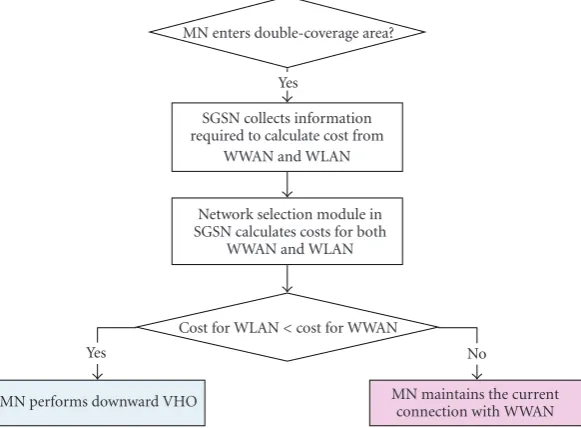
Figure 2shows the flow chart for the proposed vertical
handover decision algorithm. As shown in Figure 2, when
an MN enters the double-coverage area that is covered by both WLAN and WWAN, SGSN collects all the required information for calculating cost from both WWAN and WLAN. The collected information includes the current power consumption, data rate, and monetary cost of each bit for WWAN as well as the available modulation levels, Packet Error Rate (PER) at each modulation level, expected power consumption, and monetary cost of each bit for the target WLAN. Based on this information, SGSN calculates the cost for both networks using the proposed cost function and then decides whether the MN will perform DVHO or not. That is, if the cost for WLAN is less than that for WWAN, the MN will switch from WWAN to WLAN. The result of this decision is delivered to the MN, allowing the MN to connect to the best available network. On the other hand, UVHO is performed when the MN moves from the double-coverage area to the WWAN-only area based on RSS.
We now explain the construction of the cost function. The factors that are taken into account for our cost function
are data throughput, power consumption, and monetary
cost. The cost function for networkIis defined as
C(I)=μtft(I) +μpfp(I) +μmfm(I) forI∈ {wlan, wwan},
(1)
whereft(I), fp(I), andfm(I) denote the normalized variables
for data rate, power consumption, and monetary cost in
network I, respectively. In (1), μt, μp, and μm denote the
weights of each factor, which are set according to the user
preference. The constraint pertaining to μt, μp, and μm is
given byμt +μp+μm = 1. Note that networkI improves
with lower values ofC(I).
ft(I) is obtained as follows:
ft(I)= 1
eαtD(I)+βt, (2)
whereαt andβtare variables to adjust between ft(I), fp(I),
and fm(I) of (1). Because the three factors have different
ranges of values, each factor has adjusting variables. D(I)
is the throughput when using network I. Because the MN
uses WWAN as its current network, it knows the value
of D(wwan) by measurement. However, the MN does not
measure the value ofD(wlan) directly, and so the value is
obtained as follows:
D(wlan)=
⎧ ⎨ ⎩
B(wlan), B(wlan)< D(wwan),
ρ·B(wlan)+1−ρ·D(wwan), B(wlan)≥D(wwan),
(3)
whereB(wlan) is the expected available bandwidth of
net-work wlan. IfB(wlan) is smaller than the current throughput,
be B(wlan) because the network cannot send or receive
more thanB(wlan). If the available bandwidth is larger than
current throughput, however, then the MN can send or
receive more than D(wwan). This means that the value of
D(wlan) is between B(wlan) and D(wwan). To apply this
feature of the heterogeneous network to applications with
different bandwidth requests, we introduceρ, the value that
represents dependency between the throughput requested by
application and the network bandwidth.ρis given between
0 and 1. It is dependent on current application that is using the network. If the MN uses real-time (rt) UDP applications,
then the value is close to 0. If it uses greedy Best-Effort (BE)
TCP applications, then the value is close to 1. For example, rt UDP applications such as VoIP or video call do not need to increase network throughput, although they are connected to a high-bandwidth network. That is, such applications occupy
certain bandwidth as addressed in [21]. Thus,ρ is close to
0. If the MN has been using an rt UDP application in the WWAN-only area, that means that the WWAN admitted
the MN’s rt traffic by considering the WWAN’s load status
and checking whether the WWAN can allocate a certain
bandwidth requested by the application (i.e.,D(wwan)). If
BE TCP applications like FTP are used, however, then the throughput, that can be achieved by the applications, is
dependent on the available bandwidth [21], and soρis close
to 1. On the other hand, if the MN’ BE TCP traffic was
admitted in the WWAN with high load,D(wwan) must be
small for the MN, and hence, the throughput for the MN’s BE application may be increased by handing over to the WLAN.
The value ofB(wlan) is calculated inSection 2.2.
We now calculate the values offp(I) and fm(I). Letpw(I)
and m(I) be the power consumption and monetary cost
for a user in networkI, respectively. The expected amount
of power consumption for the target WLAN, pw(wlan),
is derived analytically in a later section, and m(I) can be
obtained by Price(I)/D(I), where Price(I) indicates the price
to transceive data in networkI per unit time. We can then
determine the normalized amount of power consumption as follows:
fp(I)= 1
eαp/ pw(I)+βp. (4)
The normalized monetary cost is defined as
fm(I)= 1
eαm/m(I)+βm. (5)
αp,βp,αm, andβm in (4) and (5) represent the adaptation
variables. Note that we take the inverse number for m(I)
andpw(I) in (4) and (5), respectively, since lower values are
better.
Whenever an MN enters the double-coverage area of WWAN and WLAN in the proposed vertical handover decision algorithm, SGSN analyzes the user preference so
thatμt,μp, andμm in (1) are set. Based on these weights as
well as the information collected from WLAN and WWAN, then SGSN calculates the costs for both WLAN and WWAN,
C(wlan) and C(wwan), respectively. The MN is allowed to
perform DVHO if the estimated cost for WLAN is less than
that for WWAN. Otherwise, the MN maintains a connection with the WWAN.
2.2. Expectation for Available Bandwidth and Power Con-sumption. In this section, we develop an analytical model to estimate the amount of power that is drained to send or receive a bit in the target WLAN. We start by establishing an analytical model of the available bandwidth for WLAN
assuming that n-level modulation is allowed. We then
estimate the amount of power consumption using this analytical model.
2.2.1. Available Bandwidth Expectation for WLAN. In order to estimate the available bandwidth for WLAN, we determine the probability that the modulation is escalated after the
transmission ofkpackets. This probability can be expressed
as a function of the probability that a packet transmission
succeeds,q, and the number of transmitted packets,k. Let
fu(k,q) be this probability. Similarly, let fd(k,p) denote
the probability that the modulation is lowered after the
transmission of packetk, where p is the probability that a
packet transmission fails, that is, packet error rate (PER). For analysis, we assume that the wireless channel is a Gaussian channel, in which each bit has the same bit error probability, and bit errors are identically and independently distributed
over the whole frame as in [22].
LetNbe the number of successfully transmitted packets
that is required to elevate the modulation level, and letK
be the number of unsuccessfully transmitted packets that is required to degrade the modulation level. That is, the next higher modulation level is selected after transmitting
consec-utiveNframes successfully while the next lower modulation
level is selected after failing to transmit consecutiveKframes.
Depending on the value ofk, fu(k,q) can be decomposed
into four cases as follows.
(1) Whenk < N. The modulation remains unchanged
since consecutive N packets are not successfully
transmitted, resulting infu(k,q)=0.
(2) When k = N. All N packets in the transmission
should succeed so thatfu(k,q) is computed asqN.
(3) When k = N + 1. In this case, the first packet
transmission should fail, followed byN consecutive
successful packets, resulting inpqN.
(4) Whenk > N+ 1. As shown inFigure 3, we can divide
this case into two components. In the first com-ponent, the modulation should remain unchanged
during the transmission of the firstk−N−1 packets.
Let Au(k − N − 1,q) be this probability. In the
second component, the (k−N)th packet transmission
should fail, followed by the successful transmission
of N consecutive packets, resulting in pqN. Thus,
fu(k,q)=Au(k−N−1,q)pqNis the joint probability.
Note that the (k−N)th packet failure is necessary.
Otherwise, the modulation can be elevated after the
Failed packet Successful packet
N
Receiver 1 2 . . . k−N−1 k−N k−N+ 1 . . . k Sender
1st component 2nd component
Figure3: The case that the modulation is elevated after the transmission ofkpackets whenk > N+ 1.
A failed packet before successive N packets
the complement probabilities from 1 instead of calculating them directly. The complement events, which mean that the modulation is changed during the transmission of the first
k−N−1 packets, consist of the three cases shown inFigure 4.
Case 1. The modulation can be elevated during the
trans-mission of the firstk−N−1 packets. This probability can be
recursively computed by km−=N1−1 fu(m,q).
Case 2. In contrast with Case 1, the modulation can be
lowered before the (k − N)th packet, though it is still
computed by mk−=N1−1fd(m,p), as in Case1.
Case 3. It is also possible that the modulation remains
unchanged after transmittingk−N−1 packets, but after
sending theK −Nth packet, the modulation degrades. In
this case, the failure ofK sequential packets occurs after the
first phase, as shown inFigure 4. It is not included in Cases1
and2.fd(k−N,p) is the probability that modulation falls at
k−Nth packet. However, the last packet, ork−Nth packet, is
not included in the first phase, and so the probability of this
case is (1/ p)fd(k−N,p).
By summing up all of the above three cases, we have Au(k−N −1,q) = 1− k−N−1
m=1 {fu(m,q) + fd(m,p)} −
(1/ p)fd(k−N,p).
Using the opposite derivation process, we can also obtain
fd(k,p) as follows:
of packets until the modulation is altered when the current
modulation is given. Letgu(q) andgd(p) denote the average
numbers of packets until the modulation is escalated and
lowered, respectively. Along with fu(k,q) and fd(k,p), we
A key observation found in the ARF algorithm is that the transmission rate is always switched to adjacent one, so that the rate adaptation procedure of ARF could be expressed via
a birth-death Markov chain as in [23]. Figure 5shows the
Markov chain where the statei represents the modulation
leveliof the single target station. Then, we can model then
-level modulation technique as a simple queueing system with
the state of the modulation level as shown inFigure 5, where
λi andμi denote the rates that the modulation is elevated
Modulation
Figure5: The queueing system with the state of modulation level.
λi andμi can then be expressed as functions ofgu(qi) and
gd(pi), respectively:
λi=
whereqiand pirepresent the success and failure
probabili-ties, respectively, when the modulationMiis used.
From (9) and (10), the steady-state probability that the
modulation leveliis used, f(i), can be derived as
We assume thatBiandpiare the maximum bandwidths
provided by the target WLAN and the PER at the modulation
level i, respectively. Finally, we obtain Bwlan, the expected
bandwidth of the WLAN, as follows:
Bwlan=
Letθwlanbe the current usage of the WLAN.θwlanis defined
as the fraction of time during which the AP finds that the channel is busy for unit time: it can be obtained by the AP of
the WLAN as in [21]. Then, we obtain the expected available
bandwidth of the WLAN,B(wlan), as follows:
Bwlan=(1−θwlan)·Bwlan. (13)
2.2.2. Estimation of Power Consumption. In this section we estimate the amount of power consumption for both WLAN
and WWAN. Let Din and Dout denote the receiving and
sending bit rates in WWAN, respectively. We then obtain the average amount of power consumption required to send or
receive a single bit in WWAN,pw(wwan), by measuring the
average amount of power consumption per unit time,δwwan,
as follows:
pw(wwan)= δwwan
(Din+Dout). (14)
As done in WWAN, we denote the receiving and sending
bit rates in WLAN by Din and Dout. Let δwlanr , δwlant , and
δwlani denote the amount of power consumed per unit
time to receive, send, and stay-in-idle mode in WLAN, respectively. We can then obtain the average amount of power consumption in WLAN as follows:
pw(wlan)
whereBwlan is the available effective bandwidth for WLAN
and can be obtained as derived inSection 2.2.1.
Here we assume that the bit rate in WLAN is affected
by the difference in overall network bandwidth between
WLAN and WWAN as well as the characteristic of ongoing
applications. The amount of data throughput in WLAN,D,
is then computed as
D=Din +Dout =(Din+Dout)
where ρ represents the implementation variable based on
the characteristic of application, as mentioned earlier (0 ≤
ρ ≤ 1). Assuming that Din and Dout are adapted to the
increased/decreased bandwidth with the same ratio, our pro-posed scheme estimates a reduction in power consumption
by using (14), as well as (15), if the MN performs DVHO.
3. Performance Evaluation via Simulation
We have developed the simulator using C++ to investigate
the effectiveness of our proposed scheme in comparison
with that of the existing WLAN-First Scheme (WFS) and
a cost-based scheme [14] where a cost function of power
consumption, available bandwidth, and monetary cost, is used for network selection. The proposed scheme takes account of the MN’s RSS and ARF when computing the cost for each network, whereas the cost-based scheme does not. Our simulation model accounts for the throughput and power consumption as performance metrics. The number of VHOs is also evaluated.
3.1. Simulation Environment. In our simulation, we use the
network topology illustrated inFigure 1 in which five APs
are deployed in a single WWAN coverage of 500×500 m2.
As shown in Figure 1, each AP in the network topology
covers a circular area with a radius of 100 m and employs
IEEE 802.11a standard protocol [24], including an adaptive
Table1: The characteristics of modulation for 802.11A.
Modulation
level (i) 1 2 3 4 5
Bandwidth (Bi)
6 Mbps 12 Mbps 18 Mbps 36 Mbps 54 Mbps
Modulation BPSK QPSK QPSK 16-QAM 64-QAM
Coding Rate 1/2 1/2 3/4 3/4 3/4
ai 274.7229 90.2514 67.6181 53.3987 35.3508
gi 7.9932 3.4998 1.6883 0.3956 0.0900
γpi(dB) −1.5331 1.0942 3.9722 10.2488 15.9784
In our simulation, the bandwidth for WLAN is set to a maximum of 54 Mbps, while the WWAN uses the bandwidth of High-Speed Downlink Packet Access (HSDPA), 14 Mbps. The data rate for WLAN changes adaptively based on an adaptive modulation technique through which five
modu-lation levels are available. Table 1 shows the characteristics
of the five modulation levels for 802.11a adopted in our
simulation [19,24]. BothKandNfor adaptive modulation
are set to 10.
In our simulation, the PER at each modulation levelifor
WLAN is modeled in [19, Equation (5)] as follows:
piγ≈
⎧ ⎨ ⎩
1, if 0< γ < γpi
aie−giγ, ifγ≥γpi,
(17)
whereγrepresents the received signal-to-noise ratio (SNR).
The level-dependent parametersai,gi, andγpi are obtained
by fitting (17) to the exact PER. Supposing that a packet
length is 1080 bits, thenTable 1provides the fitting
param-eters for transmission modes. Assuming that the path-loss
exponent is 3, the received SNR,γ, is computed as follows
[18]:
γ=Pt−PL(d0)−30 log10d+G(t), (18)
where Pt is the transmit power, PL(d0) = 46.7 dB is the
mean path loss at a close reference distance ofd0=1 m,dis
the distance in meters, andG(t) is a time-variant
Rayleigh-distributed fading gain, for which the well-known Jakes’ Doppler spectrum is assumed.
The Correspondent Node (CN) generates two different
classes of traffic: BE TCP traffic (ρ = 1) and UDP traffic
(ρ = 0). The data session arrival rate follows a Poisson
process with mean 1/300. The packet size is 1000 bytes. In the simulation, TCP Reno has been implemented, where the initial and maximum window sizes are set to 1 and 1024 packets, respectively. Each session generates a file with the size varying from 1 to 11 Mbytes. To simulate the
UDP traffic, On/Off traffic is generated, where the On
and Off periods are exponentially distributed with means
of 100 seconds and 300 seconds, respectively. During On
period, traffic is generated with a rate of 20 to 200 Kbytes/s.
We obtain the values of (αt,βt), (αp,βp), and (αm,βm)
in (2), (4), and (5) from the simulation such that they
normalize the value of each factor, that is, ft(I), fp(I), and
fm(I). Table 2 gives these values. In our simulation, the
Table2: Adaptation variables for each factor.
αt 0.003 βt 0
αp 0.6 βp 0
αm 2 βm 0
Table3: Parameter values for mobility model.
Parameter Input 1 Input 2
vmax 0.66 m/s 1.54 m/s
amin −0.18 m/s2 −0.42 m/s2
amax 0.12 m/s2 0.28 m/s2
Tv 125 s
Tϕnew 600 s
amounts of power consumed to transmit, receive, and stay in an idle state are set to 1.828 W, 1.0494 W, and 0.6699 W, respectively, for the WLAN interface. These amounts are set to 2.805 W, 0.495 W, and 0.066 W, respectively, for the WWAN interface. The ratio of Price(wwan) and Price(wlan) is set to 5 to 1. The simulation time in the simulator is 100 hours.
For the mobility of MNs, we use the Smooth Random Mobility model, in which there is a maximum speed,
vmaxm/s, and a set of two preferred speeds,vpre f1=(3/5)vmax
and vpre f2 = vmax [25]. In our simulation, a total of six
MNs move at pedestrian speeds. The initial velocity of each
MN is chosen from the two preferred speeds,vpre f1,vpre f2,
and the range [0,vmax] with probabilities of 0.2, 0.5, and
0.3, respectively. We assume a uniform distribution on the
range of [0,vmax]. All the MNs move with the selected
speed until a new target speed is set again. The target speed is updated at every time interval which follows an
exponential distribution with a mean of Tvs. Whenever
a new target speed is decided, the MN decelerates or accelerates until the target speed is reached or a new target
speed is decided again.aminandamax denote the maximum
possible deceleration and acceleration in m/s2, respectively.
The MN selects a random acceleration/deceleration value
from [amin, amax]. It also decides whether to change its
movement direction or to maintain it with probabilities of
1/6 and 5/6, respectively. This is done at every time interval
with an exponential distribution, the mean of which is Tϕnews.
All the parameter values for the mobility model are
obtained from [25, 26] and are given in Table 3. In the
simulation, MNs move in accordance with two input sets that
represent two different levels of mobility, as shown inTable 3.
That is, half of the MNs move according to Input 1, and the other half of the MNs move according to Input 2.
3.2. Simulation Results. We first run simulation tests by
setting the weights (μm,μt,μp) in (1), which represent user
preference, all to 1/3 for the proposed scheme. To determine
the impact of the weights in (1) on the performance of
0
Figure6: File size per session versus throughput when the TCP traffic (ρ=1) is generated.
different combinations ofμm,μt, andμp. We run simulation
tests for the proposed scheme with another three weight sets that make the data throughput, the power consumption, and the monetary cost most important, respectively, among the three factors in our cost function. The three weight sets are
(μm,μt,μp)=(0.8, 0.1, 0.1), (0.1, 0.8, 0.1), and (0.1, 0.1, 0.8).
The values for performance metrics in simulation results are those averaged over all the MNs.
Figure 6shows the throughput performance for different
file sizes when the TCP traffic (ρ = 1) is generated. We
observe fromFigure 6that both the proposed and the
cost-based schemes achieve much better throughput performance than WFS over the whole range of the file size. Specifically, the throughput improvement by our scheme over WFS is
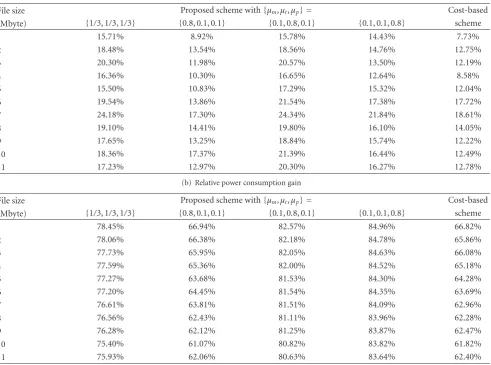
17.3% in average.Table 4(a) shows the relative throughput
performance gains of our scheme with the four weight sets
and the cost-based scheme over WFS when ρ is 1. We
see that when a higher weight is put on the throughput
(i.e.,μt = 0.8), our scheme shows the highest throughput
improvement. It can be also seen from Table 4(a) that the
throughput is also improved by the proposed scheme over the cost-based scheme.
Figure 7shows the power consumption per minute in
Watts versus the different file sizes when the TCP traffic (ρ=
1) is generated. We see fromFigure 7that both the proposed
and the cost-based schemes show less power consumption than WFS for all the values of the file size. It is also observed fromFigure 7that our scheme consumes less power than the
cost-based scheme except for the case ofμm =0.8, in which
the power consumption for the proposed scheme is almost same as that for the cost-based scheme since 80% of the weight is put on the monetary cost in the proposed scheme.
0.05
Figure7: File size per session rate versus power consumption per minute when the TCP traffic (ρ=1) is generated.
Specifically,Table 4(b) shows the relative performance gains
of our scheme with the four weight sets and the cost based scheme over WFS in terms of the power consumption when
ρ is 1. As expected, the proposed scheme with μp = 0.8
shows the most performance gain. Our scheme decreases the power consumption per minute from those of WFS and the cost-based scheme by 76.71% and 35.35%, respectively, in average.
Figure 8 shows the number of VHOs per hour for the
different file sizes when the TCP traffic (ρ=1) is generated.
We see that the WFS yields a larger number of VHOs, compared to both the proposed and the cost-based schemes. In the proposed scheme, the average number of VHOs performed by each MN is 85.51% less than that of WFS in average. This is because WFS lets each MN perform DVHO whenever the MN enters the double-coverage area. The cost-based scheme shows almost the same number of VHOs as
the proposed scheme with μm = 0.8, whereas our scheme
performs 73.7% less VHOs than the cost-based scheme, in average.
From Figures6,7, and8, we can see that when the TCP
traffic is generated, our scheme outperforms WFS in terms of
the throughput and the power consumption for the different
file sizes, while yielding a smaller number of VHOs than WFS. It can be also seen that the proposed scheme achieves better performance than the cost-based scheme in terms of the throughput, the power consumption, and the number of VHOs, except for the case in which 80% of weight is put on the monetary cost.
We now evaluate the performance of our VHO decision
algorithm when the UDP traffic (ρ = 0) is generated.
Table4: Relative performance gain of the proposed and the cost-based schemes over WFS when the TCP traffic (ρ=1) is generated.
(a) Relative throughput gain
File size Proposed scheme with{μm,μt,μp} = Cost-based
(Mbyte) {1/3, 1/3, 1/3} {0.8, 0.1, 0.1} {0.1, 0.8, 0.1} {0.1, 0.1, 0.8} scheme
1 15.71% 8.92% 15.78% 14.43% 7.73%
2 18.48% 13.54% 18.56% 14.76% 12.75%
3 20.30% 11.98% 20.57% 13.50% 12.19%
4 16.36% 10.30% 16.65% 12.64% 8.58%
5 15.50% 10.83% 17.29% 15.32% 12.04%
6 19.54% 13.86% 21.54% 17.38% 17.72%
7 24.18% 17.30% 24.34% 21.84% 18.61%
8 19.10% 14.41% 19.80% 16.10% 14.05%
9 17.65% 13.25% 18.84% 15.74% 12.22%
10 18.36% 17.37% 21.39% 16.44% 12.49%
11 17.23% 12.97% 20.30% 16.27% 12.78%
(b) Relative power consumption gain
File size Proposed scheme with{μm,μt,μp} = Cost-based
(Mbyte) {1/3, 1/3, 1/3} {0.8, 0.1, 0.1} {0.1, 0.8, 0.1} {0.1, 0.1, 0.8} scheme
1 78.45% 66.94% 82.57% 84.96% 66.82%
2 78.06% 66.38% 82.18% 84.78% 65.86%
3 77.73% 65.95% 82.05% 84.63% 66.08%
4 77.59% 65.36% 82.00% 84.52% 65.18%
5 77.27% 63.68% 81.53% 84.30% 64.28%
6 77.20% 64.45% 81.54% 84.35% 63.69%
7 76.61% 63.81% 81.51% 84.09% 62.96%
8 76.56% 62.43% 81.11% 83.96% 62.28%
9 76.28% 62.12% 81.25% 83.87% 62.47%
10 75.40% 61.07% 80.82% 83.82% 61.82%
11 75.93% 62.06% 80.63% 83.64% 62.40%
Table5: Data transmission rate (Kbyte/s) versus throughput when the UDP traffic (ρ=0) is generated.
Data transmission Proposed scheme with{μt,μp,μm} = WFS Cost-based
Rate (Kbytes/s) {1/3, 1/3, 1/3} {0.8, 0.1, 0.1} {0.1, 0.8, 0.1} {0.1, 0.1, 0.8} scheme
20 4.67 4.67 4.96 4.57 4.64 4.50
40 9.39 9.19 10.01 9.28 9.14 9.16
60 14.37 13.97 14.84 13.82 13.80 13.73
80 18.46 18.64 19.56 18.53 18.35 18.52
100 23.45 23.53 25.04 22.96 22.48 22.89
120 28.18 27.80 30.39 27.70 27.17 27.66
140 32.95 32.92 35.18 32.12 32.06 32.36
160 37.07 37.91 39.00 36.52 37.36 37.83
180 42.52 42.12 45.11 40.65 41.47 41.55
200 44.84 45.97 49.89 45.57 45.63 45.12
220 51.98 51.54 55.86 50.73 50.43 51.16
values of the data transmission rate when ρ = 0. We run
simulation tests for the proposed scheme with the four weight sets, as in the simulation for the TCP. We observe fromTable 5that the proposed and the cost-based schemes and WFS have similar throughput performances, because
when ρ is 0, the amount of data throughput achieved by
WWAN is same as that achieved by WLAN, as known from
(16).
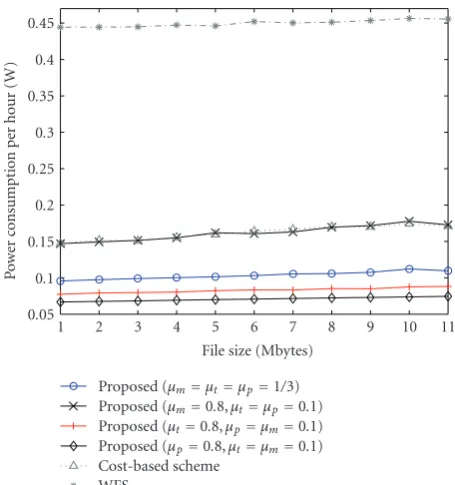
Figure 9depicts the power consumption per minute for
0
Figure8: File size per session versus number of VHOs per hour when the TCP traffic (ρ=1) is generated. Data transmission rate (Kbytes/s)
Proposed (μm=μt=μp=1/3)
Figure9: Data transmission rate versus power consumption per minute when the UDP traffic (ρ=0) is generated.
UDP traffic (ρ = 0) is generated. We see from Figure 9
that our scheme with μp = 0.8 achieves the greatest
improvement over the WFS and the cost-based scheme in terms of the power consumption. Specifically, our scheme
with μp = 0.8 decreases the power consumption per
minute 83.71% and 68.35% from those of WFS and the
0 Data transmission rate (Kbytes/s)
Proposed (μm=μt=μp=1/3)
Figure10: Data transmission rate versus number of VHOs per hour when the UDP traffic (ρ=0) is generated.
cost-based scheme, respectively, in average. For the other
three weigh sets (i.e., μt = 0.8, μm = 0.8, and all the
weights are 1/3), our scheme consumes 1.33% less power than the cost-based scheme in average, because less weight
is put on the power cost, compared to the case of μp =
0.8.
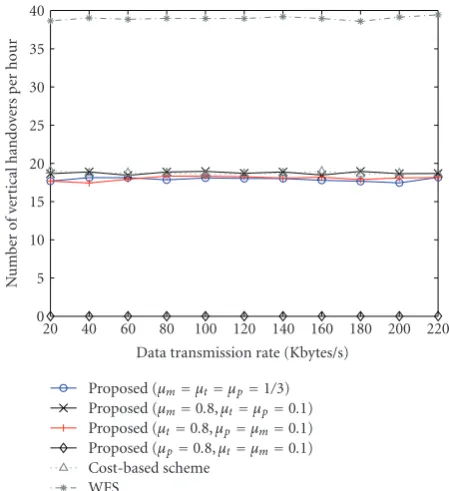
Figure 10shows the number of VHOs per hour for the
different values of the data transmission rate when the UDP
traffic (ρ =0) is generated. We see that WFS, in which the
MN performs DVHO whenever it enters the double-coverage area, shows the greatest number of VHOs. The number of VHOs for the cost-based scheme is 2.8% more than our
scheme with the three weight sets (excludingμp = 0.8), in
average. However, for our scheme withμp=0.8, no VHO is
performed over the whole range of the data transmission rate in order to comply with the user’s request and to save power as much as possible.
4. Conclusion
The coexistence of different wireless access technologies
scheme, when an MN moves to the double coverage area, DVHO is performed only if the cost expected in the WLAN is less than that in the WWAN. The cost function is based on data throughput, power consumption, and monetary cost. In addition, user preferences for these cost factors are considered to select an optimal network for each MN. Our simulation results showed that the proposed scheme outperforms the typical WFS scheme in terms of throughput and power consumption by selecting a lower cost network over all user preferences.
Acknowledgments
This work was supported in part by the IT R&D program of MKE/IITA (2009-F-043-01, Development of user-centric terminal-controlled seamless mobility technology) and in part by the Information Technology Research Center (ITRC) support program supervised by the MKE/IITA, South Korea (IITA-2009-C1090-0902-0005).
References
[1] N. Nasser, A. Hasswa, and H. Hassanein, “Handoffs in fourth generation heterogeneous networks,” IEEE Communications Magazine, vol. 44, no. 10, pp. 96–103, 2006.
[2] Y. Kim, B. J. Jeong, J. Chung, et al., “Beyond 3G: vision, requirements, and enabling technologies,”IEEE Communica-tions Magazine, vol. 41, no. 3, pp. 120–124, 2003.
[3] IEEE 802.11, “Wireless LAN Medium Access Control (MAC) and Physical Layer (PHY) Specifications,” IEEE Standard, 1999.
[4] 3GPP TR 23.234 v7.7.0, “3GPP System to WLAN Inter-working; System Description (Release 7),” March 2008,
http://www.3gpp.org/Specifications.
[5] 3GPP2, “CDMA2000 WLAN Interworking,” S.R0087-A, v1.0, March 2006,http://www.3gpp2.org.
[6] K. Pahlavan, P. Krishnamurthy, A. Hatami, et al., “Handoffin hybrid mobile data networks,”IEEE Personal Communications, vol. 7, no. 2, pp. 34–47, 2000.
[7] M. Lott, M. Siebert, S. Bonjour, D. von Hugo, and M. Weckerle, “Interworking of WLAN and 3G systems,” IEE Proceedings: Communications, vol. 151, no. 5, pp. 507–513, 2004.
[8] M. Ylianttila, R. Pichna, J. Vallstrom, et al., “Handoff pro-cedure for heterogeneous wireless networks,” inProceedings of the IEEE Global Telecommunications Conference (GLOBE-COM ’99), vol. 5, pp. 2783–2787, December 1999.
[9] Q. Zhang, C. Guo, Z. Guo, and W. Zhu, “Efficient mobil-ity management for vertical handoff between WWAN and WLAN,”IEEE Communications Magazine, vol. 41, no. 11, pp. 102–108, 2003.
[10] A. Calvagna and G. Modica, “A cost-based approach to vertical handover policies between WiFi and GPRS,”Wireless Communications and Mobile Computing, vol. 5, no. 6, pp. 603– 617, 2005.
[11] W. Shen and Q.-A. Zeng, “A novel decision strategy of vertical handoffin overlay wireless networks,” in Proceedings of the 5th IEEE International Symposium on Network Computing and Applications (NCA ’06), pp. 227–230, 2006.
[12] T. Al-Gizawi, K. Peppas, D. I. Axiotis, E. N. Protonotarios, and F. Lazarakis, “Interoperability criteria, mechanisms, and eval-uation of system performance for transparently interoperating WLAN and UMTS-HSDPA networks,”IEEE Network, vol. 19, no. 4, pp. 66–72, 2005.
[13] J. McNair and F. Zhu, “Vertical handoffs in fourth-generation multinetwork environments,”IEEE Wireless Communications, vol. 11, no. 3, pp. 8–15, 2004.
[14] L.-J. Chen, T. Sun, B. Chen, V. Rajendran, and M. Gerla, “A smart decision model for vertical handoff,” inProceedings of the ANWIRE International Workshop on Wireless Internet and Reconfigurability, 2004.
[15] Q. Song and A. Jamalipour, “A time-adaptive vertical handoff decision scheme in wireless overlay networks,” inProceedings of the IEEE International Symposium on Personal, Indoor and Mobile Radio Communications (PIMRC ’06), 2006.
[16] R. Tawil, G. Pujolle, and O. Salazar, “A vertical handoff deci-sion scheme in heterogeneous wireless systems,” inProceedings of the IEEE Vehicular Technology Conference, pp. 2626–2630, 2008.
[17] A. Kamerman and L. Monteban, “WaveLAN-II: a high-performance wireless LAN for the unlicensed band,”Bell Labs Technical Journal, vol. 2, no. 3, pp. 118–133, 1997.
[18] P. Chevillat, J. Jelitto, A. N. Barreto, and H. L. Truong, “A dynamic link adaptation algorithm for IEEE 802.11a Wireless LANs,” inIEEE International Conference on Communications (ICC ’03), vol. 2, pp. 1141–1145, 2003.
[19] Q. Liu, S. Zhou, and G. B. Giannakis, “Cross-layer combining of adaptive modulation and coding with truncated ARQ over wireless links,”IEEE Transactions on Wireless Communications, vol. 3, no. 5, pp. 1746–1755, 2004.
[20] 3GPP, “General Packet Radio Service(GPRS); Service Descrip-tion Stage 2 (Release 7),” Technical SpecificaDescrip-tions 3GPP TS 23.060 v7.4.0, March 2007.
[21] H. Zhai, J. Wang, and Y. Fang, “Providing statistical QoS guarantee for voice over IP in the IEEE 802.11 wireless LANs,” IEEE Wireless Communications, vol. 13, no. 1, pp. 36–43, 2006. [22] Q. Ni, T. Li, T. Turletti, and Y. Xiao, “Saturation throughput analysis of error-prone 802.11 wireless networks,” Wireless Communications and Mobile Computing, vol. 5, no. 8, pp. 945– 956, 2005.
[23] Q. Pang, V. C. M. Leung, and S. C. Liew, “A rate adaptation algorithm for IEEE 802.11 WLANs based on MAC-layer loss differentiation,” in Proceedings of the 2nd International Conference on Broadband Networks (BroadNets ’05), pp. 709– 717, October 2005.
[24] IEEE 802.11a, “Wireless LAN Medium Access Control (MAC) and Physical Layer (PHY) Specifications: High-speed Physical Layer in the 5 GHz Band,” IEEE Standard, 1999.
[25] C. Bettstetter, “Smooth is better than sharp: a random mobil-ity model for simulation of wireless networks,” inProceedings of the 4th ACM International Workshop on Modeling, Analysis and Simulation of Wireless and Mobile Systems (MSWiM ’01), pp. 19–27, July 2001.