Available Online atwww.ijcsmc.com
International Journal of Computer Science and Mobile Computing
A Monthly Journal of Computer Science and Information Technology
ISSN 2320–088X
IJCSMC, Vol. 4, Issue. 10, October 2015, pg.413 – 419
RESEARCH ARTICLE
MATLAB/Simulink Based Transmission Line
Automation Using Sample and Hold System
M. Sudheer Kumar
1, P. Sucharitha
21
M.Tech Student (PSCA), Aurora Scientific and Technological Institute, Hyderabad Email: [email protected]
2
Assistant Professor & HOD, EEE Dept. Aurora Scientific and Technological Institute, Hyderabad Email: [email protected]
Abstract— This study presents MATLAB/Simulink model of Sample and Hold Circuit system for the automation of transmission utility to suppress the outage of grids. The traditional fault diagnosis methods like SCADA systems, digital fault recorders, travelling wave fault locators, multi agent system and other monitoring devices are haggard upon to inform the engineers of incidents, problems and fault. In the recent complex power system network scenario there is a delay in the action to be taken due to the lack of data available in the centralized system. The proposed system is implemented in MATLAB/Simulink software platform. The simulation results indicates that the use of Sample and Hold circuit system provides intelligence and has self-healing characteristics for the transmission utility.
Keywords- Multi-agent System, Decentralized System,MATLAB, Intelligent Systems; Sample and Hold
1. Introduction
In the recent power scenario, the system is exposed to outages particularly due to the malfunctioning of components and overdrawing of power due to excessive demands. This attributes to high heat and below par monsoon which prompted the farmers to use pumps to supply water to protect the crops. Power blackouts may cause services like Trains, metros, traffic lights, and many other essential services halted, which may cause chaos everywhere. The growing complexity of the power grid in the present scenario and the policy of the country also challenge the researchers showing a high degree of uncertainty in accurately estimating the impact of disruptions on the reliability, availability and efficiency of the power delivery system. These uncertainties result in hesitation on the part of decision makers in committing to smart systems for grid management. Due to the large amounts of data representing the grid status at any given time, even when aided by simulation and analysis tools, there are still limitations on how quickly human operators can make efficient decisions in near real time. Because of the limitation human operators in comparison with automated control, there is a considerable research being done on how to fully automate the control of the electrical grid by using software agents. This research paper aims to give a review on multiagent systems and its application in power system. A fully automated grid with multiagent system will also presents some challenges and demerits along with its many merits. For example, developing agents able to function on par with human experts for the various scenarios that can happen in the smart grid, this will require a significant amount of research and experimentation. Relying on autonomous agents will also introduce a number of security issues. An agent could be hacked and controlled by an attacker who could manipulate the decisions and communications of the agent to perform malicious behavior. The trustworthiness of any particular agent or even the system as a whole could be called into question because of both the security risks and the general difficulty in replicating human expertise.
protection, can be quickly ascertained from SCADA data. Network disturbances in the vicinity of the transformer can also be identified through the interpretation of SCADA. If a digital fault recorder is installed in a transformer’s substation, then DFR data can be used to build a profile of the transients, such as fault currents and over-voltages, experienced by the transformer. This profile, in addition to an assessment of transformer health using interpreted condition monitoring data, may be used to inform maintenance decisions. Moreover, knowledge of the occurrence of disturbances, switching operations and other activity on the power system, may impact on the analysis of the condition monitoring data itself by offering additional information that can be used to help discriminate between competing diagnoses. The desire to explore the use additional data sources to enhance condition monitoring has led the authors to investigate the integration of COMMAS with another existing multi-agent system called Protection Engineering Diagnostic Agents (PEDA) [2]. The PEDA system integrates a number of intelligent systems in order to automate post-fault analysis using SCADA and DFR data. Using PEDA, engineers can quickly access interpreted SCADA and DFR data relating to specific circuits, substations or items of plant. Combining the functionality of PEDA with the functionality of COMMAS provides engineers with decision support based on condition monitoring data, SCADA and DFR data.
MAS technology is now being developed for a range of applications including diagnostics [9], condition monitoring [10], power system restoration [11], market simulation [12], [13], network control [13], [14], and automation [15]. An agent is a software entity that represents the system (grid) to be considered. The software agent has the following capabilities: reactivity, pro-activeness, and social ability, and so on. A multi-agent system is composed of multiple autonomous agents (multiple grids). This application of intelligent agents with sharing of resources to create a transmission system can be represented as intelligent autonomous transmission system. The application of information technology also enables the control of devices present in the transmission system faster compared to the conventional system. The broad view of a transformation to a Intelligent autonomous transmission system which will ultimately lead to smart grid was reflected in DOE’s Grid Wise [17] and Modern Grid Strategy [18] programs. Coincident with this time period, the Electric Power Research Institute (EPRI) was making progress with the precursor to their IntelliGrid initiative and the contributions of many other individuals and organizations across the globe gave rise to the concepts now known as smart grid [18]. The above pointed-out problems are overcome by the proposed method. Agent has the characteristic of reactivity, autonomy, reactive, sociality, and so on. The multi-agent system (MAS), which is composed by multiple agents, can make the large and complex system into multiple agent systems [3]. MAS can package application subsystem or functional module into various agents according to the control system requirement. And it also can solve the industrial process control problem in the distributed heterogeneous environment through the mutual communication and coordination between the agents [4-5]. So, we construct process industrial process control through introducing the MAS technology into process industry. It can provide an effective coordination control method for process industrial process.
Therefore, in this paper proposed the intelligent autonomous transmission system using MATLAB/Simulink software and JADE. Also, in this paper the distributed control and distributed database concepts are used.
The organization of this paper as follow: section II presents the proposed multi-agent system. Section III deals with the simulation of proposed system using MATLAB/ Simulink and software agents using JADE. Section IV discusses the conclusions.
2. EXISTED MULTI-AGENT SYSTEM
The complex network is broken down into smaller networks, so that the each network is controlled effectively and handled with efficient distributed controllers. All the smaller networks work independently with the ability to integrate and coordinate with each other to give the most reliable transmission system. The design is also based on the concept of an Intelligent Autonomous Distributed Power System (IDAPS) that was proposed by the Advanced Research Institute of Virginia Tech. The intelligence in the smaller network is handled by the multiagent system associated with the micro-grid and its quality depends directly on the multi-agent design employed. In the system considered the grid is fed by three sources. Here we consider a radial topology network with three transmission lines. Each transmission lines includes substation having a load attached. All transmission lines are connected with each other making it possible to reconfigure the network in numerous ways. Each transmission line is connected with the other transmission line the switches. Transmission lines impose constraints on how much power can be transmitted. For the sake of simplicity each has been assigned a maximum allowable MW flowing through it. This will limit the amount of load which can be connected to the transmission line in addition to its own loads. How much a transmission line can provide to another section depends on its current load consumption. A power flow capacity of 500 MW will be used for all transmission line in the subsequent simulations.
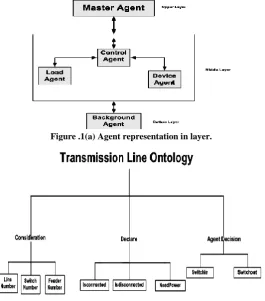
The proposed system treats each transmission line and its associated substation as micro-grid, multi-agent system uses hierarchy based system given in Fig. 1a. In this the agents created to operate independently and to take their decisions on its own or semi-autonomous to take decision based on the permission from the higher level agent. In general, this means that the agents in the first level exhibit full autonomy, in that they act on their own accord without direct instruction, while the agents on the second and third layer act semi-autonomously, in that they receive instructions from their supervisory agents. The transmission line ontology, the flow of data and control signals are given in Fig.1b and 1c.
power to its Feeder Agents from another Transmission line, it sends a command to the appropriate feeder Agent to share the power from the other transmission line. Figure 1a shows a graphic representation of the agent layers, illustrating the kinds of intelligence that is integrated into each layer. High level decisions are carried out by a upper layer, and the physical components with no intelligence reside at the bottom layer. The middle layer agents have limited intelligence.
Figure .1(a) Agent representation in layer.
Figure .1(b) Elements of transmission line ontology.
Figure .1(c) Layered structure of multiagent system and flow of control and data signals
2.1. MATALB JAVA CODE
This sections explains the block model of a Transmission Line Automation Using Multi Agent System. The net beans software is used to run the java program in the matlab. The model designed in Matlab/Simulink 2014a.
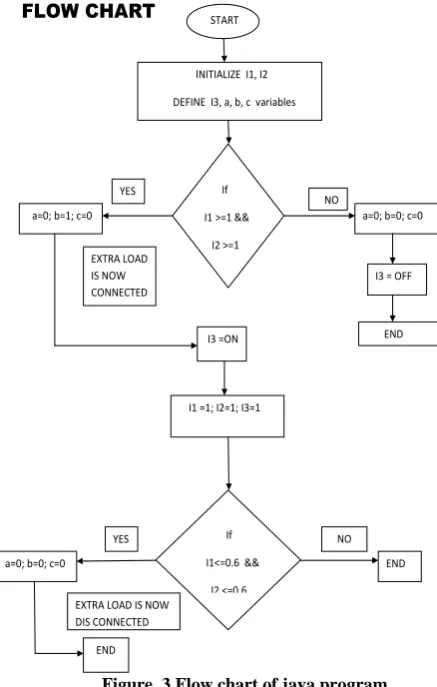
FLOW CHART START
INITIALIZE I1, I2 DEFINE I3, a, b, c variables
If I1 >=1 && I2 >=1
a=0; b=0; c=0
END a=0; b=1; c=0
I3 =ON
I1 =1; I2=1; I3=1
If I1<=0.6 && I2 <=0.6
END a=0; b=0; c=0
END
I3 = OFF YES NO NO EXTRA LOAD IS NOW CONNECTED
EXTRA LOAD IS NOW DIS CONNECTED
YES
NO
NO
Figure .3 Flow chart of java program
3. PROPOSED SAMPLE AND HOLD CIRCUIT SYSTEM
The Sample and Hold block acquires the input at the signal port whenever it receives a trigger event at the trigger port (marked by ). The block then holds the output at the acquired input value until the next triggering event occurs.
The trigger input must be a sample-based scalar with sample rate equal to the input frame rate at the signal port. You specify the trigger event using the Trigger type parameter:
Rising edge triggers the block to acquire the signal input when the trigger input rises from a negative value or zero to a positive value.
Falling edge triggers the block to acquire the signal input when the trigger input falls from a positive value or zero to a negative value.
Either edge triggers the block to acquire the signal input when the trigger input either rises from a negative value or zero to a positive value or falls from a positive value or zero to a negative value.
You specify the block's output prior to the first trigger event using the Initial condition parameter. When the acquired input is an M-by-N matrix, the Initial condition can be an M-by-N matrix, or a scalar to be repeated across all elements of the matrix. When the input is a length-M unoriented vector, the Initial condition can be a length-M row or column vector, or a scalar to be repeated across all elements of the vector.
4. SIMULATION RESULTS
A. Existed System
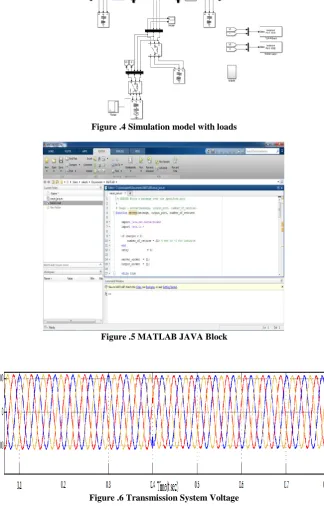
Figure .4 Simulation model with loads
Figure .5 MATLAB JAVA Block
Figure .7 Current Waveforms Under Overload Condition
Figure .8 Current Waveforms Restoration after Automation
B. Proposed System
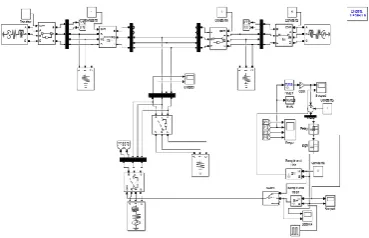
Figure .9 Simulation Circuit with Proposed Automation Control Strategy
Figure .11 Current Waveforms Restoration after Automation
5. CONCLUSIONS
In this paper the automation of transmission line using Sample and Hold circuit system has been successfully implemented in MATLAB/Simulink software platform. The simulated results are illustrated that the designed model can disconnect the transmission line in case of line outage is detected and also serves in faster clearance in fault and also it serves as a flexible protection alternative. Sample and Hold technique is very much simple strategy when compared to the existed multiagent system. In multiagent system additionally we need java software to develop the program but whereas the proposed technique is avoiding the usage of this additional requirements, as we can implement it with the help of same MATLAB/Simulink library.
REFERENCES
1. Krutz, R, "Securing SCADA Systems", Wiley Publishing, Inc: ndianapolis,IN, USA, 2006.
2. Zamora, R, Srivastava A.K, "Controls for micro-grids with storage: Review, challenges, and research needs", Renewable Sustainable Energy Rev, 2010, 3 doi:10.1016/j.rser.2010.03.019.
3. Bailey, D.; Wright, E," Practical SCADA for Industry", 1st ed., Newnes, Oxford UK, 2003, pp. 1–98.
4. Dimeas, A.L, Hatziargyriou, N.D, "Operation of a multi-agent system for microgrid control", IEEE IEEE Trans. Power Syst, 2005, 8, pp. 1447–1455.
5. Korbik, A, McArthur, S.D.J. Ault, G.W, Burt, G.M, Mc-Donald, J.R, "Enabling active distribution networks through decentralized autonomous network management", In Proceeding of 18th International Conference and Exhibition on Electricity Distribution, Turin, Italy, 6 June–9, 2005.
6. Wooldridge, M.L, "An Introduction to MultiAgent Systems", 2nd ed.,J. Wiley & Sons, Chichester UK, 2009, pp. 183–193.
7. Weiss, G,"Multiagent Systems A Modern Approach to Distributed Artificial Intelligence", MIT Press, Cambridge, MA, USA, 1999, pp. 27– 90.