Available Online at www.ijcsmc.com
International Journal of Computer Science and Mobile Computing
A Monthly Journal of Computer Science and Information Technology
ISSN 2320–088X
IMPACT FACTOR: 5.258IJCSMC, Vol. 5, Issue. 4, April 2016, pg.92 – 99
Performance Analysis and Design of an
Efficient Biometric System by using
Watermarking with 3DWT
Kowsalya
1, Subanandhini
21
P.G Scholar (Applied Electronics), Rathinam Technical Campus, Tamilnadu, India
2
Asst.Proff of ECE Department, Rathinam Technical Campus, Tamilnadu, India
1
[email protected]; 2 [email protected]
Abstract – The motto of this proposal principally focussed on biometric devices and analysis this preformance. Latest security initiatives in biometric devices is how to effiently give the result so we prposed watermarking with 2dwt design of image processing like iris ,finger print and checked few other bio-metric devices.we proved Our designed devices give better case result than existing module.for this design we had used matlab model based development with efficient serial protoco(CAN,UART).The over all designed kit is done by dsPIC4011.Futrthermore the new Quaternion-Based Encryption standard is used for encryption purposes.It is give better result for medical security.
Keywords- Watermarking, 2DWT, CAN, UART, dsPIC4011
I. INTRODUCTIONS
A biometric system is essentially a pattern recognition system which recognizes a user by determining the authenticity of a specific anatomical or behavioral characteristic possessed by the user. Several important issues must be considered in designing a practical biometric system. First, a user must be enrolled in the system so that his biometric template or reference can be captured. This template is securely stored in a central database or a smart card issued to the user. The template is used for matching when an individual needs to be identified. Depending on the context, a biometric system can operate either in a verification (authentication) or an identification mode[1].
measured. It effectiveness depends on an individual using the same keyboard as different types may create a variance in the keystroke pattern measured[2],[3].
Speaker identification and recognition is used to discover an unknown speaker’s identity based on patterns of voice pitch and speech style. Behavioral patterns of a voice differ with every individual. In criminal investigations, a voice is compared to a database of voice model templates that were previously recorded. The success of the biostatistics voice data comparison varies since it is based on the availability of the voice recordings[4].Fingerprint Identification or Recognition is the type of biometrics compares two fingerprints to determine identification. It analyzes the ridges and valleys patterns on the fingertip for differences. These fingerprint patterns include the arch, loop, and whorl. In biometric forensics, fingerprint identification is useful for narrowing down suspects. Some laptop computers utilize fingerprint biometrics for authorizations for such purposes as logging in and entering website passwords[5].
The method uses 3D analysis of the finger for tracking and identification purposes. An individual places their hand (palm down) onto a special plate. A camera takes a picture of it and analyzes the length, width, thickness and surface area of the hand. This recorded biostatistics information is then stored for future use. Companies have used this type of biometrics for attendance tracking and accessing secure entrances. Facial recognition uses algorithms to analyze features. These include the position/size/shape of the eyes, nose, cheekbones and jaw line. Initially, this process was known as 2D facial recognition [6],[1]. The 2D images were typically taken from security cameras that have integrated facial recognition technology. For the best results, face images needed to be looking directly at the camera with enough lighting. After analysis, they could be compared to other face images for identification purposes. 3D biometric facial recognition is the updated version of this identification process. Images are captured with a real-time 3D camera or by digitally scanning a 2D photo. Detailed information like the contour of the eye sockets, nose and cheekbones help make identification easier. The 3D method is also not affected by lighting issues. This improvement has benefited law enforcement and biometric forensics investigations.
From thes analysis we have to find out some problem which is explained by here.The duplicate copy of a digital media is
as good as the original and hence the issue of Piracy and copyright protection is alarming. Illegal production and unauthorized distribution of digital media has become a high alarming problem in protecting the copyright of digital media. Digital watermarking has been proposed as one of the solution for the copyright protection and digital right management.
DWT is applied to provide more security in the watermarking process and there is no biometric is given as key. A watermark is designed for residing permanently in the original digital data even after repeated reproduction and circulation. An optimized watermarking embedding and extraction method is supposed to meet necessities of perceptual transparency, robustness to sustain signal processing attacks and also needs to be secure. Perceptual transparency means that the insertion of the digital watermark in the host image does not change the visibility of image.
Drawbacks of the Existing System
• The Existing System only used an image based approach.
• This system does not support the minutiae approach.
• This system also takes long time identification. • This system result is not accurate.
II. RELATED WORKS
In this we propose a method to improve safety at problem analysis of duplicate image. Here we use kalman filter to predict the persons in the level crossings. By using Gaussian mixture model the person is predicted in the entire process. In the proposed method foreground subtraction is used to identify the persons moving in the level crossings. And the moving persons are tracked in the process.
Implementation is the stage of the project when the theoretical design is turned out into a working system. Thus it can be the considered to be the most critical in achieving a successful new system and in giving the user, confidence that the new system will work and be effective. The implementation stage involves careful planning, investigation of the existing system and it’s constraints on implementation, designing of methods to achieve changeover and evaluation of changeover methods
MODULE DESCRIPTION
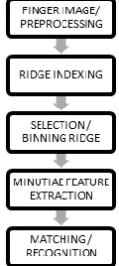
The following are the modules of the project along with the way they are implemented and that is planned with respect to the proposed system, while overcoming existing system and also providing the support for the future enhancement system. There are totally five modules used in our project which is listed below. Each module has specific usage in the project and is description is given below followed by the list of modules.
Finger Image/Preprocessing
Ridge Indexing
Selection/Binning Ridge
Minutiae Feature Extraction
Matching/ Recognition
Finger Image/Preprocessing
Before extracting the proposed ridge features we need to perform some preprocessing additional procedures for quality estimation and circular variance estimation. To estimate the ridge orientation and the ridge frequency is calculated. Gabor/Gaussian Filter is applied to enhance the image and obtain a skeleton zed ridge image. A robust preprocessing method to reduce the finger image enhancement errors.
Ridge Indexing
Ridge indexing is known as ridge count, that the ridge count methods find the number of ridges that intersect the straight line between two minutiae in the spatial domain is counted. When the ridge-counting line is parallel to the ridge structures, the line may meet the same ridge at one point, at more than two points, or at no point, due to skin deformation. The ridge count (rc) is not always a positive number and the sign of the ridge count follows the sign of the vertical axis.
Object tracking is a very challenging task in the presence of variability Illumination condition, background motion, complex object shape, partial and full object occlusions. Here in this thesis, modification is done to overcome the problem of illumination variation and background clutter such as fake motion due to the leaves of the trees, water flowing, or flag waving in the wind. Sometimes object tracking involves tracking of a single interested object and that is done using normalized correlation coefficient and updating the template. On developing a framework to detect moving objects and generate reliable tracks from surveillance video. After setting up a basic system that can serve as a platform for further automatic tracking research, the question of variation in distances between the camera and the objects in different parts of the scene (object depth) in surveillance videos are takled.
analysis there are three key steps: detection of interesting moving object, tracking of such objects from frame to frame and analysis of objects tracks to recognize their behavior. Next it comes video segmentation it means separation of objects from the background.
It also consists of three important steps: object detection, object tracking and object recognition. In this work it is given more focus towards the investigation video analysis and video segmentation section. A typical automated single camera surveillance system usually consists of three main parts, which can be listed as moving object detection, object tracking and event recognition. In my problem it is to solve an automatic moving target detection and tracking details. The process of automatic tracking of objects begins with the identification of moving objects.
III. FUNCTIONAL FORMULATION
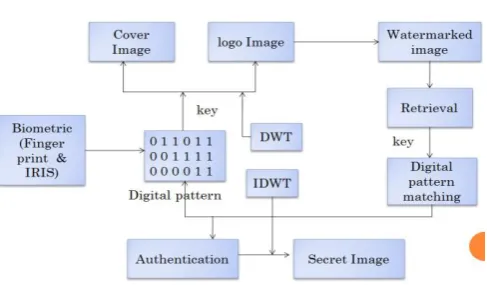
Fig. 2 functional diagram of proposed method design for model base development
For every initially matched pair, a breadth-first search (BFS) is performed to detect the matched ridge-based coordinate pairs. The ridge-based coordinate system is very similar to the K-plet structure. Initially match any pair of ridge-based coordinate systems extracted from the enrolled fingerprint image and the input fingerprint image using dynamic programming. Dynamic programming is applied to find the optimal solution in matching two string sequences in the enrolled and input ridge-based coordinates. The Ridge feature vector the three feature elements (ridge count, ridge length, and ridge curvature direction) are used to calculate the matching scores and the ridge type feature is used to check the validity of the candidate pairs.
In the orthogonal wavelet decomposition procedure, the generic step splits the approximation coefficients into two parts. After splitting we obtain a vector of approximation coefficients and a vector of detail coefficients, both at a coarser scale. The information lost between two successive approximations is captured in the detail coefficients. Then the next step consists of splitting the new approximation coefficient vector; successive details are never reanalyzed.In the corresponding wavelet packet situation, each detail coefficient vector is also decomposed into two parts using the same approach as in approximation vector splitting.
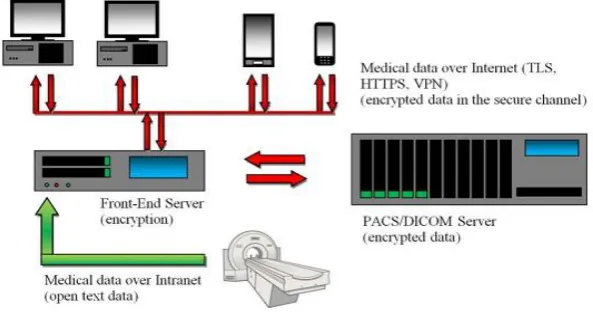
Fig. 3 functional diagram of an Enhanced stucture of secure medical transactions
Step 1. Column wise processing to get H and L Where Co and Ce is odd column and even column wise pixels value.
Step 2. Row wise processing to get LL, LH, HL and HH, Separate odd and even rows of H and L.
Hodd – odd row of H,
Lodd – odd row of L,
Heven – even row of H,
Leven – even row of L.
DETAILED DESIGN
Pseudo Code Description
Finger Image/Preprocessing
Step 1: Enter the username and location.
Step 2: Scan the fingerprint image.
Step 3: If the fingerprint image is good quality then save the image.
Step 4: If the fingerprint image is not good quality then improve the quality.
Ridge Indexing
Step 1: The ridge count method counts the number of ridges.
Step 2: The ridge count is not always a positive number.
Step 3: The sign of the ridge count follows the sign of the vertical axis.
Selection/Binning Ridge
Step 1: Ridge length (rl) is the distance on the horizontal axis.
Step 3: The threshold of the ridge length feature is set.
Minutiae Feature Extraction
Step 1: Determine the ridge type.
Step 2: If minutiae is end point there is only one ridge belonging to the minutiae.
Step 3: If minutiae is bifurcation there is three ridges connected to minutiae.
Matching/Recognition
Step 1: BFS is performed to detect the matched ridge-based coordinate pairs.
Step 2: Ridge type feature is used to check the validity of the candidate pairs.
IV. EXPERIMENTAL RESULT
The designed result is dicussed below.An image acquisition device can be a video camera, which is used for capturing images. The image captured either with the help of digital or analogue cameras can be used as the input. Most importantly, these cameras should be capable of delivering images at different resolutions.
Digital cameras like CCD or CMOS sensor are those which have the direct connection with the PC using USB port. Meanwhile, analogue cameras require a grabbing card for connecting with PC. In MATLAB, Augmented Reality is currently used for capturing the live video streams of the real world. It is directly interfaced with the PC (Image Processor), and MATLAB uses inbuilt software called adaptors for accessing or communicating with this device.
if isempty(obj1) obj1 = serial('COM1');
else fclose(obj1); obj1 = obj1(1);
pic1=P; pic2=stegoimage_final;
e=0; [m n]=size(pic1);
for i=1:m for j=1:n
e=e+double((pic1(i,j)-pic2(i,j))^2); end
end mse=e/(m*n); disp('MSE is: ')
disp(mse) %psnr m=max(max(pic1)); psnr=10*log10((double(m)^2)/mse);
disp('PSNR is: ') disp(psnr)
Figure 4 experimental result from model based devlopment
In these result we had successfully shows the multi level security from finger print & IRIS ridge features and minutiae for fingerprint matching algorithm. The ridge features consists of ridge count, ridge length, ridge curvature direction, and ridge type.BFS technique is used to detect the matched pairs. The experimental results show that the proposed method is very accurate in matching the fingerprint when compared to the existing method which is a image based approach.
V. CONCLUSION
The proposed design not only focuss the new design as well as analysis existing design and furthermore encryptions standar also added for medical image secure transmission.Finally, the apply function operation manipulates the channels used by an image. Unlike the modify and combine operations, it edits the channels themselves, not their values. Among the functions this operation performs is adding a channel, removing a channel, and replacing a channel. In terms of our image definition, it affects the values of the c variables in the tuples.we showed better reslut because of we had used 3 level dwt for detections purpose.From another end of Embedded design we used high speed as well as secure seriel protocol.
REFERENCES
[1] NEMA, Rosslyn “a fingerprint verification system based on triangular matching and dynamic time warping.
[2] M. Dzwonkowski and R. Rykaczewski, “Quaternion encryption method for image and video transmission,” Telec
Telecommun. Rev. + Telecommun. News, vol. 8, no. 9, pp. 1216–1220, 2013.
[3]Y. Dai and X. Wang, “Medical image encryption based on a composition of logistic maps and Chebyshev maps,” in Proc.
IEEE Int. Conf. Inf. Autom., Shenyang, China, Jun. 2012, pp. 210–214.
[4] L. Khoudour, M. Ghazel, F. Boukour, M. Heddebaut, and M. El-Koursi,“Towards safer level crossings: Existing recommendations, new applicable technologies and a proposed simulation model,” Eur. Transp. Res.Rev., vol. 1, no. 1, pp. 35– 45, Mar. 2009.
[5]Y. Ou, C. Sur, and K. H. Rhee, “Region-based selective encryption for medical imaging,” in Proc. 1st Annu. Int. Conf. Front. Algorithmics, 2007, pp. 62–73
[6]R. Goldman, An Integrated Introduction to Computer Graphics and Geometric Modeling. New York, NY, USA: CRC Press,
2009.
[8] D. Eberly. (2010). Quaternion algebra and calculus. Geometric Tools, LLC. [Online]. Available:
http://www.geometrictools.com/Documentation/Documentation.html
[9]N. Fakhfakh et al., “Background subtraction and 3D localization of moving and stationary obstacles at level crossings,” in Proc. Int. Conf. Image Process. Theory, Tools Appl., Paris, France, 2010, pp. 72–78.